
The living room serves as the heart of any apartment, a multifunctional sanctuary where we relax after long days, entertain cherished guests, and express our personal style within the constraints of urban dwelling. In today’s world of apartment living, where square footage comes at a premium and architectural limitations abound, creating a living space that is both beautiful and functional requires thoughtful planning, creative problem-solving, and a keen eye for design. The challenge lies not in the size of the space, but in maximizing every inch to reflect your personality while maintaining comfort and practicality.
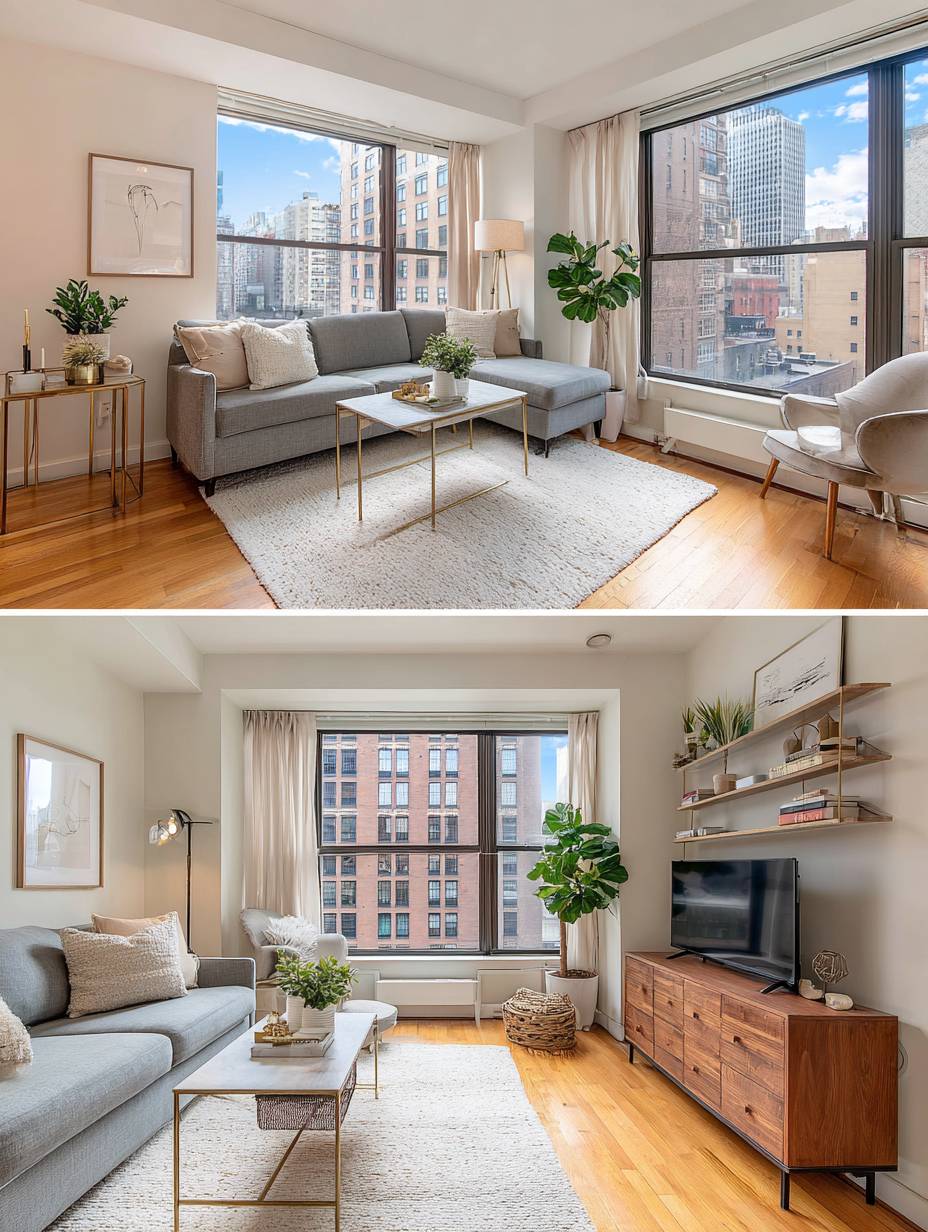
Whether you’re working with a compact studio apartment or a more spacious urban loft, the living room must adapt to your lifestyle while maintaining aesthetic appeal. From Scandinavian minimalism that celebrates simplicity and function to bohemian eclecticism that embraces personality and warmth, each design approach offers unique solutions to common apartment living challenges. The key is understanding how different styles, color palettes, furniture arrangements, and lighting strategies can transform even the most modest spaces into stunning showcases of interior design excellence.
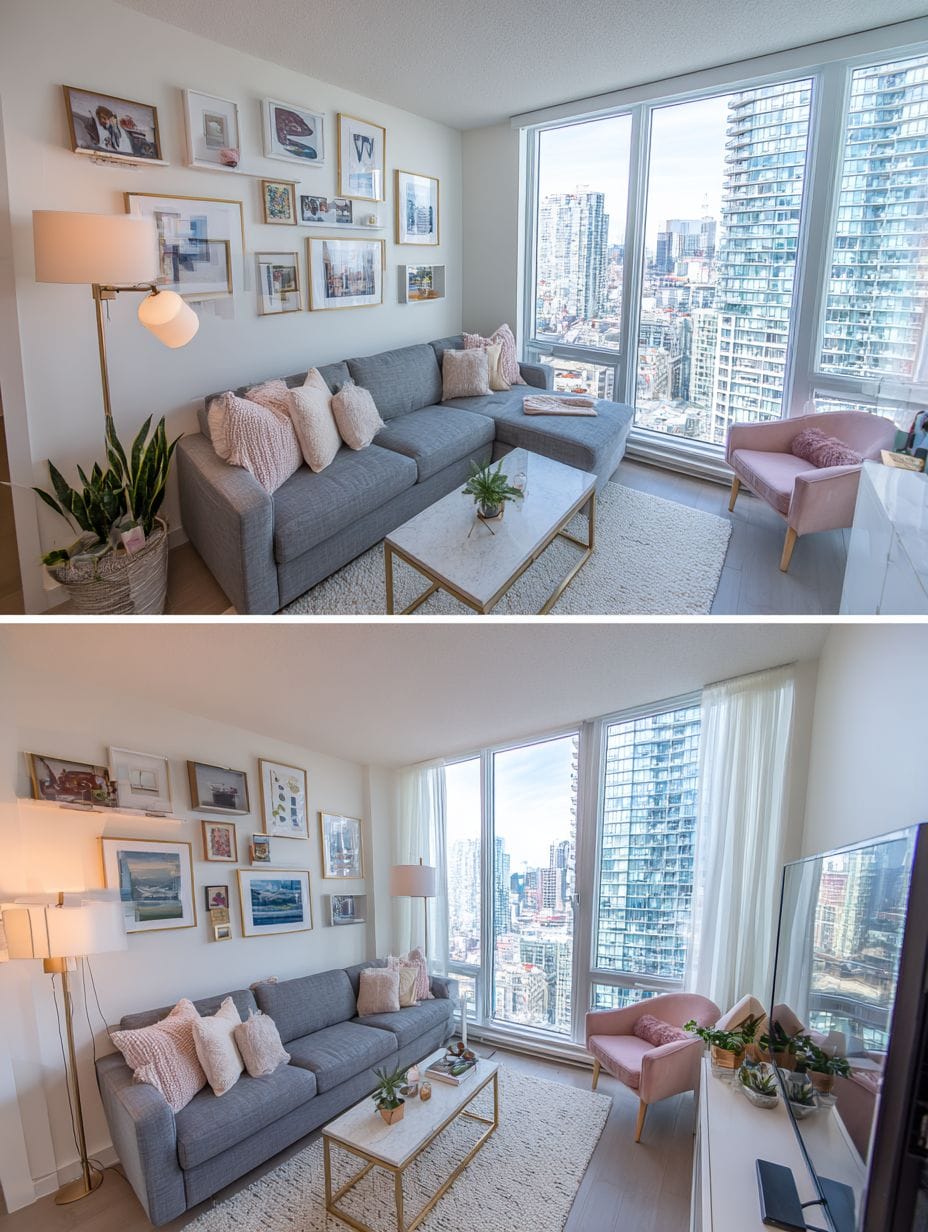
This comprehensive guide explores 25 distinctive apartment living room ideas, each carefully crafted to inspire your next interior design project. You’ll discover innovative storage solutions, space-maximizing furniture arrangements, lighting techniques that expand visual boundaries, and material selections that add depth and character. Whether you’re drawn to industrial chic with exposed brick and raw materials, prefer the serene neutrality of monochromatic palettes, or want to create a plant-filled urban jungle, these designs offer practical inspiration backed by professional interior design principles. Let’s explore how you can transform your apartment living room into a space that truly feels like home.
1. Compact Modular Grey Sofa Design
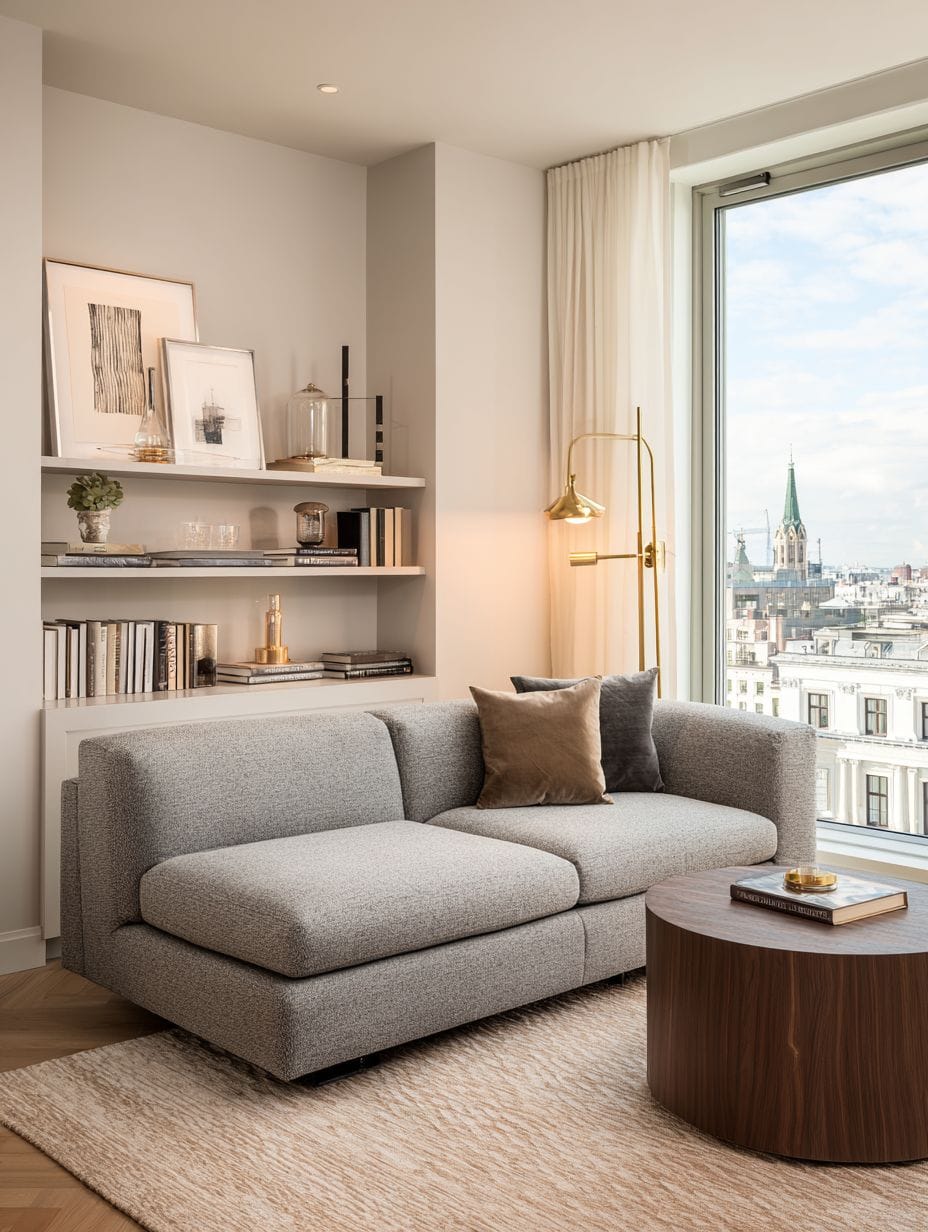
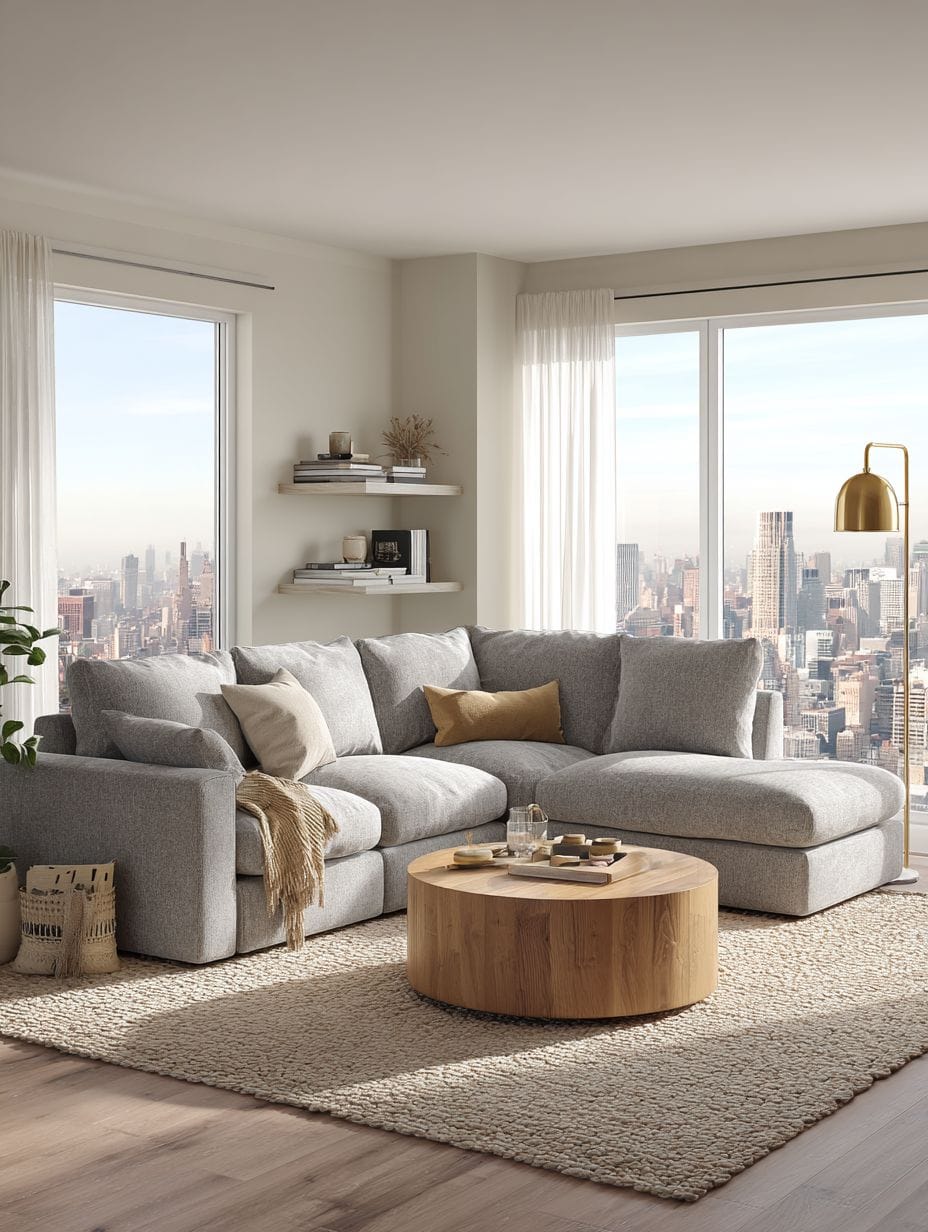
The foundation of this apartment living room centers around a modular grey fabric sofa with clean, contemporary lines positioned strategically against a light neutral wall. This placement maximizes floor space while creating an inviting focal point for the room. The sofa’s neutral grey tone serves as a versatile canvas, allowing for easy seasonal updates through accessories and textiles. A round wooden coffee table anchors the seating area, its circular shape promoting better traffic flow in compact quarters while the natural wood grain adds organic warmth to balance the cooler grey upholstery.
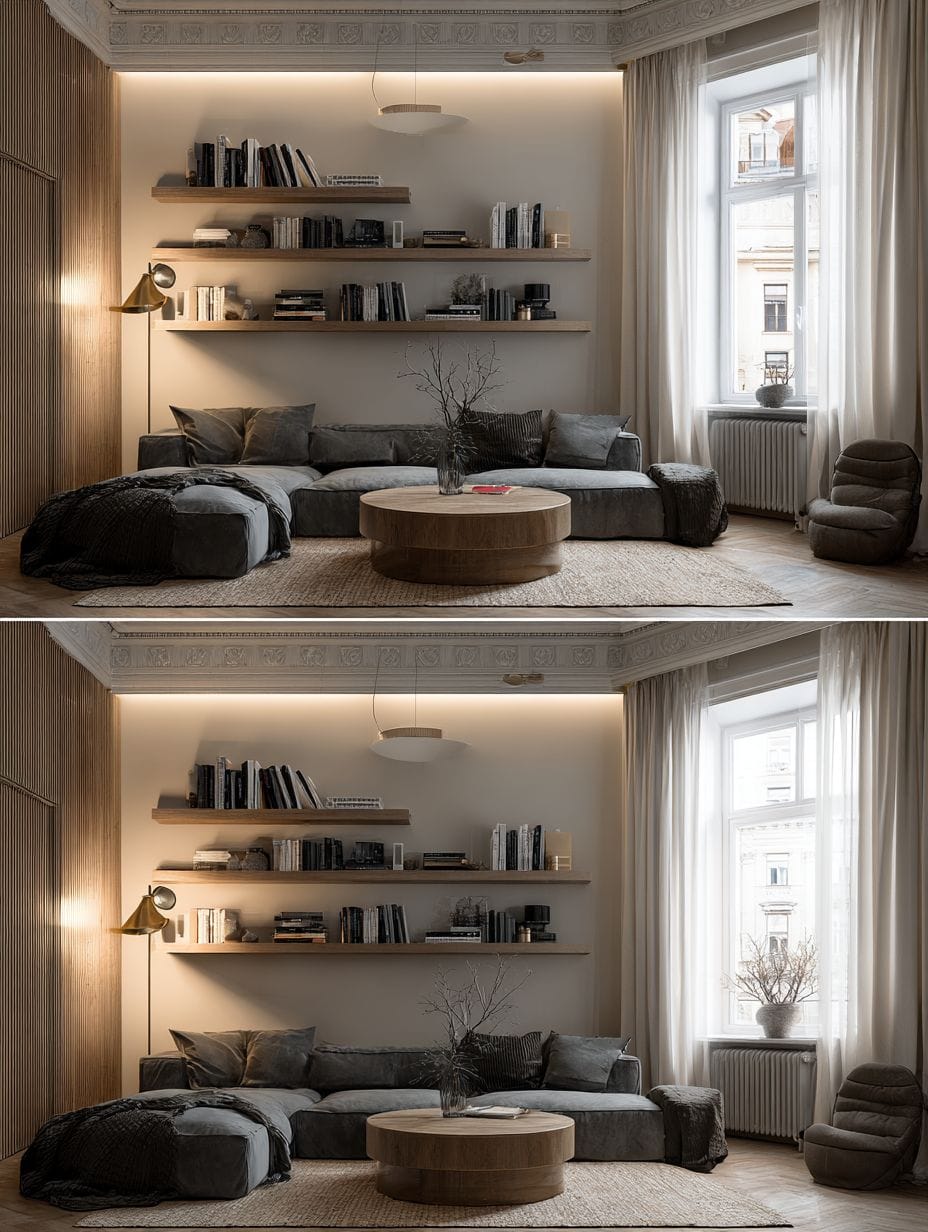
Texture plays a crucial role in preventing this neutral palette from feeling flat or institutional. A textured wool area rug in warm beige tones grounds the furniture arrangement while adding tactile interest underfoot. The rug’s natural fibers introduce subtle variations in color and texture that catch light differently throughout the day, creating visual dynamism. Floating shelves mounted at varying heights display curated books and minimal decor, eliminating the need for bulky bookcases while maintaining the room’s open, airy feeling. A floor lamp with brass finish provides ambient lighting, its warm metallic accent punctuating the neutral scheme with sophisticated shine.
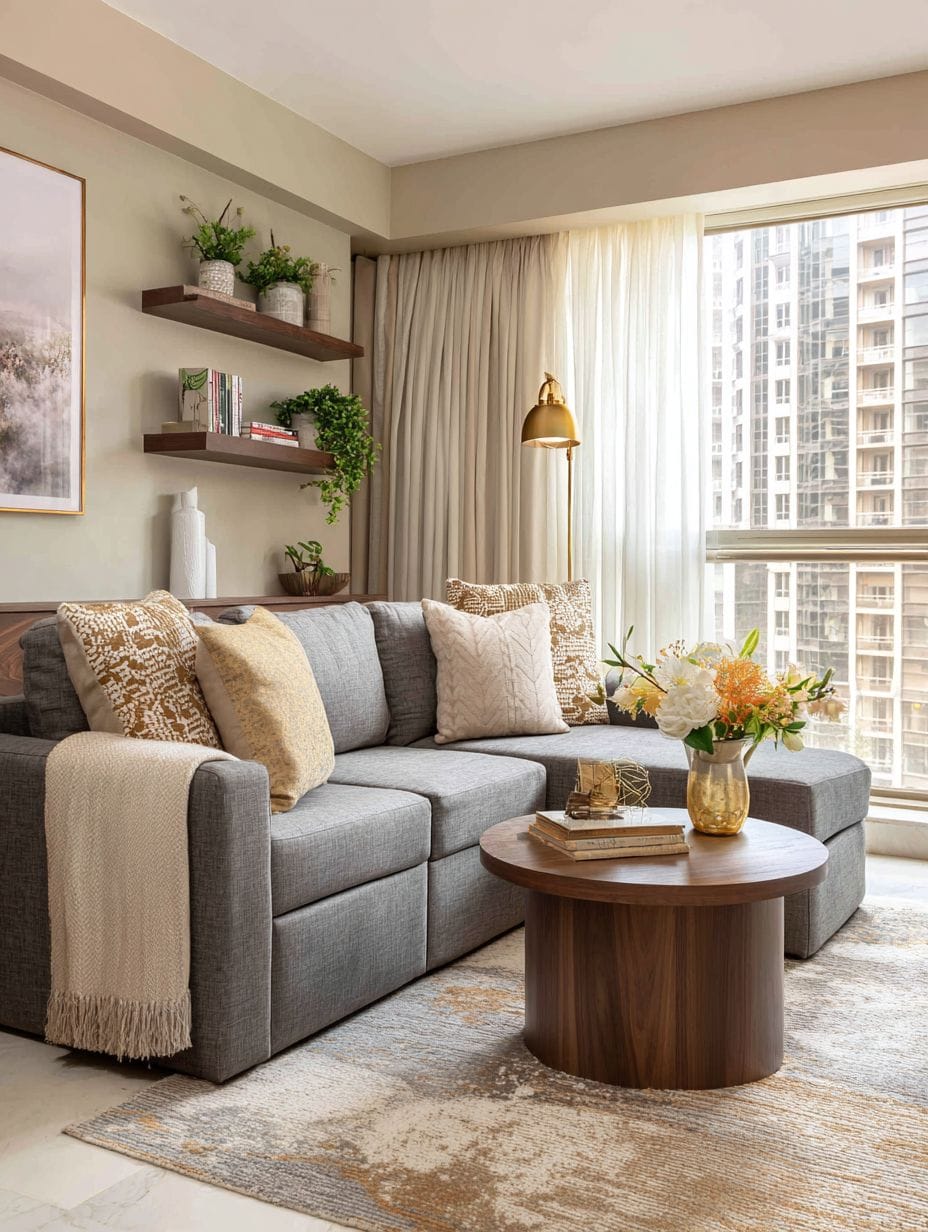
Large windows dressed with sheer white curtains become a defining feature, allowing natural daylight to flood the space and visually expand the room’s boundaries. The translucent fabric filters harsh sunlight while maintaining privacy, creating a soft, diffused glow that enhances the room’s welcoming atmosphere. This design demonstrates how strategic furniture selection, thoughtful material choices, and attention to lighting can create a living room that feels both spacious and intimately comfortable, proving that small apartments need not sacrifice style for function.
- Choose modular furniture that can be reconfigured as your needs change, providing flexibility in small spaces.
- Opt for round coffee tables in compact rooms to improve traffic flow and reduce visual bulk.
- Install floating shelves instead of floor-standing bookcases to maintain an open floor plan.
- Select sheer window treatments that maximize natural light while providing necessary privacy.
- Incorporate brass or metallic accents through lighting fixtures to add warmth and sophistication to neutral palettes.
2. Vertical Storage Maximization
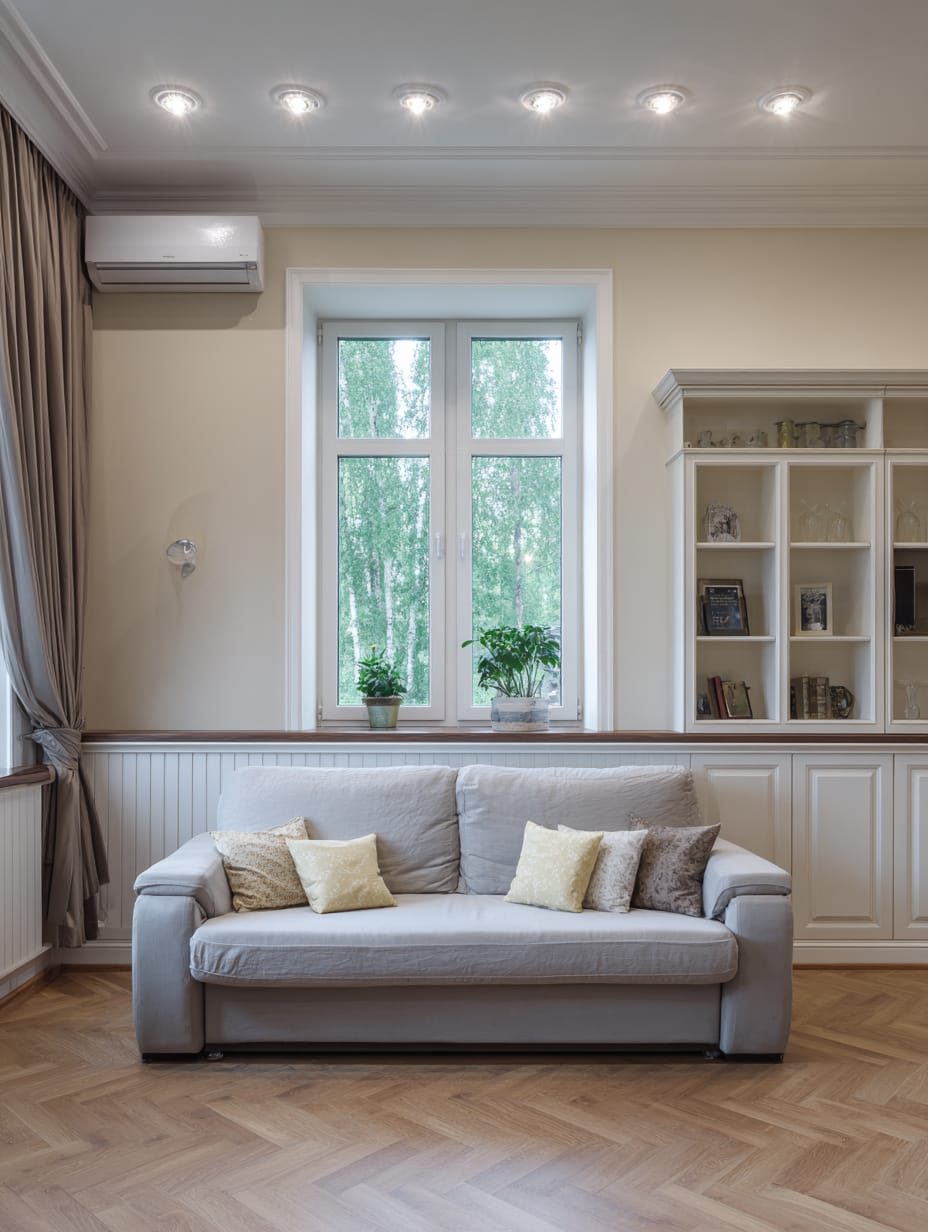
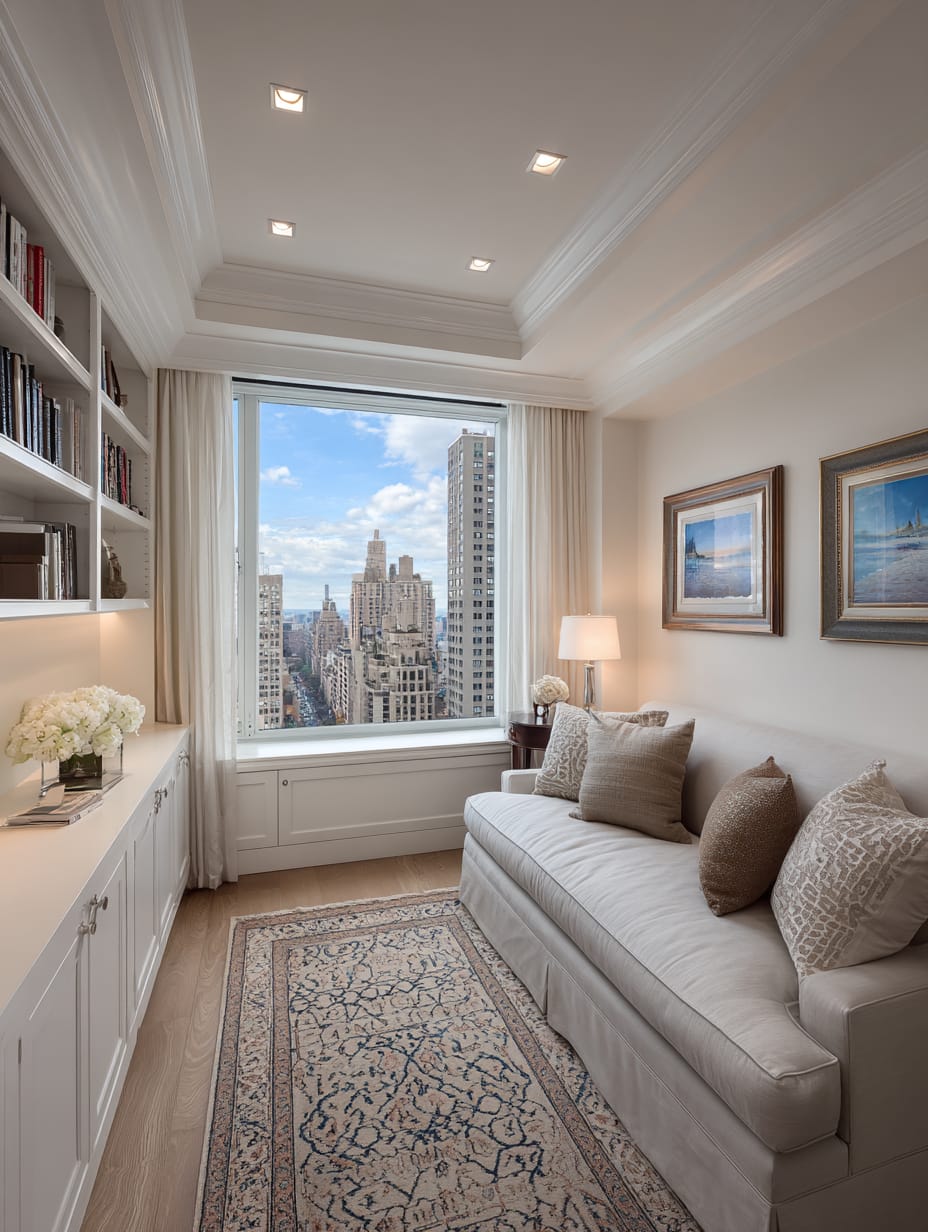
This apartment living room idea revolutionizes space utilization through floor-to-ceiling built-in shelving in crisp white painted wood. The vertical emphasis draws the eye upward, creating an illusion of greater height while providing abundant storage and display opportunities. The shelving unit becomes both functional necessity and architectural feature, eliminating clutter while showcasing books, decorative objects, and personal collections in an organized, visually appealing manner. A comfortable linen sofa in soft grey sits below the window, positioned to capture natural light for reading while maintaining clear sight lines throughout the room.
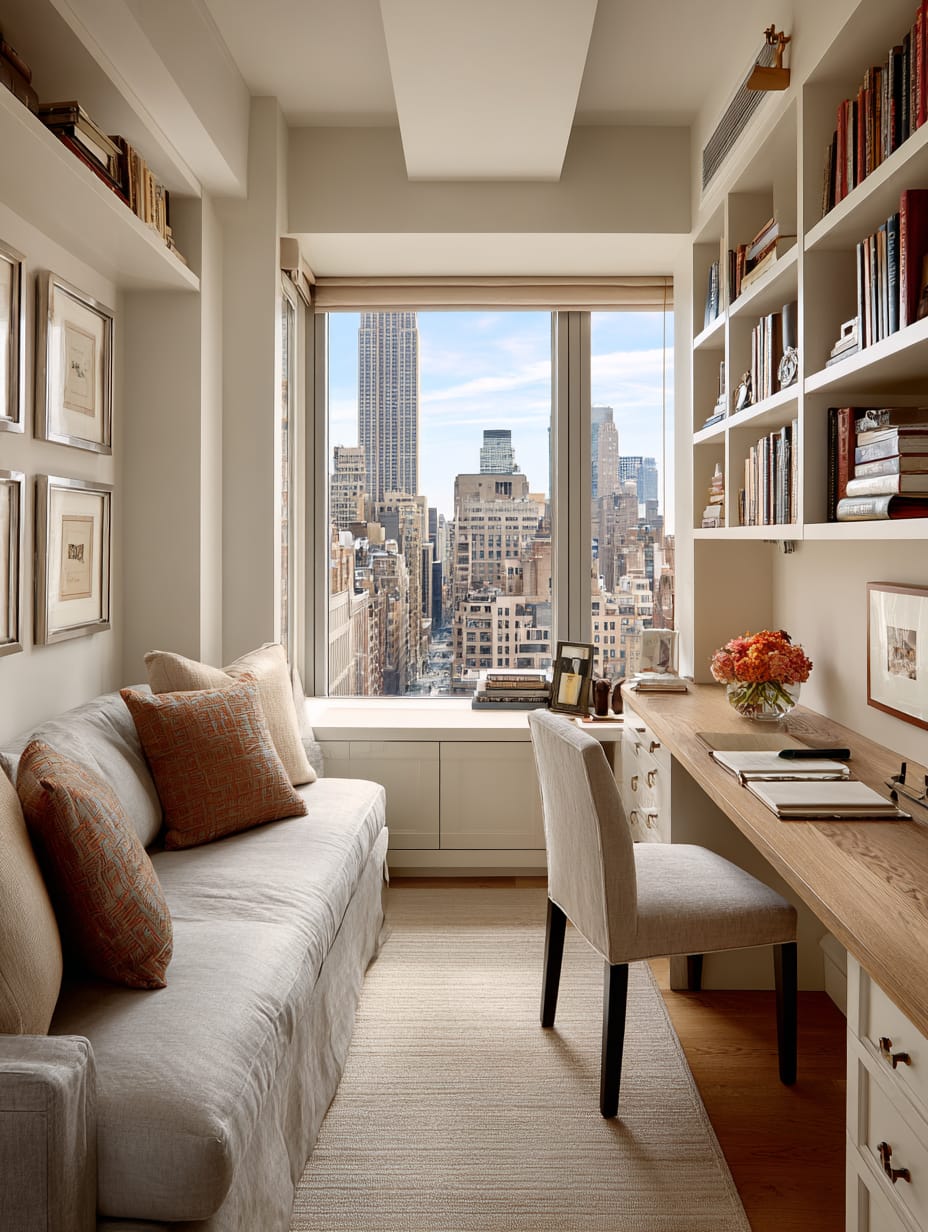
The layered throw pillows in muted earth tones—terracotta, sand, sage, and warm grey—introduce subtle color variation without overwhelming the serene palette. These carefully selected hues reference natural landscapes, creating psychological warmth and comfort. Behind the sofa, a narrow console table adds functionality without consuming precious floor space, providing surface area for lamps, decorative objects, or practical items like keys and mail. This clever addition demonstrates how every inch can serve multiple purposes in apartment living.
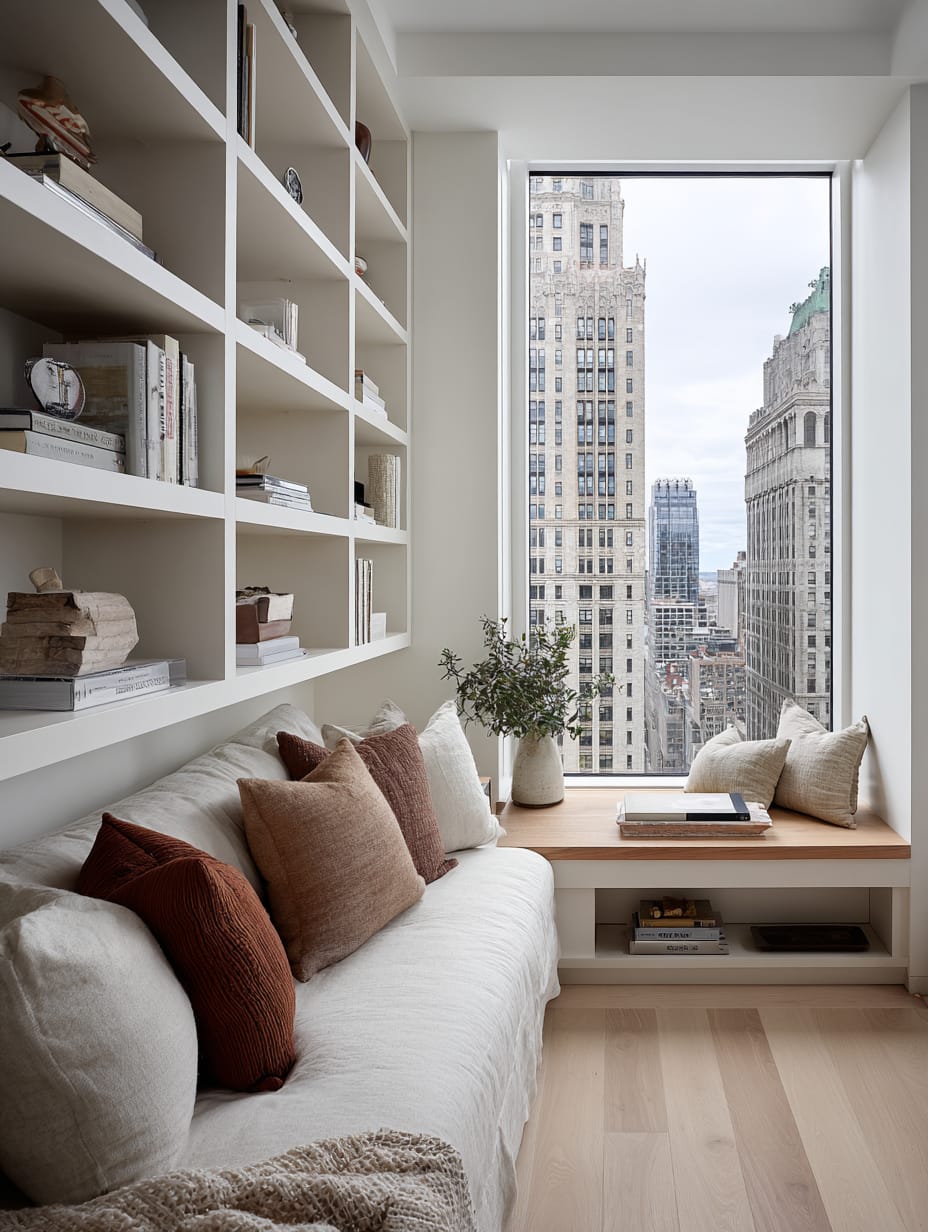
Natural oak flooring complements the warm lighting from recessed ceiling fixtures, creating a cohesive design that feels both contemporary and timeless. The wood’s honey tones add organic warmth, preventing the white shelving from feeling too clinical or cold. The recessed lighting provides even illumination without cluttering the ceiling or reducing headroom, maintaining the room’s open, spacious feeling. This design proves that vertical thinking and built-in storage solutions can transform apartment living rooms into highly functional spaces that never feel cramped or cluttered.
- Maximize vertical space with floor-to-ceiling shelving to dramatically increase storage capacity.
- Paint built-ins white or in light colors to maintain visual continuity with walls and ceilings.
- Position sofas near windows to create natural reading nooks that require no additional lighting during daytime.
- Add console tables behind sofas to create functional surface space without blocking walkways.
- Choose recessed lighting to illuminate spaces evenly without consuming visual or physical space.
3. Multifunctional Sofa Bed Solution
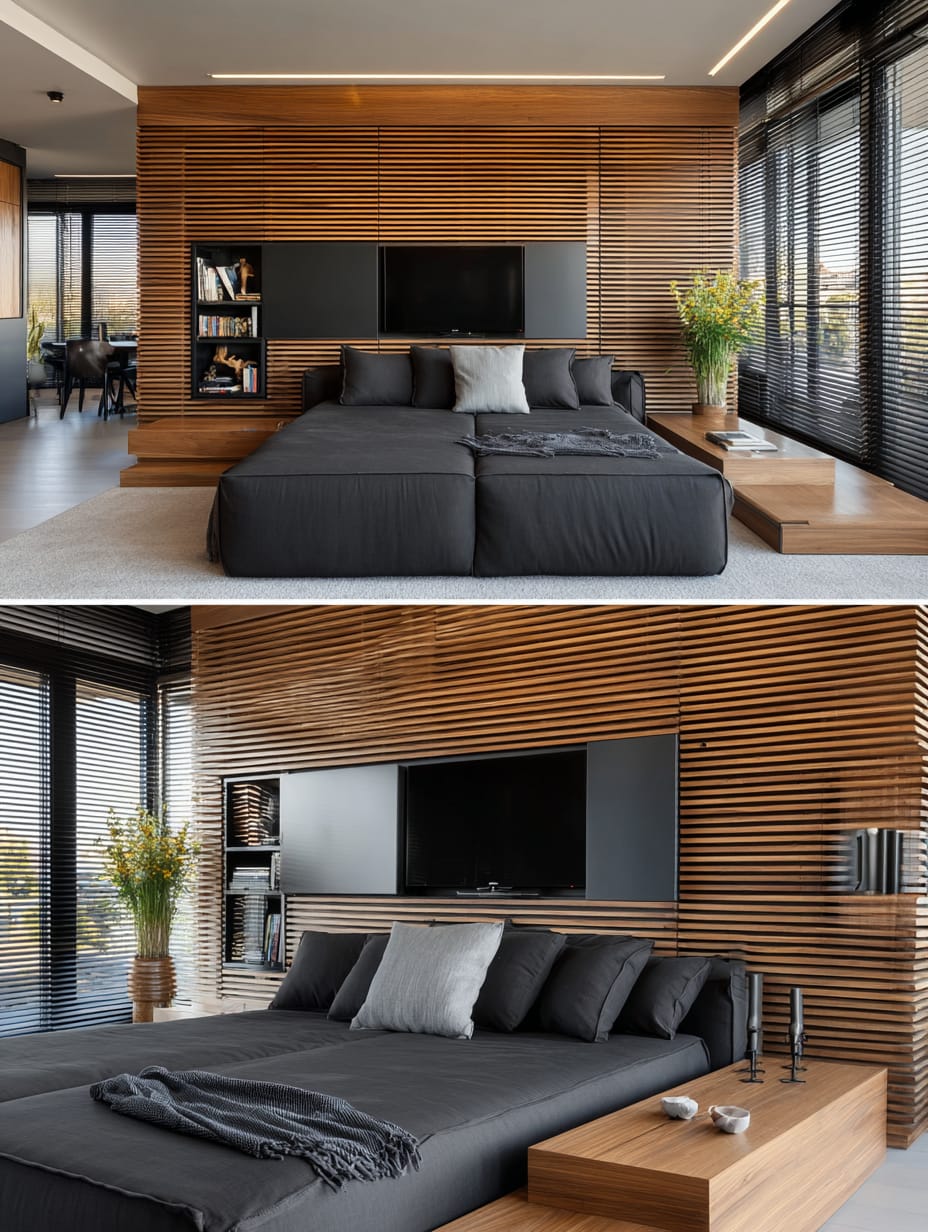
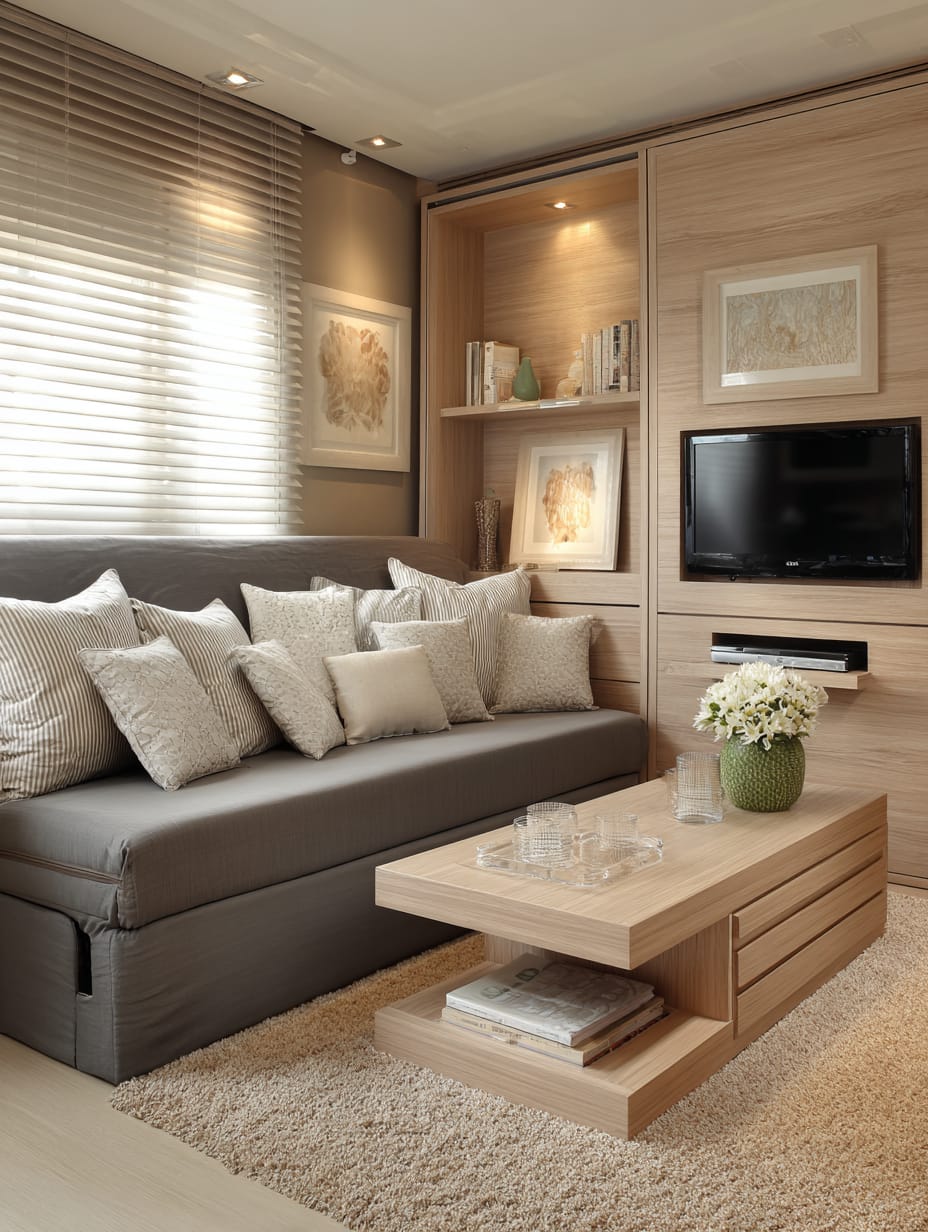
Embracing the dual-purpose philosophy essential to apartment living, this design centers around a sleek sofa bed in charcoal fabric that seamlessly transitions from daytime seating to nighttime sleeping accommodation. The sophisticated charcoal upholstery maintains a refined appearance while hiding everyday wear better than lighter colors, making it ideal for high-traffic multipurpose spaces. The sofa bed’s contemporary design features clean lines and low-profile arms that don’t visually overwhelm the room, proving that functional furniture need not sacrifice aesthetic appeal.
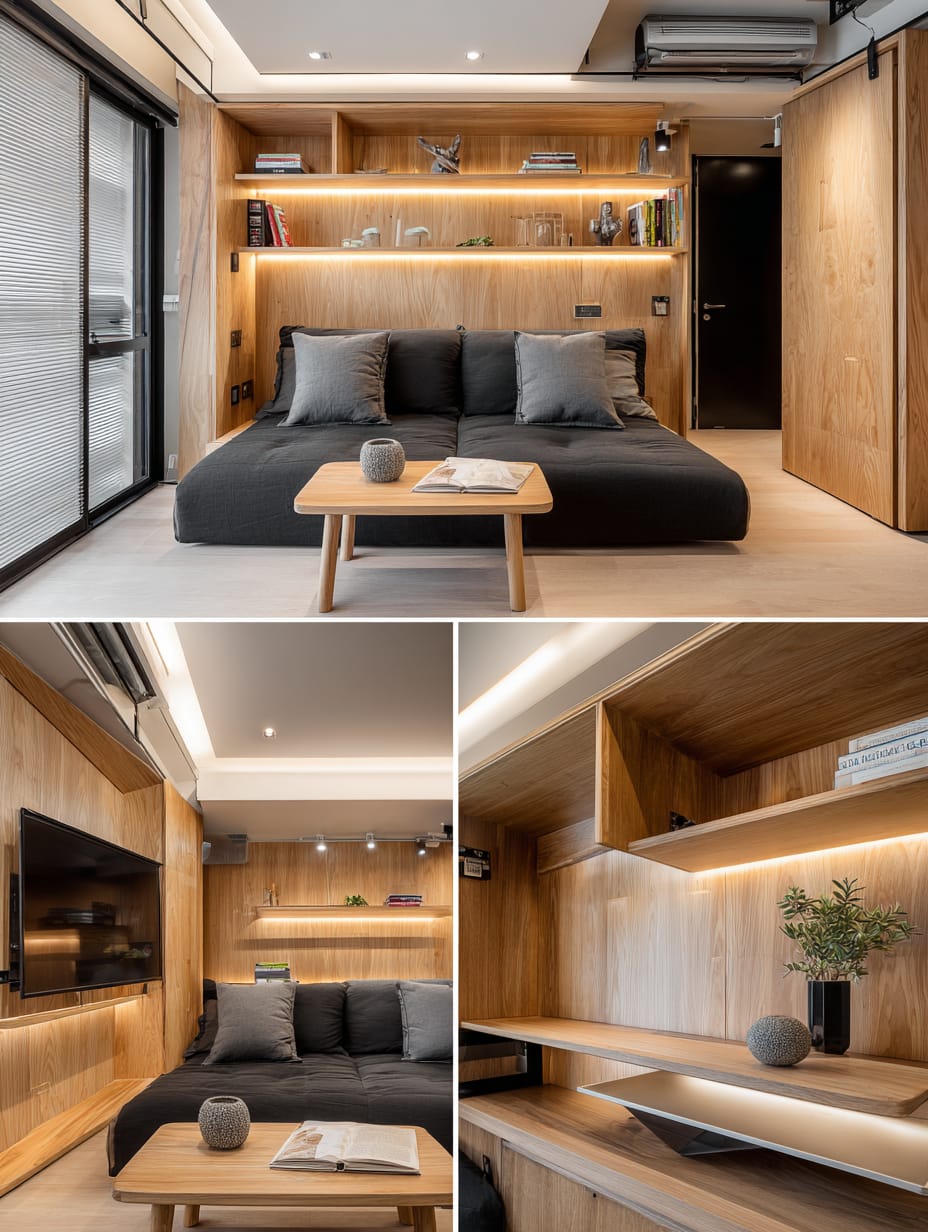
A nesting coffee table set in light wood provides remarkable flexibility, with the smaller table sliding out for entertaining or extra surface space and tucking away when floor space takes priority. This adaptable furniture choice exemplifies smart apartment living, where every piece must earn its place through versatility and efficient use of space. The wall-mounted TV eliminates the need for bulky entertainment centers, freeing up valuable floor space while creating a sleek, modern appearance. Below the television, a slim media console offers hidden storage for electronics, remote controls, and media collections, maintaining the room’s uncluttered aesthetic.
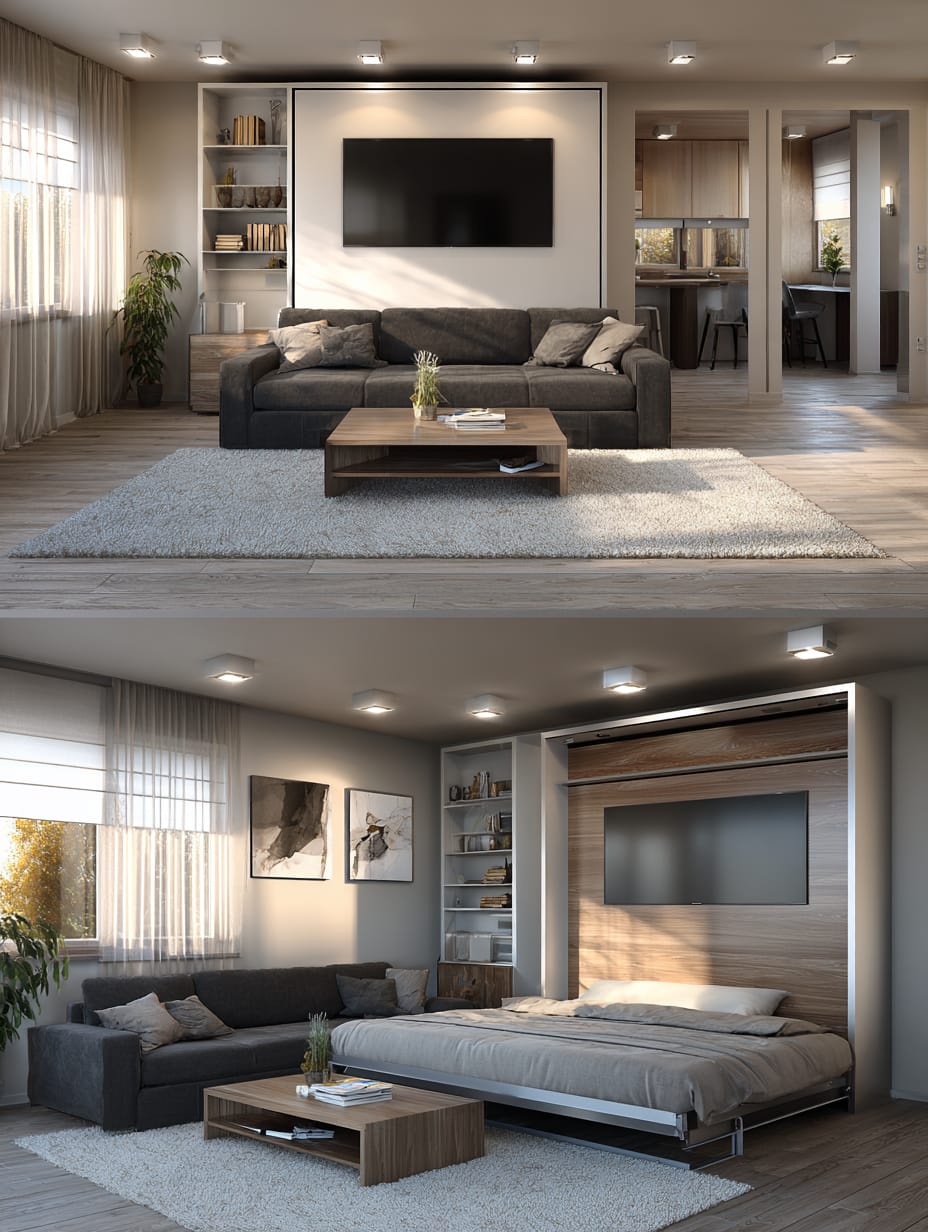
Sheer roller blinds filter natural light, creating a soft glow throughout the space while offering privacy and light control. Unlike heavy curtains that can make small rooms feel closed in, these minimal window treatments maintain clean lines and visual openness. The entire design demonstrates how thoughtful furniture selection and strategic space planning can create apartment living rooms that serve multiple functions without feeling compromised or cluttered, proving that small space living can be both practical and beautiful.
- Invest in quality sofa beds with comfortable mattresses and durable mechanisms for reliable dual functionality.
- Choose nesting tables that provide flexibility without permanently consuming floor space.
- Mount televisions on walls to eliminate bulky TV stands and maximize usable floor area.
- Select slim media consoles with closed storage to hide clutter and maintain clean lines.
- Install roller blinds instead of curtains for minimal, space-efficient window treatments.
4. Open-Concept Zone Definition
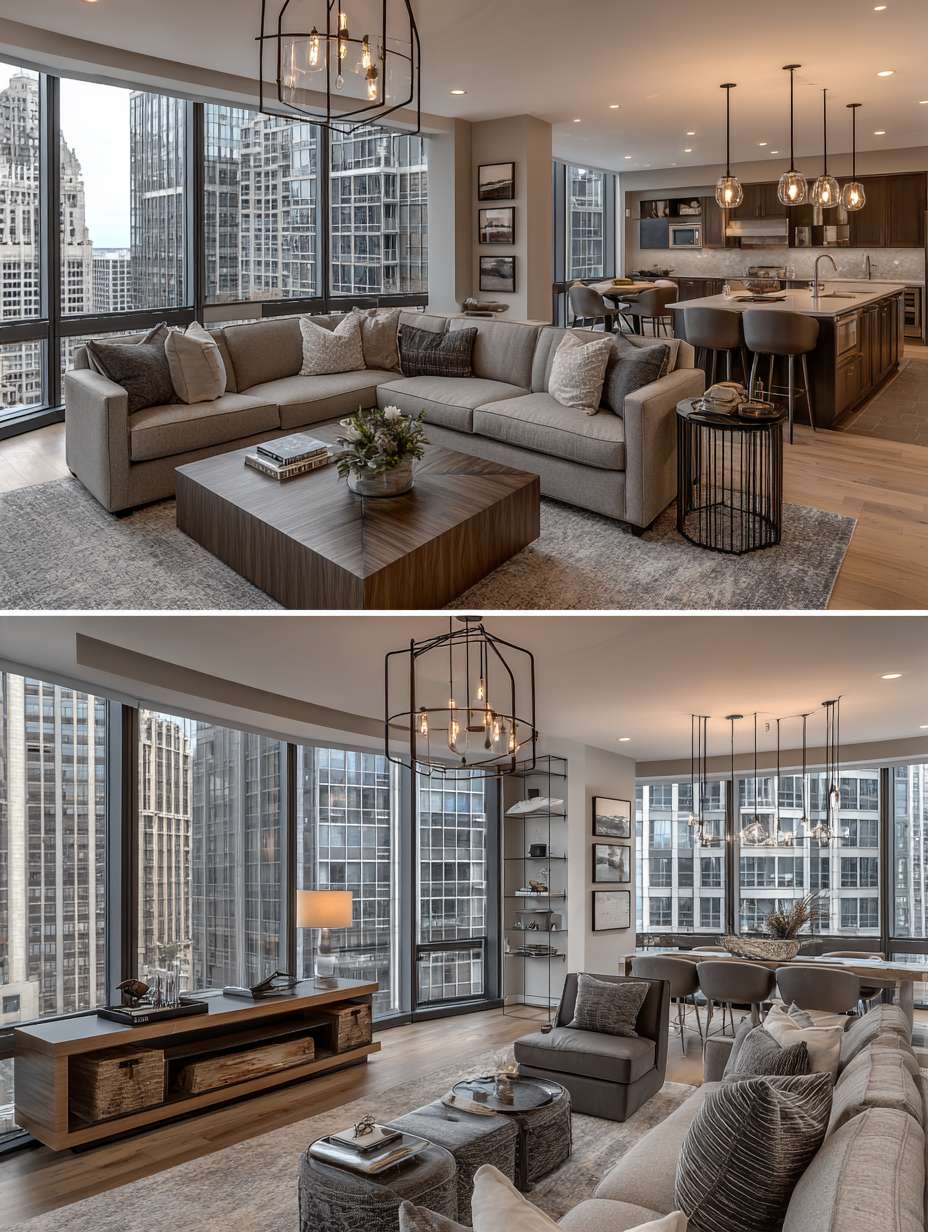
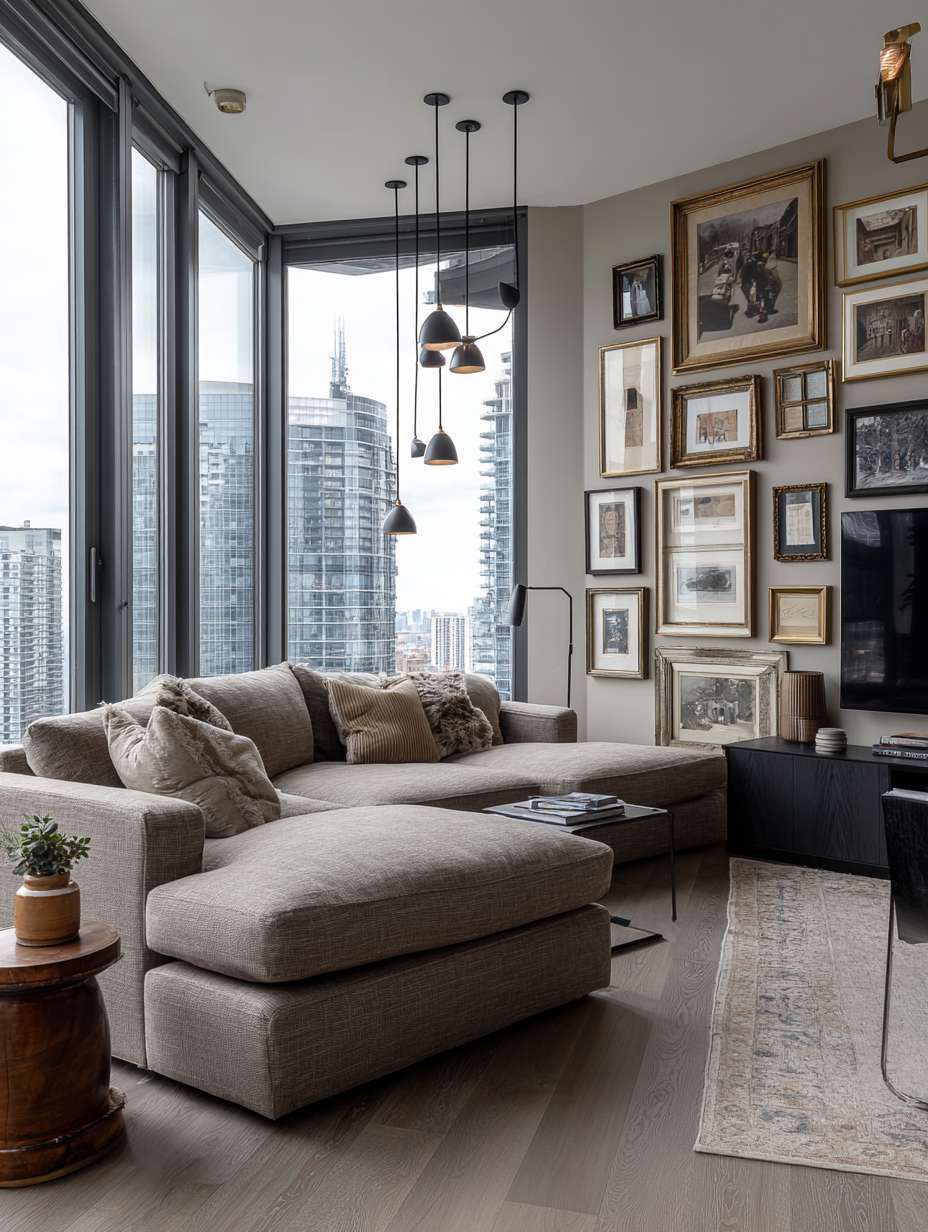
This apartment living room idea tackles the challenge of open-concept spaces through strategic zone definition using a sectional sofa in warm taupe fabric as an intelligent room divider. The L-shaped configuration creates distinct areas for lounging and entertainment without requiring walls or bulky partitions, maintaining the open feel while establishing clear functional zones. The taupe upholstery—neither too grey nor too beige—provides sophisticated neutrality that complements various color schemes and decorating styles, ensuring long-term versatility as tastes evolve.
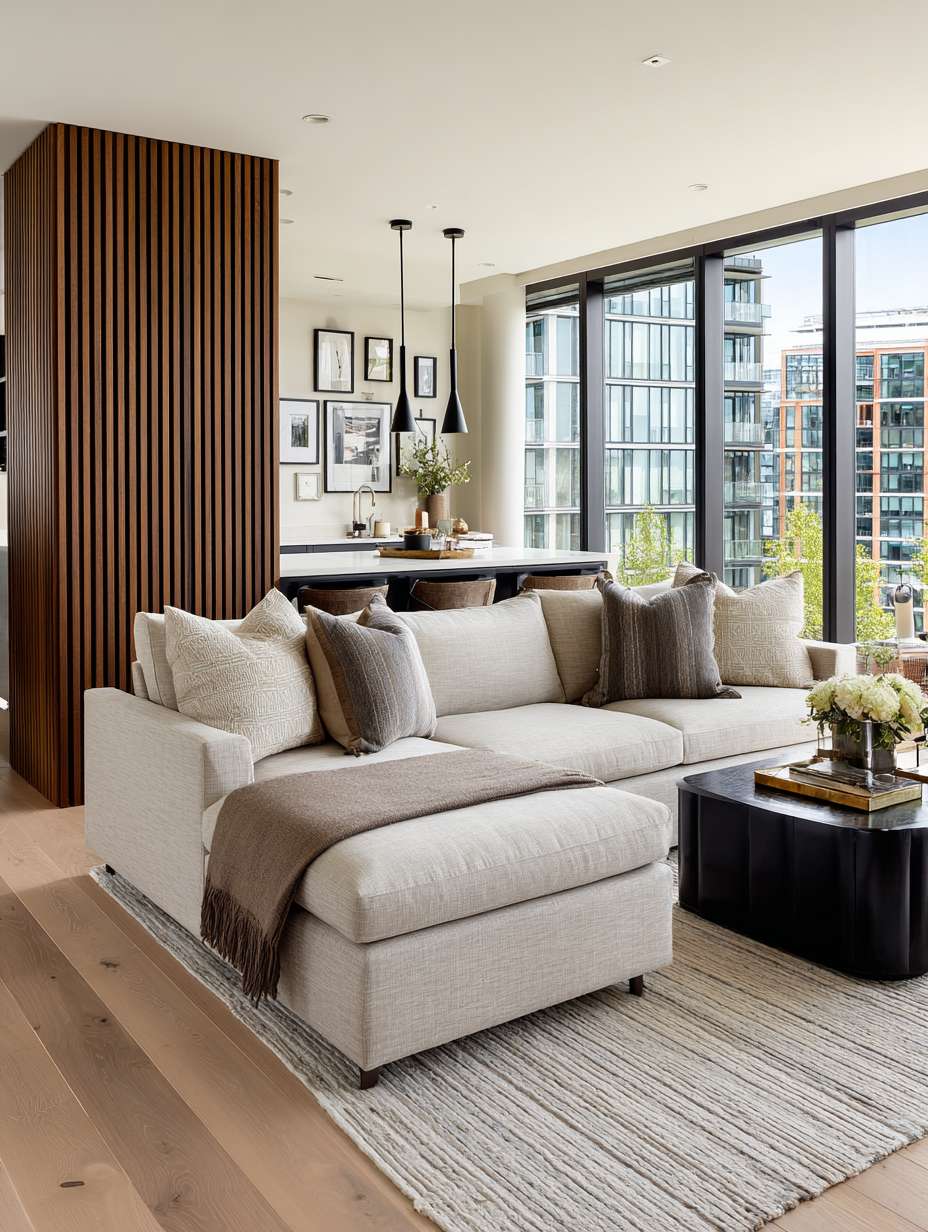
A low-profile entertainment center in walnut veneer anchors the television viewing area, its horizontal emphasis and rich wood tones adding substance without visual heaviness. The walnut’s natural grain patterns and warm brown hues introduce organic beauty while providing necessary storage for media equipment and accessories. Above, pendant lighting with black metal shades hangs at varying heights, creating visual interest and defining the space through light rather than physical barriers. This layered lighting approach adds dimension and architectural interest while providing functional task lighting for different activities.
A carefully curated gallery wall with mixed frame sizes creates a compelling focal point without overwhelming the compact space. The varied frame dimensions and arrangements add personality and visual rhythm, transforming a plain wall into a dynamic display of art and photographs. Natural light from large windows highlights the layered textures throughout the room, from the nubby sofa fabric to the smooth walnut veneer and matte black metal. This design demonstrates how thoughtful furniture placement, strategic lighting, and personal touches can successfully divide open-plan apartments into distinct functional areas while maintaining spatial flow and visual coherence.
- Use sectional sofas as room dividers in open-concept spaces to create zones without blocking sight lines.
- Choose low-profile furniture that defines areas without creating visual barriers or making spaces feel cramped.
- Install pendant lighting at varying heights to add architectural interest and define functional zones.
- Create gallery walls with mixed frame sizes for dynamic focal points that add personality without clutter.
- Select warm neutral upholstery colors like taupe for versatility and long-term appeal.
5. Minimalist Serenity
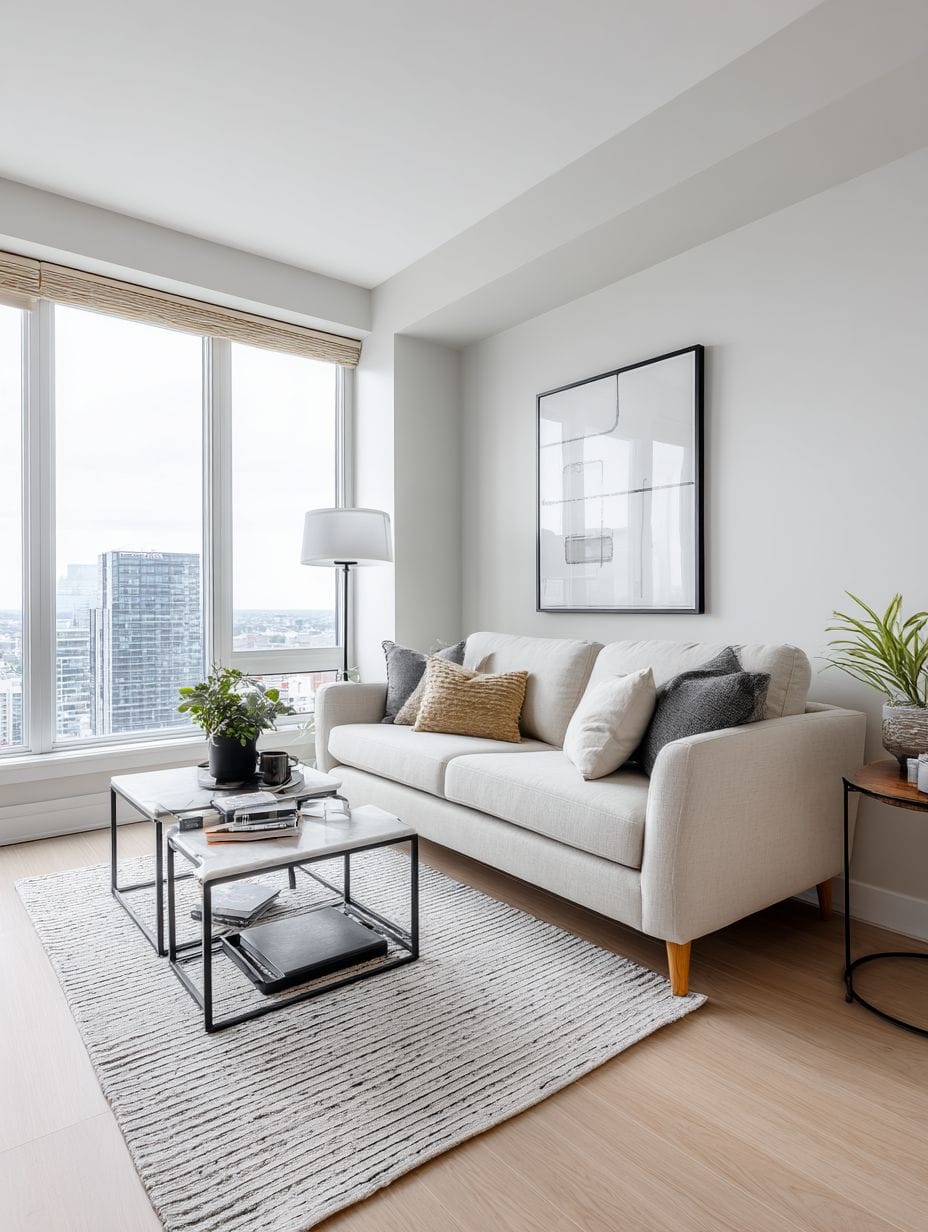
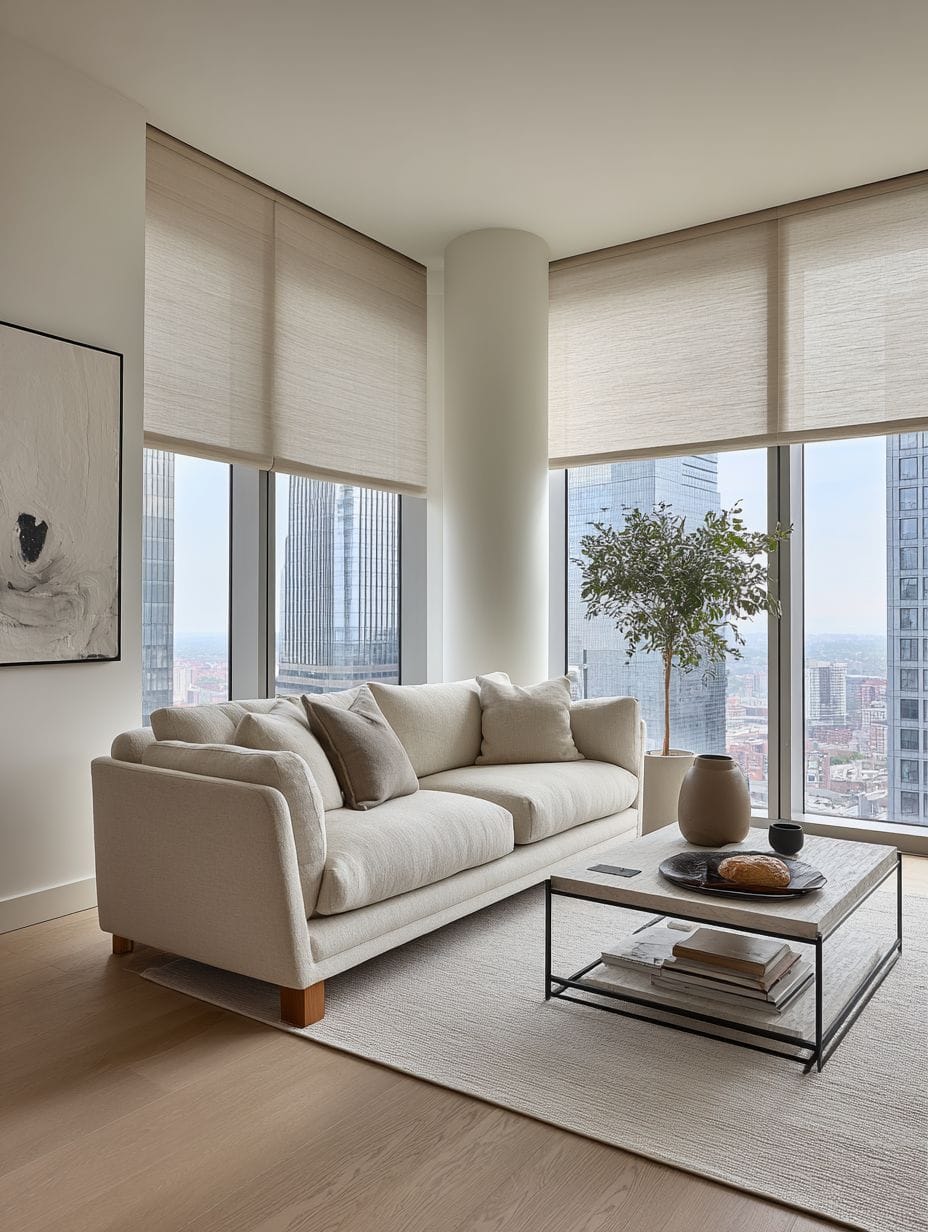
Embodying the “less is more” philosophy, this minimalist apartment living room features a streamlined sofa in oatmeal linen with simple wooden legs that practically float above the floor. The natural linen fabric brings organic texture and subtle color variation, preventing the minimalist aesthetic from feeling cold or sterile. The sofa’s unfussy design, free from excessive cushions or decorative details, creates a sense of calm and order that serves as a welcome antidote to the visual noise of modern urban life. Every element in this space serves a purpose, with nothing superfluous or merely decorative.
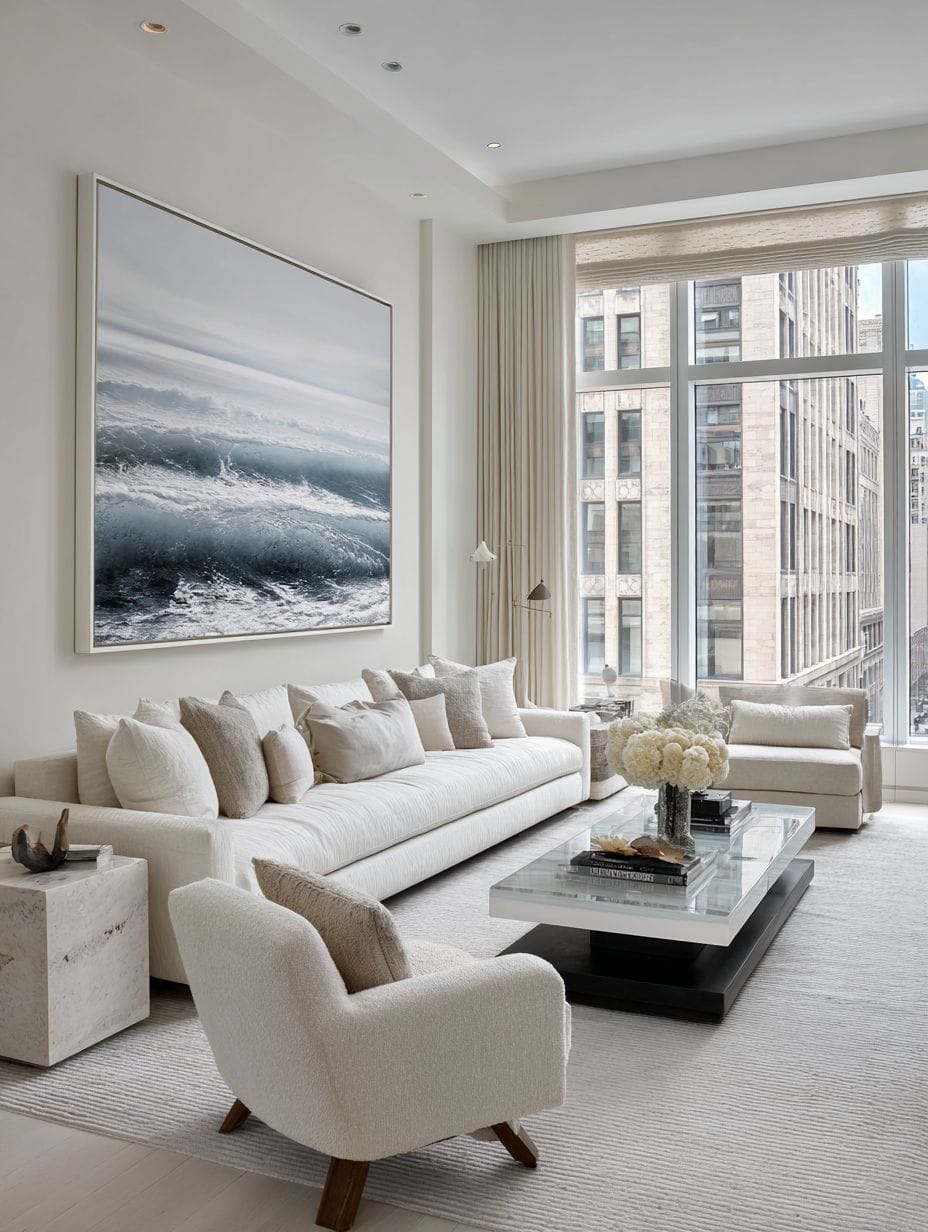
A glass coffee table with a slender metal frame maintains visual openness while providing essential functionality. The transparent surface allows light to pass through unobstructed, creating an almost invisible presence that makes the room feel more spacious. This clever choice demonstrates a key minimalist principle: selecting furniture that fulfills its function while occupying minimal visual space. Above the sofa, a single large-scale artwork serves as the room’s sole focal point, its impact amplified by the surrounding simplicity. Rather than cluttering walls with multiple small pieces, this bold singular statement creates dramatic impact through restraint.
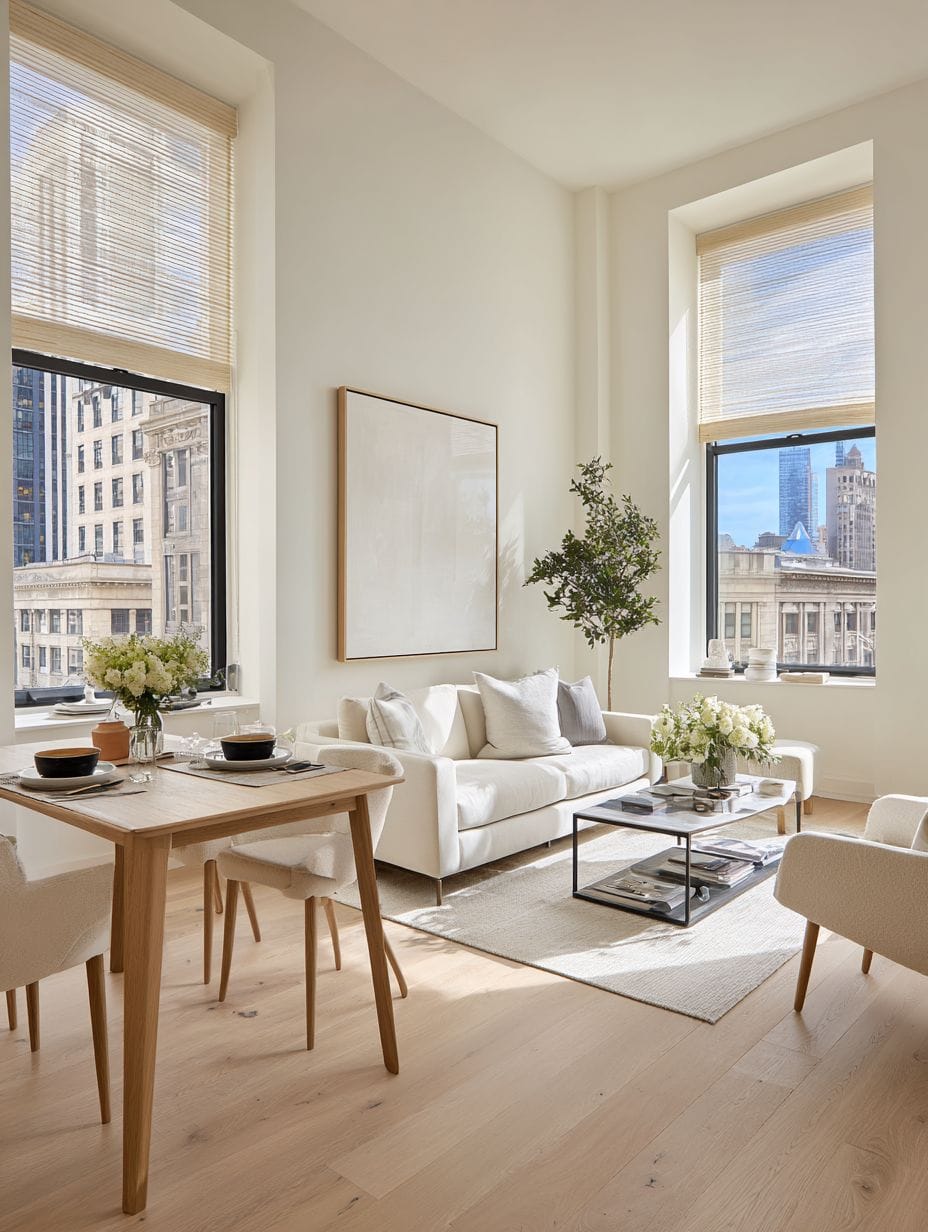
Window treatments in natural woven material filter daylight, creating subtle patterns on the light hardwood floors that change throughout the day as the sun moves across the sky. These organic shadows and light plays become part of the room’s ever-changing decoration, proving that minimalism need not mean monotony. The light wood flooring with visible grain provides warmth and natural variation that anchors the space without adding visual complexity. This design exemplifies how minimalism, when executed with attention to quality materials and thoughtful composition, creates serene environments that feel spacious, sophisticated, and remarkably calming.
- Limit furniture to essentials with clean lines and simple forms to maintain minimalist integrity.
- Choose transparent furniture elements like glass tables to maintain visual openness in small spaces.
- Display one large-scale artwork instead of multiple small pieces for greater visual impact.
- Select natural materials like linen and wood to add warmth and prevent minimalist spaces from feeling cold.
- Embrace negative space as a design element rather than something that needs filling.
6. Cozy Textured Comfort
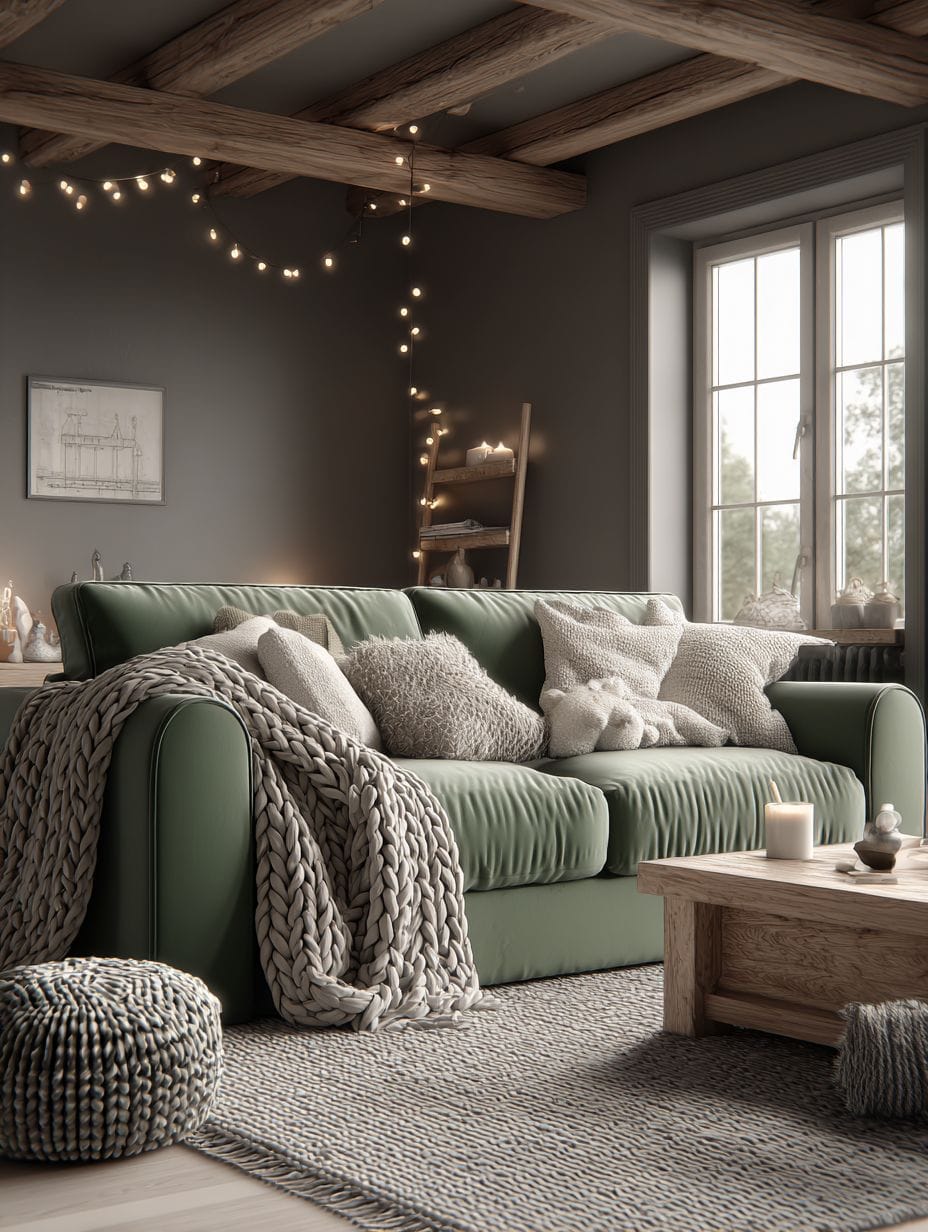
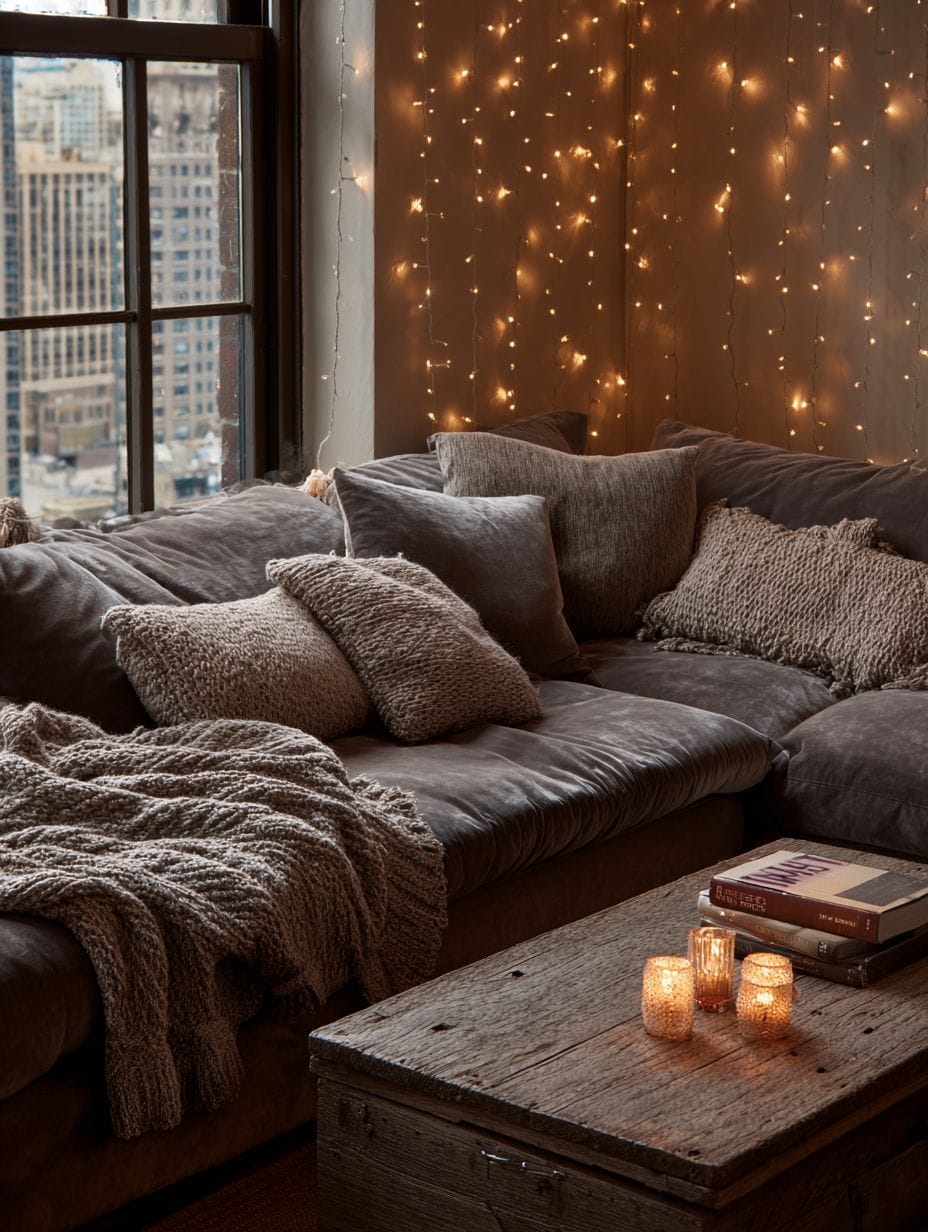
This apartment living room idea celebrates comfort through layered textiles and thoughtful texture combinations, centered around a deep-seated sofa in soft velvet upholstery in sage green positioned near the window to maximize natural light. The sage green color choice brings nature indoors, creating psychological calm while the sumptuous velvet fabric invites touch and relaxation. The deep seating depth allows for comfortable lounging, perfect for curling up with books or settling in for movie marathons, demonstrating that apartment living rooms can prioritize comfort without sacrificing style.
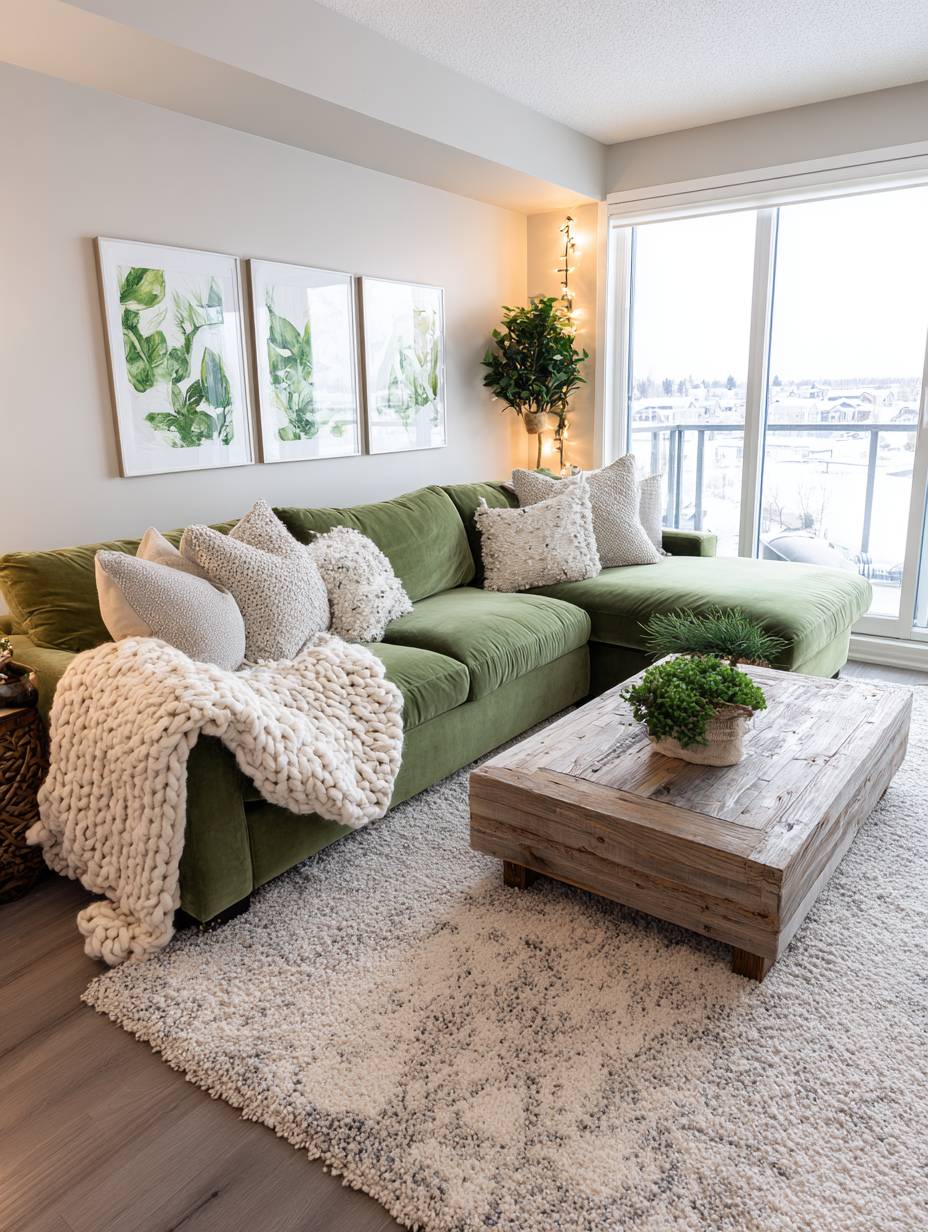
Layered textiles create a cocoon-like atmosphere of warmth and invitation. A chunky knit throw blanket drapes casually over the sofa arm, its oversized weave adding sculptural texture and tactile appeal. Various textured pillows in complementary neutral tones—cream, oatmeal, soft grey, and warm taupe—create visual depth and provide adjustable comfort for different lounging positions. Each textile layer contributes to the room’s sensory richness, transforming a simple sofa into a haven of comfort. A vintage-inspired wooden coffee table with visible grain texture adds warmth and organic beauty, its weathered patina suggesting history and character.
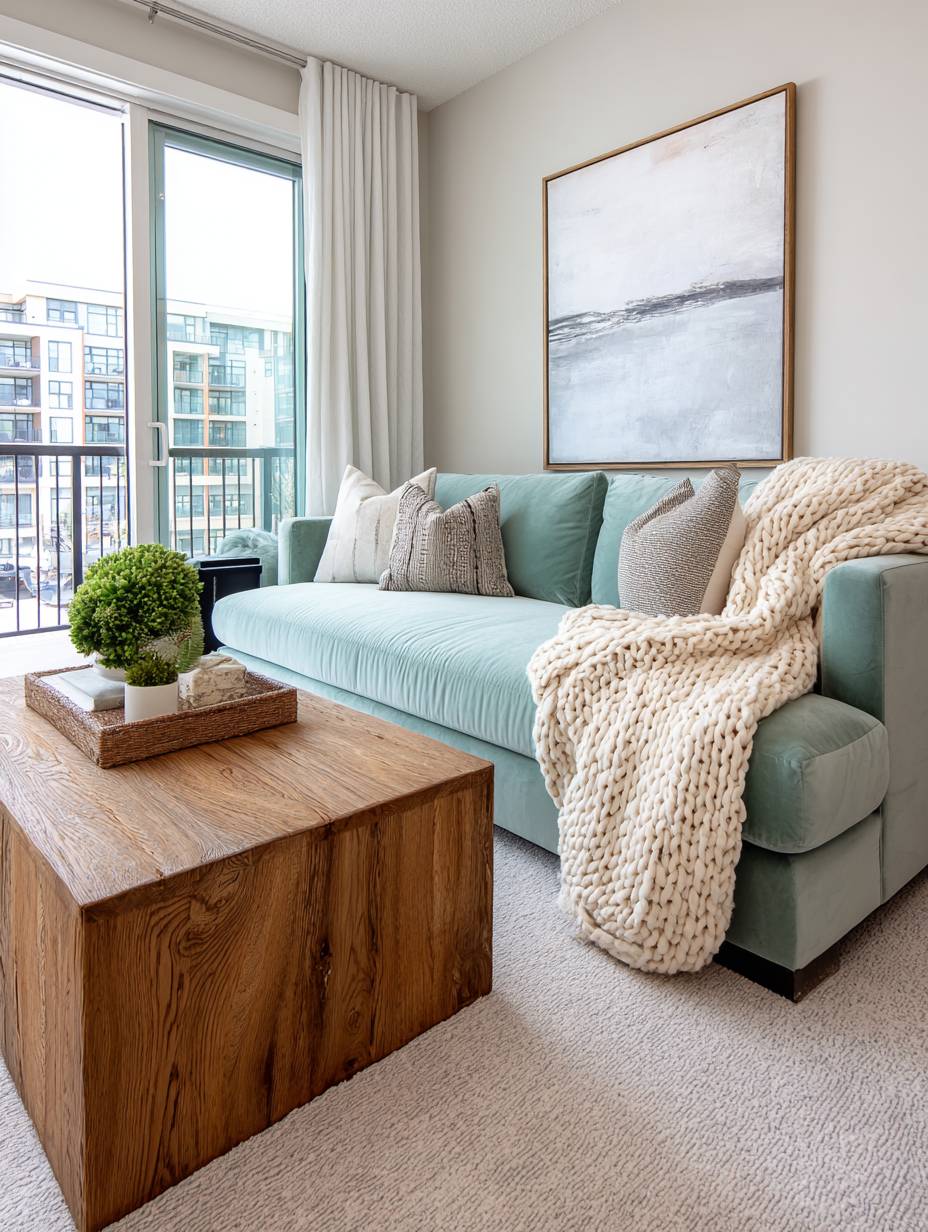
String lights draped subtly along one wall create ambient evening lighting that transforms the space’s mood as daylight fades. This whimsical lighting choice adds soft, twinkling illumination that feels intimate and welcoming, perfect for relaxed evenings at home. The combination of soft textures, warm colors, and gentle lighting creates a living room that feels like a comforting embrace, demonstrating how intentional material selection and layering can transform apartments into deeply personal retreats from the urban world outside.
- Choose deep-seated sofas for maximum lounging comfort in living rooms prioritizing relaxation.
- Layer multiple textures through throws, pillows, and rugs to create sensory richness and visual depth.
- Position seating near windows to take advantage of natural light for reading and daytime activities.
- Add string lights for affordable ambient lighting that creates intimate evening atmospheres.
- Select velvet upholstery for luxurious texture that adds sophistication to casual, comfortable spaces.
7. Light-Maximizing Layout
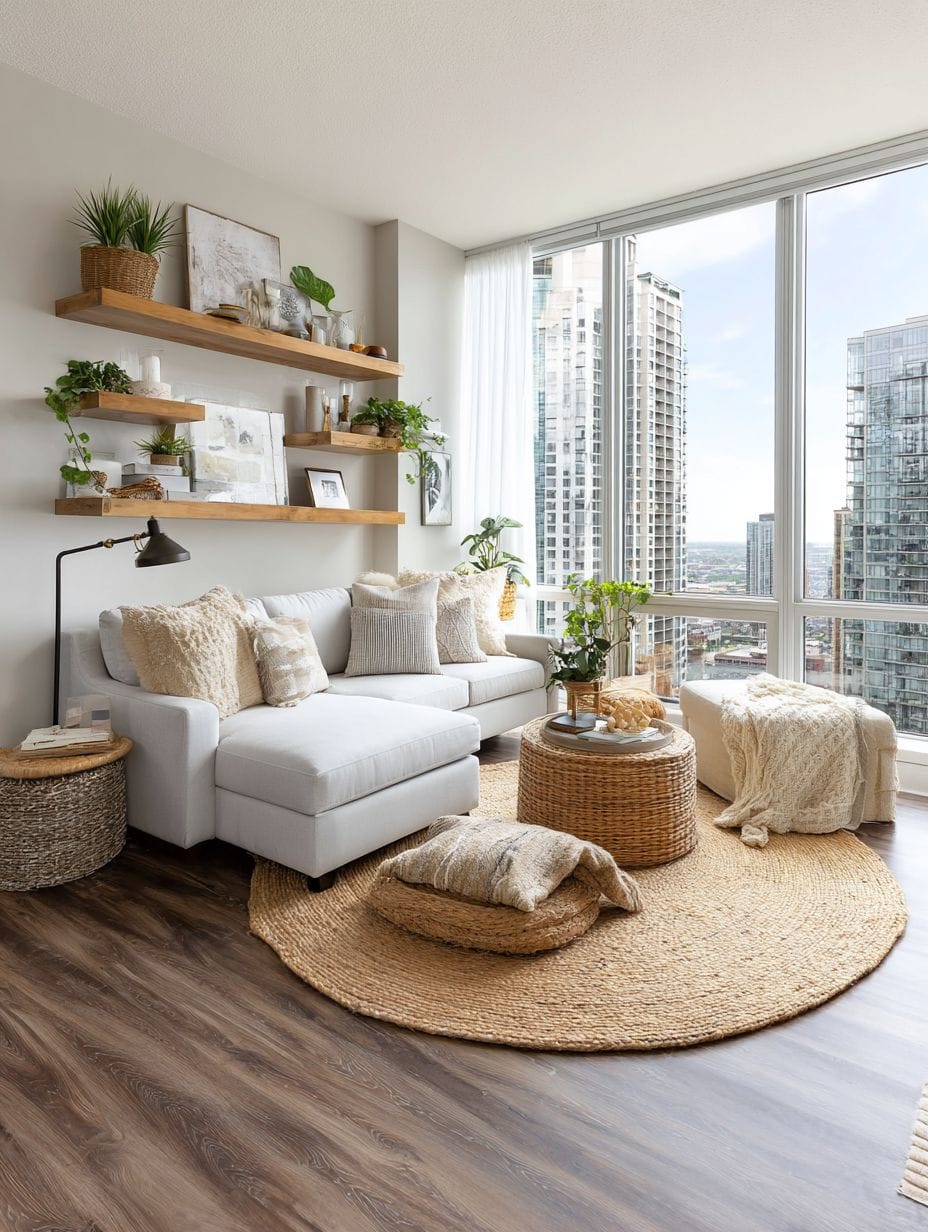
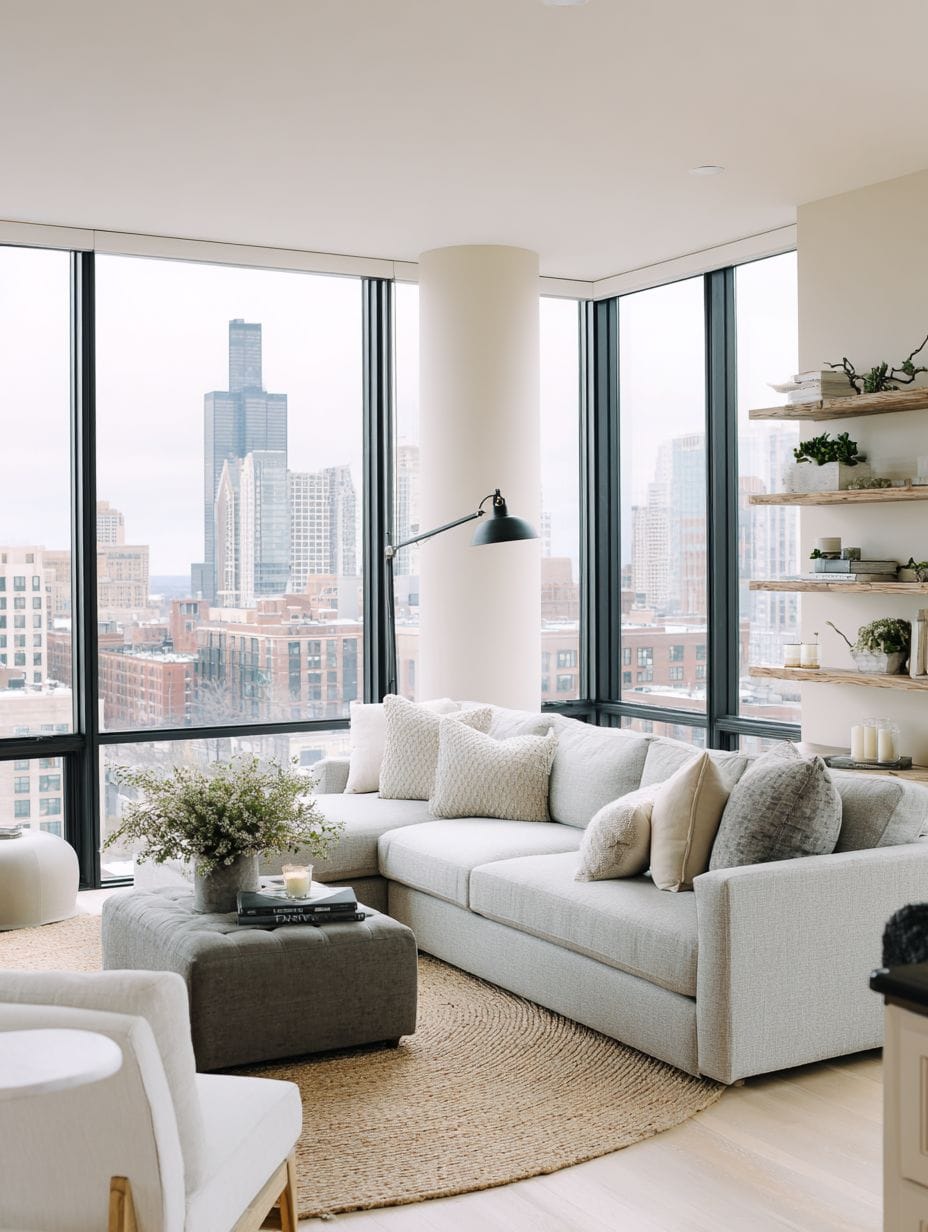
Understanding that natural light dramatically affects how spaces feel, this apartment living room idea positions a light grey sofa perpendicular to large windows, maximizing daylight exposure throughout the day. This strategic furniture placement ensures that natural light floods the seating area from the side, reducing glare on screens while bathing occupants in warm sunlight. The light grey upholstery reflects rather than absorbs light, contributing to the room’s overall brightness and helping the space feel more expansive than its actual square footage suggests.
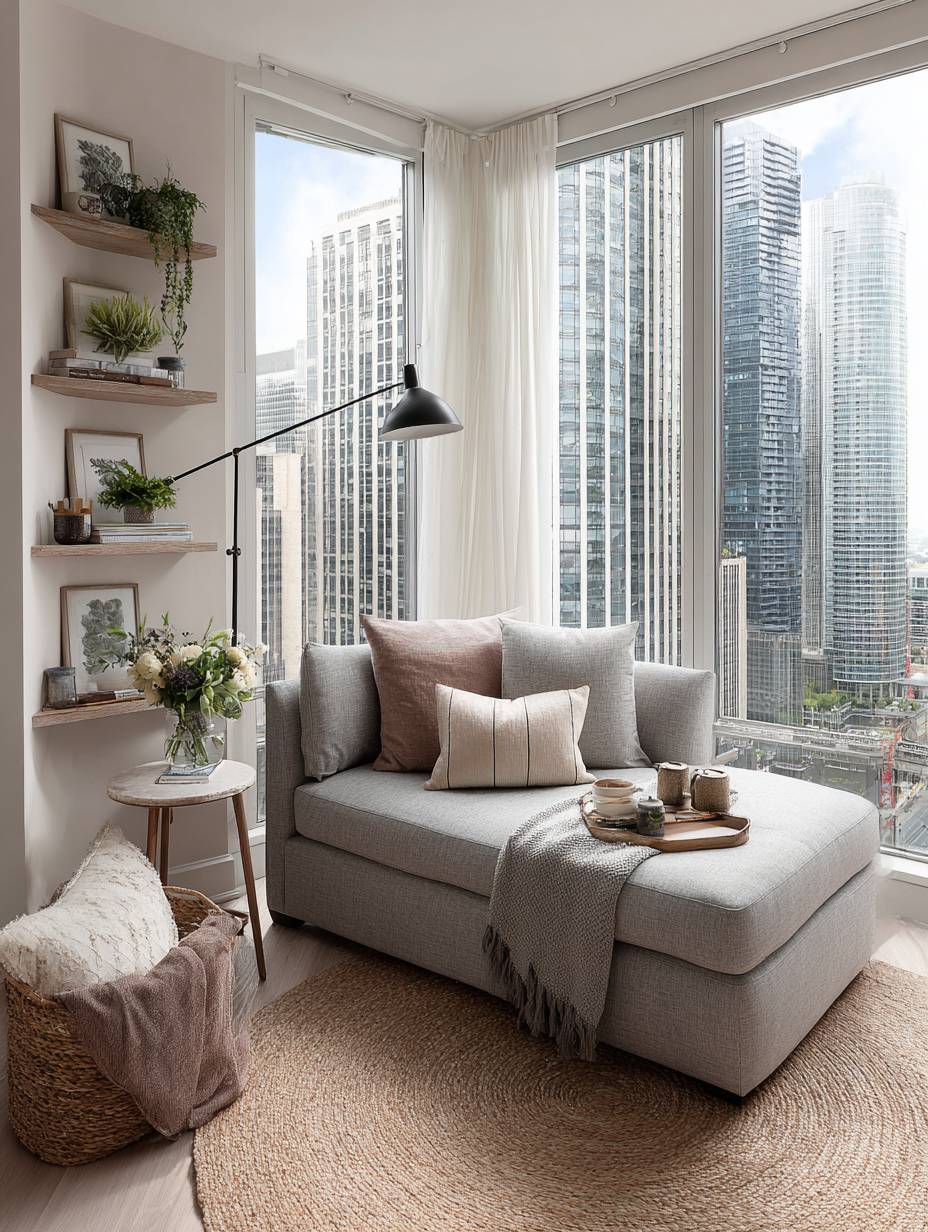
Sheer curtains in white linen diffuse bright daylight across the space, creating soft, even illumination that eliminates harsh shadows while maintaining privacy from neighbors or passersby. The natural linen fabric adds subtle texture and organic warmth, preventing the white-on-white scheme from feeling too clinical. These window treatments demonstrate that privacy and natural light need not be mutually exclusive—proper fabric selection allows both. A round jute rug defines the seating area while adding natural texture underfoot, its circular shape complementing the room’s flow and softer appearance compared to rectangular alternatives.
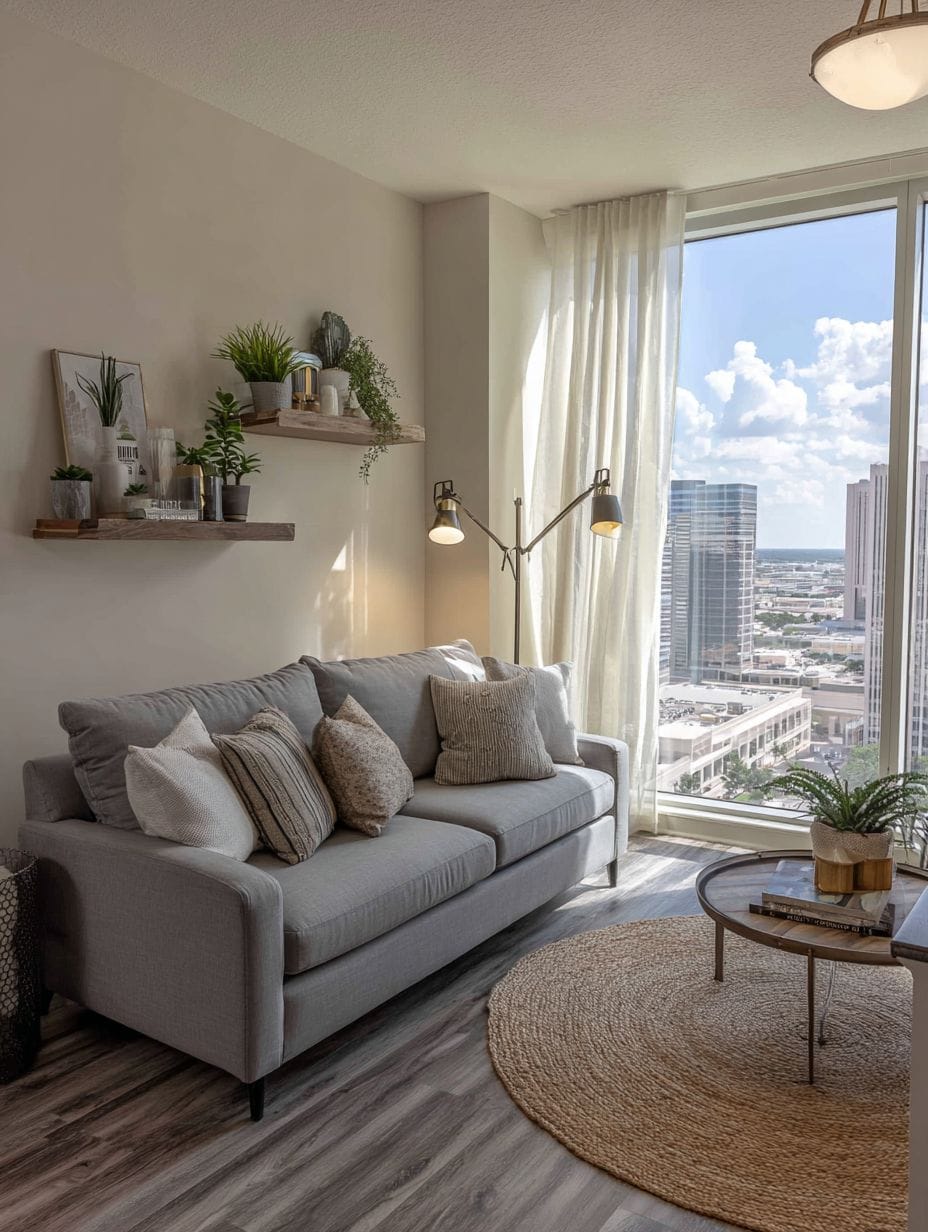
A sleek floor lamp with adjustable arm provides task lighting for reading without requiring overhead fixtures that might disrupt the clean ceiling line. This flexible lighting solution adapts to different activities throughout the day, proving its worth in multipurpose apartment living rooms. Floating shelves in natural wood display plants and minimal decor, adding life and personality while maintaining the room’s light, airy aesthetic. This design masterfully demonstrates how furniture placement relative to windows, strategic use of reflective colors, and minimal window treatments can maximize natural light—the most flattering, mood-enhancing, and cost-effective illumination available.
- Position seating perpendicular to windows to maximize natural light without creating glare on screens.
- Choose light-colored upholstery in grey or neutral tones to reflect and amplify available natural light.
- Install sheer linen curtains that provide privacy while allowing maximum light transmission.
- Add adjustable floor lamps for flexible task lighting that adapts to different activities and times of day.
- Use natural fiber rugs like jute to add texture without darkening or weighing down bright spaces.
8. Compact Color Story
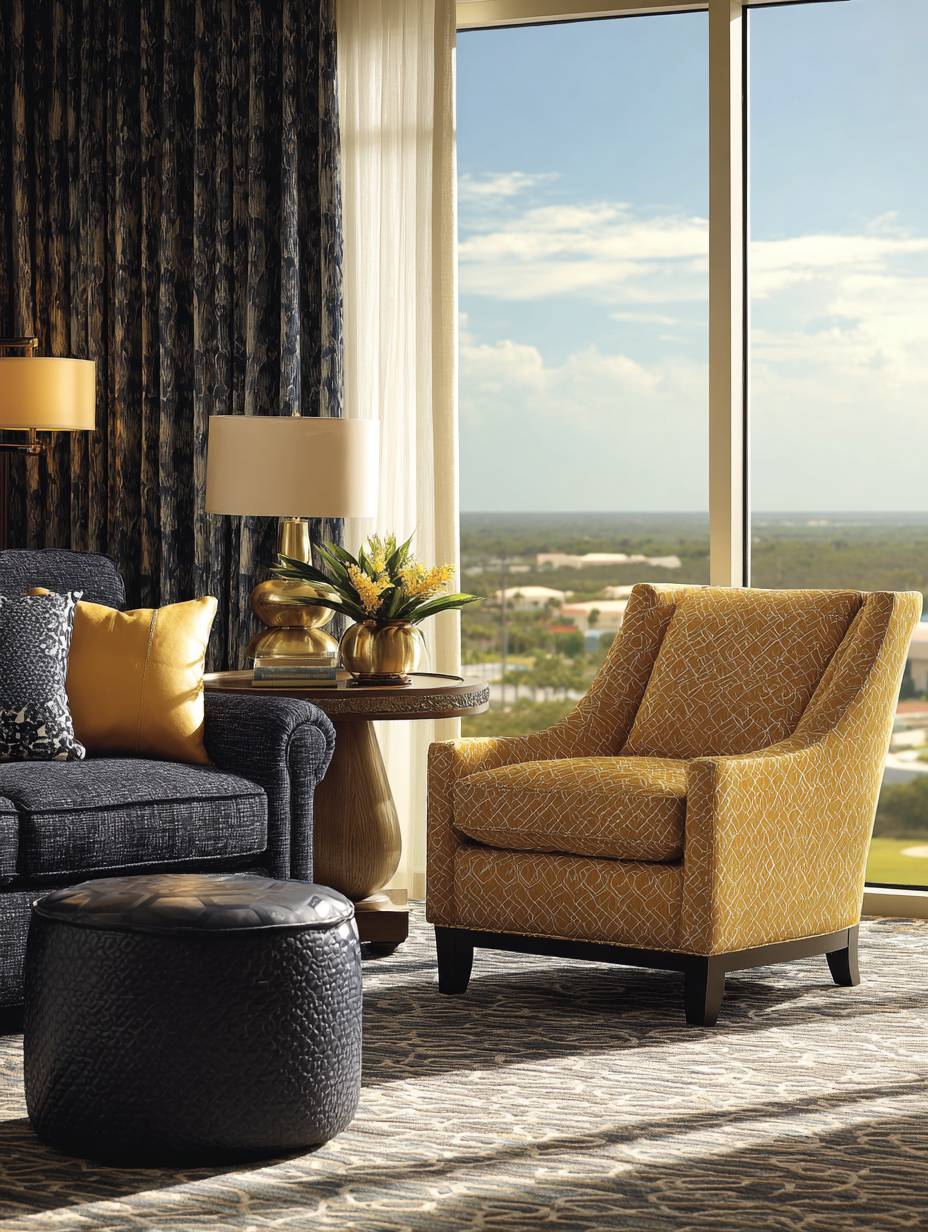
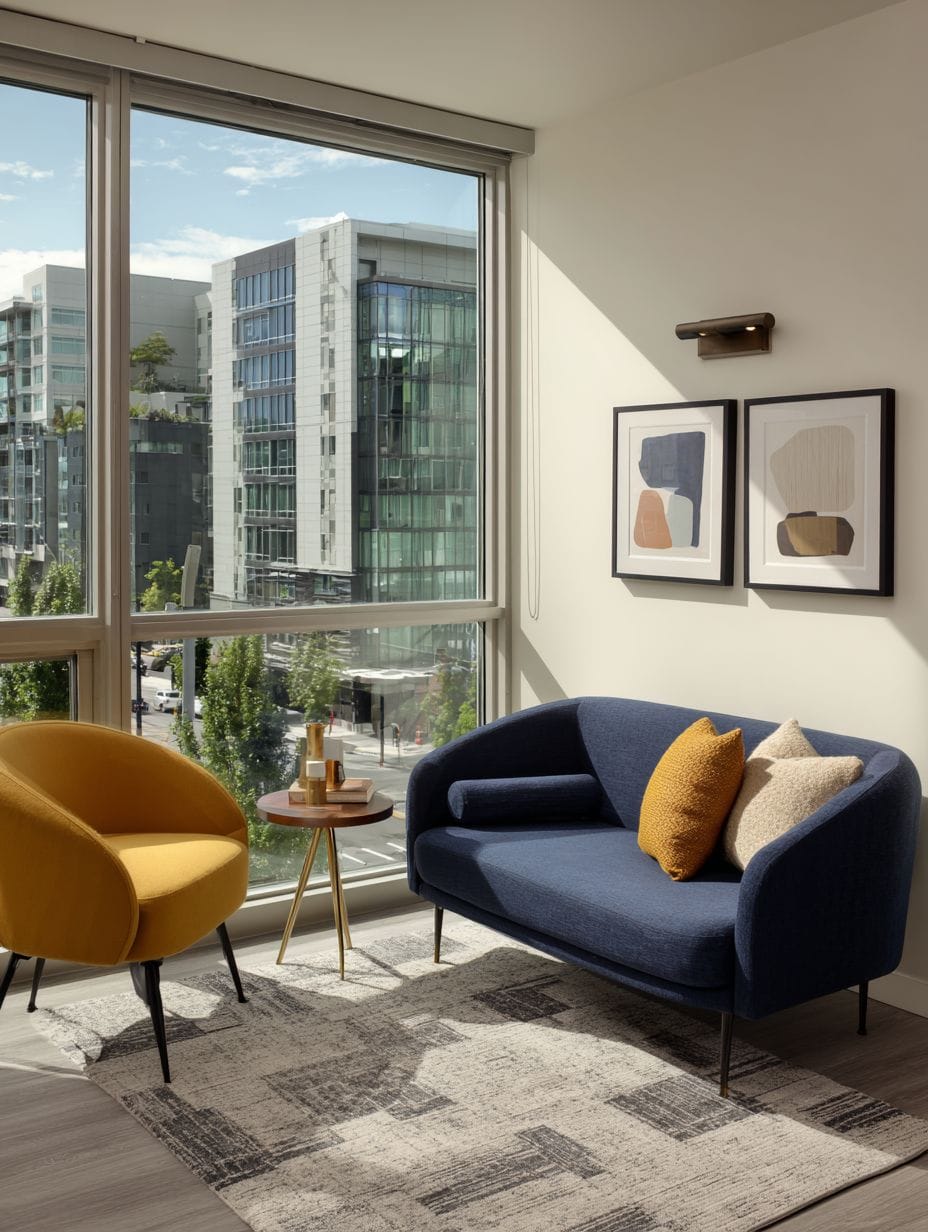
This small apartment living room embraces intentional color coordination, featuring a loveseat in navy blue fabric paired with a single accent chair in mustard yellow to create a cohesive, visually dynamic color story. The navy provides sophisticated depth and anchors the room with its rich, saturated hue, while the mustard yellow accent chair injects vibrant energy and creates an eye-catching focal point. This complementary color pairing—blue and yellow—creates natural visual harmony based on color theory principles, demonstrating how strategic color selection can elevate simple furniture arrangements into thoughtfully designed spaces.
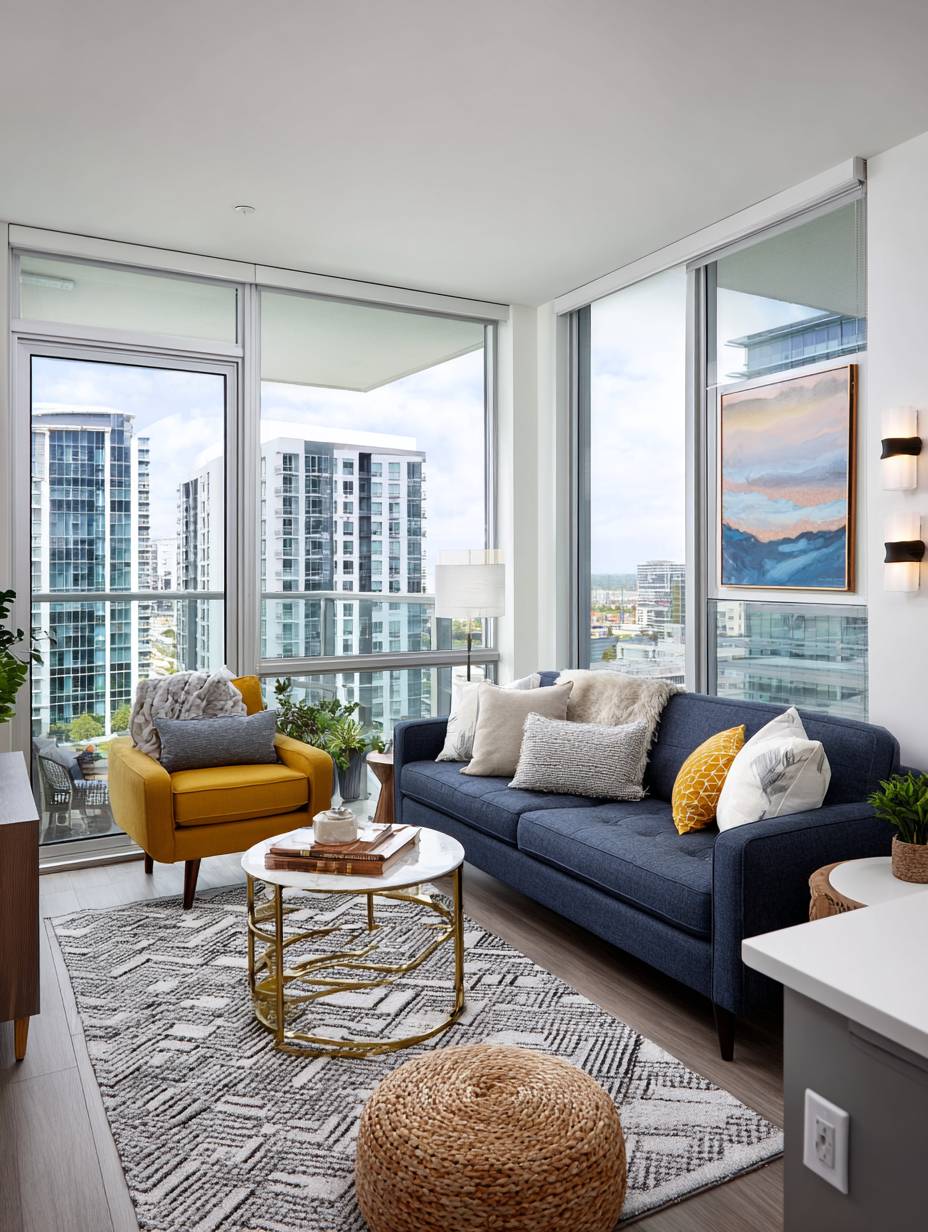
A compact round side table in brass finish nestles between the seating pieces, its warm metallic surface catching and reflecting light while providing essential surface space for drinks, books, or decorative objects. The brass material introduces a third color element—warm gold—that bridges the cool navy and warm yellow, creating color flow throughout the scheme. Wall-mounted sconces free up valuable surface space while providing warm ambient lighting, their fixed position eliminating the need for table lamps that would clutter the small side table. This lighting choice exemplifies smart small-space planning where every surface inch counts.
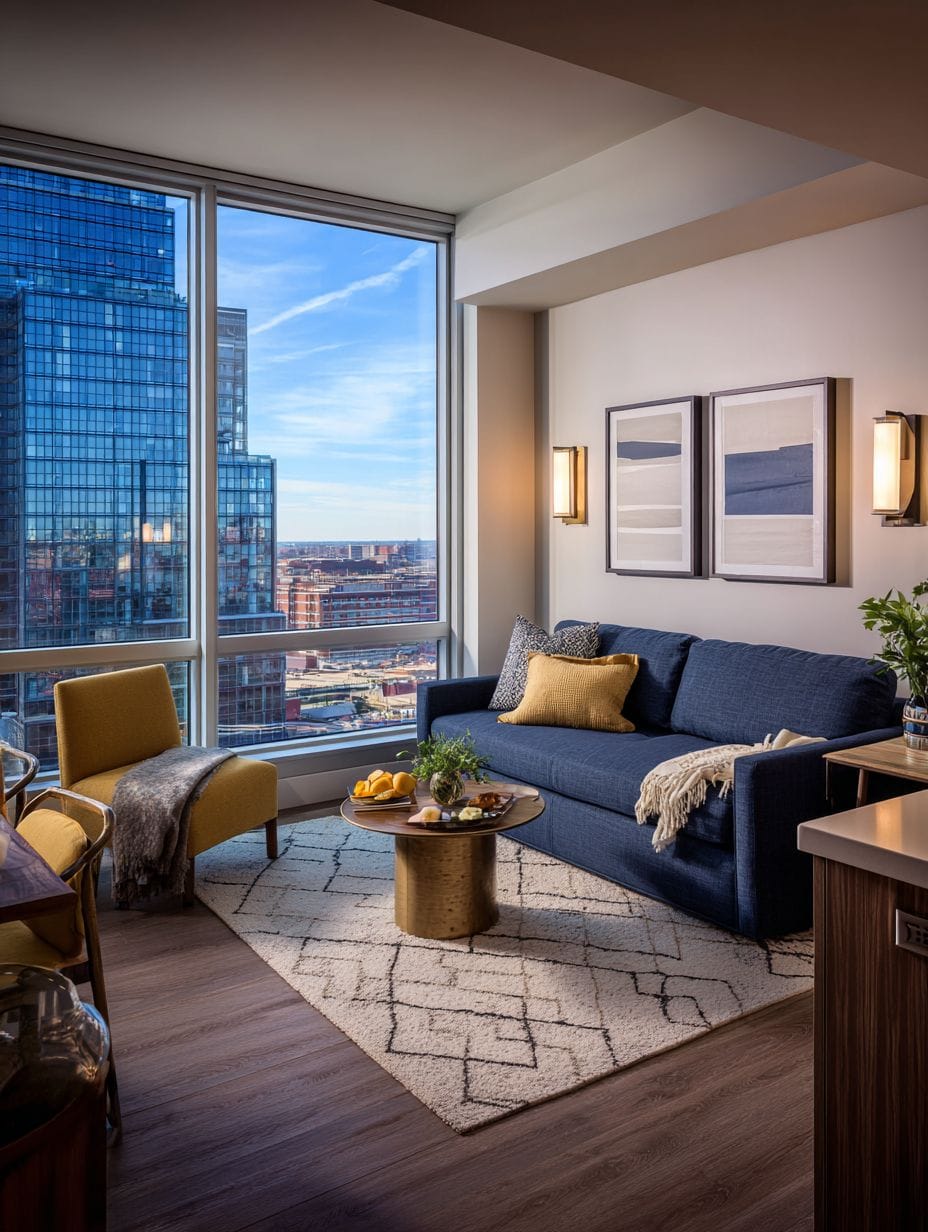
A small area rug in geometric pattern grounds the seating arrangement, its angular design adding visual interest and contemporary edge to the room. The rug’s pattern incorporates colors from the larger scheme—navy, yellow, brass, and white—creating cohesion and intentionality. The geometric design adds energy and modernity without overwhelming the compact space, proving that pattern can work effectively even in small rooms when carefully selected and properly scaled. This design demonstrates how thoughtful color coordination, space-efficient furniture, and strategic lighting can create apartment living rooms that feel complete, cohesive, and considerably larger than their actual dimensions.
- Create intentional color stories using complementary colors like navy and yellow for natural visual harmony.
- Use accent chairs in bold colors to inject personality without requiring full sofa commitment.
- Choose wall-mounted lighting in small spaces to preserve precious surface area on side tables.
- Select metallic accent pieces that reflect light and add warmth to color schemes.
- Ground seating areas with rugs that incorporate colors from the overall palette for cohesion.
9. Eclectic Vintage-Modern Mix
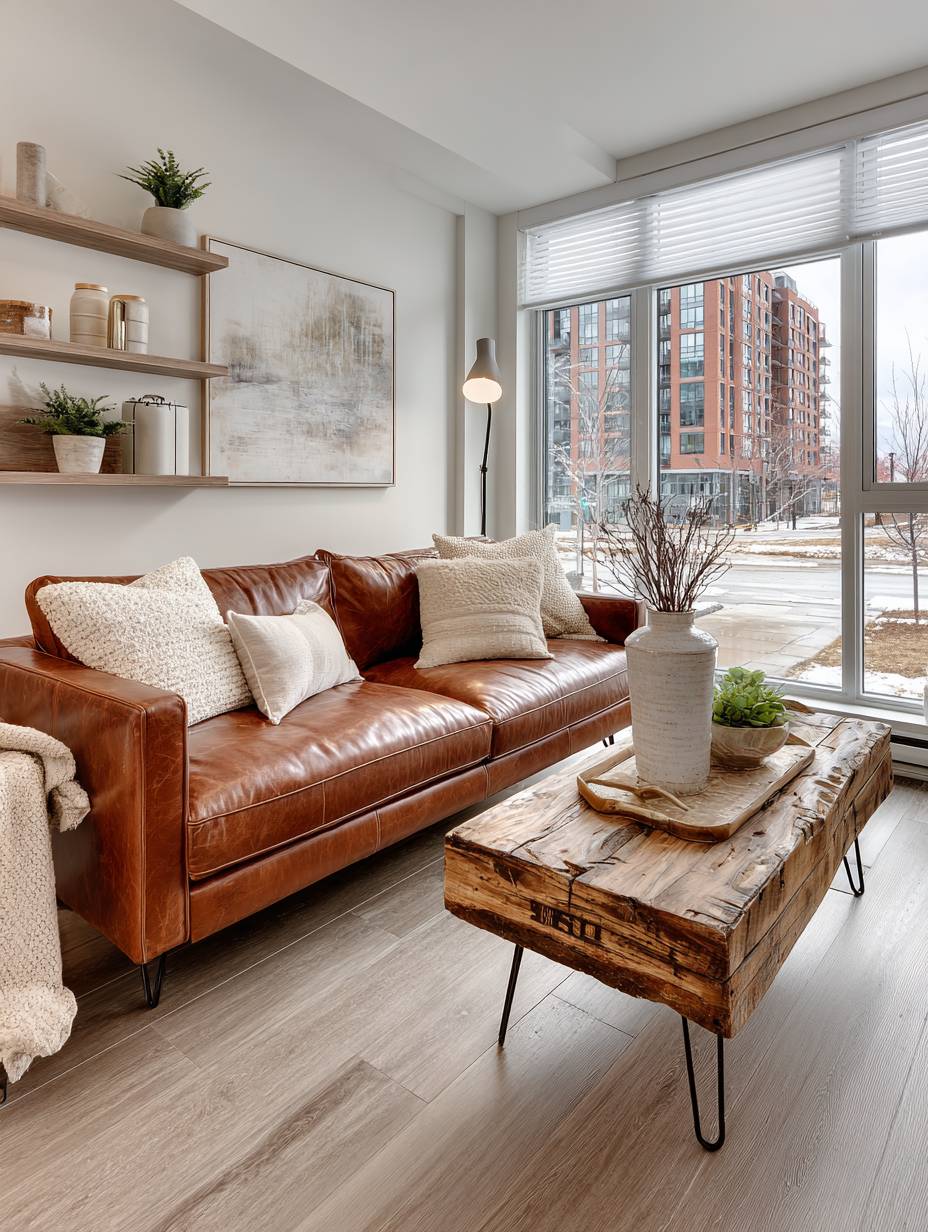
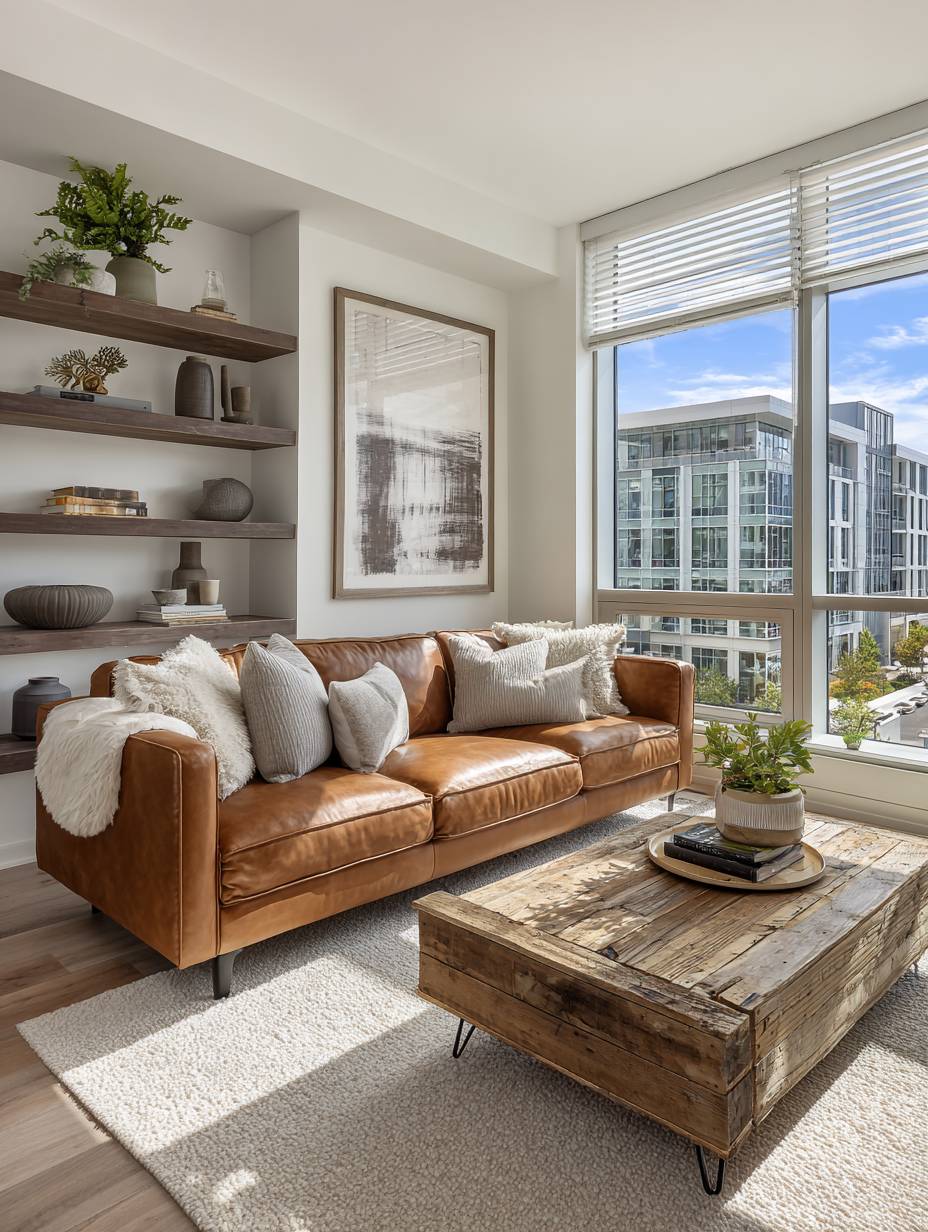
This apartment living room idea celebrates personality through eclectic mixing of vintage and modern elements, anchored by a mid-century style sofa in caramel leather as the room’s centerpiece. The leather upholstery develops beautiful patina over time, becoming more attractive with age and use—a sustainable choice that improves rather than deteriorates. The sofa’s clean-lined mid-century silhouette with tapered wooden legs provides timeless style that bridges eras, comfortable alongside both vintage treasures and contemporary pieces. This versatile foundation allows the room to evolve as tastes change or new pieces are discovered.
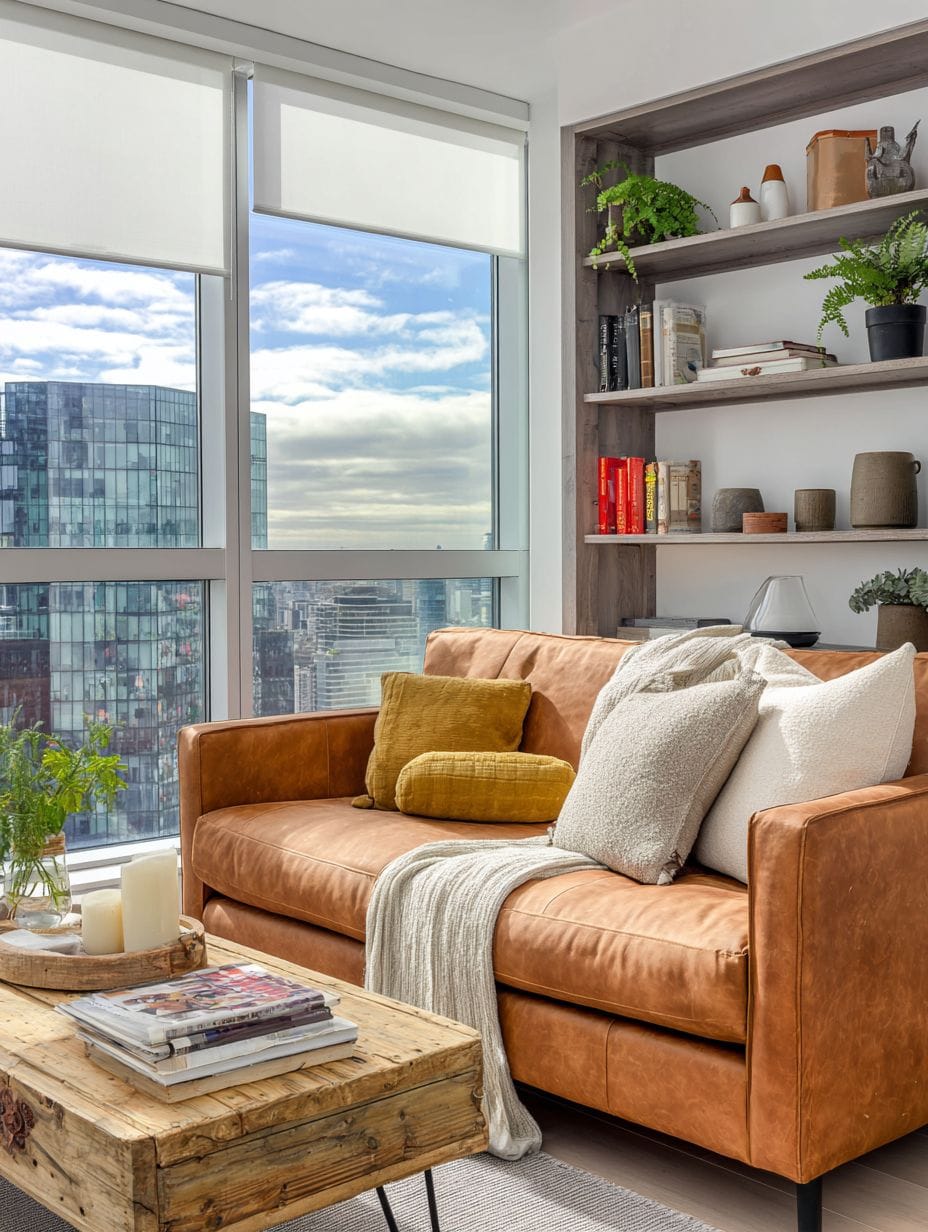
A reclaimed wood coffee table with metal hairpin legs perfectly embodies the vintage-modern aesthetic, combining salvaged wood with industrial-modern metal supports. The wood’s weathered surface tells stories of previous lives, adding instant history and character to new apartments that often lack architectural detail. The hairpin legs provide airy support without visual bulk, maintaining sight lines and preserving the room’s open feeling. Open shelving displays a curated collection of books, plants, and ceramic pieces, each item chosen for meaning rather than mere decoration. This personal curation transforms generic shelving into visual autobiography, making the space uniquely reflective of its inhabitant.
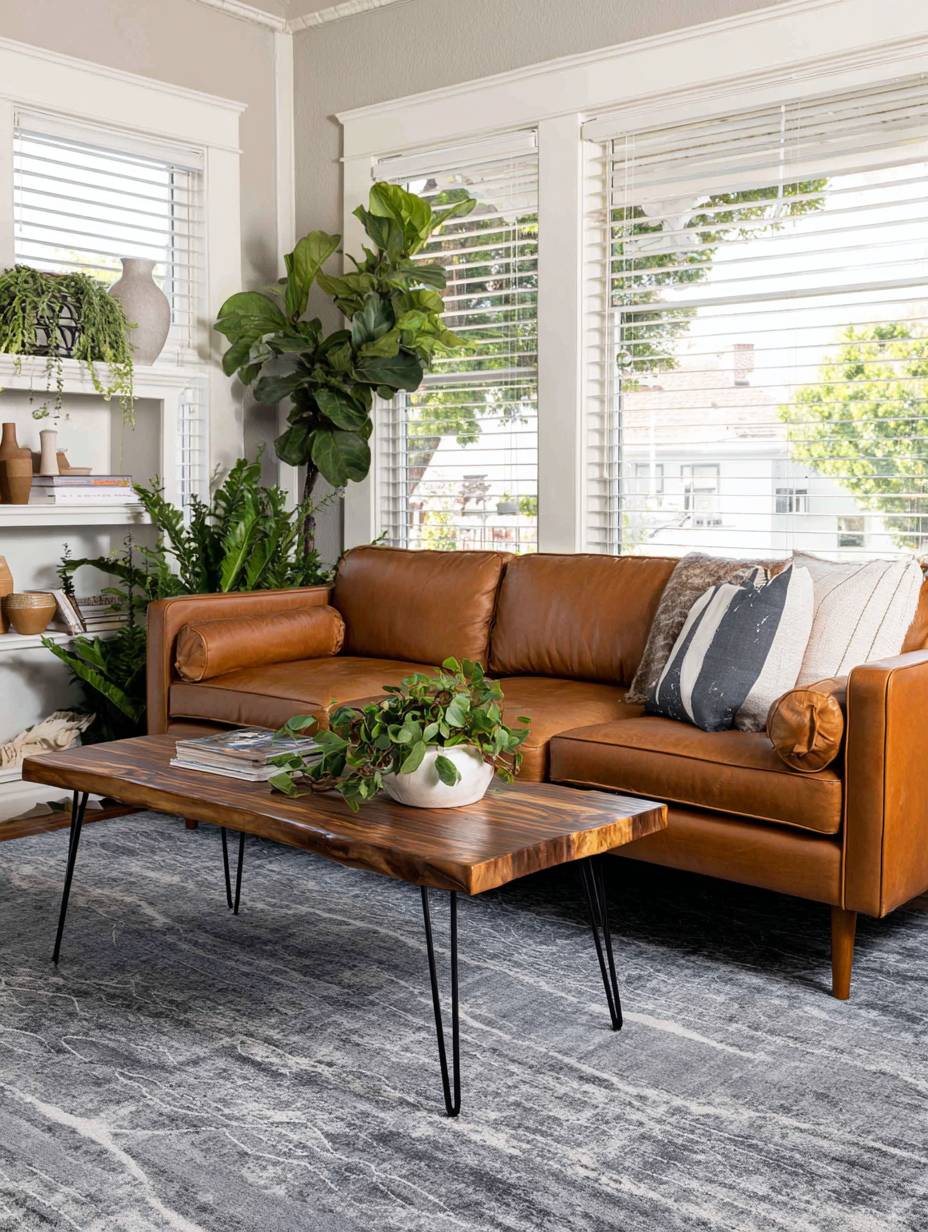
Large windows with simple white blinds allow natural light to showcase the varied textures throughout the room—smooth leather, rough reclaimed wood, matte ceramic, glossy plant leaves—each material catching light differently and contributing to the space’s rich visual texture. The white blinds provide necessary light control and privacy without competing visually with the room’s eclectic character. This design proves that successful eclecticism requires curation and restraint—every piece must earn its place through beauty, function, or meaning—creating collected-over-time spaces that feel authentic, personal, and infinitely more interesting than perfectly matched furniture suites.
- Invest in quality leather furniture that develops attractive patina and improves with age rather than showing wear.
- Mix furniture eras intentionally, ensuring each piece has distinct character that contributes to the overall story.
- Choose reclaimed materials like salvaged wood to add instant history and sustainability to new apartments.
- Curate open shelving displays with meaningful objects rather than filling space with generic decor.
- Maintain consistent metal finishes like brass or iron throughout to create cohesion in eclectic spaces.
10. Scandinavian Simplicity
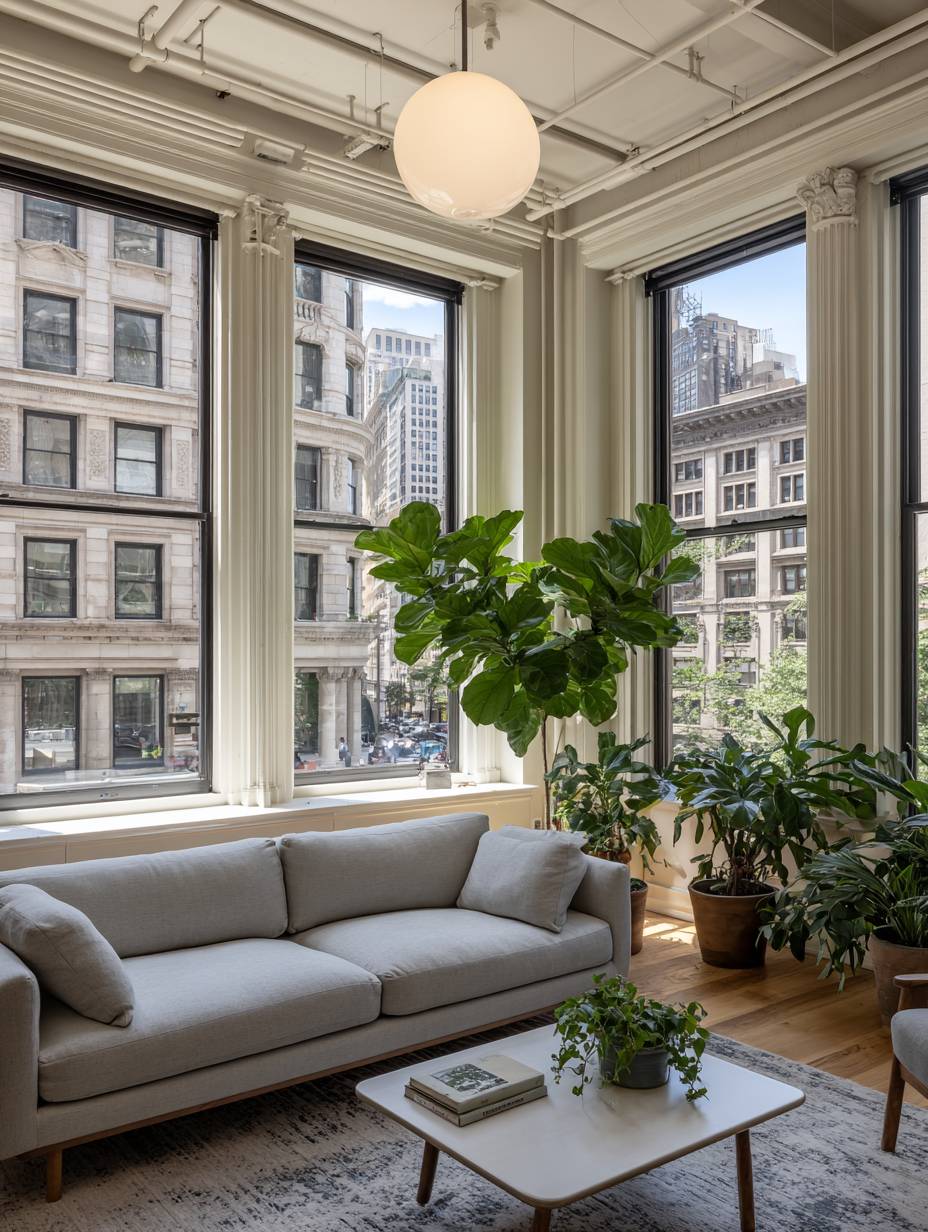
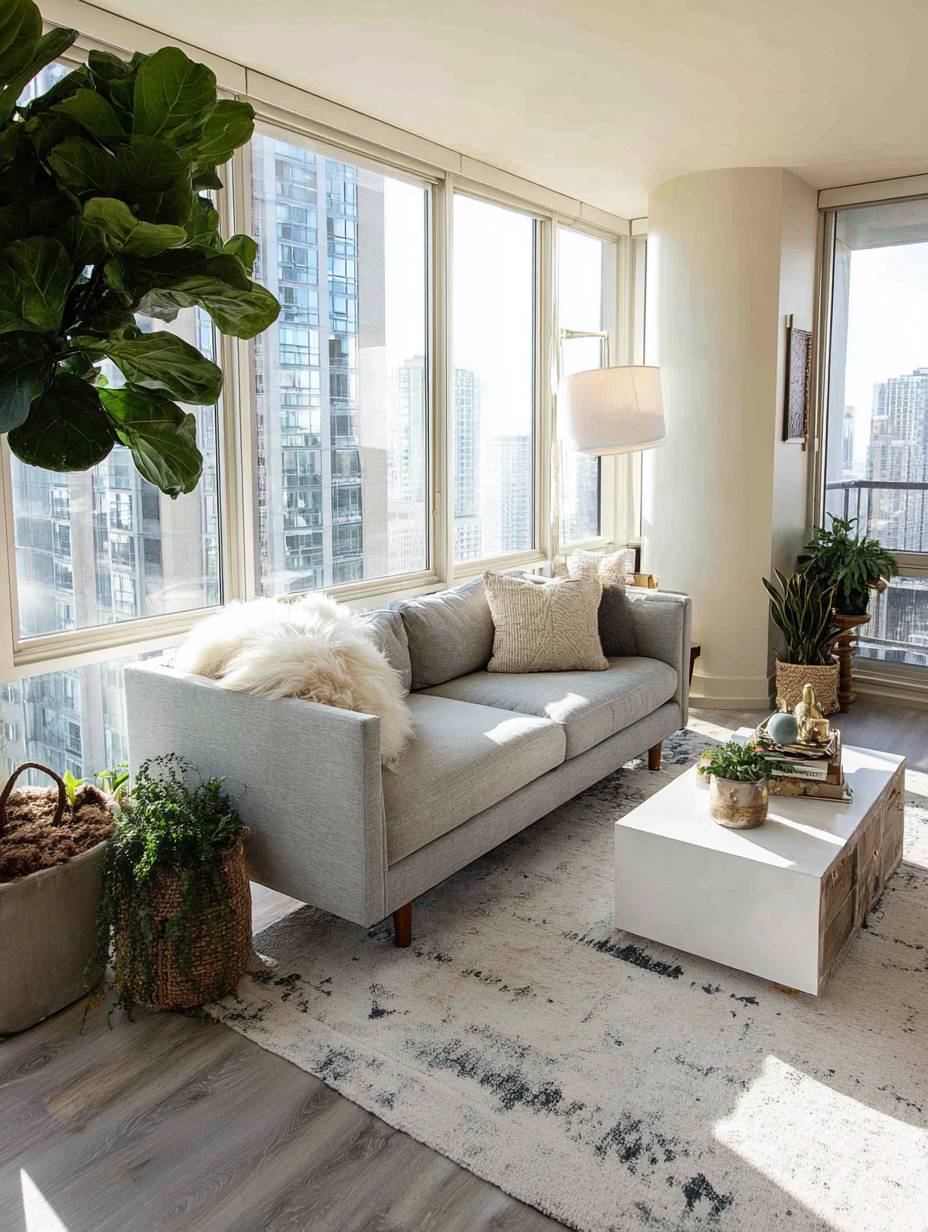
Embodying the beloved Scandinavian design philosophy of functional beauty, this apartment living room features a light grey fabric sofa with clean lines and oak legs that exemplify Nordic minimalism. The sofa’s simple silhouette avoids unnecessary ornamentation, allowing its beautiful proportions and quality construction to speak for themselves. The light grey upholstery creates serene neutrality while the exposed oak legs add organic warmth—a characteristic Scandinavian combination that balances cool and warm elements. This design approach, born from long Nordic winters and limited natural light, maximizes brightness while creating cozy comfort.
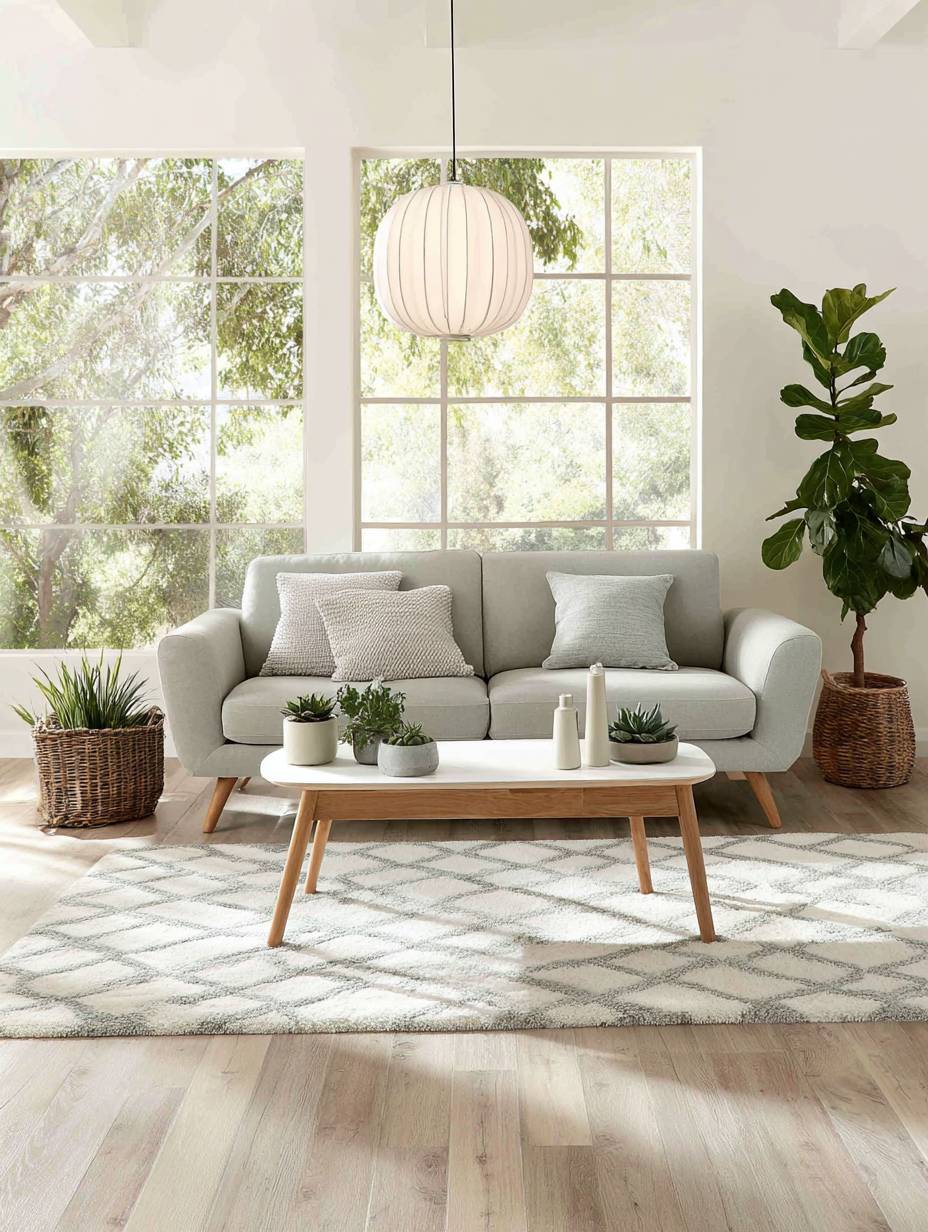
A white painted coffee table sits atop a wool rug in subtle grey and white pattern, its geometric design adding visual interest through restraint rather than boldness. The Scandinavian aesthetic appreciates pattern but applies it with discipline, ensuring designs remain timeless rather than trendy. Potted plants including a statement fiddle leaf fig and smaller succulents bring essential life and natural elements indoors, connecting inhabitants with nature—a core principle of Scandinavian design that recognizes humans’ psychological need for natural elements even in urban environments. The plants’ organic forms provide pleasing contrast to the room’s clean lines and geometric order.
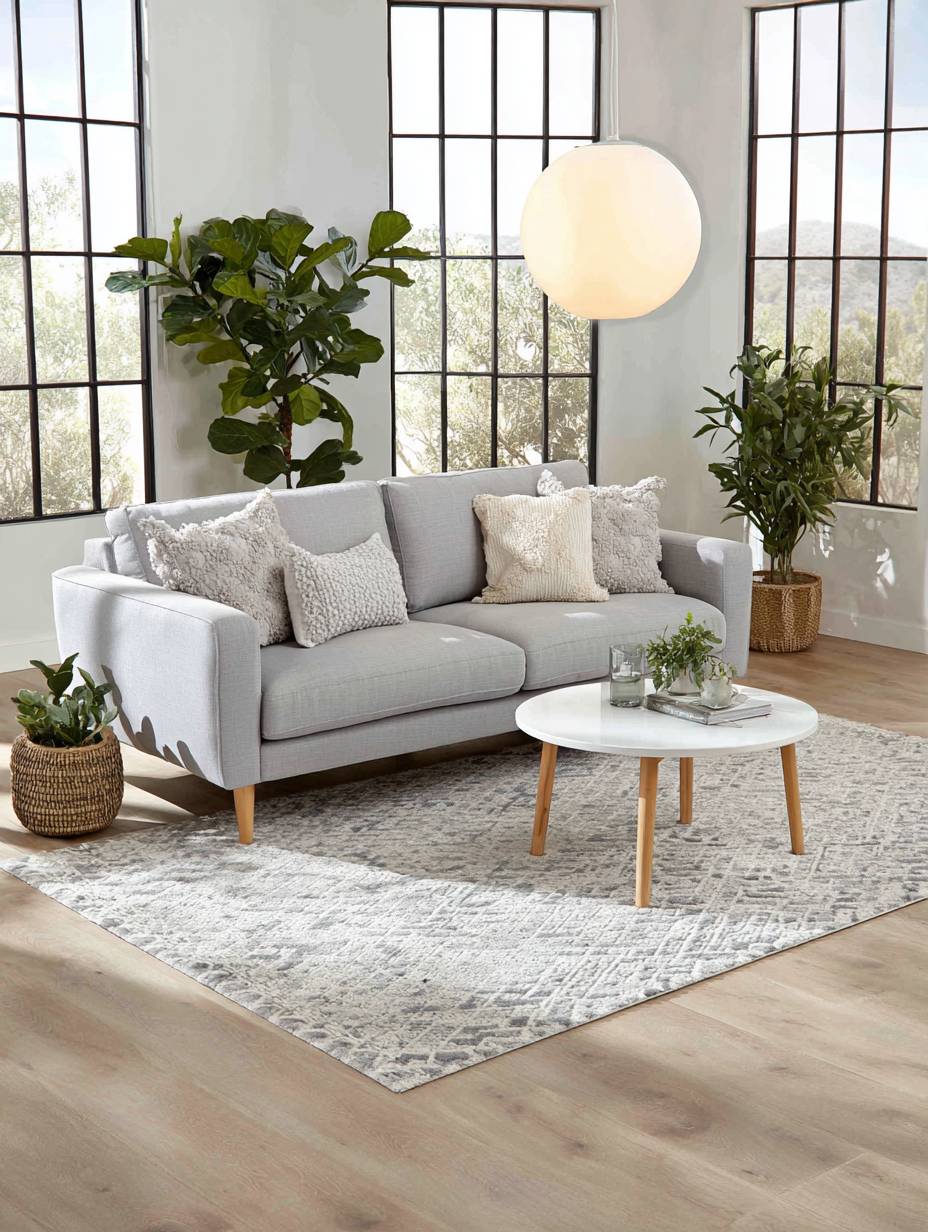
A simple pendant light with white shade hangs centered above, providing even illumination without decorative excess. Natural light from large windows creates soft shadows on the light wood flooring, its pale finish reflecting light throughout the space and contributing to the characteristic Scandinavian brightness. Every element in this room serves clear purpose while contributing to overall aesthetic harmony, demonstrating the Scandinavian principle that good design should be accessible, functional, and beautiful—never pretentious or purely decorative. This approach creates apartment living rooms that feel calm, organized, and effortlessly sophisticated while remaining warm and welcoming rather than cold or austere.
- Choose furniture with exposed wood legs in light finishes to add warmth while maintaining visual lightness.
- Select light, neutral upholstery colors to maximize brightness and create serene atmospheres.
- Incorporate plants generously to bring nature indoors and add organic contrast to clean-lined furniture.
- Use geometric patterns sparingly in textiles and rugs for visual interest that remains timeless.
- Maximize natural light with minimal window treatments and light-reflective surfaces throughout.
11. Entertainment-Focused Layout
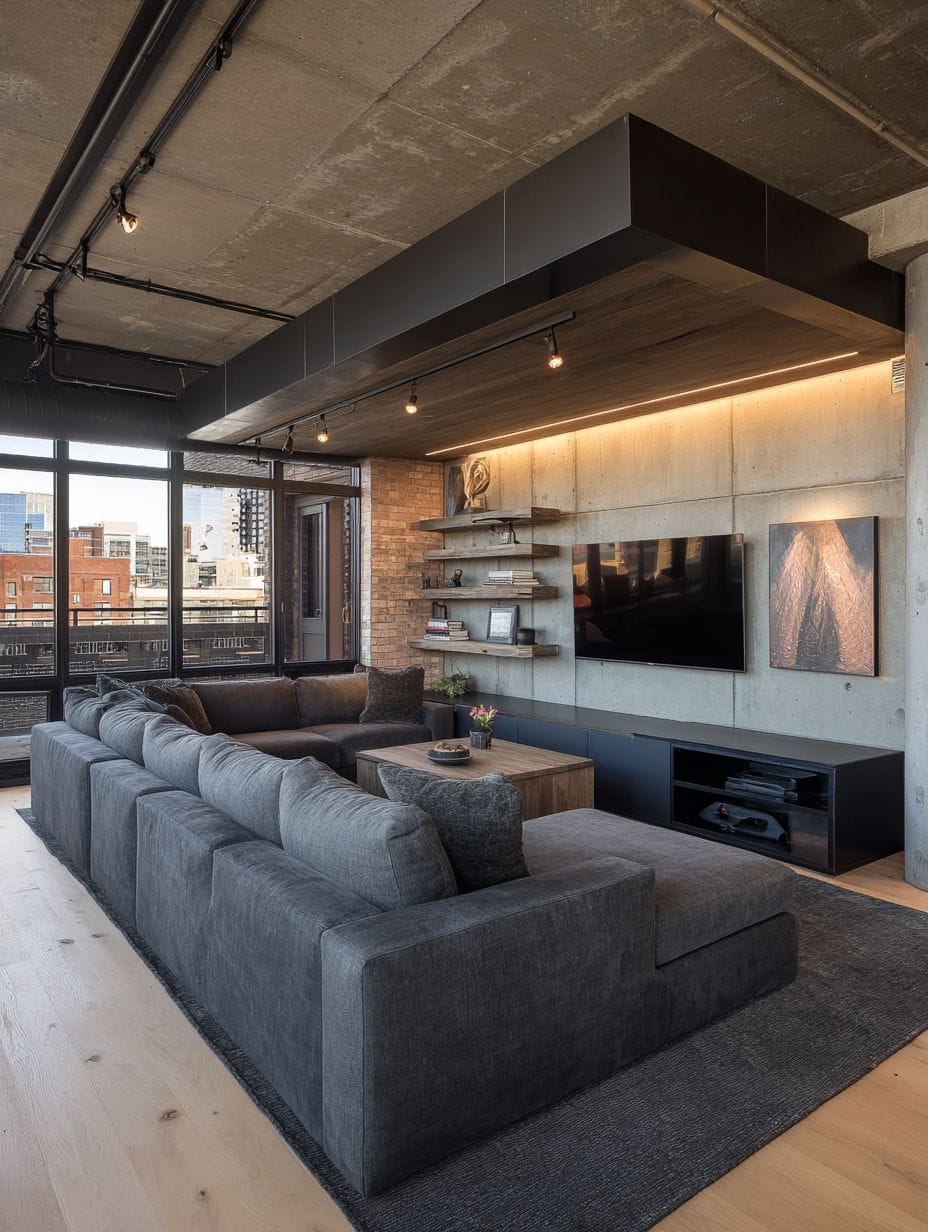
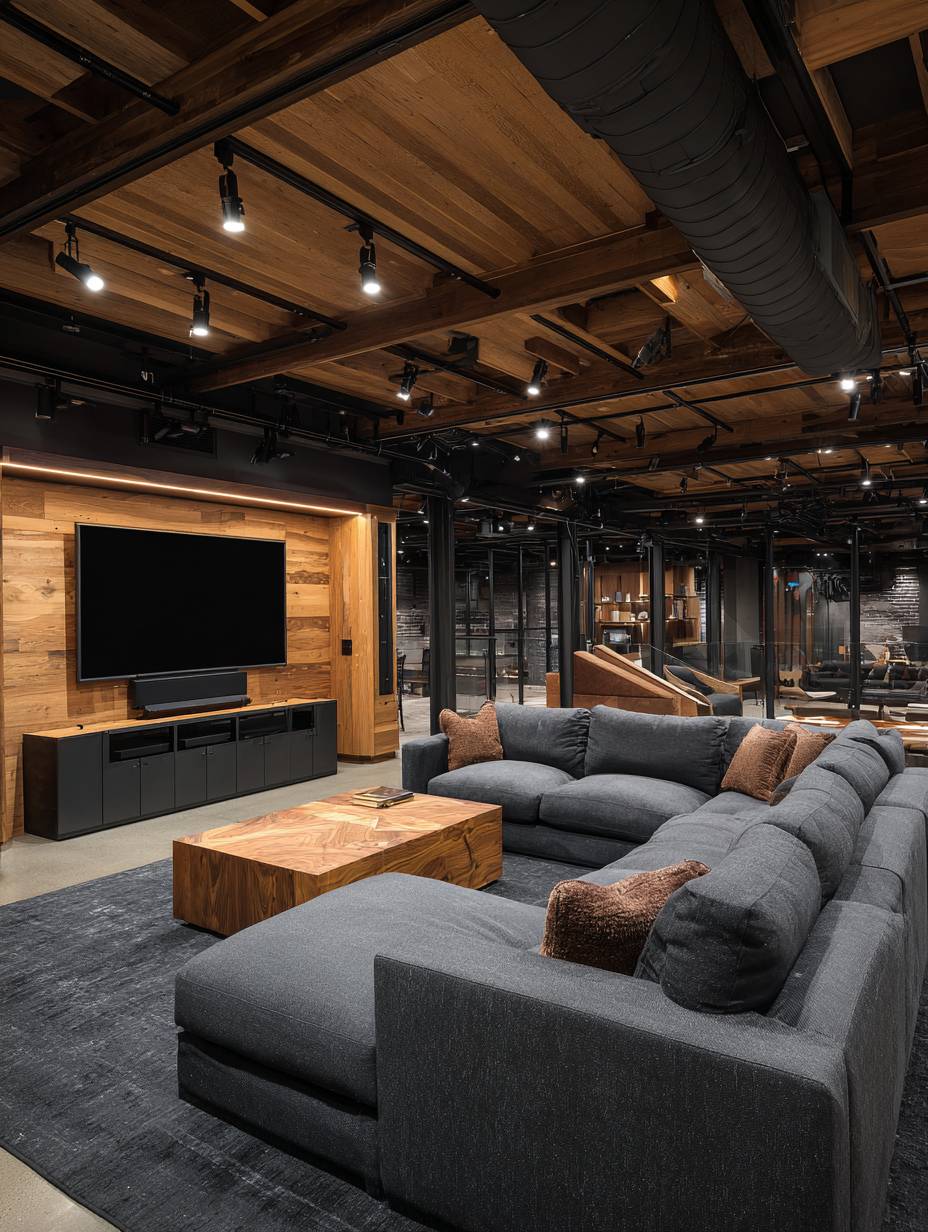
Designed specifically for media enjoyment and entertainment, this apartment living room centers around a comfortable sectional in charcoal fabric arranged to face a wall-mounted flat screen television. The dark upholstery provides sophisticated backdrop for movie viewing while hiding everyday wear—a practical choice for high-use seating. The sectional’s generous proportions offer ample seating for hosting friends while the chaise extension provides comfortable lounging for extended viewing sessions. This furniture configuration prioritizes entertainment functionality while maintaining style and comfort.
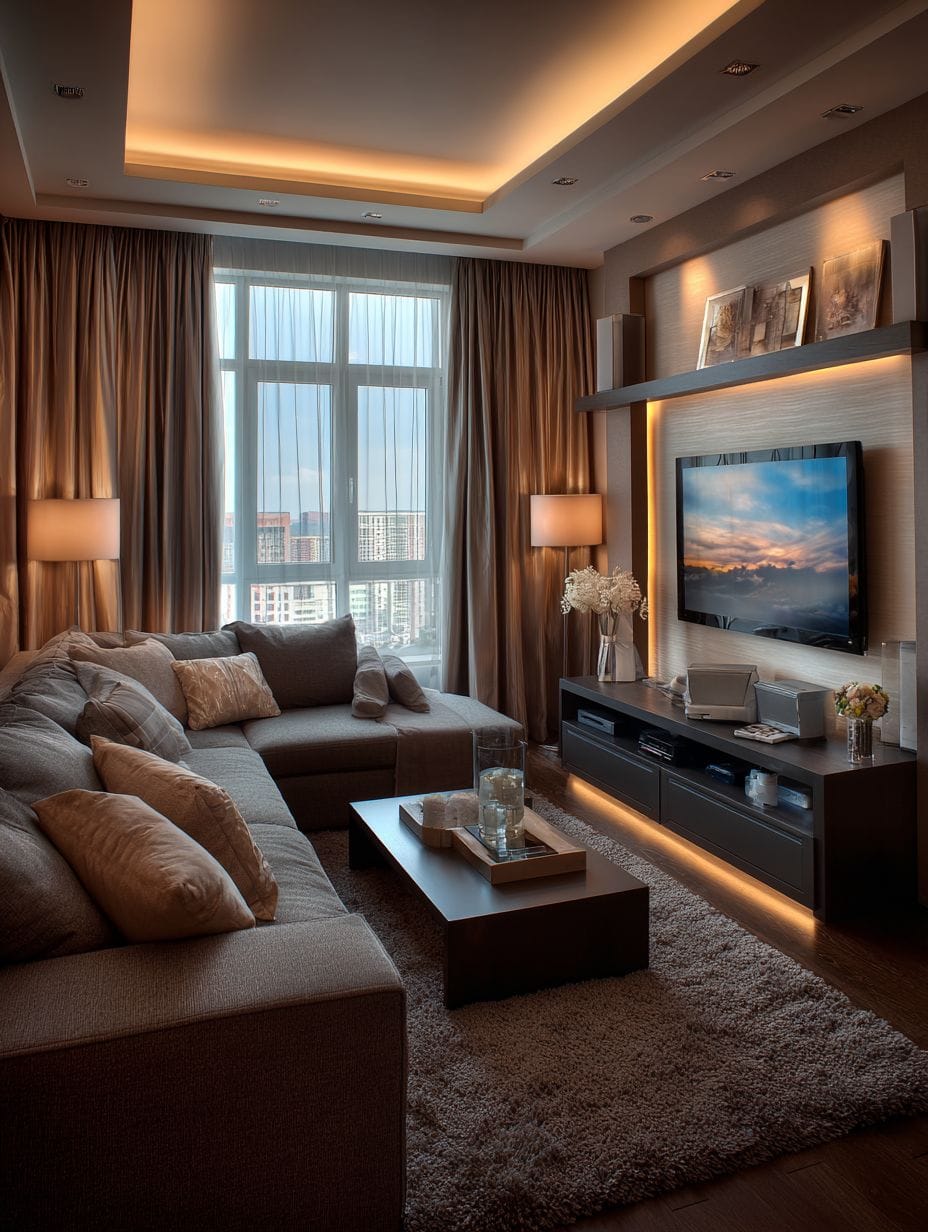
A low media console in matte black finish houses electronic components and provides closed storage for media collections, remote controls, and gaming accessories. The matte surface eliminates distracting reflections during viewing while the low profile ensures the television remains at optimal eye level. The console’s clean lines and solid color allow the TV to remain the visual focus rather than competing for attention. Behind the television, recessed lighting and LED strip lights create ambient viewing atmosphere, reducing eye strain during nighttime viewing while adding dramatic backlighting that makes the TV appear to float against the wall.
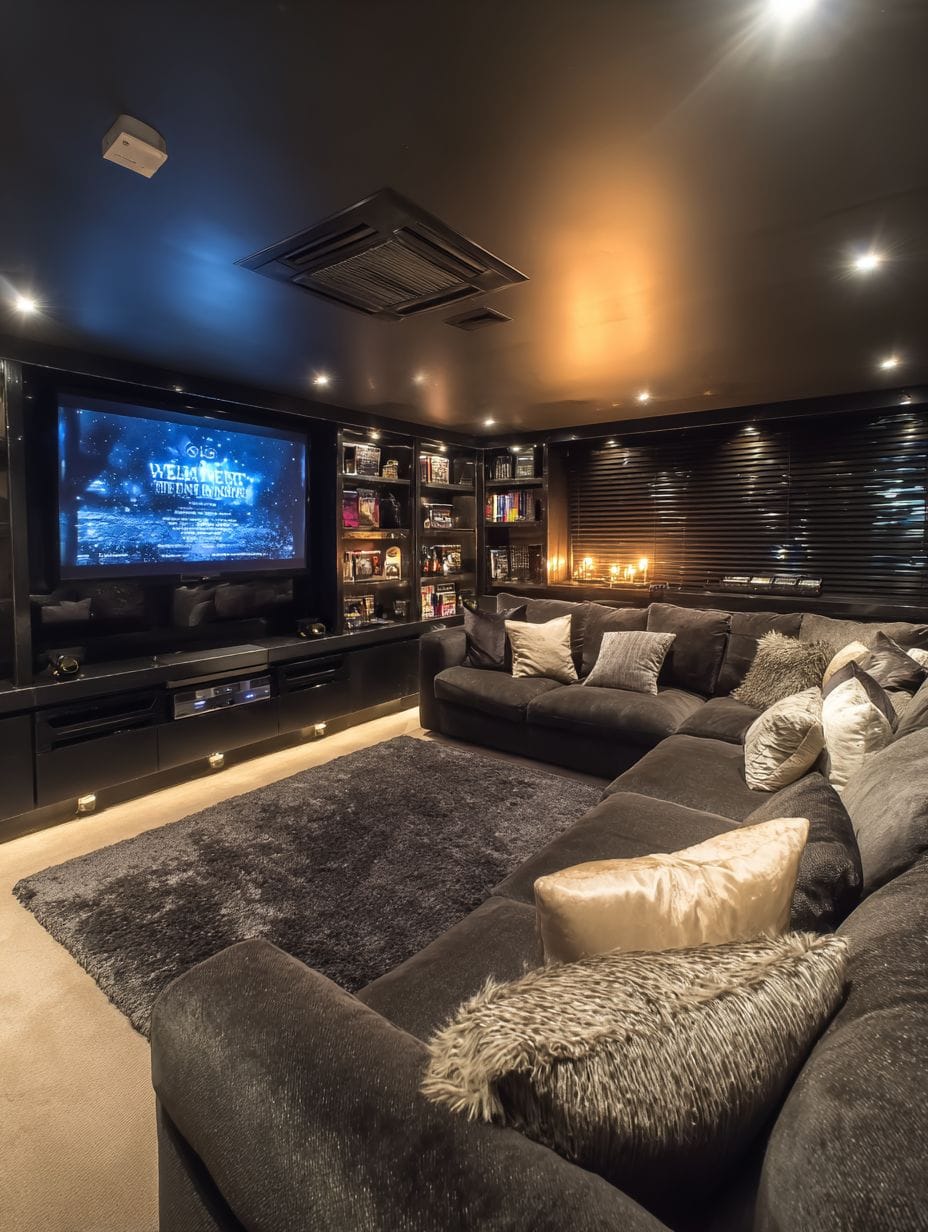
A plush area rug in dark grey anchors the seating area, its soft pile adding comfort underfoot while absorbing sound—creating better acoustics for movie and music enjoyment. The dark color maintains the room’s sleek, theater-inspired aesthetic while providing practical stain resistance. This design demonstrates how apartment living rooms can be optimized for specific functions—in this case entertainment and media consumption—through thoughtful furniture selection, strategic lighting layers, and attention to practical details like sight lines, storage, and acoustics. The result is a space that delivers home theater experience without requiring dedicated media rooms.
- Arrange sectionals to face entertainment centers with optimal viewing angles for all seats.
- Choose dark upholstery for media-focused rooms to create theater-like ambiance and hide wear.
- Install LED backlighting behind TVs to reduce eye strain and create floating visual effect.
- Select low-profile media consoles that keep screens at proper eye level while providing necessary storage.
- Add plush rugs to absorb sound and improve room acoustics for better audio experience.
12. Bohemian Eclectic Warmth
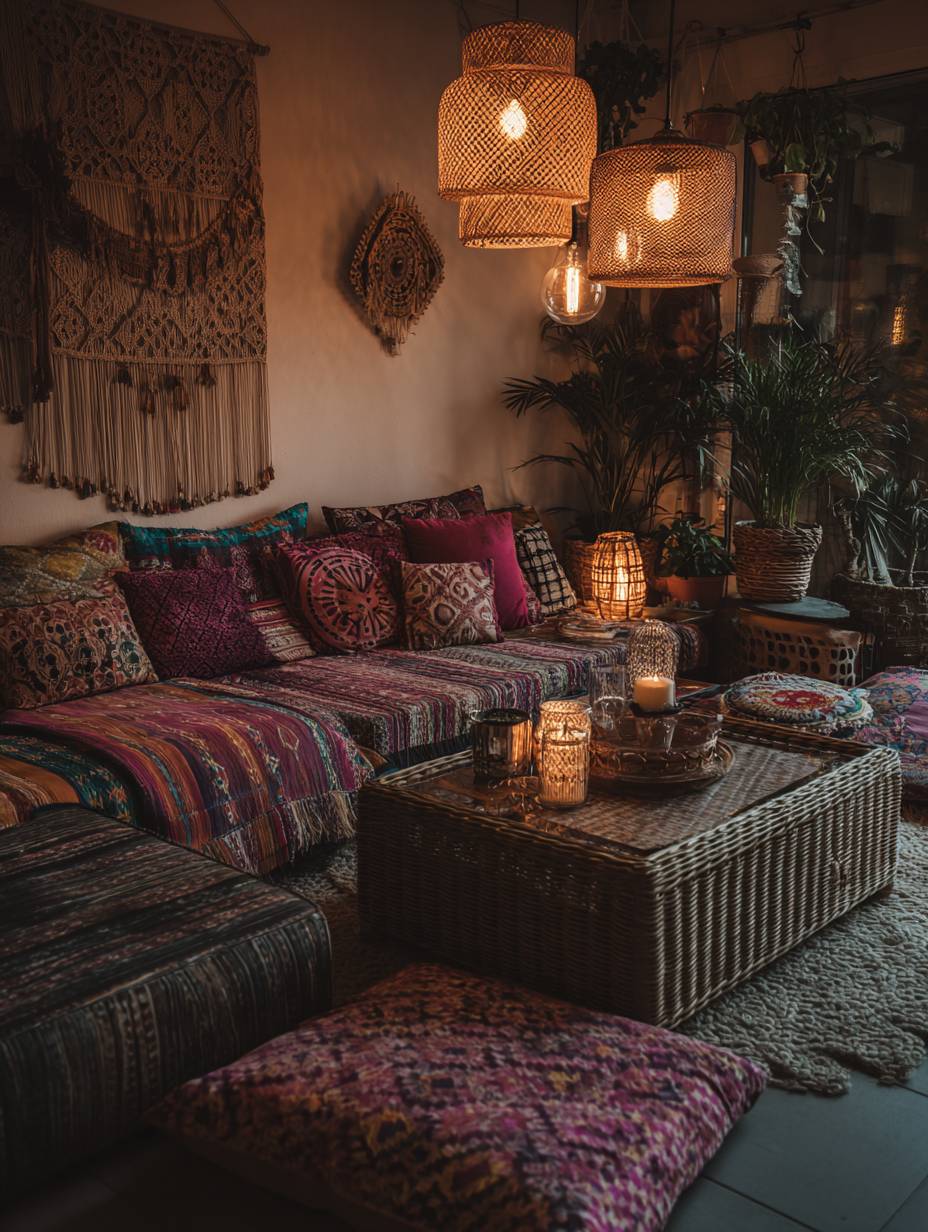
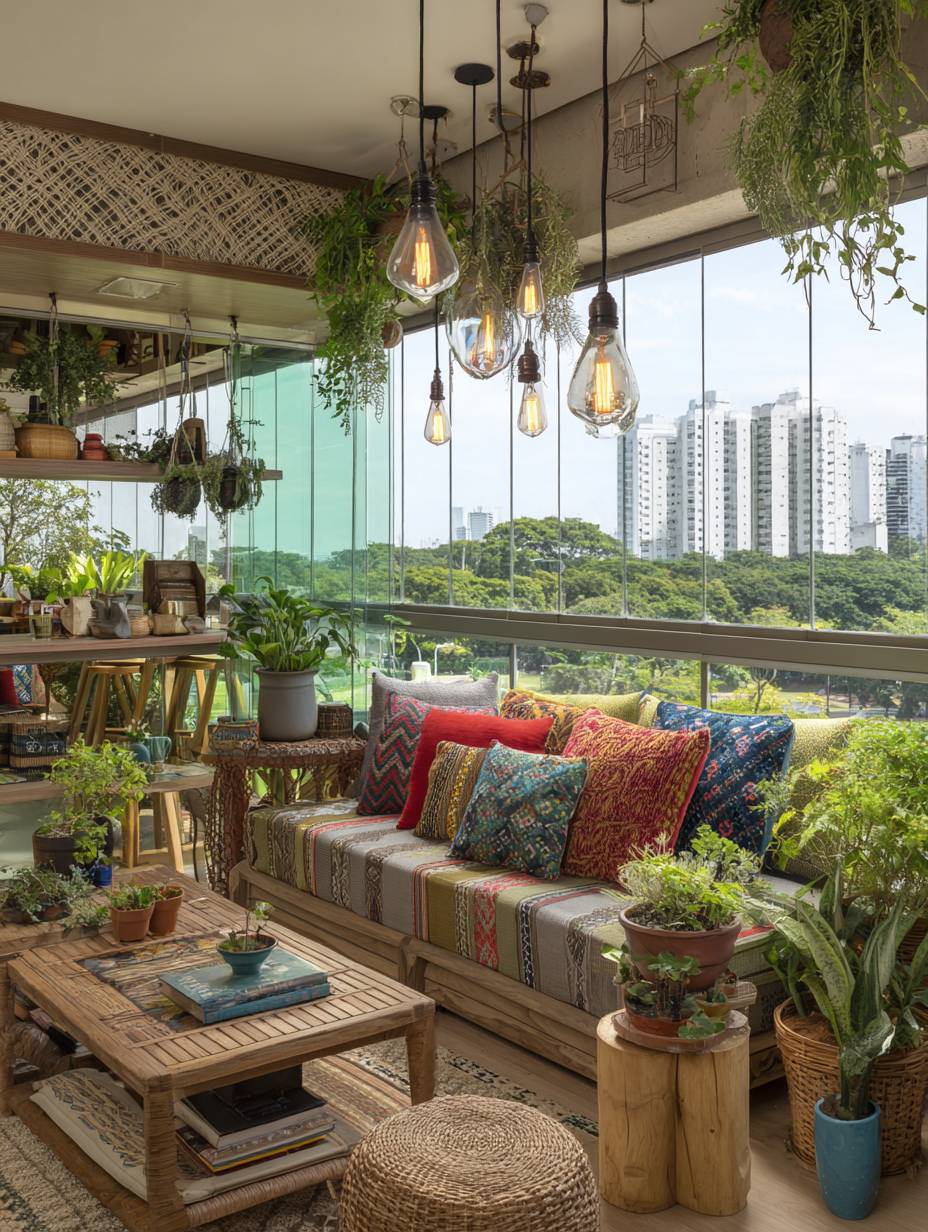
Embracing free-spirited bohemian aesthetic, this apartment living room features a low-profile sofa adorned with colorful patterned cushions and textured throw blankets that create a collected, well-traveled appearance. The sofa serves as canvas for textile expression, with cushions in various patterns, colors, and textures layered to create visual richness and cultural eclecticism. This approach to decorating celebrates imperfection, mixing patterns and colors that conventional design rules might deem incompatible, yet creating harmonious chaos that feels creative and alive. The low profile encourages casual, relaxed lounging while maintaining open sight lines in the compact space.
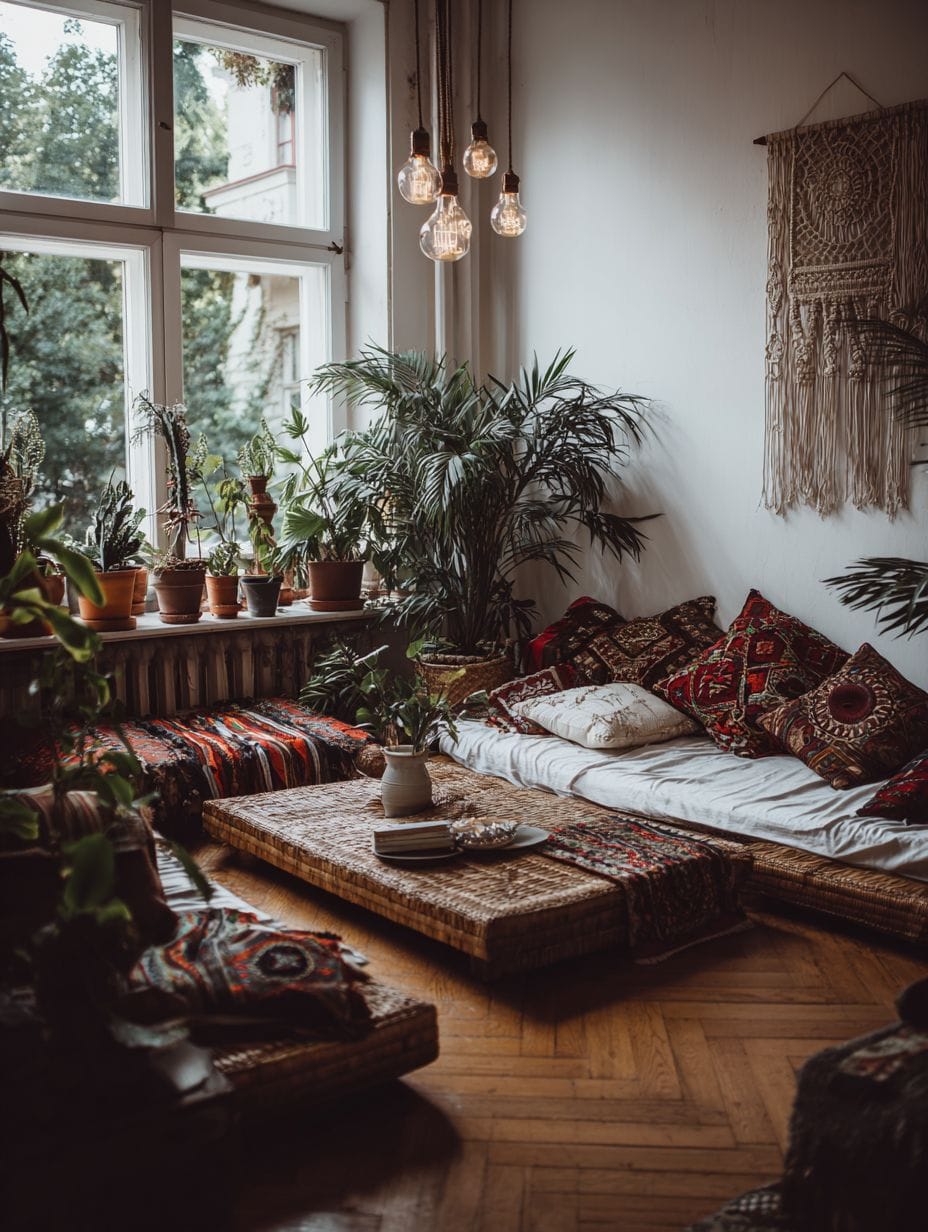
A macramé wall hanging serves as textile art above the sofa, its intricate knotwork adding handcrafted texture and demonstrating the bohemian appreciation for artisanal craft and natural materials. The neutral fiber color provides visual anchor amid the colorful cushions while adding three-dimensional texture that creates shadows and depth. A rattan coffee table adds natural texture and organic form, its woven construction and honey-colored finish bringing warmth and tactile interest. The rattan’s lightweight appearance and natural material align perfectly with bohemian values of natural, sustainable, and globally-inspired design elements.
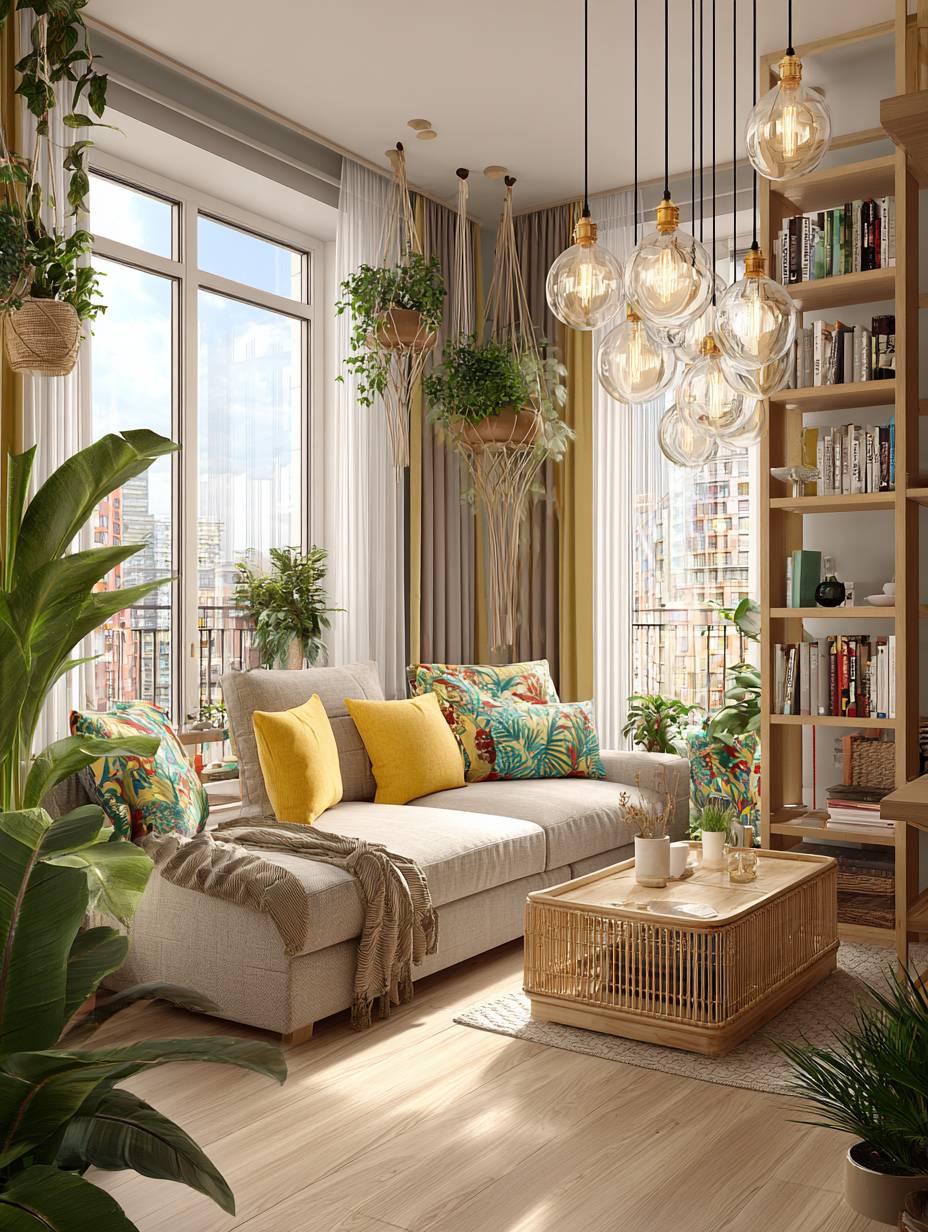
Multiple potted plants in various sizes create an indoor garden atmosphere, connecting the space with nature and adding life and air-purifying benefits. Plants at different heights—floor plants, tabletop succulents, hanging pothos—create visual layers and make the room feel inhabited and loved. Warm Edison bulb lighting from exposed filament pendant fixtures creates cozy ambiance, the visible glowing filaments adding nostalgic warmth and artisanal quality. This design demonstrates how bohemian style, with its emphasis on comfort, color, natural materials, and personal expression, creates apartment living rooms that feel like creative sanctuaries full of personality, warmth, and joyful disregard for conventional design rules.
- Layer multiple patterns and textures in cushions and throws for bohemian richness and visual interest.
- Incorporate textile art like macramé or woven wall hangings for handcrafted texture and cultural expression.
- Choose natural materials including rattan, jute, and wood to align with bohemian earth-connected aesthetic.
- Create indoor gardens with multiple plants at varying heights for layered, natural ambiance.
- Install Edison bulb fixtures for warm, amber lighting that enhances cozy, creative atmospheres.
13. Sink-In Comfort Priority
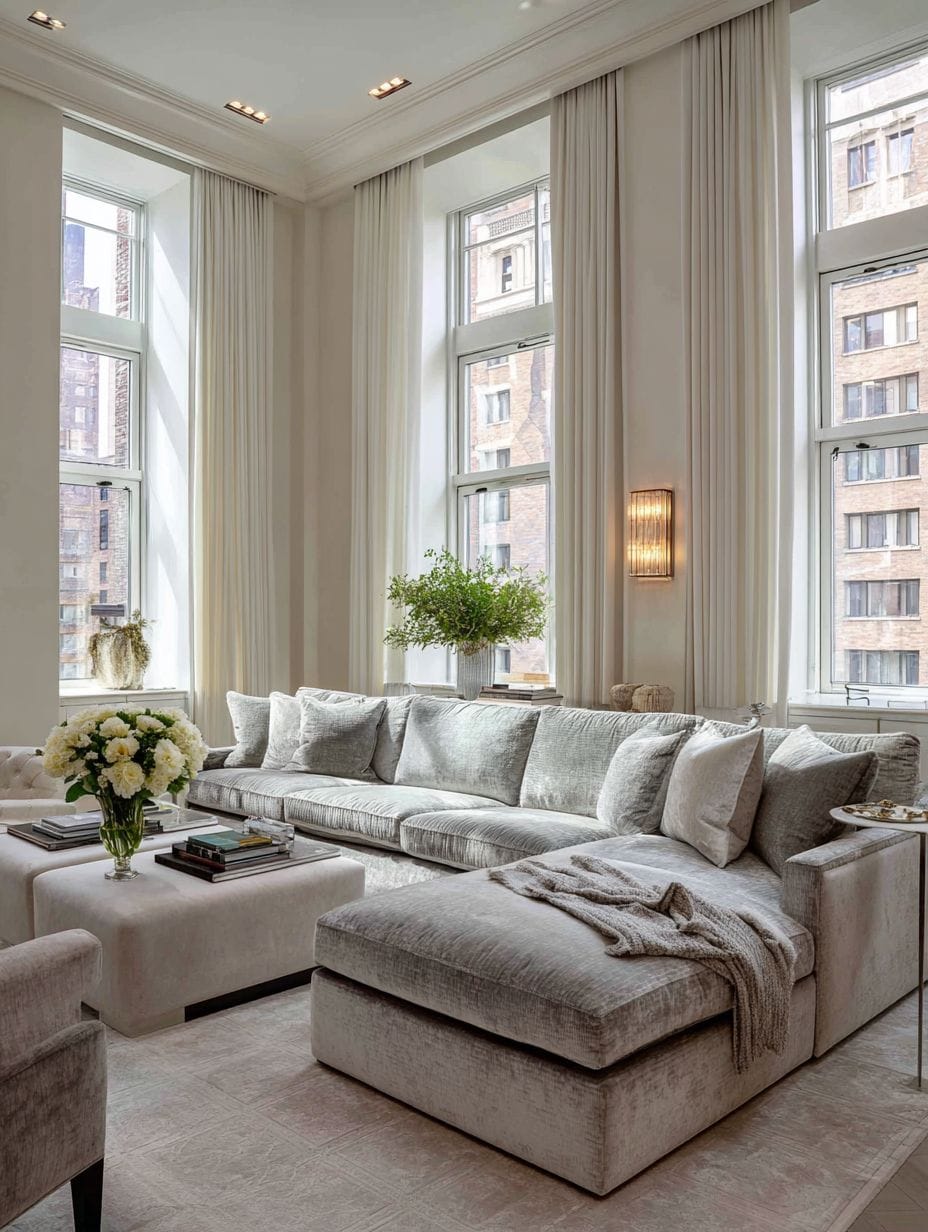
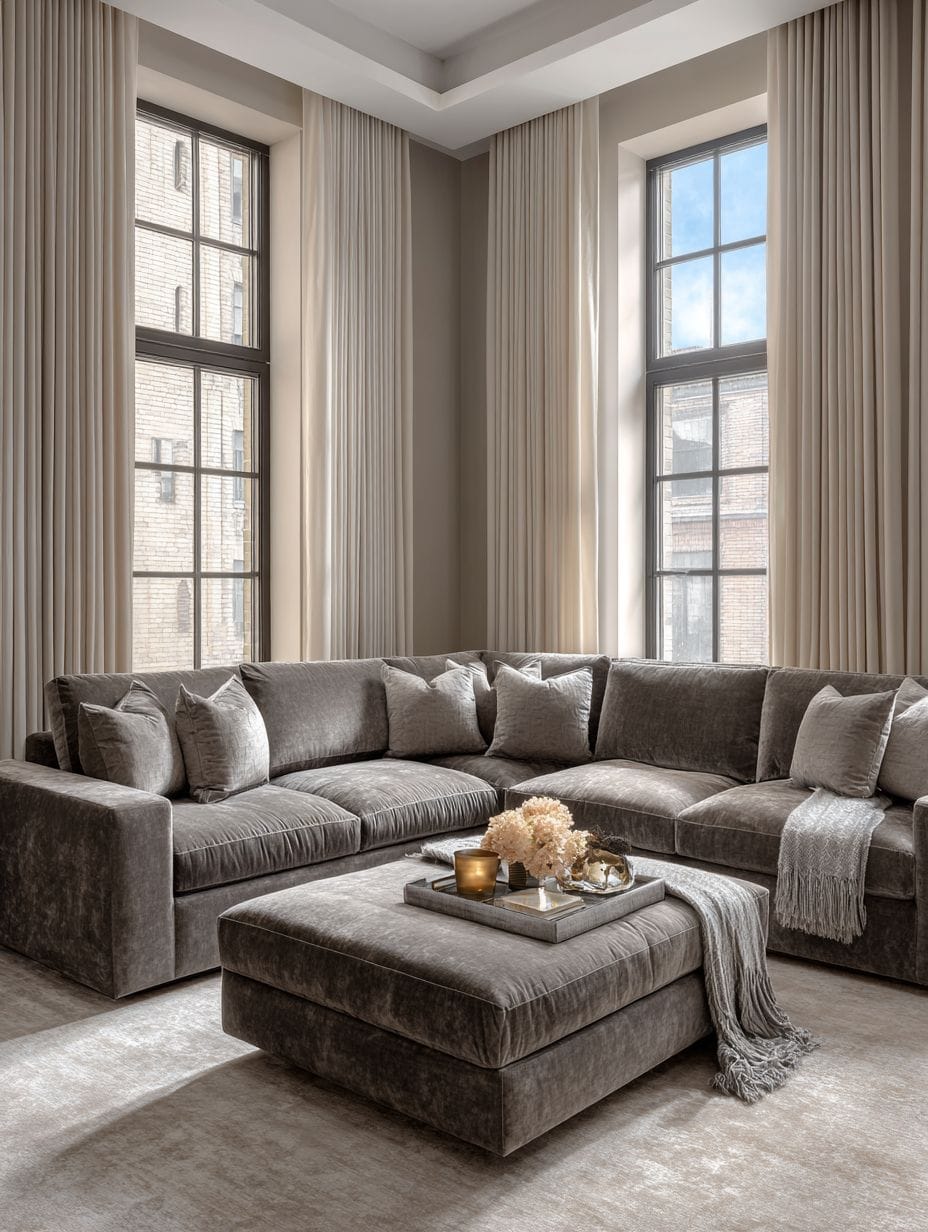
This apartment living room prioritizes ultimate comfort through an oversized sectional sofa in plush grey chenille fabric featuring deep seating and generous cushions that invite complete relaxation. The chenille upholstery provides velvet-soft texture without velvet’s directional pile, creating consistently luxurious feel from every angle. The deep seating depth—considerably deeper than standard sofas—allows for full-body lounging, perfect for afternoon naps or comfortable movie marathons. The oversized proportions make a bold statement in the space while delivering the supreme comfort that makes returning home feel like true retreat.
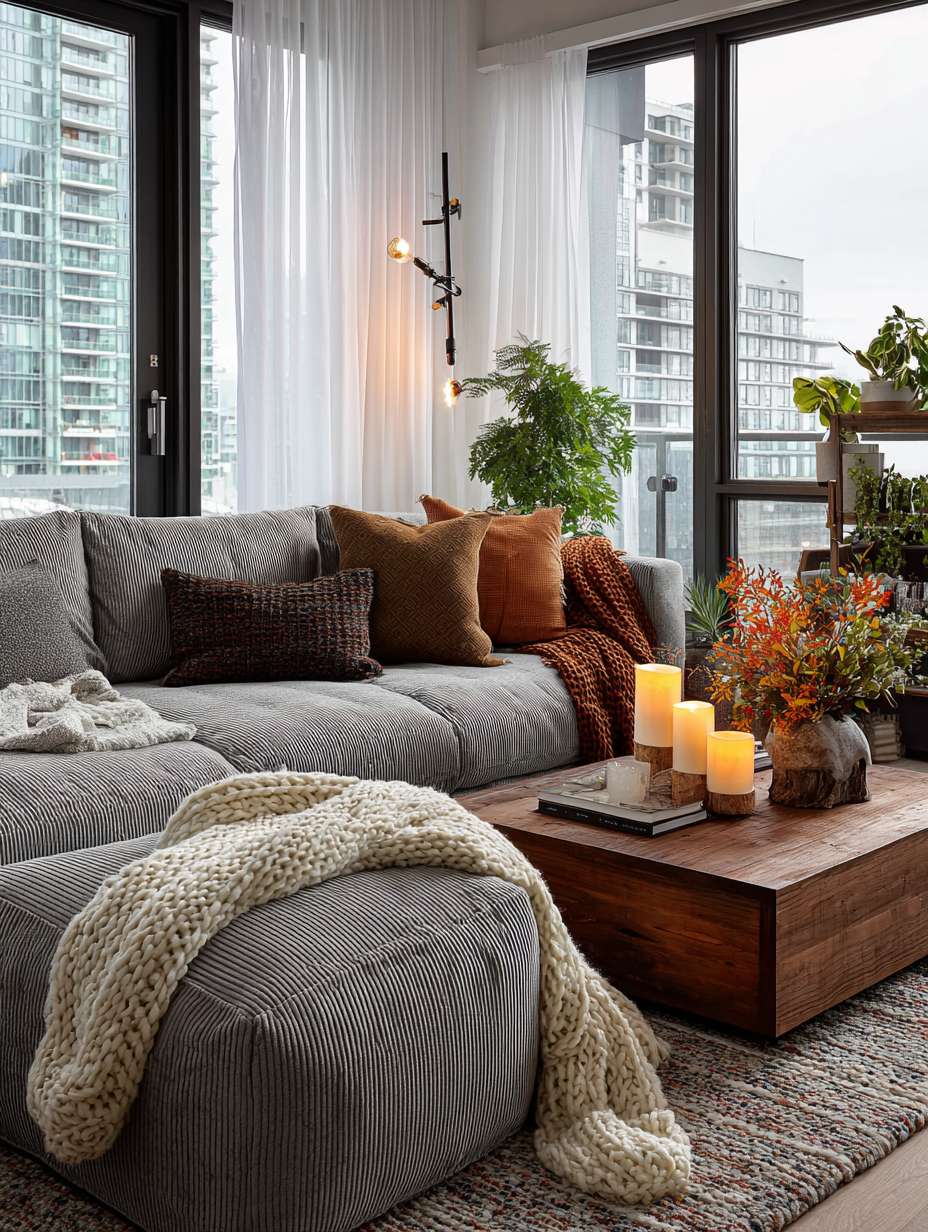
A large ottoman with hidden storage serves dual purposes as both coffee table and extra seating, its upholstered surface providing soft footrest or additional seating for guests. The storage interior offers valuable space for storing blankets, pillows, or seasonal items, maximizing functionality in apartment settings where storage remains premium. Soft throw blankets drape casually over the sofa arm in artfully arranged positions that suggest lived-in comfort rather than staged perfection. These blankets aren’t merely decorative—they’re functional comfort layers ready for immediate use, embodying the room’s comfort-first philosophy.
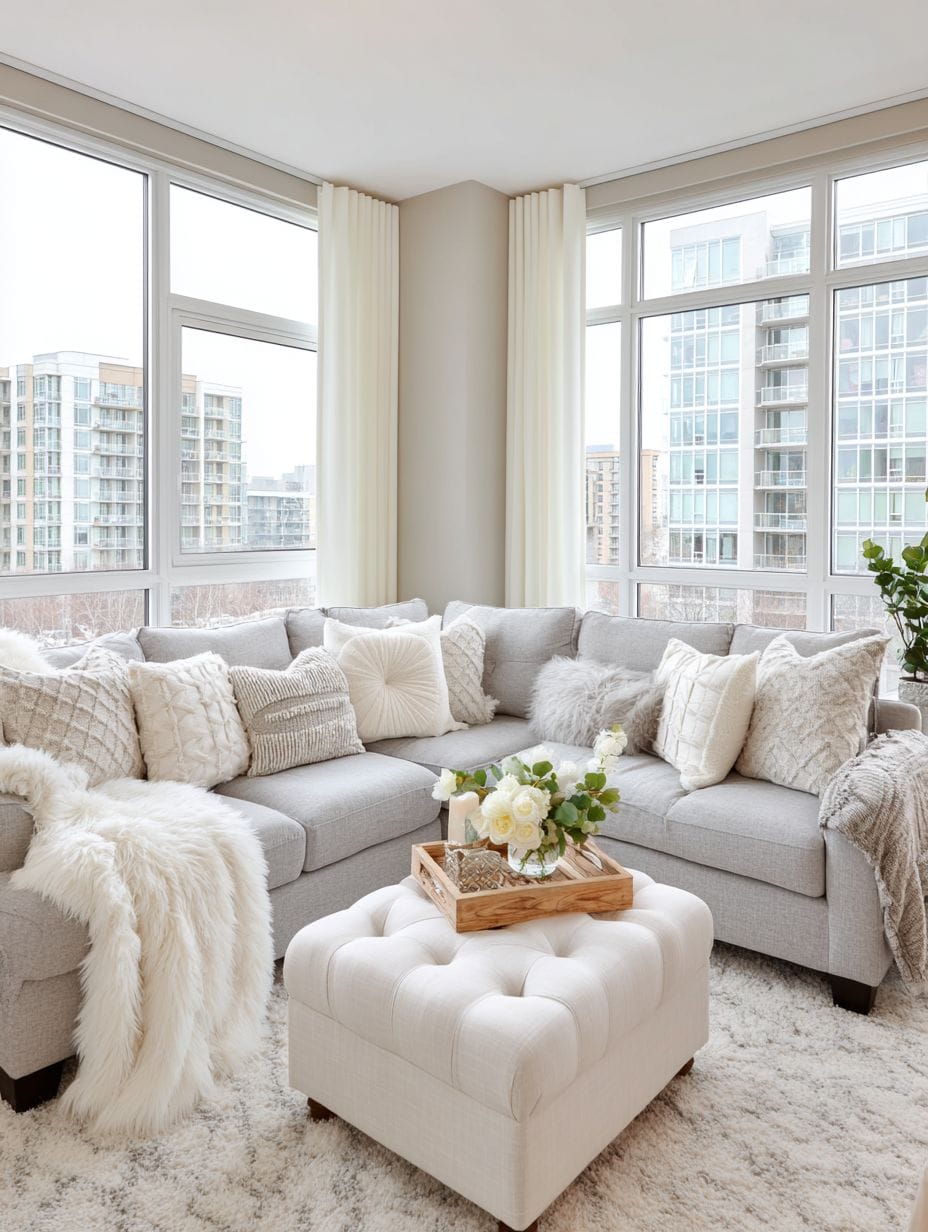
Floor-to-ceiling curtains in light neutral fabric frame large windows, their full-length panels adding elegance and architectural height while providing necessary privacy and light control. The curtains’ soft fabric creates gentle folds that add texture and movement, softening the room’s hard edges. When closed, they transform the space into a cozy cocoon; when open, they frame views and maximize natural light. This design demonstrates that comfort need not mean sacrificing style—through quality materials, thoughtful proportions, and attention to both aesthetic and functional details, apartment living rooms can deliver resort-level comfort in everyday urban settings.
- Choose oversized sectionals with deep seating for maximum comfort and lounging capability.
- Select chenille upholstery for soft texture that feels luxurious without velvet’s maintenance concerns.
- Use storage ottomans for multipurpose furniture that serves as table, seating, and hidden storage.
- Install floor-to-ceiling curtains to add elegance and perceived height to rooms with standard ceilings.
- Keep comfort items accessible with throws draped casually for immediate use rather than stored away.
14. Modern Farmhouse Blend
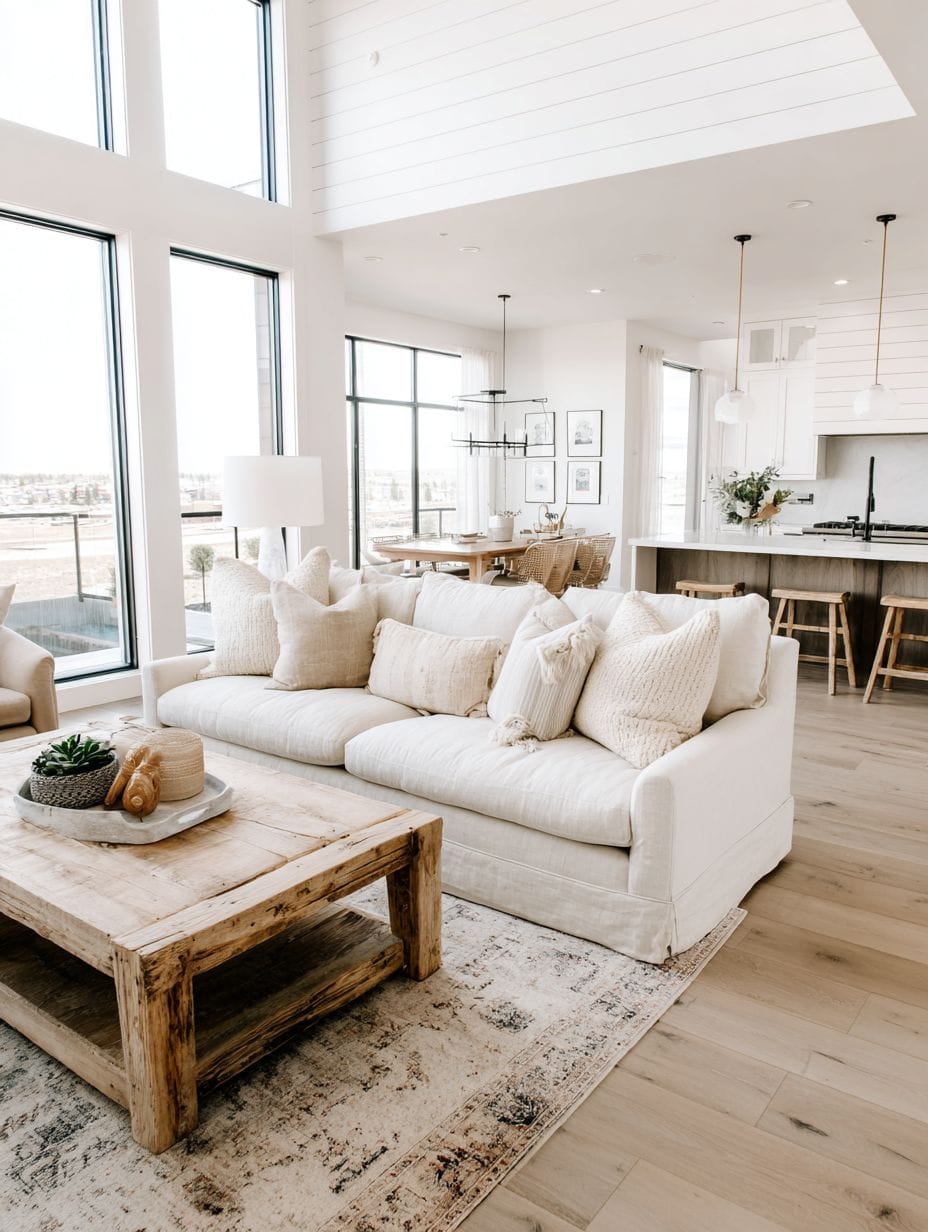
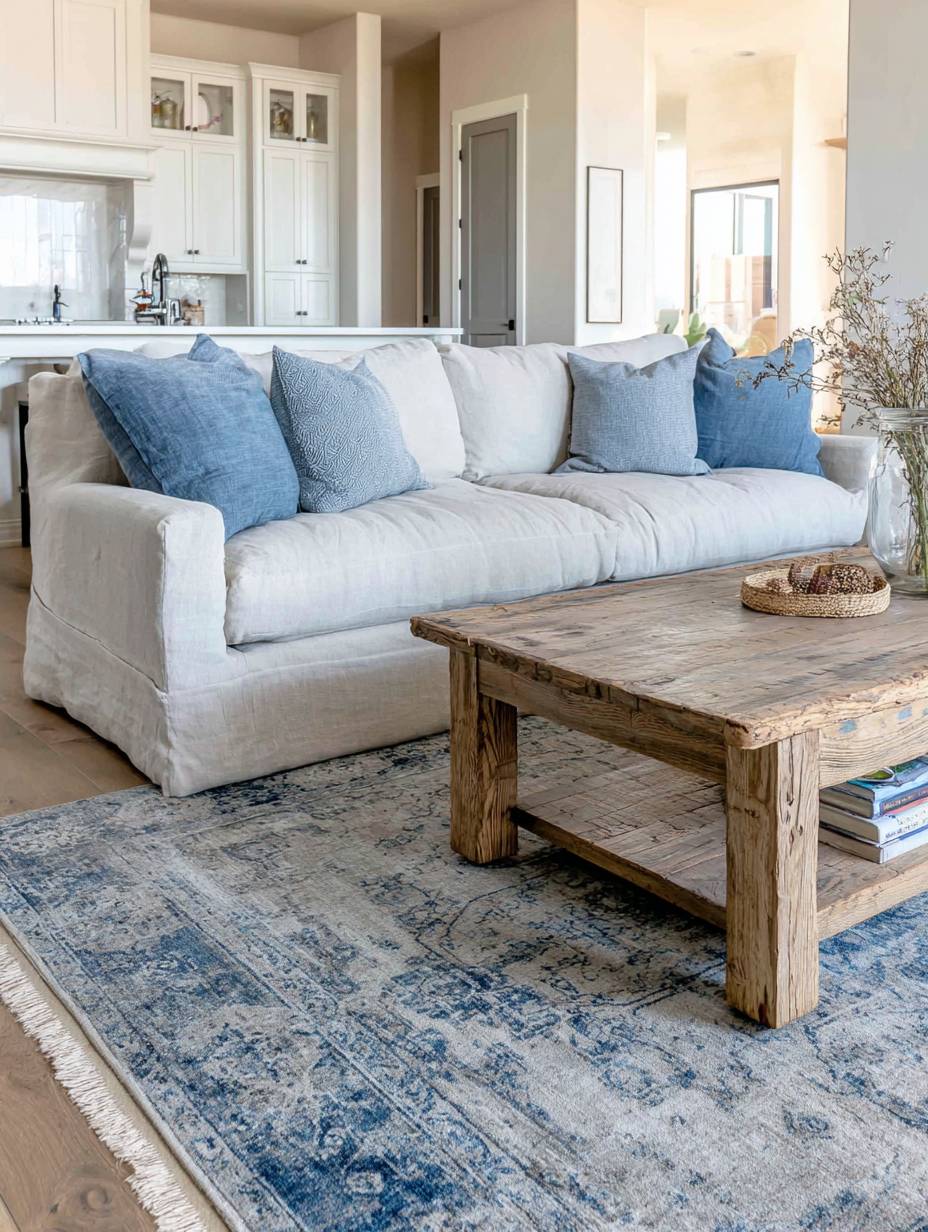
Bridging rustic farmhouse charm with modern apartment living, this design features a linen slipcovered sofa in natural oatmeal tone with casual, relaxed fit that embodies farmhouse unpretentious comfort. The slipcover—removable and washable—provides practical elegance, allowing for easy maintenance while delivering soft, lived-in appearance that improves with washing. The natural linen color works as neutral foundation while adding subtle warmth and organic texture. The relaxed fit with gentle wrinkles and folds creates casual sophistication that feels welcoming rather than formal, perfect for everyday apartment living.
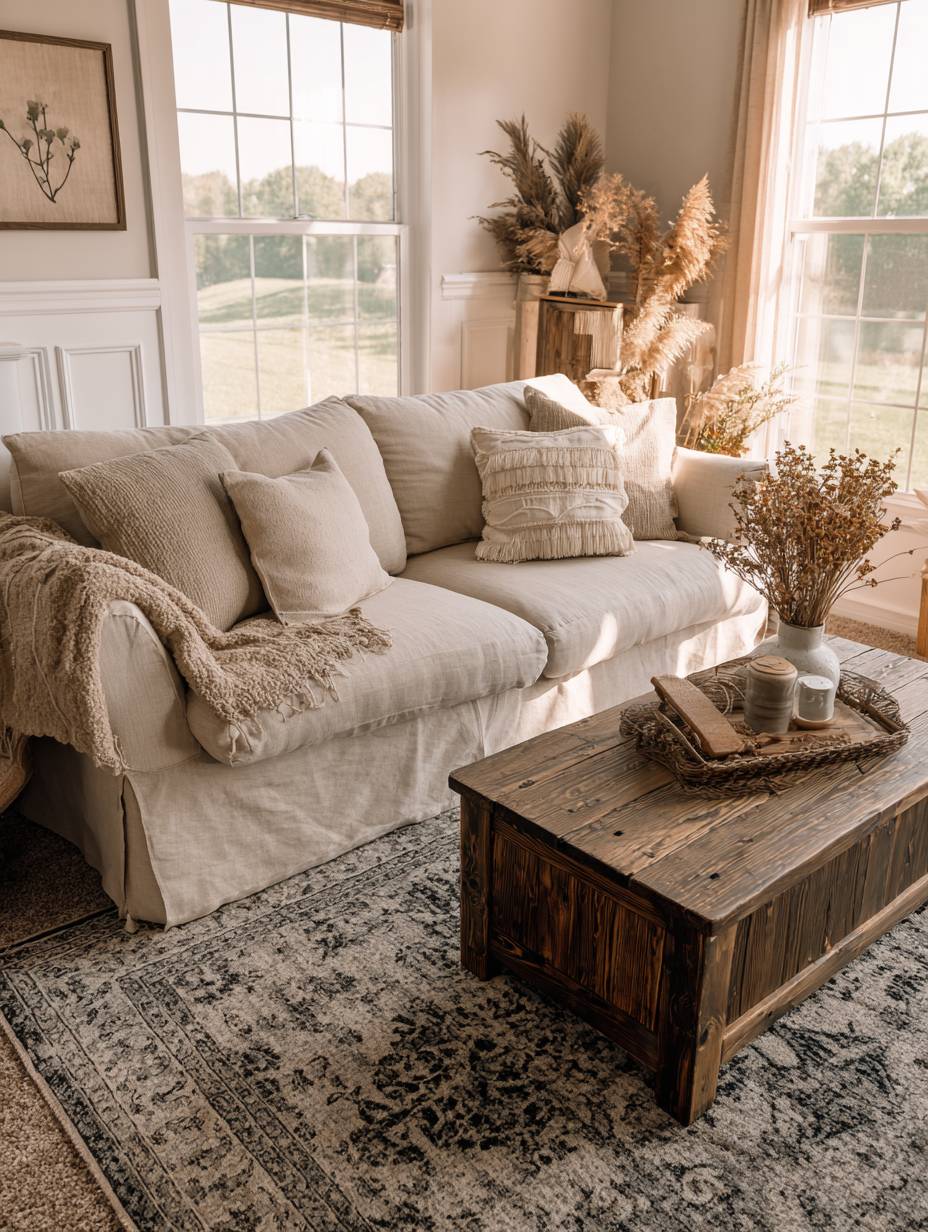
A rustic wooden coffee table with distressed finish adds character and suggests history, its weathered surface showing intentional aging that brings instant patina to new apartments. The distressing—exposed wood grain, worn edges, subtle color variations—creates authentic farmhouse feel without requiring actual antique furniture. A vintage-style area rug in faded patterns grounds the space, its muted colors and worn appearance suggesting generations of use. These aged elements introduce comfort through nostalgia, creating psychological warmth and connection to pastoral past even in urban settings.
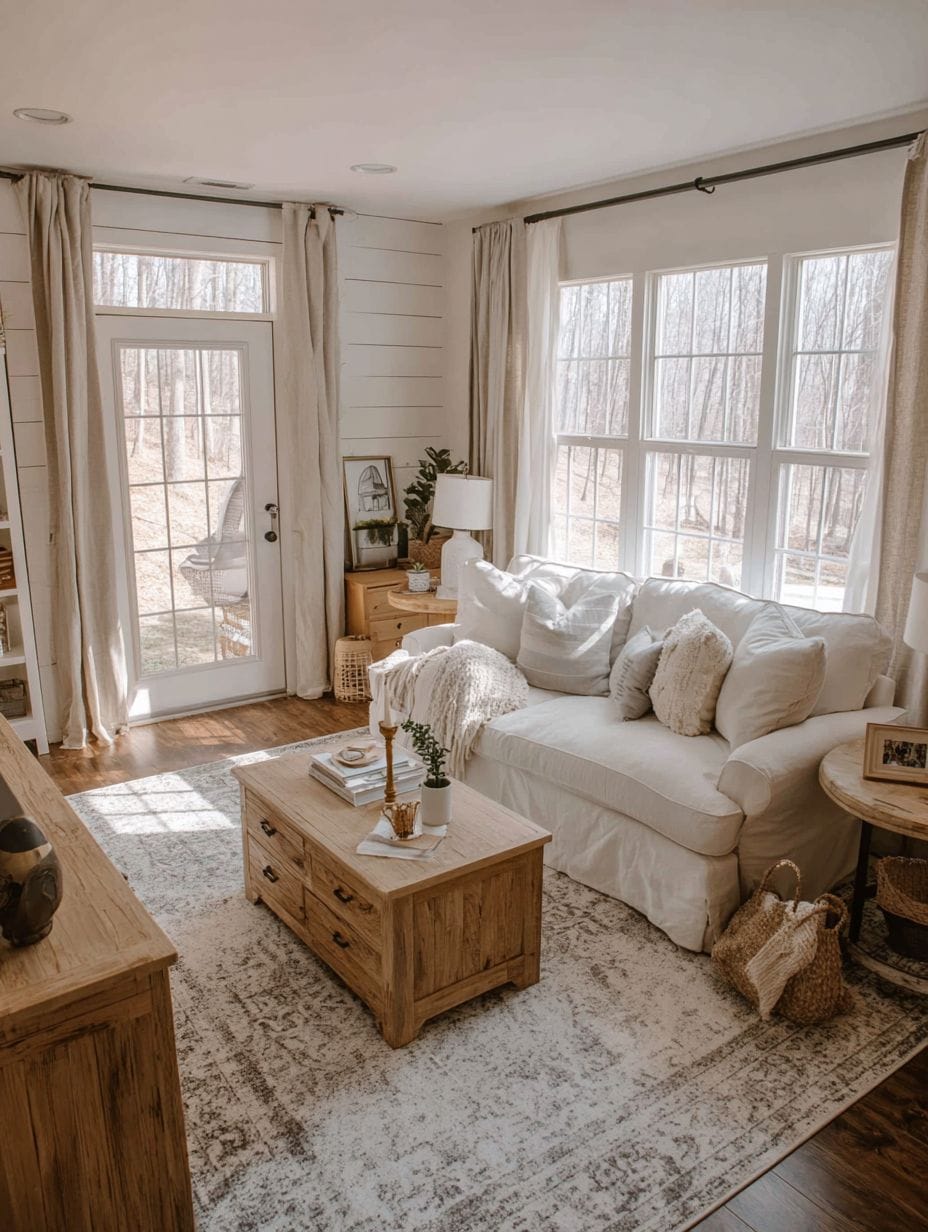
A white shiplap accent wall creates architectural interest and serves as the room’s defining farmhouse feature. The horizontal planks with characteristic gaps add texture, visual rhythm, and subtle shadows that change as natural light shifts throughout the day. Natural light from tall windows illuminates the space, the generous window size suggesting barn or farmhouse architecture adapted to apartment format. This design successfully translates farmhouse aesthetic—characterized by natural materials, distressed finishes, and casual comfort—into apartment-appropriate scale, proving that farmhouse style can adapt to urban living while maintaining its essential warmth, comfort, and unpretentious charm.
- Choose slipcovered sofas in natural linen for farmhouse aesthetic with practical, washable maintenance.
- Add distressed wood furniture to introduce instant character and rustic farmhouse charm.
- Install shiplap accent walls for architectural interest and authentic farmhouse detailing.
- Select vintage-style rugs with faded patterns for lived-in comfort and nostalgic warmth.
- Embrace natural linen colors like oatmeal and flax for neutral warmth and organic texture.
15. Industrial Loft Aesthetic
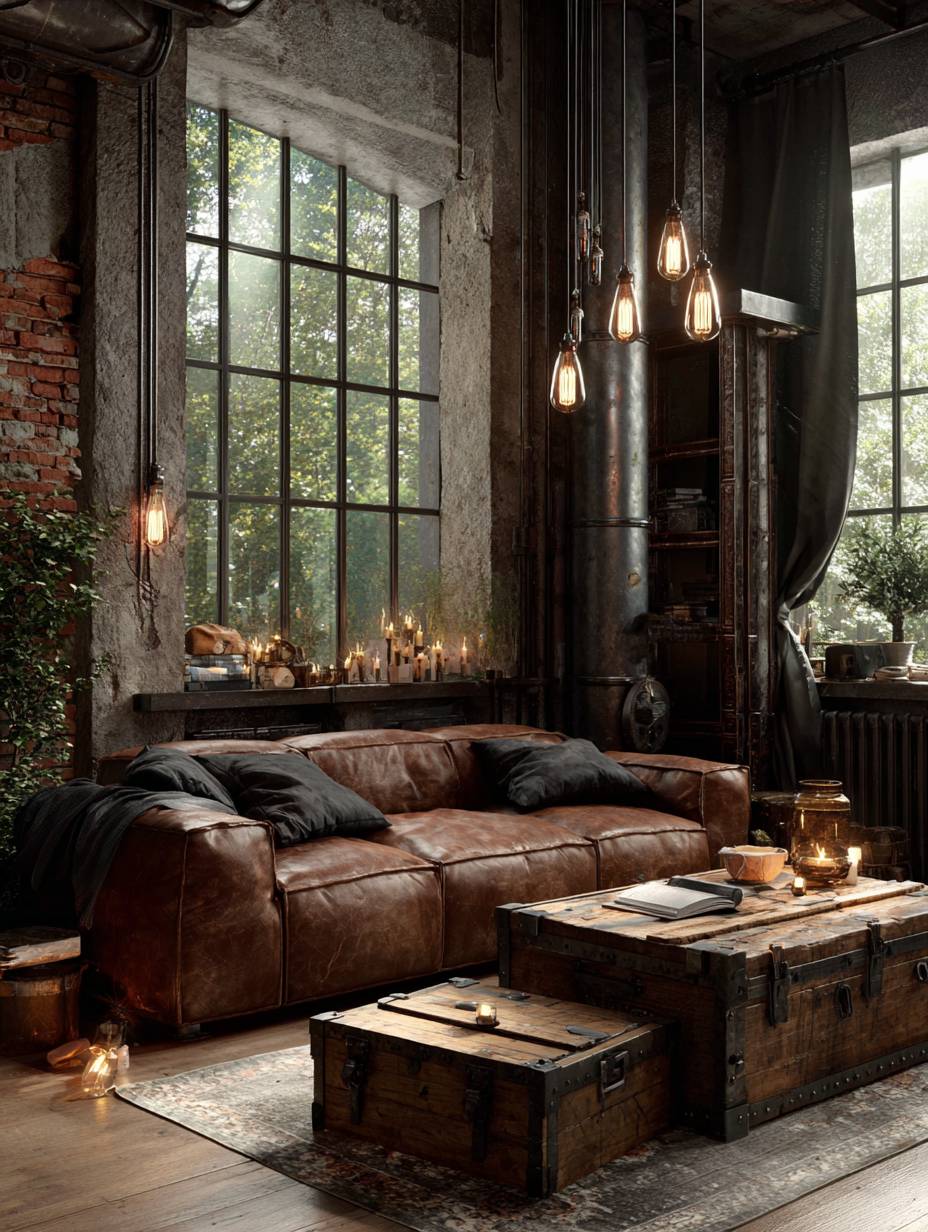
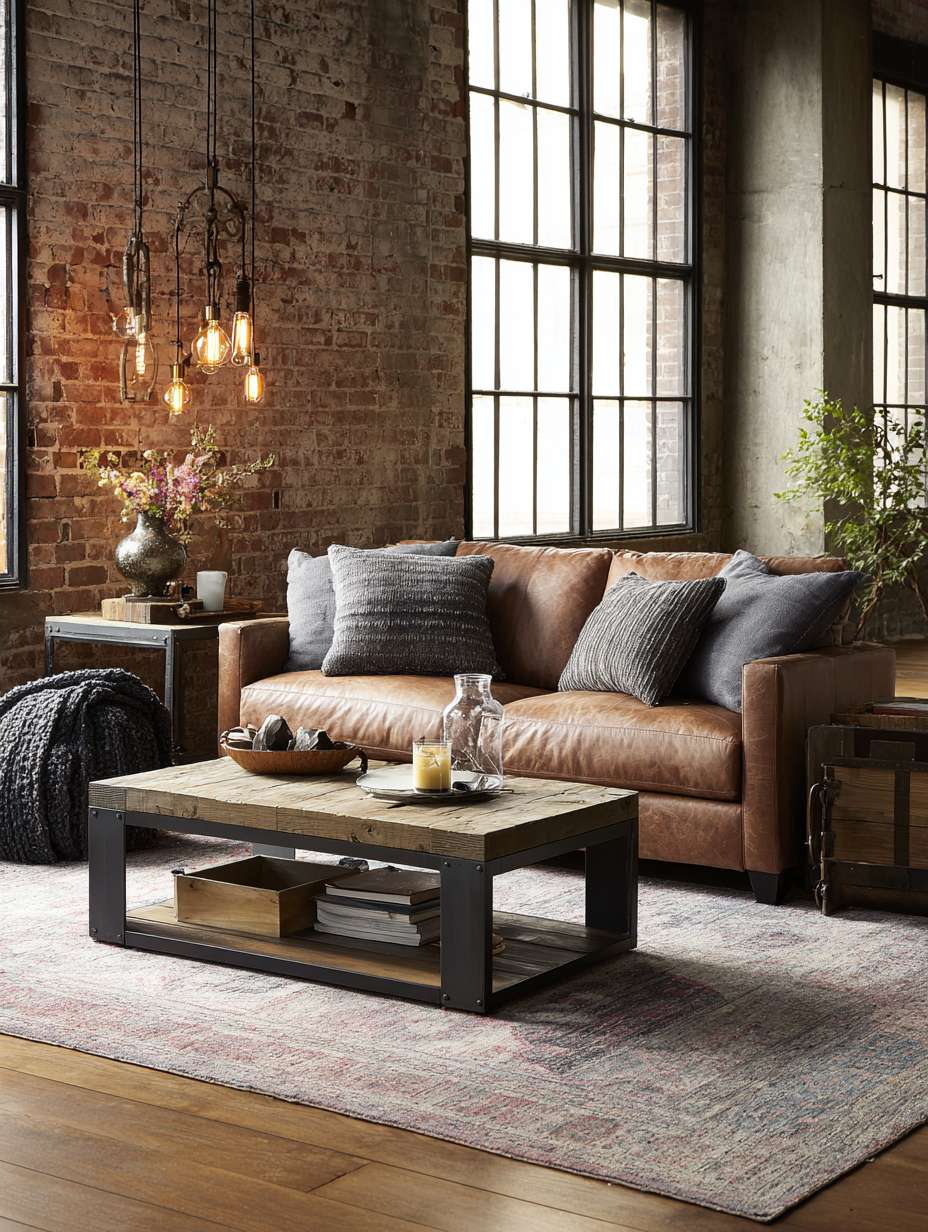
Celebrating urban warehouse aesthetics, this industrial-chic apartment living room features a leather sofa in rich cognac brown positioned against an exposed brick accent wall. The leather upholstery—full-grain with natural variations and markings—develops beautiful patina over time, becoming more attractive with age. The cognac color provides warm contrast to the cool brick tones while adding sophisticated masculine edge. The sofa’s clean lines and substantial presence anchor the space without softening the room’s industrial character, maintaining the aesthetic’s characteristic balance between comfort and raw materiality.
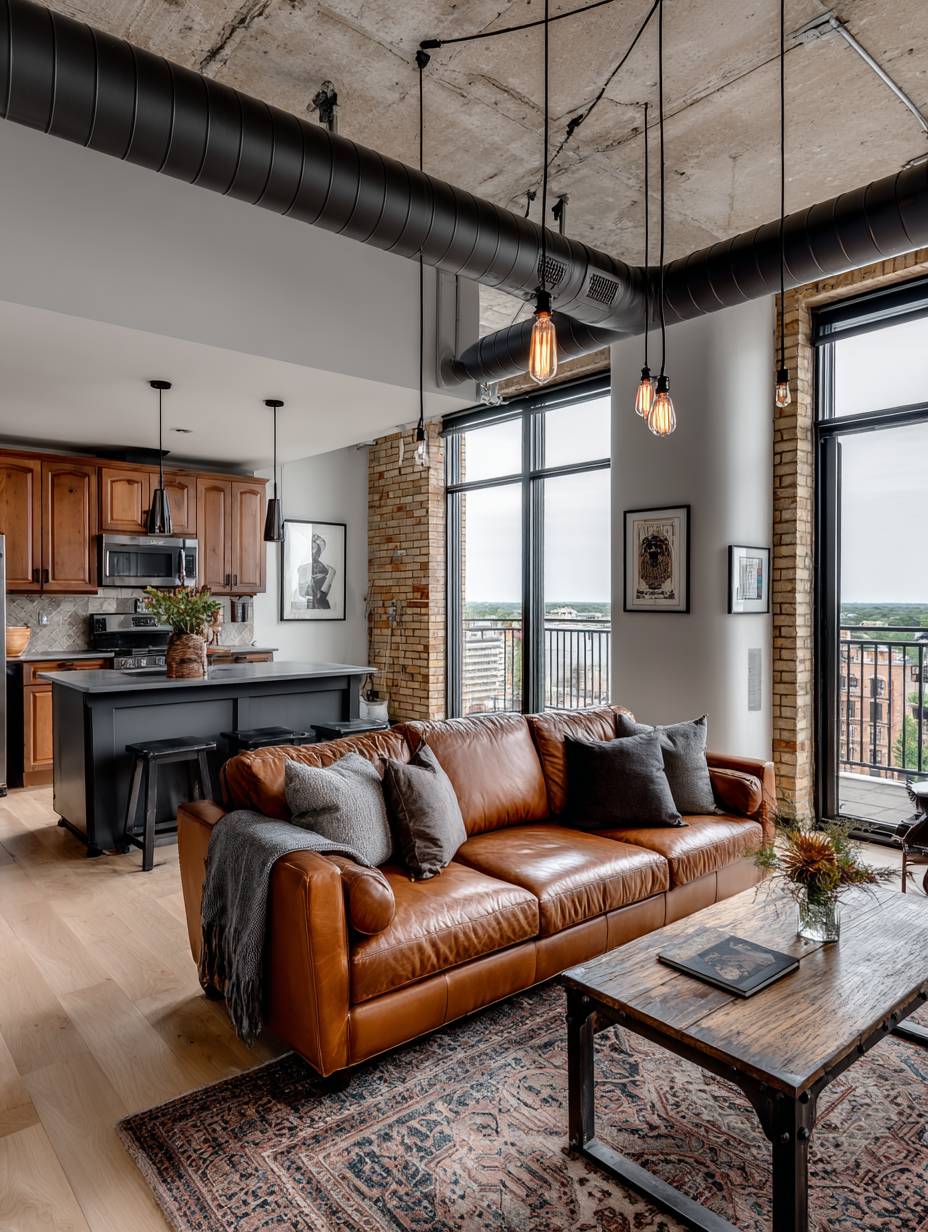
The exposed brick wall becomes the room’s defining architectural feature, its varied red-brown tones, mortar patterns, and textured surface providing authentic industrial character. The brick adds thermal mass, acoustic dampening, and historical connection to the building’s original structure—benefits beyond pure aesthetics. A metal and wood coffee table with visible welds and raw edges reflects the industrial aesthetic’s celebration of manufacturing processes and honest materials. The table’s construction—probably steel or iron paired with rough-hewn wood—shows rather than hides how things are made, embracing industrial transparency.
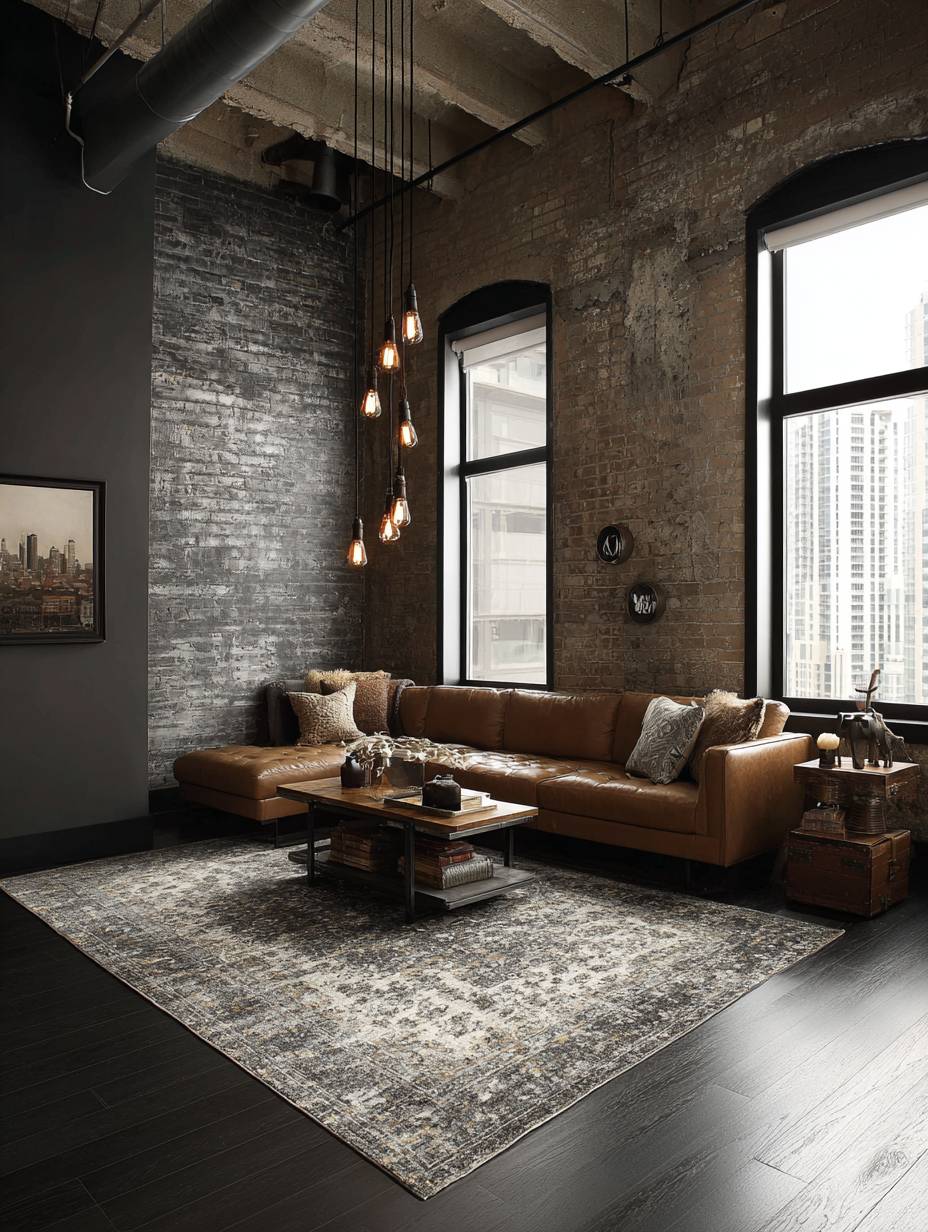
Edison bulb pendant lights hang from black metal fixtures, their exposed filaments glowing warmly and referencing early industrial lighting. The black metal finish—whether powder-coated steel or wrought iron—provides utilitarian sophistication while the warm amber light softens the room’s harder edges. A vintage area rug in worn patterns adds necessary softness to the hardwood floors while contributing aged character that prevents the industrial aesthetic from feeling too new or styled. Natural light from large factory-style windows—likely multi-paned steel frames—floods the space, the generous fenestration characteristic of converted industrial buildings. This design demonstrates how industrial aesthetic, with its celebration of raw materials, exposed structure, and manufacturing heritage, creates apartment living rooms with distinctive character and urban authenticity.
- Expose or add brick walls for authentic industrial character and textural architectural interest.
- Choose leather furniture in cognac tones for warmth that balances industrial coolness while aging beautifully.
- Select furniture with visible construction including welds, bolts, and raw edges to embrace industrial transparency.
- Install Edison bulb fixtures in black metal for authentic industrial lighting with warm, nostalgic glow.
- Add vintage rugs with wear to soften hard surfaces while maintaining aged, authentic aesthetic.
16. Small Space Optical Expansion
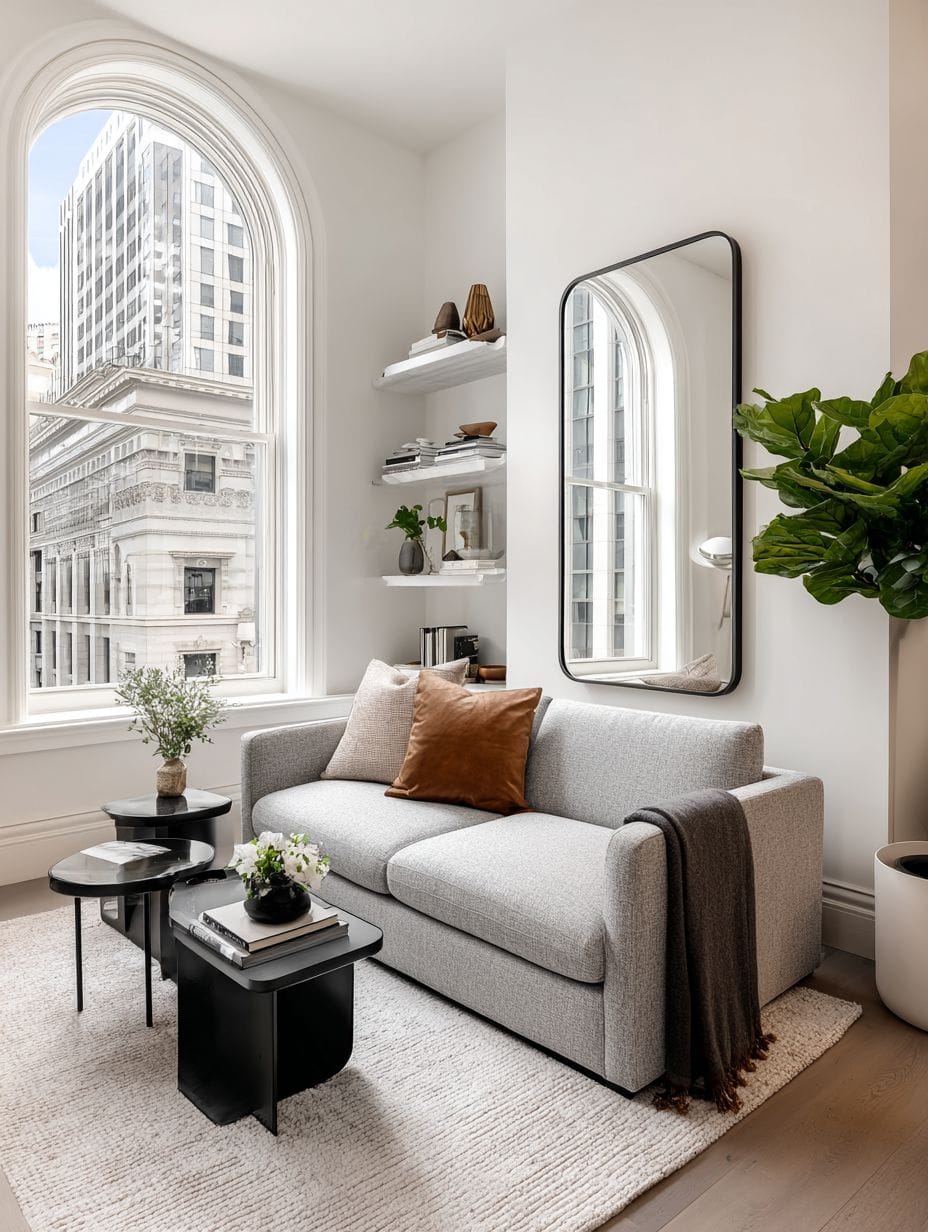
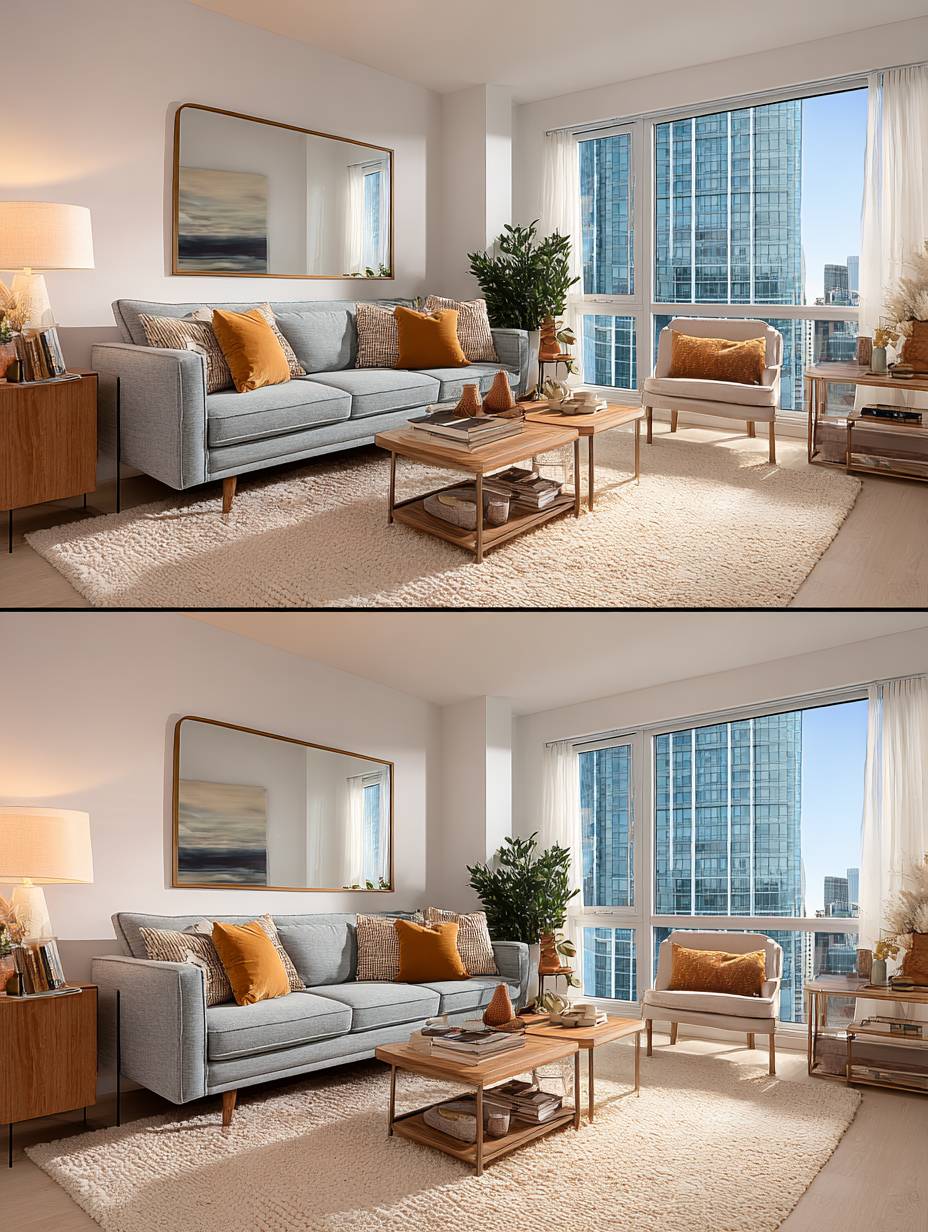
Specifically designed for compact apartments, this living room employs visual tricks to maximize perceived space, featuring a compact apartment-sized sofa in soft grey fabric with narrow arms that maximize seating surface while minimizing overall footprint. Every inch of this sofa’s design prioritizes spatial efficiency—the narrow arms provide necessary support without consuming precious width, the compact scale fits through tight doorways and hallways, and the raised legs create visual lightness by revealing floor beneath. The soft grey color recedes visually, making the sofa feel less imposing than darker colors would in the limited space.
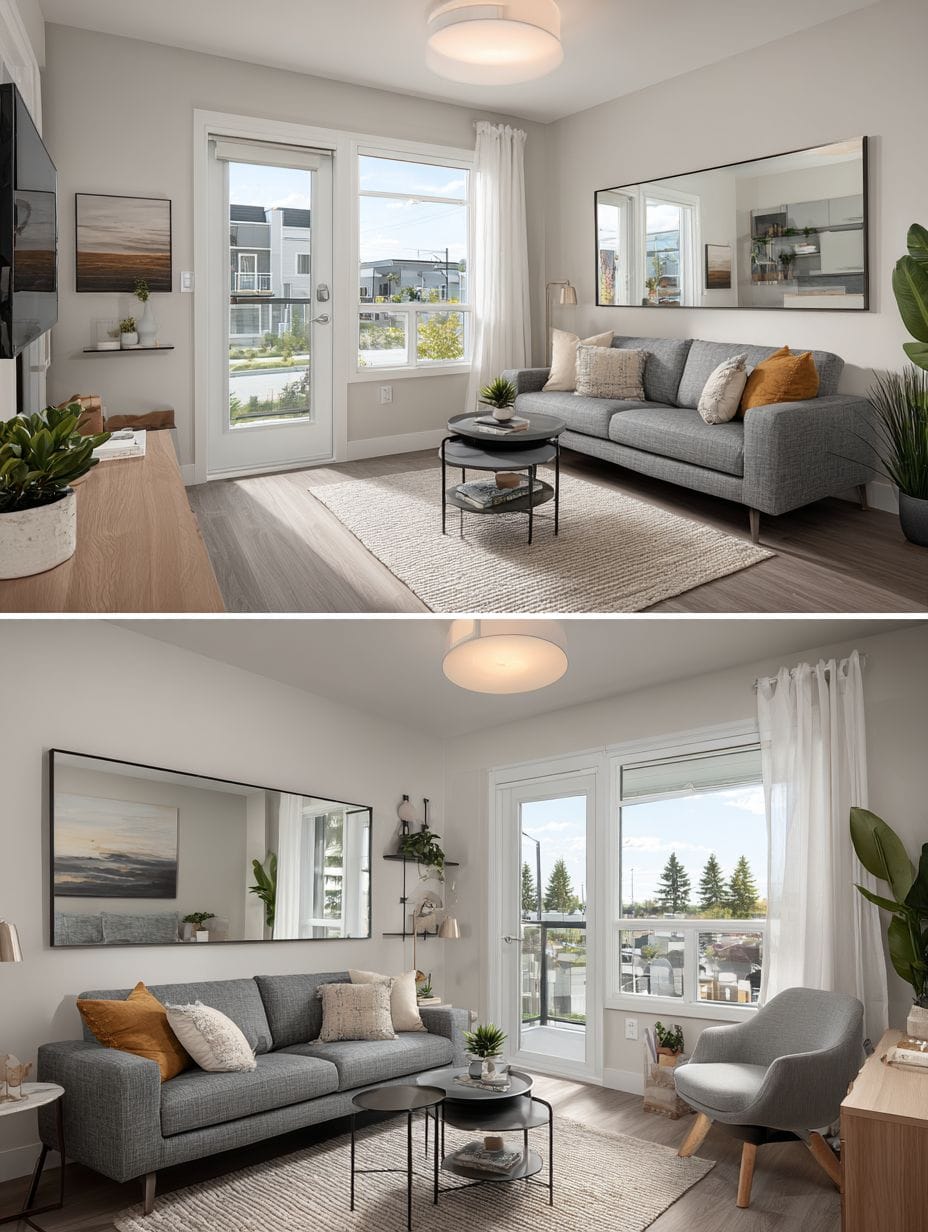
A nesting coffee table set provides flexibility and adaptability—the tables separate when surface space is needed for entertaining, then nest together to open floor space for everyday living. This transformable furniture embodies small-space living principles where pieces must adapt to changing needs throughout the day. Wall-mounted shelving eliminates floor clutter and bulky bookcases, freeing up valuable square footage while providing necessary storage and display. The floating installation creates airiness by maintaining uninterrupted floor and wall planes, making the room feel more expansive.
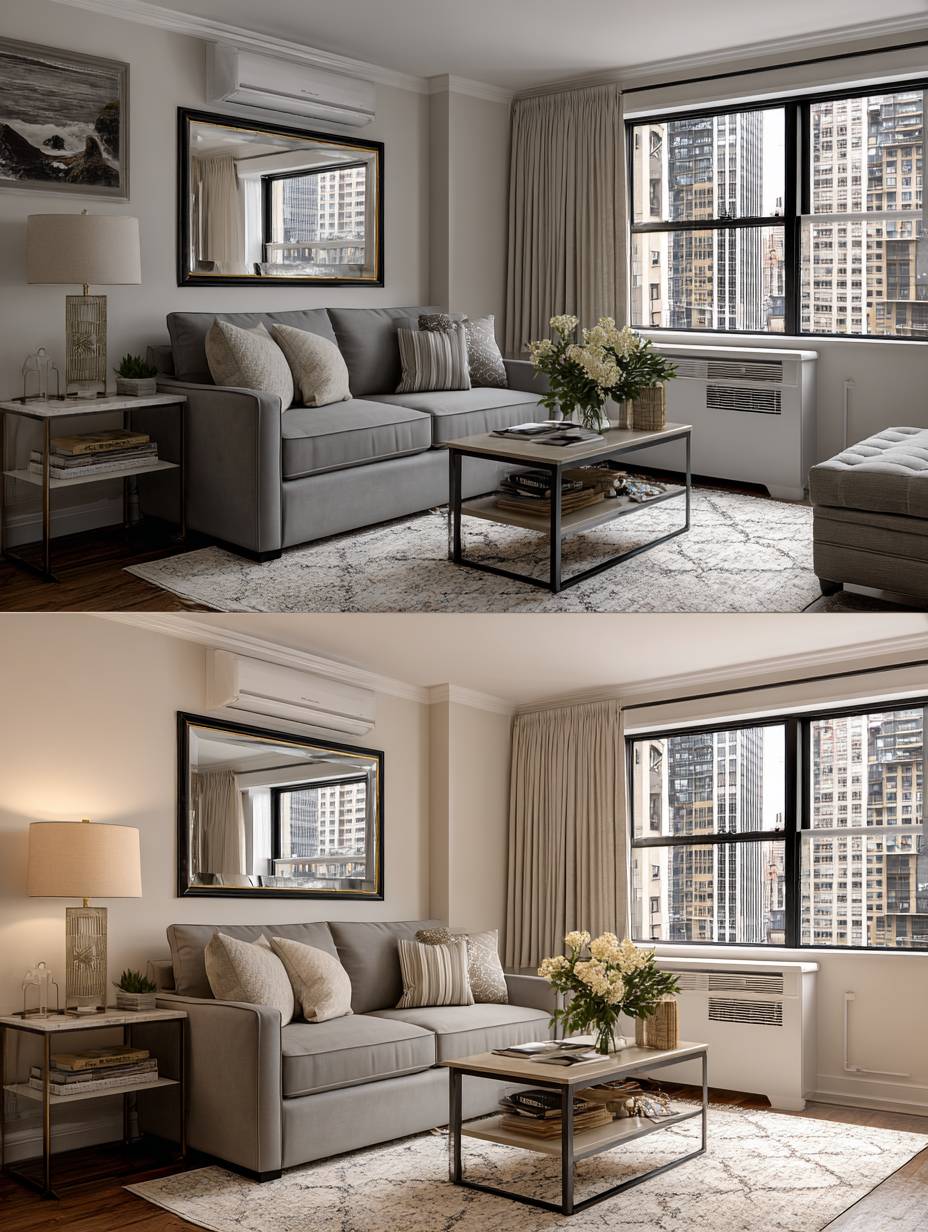
A large mirror positioned opposite the window reflects natural light and views, effectively doubling the perceived light and visually expanding the space through reflection. This classic design trick creates illusion of additional square footage and architectural features the room doesn’t physically possess. Minimal window treatments keep sight lines open and avoid cutting the room visually at window height—heavy curtains would create visual barriers that make small spaces feel more confined. This design demonstrates how strategic furniture selection, optical illusions through mirrors and color, and spatial planning can make small apartment living rooms feel considerably larger and more open than their actual dimensions, proving that small spaces need thoughtful design more than large rooms do.
- Choose apartment-sized furniture with narrow arms and compact proportions scaled specifically for small spaces.
- Use nesting tables for adaptable surface space that expands and contracts as needs change.
- Install wall-mounted storage to eliminate floor clutter and maintain visual openness.
- Position large mirrors opposite windows to reflect light and create illusion of expanded space.
- Minimize window treatments to maintain sight lines and avoid visually cutting rooms at window height.
17. Serene Neutral Layers
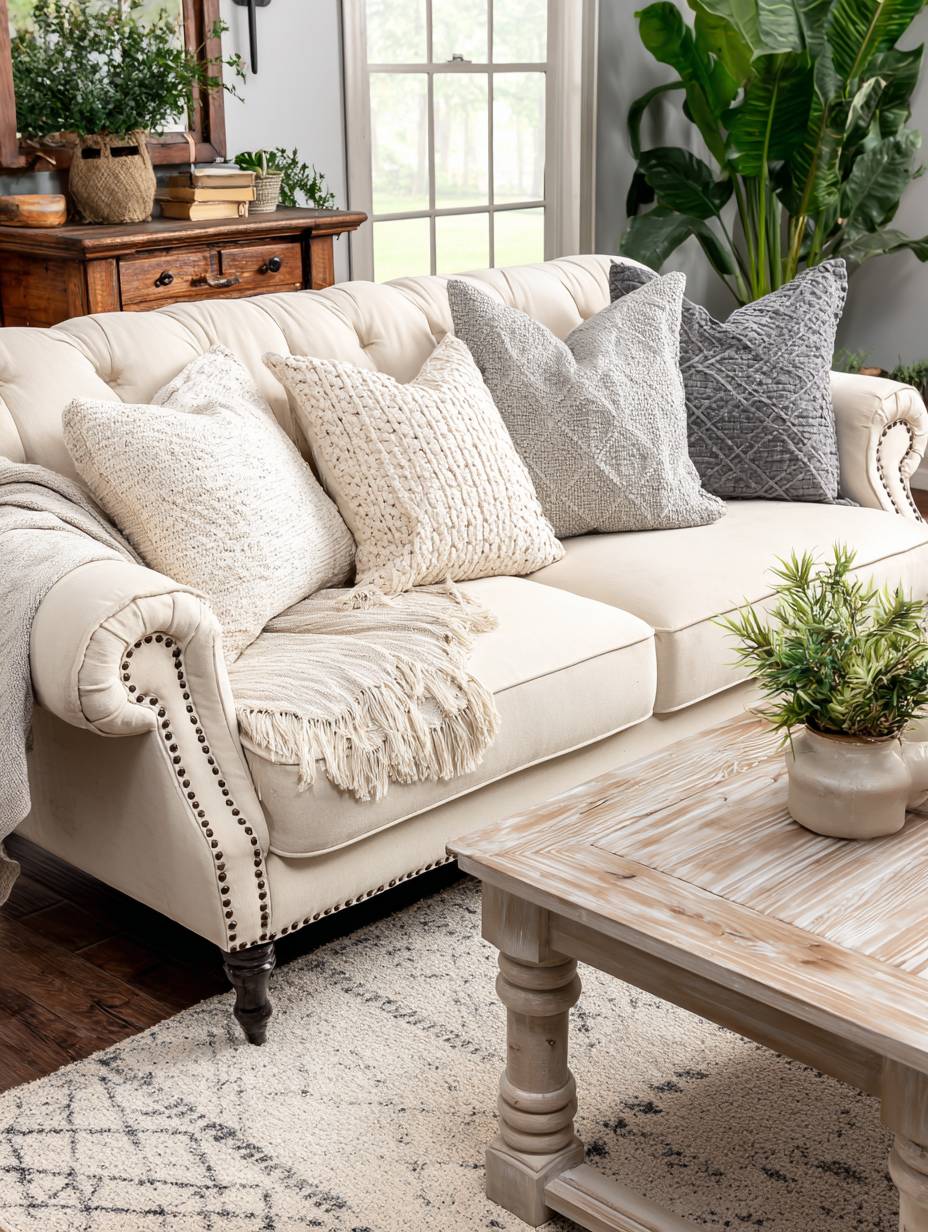
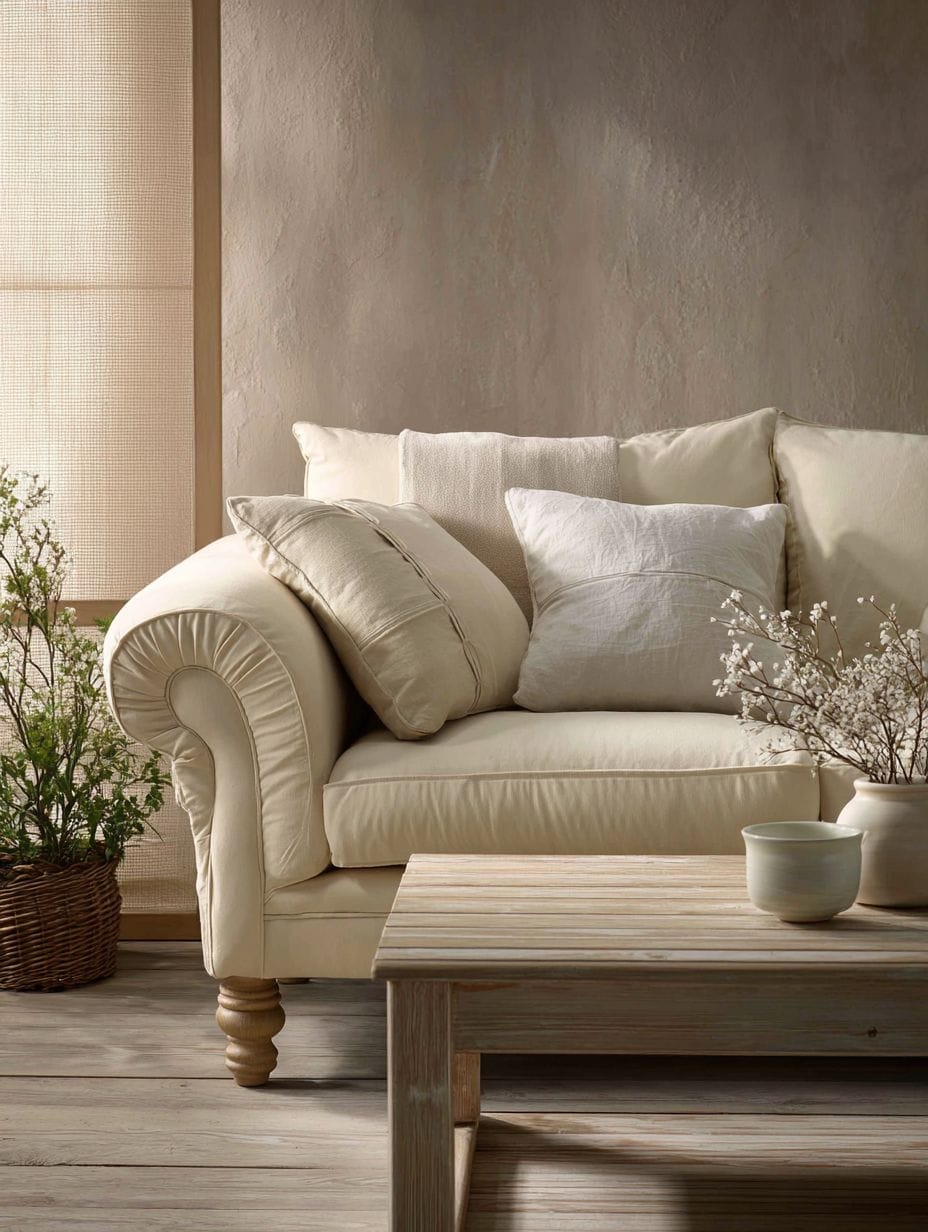
Creating calm through color restraint, this apartment living room features a cream-colored sofa with rolled arms and turned wooden legs that provide traditional comfort with timeless styling. The cream upholstery—warmer than pure white but lighter than beige—serves as neutral foundation that works with any accent color while maintaining light, spacious feeling. The rolled arms and turned legs add subtle traditional detailing without heavy ornamentation, creating gentle elegance appropriate for various decorating styles. This sofa choice demonstrates how neutral doesn’t mean boring—quality construction, comfortable proportions, and subtle detailing create interest through form rather than color.
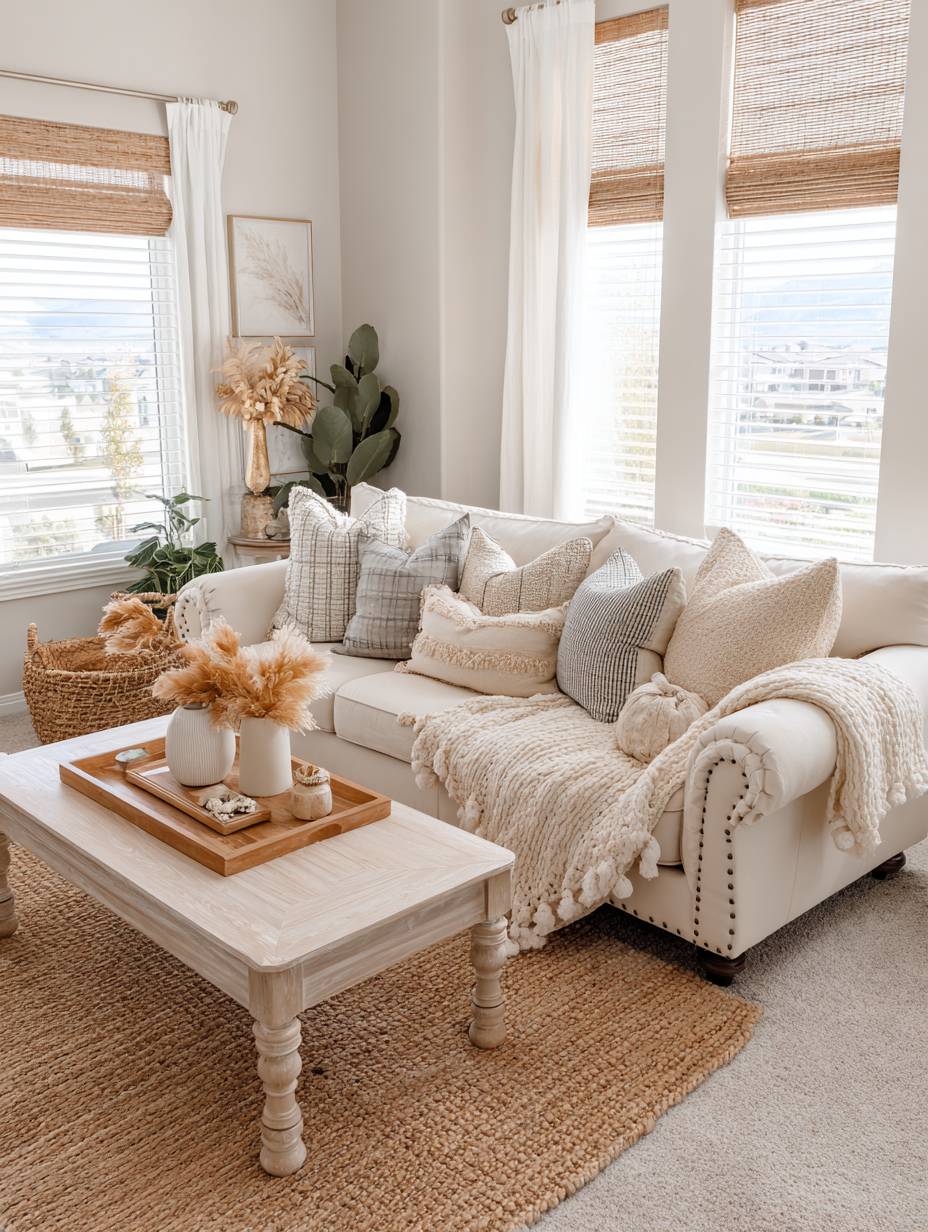
Layered neutral textiles in varying shades—beige, ivory, soft grey, warm taupe—create subtle depth through tonal variation rather than contrasting colors. These carefully graduated neutrals create sophisticated monochromatic scheme where interest comes from texture and slight color shifts rather than bold contrasts. Throw pillows in different fabrics—linen, cotton, wool, maybe subtle silk—provide textural variety while maintaining color cohesion. A wooden coffee table in whitewashed finish adds texture and organic material while maintaining the light, neutral palette. The whitewashed treatment allows wood grain to show through while reflecting light like painted furniture.
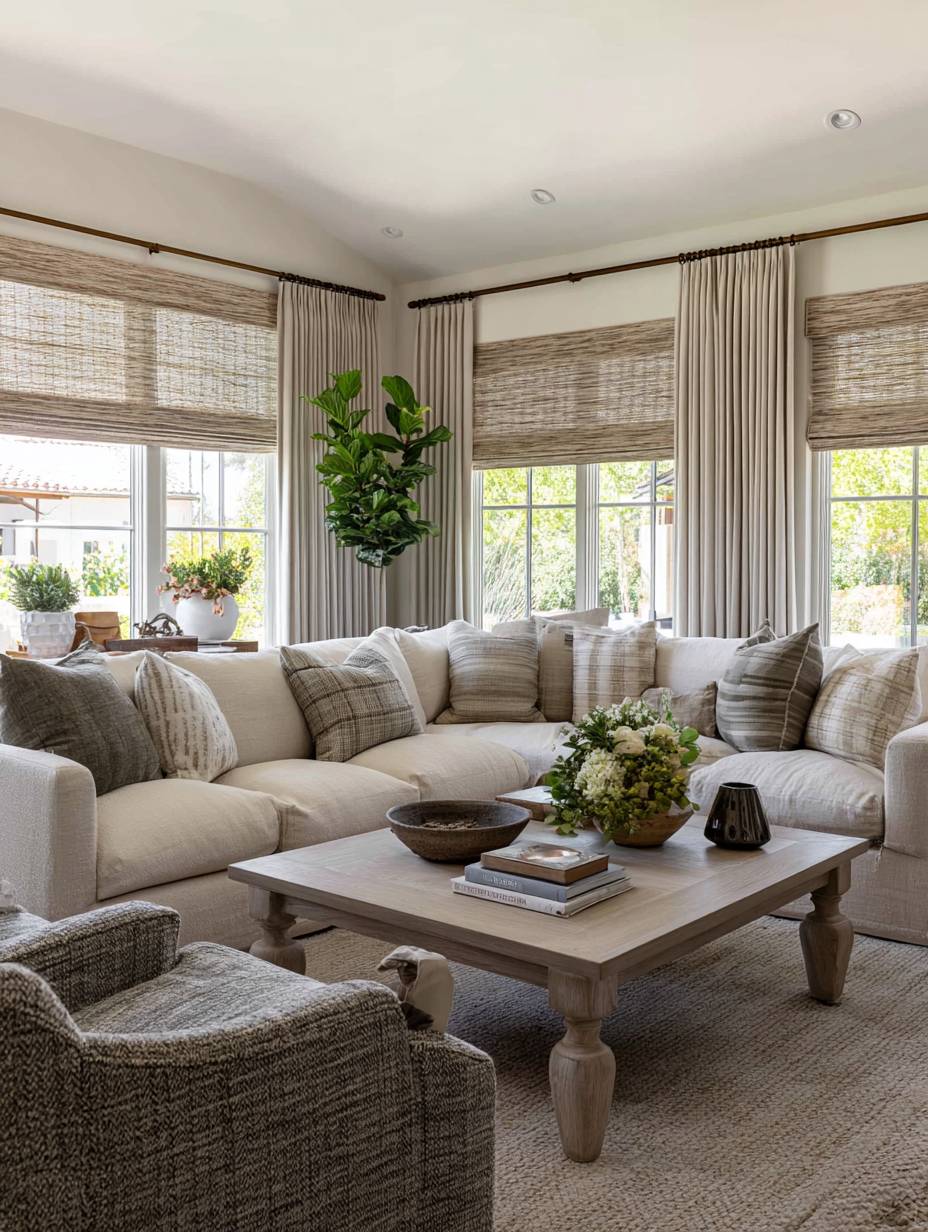
Natural fiber roman shades filter sunlight, creating gentle illumination that enhances rather than fights the neutral palette. The woven texture adds organic interest while the roman shade style provides clean lines when raised and soft horizontal folds when lowered. Potted plants and organic elements bring life to the monochromatic scheme—green foliage provides natural color accent that works in any neutral palette while adding air-purifying benefits and biophilic connection. This design demonstrates how neutral palettes, rather than being safe or boring, can create sophisticated, calming environments where subtle variations in tone and texture provide all necessary visual interest, resulting in apartment living rooms that feel serene, spacious, and timelessly elegant.
- Layer multiple neutral shades from ivory through taupe for sophisticated monochromatic depth.
- Vary textures within neutral palettes to create visual interest without introducing color contrast.
- Choose cream over stark white for warmer neutrality that feels more inviting and less clinical.
- Add plants as natural accent color in neutral schemes for life and biophilic connection.
- Select natural fiber window treatments that filter light softly while adding organic texture.
18. Art-Forward Minimalism
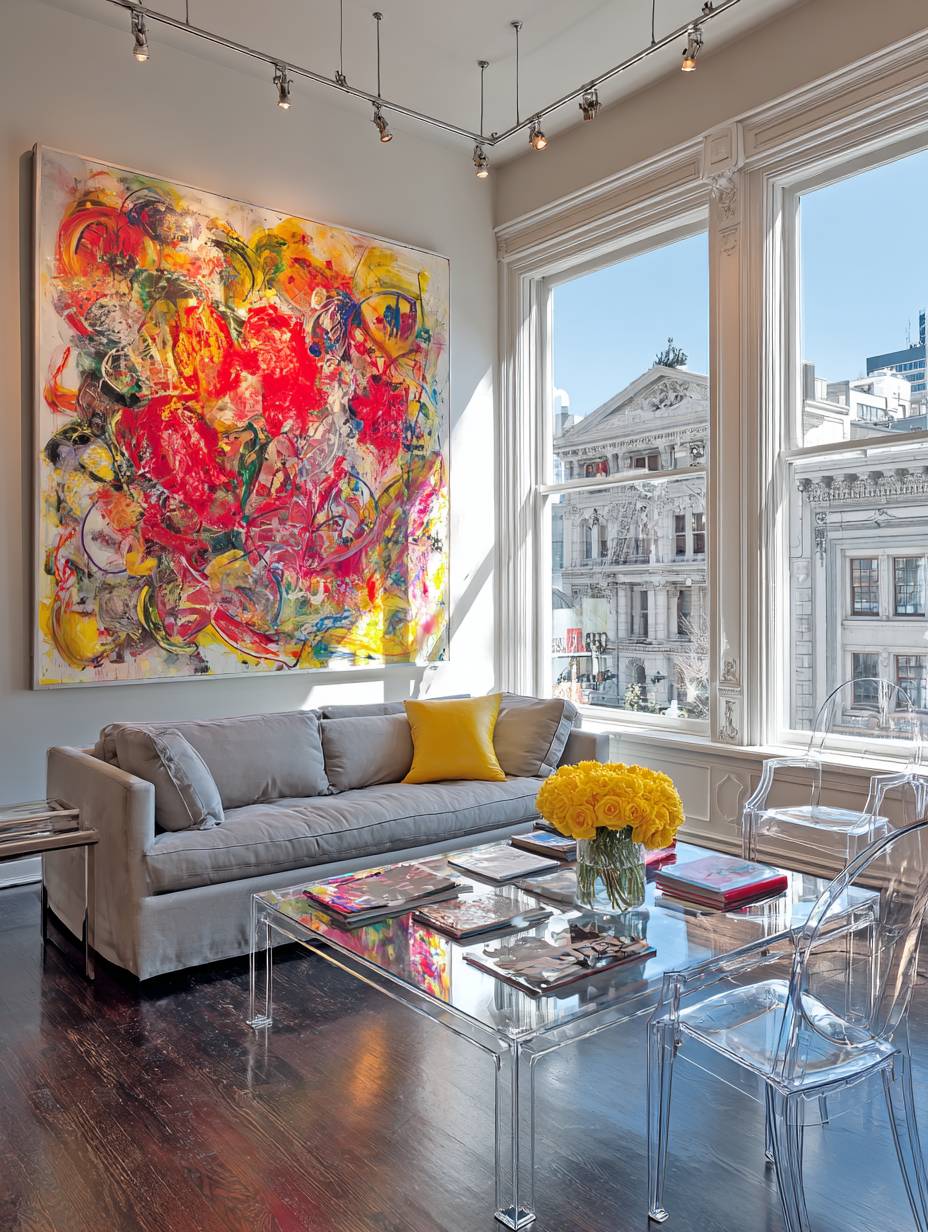
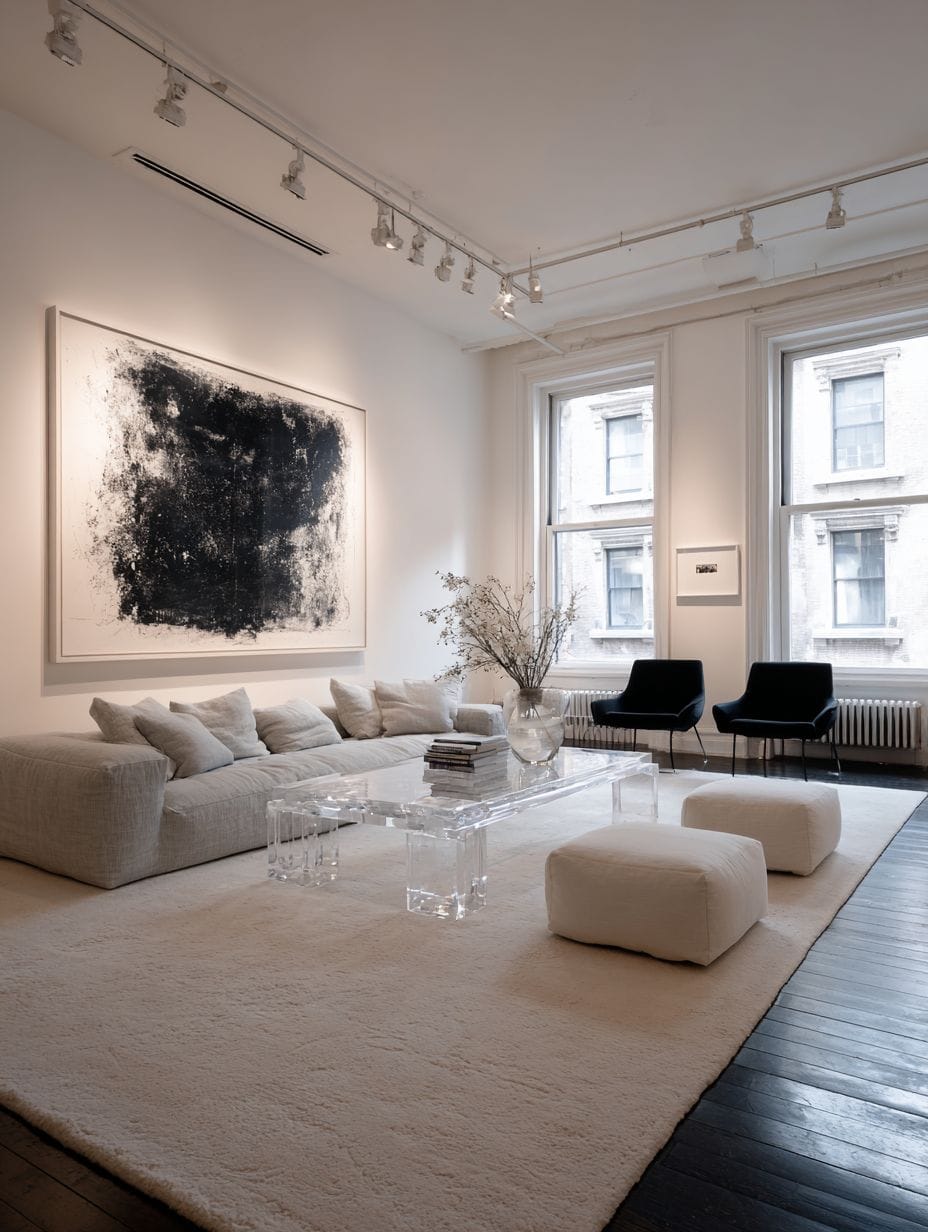
Allowing artwork to take center stage, this apartment living room features a simple grey sofa that deliberately recedes into supporting role, allowing a bold large-scale abstract painting to command attention as the room’s undisputed focal point. The sofa’s neutral grey upholstery and understated design provide necessary comfort and function without competing visually with the featured artwork. This restrained furniture choice demonstrates sophisticated design principle: when you have a true statement piece, everything else should support rather than compete with it. The sofa becomes background that allows the art to shine.
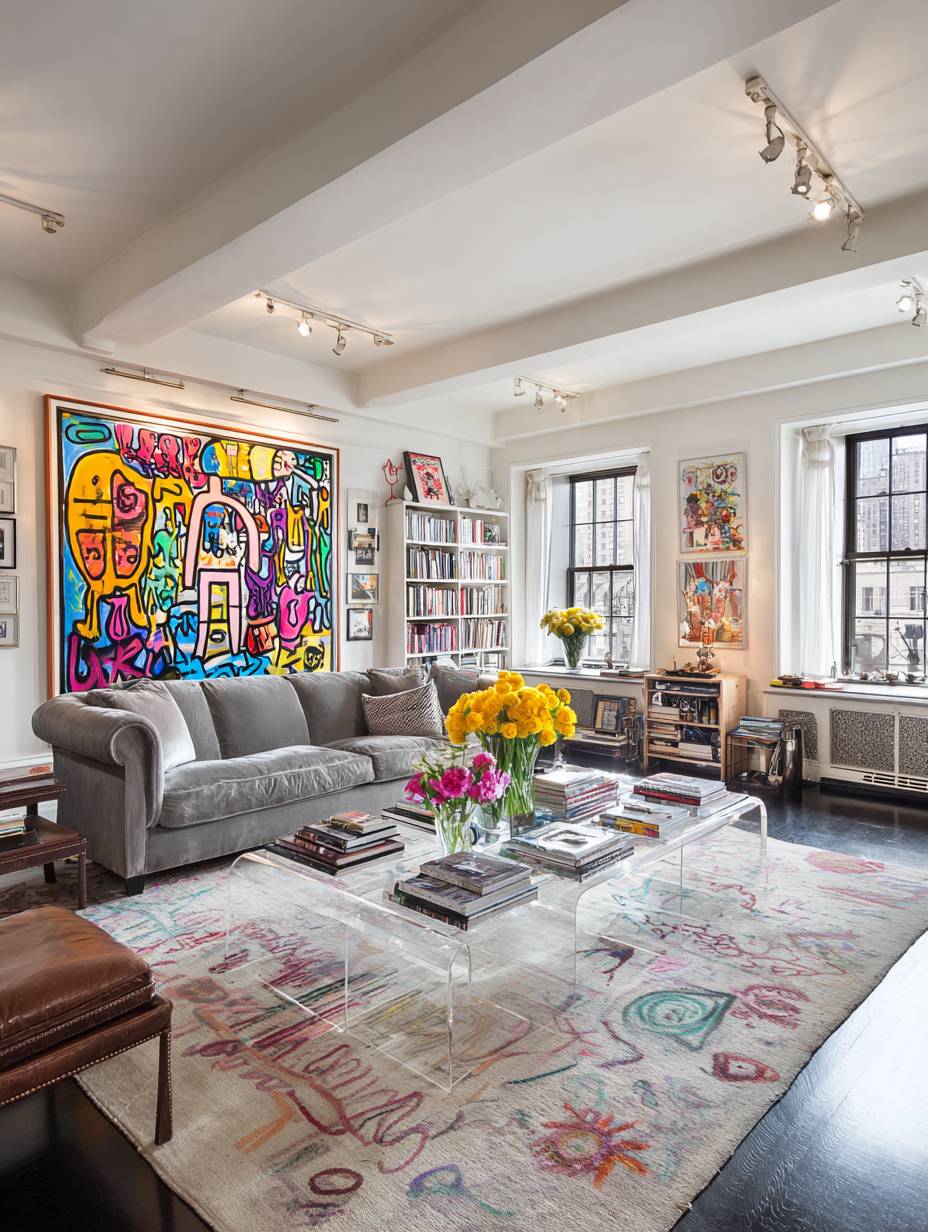
Minimal furniture including a clear acrylic coffee table maintains visual focus on the artwork by virtually disappearing. The transparent material provides essential function—surface for drinks, books, decorative objects—while occupying minimal visual space. The acrylic’s clarity allows unobstructed views across the room, maintaining sight lines to the featured artwork from every angle. This furniture choice exemplifies the “less is more” principle where careful subtraction creates more powerful impact than addition would.
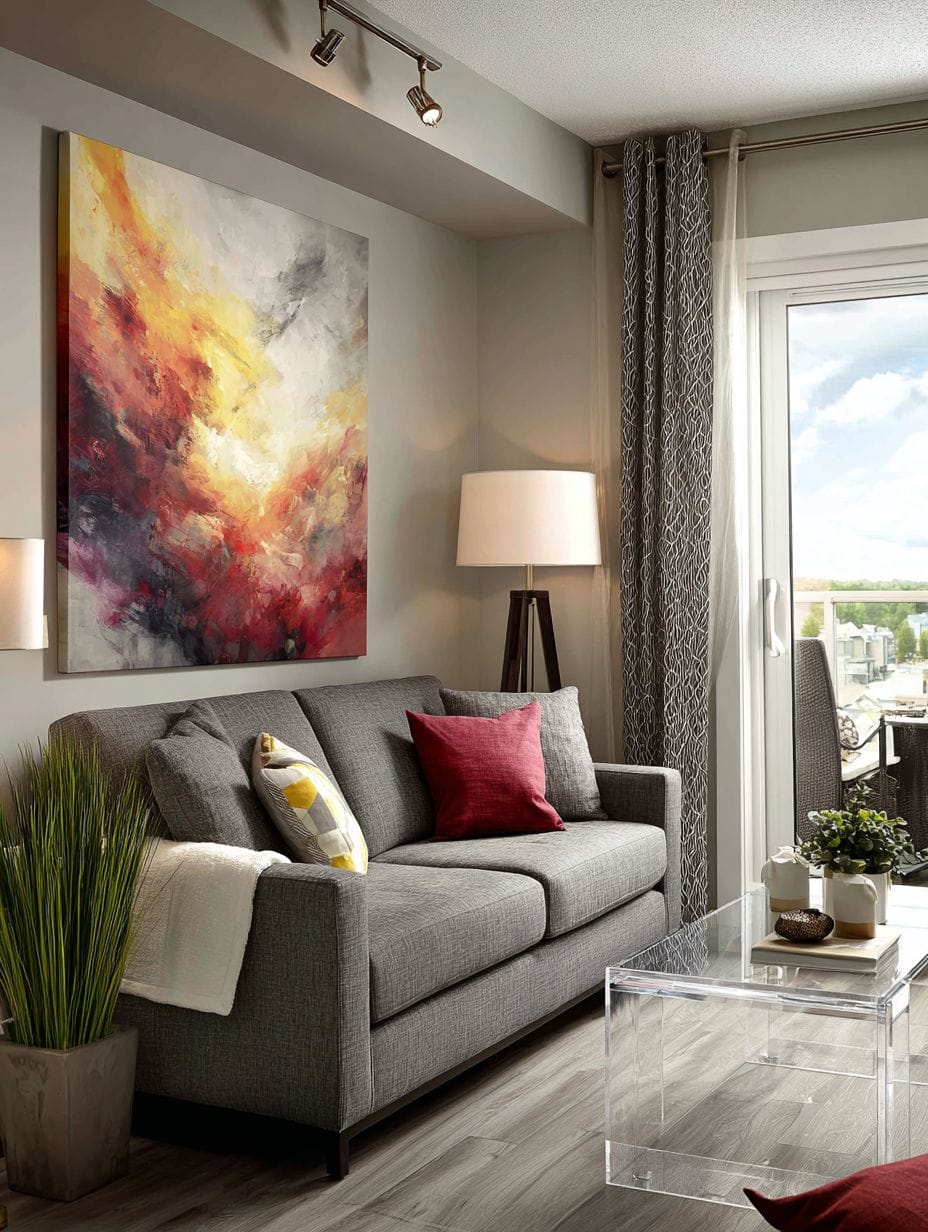
Track lighting directed specifically at the artwork creates gallery-like ambiance and professional presentation. The adjustable fixtures allow precise beam direction and intensity control, ensuring the art receives proper illumination without glare or hotspots. Natural window light illuminates the rest of the space, creating contrast between the naturally lit living area and dramatically highlighted artwork. This lighting strategy transforms the living room into personal gallery where art receives professional treatment while the space remains comfortable for daily living. The design proves that apartment living rooms can serve as serious art display spaces when furniture and design elements deliberately support rather than compete with featured works.
- Choose neutral, simple furniture when featuring bold artwork to avoid visual competition.
- Use clear acrylic furniture for essential function that occupies minimal visual space.
- Install track lighting to professionally illuminate artwork with adjustable, directed beams.
- Create gallery walls or feature single large-scale pieces as room focal points rather than afterthoughts.
- Maintain visual restraint in furniture and decor when art serves as primary design element.
19. Jewel-Tone Drama
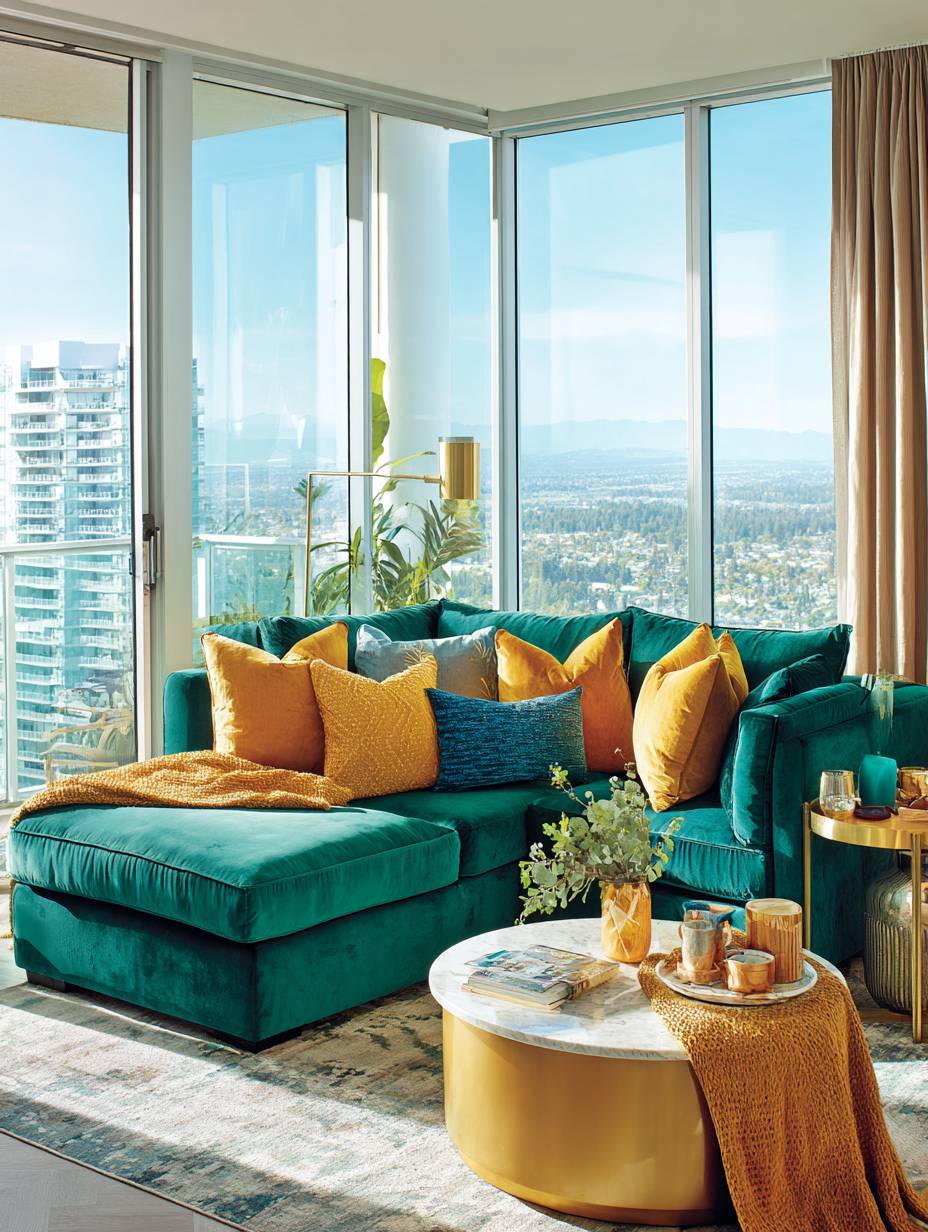
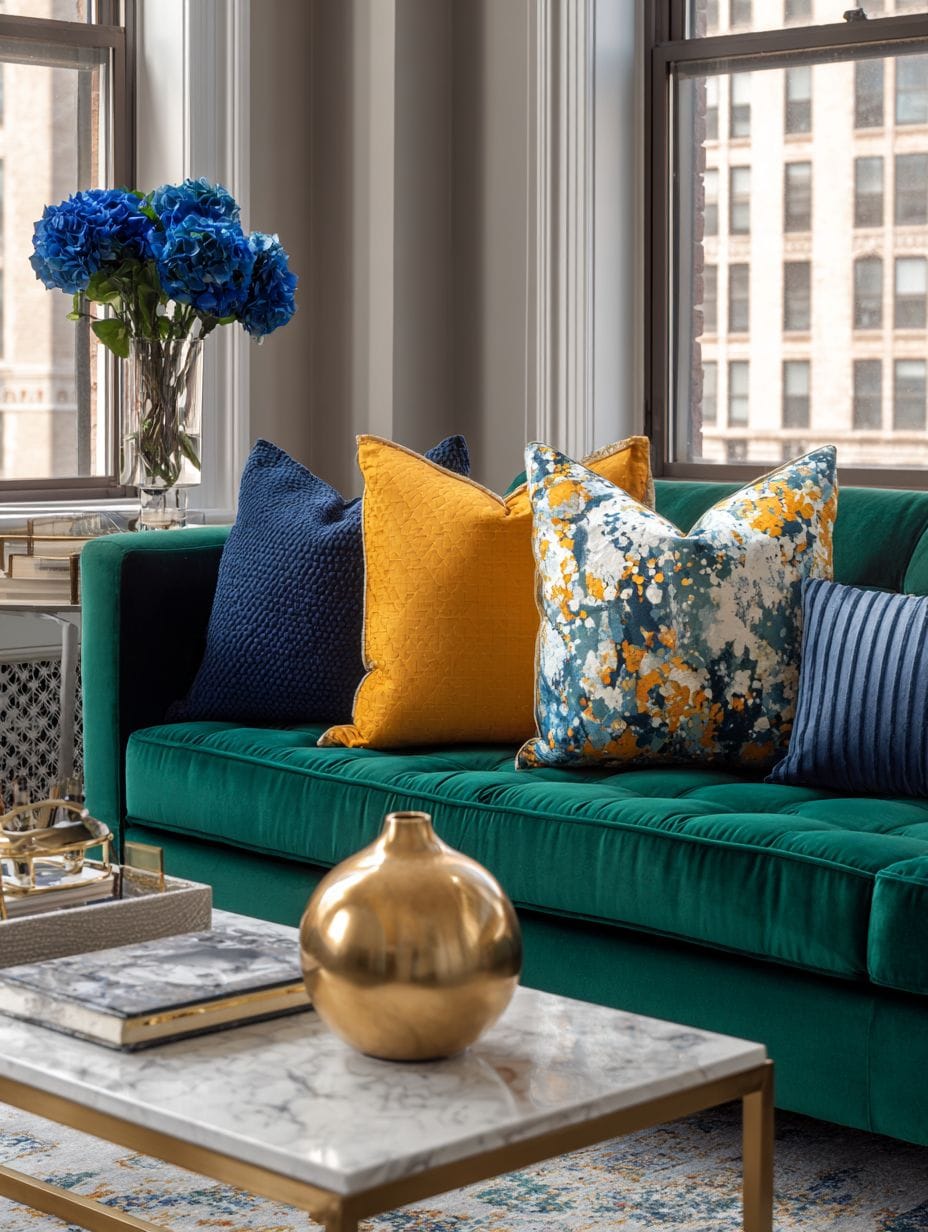
Embracing color confidence, this apartment living room features a jewel-toned velvet sofa in emerald green as the bold statement piece that defines the entire space. The rich, saturated green—deep and sophisticated rather than bright or primary—provides dramatic color impact while maintaining elegance. The velvet upholstery adds luxury through its characteristic light-reflective pile that creates subtle color shifts as viewing angle changes, making the green appear lighter or darker depending on perspective and lighting. This bold color choice requires commitment but delivers remarkable impact, transforming ordinary apartments into distinctive, memorable spaces.
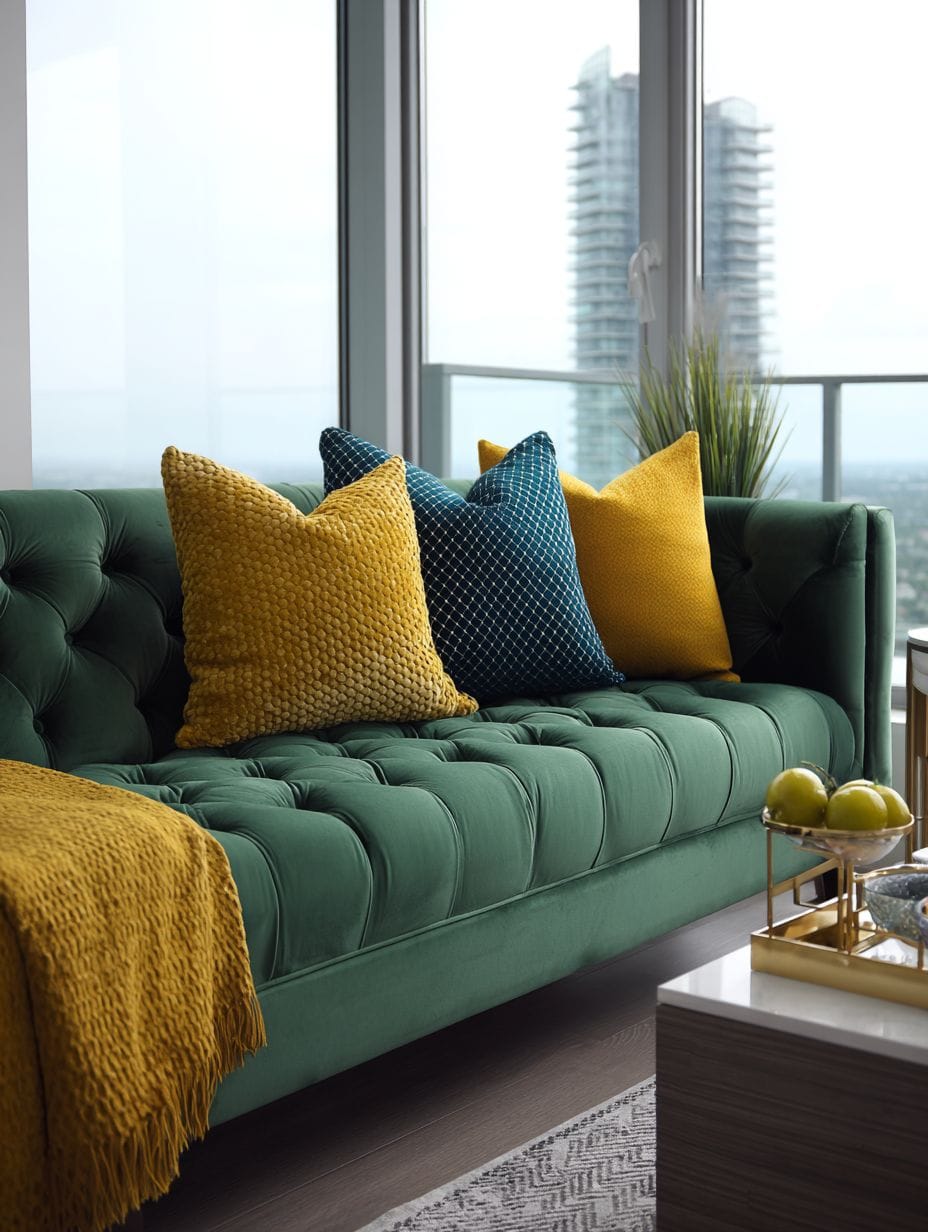
A brass and marble coffee table adds luxe details through material contrast—the warm metallic brass provides gleaming highlights while the cool marble introduces natural veining and solid weight. These luxury materials complement rather than compete with the bold sofa, adding refinement and sophistication. Accent pillows in coordinating jewel tones—mustard yellow and deep sapphire blue—create rich, saturated color palette where every hue maintains high intensity. These carefully selected colors work together because they share similar value (darkness/lightness), creating harmony despite their boldness.
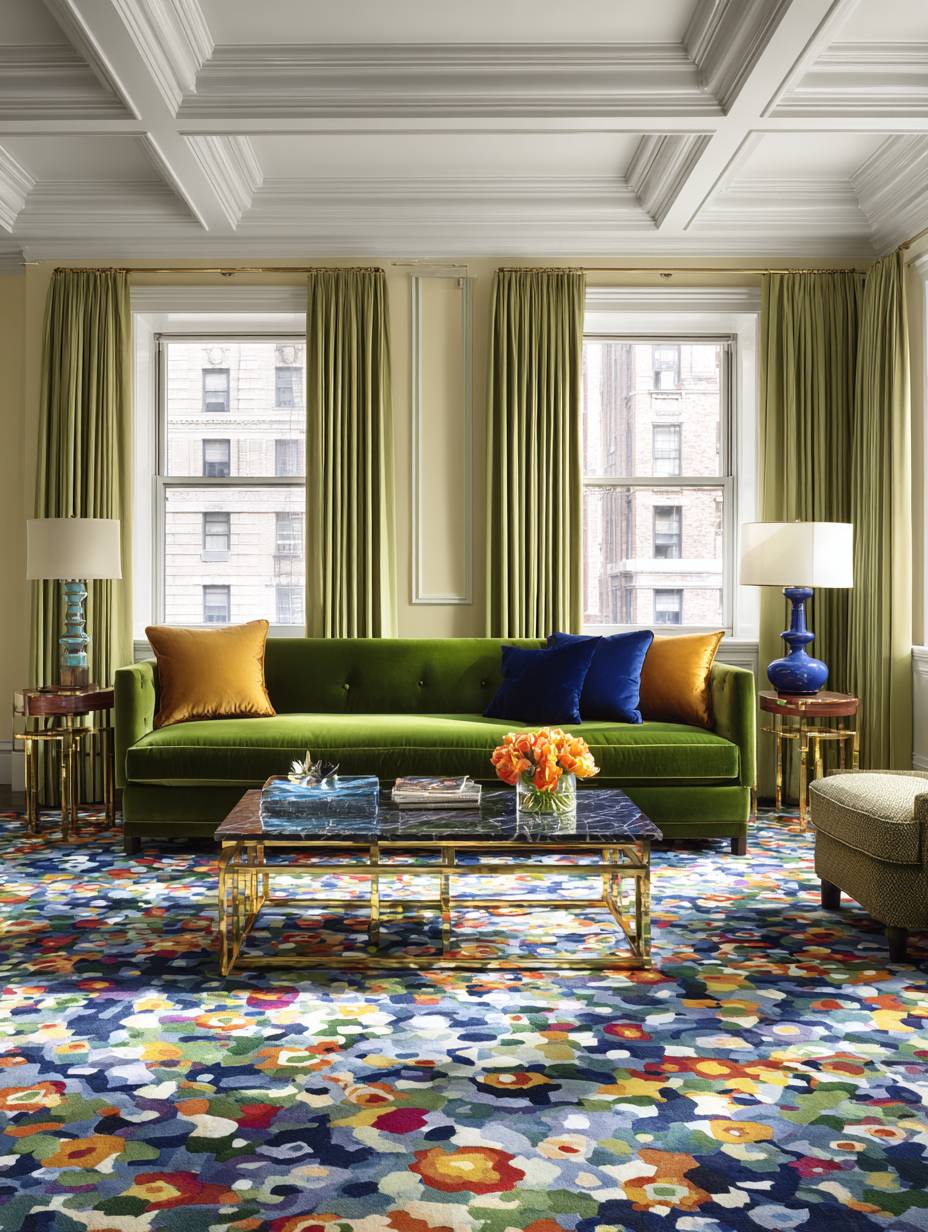
A patterned area rug in complementary tones grounds the bold furniture, its design incorporating colors from the overall scheme plus neutrals that provide visual rest. Natural light from large windows prevents the deep colors from feeling heavy or cave-like—ample daylight is essential when using saturated colors, as it reveals their richness and prevents them from reading too dark. This design demonstrates that bold color choices, when executed with quality materials and careful color coordination, create apartment living rooms with distinctive personality and sophisticated drama, proving that playing it safe with neutral colors isn’t the only path to elegant interior design.
- Choose jewel-tone velvet for bold color impact with luxurious texture and light-reflective qualities.
- Coordinate multiple jewel tones with similar values for harmonious yet dramatic color schemes.
- Add metallic and marble accents to complement bold colors with refined luxury materials.
- Ensure ample natural light in rooms with saturated colors to prevent them feeling too dark or heavy.
- Ground bold furniture with patterned rugs that incorporate scheme colors plus neutrals for balance.
20. Transitional Style Bridge
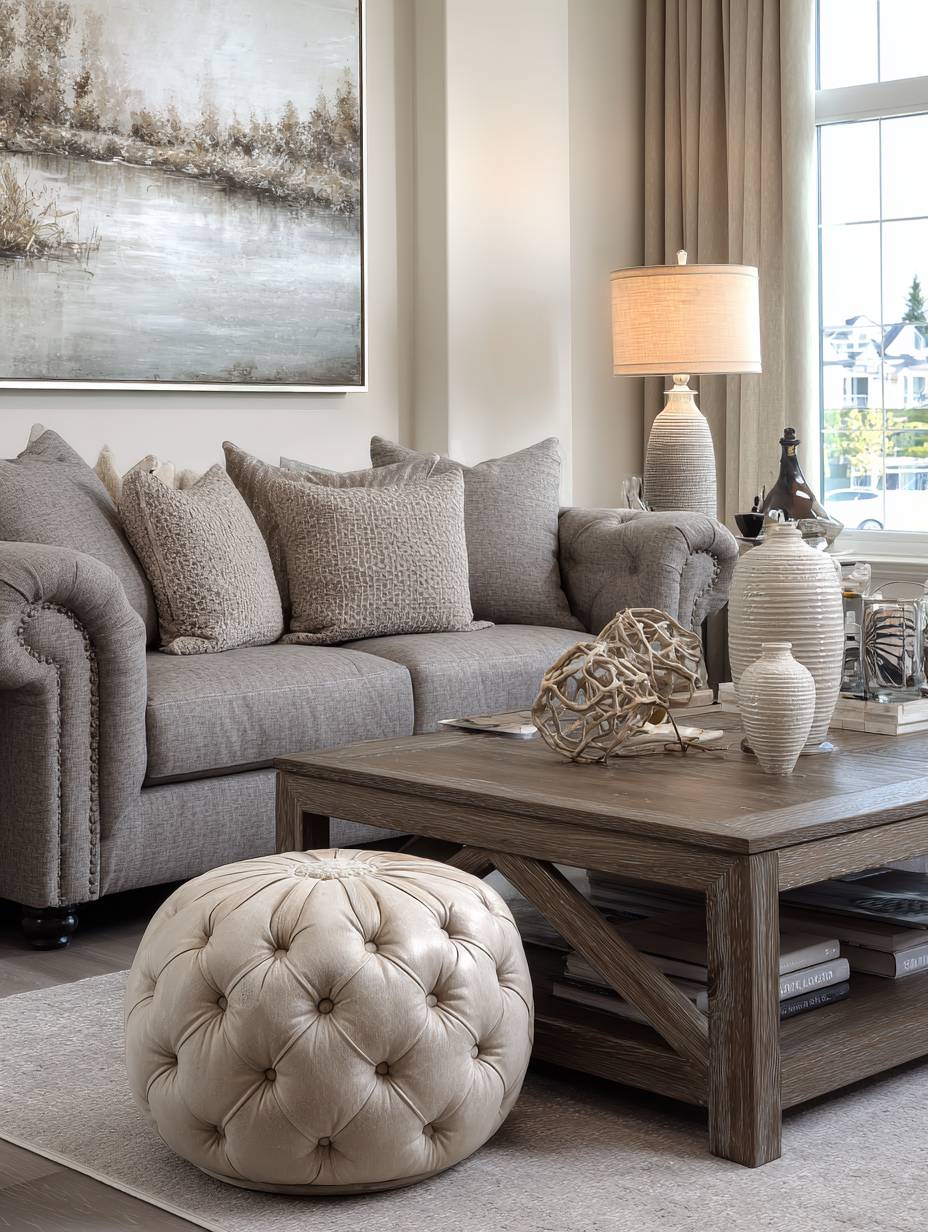
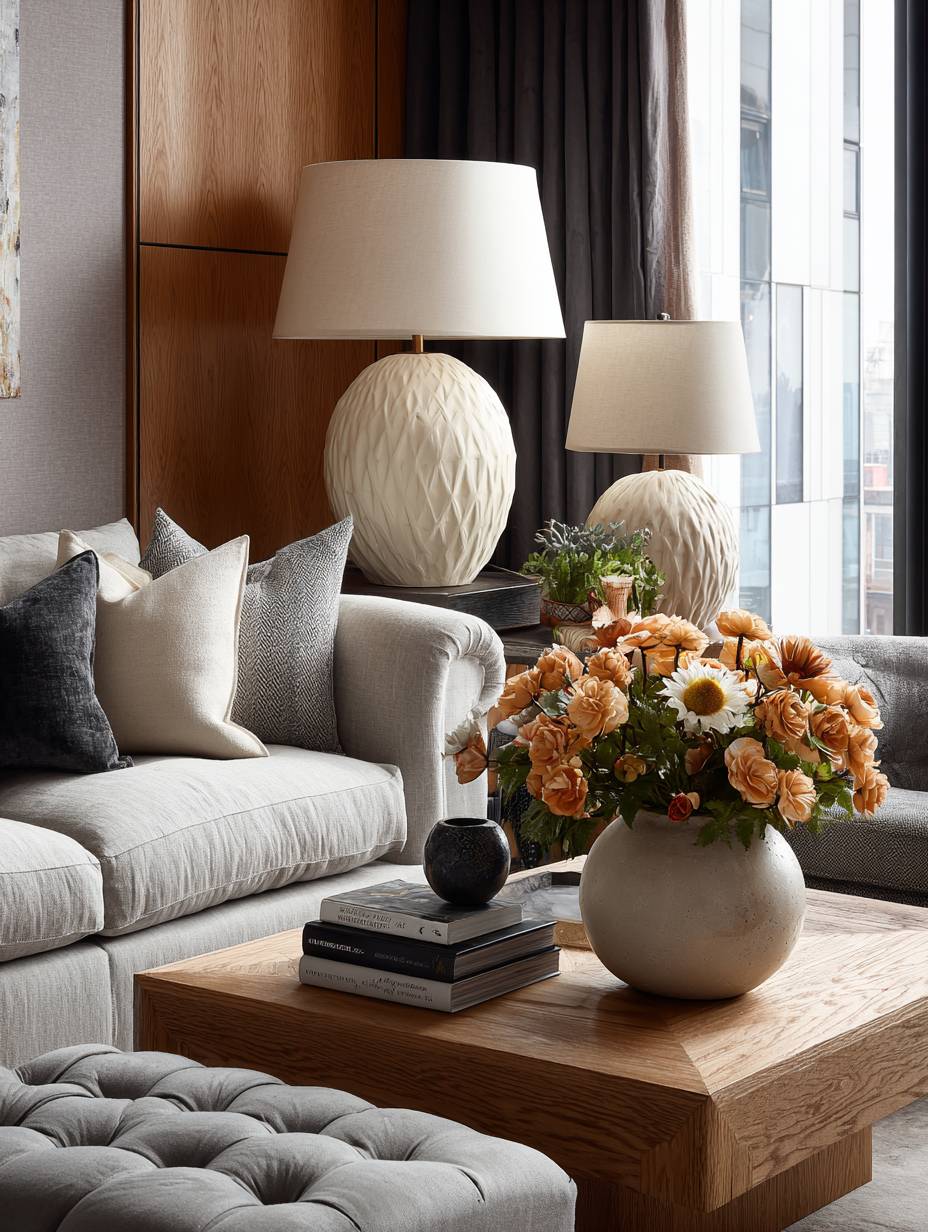
Successfully blending traditional and contemporary elements, this transitional apartment living room features a tailored sofa in soft grey linen with classic rolled arms and modern clean lines that bridge design eras. The grey linen upholstery provides contemporary color while the natural fabric adds traditional texture. The rolled arms reference classic English sofa design while the streamlined silhouette and exposed wooden legs maintain contemporary simplicity. This balanced approach creates furniture that works with both traditional and modern pieces, providing decorating flexibility as tastes evolve or homes change.
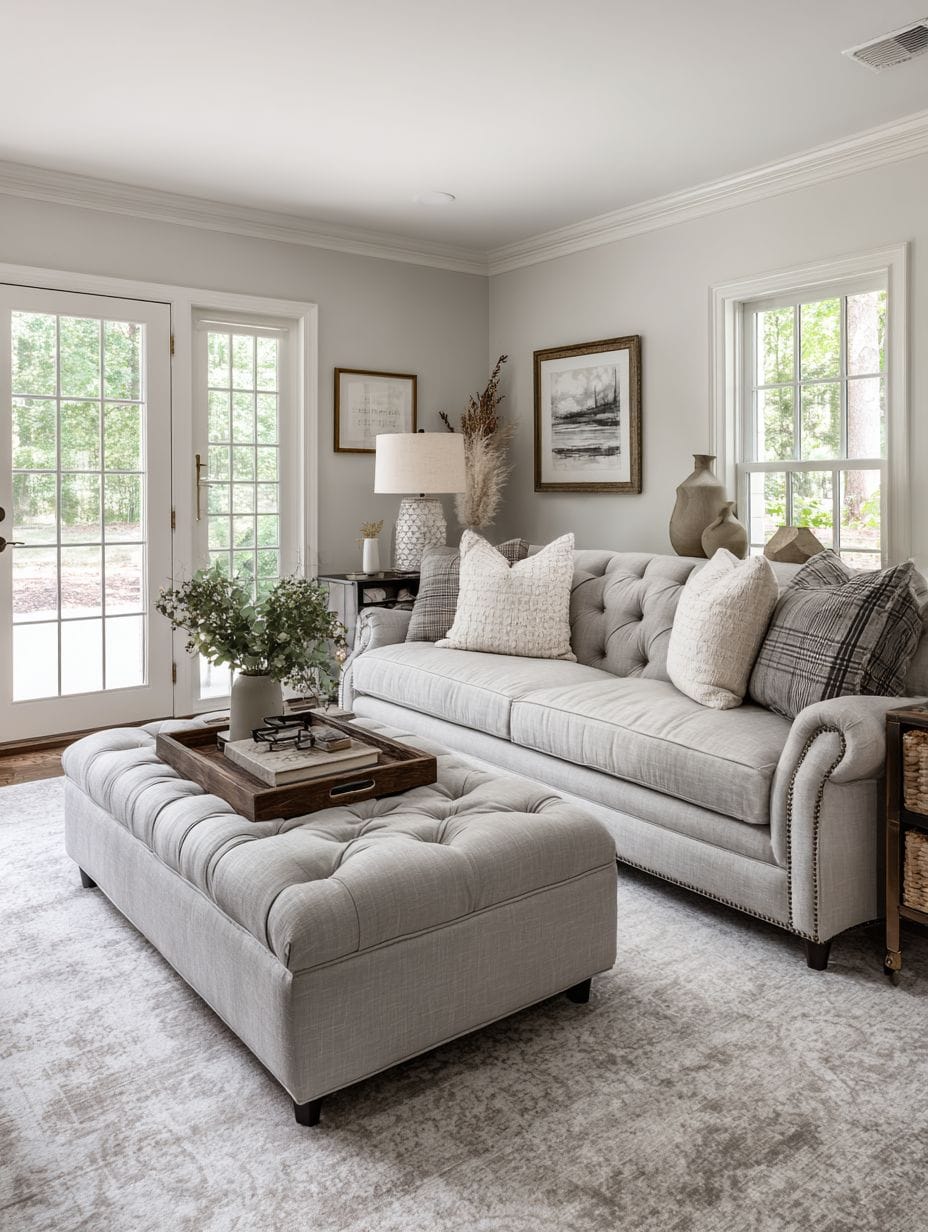
A tufted ottoman serves as versatile coffee table—its upholstered surface provides soft footrest and can accommodate a serving tray for drinks and snacks, while button tufting adds traditional detailing. The ottoman’s dual functionality embodies transitional style’s practical sophistication where decorative elements serve clear purposes. Table lamps with ceramic bases and linen shades provide warm ambient lighting, their traditional material (ceramic) paired with classic shade shape creating timeless accessories that work across decorating styles. The lamps’ symmetrical placement adds traditional formality while their simple styling maintains contemporary restraint.
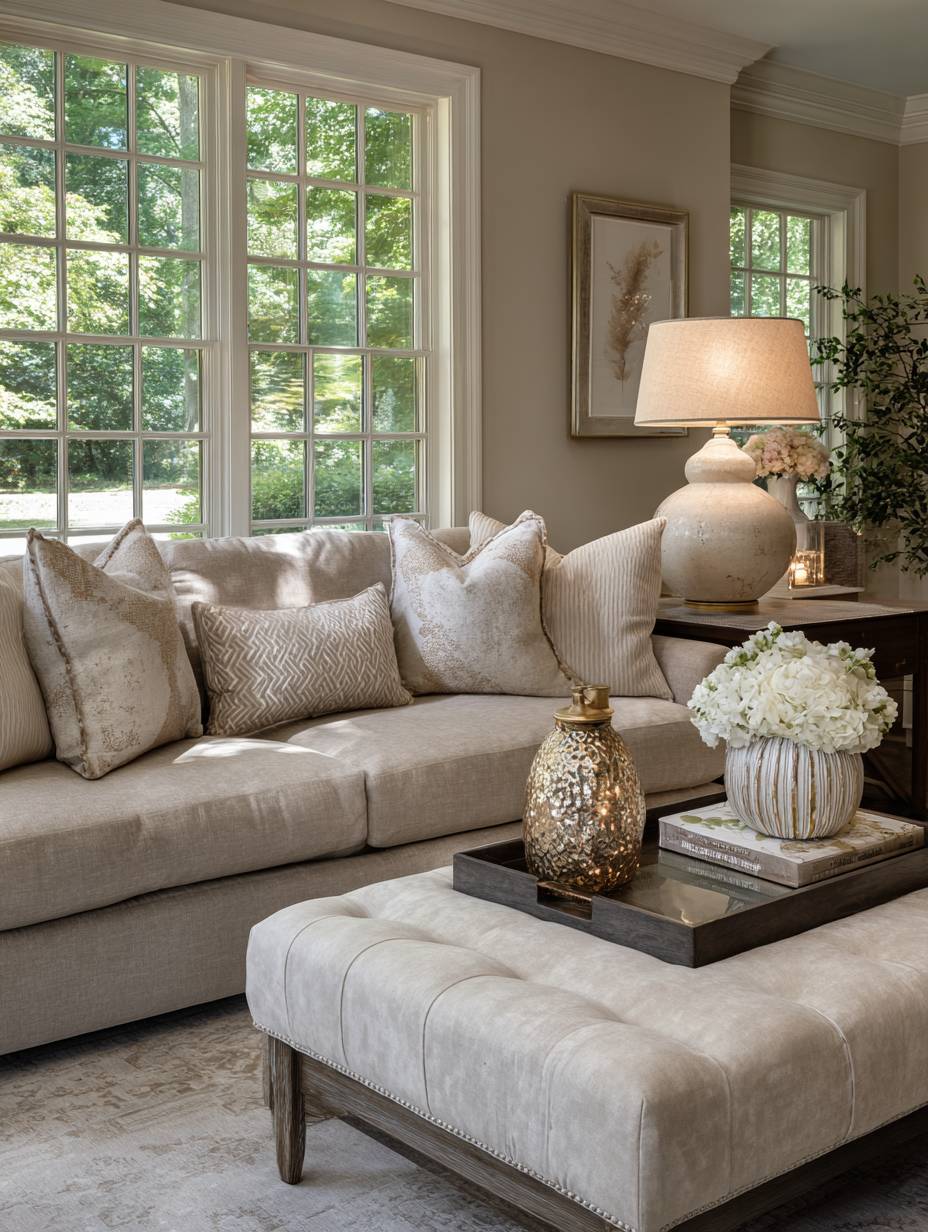
A balanced mix of traditional wood furniture and modern accessories creates visual interest through contrast while maintaining overall cohesion. Perhaps a traditional wooden side table with turned legs sits beside contemporary metal and glass shelving—each piece brings distinct character that contributes to the room’s eclectic yet controlled aesthetic. This design demonstrates how transitional style, through careful balancing of traditional and contemporary elements, creates apartment living rooms that feel both timeless and current—never dated or trendy—providing long-term satisfaction and decorating flexibility that pure traditional or modern rooms cannot match.
- Choose furniture with mixed period references like rolled arms with clean lines for transitional flexibility.
- Use neutral upholstery fabrics like grey linen that work across traditional and contemporary contexts.
- Select versatile pieces like upholstered ottomans that serve multiple functions while bridging style eras.
- Balance traditional and modern accessories in equal measure for cohesive transitional aesthetic.
- Maintain neutral color palettes that provide backdrop for both antique and contemporary pieces.
21. Textural Natural Layers
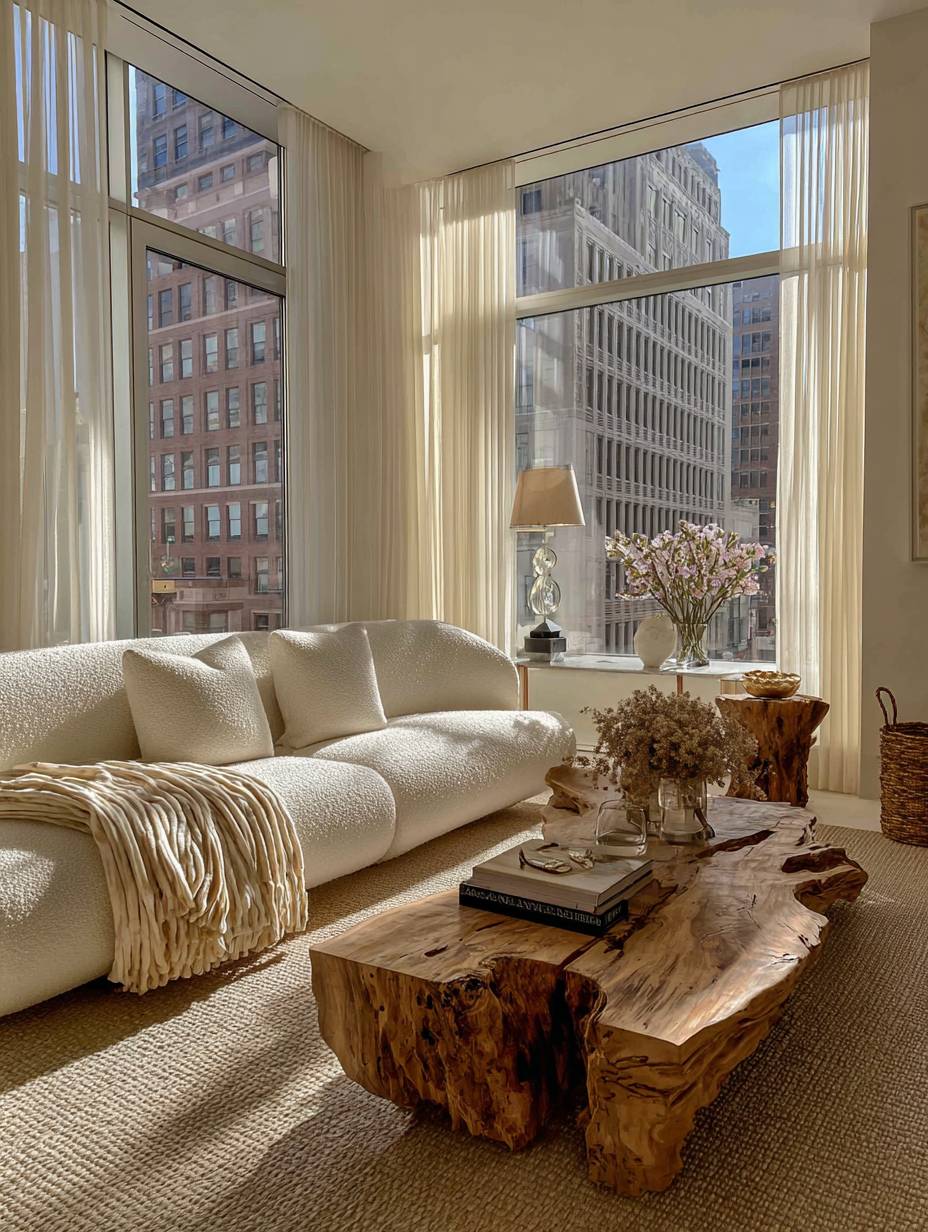
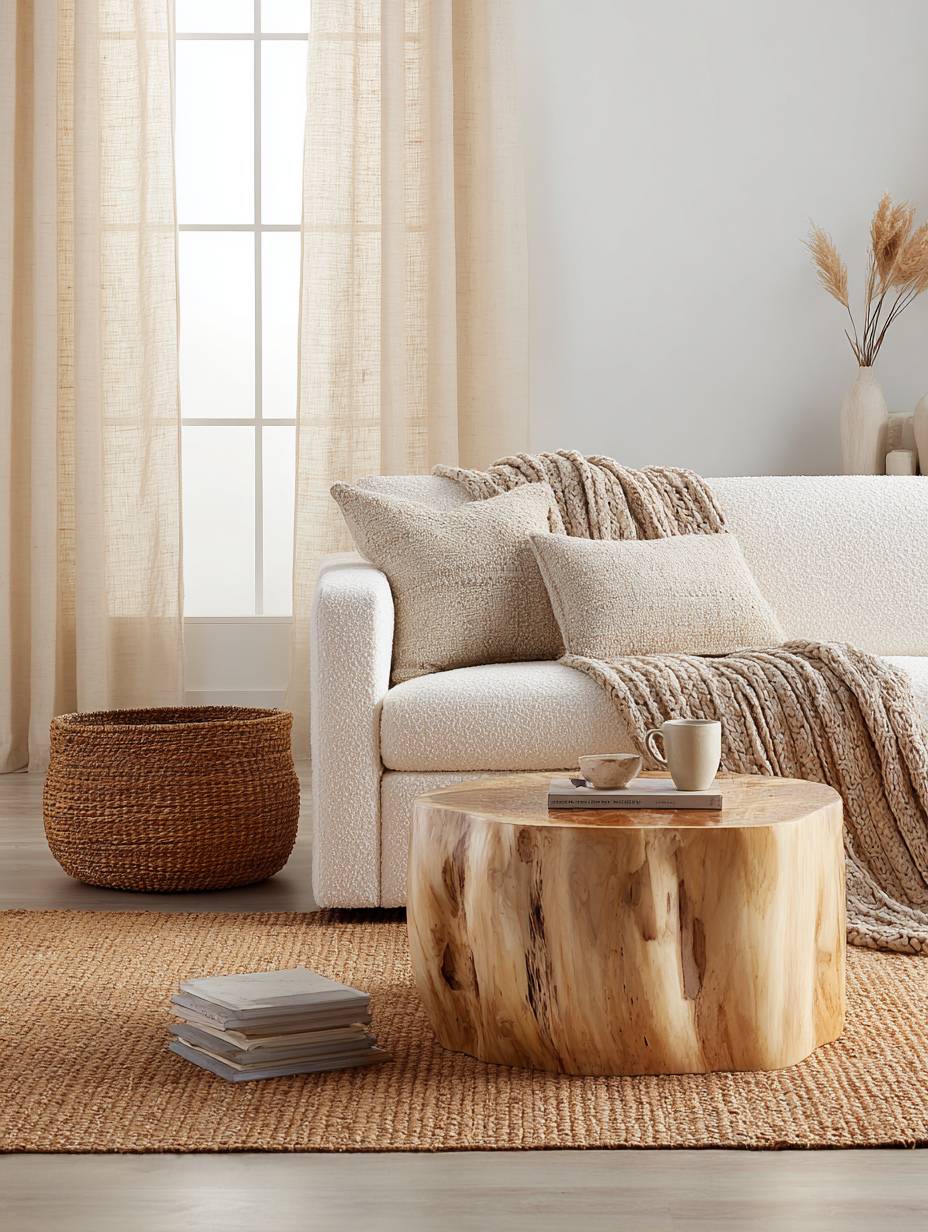
Celebrating tactile richness, this apartment living room emphasizes texture through natural materials, featuring a boucle fabric sofa in creamy white that provides sculptural, nubby texture as the room’s centerpiece. Boucle—characterized by its looped yarn construction—creates three-dimensional surface that catches light beautifully and invites touch. The creamy white color showcases the fabric’s texture while maintaining light, airy feeling and versatile neutral foundation. The sofa’s substantial presence and textured surface create visual weight and interest without relying on pattern or bold color, demonstrating texture’s power as design element.
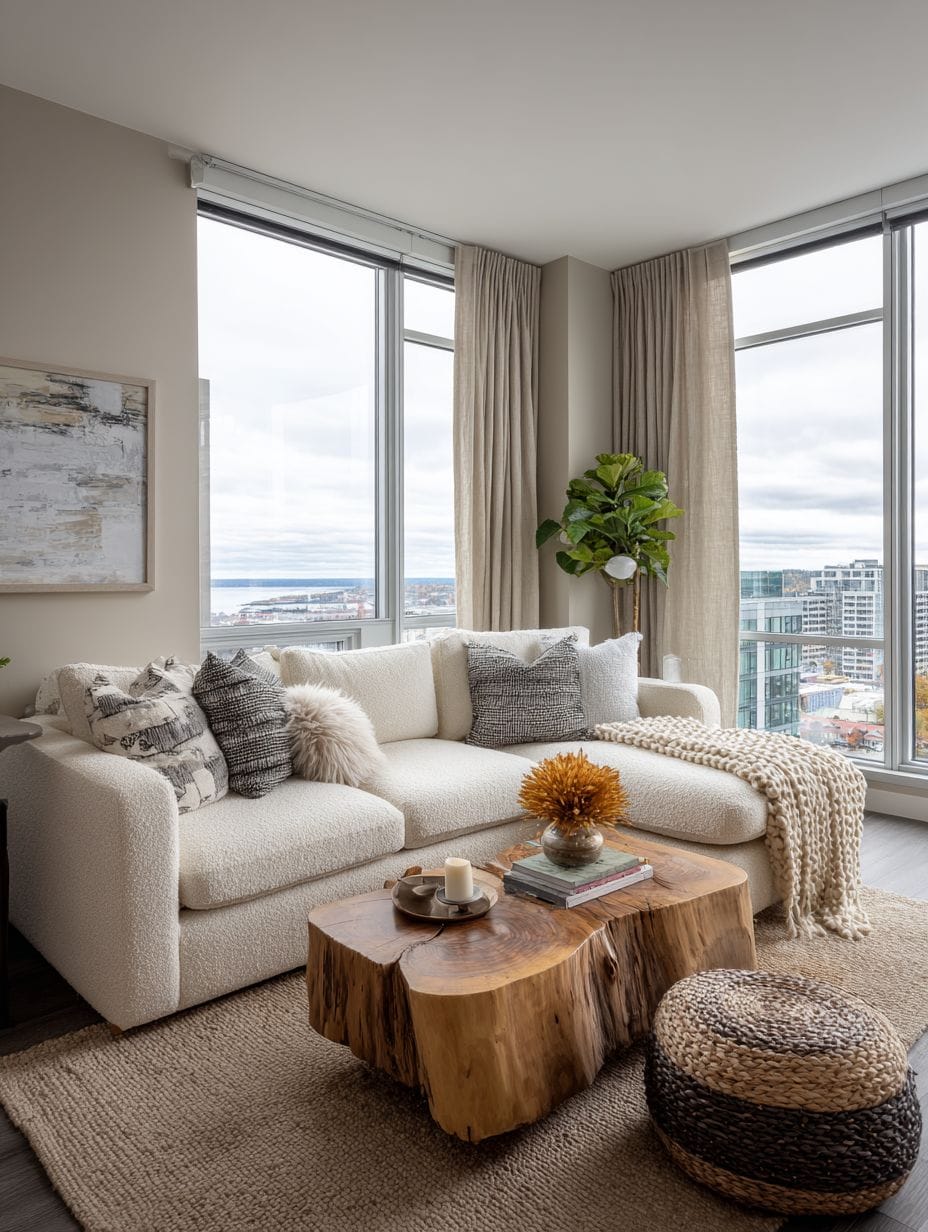
A jute area rug adds natural fiber texture underfoot, its woven construction and honey color introducing organic warmth while providing tactile contrast to the sofa’s looped upholstery. The jute’s slightly coarse texture grounds the space while maintaining the natural, textural theme. A chunky knit throw blanket drapes over the sofa, its oversized gauge creating sculptural folds and adding cozy warmth. The blanket’s thick weave creates visual weight and textural drama that elevates it from functional item to design feature. A live edge wood coffee table showcases natural grain and organic shape, its irregular edge celebrating the tree’s original form rather than imposing straight lines through processing.
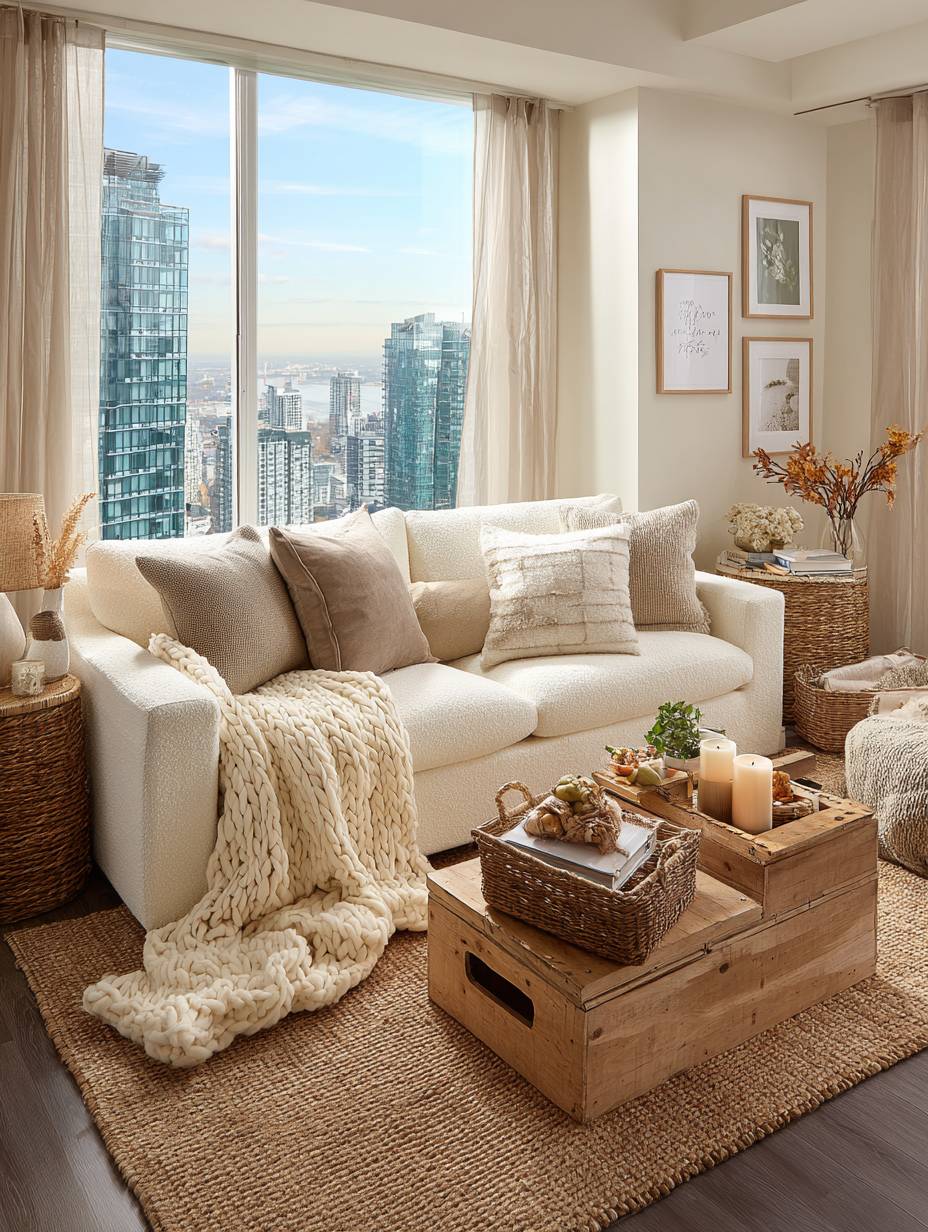
Woven basket storage adds both function and texture, the handwoven natural materials continuing the room’s textural and organic theme while providing practical storage for throws, magazines, or toys. Linen curtains in natural flax color filter sunlight, their relaxed weave creating subtle light patterns while adding another layer of natural texture. This design demonstrates how thoughtful layering of varied natural textures—looped boucle, woven jute, chunky knit, raw wood edge, basket weave, linen weave—creates apartment living rooms with remarkable visual and tactile richness, proving that color and pattern aren’t necessary when texture provides sufficient visual interest and sensory appeal.
- Choose boucle upholstery for distinctive textural impact and light-catching three-dimensional surface.
- Layer multiple natural textures from smooth wood to nubby fabrics to woven materials for sensory richness.
- Select live edge wood furniture that celebrates organic forms and natural material beauty.
- Add oversized knit throws as sculptural textile elements that provide texture and warmth.
- Use natural fiber rugs like jute for organic warmth and textural contrast underfoot.
22. Built-In Banquette Efficiency
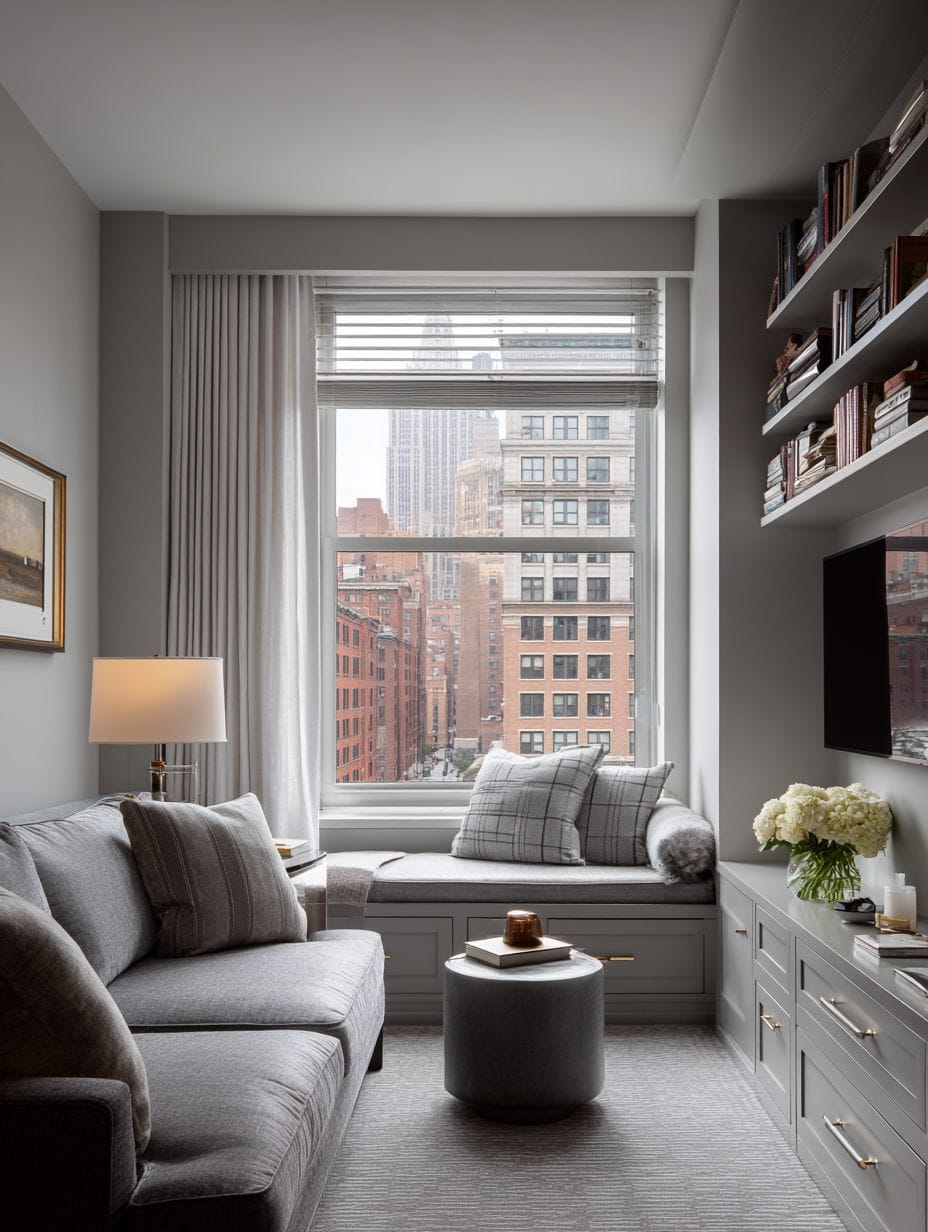
Maximizing every inch through custom solutions, this smart apartment living room features built-in seating with a custom banquette upholstered in durable grey fabric with storage drawers underneath that transform dead space into functional seating and storage. The built-in approach eliminates gaps between furniture and walls, creating seamless integration that makes small spaces feel more intentional and less cluttered. The storage drawers below provide hidden space for seasonal items, extra linens, or rarely-used belongings, addressing apartment storage challenges while maintaining clean appearance. The grey upholstery provides neutral versatility and practical stain resistance.
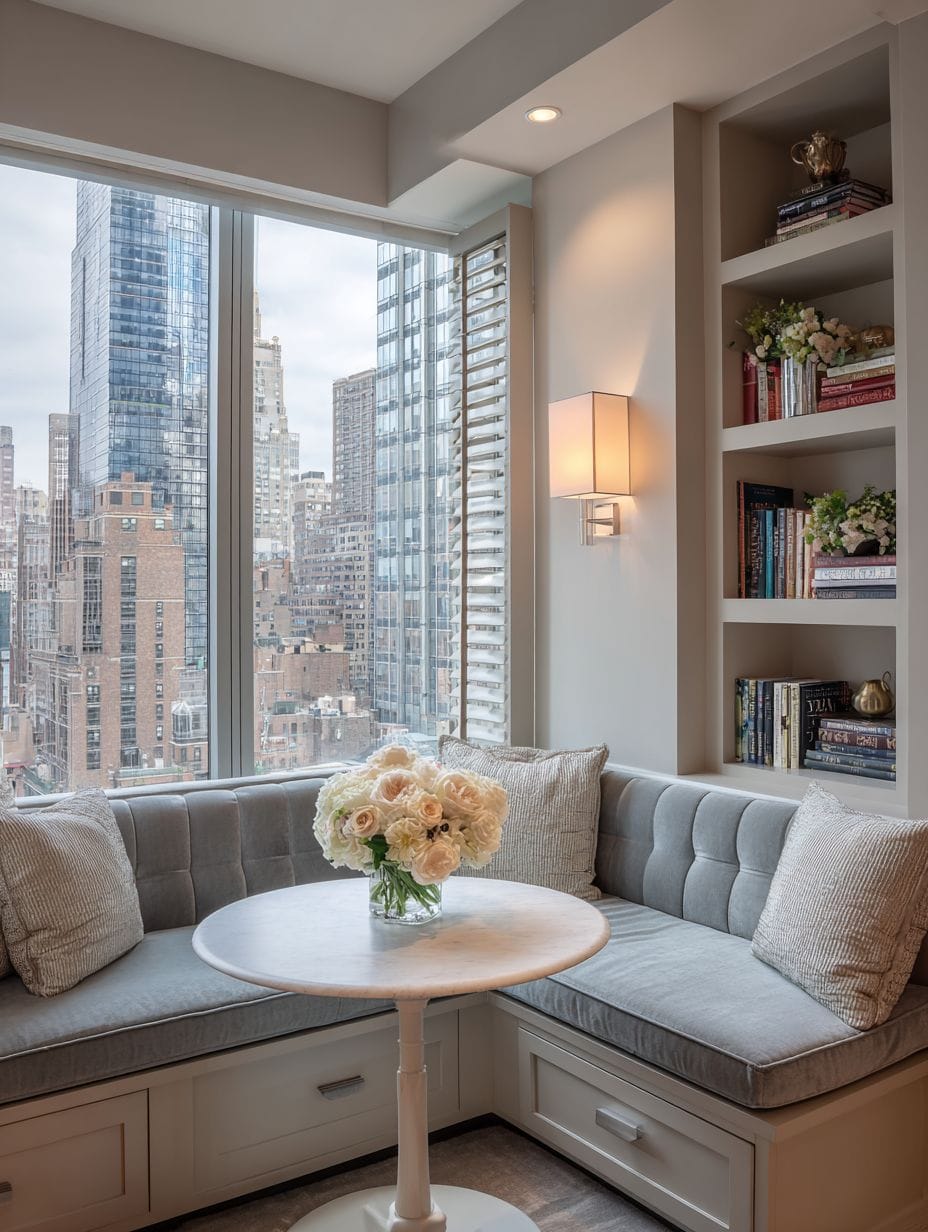
A round pedestal coffee table allows easy movement in the compact space, its single central support eliminating corner table legs that can impede traffic flow in tight quarters. The round shape promotes better circulation and creates softer appearance compared to rectangular alternatives. The pedestal base also allows for chairs or ottomans to be pushed underneath when not in use, providing space-saving flexibility. Wall-mounted TV and floating shelves maximize vertical space, keeping floors clear and maintaining open sight lines. The wall-mounted approach eliminates bulky entertainment centers while positioning screens at optimal viewing height.
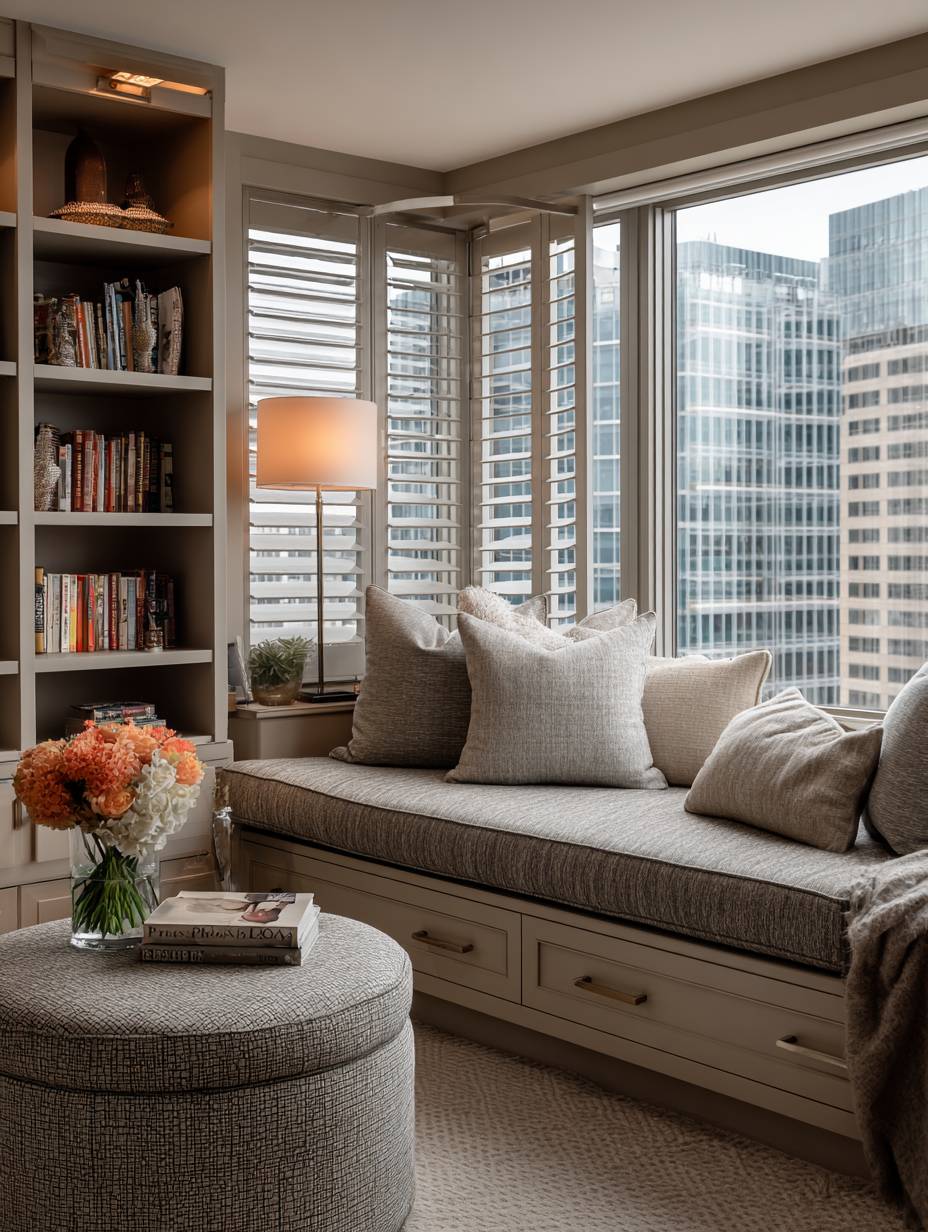
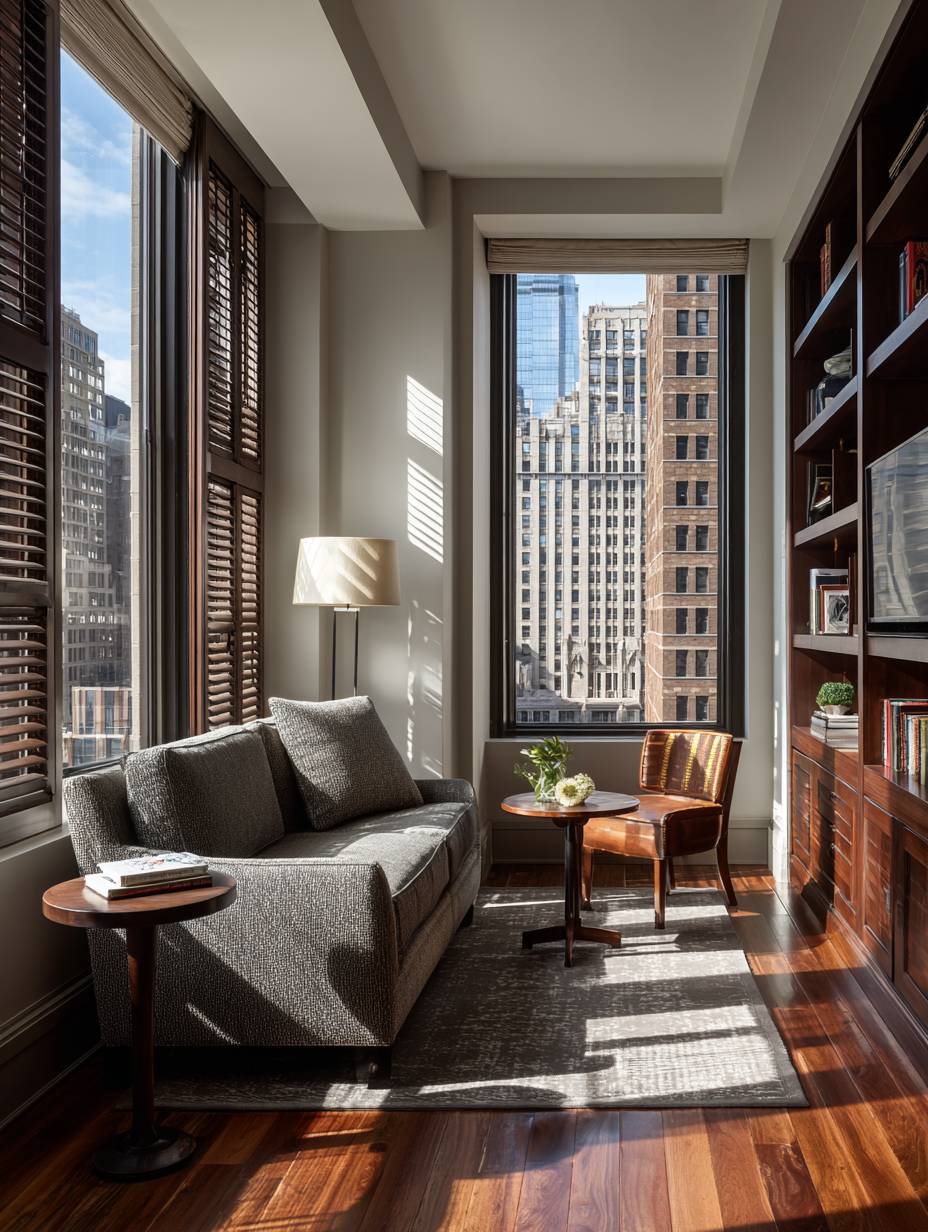
Large window with plantation shutters provides light control and privacy with adjustable louvers that can direct light and maintain views while blocking sight lines from outside. The shutters’ built-in appearance complements the custom banquette, creating cohesive architectural detailing. This design demonstrates how custom built-in solutions, though requiring greater initial investment, deliver superior space efficiency in apartments where standard furniture leaves unusable gaps and fails to maximize storage potential. The result is living rooms that feel more spacious despite having more functionality, proving that custom millwork can be wise investment in small-space living.
- Build in seating with storage to maximize space efficiency and eliminate furniture gaps in small rooms.
- Choose pedestal tables with single central supports for better traffic flow and flexible furniture arrangements.
- Wall-mount TVs and shelving to free floor space and create streamlined, architectural appearance.
- Install plantation shutters for built-in light control that complements custom millwork aesthetic.
- Select durable upholstery fabrics for built-in seating that will withstand years of daily use.
23. Contemporary Clean Lines
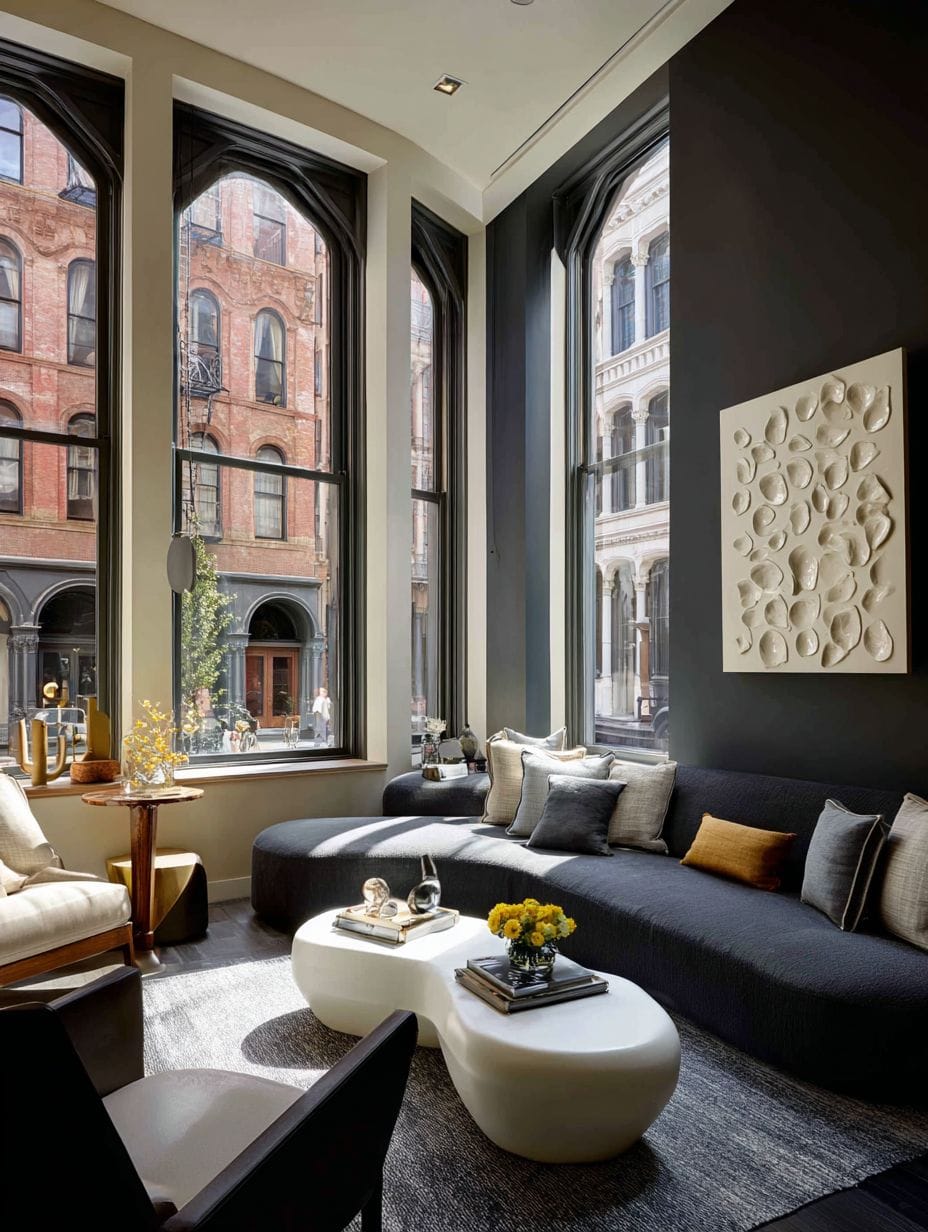
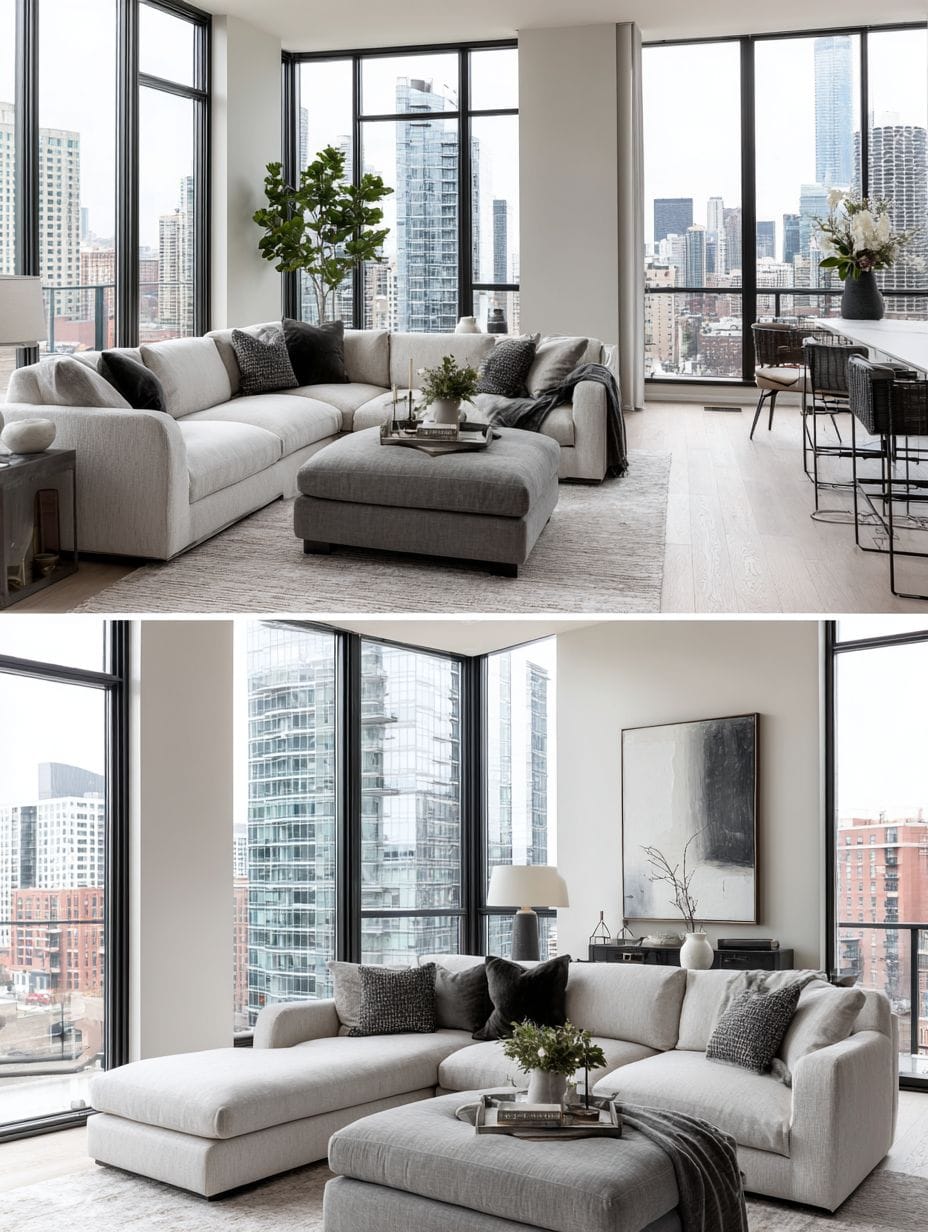
Embodying current design sensibilities, this apartment living room features a low-profile platform sofa in charcoal grey with wide, modern proportions that create substantial presence while maintaining sleek contemporary styling. The platform design—characterized by low height and deep seating—provides distinctive silhouette that defines contemporary furniture. The charcoal grey upholstery offers sophisticated neutrality with more depth than lighter greys, creating visual anchor without heaviness. The wide proportions accommodate comfortable lounging while the clean lines maintain contemporary aesthetic discipline.
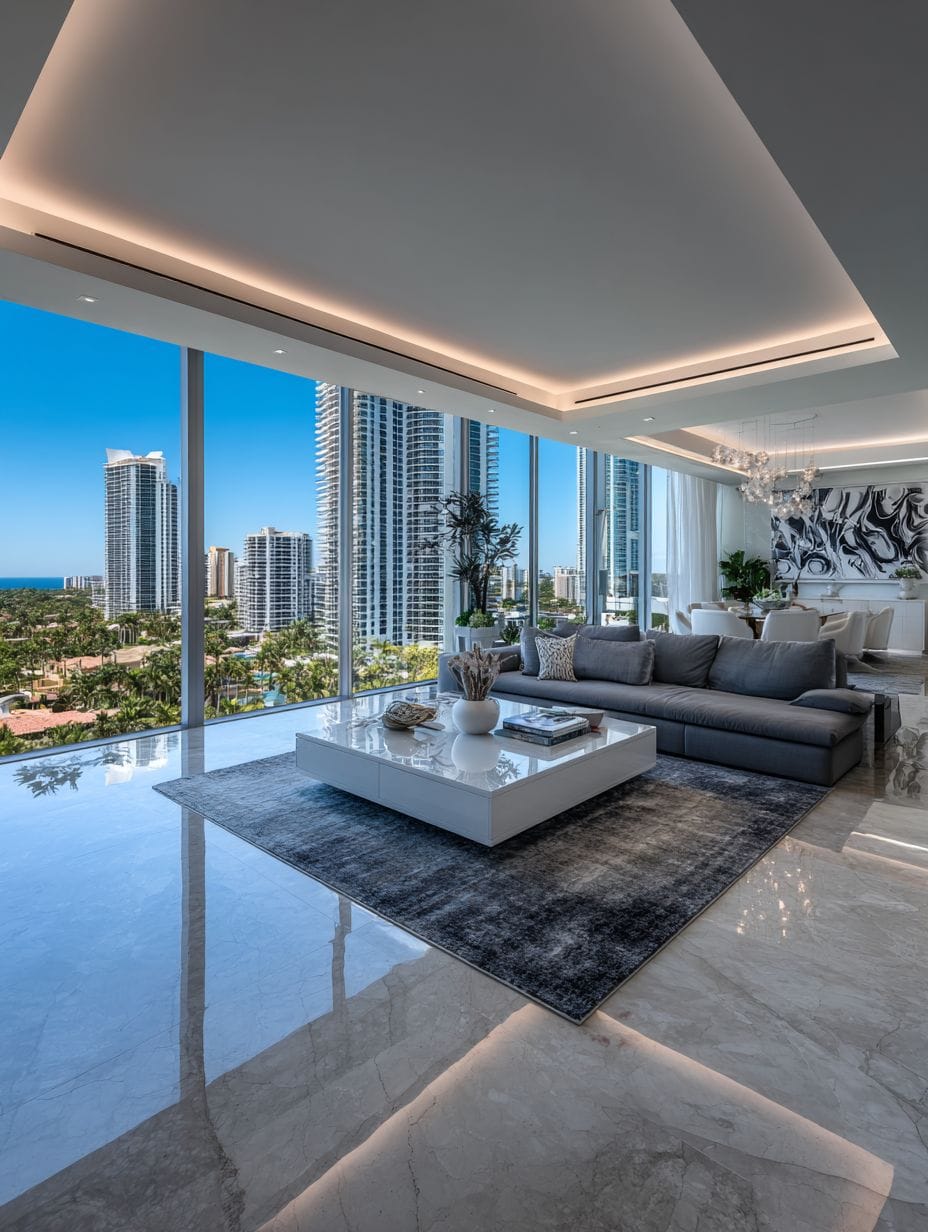
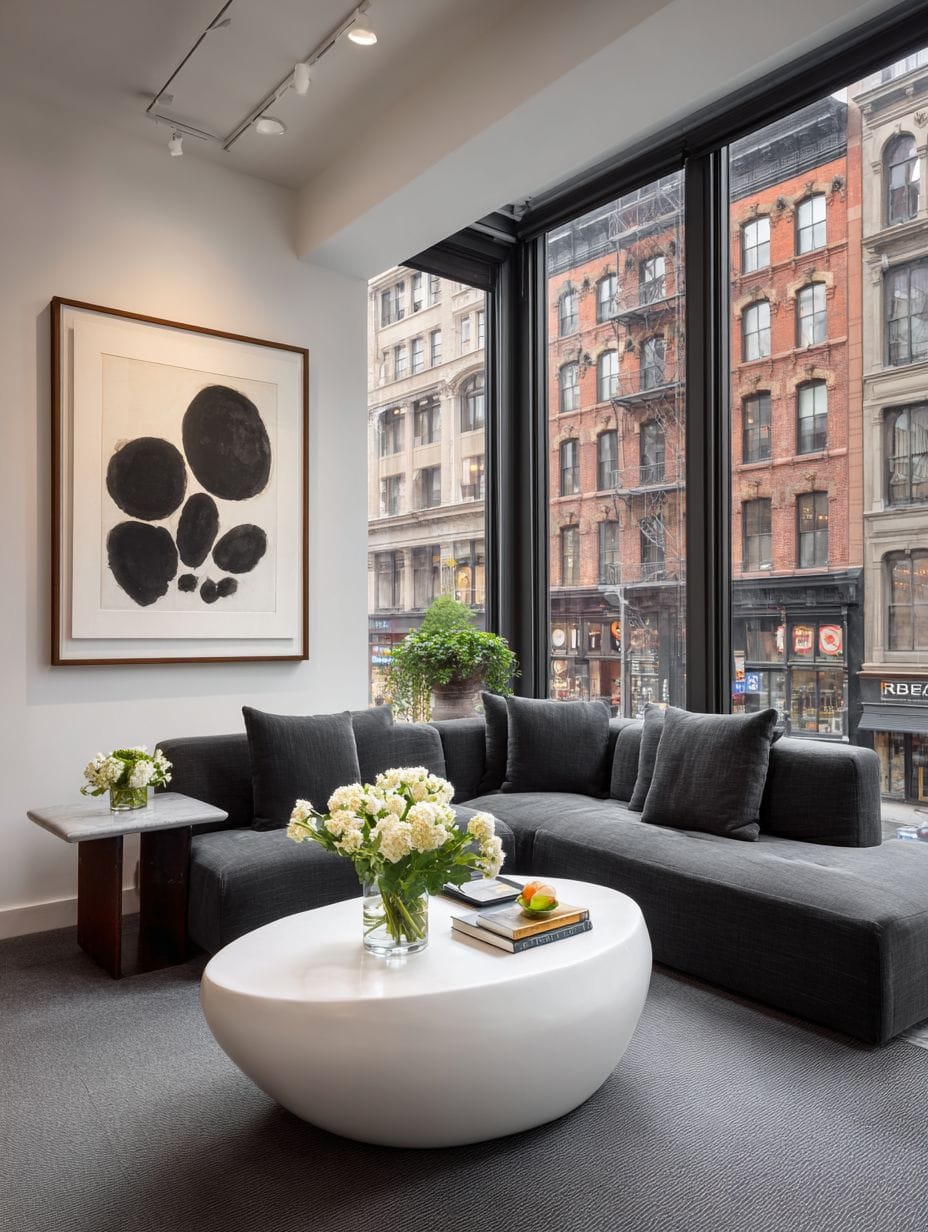
A sculptural coffee table in white lacquer serves as functional art, its organic form and glossy finish creating focal point interest. The high-gloss white surface reflects light and surrounding colors, creating visual lightness despite the table’s solid form. The sculptural quality—perhaps an asymmetric base or unusual top shape—elevates the table from purely functional piece to art object that happens to hold coffee cups. Abstract wall art in black and white creates visual interest through composition and form rather than color, maintaining the room’s sophisticated restraint. The artwork’s graphic quality complements the furniture’s clean lines and contemporary sensibility.
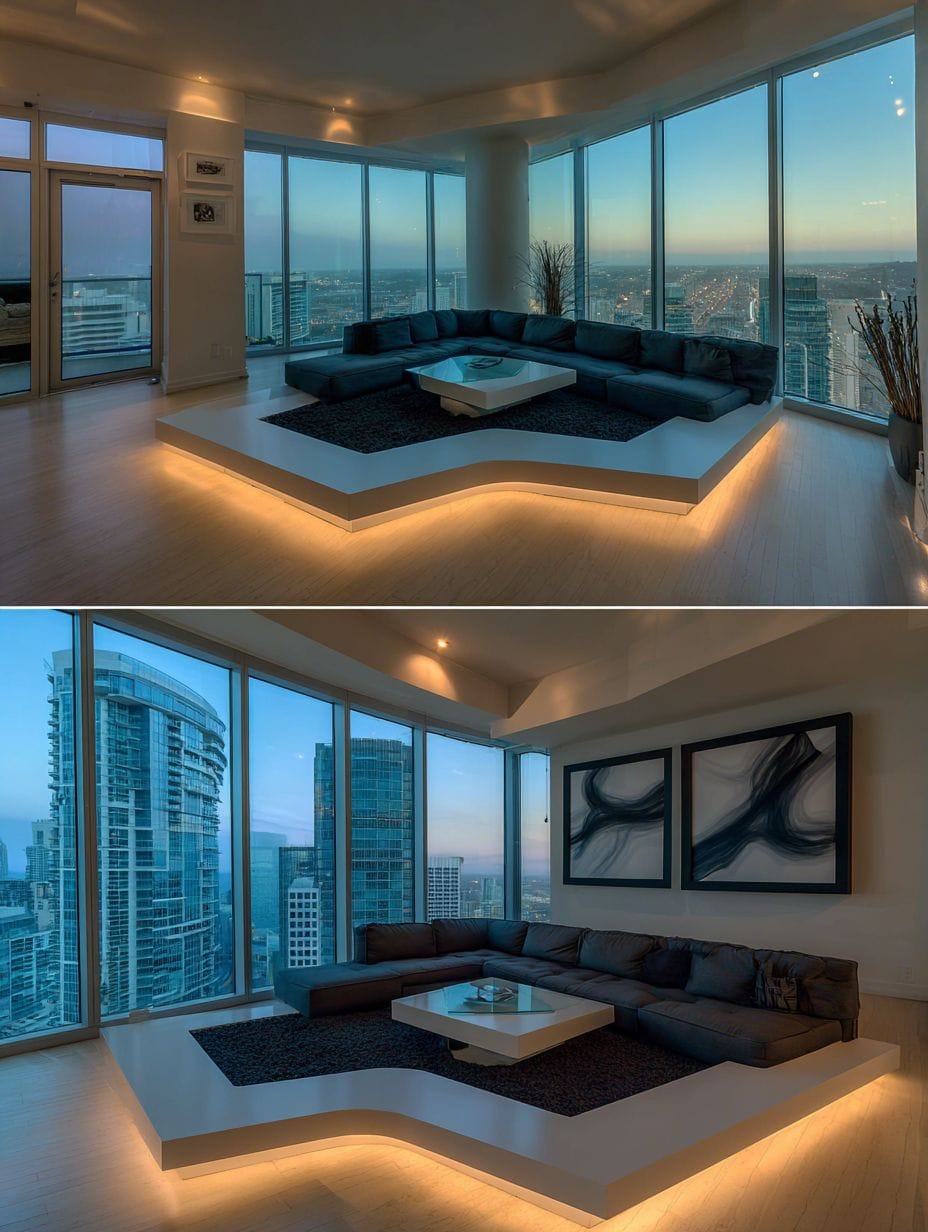
Recessed lighting provides even illumination without visible fixtures, maintaining clean ceiling planes characteristic of contemporary design. The hidden light sources create ambient glow without decorative distraction. Natural light from floor-to-ceiling windows floods the space, the generous fenestration typical of contemporary architecture that blurs indoor-outdoor boundaries and maximizes daylight. The clean window frames—likely minimal profiles in dark metal—complement the room’s contemporary aesthetic. This design demonstrates how contemporary style, through emphasis on clean lines, sculptural forms, neutral palettes, and hidden mechanics, creates apartment living rooms that feel current and sophisticated while maintaining the simplicity and livability that ensure long-term satisfaction rather than dated trendiness.
- Choose low-profile platform sofas for distinctive contemporary silhouettes with comfortable deep seating.
- Select sculptural coffee tables that serve as functional art pieces and conversation starters.
- Use high-gloss finishes in white or black for light-reflective surfaces that enhance contemporary aesthetic.
- Install recessed lighting for clean ceilings without visible fixtures interrupting architectural lines.
- Maximize floor-to-ceiling windows when possible for abundant natural light and indoor-outdoor connection.
24. Urban Jungle Greenery
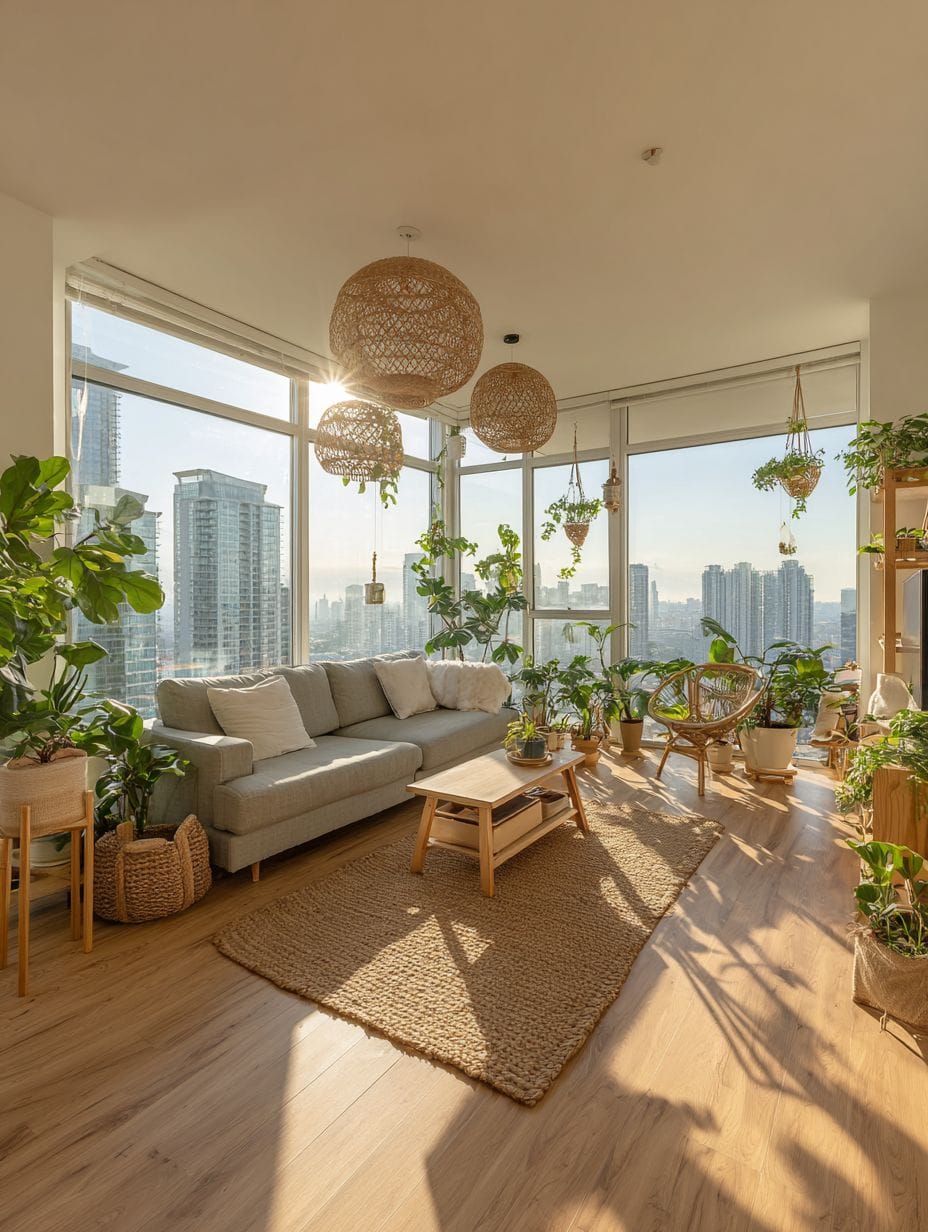
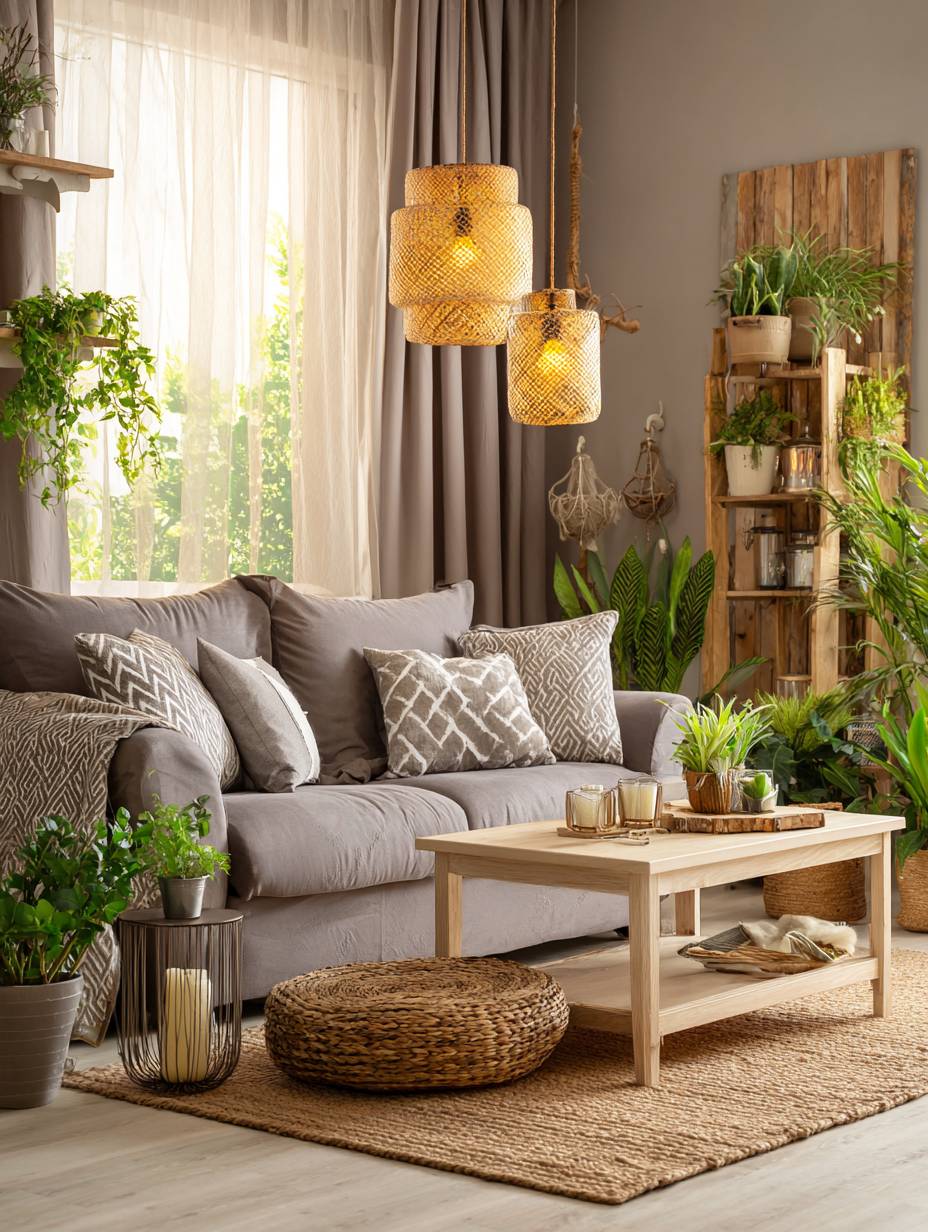
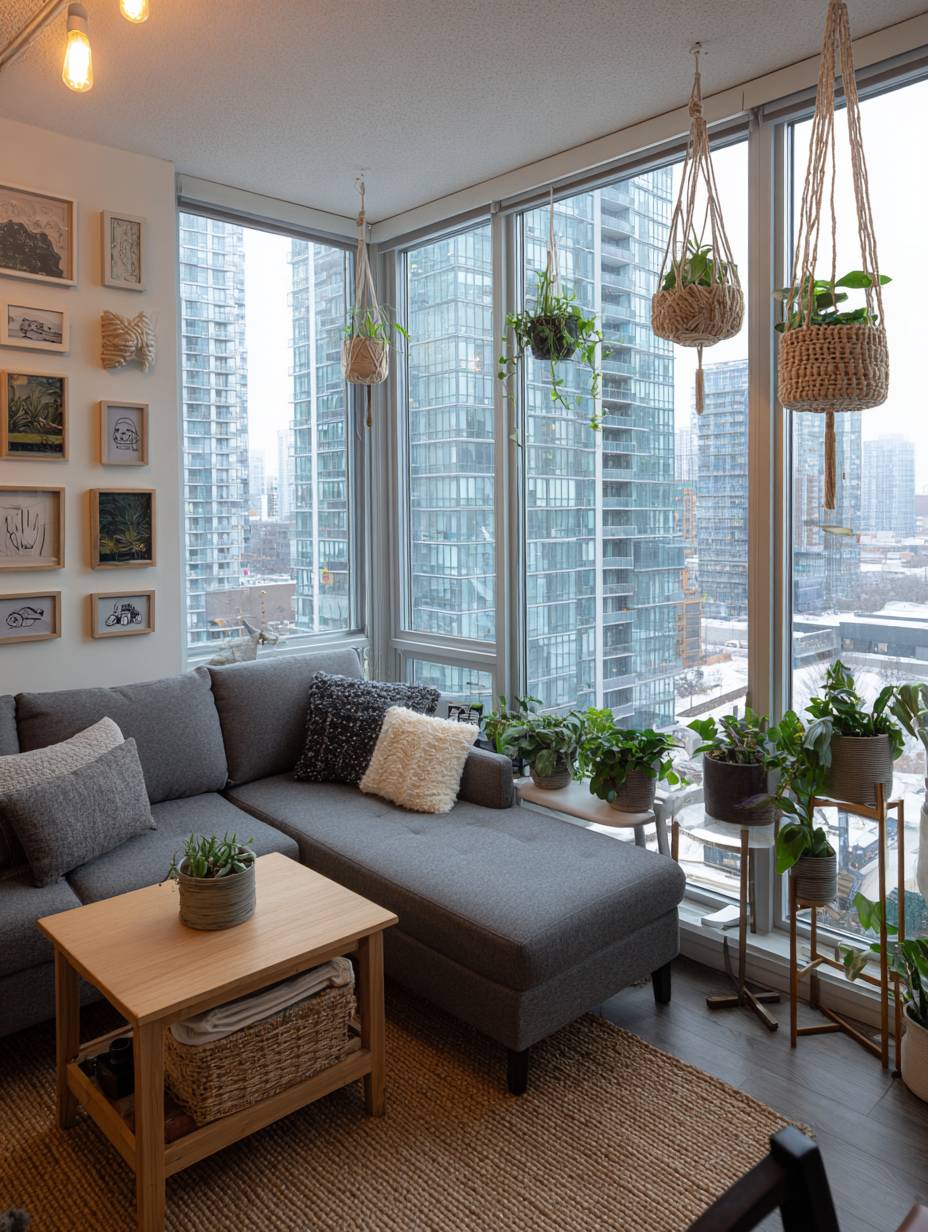
Creating indoor oasis for plant lovers, this apartment living room features a comfortable grey sofa surrounded by various potted plants on plant stands of different heights that transform the space into verdant sanctuary. The grey sofa provides neutral foundation that doesn’t compete with the plants’ varied green tones—from deep forest to bright chartreuse. The multiple plant stands at staggered heights create vertical garden effect, maximizing plant display within limited floor space while creating visual layers and dimensional depth. This vertical approach allows substantial plant collection without consuming entire floor area.
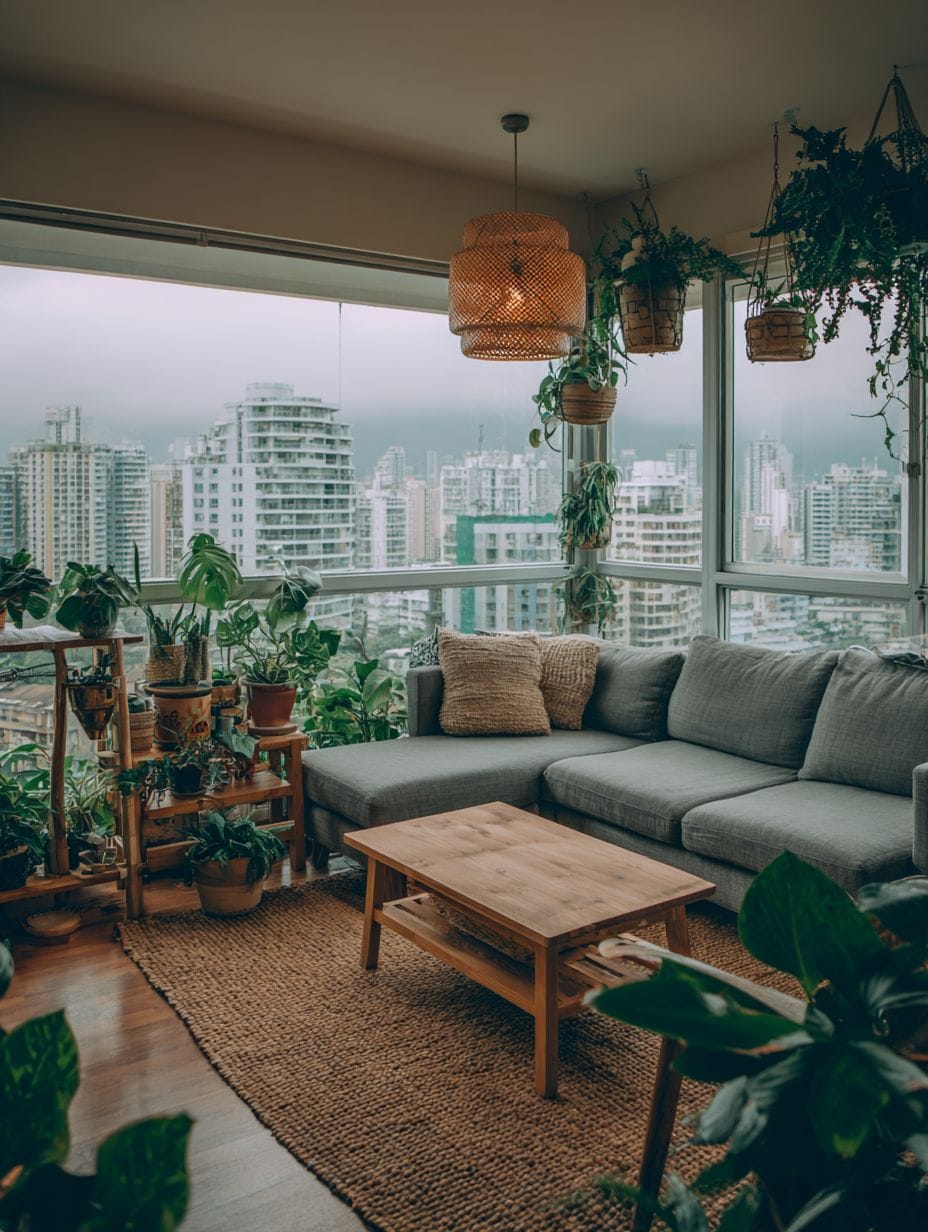
A light wood coffee table allows plant placement underneath, utilizing typically empty space for additional greenery while the light wood tone complements the natural plant aesthetic. Small plants or trailing varieties under the table add unexpected detail and maximize plant density. Woven hanging planters suspend from the ceiling near the window, their trailing foliage creating living curtain that adds movement and organic form. The hanging plants utilize vertical space while bringing greenery to eye level and above, creating immersive indoor jungle environment. Natural jute rug and wooden elements complement the greenery, maintaining cohesive natural material palette.
Bright natural light from large windows supports the plant collection—essential for plant health and demonstrating that this design requires appropriate light conditions. The abundant sunlight highlights the varied green tones and creates interplay of light and shadow through foliage. This design demonstrates how plant-focused living rooms serve multiple purposes: improving air quality, connecting inhabitants with nature, providing nurturing activity, and creating distinctive aesthetic that brings life and constant change to apartment spaces. The result is living rooms that feel fresh, alive, and deeply connected to the natural world despite urban location.
- Use plant stands at varied heights to create vertical gardens that maximize plant display in limited floor space.
- Add hanging planters to utilize vertical space and bring greenery to eye level and above.
- Choose light wood furniture that complements plants’ natural aesthetic without visual competition.
- Ensure abundant natural light from large windows to support plant health and growth.
- Maintain neutral furniture colors like grey that showcase rather than compete with plants’ varied green tones.
25. Flexible Modular Adaptability
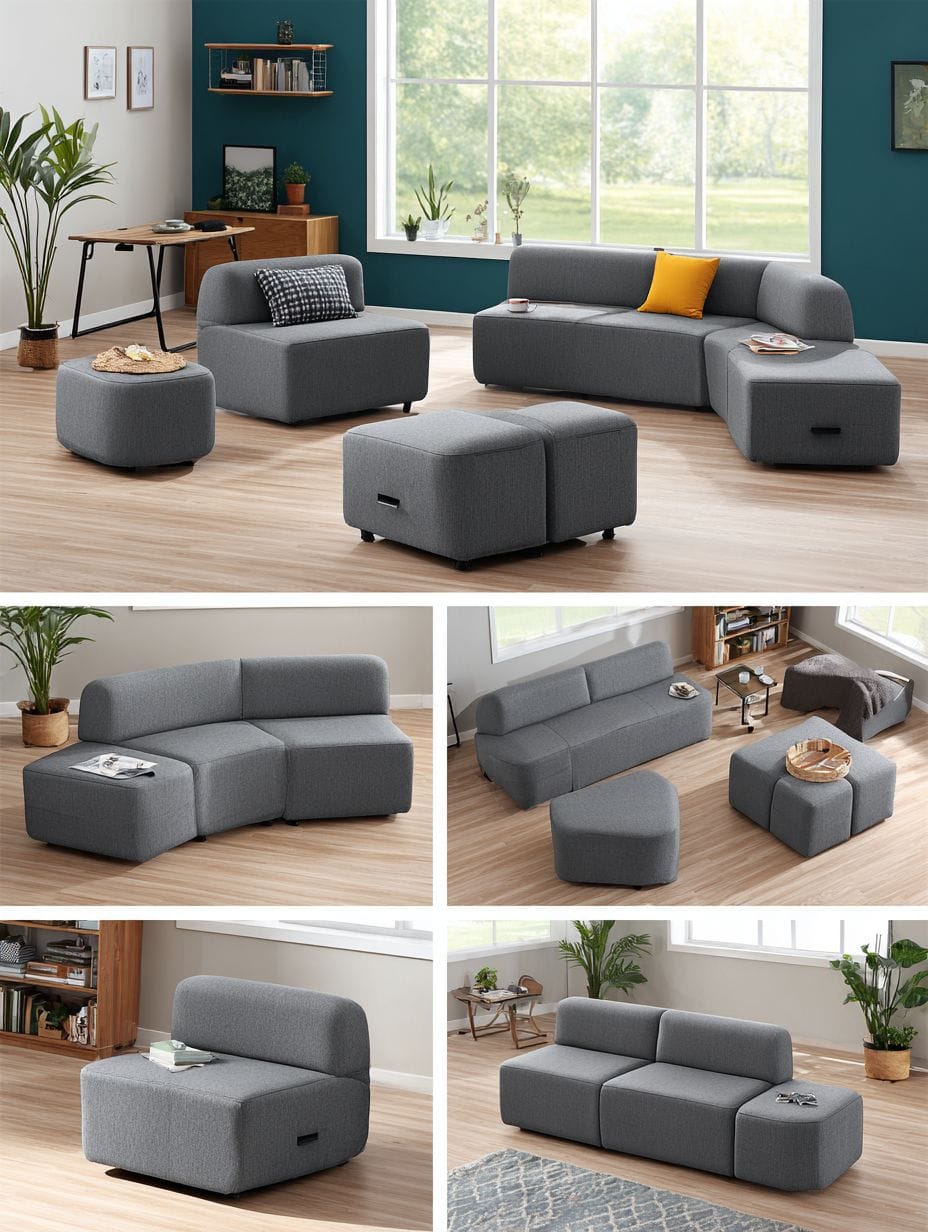
Designed for changing needs and multiple functions, this apartment living room features modular seating components in soft grey upholstery that can be rearranged for different uses—from movie nights requiring cohesive sectional to game nights needing separated chairs to workout sessions demanding open floor space. The modular approach provides ultimate flexibility, allowing the room’s configuration to transform as activities change throughout day or week. The soft grey upholstery maintains cohesive appearance regardless of arrangement while providing practical, stain-resistant surface suitable for diverse activities. The separate components—individual seats, corner pieces, ottomans—connect securely when desired but separate easily for reconfiguration.
A storage ottoman on casters provides mobile functionality, rolling where needed for footrest, extra seating, or coffee table surface, then moving aside when floor space takes priority. The casters eliminate lifting and enable effortless repositioning even when loaded with stored items. The storage interior provides valuable space for items that support the room’s various functions—workout gear, board games, extra throw pillows, electronic chargers. Wall-mounted drop-leaf table folds down when needed for working, eating, or crafting, then folds flat against wall to reclaim floor space. This transformable surface demonstrates how apartments can accommodate multiple functions within single room through adaptable furniture.
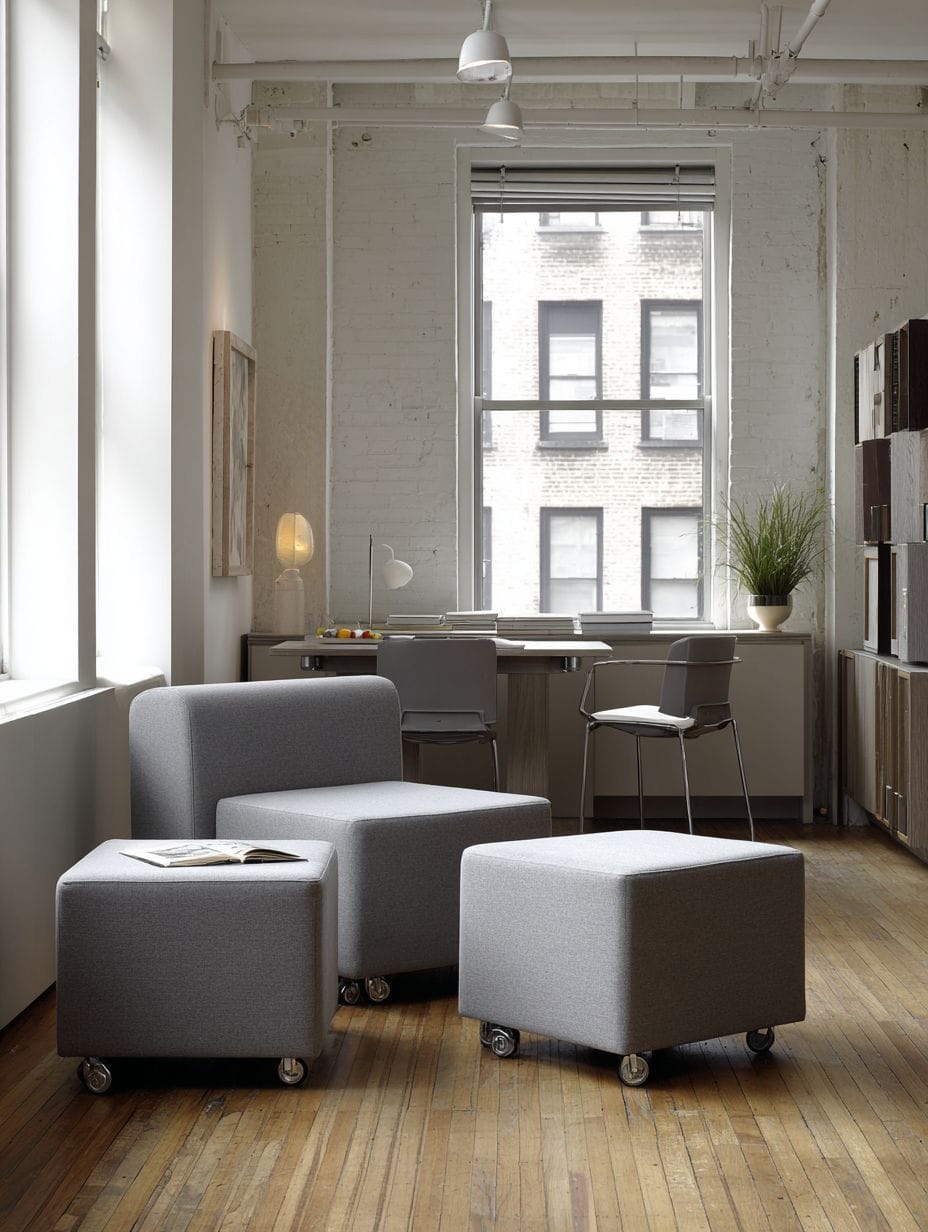
Multi-functional furniture pieces adapt to various activities from lounging to working to entertaining, each piece serving multiple purposes rather than single dedicated function. Natural light from windows illuminates the adaptable space, the consistent light source remaining constant as furniture arrangements change. This design demonstrates how flexible furniture systems, mobile elements, and transformable pieces enable apartment living rooms to successfully serve multiple functions throughout day without requiring separate dedicated rooms—essential capability in compact urban dwellings where every square foot must work harder. The result is living rooms that adapt to life rather than constraining it, proving that small apartments need not limit activities or lifestyles when furniture systems provide sufficient flexibility.
- Choose modular seating systems that reconfigure for different activities and arrangements throughout day or week.
- Add mobile furniture on casters for effortless repositioning without lifting or straining.
- Install wall-mounted drop-leaf tables for surfaces that appear when needed and disappear when not.
- Select multi-functional furniture where every piece serves multiple purposes rather than single dedicated function.
- Prioritize flexibility over permanent arrangements in apartments serving multiple functions within single room.
Why These Apartment Living Room Designs Excel
These 25 apartment living room ideas represent the best approaches to urban dwelling interior design because they address the fundamental challenges that apartment residents face daily: limited square footage, lack of storage, insufficient natural light, architectural limitations, and the need for spaces to serve multiple functions. Unlike generic design advice, these concepts acknowledge that apartment living requires different strategies than house design—strategies that maximize every inch, create visual expansion through optical tricks, and prioritize furniture that works harder through multifunctionality and smart engineering.
The designs excel because they represent diverse aesthetic approaches while sharing common practical wisdom. Whether you’re drawn to Scandinavian minimalism with its light woods and functional beauty, industrial chic with exposed brick and raw materials, bohemian eclecticism with layered textiles and global influences, or contemporary clean lines with sculptural furniture and hidden storage, each approach offers tested solutions to apartment living challenges. The variety ensures that regardless of personal style preferences, renters and owners alike can find inspiration that speaks to their aesthetic sensibilities while solving their practical problems—from vertical storage solutions that utilize wall space to modular furniture systems that reconfigure for changing needs.
These apartment living room ideas also excel because they emphasize strategic lighting approaches that expand spaces visually—from positioning furniture to maximize natural light exposure to using mirrors that reflect and amplify available illumination to installing layered lighting systems that adapt to different times and activities. Lighting receives appropriate attention as crucial design element rather than afterthought, recognizing that proper illumination transforms small, potentially dark apartment spaces into bright, welcoming environments. The designs demonstrate how sheer curtains filter harsh light while maintaining privacy, how wall-mounted sconces free valuable surface space, and how LED strips behind televisions reduce eye strain while creating ambient viewing atmosphere.
Material selection represents another reason these designs stand out as best practices. Rather than specifying generic “wood” or “fabric,” the concepts detail specific materials with particular properties: boucle upholstery that adds three-dimensional texture, reclaimed wood tables with authentic patina, velvet sofas whose pile creates color-shifting light reflection, jute rugs that add organic warmth, and brass fixtures that provide warm metallic accents. This material specificity elevates the designs from vague inspiration to actionable guidance, helping readers understand not just what furniture to choose but what materials will deliver desired aesthetic and functional results. The emphasis on natural materials—linen, wool, wood, rattan, marble—creates healthier indoor environments while connecting urban dwellers with nature despite concrete surroundings.
The inclusion of specific furniture arrangements and spatial planning strategies distinguishes these designs as truly useful rather than merely aspirational. Rather than showing unrealistic magazine-perfect rooms, the concepts address real challenges: how to define zones in open-concept studios using sectionals as dividers, how to position furniture perpendicular to windows for optimal natural light without screen glare, how to use nesting tables that provide flexibility without permanent floor space consumption, and how built-in banquettes maximize seating while adding hidden storage. These practical strategies, tested in actual apartments, provide immediately implementable solutions rather than requiring custom millwork or major renovations.
Color strategy receives sophisticated treatment across these designs, moving beyond safe all-white apartments to explore carefully coordinated jewel tones, serene neutral layers with subtle tonal variation, intentional complementary color pairings like navy and mustard, and monochromatic grey schemes that create sophistication through material variation. The designs demonstrate that color can work effectively in small spaces when applied strategically—using saturated hues on single statement pieces like emerald velvet sofas while keeping surrounding elements neutral, or creating cohesive monochromatic palettes where interest comes from texture rather than color contrast. This nuanced color approach helps readers move beyond fear of color toward confident, personality-filled spaces.
Finally, these apartment living room ideas excel because they emphasize personalization and authentic self-expression rather than following rigid design rules. From the eclectic vintage-modern mix that celebrates collected-over-time character to the bohemian textile layering that embraces pattern and color to the art-forward minimalism that makes collections the focal point, the designs encourage inhabitants to infuse spaces with personal meaning. The concepts demonstrate how gallery walls tell personal stories, how open shelving displays curated collections, and how plants transform apartments into living, growing environments. This emphasis on personality prevents apartments from feeling generic or temporary, creating true homes rather than mere dwelling spaces—the ultimate measure of successful interior design regardless of square footage or rental status.
Conclusion
Creating beautiful, functional apartment living rooms requires more than simply selecting attractive furniture—it demands strategic thinking about space utilization, lighting optimization, material selection, and personal expression within urban dwelling constraints. These 25 apartment living room ideas demonstrate that successful small-space design balances aesthetic ambition with practical reality, creating rooms that serve multiple functions while maintaining distinctive character and style. Whether you’re working with a compact studio or a more generous one-bedroom apartment, the principles remain consistent: maximize vertical space through shelving and wall-mounted elements, choose furniture with appropriate scale and multifunctional capability, layer lighting for adaptability, embrace natural materials for warmth and connection, and infuse spaces with personality through art, collections, and meaningful objects.
The key takeaway from these diverse designs is that apartment living need not mean compromise or settling for generic, temporary-feeling spaces. Through thoughtful furniture selection—from modular systems that reconfigure to built-in solutions that maximize every inch—strategic color application that expands spaces visually while expressing personality, and attention to lighting that transforms dark boxes into bright, welcoming sanctuaries, even the smallest apartments can become homes that truly reflect their inhabitants. Whether you gravitate toward minimalist serenity or bohemian eclecticism, industrial edge or Scandinavian simplicity, farmhouse warmth or contemporary sophistication, there’s an approach that will work within your spatial and budgetary constraints while satisfying your aesthetic aspirations.
As you embark on transforming your own apartment living room, remember that great design rarely happens instantly—it evolves through experimentation, editing, and refinement over time. Start with foundational pieces that provide quality, versatility, and appropriate scale, then layer in personality through textiles, lighting, plants, and personal collections. Don’t fear color or pattern when applied strategically, embrace the constraint of limited space as creative challenge rather than insurmountable obstacle, and prioritize functionality alongside beauty to create rooms that work as hard as they look good. Your apartment living room should ultimately serve your lifestyle, reflect your personality, and provide sanctuary from urban life—all achievable goals regardless of square footage when approached with creativity, planning, and the inspiration found in these thoughtfully designed spaces. Now it’s time to take these ideas and make them your own, creating an apartment living room that you’ll be proud to call home.
