
In today’s evolving home design landscape, the art of space division has transcended traditional walls and rigid barriers. Living room partitions have emerged as sophisticated design elements that serve dual purposes—they create functional zones while adding aesthetic appeal to your interior spaces. Whether you’re dealing with an open-concept layout that needs subtle definition, a studio apartment requiring clever spatial organization, or a large living area that could benefit from intimate gathering spots, the right partition solution can transform your space entirely.
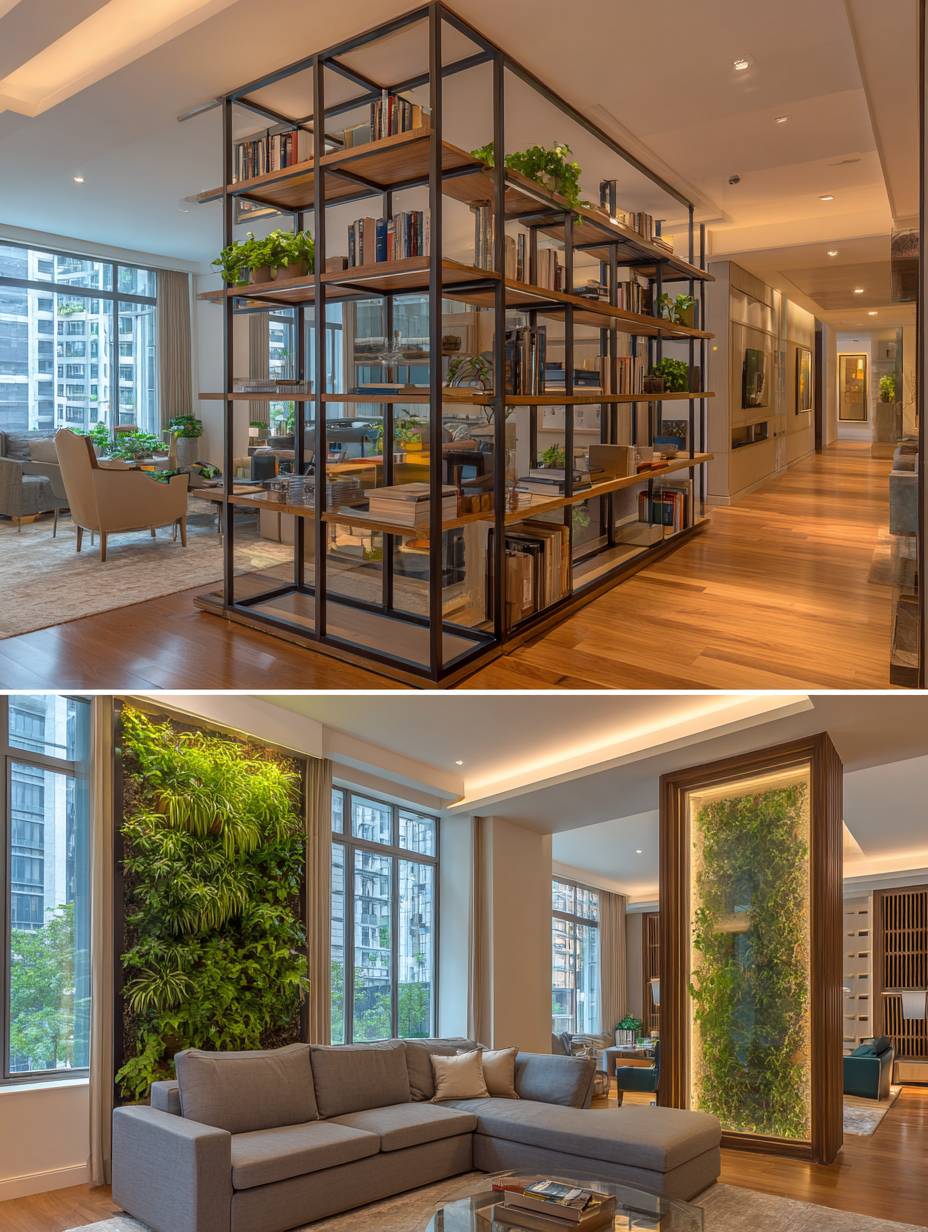
The beauty of modern partition design lies in its versatility and innovation. No longer confined to permanent structural changes, contemporary partitions offer flexibility, visual interest, and practical functionality without sacrificing the open, airy feeling that makes modern homes so appealing. From transparent glass dividers that maintain sightlines to living green walls that purify your air, from artistic screens that double as focal points to multifunctional storage systems that organize while they separate—today’s partition options are as diverse as they are beautiful.
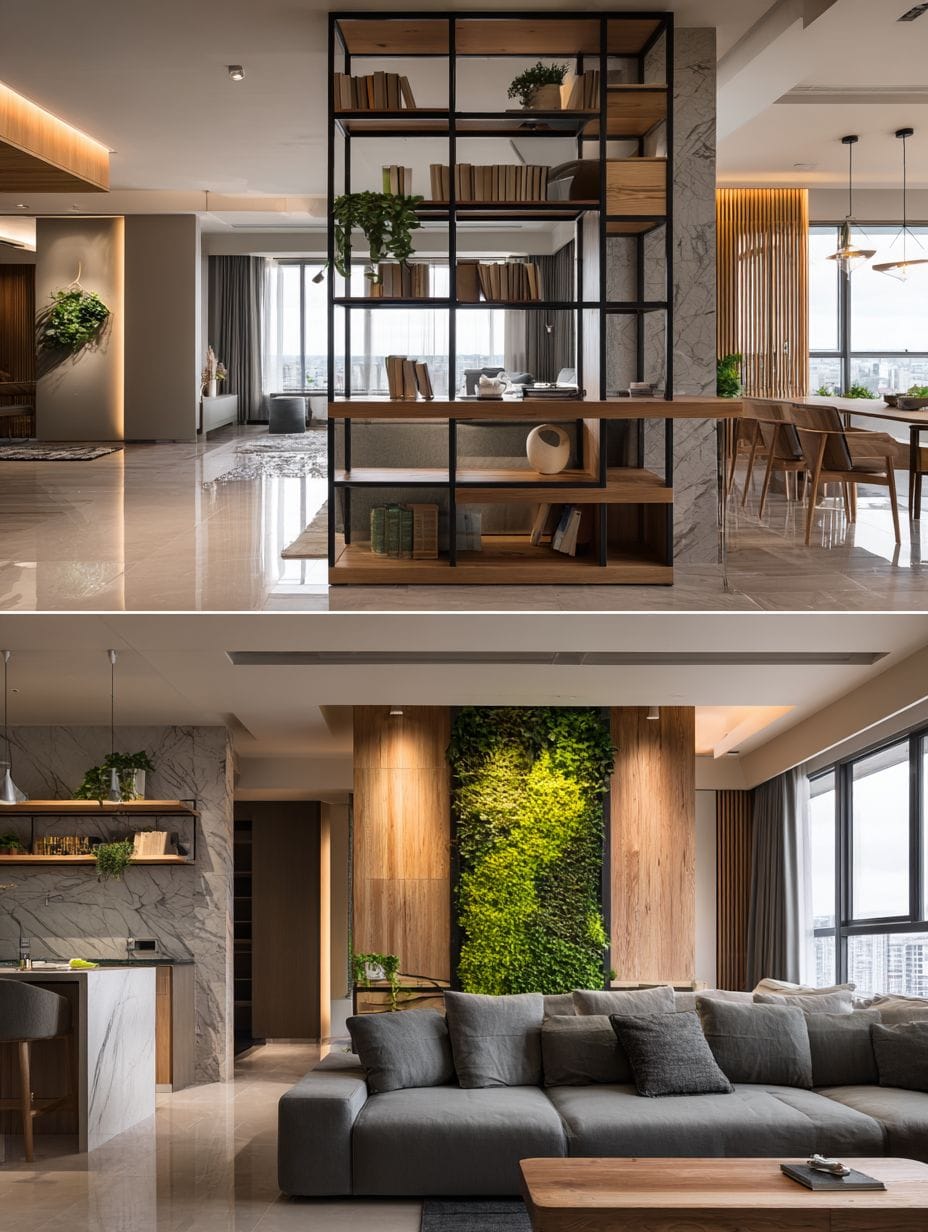
In this comprehensive guide, we’ll explore twenty-seven distinctive living room partition ideas that cater to various design aesthetics, spatial requirements, and functional needs. Each concept has been carefully selected to demonstrate how thoughtful space division can enhance your home’s flow, improve functionality, and elevate your interior design. Whether your style leans toward minimalist Scandinavian simplicity, industrial urban edge, traditional elegance, or contemporary innovation, you’ll discover inspiring solutions that can be adapted to your unique space and lifestyle.
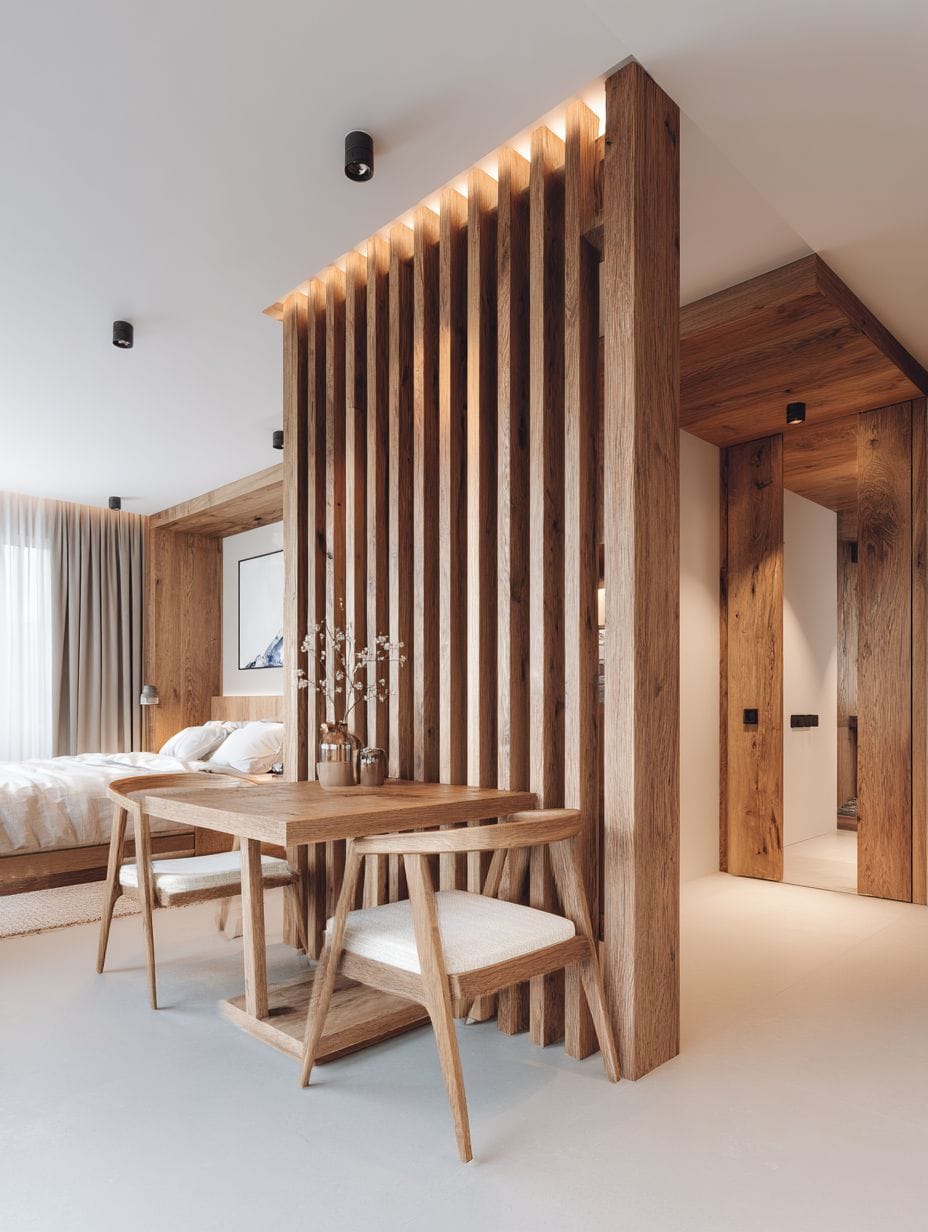
1. Natural Oak Slatted Wood Divider
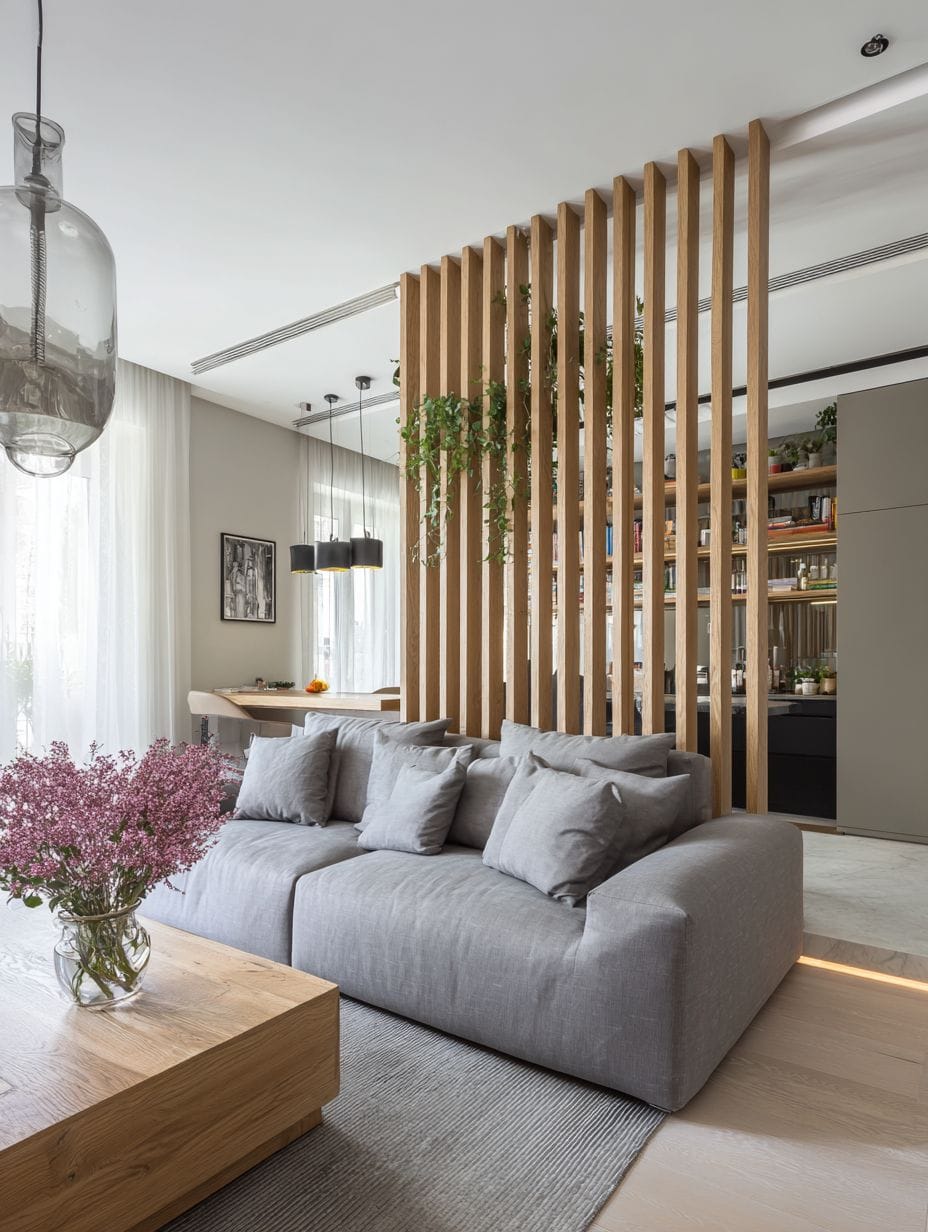
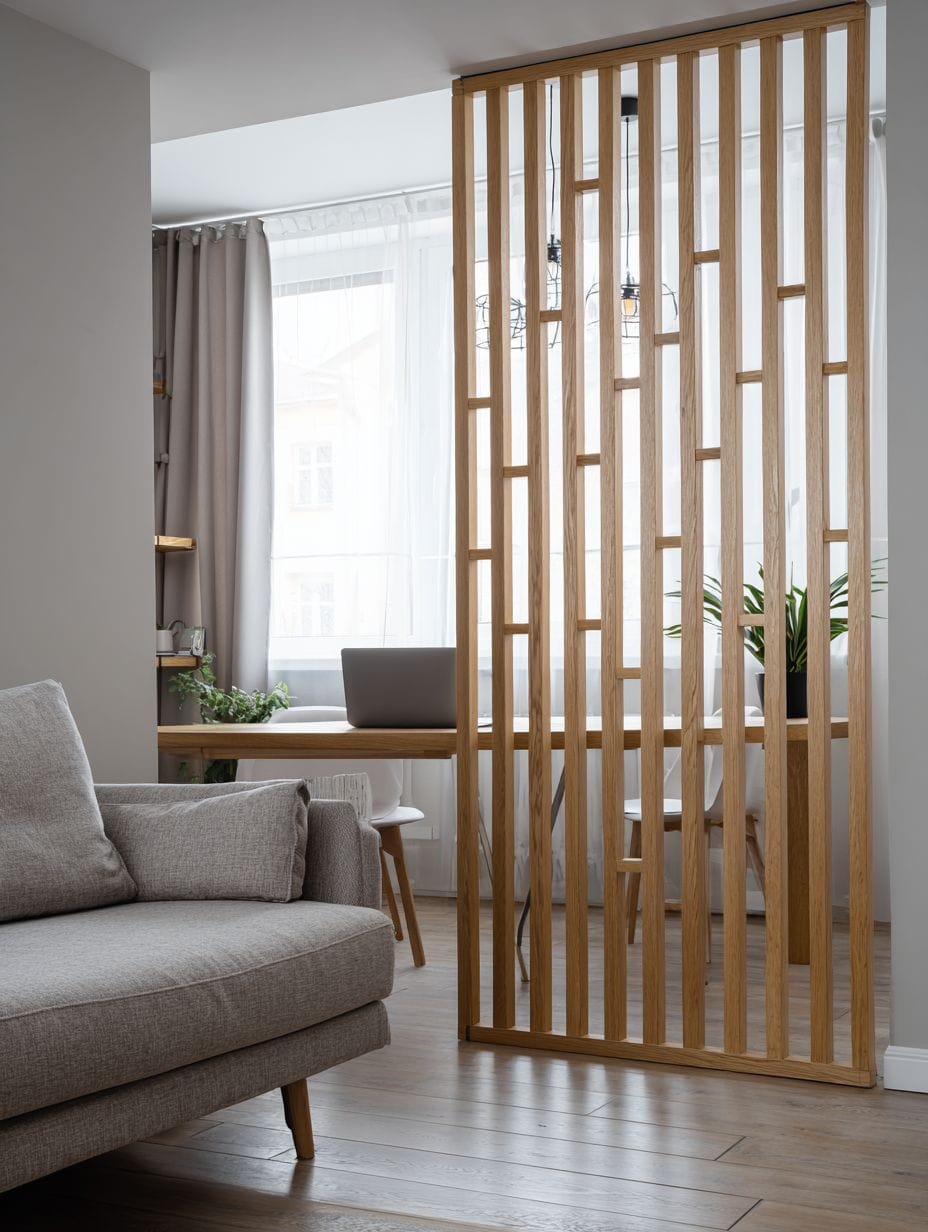
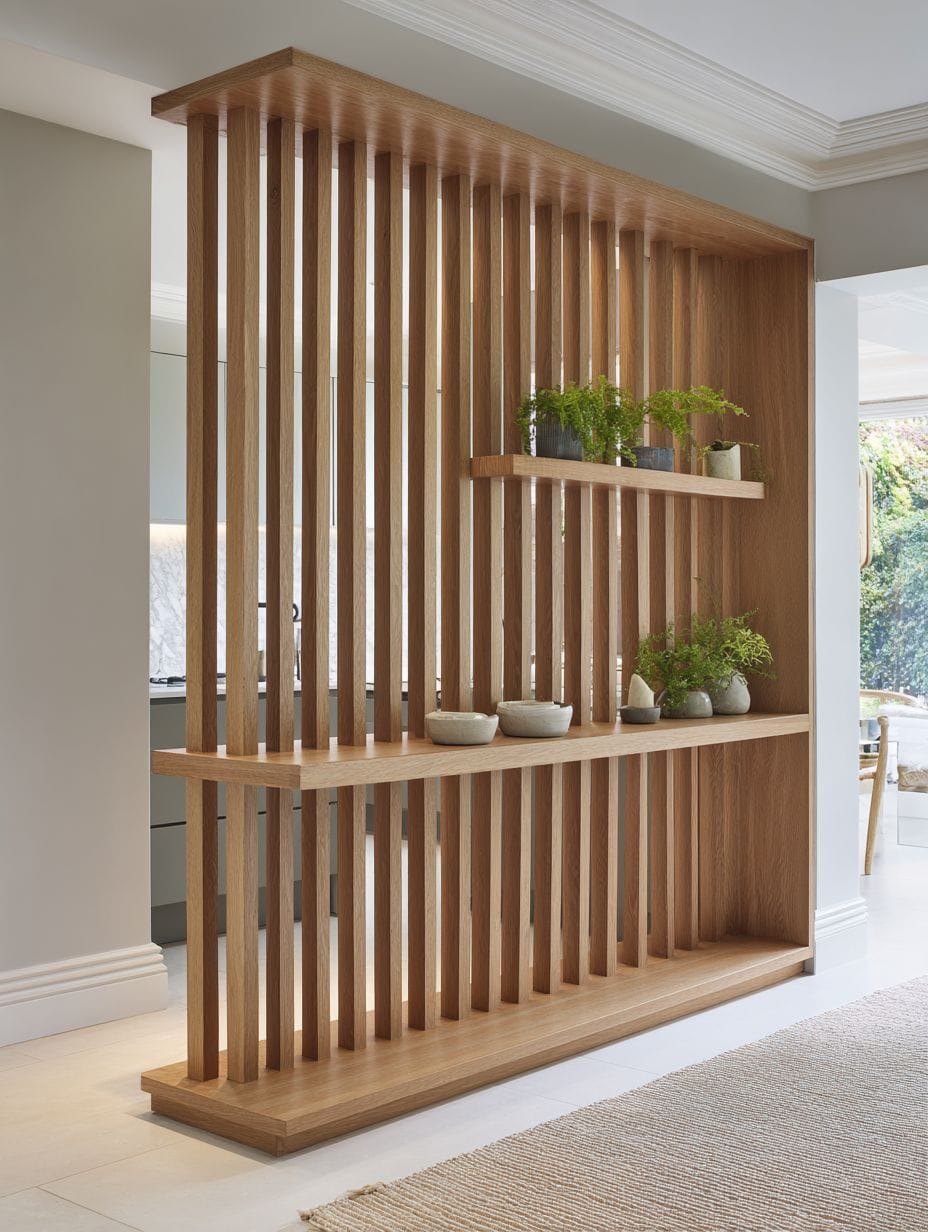
The vertical slatted wood partition represents one of the most elegant and timeless approaches to living room division. Crafted from natural oak with its distinctive grain patterns beautifully displayed, this partition creates a semi-transparent barrier that maintains visual connection while establishing clear functional zones. The evenly spaced slats allow natural light to filter through, creating mesmerizing shadow patterns that shift throughout the day, adding dynamic visual interest to your space. This design works particularly well when separating a comfortable seating area from a home office, allowing you to mentally transition between relaxation and productivity without feeling completely isolated.
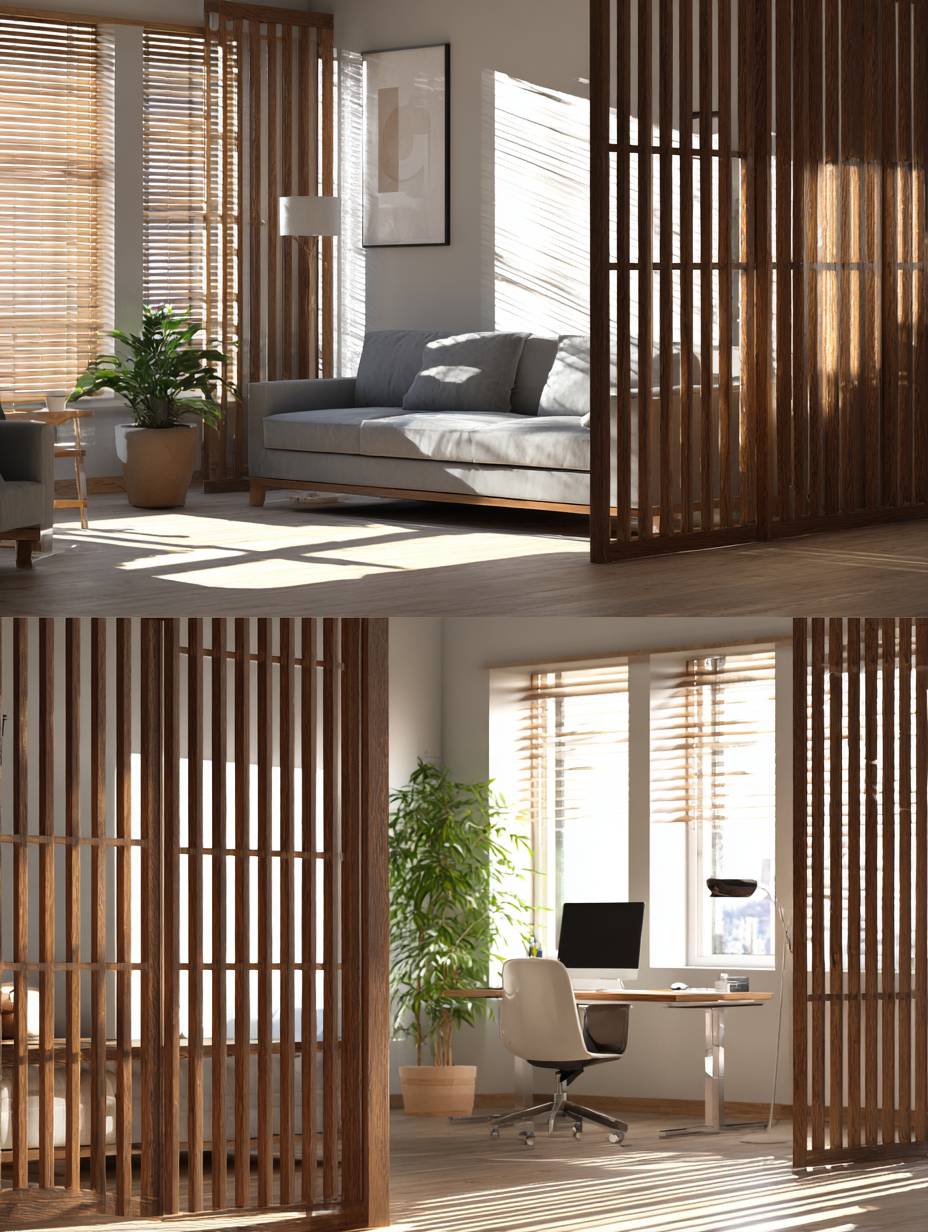
What makes this partition exceptionally practical is its ability to provide privacy without creating a closed-off feeling. The vertical orientation of the slats draws the eye upward, emphasizing ceiling height and making rooms feel more spacious. When positioned near windows, the wood slats interact beautifully with natural daylight, creating a play of light and shadow that adds depth and dimension to your interior. The warm honey tones of oak complement virtually any color palette, from cool greys to warm earth tones, making this partition style incredibly versatile.
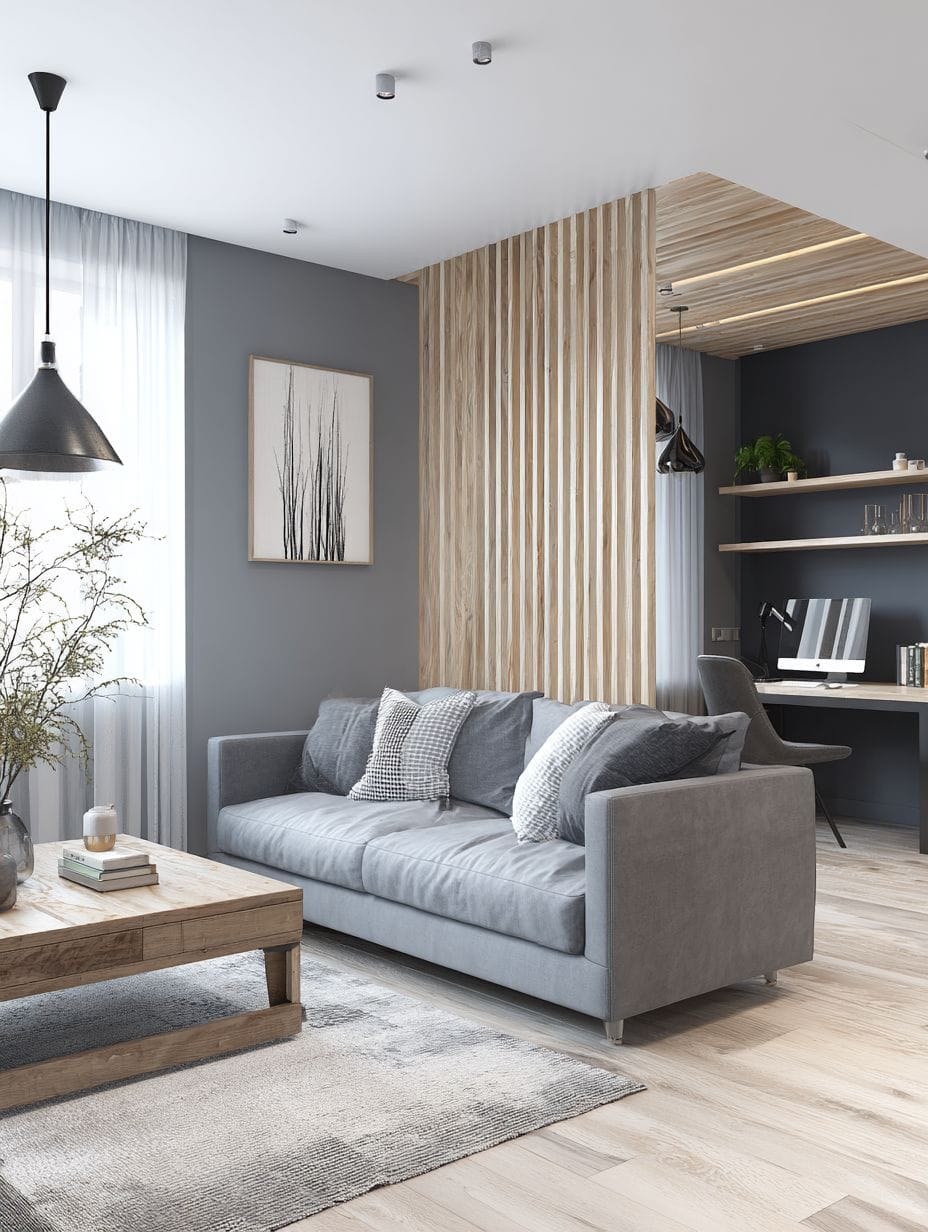
The craftsmanship of a well-executed slatted divider showcases the natural beauty of wood while serving a functional purpose. Each slat displays unique grain patterns and subtle color variations that add organic character to your space. When properly finished with natural oils or matte sealants, the wood develops a soft luster that enhances its tactile appeal. The spacing between slats can be customized to control the level of visual separation—wider spacing maintains more openness while narrower gaps provide increased privacy.
- Select high-quality oak with visible grain patterns for maximum visual impact and ensure proper kiln-drying to prevent warping
- Space slats consistently between 2-4 inches apart depending on your privacy needs and aesthetic preferences
- Install floor-to-ceiling whenever possible to emphasize vertical space and create a more substantial architectural presence
- Apply natural finishes like Danish oil or matte polyurethane to protect the wood while maintaining its organic appearance
- Consider lighting placement to highlight the wood texture and create beautiful shadow effects during evening hours
2. Modern Asymmetrical Bookshelf Partition
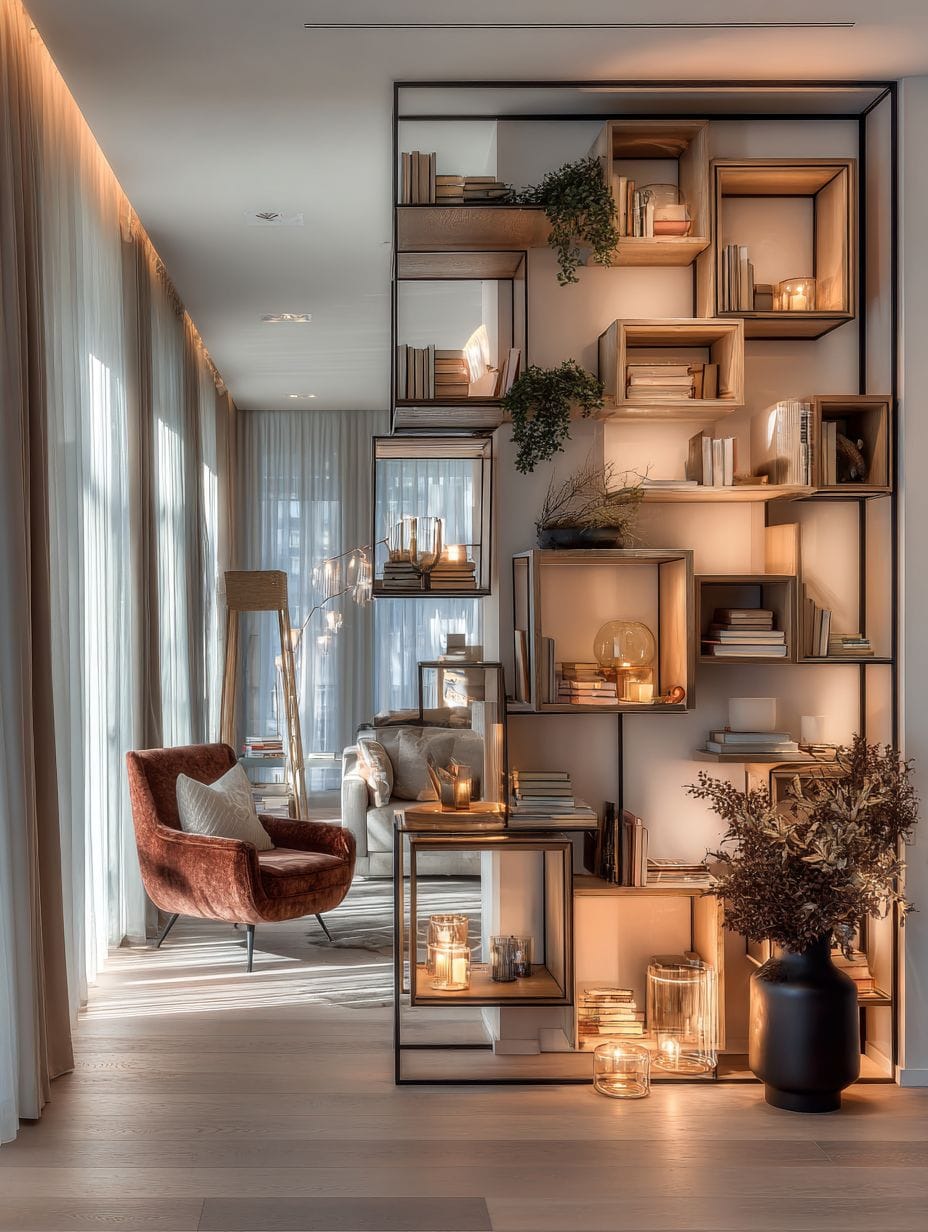
The asymmetrical bookshelf room divider represents the perfect marriage of form and function in contemporary interior design. This partition solution transforms necessary storage into an architectural feature, with its staggered open cubbies creating visual rhythm and sculptural interest. The matte black metal framework provides industrial edge while maintaining a lightweight appearance that doesn’t overwhelm the space. Unlike traditional bookshelves that sit against walls, this floor-to-ceiling divider is accessible from both sides, making it equally functional and attractive from every angle.
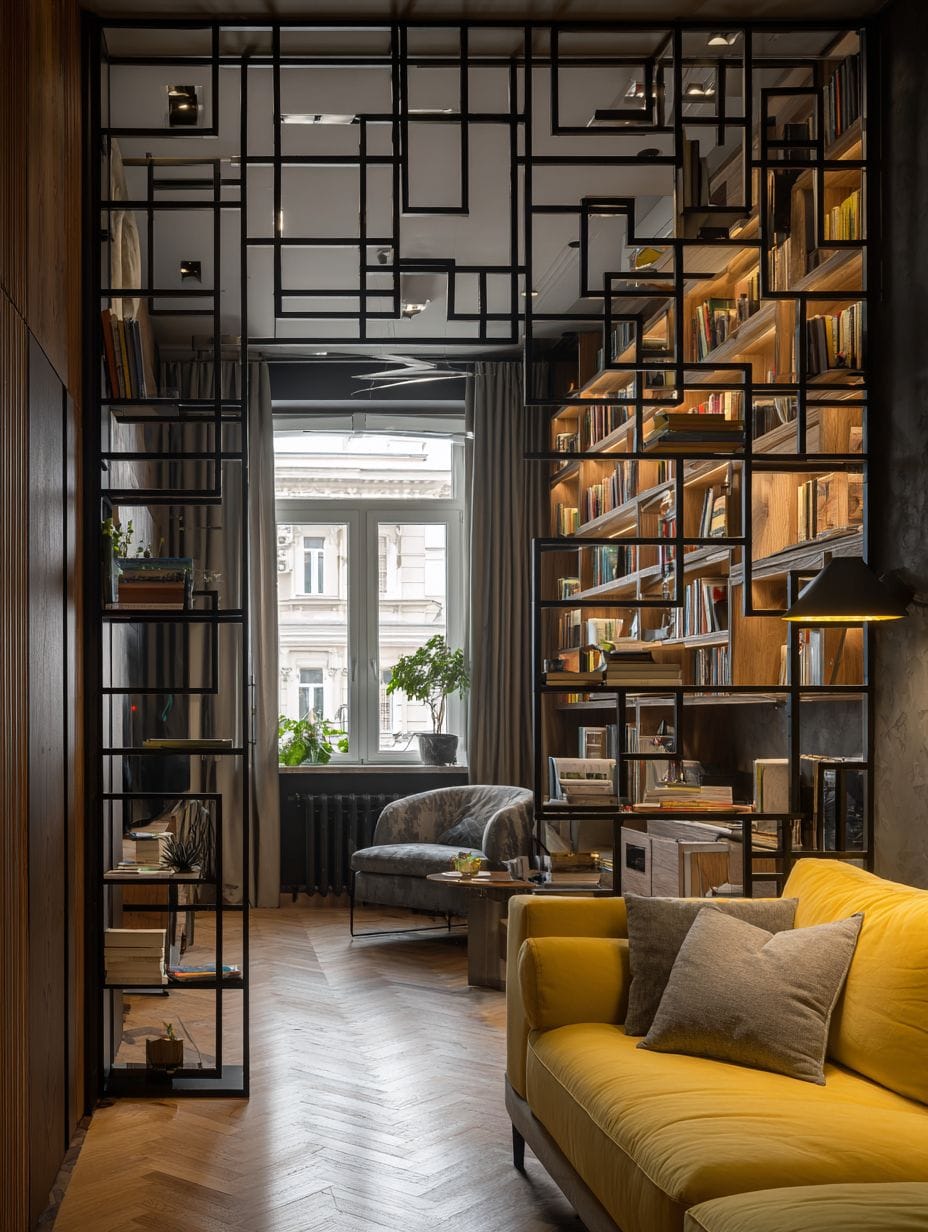
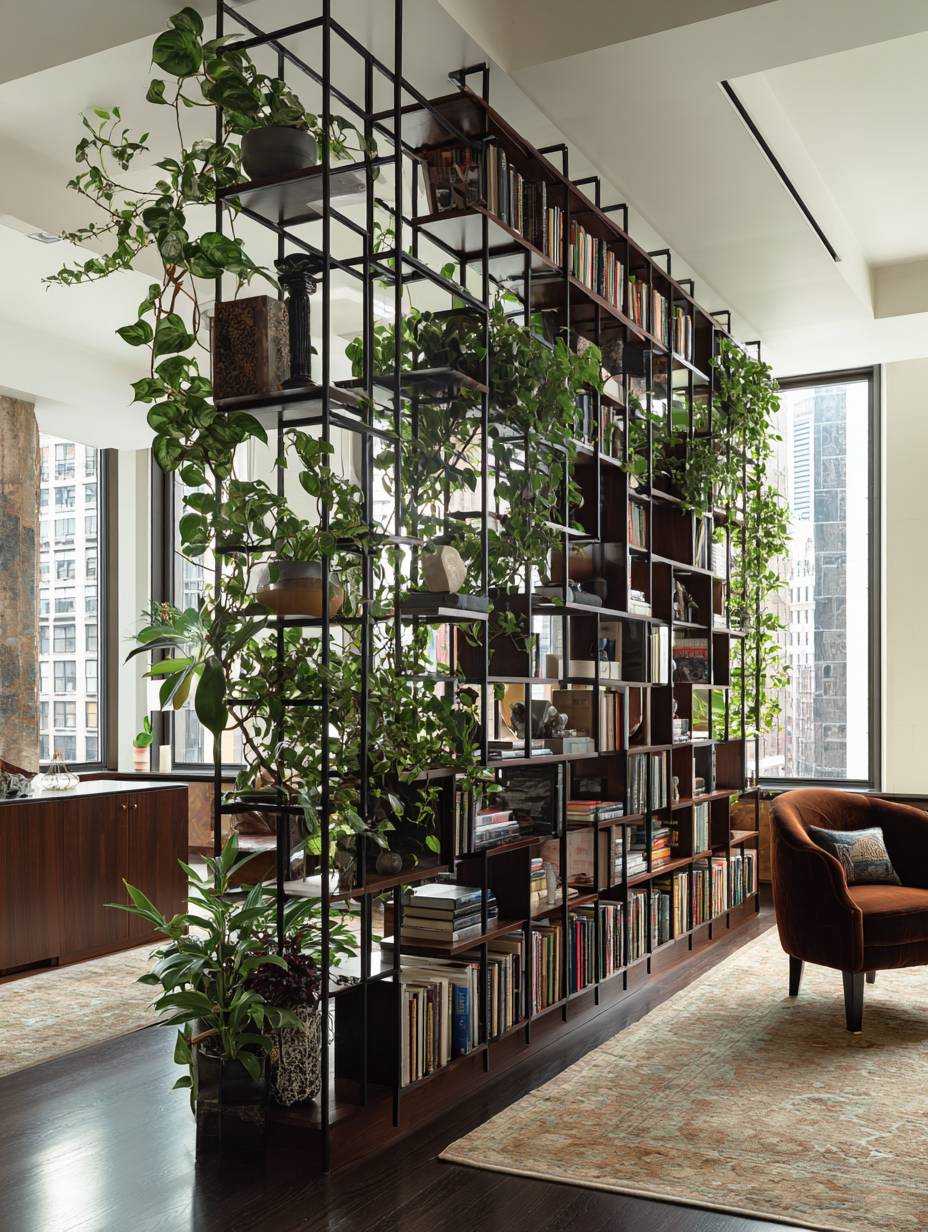
The genius of this design lies in its dual-purpose nature—it separates spaces while providing valuable storage and display opportunities. Books arranged at varying heights create organic visual interest, while strategically placed plants add life and color to the geometric framework. Decorative objects, personal photographs, and curated collections transform the partition into a three-dimensional gallery that reflects your personality. The open design allows light to penetrate through multiple layers, preventing the dark, cave-like feeling that solid walls can create.
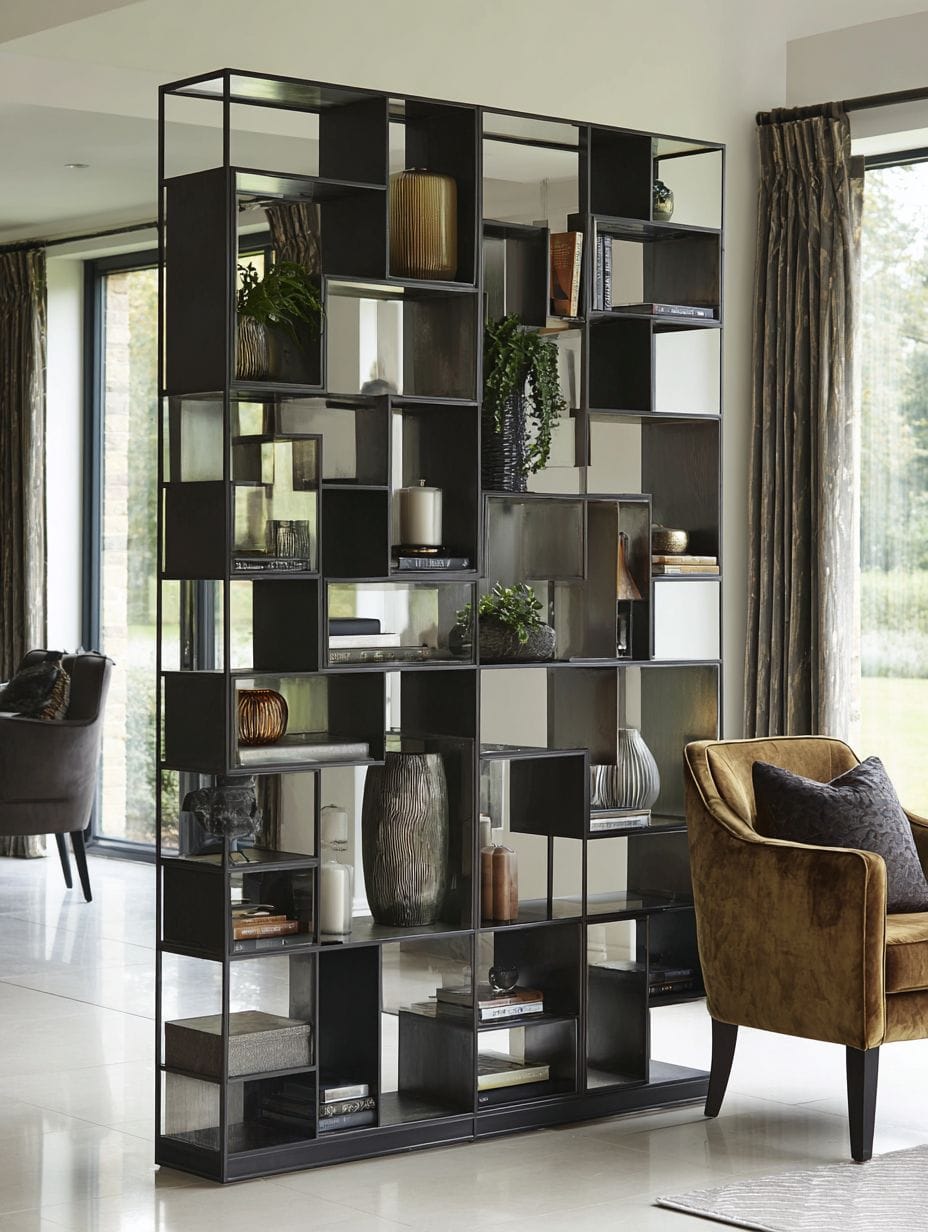
This partition style works exceptionally well in modern and contemporary interiors where clean lines and functional design are priorities. The asymmetrical arrangement of cubbies adds artistic flair while maximizing storage potential—larger openings accommodate oversized art books or statement pieces, while smaller compartments are perfect for novels, small plants, or decorative accessories. Behind this striking divider, a cozy reading nook or intimate seating area becomes partially concealed yet still connected to the main living space, creating layers of depth and intrigue within your room.
- Choose sturdy construction with reinforced joints and quality materials to support the weight of books and objects safely
- Vary cubby sizes intentionally to create visual interest and accommodate objects of different dimensions
- Balance both sides by distributing weight and visual elements evenly to maintain stability and aesthetic harmony
- Anchor securely to both floor and ceiling for safety, especially in homes with children or pets
- Style thoughtfully by mixing books with negative space, plants, and decorative objects to prevent overcrowding
- Incorporate internal lighting such as LED strips to illuminate displays and create ambiance during evening hours
3. Frameless Glass Partition with Frosted Detailing
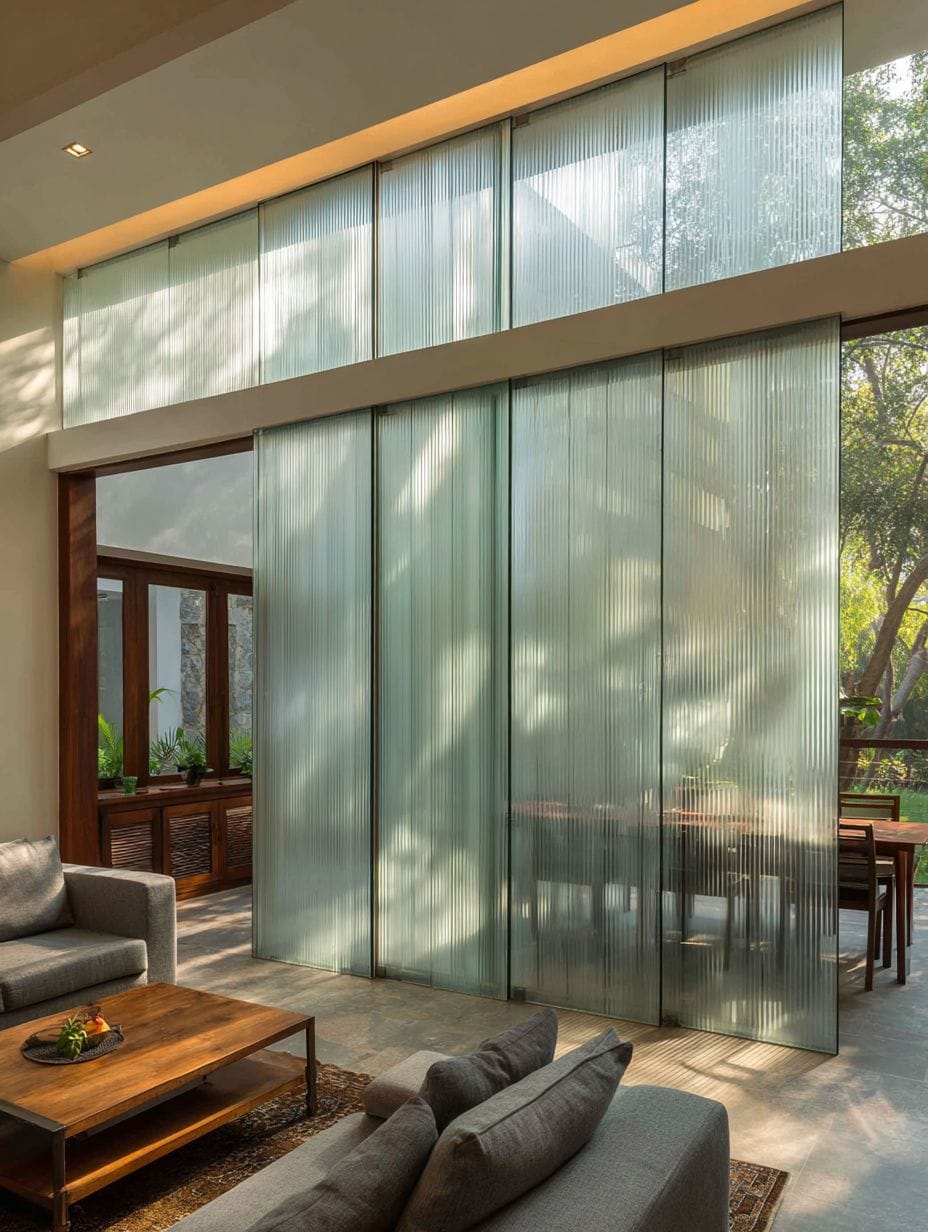
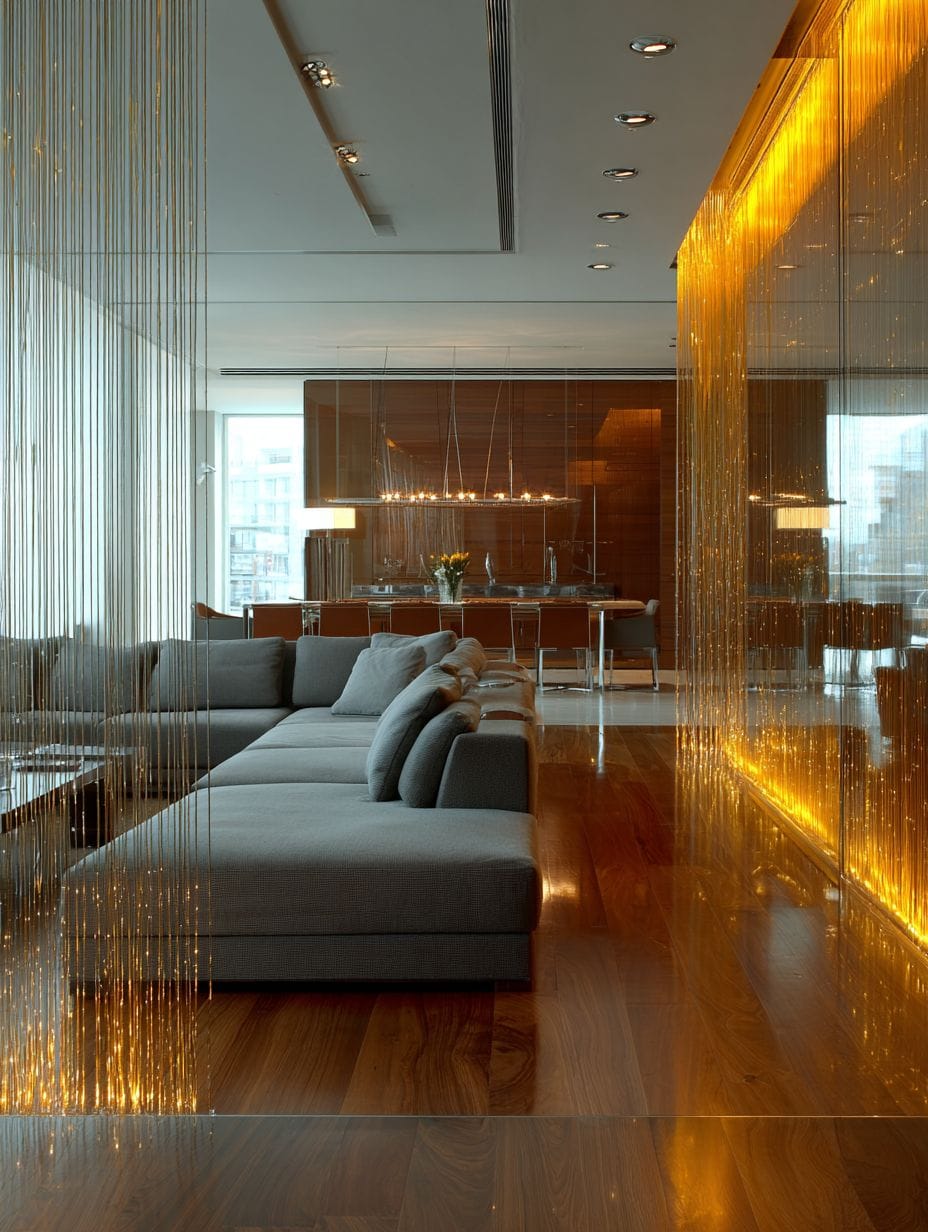
For those who desire spatial definition without sacrificing openness, the frameless glass partition offers an elegant solution that maximizes light transmission while creating distinct functional zones. The incorporation of subtle frosted vertical stripes adds just enough visual interest and privacy without completely obscuring the view. This design approach is particularly effective in smaller living spaces where maintaining a sense of airiness is crucial—the transparent nature of glass prevents the cramped feeling that solid partitions can create while still providing clear boundary definition between areas.
The technical sophistication of frameless glass installation creates a seamless, contemporary aesthetic that feels luxurious and refined. Without bulky frames interrupting the clean lines, the glass appears to float, creating an almost invisible barrier that separates your living area from an adjacent dining space. The reflective properties of glass amplify available natural light, bouncing it throughout the room and making spaces feel larger and brighter. During daylight hours, the partition becomes nearly transparent, while evening lighting creates beautiful reflections and depth.
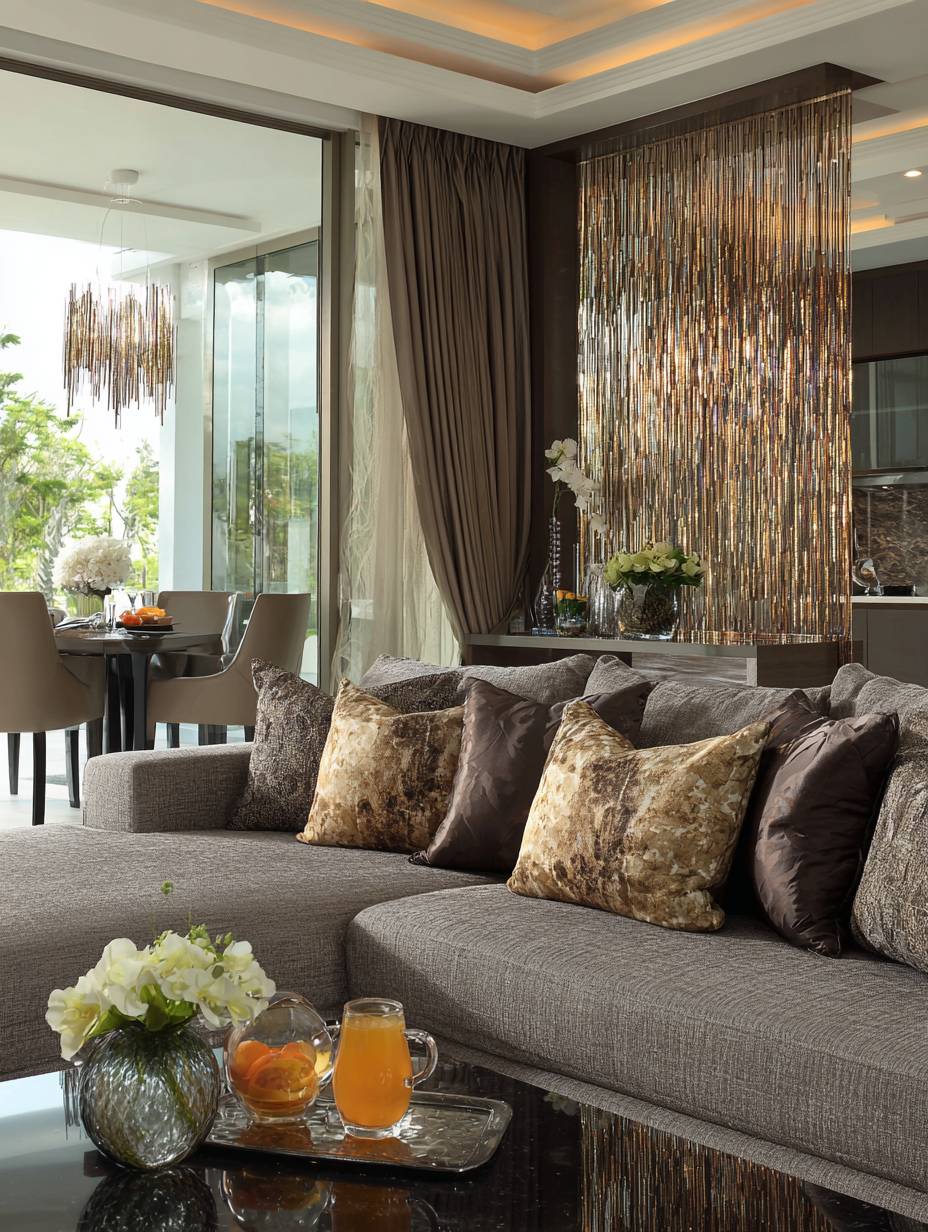
The frosted stripe detailing serves both practical and aesthetic purposes—it prevents people from accidentally walking into the clear glass while adding decorative pattern and visual texture. These vertical elements draw the eye upward, emphasizing ceiling height and creating a sense of grandeur. The pattern can be customized in width, spacing, and opacity to suit your specific privacy needs and design preferences. When positioned to catch natural light from adjacent windows, the frosted sections create a gentle glow that softens the overall ambiance.
- Select tempered safety glass with minimum 10mm thickness for durability and safety compliance
- Professional installation is essential to ensure proper anchoring, level placement, and seamless appearance
- Choose high-quality hardware with minimal visibility to maintain the frameless aesthetic
- Regular cleaning maintains clarity using appropriate glass cleaners and microfiber cloths to prevent streaking
- Consider acoustic properties as glass can reflect sound; add soft furnishings to absorb echoes if needed
- Plan placement carefully to avoid obstructing natural traffic flow patterns and door swings
4. Vertical Garden Living Wall Partition
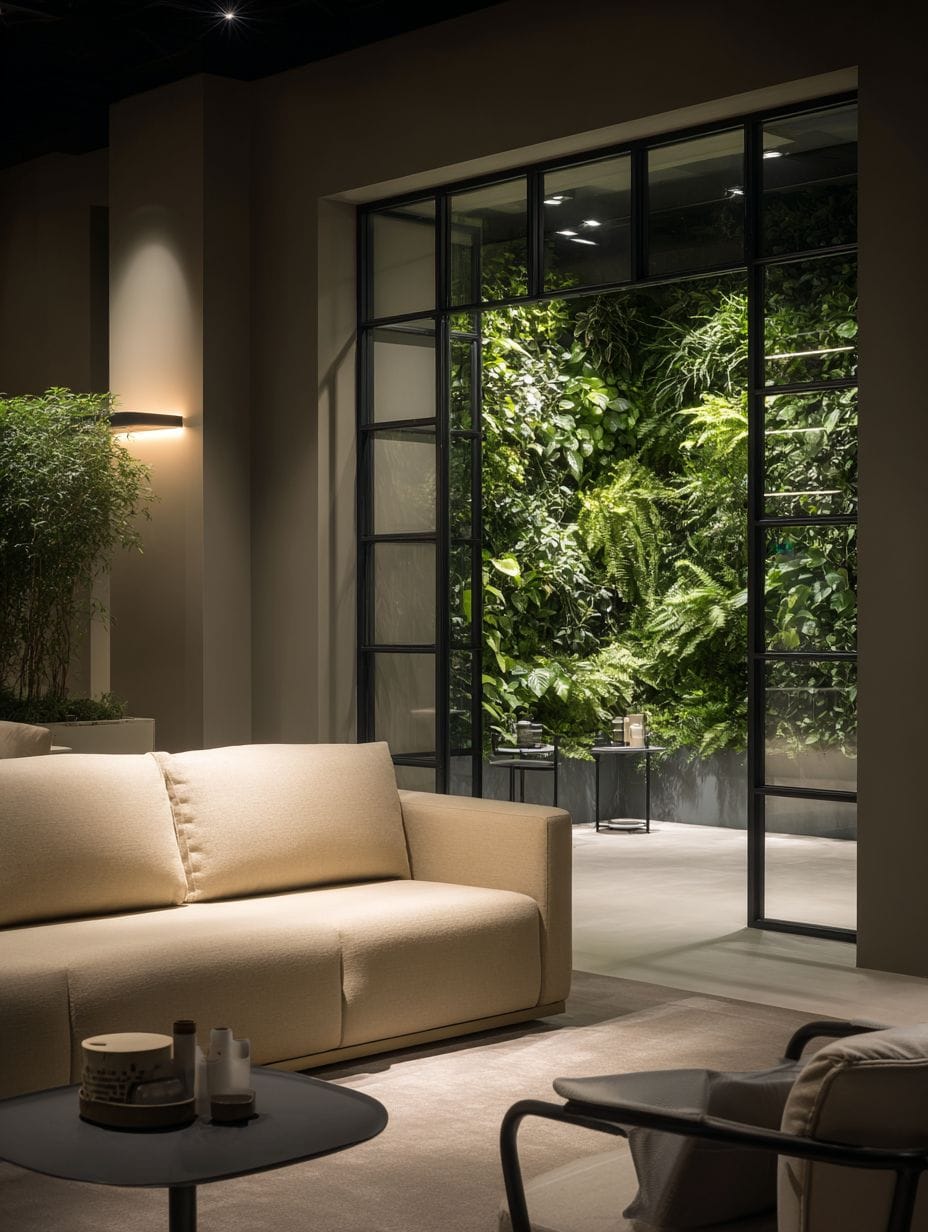
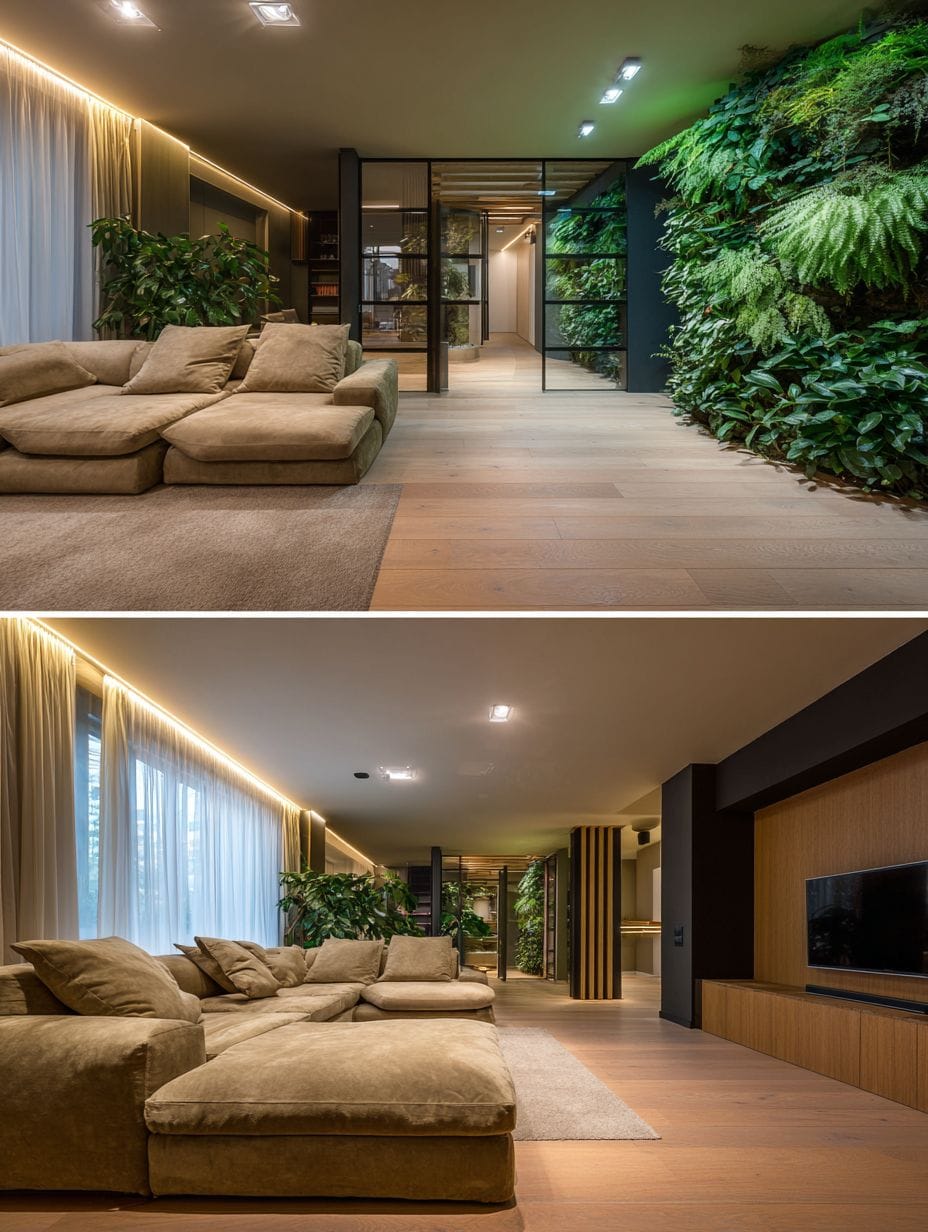
Bringing nature indoors through a vertical garden partition creates an extraordinary focal point that engages multiple senses while purifying your indoor air. This biophilic design approach transforms a functional room divider into a living, breathing art installation that evolves with the seasons. The lush arrangement of ferns, pothos, philodendrons, and other indoor plants creates a verdant screen that softens hard architectural lines while providing natural separation between your living room and entryway. The visual impact is immediate and dramatic—a wall of greenery commands attention and creates a striking first impression for anyone entering your home.
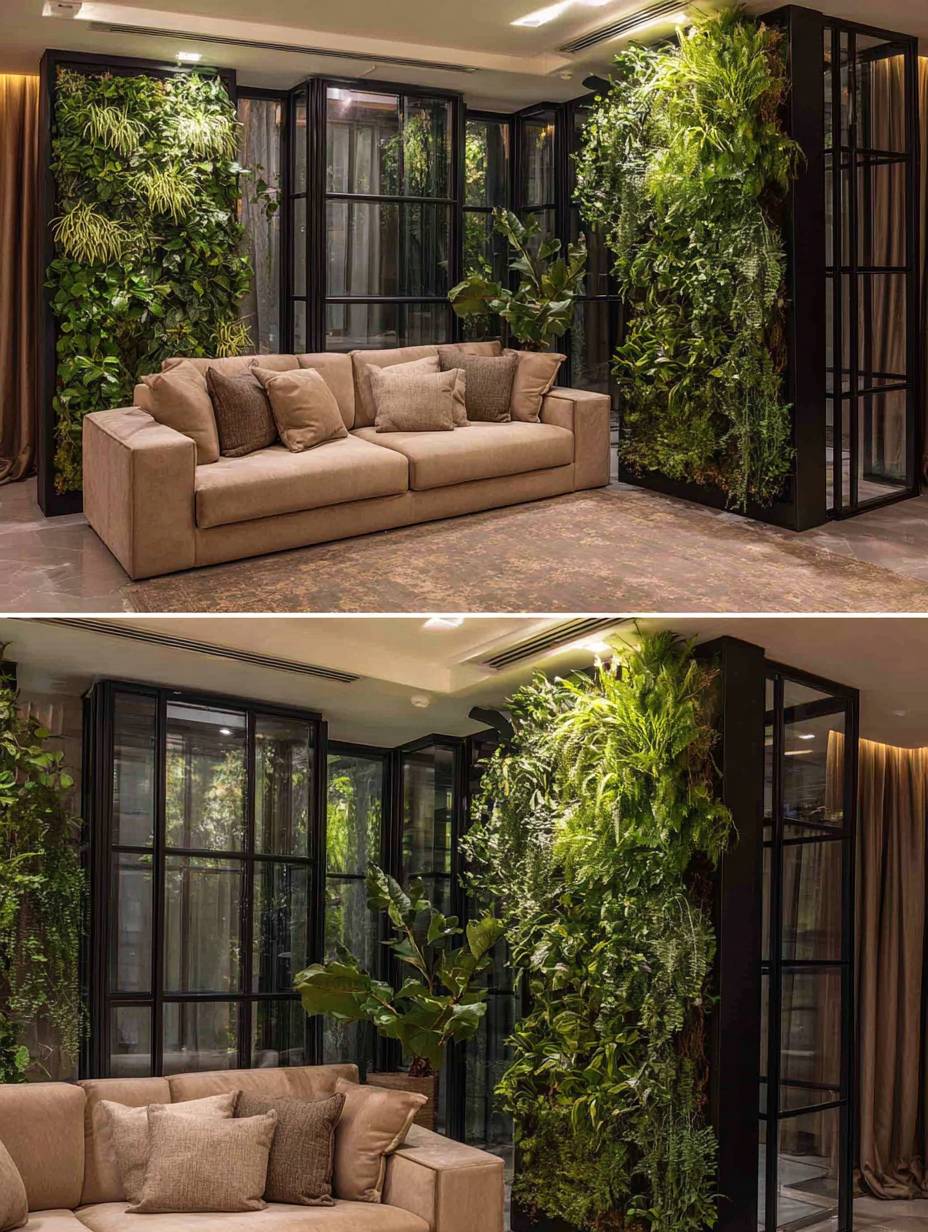
The technical execution of a living wall requires thoughtful planning and proper infrastructure. Mounted within a sleek black metal frame, the plant wall includes an integrated irrigation system that delivers water and nutrients directly to plant roots, making maintenance far more manageable than it might initially appear. The moisture-resistant backing protects your walls from water damage while creating the perfect growing environment for your botanical collection. Different plant varieties contribute varied textures, leaf shapes, and shades of green, creating visual depth and natural artistry that no manufactured material can replicate.
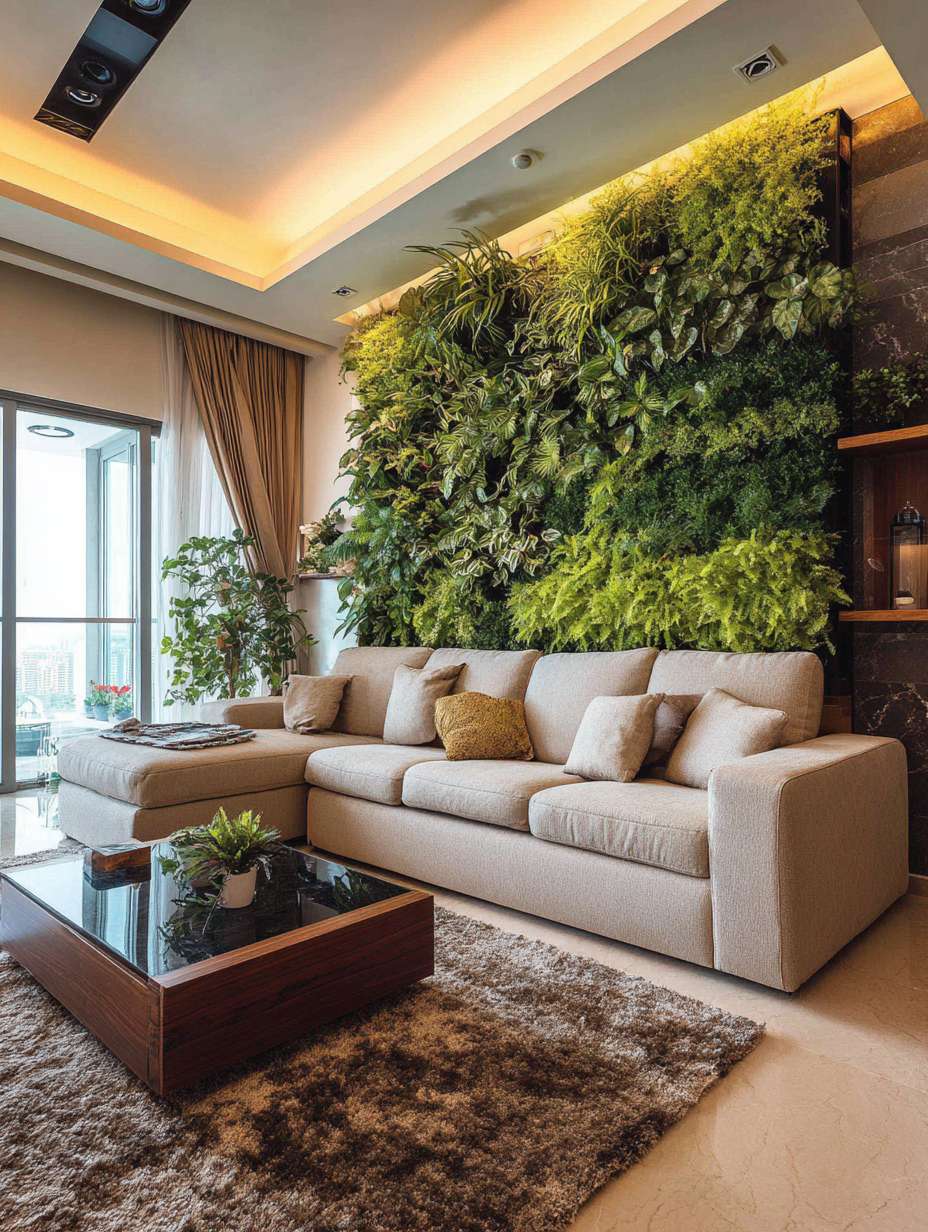
Beyond its aesthetic appeal, this living partition offers tangible wellness benefits. Plants naturally filter airborne toxins, release oxygen, and increase humidity levels—all contributing to improved indoor air quality and a healthier living environment. The presence of nature indoors has been proven to reduce stress, enhance mood, and improve concentration. The gentle rustling of leaves when air circulates and the subtle earthy scent of growing plants engage senses beyond sight, creating a multi-dimensional experience. Recessed lighting specifically positioned to illuminate the foliage highlights the varied textures and creates dramatic shadows that emphasize the three-dimensional quality of your living wall.
- Choose compatible plant species with similar light, water, and humidity requirements for easier maintenance and better growth
- Install proper drainage systems to prevent water accumulation and protect flooring from potential leaks
- Ensure adequate lighting with full-spectrum grow lights if natural light is insufficient for plant health
- Start with hardy varieties like pothos, spider plants, and ferns that tolerate indoor conditions well
- Regular maintenance is crucial including pruning, replacing struggling plants, and checking irrigation functionality
- Consider professional installation for irrigation systems and structural support to ensure longevity
5. Folding Bamboo Accordion Partition
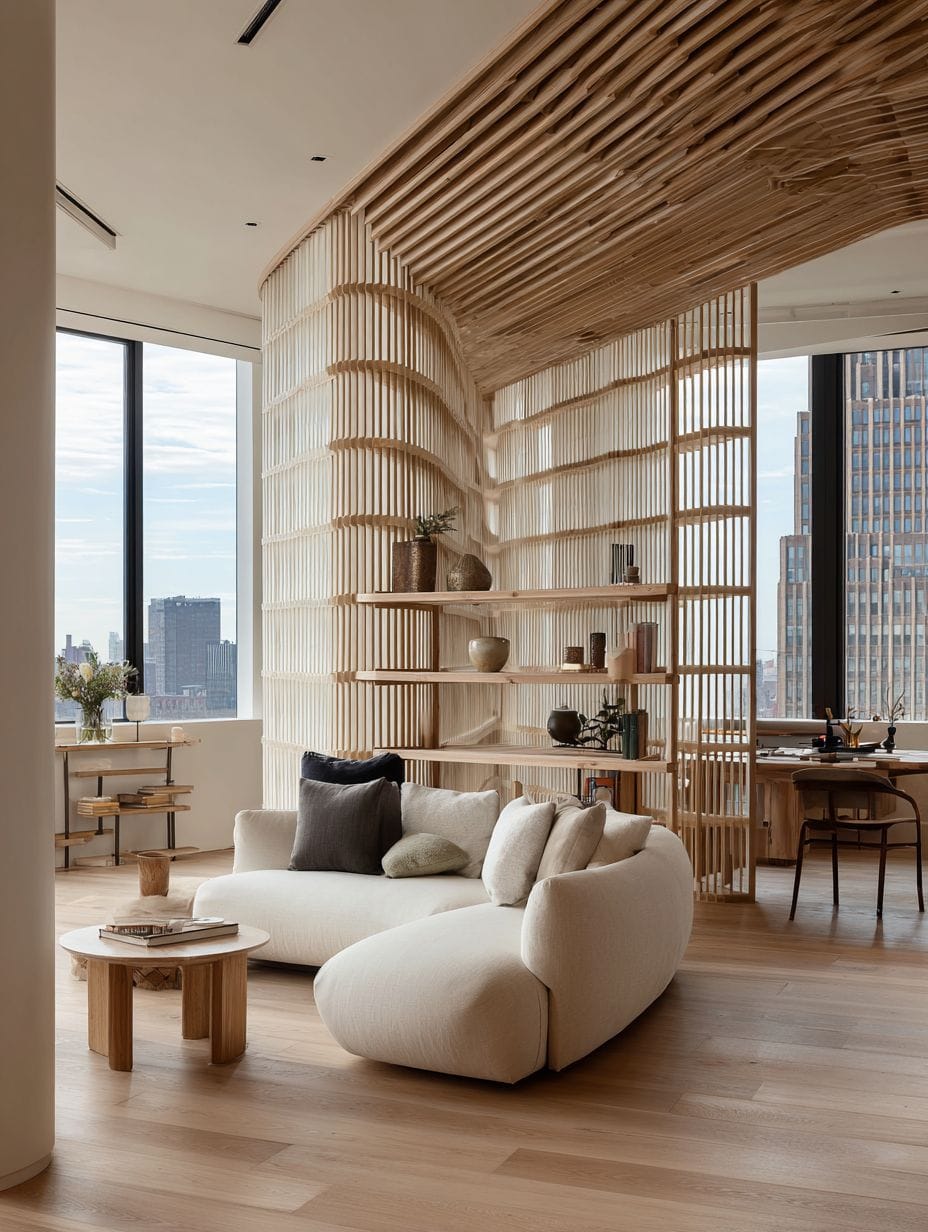
The folding accordion-style partition embodies flexibility and adaptability, offering the unique ability to reconfigure your space based on changing needs throughout the day. Constructed from light bamboo panels with neutral linen fabric inserts, this moveable divider provides variable privacy and spatial definition without permanent commitment. The natural bamboo brings organic warmth and sustainable materials into your interior, while the fabric sections soften the overall appearance and provide additional sound dampening. When fully extended, the partition creates a substantial barrier; when partially folded, it forms gentle curves that add sculptural interest to your room.
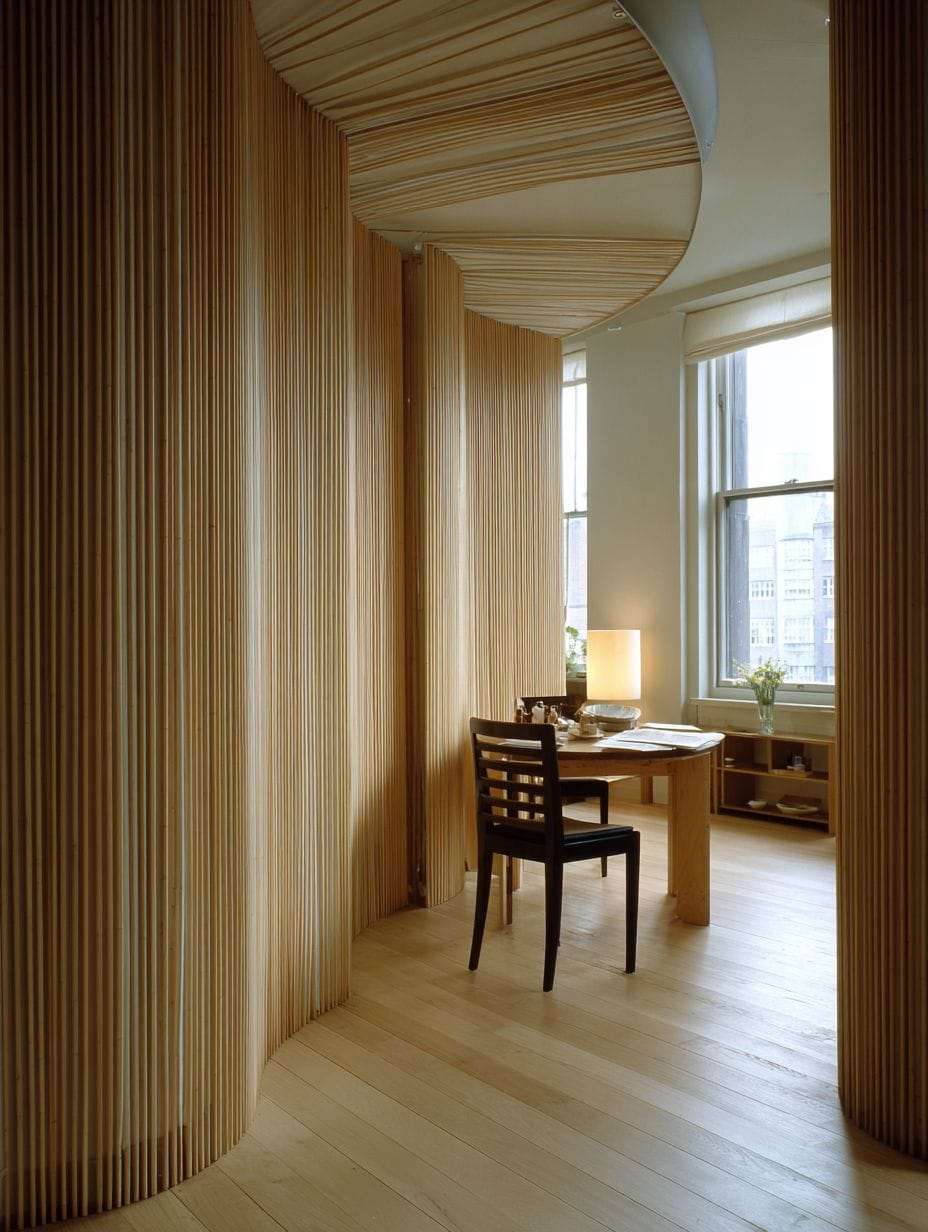
This partition style excels in situations requiring adaptability—perhaps you need separation when working from home but prefer an open layout when entertaining guests. The accordion mechanism allows you to adjust the degree of separation, creating anything from a gentle suggestion of division to a complete visual barrier. The lightweight construction makes repositioning effortless, and when not needed, the entire partition folds compactly for storage against a wall or in a closet. The natural oak flooring visible in such installations complements the bamboo’s honey tones perfectly, creating a cohesive, nature-inspired aesthetic.
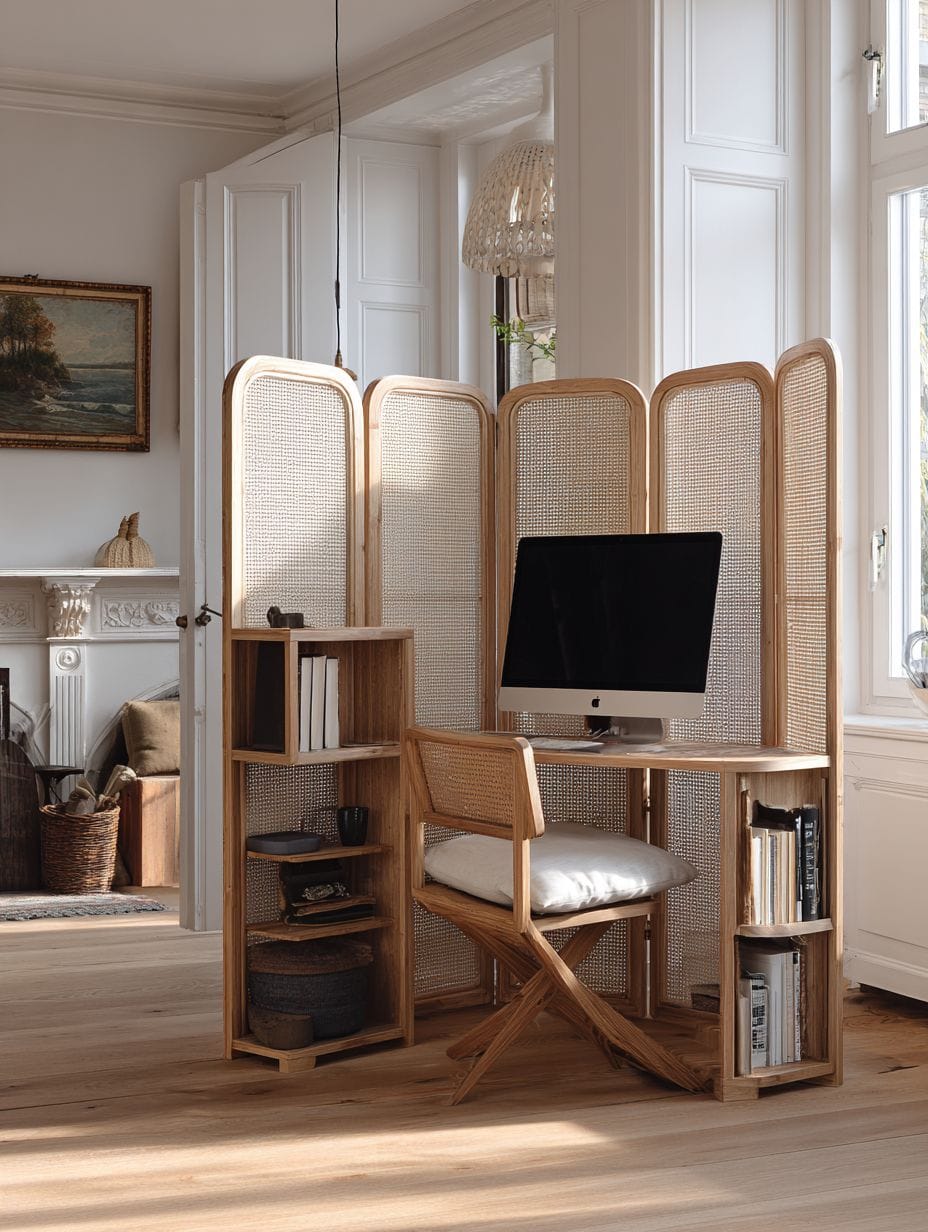
The craftsmanship of quality folding partitions is evident in smooth hinges, well-finished edges, and durable fabric inserts that resist fading and wear. The woven texture of both bamboo and linen creates tactile interest that invites touch while adding visual depth. When positioned near windows, natural light filters through the fabric panels, creating a soft, diffused glow that enhances the peaceful atmosphere. The vertical lines of the bamboo slats draw the eye upward, while the fabric inserts provide moments of visual rest, creating balanced composition.
- Invest in quality hinges that operate smoothly and won’t loosen with repeated use over time
- Choose sustainable bamboo from responsible sources to ensure environmental friendliness and material quality
- Select fabric carefully considering durability, color fastness, and cleaning requirements
- Maintain flexibility by periodically moving the partition to prevent hinges from becoming stiff
- Consider height carefully to ensure the partition is tall enough to provide privacy while remaining easy to move
- Treat bamboo properly with appropriate oils or sealants to prevent drying and cracking in climate-controlled environments
6. Double-Sided Contemporary Fireplace Partition
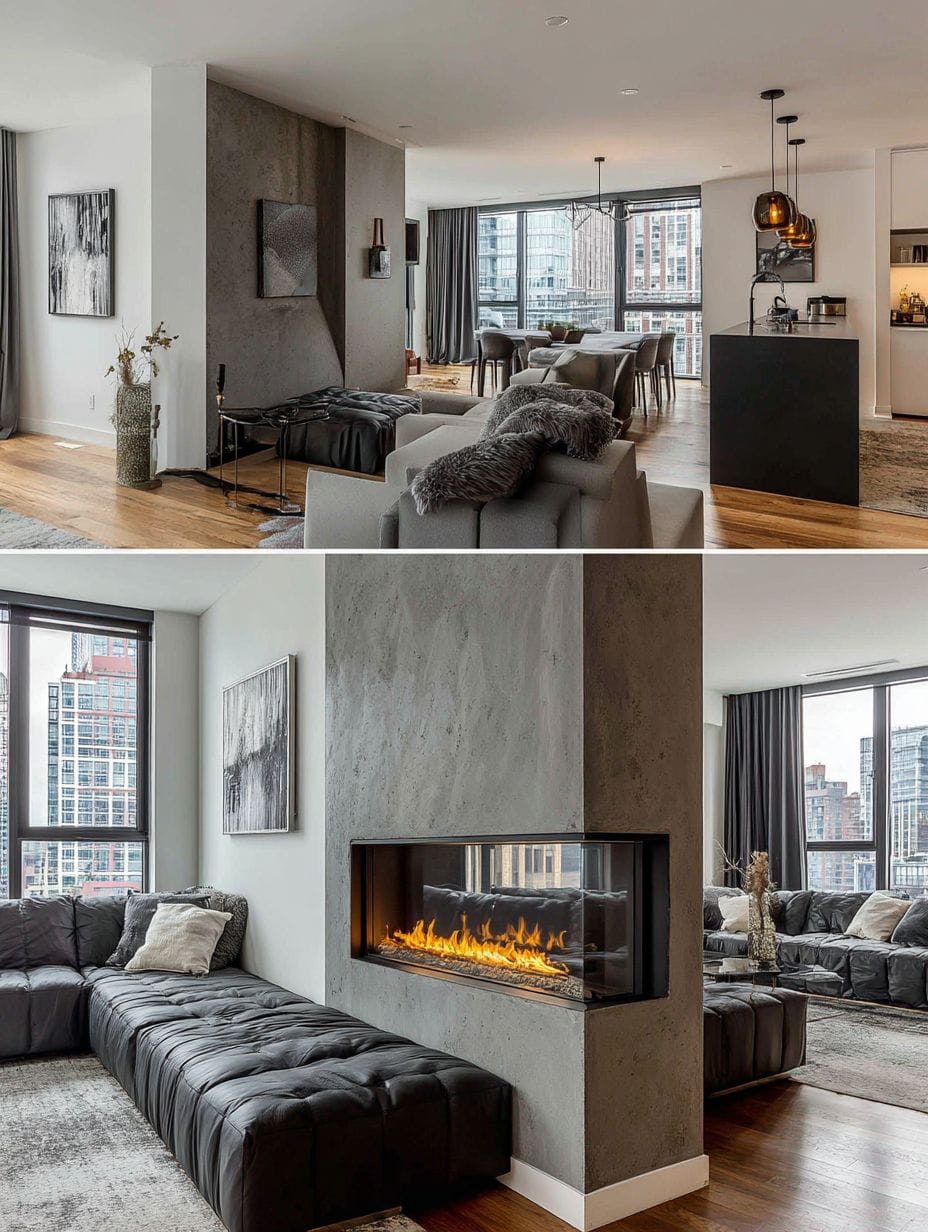
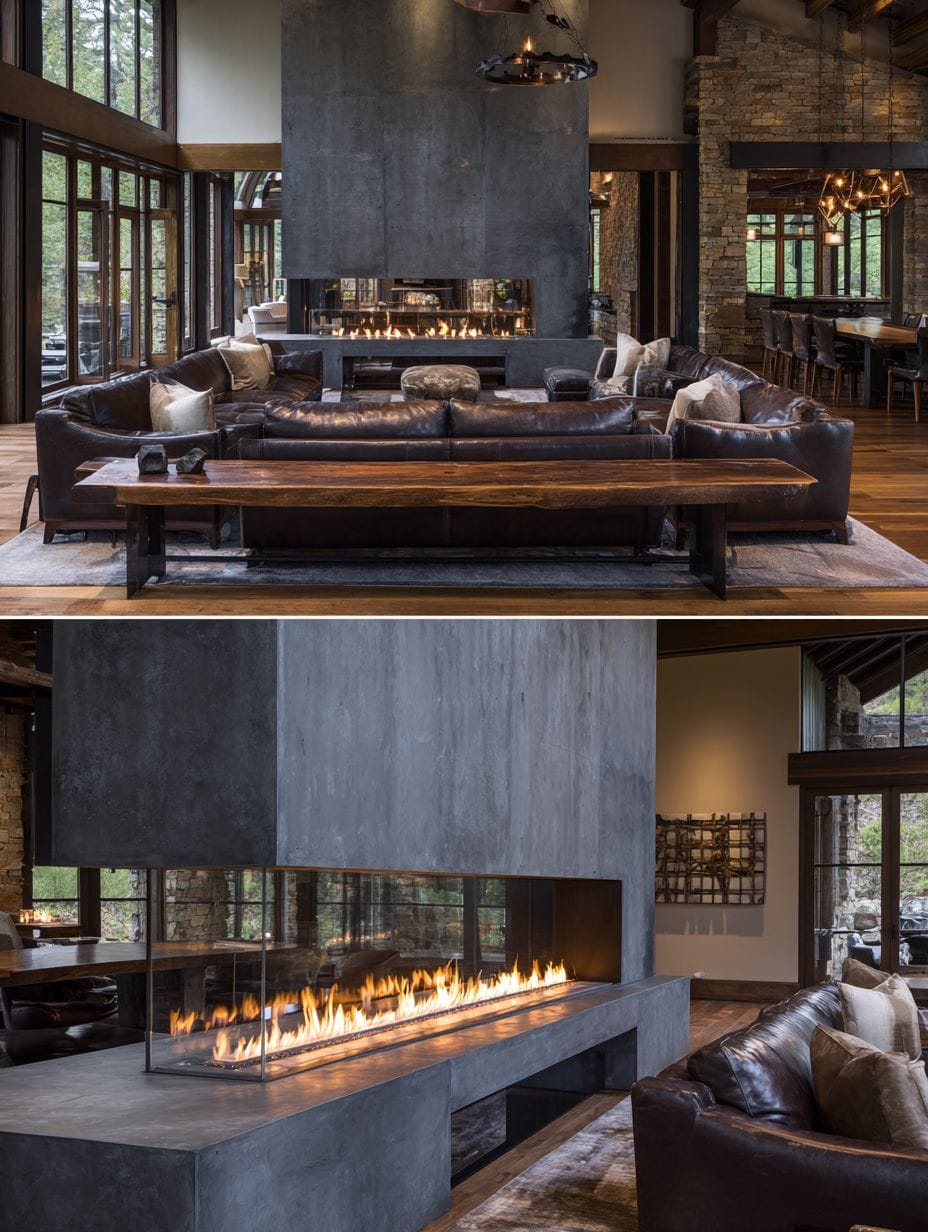
Few partition solutions create as much impact as a double-sided fireplace that serves as both functional heat source and dramatic architectural element. This floor-to-ceiling divider wall, finished in textured grey concrete, transforms the act of space division into a statement of luxury and sophistication. The contemporary linear gas insert is visible from both sides, allowing the mesmerizing dance of flames to be enjoyed from your living room and adjacent dining area simultaneously. This shared visual focal point creates connection even as it defines separate functional zones, making it perfect for entertaining where hosts can prepare meals while remaining engaged with guests in the living space.
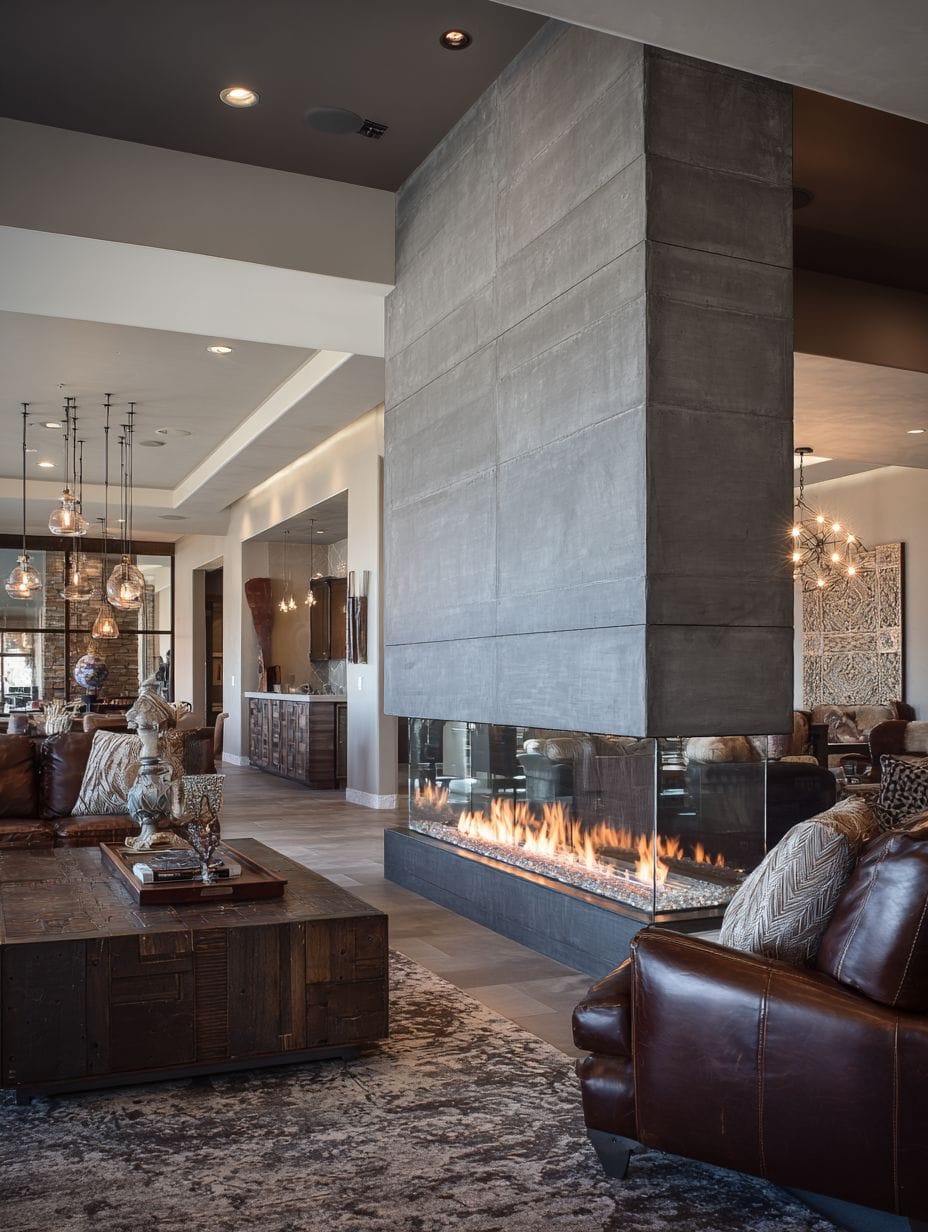
The materiality of textured concrete provides industrial elegance and substantial presence that anchors your interior design scheme. Unlike smooth finishes, the textured surface catches and reflects light in interesting ways, creating subtle variations in appearance throughout the day as natural light shifts. The thermal mass of concrete also contributes to the heating efficiency, absorbing warmth from the fireplace and slowly releasing it into surrounding spaces. Modern leather furniture flanking each side of the partition creates sophisticated symmetry while the transparent nature of the fireplace opening maintains visual connection between spaces.
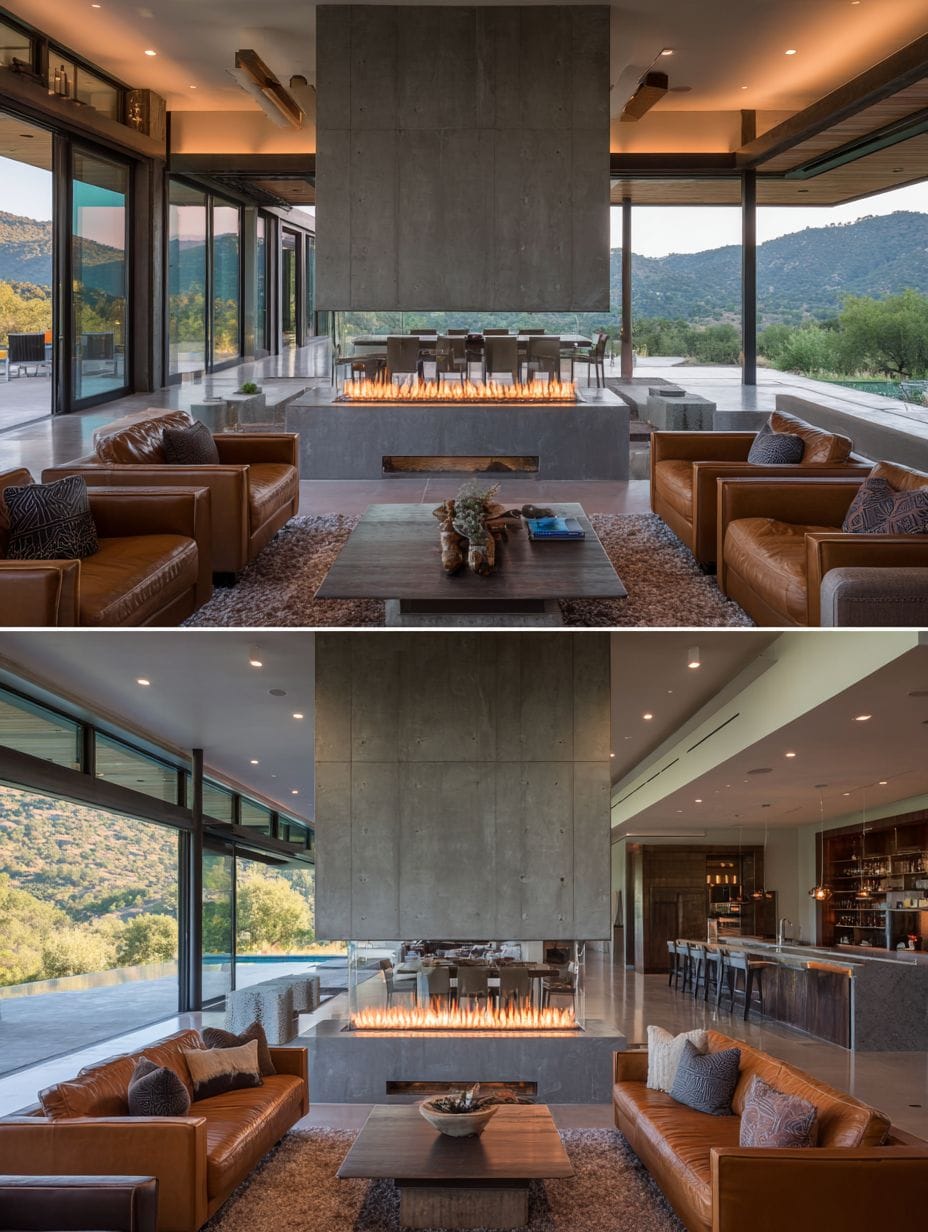
The ambiance created by a double-sided fireplace is unmatched—dancing flames provide mesmerizing movement and warm, flickering light that transforms the atmosphere from ordinary to extraordinary. During cold months, the fireplace becomes a natural gathering point, drawing people from both sides to enjoy its warmth and beauty. The linear design of contemporary gas inserts provides a sleek, horizontal emphasis that feels more architectural than traditional fireplaces, while requiring minimal maintenance compared to wood-burning alternatives. Strategic lighting that illuminates the concrete texture creates additional drama during evening hours when the fireplace is the primary light source.
- Ensure proper ventilation is installed according to manufacturer specifications and local building codes
- Choose quality gas inserts from reputable manufacturers with good warranties and service networks
- Plan for electrical access to power ignition systems and any integrated lighting or control features
- Consider heat distribution to both sides and ensure proper clearances from combustible materials
- Select appropriate concrete finishes that can withstand heat exposure without cracking or discoloring
- Professional installation is mandatory for gas connections, ventilation, and structural support requirements
7. Industrial Metal Grid with Integrated Lighting
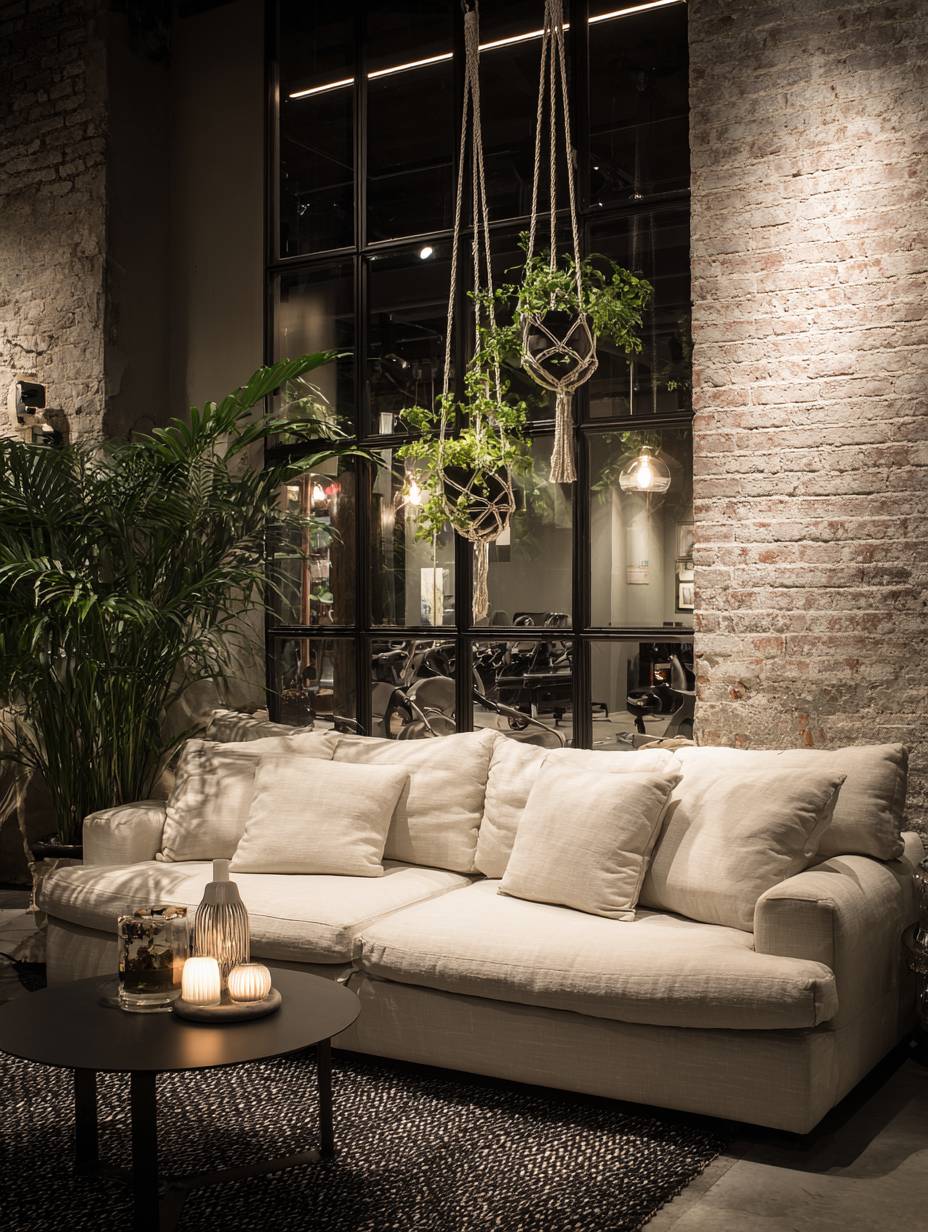
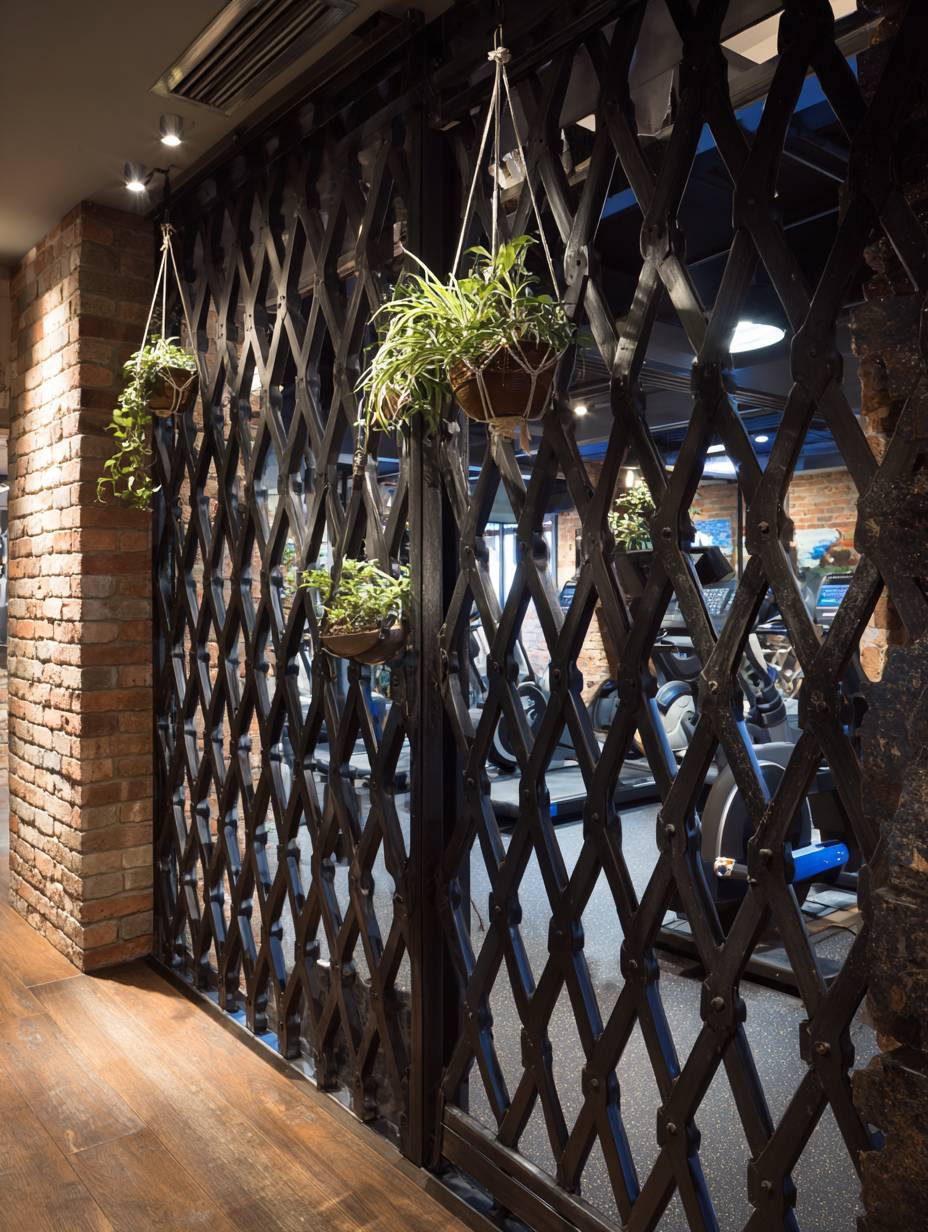
The industrial metal grid partition brings urban loft aesthetics into residential spaces with its bold geometric framework and utilitarian appeal. Constructed from black powder-coated steel, this partition creates strong visual impact while maintaining an open, airy quality through its skeletal structure. The geometric patterns formed by the metal framework create interesting shadow play throughout the day, adding dynamic visual elements to your space. What elevates this design beyond basic metal screening is the integration of LED strip lighting that illuminates the partition from within, creating a glowing architectural feature that transforms from functional divider to sculptural art piece when evening arrives.
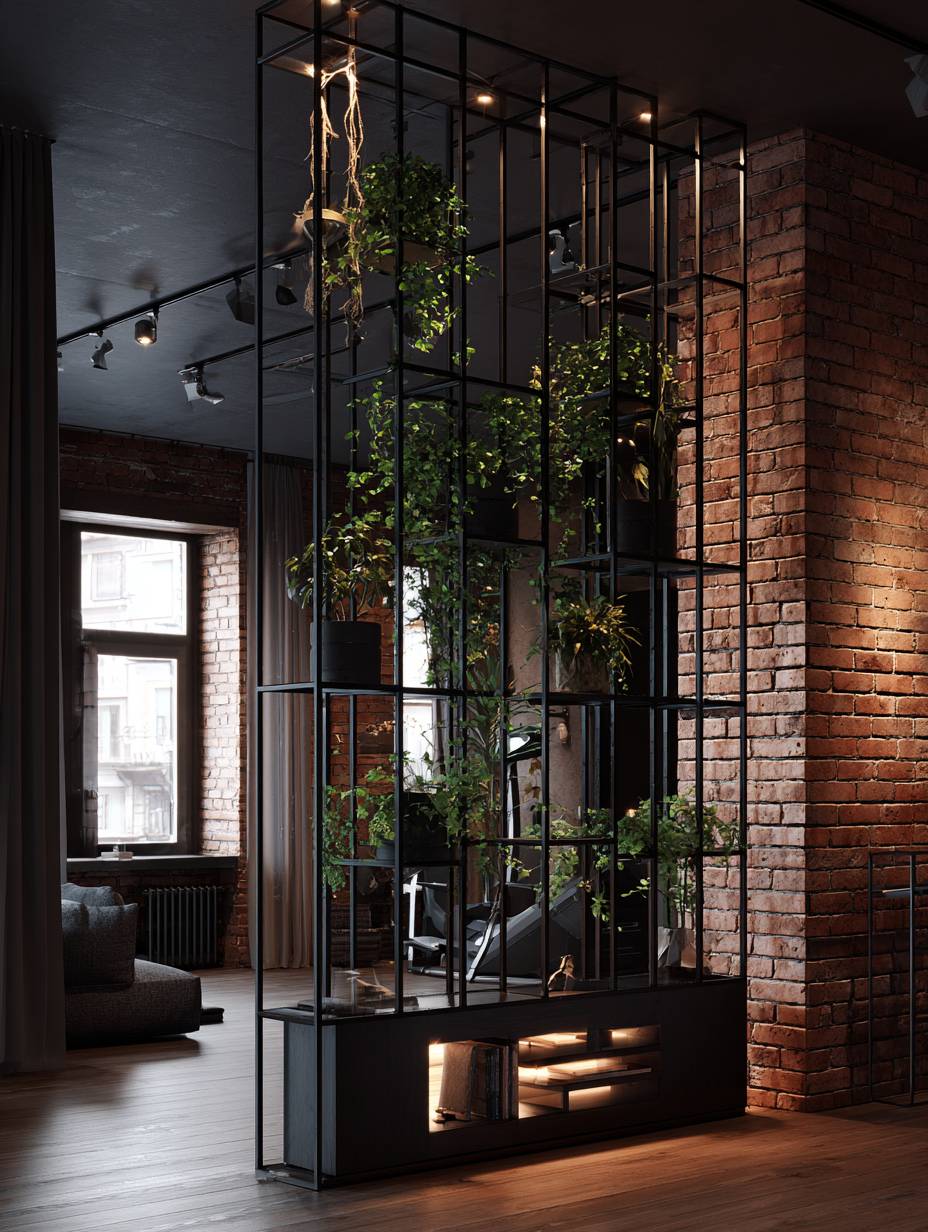
The versatility of the metal grid structure allows for creative customization—hanging plants in macramé holders add organic softness to the industrial hardness of metal, creating appealing contrast. Small air plants, trailing pothos, or cascading string of pearls introduce life and movement while their verdant colors pop dramatically against the black framework. This partition works exceptionally well separating a living space from a home gym area, where the open structure allows air circulation while providing visual definition. The exposed brick accent wall visible in such installations amplifies the industrial aesthetic, creating cohesive design that feels authentic rather than contrived.
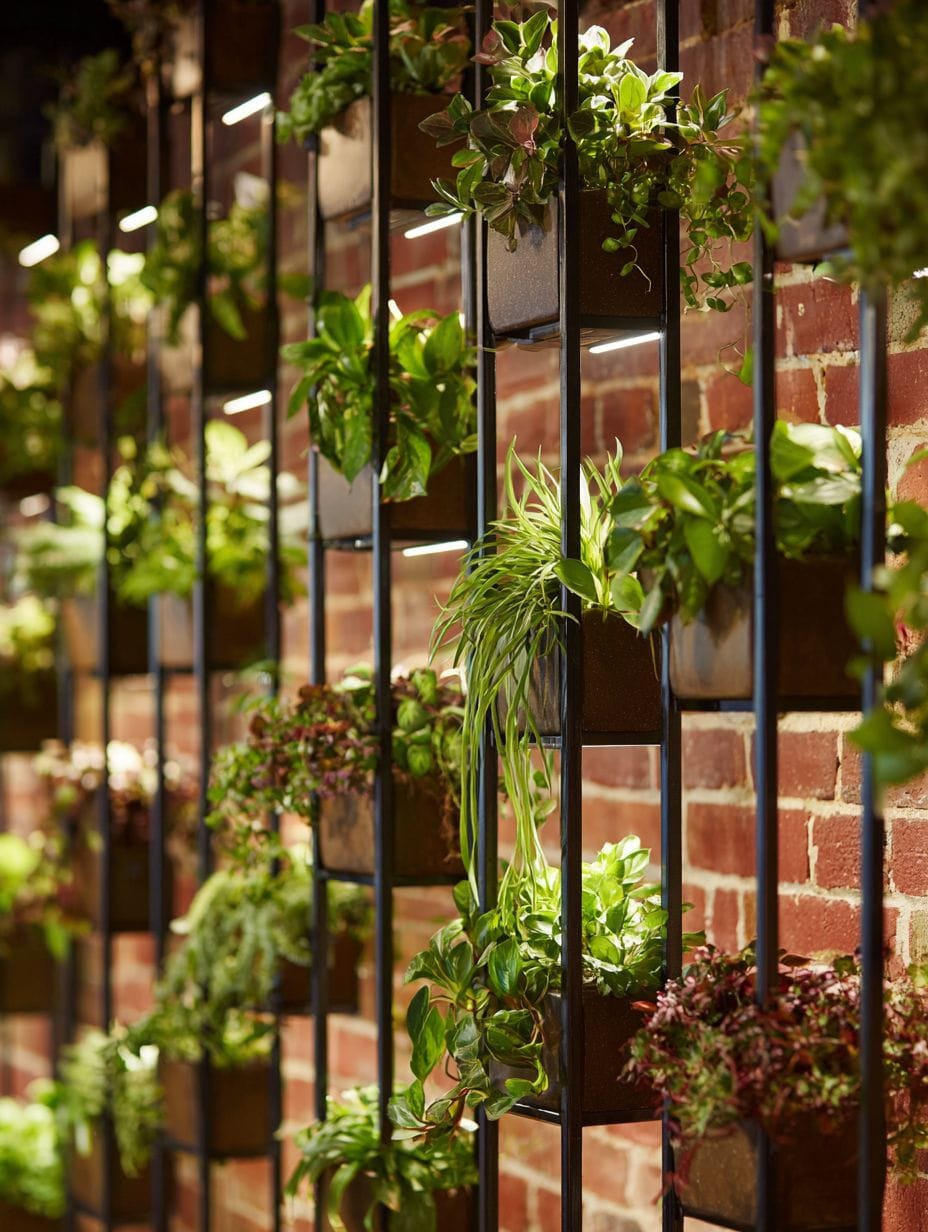
The three-dimensional quality of the metal grid creates depth and layering that flat partitions cannot achieve. Objects placed at various depths within the framework create visual interest from multiple viewing angles, and the interplay of metal, plants, and light creates complexity that rewards closer inspection. The powder-coated finish is remarkably durable, resistant to chipping and corrosion while maintaining its matte black appearance. This type of partition appeals to those who appreciate honest materials, visible structure, and design that celebrates function rather than hiding it behind decorative facades.
- Ensure structural integrity with properly welded joints and adequate support for the partition’s weight
- Plan electrical routing carefully to conceal wiring while providing access for future maintenance
- Choose quality LED strips with proper waterproof ratings if incorporating plant irrigation nearby
- Secure heavy items properly if hanging objects from the grid to prevent distortion or damage
- Consider spacing carefully in the grid pattern to balance openness with structural stability
- Touch up finish as needed to maintain appearance and prevent rust in humid environments
8. Minimalist Horizontal Wood Paneling Half-Wall
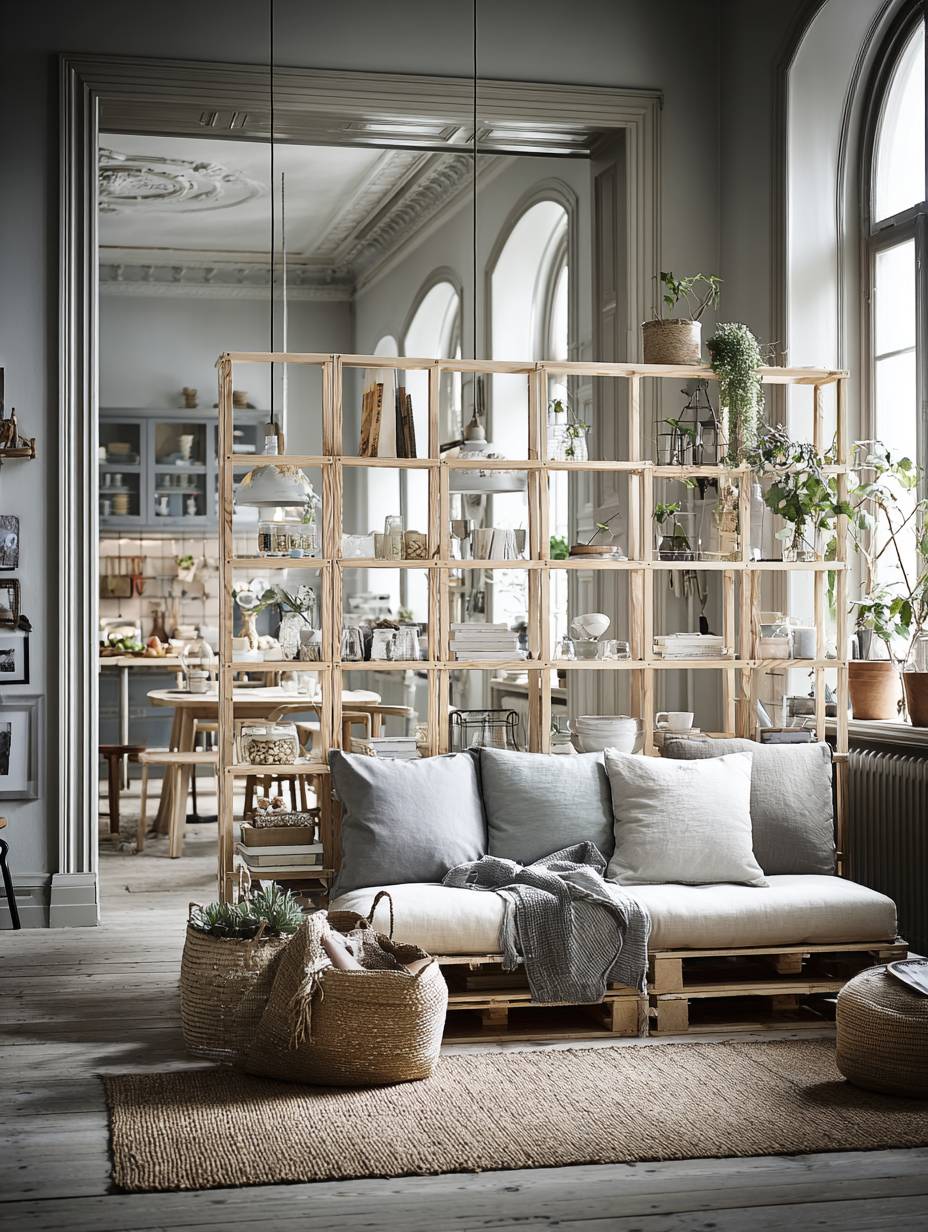
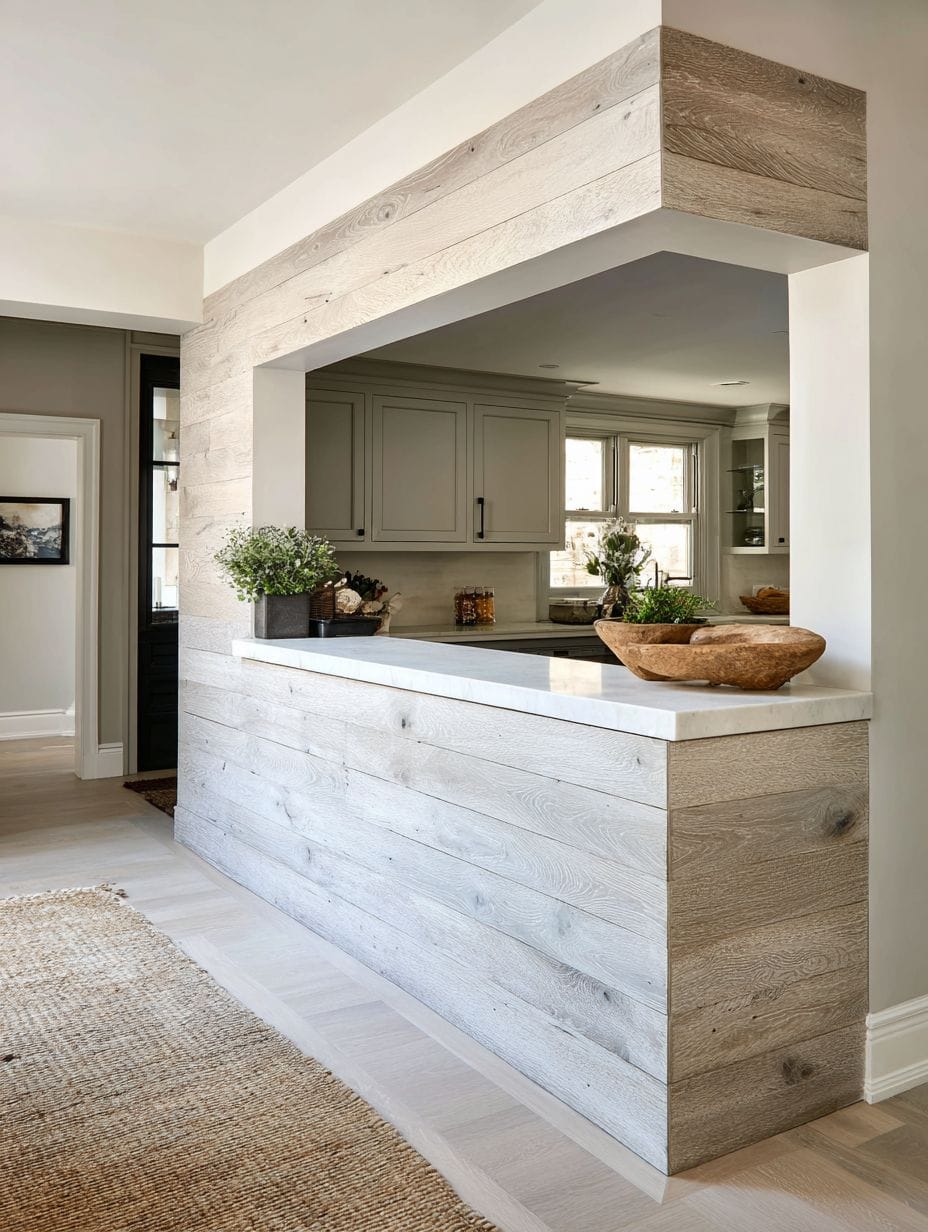
The minimalist half-wall partition demonstrates that effective space division doesn’t always require floor-to-ceiling barriers. This low-profile design reaches approximately chest height, striking the perfect balance between defining separate zones and maintaining open sightlines throughout your living space. The horizontal wood paneling in whitewashed oak creates clean, contemporary lines while the Scandinavian aesthetic keeps the overall feeling light and airy. This partition style is particularly effective in smaller homes where preserving visual connection is crucial for preventing spaces from feeling cramped or closed off.
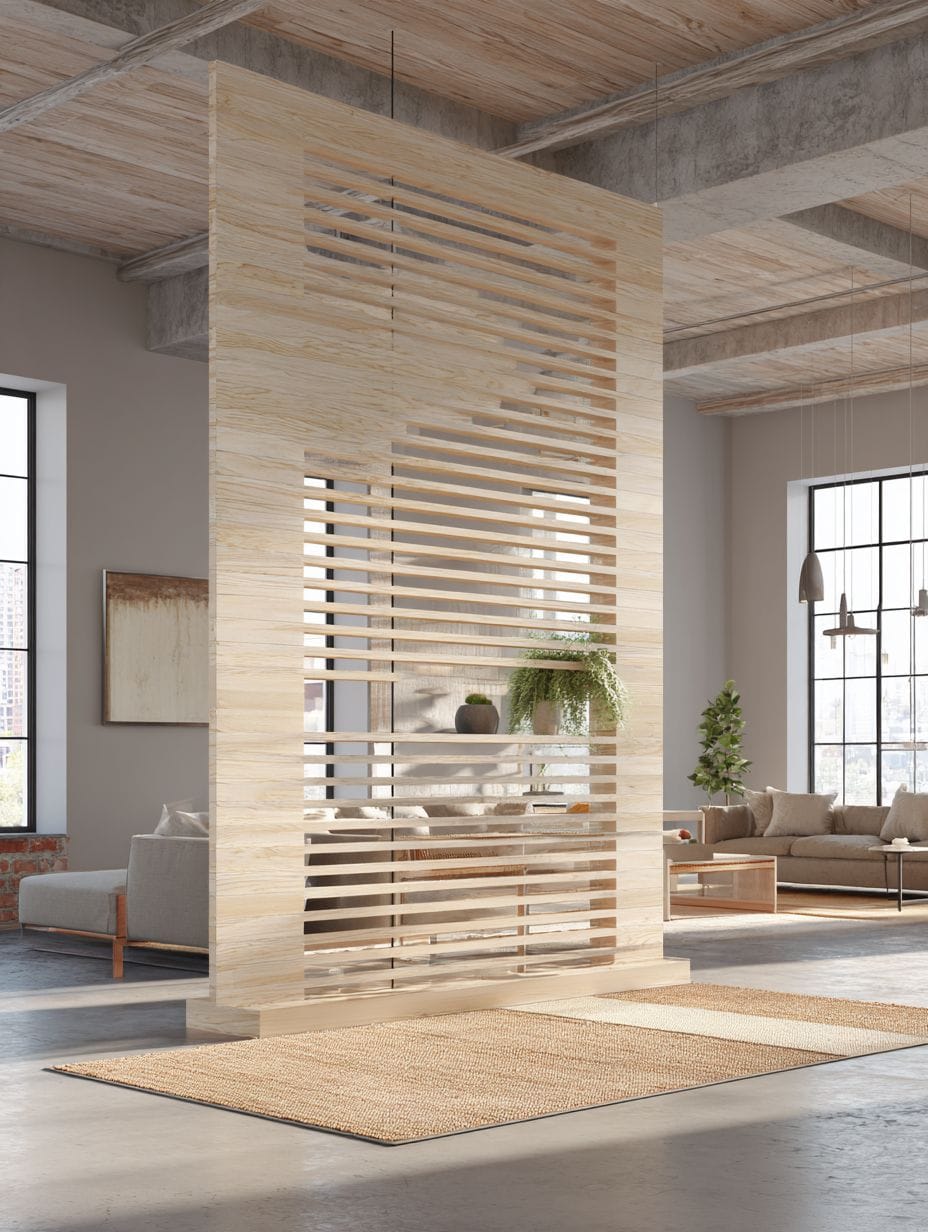
The functional top surface of the half-wall serves as a narrow display shelf, providing the perfect spot for small plants, decorative objects, or framed photographs. This transforms the partition from purely functional element into a design feature that contributes to your overall décor scheme. The ability to see over the partition while seated creates comfortable separation—you feel nestled in your defined space without feeling isolated from the rest of your home. Light grey walls and natural jute rugs visible in such spaces complement the whitewashed oak perfectly, creating a cohesive neutral palette that feels calm and sophisticated.
The horizontal orientation of the wood panels emphasizes width rather than height, making rooms feel more expansive. Soft natural lighting highlights the subtle grain texture of the oak, while the whitewash finish reflects light rather than absorbing it, contributing to the overall brightness of the space. This partition approach works beautifully separating living areas from kitchens in open-concept layouts, providing just enough division to mentally separate cooking from relaxing without creating total separation. The clean lines and simple geometry align perfectly with Scandinavian design principles of functional minimalism and unpretentious beauty.
- Determine appropriate height based on your furniture—typically 36-42 inches works well for most seating arrangements
- Ensure structural stability even without ceiling attachment by using proper base framing and anchoring
- Finish all surfaces carefully since the partition is visible from multiple angles and heights
- Consider traffic flow to ensure the half-wall doesn’t create awkward circulation patterns
- Seal whitewashed finish properly to protect against moisture and staining, especially near kitchens
- Maintain consistent spacing if displaying objects on top to create visual rhythm rather than clutter
9. Flowing Fabric Panel Room Divider
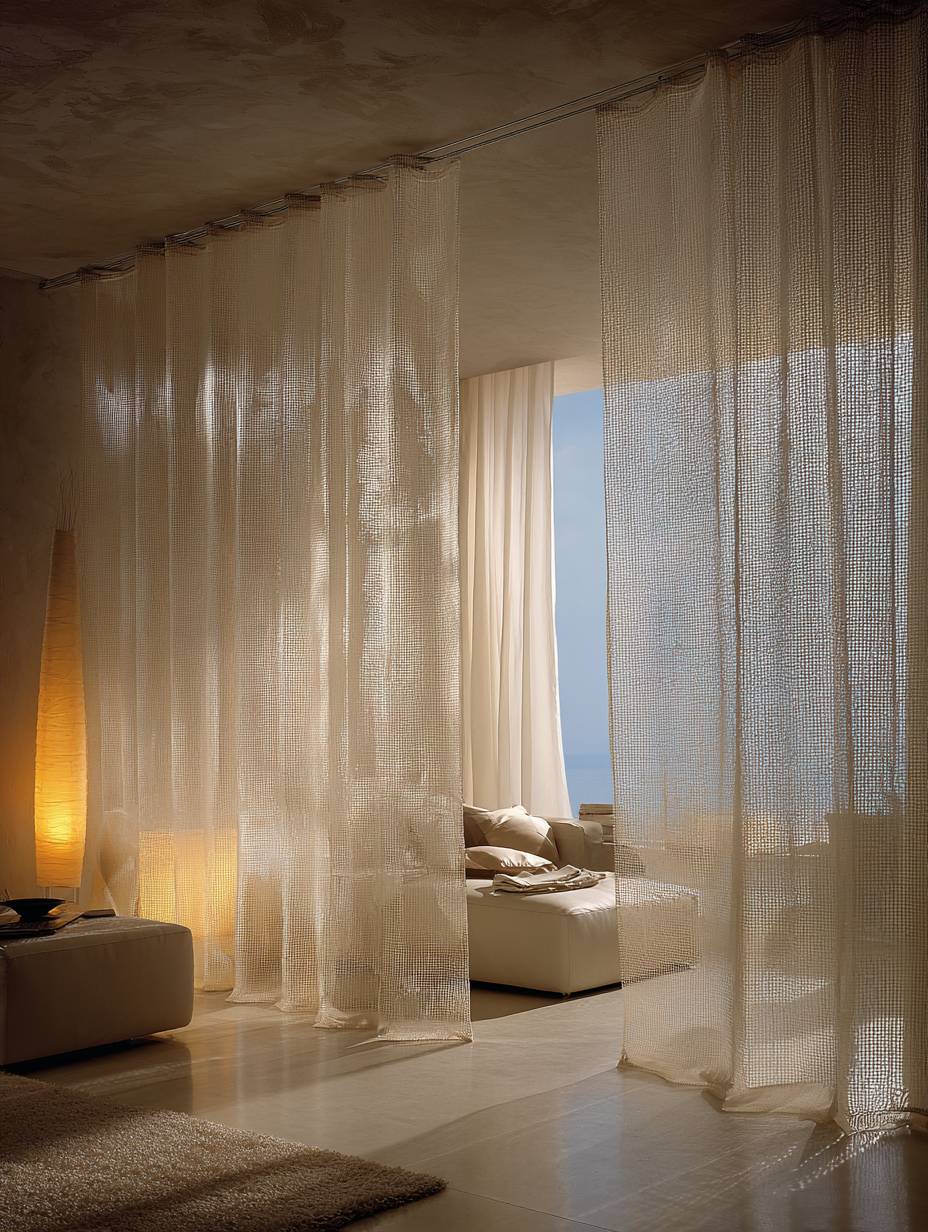
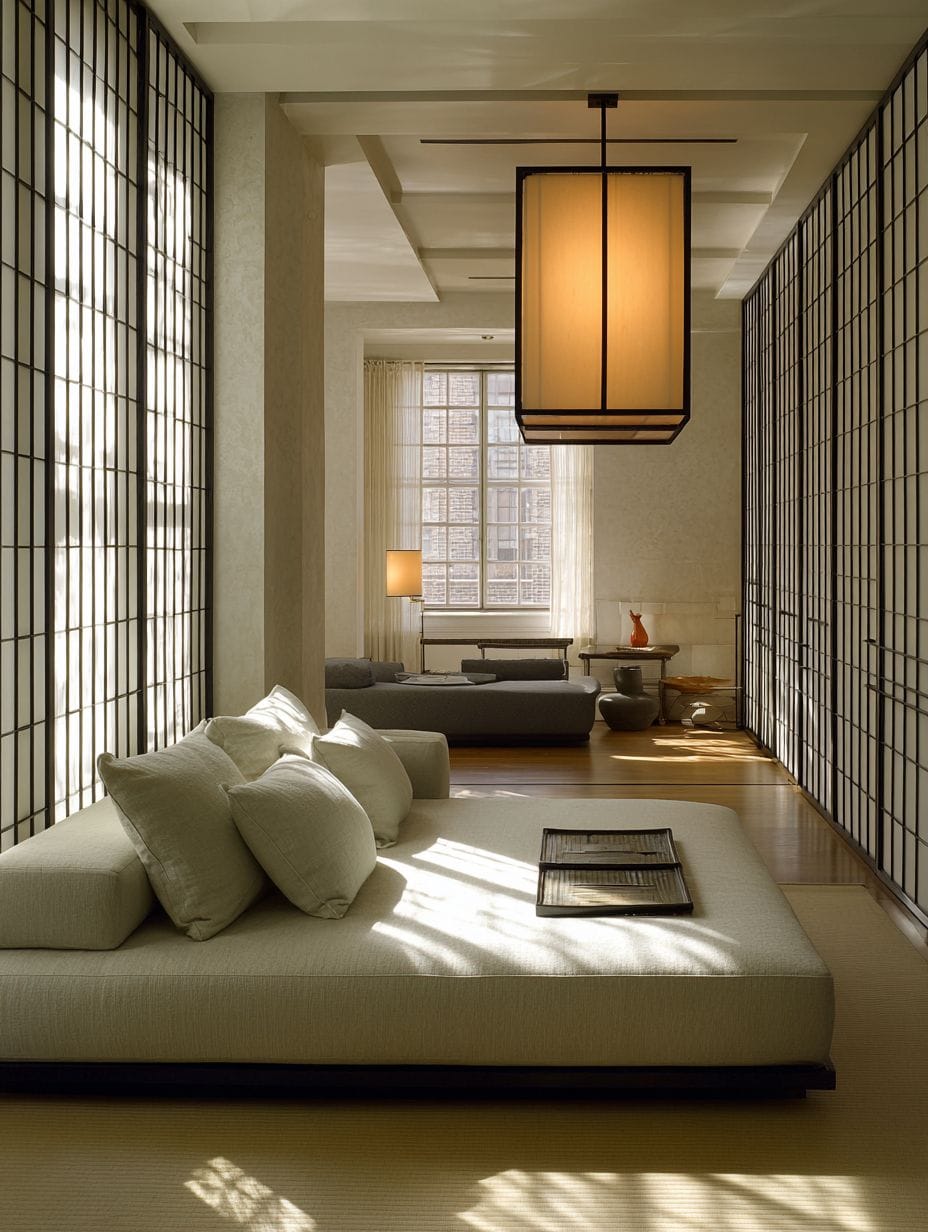
The ethereal beauty of ceiling-mounted fabric panels offers a soft, romantic approach to space division that feels more like interior design art than functional partition. Flowing panels of ivory linen hang from a minimalist track system, creating gentle vertical lines that draw the eye upward while providing flexible, movable separation. The translucent quality of linen allows diffused light to pass through, creating a luminous quality that changes throughout the day as natural light shifts. This partition style is particularly effective separating living areas from meditation spaces, yoga corners, or peaceful reading nooks where the soft, calming aesthetic enhances the intended purpose of the space.
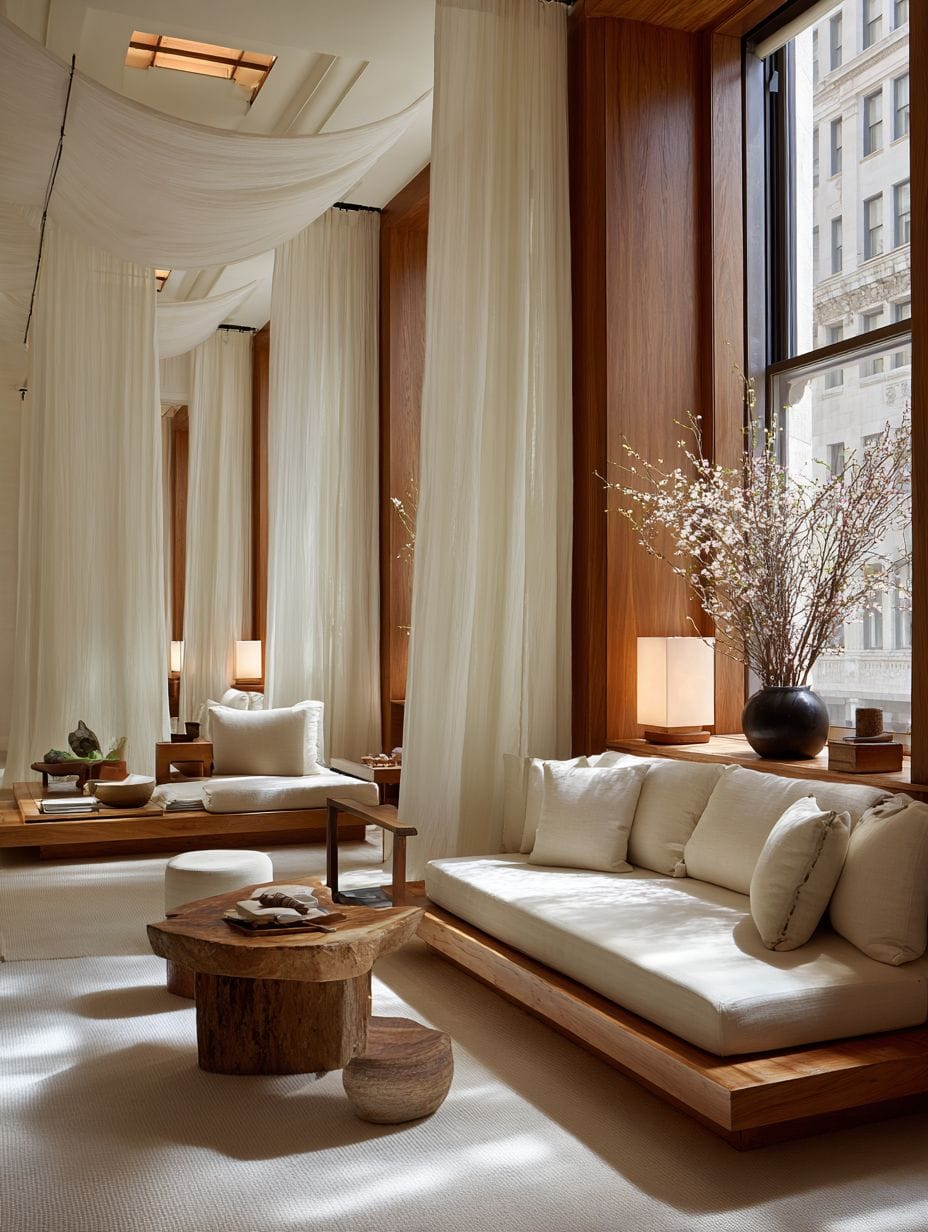
The flowing nature of fabric introduces organic movement into your interior—panels shift gently when air circulates, creating subtle animation that adds life to your space. This dynamic quality contrasts beautifully with rigid architectural elements, softening hard edges and creating visual balance. The neutral ivory tone complements virtually any color palette while the natural texture of linen adds tactile interest and visual depth. Contemporary furniture in similarly neutral tones creates a cohesive, serene environment where the partition blends seamlessly into the overall design scheme rather than dominating as a focal point.
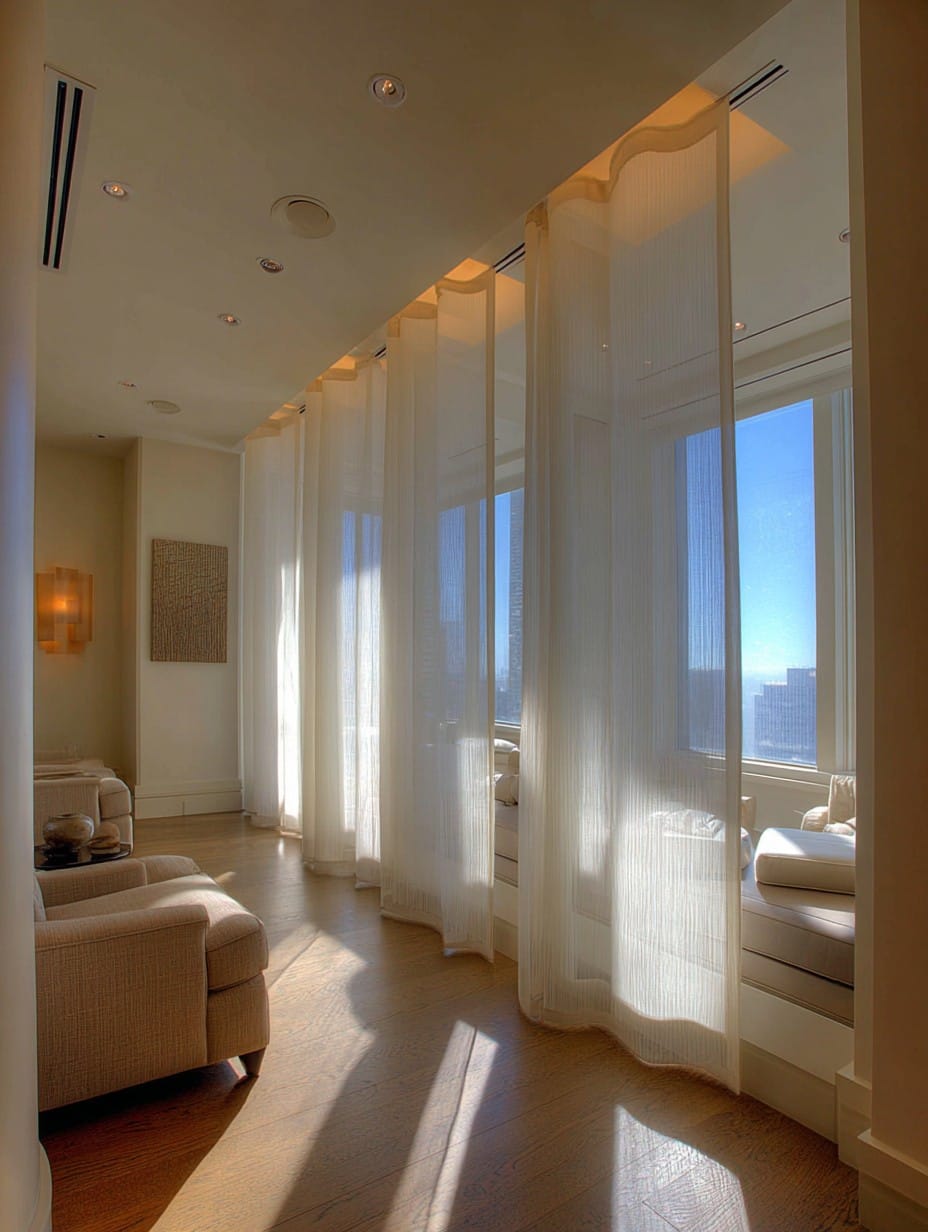
The practical advantages of fabric partitions include easy reconfiguration and simple maintenance. Panels can be drawn fully across to create complete separation, partially opened to allow visual and physical access, or completely retracted when full openness is desired. The track system allows smooth, effortless operation without heavy lifting or complex mechanisms. Natural window light filtered through the translucent fabric creates beautiful, soft shadows that emphasize the textile’s weave and texture. The fabric also provides subtle sound absorption, reducing echo and creating more acoustically comfortable spaces—particularly beneficial in homes with hard flooring and minimal soft furnishings.
- Select quality linen fabric with appropriate weight to hang well without excessive wrinkling or transparency
- Pre-wash fabric before installation to prevent shrinkage and set the drape
- Install ceiling tracks securely into joists or use appropriate anchors rated for the fabric weight
- Hem panels properly with weights in the bottom hems to help them hang straight
- Consider care requirements and choose fabrics that can be easily removed for cleaning
- Allow adequate fullness in panels—typically 1.5-2 times the track width for proper gathering and draping
10. Custom Media Unit Storage Partition
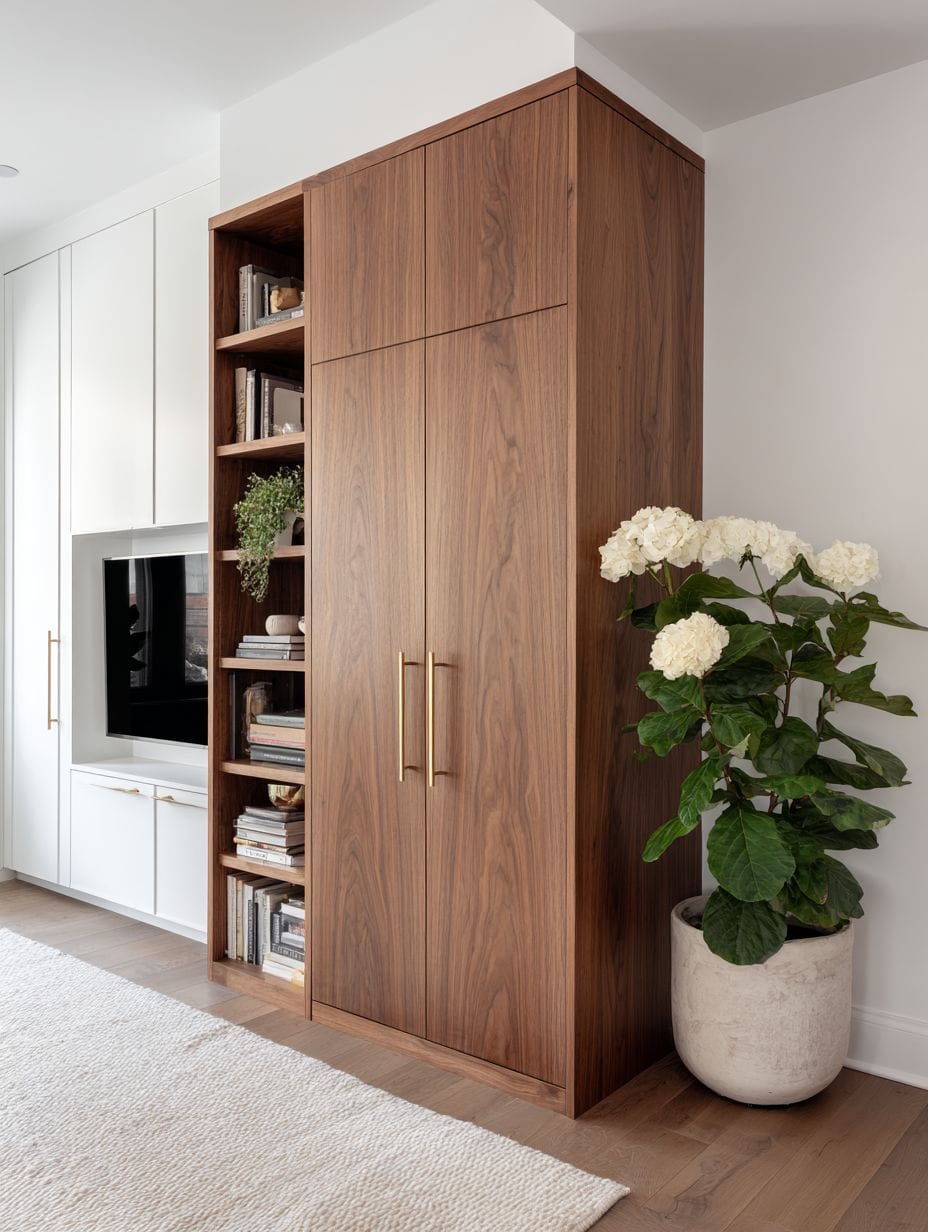
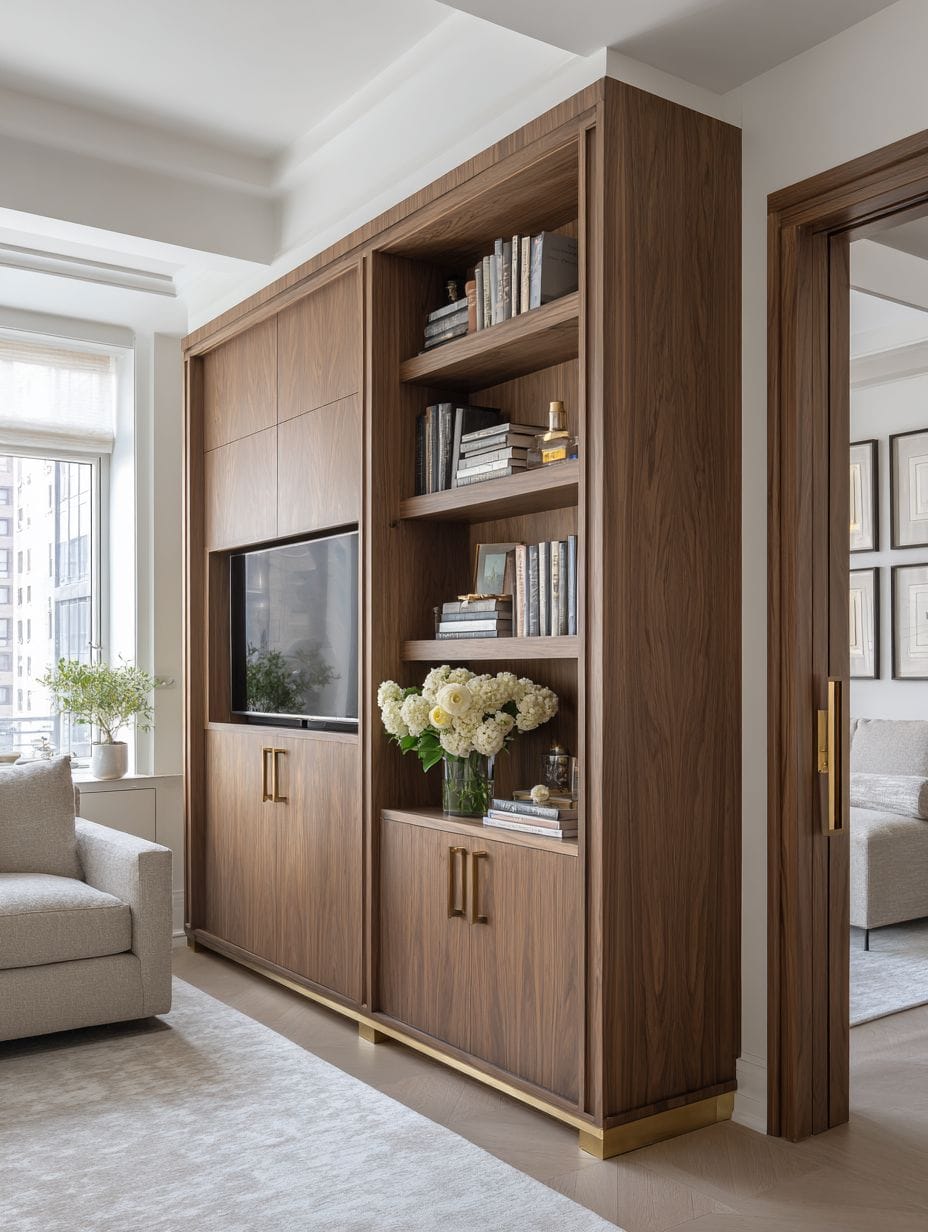
The custom-built media unit partition represents the ultimate in functional design, combining entertainment needs, storage requirements, and space division into one cohesive architectural element. This floor-to-ceiling walnut veneer unit serves dramatically different purposes on each side—the living room side features open shelving and TV mounting for entertainment and display, while the opposite side facing a home office presents closed cabinets for concealing work materials and supplies. This dual-sided approach maximizes utility while the clean horizontal lines and sophisticated brushed brass hardware add refined elegance that elevates the partition beyond purely utilitarian function.
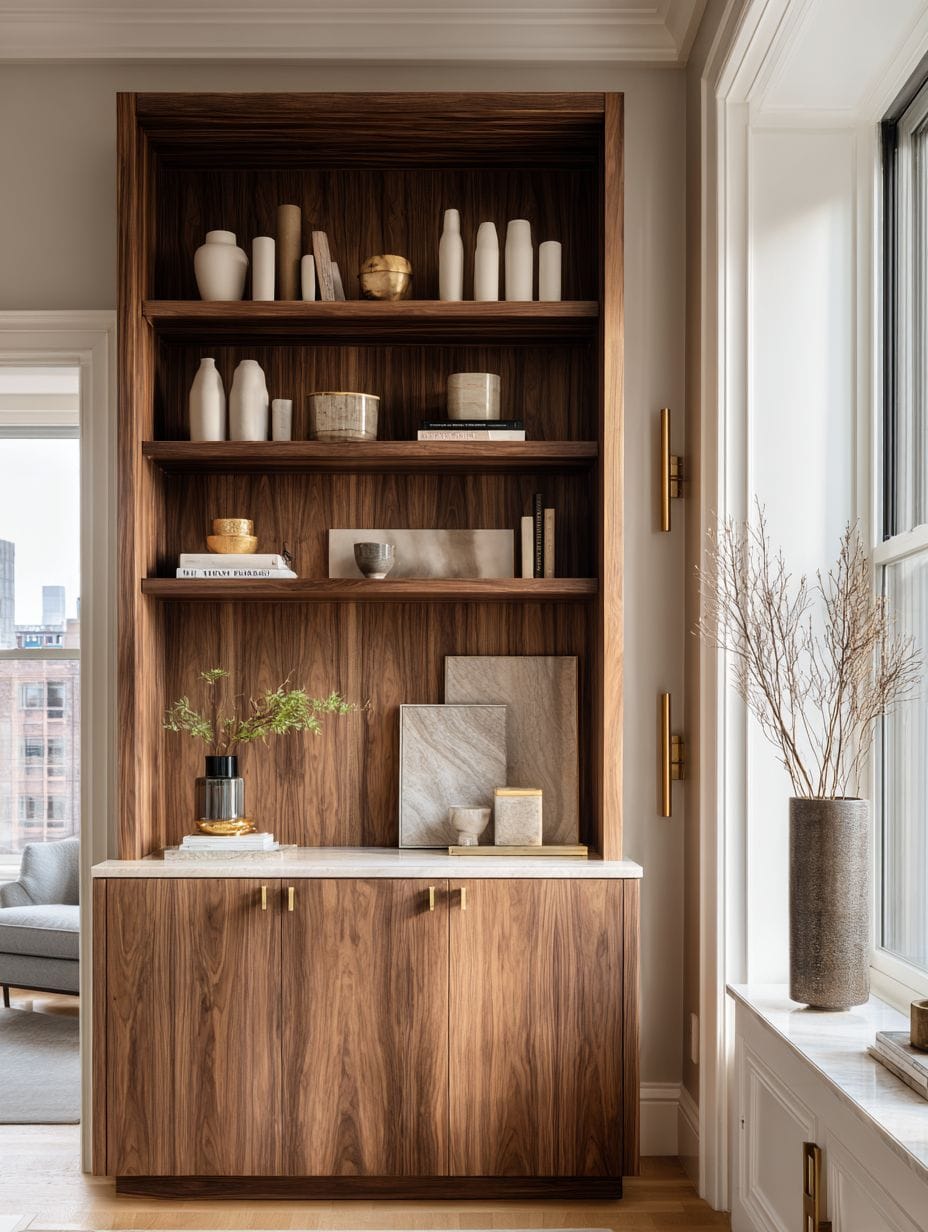
The richness of walnut veneer brings warmth and luxury to your interior, with its deep brown tones and distinctive grain patterns creating visual interest across the large surface. The floating base design, which elevates the unit slightly off the floor, creates the perception of lightness despite the partition’s substantial size. This design detail also facilitates easier cleaning underneath and contributes to a more contemporary aesthetic. The thoughtful integration of cable management systems keeps unsightly wires hidden while ensuring easy access for connecting entertainment equipment. Adjustable shelving accommodates items of varying heights, from towering speakers to small decorative objects.
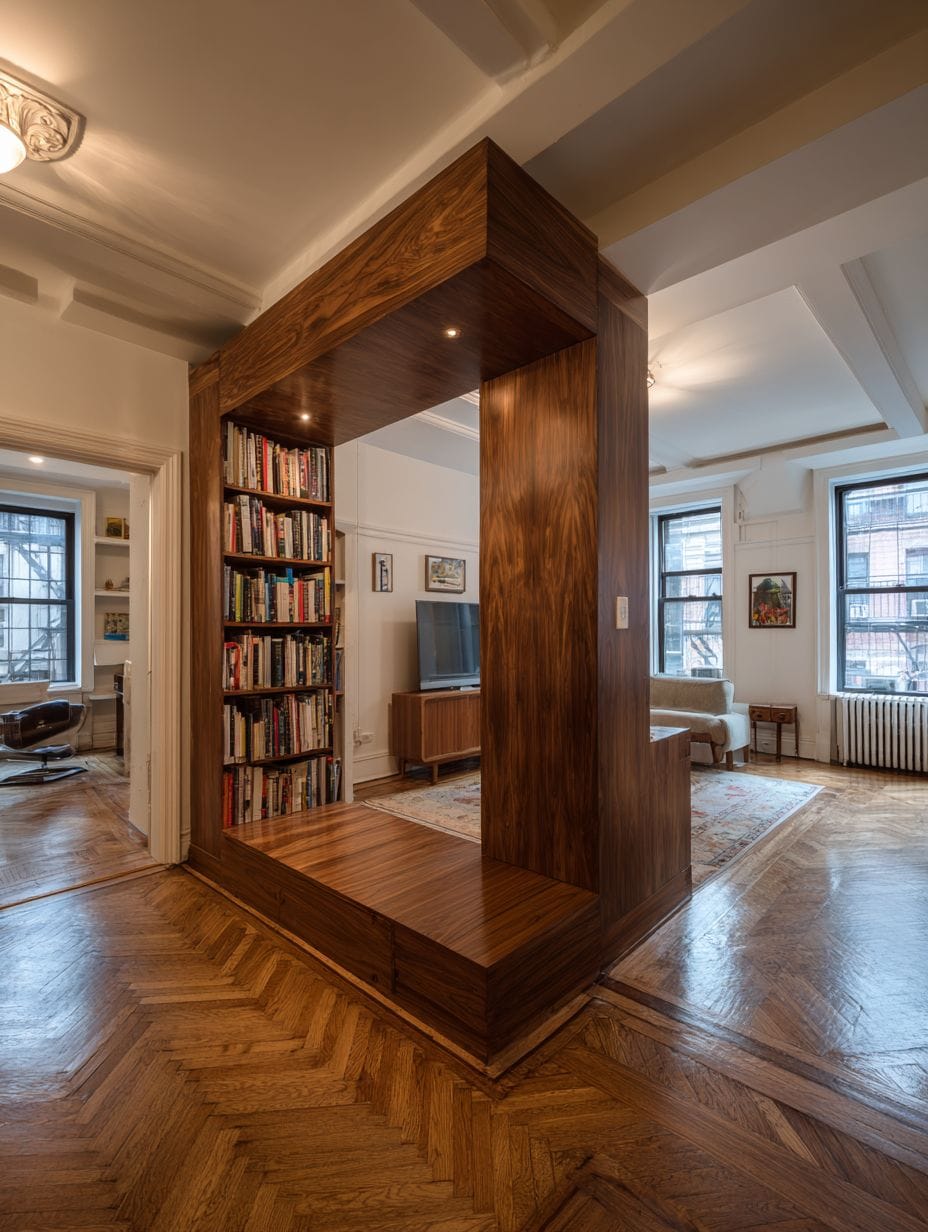
Professional interior photography of such installations showcases how proper lighting highlights the wood grain details and creates depth across the partition’s surface. Recessed LED lighting within some open shelving sections illuminates displayed items while creating ambient glow during evening hours. The combination of open and closed storage provides flexibility—displayed items add personality and visual interest while concealed storage maintains a clean, uncluttered appearance. This partition style works exceptionally well in loft spaces or open-concept homes where defining separate functional zones is necessary but permanent walls would compromise the desirable sense of openness.
- Plan dimensions carefully to accommodate specific entertainment equipment and storage needs before construction
- Ensure proper ventilation for electronic equipment to prevent overheating in enclosed areas
- Specify quality hardware with soft-close mechanisms for cabinets and drawers to ensure longevity
- Consider weight distribution when planning shelf placement and internal structure for heavy items
- Include adequate electrical outlets and cable management systems during construction phase
- Match wood finish consistently across all components for professional, cohesive appearance
11. Japanese-Inspired Shoji Screen Partition
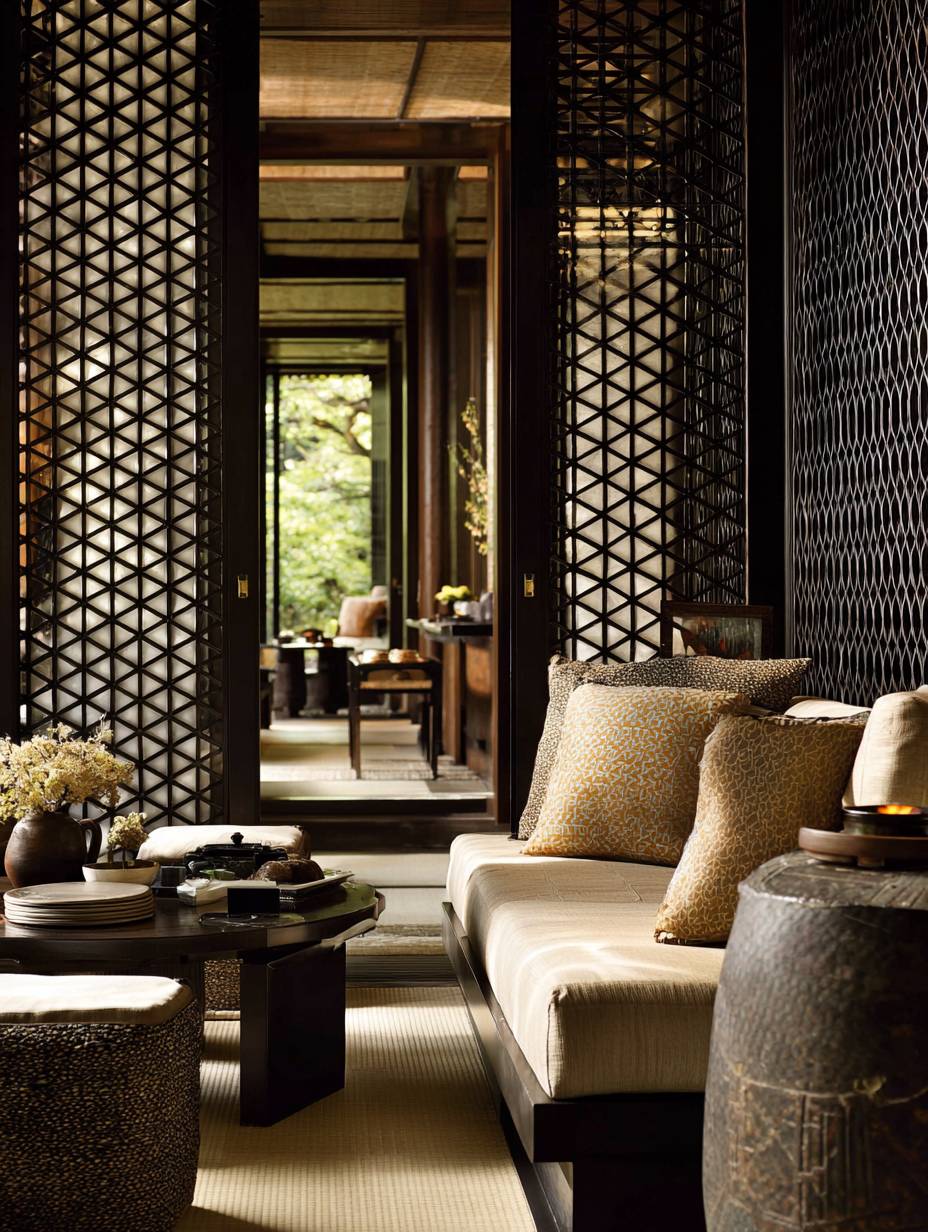
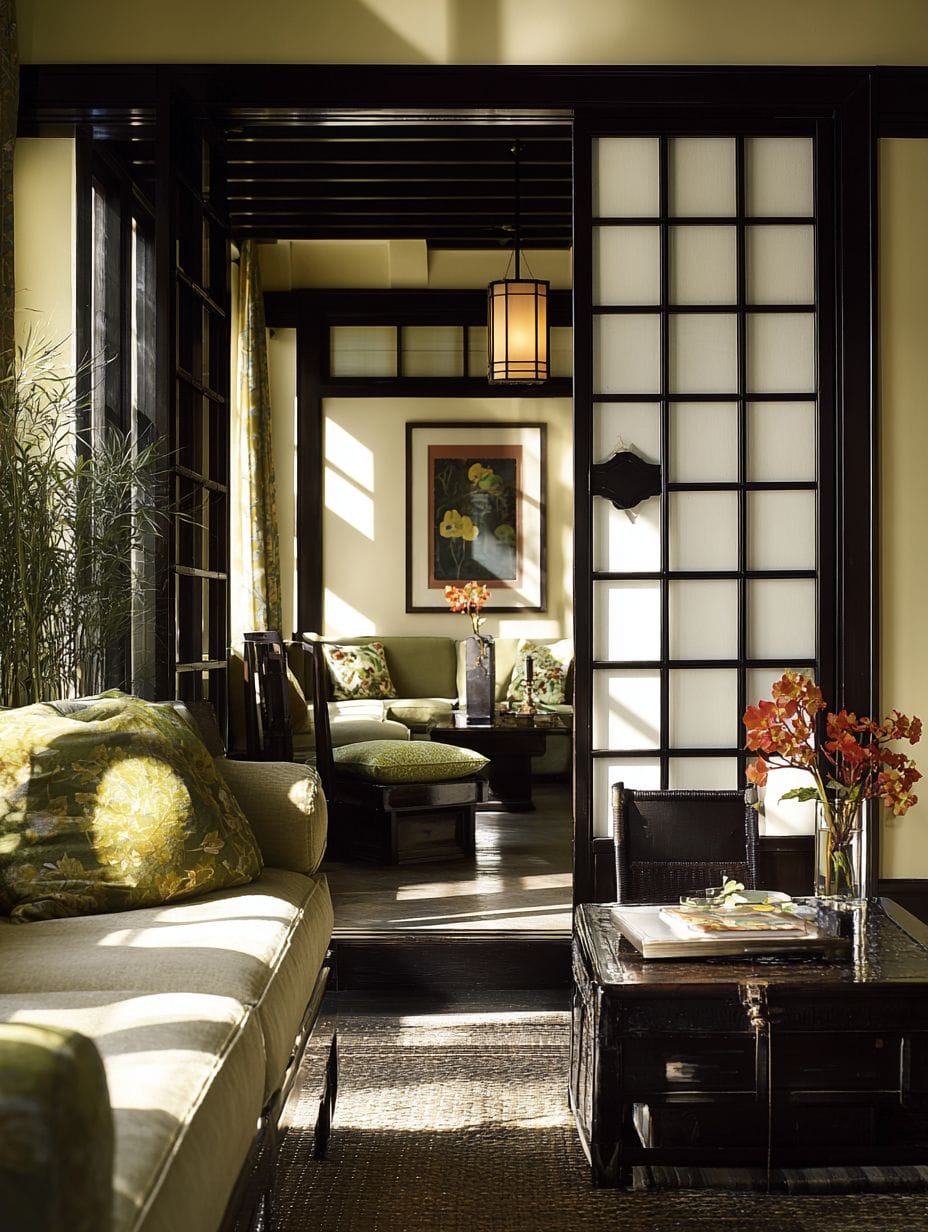
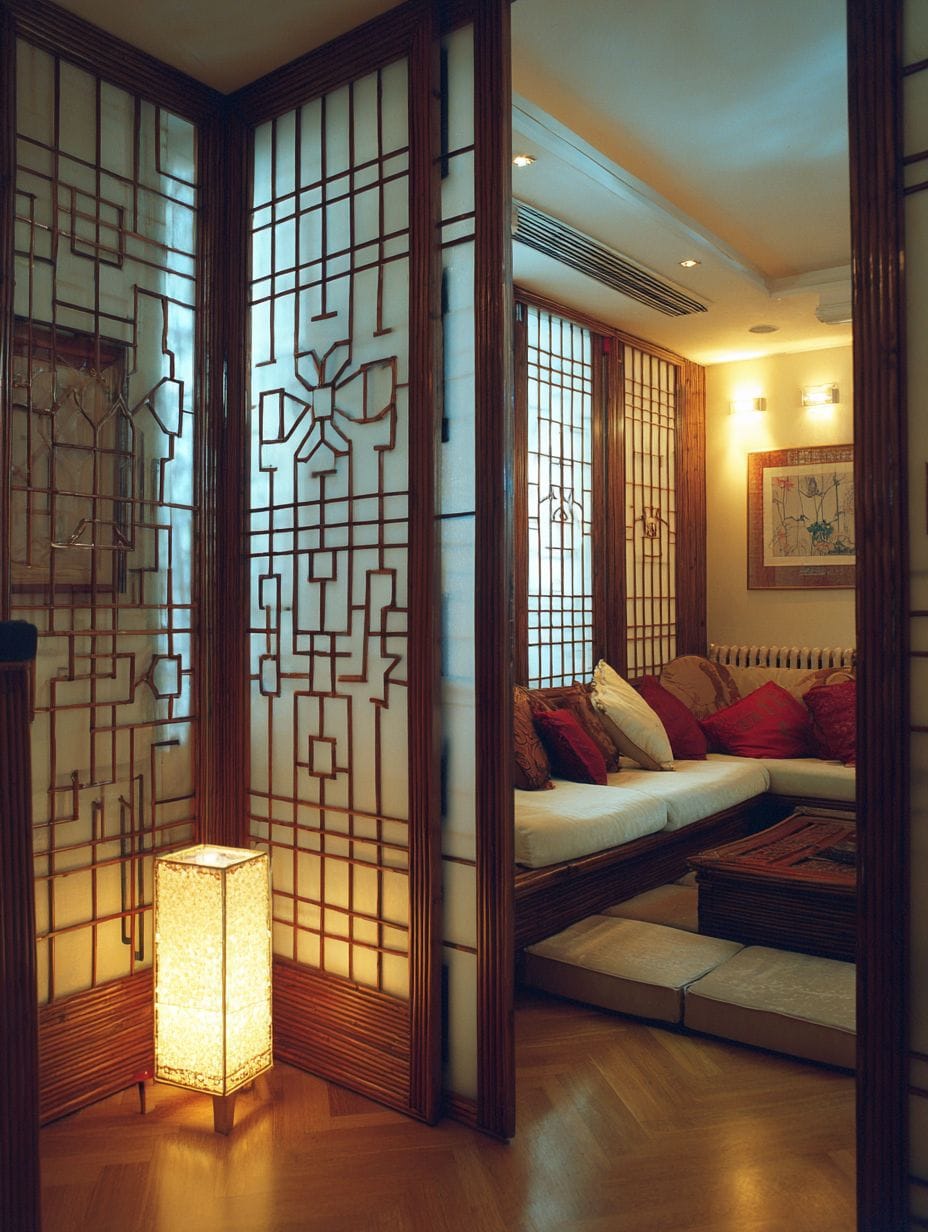
The timeless elegance of Japanese shoji screens brings centuries of refined aesthetic principles into contemporary homes. These traditional sliding screens feature translucent white paper panels set within dark wood lattice frames, creating a serene and sophisticated partition that filters light beautifully while providing flexible separation. The shoji screen embodies the Japanese design philosophy of simplicity, natural materials, and the interplay between solid and void, light and shadow. When used to separate a living area from a tea corner or reading nook, the screens create an atmosphere of tranquility and mindfulness that encourages contemplation and relaxation.
The technical craftsmanship of authentic shoji construction is remarkable—delicate paper panels are precisely stretched and mounted within the wooden lattice framework, requiring skill and patience to execute properly. The translucent quality of the paper creates a luminous effect when backlit, transforming the partition into a glowing lantern that softly illuminates the space. The geometric pattern formed by the lattice creates visual rhythm and interest while the sliding mechanism allows sections to overlap or separate smoothly without hinges or bulky hardware. Low-profile furniture and tatami-style floor mats complement the Eastern aesthetic, creating an authentic atmosphere that transports you from everyday stress into peaceful sanctuary.
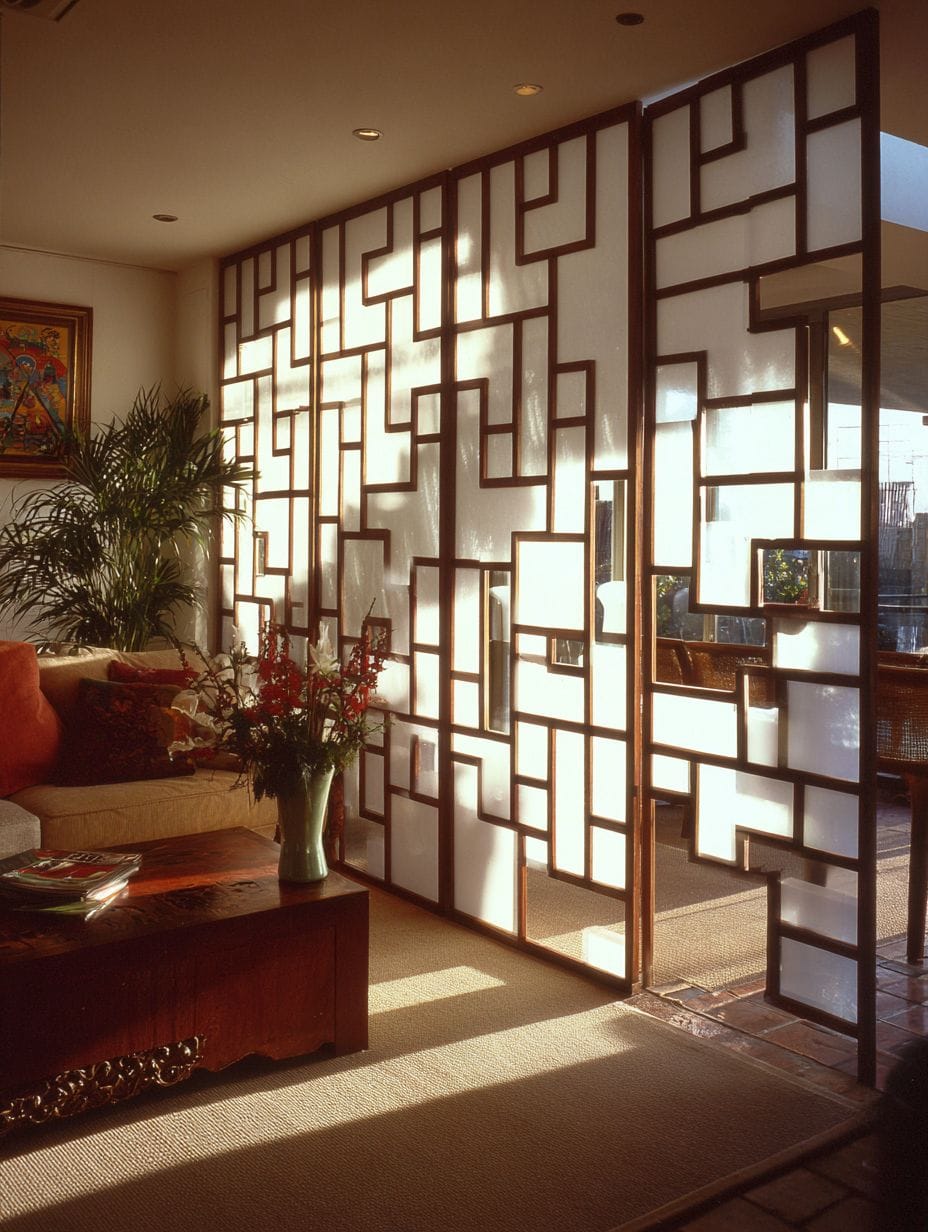
The adaptability of shoji screens is one of their greatest strengths—panels can be positioned to create varying degrees of openness, from complete separation to fully open integration with adjacent spaces. During daytime hours, natural light filtered through the paper creates soft, diffused illumination that eliminates harsh shadows and creates even, flattering lighting throughout your space. The white paper reflects and amplifies available light, making rooms feel brighter and more spacious. The wooden lattice frames, typically constructed from cedar or cypress, develop a beautiful patina over time that adds character and warmth. The subtle fragrance of natural wood adds an olfactory dimension to the sensory experience.
- Choose authentic materials including rice paper or similar traditional papers for proper light transmission
- Maintain with care as paper panels are delicate and can tear; keep replacement paper on hand
- Install proper tracks that allow smooth sliding operation without catching or binding
- Protect from moisture as paper and wood can be damaged by excessive humidity or water contact
- Consider placement carefully away from high-traffic areas where accidental contact might damage delicate panels
- Clean gently using soft brushes or specialized vacuum attachments rather than wet cleaning methods
12. Natural Rope Curtain Installation
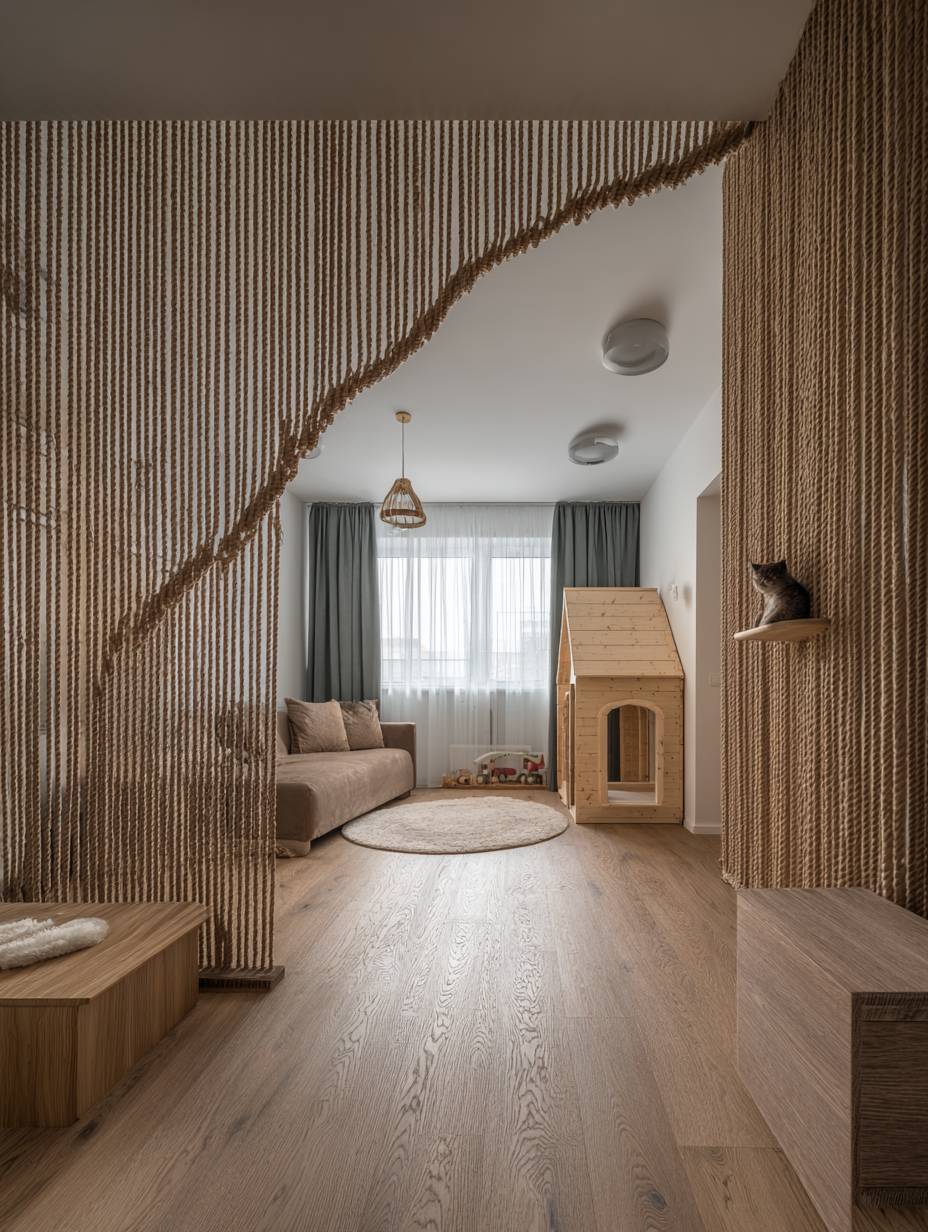
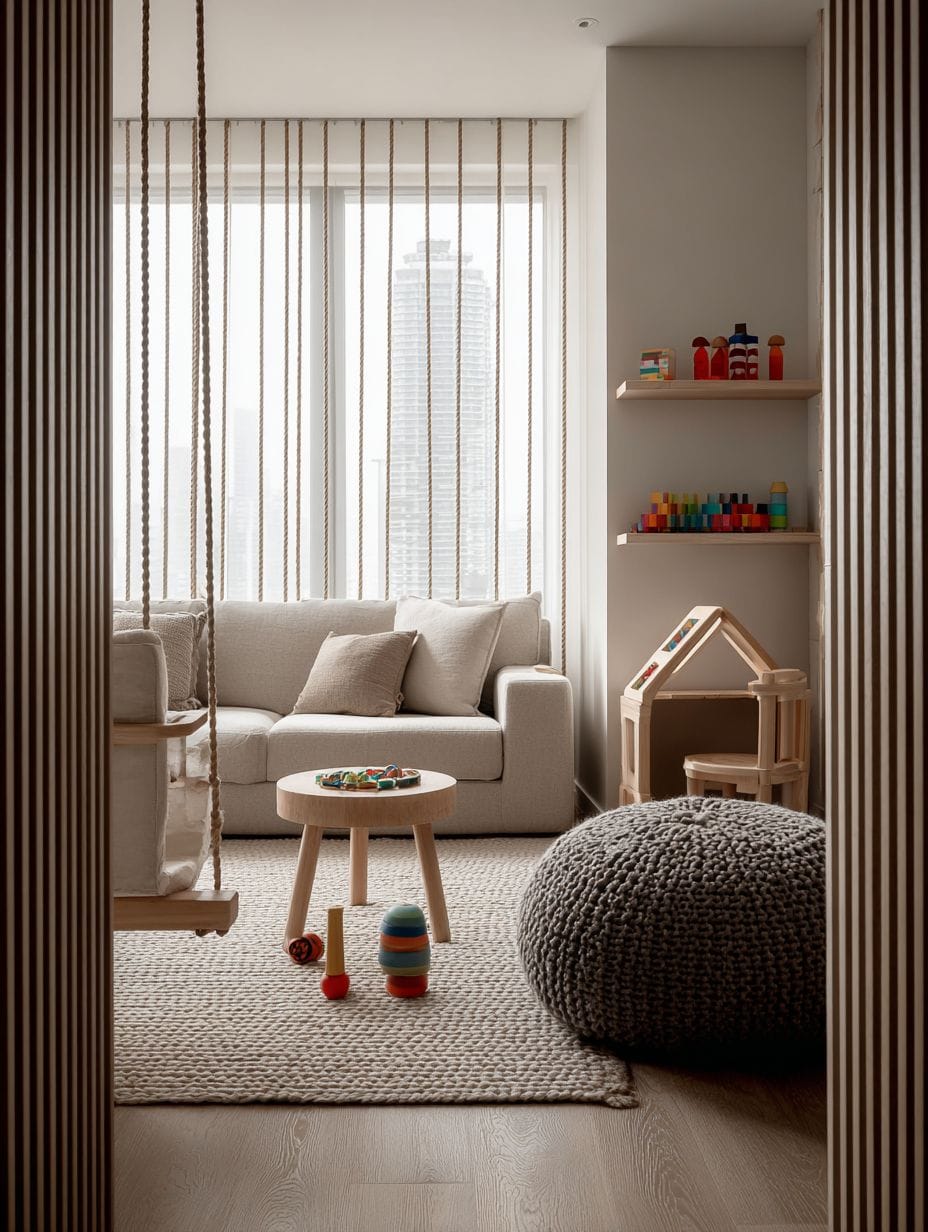
The natural rope partition represents a uniquely textured approach to space division that combines organic materials with contemporary design sensibility. Thick natural jute ropes suspended vertically from ceiling to floor in parallel lines create a tactile curtain effect that’s both visually striking and functionally effective. This partition solution works beautifully separating main living spaces from children’s play areas, where the rope elements create a playful, relaxed boundary that doesn’t feel restrictive or forbidding. The natural tan color of jute complements neutral-toned furniture and wood flooring while adding substantial textural interest that invites both visual and tactile engagement.
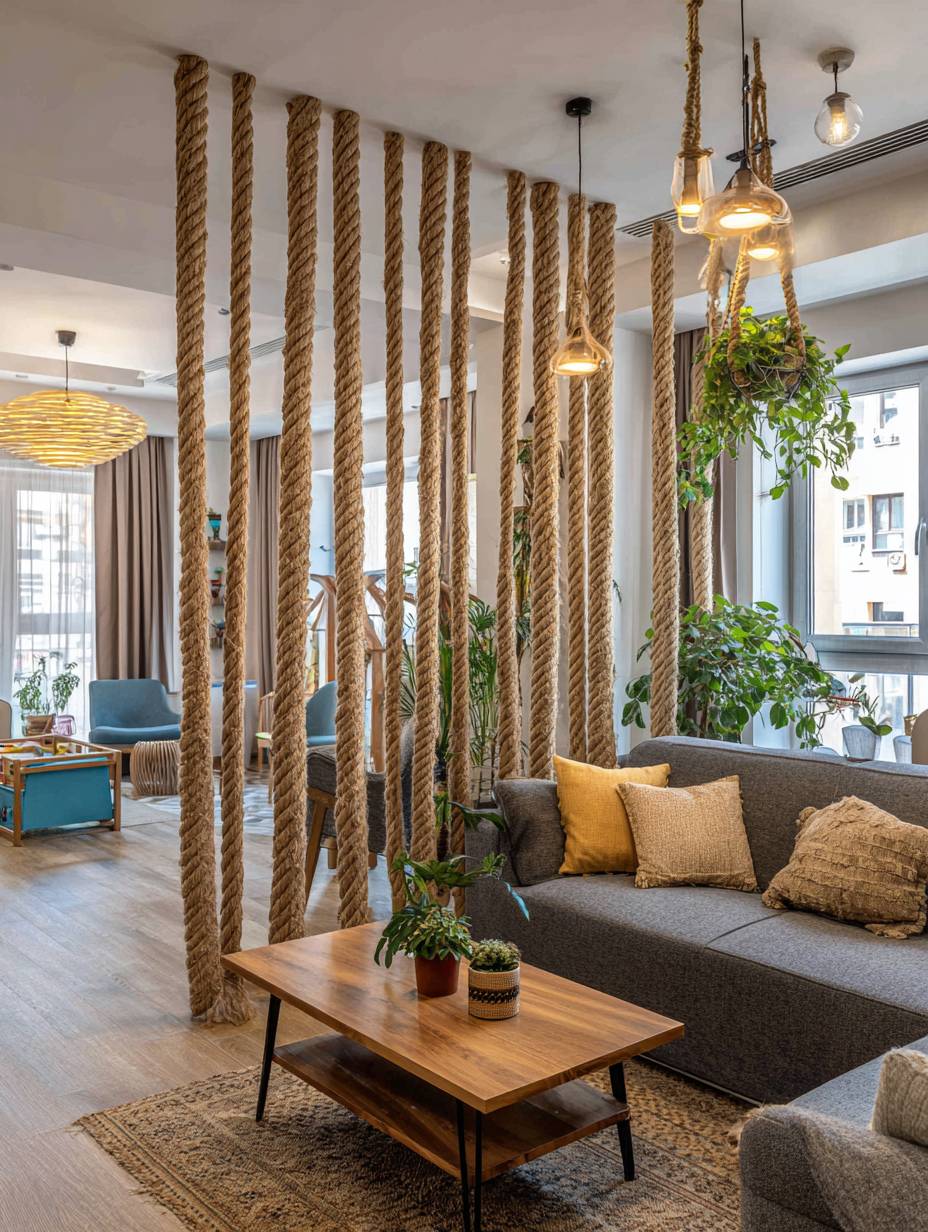
The spacing of the rope elements is crucial to the partition’s effectiveness—positioned close enough to create clear definition but spaced sufficiently to allow visual connection and light transmission. Children can peek through to see parents in adjacent spaces, maintaining that important connection while having their own defined area for play and creativity. The rope material itself is remarkably durable, resistant to wear from repeated handling, and develops character over time as the natural fibers soften slightly with age. Daylight filtering through the vertical rope elements creates fascinating shadow patterns on floors and walls, adding dynamic visual interest that changes throughout the day as sun angles shift.
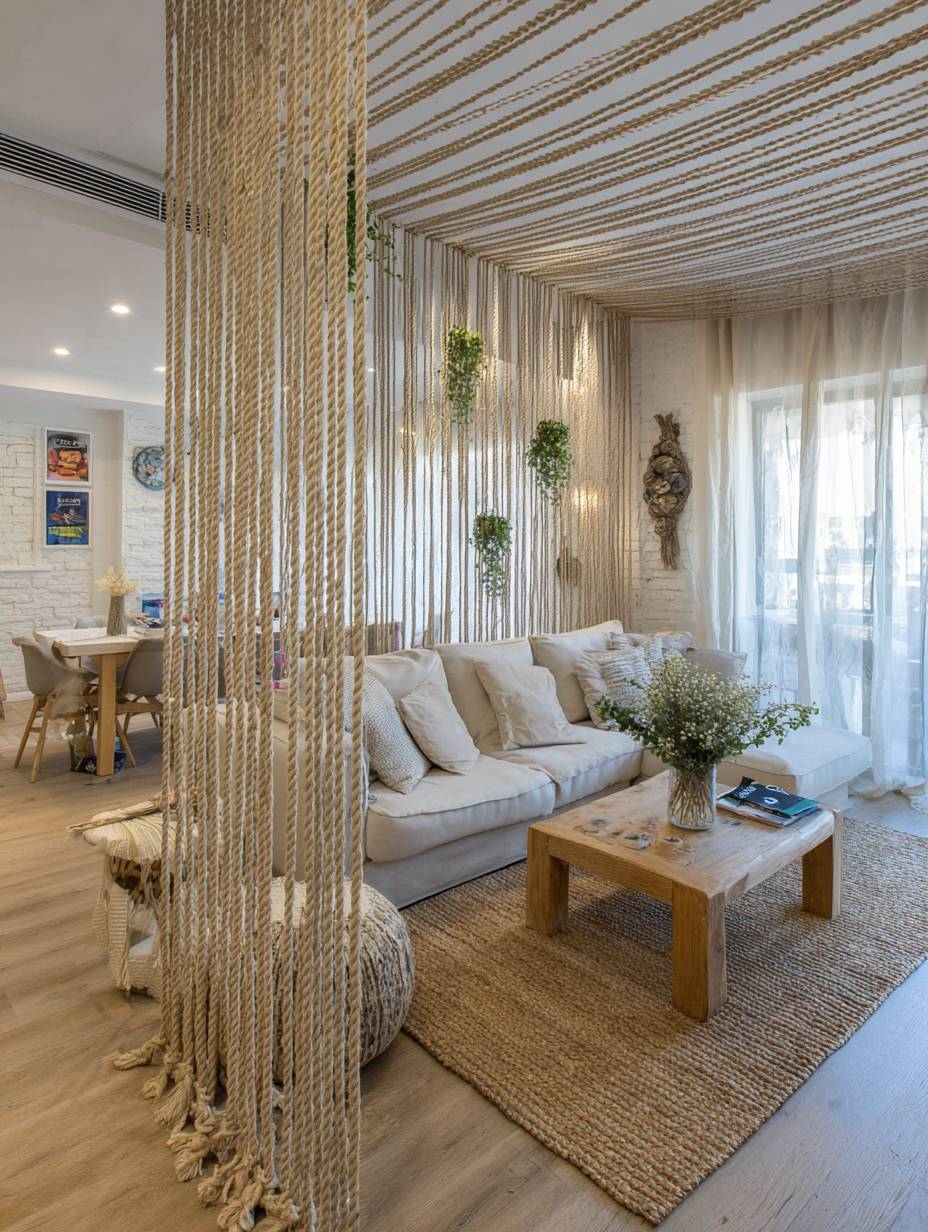
The contemporary bohemian aesthetic of rope partitions appeals to those seeking unconventional design solutions that express personality and creativity. The organic material brings nature indoors, aligning with biophilic design principles that recognize humans’ innate connection to natural elements. The vertical emphasis created by the rope installation draws the eye upward, emphasizing ceiling height and creating a sense of grandeur despite the casual, relaxed nature of the materials. This partition type also offers excellent acoustic properties—the dense rope fibers absorb sound waves, reducing echo and creating more comfortable acoustic environments in spaces with hard surfaces.
- Select quality natural fiber rope with consistent diameter and color throughout for professional appearance
- Secure ceiling attachments firmly into structural members capable of supporting the rope weight
- Space ropes consistently using a template or guide to ensure even distribution across the partition span
- Treat rope appropriately to prevent excessive shedding of fibers while maintaining natural appearance
- Consider maintenance needs as natural fibers can accumulate dust and may require periodic vacuuming
- Plan tension carefully to keep ropes straight without excessive sagging while avoiding over-tensioning that could damage attachments
13. Multi-Level Platform with Integrated Storage
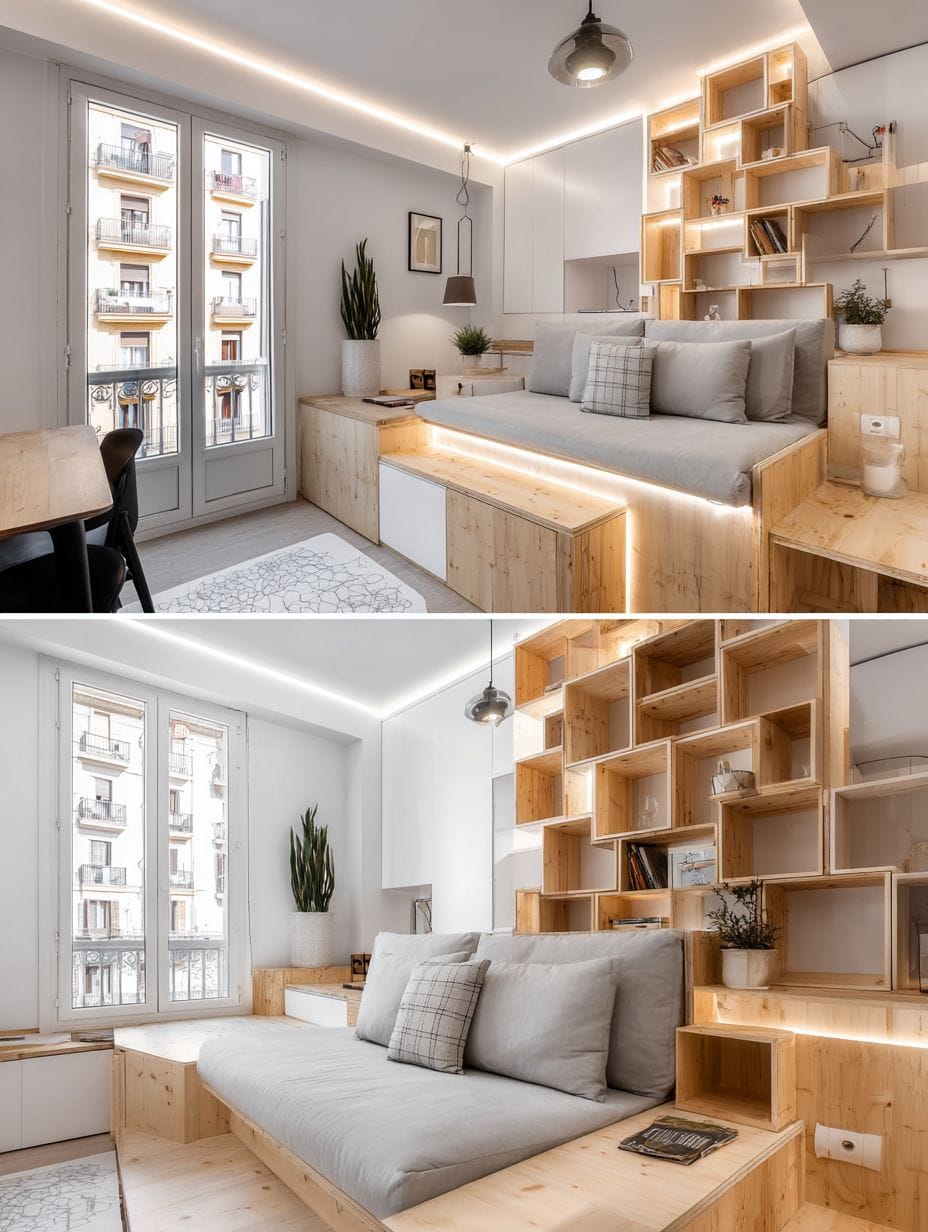
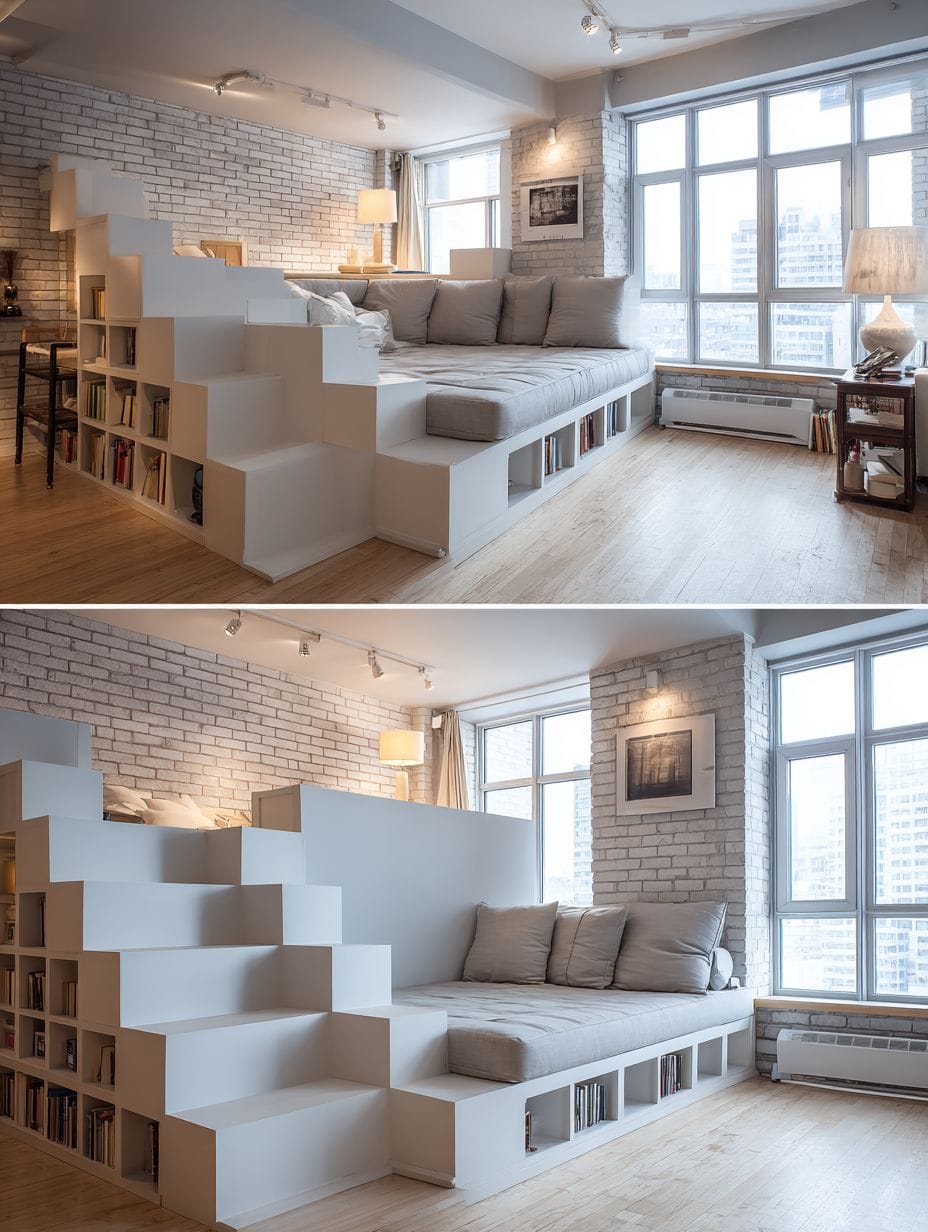
The innovative platform partition concept reimagines space division as an opportunity for creative three-dimensional thinking. Rather than a simple vertical barrier, this bi-level design uses elevation changes to create distinct zones within your living space. The raised platform area contains a cozy reading nook with built-in cushioned seating, elevated above the main living room floor by approximately 18 inches. This height difference creates psychological separation—when seated on the elevated platform, you feel removed from the main living area despite remaining visually connected and physically accessible. The light grey upholstery and white painted wood create a clean, contemporary aesthetic that feels fresh and inviting.
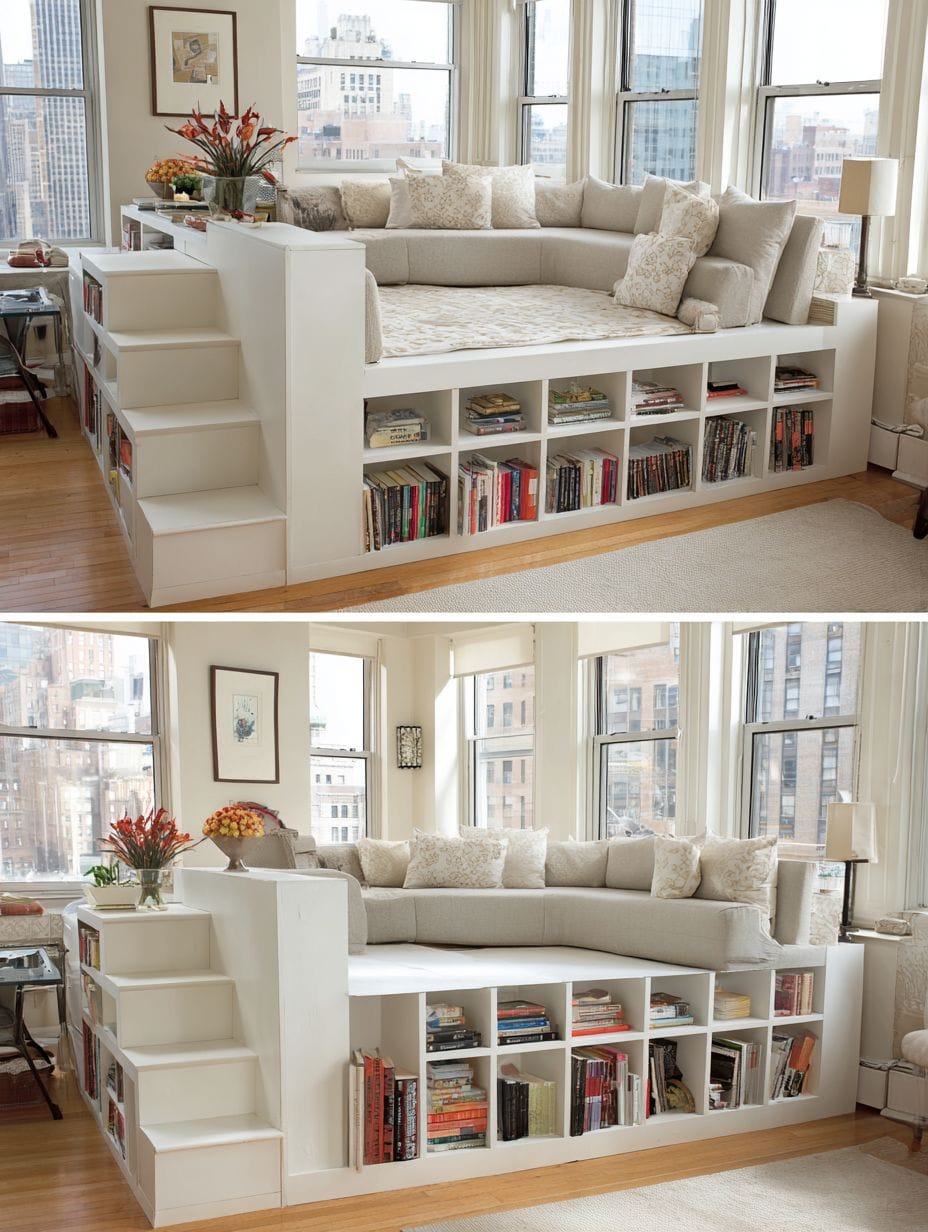
The genius of this design lies in its integration of storage within the platform structure itself. The platform edge features open cubbies perfect for book storage, keeping reading material within arm’s reach while contributing to the room’s overall organization. Additional storage may be concealed beneath the cushioned seating, accessed through lift-up panels or pull-out drawers. This efficient use of vertical space is particularly valuable in smaller homes where every square foot must work harder. The step leading to the elevated platform provides natural seating at the transition point, creating an additional casual perch for conversation or simply putting on shoes.
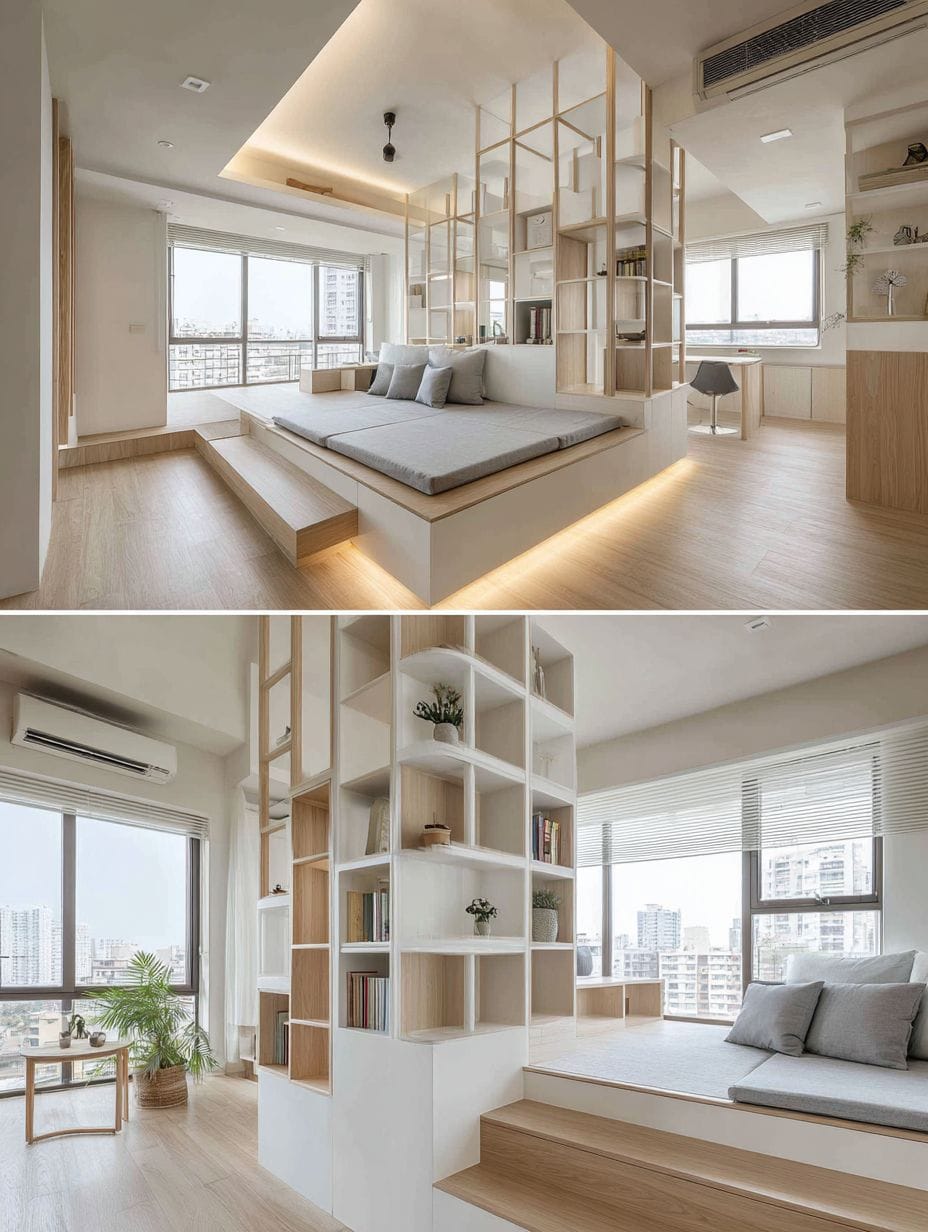
Natural light from nearby windows highlights the clever space-saving design, casting gentle shadows that emphasize the different levels and creating visual depth. The platform approach works exceptionally well in studio apartments or open loft spaces where traditional walls would feel intrusive and space-consuming. Young families appreciate this design for creating dedicated children’s play spaces that are partially separated yet still supervised, while work-from-home professionals value the psychological shift that stepping up onto the platform provides—creating a mental transition into relaxation mode. The custom cushions can be upholstered in durable, easy-clean fabrics suitable for heavy use while maintaining sophisticated appearance.
- Calculate height carefully to ensure comfortable seating depth while maintaining reasonable step height
- Build structure solidly with proper framing and support to prevent flexing or creaking under use
- Consider accessibility needs of all household members when designing step configurations
- Incorporate adequate storage depth to make built-in compartments truly functional rather than merely decorative
- Choose appropriate cushion density that provides comfort while maintaining its shape over extended use
- Ensure proper edge treatment with rounded corners or protective bumpers for safety
14. Perforated Metal Panel with Geometric Cutouts
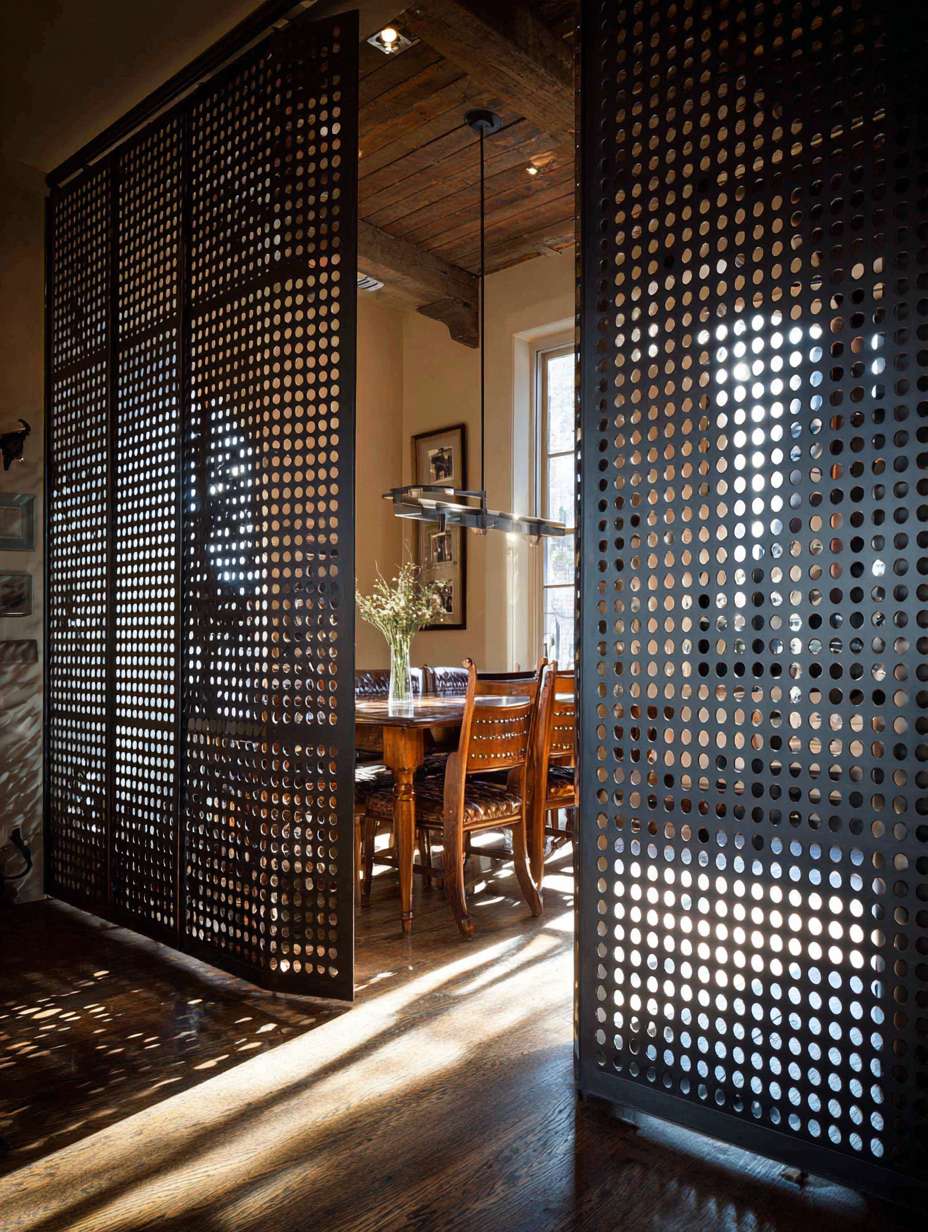
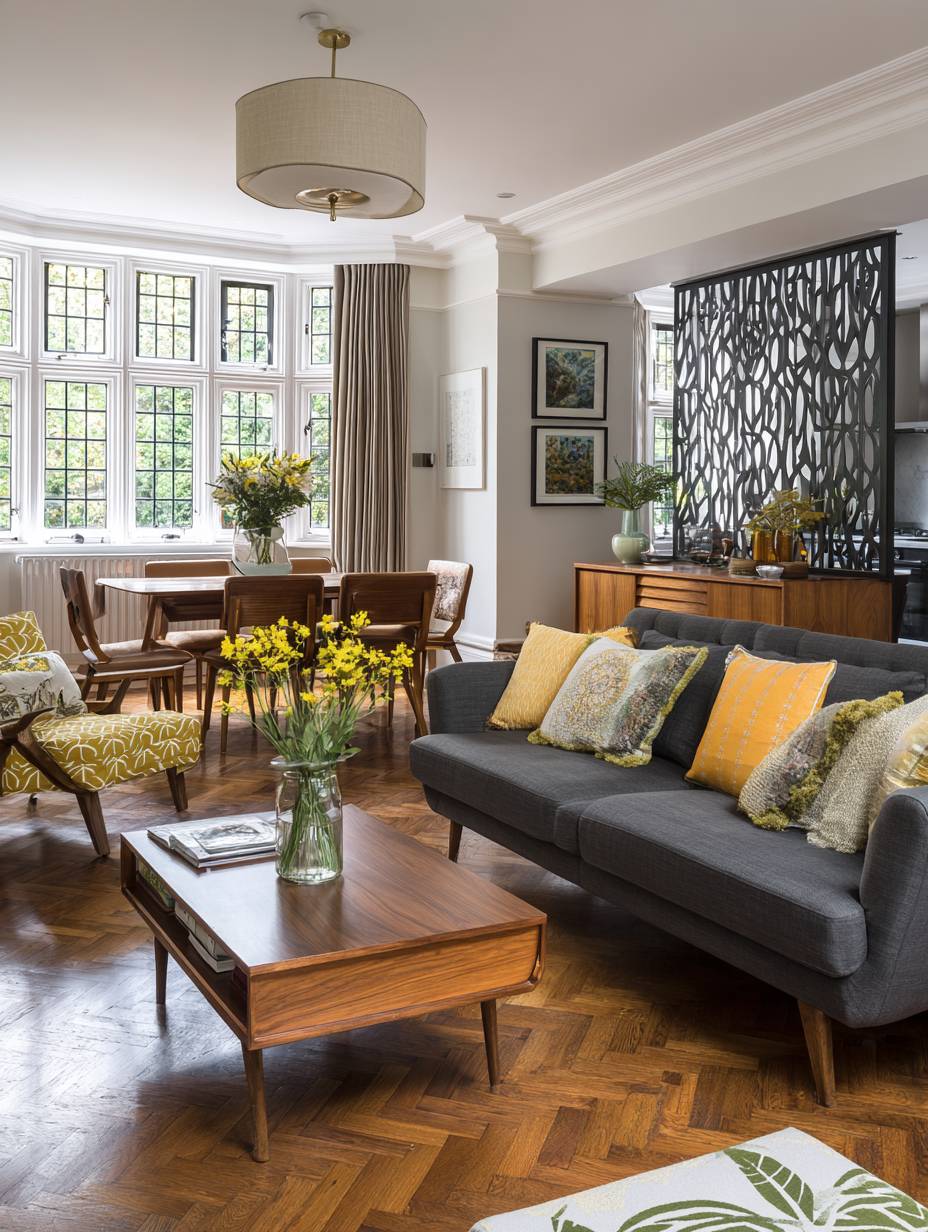
The perforated metal panel partition elevates functional space division into artistic expression through its contemporary circular cutout pattern. Constructed from charcoal grey powder-coated steel, this partition creates strong visual impact while maintaining substantial transparency through its geometric perforations. The circular holes arranged in organic, random patterns allow visual connection between living and dining spaces while clearly defining the functional boundaries between them. Throughout the day, shifting sunlight creates mesmerizing patterns of light and shadow that dance across floors and walls, adding dynamic animation to your interior that transforms what could be a static element into living art.
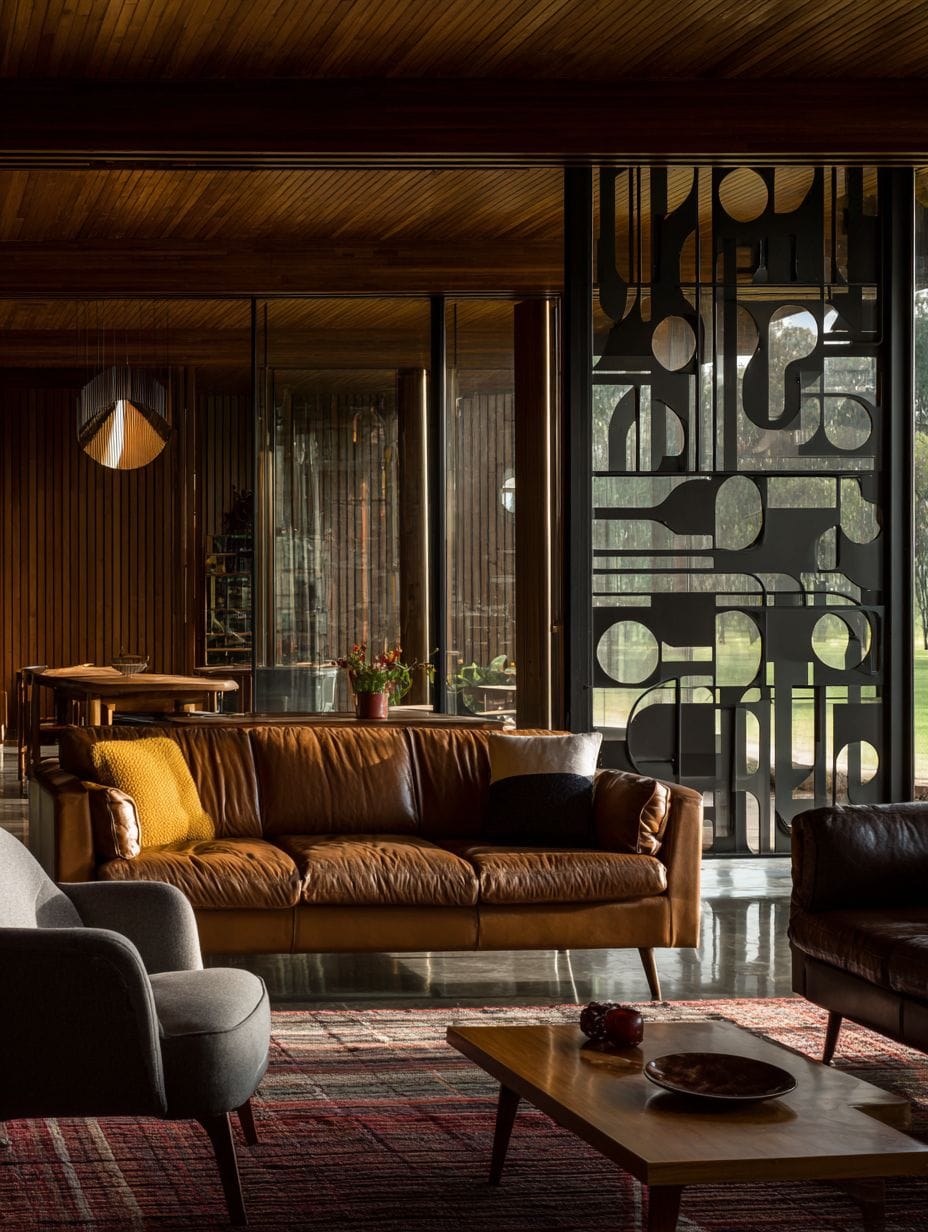
The industrial material choice of steel brings strength and durability while the powder-coated finish ensures long-lasting appearance without rust or corrosion concerns. The charcoal grey color provides sophisticated neutrality that complements wide-ranging color palettes and design styles. When paired with mid-century modern furniture in warm wood tones, the contrast between organic wood and industrial metal creates tension and interest that makes the space feel curated and intentional. The perforations serve practical purposes beyond aesthetics—they allow air circulation between spaces, which is particularly beneficial for climate control and preventing stagnant air pockets in divided areas.
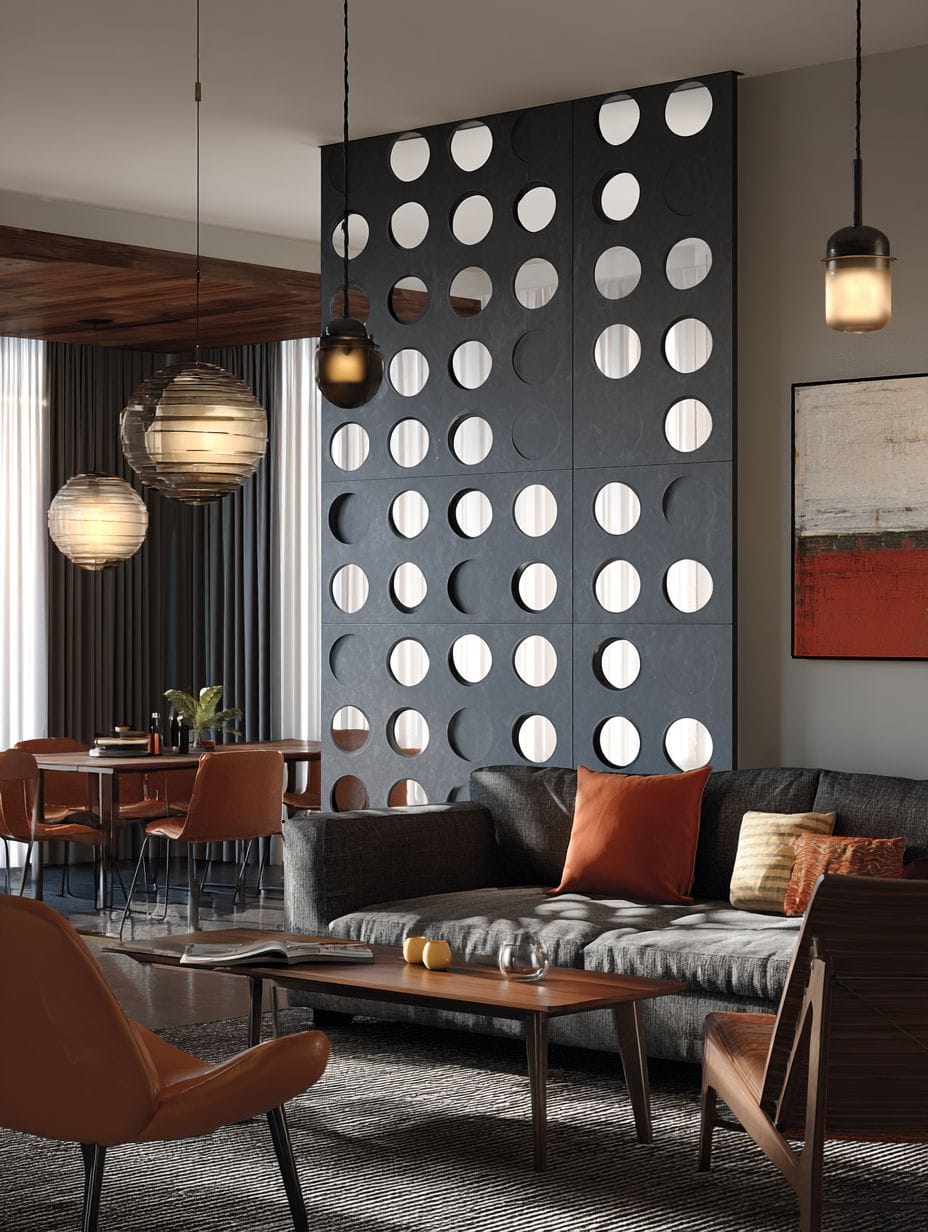
The artistic quality of the decorative partition pattern invites closer inspection—the seemingly random placement of circular cutouts actually follows carefully planned composition principles that balance positive and negative space. The three-dimensional quality of the metal thickness creates depth at each perforation, casting tiny shadows that add complexity to the overall appearance. This partition type works beautifully in modern, contemporary, and industrial design schemes where honest materials and visible structure are celebrated. The geometric nature of the pattern creates mathematical beauty that appeals to those who appreciate order and precision, while the organic distribution prevents the partition from feeling mechanical or rigid.
- Specify appropriate metal thickness to provide structural rigidity while maintaining reasonable weight
- Plan perforation patterns carefully to balance visual interest with structural integrity and stability
- Consider sound transmission as perforated panels allow noise to pass through more easily than solid partitions
- Ensure proper edge finishing with smooth, safe edges free from sharp burrs or rough spots
- Plan mounting system that can support the metal’s weight while maintaining desired visual appearance
- Touch up finish periodically if chips or scratches occur to prevent rust development
15. Heavyweight Linen Curtain Partition
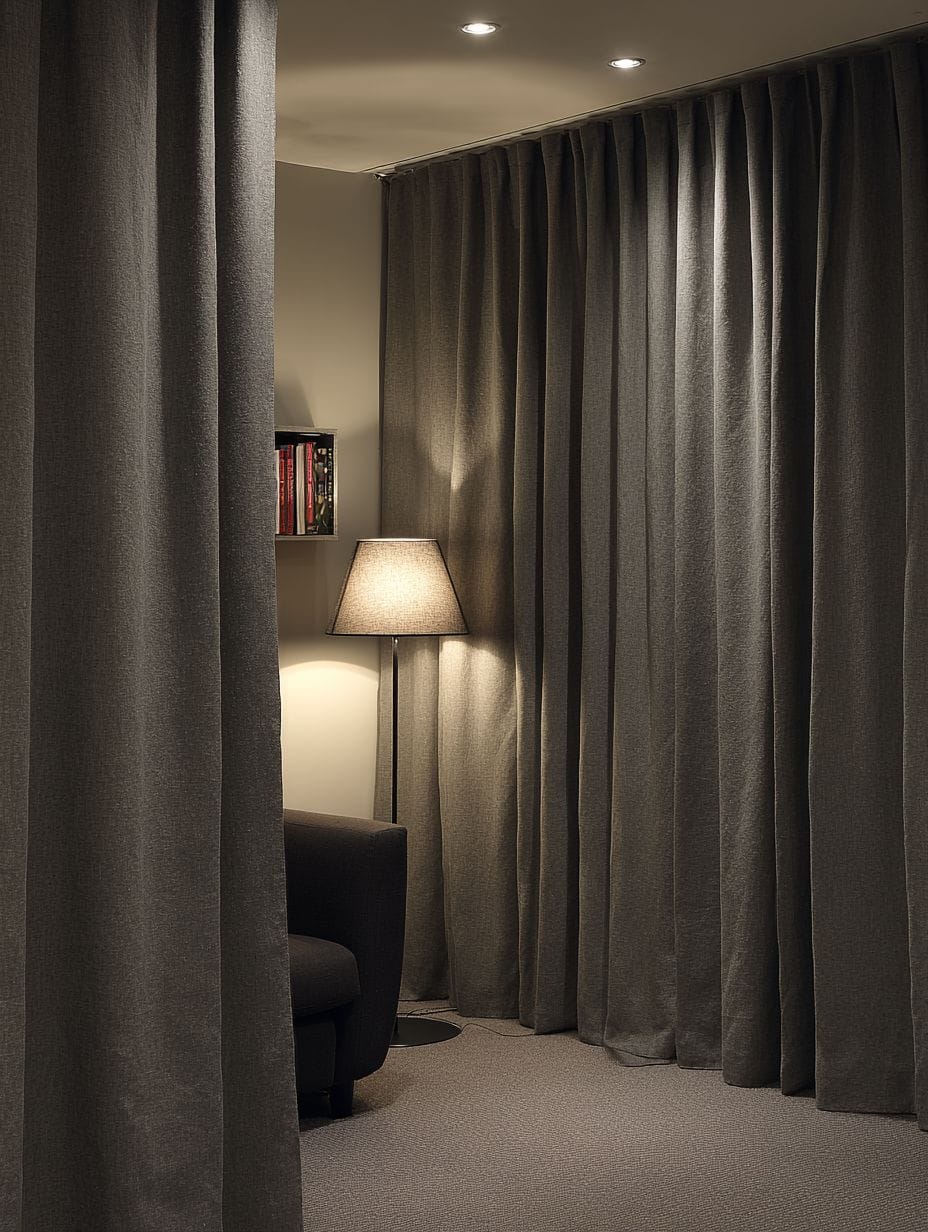
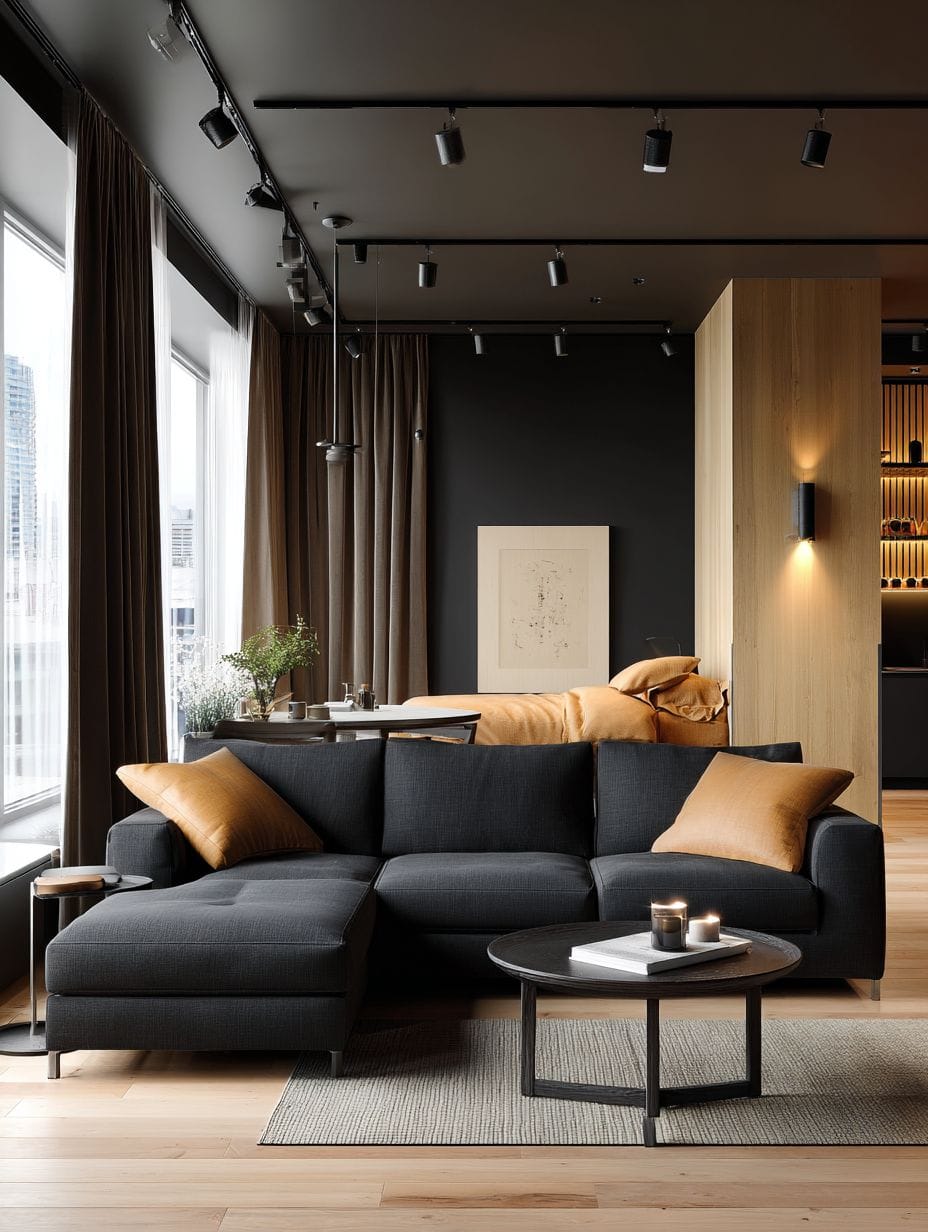
The floor-to-ceiling curtain partition represents timeless elegance through the simple beauty of flowing fabric. Using heavyweight linen in warm grey tones, this partition creates soft, flexible separation that can be easily adjusted throughout the day based on changing needs and preferences. The substantial weight of quality linen ensures the curtains hang beautifully with gentle folds and elegant draping, while the natural fabric texture adds visual and tactile interest that synthetic materials cannot replicate. When gathered to one side, the curtain reveals the partition’s flexibility—open during entertaining to maximize space and flow, closed when privacy or division is desired for sleeping guests or focused work.
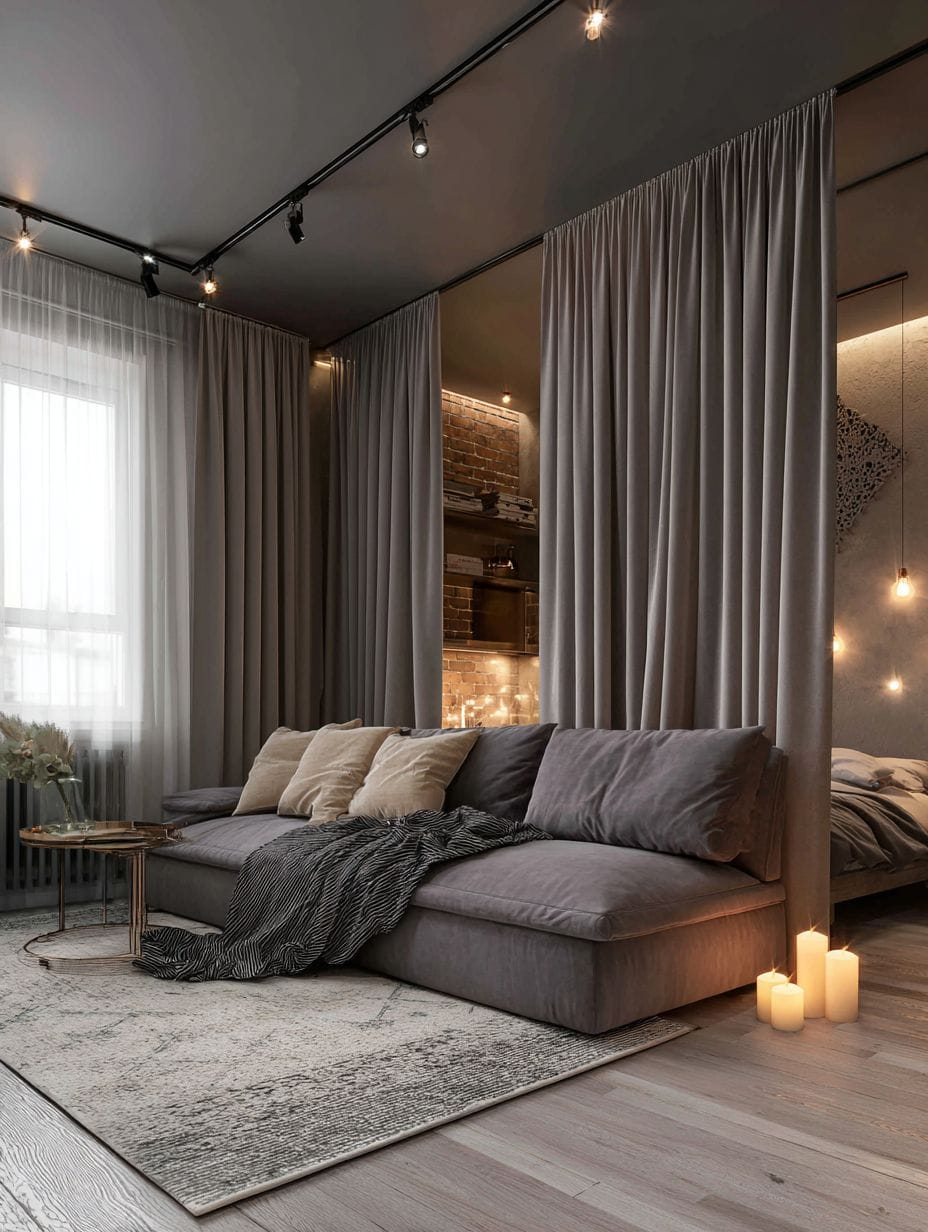
The installation from a sleek ceiling track creates clean, contemporary lines while the hardware itself becomes nearly invisible, keeping focus on the beautiful fabric rather than mechanical components. The warm grey color provides sophisticated neutrality that works with virtually any color palette while the linen’s natural variations in weave and texture add organic character. This curtain partition works exceptionally well creating temporary guest sleeping areas within living rooms—when closed, the fabric creates intimate enclosure and privacy, while during daytime hours, the curtain disappears along the wall, restoring the room to its full living function. The flexibility appeals to those with variable space needs who resist permanent structural changes.
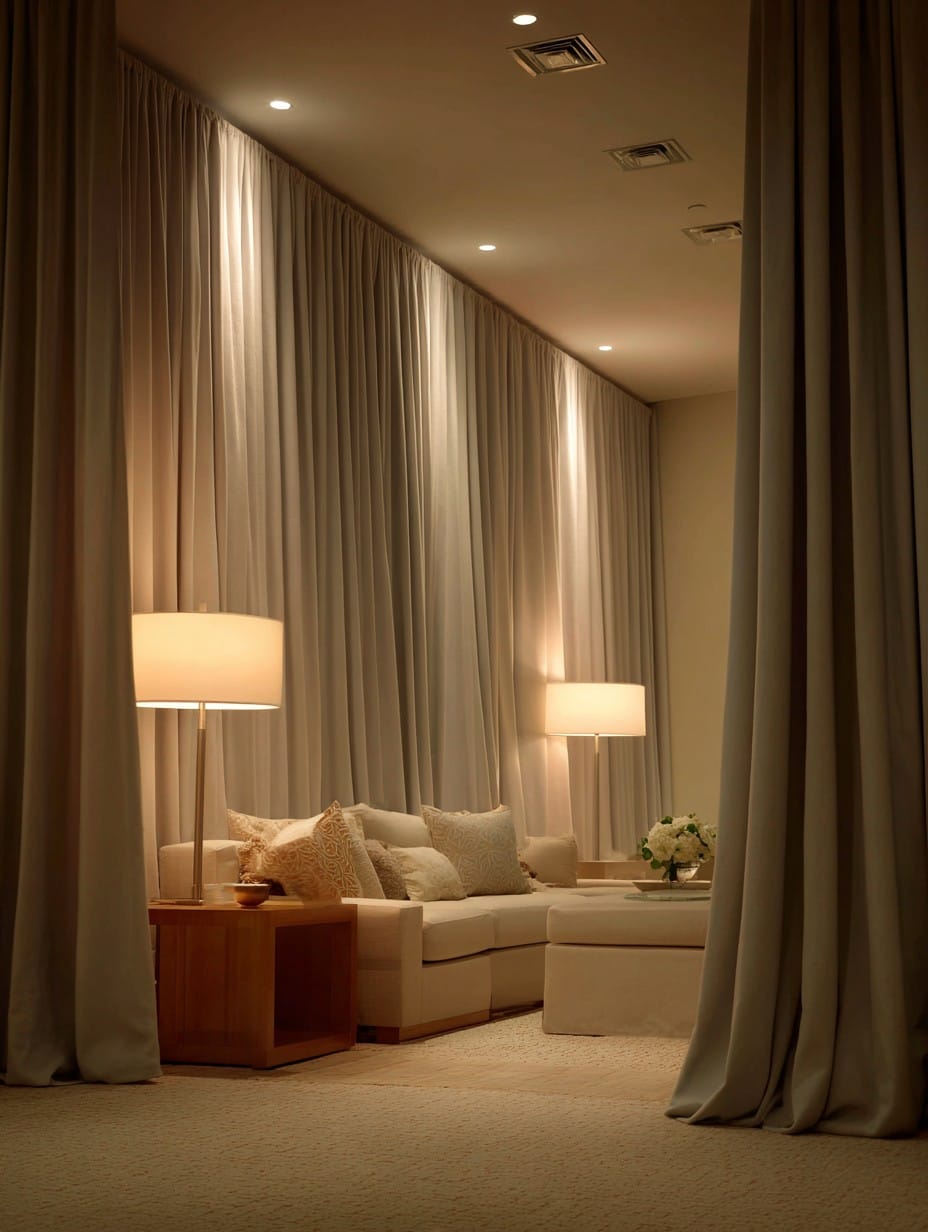
The layered lighting visible in such installations combines recessed ceiling lights with floor lamps to create ambient warmth that enhances the cozy, inviting atmosphere. The linen fabric has subtle light-filtering properties—when backlit, it glows softly, creating a luminous quality that transforms the partition into a decorative lighting feature. The natural fibers also provide excellent acoustic properties, absorbing sound waves and reducing echo, which is particularly beneficial in spaces with hard flooring and minimal soft furnishings. The gentle rustling of linen when air circulates adds subtle sensory dimension, while the fabric’s natural wrinkle resistance maintains an elegant appearance without constant steaming or ironing.
- Choose quality linen with appropriate weight—minimum 10-12 oz per yard for proper draping and durability
- Allow adequate fullness in curtain width, typically double the track length for generous gathering
- Install tracks securely into ceiling joists or with heavy-duty anchors rated for fabric weight
- Hem properly with weights in bottom hems to ensure curtains hang straight without twisting
- Pre-wash fabric before construction to allow for shrinkage and set the final dimensions
- Consider care requirements and ensure panels can be easily removed for periodic cleaning
16. Modular Cube Shelving System
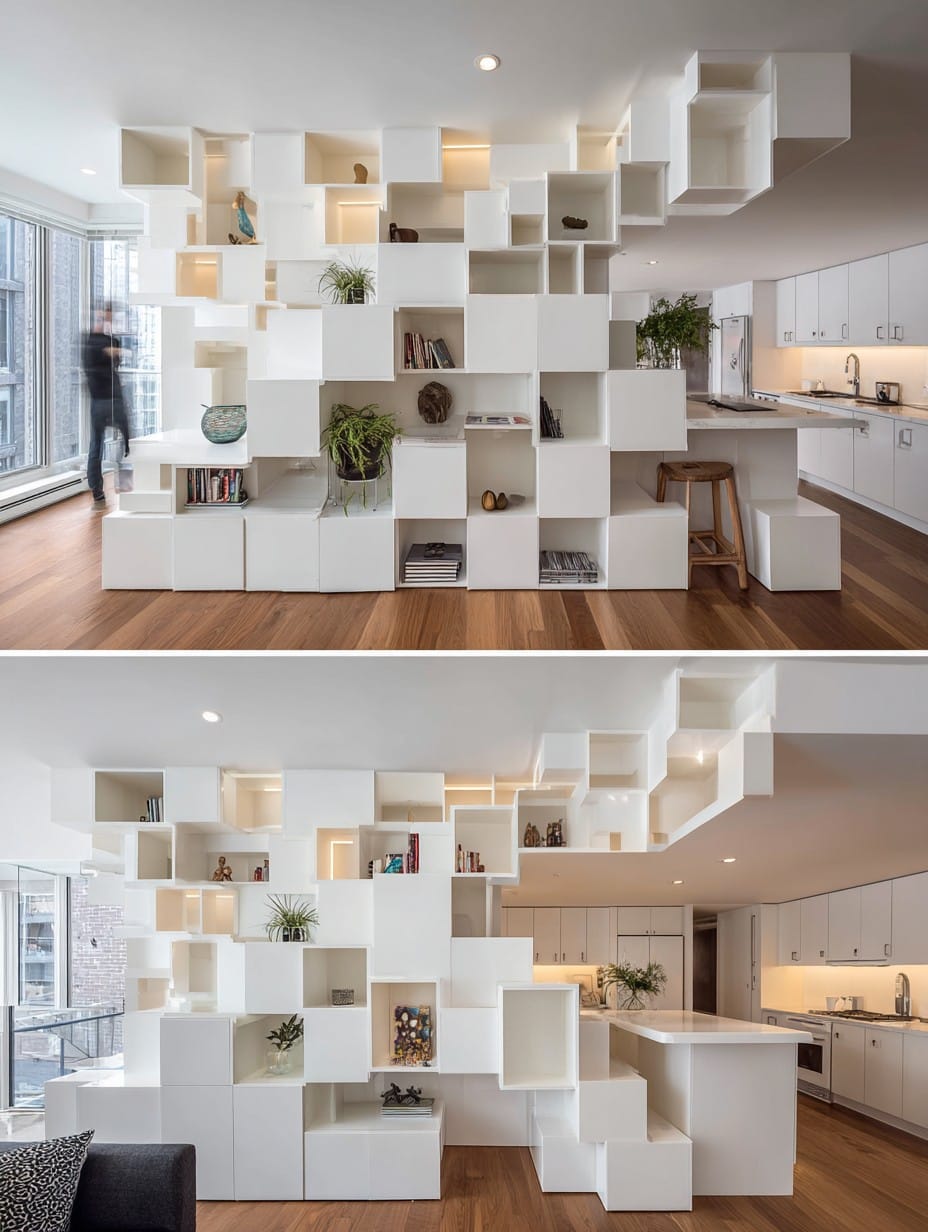
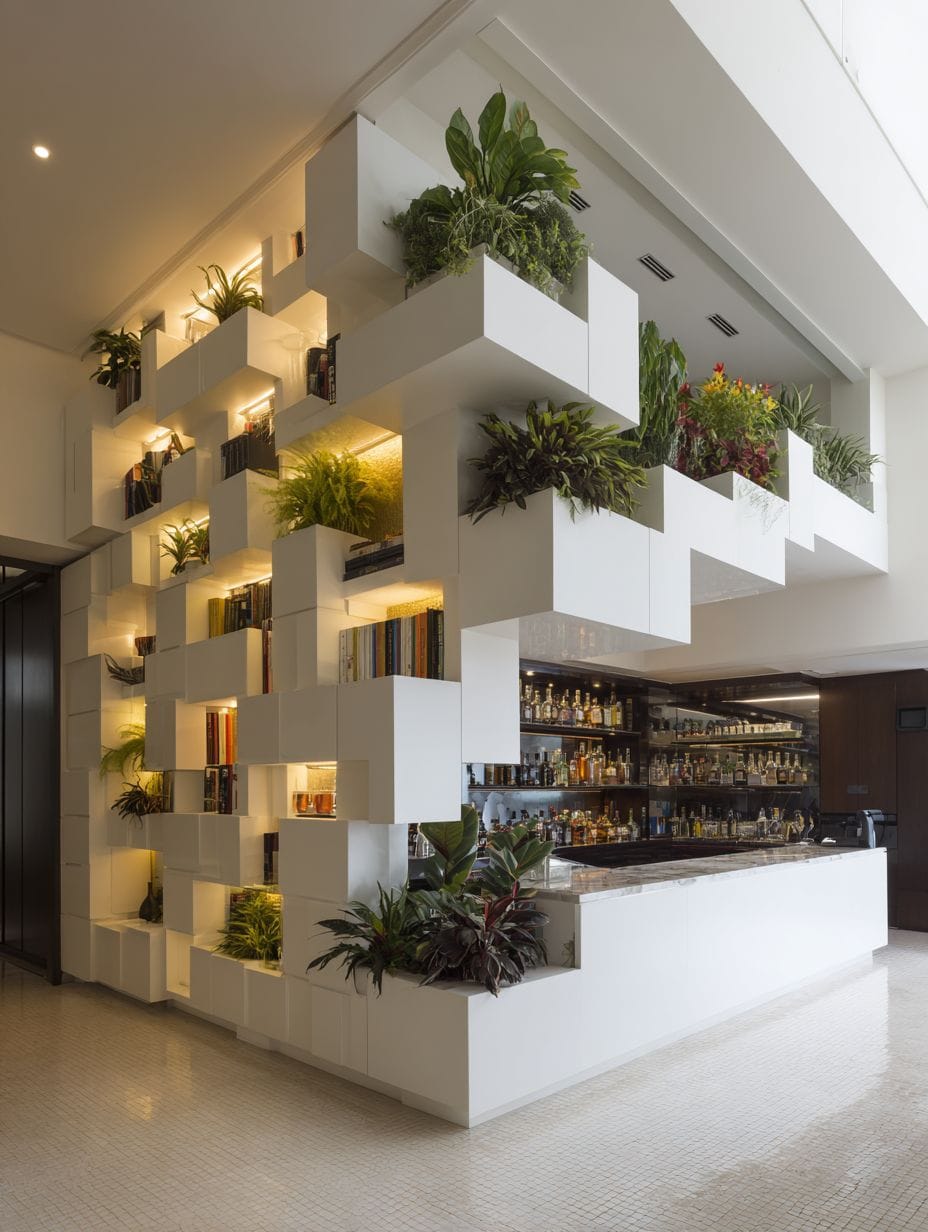
The modular cube shelving partition embodies contemporary design principles through its clean geometry and flexible configuration options. Arranged in a stepped, asymmetrical pattern, white lacquered cubes create both storage and spatial division while maintaining visual lightness through their open design. Each cube serves as both functional storage and decorative display, housing books, plants, and carefully curated objects visible from both sides of the partition. The asymmetrical arrangement reaching various heights adds dynamic visual interest—the eye travels up and down the composition, creating a sense of movement and discovery that flat partitions cannot achieve.
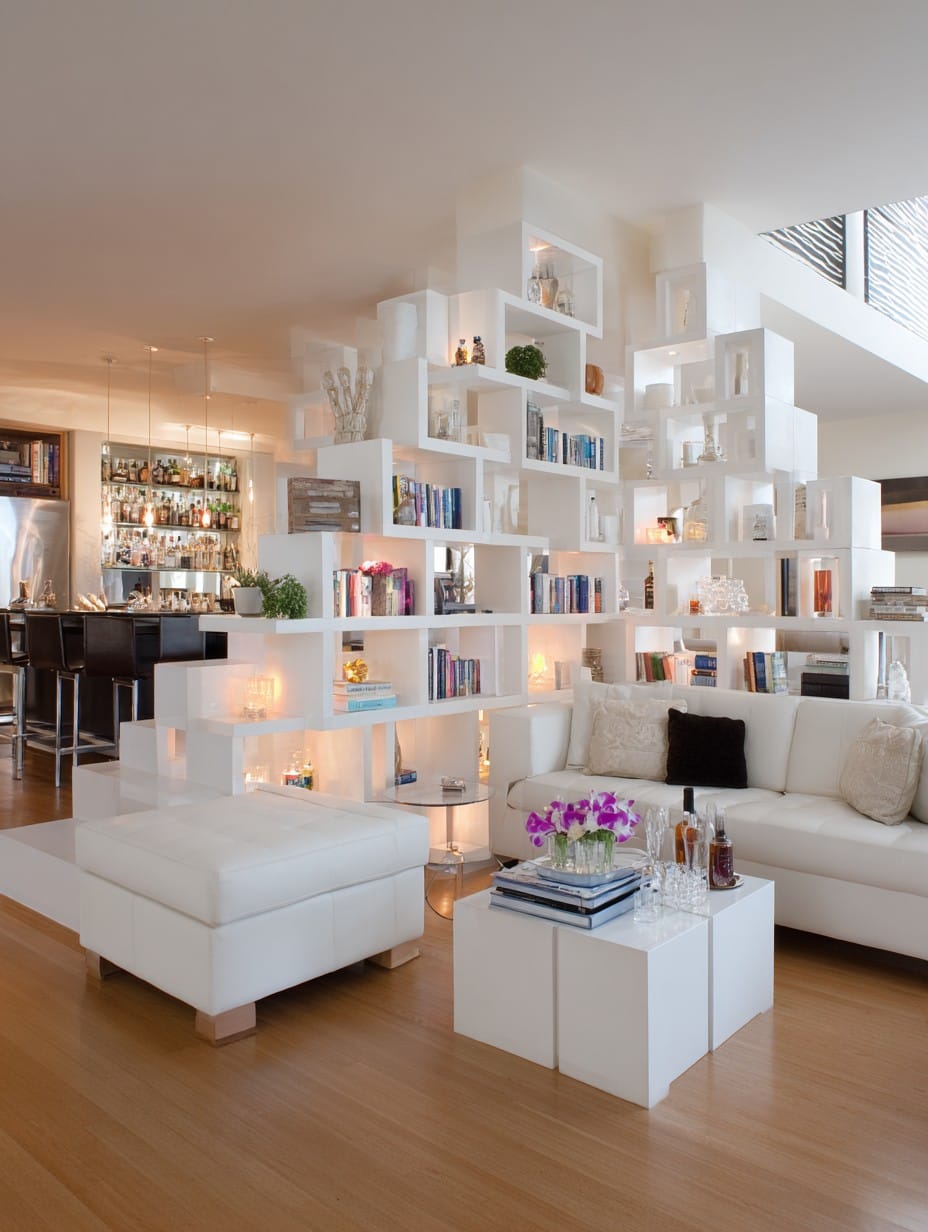
The dual functionality of this partition makes it exceptionally practical for modern living. On the living room side, styled cubes display decorative objects, family photos, and greenery that personalize the space, while cubes facing a small home bar setup store glassware, bar tools, and bottle collections. The open, see-through nature of the design prevents the partition from feeling heavy or oppressive while still providing clear spatial definition. The white lacquer finish reflects light rather than absorbing it, contributing to overall room brightness and creating a crisp, clean aesthetic that serves as a neutral backdrop for colorful objects displayed within the cubes.
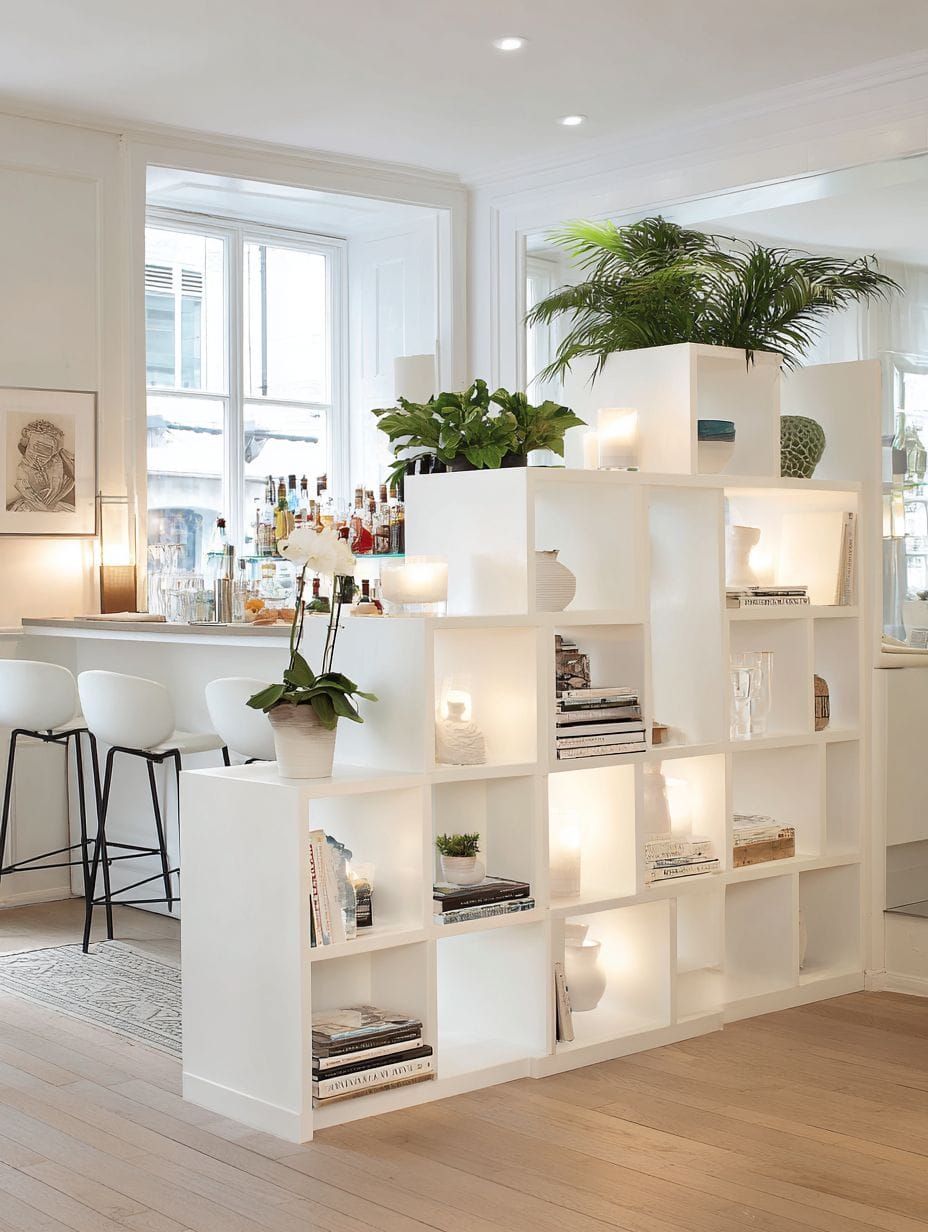
The integration of lighting transforms the partition from simple storage into architectural feature—internal LED strips within some cubes illuminate displayed items while creating ambient glow during evening hours. The combination of natural daylight and artificial lighting ensures the partition remains visually interesting throughout the day and night. The modular nature of the system allows future reconfiguration if needs change—cubes can be rearranged, added, or removed to adapt to evolving storage requirements or aesthetic preferences. This flexibility appeals to renters who may need to adapt the system to different spaces in the future or homeowners who appreciate design that can grow and change with them.
- Ensure structural stability by properly connecting modular units and anchoring to walls or ceiling
- Plan configuration carefully to balance storage needs with visual appeal and structural soundness
- Consider weight distribution when placing heavy items to prevent top-heavy arrangements
- Integrate lighting thoughtfully with proper electrical planning and concealed wiring
- Style intentionally by mixing objects with negative space to prevent cluttered appearance
- Maintain regularly as white surfaces show dust and fingerprints requiring frequent cleaning
17. Reclaimed Wood Plank Partition
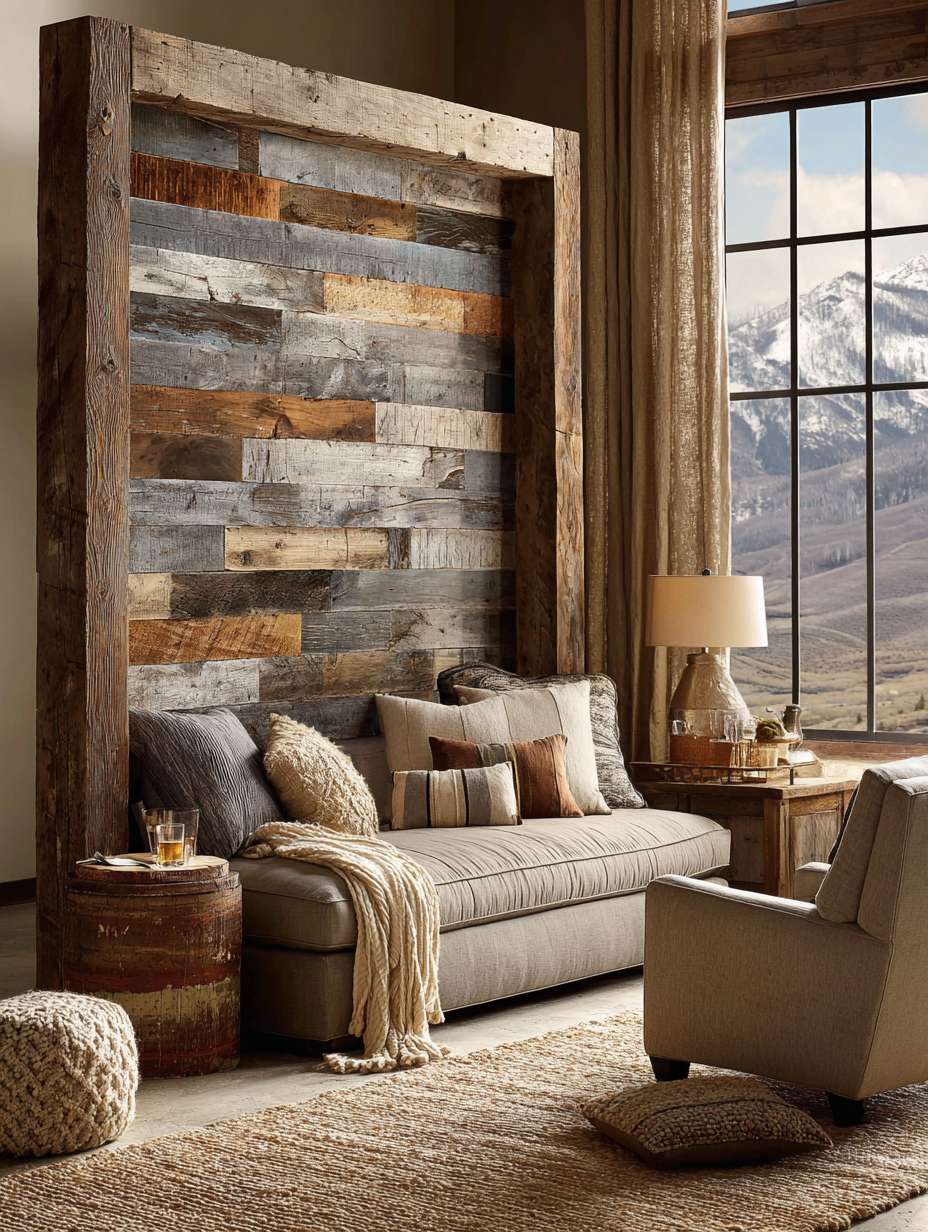
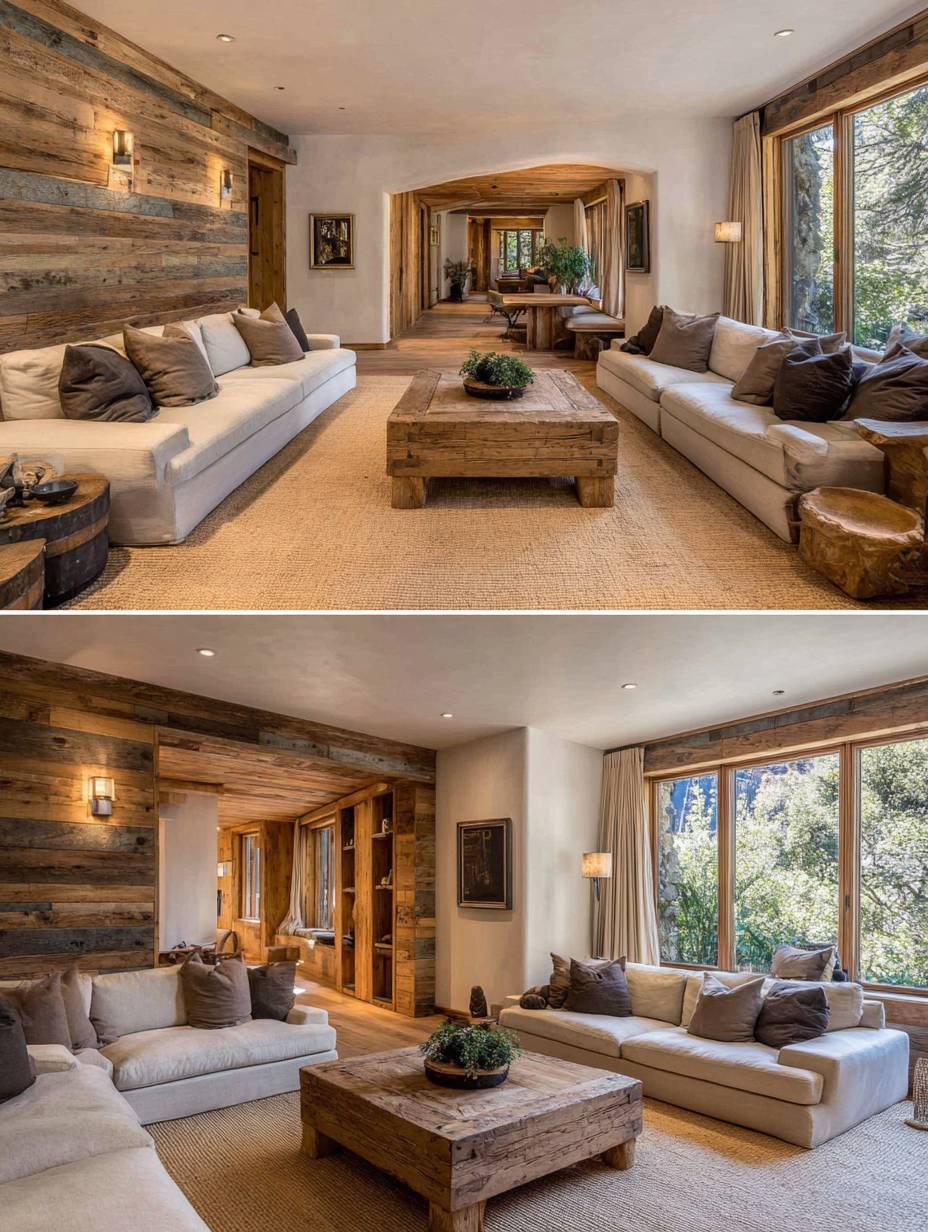
The rustic charm of reclaimed wood brings history and character into contemporary spaces through a partition constructed from weathered planks arranged horizontally. The varied tones of aged wood—from silvery grey to warm honey to deep brown—create organic visual interest that no new material can replicate. Each plank tells a story through its unique grain patterns, nail holes, and subtle imperfections that speak to its previous life. This partition extends partially across the room rather than floor-to-ceiling, maintaining connection while creating definition between the main seating area and a cozy window seat nook bathed in natural light.
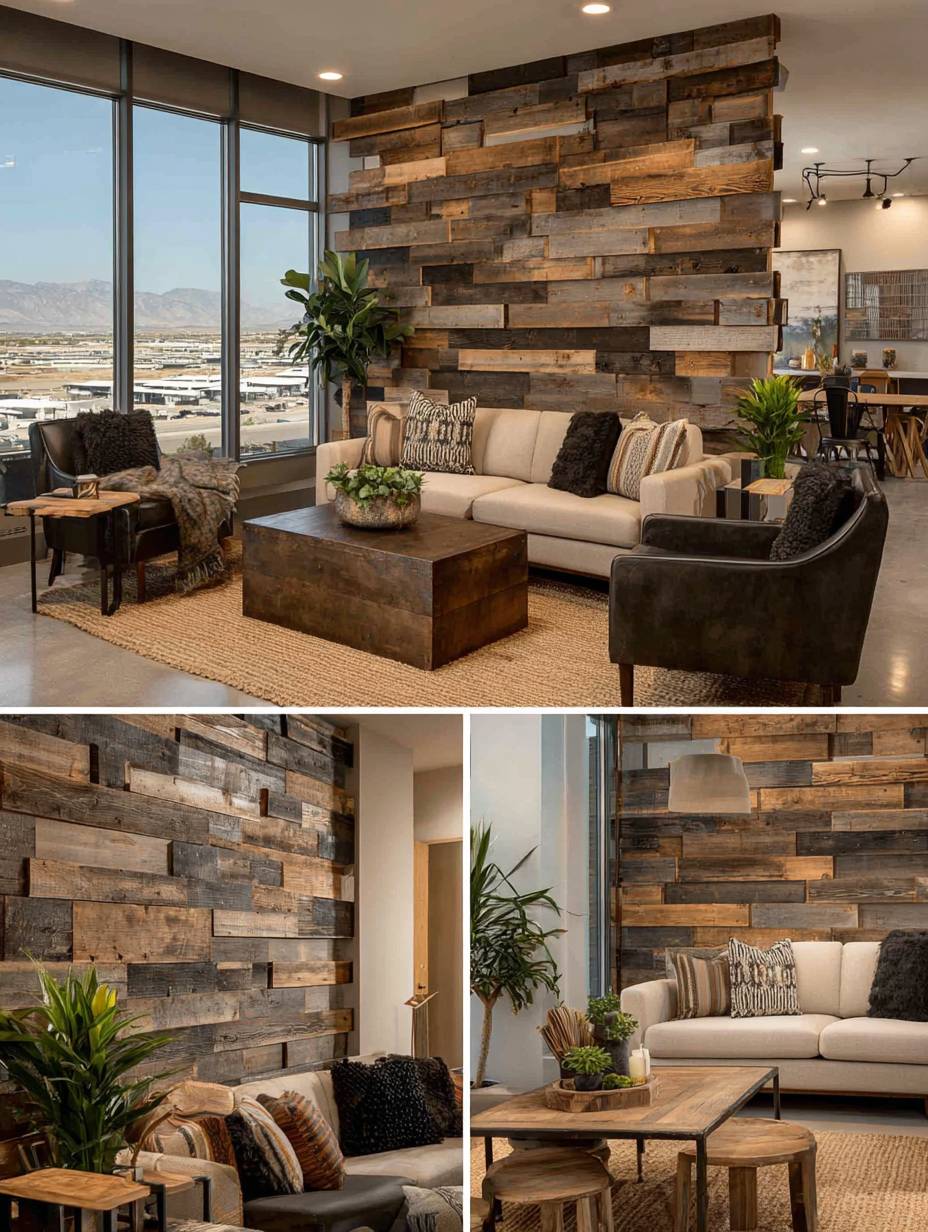
The authenticity of reclaimed materials appeals to those who value sustainability and historical preservation. Giving new life to wood salvaged from old barns, warehouses, or industrial buildings reduces demand for newly harvested timber while preserving beautiful materials that would otherwise be destroyed. The natural variations in the wood create depth and complexity—some planks retain traces of original paint or stain, others show the beautiful patina of age, and all display the rich character that comes from decades of exposure to weather and use. Soft natural lighting highlights these variations, emphasizing the three-dimensional quality of the wood surface where some planks may be slightly warped or twisted, adding to the organic, lived-in aesthetic.
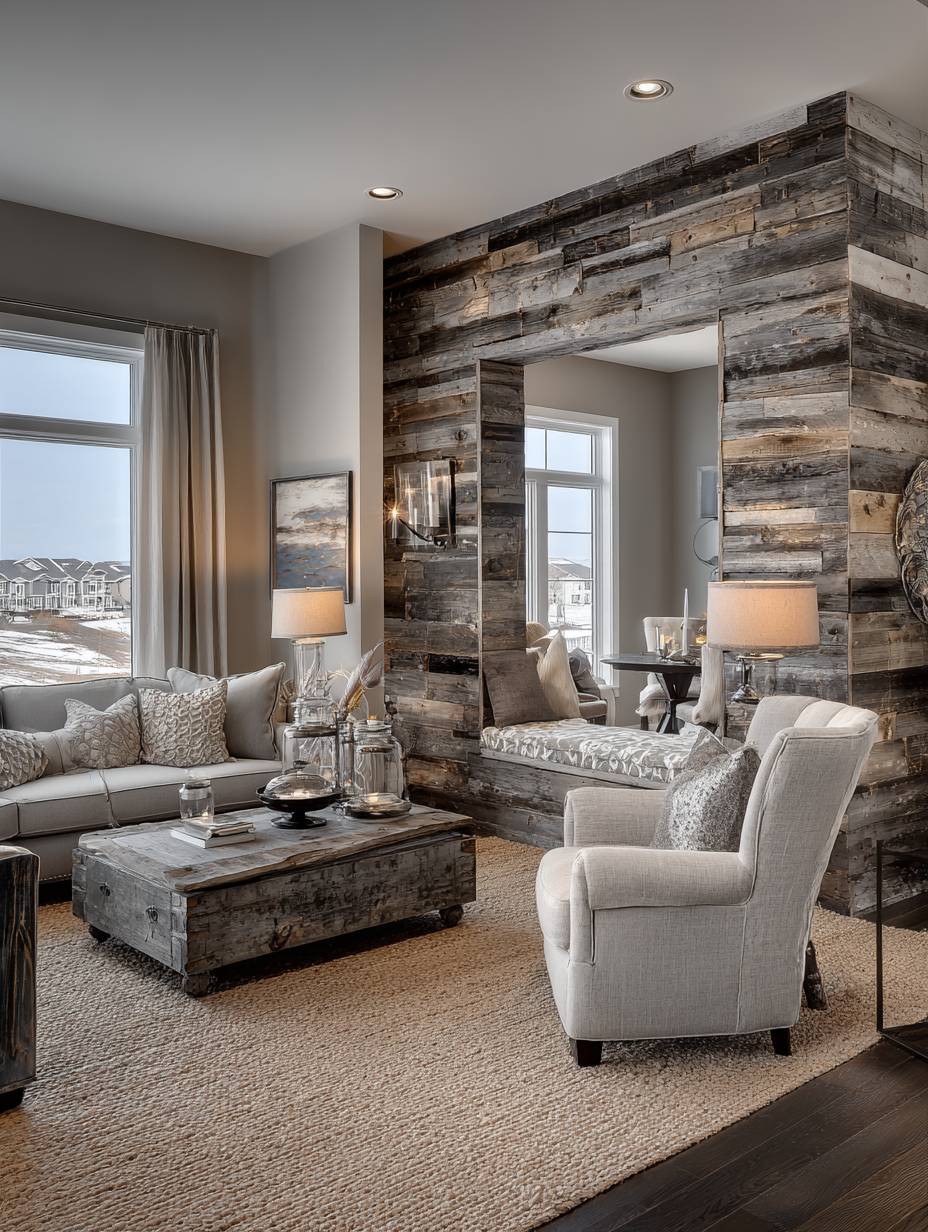
The partial partition approach creates intimacy without isolation—the window seat nook becomes a semi-private retreat perfect for reading, contemplation, or simply enjoying the view, while remaining connected to the main living area. Complementary neutral furniture and jute area rugs enhance the organic aesthetic without competing with the dramatic wood wall. The horizontal orientation of the planks emphasizes width and creates a sense of calm stability, while the varied plank widths prevent monotonous repetition. The reclaimed wood develops even more character over time as it continues to age and settle into its new environment, making this a partition that actually improves with age rather than deteriorating.
- Source carefully from reputable suppliers who properly clean and treat reclaimed wood for indoor use
- Check for pests and treat appropriately to ensure no insects or larvae remain in the wood
- Remove hazards including protruding nails, splinters, or sharp edges that could cause injury
- Allow wood to acclimate to your home’s humidity levels before installation to prevent excessive warping
- Seal appropriately to protect the wood while maintaining its natural appearance and character
- Embrace imperfections as part of the aesthetic rather than trying to achieve perfect uniformity
18. Acrylic Panel with Pressed Botanicals
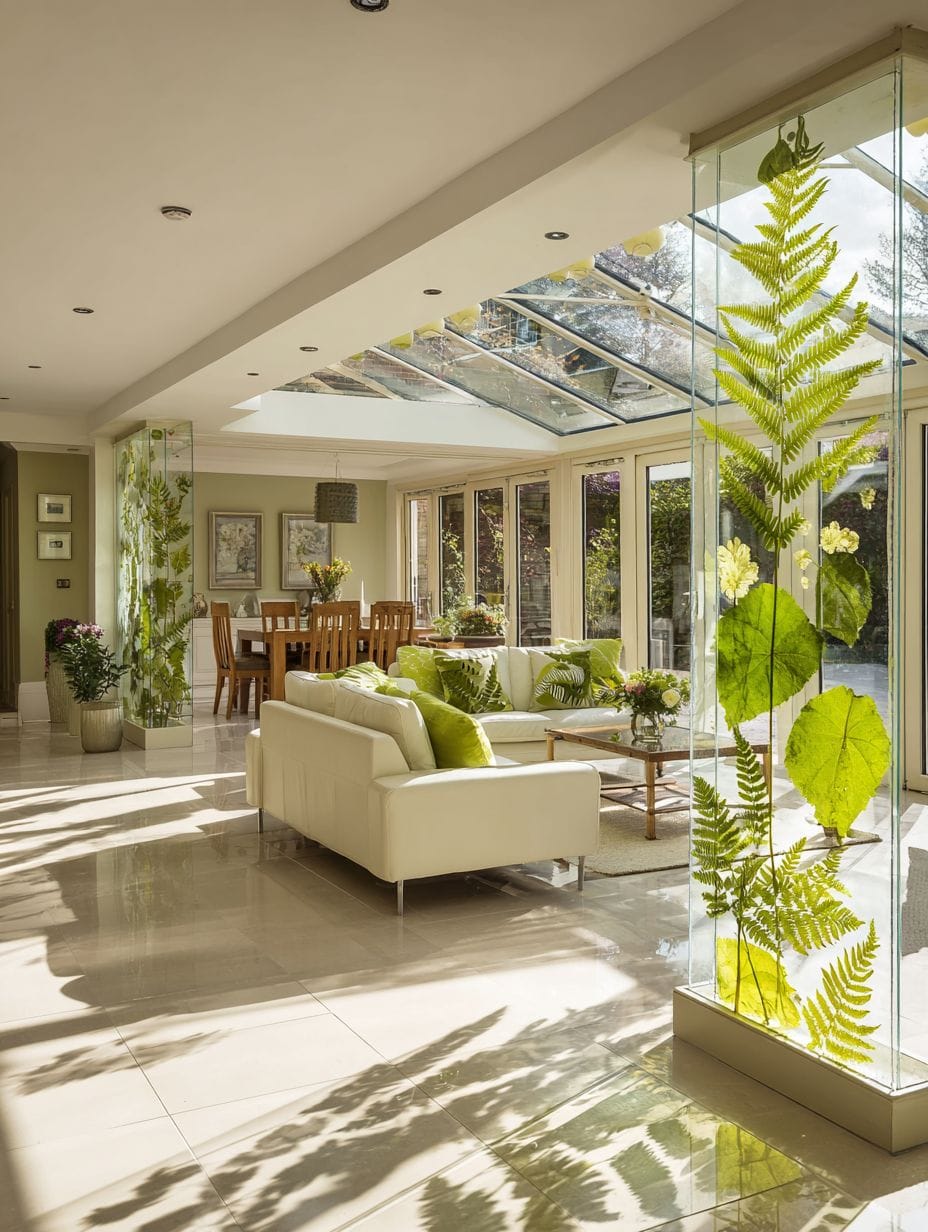
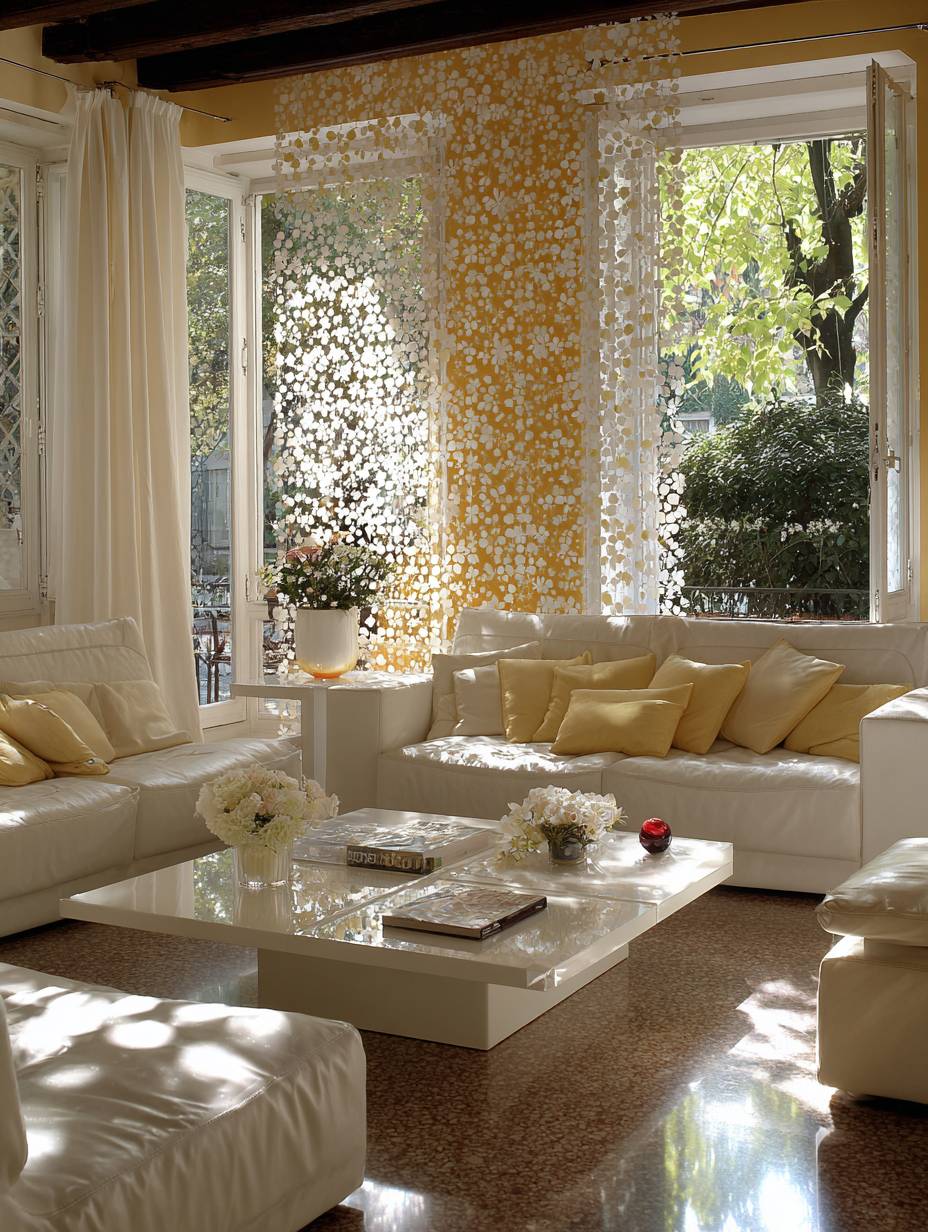
The artistic acrylic panel partition transforms functional space division into museum-quality art through the preservation of natural botanicals suspended within clear resin. This unique partition features real leaves, ferns, and flowers carefully positioned and encased in transparent acrylic panels, creating a translucent divider that celebrates nature’s beauty. The scientific yet artistic quality of botanical specimens preserved for study becomes decorative art that separates your living area from a sun room or conservatory space. Each panel is unique—the organic shapes, colors, and textures of pressed plant material create one-of-a-kind compositions that cannot be replicated, making your partition truly custom.
The technical execution of embedding botanicals in resin requires skill and patience. Plant materials must be properly dried and pressed to prevent decomposition or discoloration over time, then carefully positioned before resin is poured and cured. Air bubbles must be eliminated, and resin layers must be applied correctly to achieve perfect clarity. The result is a partition that functions as three-dimensional herbarium, displaying the intricate venation of leaves, the delicate structure of flower petals, and the architectural quality of fern fronds. When natural light passes through the panels, the pressed botanicals cast beautiful shadows while the plant materials themselves seem to glow, their cellular structure becoming visible in backlighting.
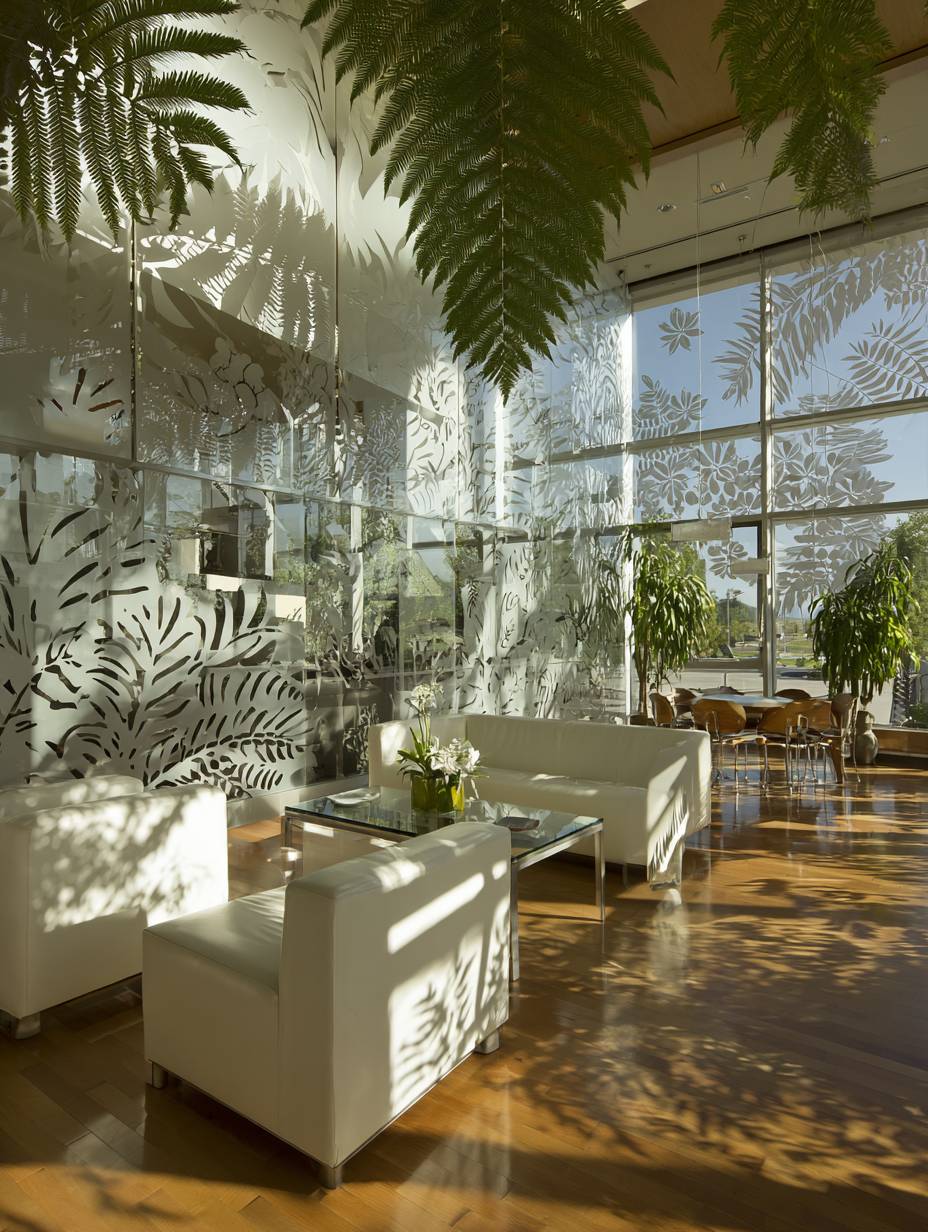
This partition type works beautifully in spaces where nature connection is prioritized—adjacent to conservatories, sun rooms, or areas with abundant natural light where the translucent panels can be properly appreciated. The organic subject matter contrasts beautifully with the modern material and geometric panel shapes, creating interesting tension between natural and manufactured, organic and precise. Contemporary white furniture keeps focus on the remarkable partition while providing clean, simple backdrop that doesn’t compete for attention. The botanical panels change appearance throughout the day as light angles shift, revealing different aspects of the preserved plant materials and creating ever-changing artistic displays.
- Work with experienced artists or fabricators skilled in resin casting and botanical preservation
- Select plant materials carefully considering color fastness and structural integrity when dried
- Ensure proper curing of resin to prevent yellowing, cloudiness, or structural weakness
- Plan for weight as acrylic panels with embedded materials can be surprisingly heavy
- Protect from extreme temperatures which can affect resin clarity and stability over time
- Clean gently using appropriate products that won’t damage or cloud the acrylic surface
19. Exposed Brick Column Partition
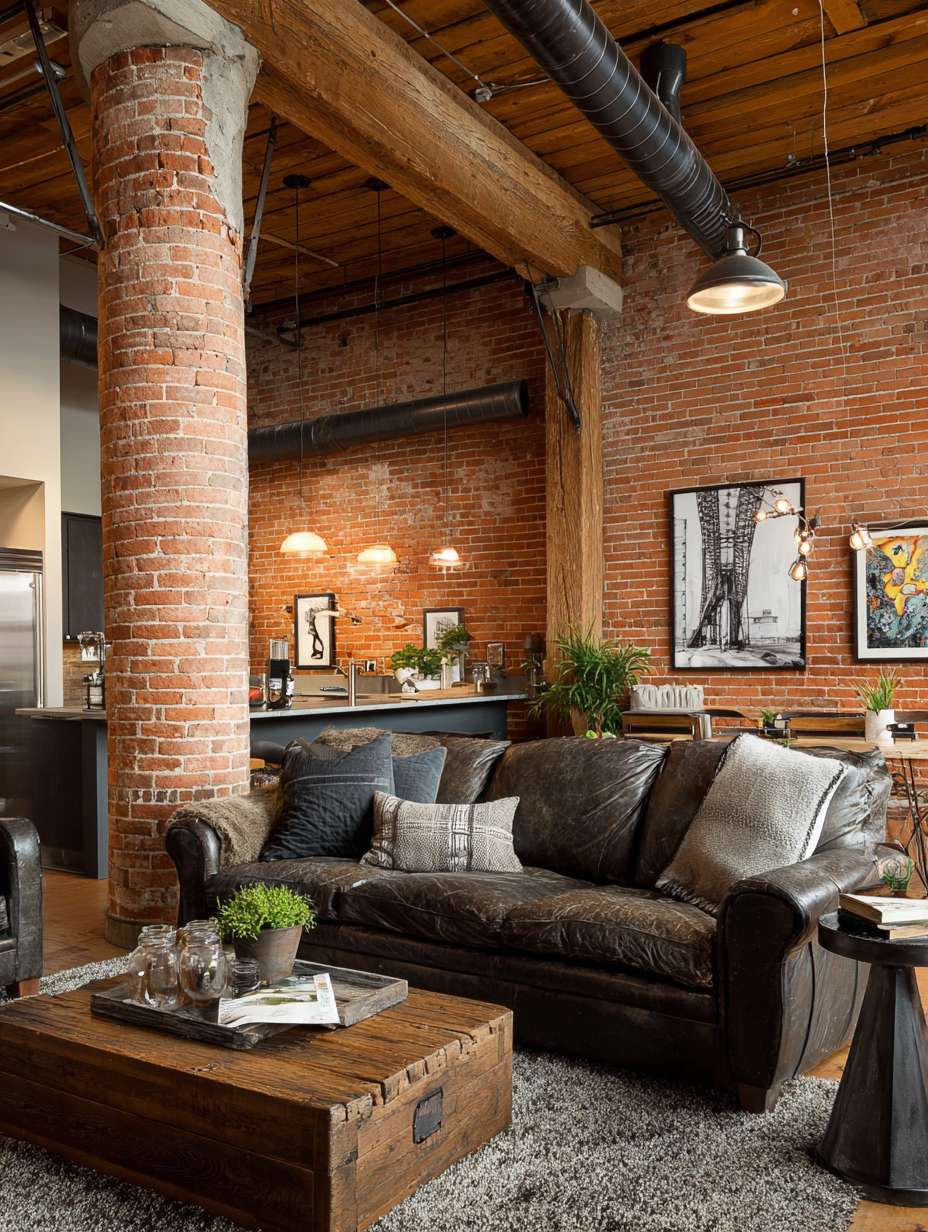
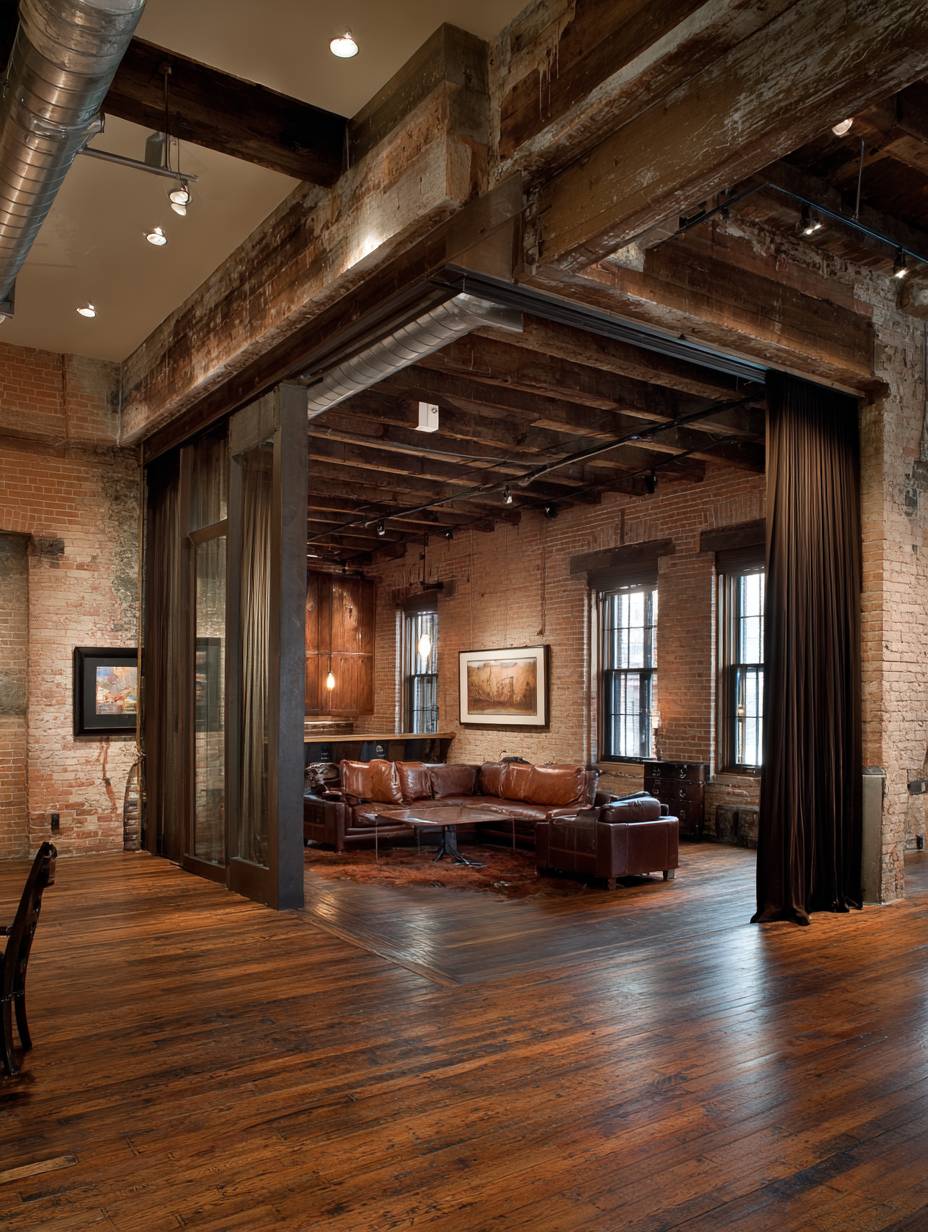
The substantial brick column partition brings architectural gravitas and industrial authenticity to open living spaces. Constructed from exposed red clay bricks laid in traditional running bond pattern, this substantial divider creates strong visual and physical presence between living room and open kitchen areas. The raw, honest quality of exposed masonry appeals to those who appreciate materials that show their construction rather than hiding behind finishes. The top of the substantial column supports a thick reclaimed wood beam, adding another layer of texture and connecting the vertical brick to the horizontal ceiling plane, creating a sense of architectural completeness.
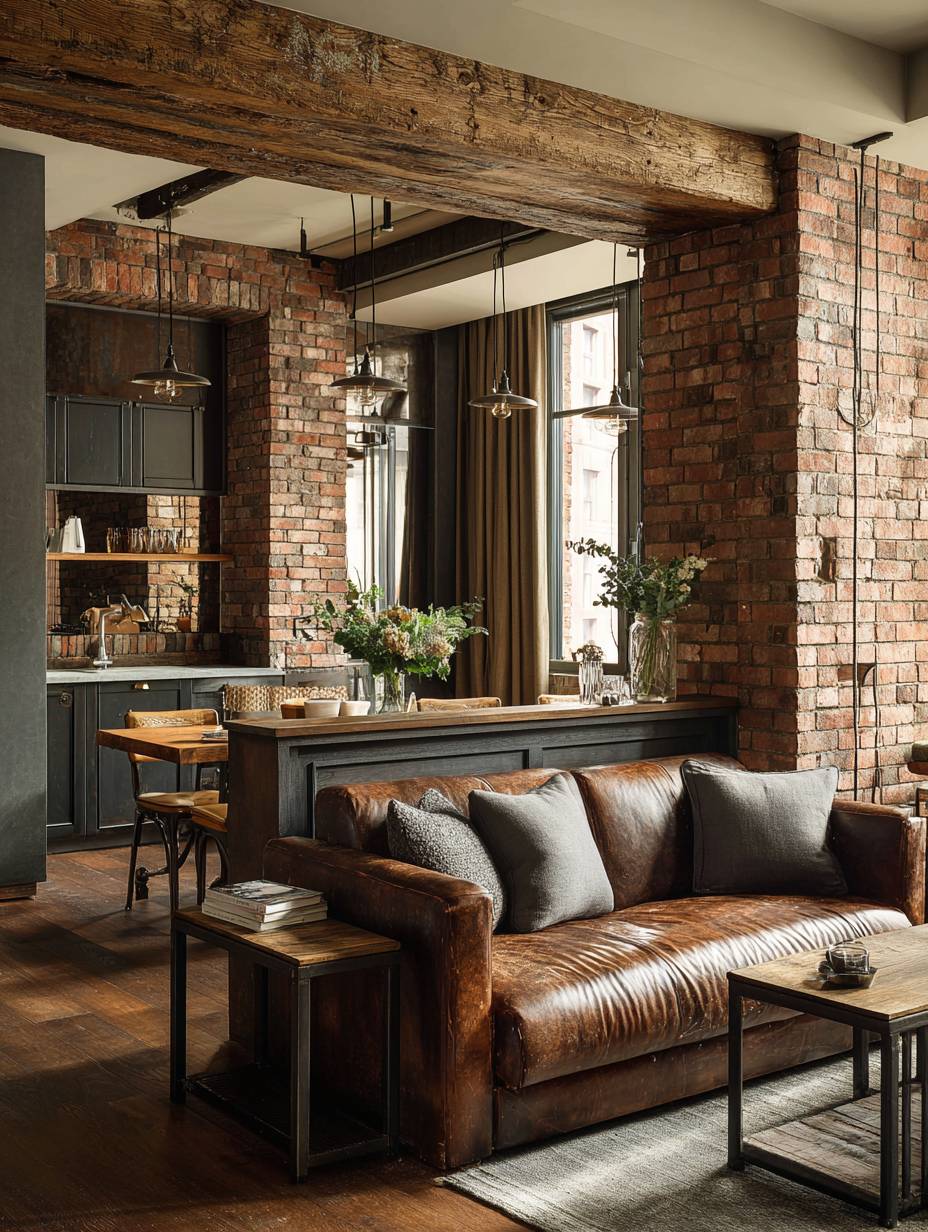
The warmth of red clay bricks provides color, texture, and human scale through their modular repetition. Unlike smooth, featureless walls, each individual brick contributes character—slight variations in color from firing processes, the visible texture of the clay body, and the mortar joints that articulate the construction method. This type of partition works exceptionally well in converted loft spaces, renovated warehouses, or new homes seeking to capture authentic urban aesthetic. Industrial-style furniture including leather seating and metal side tables complement the raw materials, creating cohesive design that celebrates honest, utilitarian beauty.
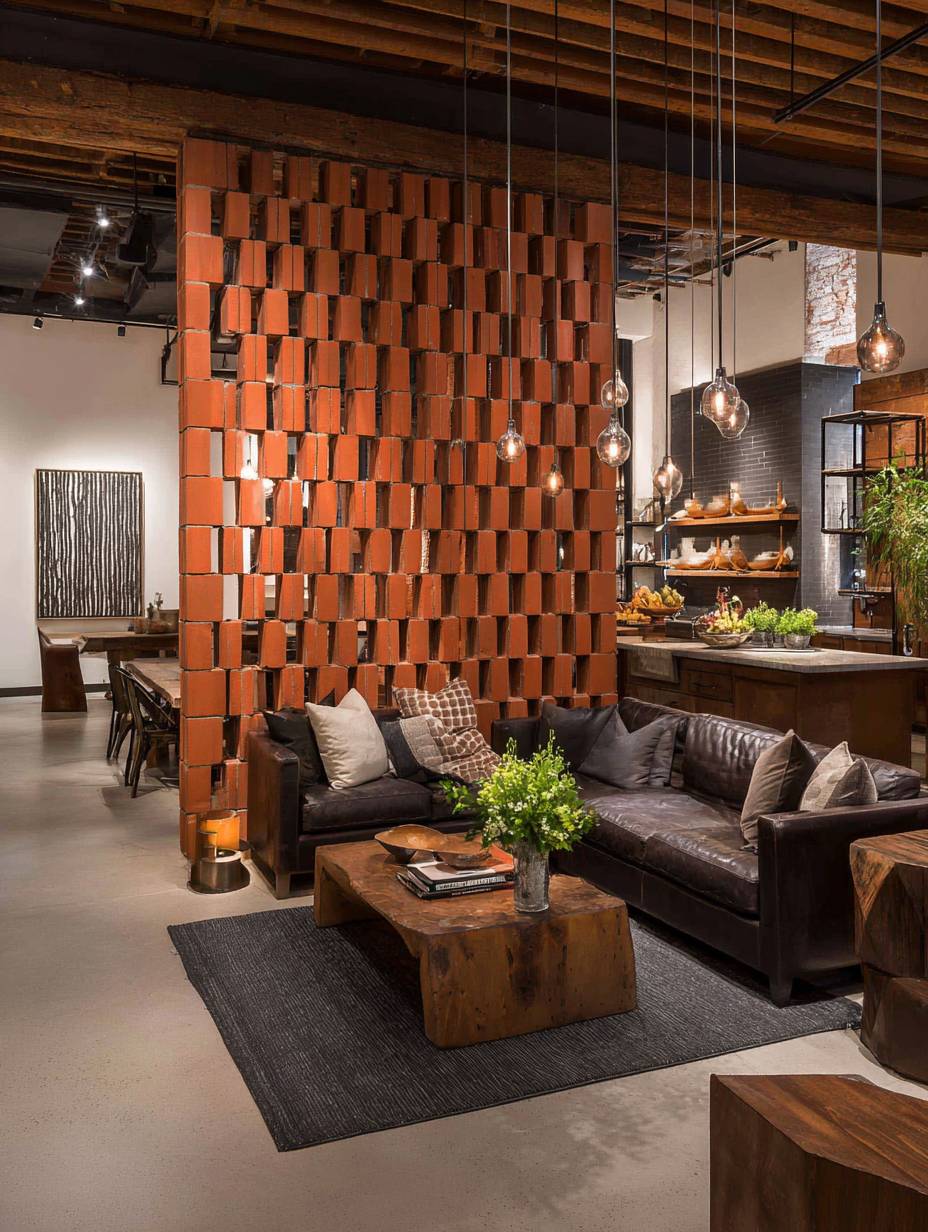
The lighting treatment of brick partitions dramatically affects their appearance and the overall ambiance they create. Natural daylight reveals the warm terracotta tones and subtle variations between individual bricks, while artificial lighting from pendant fixtures or wall sconces creates dramatic shadows within the mortar joints, emphasizing the three-dimensional texture. The thermal mass of brick also provides practical benefits—the material absorbs heat during the day and slowly releases it during cooler evening hours, contributing to more stable interior temperatures. The brick surface can be left untreated for maximum authenticity or sealed with clear coatings to prevent dust accumulation while maintaining the natural appearance.
- Ensure proper structural support as brick is extremely heavy requiring substantial foundation and framing
- Consider building codes and obtain necessary permits for structural masonry construction
- Plan for weight distribution to ensure floor systems can adequately support the brick mass
- Allow proper curing time for mortar before stressing the structure or loading the top beam
- Seal if desired to prevent efflorescence and make maintenance easier while preserving appearance
- Professional installation essential for proper construction techniques and structural integrity
20. Woven Rattan Panel Partition
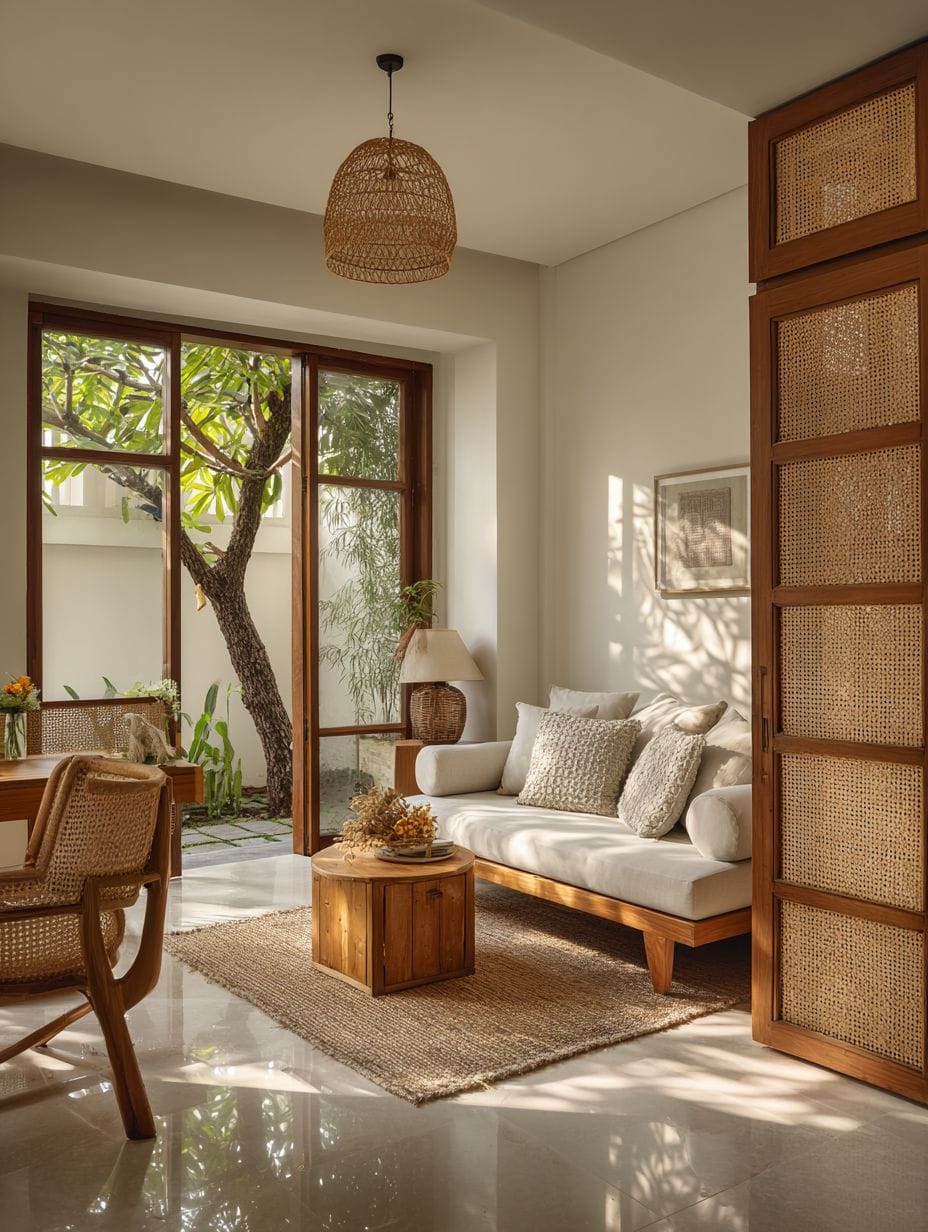
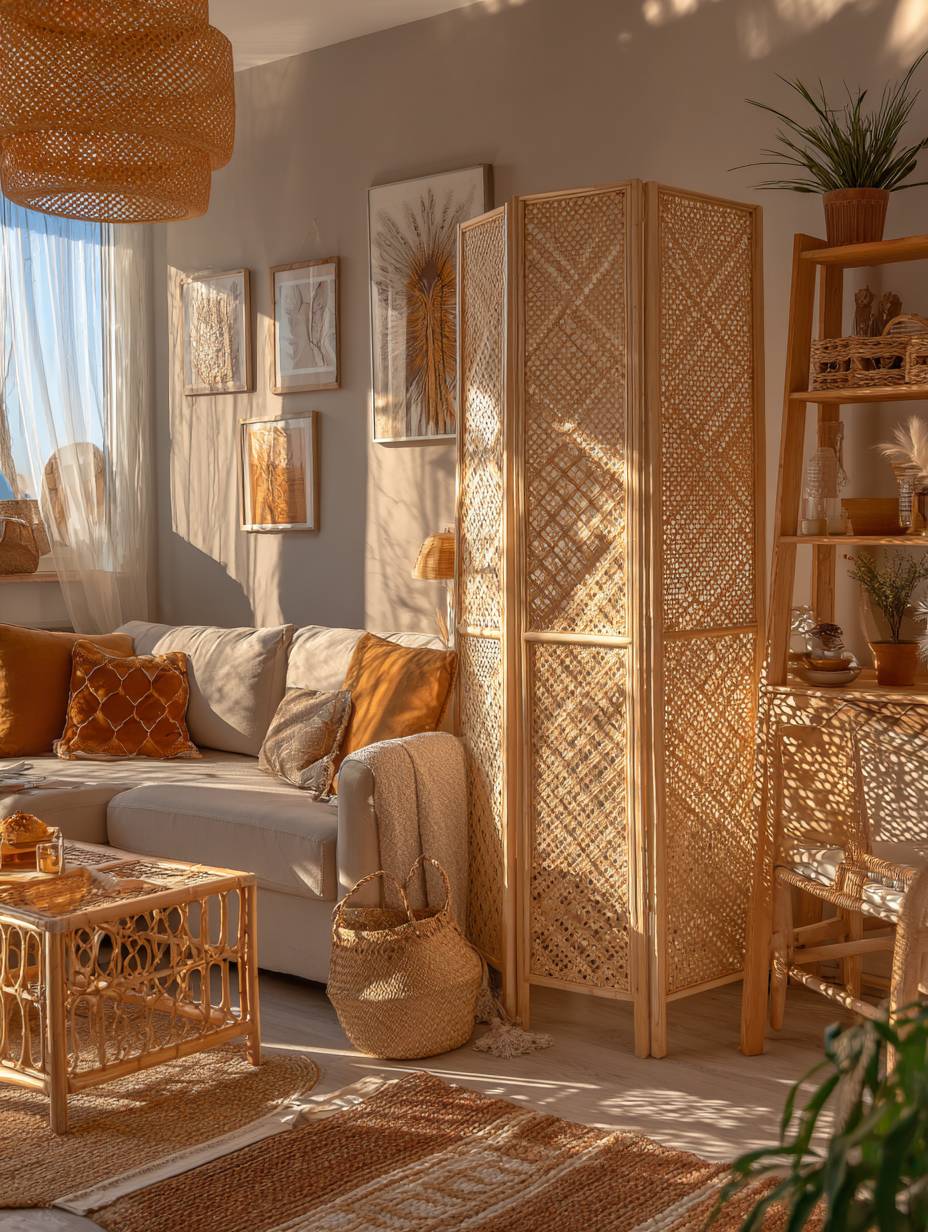
The handcrafted woven rattan panel partition brings tropical elegance and artisanal beauty into contemporary interiors through its intricate diamond pattern created from natural honey-toned rattan. This partition screens living areas from small home office spaces while maintaining an airy, light-filled atmosphere that prevents the closed-in feeling solid partitions create. The transparent quality of woven rattan allows air circulation and partial views through the diamond-shaped openings while still providing visual screening and privacy definition. The natural material brings warmth and organic texture that softens modern interiors and creates welcoming, relaxed environments.
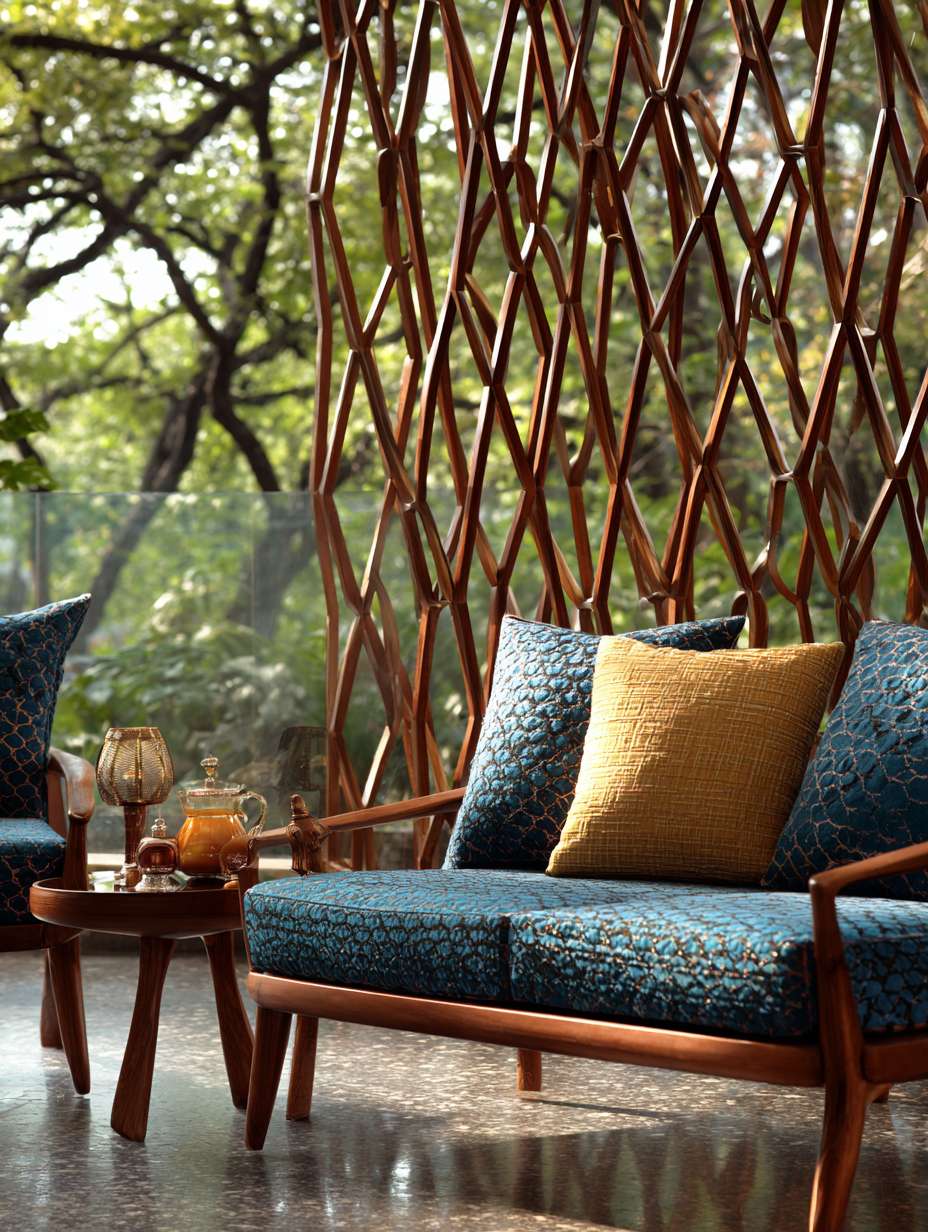
The craftsmanship evident in quality rattan weaving represents traditional skills passed through generations. Each strand of rattan is carefully bent, woven, and secured to create the geometric pattern with consistent tension and uniform spacing. The natural variations in the rattan color—from pale honey to deeper caramel tones—create subtle visual interest across the panel surface. When paired with bohemian-style furniture featuring textile cushions and natural fiber rugs, the rattan partition becomes part of a cohesive layered aesthetic that celebrates handmade crafts, natural materials, and global design influences.
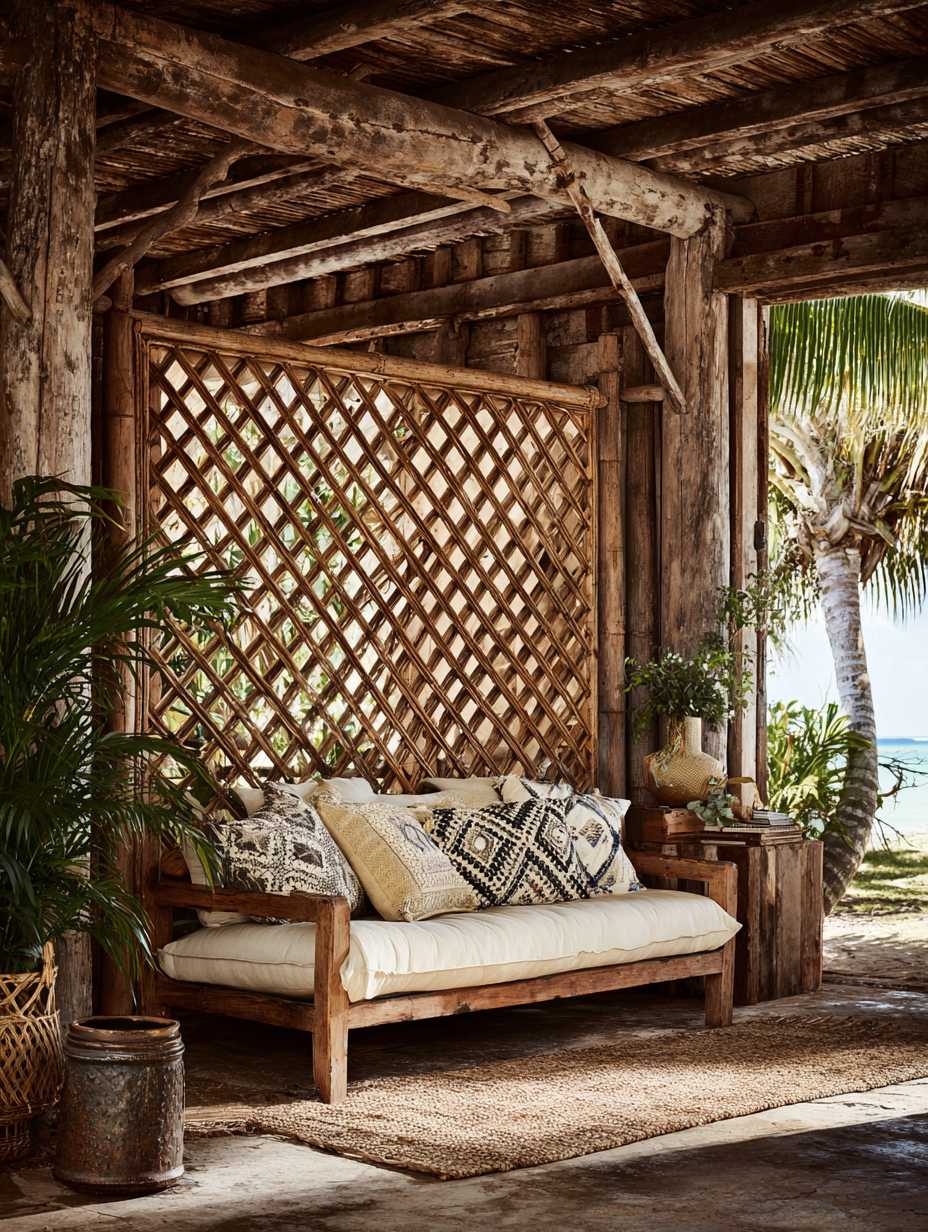
The interaction between natural light and woven rattan creates one of this partition’s most enchanting qualities. Abundant sunlight filtering through the woven structure creates dappled light effects—shadows cast by the diamond pattern dance across floors and walls, creating dynamic visual interest that changes throughout the day as sun angles shift. The three-dimensional quality of the weaving creates depth and texture that invites closer inspection, revealing the skill and patience required to create such intricate patterns. The natural material ages beautifully, developing deeper tones and character over time while remaining structurally sound and functionally effective.
- Source quality rattan that’s properly dried and treated to prevent cracking or splitting
- Ensure proper framing to support the woven panels while allowing the pattern to remain visible
- Protect from excessive moisture which can cause rattan to swell, warp, or develop mold
- Clean regularly using vacuum attachments to remove dust from within the weave
- Position thoughtfully away from direct heat sources which can dry and damage natural fibers
- Consider weight when mounting and ensure adequate support for the panel size
21. Minimalist Steel-Framed Glass Partition
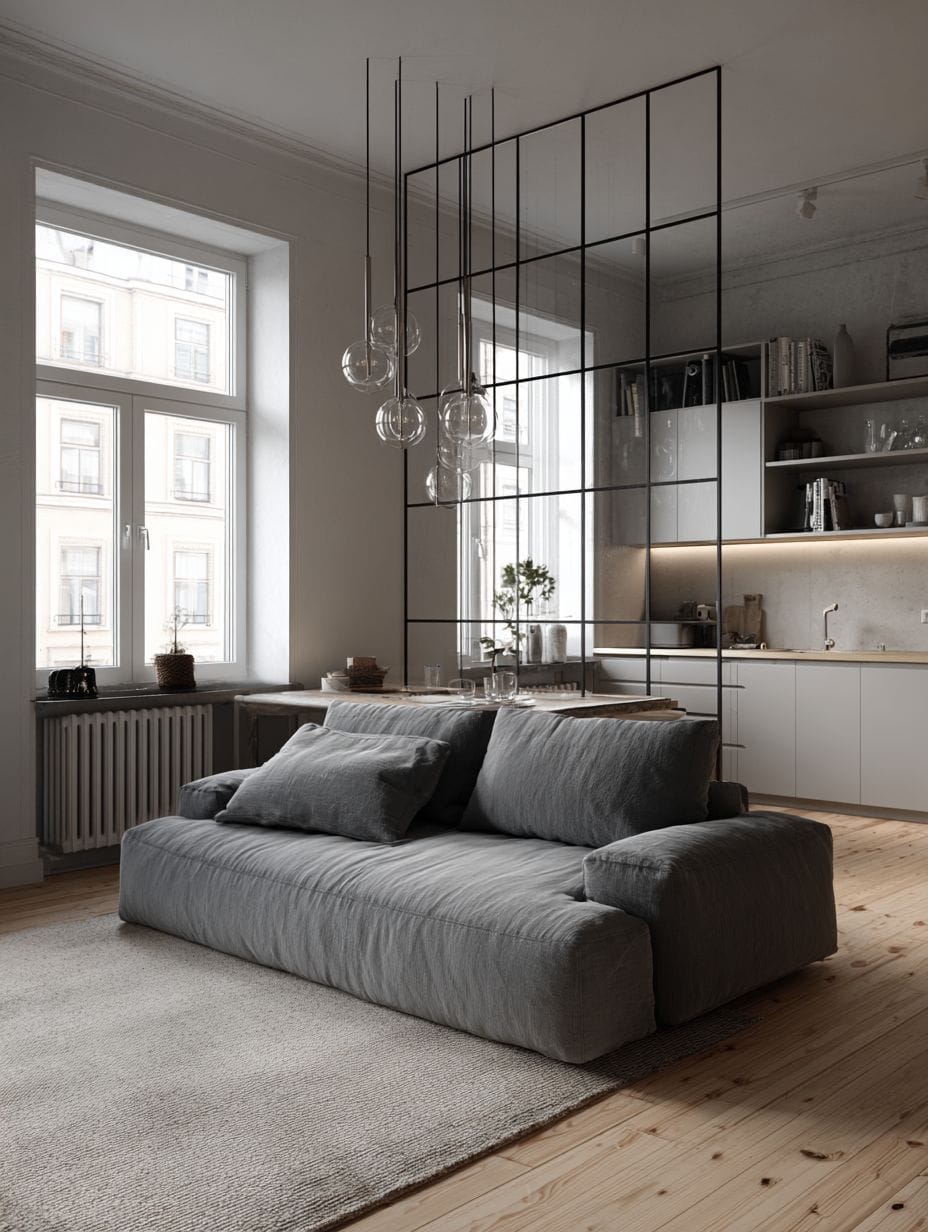
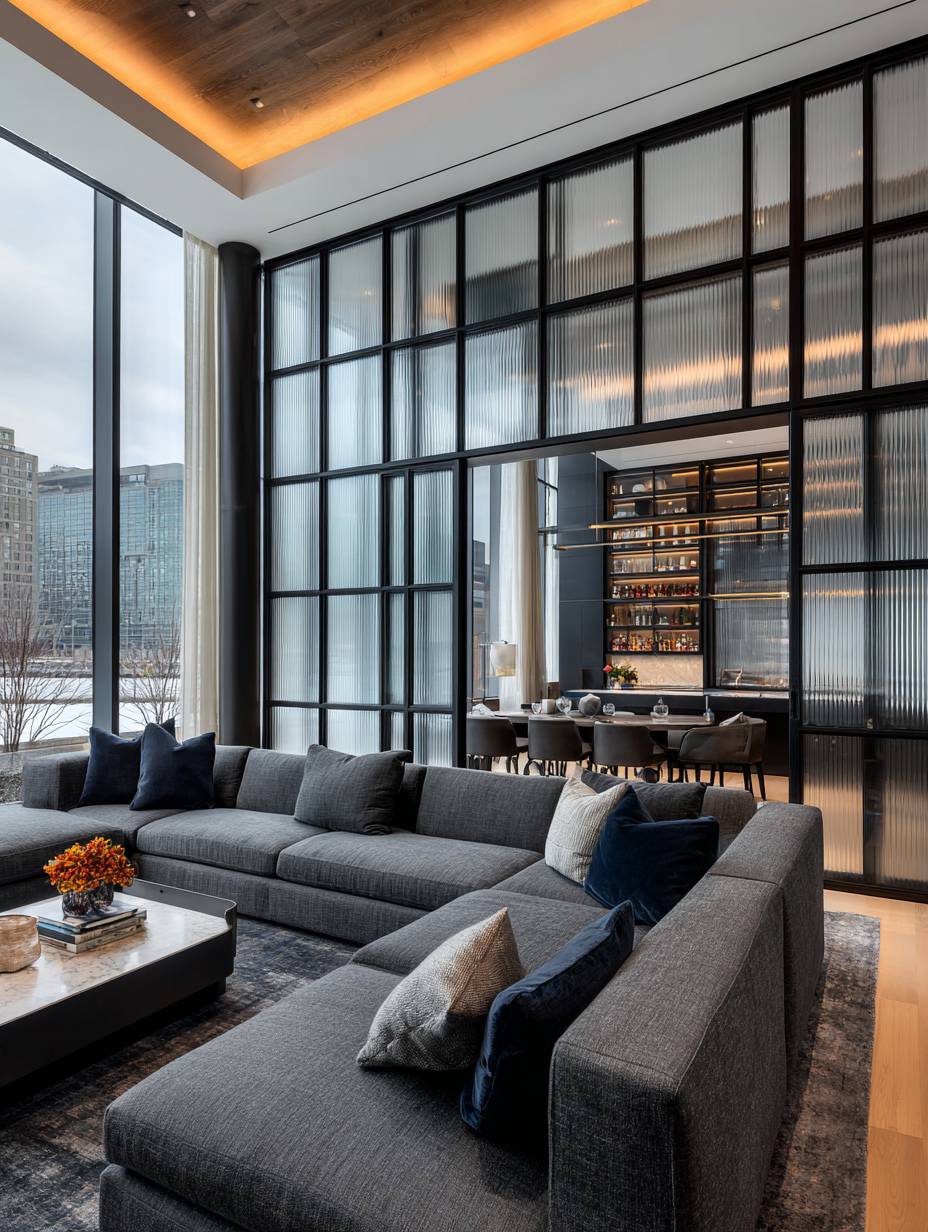
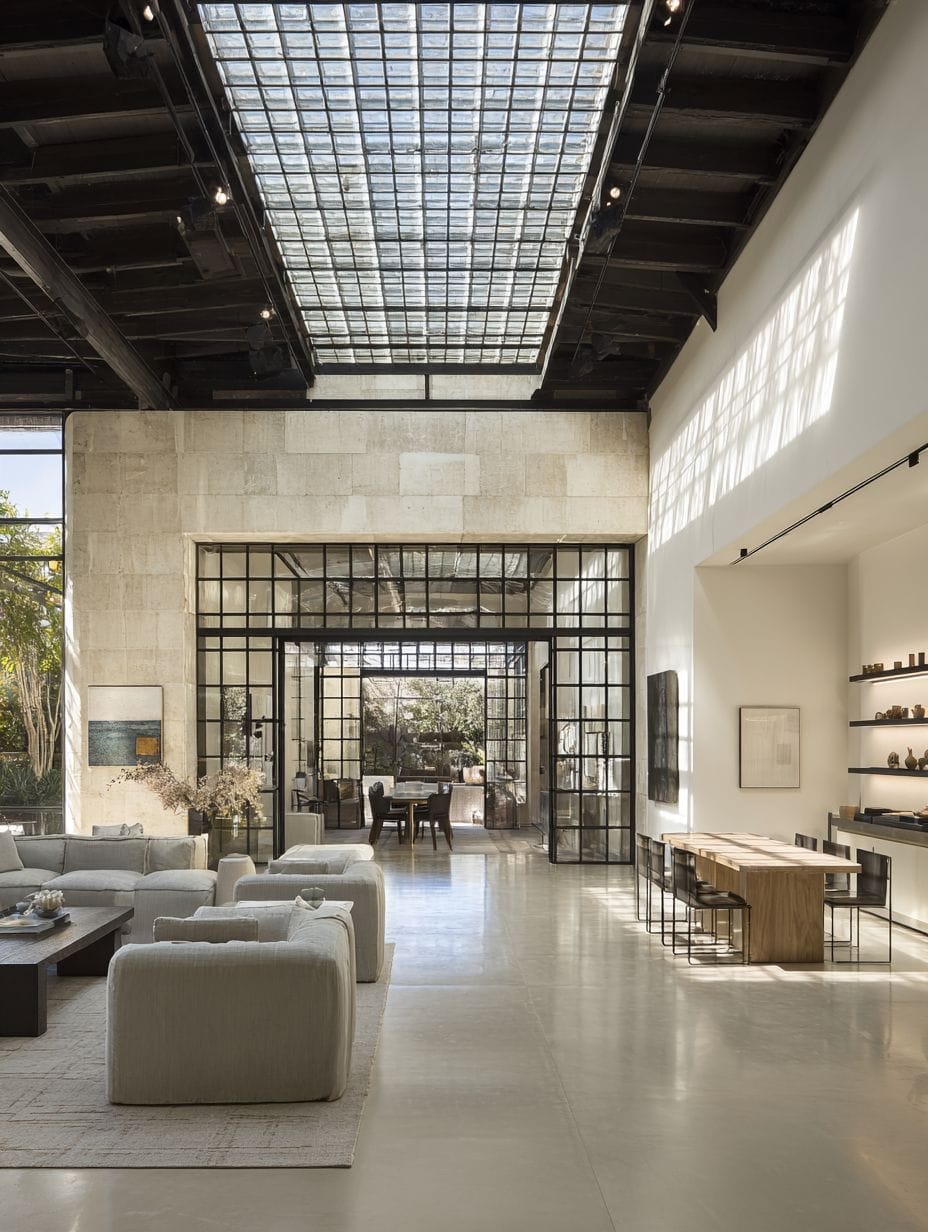
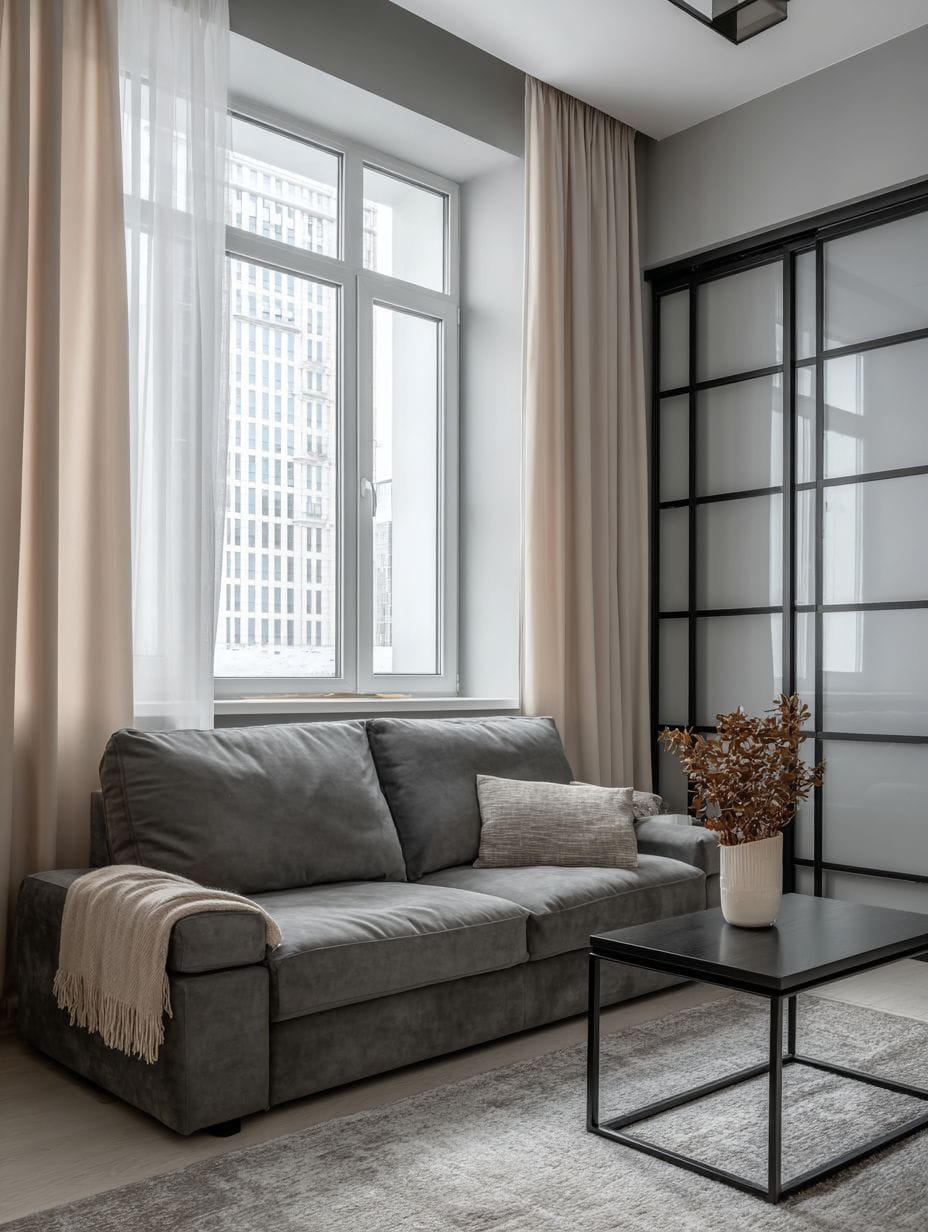
The minimalist steel-framed glass partition epitomizes contemporary industrial aesthetic through its clean lines, honest materials, and transparent function. Thin black metal profiles create a modern grid framework that supports large glass panels, maintaining complete openness and light flow between living area and compact dining space while providing clear spatial definition. The slender steel frames appear almost delicate despite their structural strength, creating visual order through geometric precision. This partition type excels in smaller living spaces where preserving sight lines and natural light transmission is crucial for preventing the cramped, claustrophobic feeling that solid walls create.
The transparency of glass combined with the dark contrast of black steel frames creates striking visual impact—the partition becomes architectural jewelry, adding design interest without imposing visual weight or mass. Contemporary grey sofas and clean-lined furniture complement the sleek partition aesthetics, creating cohesive modern environments where every element contributes to the overall sense of refined simplicity. The glass remains crystal clear with minimal reflections when properly positioned, allowing unobstructed views through while the gridded divisions add architectural interest that prevents the glass from disappearing entirely.
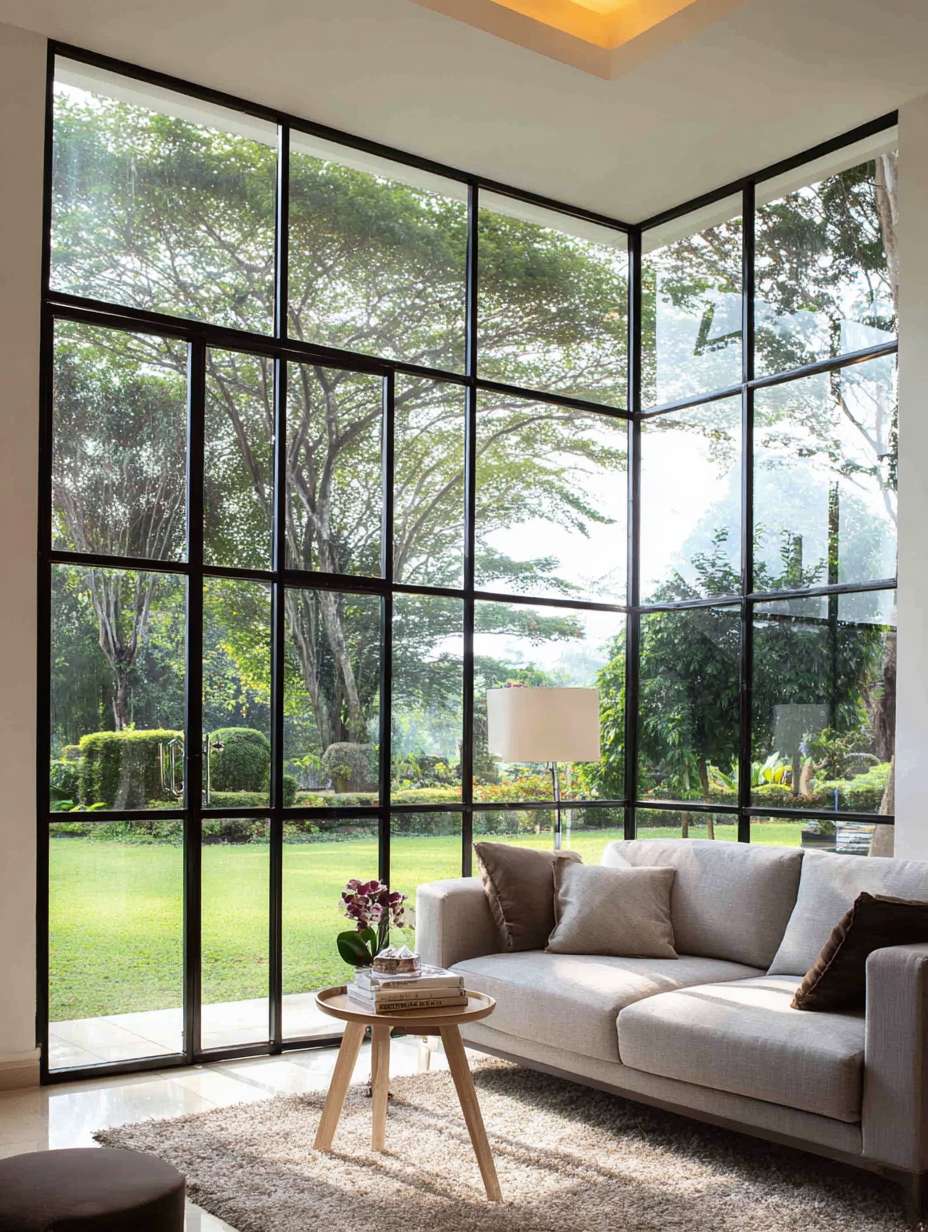
The technical quality of the steel frame construction is evident in precise joints, consistent weld quality, and perfectly level installation. Premium powder-coated steel resists corrosion and maintains its matte black finish without fading or chipping. The grid pattern can be customized in various configurations—larger squares create bolder statements with fewer visual interruptions, while smaller, more numerous divisions create delicate, detailed patterns. Natural daylight passes through completely unobstructed during day hours, while evening lighting creates subtle reflections and depth that add another dimension to the partition’s appearance. The glass can be specified as tempered safety glass for enhanced durability and safety compliance.
- Specify tempered safety glass meeting local building codes for human impact safety
- Ensure precise measurement and professional installation for proper fit and alignment
- Select quality steel frames with durable powder-coat finish and precise fabrication
- Plan cleaning access to both sides of glass panels for ongoing maintenance
- Consider acoustic properties as glass allows sound transmission requiring soft furnishings for absorption
- Protect during construction to prevent scratching, chipping, or breaking during other renovation work
22. Carved Wooden Screen with Traditional Pattern
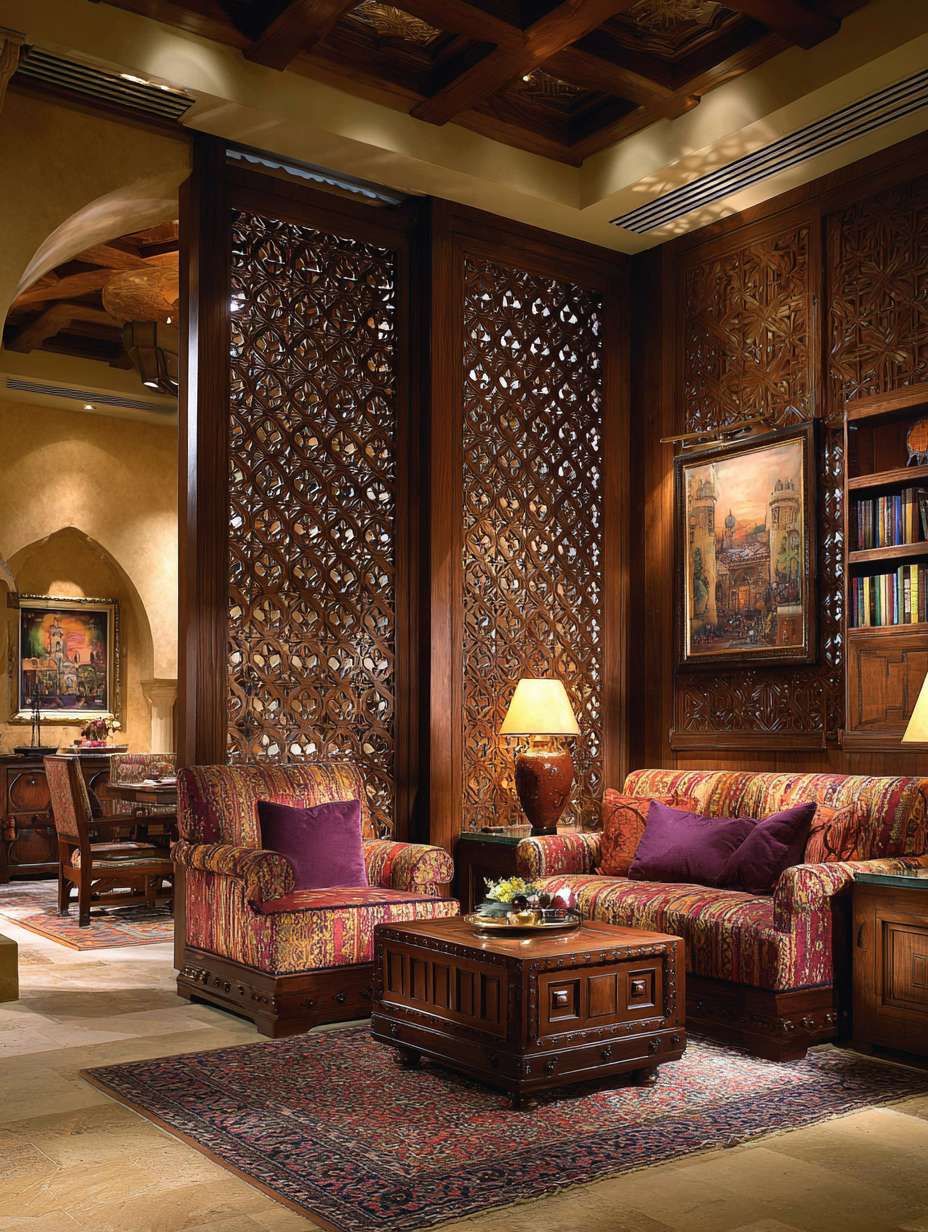
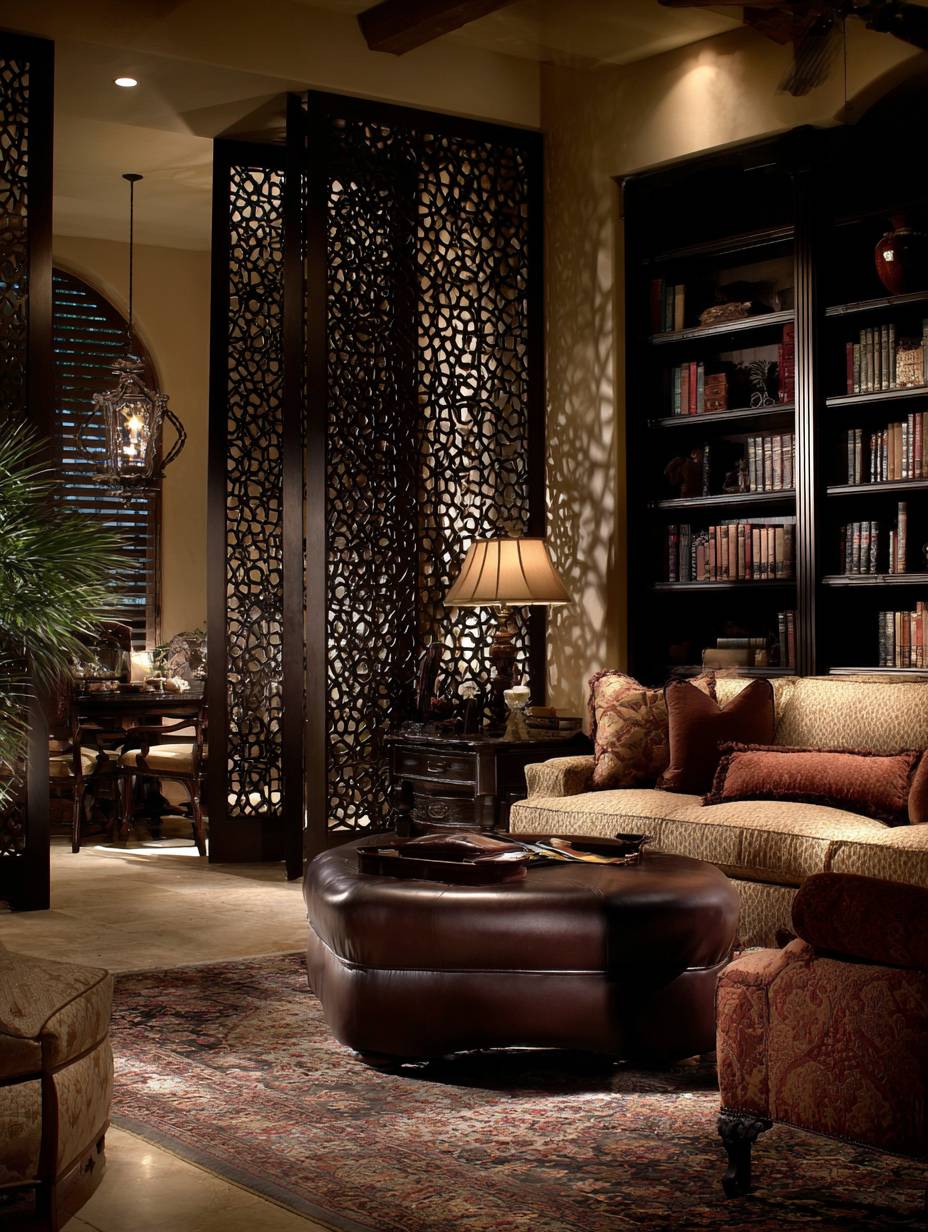
The carved wooden screen partition brings old-world elegance and artistic craftsmanship into contemporary homes through its intricate traditional medallion pattern. Dark stained wood features detailed fretwork with flowing arabesques, geometric patterns, and botanical motifs carefully hand-carved or precision-cut to create lace-like delicacy in solid wood. This type of partition creates elegant separation between formal living areas and library or study spaces, where the ornate screen complements the intellectual atmosphere of book-lined walls and traditional furnishings. The three-dimensional carved details cast beautiful shadows that emphasize depth and complexity, revealing new details as lighting changes throughout the day.
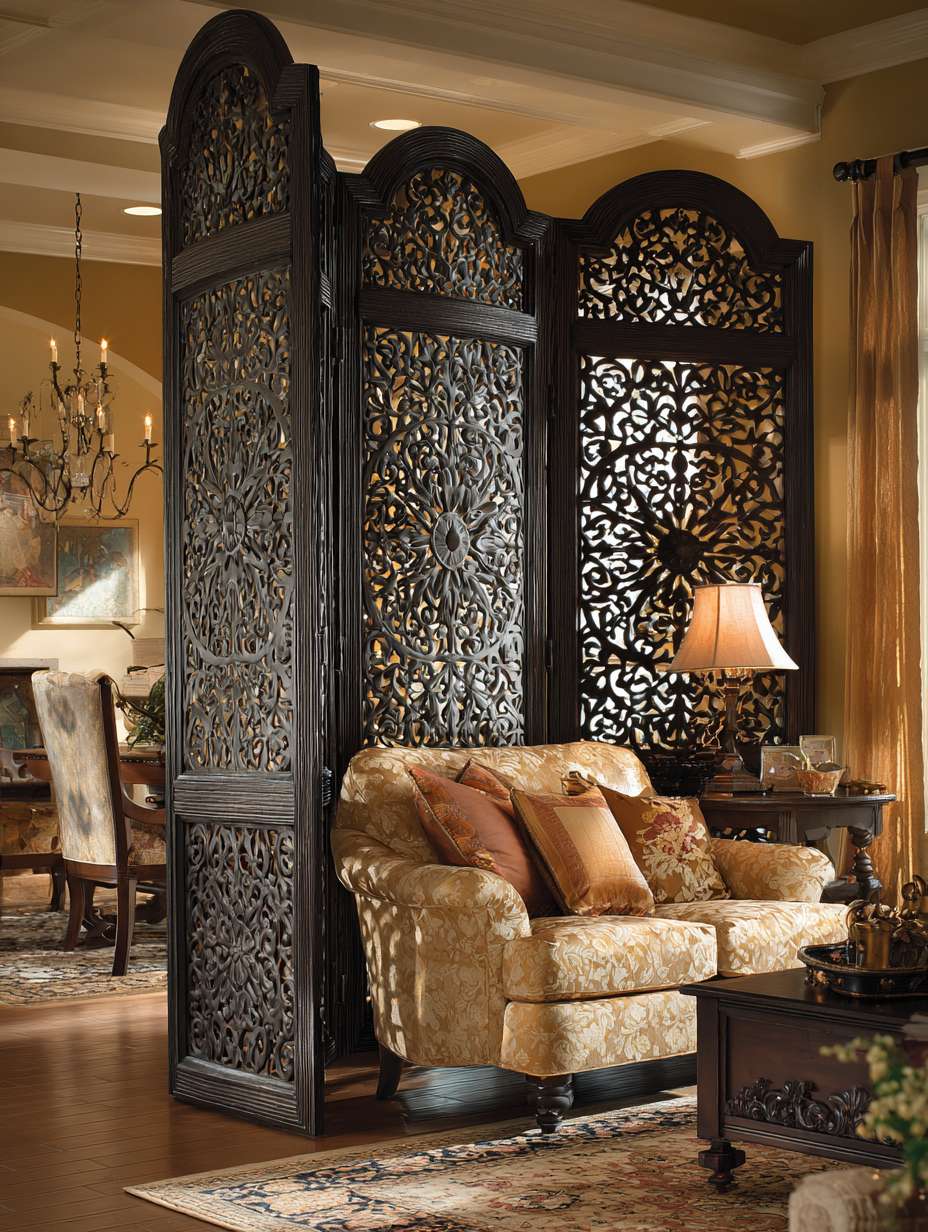
The skill required to create such intricate carving represents the pinnacle of woodworking artistry. Whether executed through traditional hand-carving techniques or modern CNC precision cutting, the resulting patterns demonstrate remarkable complexity and attention to detail. The dark stain emphasizes the carved relief, creating strong contrast between raised surfaces and recessed areas that accentuates the pattern’s intricacy. When paired with rich jewel-toned upholstery in deep emeralds, sapphires, or rubies, and authentic Persian-style rugs displaying traditional patterns, the carved screen becomes part of a luxurious, layered aesthetic that speaks to refined taste and appreciation for traditional crafts.
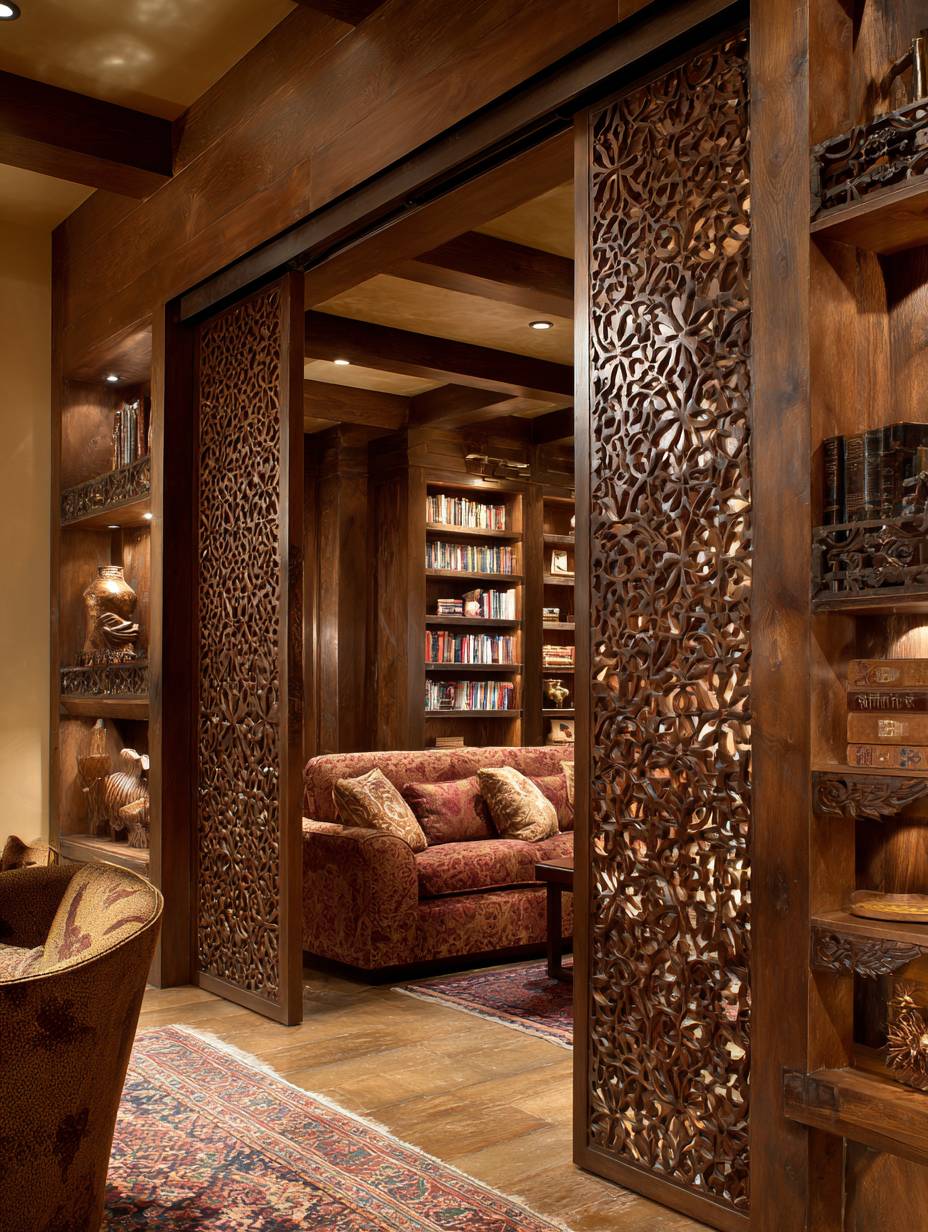
The functional openings within the carved pattern serve multiple purposes—they allow filtered light and partial views through the screen while providing ventilation and air circulation between spaces. The patterns themselves often carry cultural significance, representing traditional motifs that have been passed through generations. Soft ambient lighting from table lamps or wall sconces highlights the three-dimensional carved details, creating dramatic play of light and shadow that transforms throughout evening hours. The screen can function as fixed partition or be mounted to hinges for flexibility, allowing sections to swing open when full access between spaces is desired.
- Protect during installation to prevent damage to delicate carved elements
- Consider wood species carefully choosing those suitable for detailed carving without splitting
- Ensure proper finishing including staining and sealing to protect wood while enhancing grain
- Plan mounting carefully to support weight while preserving aesthetic appearance of screen
- Clean gently using soft brushes to remove dust from intricate carved details
- Control humidity levels to prevent wood expansion, contraction, or cracking
23. Decorative Concrete Breeze Block Partition
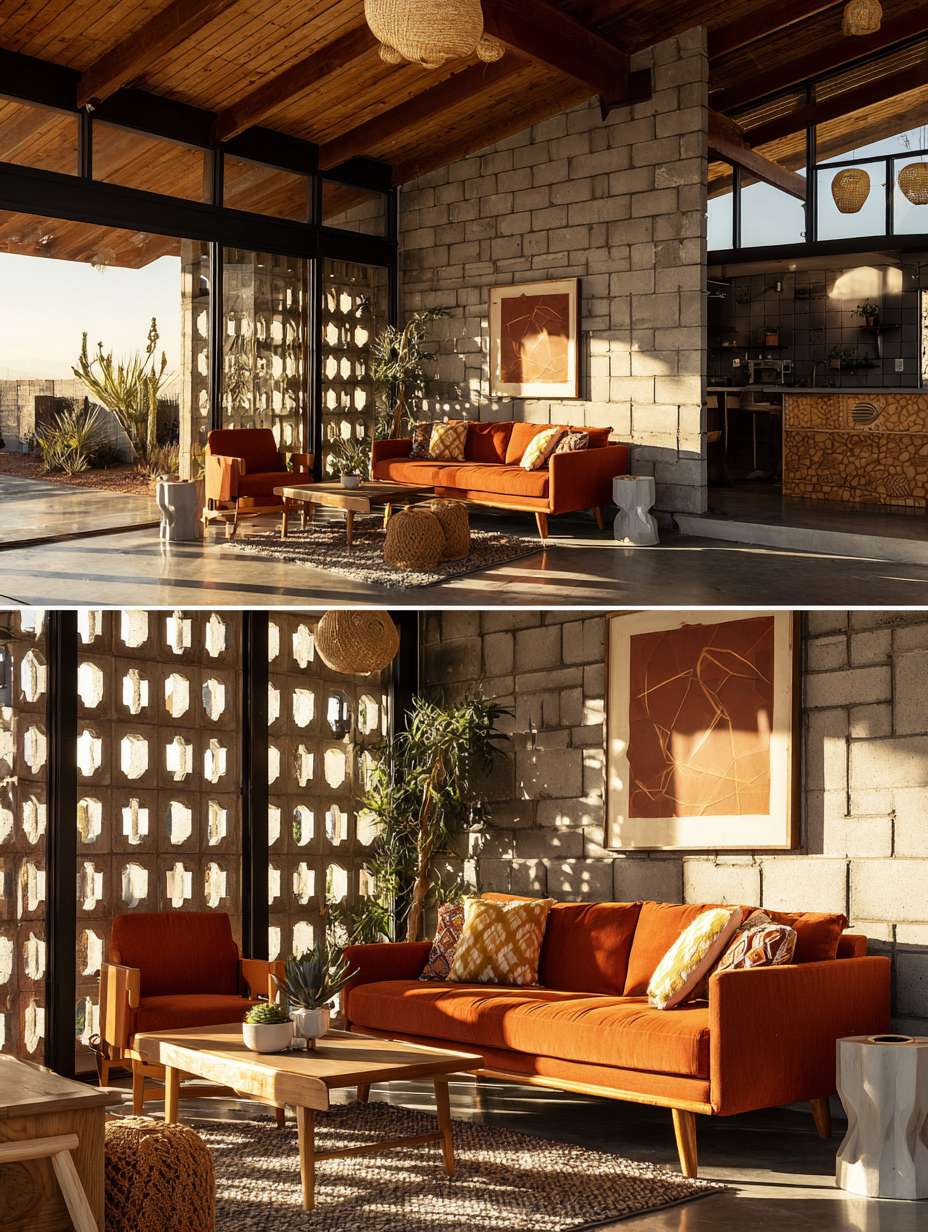
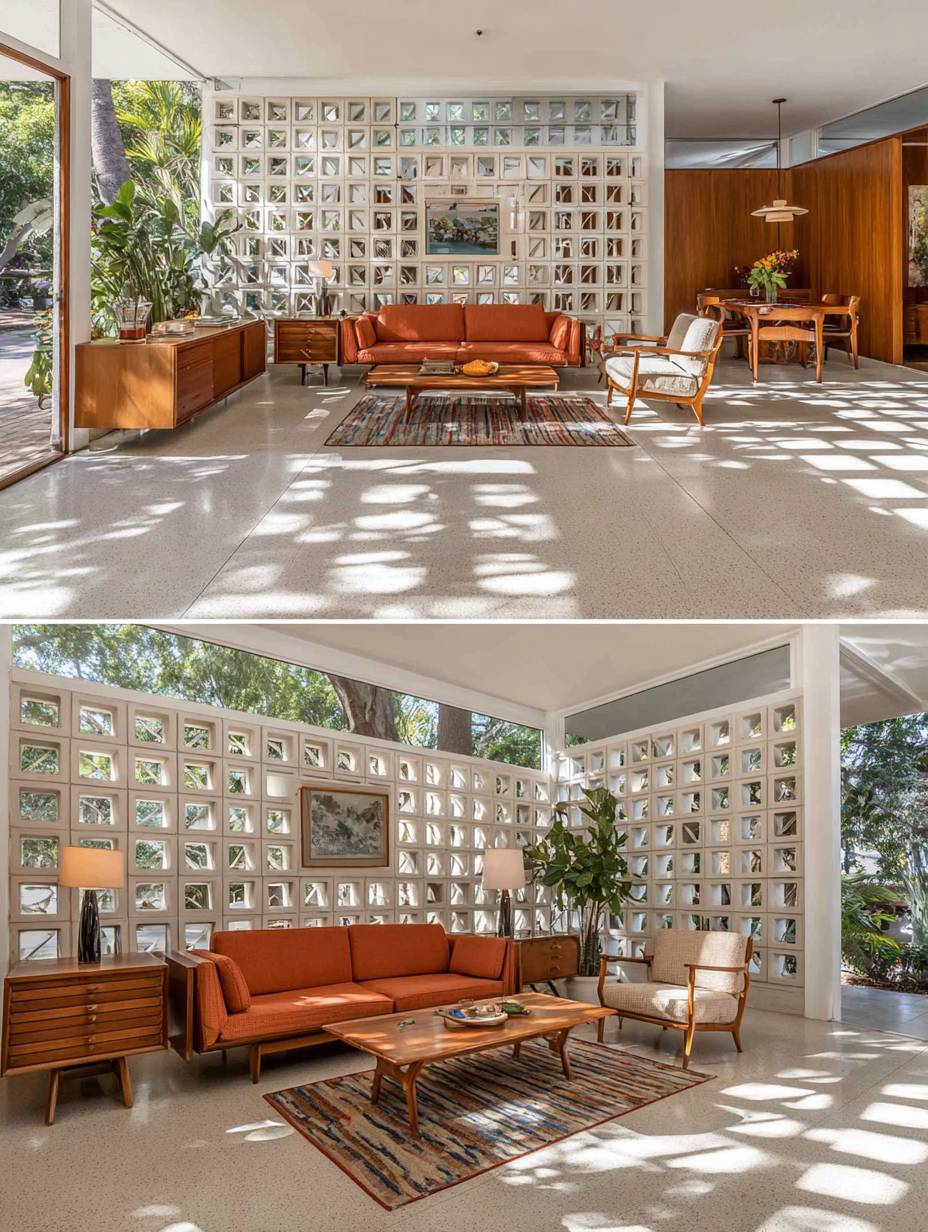
The decorative concrete breeze block partition channels mid-century modern design through its geometric openings and architectural presence. Arranged in distinctive patterns with diamond or cross-shaped voids, grey concrete blocks create semi-transparent barriers that allow both air flow and light transmission while defining separate spaces. This partition style separates living areas from enclosed patios or sun rooms, where the ventilation properties become particularly valuable. The smooth concrete finish and precise edges demonstrate quality manufacturing while the modular repetition creates rhythmic pattern that’s both mathematical and organic.
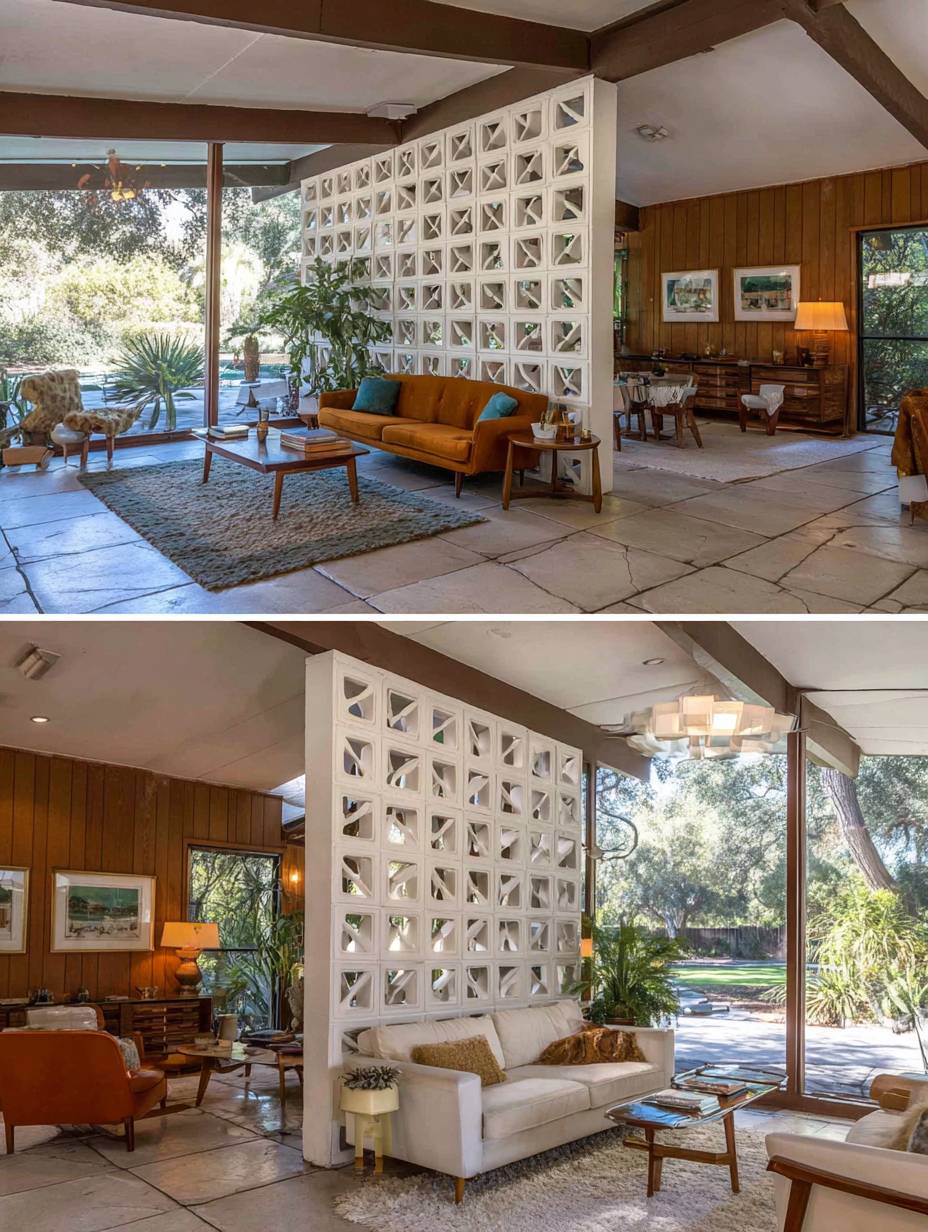
The mid-century modern aesthetic celebrated honest materials and functional design, principles perfectly embodied in decorative concrete blocks. The blocks were originally developed for warm climates where ventilation was crucial, but their distinctive appearance and sculptural quality earned them recognition as legitimate design elements. When paired with retro-style furniture in warm orange tones and teak wood pieces, the concrete block partition anchors spaces in authentic period design. The grey concrete provides neutral backdrop that allows colorful furnishings to take center stage while the geometric openings create ever-changing patterns as light passes through at different angles.
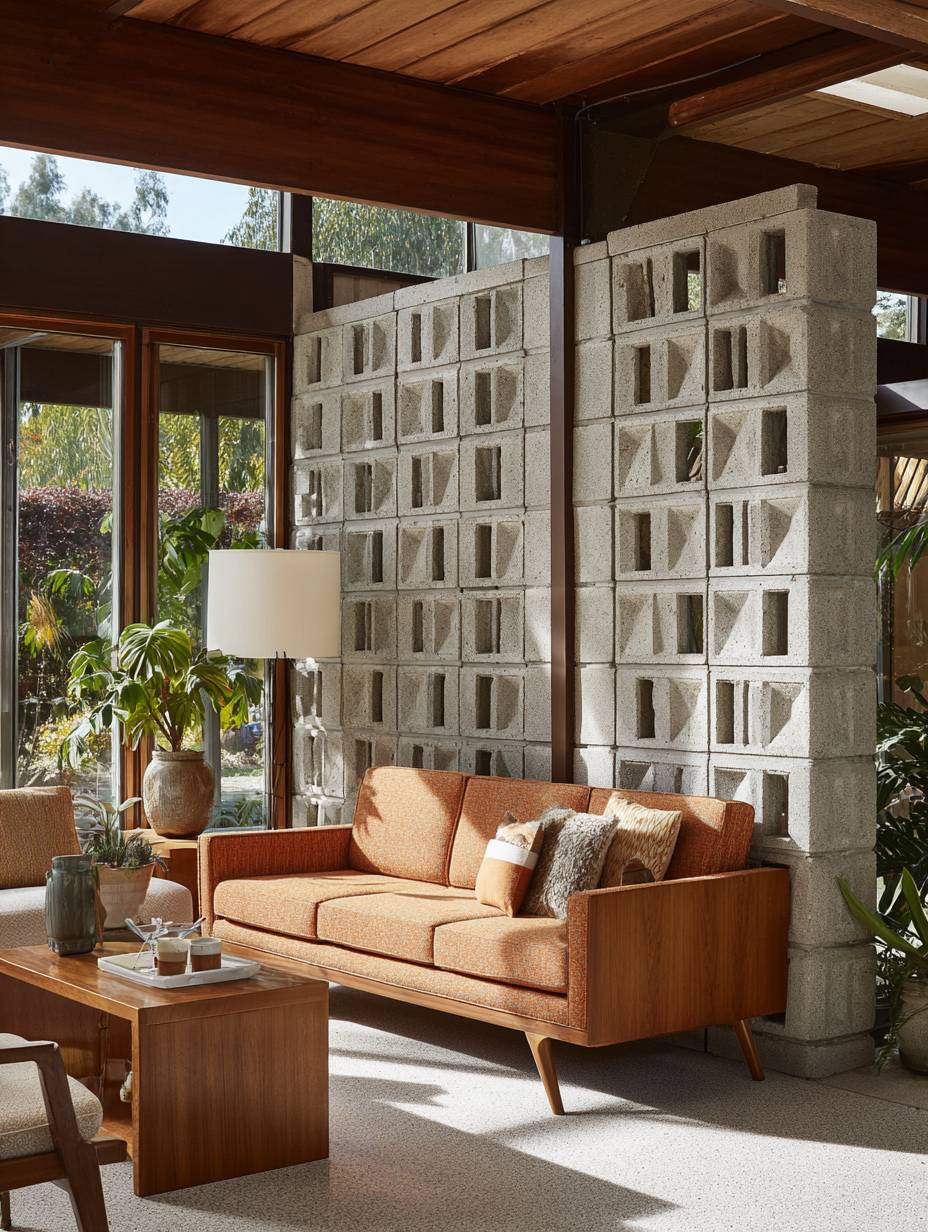
Natural light interaction with breeze block patterns creates one of this partition’s most compelling features. Direct sunlight casts geometric shadow patterns on adjacent floors and walls, creating secondary designs that shift and transform as the sun moves across the sky. The three-dimensional depth of each block creates miniature chambers within the pattern, adding complexity beyond simple flat screening. The ventilation benefits remain practical—air circulates freely through the openings, preventing stagnant pockets and supporting natural climate control. Modern interpretations may use traditional concrete or explore alternative materials like fiber-reinforced polymers that replicate the aesthetic with reduced weight.
- Ensure structural adequacy of floor systems to support concrete weight before installation
- Plan proper foundation or base to distribute weight and prevent settling or cracking
- Consider building codes regarding structural masonry and obtain necessary permits
- Seal if desired to prevent dusting and make maintenance easier while preserving appearance
- Plan pattern carefully ensuring openings align properly and create desired visual effect
- Allow proper curing if using traditional concrete before stressing or loading the structure
24. Custom Aquarium Partition with Backlighting
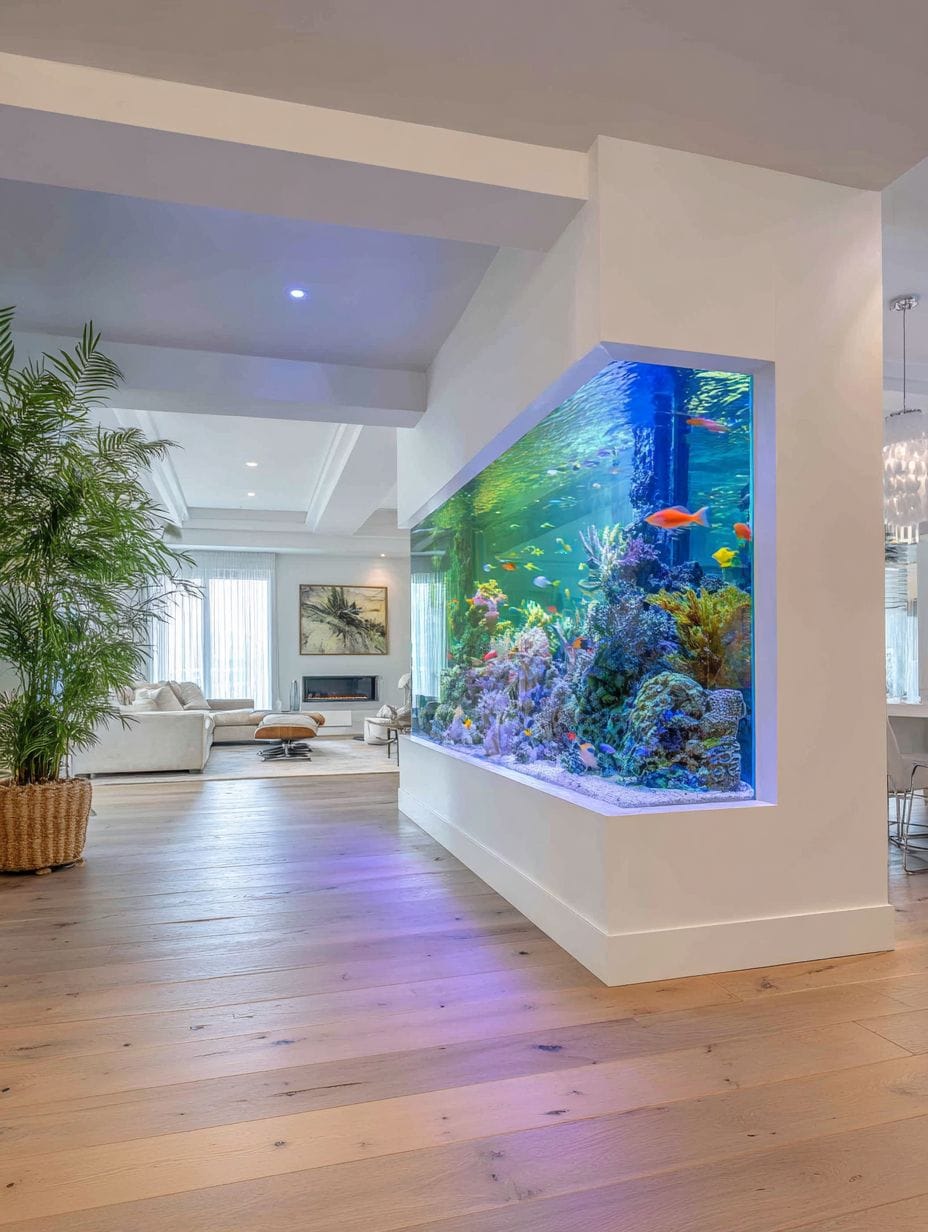
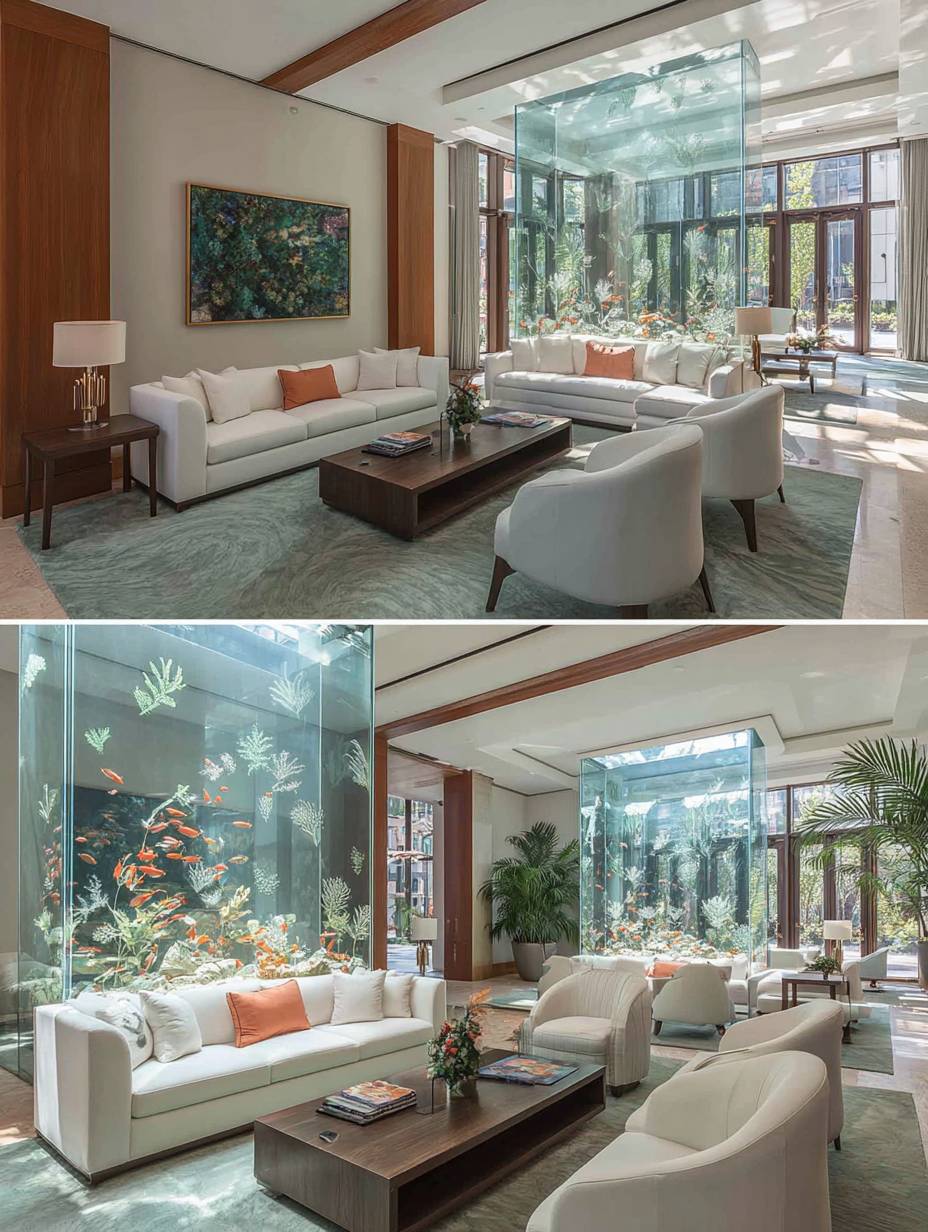
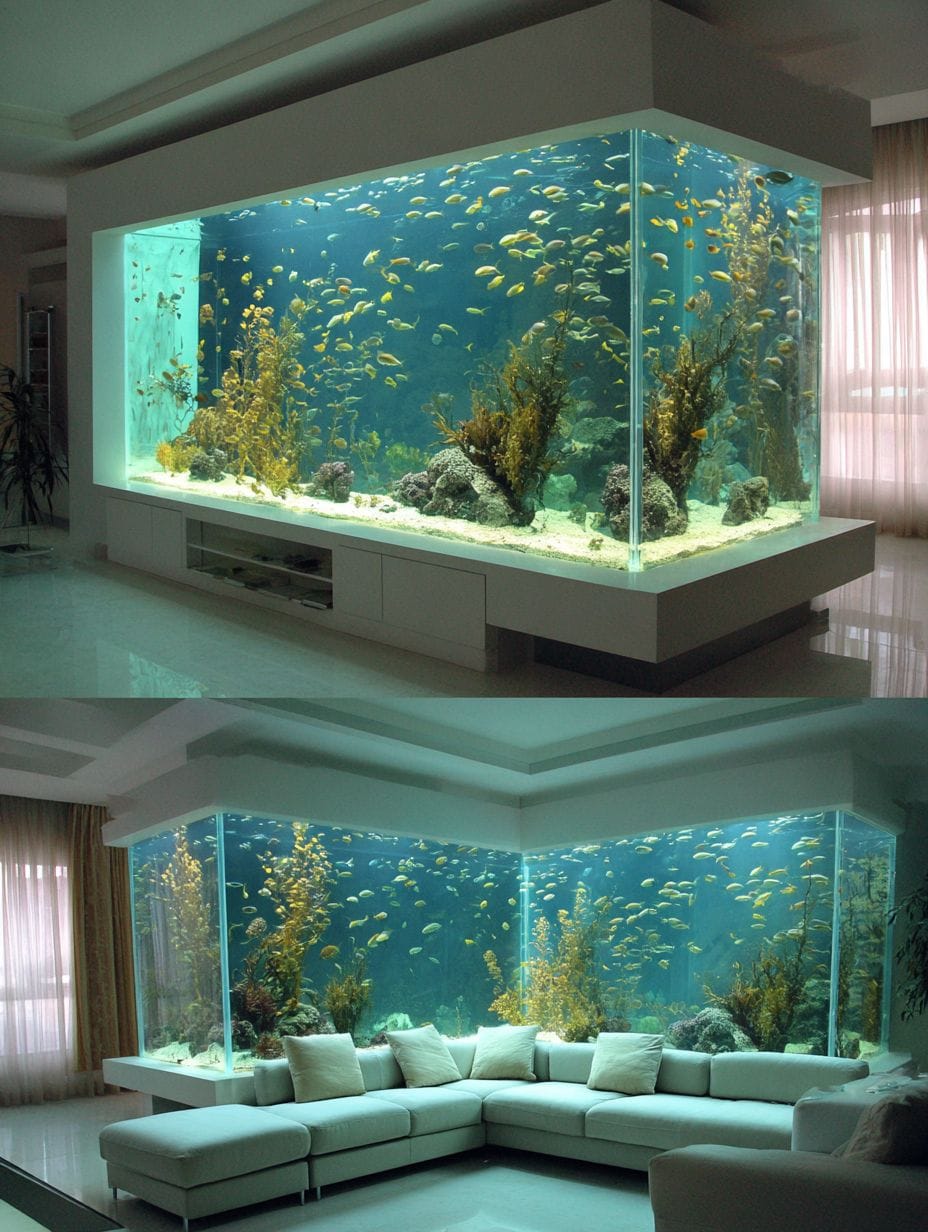
The dual-purpose aquarium partition represents the ultimate in living architectural elements, transforming functional space division into mesmerizing living art installation. This floor-to-ceiling custom fish tank creates a living ecosystem visible from both sides, separating main living spaces from home theater areas while providing constant motion, color, and life. Colorful tropical fish swim among carefully arranged aquatic plants and coral formations, their graceful movements creating hypnotic animation that draws the eye and calms the mind. The ambient blue-green LED lighting creates ethereal atmosphere that transforms the entire room, casting gentle, shifting light across surrounding surfaces as fish move through illuminated water.
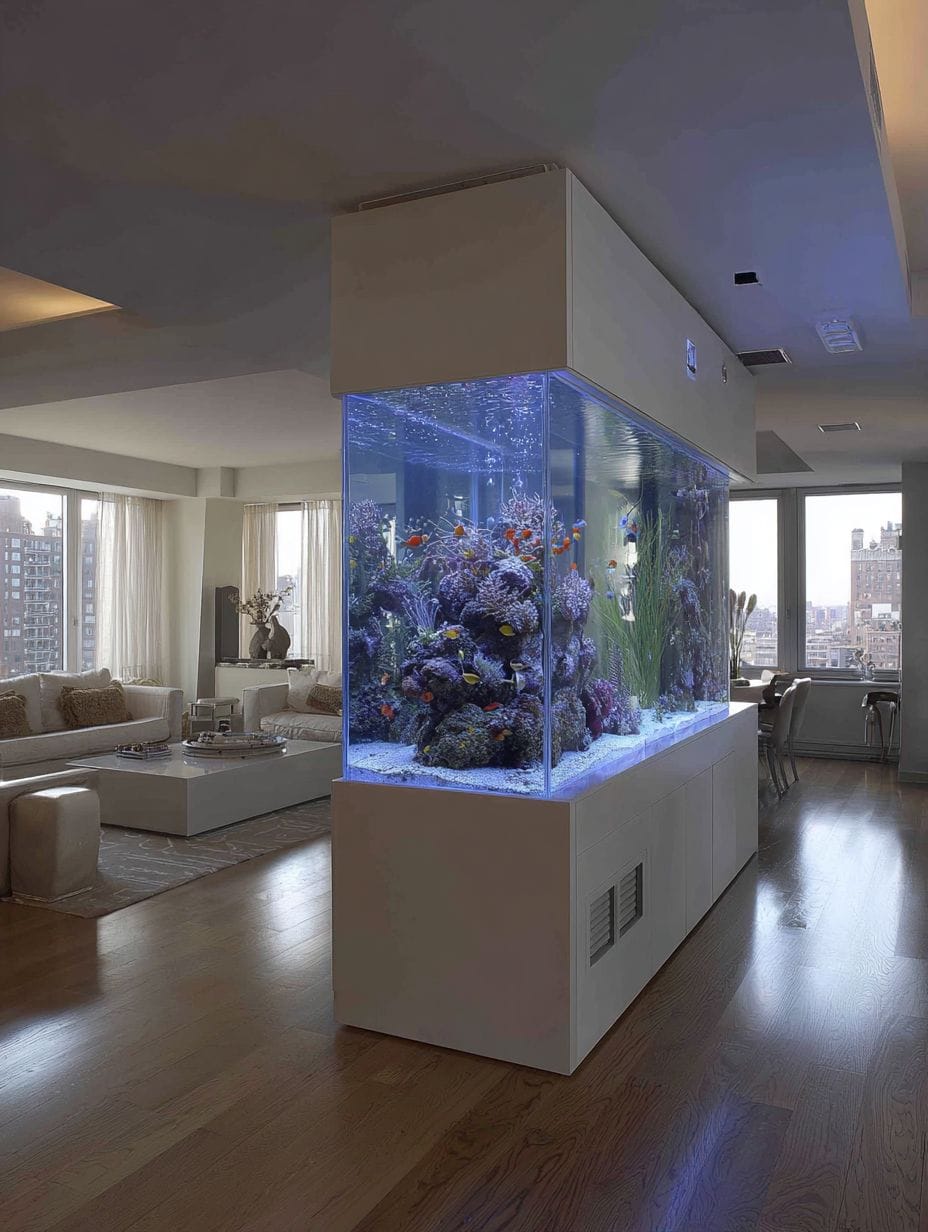
The technical complexity of maintaining a large aquarium partition requires significant planning and ongoing commitment. Hidden filtration systems continuously clean and oxygenate the water while maintaining proper temperature and chemical balance. The tank must be properly sealed and supported—water is extremely heavy, and structural calculations must ensure adequate support for the total weight. The minimalist white framing keeps focus on the aquatic display while concealing necessary equipment and plumbing connections. Professional aquarium designers can create thriving ecosystems that remain healthy with reasonable maintenance, selecting fish species that coexist peacefully and plants that thrive in available lighting conditions.
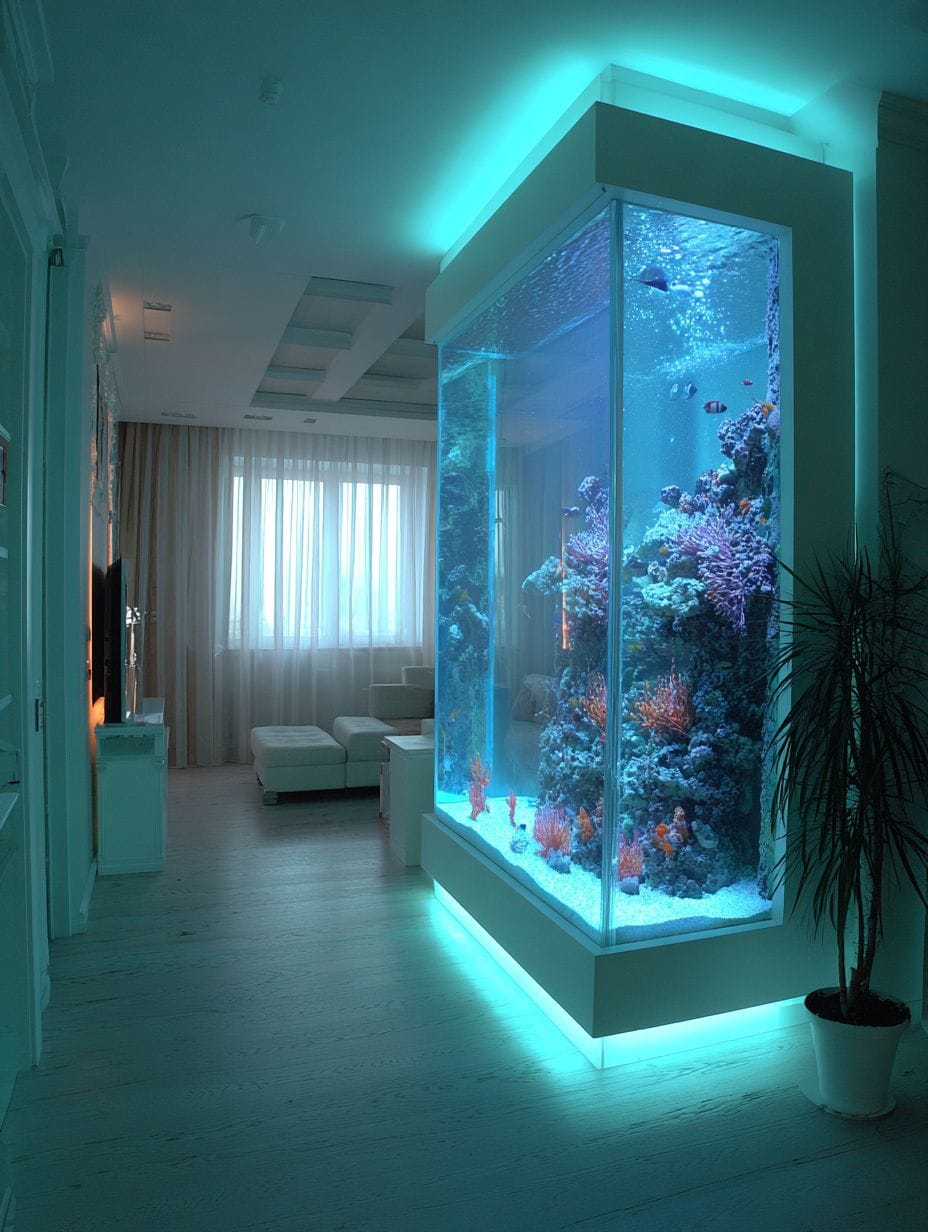
The aquarium partition creates unique ambiance unlike any other divider type. The gentle sound of bubbling water provides white noise that masks other household sounds while creating calming background soundtrack. Watching fish swim has been scientifically proven to reduce blood pressure and stress levels, making the aquarium partition both beautiful and therapeutically beneficial. The blue-green lighting creates completely different atmosphere than traditional illumination—spaces feel cooler, calmer, and more mysterious. Children are particularly fascinated by aquariums, and the partition becomes educational opportunity to learn about aquatic life, ecology, and responsibility. The living nature of the partition means it constantly changes and evolves, providing new interest even for long-time viewers.
- Consult aquarium professionals for design, installation, and species selection advice
- Plan maintenance access to both sides for cleaning, feeding, and equipment service
- Ensure structural adequacy to support water weight plus tank, substrate, and decorations
- Install backup systems for filtration, heating, and aeration to protect fish during equipment failure
- Select appropriate species compatible with each other and suitable for tank size and conditions
- Commit to regular maintenance including water changes, filter cleaning, and water quality testing
25. Pivoting Oversized Door Panel System
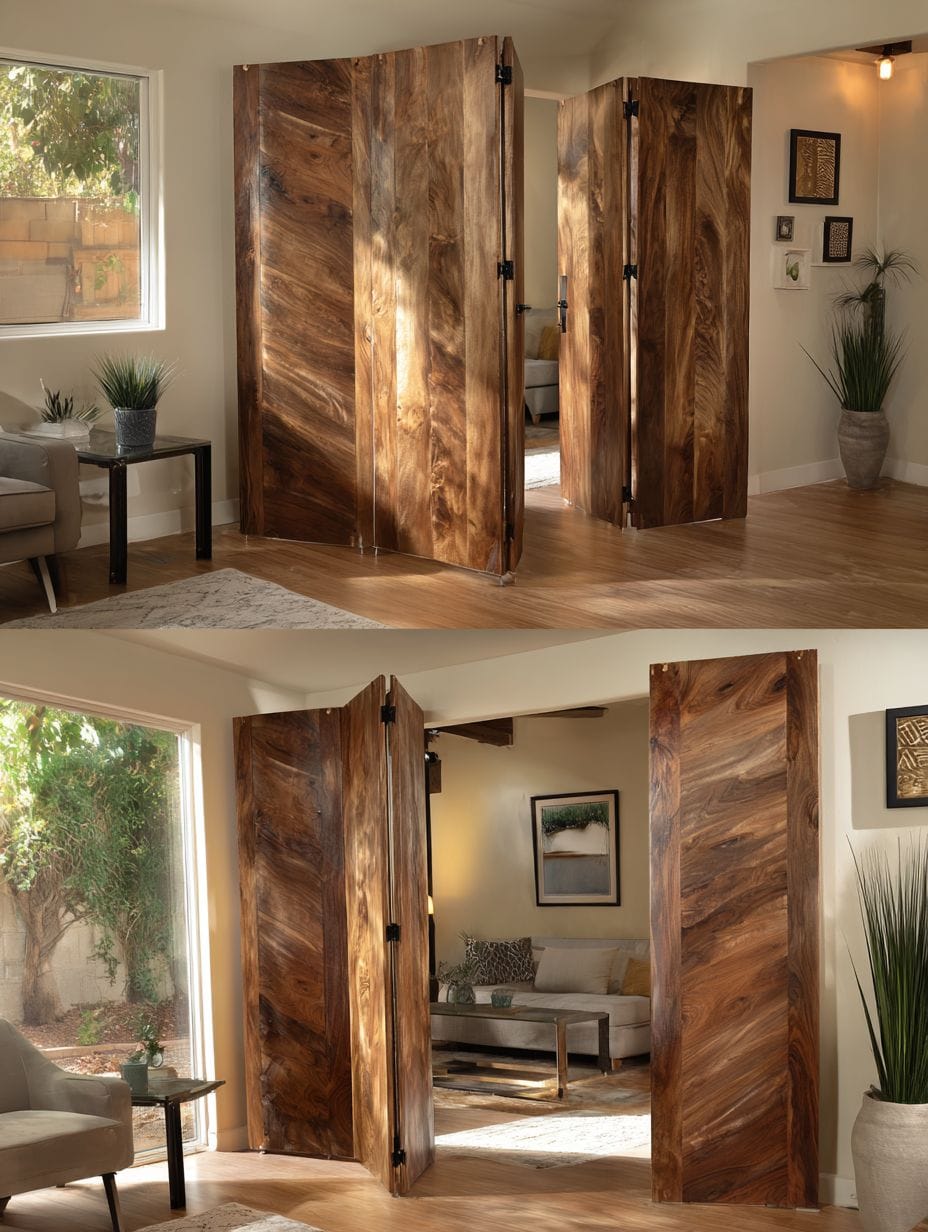
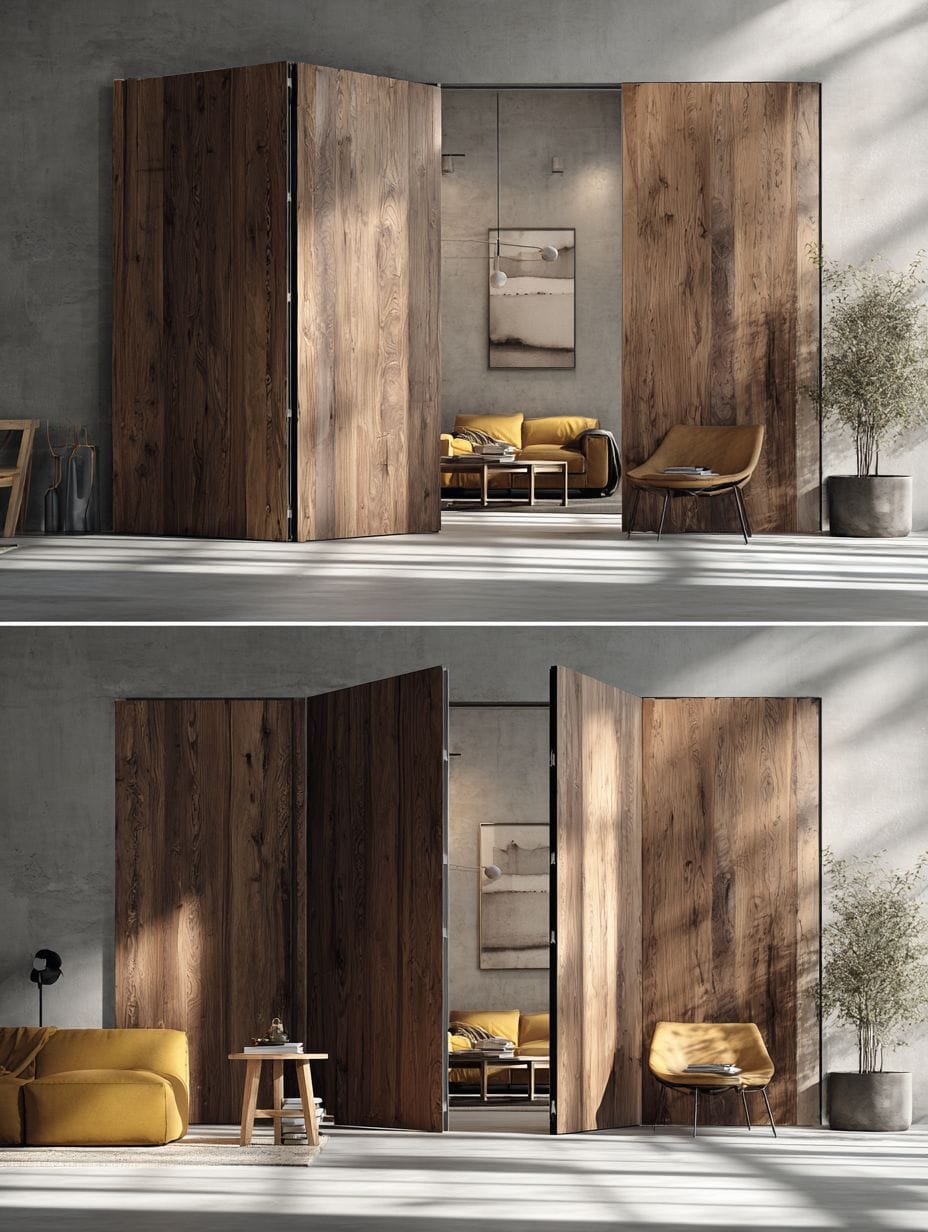
The pivoting door partition system offers exceptional flexibility through oversized solid wood panels that rotate to create various spatial configurations. Crafted from walnut with rich brown tones and pronounced grain patterns, these substantial doors pivot on concealed hardware that allows 180-degree rotation. When fully open, the doors stack against walls, creating completely open flow between living room and guest bedroom. In intermediate positions, the doors can partially close to create semi-private spaces for various activities. When completely closed, they provide full separation and sound dampening, converting open living area into private guest quarters.
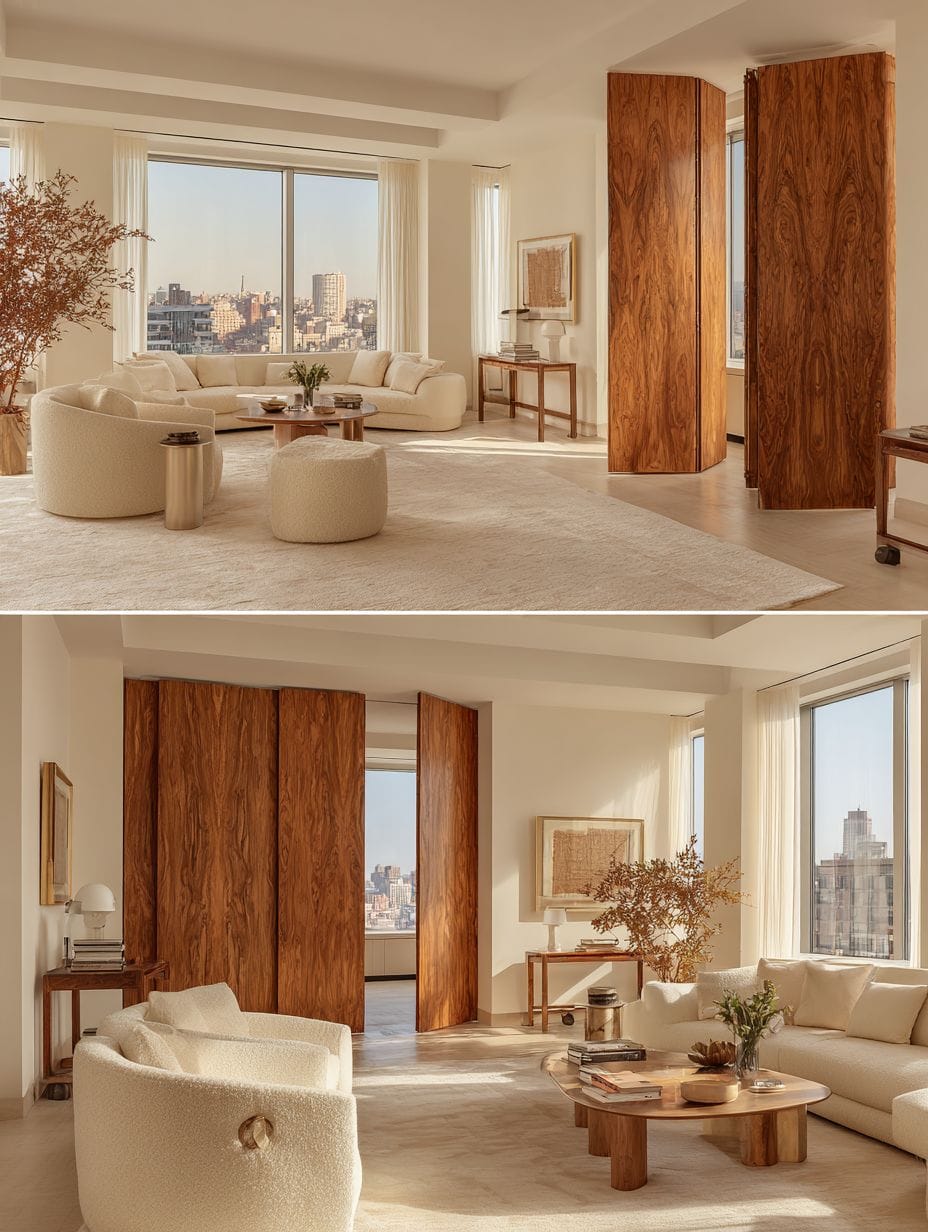
The technical innovation of pivot hardware represents significant advancement over traditional hinged doors. Rather than swinging on side-mounted hinges, pivot doors rotate around a central vertical axis, allowing smooth operation of very large, heavy panels without strain. The matte finish applied to the walnut showcases the wood’s natural beauty while protecting against moisture and wear. Simple round metal door pulls provide functional grip points without interrupting the clean planes of the wood surface. The substantial thickness of the panels—typically 1.75 to 2 inches—provides acoustic benefits, blocking sound transmission between spaces more effectively than thinner partitions.
Clean modern furniture in neutral tones allows the architectural door panels to command attention as the space’s primary design feature. The flexibility of the pivoting system adapts to changing household needs—empty nesters might keep panels open most of the time until guests visit, while families with teenagers appreciate the ability to create private spaces on demand. Natural lighting highlights the walnut’s character, emphasizing grain patterns and the warm, organic nature of real wood. The mechanical fascination of watching large panels smoothly rotate adds experiential dimension—the partition becomes interactive element that engages users physically and mentally.
- Specify quality pivot hardware rated for panel weight with smooth, reliable operation
- Ensure proper floor preparation with level surfaces allowing full rotation without binding
- Plan clearance carefully ensuring panels can rotate without striking furniture or architectural elements
- Balance panels properly so they remain stationary in any position rather than swinging freely
- Finish all sides equally as panels are visible from multiple angles during rotation
- Maintain pivot points with periodic lubrication and adjustment to ensure smooth operation
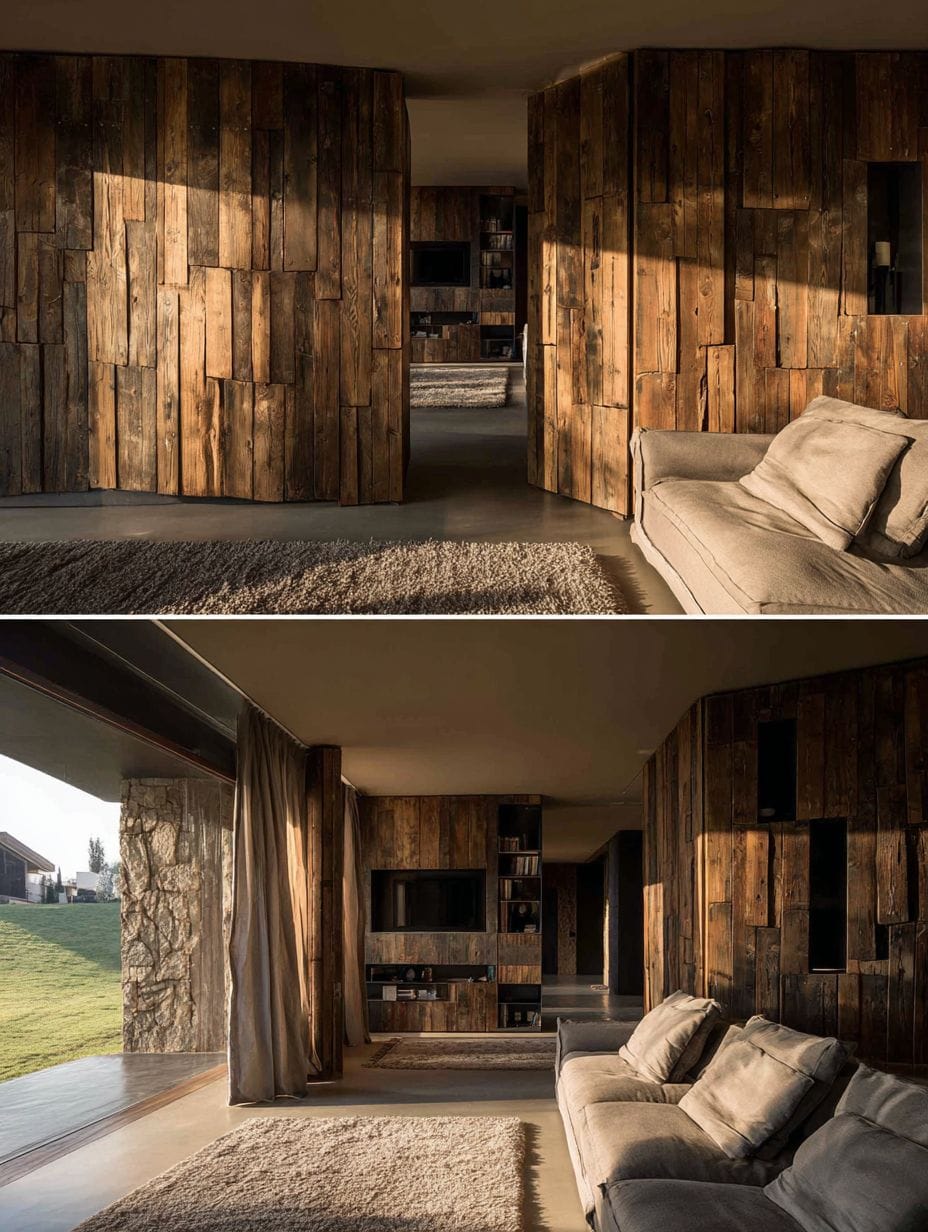
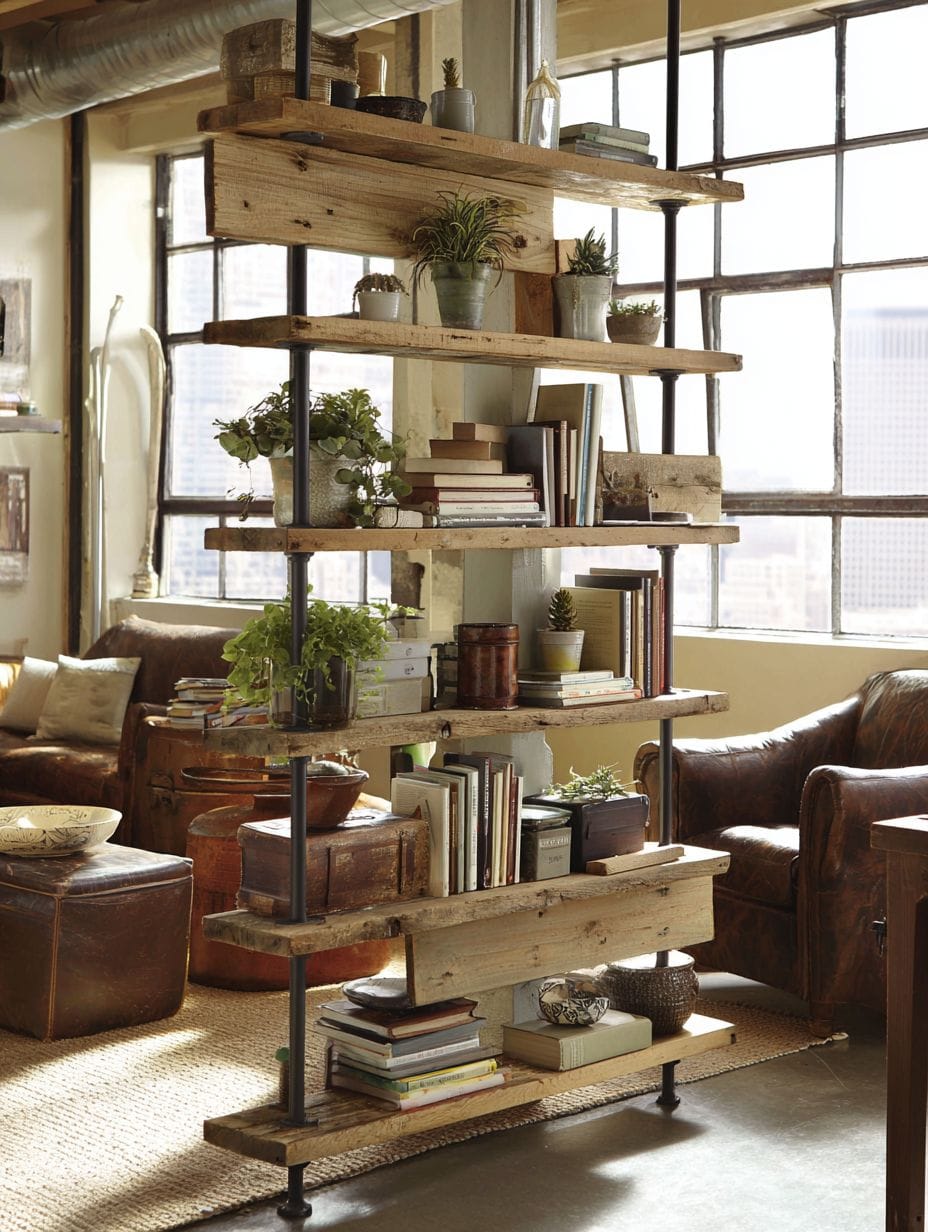
26. Ladder-Style Leaning Partition with Reclaimed Wood
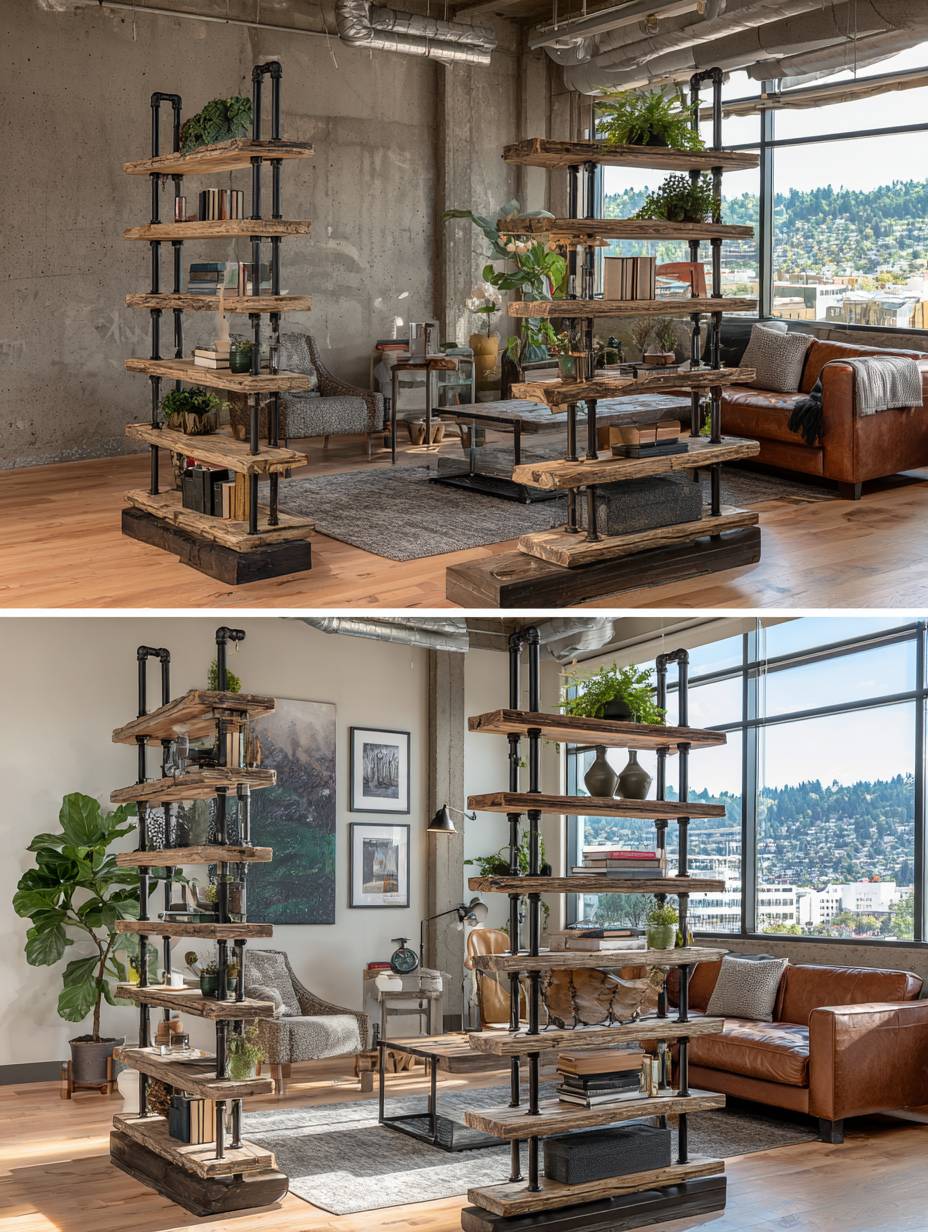
The ladder-style leaning partition brings relaxed, industrial-chic aesthetic through its casual stance and honest materials. Constructed from reclaimed scaffolding planks supported by black metal pipe framework, this partition leans at a comfortable angle rather than standing rigidly vertical. Multiple horizontal shelves display books, small potted plants, and personal objects, transforming the partition into both functional storage and spatial divider. The raw wood shows authentic wear patterns and varying tones that speak to its previous industrial life, while the utilitarian pipe supports celebrate functional design without unnecessary ornamentation.
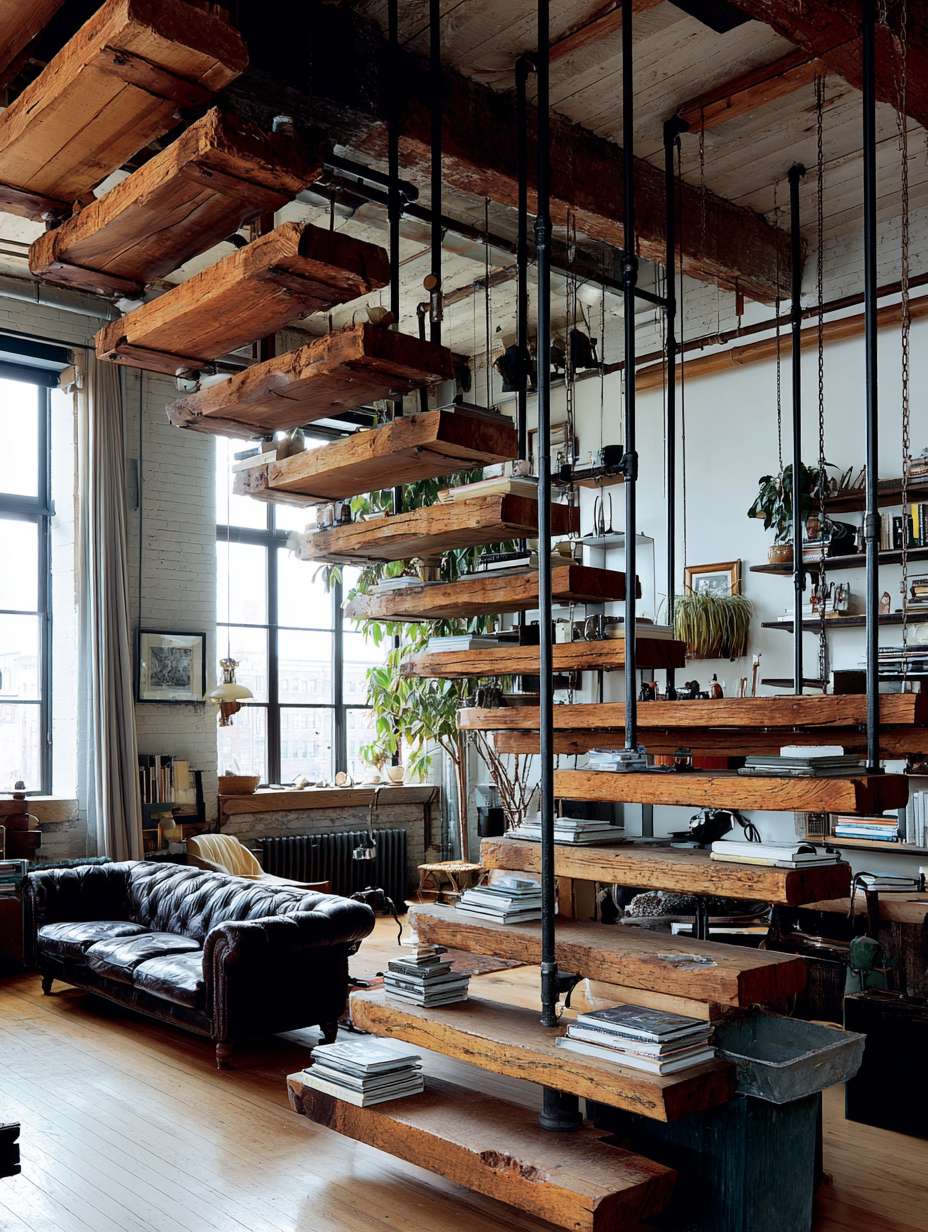
The genius of the leaning design lies in its approachable, non-permanent appearance. Unlike built-in partitions that require significant commitment, the ladder-style divider can be easily repositioned or removed when spaces need to be reconfigured. The casual angle creates dynamic visual interest—the eye follows the strong diagonal line created by the leaning structure, adding movement and energy to interior spaces. Each shelf provides functional storage while contributing to the overall separation between living and workspace zones. The varying depths of displayed objects create three-dimensional composition that rewards viewing from multiple angles.
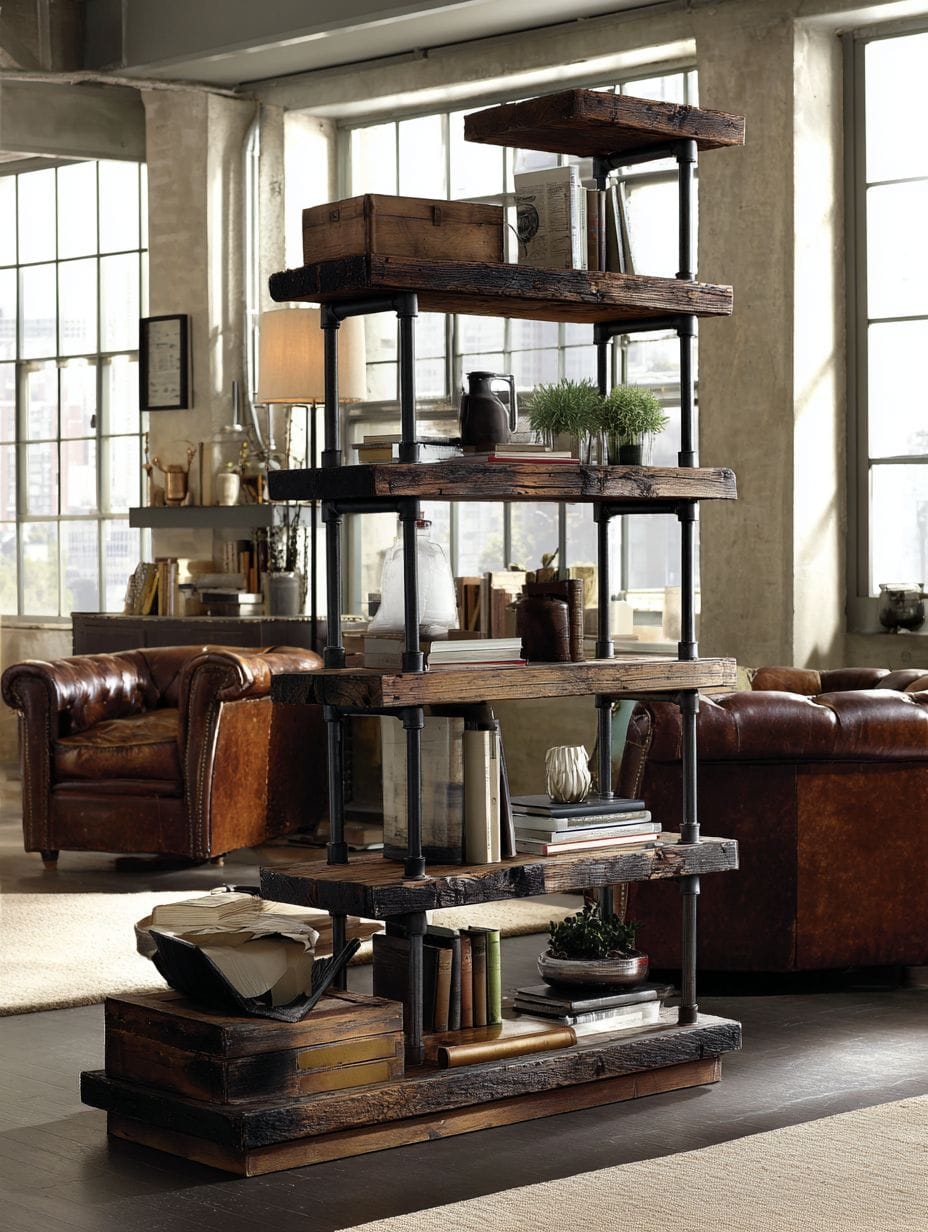
The industrial aesthetic pairs perfectly with vintage leather furniture, exposed ductwork, and urban loft interiors. The black pipe supports create strong contrast against the varied wood tones while providing substantial structural strength. Natural light from large industrial-style windows highlights texture variations in the reclaimed wood—some planks retain traces of paint, others show deep grain from years of weather exposure, and all display the authentic character of materials that have lived previous lives. The DIY aesthetic appeals to those who appreciate creative, budget-conscious solutions and aren’t afraid of slightly imperfect, handmade results that showcase personality over perfection.
- Calculate stable angle to prevent tipping while maintaining desired leaning aesthetic
- Secure at top with wall anchors or ceiling attachment to prevent dangerous tipping
- Distribute weight carefully placing heavier items on lower shelves for stability
- Prepare reclaimed wood properly including cleaning, treating, and removing hazards
- Use quality pipe fittings that create solid connections and support shelf weight
- Consider floor protection using felt pads or rubber feet to prevent scratching or marking
27. Gradient Grey Slatted MDF Partition
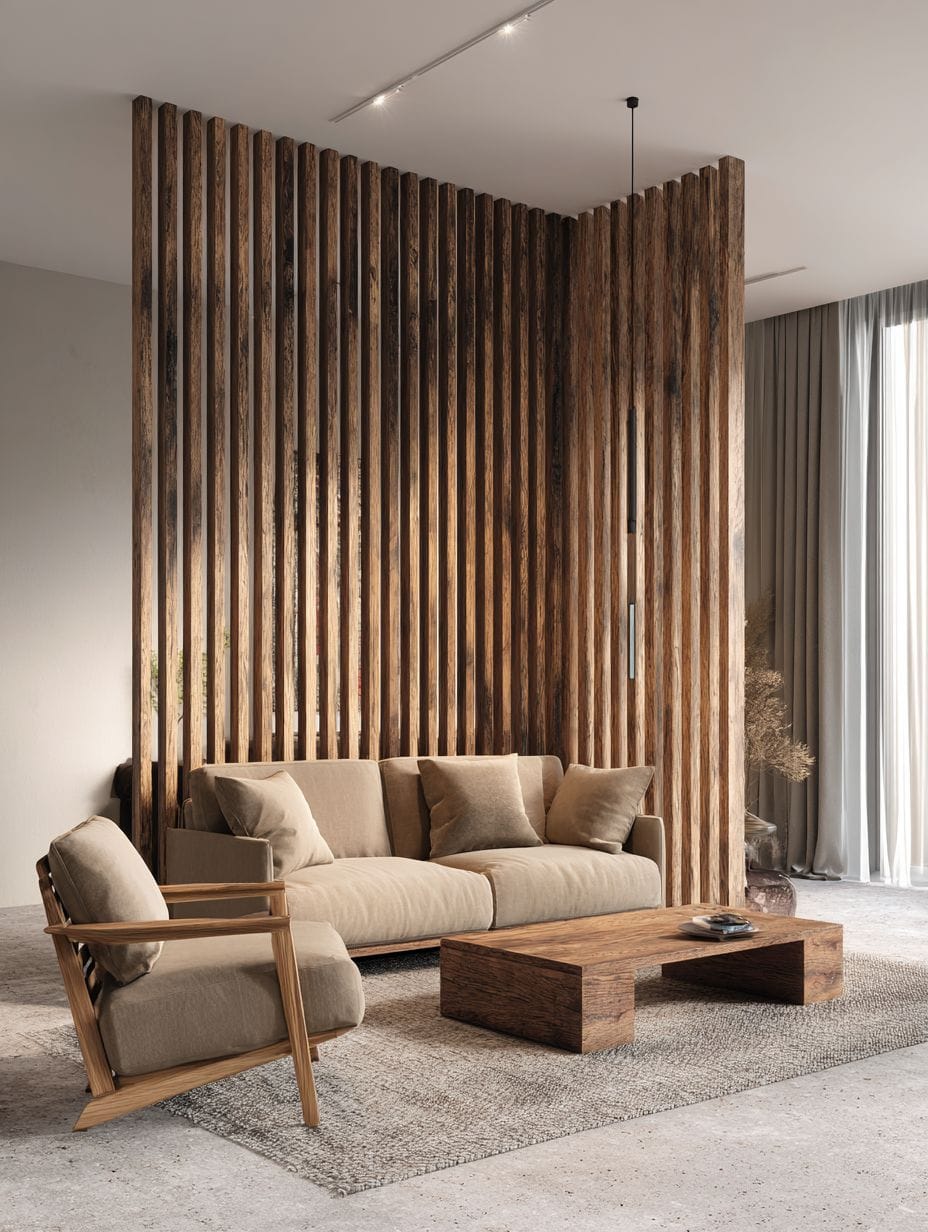
The gradient grey slatted partition demonstrates how color can transform simple geometric forms into sophisticated design statements. Vertical MDF panels are painted in carefully graduated grey tones transitioning from light pearl grey at one edge to deep charcoal at the opposite edge. This subtle color gradation creates depth and visual movement while the vertical orientation emphasizes ceiling height and creates sense of spaciousness. The contemporary partition separates living areas from home gym or yoga spaces, where the calming neutral color palette supports the mindfulness and focus required for physical practice.
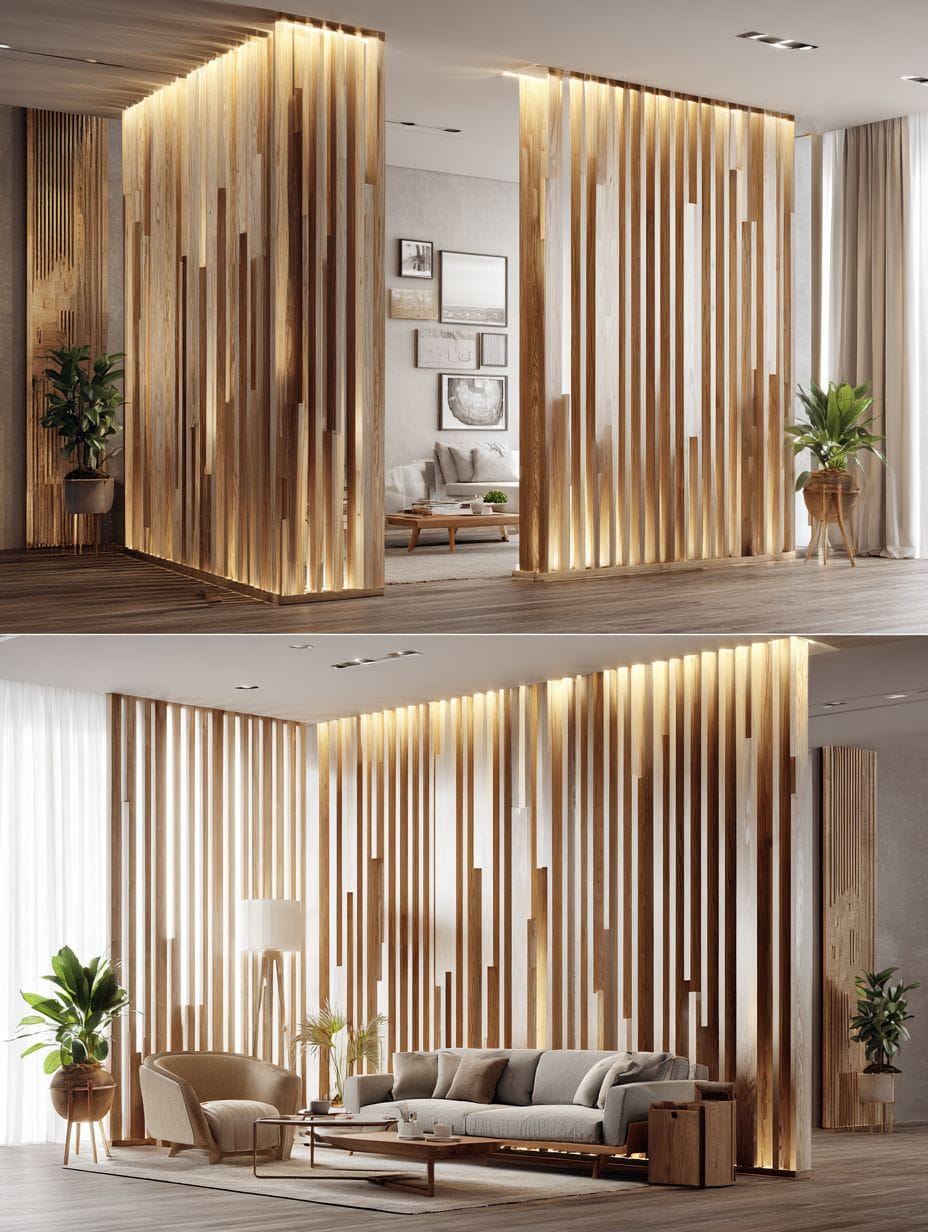
The technical execution of gradient painting requires precision and skill to achieve smooth transitions between tones without visible bands or abrupt changes. Each vertical slat is painted in its designated grey tone, with colors shifting incrementally from panel to panel. The result is partition that appears to subtly shift and change as you move past it, the gradient creating optical interest that static single-color installations cannot achieve. The smooth painted finish on MDF creates contemporary, refined appearance while the material itself provides cost-effective alternative to solid wood with excellent dimensional stability that resists warping in controlled interior environments.
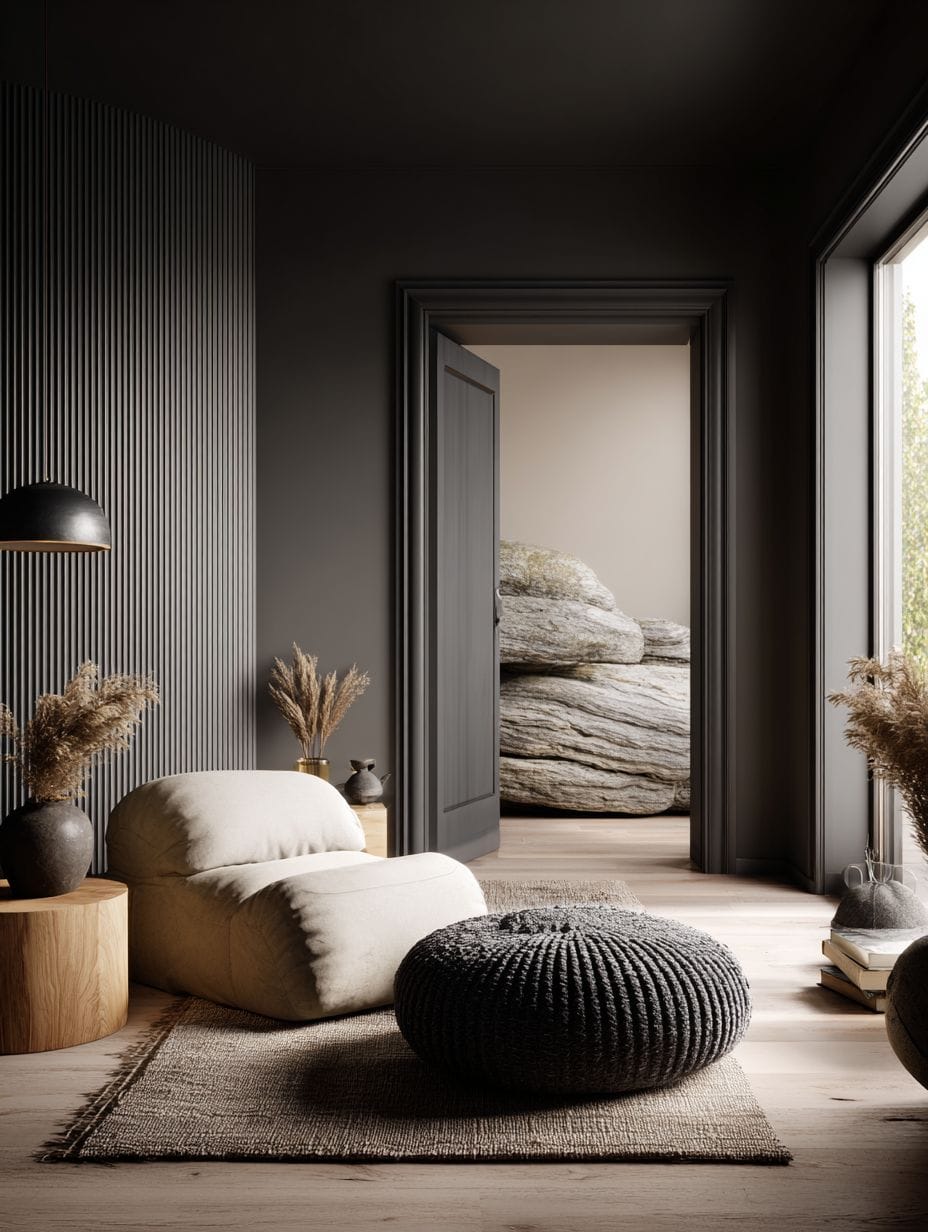
The Scandinavian-style furniture with natural wood accents complements the neutral color palette while warm wood tones prevent the grey from feeling cold or sterile. Soft diffused natural lighting highlights the subtle color transitions, creating gentle shadows between slats that emphasize the partition’s three-dimensional quality. The minimalist design sensibility evident in such installations celebrates restraint and sophisticated simplicity—beauty achieved through refined color choices and precise execution rather than ornate decoration or complex forms. The gradient treatment demonstrates that even basic geometric forms can become artistic expressions when color is applied thoughtfully and with intention.
- Plan gradient carefully with sufficient steps to create smooth transitions without banding
- Use quality MDF properly sealed and primed for smooth, consistent paint finish
- Apply professional painting using consistent techniques for uniform appearance across all panels
- Ensure proper ventilation during painting and curing to prevent harmful fume accumulation
- Seal painted surfaces with clear protective coating to resist marking and ease cleaning
- Install precisely to maintain consistent spacing and alignment emphasizing the gradient effect
Why These Living Room Partition Ideas Excel in Modern Interior Design
The twenty-seven living room partition ideas presented in this comprehensive guide represent the best contemporary approaches to space division because they successfully balance multiple design considerations simultaneously. Effective room partitions must accomplish several objectives: they create functional separation without sacrificing openness, they contribute aesthetically to overall interior design, they adapt to modern lifestyle needs, and they respect the architectural character of existing spaces. The partition solutions explored here excel precisely because they address all these requirements while offering diverse options for various design styles, budget ranges, and spatial constraints.
From a functional space planning perspective, these partition designs recognize that modern living demands flexibility. Open-concept layouts have dominated residential design for decades, but the pandemic-driven shift to work-from-home arrangements revealed limitations—sometimes we desperately need separation, privacy, and distinct zones for different activities. The partition ideas featured here provide that separation without requiring permanent structural changes. Whether through folding screens that can be repositioned, curtain systems that slide open or closed, or modular furniture partitions that reconfigure as needs change, these solutions offer the adaptability contemporary lifestyles require.
The material diversity represented in these partition concepts ensures options for every design aesthetic and budget. Natural materials like reclaimed wood, bamboo, rattan, and live plants appeal to those prioritizing sustainability and biophilic design principles. Industrial materials including metal grids, concrete blocks, and steel-framed glass satisfy urban loft aesthetics and contemporary industrial style preferences. Traditional crafts like carved wooden screens and woven textiles honor cultural heritage while bringing artisanal quality into modern homes. This range ensures that regardless of your existing décor style—whether Scandinavian minimalism, mid-century modern, traditional elegance, or contemporary innovation—you’ll find partition solutions that complement and enhance rather than clash with your established aesthetic.
The transparency variations among these partition types represent thoughtful response to the competing desires for both separation and connection. Completely transparent glass partitions maintain full visual connection while providing physical and acoustic separation. Semi-transparent options like slatted wood, perforated metal, and woven rattan create graduated privacy where you’re aware of activity beyond the partition without full visual clarity. Opaque partitions including solid wood doors, dense curtains, and bookshelf dividers provide complete visual screening when privacy is paramount. This spectrum allows you to select the appropriate transparency level for your specific situation—home offices might need more screening during video calls, while dining areas might prefer visual connection to kitchen activities.
The acoustic considerations in partition design significantly impact livability but often receive insufficient attention. Soft materials including fabric curtains, rope installations, and acoustic panels absorb sound waves, reducing echo and creating quieter environments. Hard materials like glass and metal reflect sound, which can increase noise levels in spaces with predominantly hard surfaces. Living walls provide unexpected acoustic benefits through the sound-absorbing properties of soil and plant materials. Understanding these acoustic properties helps you select partitions that improve rather than degrade your home’s sound environment—particularly important in open-concept spaces where noise from cooking, television, and conversation can overlap uncomfortably.
The integration of additional functions into partition design demonstrates efficiency modern homeowners value. Bookshelf partitions provide essential storage while dividing space, addressing two needs simultaneously. Media unit partitions combine entertainment equipment housing with spatial separation. Platform partitions incorporate built-in seating and storage within their structure. Aquarium partitions bring living art and environmental interest alongside their dividing function. This multi-functionality maximizes value and space utilization, making partitions worthwhile investments rather than single-purpose elements that serve only division.
From a lighting design perspective, these partition solutions demonstrate sophistication in how they interact with both natural and artificial illumination. Transparent and semi-transparent partitions allow light to penetrate deep into interior spaces, preventing the dark, cave-like zones that solid walls can create. Partitions positioned perpendicular to windows can channel and direct natural light into areas that would otherwise remain dim. Partitions with integrated LED lighting become illuminated features that provide ambient glow during evening hours. Textured surfaces including carved wood, woven materials, and perforated metal create interesting shadow patterns that add dynamic visual interest as lighting conditions change throughout the day.
The installation flexibility of these partition types ranges from completely portable to permanently integrated, accommodating both renters seeking non-permanent solutions and homeowners willing to invest in custom-built features. Folding screens, curtain systems, and leaning partitions require no structural modification and can move with you to future homes. Half-walls, platform partitions, and built-in media units represent more permanent installations that add architectural character and potentially increase property value. This range ensures accessibility—quality partition solutions exist at every investment level and commitment degree.
The maintenance requirements vary significantly among these partition types, influencing long-term satisfaction and practical feasibility. Living walls require regular watering, pruning, and plant replacement but reward caretakers with constantly evolving beauty and air purification benefits. Aquarium partitions demand dedicated maintenance including feeding, water changes, and equipment monitoring but provide unmatched visual interest and calming effects. Glass partitions require frequent cleaning to maintain clarity but offer timeless elegance and light transmission. Understanding these maintenance realities helps you select partitions you’ll actually maintain properly rather than growing to resent their demands.
The psychological impact of partition design on how we experience and use our living spaces deserves consideration. Partitions create zones that our minds recognize as distinct functional areas—even subtle division can trigger mental shifts from “work mode” to “relaxation mode” or from “public entertaining space” to “private retreat.” The visual weight, transparency, and permanence of partitions influence whether we feel comfortably enclosed or restrictively confined. Natural materials and living elements connect us to nature even indoors, providing documented mental health and wellbeing benefits. Color choices affect mood—warm wood tones feel welcoming while cool greys create calm sophistication. These psychological dimensions make partition selection about more than simple aesthetics or function.
The architectural integration of these partition solutions demonstrates respect for existing structural conditions. Some partitions work beautifully in spaces with high ceilings where floor-to-ceiling drama makes sense, while others suit standard ceiling heights without overwhelming proportions. Some designs complement exposed structural elements like beams or ductwork, while others work better in finished spaces with drywall and conventional finishes. The ability to harmonize with existing architecture rather than fighting against it contributes significantly to successful implementation and long-term satisfaction with partition choices.
Finally, the personal expression opportunities these partition designs offer shouldn’t be underestimated. Your home reflects your personality, values, and aesthetic preferences. A carefully selected partition becomes more than functional element—it’s a statement about what you value. Choosing reclaimed materials demonstrates environmental consciousness. Selecting handcrafted elements supports artisans and traditional skills. Creating living walls shows commitment to biophilic design principles. Installing artistic elements like carved screens or botanical resin panels reveals appreciation for beauty and craftsmanship. The partition becomes part of your home’s story and your personal narrative.
Conclusion
Living room partitions have evolved far beyond simple barriers and basic dividers into sophisticated design elements that enhance both function and beauty in contemporary homes. The twenty-seven partition ideas explored in this comprehensive guide demonstrate the remarkable range of possibilities available to homeowners seeking to create defined zones within open-concept spaces without sacrificing the light, air, and visual connection that make modern interiors so appealing. From the organic warmth of natural wood slats to the industrial edge of powder-coated metal grids, from the ethereal beauty of flowing linen curtains to the living art of green walls and aquarium installations—each partition type brings unique aesthetic qualities and practical benefits to your living environment.
The key to successful partition selection lies in understanding your specific needs, constraints, and priorities. Consider your available space, existing architectural features, design aesthetic preferences, budget limitations, and lifestyle requirements. Are you seeking permanent architectural additions that increase property value, or flexible solutions that can adapt as your needs change? Do you prioritize maximum light transmission and openness, or do you need substantial privacy and sound dampening? Are you willing to commit to ongoing maintenance of living elements, or do you prefer low-maintenance solutions? Answering these questions honestly will guide you toward partition options that you’ll appreciate and enjoy for years to come.
Remember that successful implementation extends beyond simply installing a partition—it requires thoughtful integration into your overall interior design scheme. Consider how the partition’s materials, colors, and textures relate to existing furnishings, finishes, and architectural elements. Think about how lighting will interact with your chosen partition throughout the day and evening. Plan the practical aspects including installation requirements, structural considerations, and ongoing maintenance needs. When all these elements align, your partition becomes seamless addition that feels intentional and right rather than afterthought or compromise.
Don’t be afraid to think creatively and adapt these ideas to your unique circumstances. Perhaps you’ll combine elements from multiple partition types—imagine a bookshelf divider with integrated lighting and some cubbies planted with trailing greenery. Maybe you’ll customize materials or dimensions to perfectly fit your space and needs. You might start with a portable solution and later commit to something more permanent once you’ve lived with the new spatial arrangement. The beauty of modern partition design lies in its flexibility and the permission it gives you to experiment until you find the perfect solution for your home and lifestyle.
Ultimately, well-designed living room partitions enhance daily life by creating spaces that function better, feel more comfortable, and look more beautiful. They allow open-concept homes to adapt to changing needs throughout the day—transforming from spacious entertaining areas to focused workspaces to peaceful retreats as circumstances demand. They add architectural interest and personal expression to interiors while solving practical problems. Whether you’re drawn to the minimalist elegance of glass and steel, the organic warmth of natural materials, the artistic quality of handcrafted elements, or the innovative functionality of multi-purpose designs, the perfect partition solution awaits your discovery and implementation in your own home.
