
The coffee table stands as the centerpiece of any living room, serving as both a functional surface and a statement piece that defines the aesthetic character of your space. More than just a place to rest your coffee cup or display a few decorative books, the right coffee table anchors your seating area, provides essential storage, and reflects your personal style. Whether you’re drawn to the clean lines of Scandinavian minimalism, the raw authenticity of industrial design, or the timeless elegance of mid-century modern aesthetics, your coffee table choice can dramatically transform the entire ambiance of your living room. In today’s diverse design landscape, homeowners have unprecedented access to innovative materials, creative forms, and multifunctional designs that blend beauty with practicality in ways that were unimaginable just a decade ago.
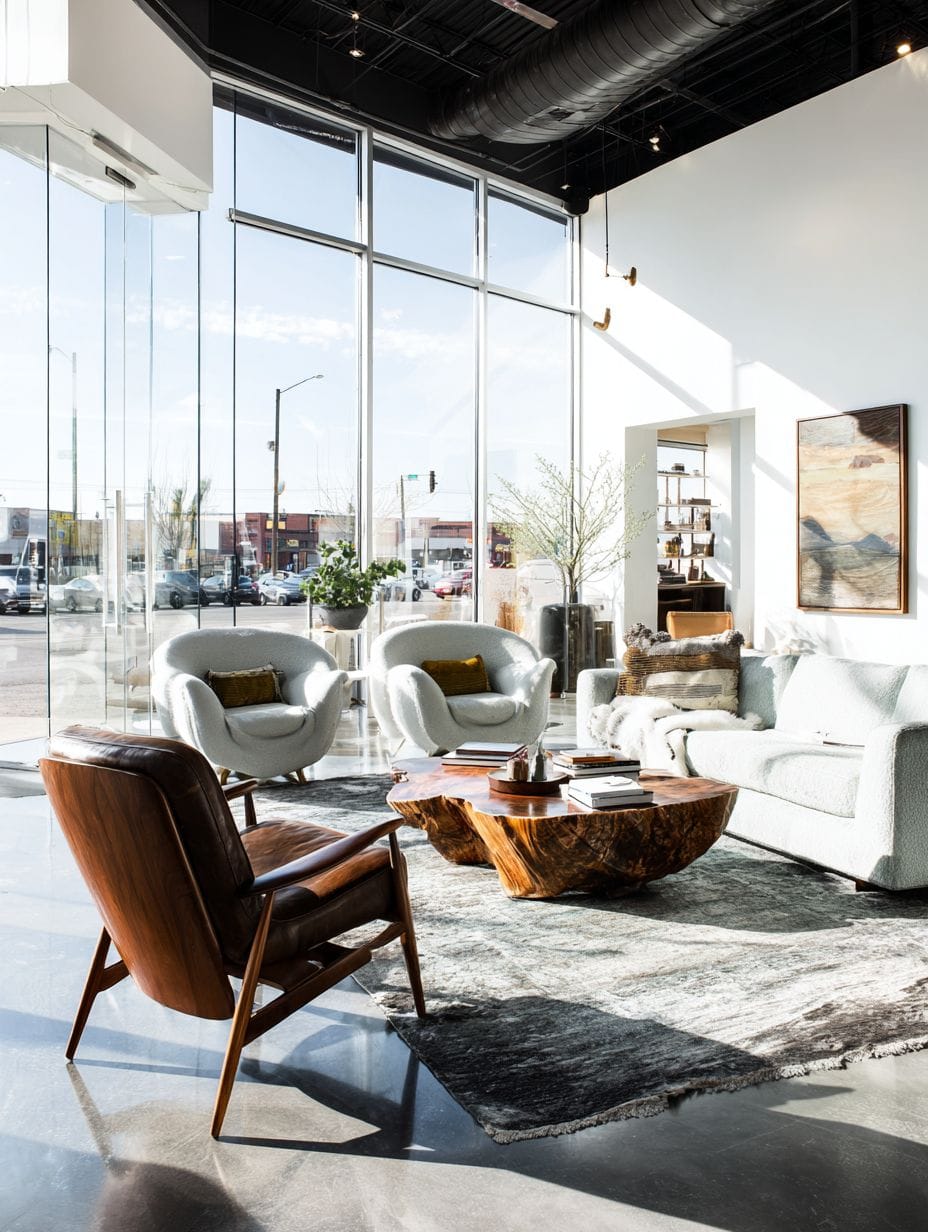
The beauty of contemporary coffee table design lies in its remarkable versatility and the endless possibilities for personal expression. From live-edge wood slabs that celebrate nature’s organic artistry to sleek glass-and-metal constructions that embody urban sophistication, each style tells a unique story and serves different lifestyle needs. Families with young children might gravitate toward sturdy upholstered ottomans that double as extra seating, while design enthusiasts in compact apartments often prefer nesting tables or transparent acrylic pieces that maximize visual space. The materials you choose—whether natural wood with visible grain patterns, luxurious marble with distinctive veining, or innovative resin compositions—communicate volumes about your design sensibilities and create the foundation for your room’s overall character.
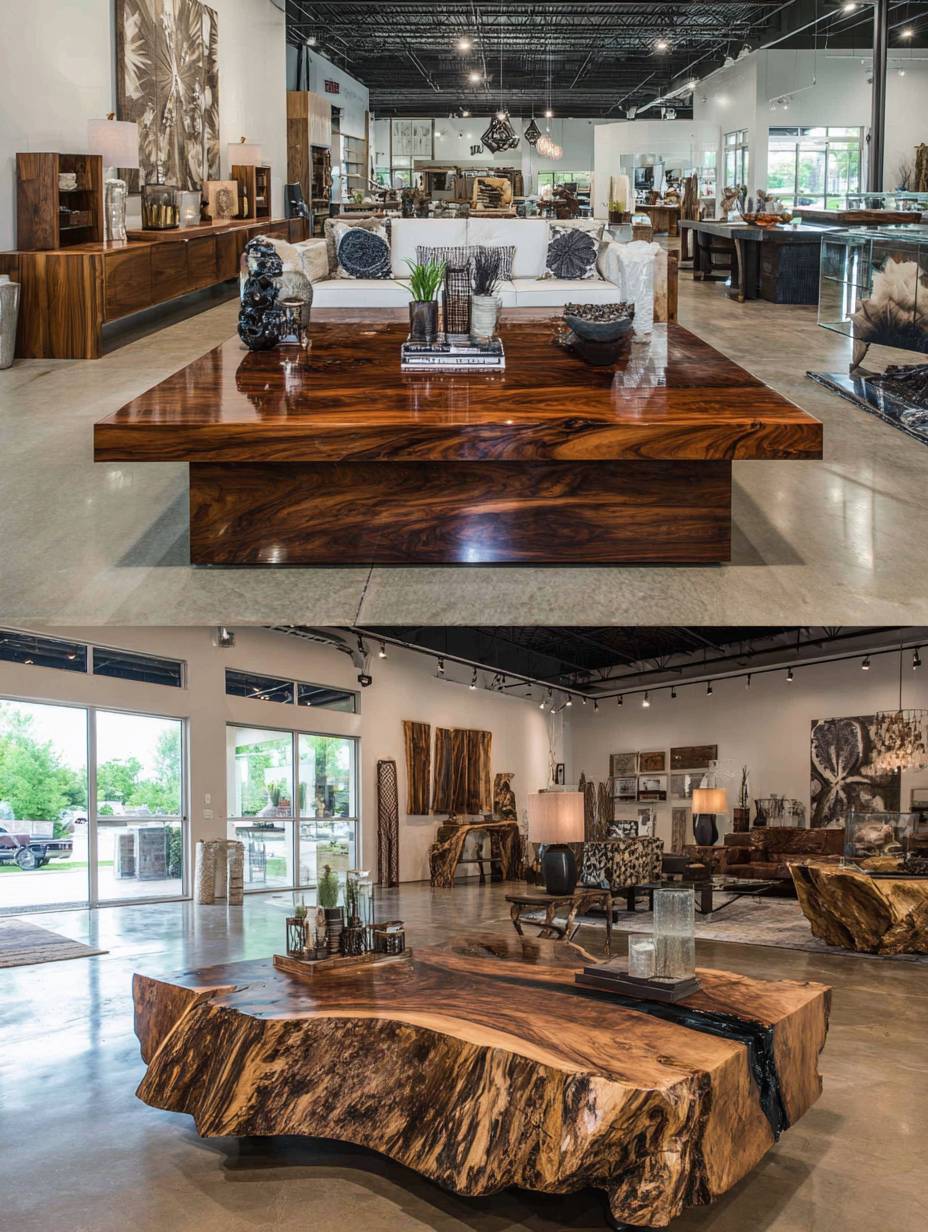
In this comprehensive guide, we’ll explore twenty-five stylish coffee table ideas that span the spectrum of design aesthetics, from rustic farmhouse charm to contemporary minimalist elegance. Each concept has been carefully selected to inspire your next design project, whether you’re completely renovating your living space or simply seeking that perfect centerpiece to refresh your current décor. We’ll delve into the specific materials, proportions, and styling techniques that make each design successful, providing you with actionable insights to recreate these looks in your own home. These aren’t just beautiful ideas—they’re practical, achievable designs that real homeowners can implement to create living spaces that are both stunning and genuinely livable.
1. Minimalist Walnut and Steel Elegance
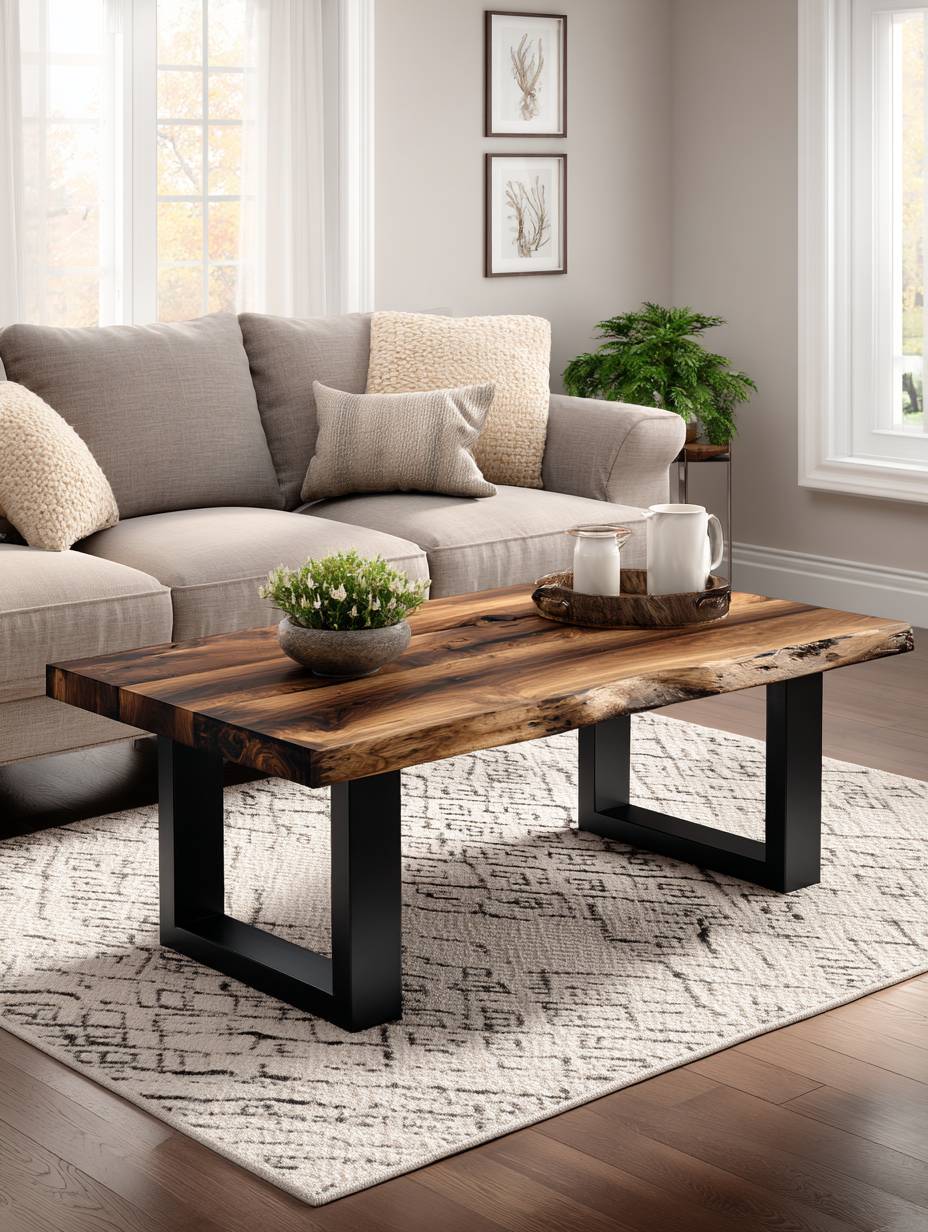
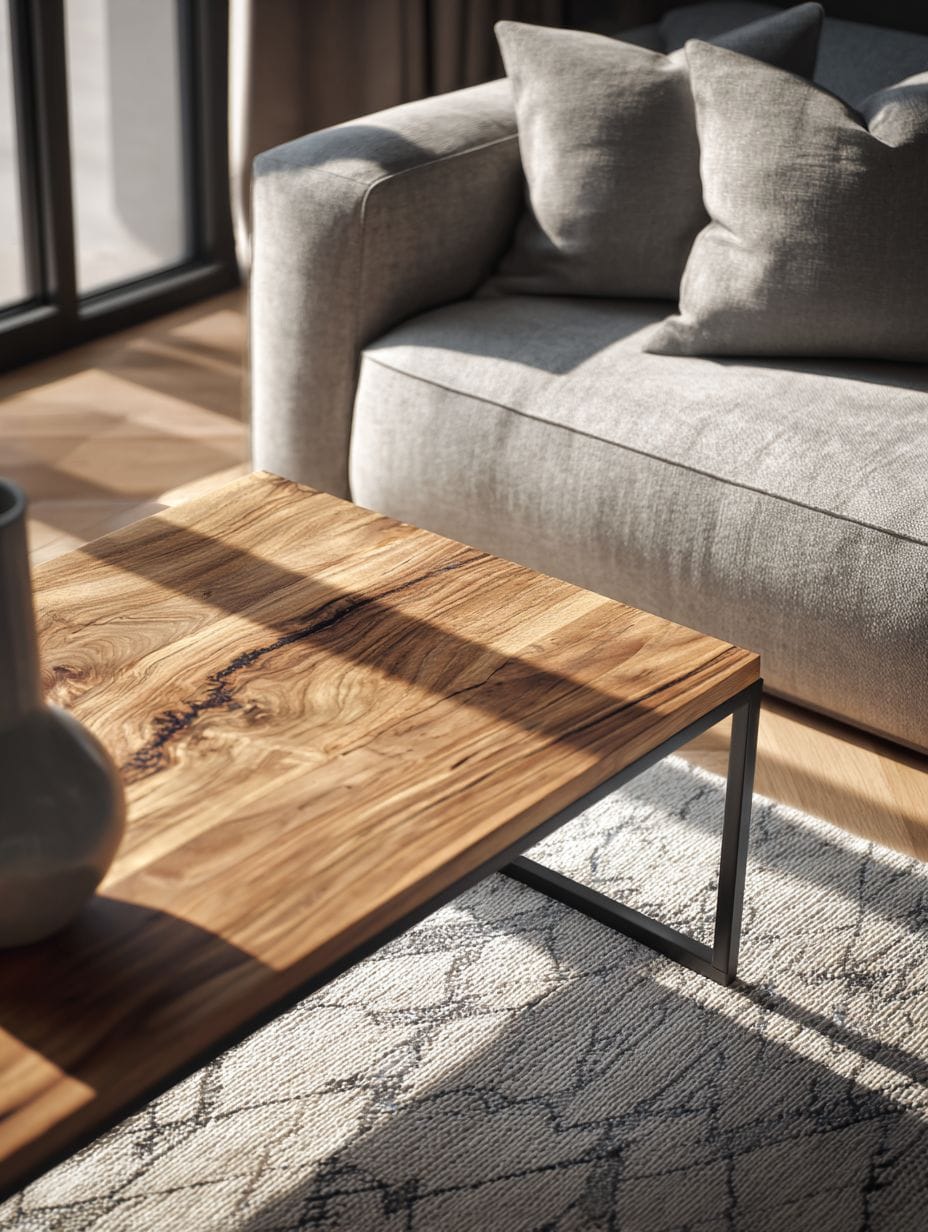
Picture a living room where modern sophistication meets natural warmth through a rectangular coffee table that exemplifies minimalist design principles. The solid walnut top showcases the wood’s inherent beauty with its rich, chocolate-brown tones and distinctive grain patterns that flow across the surface like artistic brushstrokes. Each natural variation in the wood tells a story of the tree’s growth, creating a one-of-a-kind piece that no two homeowners will ever share identically. The matte black powder-coated steel frame provides a striking contrast, its clean geometric lines emphasizing the contemporary aesthetic while offering sturdy support that will last for decades.
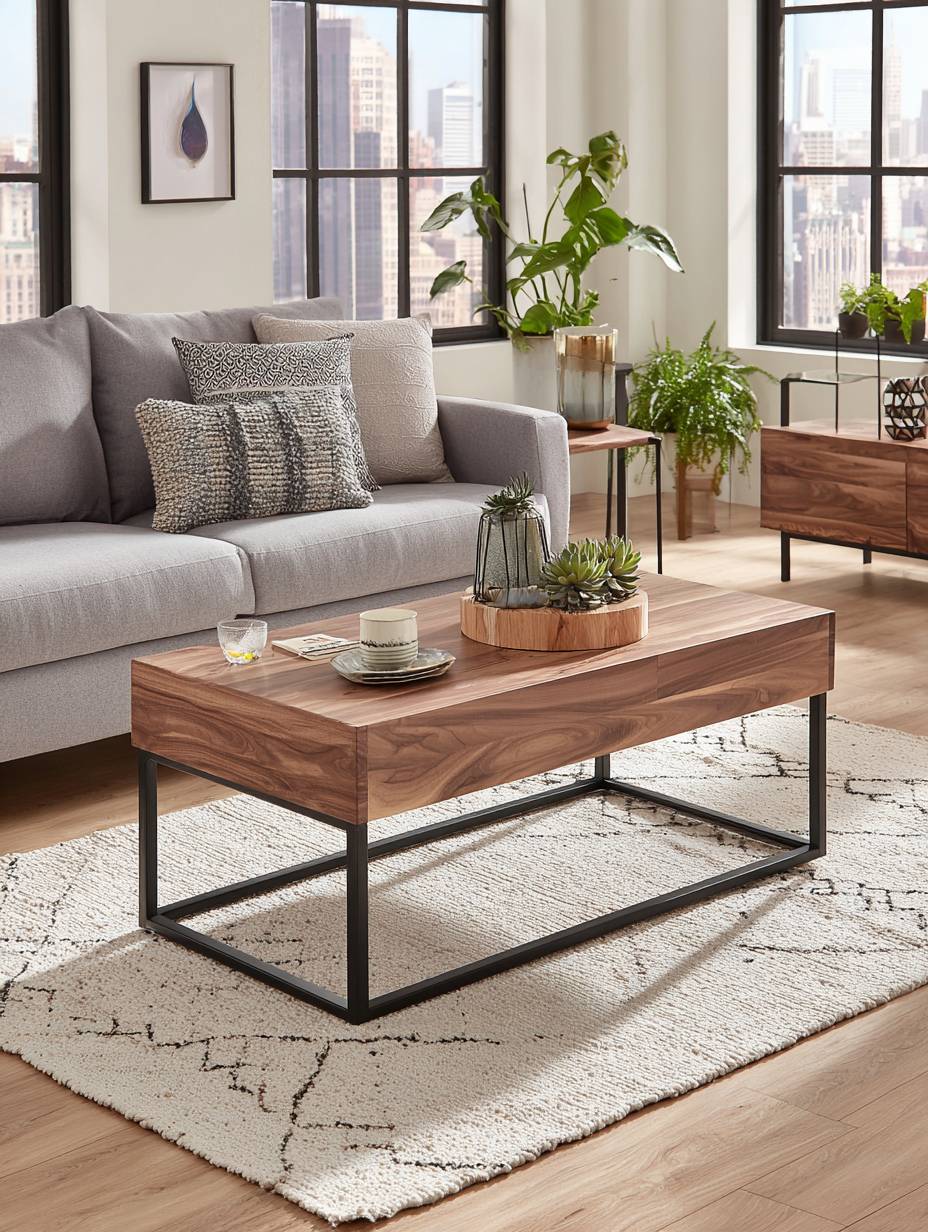
This design thrives in contemporary settings where the philosophy of “less is more” guides every design decision. Positioned atop a geometric wool rug in complementary neutral tones, the table becomes a grounding element in the room without overwhelming the space. The marriage of natural wood and industrial metal creates a balanced composition that feels both warm and sophisticated, organic yet modern. Natural afternoon light streaming through nearby windows plays across the walnut surface, highlighting the wood’s depth and creating soft shadows that accentuate the frame’s architectural lines.
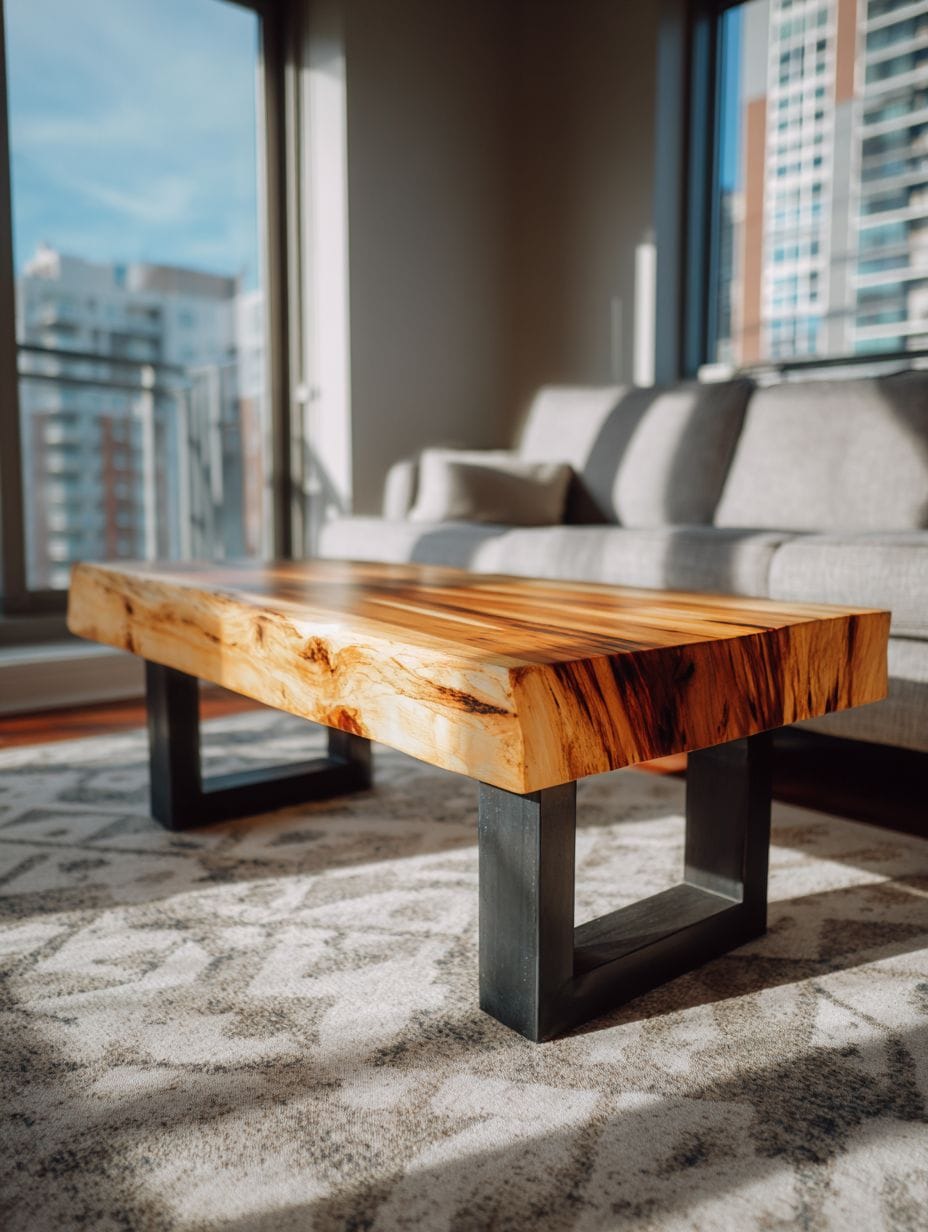
The genius of this minimalist approach lies in its versatility and timeless appeal. Unlike trendy pieces that may feel dated within a few years, this classic combination of quality materials and clean design will remain relevant for generations. The table’s modest height and proportions make it ideal for smaller living rooms where visual weight must be carefully managed, yet it possesses enough presence to anchor larger spaces when paired with substantial seating. The steel frame’s slim profile allows the eye to travel freely around the room, maintaining an open, airy feeling even in compact urban apartments.
Key Design Tips:
- Select solid wood rather than veneers to ensure durability and authentic character that improves with age and careful maintenance
- Choose powder-coated finishes for metal elements to prevent rust and maintain the pristine appearance through years of daily use
- Position the table to receive natural light which will showcase the wood grain’s natural beauty and create dynamic visual interest throughout the day
- Keep styling minimal with one or two carefully chosen objects such as a sculptural bowl or a single coffee table book to honor the minimalist aesthetic
- Maintain the wood with appropriate oil treatments to deepen the color and protect the surface while preserving the matte finish that defines the design
2. Mid-Century Modern Round Teak Beauty
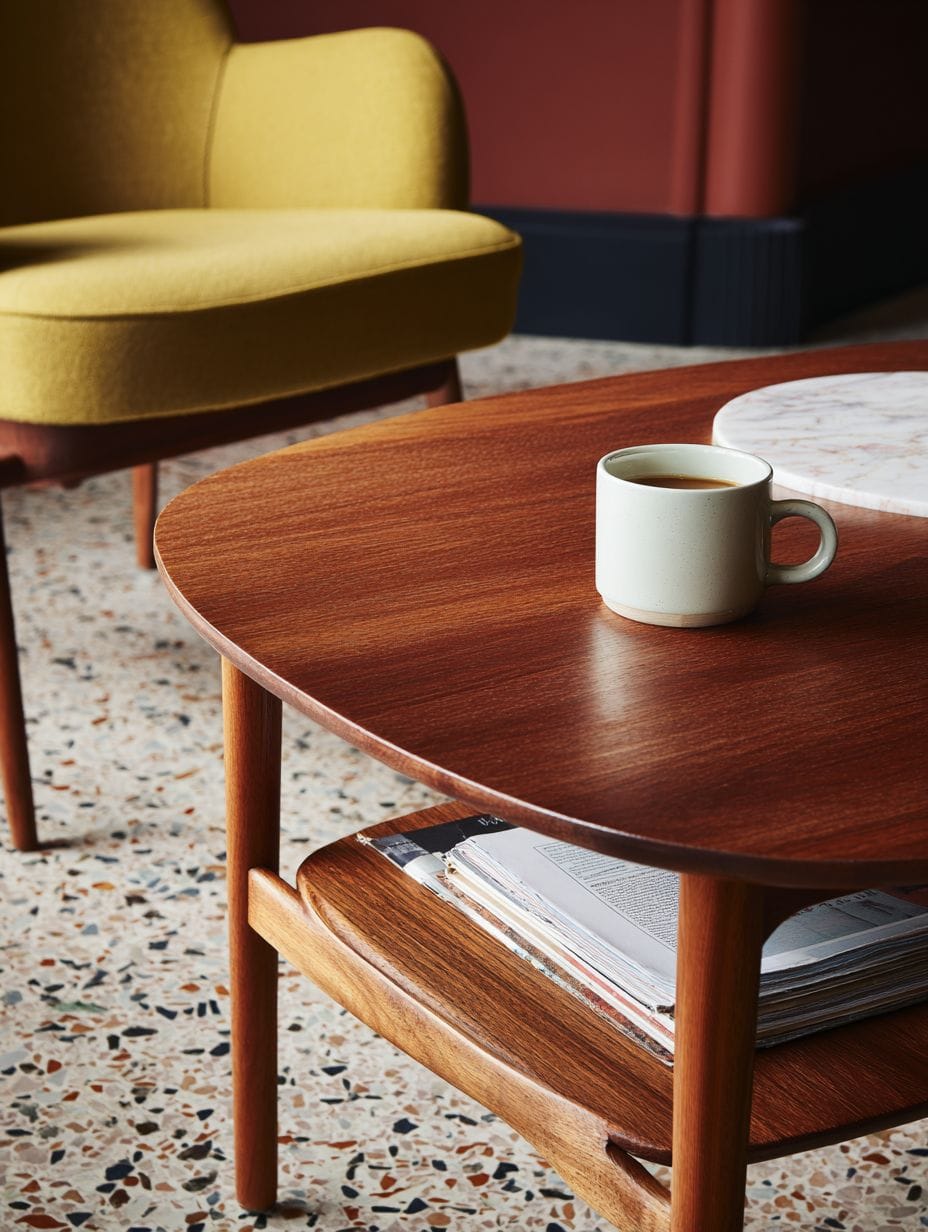
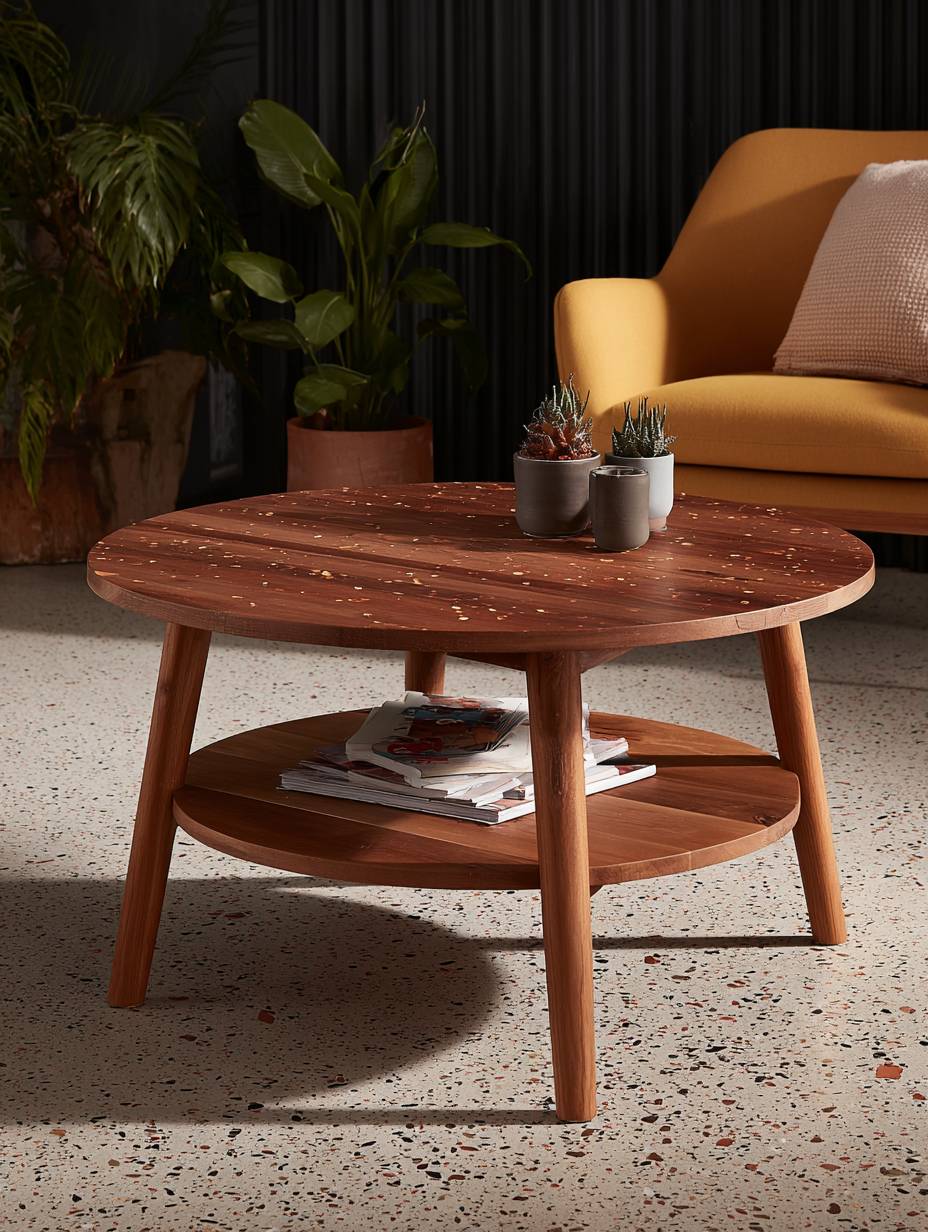
Step into the golden era of design with a round teak coffee table that captures the essence of mid-century modern styling. The rich, warm tones of teak wood immediately establish a connection to the 1950s and 60s, when this tropical hardwood became synonymous with quality Scandinavian and American furniture design. The round form softens the angular lines typical of living room furniture, creating a more social, inclusive feeling that encourages conversation and connection. Tapered wooden legs—a hallmark of mid-century design—elevate the piece both literally and figuratively, their graceful lines suggesting movement and lightness despite the table’s solid construction.
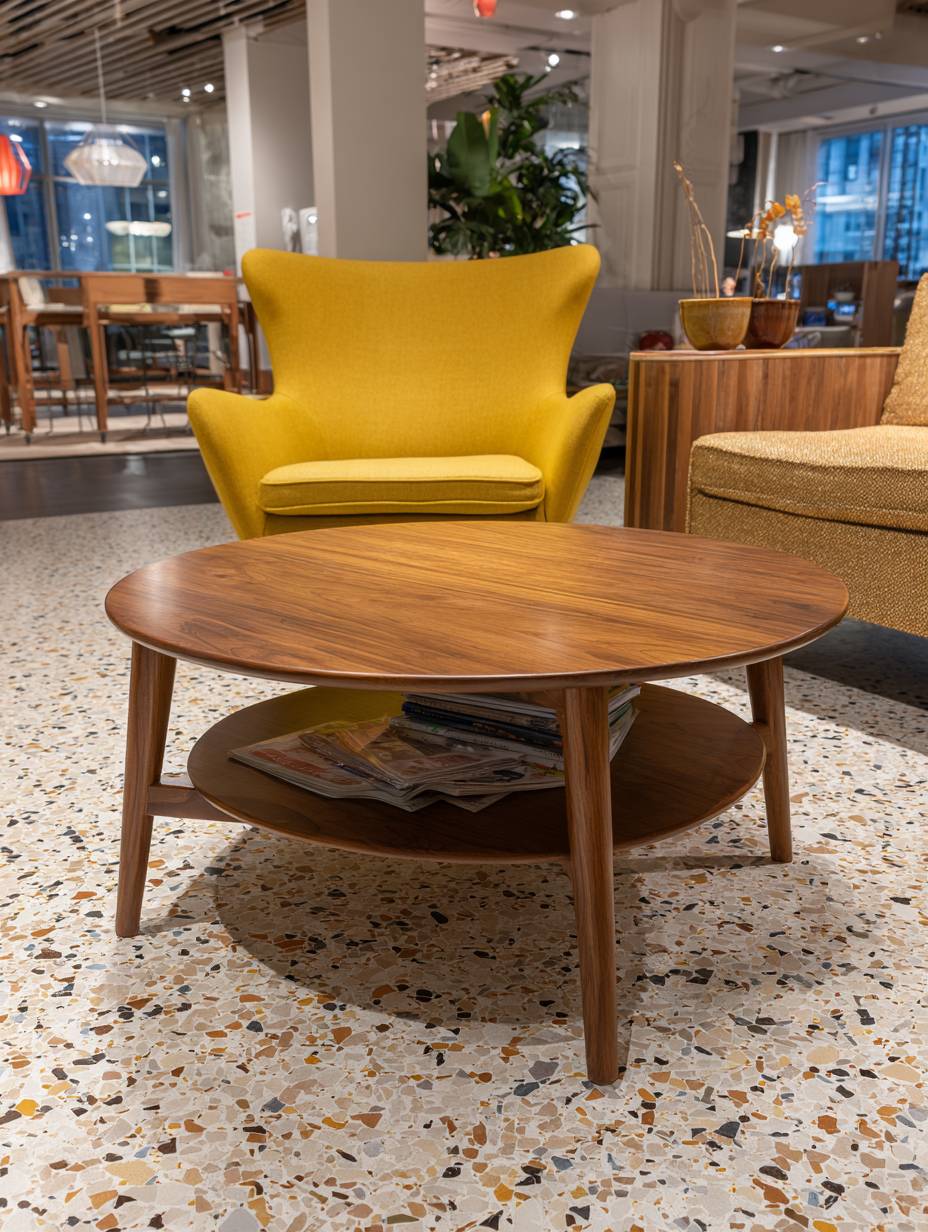
The inclusion of a lower shelf adds both practical storage and visual interest, providing a dedicated space for displaying vintage design books, magazines, or a carefully curated collection of decorative objects. This two-tier approach prevents the tabletop from becoming cluttered while maximizing functional surface area—a clever solution that mid-century designers perfected. Against a backdrop of a vintage-inspired living space featuring a mustard yellow accent chair and terrazzo flooring, the teak table becomes a nostalgic anchor that ties together various period-appropriate elements while feeling fresh and relevant in contemporary settings.
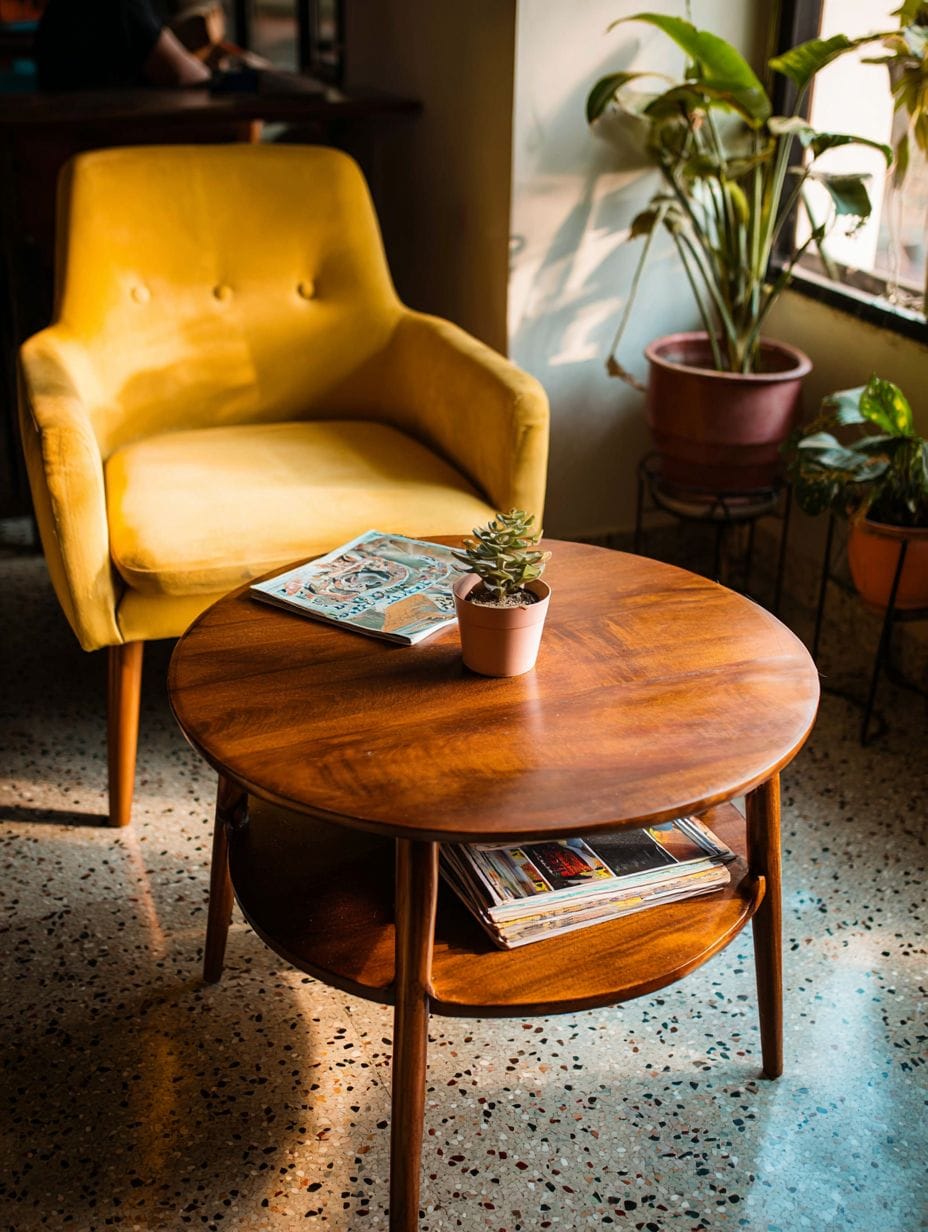
What makes this design particularly appealing is teak’s exceptional durability and beautiful aging process. Unlike many woods that simply wear down over time, teak develops a rich patina that enhances its character and value. The natural oils in teak wood provide inherent resistance to water damage, making it an practical choice for a coffee table that will inevitably encounter spills and moisture. The polished finish catches and reflects warm ambient lighting, creating gentle highlights that emphasize the wood’s golden-honey hues and distinctive grain patterns that set teak apart from other hardwoods.
Key Design Tips:
- Invest in authentic mid-century pieces or high-quality reproductions that honor the original design integrity rather than cheaply made imitations
- Pair with period-appropriate accent colors like mustard yellow, burnt orange, or turquoise to create an authentic mid-century atmosphere
- Style the lower shelf sparingly with vintage design books or ceramic pieces to maintain the clean, uncluttered aesthetic of the era
- Allow teak to develop its natural patina or maintain the original color with teak oil treatments applied seasonally
- Balance the round form with angular seating to create visual interest through contrasting geometric shapes
3. Contemporary Glass and Brass Sculpture
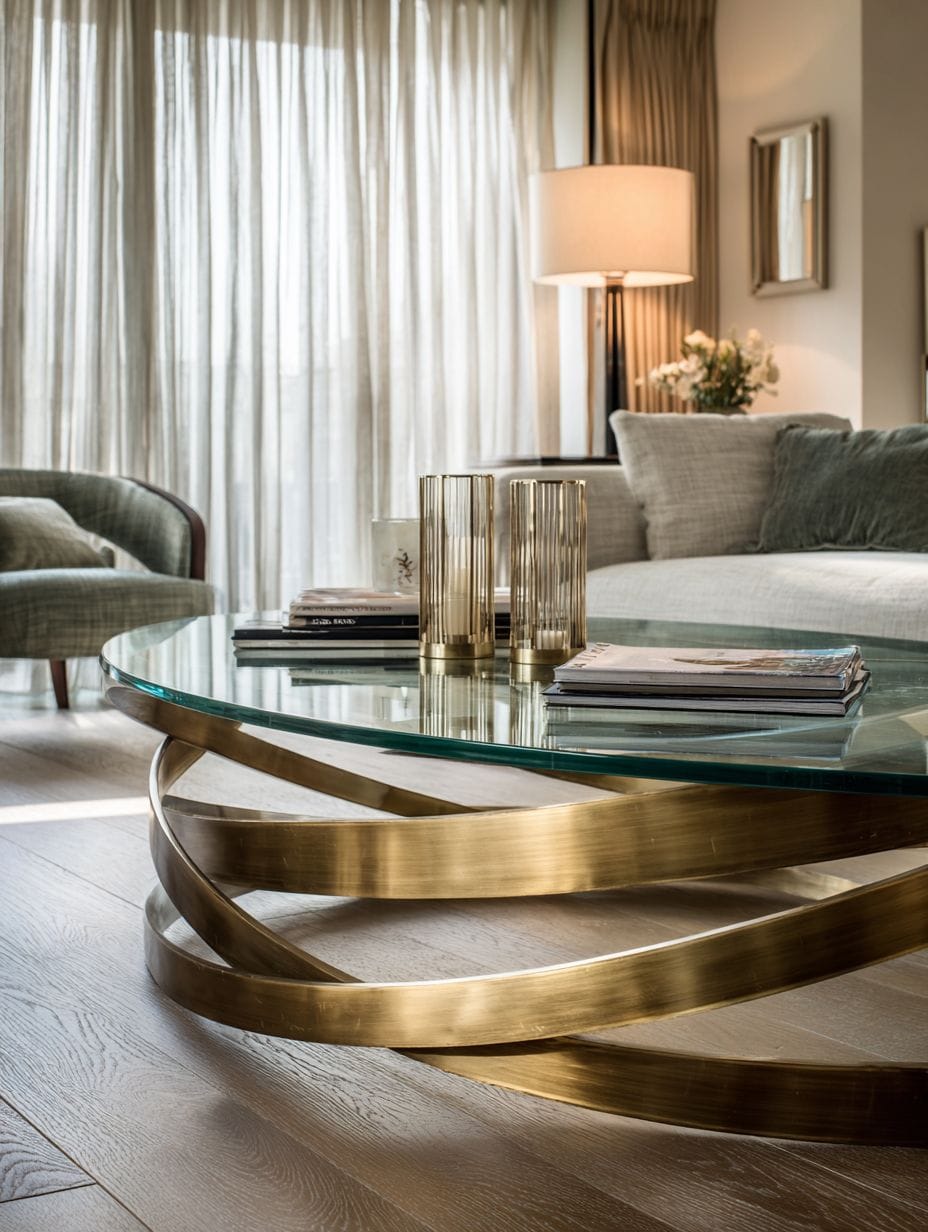
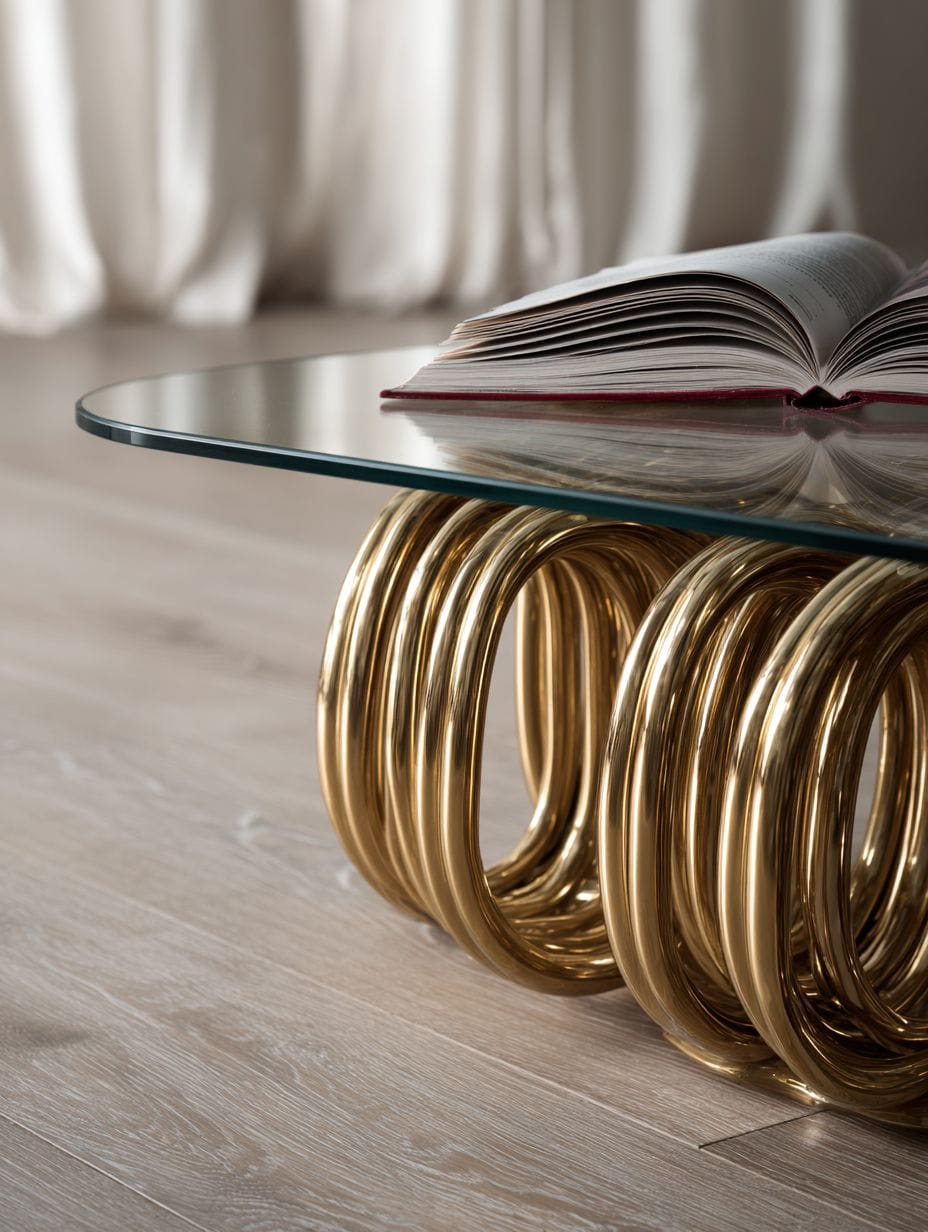
Imagine a coffee table that functions as a three-dimensional sculpture while maintaining complete practicality—that’s the magic of contemporary glass-and-brass design. The transparent glass top appears to float ethereally above an intricate base composed of intertwined metal tubes finished in brushed brass. This sculptural base becomes a focal point that draws the eye, its complex geometry creating different visual compositions from every angle in the room. The brushed brass finish adds warmth and sophistication without the high-maintenance concerns of polished metals, its subtle matte sheen complementing both contemporary and transitional interiors.
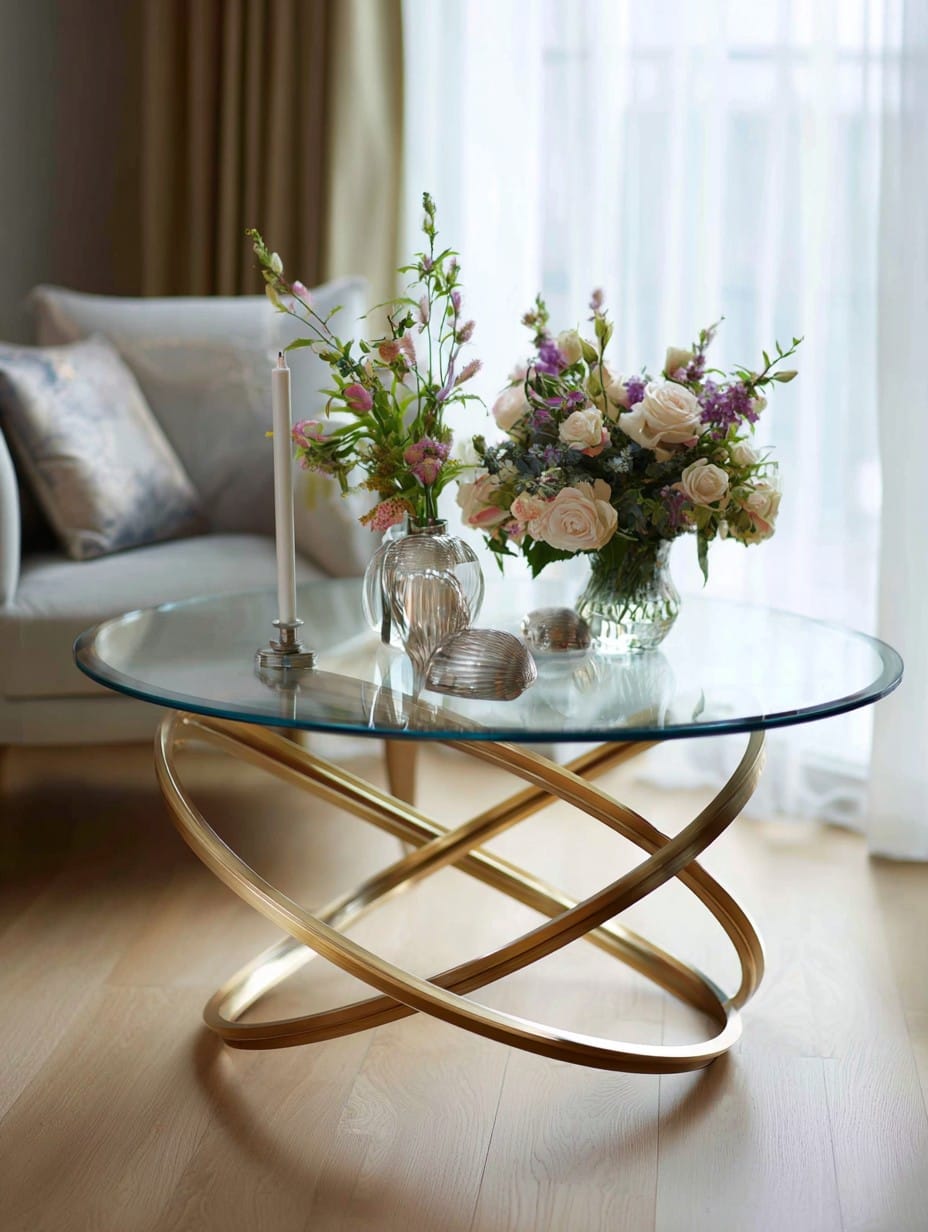
The genius of glass-top coffee tables lies in their ability to maintain visual flow throughout a room. Unlike solid-top tables that create visual barriers, transparent surfaces allow the eye to travel unimpeded, making spaces feel larger and more open—an invaluable quality in compact urban apartments where every square foot matters. The glass top showcases the artistic metalwork beneath while providing a practical surface for drinks, books, and decorative objects. In a minimalist living room with light oak flooring and restrained décor, this table becomes the statement piece that adds personality without cluttering the space.
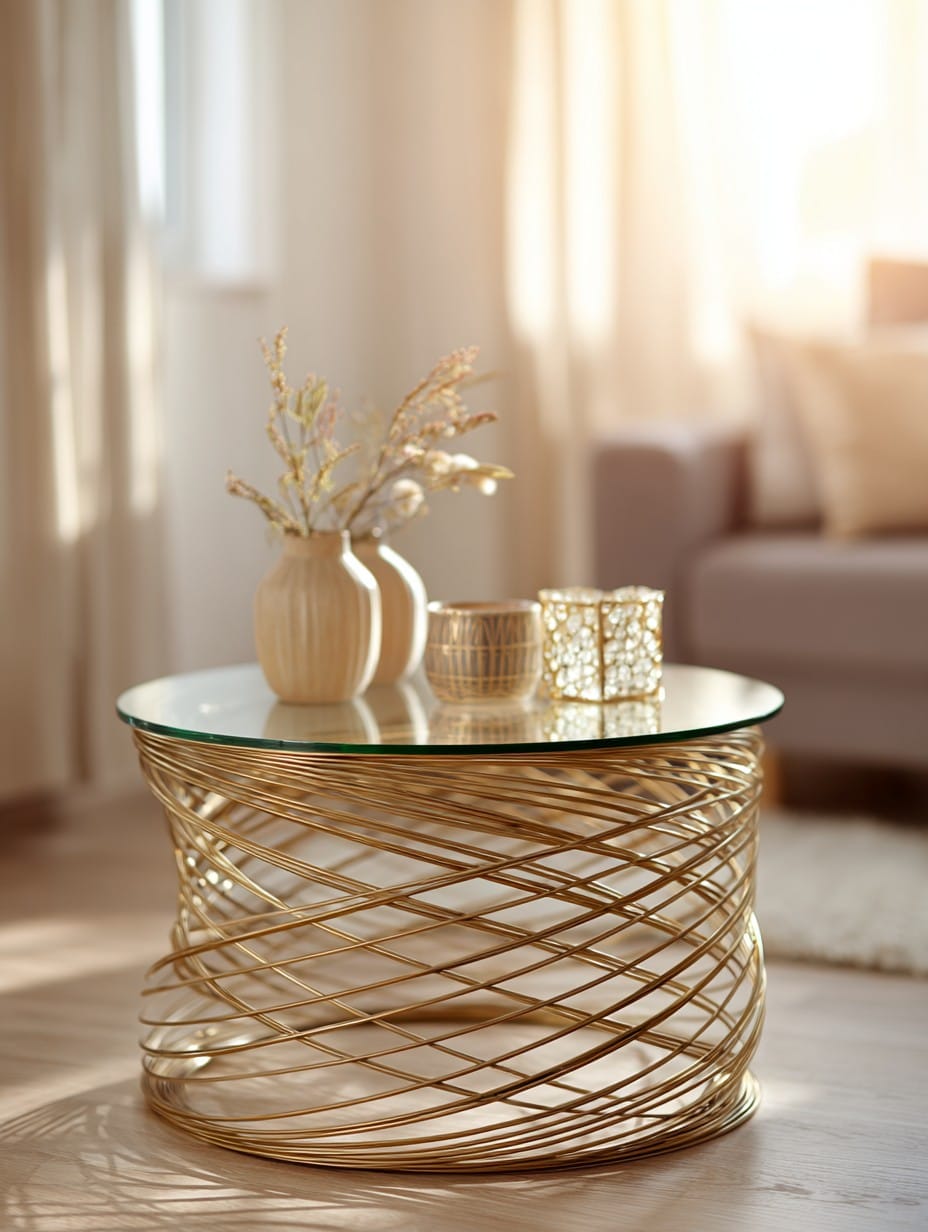
Soft diffused natural lighting from nearby sheer curtains creates a magical interplay with the brass elements, casting delicate shadows that dance across surrounding surfaces and change throughout the day. The metallic tubes catch light from multiple sources, creating highlights and reflections that add movement and dynamism to an otherwise static object. This light-responsive quality means the table presents differently depending on the time of day and lighting conditions, offering ever-changing visual interest that prevents the design from becoming stale or predictable.
Key Design Tips:
- Choose tempered glass for safety which is significantly stronger than regular glass and shatters into small, relatively harmless pieces if broken
- Select brushed or satin brass finishes that hide fingerprints and require less maintenance than highly polished alternatives
- Keep the glass surface crystal clear with regular cleaning using appropriate glass cleaners to maintain transparency and showcase the base
- Position strategically in naturally lit areas to maximize the interplay between light, metal, and glass for optimal visual impact
- Balance the table’s visual lightness with more substantial seating pieces to create proper visual weight distribution in the room
4. Industrial Reclaimed Wood Character
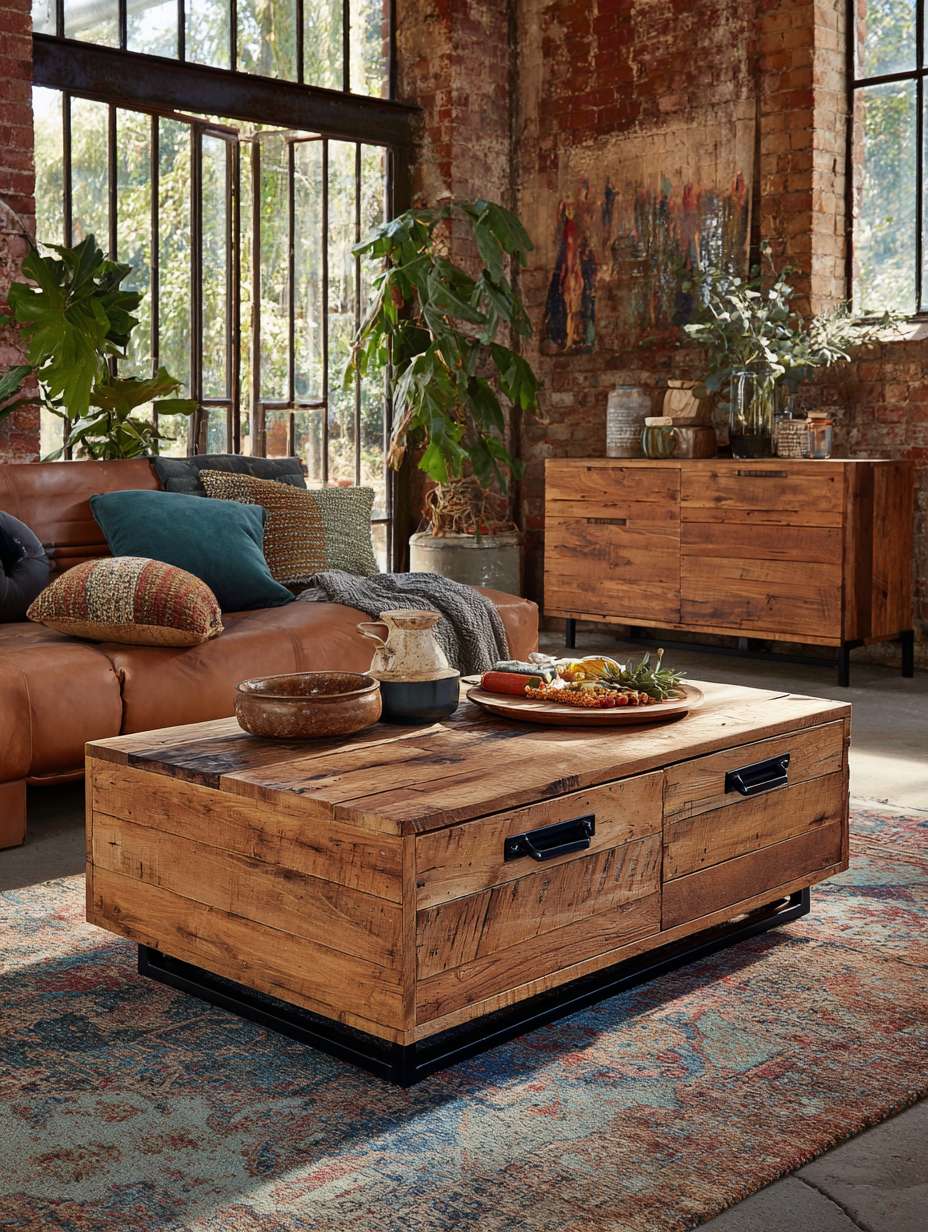
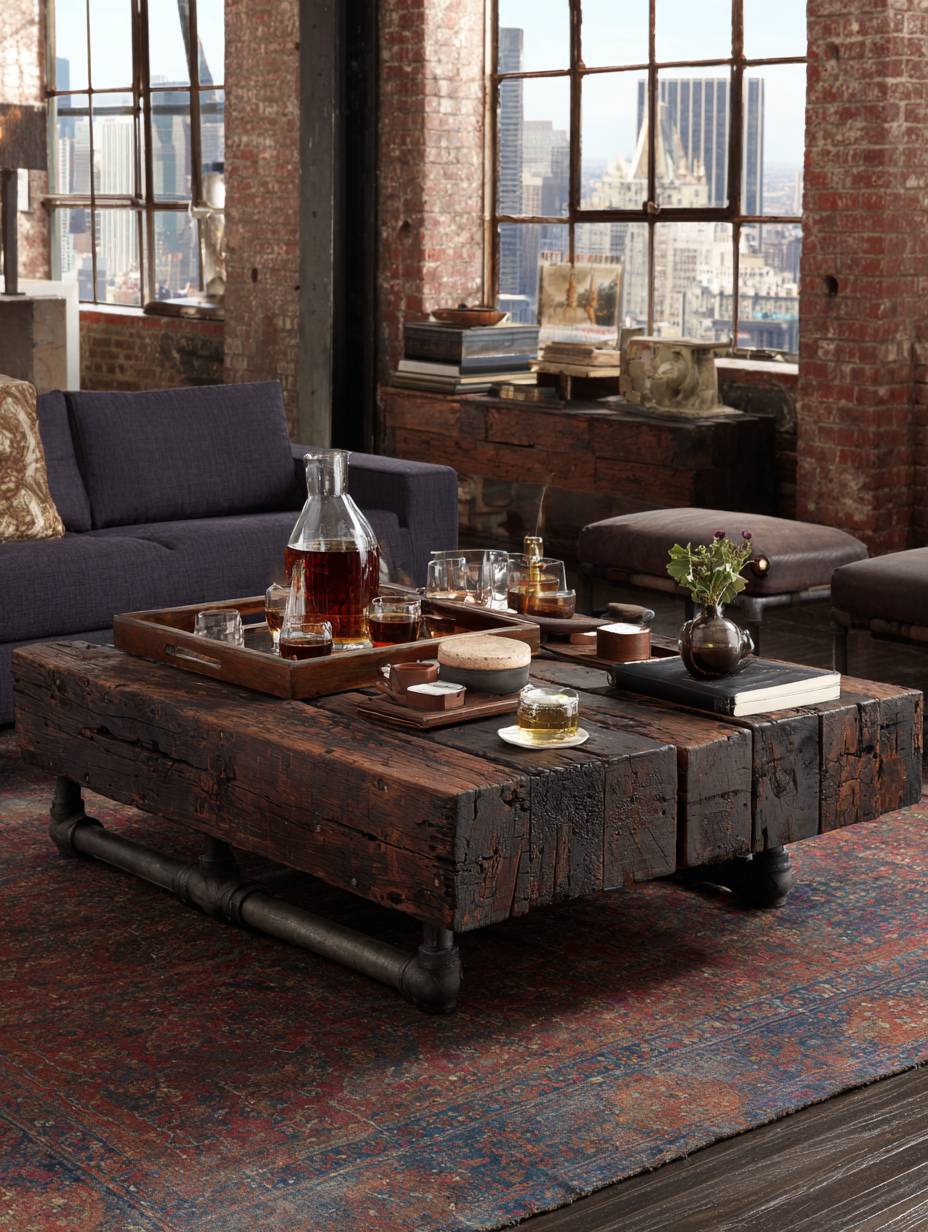
For those who appreciate authenticity and history in their home furnishings, an industrial-style coffee table crafted from reclaimed wood planks offers unparalleled character. Each piece of salvaged wood brings its own story—visible knots, nail holes, weathering patterns, and color variations create a surface that’s utterly unique and impossible to replicate through manufactured processes. The raw iron pipe legs, complete with visible welding marks and industrial fittings, celebrate the utilitarian aesthetic that has captivated urban dwellers and design enthusiasts. This isn’t furniture that tries to hide its construction; instead, it proudly displays every joint, every weld, every authentic detail.
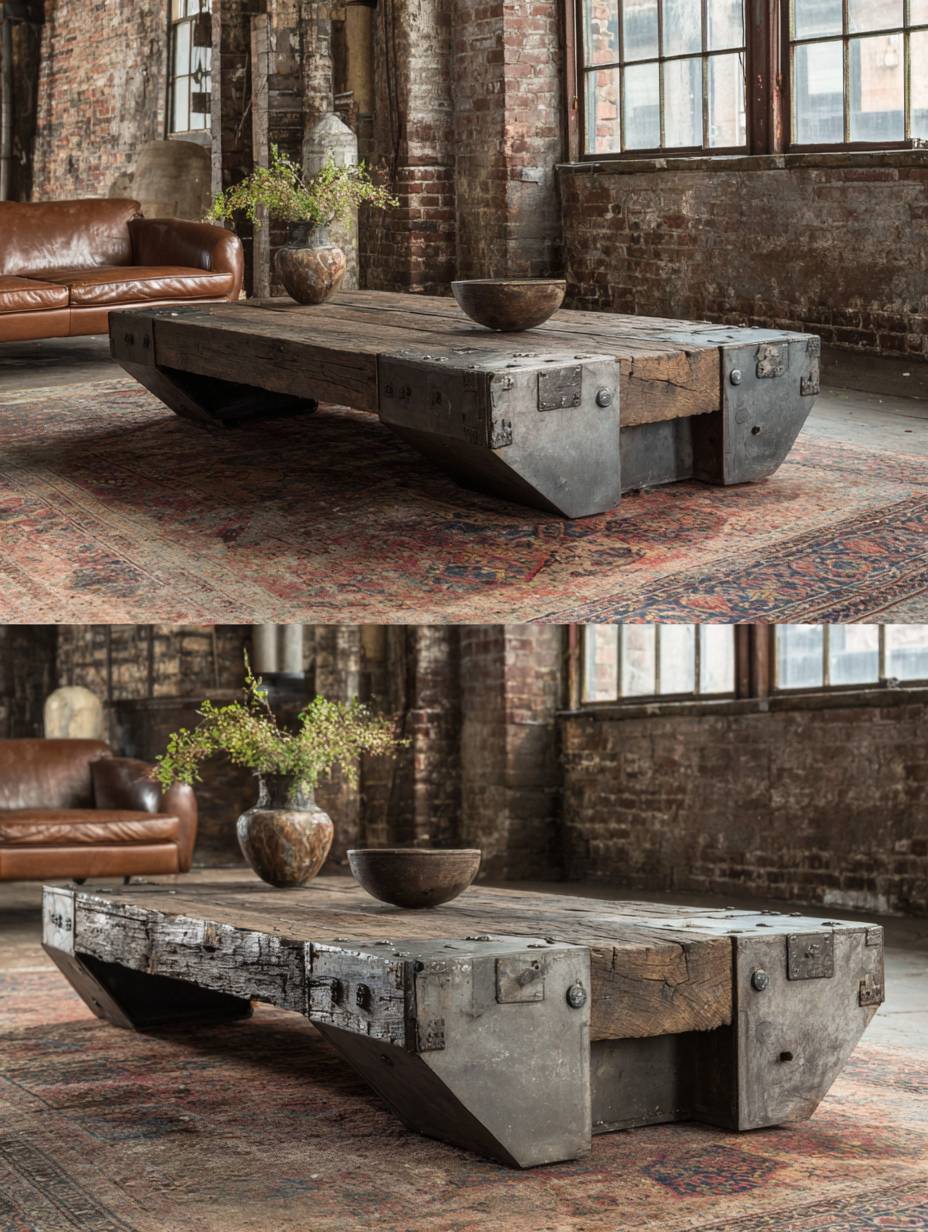
When positioned on a vintage Persian rug in a loft-style living space with exposed brick walls, this table becomes the natural centerpiece that ties together the room’s industrial narrative. The contrast between the refined, intricate patterns of the traditional rug and the rough, unfinished character of the table creates visual tension that keeps the space interesting and layered. The juxtaposition of old and older—19th-century craftsmanship meeting repurposed 21st-century materials—demonstrates how different eras of design can coexist harmoniously when united by quality craftsmanship and authentic materials.
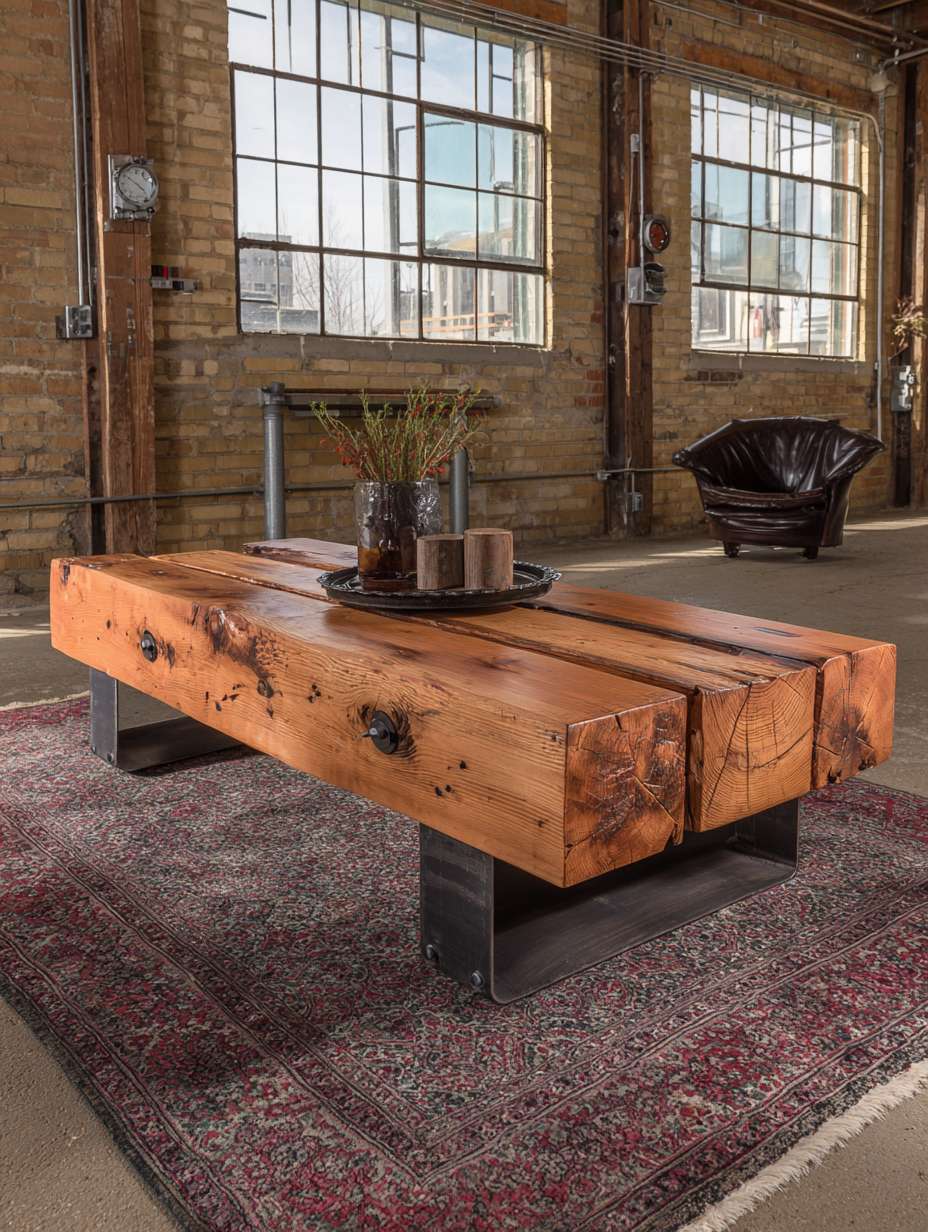
Dramatic natural light from factory-style windows—those oversized, multi-paned industrial windows characteristic of converted loft spaces—floods across the table’s surface, highlighting every groove, every shadow, every textural detail in the reclaimed wood. The honest wear patterns tell stories of the wood’s previous life, whether it came from old barn siding, demolished factories, or reclaimed shipping pallets. This connection to history and sustainability appeals to environmentally conscious homeowners who want their furniture choices to reflect their values while creating spaces with genuine soul and character.
Key Design Tips:
- Verify the source of reclaimed wood to ensure it’s been properly treated for pests and stabilized for indoor use
- Seal the wood surface appropriately to protect against stains and moisture while preserving the authentic weathered appearance
- Embrace the imperfections rather than trying to sand away character marks that give the piece its unique identity and story
- Choose iron pipe fittings that match the scale of your table to maintain proper visual proportions and structural integrity
- Style with industrial accessories like vintage metal boxes, Edison bulb lamps, or galvanized containers to reinforce the aesthetic
5. Scandinavian Oval Simplicity
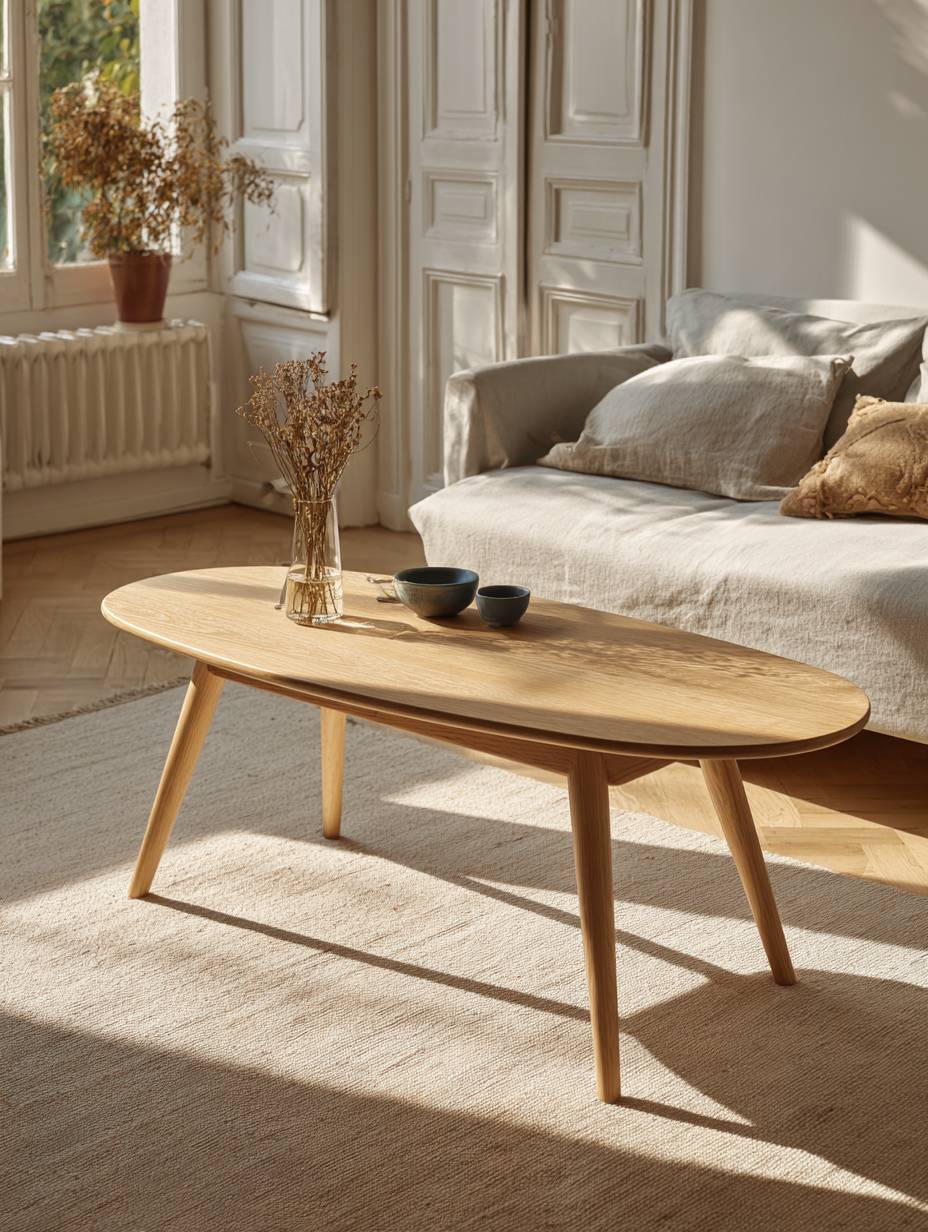
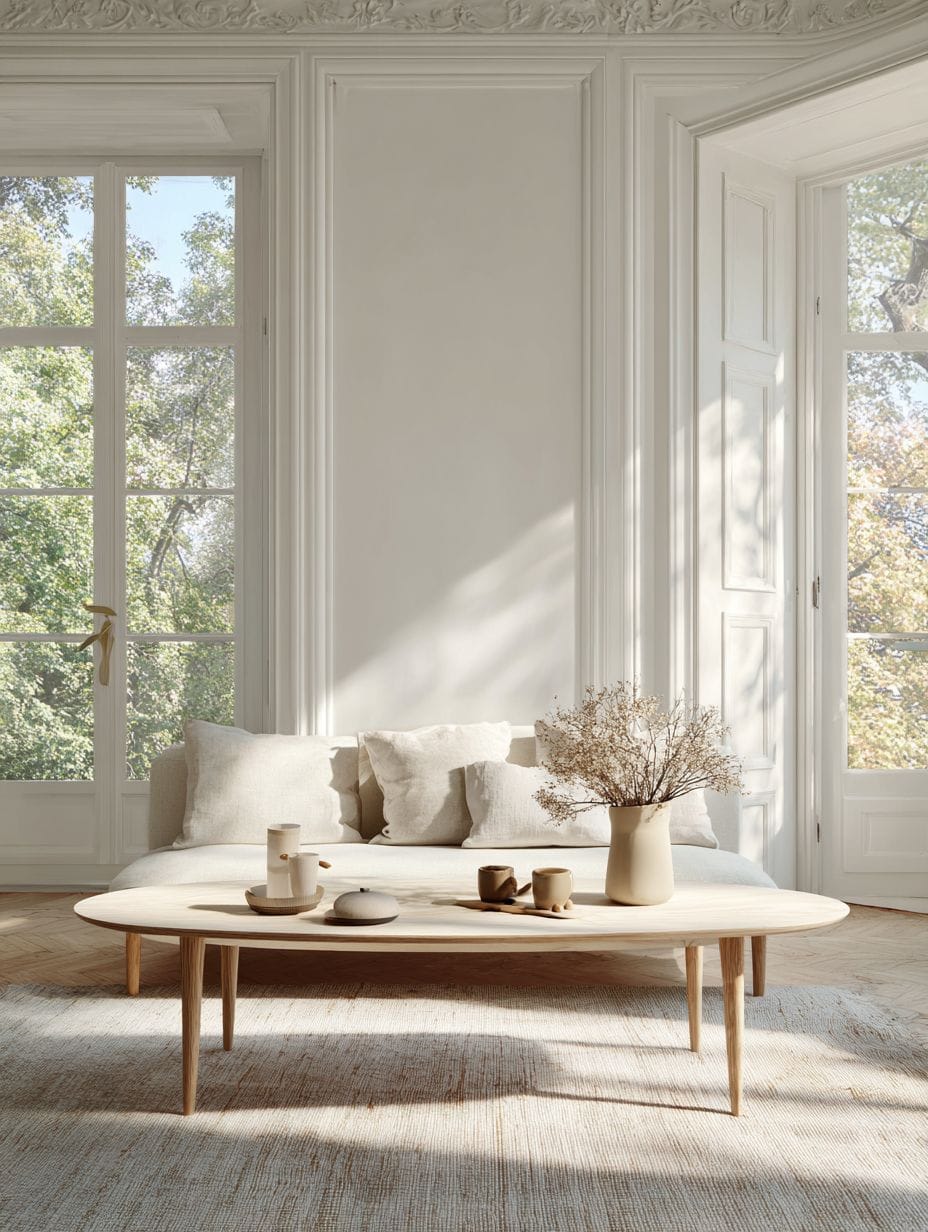
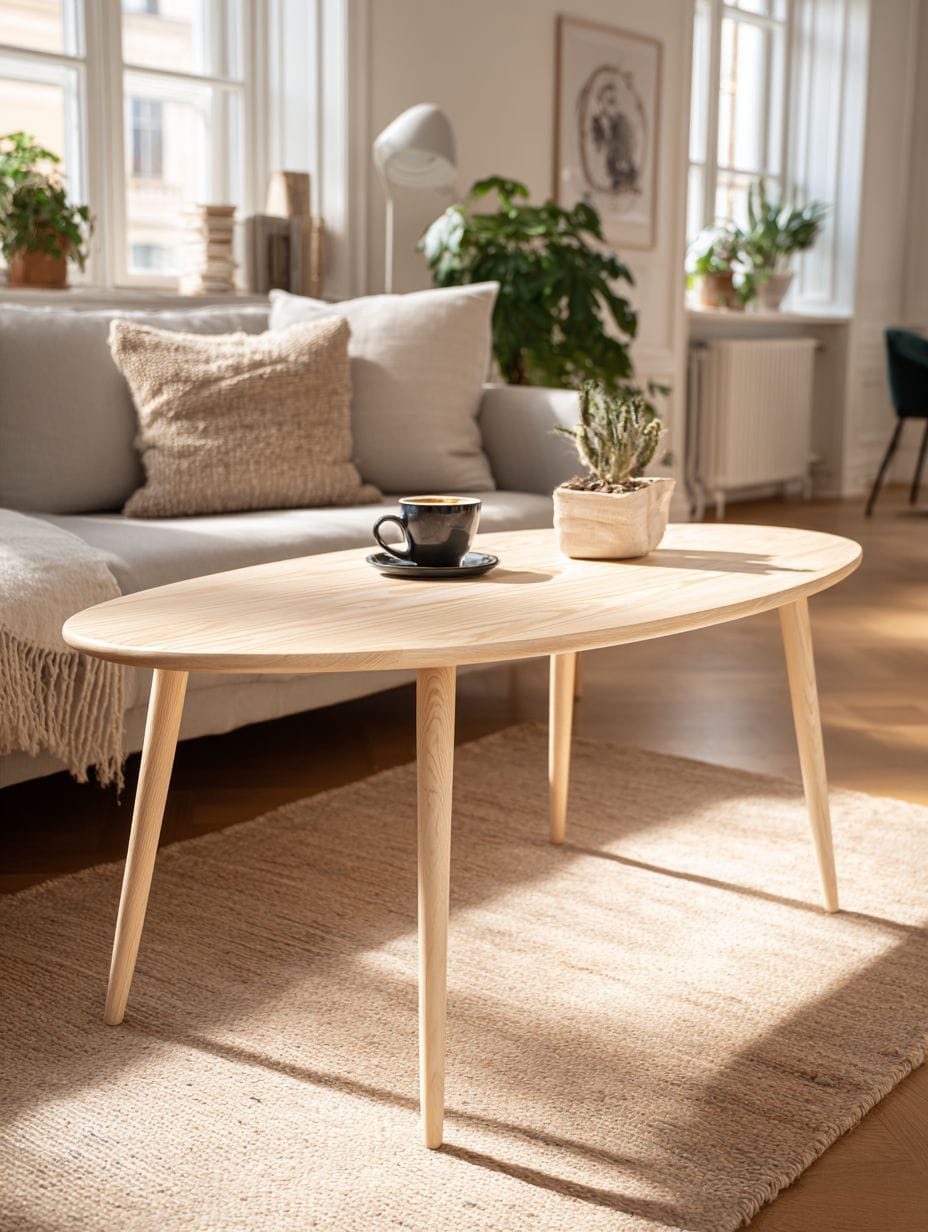
The Scandinavian design philosophy of creating beautiful, functional spaces filled with light and natural materials finds perfect expression in an oval coffee table crafted from light ash wood. The gentle curves of the oval shape contrast beautifully with the typical rectangular geometry of sofas and room architecture, softening the space and creating a more inviting, organic feeling. The light ash wood, with its pale blonde tones and subtle grain patterns, embodies the Nordic preference for materials that reflect and amplify natural light rather than absorbing it. The smooth matte finish feels warm and natural to the touch, lacking the artificial glossiness of heavily lacquered furniture.
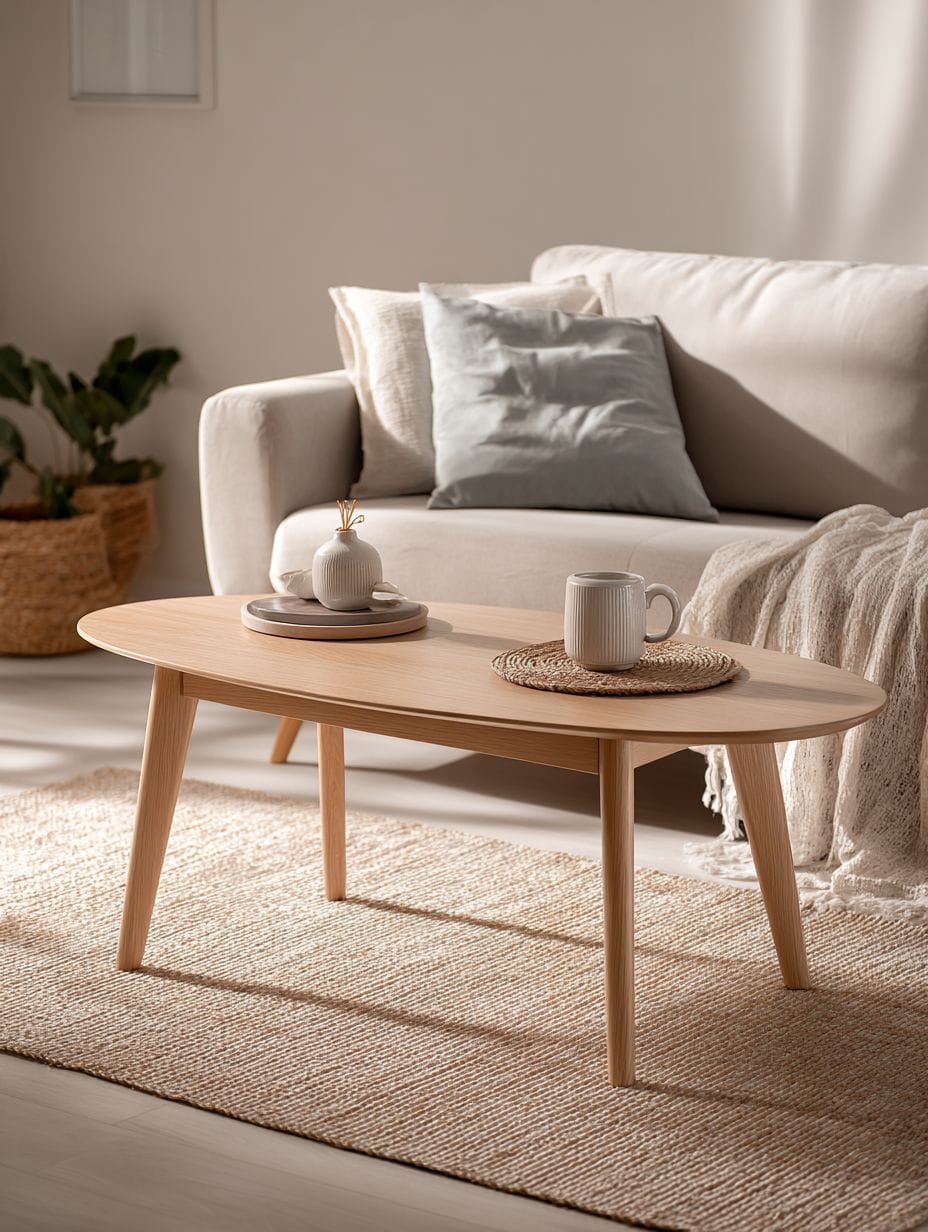
Gently tapered legs—slightly angled outward in the characteristic Scandinavian manner—give the table an appearance of weightlessness despite its solid construction. This optical illusion makes the piece feel appropriate for even the smallest spaces, where heavier-looking furniture might feel oppressive. Centered in a Nordic-style living room featuring white walls, a light grey linen sofa, and natural fiber textures, the table becomes part of a cohesive design narrative that prioritizes calm, clarity, and connection to nature. The restrained color palette allows the beautiful proportions and craftsmanship to take center stage.
Bright morning light flooding through generous windows—a crucial element in Scandinavian design where natural light is precious, especially during long winter months—creates a fresh, airy atmosphere that makes the space feel larger and more welcoming. The soft shadows cast beneath the table emphasize its elegant form without creating harsh contrasts. This design approach recognizes that furniture should enhance rather than dominate a space, serving human needs while maintaining visual harmony and a sense of spaciousness that’s essential for mental and emotional well-being.
Key Design Tips:
- Select light-colored woods like ash, birch, or beech that exemplify Scandinavian design principles and reflect natural light
- Maintain a minimal color palette with whites, light greys, and natural wood tones to achieve authentic Nordic atmosphere
- Emphasize natural light sources by keeping window treatments minimal and positioning furniture to maximize daylight exposure
- Choose pieces with visible wood grain to maintain connection with natural materials even in highly refined furniture
- Style sparingly with perhaps a single ceramic vase or one carefully selected coffee table book to honor minimalist principles
6. Luxurious Marble and Gold Statement
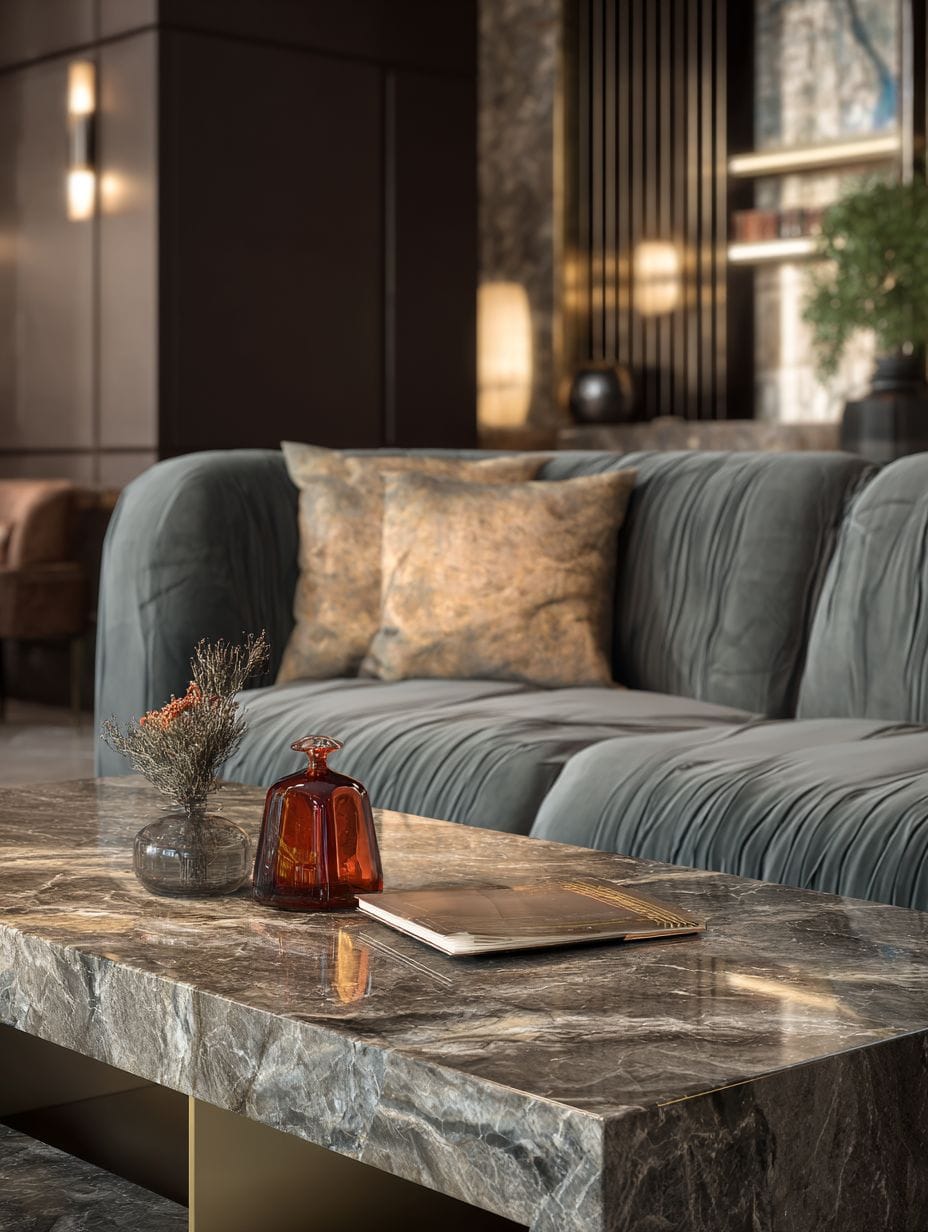
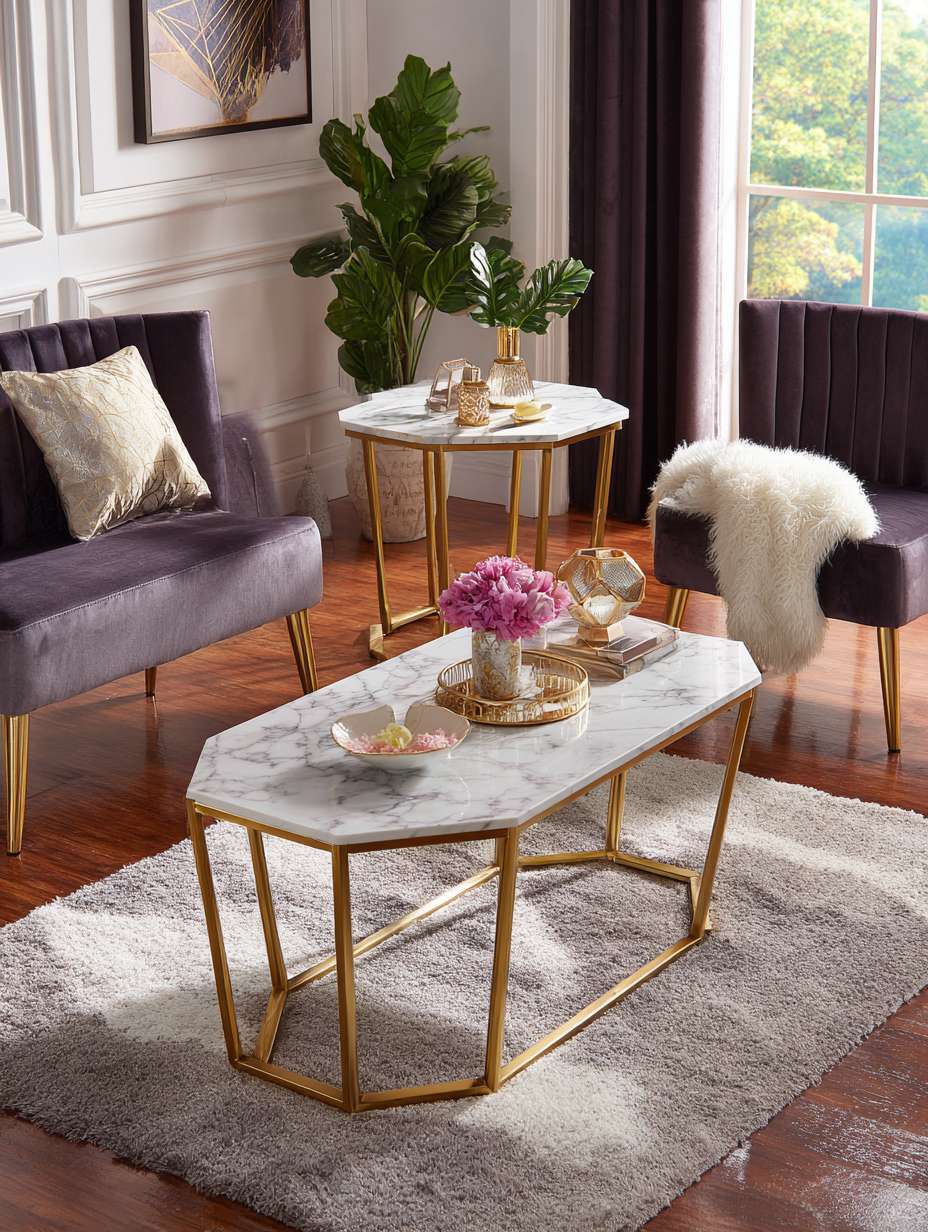
For those who gravitate toward glamour and sophisticated elegance, a marble-topped coffee table with a geometric gold-finished metal base represents the pinnacle of luxurious home design. White Carrara marble, with its distinctive grey veining that occurs naturally as the stone forms over millions of years, brings a sense of timeless luxury that has graced palaces, museums, and elegant homes for centuries. No two marble slabs are identical—each pattern of veining creates a unique work of natural art. The cool, smooth surface of polished marble reflects light beautifully, adding luminosity to the space while providing a practical, durable surface that resists heat and maintains its beauty for generations.
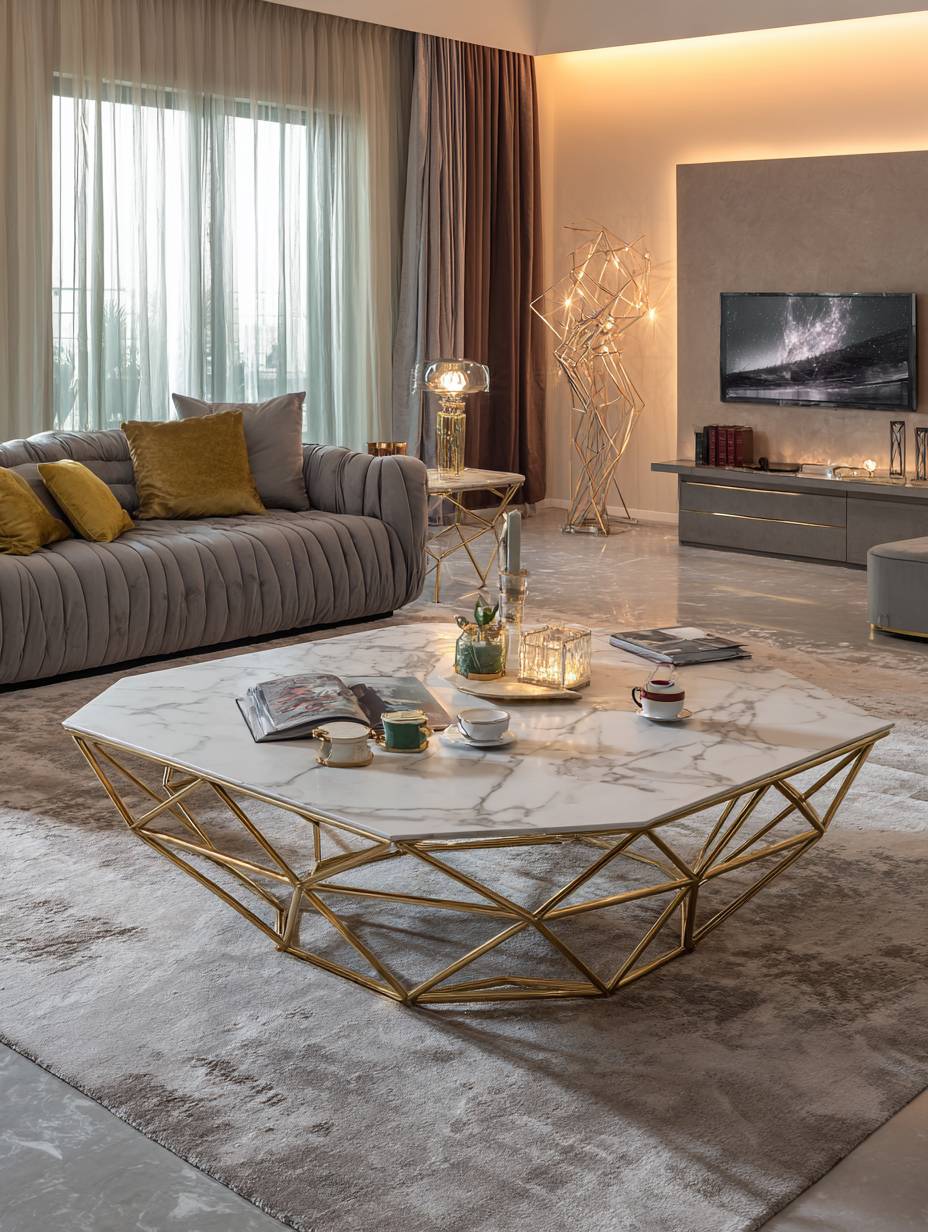
The geometric gold-finished metal base transforms this functional piece into a sculptural statement that commands attention. Whether crafted in an angular lattice pattern, circular rings, or abstract geometric forms, the base becomes a conversation piece in its own right. The warm gold finish—whether achieved through plating, powder coating, or brass construction—creates a stunning contrast with the cool white marble, balancing temperature and creating visual harmony through complementary tones. In an elegant contemporary living room featuring velvet upholstery and art deco accents, this table becomes the jewel that ties together various luxurious elements.
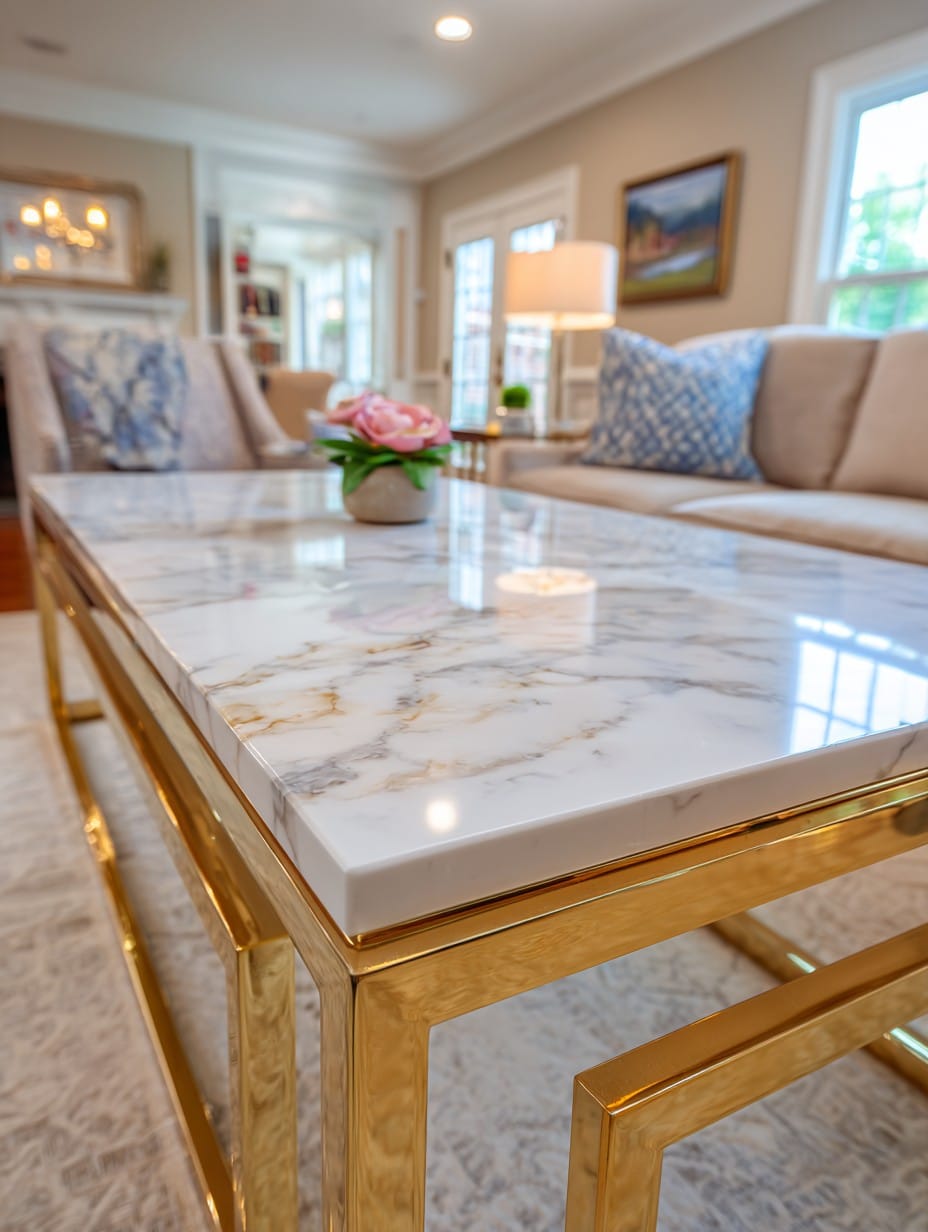
Carefully positioned ambient lighting creates dramatic highlights on the polished marble surface, emphasizing the natural veining patterns while the metallic base catches and reflects light from multiple sources. The interplay between matte velvet fabrics, glossy marble, and reflective metal creates a sophisticated layering of textures that defines high-end interior design. This isn’t a modest piece that blends into the background—it’s a confident statement that announces the homeowner’s appreciation for quality materials, expert craftsmanship, and unapologetic elegance.
Key Design Tips:
- Protect marble surfaces with appropriate sealers to prevent staining from acidic liquids like wine or citrus juice
- Choose marble slabs personally when possible to select the veining pattern that appeals most to your aesthetic preferences
- Balance the luxury with one or two simpler pieces in the room to prevent the space from feeling overdone or ostentatious
- Use coasters religiously to protect the marble surface from rings and etching caused by drinks and hot beverages
- Keep metal finishes consistent throughout the room’s hardware and accessories to create a cohesive, intentional design scheme
7. Versatile Nesting Table Set
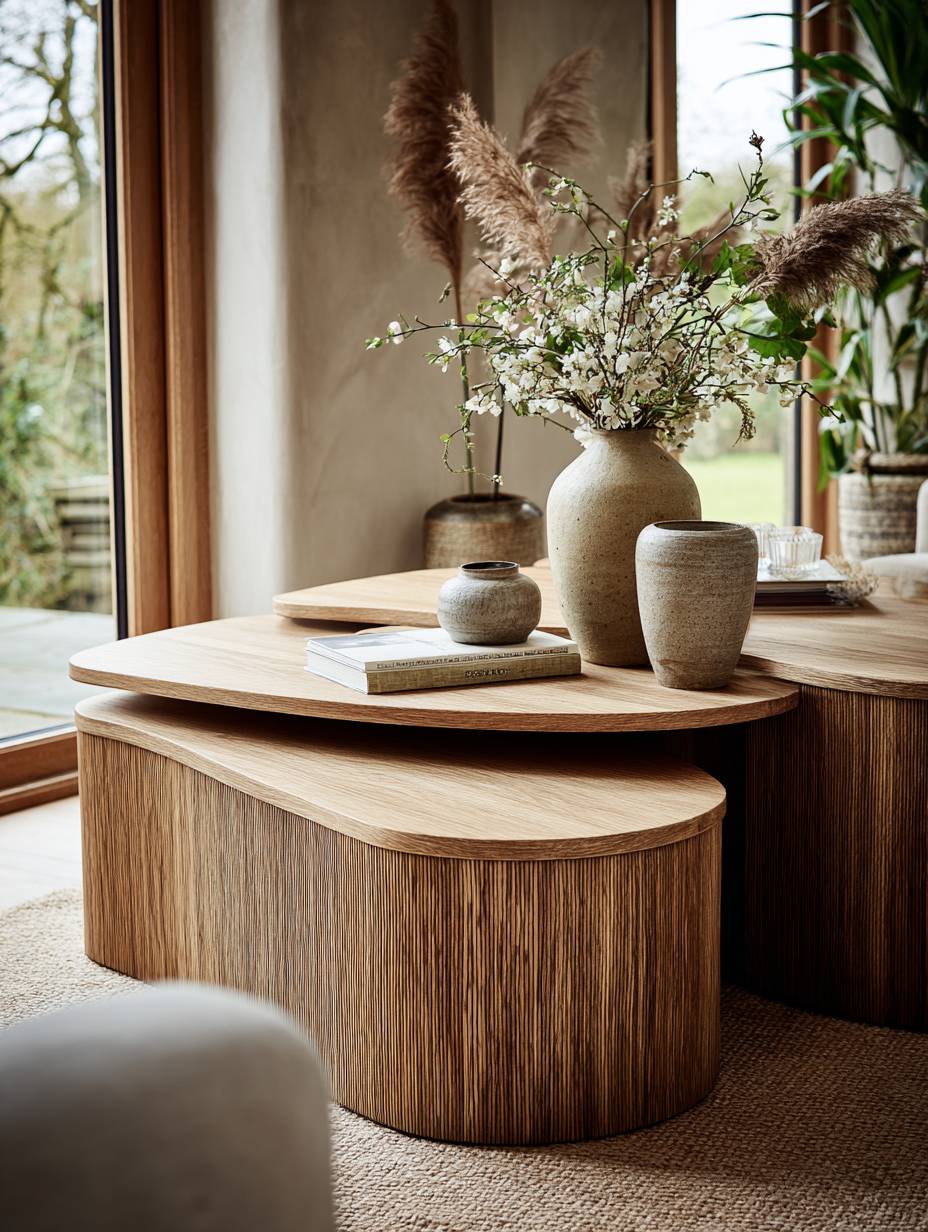
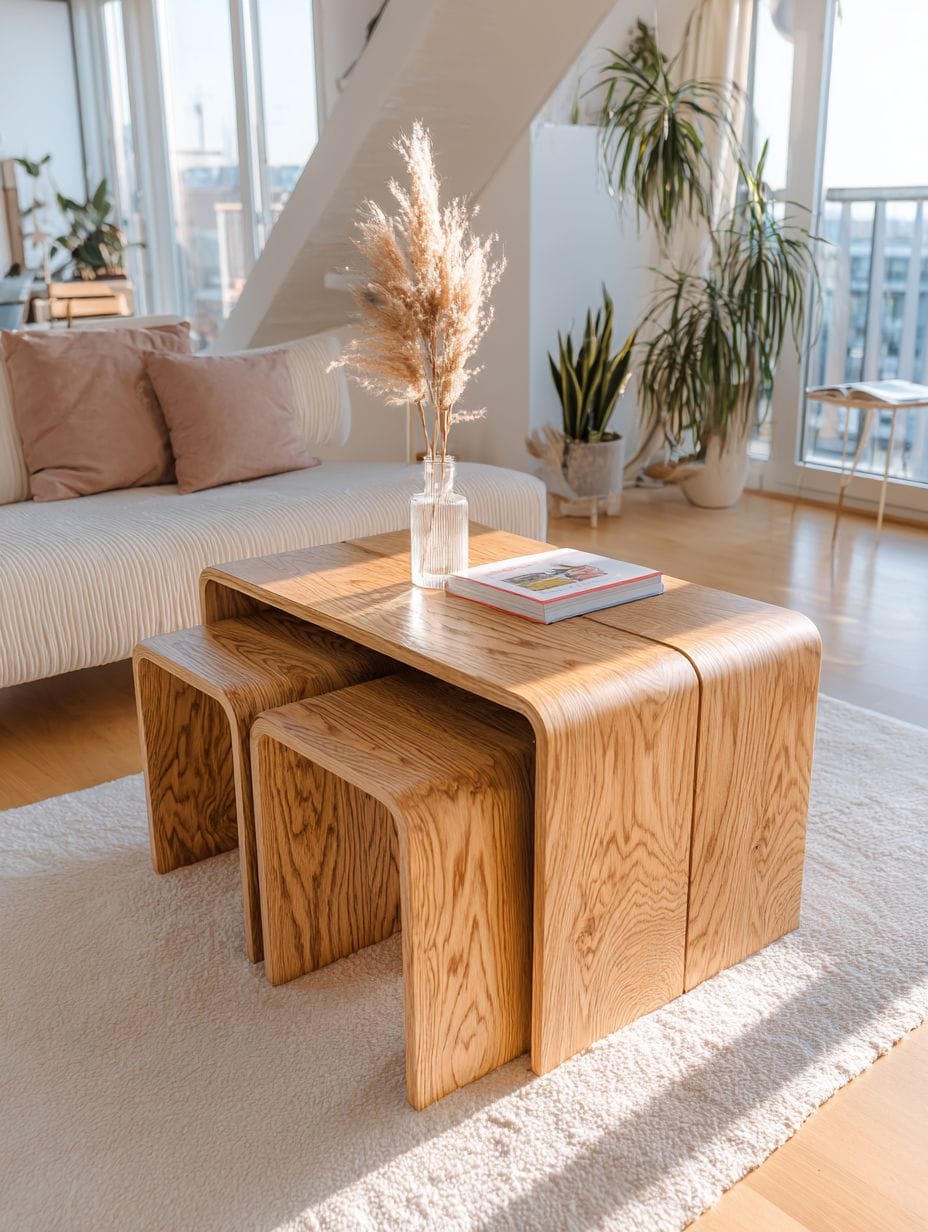
Smart, flexible furniture solutions have become increasingly important as homes shrink and spaces need to serve multiple functions. A nesting coffee table set featuring three graduated sizes in natural oak exemplifies this adaptable approach to modern living. The waterfall edge design, where the wood grain flows continuously over the edges rather than being interrupted by joints, showcases expert craftsmanship while creating a sophisticated, seamless appearance. When nested together, the tables form a compact footprint perfect for everyday use, but they can be separated and repositioned throughout the room when entertaining guests or accommodating different activities.
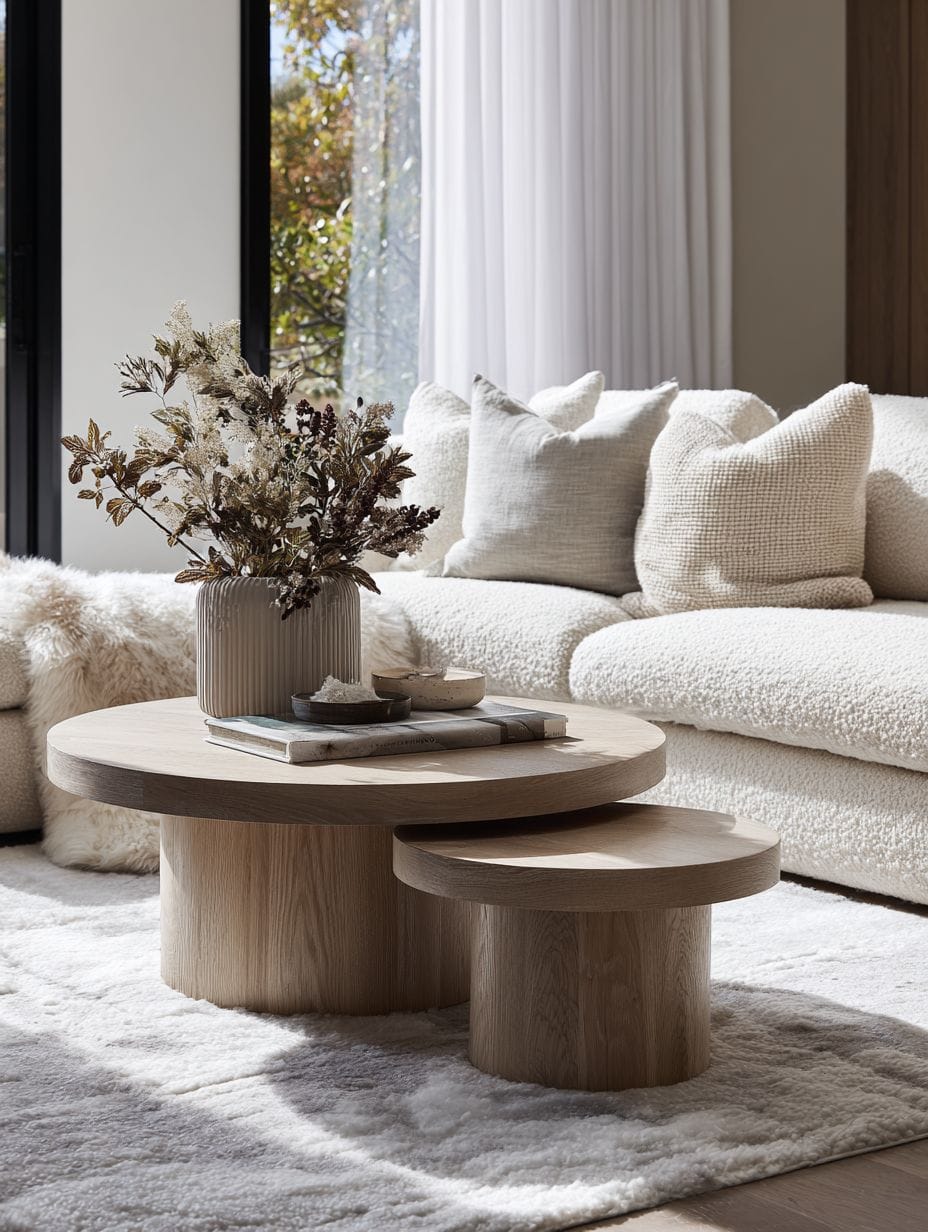
This flexibility makes nesting tables ideal for modern lifestyles where living spaces must adapt quickly to different needs—from intimate evening reading sessions to lively gathering spaces for entertaining friends. The varying heights create visual interest even when the tables are grouped together, with each tier revealing a portion of the table beneath. In a modern Scandinavian living space characterized by neutral tones and organic textures, these tables provide functional versatility without compromising aesthetic coherence. The natural oak finish ensures the pieces will coordinate with virtually any color scheme or design direction the homeowner chooses to explore over the years.
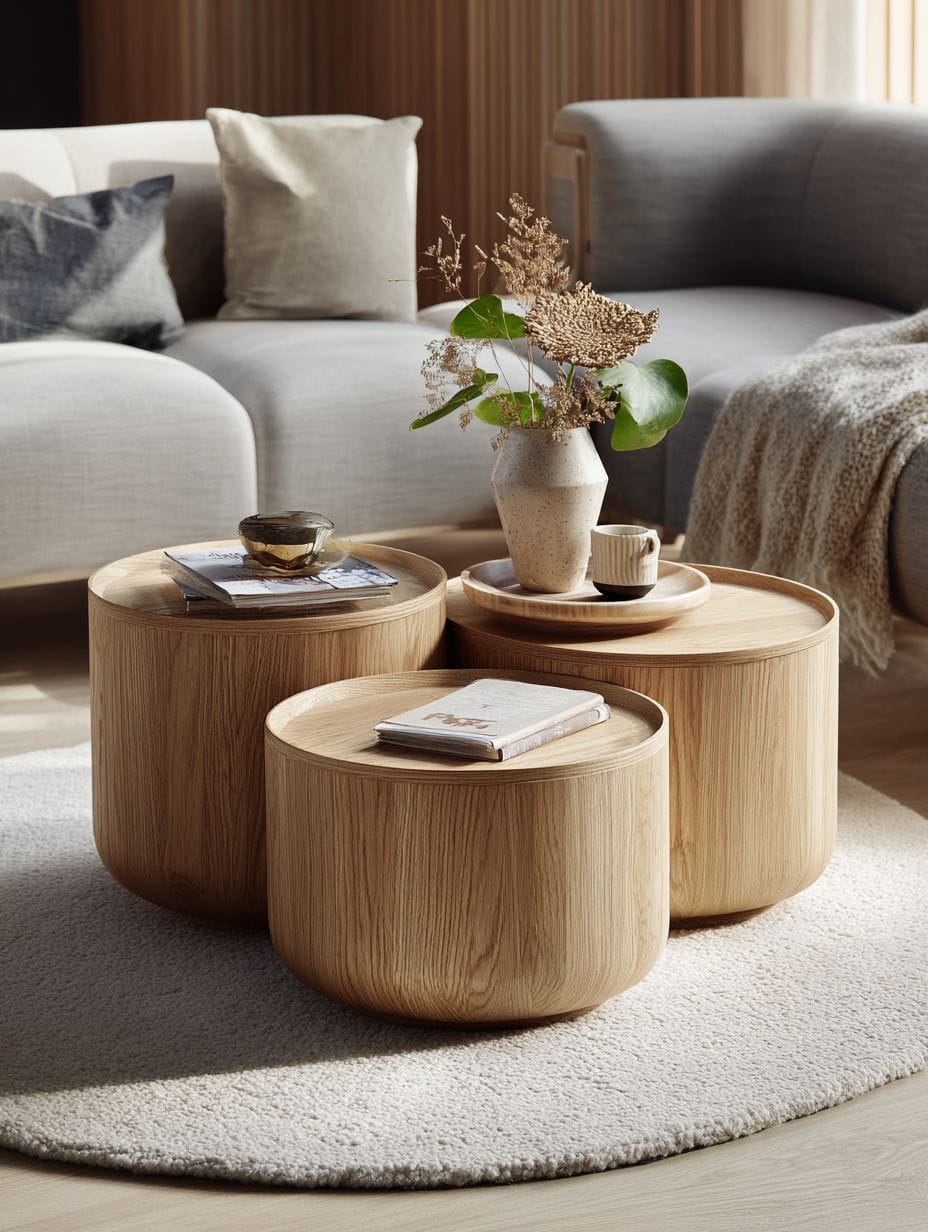
Natural daylight streaming through nearby windows emphasizes the continuous wood grain flow that defines the waterfall edge design, creating a sense of quality and attention to detail that elevates these practical pieces into the realm of fine furniture. The tables’ mobility means they can follow natural light throughout the day, be repositioned for optimal conversation arrangements, or even serve in different rooms when needed. This practical versatility combined with timeless design ensures the investment pays dividends for decades, adapting to changing needs rather than becoming obsolete as families grow and lifestyles evolve.
Key Design Tips:
- Choose quality construction with properly finished edges on all sides since these tables will be viewed from multiple angles
- Maintain consistent wood treatment across all pieces so they age uniformly and maintain their cohesive appearance
- Consider the largest table’s size first to ensure it provides adequate surface area for everyday use when nested
- Style each table differently when separated to create distinct vignettes that add visual interest throughout the room
- Ensure smooth-gliding bases that won’t scratch flooring when tables are frequently rearranged
8. Rustic Farmhouse Comfort
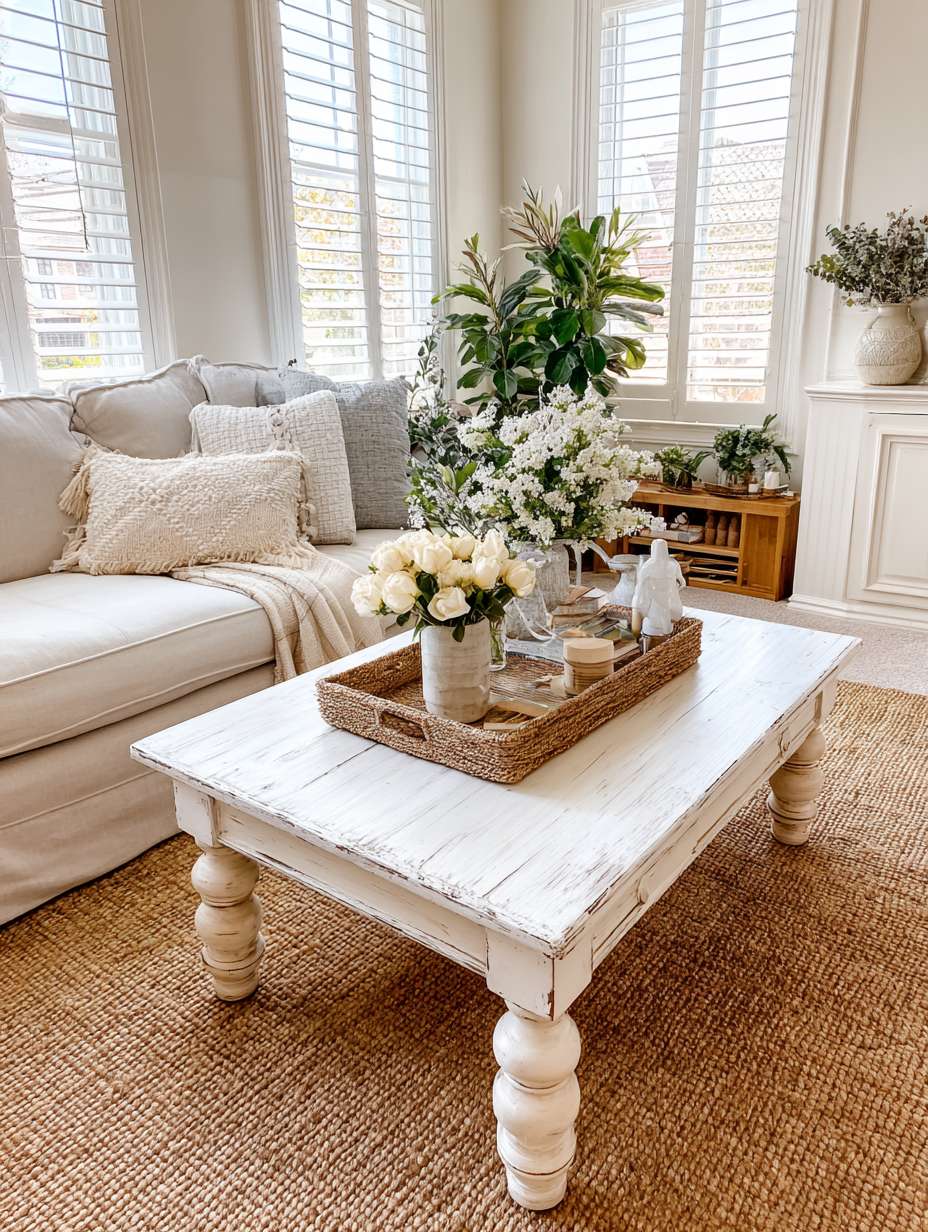
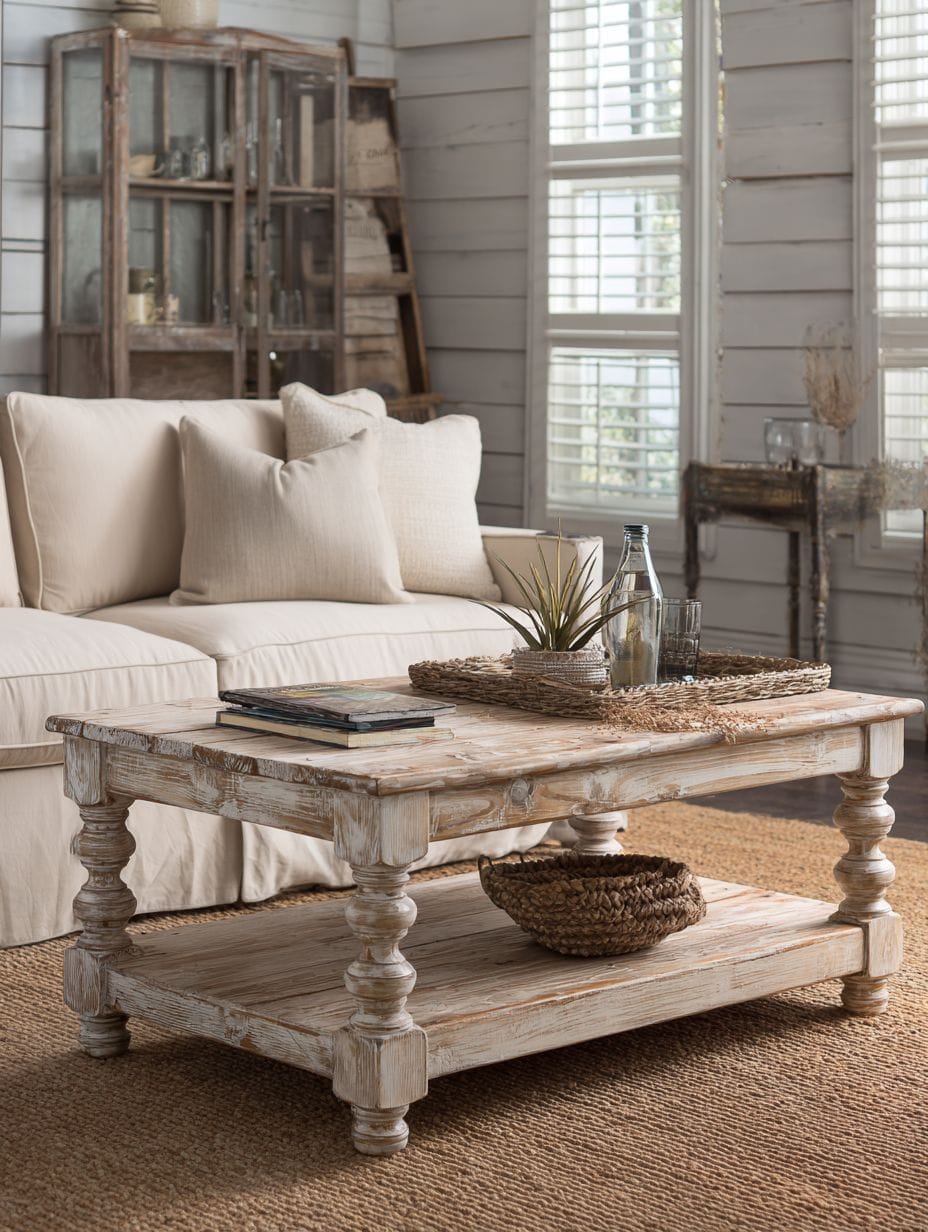
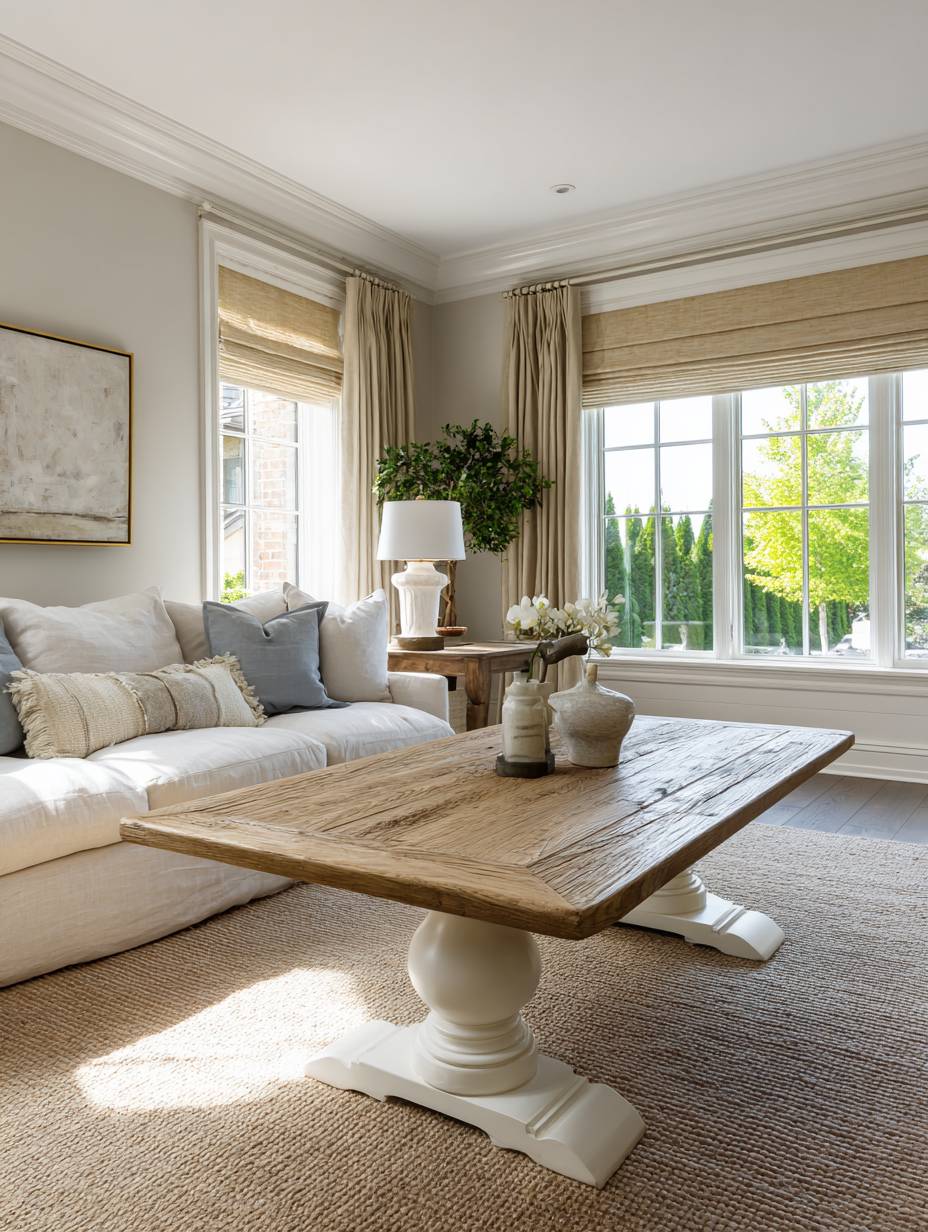
There’s an undeniable warmth and charm to rustic farmhouse design that speaks to our collective longing for simpler times and authentic craftsmanship. A coffee table crafted from distressed pine with a weathered white-wash finish embodies this nostalgic aesthetic perfectly. The chunky turned legs, reminiscent of antique furniture passed down through generations, provide visual weight and substance that grounds the entire living room. The distressed finish—whether achieved through genuine aging or skilled artisan techniques—reveals glimpses of raw wood beneath the white-wash, creating a layered, authentic appearance that mass-produced furniture can never replicate.
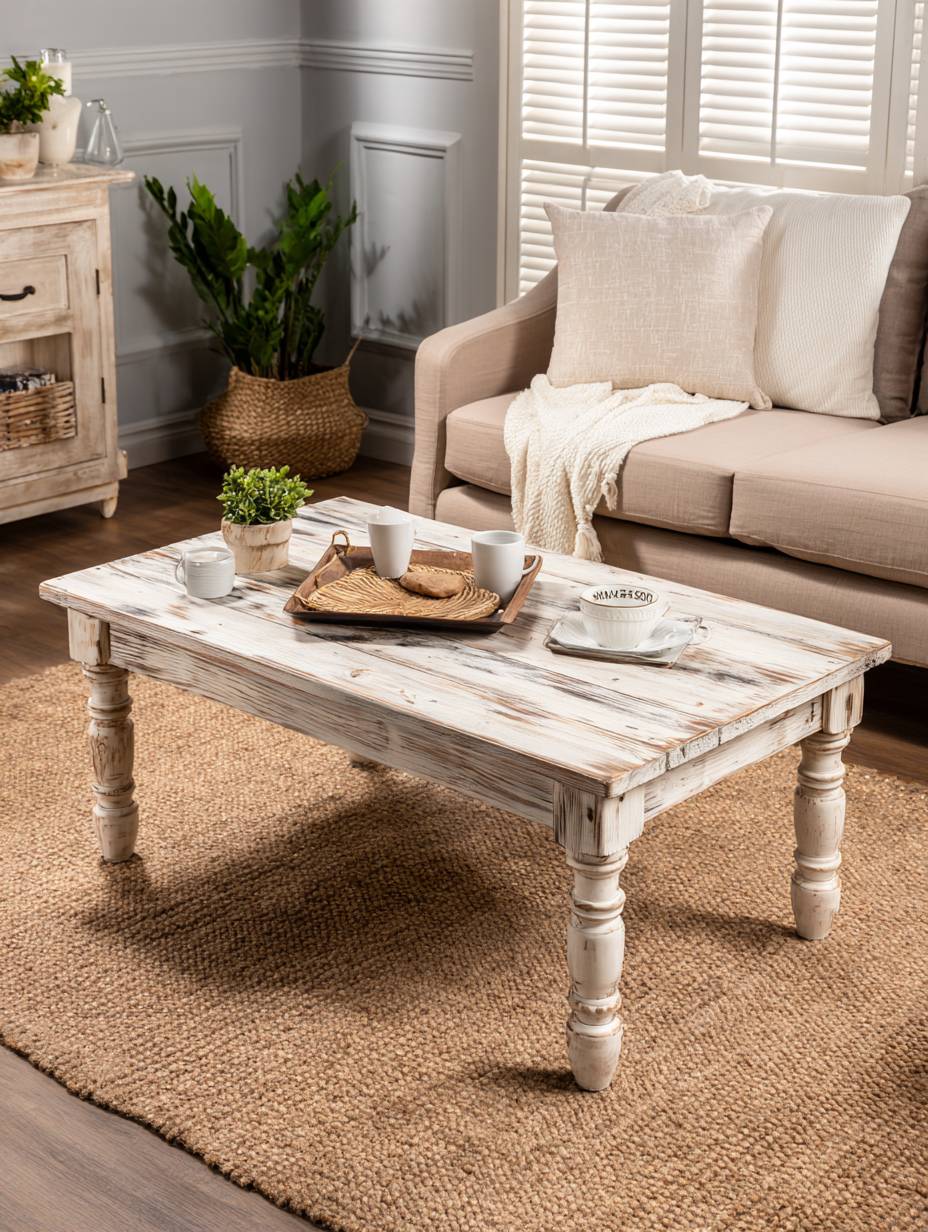
Positioned on a natural jute area rug in a cozy cottage-style living room, the table becomes the heart of a space designed for comfort and connection. Shiplap walls and comfortable linen seating complete the farmhouse narrative, creating an environment that feels lived-in and welcoming rather than precious or overly formal. This aesthetic celebrates imperfection and honest wear, recognizing that furniture should bear the marks of family life—the dings from children’s toys, the soft patina from years of use, the slight unevenness that comes from hand-craftsmanship rather than machine precision.
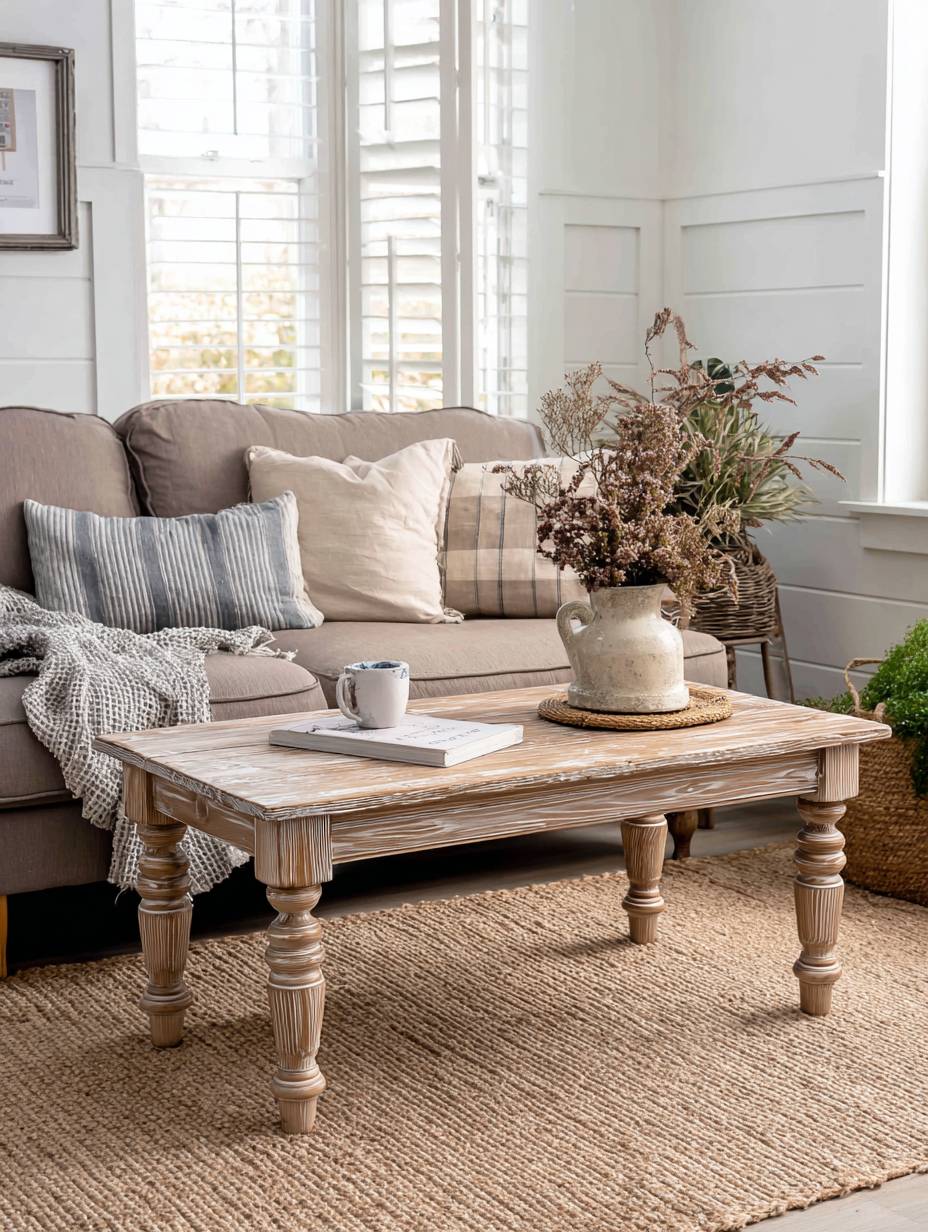
Soft natural light filtering through plantation shutters creates a warm, inviting atmosphere that changes throughout the day, casting gentle shadows that accentuate the table’s distressed texture and carved details. The play of light across the white-washed surface reveals the complexity of the finish, how it settles differently in grooves and on raised areas, creating depth and visual interest. This isn’t furniture meant to remain pristine—it’s designed to be used, loved, and to accumulate its own history as it becomes an integral part of family life.
Key Design Tips:
- Embrace authentic distressing techniques rather than overdone artificial aging that looks contrived and inauthentic
- Pair with natural, tactile fabrics like linen, cotton, and jute to reinforce the organic, unpretentious farmhouse aesthetic
- Mix old and new pieces to create a collected-over-time appearance rather than a matched furniture set that feels staged
- Choose white-wash finishes that allow wood grain to show through rather than opaque paint that obscures the natural material
- Layer with vintage accessories like enamelware, vintage books, or antique finds to complete the authentic farmhouse story
9. Modern Concrete and Oak Fusion
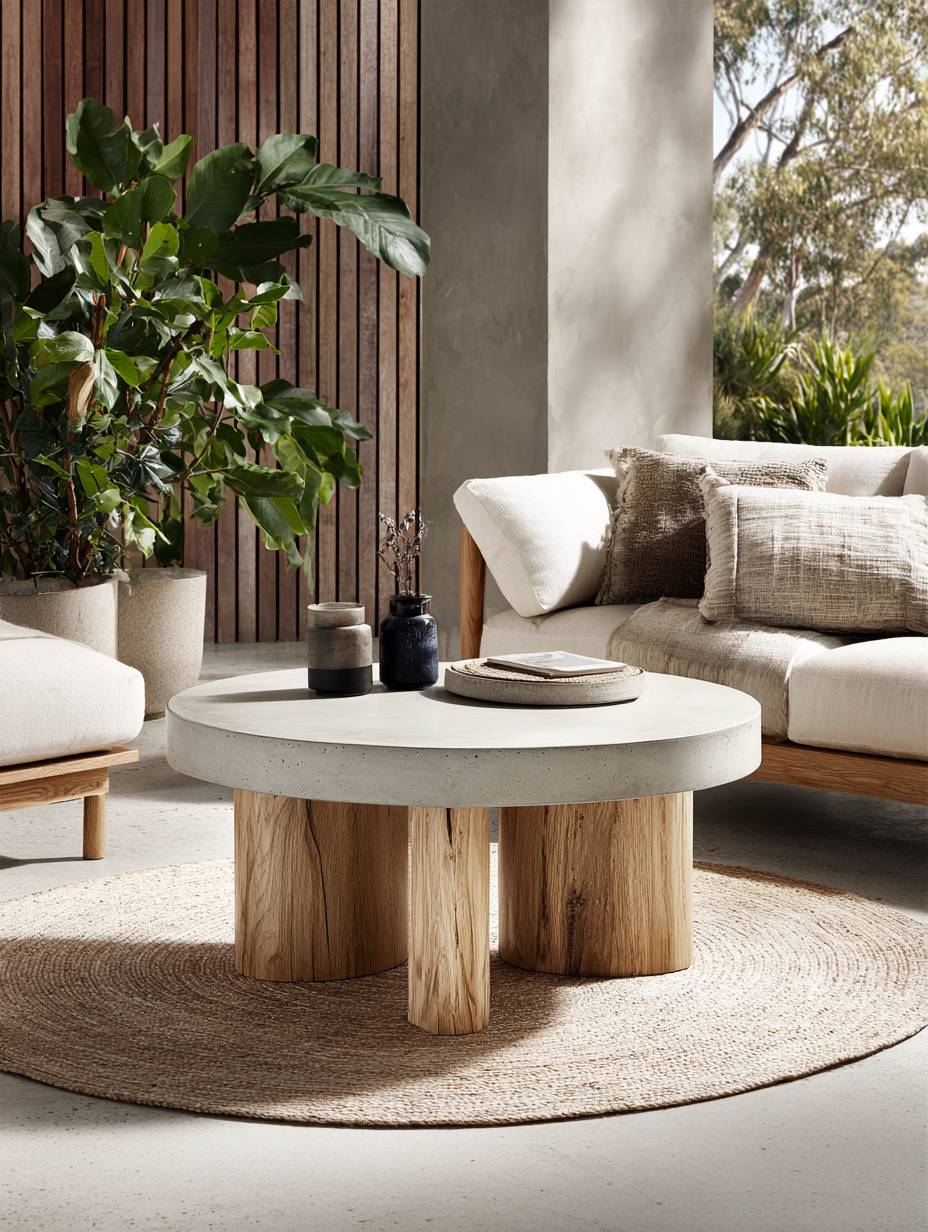
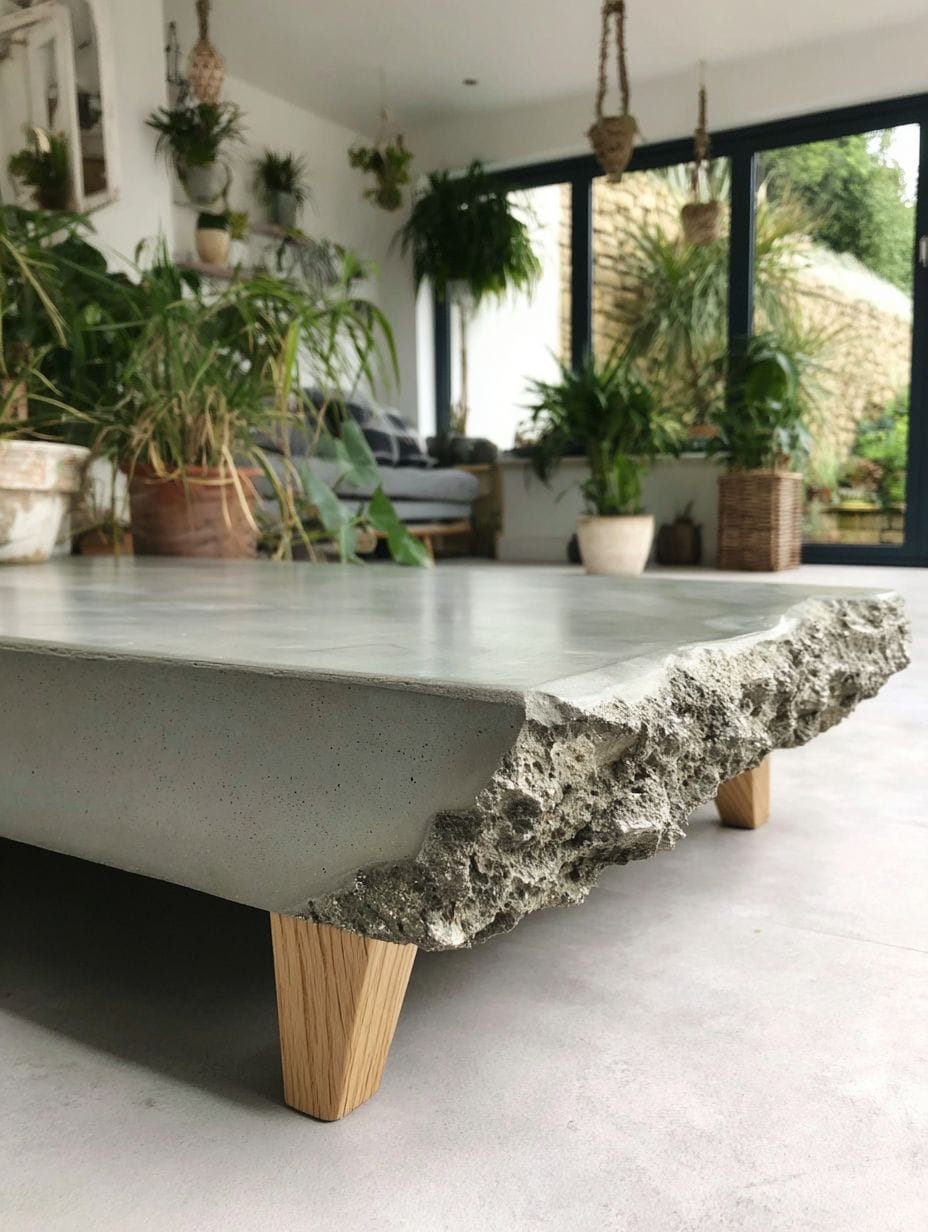
The marriage of industrial concrete and warm natural oak creates a compelling study in contrasts that defines contemporary design. A coffee table featuring a smooth polished concrete top with organic edge detail paired with solid oak legs represents the cutting edge of modern furniture design. The concrete’s light grey tone—achieved through careful selection of aggregate and cement combinations—offers a sophisticated alternative to darker, heavier concrete appearances while maintaining the material’s inherent strength and durability. The polished finish transforms what might otherwise feel cold and institutional into a refined, touchable surface with subtle variations and unique character.
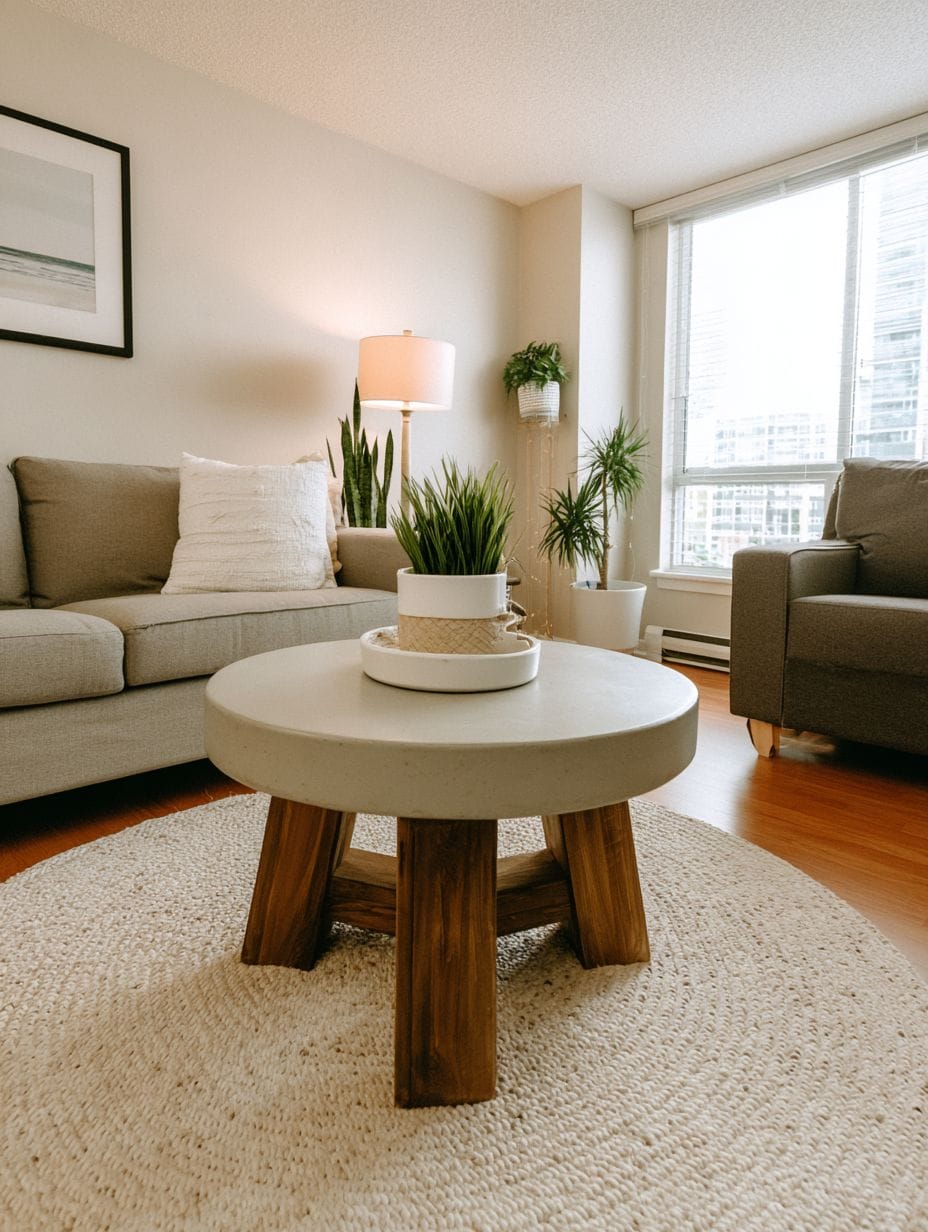
The organic edge detail, where the concrete follows a more natural, less rigidly geometric form, softens the industrial material and creates visual interest that draws the eye around the table’s perimeter. The solid oak legs, left in their natural finish to showcase the wood’s warm honey tones and distinctive grain patterns, provide necessary visual warmth that balances the concrete’s coolness. In a contemporary minimalist living space characterized by a neutral color palette and strategically placed indoor plants, this table serves as a grounding element that connects the space to both urban and natural aesthetics simultaneously.
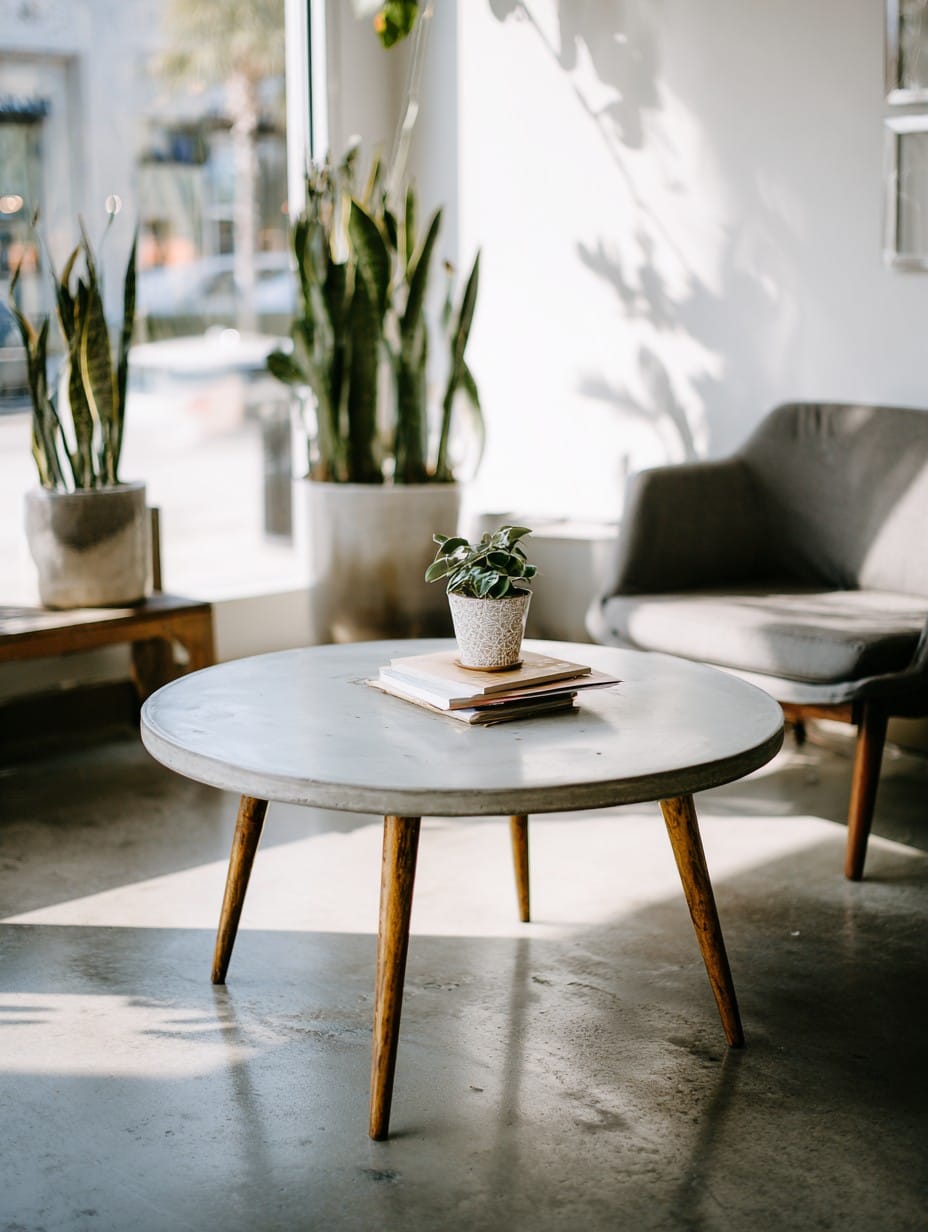
Diffused natural lighting reveals the subtle variations in the concrete finish—tiny air bubbles, slight color shifts, and texture variations that make each piece unique. The wood grain in the oak legs creates linear patterns that contrast beautifully with the concrete’s more homogeneous appearance. This material juxtaposition demonstrates how contemporary design celebrates authentic materials in their honest forms rather than trying to disguise or apologize for their inherent characteristics. The result is furniture that feels substantial and genuine, built to last and improve with age rather than following fleeting trends.
Key Design Tips:
- Seal concrete surfaces properly to prevent staining and make maintenance easier for this porous material
- Choose lighter concrete mixes that feel more sophisticated and work better with modern neutral palettes than darker alternatives
- Ensure the concrete top isn’t too thick which can make the piece feel heavy and difficult to move if needed
- Balance cool and warm elements by pairing concrete with natural wood, textiles, or warm-toned accessories
- Maintain oak with appropriate oil treatments to preserve its natural beauty and protect against moisture damage
10. Live-Edge Natural Artistry
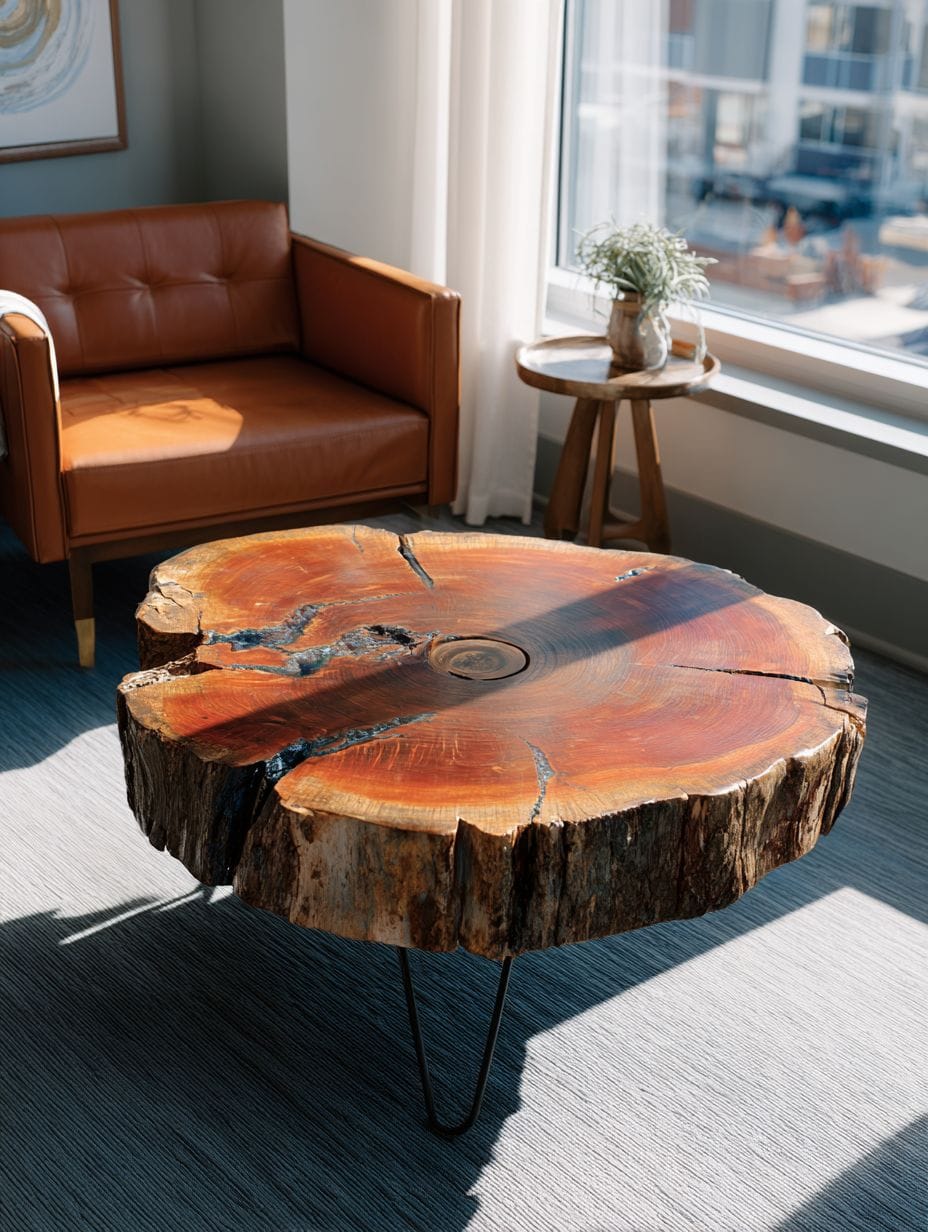
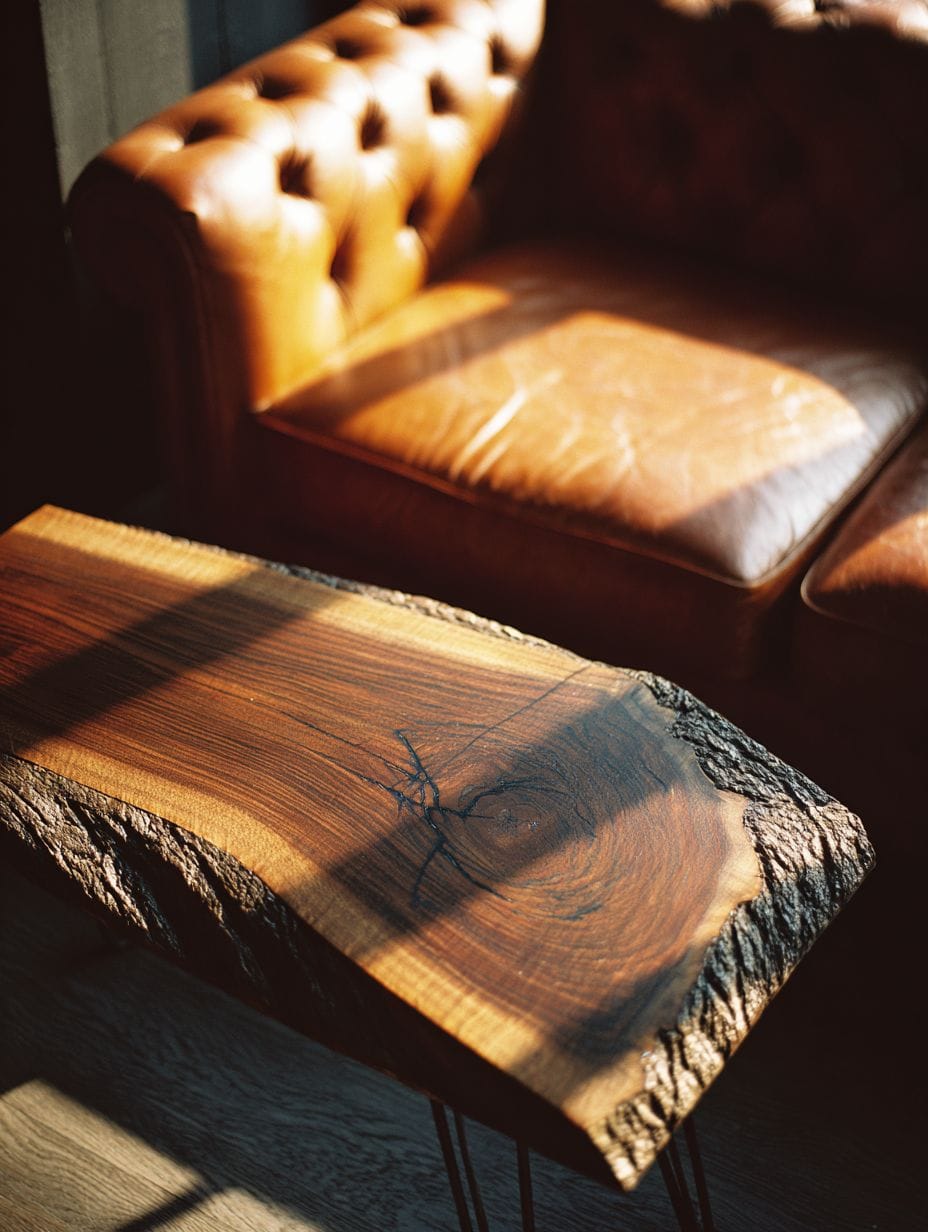
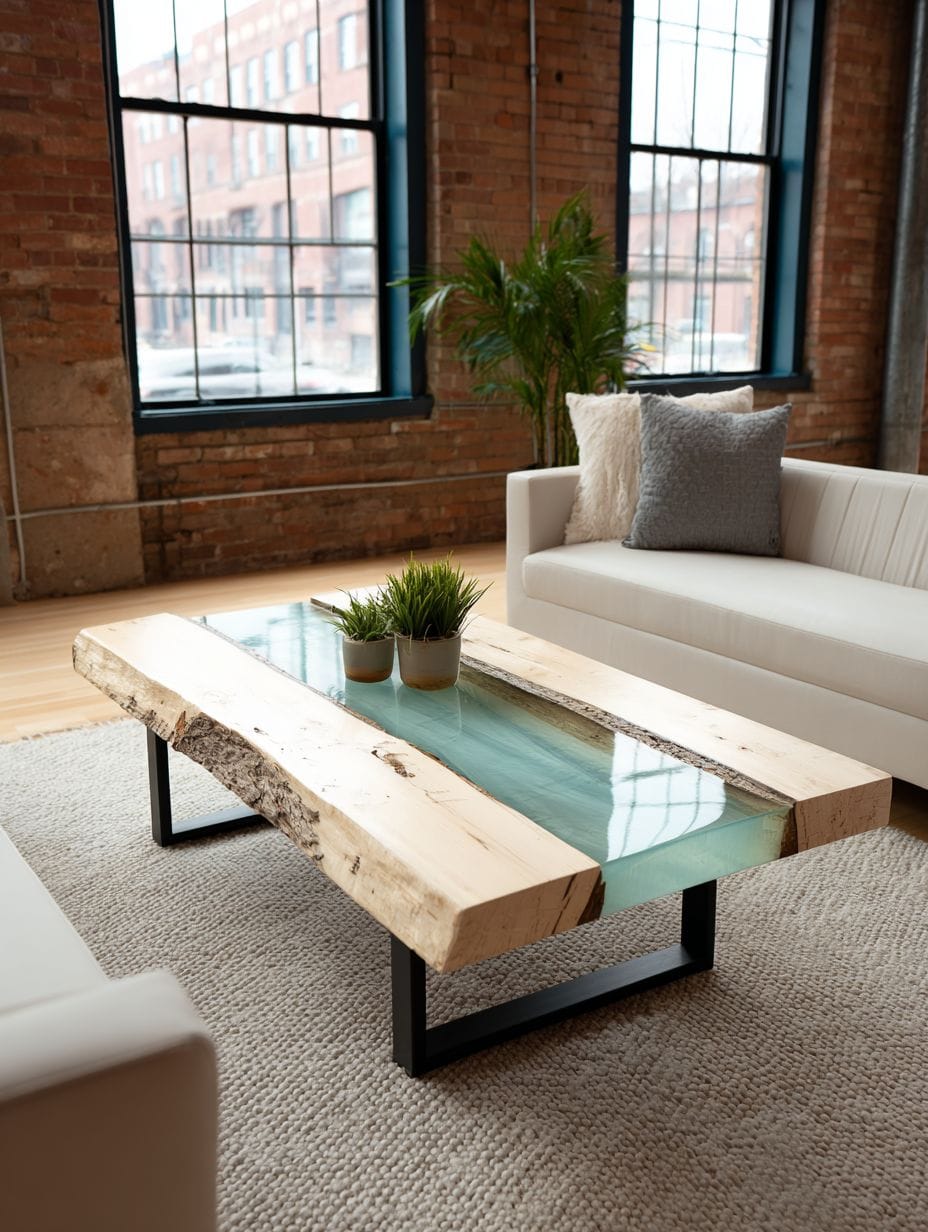
Few furniture pieces celebrate nature’s artistry as dramatically as a live-edge wood slab coffee table. The natural bark edges, left intentionally uncut and unfinished, create an organic silhouette that’s impossible to replicate and utterly unique to each individual piece. Rich walnut coloring—ranging from deep chocolate browns to lighter tans depending on the specific tree and growing conditions—provides warmth and sophistication that enhances any interior design scheme. The distinctive wood grain patterns, following the tree’s natural growth rings and figured wood variations, create a mesmerizing surface that rewards close inspection and becomes more beautiful the longer you live with it.
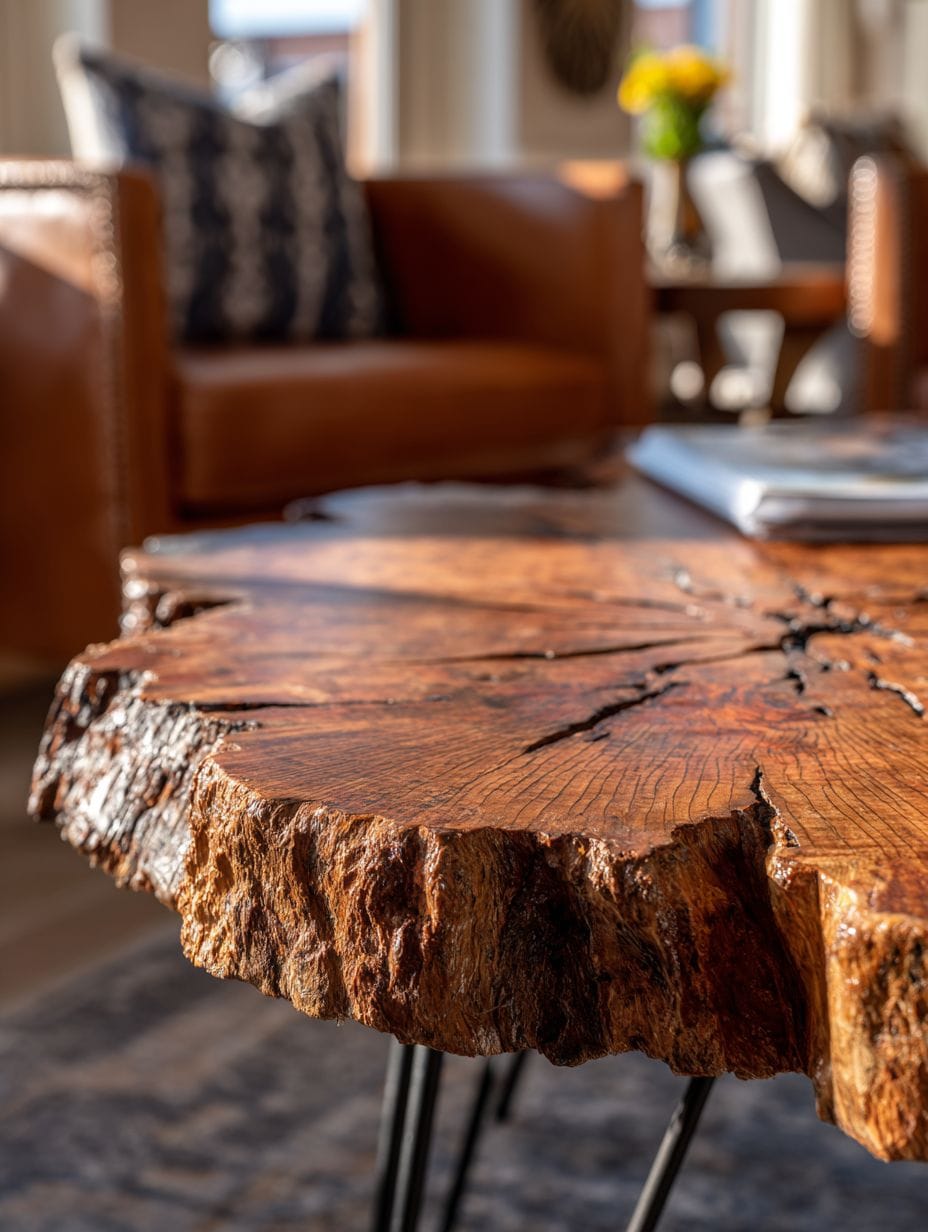
Resin-filled natural cracks—where clear or tinted epoxy is poured into the wood’s natural fissures, knots, and voids—transform potential flaws into stunning design features. The translucent resin catches light differently than the surrounding wood, creating luminous accents that add depth and visual interest. Some artisans tint the resin with colors ranging from subtle amber to dramatic blues or blacks, creating striking contrasts that emphasize the wood’s natural character. Mounted on sleek black metal hairpin legs, the slab appears to float, the minimal supports allowing the wood’s beauty to remain the uncontested focal point.
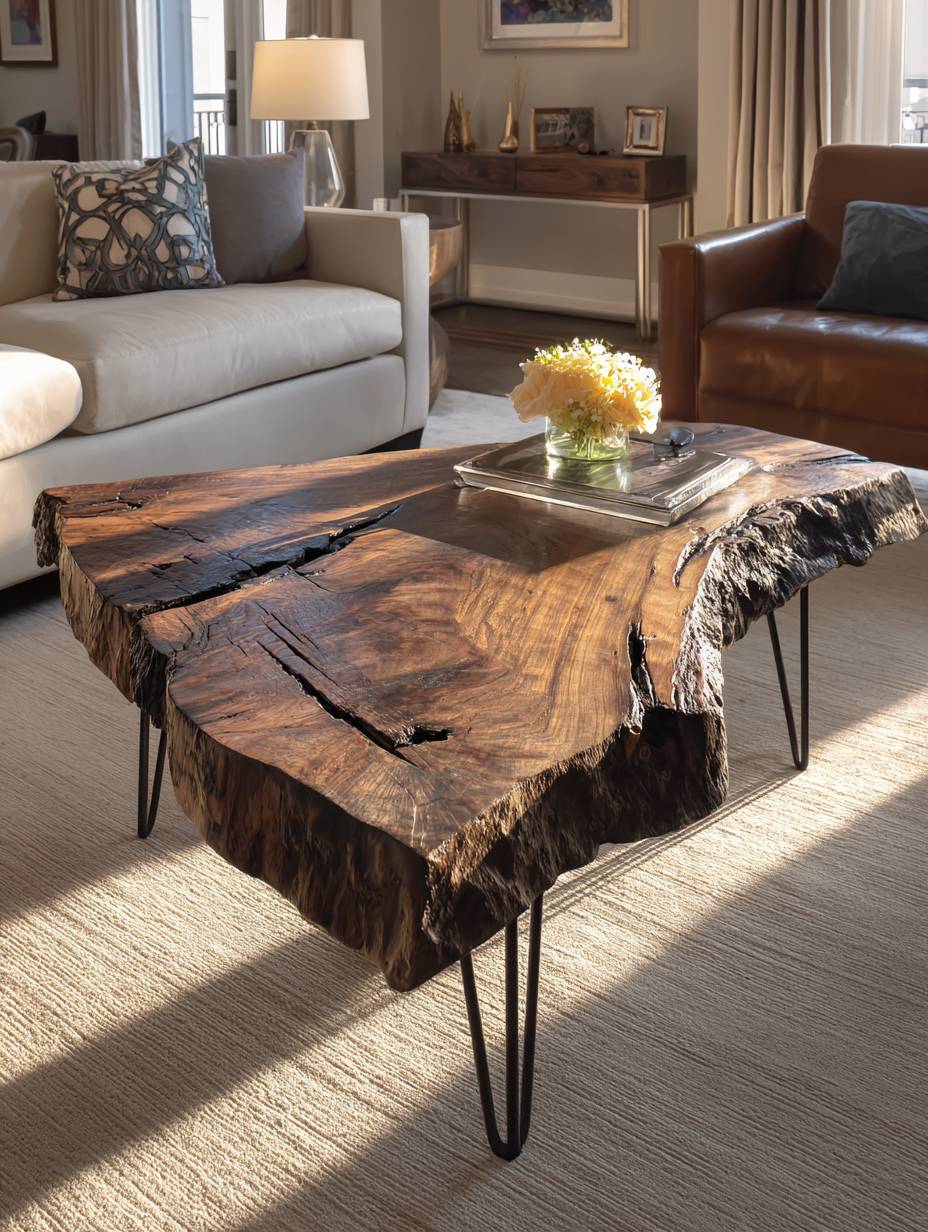
Warm afternoon light accentuates every detail of the organic edge and natural wood characteristics, creating ever-changing shadows and highlights that make the table a dynamic rather than static element in the room. In a modern eclectic living room featuring leather seating and a mix of contemporary and natural elements, this table serves as a bridge between different design aesthetics, its natural character fitting equally well in rustic, modern, or transitional spaces. The piece functions as functional furniture and living sculpture simultaneously, elevating the coffee table from utilitarian object to conversation-starting work of art.
Key Design Tips:
- Select slabs that have been properly kiln-dried to prevent cracking, warping, or movement after the table is built
- Choose resin colors carefully to ensure they complement your overall design scheme and won’t feel dated quickly
- Maintain the wood with appropriate finishes that enhance the natural beauty while protecting the surface from daily use
- Position to showcase the most interesting edge facing the primary viewing angle in your room layout
- Keep styling minimal to allow the wood’s natural artistry to remain the star attraction without visual competition
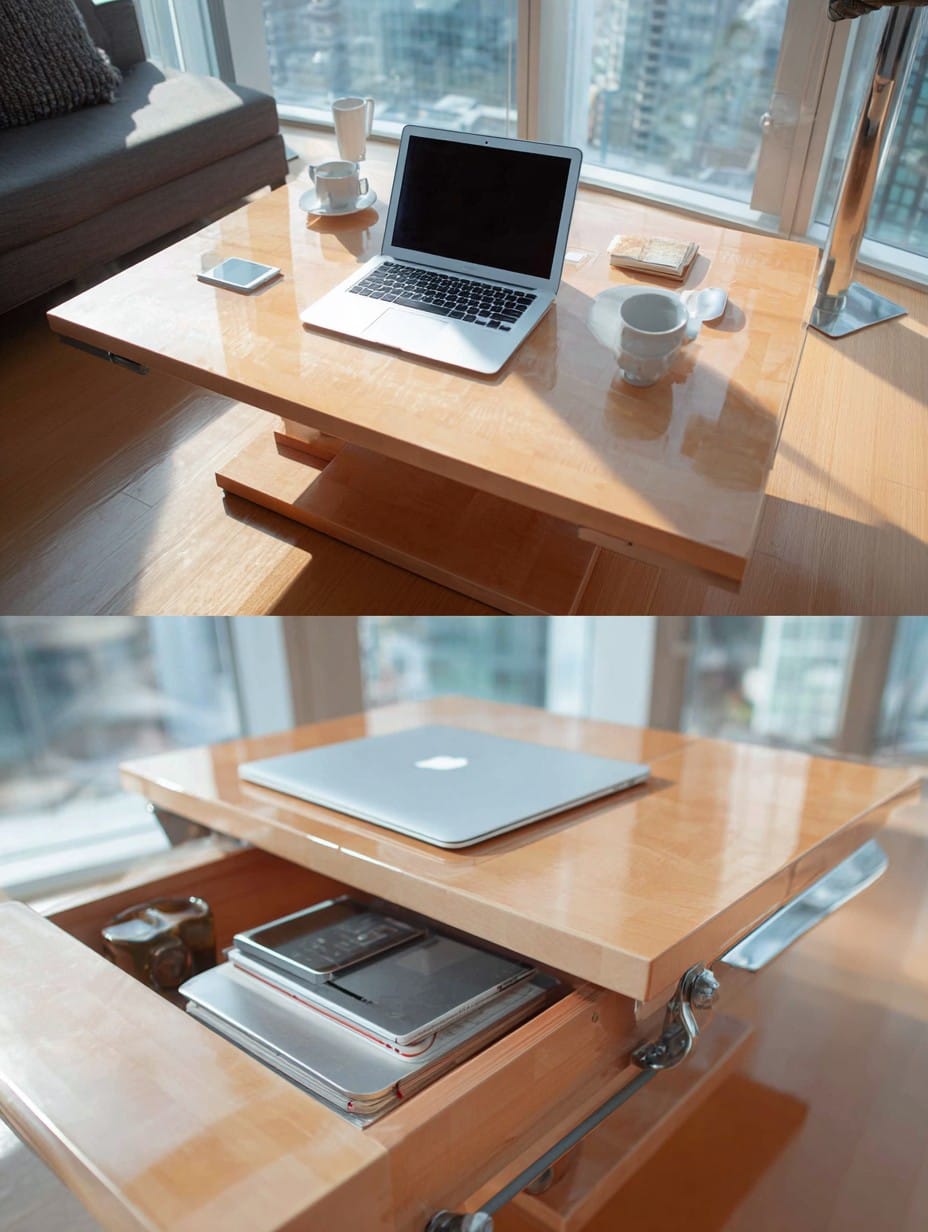
11. Contemporary Storage Solution
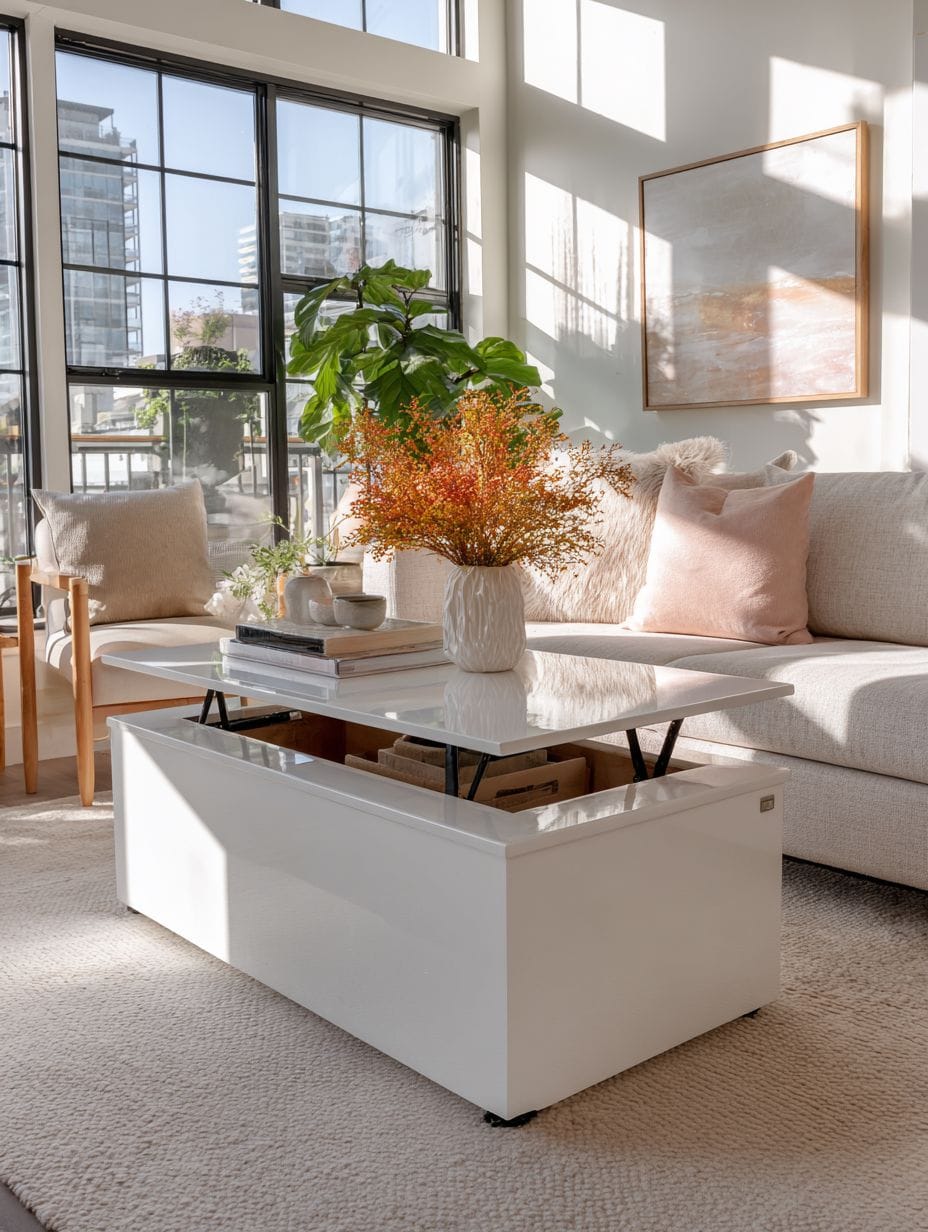
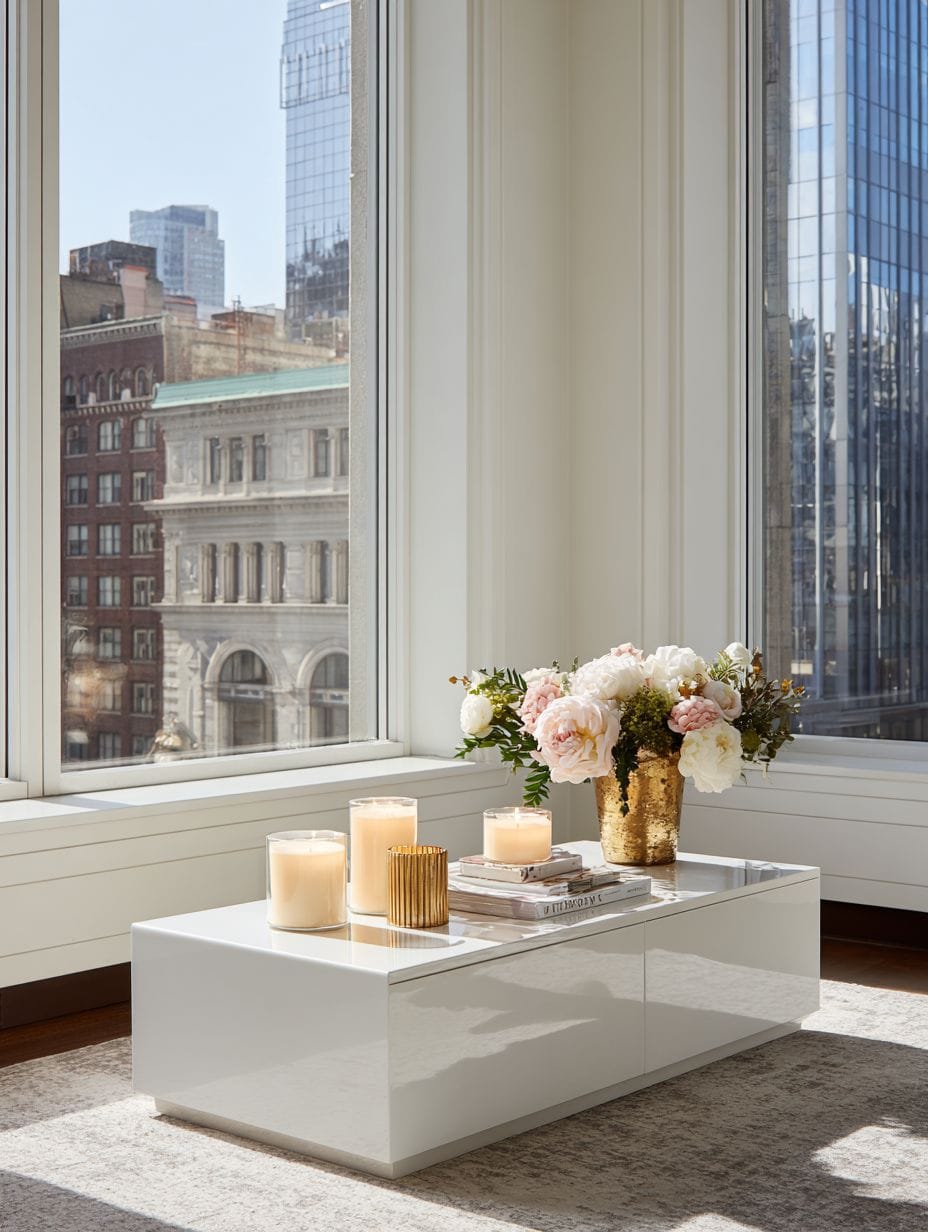
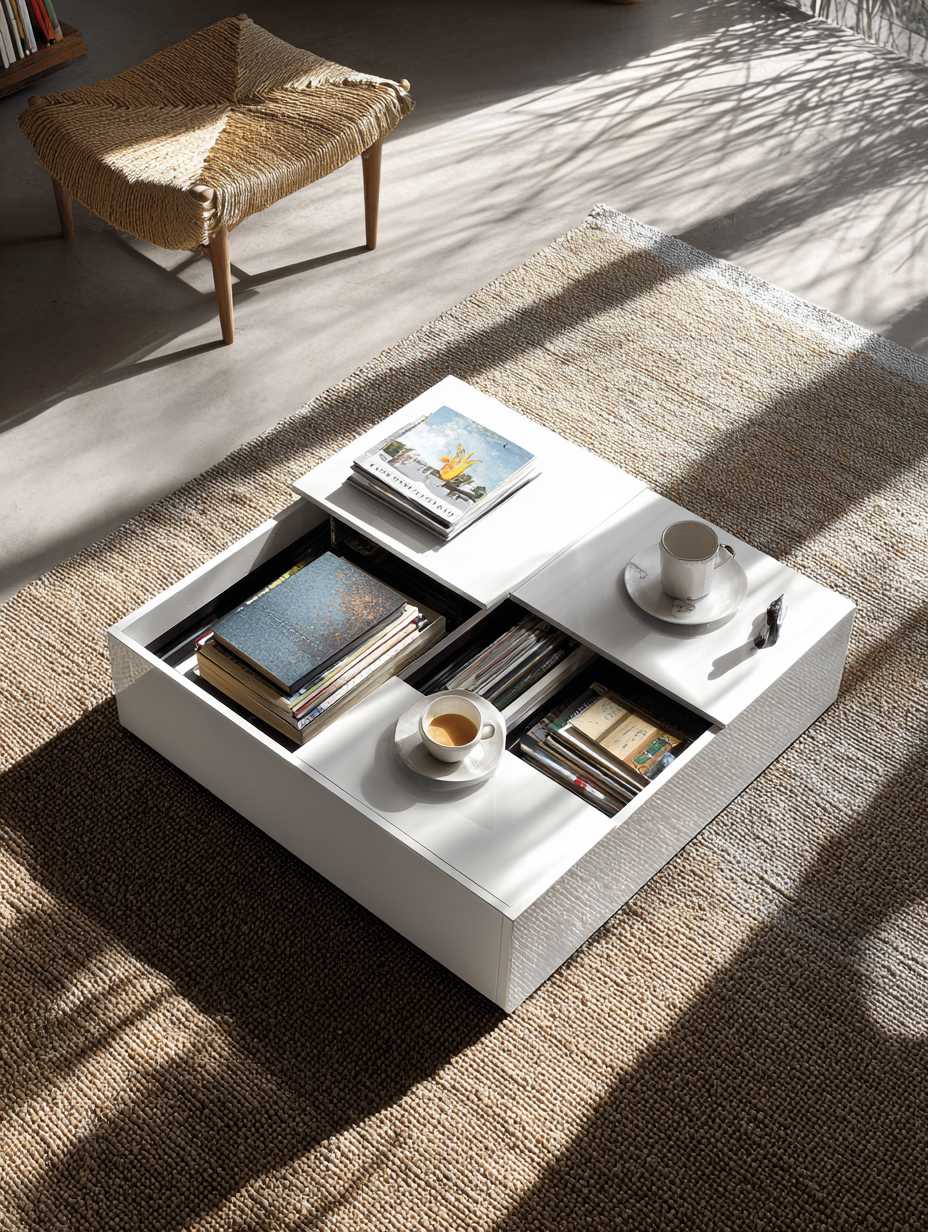
Modern life demands furniture that works as hard as we do, which is why storage coffee tables have become essential in contemporary homes. A sleek lacquered table in high-gloss white finish with hidden storage compartments and a lift-top mechanism combines form and function seamlessly. The pristine white surface reflects light beautifully, helping to visually expand smaller spaces while providing a neutral backdrop that allows other design elements to shine. The hidden storage compartments cleverly conceal remotes, magazines, electronics, and other living room essentials that would otherwise create visual clutter, maintaining the clean aesthetic that defines minimalist interiors.
The lift-top mechanism—operating on smooth gas pistons or well-engineered hinges—elevates a portion of the tabletop to a comfortable working or dining height. This transformative feature makes the coffee table into a versatile workspace for laptop use, casual dining, or hobbies, eliminating the need for separate furniture pieces in space-constrained apartments. The mechanism should operate smoothly and quietly, with quality hardware that will withstand thousands of opening and closing cycles over the furniture’s lifetime. Positioned in a modern minimalist apartment characterized by clean lines and a monochromatic color scheme, this table becomes an invisible servant—always working but never drawing undue attention.
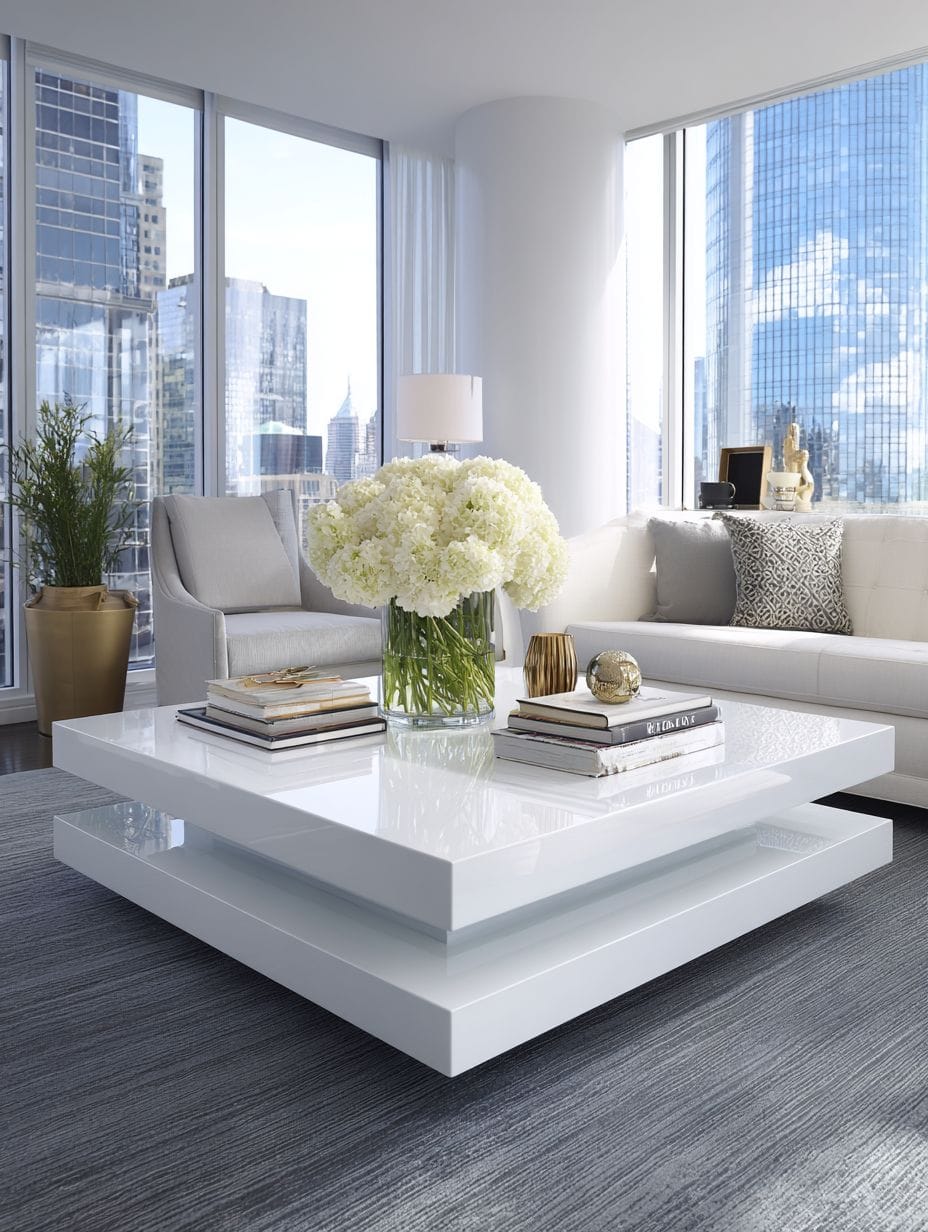
Bright natural light creates beautiful reflections on the glossy surface, adding depth and dimension to what might otherwise be a flat expanse of white. The high-gloss finish requires more maintenance than matte alternatives, showing fingerprints and dust more readily, but the stunning visual impact and light-reflecting properties make the extra care worthwhile for design-conscious homeowners. Clean shadows beneath the floating base emphasize the table’s contemporary design and create a sense of lightness despite its substantial storage capacity.
Key Design Tips:
- Test the lift mechanism thoroughly before purchasing to ensure smooth operation and appropriate weight capacity
- Choose quality lacquered finishes that resist yellowing, scratching, and wear better than cheaper alternatives
- Keep cleaning supplies handy as high-gloss surfaces show fingerprints and require more frequent maintenance
- Organize storage compartments with dividers to maximize functionality and prevent items from shifting around
- Balance the modern aesthetic with textural elements like throws, pillows, or rugs to prevent the space from feeling cold
12. Vintage Trunk Character
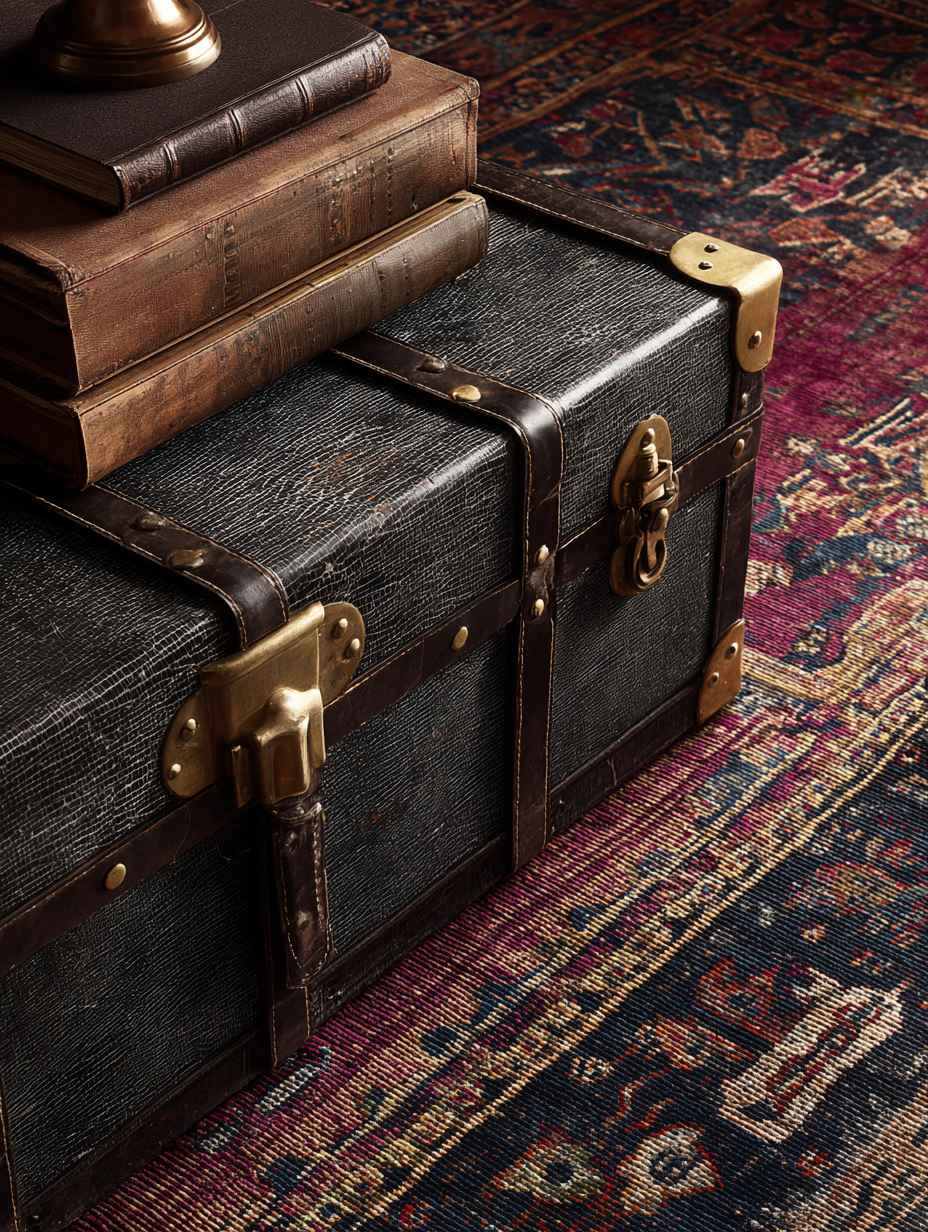
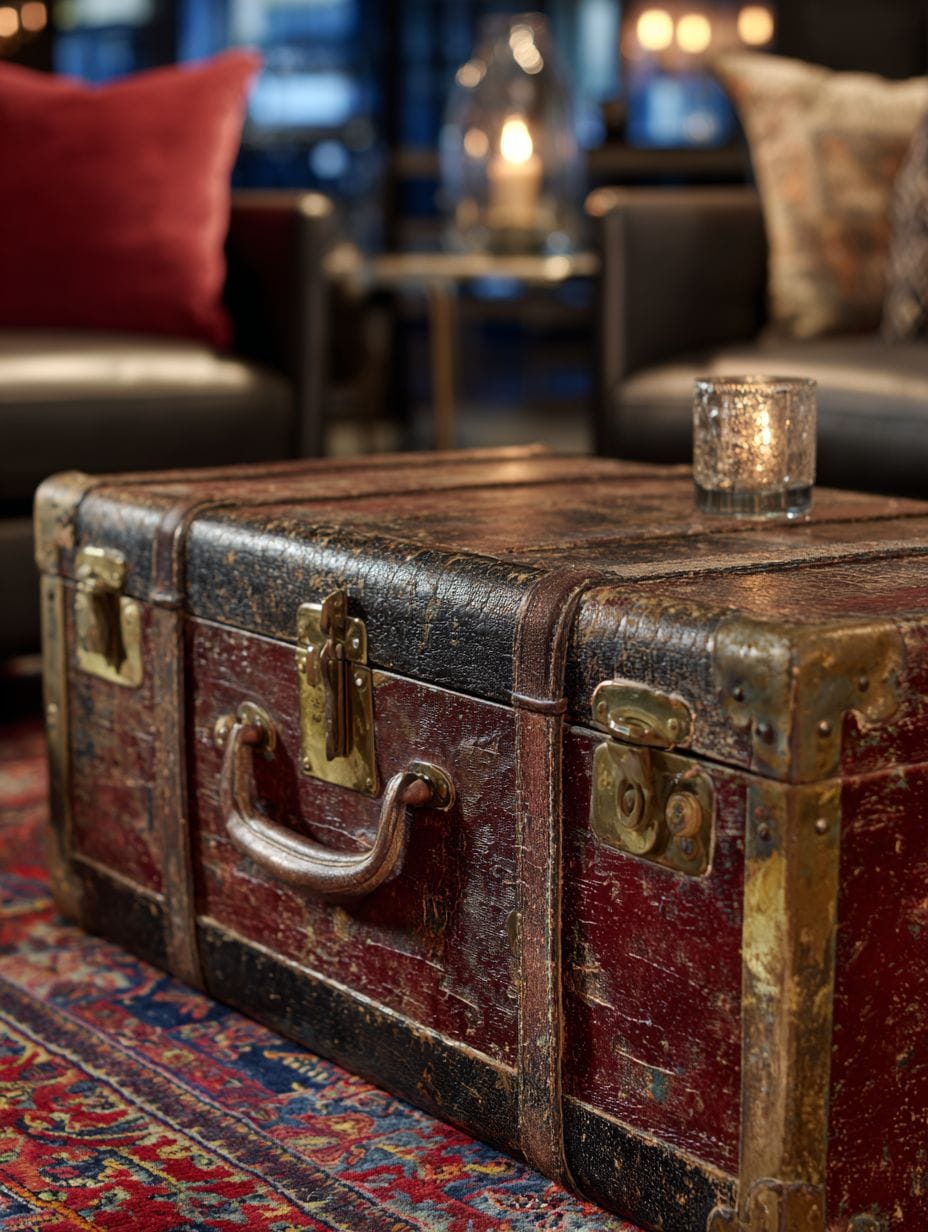
There’s something deeply romantic about furniture that carries authentic history, and a vintage trunk repurposed as a coffee table delivers character in abundance. The worn leather exterior, showing genuine age through subtle cracking, color variations, and softened corners, tells stories of past travels and adventures. Brass corner protectors and hardware, displaying the natural patina that only develops over decades of exposure to air and handling, add metallic accents that catch light and create visual interest. The functional storage inside—the trunk’s original purpose—provides ample space for throw blankets, board games, photo albums, or seasonal decorations, making this piece as practical as it is beautiful.
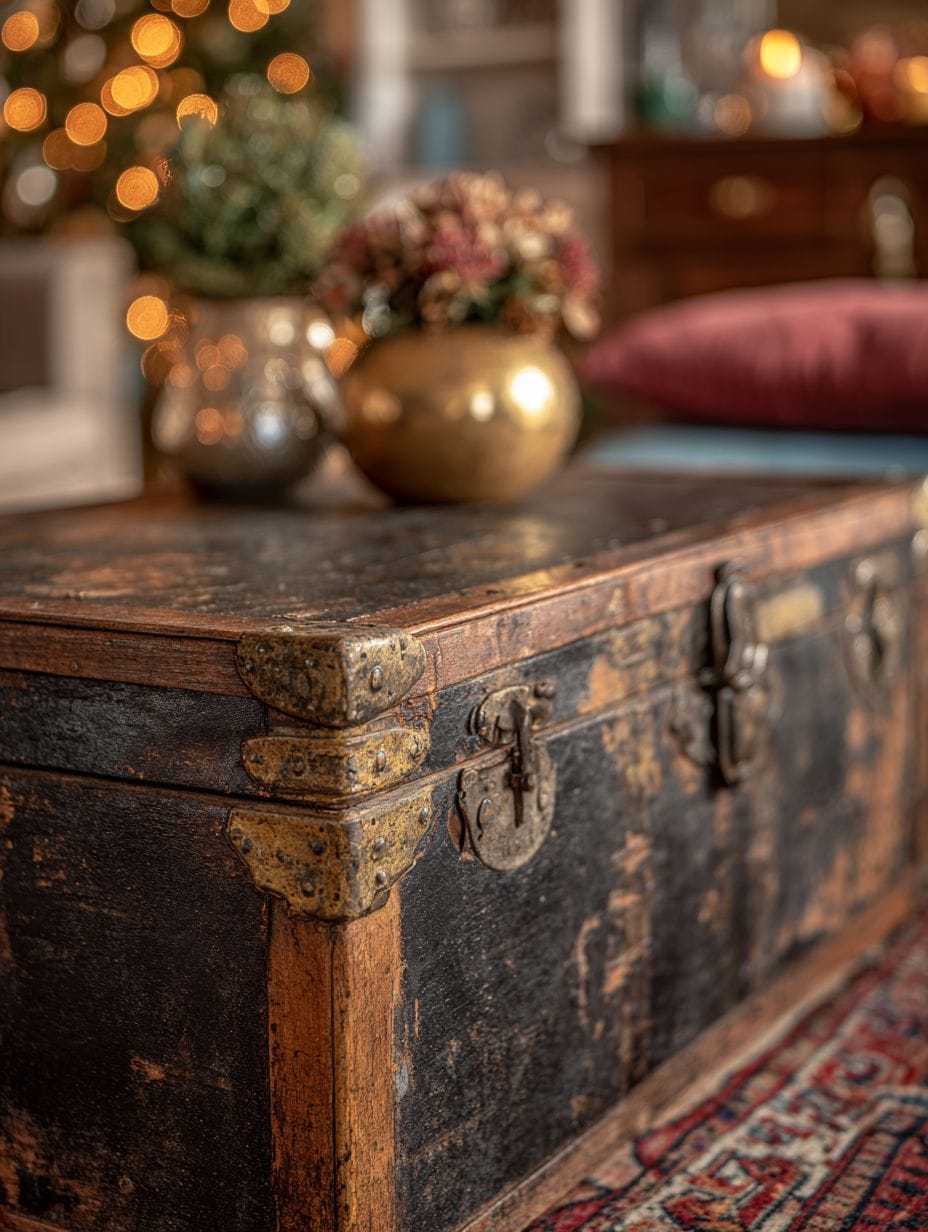
Placed on a traditional Persian rug in an eclectic living room that celebrates the mixing of modern and vintage elements, the trunk coffee table becomes a conversation starter that anchors diverse design elements into a cohesive whole. The rich colors and intricate patterns of the Persian rug complement the trunk’s aged patina, while contemporary seating and modern accessories prevent the space from feeling like a museum display. This approach to design—honoring quality pieces from different eras rather than demanding everything match perfectly—creates rooms with genuine personality and depth that reflect actual human lives rather than sterile showroom perfection.
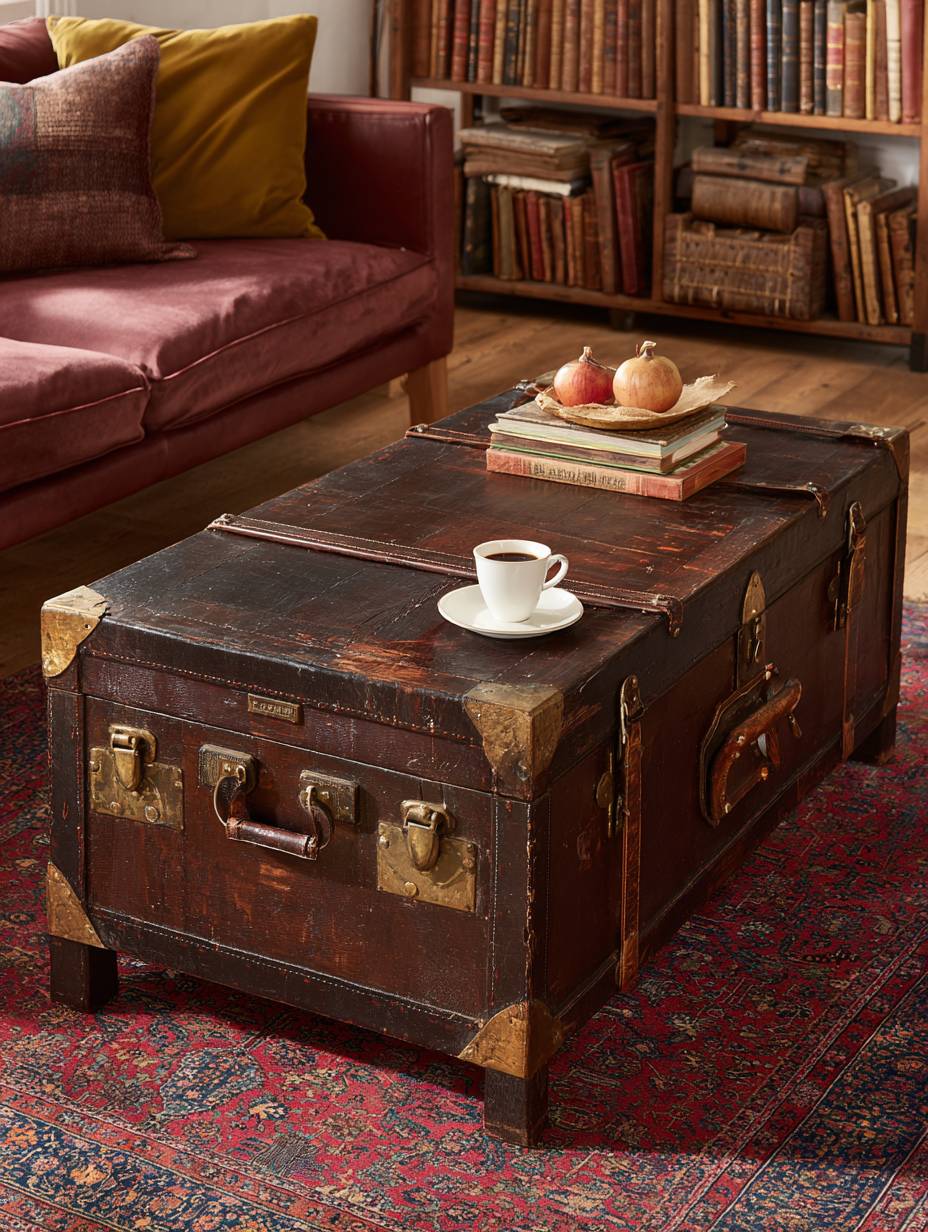
Warm ambient lighting highlights the authentic age marks that make each vintage trunk unique—scratches that map forgotten journeys, labels from long-defunct steamship lines, initials embossed by previous owners. The brass details, rather than being polished to a bright shine, are allowed to retain their aged appearance, which coordinates better with the weathered leather and maintains the trunk’s authentic vintage character. This piece proves that sustainable, eco-conscious design choices can be beautiful, that reusing and repurposing quality items creates more interesting spaces than buying new manufactured goods.
Key Design Tips:
- Verify structural integrity before purchasing to ensure hinges, latches, and leather are sound enough for daily use
- Clean vintage leather carefully with appropriate products designed specifically for aged materials
- Add felt pads to the bottom to protect flooring from scratches caused by metal feet or decorative hardware
- Embrace the patina on brass elements rather than polishing away the aged character that makes the piece special
- Style with vintage finds like antique books, vintage cameras, or heirloom items to create meaningful, personal vignettes
13. Coastal Driftwood Appeal
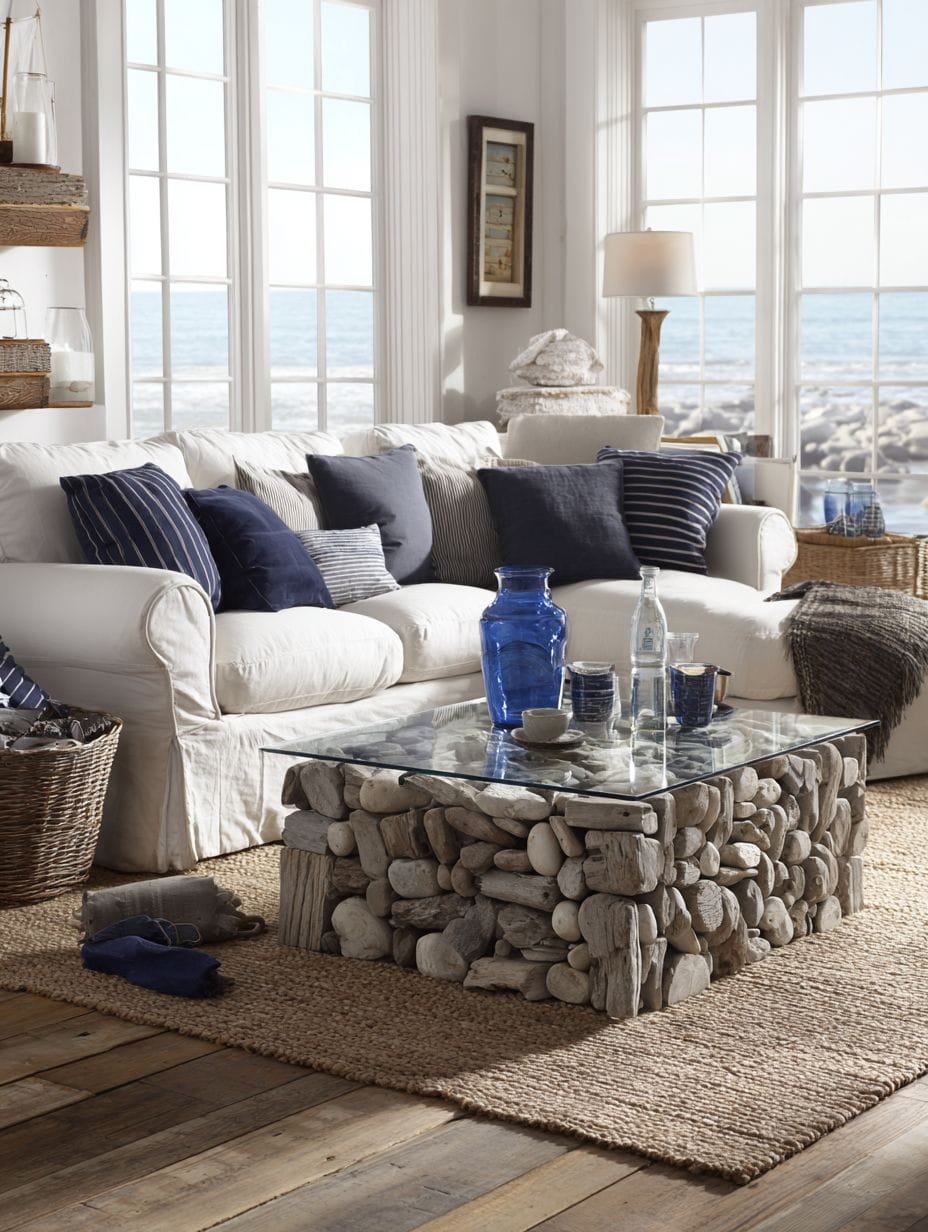
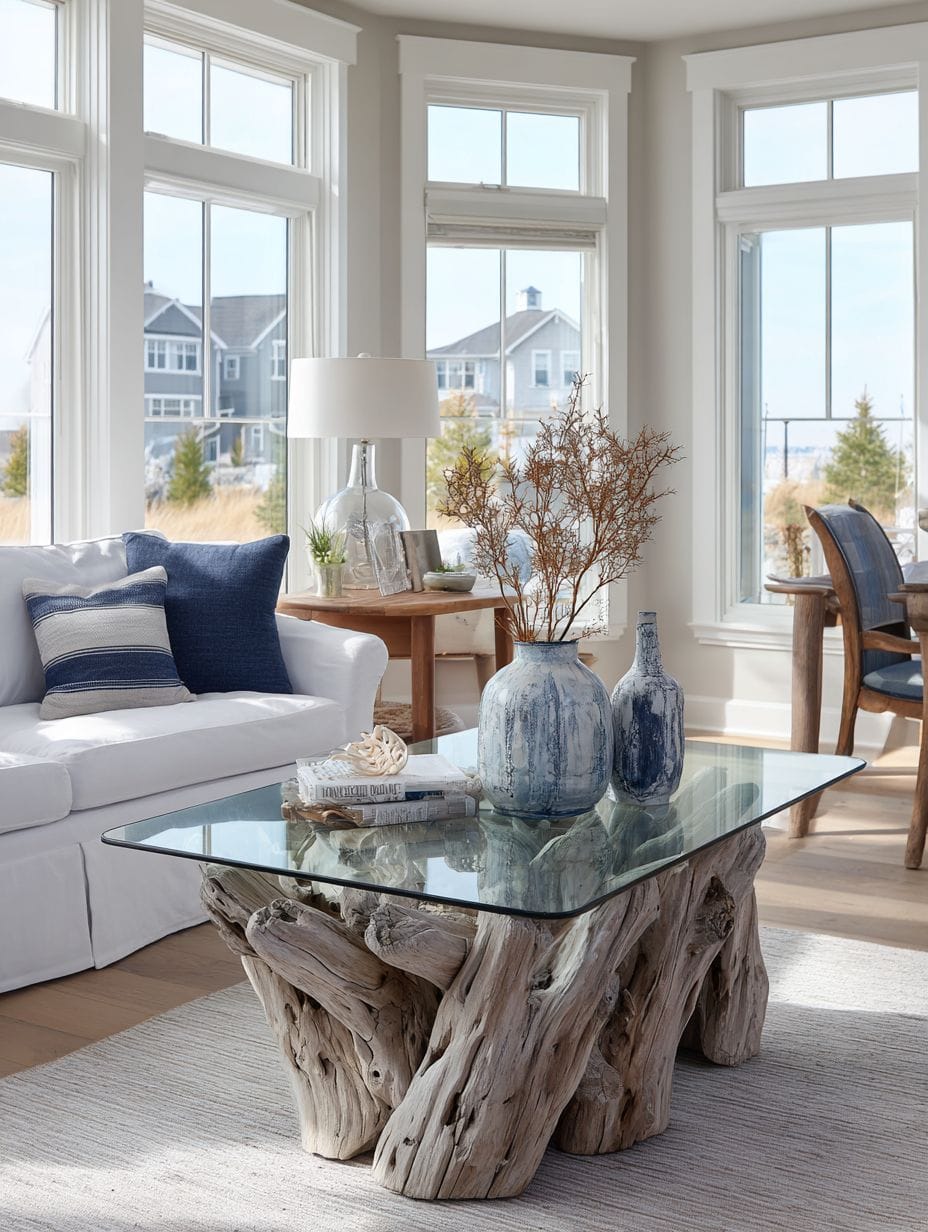
Beach-inspired design brings vacation relaxation into everyday living, and a driftwood coffee table captures the essence of coastal style. Naturally weathered grey wood pieces—collected, cleaned, and carefully assembled into a geometric base—create a sculptural foundation that celebrates nature’s artistic hand. The weathering process, achieved through years of exposure to saltwater, sun, and sand, gives each piece of wood a unique silver-grey patina and smooth, organic texture that’s impossible to artificially replicate convincingly. The thick tempered glass top protects the delicate driftwood while allowing it to remain visible, creating an interesting layered effect where the natural sculpture is viewed through the transparent surface.
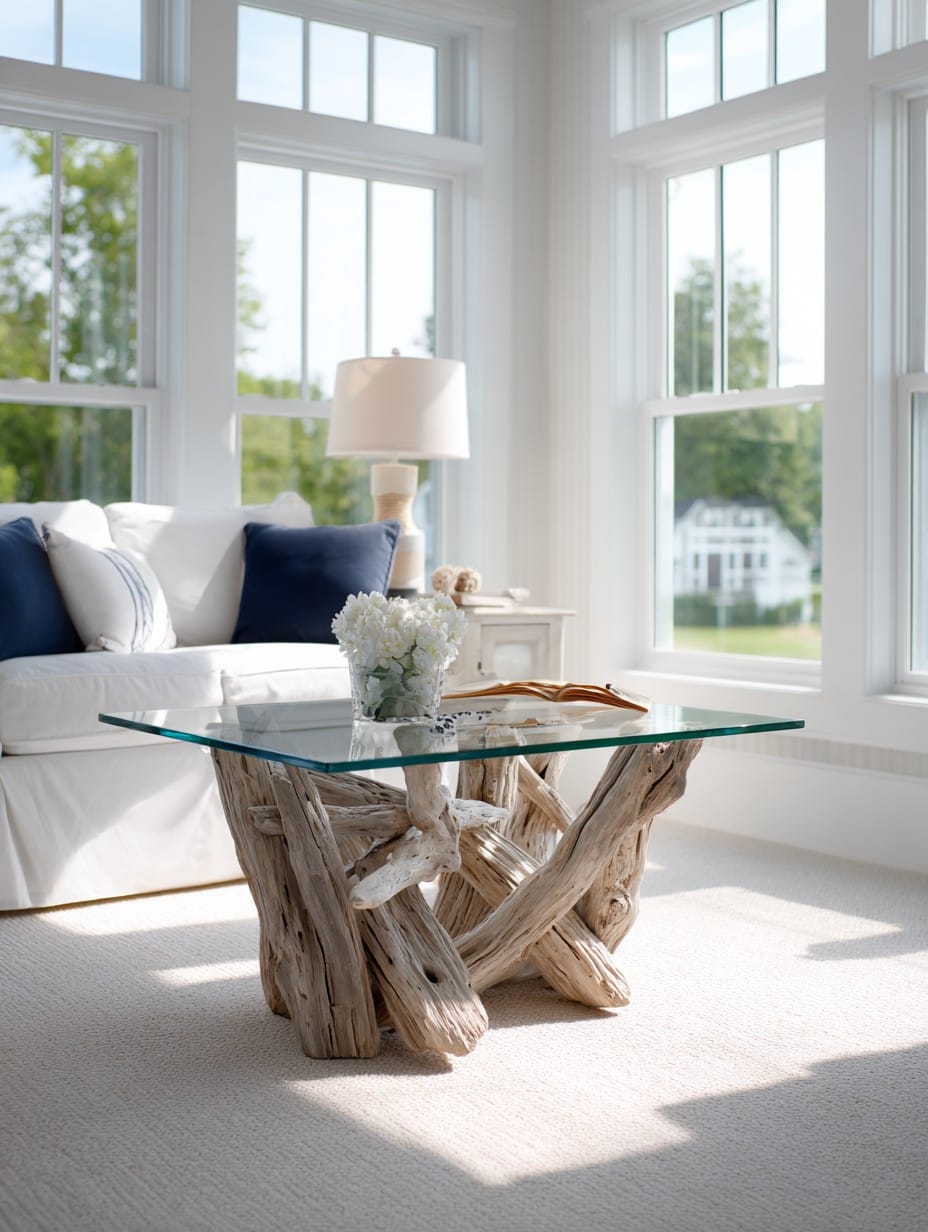
Set in a beach-house living room featuring white slip-covered furniture and nautical blue accents, the table becomes the natural centerpiece that establishes the coastal theme. The white furniture, reminiscent of sandy beaches, provides a neutral backdrop that allows the driftwood’s sculptural qualities to shine. Touches of nautical blue—in throw pillows, artwork, or decorative accessories—reference ocean waters without overwhelming the space with literal beach imagery. This restrained approach to coastal design feels sophisticated and timeless rather than kitschy or overly themed.
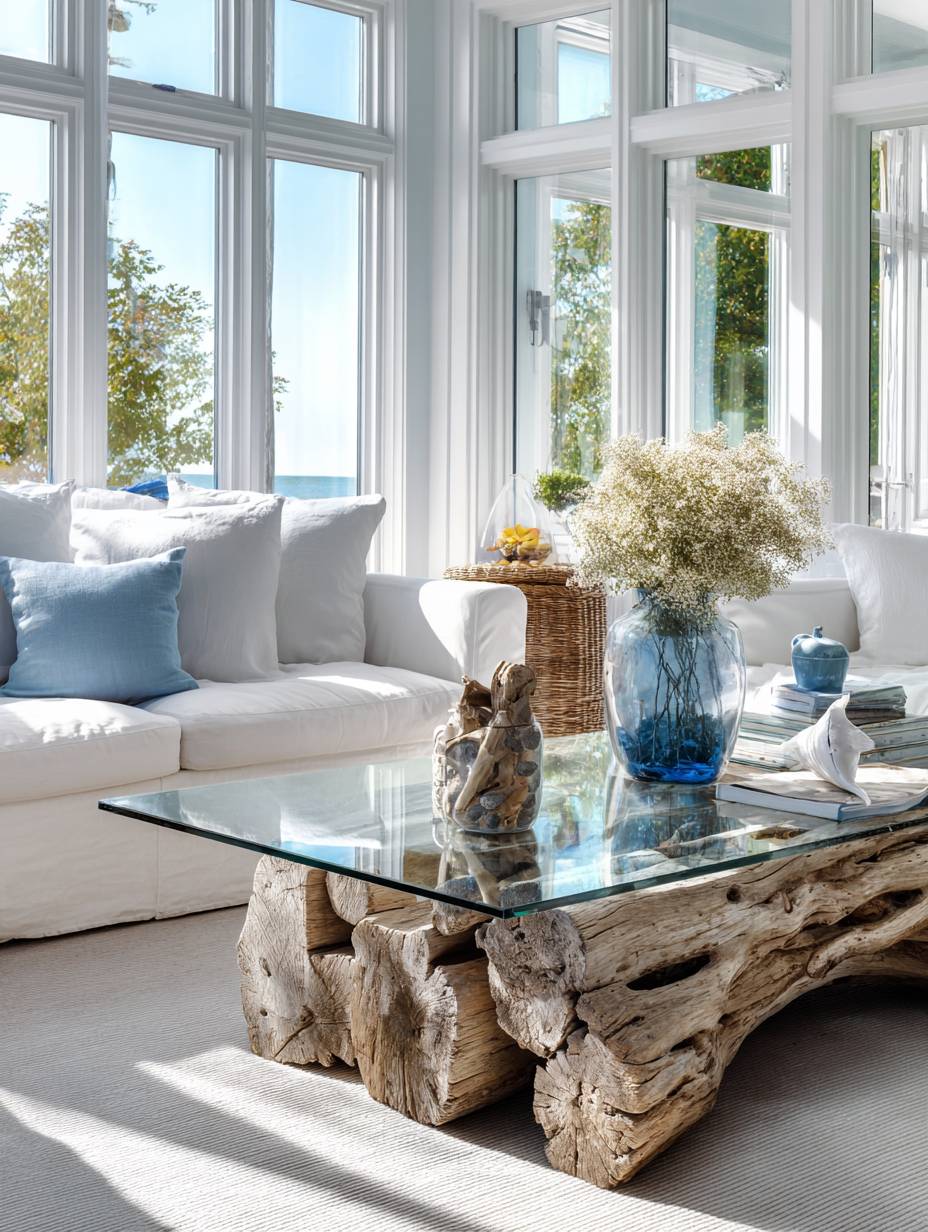
Natural daylight from large windows—essential in beach houses where indoor-outdoor living is paramount—creates soft shadows that emphasize the organic driftwood texture and three-dimensional composition. The interplay of light and shadow changes throughout the day as the sun moves, ensuring the table presents different visual aspects from morning through evening. The tempered glass top’s smooth, modern surface contrasts beautifully with the rough, organic wood beneath, creating visual tension that keeps the design interesting and layered rather than one-dimensional.
Key Design Tips:
- Ensure driftwood has been properly cleaned and treated to remove salt, sand, and potential pests before assembly
- Use quality tempered glass that’s appropriately thick to safely support weight without flexing or cracking
- Secure driftwood pieces properly to create a stable base that won’t shift or wobble under the glass
- Keep the coastal palette subtle with mostly whites, greys, and blues to avoid creating an overly themed environment
- Style with natural elements like coral, shells, or sea glass displayed tastefully rather than in overwhelming quantities
14. Bohemian Woven Artistry
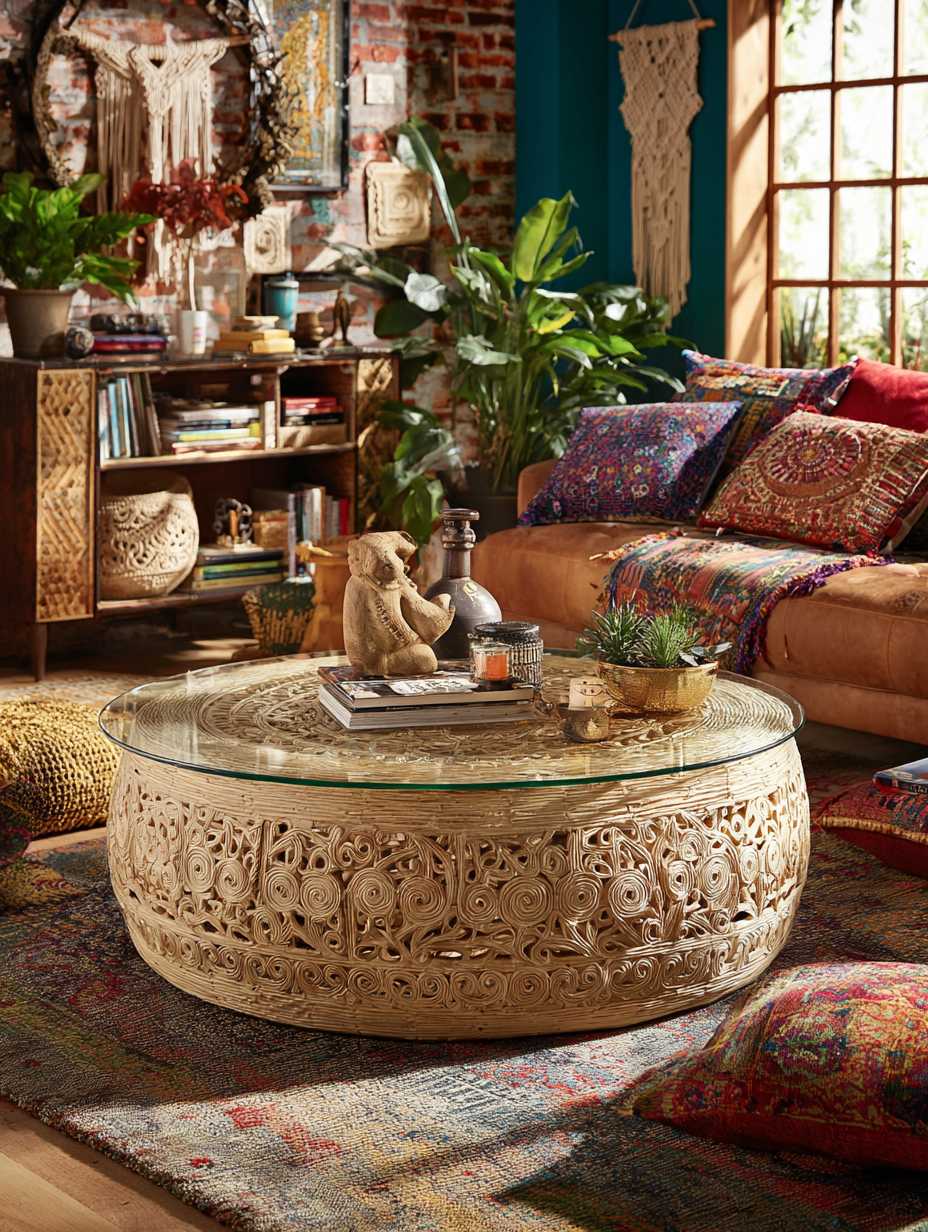
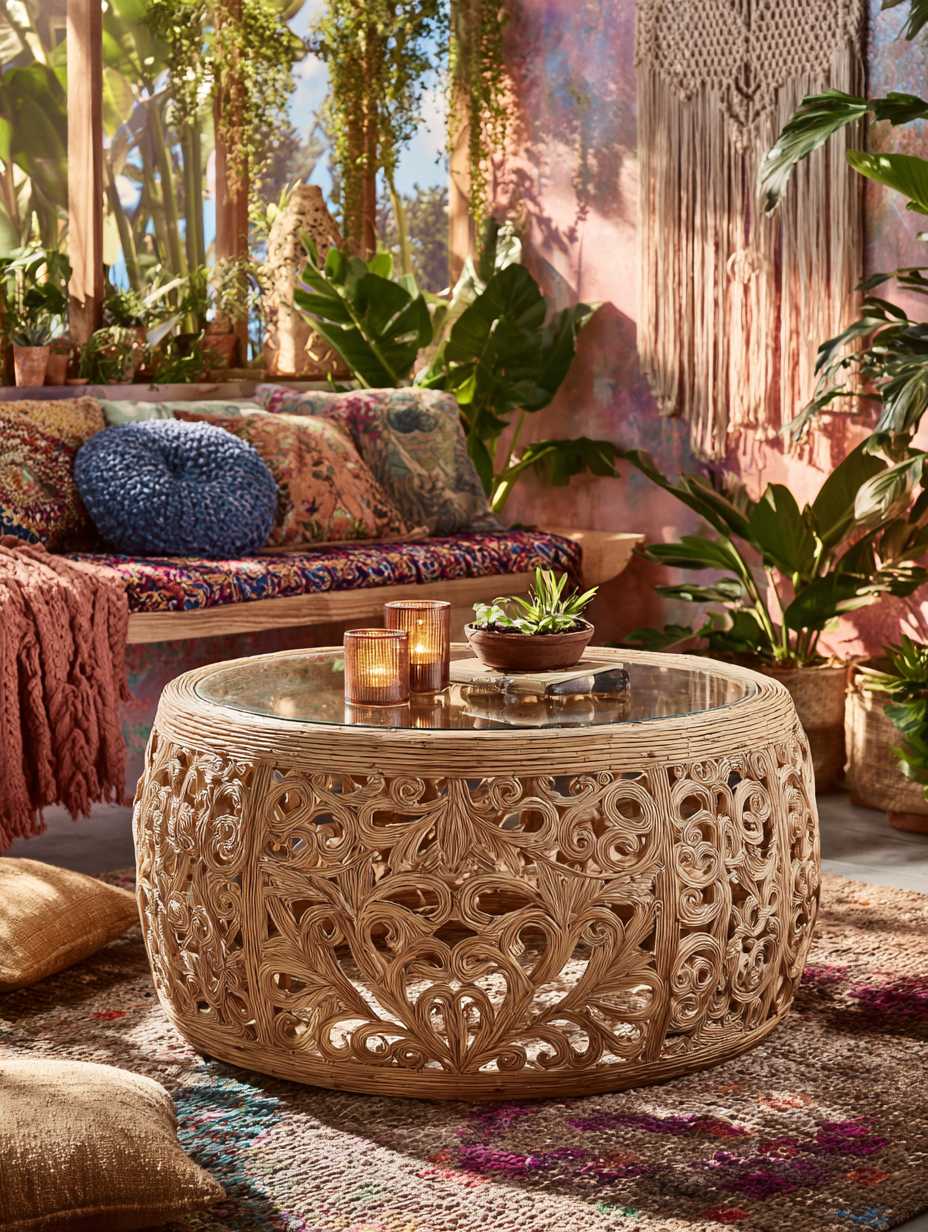
Bohemian design celebrates handcrafted beauty, global influences, and the imperfect charm of artisan work. A woven rattan coffee table with intricate hand-woven patterns embodies this free-spirited aesthetic perfectly. The natural honey-toned finish of the rattan brings warmth and organic texture into the space, its golden hues ranging from pale straw to deeper amber depending on the specific rattan variety and dying process. The hand-woven patterns—whether geometric, organic, or abstract—showcase the skill and time invested in creating each piece, with slight irregularities serving as proof of authentic handcraft rather than machine production.
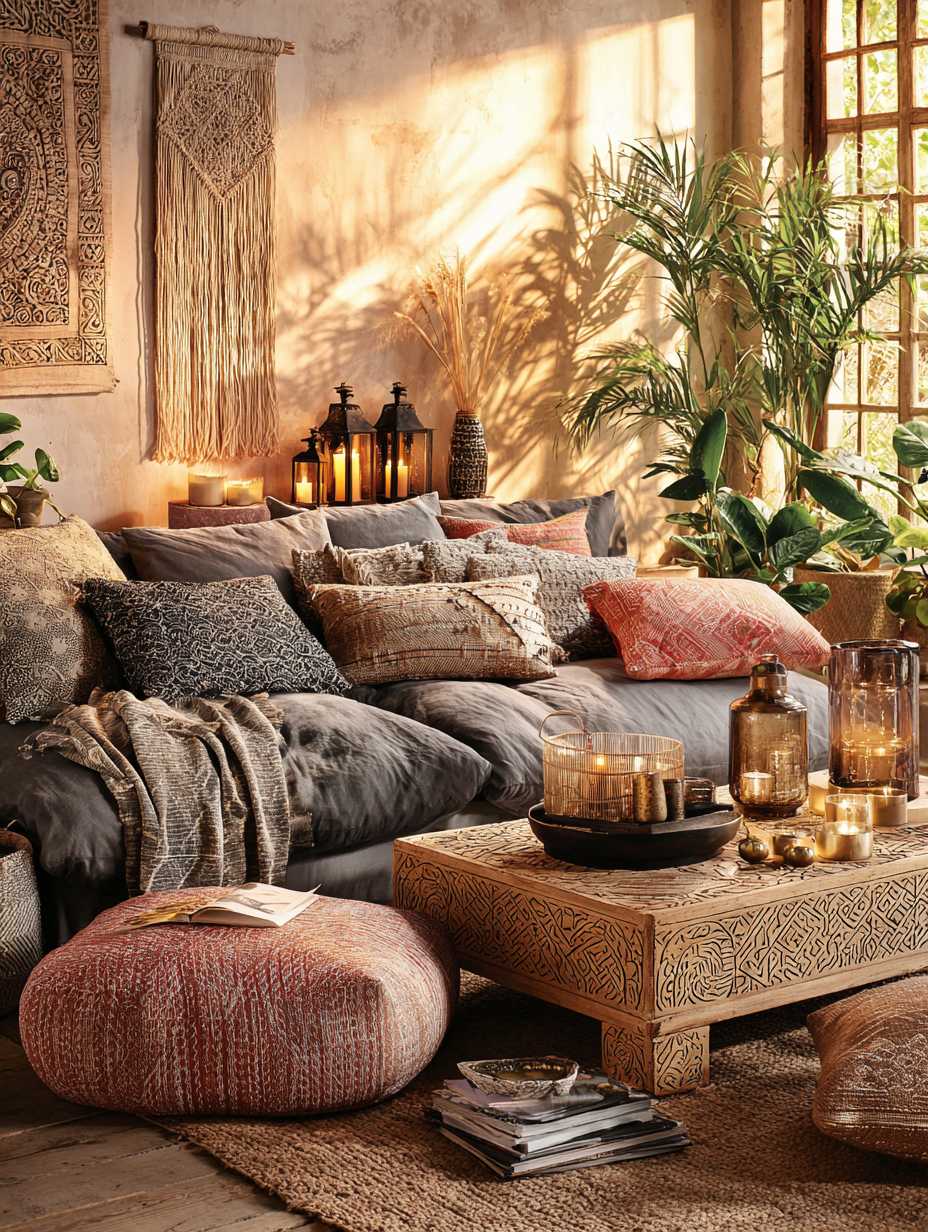
The round glass surface topping the rattan base serves multiple purposes: it provides a smooth, practical surface for setting drinks and objects; it protects the delicate woven pattern from wear and damage; and it allows the intricate craftsmanship to remain fully visible rather than being obscured by objects placed on the table. In a globally-inspired living space featuring macrame wall hangings, colorful textiles from various cultures, and abundant plants that bring life and oxygen into the room, this table becomes one element in a rich tapestry of textures, patterns, and natural materials.
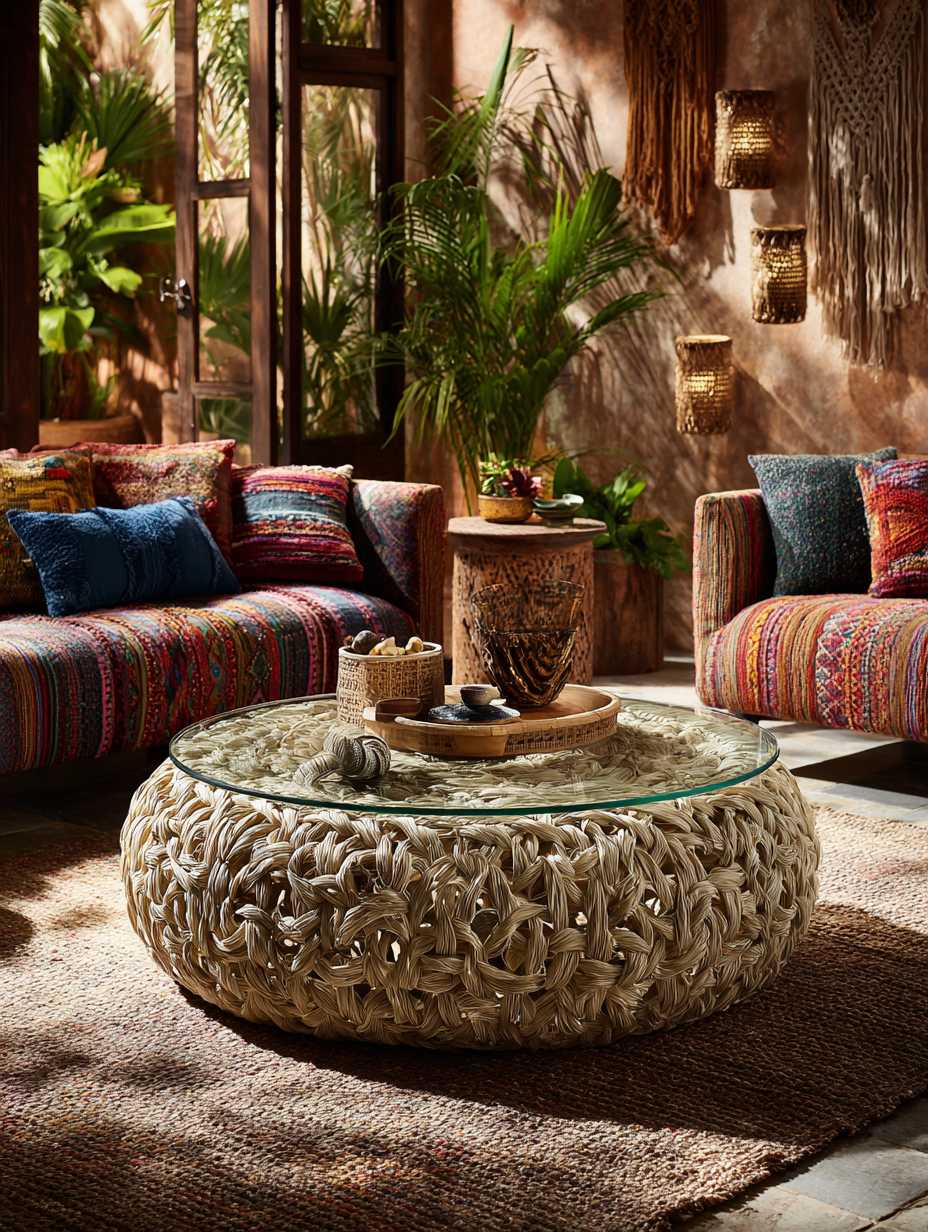
Golden hour lighting—that magical time just before sunset when natural light takes on warm, amber tones—creates particularly beautiful effects with rattan furniture. The light passes through the woven pattern, creating intricate shadow patterns on surrounding surfaces that change as the sun moves. The translucent quality of rattan allows light to penetrate partially, creating a warm glow that makes the entire piece seem to radiate from within. This light-responsive quality means the table becomes a dynamic element that participates in the room’s daily light cycle rather than remaining static and unchanging.
Key Design Tips:
- Choose quality rattan that’s been properly treated for indoor use to prevent drying, cracking, or splitting over time
- Protect from direct sunlight which can fade and dry out natural rattan fibers, causing premature aging
- Clean rattan gently with a soft brush or vacuum attachment to remove dust from the woven pattern’s crevices
- Layer multiple textures including woven fabrics, macrame, and other natural fibers to create authentic bohemian richness
- Add colorful accents through textiles, pillows, and accessories that complement the rattan’s warm natural tone
15. Art Deco Glamorous Reflection
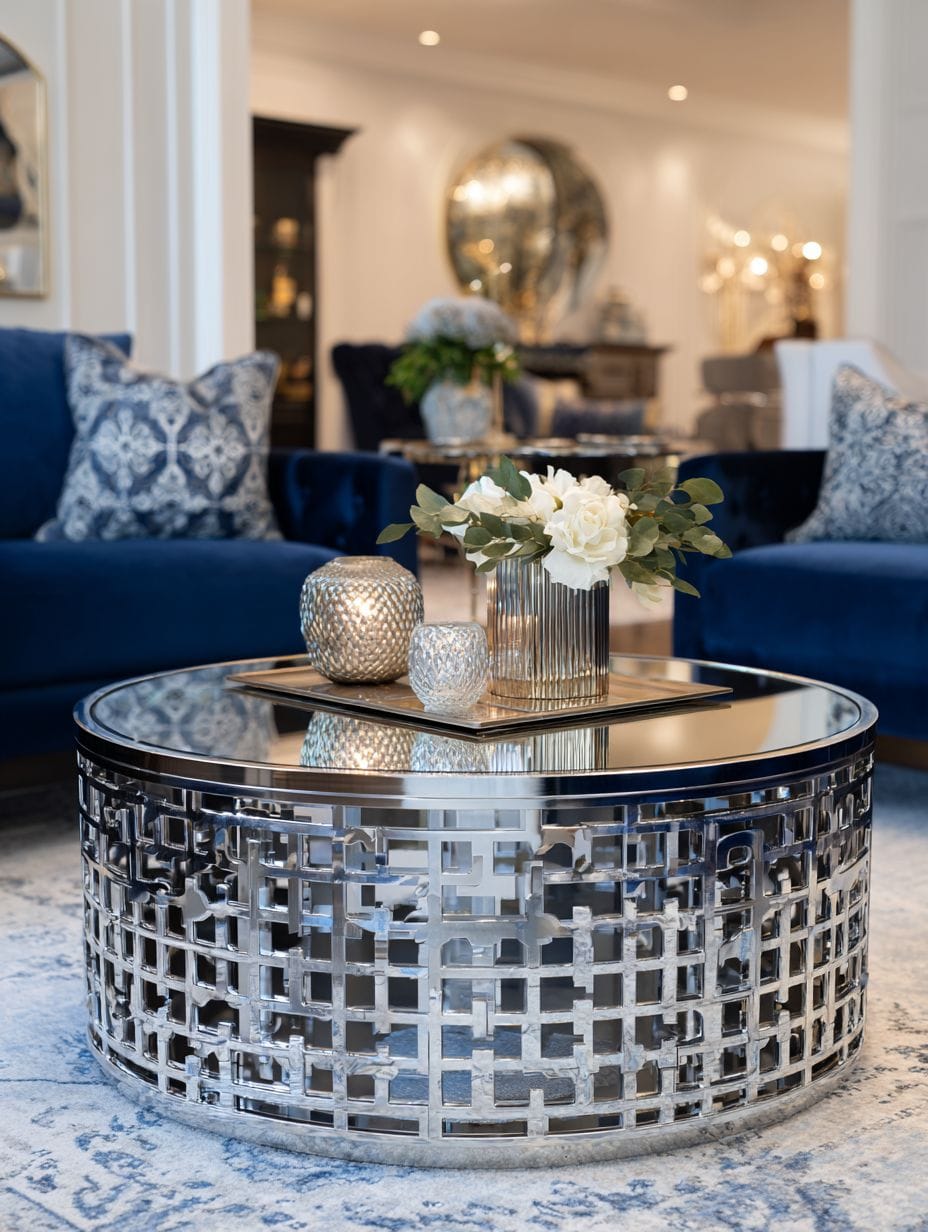
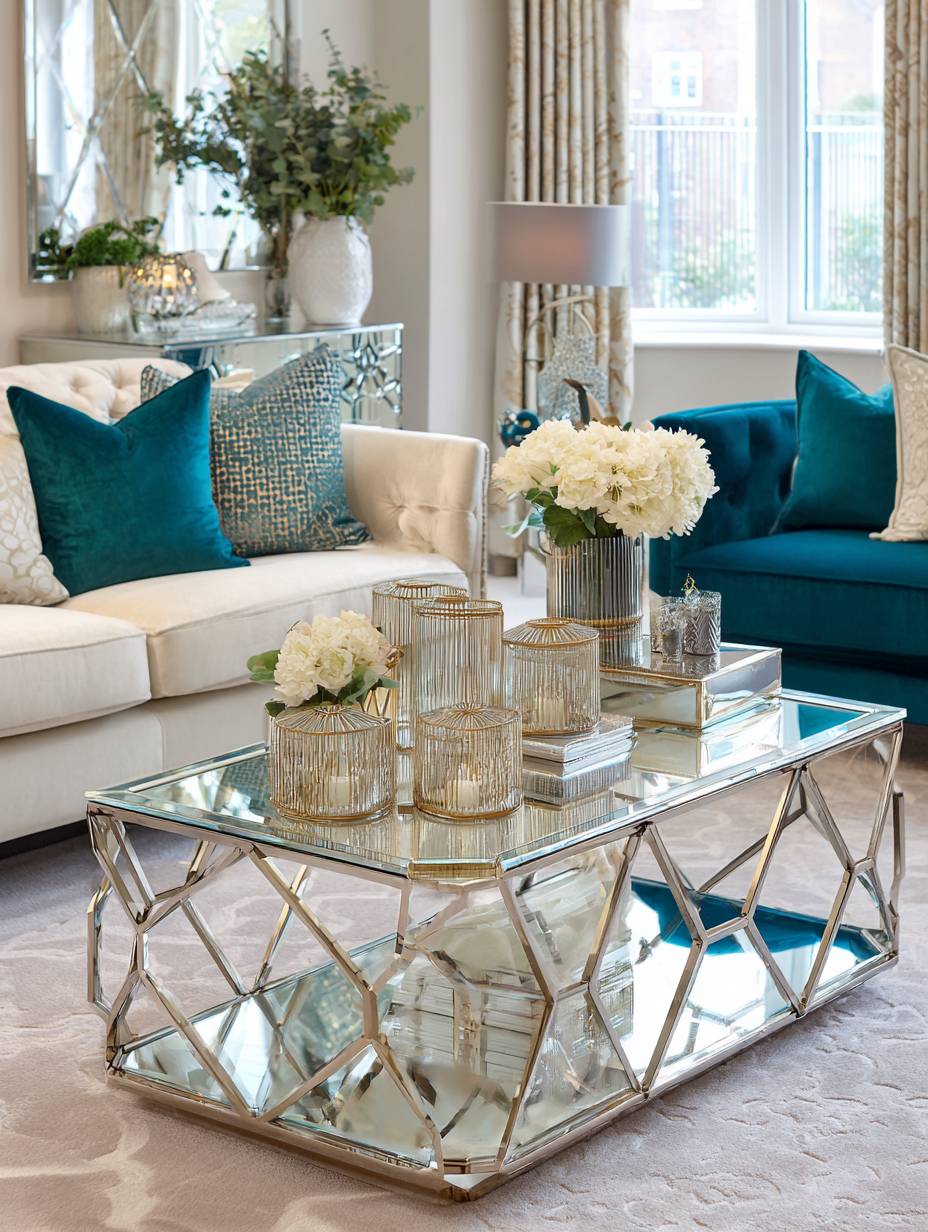
The Art Deco movement of the 1920s and 30s continues to influence contemporary design with its emphasis on geometric forms, luxurious materials, and glamorous aesthetics. An Art Deco inspired coffee table featuring a mirrored tabletop and geometric chrome legs arranged in a sunburst pattern captures this sophisticated era’s essence. The mirrored surface creates endless visual interest through reflections—capturing light fixtures, surrounding furniture, decorative objects, and even ceiling details in its reflective plane. This constant visual movement adds dynamism to the room while making spaces feel more expansive through the optical illusion of doubled space.
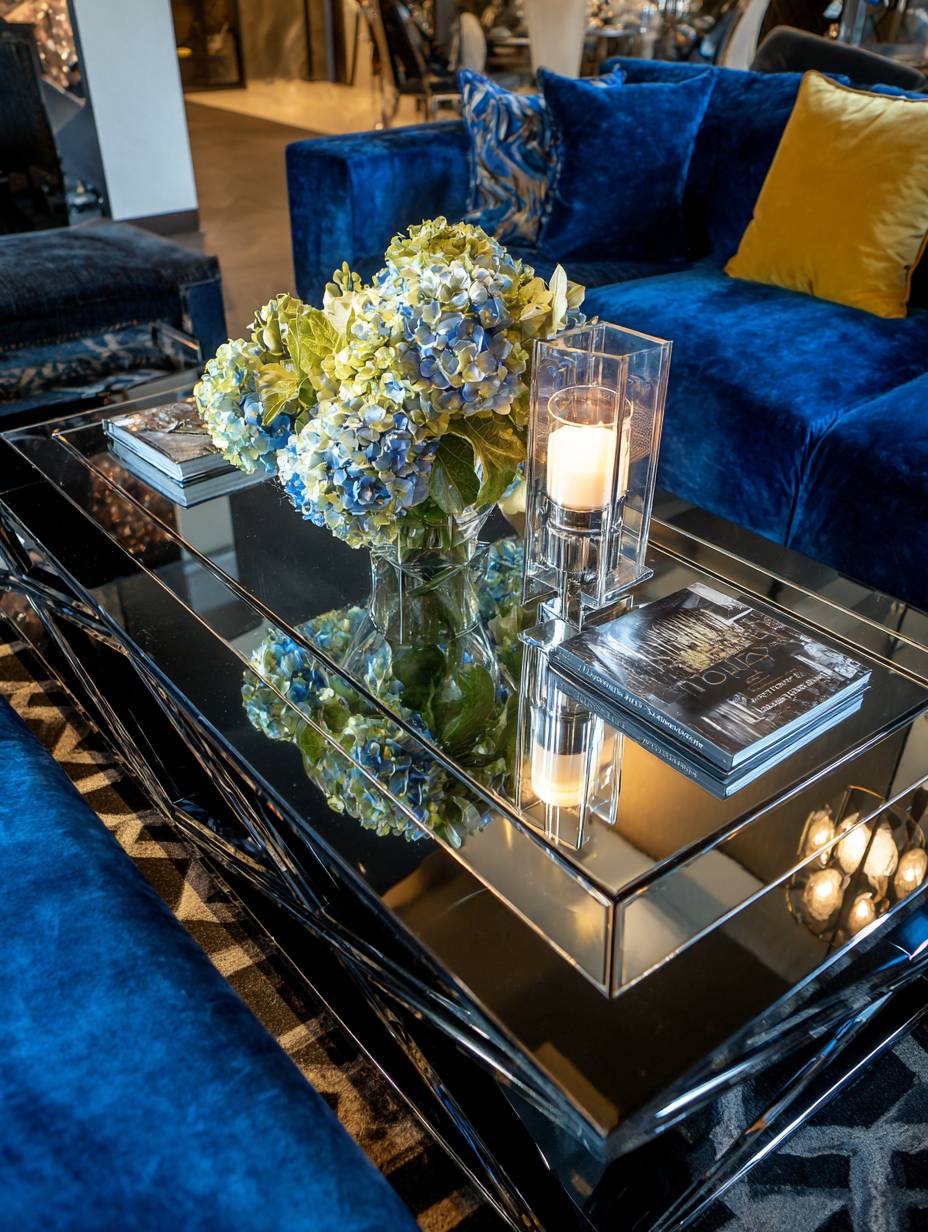
The geometric chrome legs, arranged in the iconic sunburst pattern that became synonymous with Art Deco design, function as sculpture and support simultaneously. Chrome’s brilliant reflective quality—when properly maintained—creates bright highlights and reflects colored light from the room’s various sources. The sunburst motif suggests energy, optimism, and forward motion, values that defined the Art Deco era and continue to resonate with design enthusiasts today. Placed in a glamorous living room featuring jewel-tone velvet seating and metallic accents throughout, this table becomes the crown jewel that announces the room’s sophisticated, deliberately luxurious design intention.
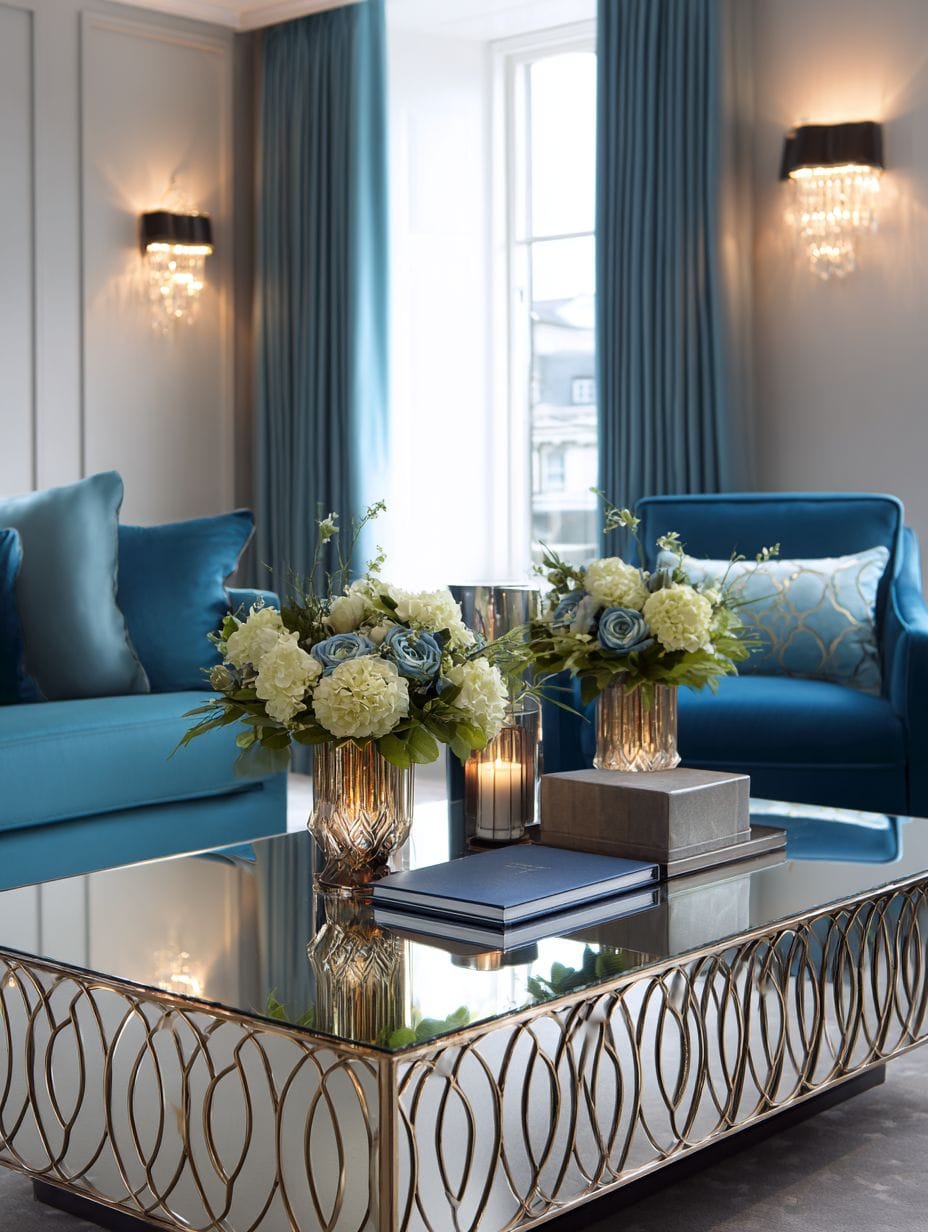
Carefully positioned lighting is crucial for maximizing this table’s visual impact. Multiple light sources—ambient overhead lighting, focused accent lights, and natural daylight—create layers of reflections on both the mirrored surface and chrome elements. The interplay between reflected and direct light creates depth and dimension that prevents the metallic elements from feeling cold or harsh. The mirrored top requires diligent maintenance to remain beautiful, but for homeowners who appreciate glamour and aren’t deterred by regular polishing, the stunning visual reward justifies the effort.
Key Design Tips:
- Keep mirror surfaces impeccably clean to maintain the reflective quality that makes these pieces special
- Balance reflective surfaces with matte textures in upholstery and accessories to prevent the room from feeling too shiny or harsh
- Choose chrome over cheaper silver-plated alternatives that tarnish and require more maintenance over time
- Style the mirrored surface thoughtfully since everything placed on top will be reflected and doubled visually
- Incorporate jewel tones like emerald, sapphire, and ruby in surrounding textiles to capture authentic Art Deco color palettes
16. Japanese-Inspired Minimalism
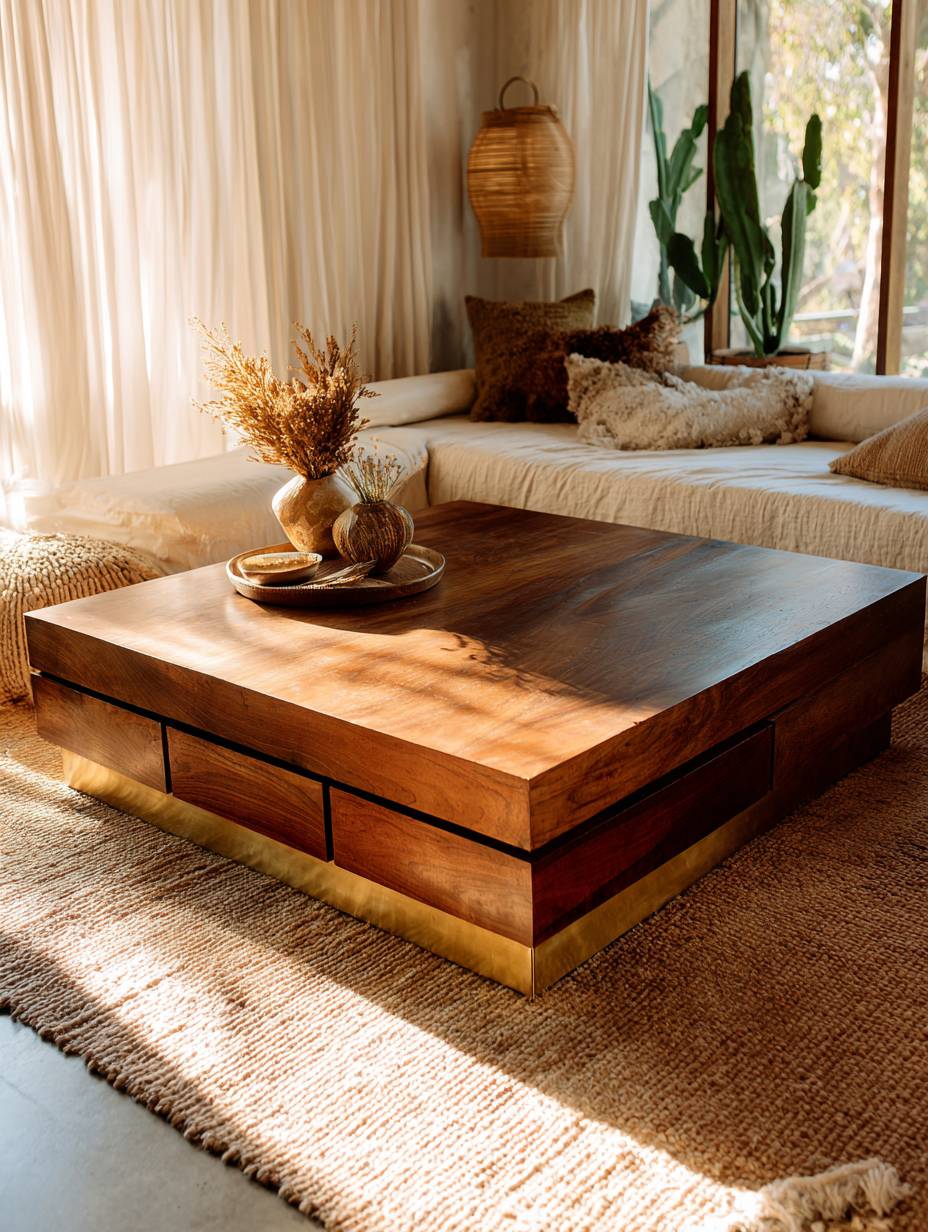
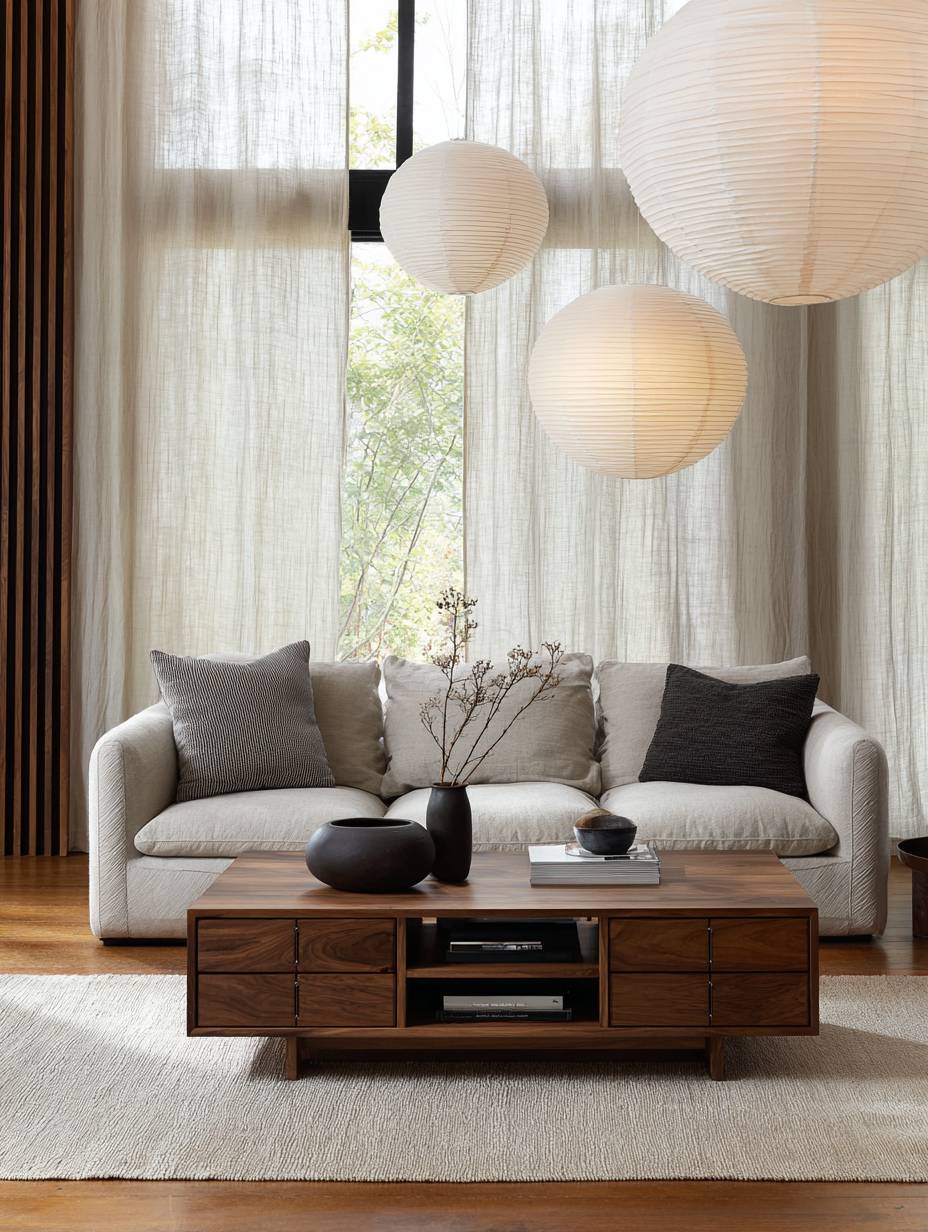
Japanese design philosophy emphasizes simplicity, functionality, and the beauty found in natural materials and refined craftsmanship. A low-profile coffee table in dark walnut with clean lines embodies these principles perfectly. The dark walnut’s rich, deep brown tones—ranging from chocolate to nearly black depending on the specific cut and finish—create a grounding element in rooms where lighter walls and minimal furnishings might otherwise feel unanchored. The clean lines, free from unnecessary ornamentation or decoration, demonstrate the Japanese aesthetic principle that beauty emerges from restraint rather than excess.
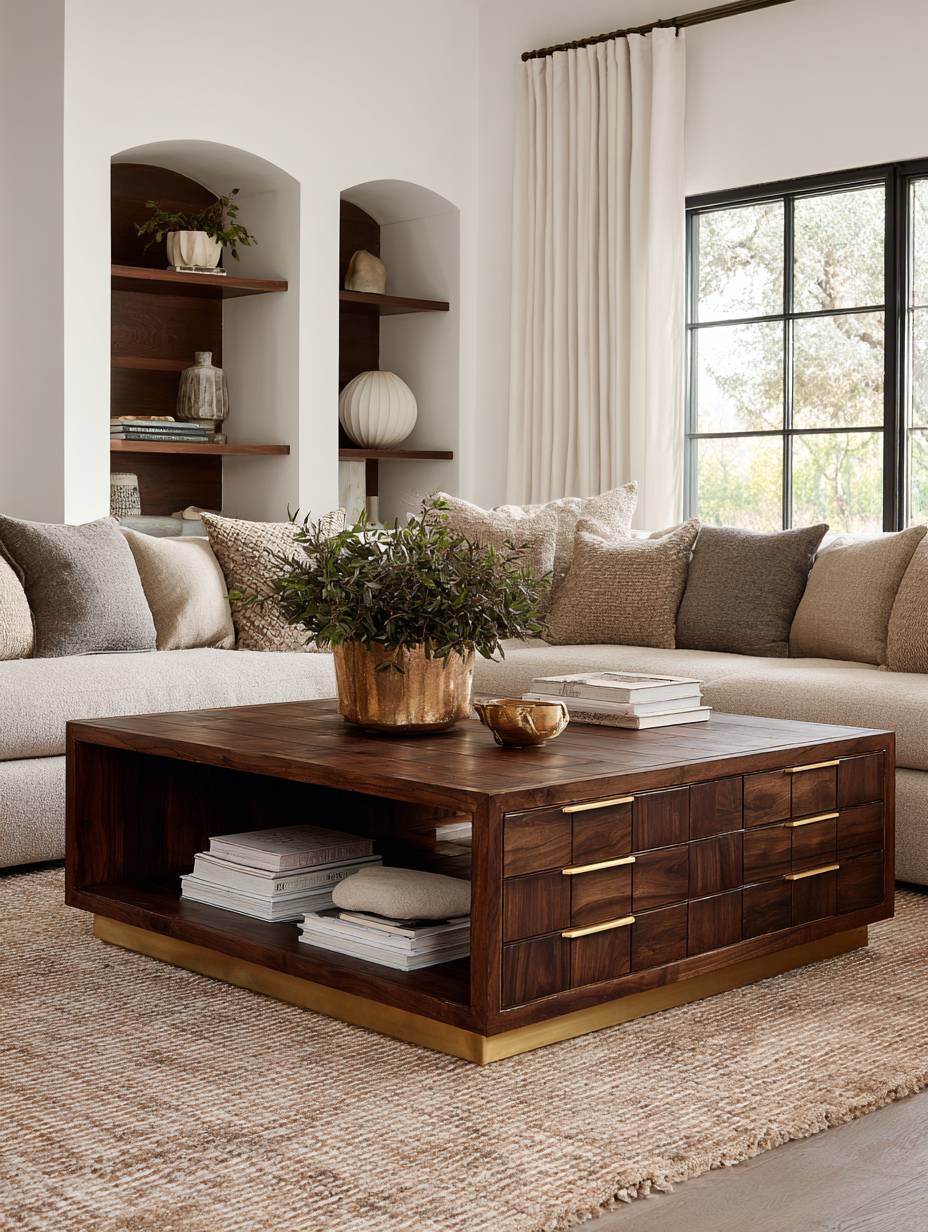
Sliding storage compartments, operated on smooth traditional hardware, provide practical concealment for living room essentials while maintaining the table’s clean exterior appearance. Brass inlay details—perhaps forming subtle geometric patterns or simple linear accents—add just enough visual interest without violating the minimalist aesthetic. These brass elements reference traditional Japanese metalwork techniques while providing material contrast that prevents the dark wood from feeling too heavy or monotonous. Set in a zen-minimalist living room with neutral tones, floor cushions for flexible seating, and paper lantern lighting that creates soft, diffused illumination, this table becomes an anchor for meditation and peaceful contemplation.
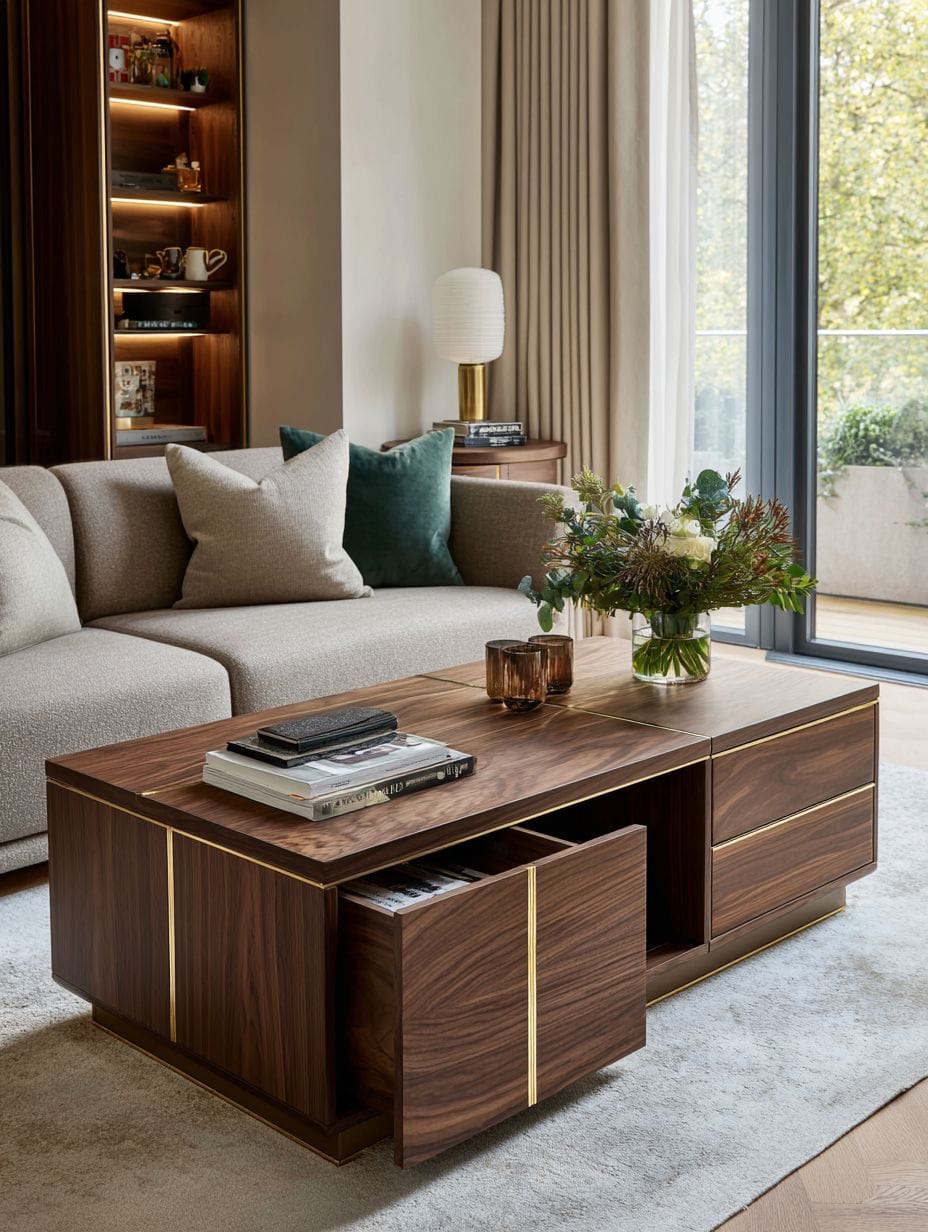
Soft diffused natural light from rice paper screens—traditional Japanese architectural elements that filter harsh sunlight into gentle, even illumination—creates a serene atmosphere that highlights the refined woodwork without creating dramatic shadows or harsh contrasts. The low profile positions the table closer to the ground, following Japanese furniture traditions that emerged from floor-sitting cultures. This lower positioning creates a more intimate, grounded feeling in the room that encourages relaxation and mindful presence rather than hurried activity.
Key Design Tips:
- Choose furniture with visible wood grain even in dark finishes to maintain connection with natural materials
- Keep spaces uncluttered following the Japanese principle that empty space is as important as filled space
- Select multi-functional pieces that serve practical needs efficiently without unnecessary bulk or visual weight
- Maintain a neutral color palette with natural materials providing visual interest through texture rather than color
- Position furniture lower to the ground to create intimacy and encourage a more contemplative, peaceful atmosphere
17. Transitional Farmhouse Style
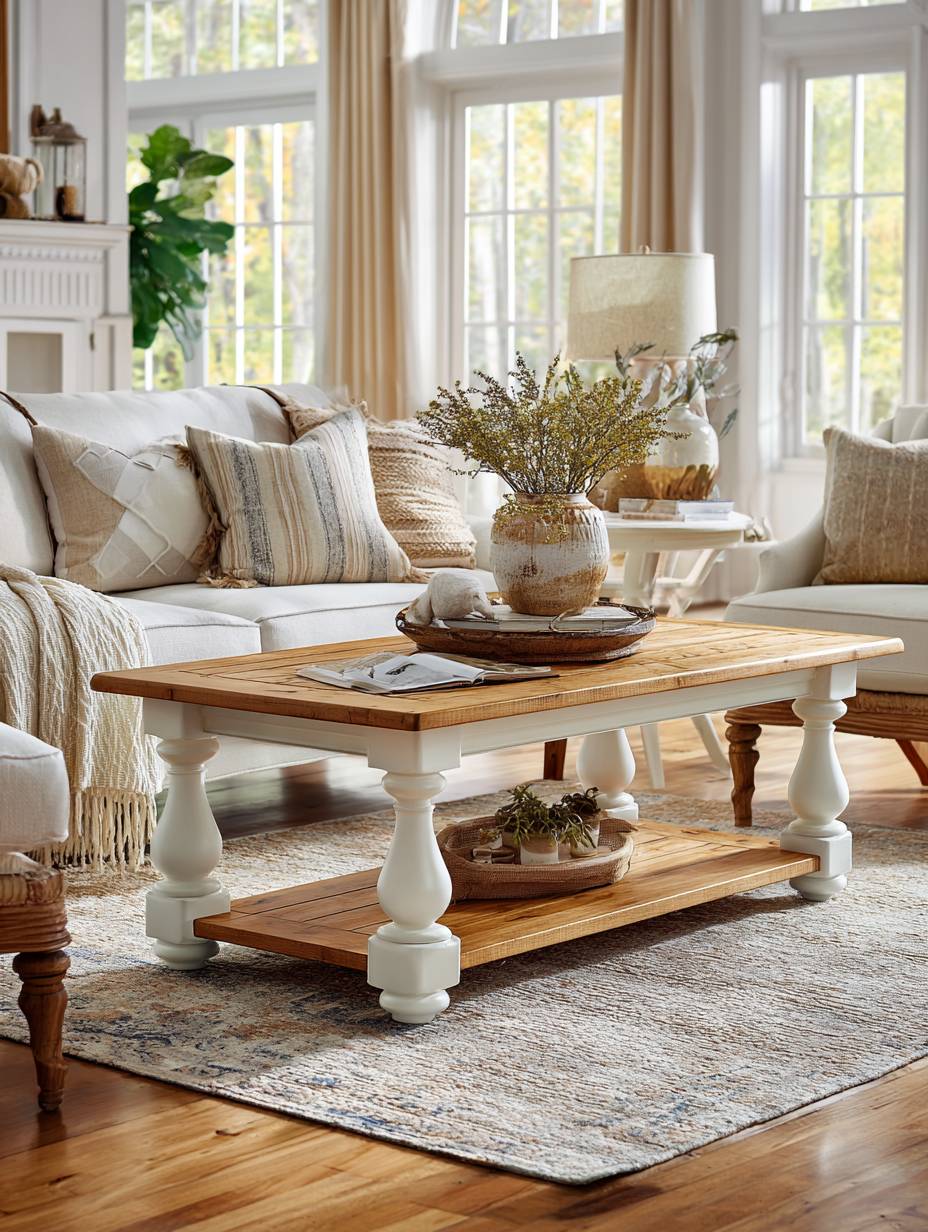
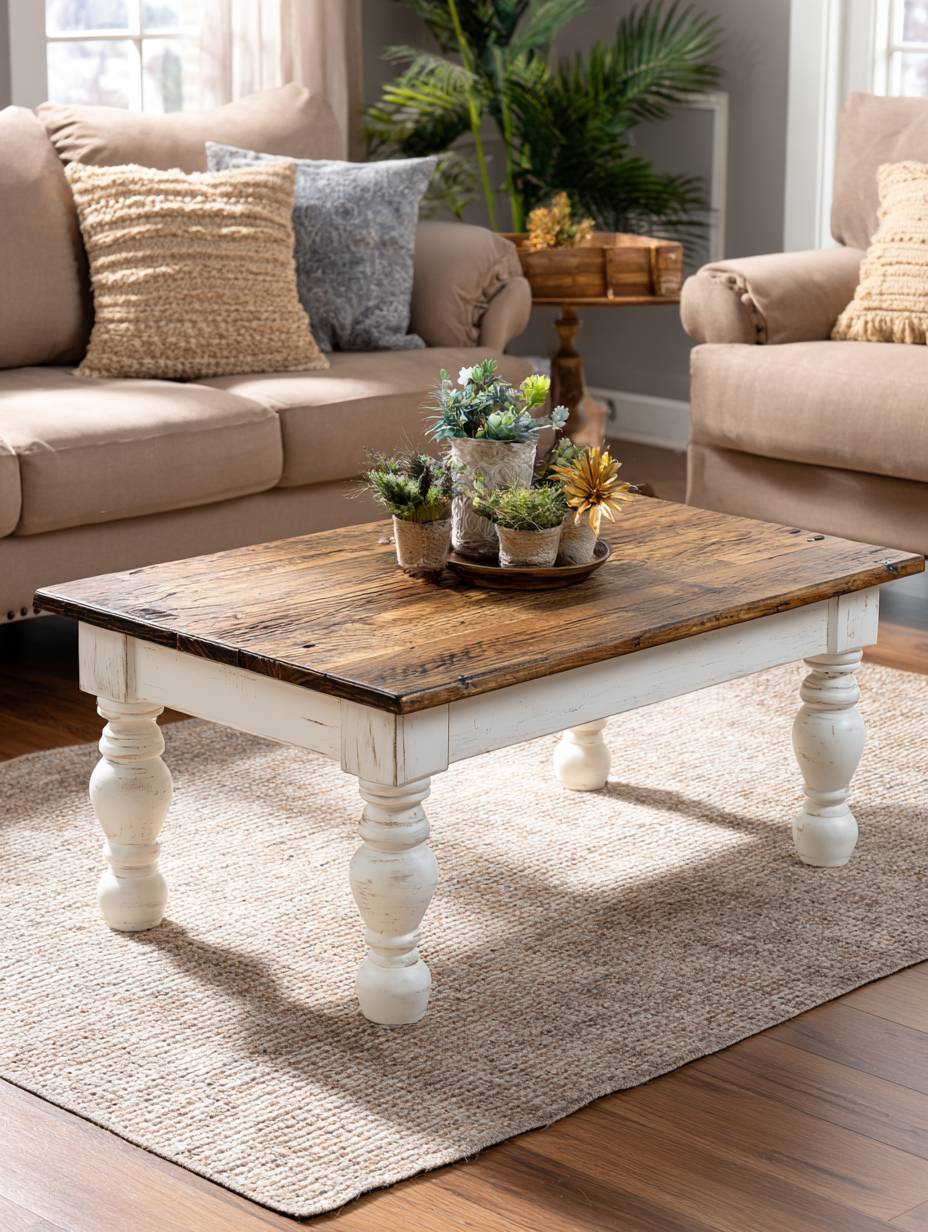
Transitional design bridges traditional and contemporary aesthetics, creating spaces that feel both timeless and current. A coffee table featuring a planked wood top in medium oak finish with turned white-painted legs exemplifies this balanced approach. The planked construction—individual boards laid side by side rather than a single slab—references rustic farmhouse origins while the medium oak finish feels more refined and less overtly country than lighter weathered woods. The turned legs, shaped on a lathe into graceful curves and profiles, demonstrate classical furniture-making techniques that have been valued for centuries.
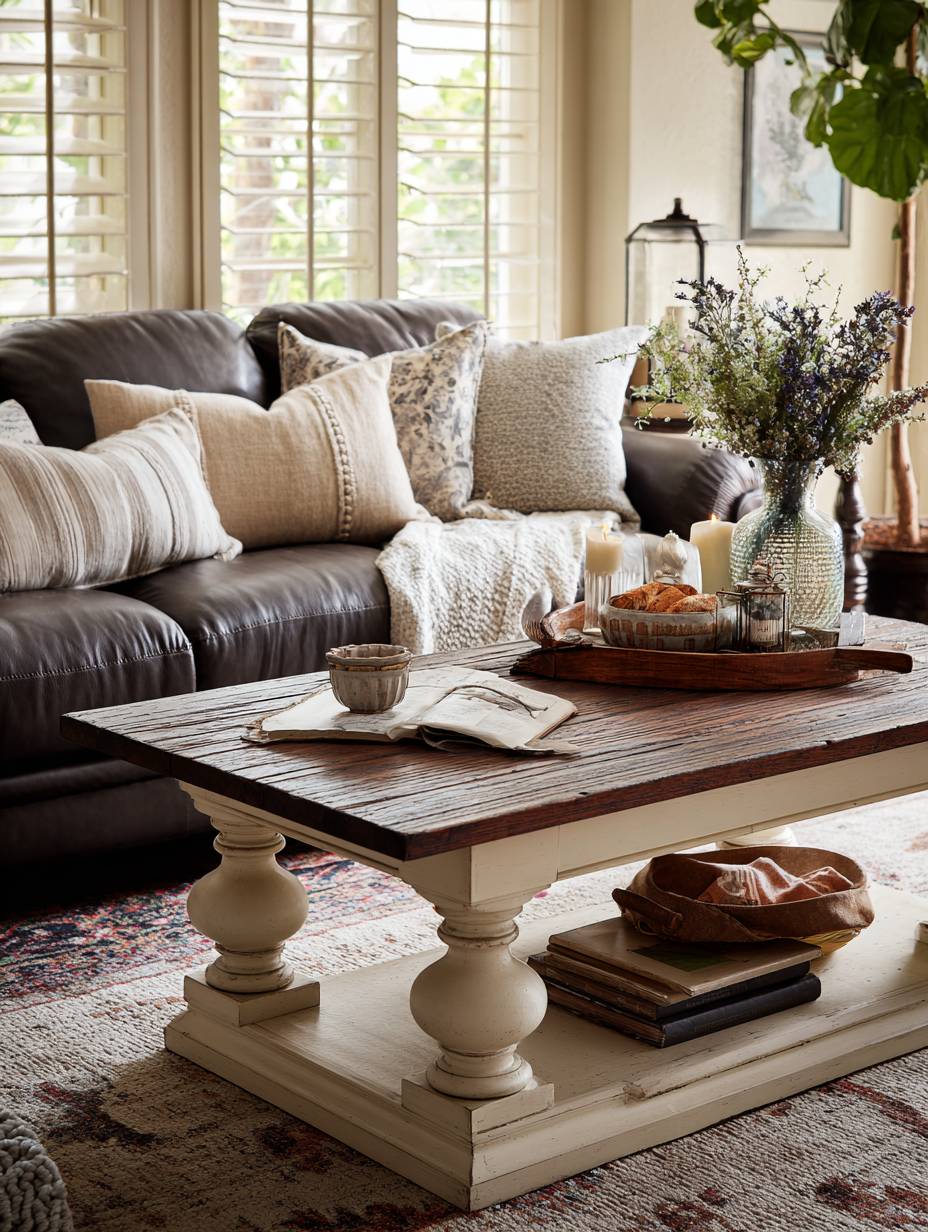
The painted white finish on the legs brightens the overall appearance and creates visual interest through the two-tone color scheme. This combination of natural wood and painted elements allows the table to coordinate with both traditional dark wood furniture and contemporary light-toned pieces, making it remarkably versatile as room designs evolve. Centered on a neutral area rug in a family-friendly living room with comfortable upholstered furniture, this table serves practical daily needs without sacrificing aesthetic appeal. The medium height and substantial surface area make it ideal for families who actually use their coffee tables for games, crafts, homework, and casual meals rather than just display.
Natural afternoon light through window treatments creates warm highlights that emphasize the wood grain in the planked top and create soft shadows beneath the carved legs. The two-tone finish adds visual complexity that prevents the design from feeling too simple or plain, while remaining restrained enough to work in rooms with patterned upholstery, colorful accessories, or bold artwork. This versatility makes transitional pieces wise investments for homeowners who like to refresh their décor periodically without replacing major furniture pieces.
Key Design Tips:
- Choose quality painted finishes that won’t chip or yellow over time, maintaining their fresh appearance
- Ensure the wood tone coordinates with other wood elements in the room like flooring or built-in cabinetry
- Style with mix of traditional and contemporary accessories to reinforce the transitional aesthetic
- Select durable finishes that can withstand daily family use including possible spills and scratches
- Maintain both wood and painted surfaces appropriately using products designed for each specific finish type
18. Transparent Acrylic Innovation
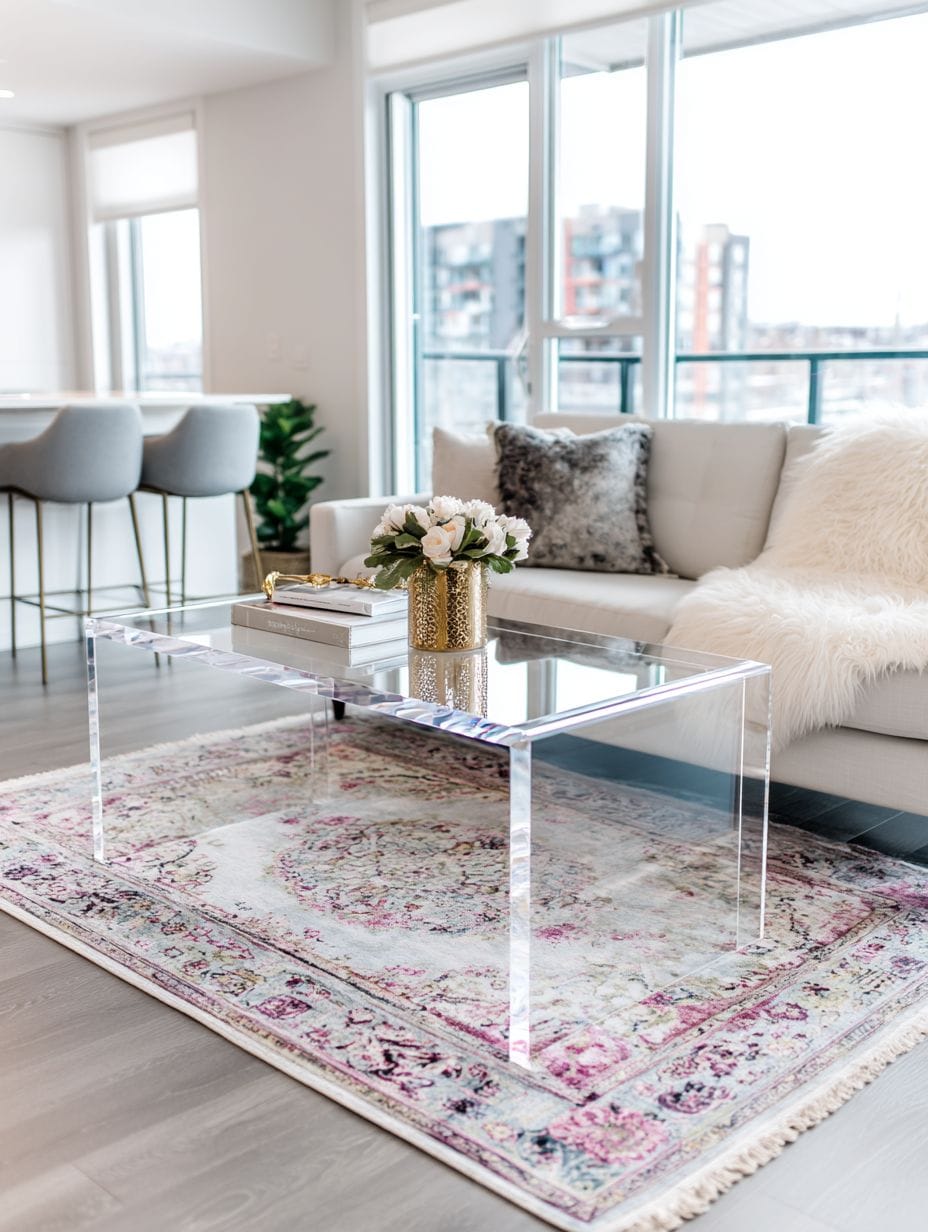
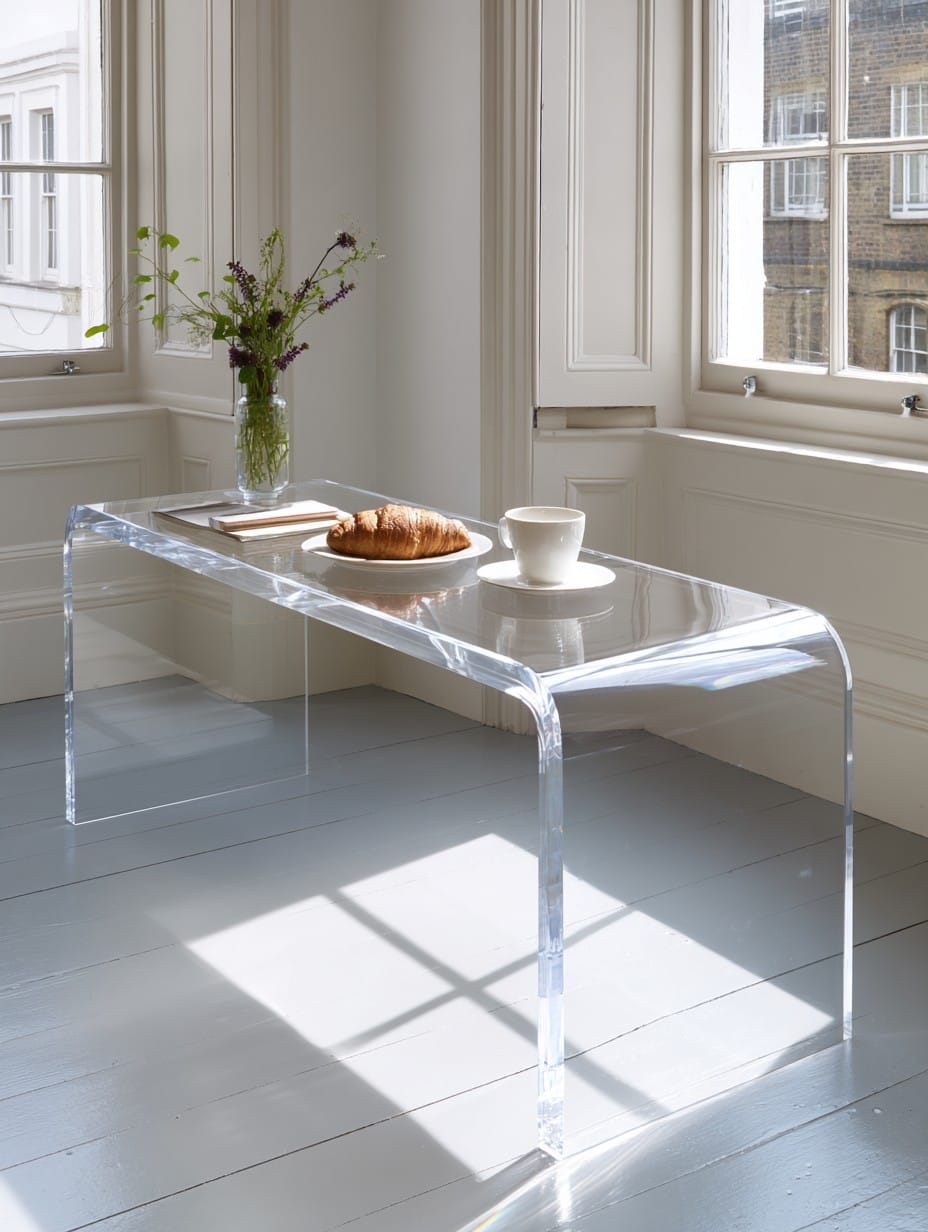
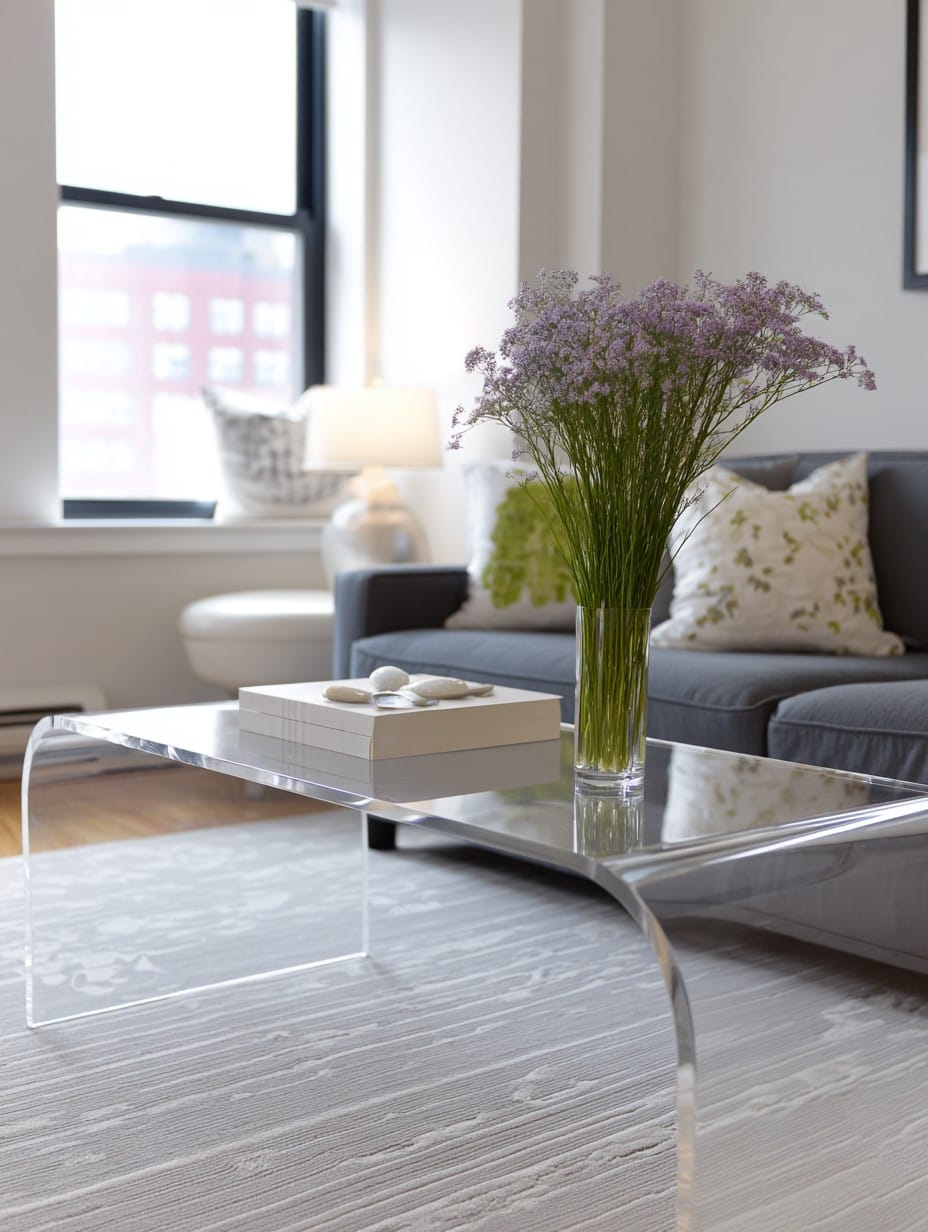
Modern materials enable design possibilities that would have been impossible with traditional wood, metal, and stone alone. A coffee table crafted from thick transparent lucite with waterfall edge design represents the cutting edge of contemporary furniture design. The lucite—a high-quality acrylic plastic valued for its clarity and durability—creates an almost invisible presence in the room. The transparency allows light to pass through completely, eliminating the visual barrier that solid-topped tables create. The waterfall edge, where the material flows continuously from top to sides without visible joints or seams, demonstrates the fabrication possibilities that thermoplastic materials offer.
The floating effect created by the transparent construction makes this table ideal for small apartments where every visual trick helps maximize the sense of space. Unlike solid furniture that visually divides and defines space, the lucite table allows the eye to travel unimpeded from one side of the room to the other, creating flow and openness that makes rooms feel larger than their actual dimensions. In a contemporary small apartment characterized by white walls and minimal furnishings, this table provides necessary function without adding visual clutter or weight to the carefully curated minimalist aesthetic.
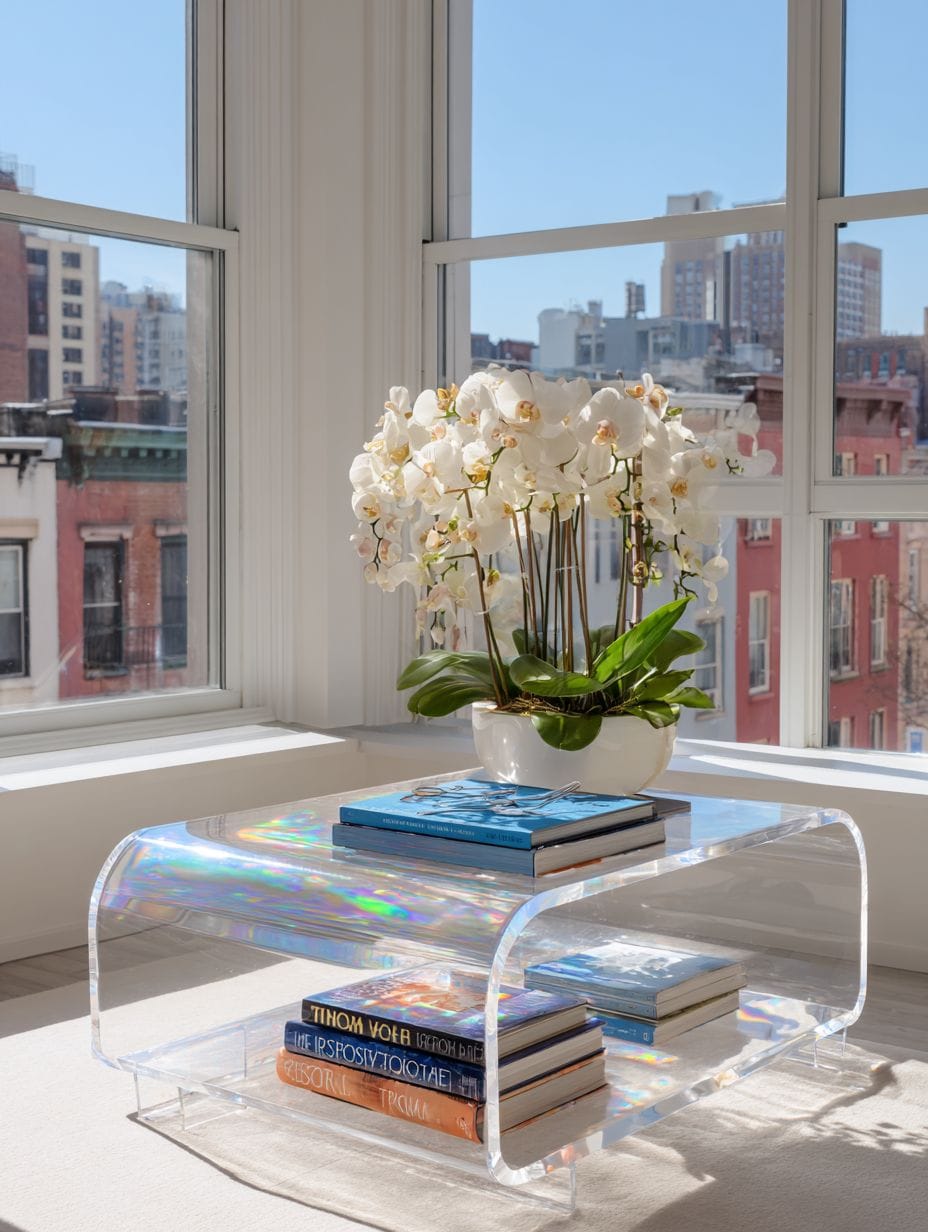
Bright natural light passing through the clear material creates subtle prismatic effects as light refracts slightly through the acrylic, occasionally creating tiny rainbow effects at certain angles and times of day. Shadows beneath the table appear softer and less defined than with opaque furniture, further enhancing the lightweight, barely-there quality. The surface shows every fingerprint, dust particle, and water spot, demanding diligent maintenance, but for design enthusiasts committed to the aesthetic, the visual impact justifies the extra care required.
Key Design Tips:
- Choose quality lucite rather than cheaper acrylics that yellow, crack, or scratch more easily over time
- Clean with appropriate products designed specifically for acrylic to avoid scratching or clouding the surface
- Avoid placing near heat sources as acrylic can warp or become damaged when exposed to high temperatures
- Use felt pads under decorative objects to prevent scratching the transparent surface from underneath
- Position to maximize the space-enhancing effect where the transparency will most benefit your room layout
19. Mediterranean Mosaic Magic
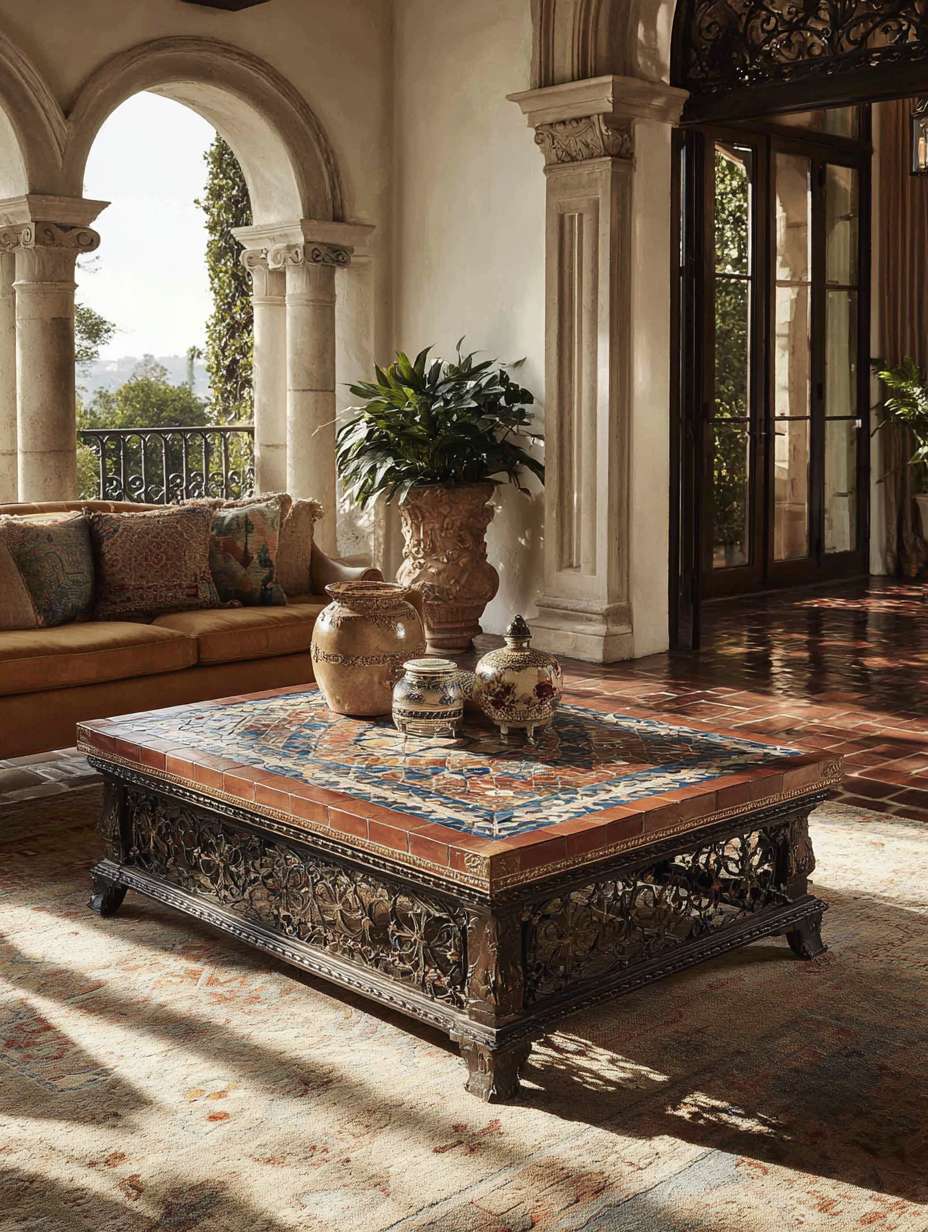
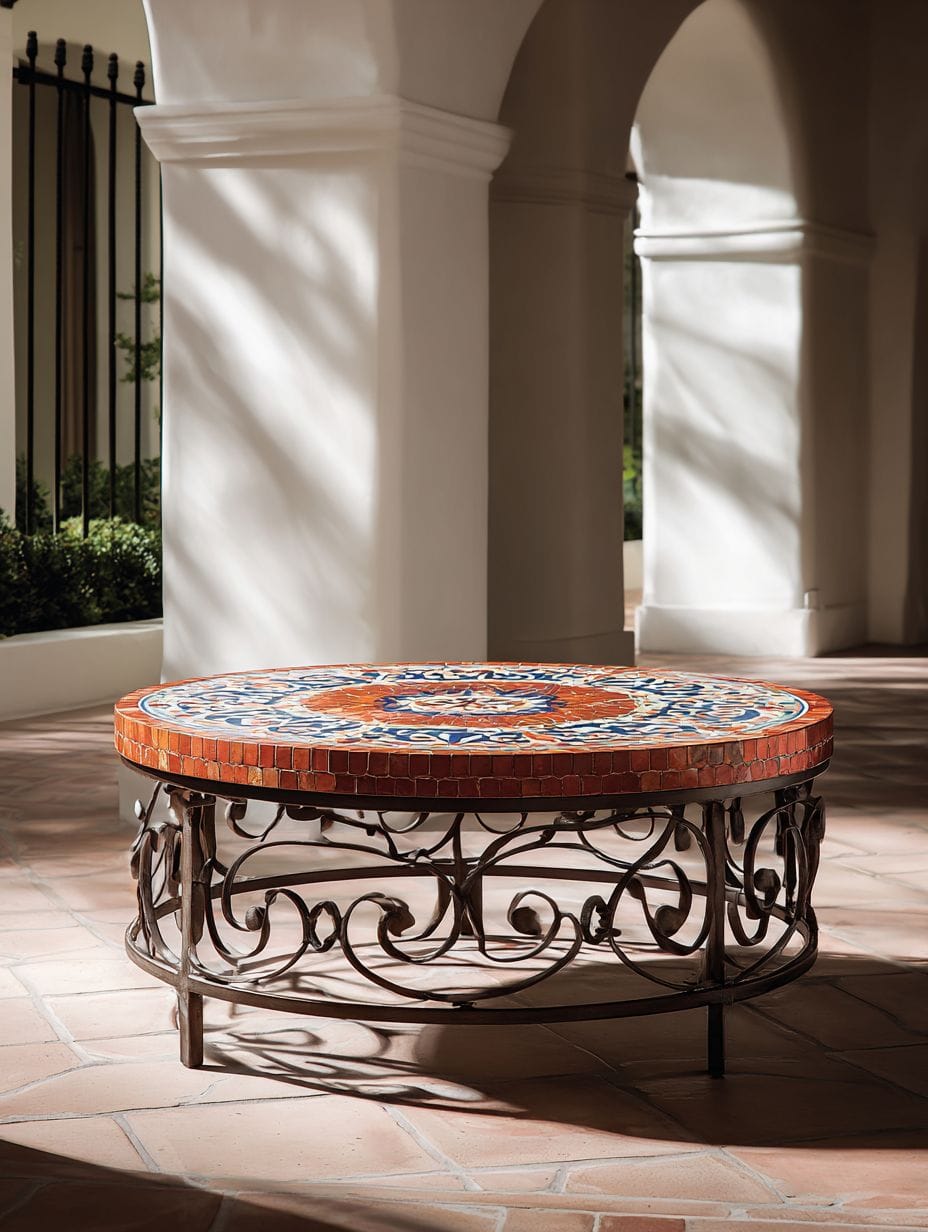
Mediterranean design celebrates vibrant colors, artisan craftsmanship, and the warm, relaxed lifestyle of coastal regions surrounding the Mediterranean Sea. A mosaic coffee table with hand-laid ceramic tile top featuring warm terracotta, cobalt blue, and cream patterns set in an ornate wrought iron base captures this sun-soaked aesthetic beautifully. Each individual tile—cut, shaped, and positioned by skilled hands—contributes to larger geometric or floral patterns that reference centuries of Mediterranean decorative arts traditions. The terracotta tones echo the clay roof tiles and earthenware pottery that characterize Mediterranean architecture, while cobalt blue references the endless sky and sea.
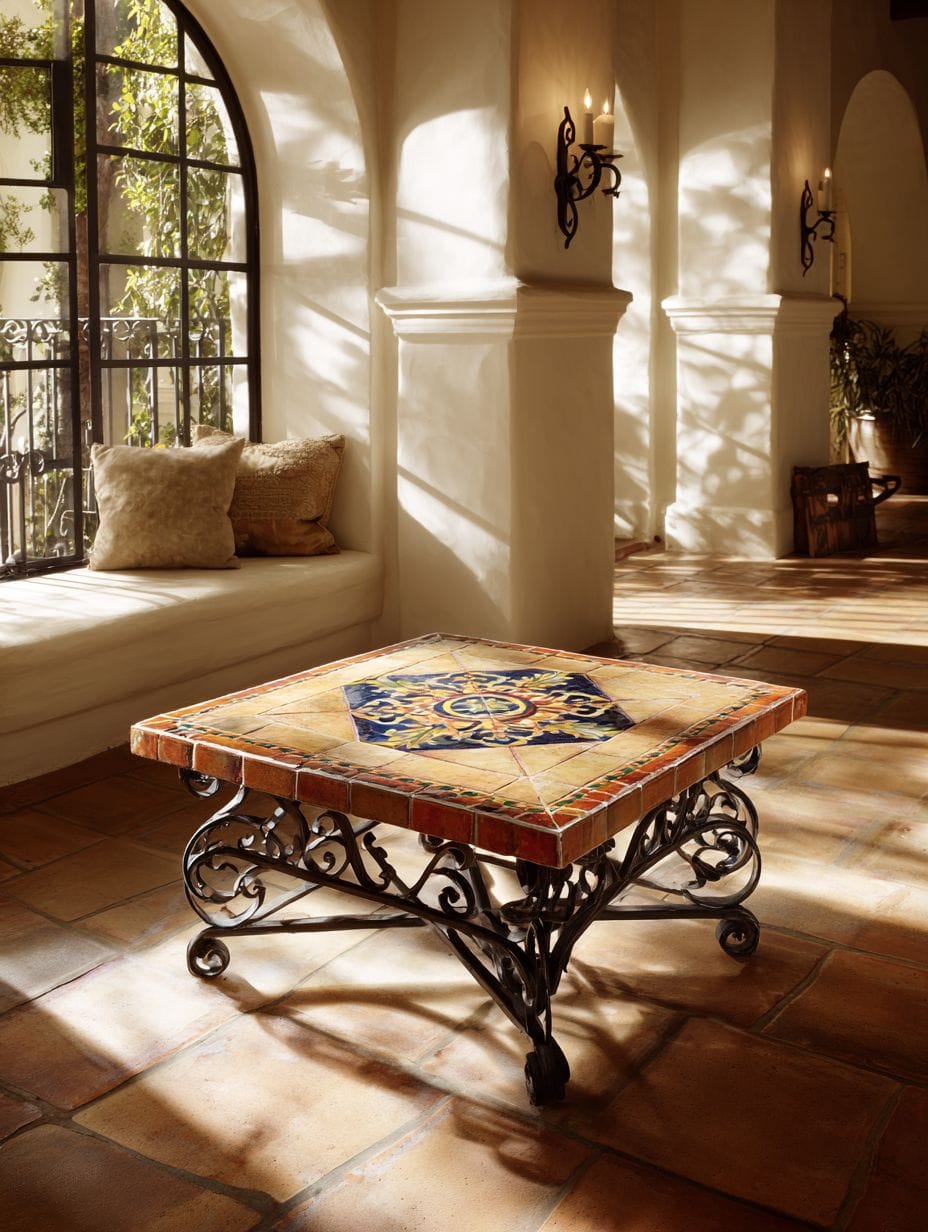
The ornate wrought iron base, featuring scrollwork, curves, and decorative details formed through traditional blacksmithing techniques, provides sturdy support while adding another layer of craftsmanship. The dark iron creates a neutral framework that allows the colorful tile top to command attention without competition. Placed in a sun-drenched living room with arched doorways, terra cotta floor tiles, and white stucco walls, this table becomes the jewel that ties together various Mediterranean architectural and design elements into a cohesive whole.
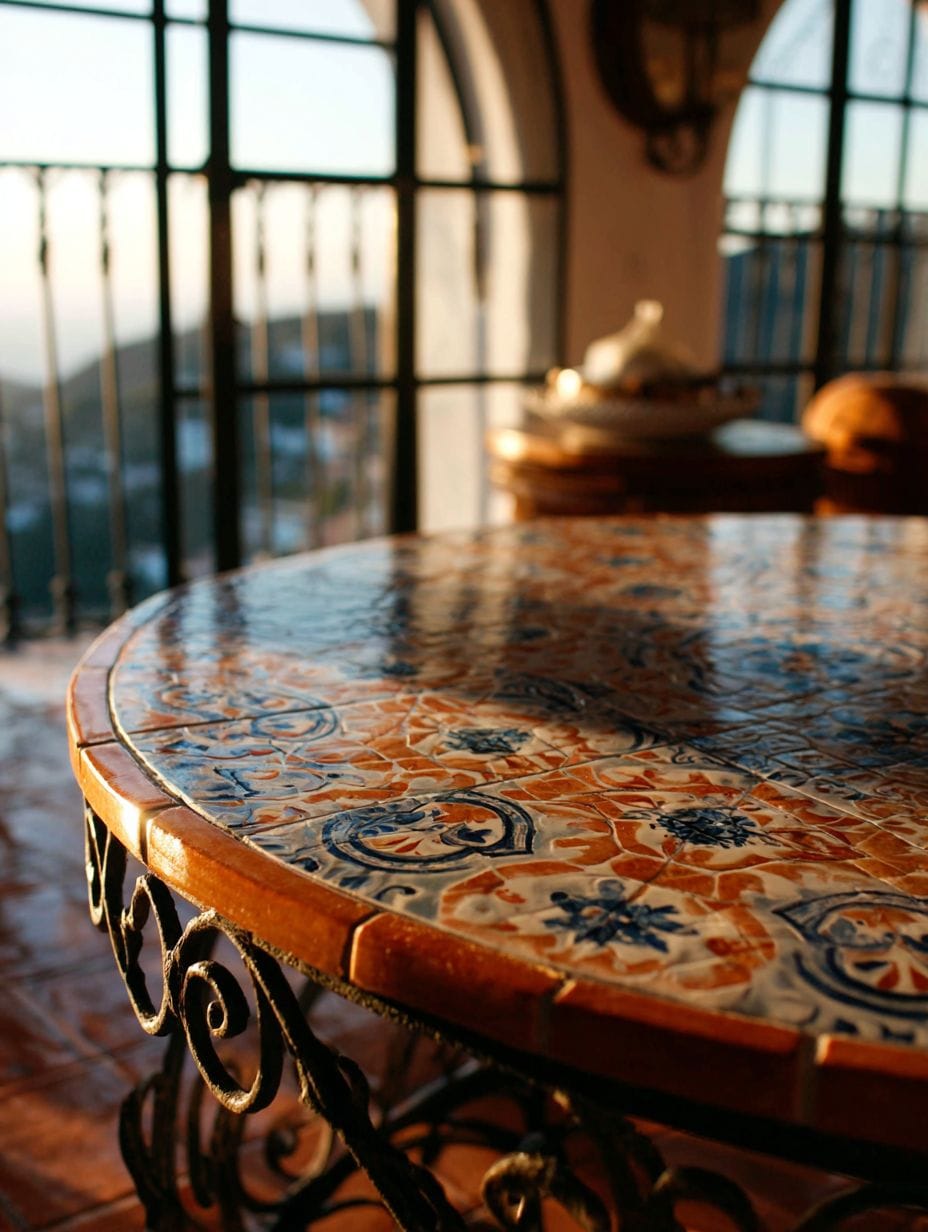
Golden afternoon light—abundant in Mediterranean climates and highly valued in Mediterranean design—enhances the vibrant tile colors while creating shadows through the decorative ironwork base. The glazed ceramic tiles catch and reflect light differently than surrounding matte surfaces, creating sparkling highlights that add energy and life to the space. The handmade quality means slight variations in tile size, color, and placement, which adds authenticity and charm that machine-made alternatives lack. This table isn’t trying to achieve mechanical perfection; it celebrates the human hand and the slight irregularities that prove its artisan origins.
Key Design Tips:
- Seal grout lines properly to prevent staining and make cleaning easier in this high-use surface
- Choose tile patterns carefully to ensure they’ll remain visually appealing even after years of daily viewing
- Balance vibrant tile colors with neutral walls and furnishings to prevent visual overwhelm
- Protect the wrought iron with appropriate finishes to prevent rust, especially in humid climates
- Style with Mediterranean accessories like ceramic bowls, olive branches, or citrus fruits to reinforce the theme
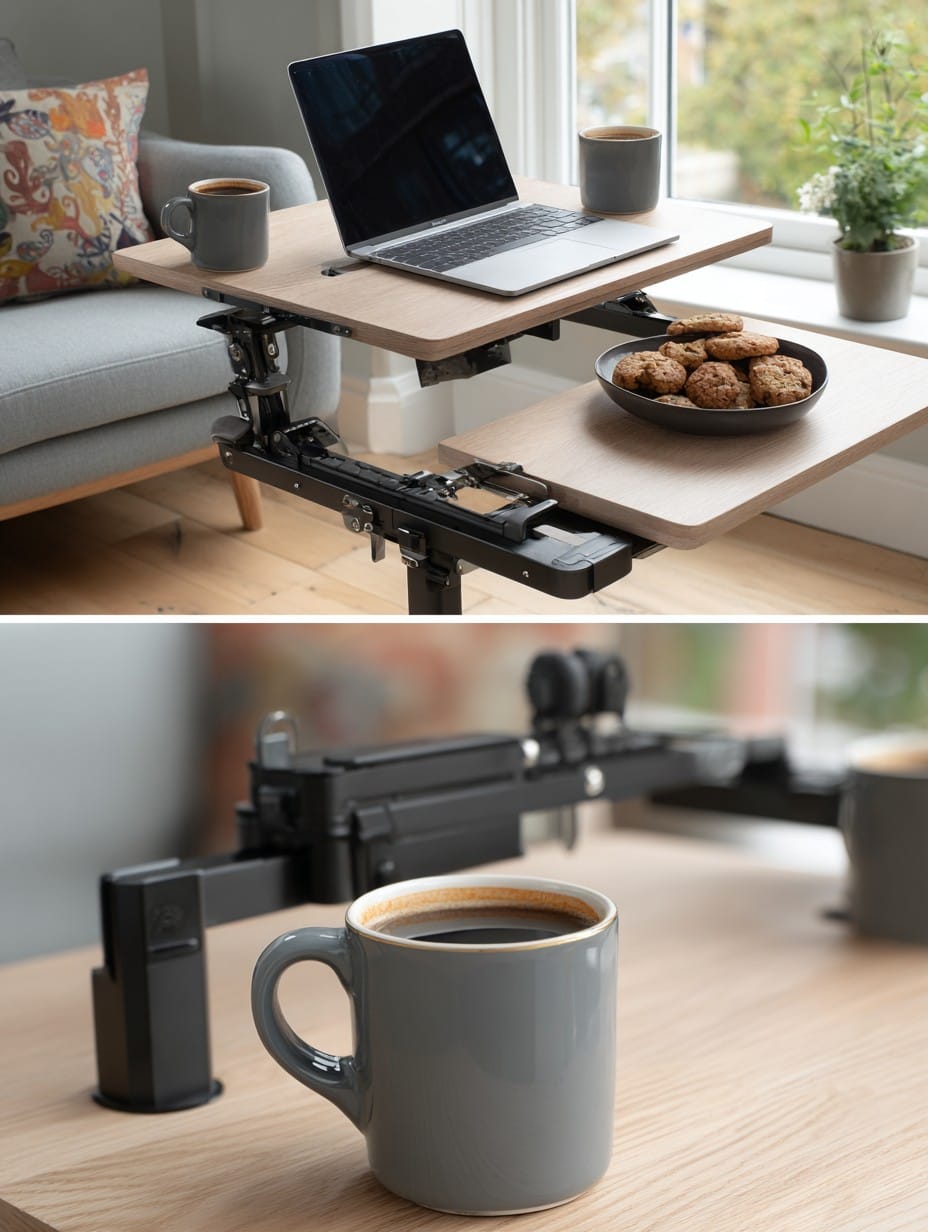
20. Convertible Multi-Function Marvel
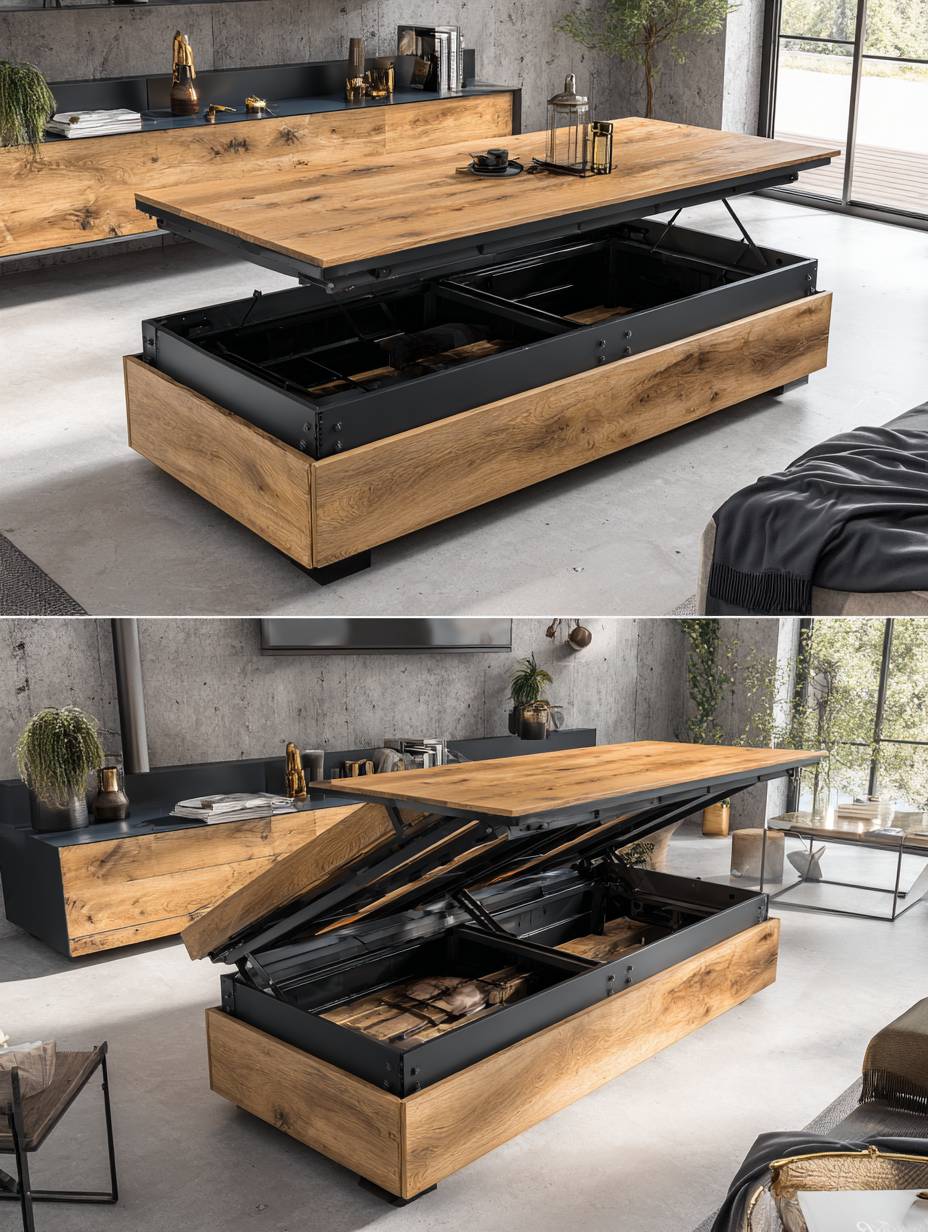
As urban living spaces shrink and home functions multiply, furniture that adapts to different needs becomes increasingly valuable. A convertible coffee table with adjustable height mechanism and expandable top represents the pinnacle of space-efficient design. The adjustable height mechanism—whether operated through gas lifts, manual cranks, or sophisticated electric motors—allows the table to transform from standard coffee table height to dining table height, eliminating the need for separate furniture pieces. The expandable top unfolds, extends, or otherwise enlarges to provide adequate dining surface for four to six people, then contracts back to compact coffee table dimensions when not needed.
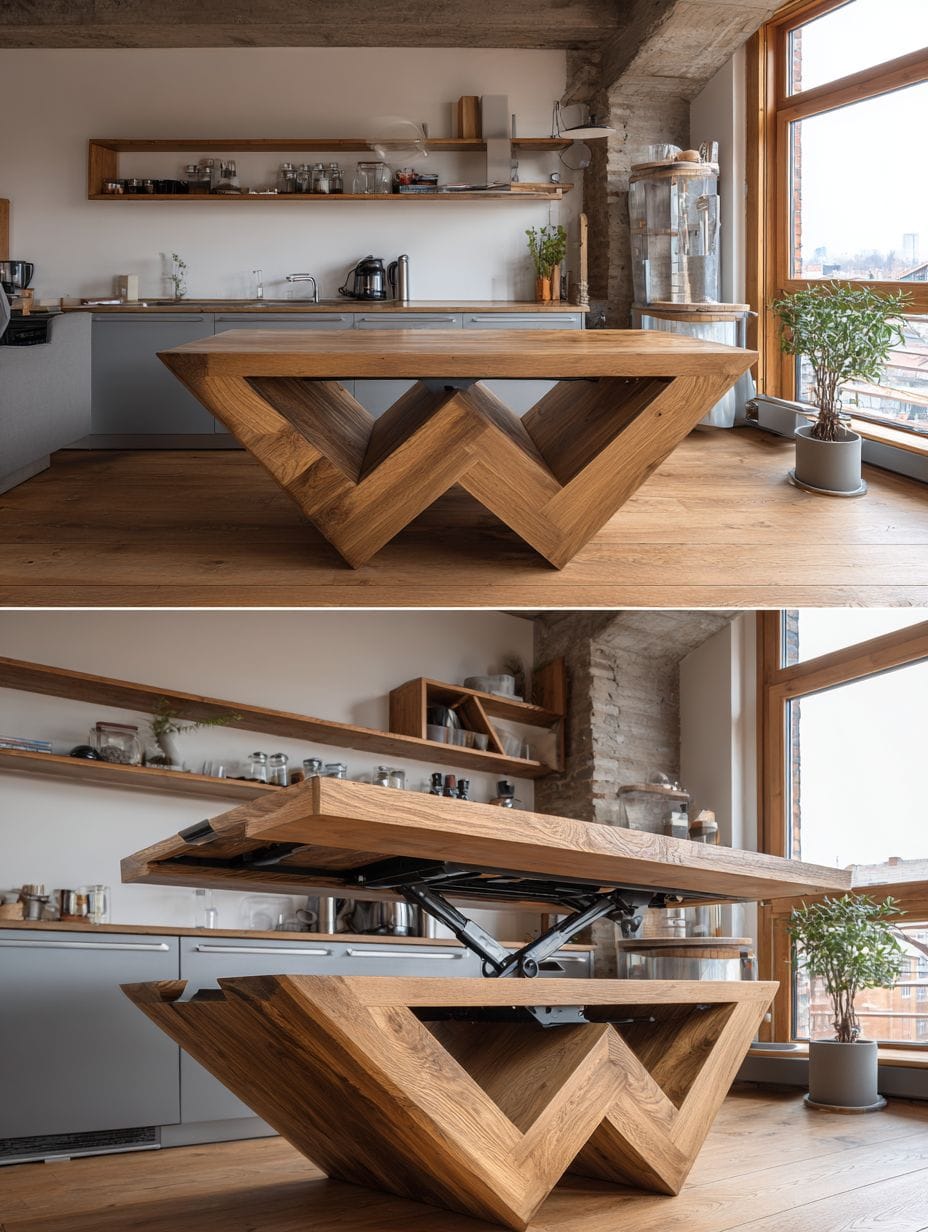
This transformative functionality makes the piece ideal for studio apartments and small homes where a dedicated dining table would consume precious floor space. The ability to raise the table to comfortable dining or working height also serves laptop users, crafters, and anyone who needs a higher work surface than traditional coffee tables provide. Shown in a multi-functional studio apartment living area featuring other space-saving furniture and modern finishes in light wood and grey tones, this table demonstrates that small-space living doesn’t require sacrificing functionality or style.
Natural daylight from a corner window illuminates the practical hardware and smooth lifting mechanism, celebrating rather than hiding the engineering that makes the transformation possible. The mechanical elements—whether visible hinges, legs that telescope or fold, or expansion leaves—become design features in their own right, exemplifying honest design that proudly displays how things work. Quality construction ensures smooth operation through thousands of transformations, with properly engineered mechanisms that feel sturdy and secure in both configurations.
Key Design Tips:
- Invest in quality mechanisms that operate smoothly and will withstand frequent use without failing
- Test weight capacity in both configurations to ensure stability whether used as coffee table or dining table
- Consider the transformation process to ensure it’s simple enough for regular use rather than being too complex
- Choose finishes that coordinate in both configurations including any exposed undersides or mechanisms
- Store transformation components safely if pieces detach, preventing loss of essential parts
21. Artistic Resin River Creation
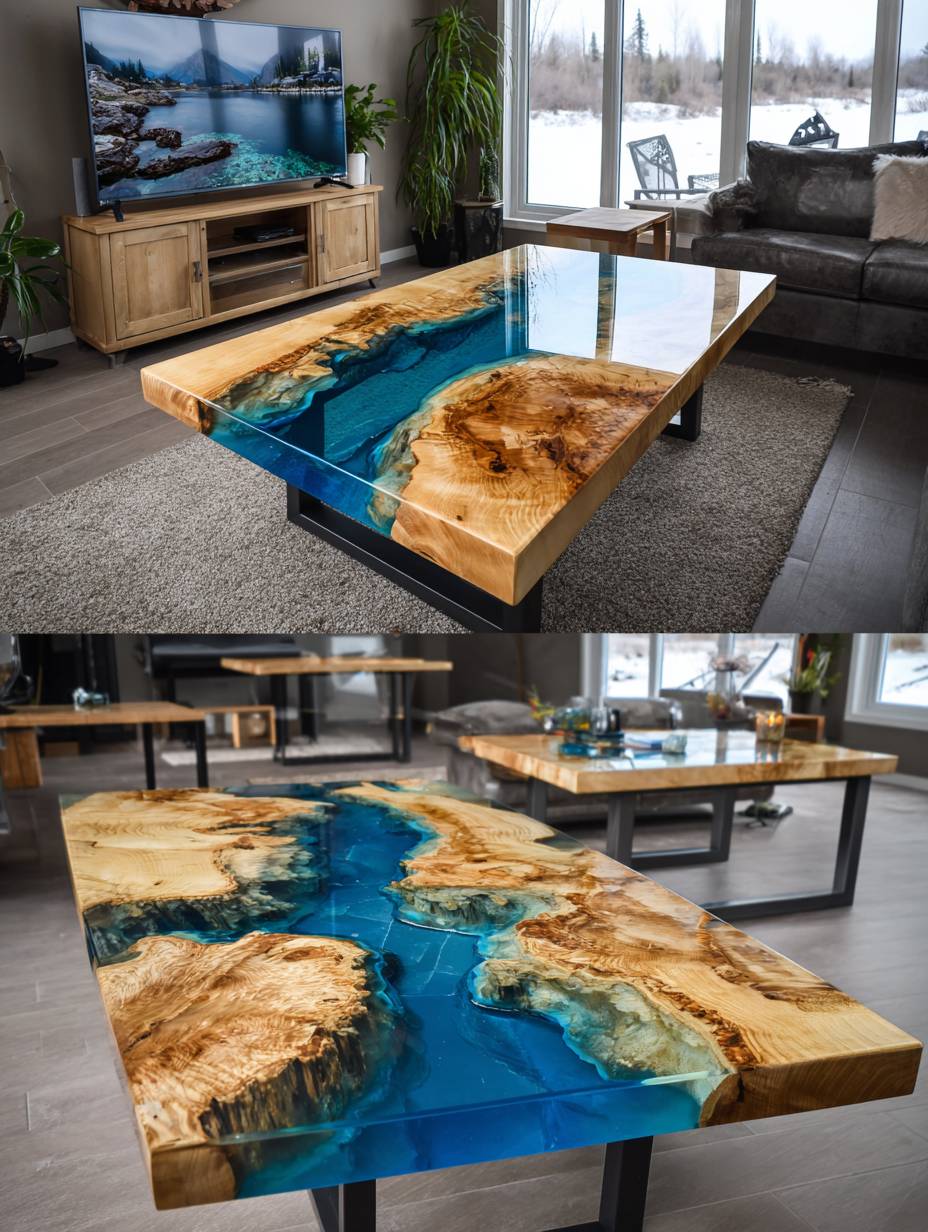
Contemporary woodworking has embraced epoxy resin as a design medium, creating furniture that blurs the line between functional object and fine art. A resin river coffee table featuring natural wood slabs flanking a transparent blue epoxy river flowing through the center represents this innovative design approach. The natural wood slabs—often carefully selected for interesting grain patterns, burls, or figured wood—provide organic, warm elements that ground the design. The transparent blue epoxy, poured and cured between the wood pieces, suggests flowing water with its smooth, glass-like surface and luminous blue tones that range from pale aqua to deep cobalt depending on depth, lighting, and tinting choices.
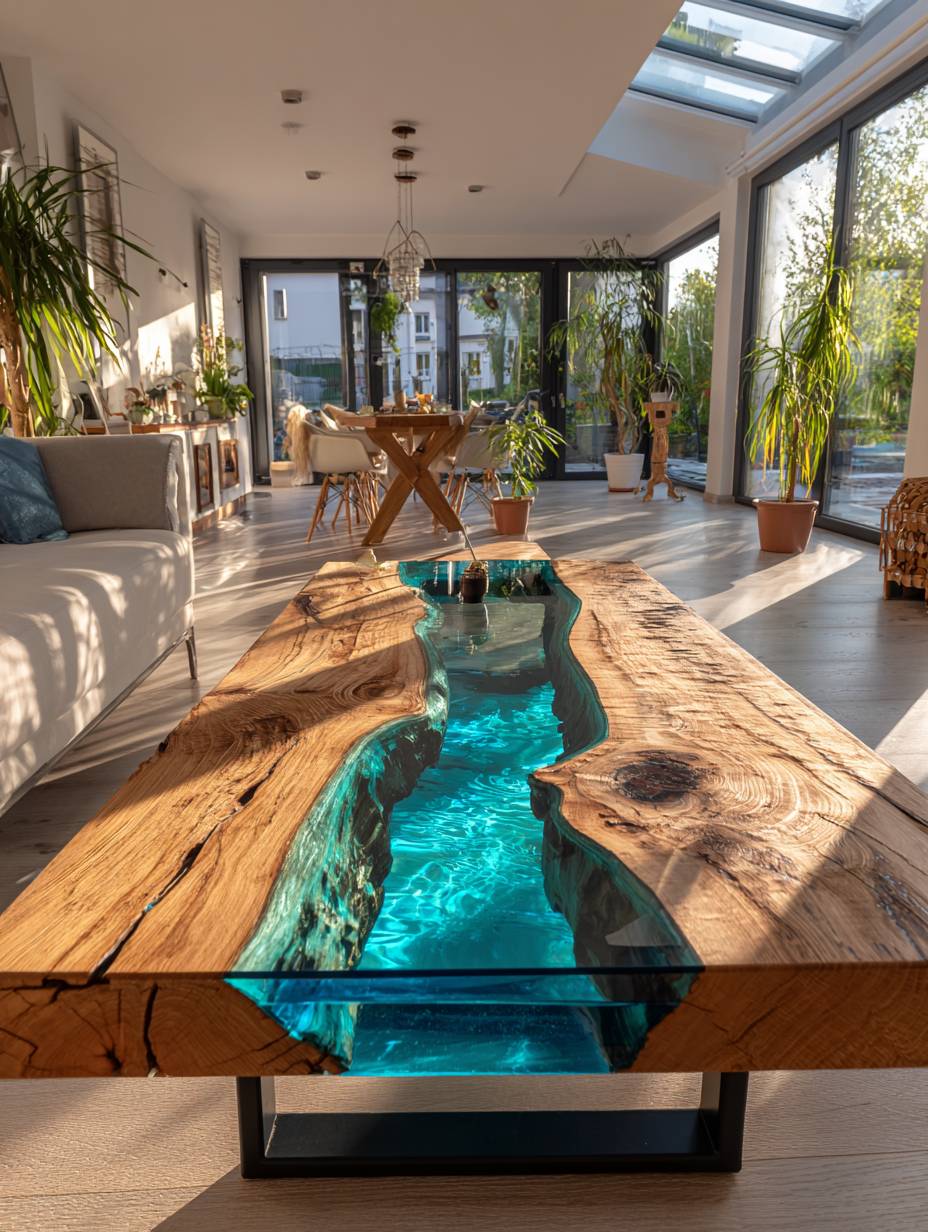
The minimalist black steel legs provide necessary support without competing visually with the dramatic tabletop, allowing the wood-and-resin composition to command complete attention. Set in a modern living room with large windows, indoor plants, and organic modern decor, this table becomes the statement piece that guests notice immediately. The combination of natural and synthetic materials demonstrates contemporary design’s willingness to blend traditional craft with modern chemistry, creating effects and appearances that neither material could achieve alone.
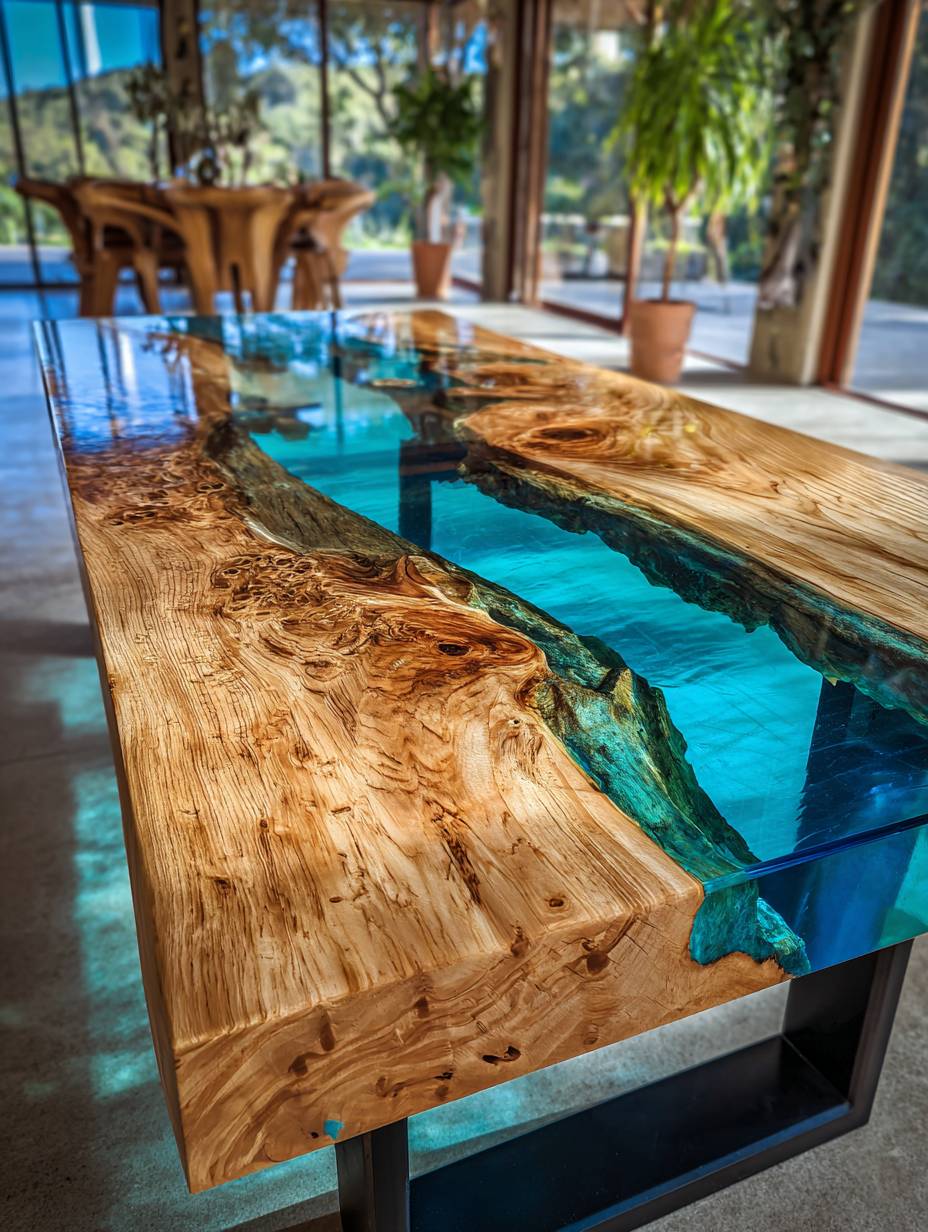
Natural light illuminates the translucent blue resin, creating depth and emphasizing the three-dimensional quality of the “river” flowing through the wood. The resin’s transparency allows light to penetrate, creating luminous effects that change depending on light source, time of day, and viewing angle. The wood grain surrounding the resin river provides textural contrast and frames the smooth synthetic surface, creating visual tension between rough and smooth, natural and manufactured, ancient and contemporary. This juxtaposition keeps the design interesting and prevents it from feeling one-dimensional or predictable.
Key Design Tips:
- Choose epoxy products specifically designed for furniture that won’t yellow, crack, or degrade over time
- Ensure proper resin application by experienced craftspeople to avoid bubbles, uneven surfaces, or structural issues
- Select wood slabs with interesting character to maximize visual impact and justify the table’s artistic nature
- Consider resin color carefully to ensure it coordinates with your overall design scheme long-term
- Maintain both wood and resin appropriately using products suitable for each material without damaging the other
22. Classic Upholstered Ottoman Luxury
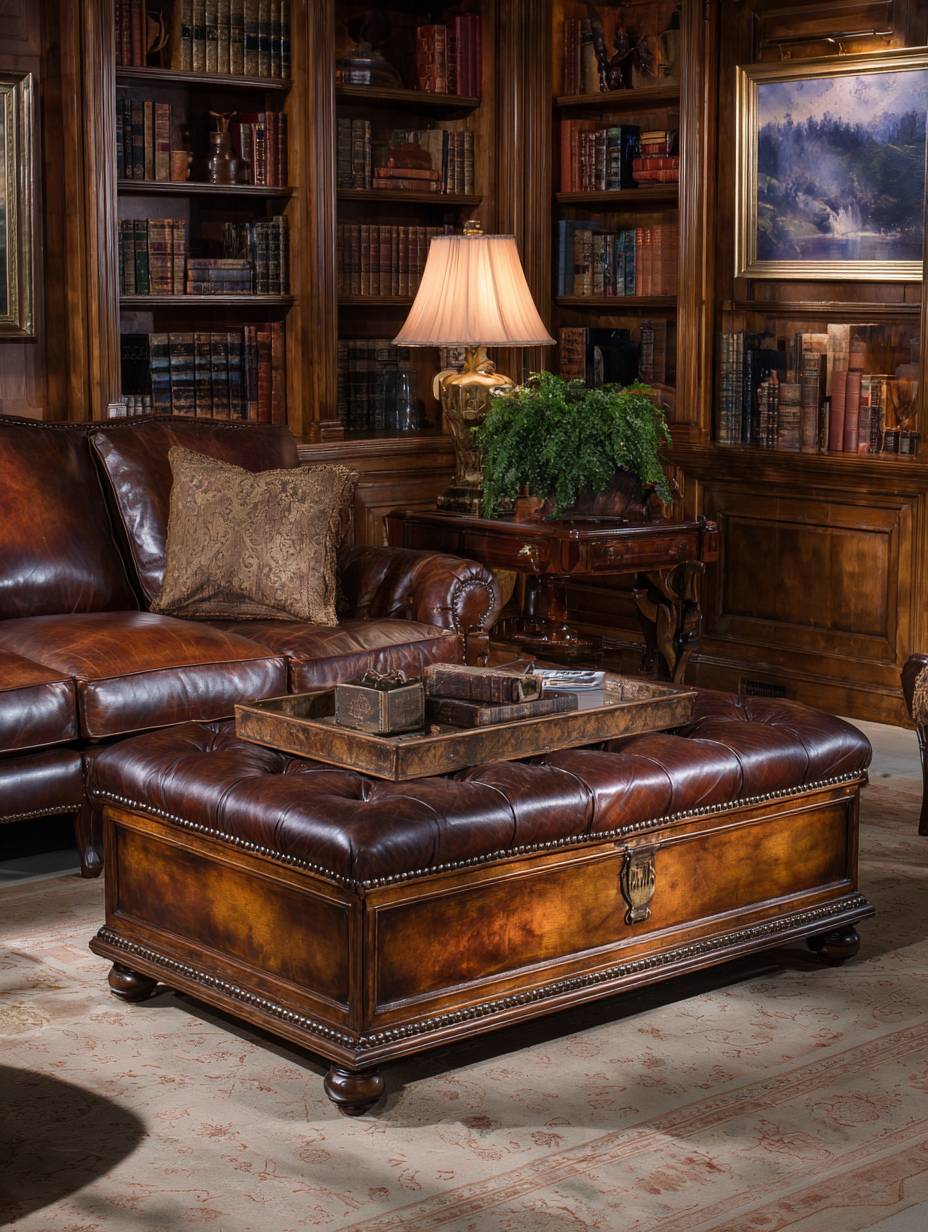
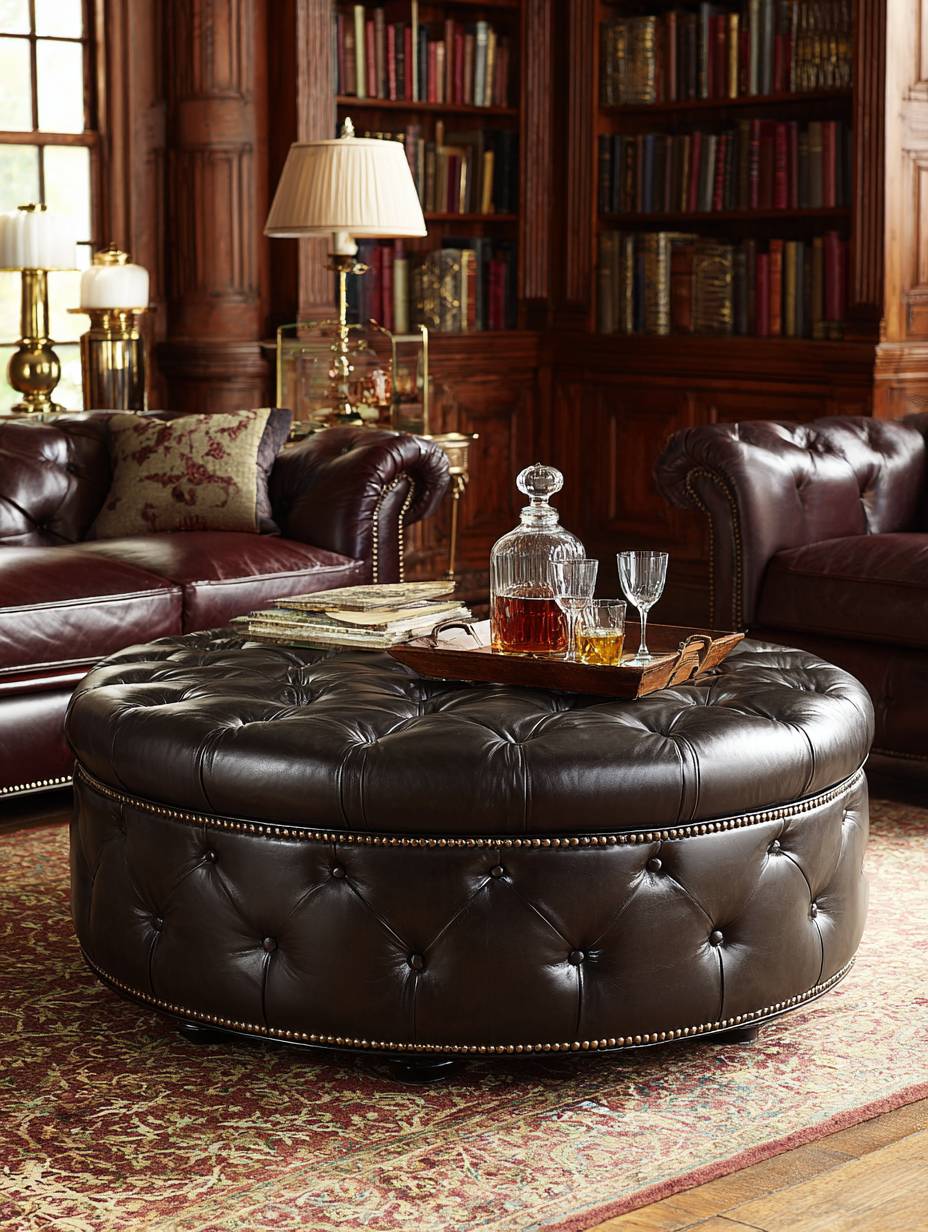
Sometimes the best coffee table isn’t a table at all but an upholstered ottoman that offers comfort, style, and versatility. A Chesterfield-style ottoman coffee table with deep button tufting in rich chocolate brown leather and brass nailhead trim exemplifies traditional luxury. The deep button tufting—a hallmark of Chesterfield design—creates a distinctive quilted appearance while providing structure and dimension to the leather surface. Each button is carefully secured through the padding to the frame beneath, creating the characteristic indentations that define this classic style. The rich chocolate brown leather, properly tanned and finished, develops beautiful patina over time, darkening slightly and developing subtle variations that enhance rather than detract from its appearance.
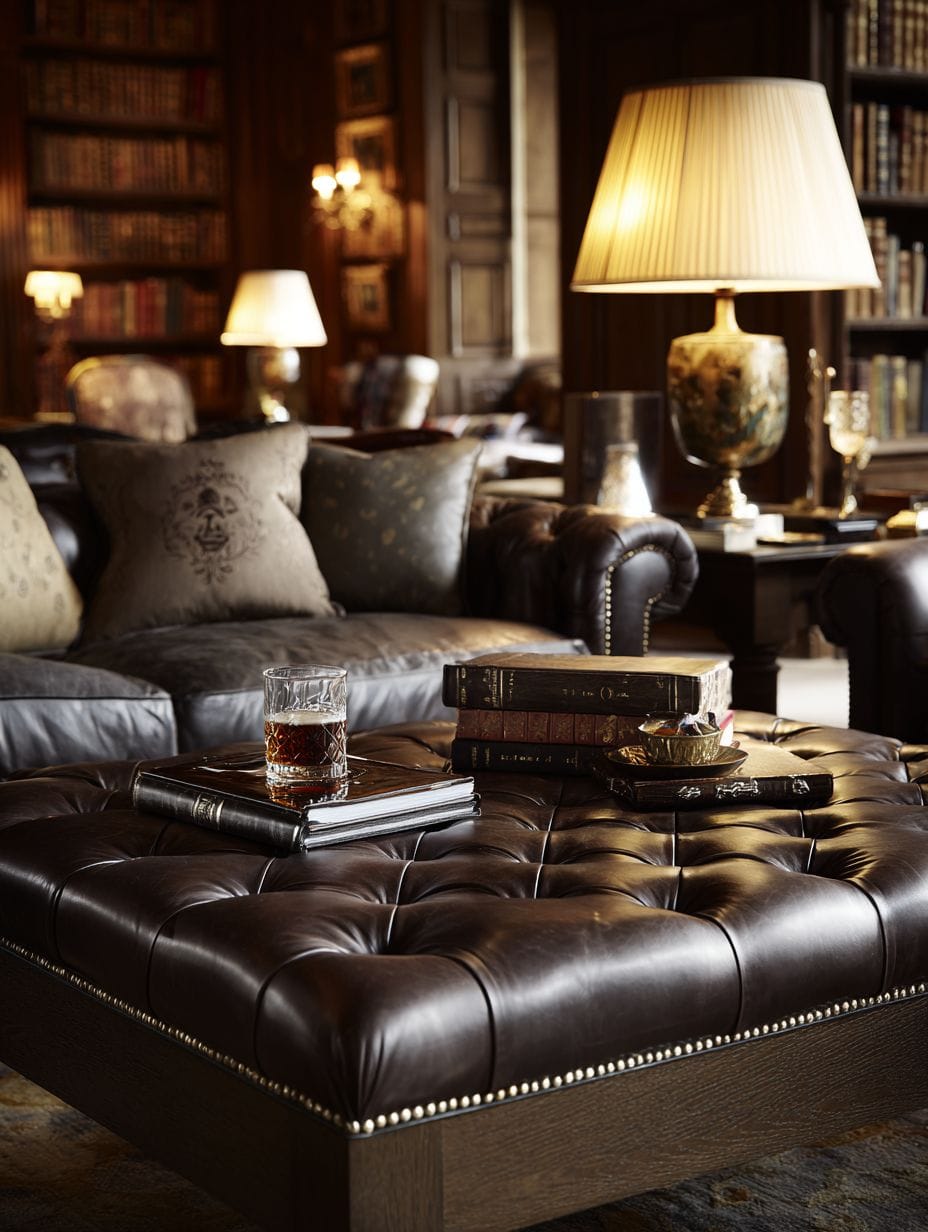
The brass nailhead trim around the base provides a decorative border that references traditional upholstery techniques where exposed nailheads served functional purposes before becoming purely ornamental. The warm brass tone complements the chocolate leather while adding metallic accents that catch light and create visual interest along the ottoman’s perimeter. Positioned in a traditional library-style living room with wood paneling, built-in bookshelves, and classic furnishings, this ottoman becomes the comfortable centerpiece that invites people to put their feet up and relax—something you’d never do with a precious antique wooden table.
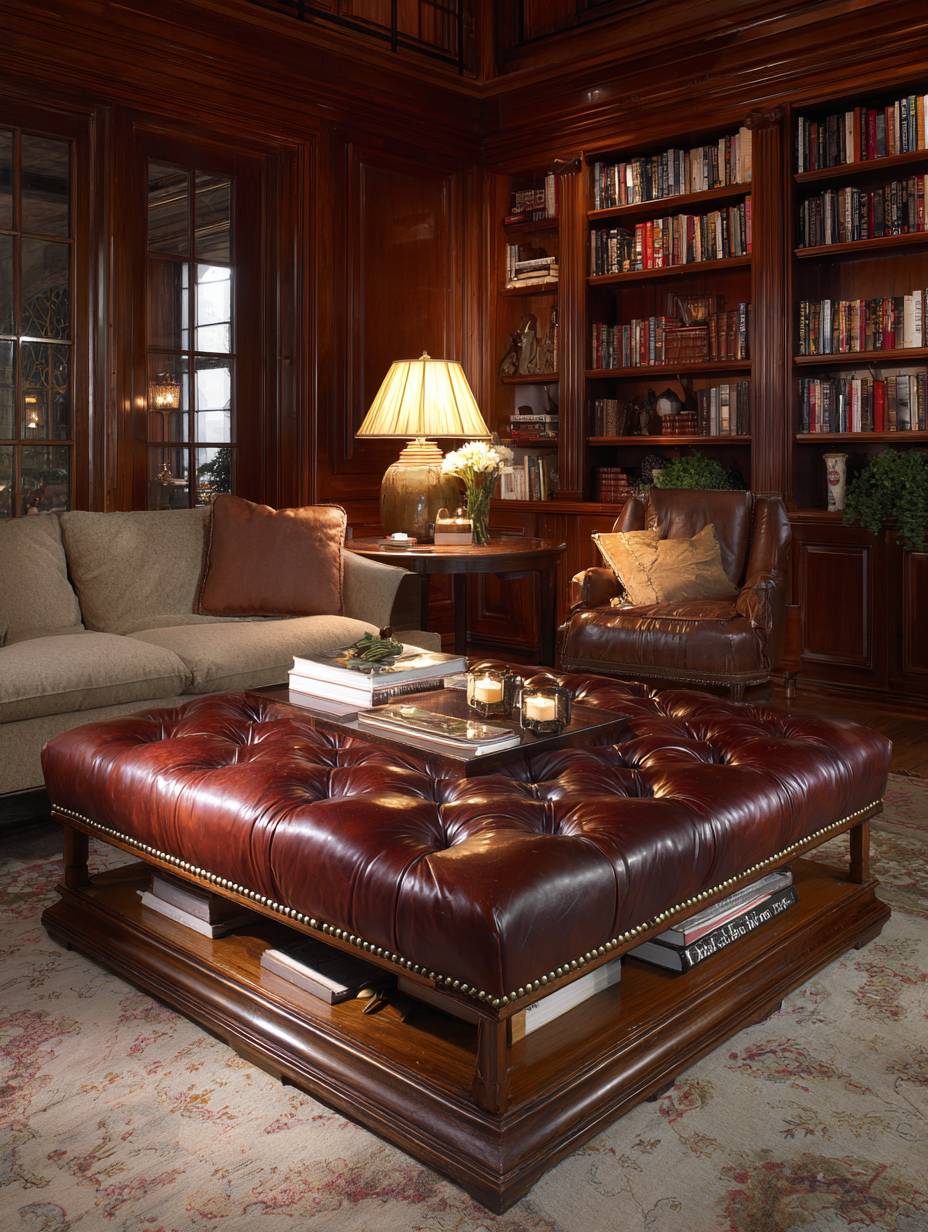
Warm lamp lighting creates highlights on the leather surface, emphasizing natural variations in color and texture while the button tufting creates gentle shadows in each indentation. The supple leather feels luxurious to touch—important for a piece that serves as foot rest as much as table surface. The ottoman’s soft surface makes it family-friendly, eliminating concerns about children bumping into hard corners or knocking their heads on solid tables. Many upholstered ottomans include hidden storage beneath lift-off tops, adding practical function to their comfortable form.
Key Design Tips:
- Choose quality leather that will develop beautiful patina rather than simply showing wear and damage
- Ensure sturdy construction with properly secured tufting buttons that won’t pull through or loosen over time
- Consider practical cleaning by treating leather appropriately to resist stains while maintaining its natural character
- Use decorative trays on top when needed to create stable surfaces for drinks and prevent items from sliding off the soft surface
- Maintain leather regularly with appropriate conditioners to prevent drying and cracking
23. Bold Geometric Statement Piece
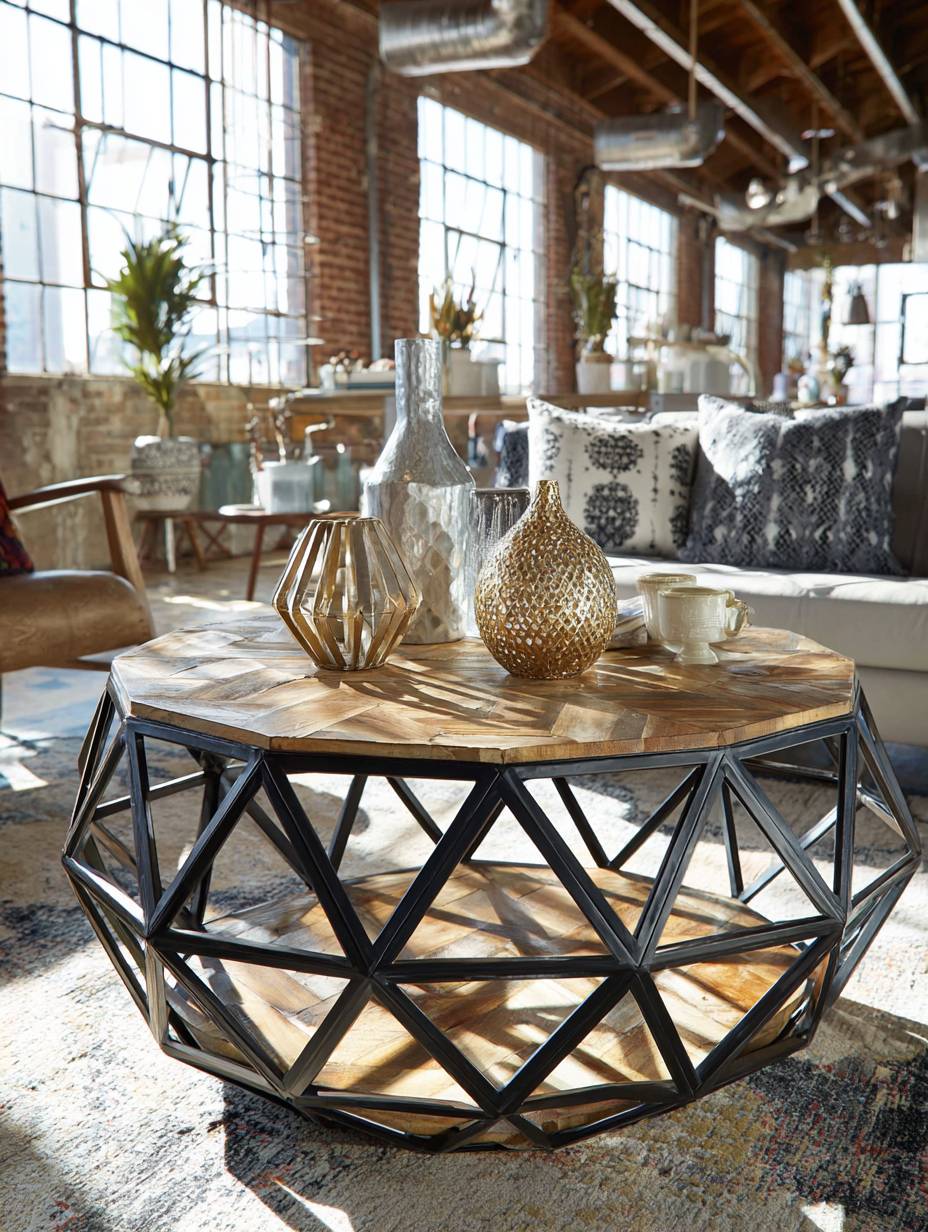
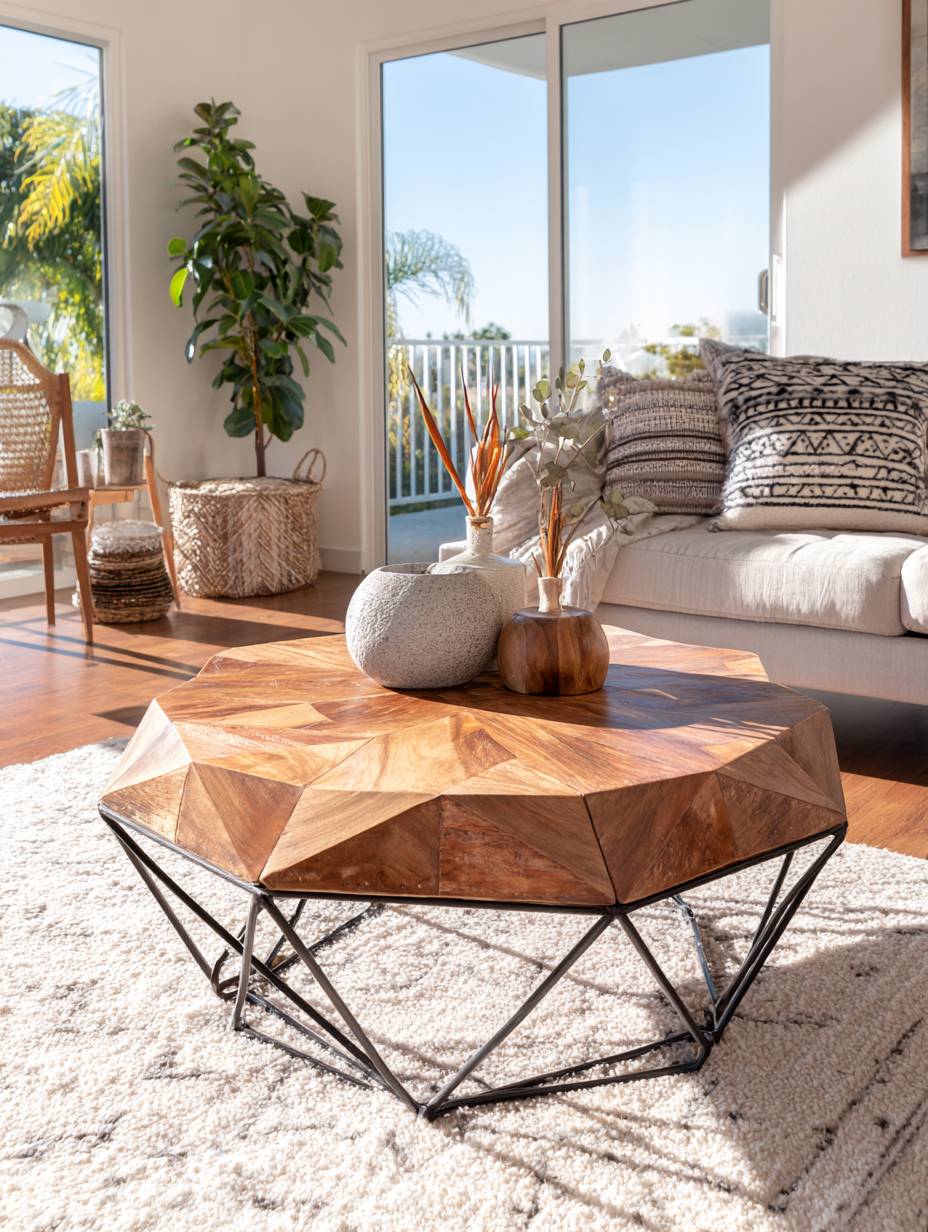
Sometimes a coffee table should make an unapologetic design statement, and a modern geometric table with hexagonal shape certainly delivers. Crafted in mango wood with natural honey finish and black metal frame, this piece combines organic material with architectural form. The hexagonal shape—a six-sided polygon—creates visual interest through its unconventional form while remaining practical enough for everyday use. Corners and edges meet at 120-degree angles rather than the typical 90 degrees, creating a more dynamic, less predictable geometry that catches the eye and invites closer inspection. The mango wood, sustainably harvested from fruit-bearing trees at the end of their productive life, showcases golden honey tones and distinctive grain patterns.
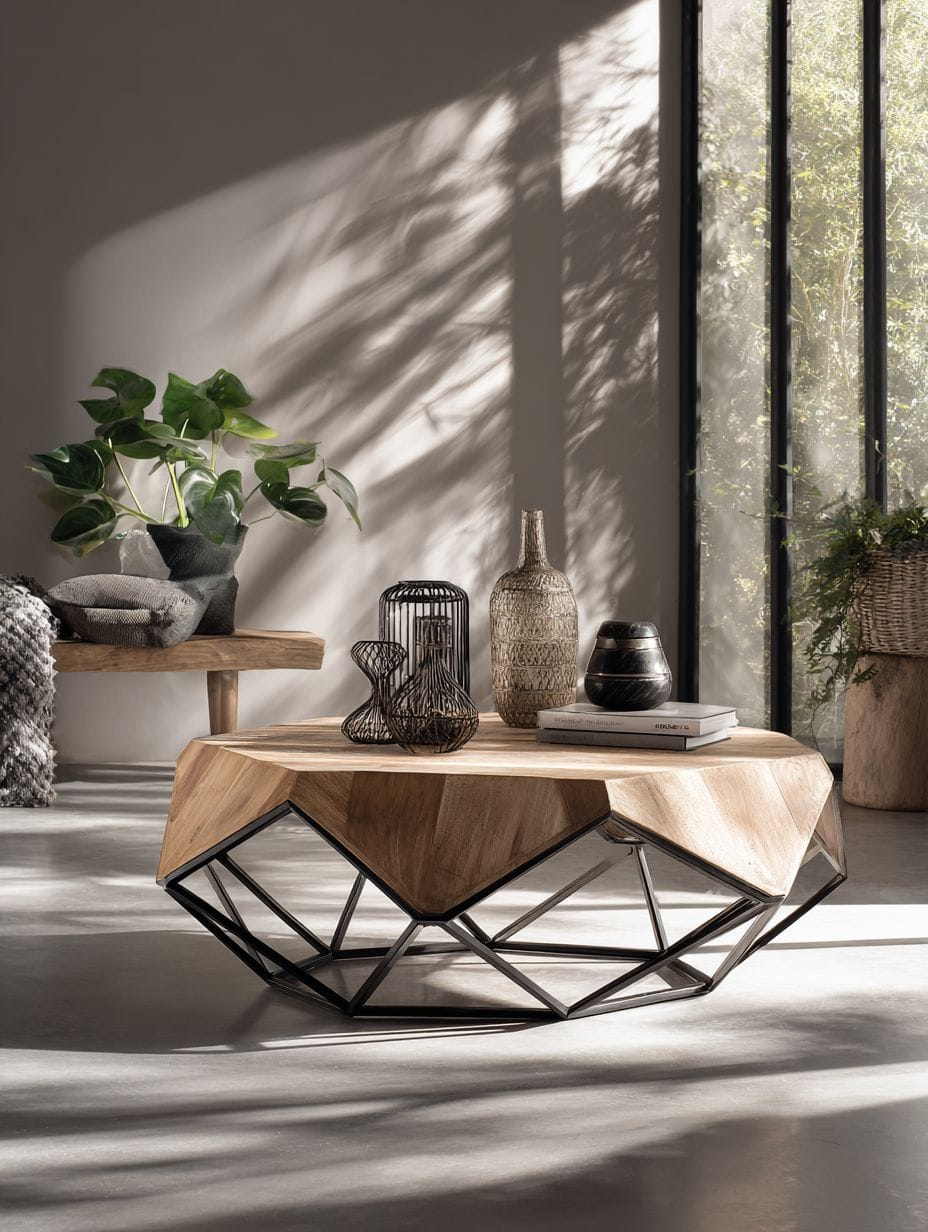
The black metal frame, whether formed into geometric angles that echo the hexagonal top or creating structural contrast with straight lines against the angled top, provides necessary support while adding contemporary edge. The frame’s dark color creates definition and prevents the honey-toned wood from visually bleeding into similarly warm flooring, maintaining clear visual boundaries. Centered in a contemporary eclectic living space featuring a mix of textures, patterns, and global accents, this table becomes the architectural element that grounds more organic or traditional pieces into a cohesive modern composition.
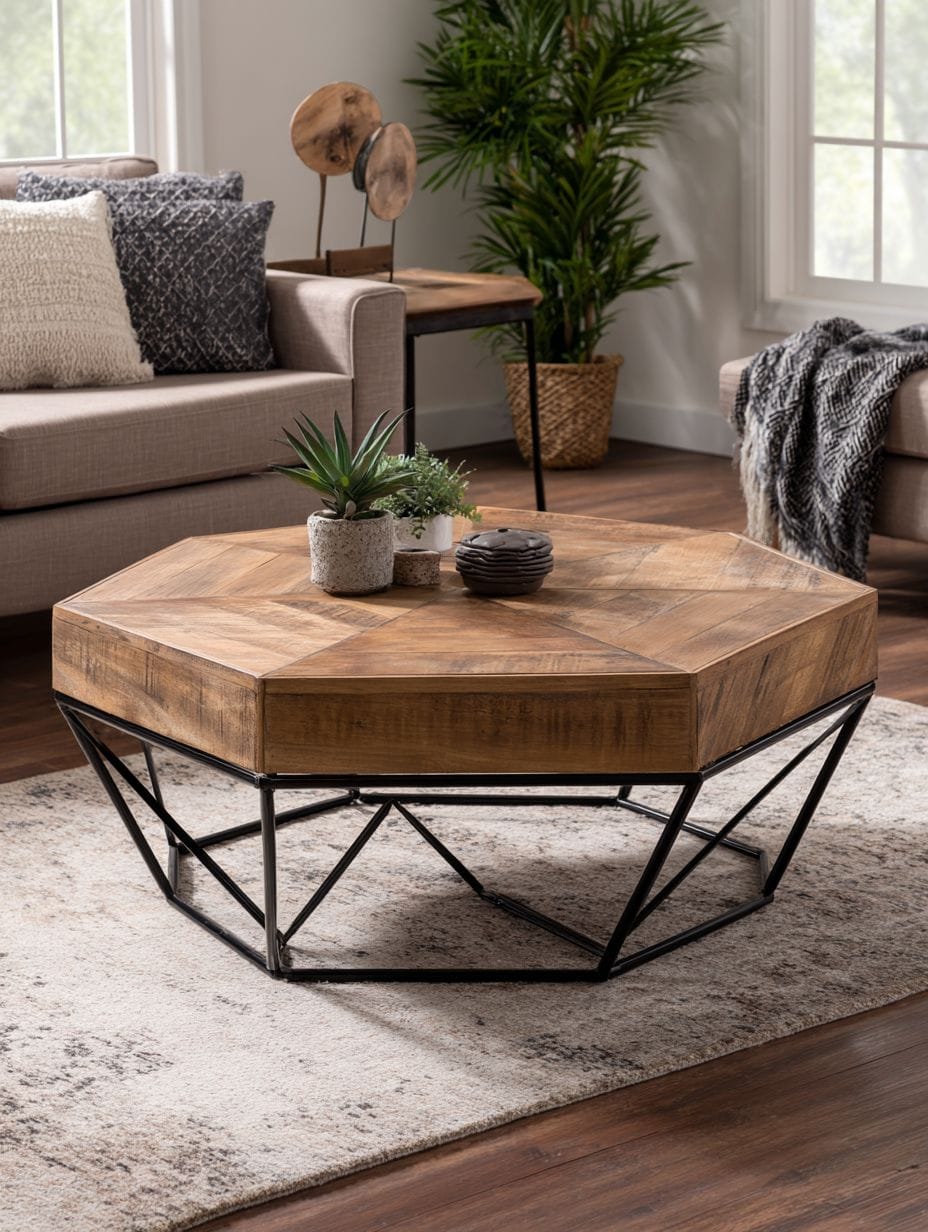
Afternoon natural light through nearby windows creates angular shadows that emphasize the geometric form, changing throughout the day as the sun moves and creating ever-shifting shadow patterns. The interplay between light and shadow becomes part of the table’s design, with the angular form creating more dramatic, interesting shadows than rounded or rectangular alternatives. The geometric shape also affects traffic flow and furniture arrangement, requiring thoughtful placement to ensure the angled sides work with rather than against the room’s layout and function.
Key Design Tips:
- Ensure the geometric shape works with your room layout by measuring carefully and considering traffic flow
- Choose mango wood from sustainable sources to ensure your furniture choice supports responsible forestry
- Balance the bold geometric form with softer, more organic shapes in surrounding furniture and accessories
- Position to showcase the unique shape where the geometry can be appreciated from multiple angles
- Style minimally to avoid cluttering the interesting form with too many objects
24. Functional Nordic Storage Design
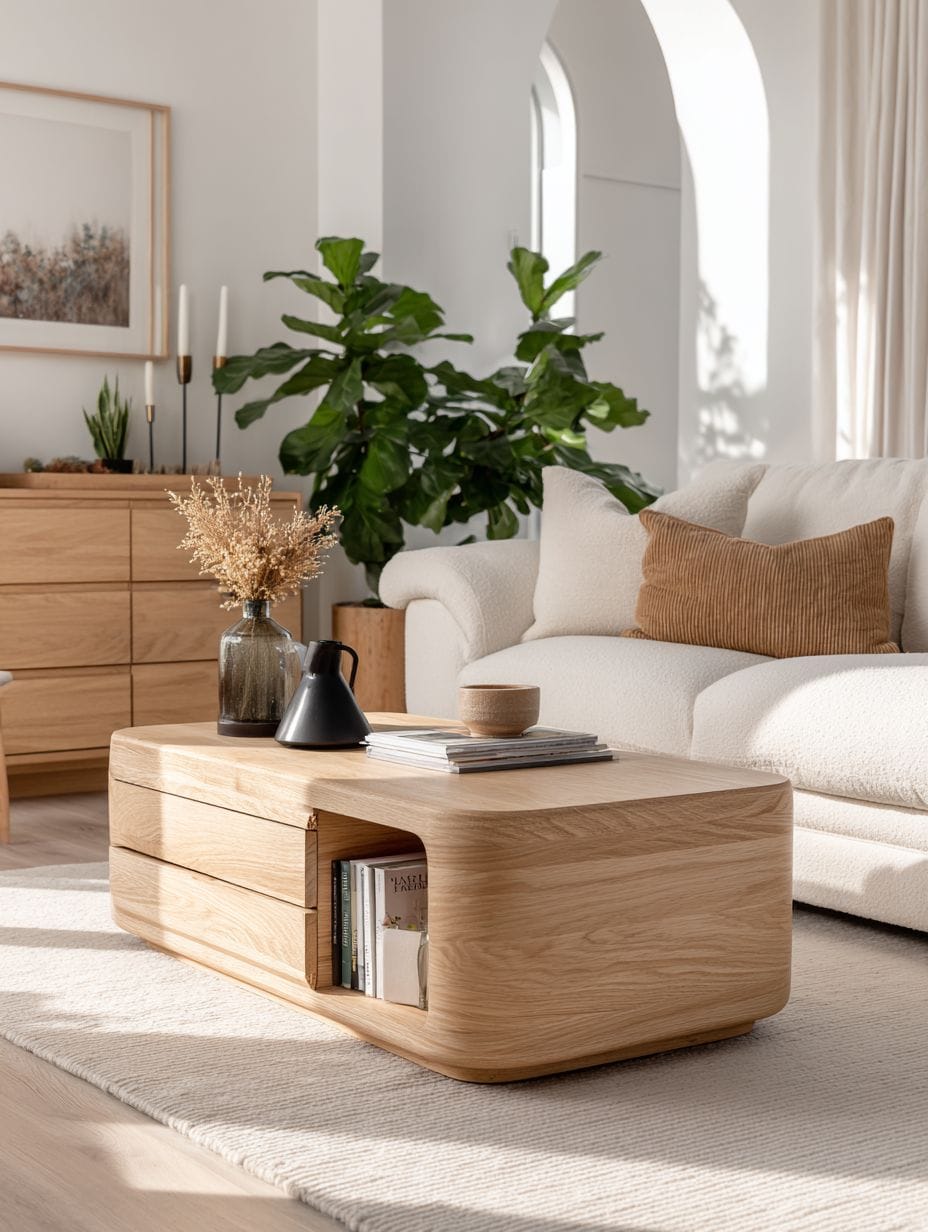
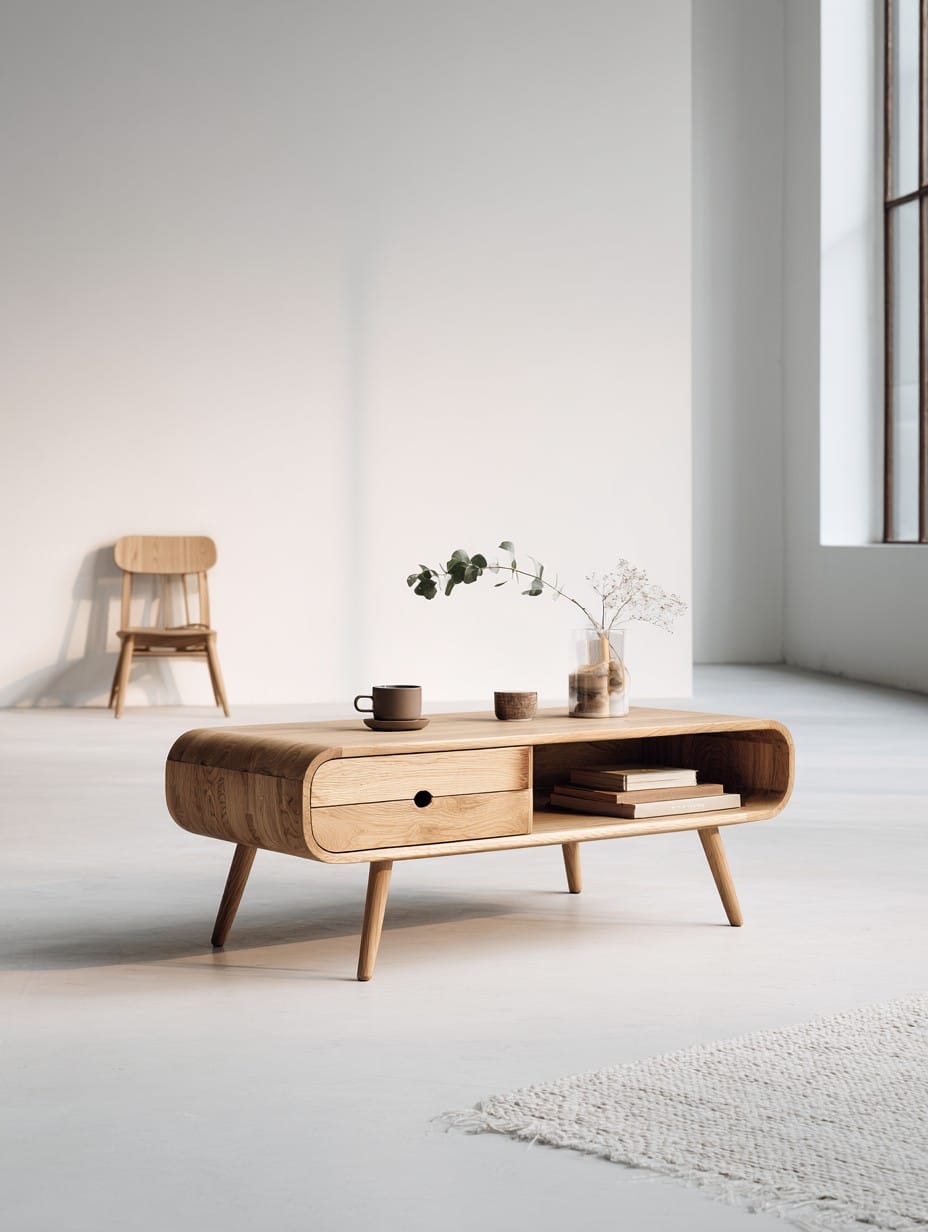
Scandinavian design principles emphasize that beautiful furniture should also be supremely functional, and a Nordic storage coffee table exemplifies this philosophy. Crafted in white oak with clean lines, integrated drawers with push-open mechanisms, and a lower shelf for display, this piece maximizes utility without sacrificing aesthetic appeal. The white oak, with its pale tones and subtle grain, provides warmth and natural beauty while maintaining the light, airy feeling essential to Nordic design. The clean lines—free from unnecessary decoration or ornamentation—create a sense of calm and order that defines Scandinavian interiors.
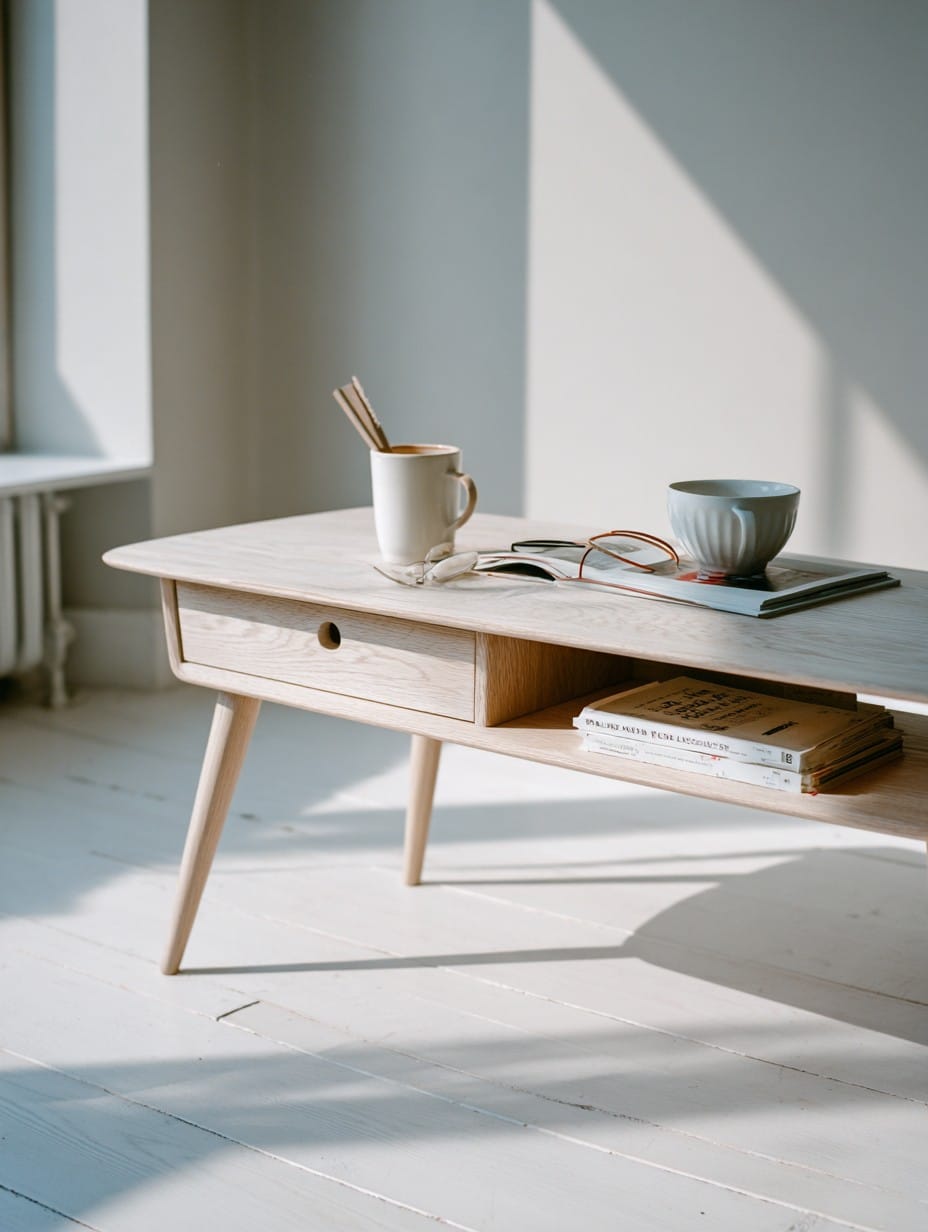
The integrated drawers, operated by push-open mechanisms rather than visible handles or pulls, maintain the minimalist exterior while providing concealed storage for remotes, coasters, charging cables, and other living room essentials. The push-open hardware—requiring only a gentle press to release the drawer—eliminates the need for handles that would interrupt the clean surface plane. The lower shelf, perfectly proportioned to hold a few carefully selected books, magazines, or decorative objects, adds display space without creating visual clutter. Set in a minimalist Nordic living room with light floors, white walls, and functional simple furnishings, this table becomes an invisible servant—always working but never demanding attention.
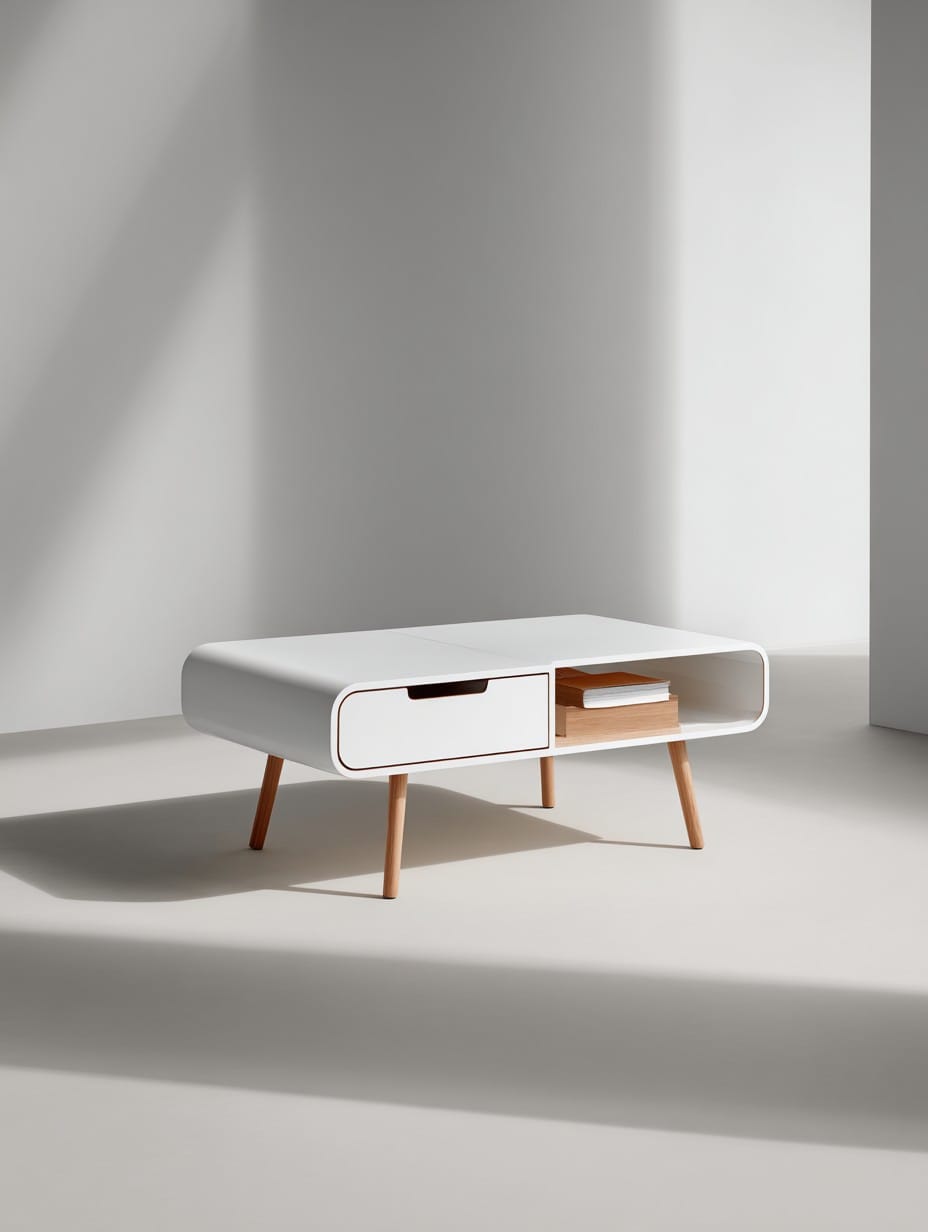
Bright diffused morning light creates a fresh atmosphere, highlighting the practical storage features while emphasizing the minimalist design aesthetic. The natural wood grain provides just enough visual interest to prevent the piece from feeling sterile or cold, while the overall restraint ensures the table supports rather than dominates the room’s peaceful, uncluttered character. The lower shelf’s open design maintains visual flow, allowing light and sight lines to pass through rather than creating a solid visual barrier.
Key Design Tips:
- Choose quality push-open mechanisms that operate smoothly and reliably through thousands of open/close cycles
- Maintain a minimal color palette throughout the room to achieve authentic Scandinavian aesthetic
- Organize drawer contents to maximize functionality and prevent the hidden storage from becoming a cluttered catch-all
- Style the lower shelf sparingly with one or two carefully selected items rather than filling every available space
- Keep wood grain visible through light stains or oils rather than opaque finishes that obscure the natural material
25. Upcycled Barn Door Innovation
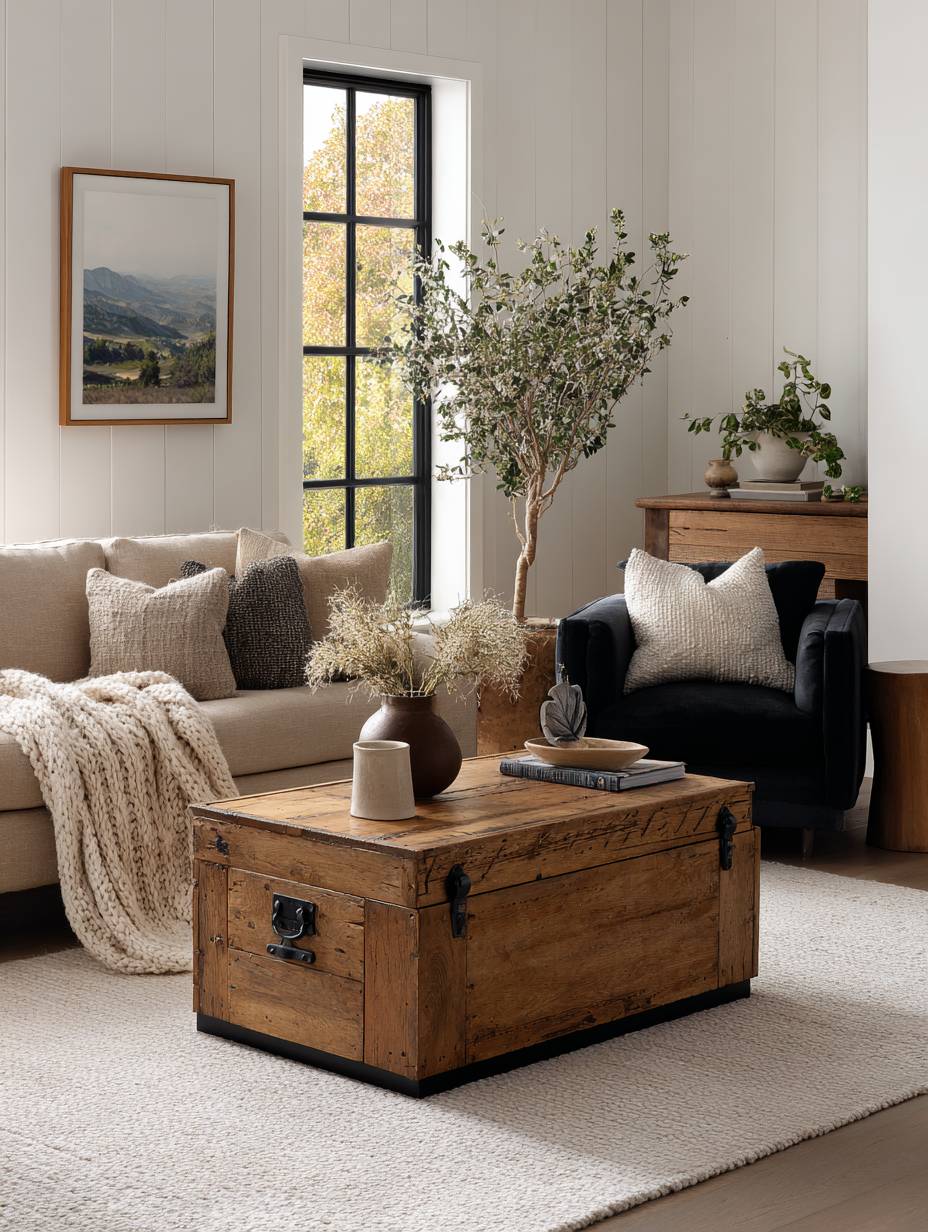
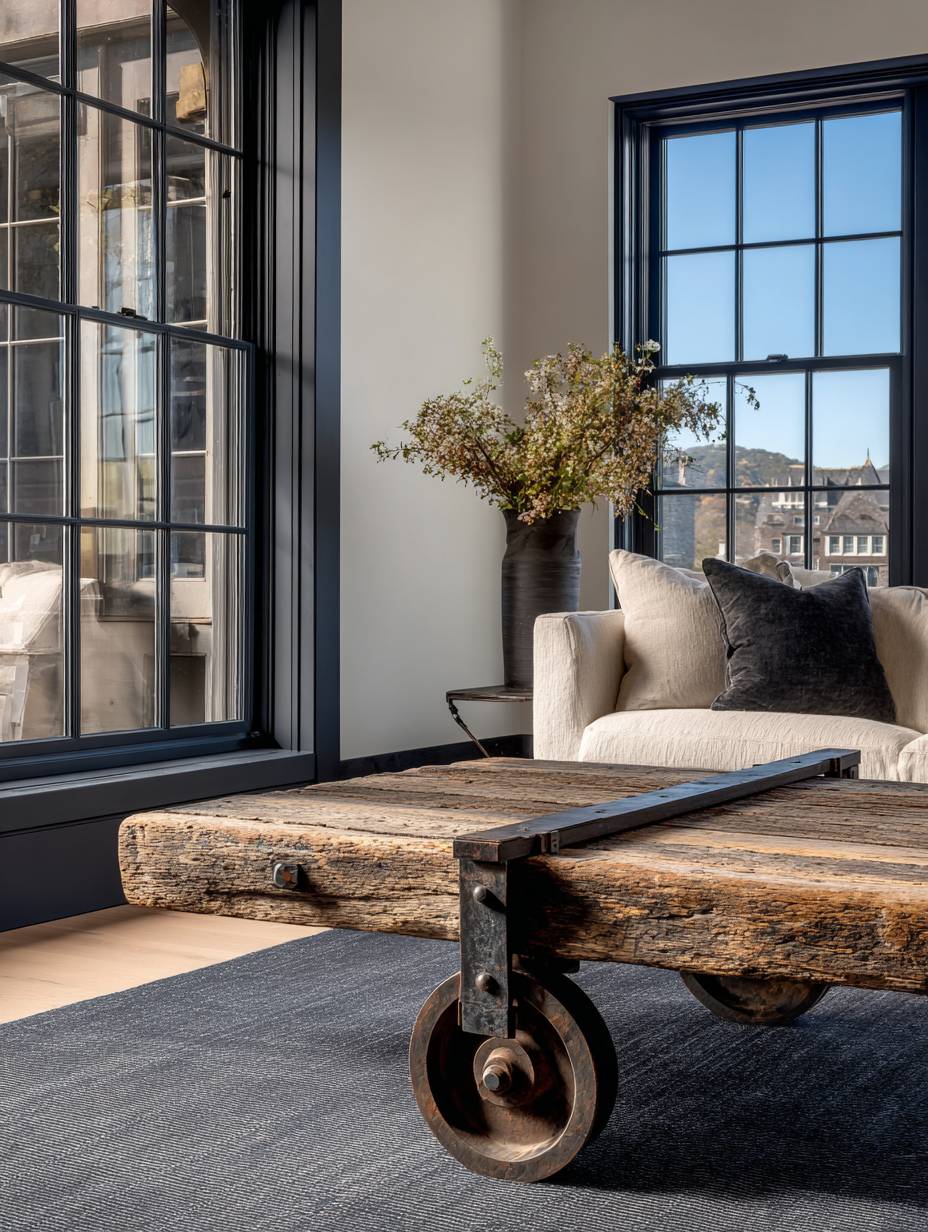
Sustainable design celebrates creative reuse, and a reclaimed barn door coffee table represents innovative upcycling at its finest. The repurposed sliding barn door hardware—complete with original weathered paint, rustic hardware, and the authentic wear patterns of decades of farm use—becomes the table’s distinctive top. The original weathered paint, whether showing fragments of red barn paint or layers of multiple colors applied over generations, creates an irreplaceable patina and historical narrative. The preserved rustic hardware, including the metal track, rollers, and handles, remains functional and decorative, celebrating the door’s original purpose while adapting it to new use.
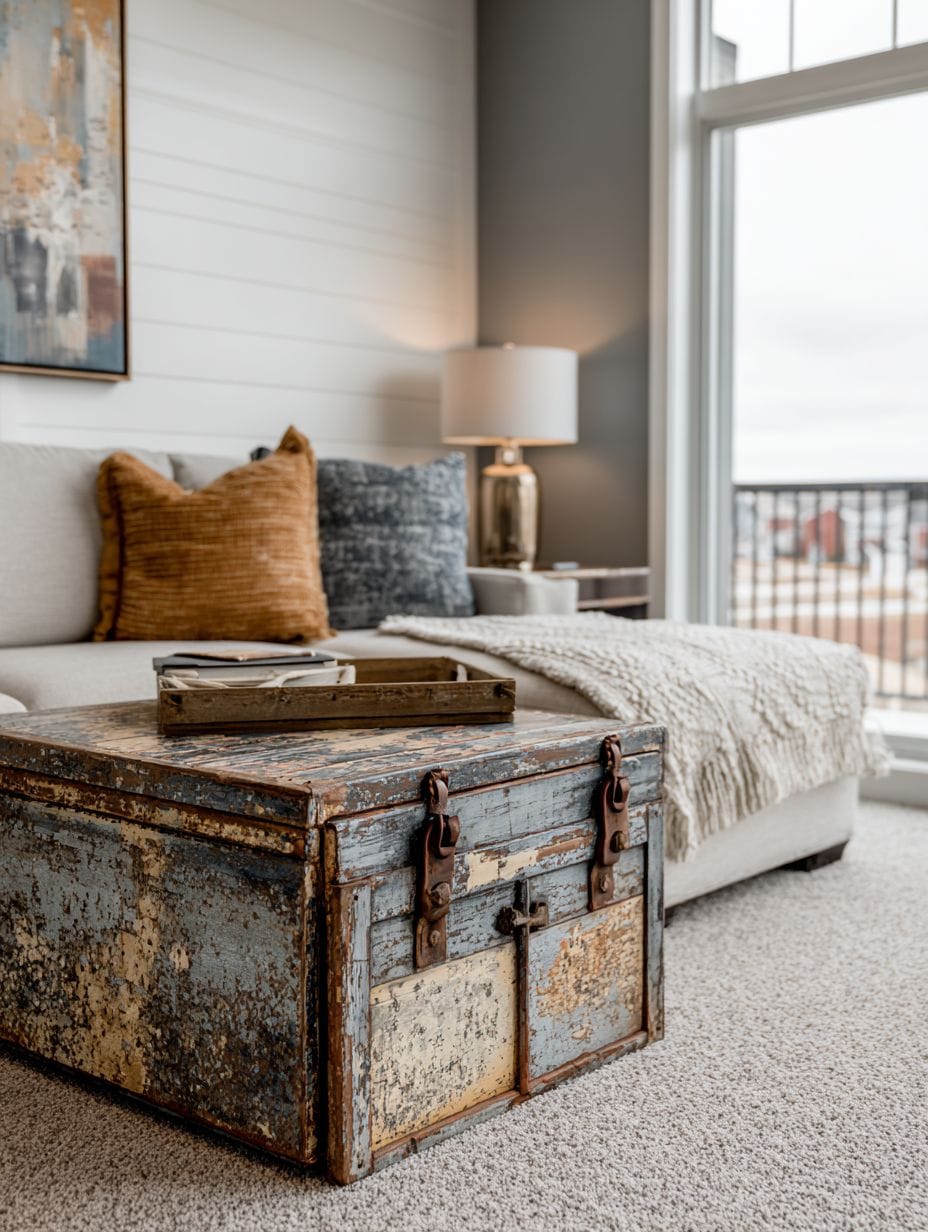
The new steel base, purposefully designed to support the repurposed door top, provides stable modern construction that ensures the table functions properly in contemporary settings. The industrial steel echoes the original barn hardware’s utilitarian aesthetic, creating material harmony between old and new elements. Positioned in a modern farmhouse living room with shiplap accent wall and a mix of vintage and contemporary pieces, this table becomes the conversation starter that embodies the room’s blend of old and new, rustic and refined.
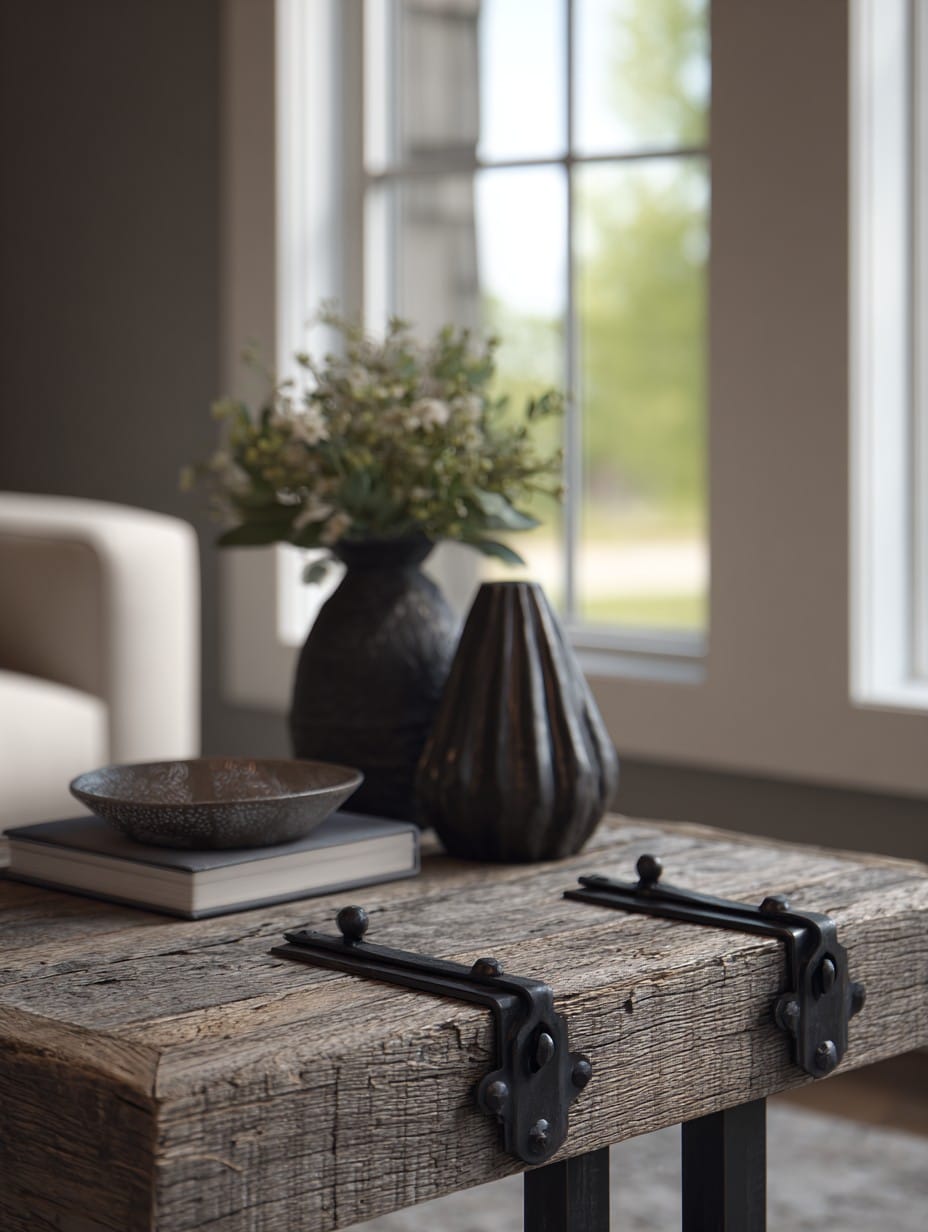
Natural window light highlights the authentic weathered finish, emphasizing every layer of old paint, every grain pattern in the aged wood, every ding and dent that maps the door’s original farm life. The preserved character marks aren’t flaws to be hidden but honored reminders of the piece’s history and previous function. This approach to design—valuing authenticity, history, and creative reuse over pristine newness—appeals to environmentally conscious homeowners who want their furniture choices to tell meaningful stories and minimize environmental impact through thoughtful upcycling.
Key Design Tips:
- Verify structural integrity of reclaimed doors before conversion to ensure safe, stable table construction
- Seal weathered surfaces appropriately to protect against flaking paint while preserving the authentic appearance
- Ensure the steel base is properly sized to support the door’s weight and dimensions without wobbling
- Preserve original hardware elements as decorative features that maintain connection to the door’s history
- Balance the rustic top with mix of contemporary and vintage furnishings to prevent the room from feeling too themed
Why These Stylish Coffee Table Designs Represent the Best in Contemporary Home Decor
The collection of stylish coffee table ideas presented here represents the breadth and depth of contemporary furniture design, encompassing traditional craftsmanship, innovative materials, sustainable practices, and multifunctional solutions that address real-world needs. Each design responds to specific lifestyle requirements, aesthetic preferences, and practical constraints that homeowners face when furnishing their living spaces. From space-saving nesting tables ideal for compact urban apartments to luxurious marble-topped statements perfect for formal entertaining spaces, these designs prove that the humble coffee table can be so much more than a simple surface for resting beverages.
The emphasis on authentic materials—whether natural wood showcasing distinctive grain patterns, genuine leather developing beautiful patina, or artisan-crafted elements like hand-woven rattan and hand-laid mosaic tiles—reflects growing consumer appreciation for quality, durability, and craftsmanship. In an era of disposable furniture and fast-fashion home décor, these coffee table designs champion pieces built to last generations, improving with age rather than simply wearing out. The natural materials central to many of these designs also support sustainable forestry practices, creative upcycling, and reduction of synthetic materials that contribute to environmental degradation. Choosing a reclaimed wood table, sustainably harvested mango wood piece, or vintage trunk repurposed as furniture represents conscious consumption that balances aesthetic desires with environmental responsibility.
The design diversity represented—from minimalist Scandinavian simplicity to maximalist bohemian richness, from industrial urban edge to coastal relaxed elegance—ensures that every homeowner can find inspiration regardless of their personal aesthetic preferences or existing décor. This variety celebrates individuality and rejects the notion that there’s a single “correct” way to design a living space. Whether you’re drawn to the clean geometry of contemporary design, the warm nostalgia of farmhouse style, the exotic influences of global bohemian aesthetics, or the timeless sophistication of traditional elegance, these coffee table ideas provide starting points for creating spaces that genuinely reflect your personality, values, and lifestyle rather than simply following trends or copying magazine spreads.
The functional innovations represented in these designs—hidden storage compartments, lift-top mechanisms, convertible height adjustments, nesting configurations—address the realities of modern living where spaces must work harder and furniture must serve multiple purposes. The small-space solutions like transparent acrylic tables that maintain visual flow, nesting tables that adapt to different needs, and compact ottomans that serve as seating, footrest, and table demonstrate that limited square footage doesn’t require sacrificing style or functionality. These intelligent design solutions prove that thoughtful furniture selection can make rooms feel larger, more organized, and more livable regardless of actual dimensions.
The material innovation evident in contemporary coffee table design—from concrete-and-oak combinations to resin river artistry, from high-gloss lacquered finishes to raw reclaimed wood—demonstrates how modern furniture makers push boundaries while respecting traditional techniques. These pieces celebrate both heritage craftsmanship passed down through generations and cutting-edge fabrication methods enabled by new materials and technologies. The result is furniture that feels simultaneously timeless and contemporary, honoring history while embracing innovation, respecting natural materials while exploring synthetic possibilities. This balance creates pieces that remain relevant through changing design trends rather than feeling dated within a few years.
Perhaps most importantly, these stylish coffee table ideas remind us that furniture should serve human needs—both practical and emotional. A coffee table anchors a living room, provides surface space for daily activities, offers storage solutions for modern clutter, and creates a visual centerpiece that sets the tone for the entire space. But beyond these functional roles, the right coffee table also sparks joy, starts conversations, tells stories, and makes a house feel like home. Whether it’s the warmth of natural wood grain, the coolness of marble, the transparency of glass, or the comfort of upholstered leather, the materials we choose surround ourselves with affect how we feel in our spaces. These designs prove that thoughtful furniture selection isn’t superficial or frivolous but essential to creating homes that support our well-being, reflect our identities, and enhance our daily lives through beauty, functionality, and authentic quality.
Conclusion
The journey through these twenty-five stylish coffee table ideas reveals the remarkable versatility and creative potential inherent in this essential piece of living room furniture. Whether you’re furnishing your first apartment, refreshing a tired living space, or designing your dream home from the ground up, the perfect coffee table awaits—one that balances your aesthetic preferences with practical needs, fits your available space without overwhelming it, and complements your existing furnishings while adding its own distinct personality. The key lies in understanding your specific requirements: Do you need hidden storage for a clutter-free appearance? Would a convertible table solve space constraints? Does your style lean toward natural materials and organic forms or sleek synthetics and geometric precision?
Remember that the best coffee table isn’t necessarily the most expensive or trendiest option but rather the one that serves your life, reflects your taste, and brings daily satisfaction through both function and beauty. Take time to measure your space carefully, consider traffic flow around the table, think about how you actually use your living room, and envision how different styles would integrate with your existing furnishings. Don’t rush the decision—this is furniture you’ll interact with daily, see from multiple angles, and depend on for years to come. Quality construction, authentic materials, and timeless design prove more valuable than following fleeting trends that may feel dated within a season or two.
We encourage you to use these ideas as springboards for your own creativity rather than rigid templates to follow exactly. Mix elements from different designs, adapt proportions to fit your unique space, select materials and finishes that resonate with your personal aesthetic, and don’t be afraid to make unconventional choices if they serve your needs and bring you joy. Your living room should tell your story, not copy someone else’s vision. With thoughtful consideration, careful selection, and perhaps a bit of creative courage, you can find or create the stylish coffee table that transforms your living space into a more beautiful, functional, and personally meaningful environment where life’s best moments—from quiet morning coffee to lively evening gatherings—unfold around this humble yet essential piece of furniture.
