
In an era where our homes are constantly filled with distractions and clutter, the minimalist living room has emerged as a sanctuary of calm and intentional design. The philosophy behind minimalism extends far beyond simply removing excess furniture—it’s about creating a space that breathes, functions beautifully, and allows you to focus on what truly matters. A well-designed minimalist living room combines clean lines, neutral palettes, and carefully curated pieces that serve both aesthetic and practical purposes, resulting in an environment that feels both spacious and inviting.
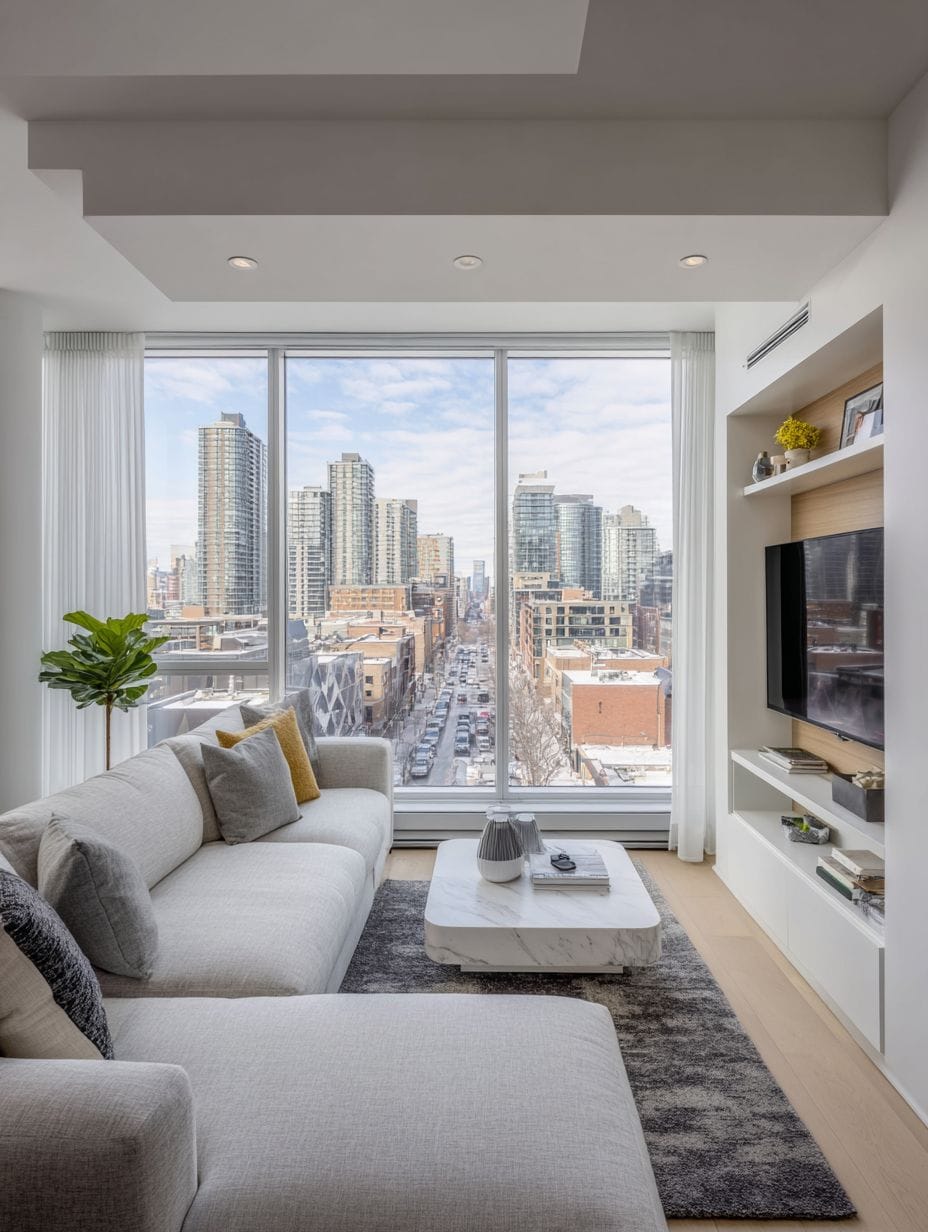
The beauty of minimalist design lies in its versatility and timeless appeal. Whether you’re working with a compact urban apartment or a sprawling suburban home, minimalist principles can transform your living space into a refined retreat that reflects modern sensibilities while maintaining warmth and personality. This approach to interior design emphasizes quality over quantity, encouraging homeowners to invest in fewer, better pieces that will stand the test of time both in durability and style.
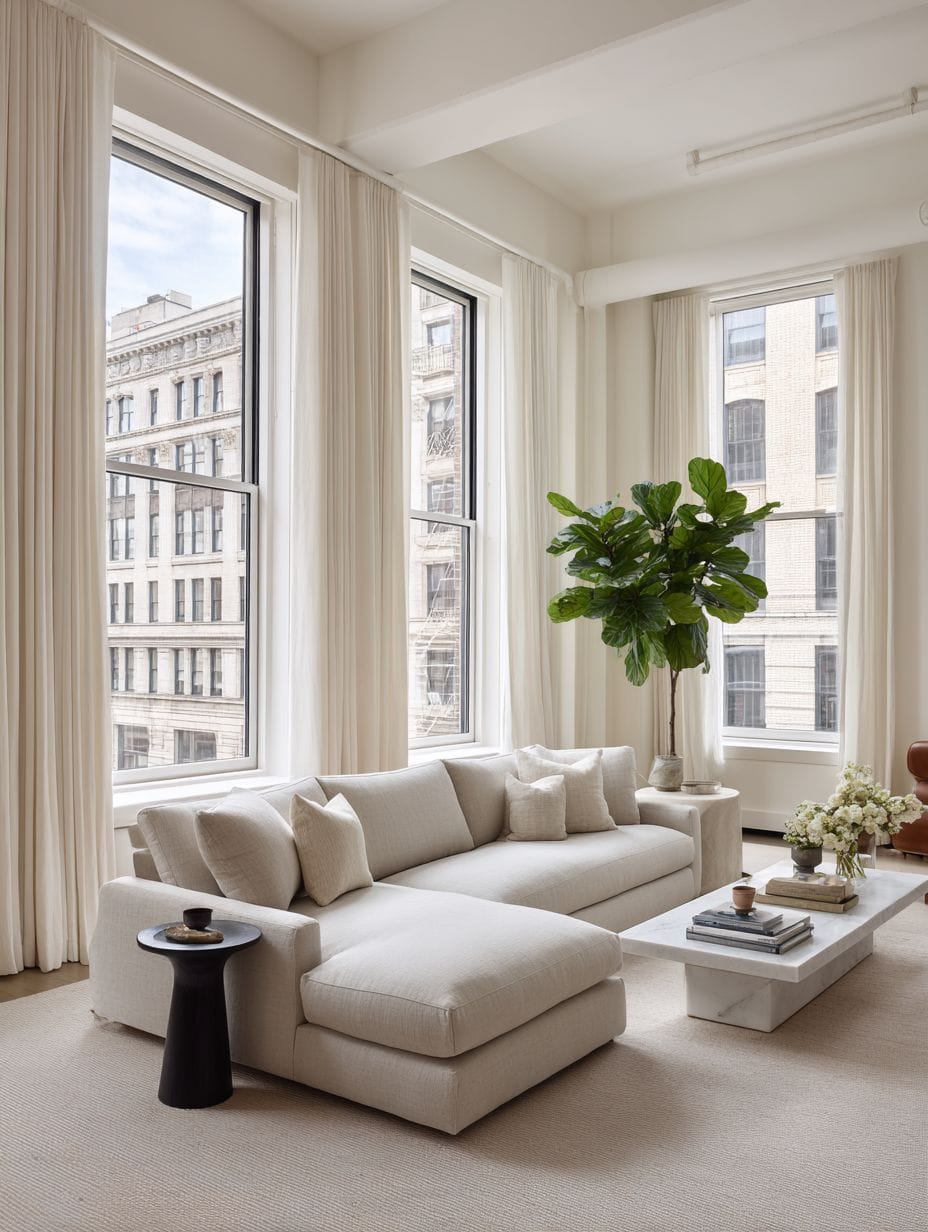
Throughout this comprehensive guide, we’ll explore twenty-one distinctive minimalist living room concepts that demonstrate the diverse interpretations of this design philosophy. From Scandinavian-inspired spaces with their characteristic coziness to industrial minimalism featuring raw materials, each concept offers unique insights into creating a living room that embodies simplicity without sacrificing comfort or character. You’ll discover practical strategies for maximizing space, incorporating natural light, selecting the right materials, and achieving that elusive balance between minimalism and livability that makes a house feel like a home.
1. Essential Minimalist Foundation with Floating Storage
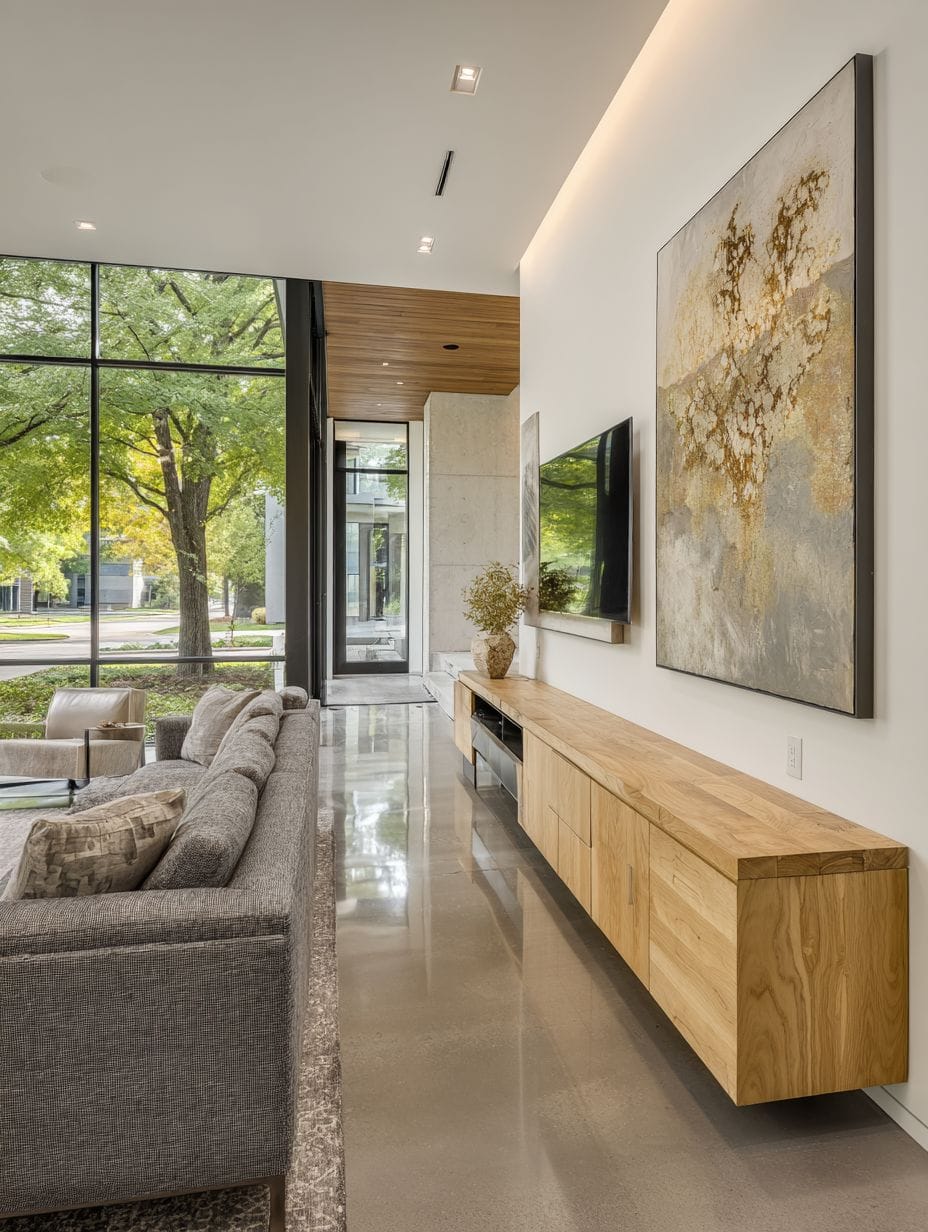
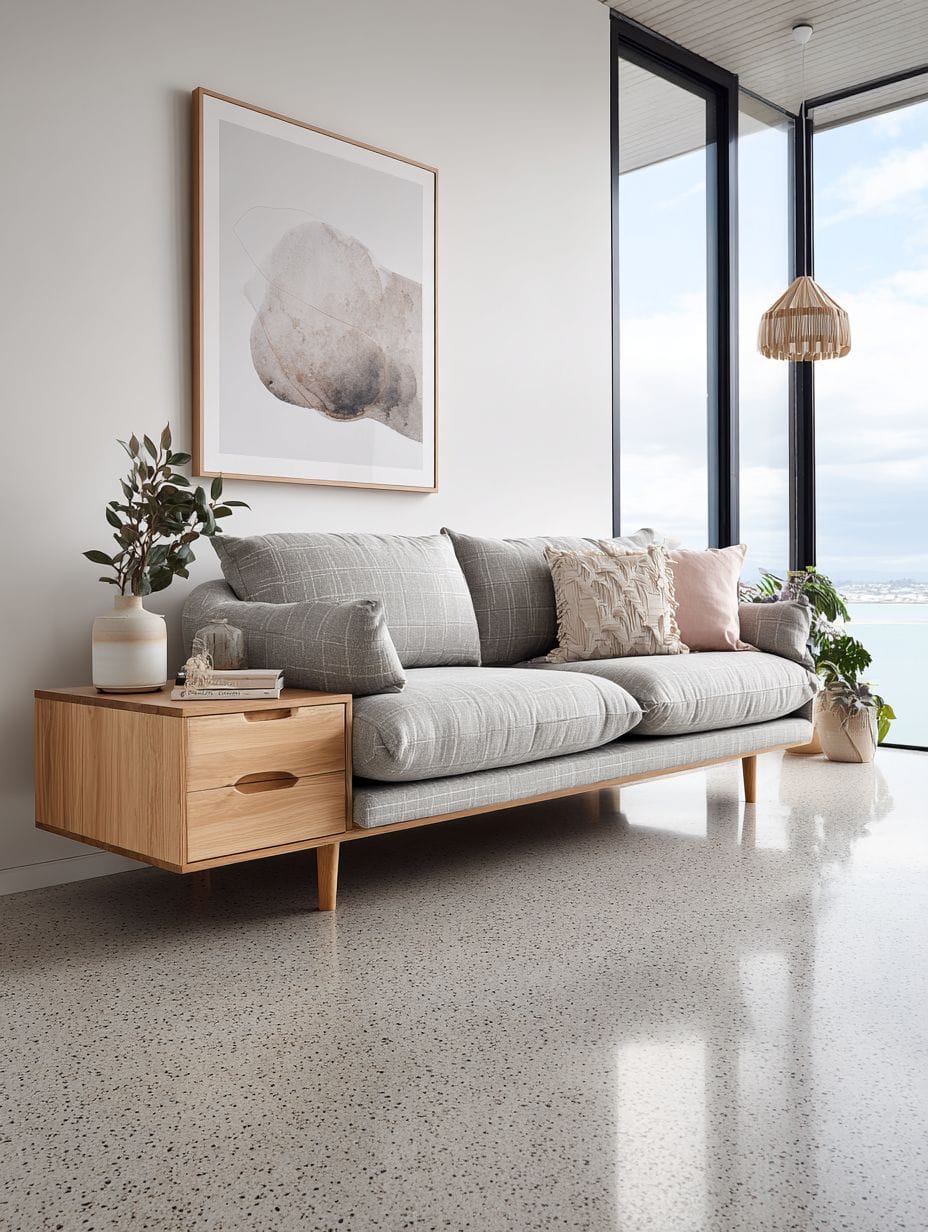
The cornerstone of successful minimalist living room design begins with establishing a strong foundation built around essential furniture pieces and intelligent storage solutions. This concept showcases a low-profile grey fabric sofa with impeccably clean lines positioned against a pristine white wall, creating an immediate sense of calm and order. The neutral color palette serves as a versatile backdrop that allows natural light to become a defining feature of the space, while the sofa’s understated design ensures it remains timeless rather than trendy.
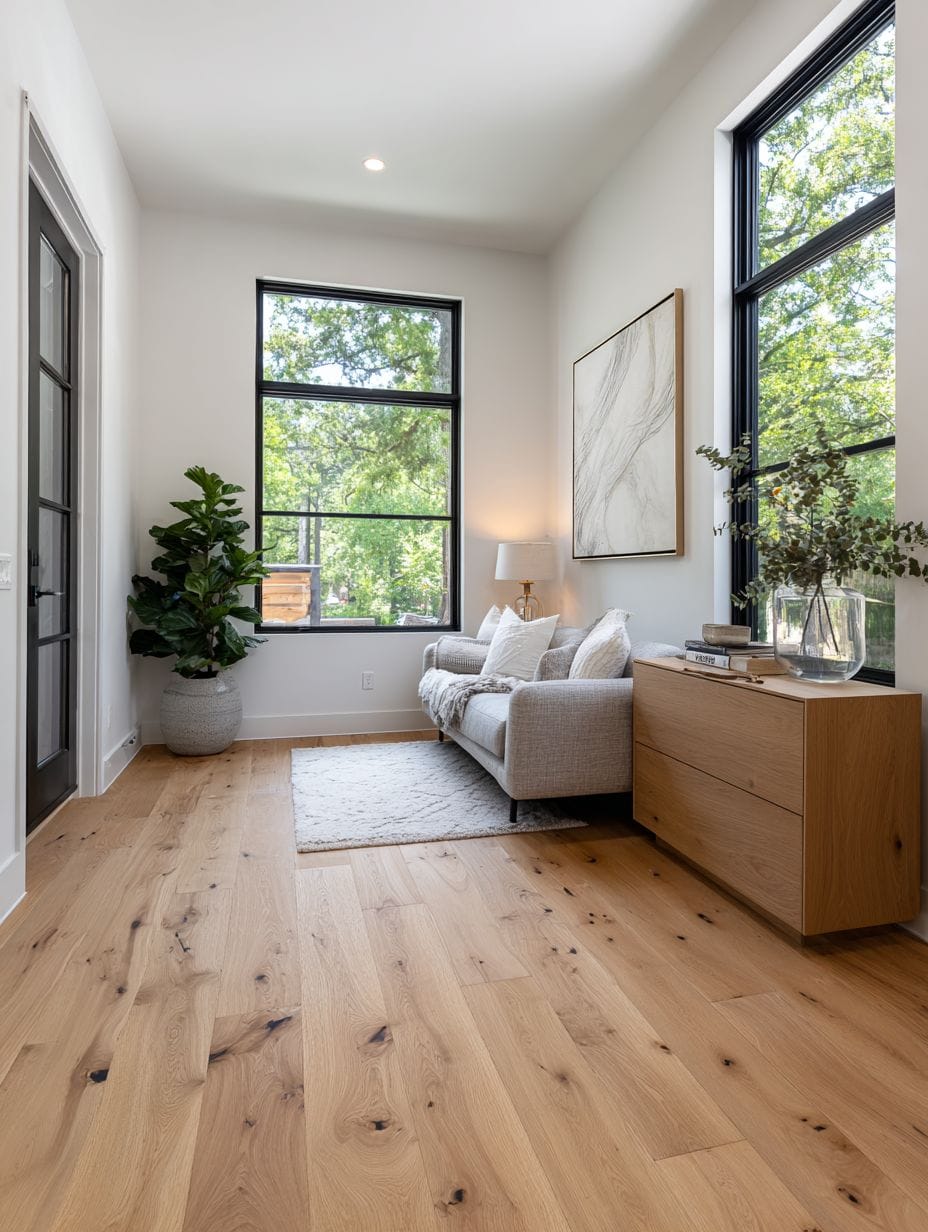
A natural oak floating media console demonstrates how functional storage can enhance rather than detract from minimalist aesthetics. The concealed cable management system keeps unsightly wires hidden, maintaining the room’s clean visual lines. Above the console, a single large-scale abstract artwork in muted tones provides a focal point without overwhelming the space, exemplifying the minimalist principle of selecting one impactful piece rather than multiple smaller decorations. The polished concrete floors reflect soft natural daylight streaming through floor-to-ceiling windows, amplifying the sense of spaciousness and connecting the interior to the outside world.
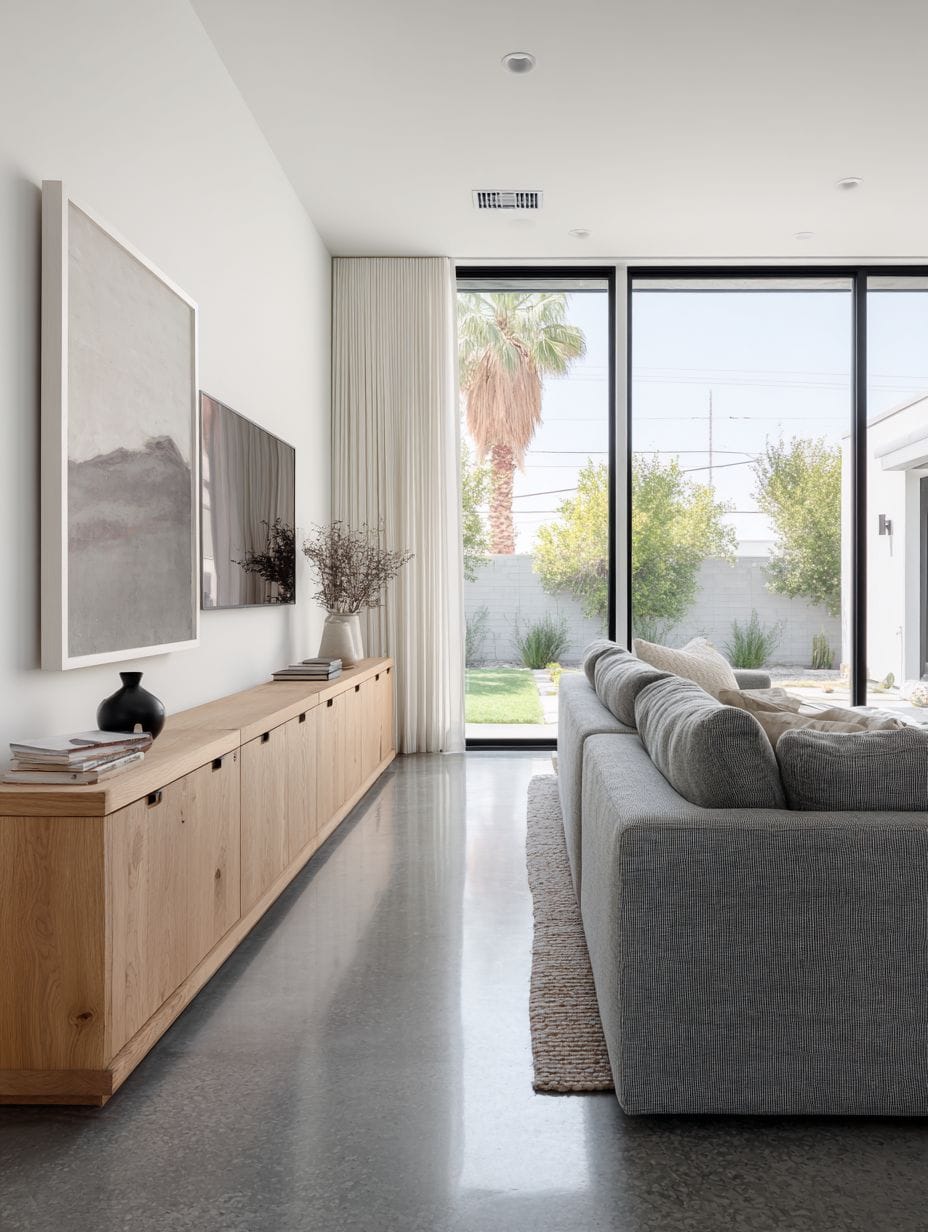
The intentional use of negative space in this design cannot be overstated—it’s what transforms a simply furnished room into a true minimalist sanctuary. Every element has been carefully considered and placed with purpose, from the exact positioning of the sofa to maximize natural light exposure to the height of the floating console that creates visual lightness by revealing floor space beneath. This approach to spatial planning demonstrates how restraint in decoration can actually make a room feel more luxurious and thoughtfully designed.
- Choose furniture with concealed storage to maintain clean lines while keeping everyday items accessible and organized
- Invest in a single statement artwork rather than multiple pieces to create a focal point without visual clutter
- Select low-profile furniture that doesn’t obstruct natural light flow or overwhelm the vertical space in the room
- Use floating or wall-mounted pieces to reveal floor space and create an airier, more spacious feeling
- Implement cable management systems from the design phase to avoid visible wires that disrupt the minimalist aesthetic
2. Modular Flexibility for Modern Living
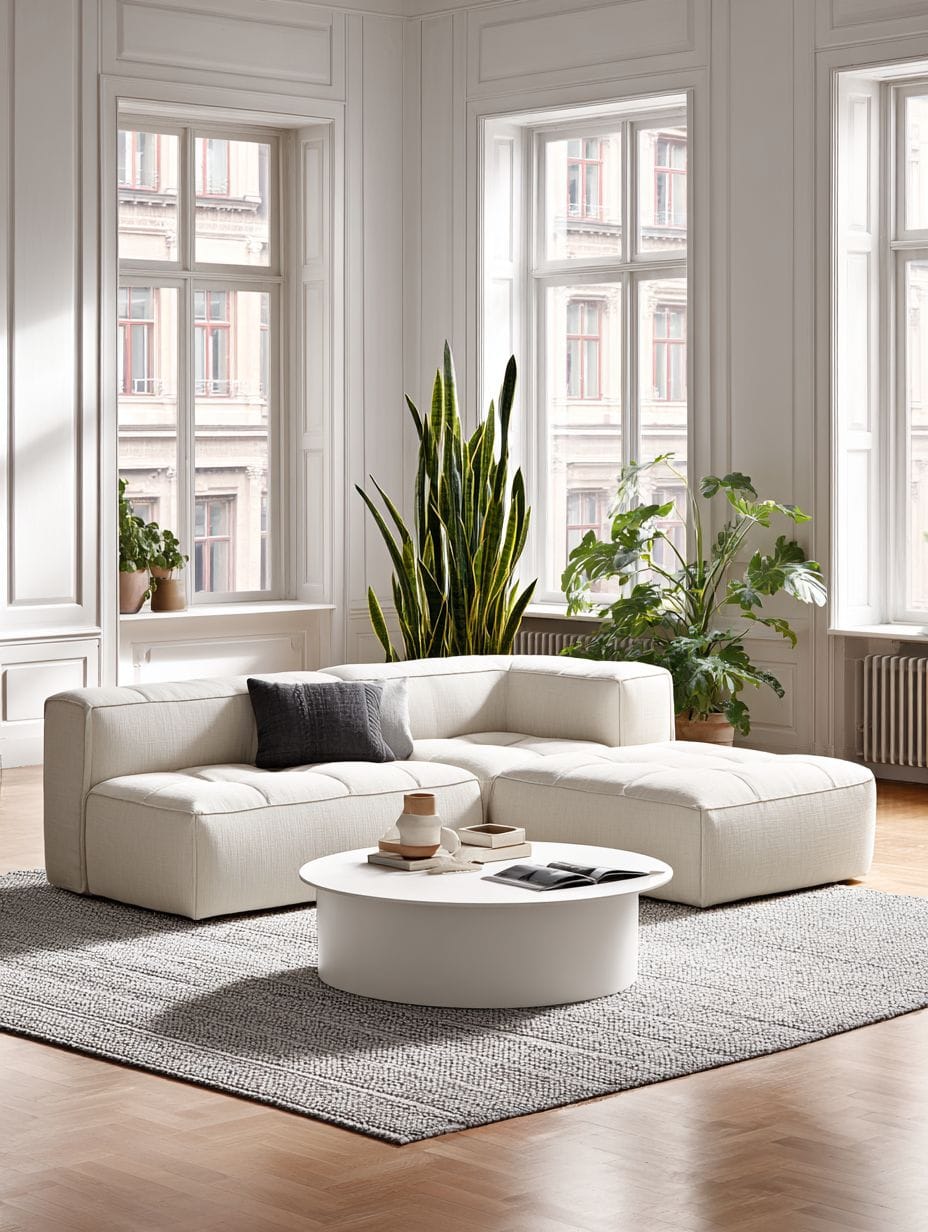
Adaptability emerges as a crucial consideration in contemporary minimalist design, particularly for those who value flexibility in their living spaces. This concept centers on a modular seating arrangement featuring cream linen sectional pieces that can be reconfigured to suit different occasions, from intimate gatherings to larger social events. The neutral cream tone provides warmth while maintaining the light, airy quality essential to minimalist interiors, and the natural linen fabric introduces subtle texture that prevents the space from feeling sterile or cold.
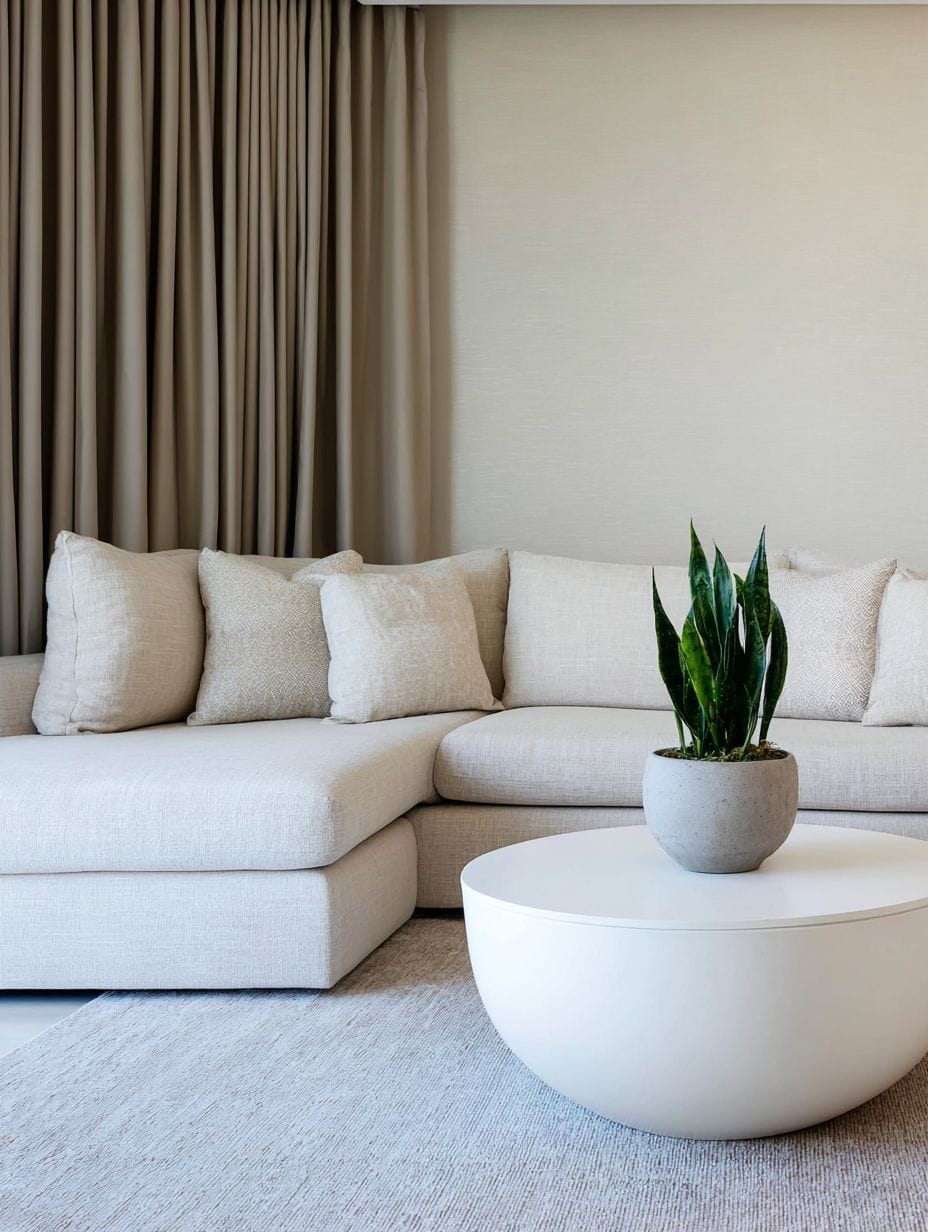
At the heart of the seating area sits a simple round white coffee table in matte finish, positioned on a textured wool area rug in pale grey. The circular shape of the table softens the angular lines of the modular seating while the matte finish prevents glare and maintains a sophisticated, understated appearance. The wool rug adds a crucial layer of warmth and comfort underfoot, demonstrating that minimalism doesn’t require sacrificing coziness. Its pale grey hue bridges the cream seating and white table, creating cohesion throughout the color scheme.
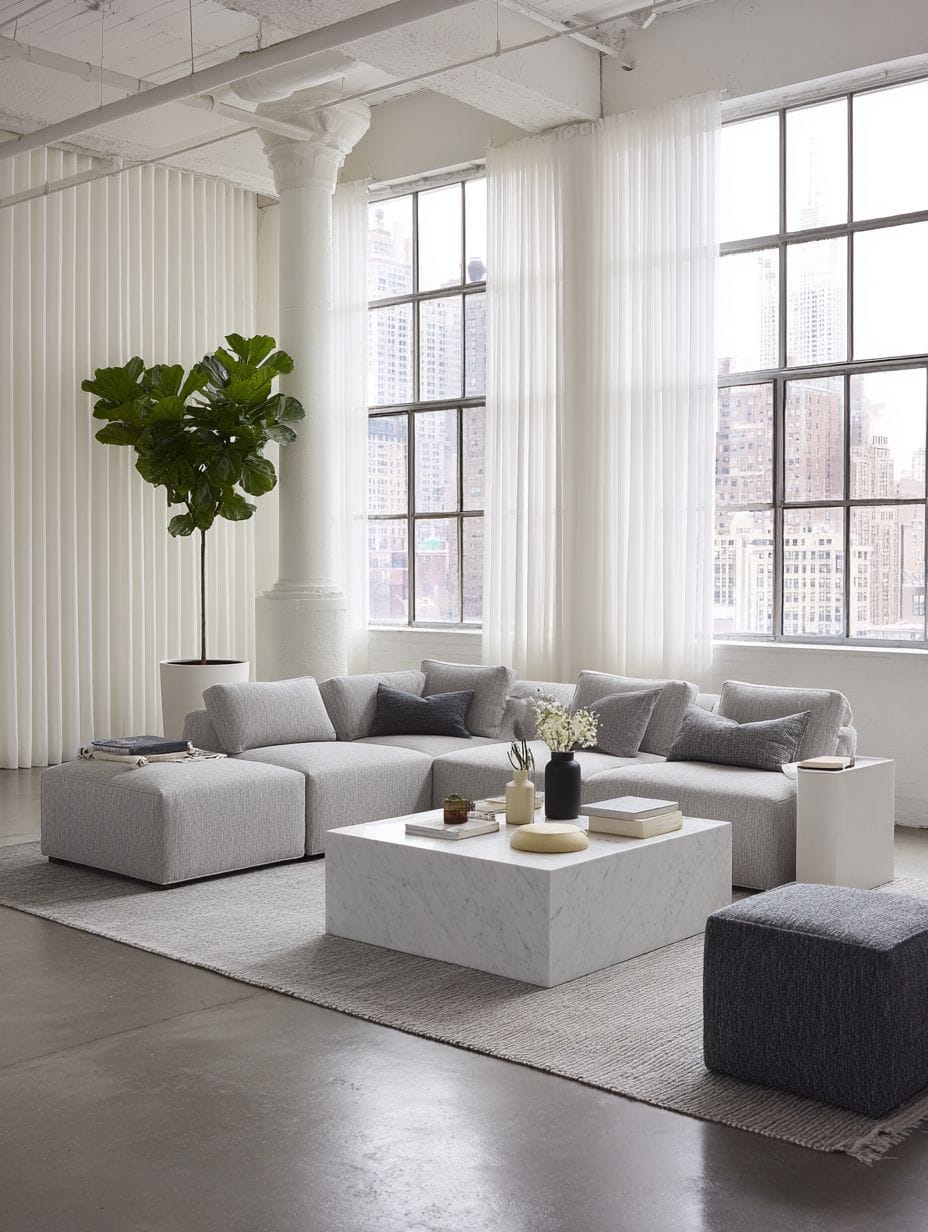
A single potted snake plant serves as the only decorative accent in the space, yet its presence is far from insignificant. The vertical lines of the snake plant’s leaves add architectural interest while bringing life and natural air-purifying qualities to the room. This exemplifies the minimalist approach of selecting each decorative element with intention, ensuring that every piece serves multiple purposes—aesthetic, functional, and environmental. The plant’s low-maintenance nature also aligns perfectly with the minimalist lifestyle that values simplicity in all aspects of daily living.
- Select modular furniture systems that can be rearranged to adapt to changing needs and different occasions
- Choose natural fabrics like linen for upholstery to add texture and warmth while maintaining a clean aesthetic
- Opt for round or curved furniture pieces to soften the overall look and improve traffic flow in the space
- Layer different textures in similar tones such as wool rugs with linen fabrics to create depth without introducing visual complexity
- Include one carefully chosen plant that requires minimal maintenance but provides maximum visual and environmental impact
3. Integrated Storage Solutions for Seamless Design
One of the greatest challenges in minimalist living room design is managing the practical storage needs of daily life while maintaining an uncluttered appearance. This concept addresses that challenge head-on with built-in white lacquered wall units featuring push-to-open doors that create a seamless, handleless appearance. The glossy white finish reflects light throughout the room while the floor-to-ceiling design maximizes vertical storage capacity without consuming valuable floor space. This approach transforms functional storage from a necessary compromise into an elegant architectural feature.
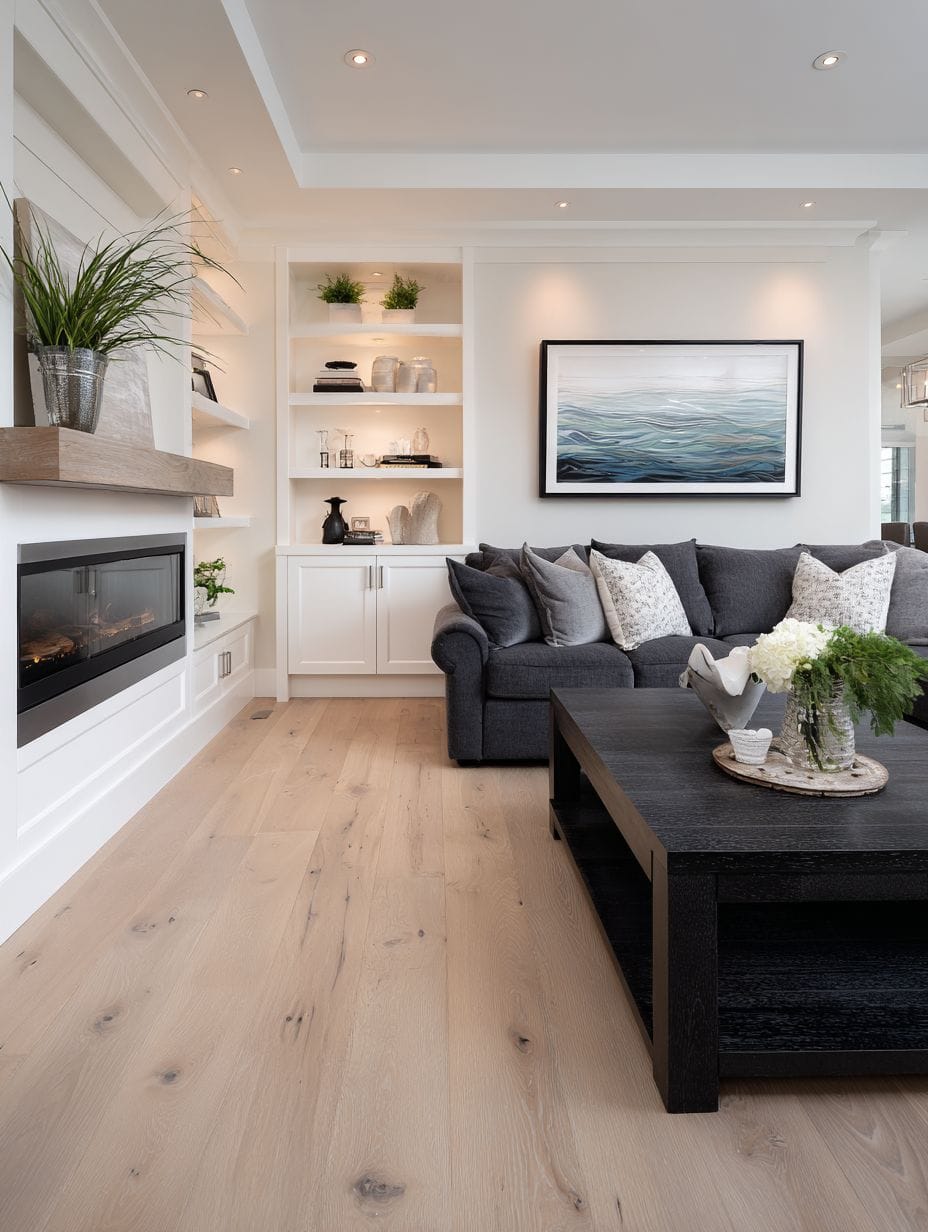
A streamlined charcoal grey sofa provides a sophisticated contrast to the white storage units, grounding the space with its deeper tone while maintaining the minimalist emphasis on clean lines and simple forms. The sofa faces a recessed electric fireplace with a simple white surround, offering ambiance and warmth without the visual complexity of a traditional fireplace with mantel and decorative elements. The recessed installation keeps the wall plane smooth and uninterrupted, preserving the room’s serene, uncluttered character even while incorporating this cozy feature.
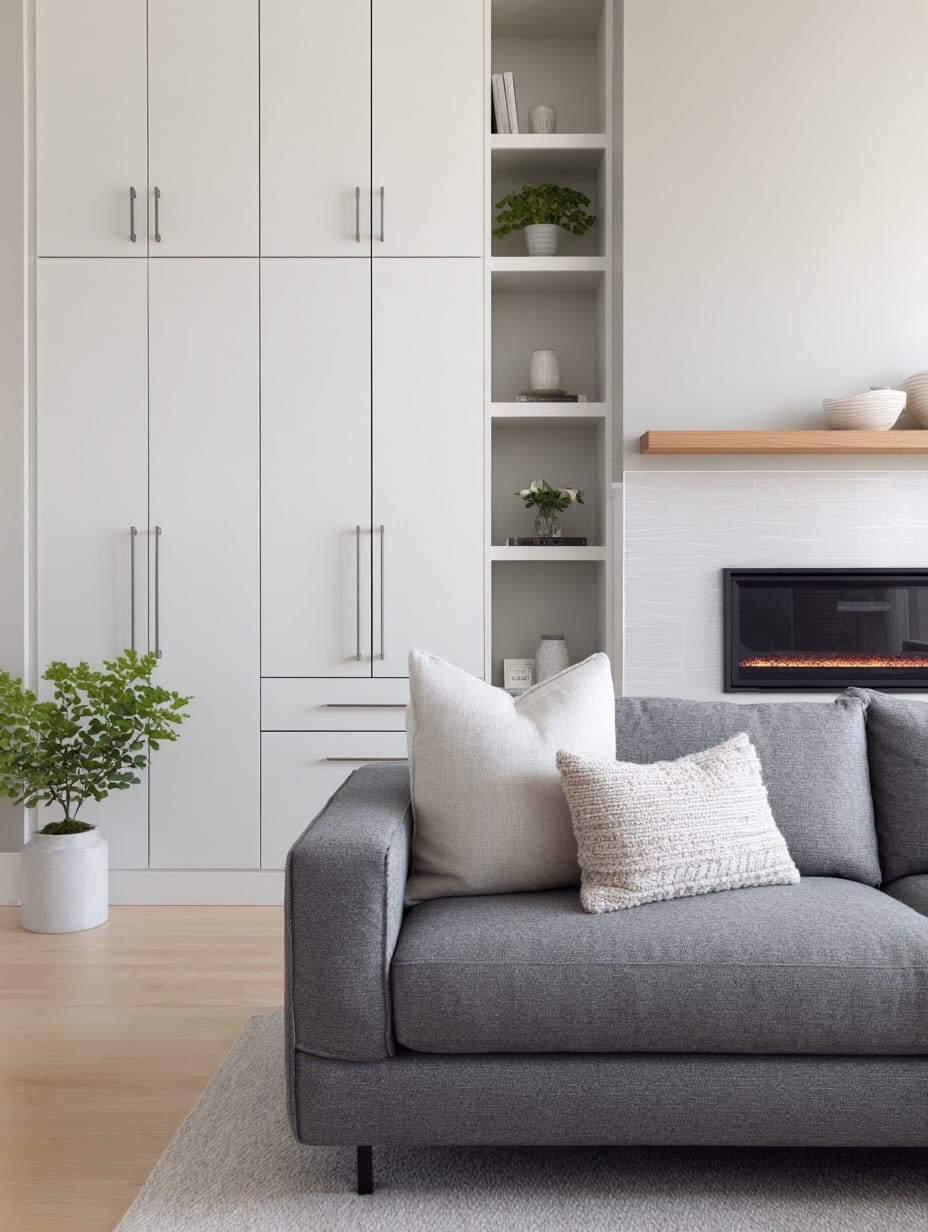
Light oak hardwood floors complement the neutral scheme while introducing natural warmth through their golden undertones and visible grain patterns. The wood flooring serves as a reminder that minimalism embraces natural materials and their inherent beauty rather than rejecting all ornamentation. The floors’ natural variations in tone and texture provide visual interest at the foundation level, allowing the walls and furniture to remain simple and unadorned. This strategic distribution of visual interest prevents the space from feeling bland while maintaining minimalist restraint.
- Install floor-to-ceiling storage to maximize capacity while maintaining a built-in, architectural appearance
- Choose push-to-open mechanisms instead of visible handles to create seamless, uninterrupted surfaces
- Use recessed installations for features like fireplaces or entertainment systems to keep wall surfaces flush and clean
- Select one piece in a contrasting tone like a darker sofa to anchor the space and prevent a washed-out appearance
- Incorporate natural wood flooring to add warmth and organic texture at the foundational level of the design
4. Monochromatic White Serenity
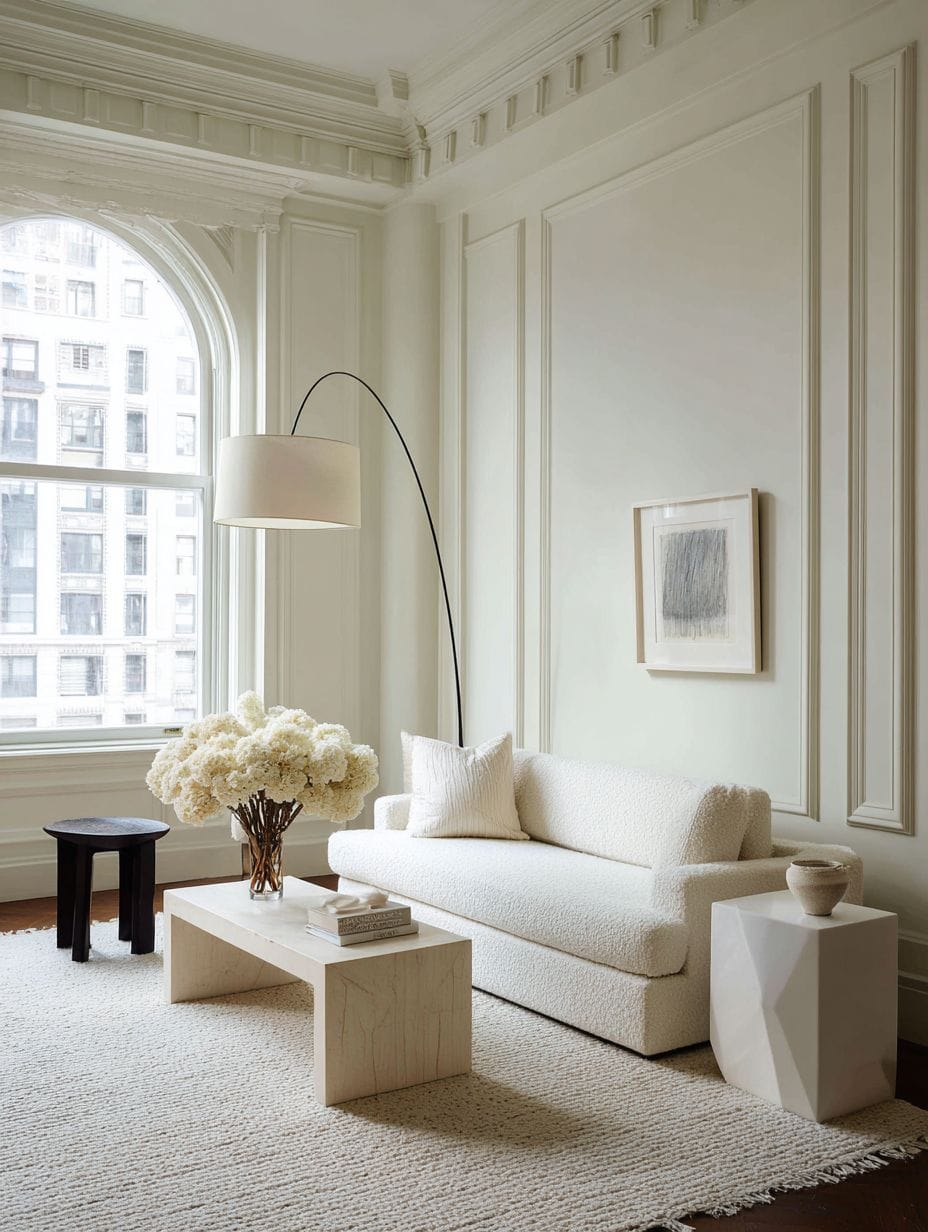
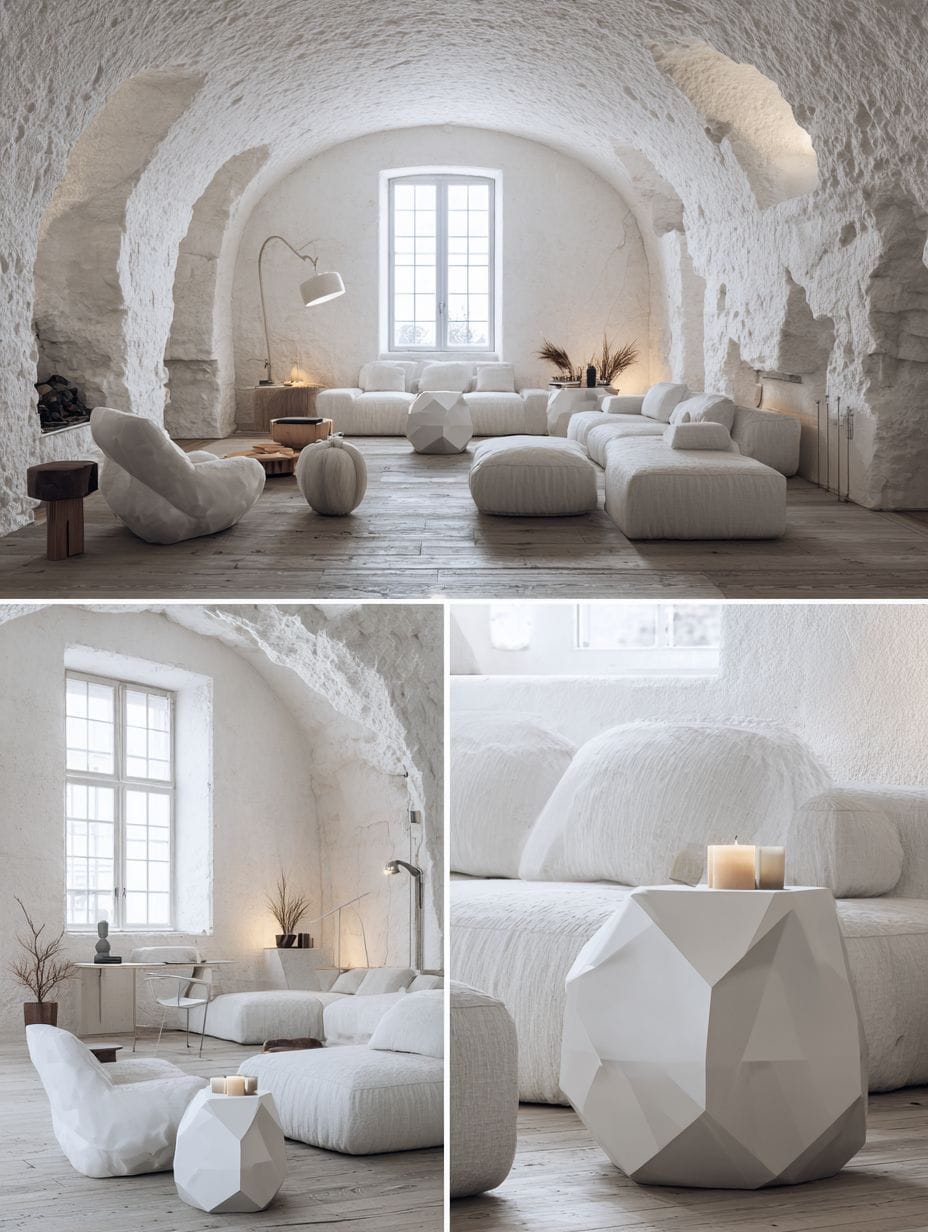
For those seeking the ultimate expression of minimalist tranquility, a monochromatic white scheme offers unparalleled serenity and spatial expansiveness. This concept demonstrates how a completely white palette can create visual interest through the layering of different textures and materials rather than through color variation. A low white platform sofa anchors the space with its horizontal emphasis, while its platform design creates a floating appearance that enhances the room’s airy quality. The sofa’s low profile also maximizes the perception of ceiling height, making the room feel more spacious.
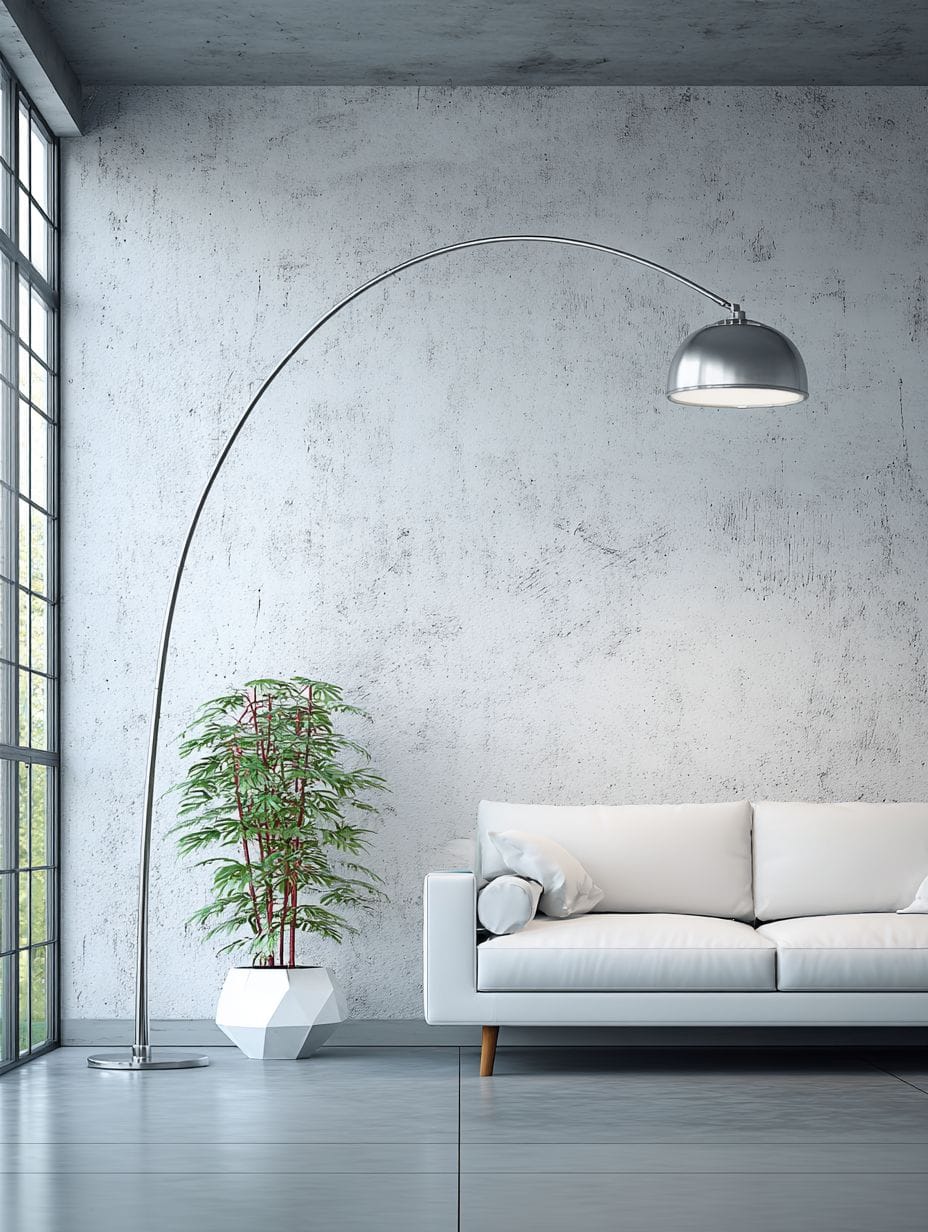
A geometric white side table and single arc floor lamp in brushed steel provide the only variations from the white scheme, with the lamp’s metallic finish introducing a subtle reflective quality that catches and disperses light throughout the space. The arc design of the floor lamp is particularly well-suited to minimalist interiors because it provides overhead lighting without requiring ceiling installation, maintaining the ceiling’s clean, uninterrupted appearance. The geometric side table’s angular form contrasts with the sofa’s softer cushions, creating visual interest through shape rather than color.
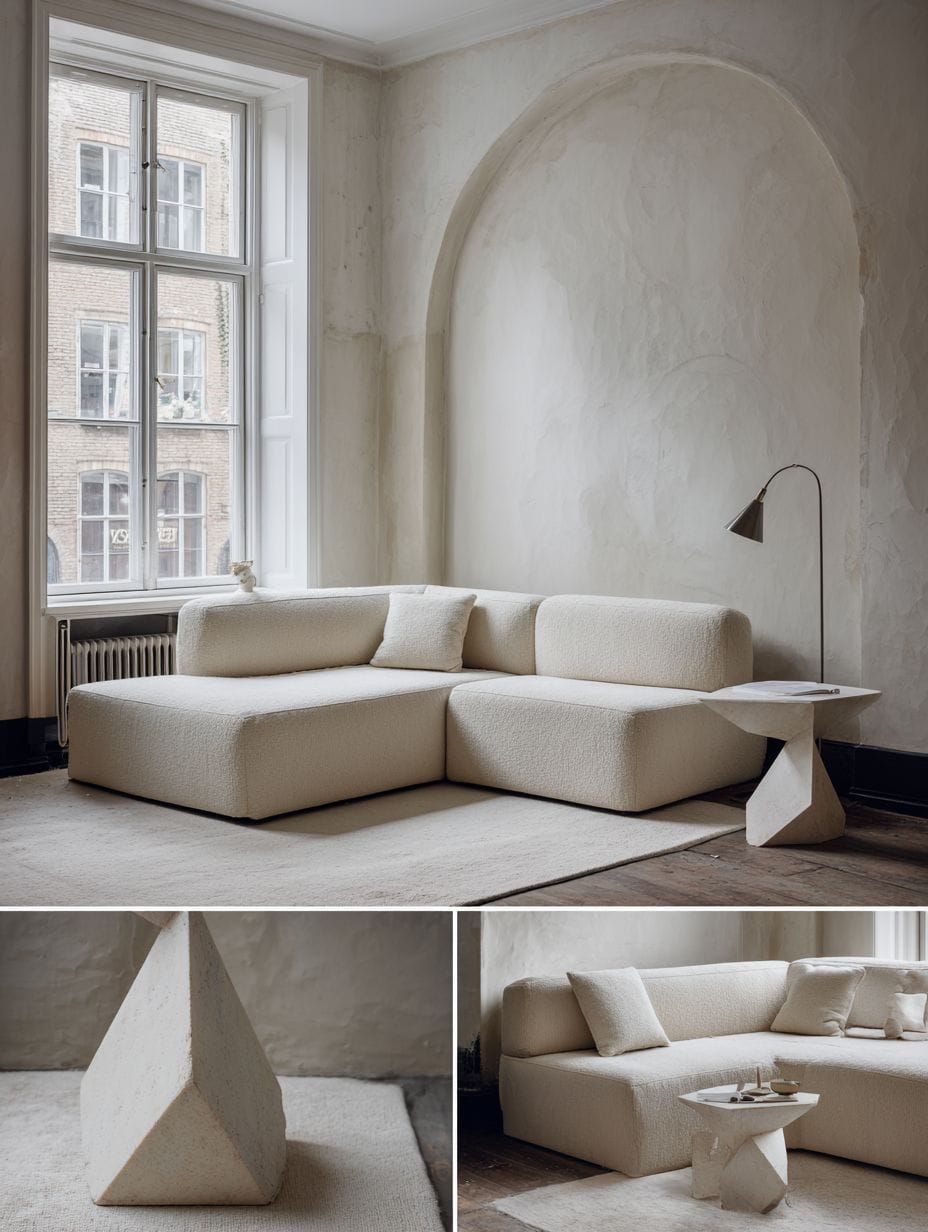
The walls feature subtle white plaster texture that becomes visible as natural light moves across the surface throughout the day, transforming what could be a flat, lifeless finish into a dynamic element that responds to changing light conditions. This attention to surface texture demonstrates that successful monochromatic design requires heightened awareness of materials and their interaction with light. The varying sheens, from matte to semi-gloss, create depth and prevent the all-white scheme from appearing flat or sterile, proving that minimalism can be both visually interesting and emotionally calming.
- Layer different white tones and textures including matte, semi-gloss, and textured finishes to create depth in monochromatic schemes
- Use platform or floating furniture to maintain visual lightness and maximize the perception of floor space
- Select one metallic accent in brushed or matte finish to add subtle contrast without disrupting the color scheme
- Choose textured wall finishes that interact with natural light to prevent flat, sterile appearances in all-white rooms
- Prioritize architectural lighting solutions like arc floor lamps that provide functional lighting without requiring ceiling installations
5. Japanese-Inspired Zen Minimalism
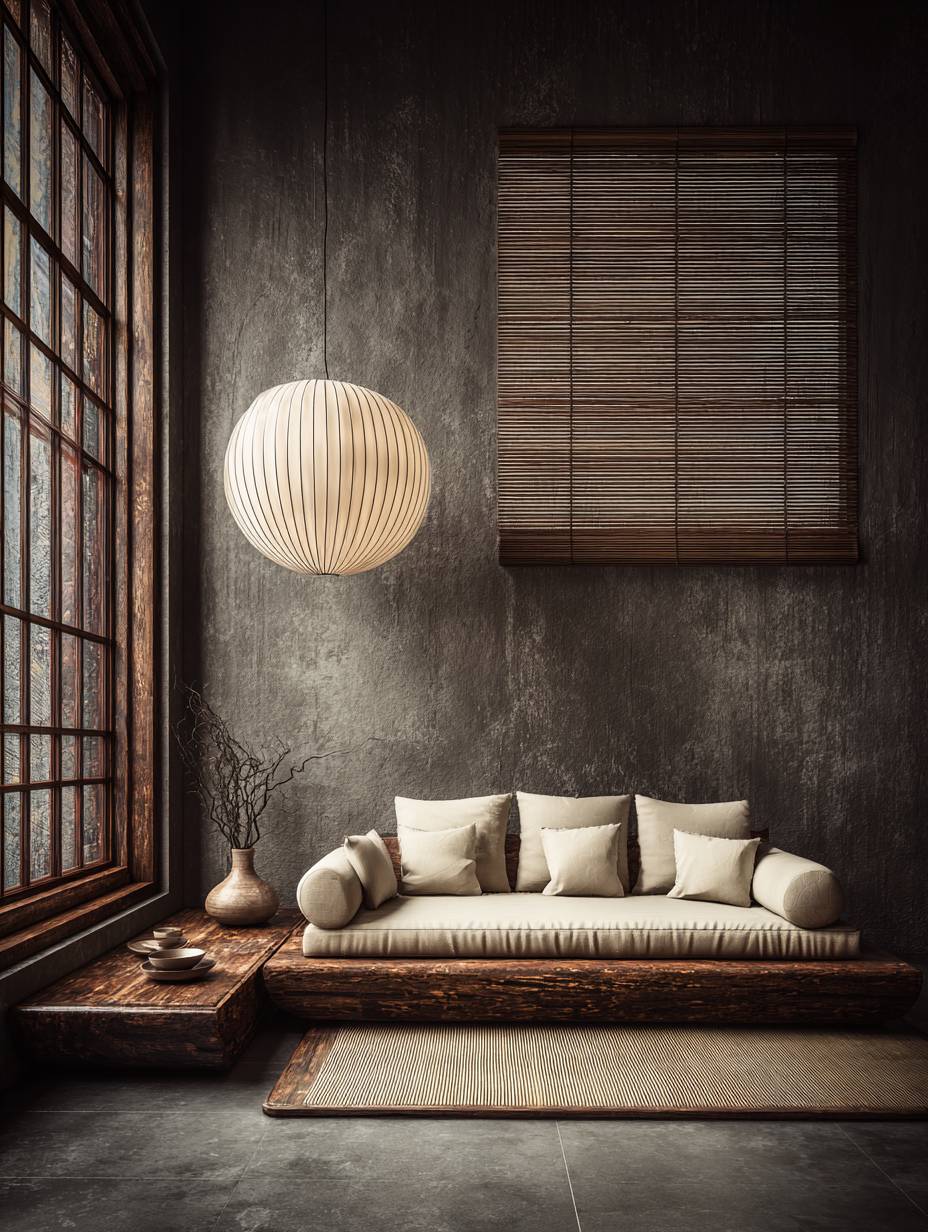
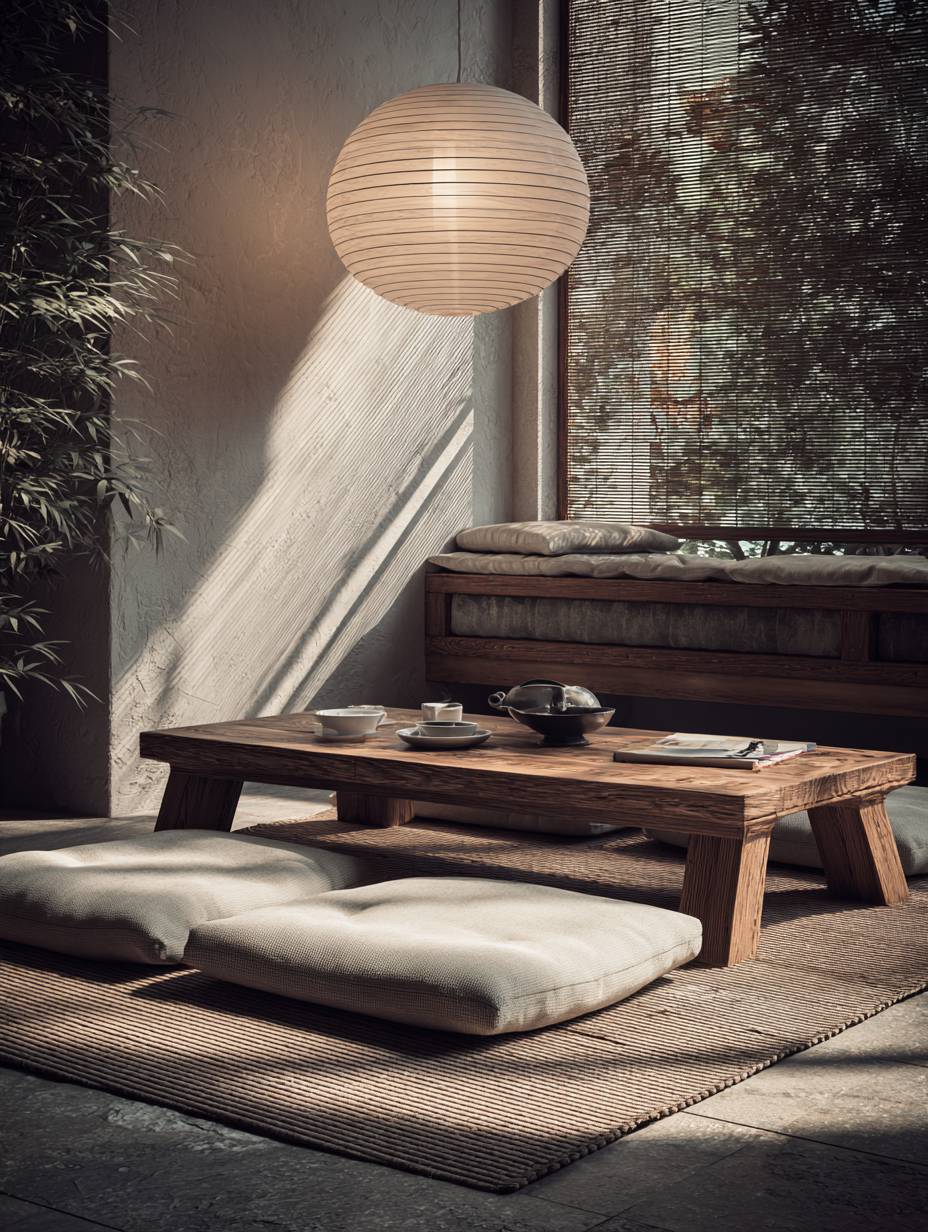
The intersection of Japanese design principles and Western minimalism creates living spaces of profound tranquility and purposeful simplicity. This concept features low wooden bench seating in natural finish with simple cotton cushions in off-white, embodying the Japanese aesthetic of bringing nature indoors through unprocessed materials. The low seating arrangement encourages a different perspective on the space, literally lowering the eye level and creating a more grounded, meditative relationship with the room. The natural wood finish celebrates the material’s inherent beauty, with visible grain patterns and natural color variations providing all the decoration needed.
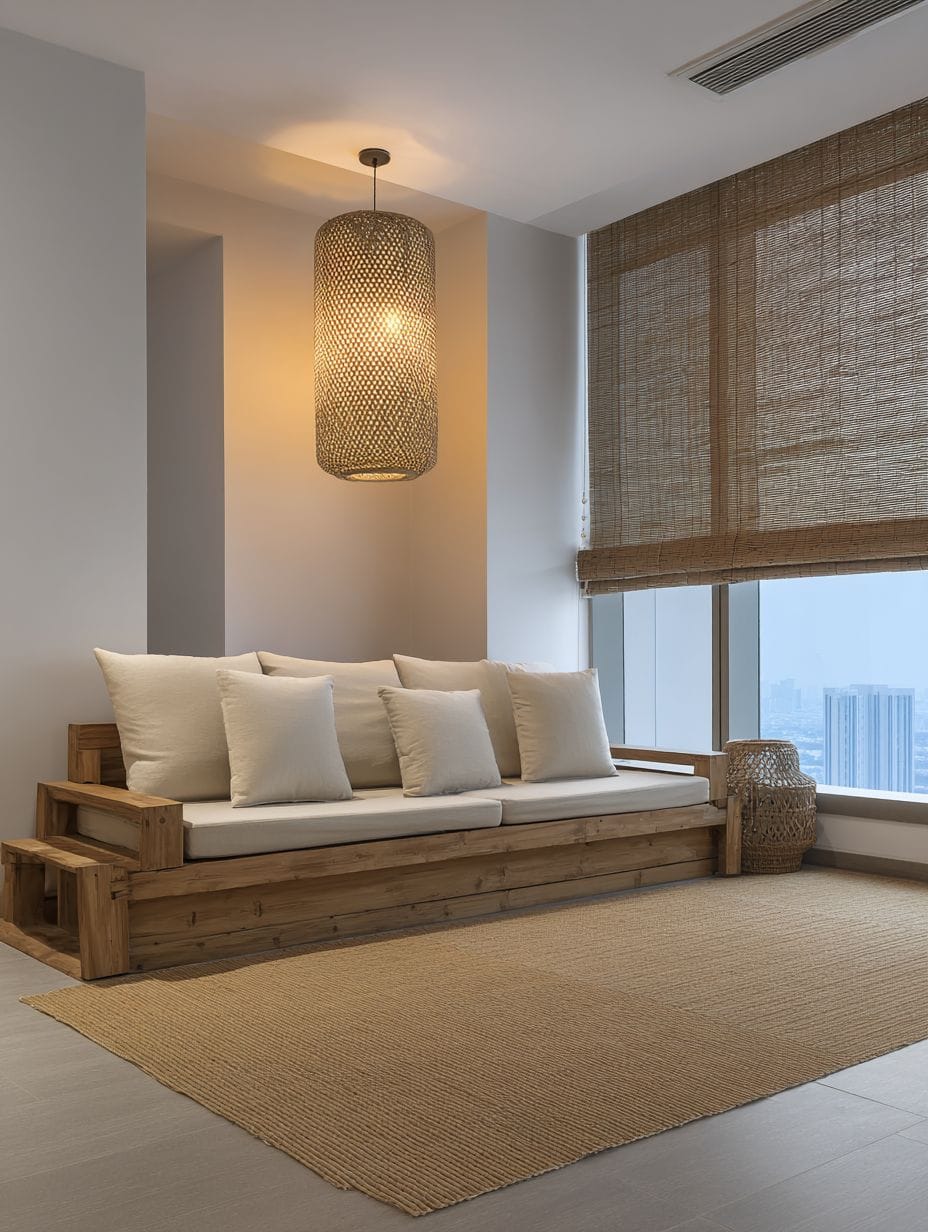
A tatami-style mat defines the seating area, introducing the traditional Japanese flooring material that provides both comfort and cultural authenticity to the design. The tatami’s woven texture adds visual and tactile interest while its natural straw composition contributes to the room’s organic, earthy character. Above the seating area, a paper lantern pendant provides soft, diffused ambient lighting that filters through the paper to create a warm, gentle glow without harsh shadows. This lighting approach exemplifies the Japanese concept of indirect illumination that creates atmosphere rather than simply providing visibility.
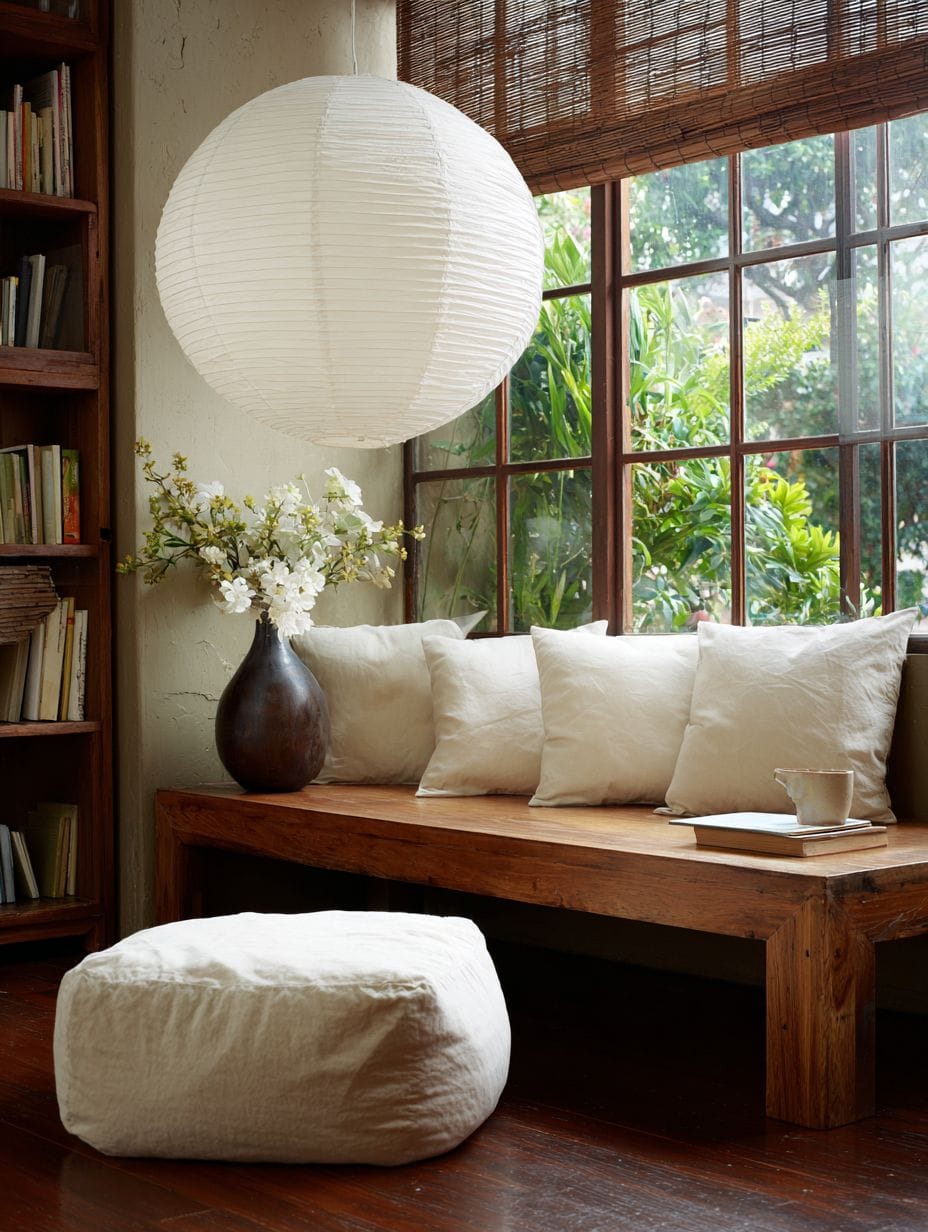
A large window with a bamboo shade allows filtered natural light to enter the space, creating gentle patterns that shift throughout the day and connect the interior to natural cycles. The bamboo material echoes the natural wood of the bench seating, creating material continuity throughout the design. This zen-like approach demonstrates that minimalism reaches its highest expression when it facilitates a connection to nature and encourages mindful presence. The space invites contemplation and calm, proving that minimalist living rooms can serve as sanctuaries from the hectic pace of modern life.
- Incorporate low seating arrangements to create a more grounded, meditative relationship with the space
- Choose natural, unprocessed materials like raw wood and woven fibers to bring organic warmth to minimalist interiors
- Use paper or fabric lighting fixtures that diffuse light softly rather than creating harsh, direct illumination
- Install window treatments that filter rather than block natural light to maintain connection with outdoor conditions
- Define zones with natural floor coverings like tatami or sisal to add texture while maintaining a neutral palette
6. Scandinavian Warmth and Simplicity
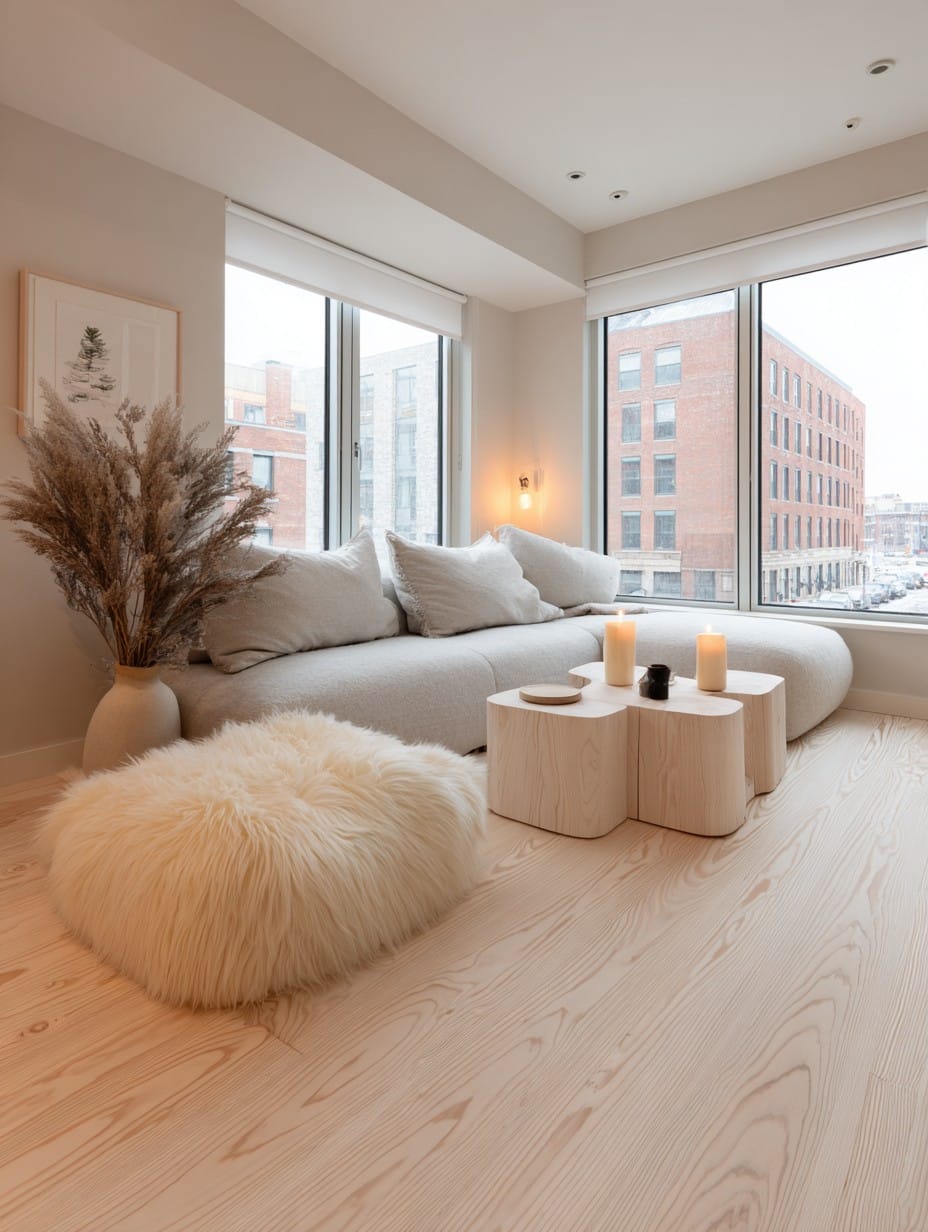
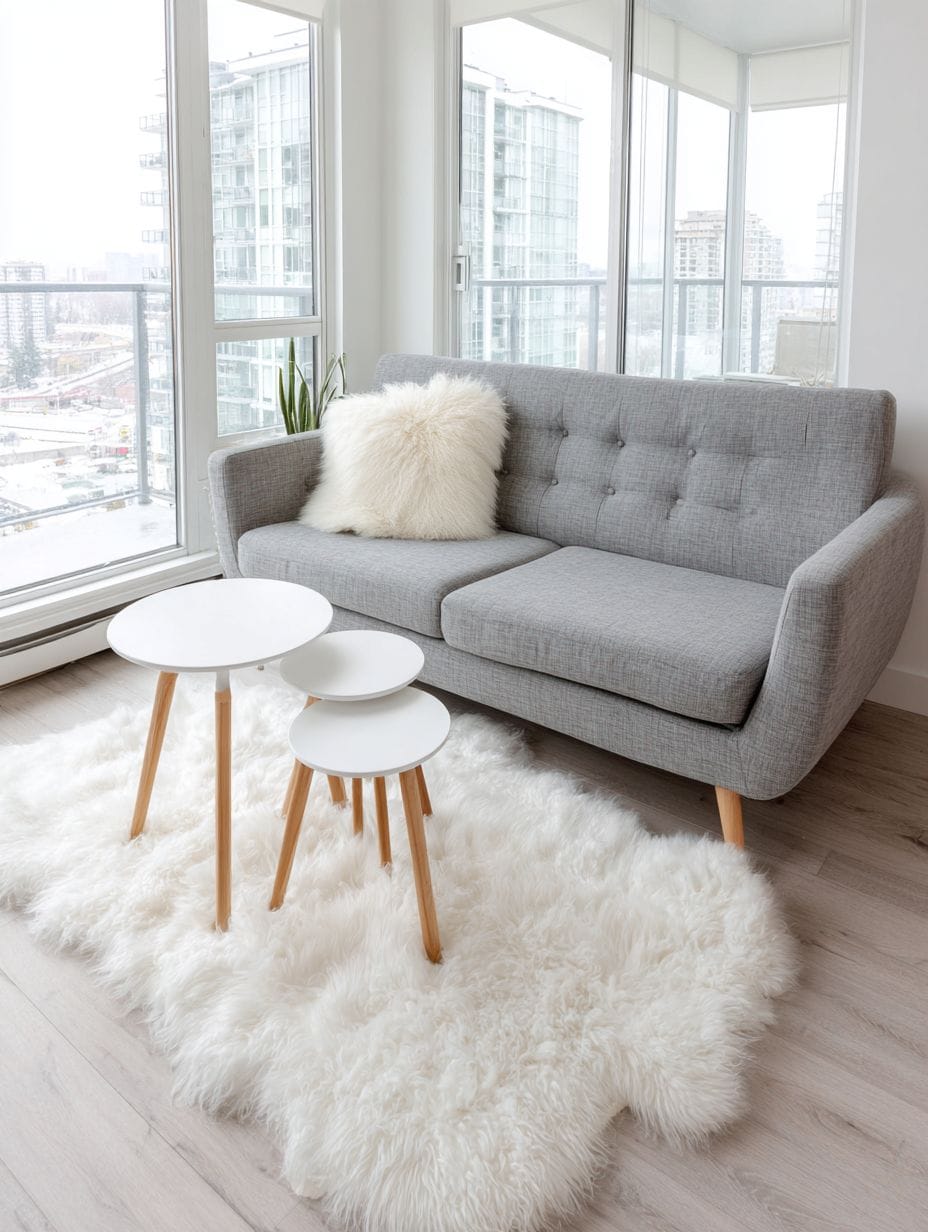
Scandinavian design has long championed the principle that minimalism need not be cold or unwelcoming, and this concept beautifully illustrates that philosophy. A light grey wool sofa serves as the room’s centerpiece, its soft texture and neutral tone creating an inviting foundation for the space. The addition of a single sheepskin throw introduces natural luxury and tactile appeal, demonstrating the Scandinavian approach of incorporating cozy elements that enhance comfort without creating visual clutter. The sheepskin’s organic shape and natural texture prevent the space from feeling too controlled or rigid.
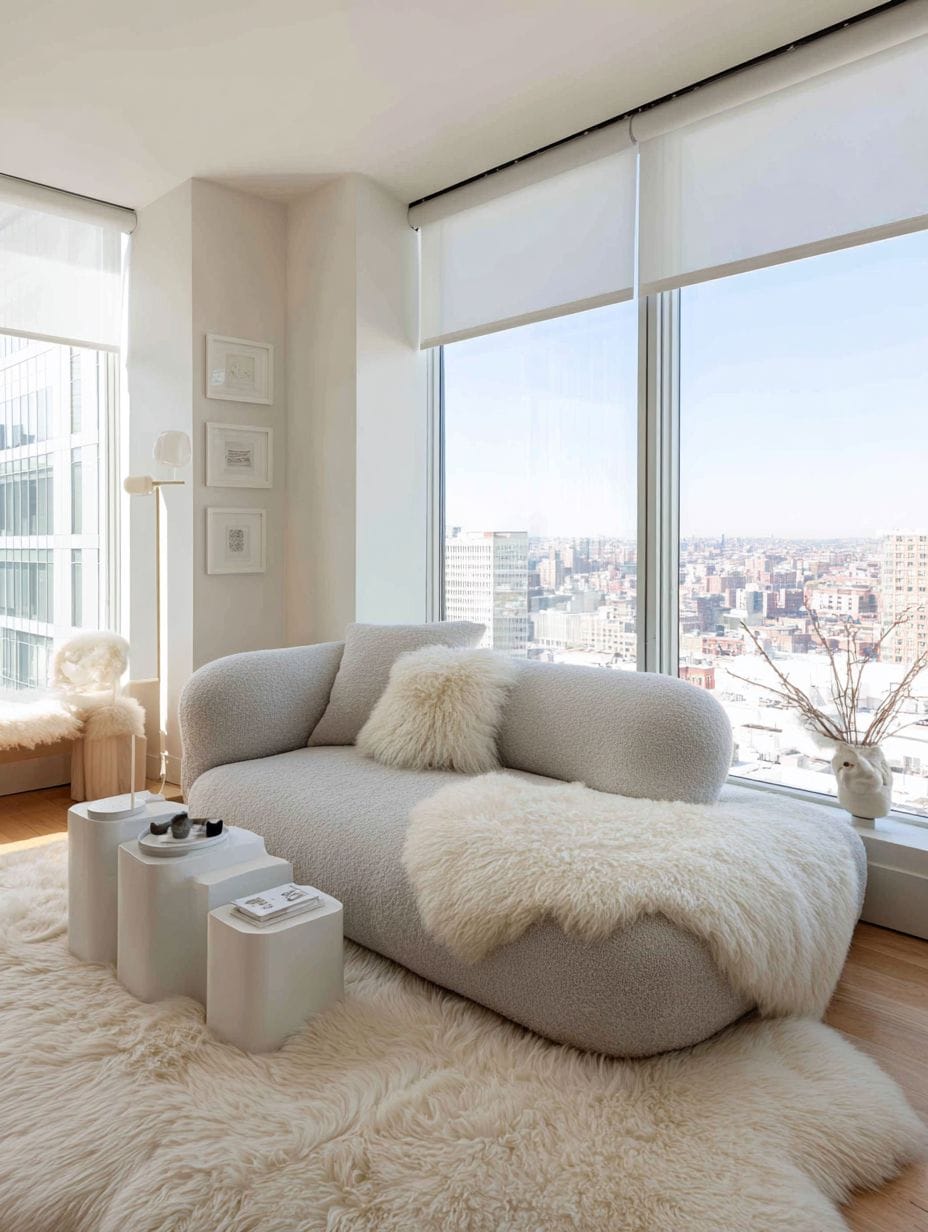
Whitewashed pine flooring reflects abundant natural light from oversized windows with simple white roller shades, creating the bright, airy quality that characterizes Scandinavian interiors. The whitewashing technique preserves the wood’s natural grain while lightening its tone, resulting in floors that feel fresh and contemporary while retaining warmth and character. The oversized windows are crucial to this design approach, as Scandinavian countries’ limited daylight hours have inspired an architectural tradition that maximizes natural light exposure. The simple roller shades provide privacy when needed without introducing pattern or visual complexity.
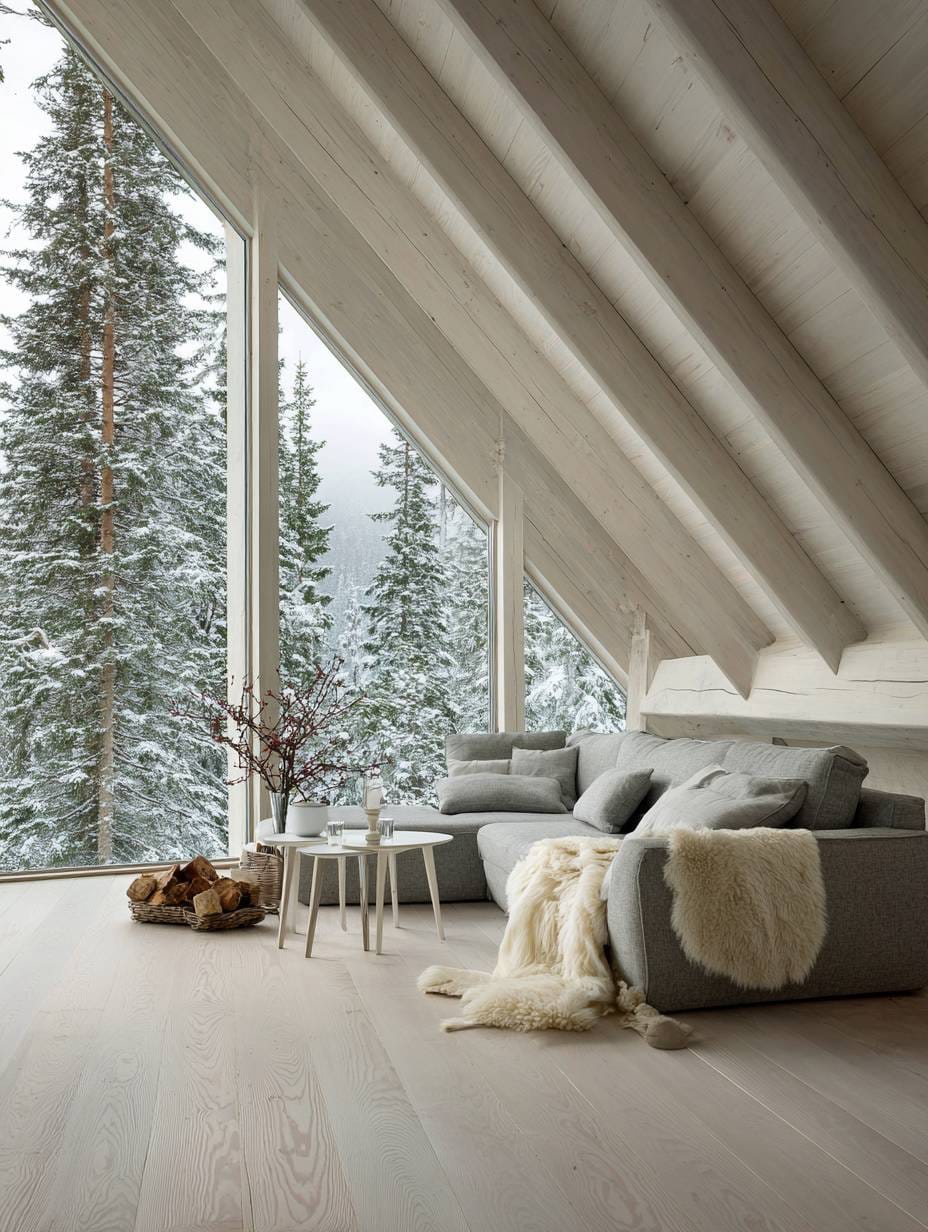
A trio of nested white side tables provides flexible surface space that can be arranged together or separated depending on needs, exemplifying the Scandinavian emphasis on practical functionality within minimal frameworks. The nesting design allows the tables to virtually disappear when not all are needed, maintaining the room’s open, uncluttered appearance. This concept proves that Scandinavian minimalism achieves its distinctive character through the careful balance of simplicity and warmth, creating spaces that feel welcoming and livable rather than austere or uncomfortable. The overall effect is a living room that embodies “hygge”—that untranslatable Danish concept of cozy contentment.
- Add natural textiles like wool and sheepskin to introduce warmth and tactile interest without visual complexity
- Whitewash natural wood floors to brighten spaces while preserving the warmth and character of wood grain
- Maximize window size and natural light to create the bright, airy quality essential to Scandinavian design
- Choose nesting or stacking furniture that can be adjusted to meet changing needs while minimizing visual presence
- Select simple, functional window treatments that provide privacy without blocking precious natural light
7. Vertical Display for Curated Collections
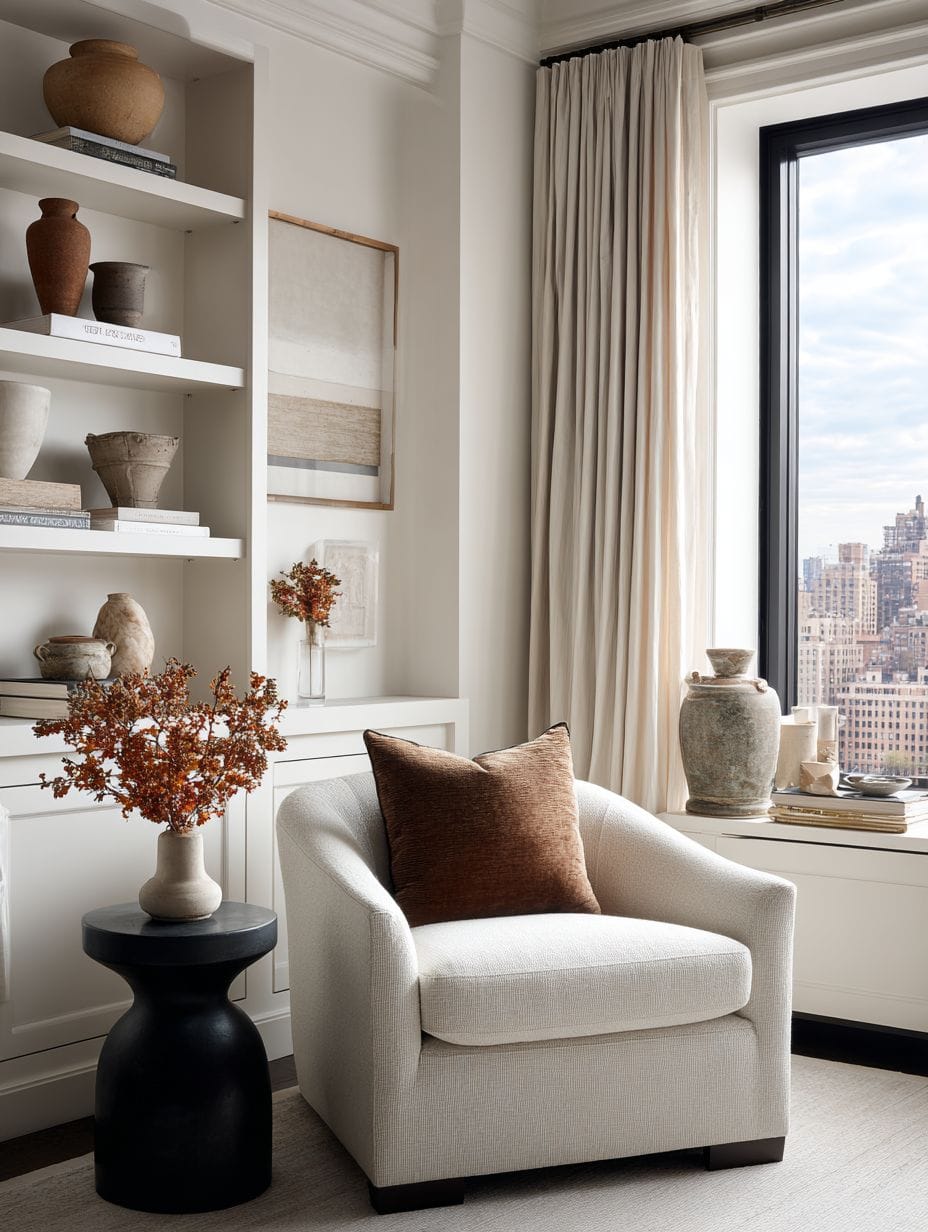
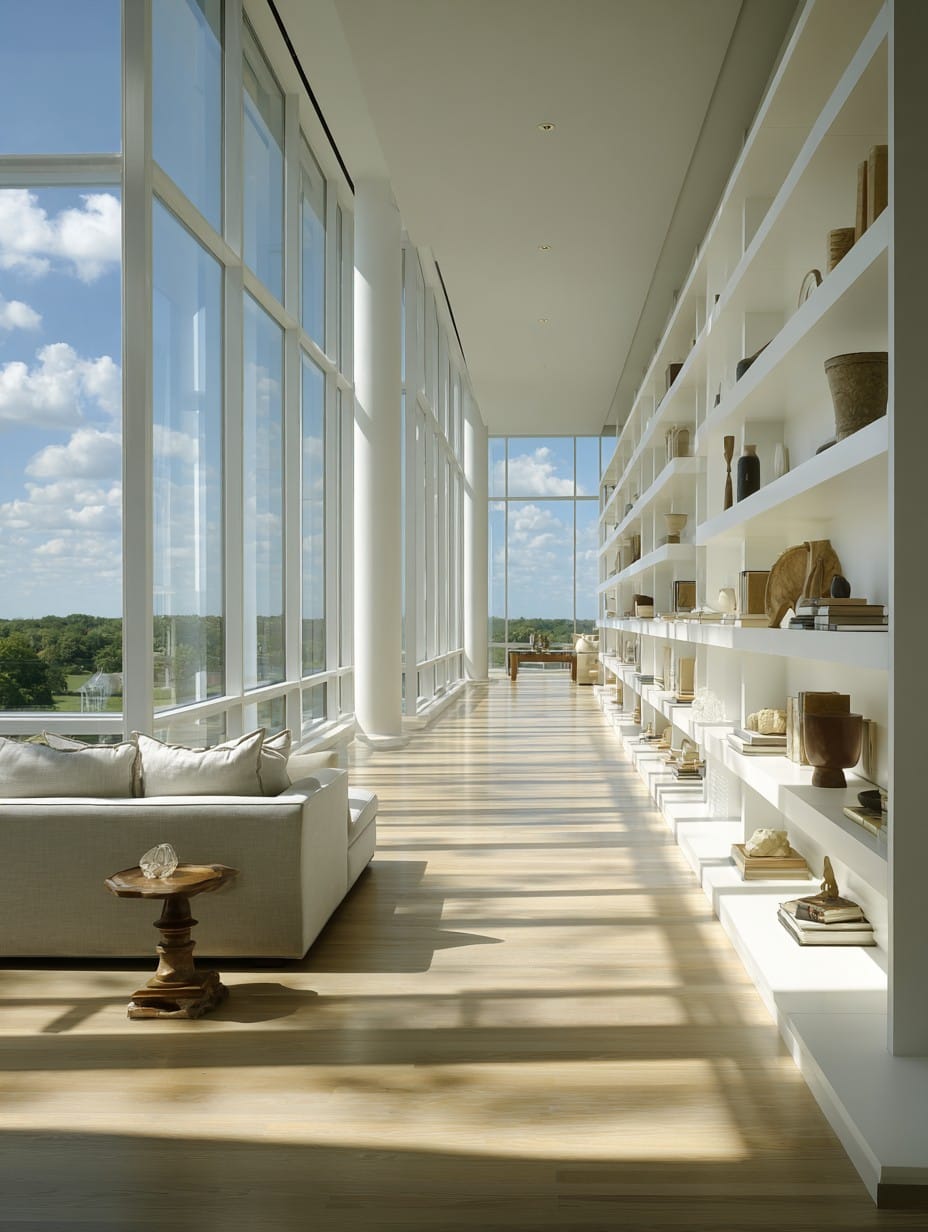
Minimalism doesn’t require eliminating all decorative objects—rather, it demands thoughtful curation and intentional display. This concept demonstrates how floor-to-ceiling white built-in shelving can showcase carefully selected objects while maintaining minimalist principles through generous spacing between items. The vertical emphasis of the shelving draws the eye upward, making the room feel taller while providing ample display space without consuming valuable floor area. The white finish ensures the shelving blends seamlessly with the walls, allowing the displayed objects to take visual precedence.
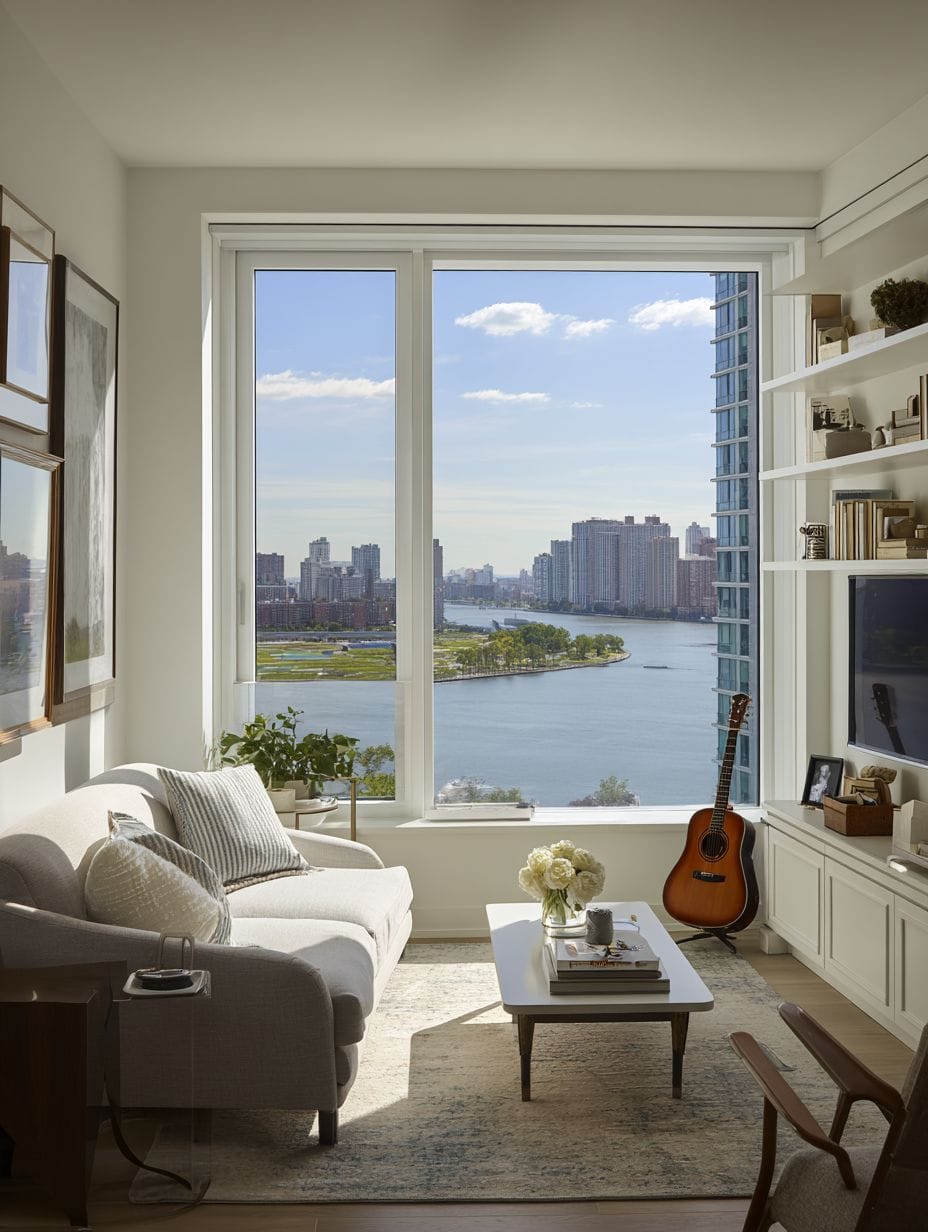
A simple grey linen loveseat is positioned to allow enjoyment of both the window view and the curated display, creating a comfortable vantage point for appreciating the room’s elements. The loveseat’s compact scale is appropriate for the viewing-focused layout, providing seating without overwhelming the space or blocking sight lines to the shelving. The grey linen introduces subtle texture and a neutral mid-tone that grounds the white-dominated scheme, preventing the space from feeling too light or insubstantial.
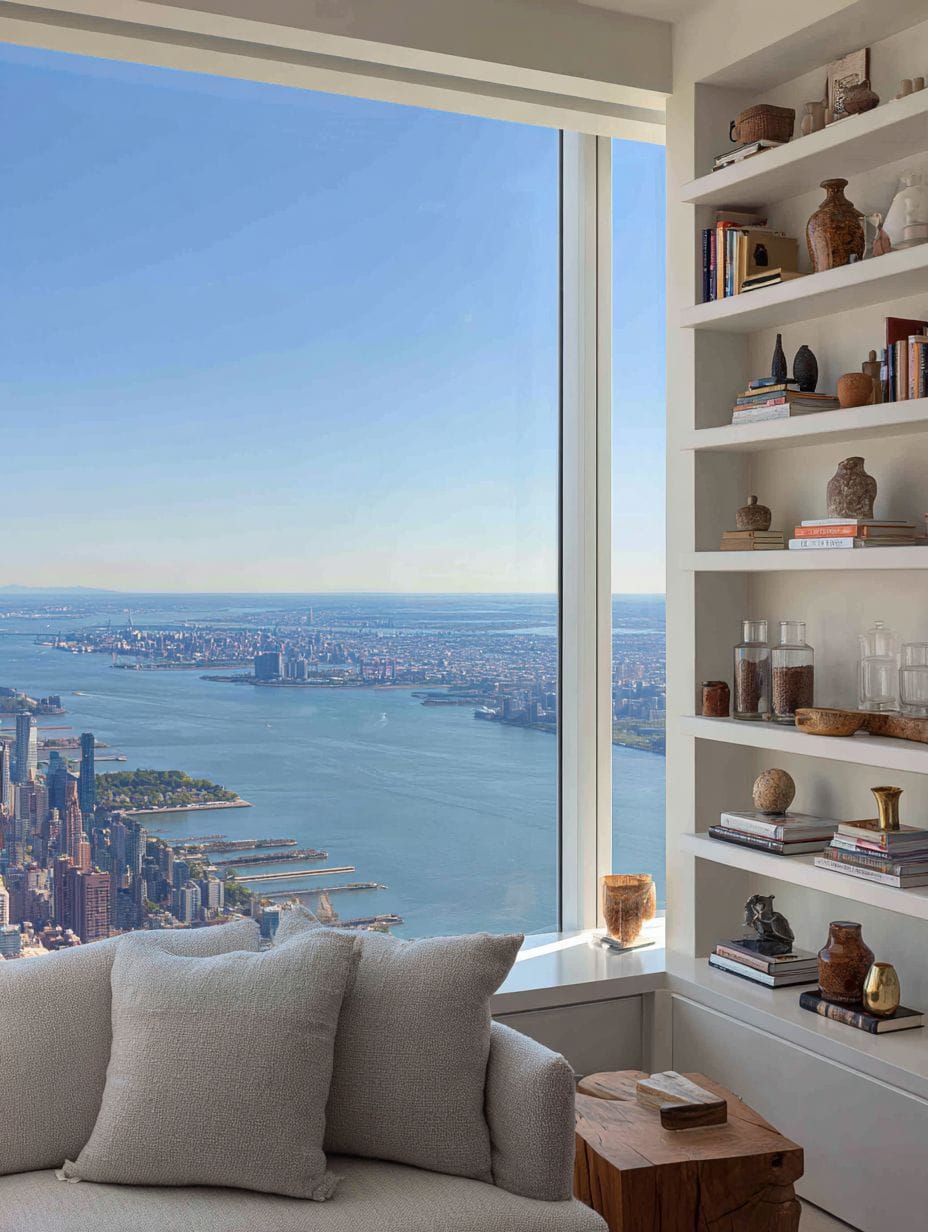
Natural light creates subtle shadows that add depth to the white surfaces and highlight the three-dimensional qualities of the displayed objects. This interplay of light and shadow transforms the shelving from a static storage solution into a dynamic element that changes throughout the day. The concept illustrates that minimalist display requires discipline in selection and confidence in negative space—each object must earn its place through beauty, meaning, or both, and the space between objects is as important as the objects themselves. This approach creates a living room that feels personal and curated rather than generic or impersonal.
- Install floor-to-ceiling shelving to maximize display space while emphasizing vertical dimensions
- Maintain generous spacing between displayed objects to allow each piece to be appreciated individually
- Position seating to appreciate displays creating intentional viewing angles that enhance the room’s purpose
- Choose white or wall-matched shelving to minimize visual presence and keep focus on displayed items
- Curate collections ruthlessly displaying only items that hold genuine aesthetic or personal significance
8. Industrial Minimalism with Raw Materials
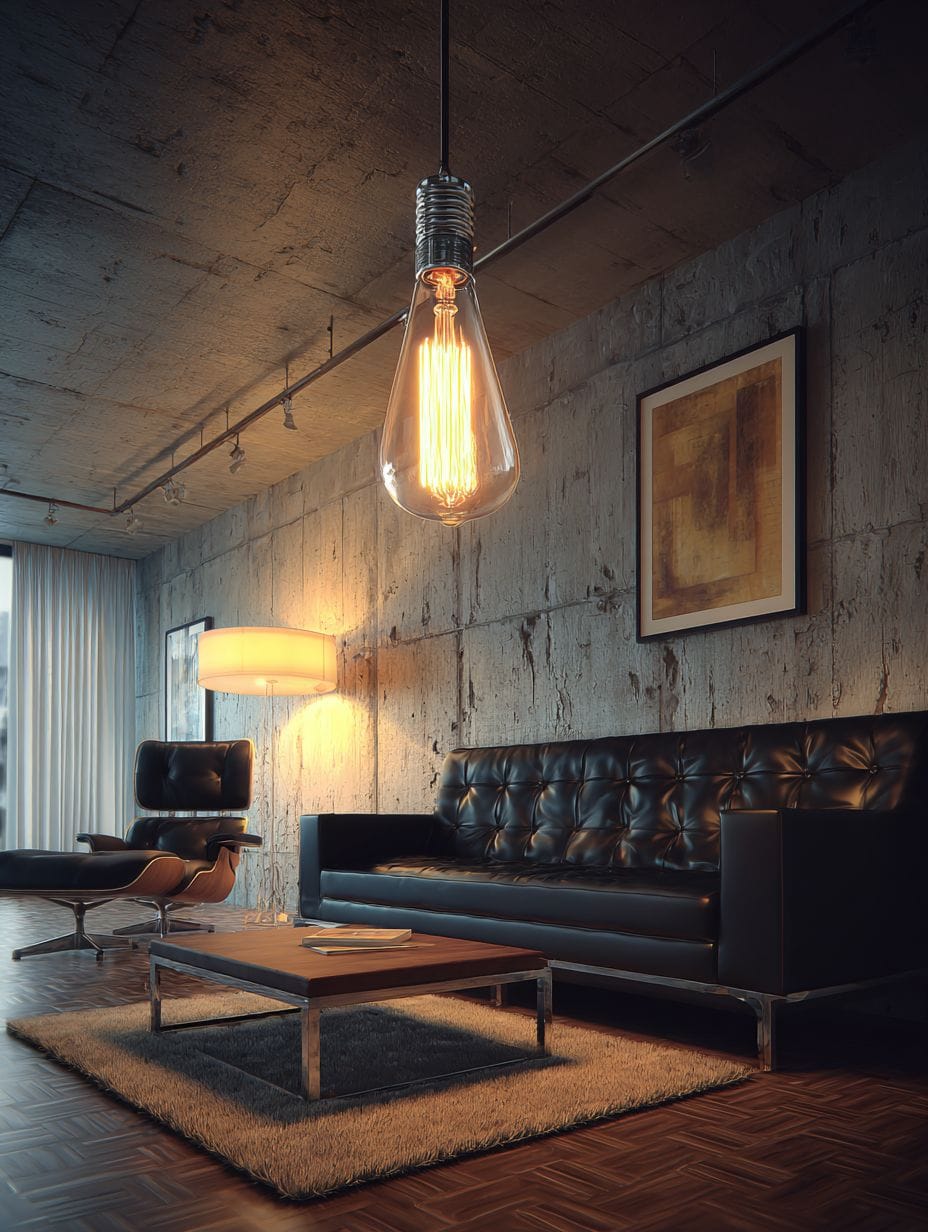
The marriage of industrial aesthetics and minimalist principles creates living spaces of striking sophistication and urban edge. This concept features exposed concrete walls and polished concrete floors that celebrate the raw, unfinished beauty of structural materials typically hidden behind drywall and flooring. The concrete’s natural variations in tone and texture provide visual interest without requiring additional decoration, while its cool grey tones create a neutral backdrop that feels both modern and timeless. The polished floor finish reflects light and creates a subtle sheen that elevates the industrial material from construction grade to design element.
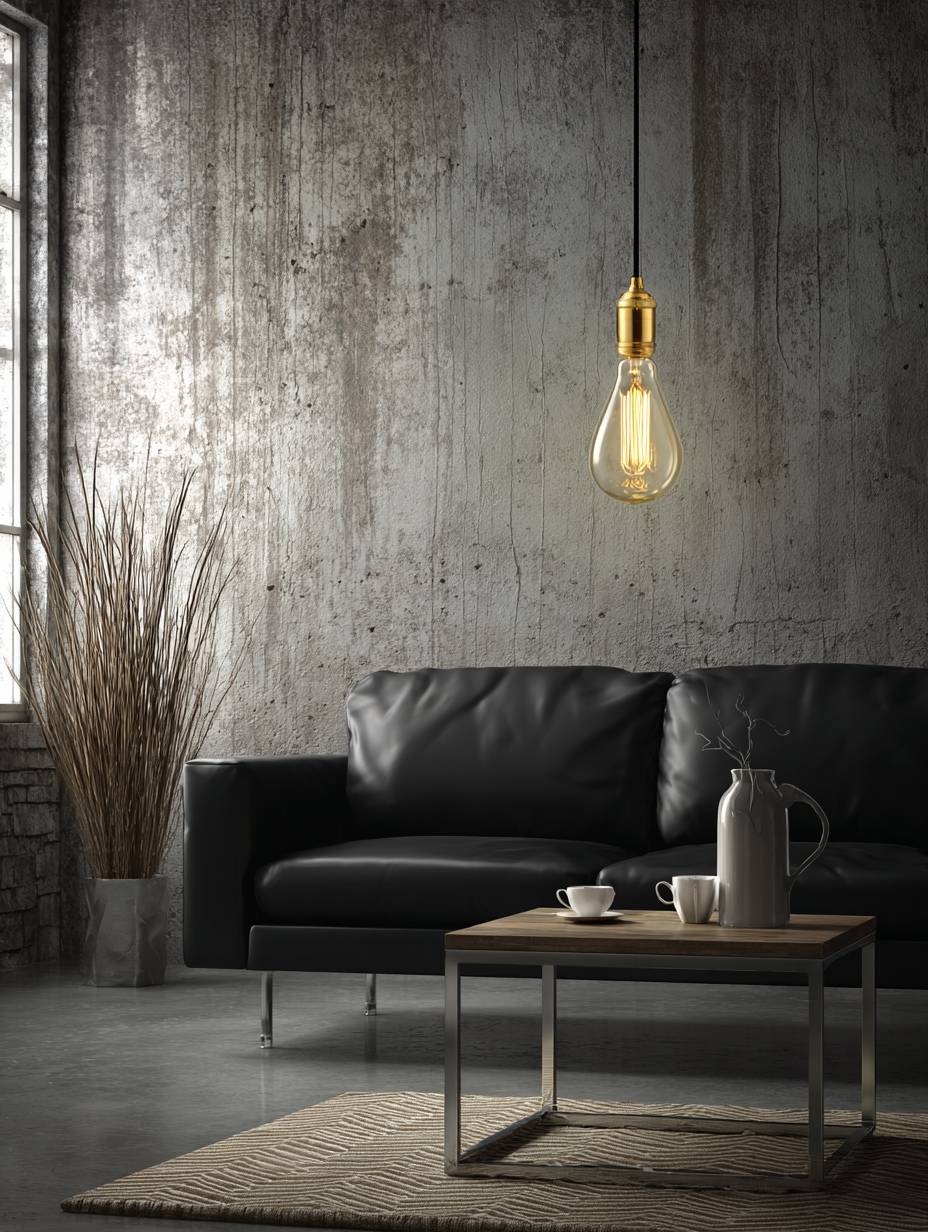
A black leather sofa with clean lines provides a luxurious contrast to the rough concrete surfaces, its smooth, refined material juxtaposed against the textured walls. The black color grounds the space and creates strong visual definition against the grey concrete, while the leather’s natural patina will develop character over time, aligning with the industrial aesthetic’s appreciation for materials that age gracefully. A simple steel and glass coffee table continues the industrial material palette while maintaining transparency that doesn’t obstruct sight lines or make the space feel heavy.
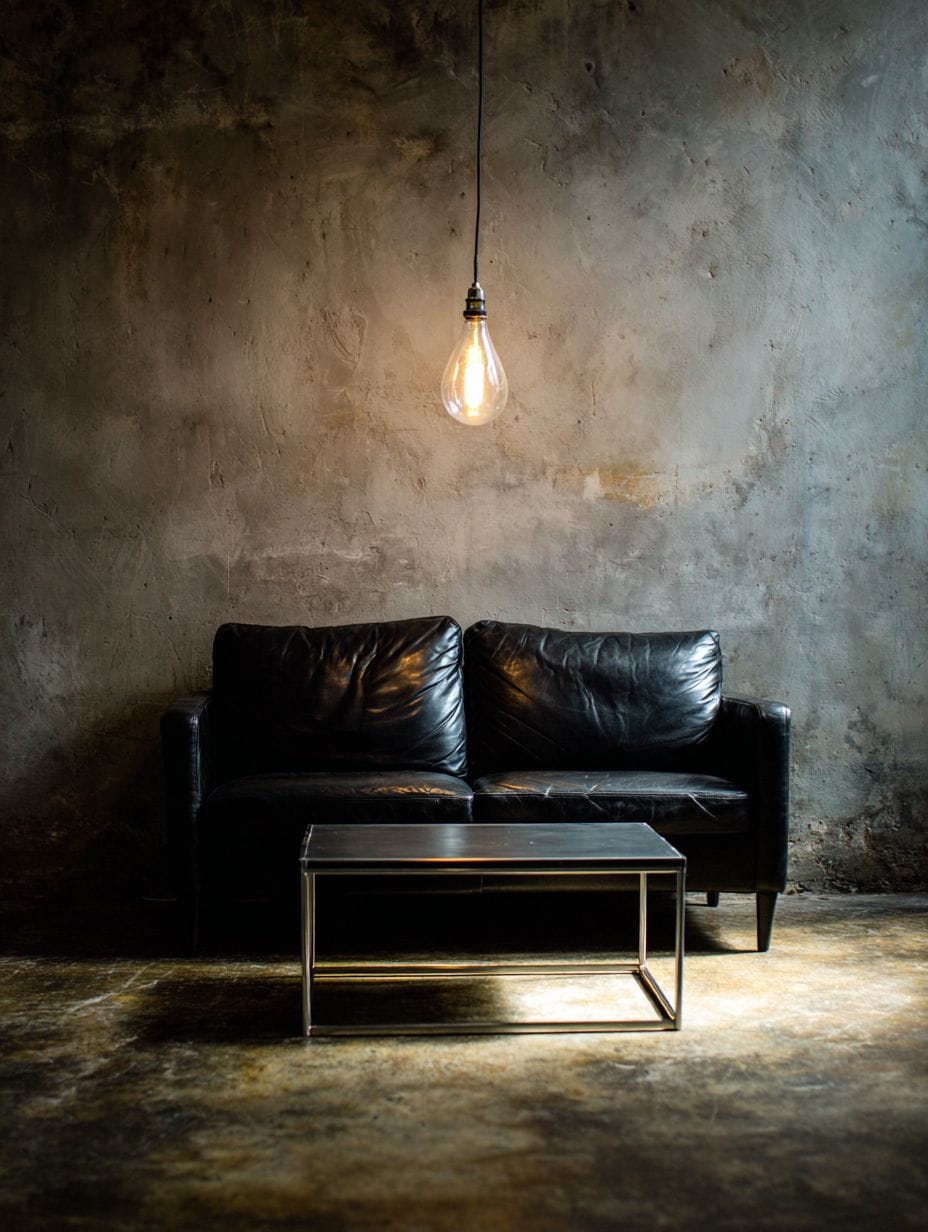
A single Edison bulb pendant provides focused lighting that celebrates the beauty of exposed electrical elements, transforming a basic light bulb into a decorative feature through its vintage-inspired design. The warm glow of the Edison bulb softens the cool industrial materials and creates intimate pools of light rather than even illumination across the entire space. This concept demonstrates that industrial minimalism achieves its distinctive character through honest expression of materials and structural elements, creating spaces that feel authentic and unpretentious while maintaining sophisticated restraint.
- Leave structural materials exposed like concrete walls to celebrate raw, honest construction materials as design elements
- Contrast rough and refined textures such as pairing concrete with leather to create visual and tactile interest
- Choose furniture with industrial materials like steel and glass that complement exposed structural elements
- Use Edison bulbs or exposed lighting to embrace the industrial aesthetic’s celebration of electrical elements
- Polish concrete floors to elevate their appearance from utilitarian to sophisticated design surface
9. Layered Neutrals for Subtle Warmth
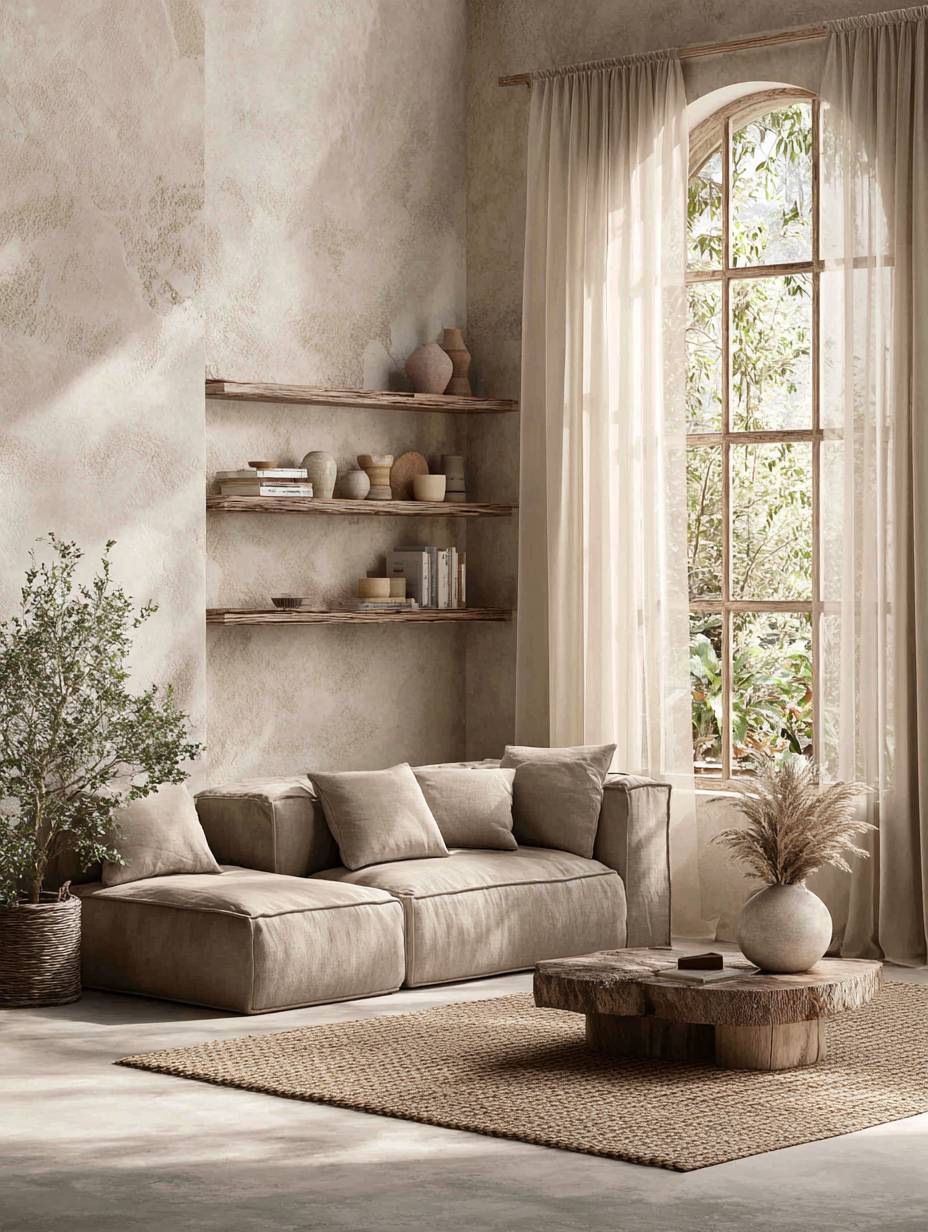
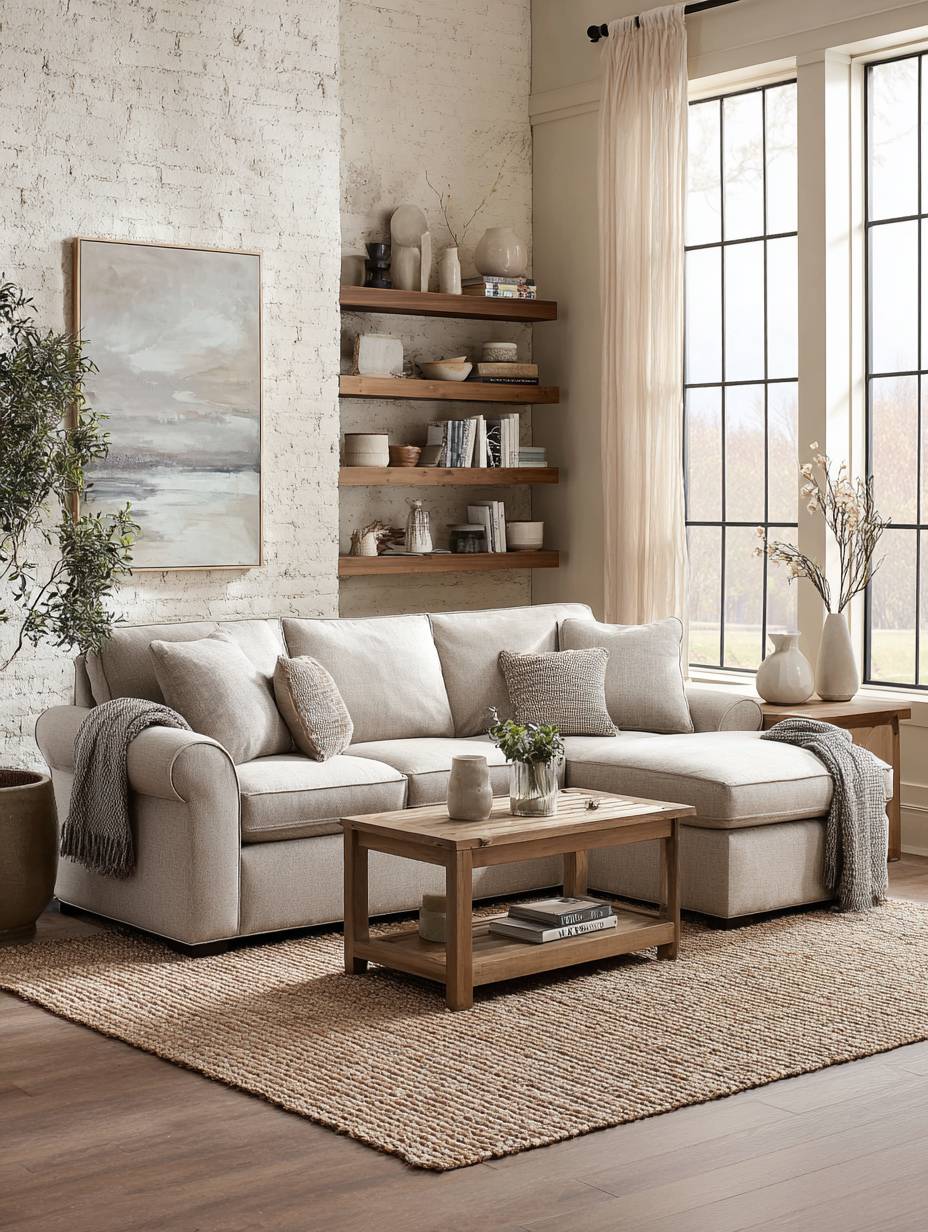
Creating warmth within a neutral palette requires skillful layering of different tones and textures, as this concept beautifully demonstrates. A beige linen sectional sofa provides a foundation of comfortable, inviting seating while its natural fabric introduces subtle texture and organic appeal. The beige tone is warmer than grey alternatives, creating a more welcoming atmosphere while maintaining the versatility and timelessness of neutral colors. Beneath the sofa, a natural jute area rug adds another layer of neutral warmth, its woven texture providing visual and tactile interest while reinforcing the room’s connection to natural materials.
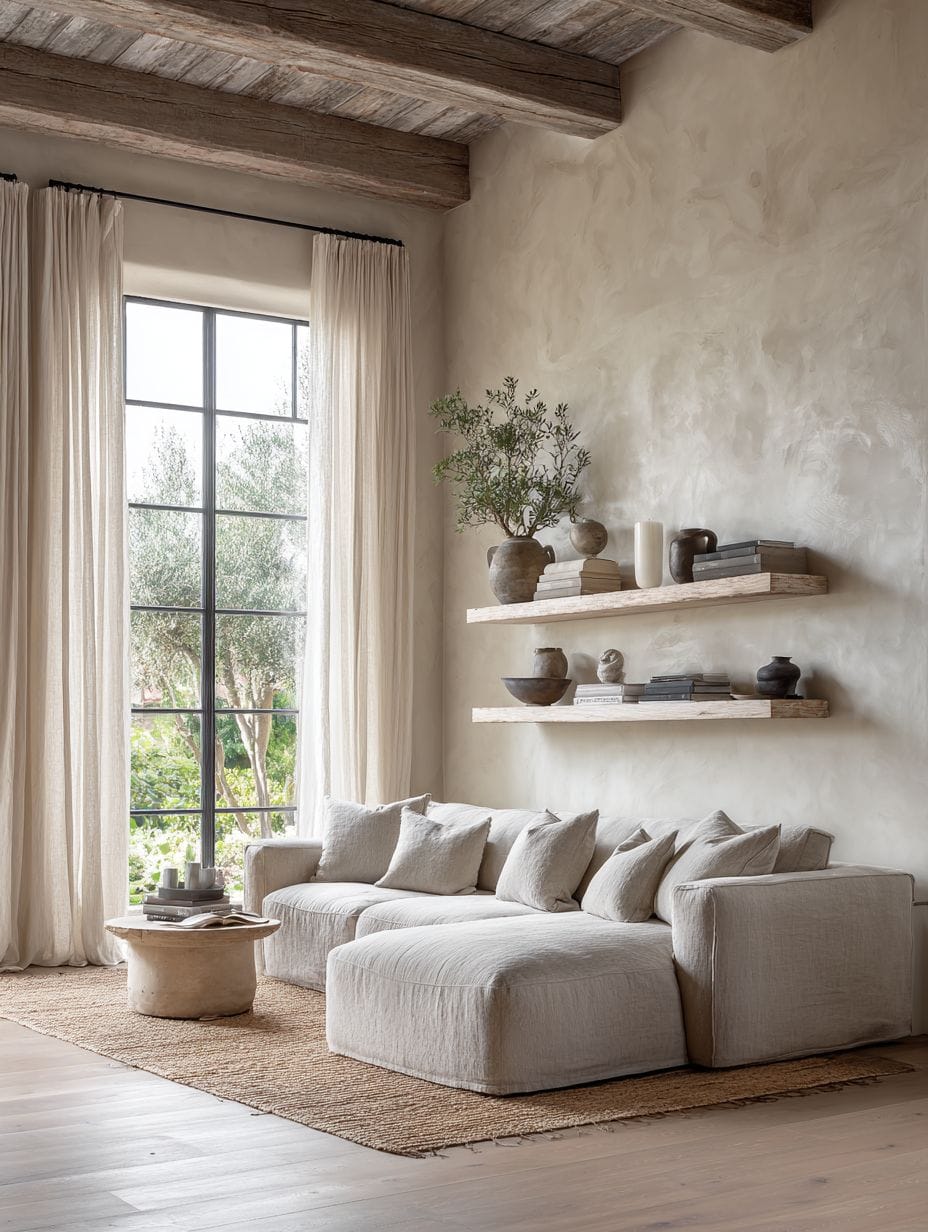
White oak floating shelves display a few ceramic pieces with intentional spacing, demonstrating the minimalist principle of careful curation where each displayed object has room to breathe and be appreciated. The white oak’s honey-toned wood grain adds subtle warmth to the wall plane while the floating installation maintains the clean, uncluttered aesthetic essential to minimalism. The ceramic pieces in varied neutral tones create a cohesive collection that adds personality without introducing color complexity or visual chaos.
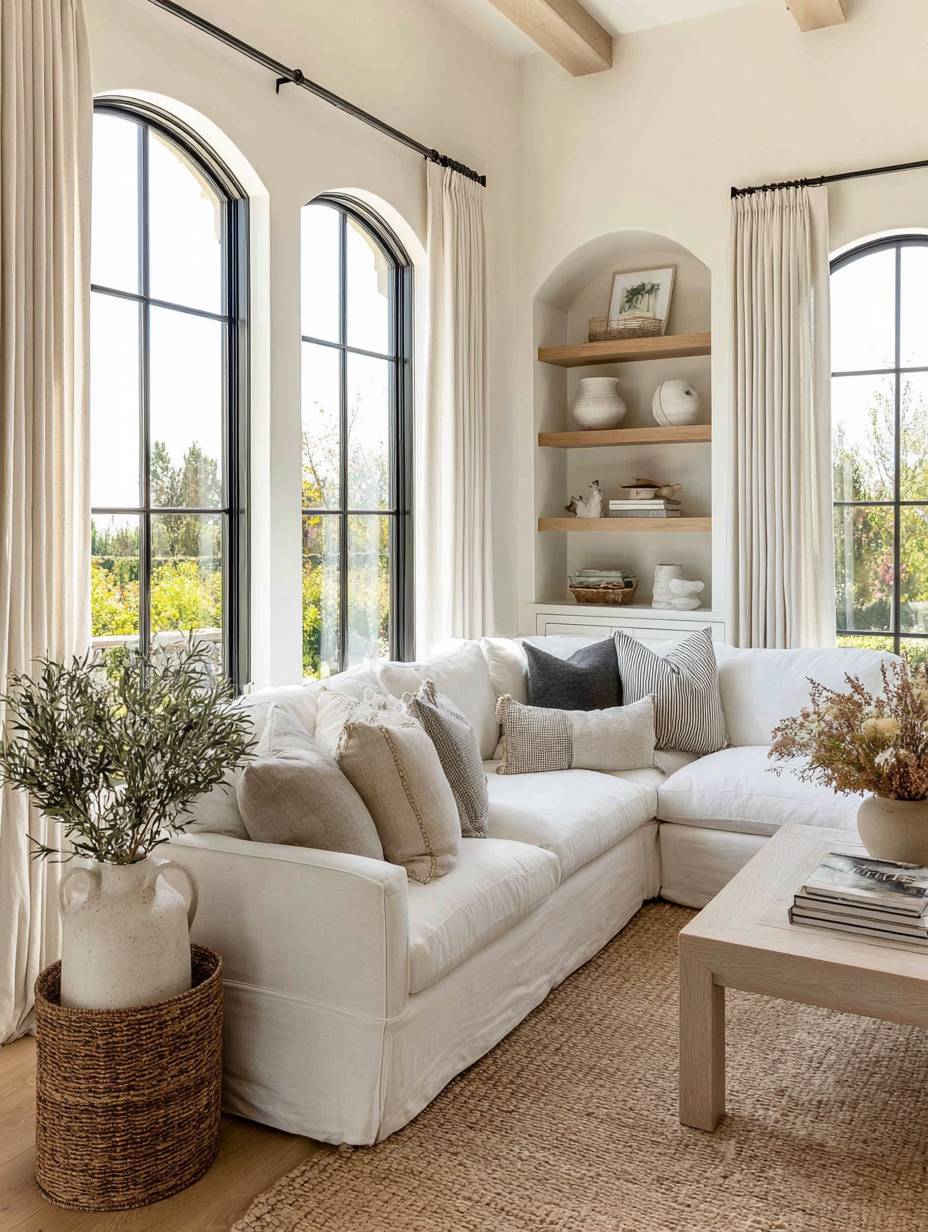
Large windows with sheer linen curtains allow soft natural light to illuminate the textured walls in warm white, creating a gentle, diffused quality that enhances the room’s serene atmosphere. The linen curtains filter harsh direct sunlight while maintaining privacy and adding another layer of natural texture to the scheme. This approach to neutral layering proves that minimalist spaces can feel warm and inviting through thoughtful selection of materials and tones within a restrained palette. The result is a living room that feels calm and soothing rather than stark or cold, demonstrating minimalism’s potential for creating truly comfortable, livable spaces.
- Layer multiple neutral tones from warm whites to beiges to create depth without introducing color
- Incorporate natural materials like linen, jute, and wood that add warmth through inherent texture and tone
- Use sheer curtains to filter natural light while maintaining the soft, diffused quality essential to serene spaces
- Display ceramics in neutral tones to add sculptural interest while maintaining color restraint
- Choose wood in warm tones like white oak or maple to add subtle color through natural material rather than paint
10. Compact Urban Solutions for Small Spaces
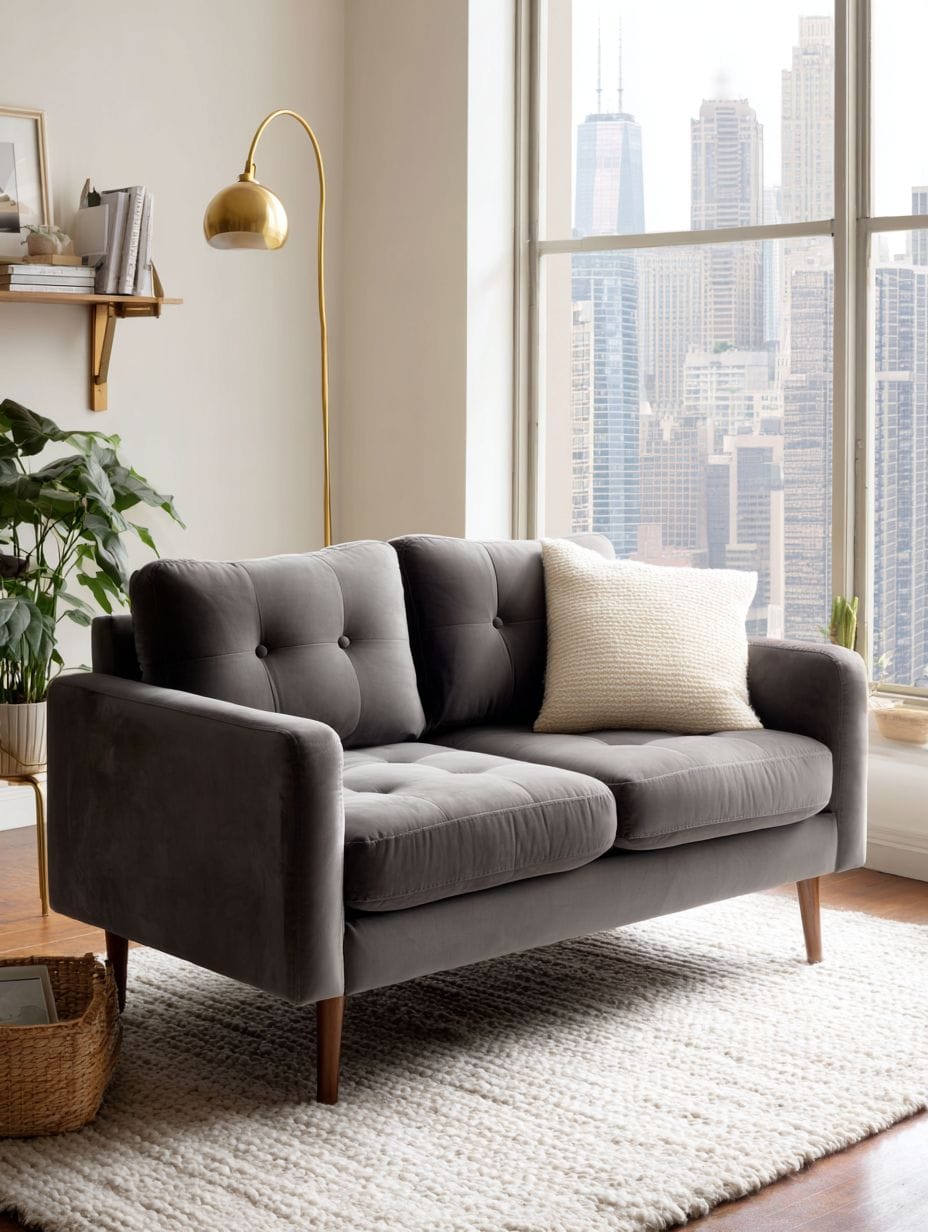
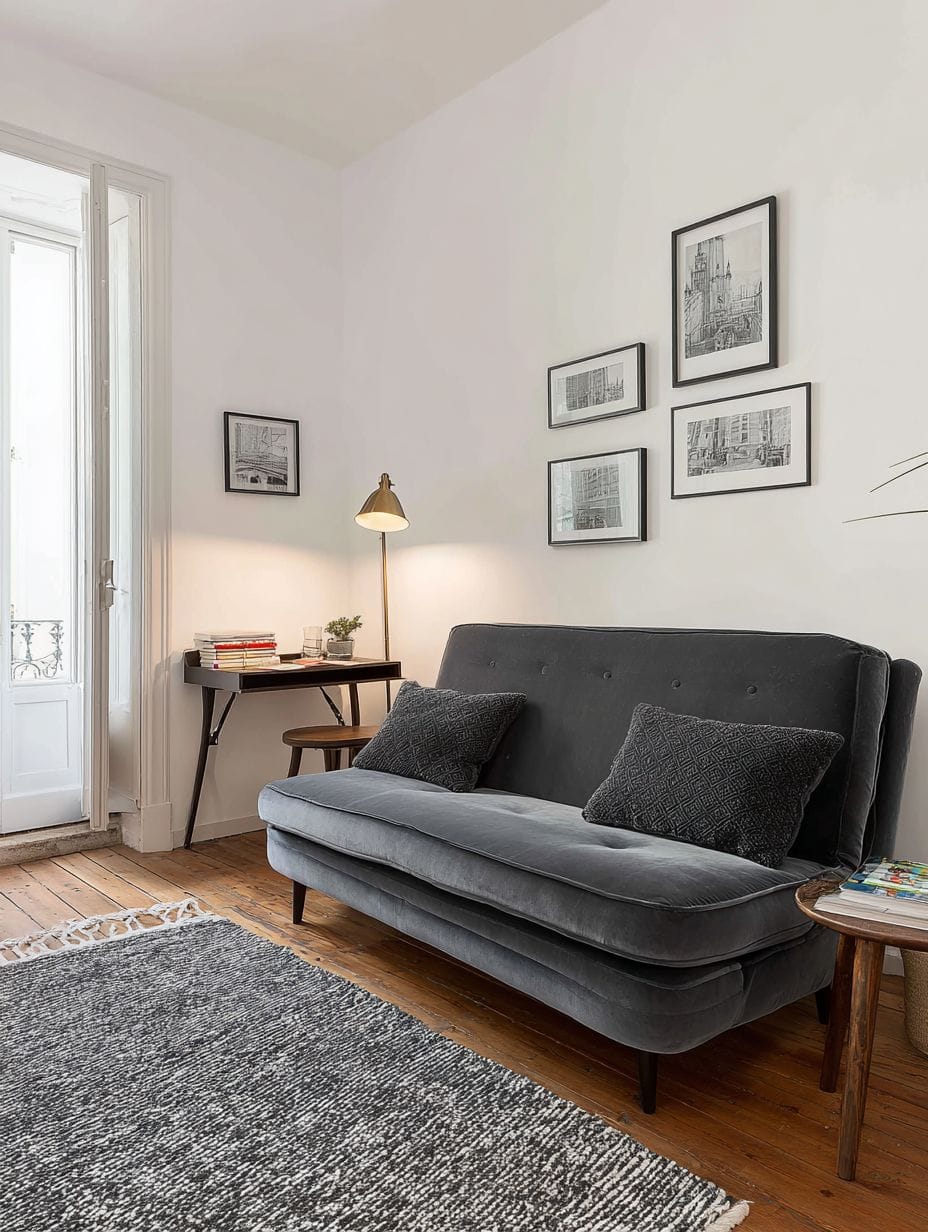
Urban living often presents spatial challenges that minimalist design is uniquely equipped to address. This concept demonstrates how thoughtful minimalism can maximize both function and perceived spaciousness in compact apartments. A streamlined grey velvet loveseat against white walls provides comfortable seating while its compact scale and low profile prevent the furniture from overwhelming the limited square footage. The velvet upholstery introduces subtle luxury and visual richness through its characteristic light-reflective qualities, proving that small spaces can incorporate sophisticated materials without feeling cramped.
A wall-mounted folding desk serves dual purposes without cluttering the space when not in use, exemplifying the importance of multifunctional furniture in small-space minimalism. The folding mechanism allows the desk to virtually disappear against the wall when not needed, transforming the living room into a home office as required. This flexibility is crucial in urban apartments where dedicated rooms for specific functions are often impossible. The wall mounting also preserves valuable floor space and maintains clear sight lines that make the room feel larger.
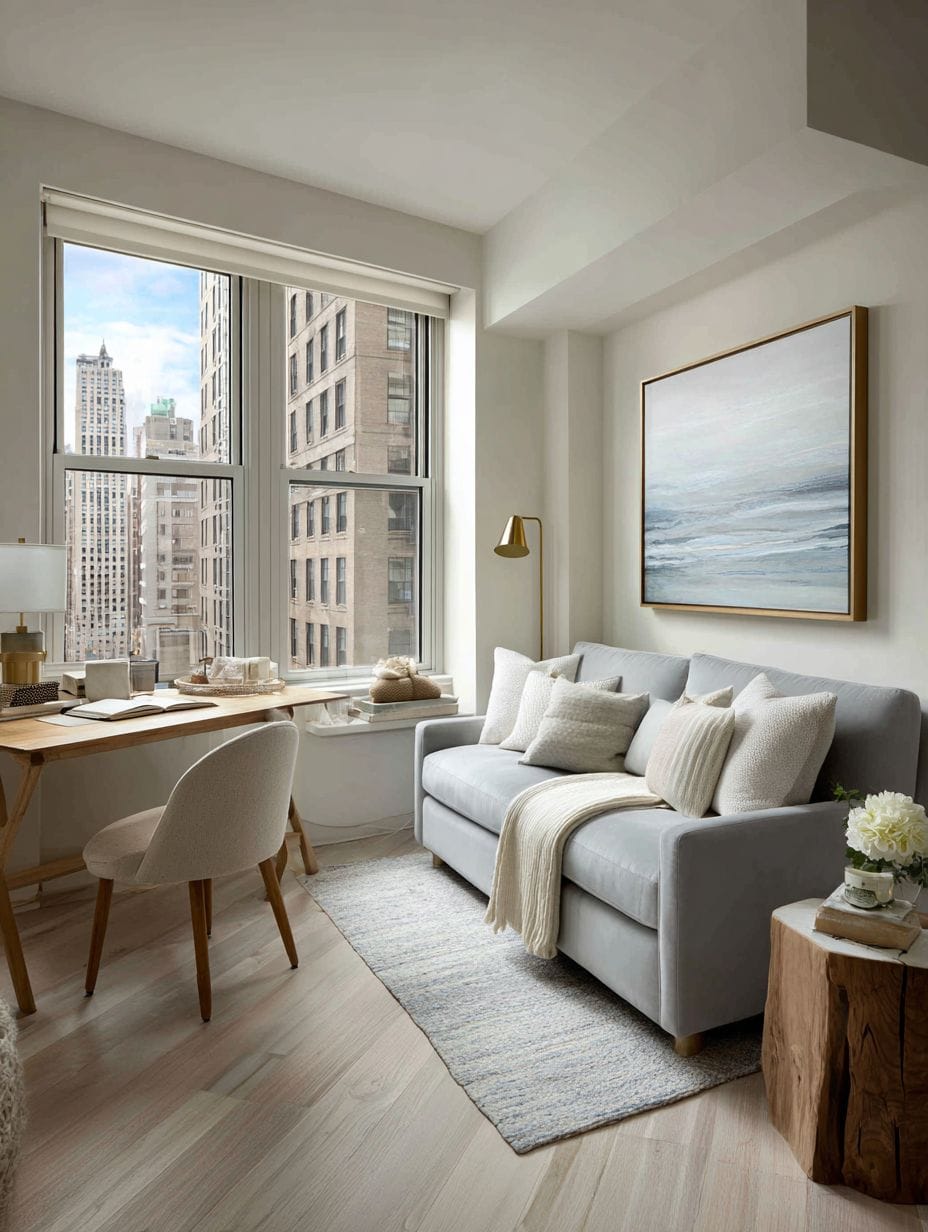
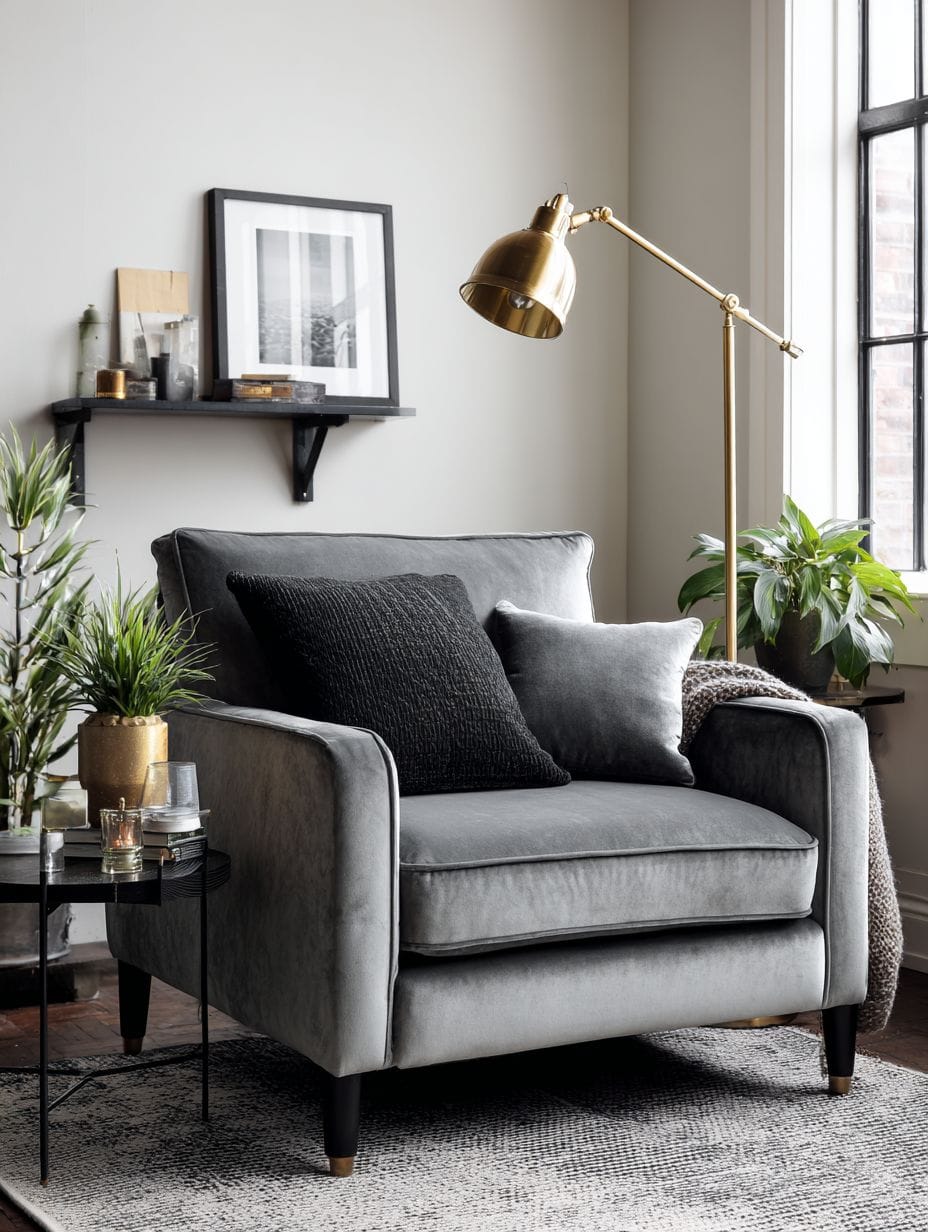
A single brass floor lamp provides task lighting with a warm metallic accent that elevates the simple scheme without requiring surface space that a table lamp would demand. The brass finish adds a touch of elegance and visual warmth against the cool grey and white palette. This concept illustrates that minimalism is particularly valuable in small spaces where every item must justify its presence through beauty, function, or ideally both. The result is a compact urban living room that feels open, organized, and surprisingly spacious despite its actual dimensions.
- Choose compact-scale furniture with streamlined proportions appropriate to smaller room dimensions
- Install wall-mounted, folding elements that can serve multiple functions while disappearing when not needed
- Use floor lamps instead of table lamps to provide lighting without consuming precious surface space
- Maintain white or light walls to maximize light reflection and create the perception of greater spaciousness
- Select one luxurious material or finish to prevent small spaces from feeling compromised or utilitarian
11. View-Focused Design for Natural Connection
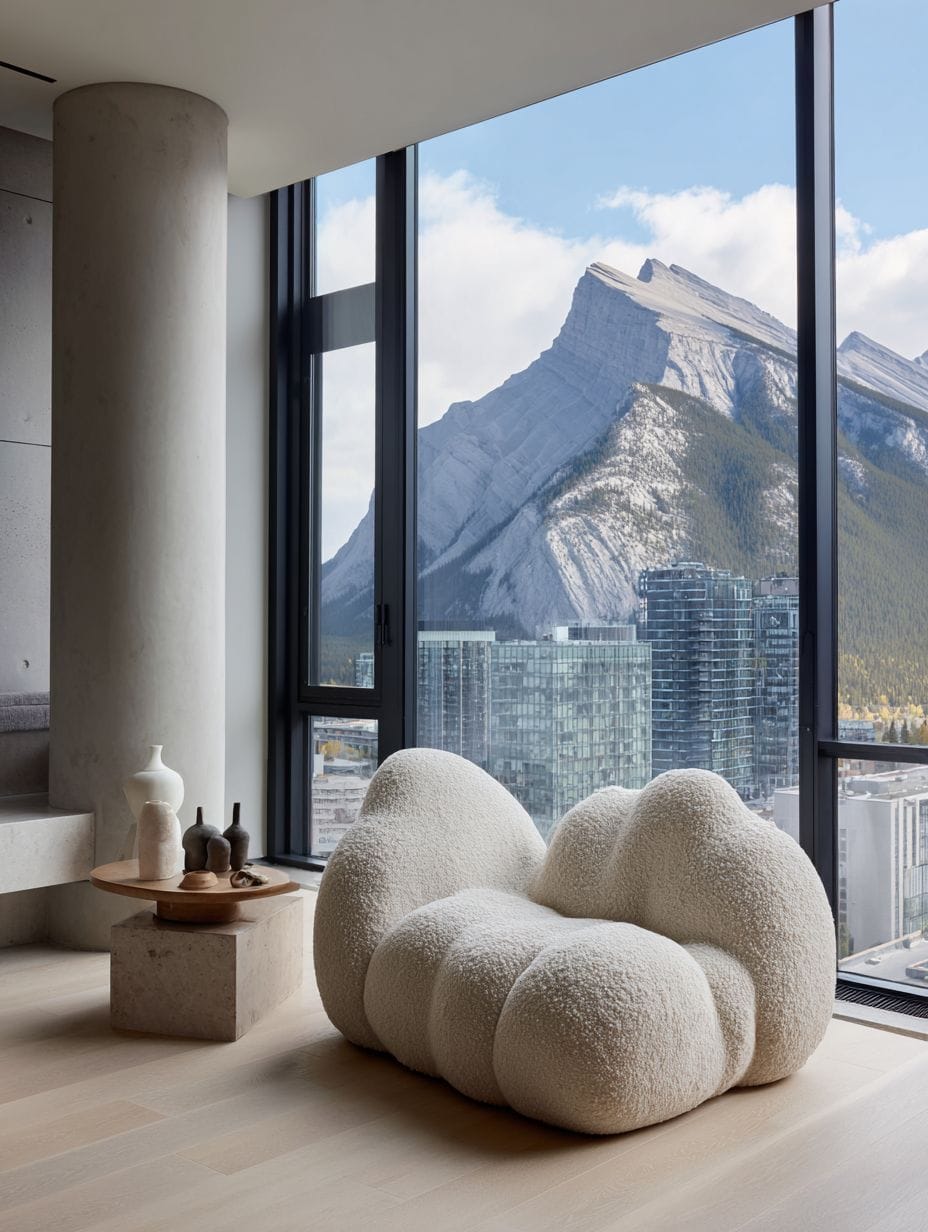
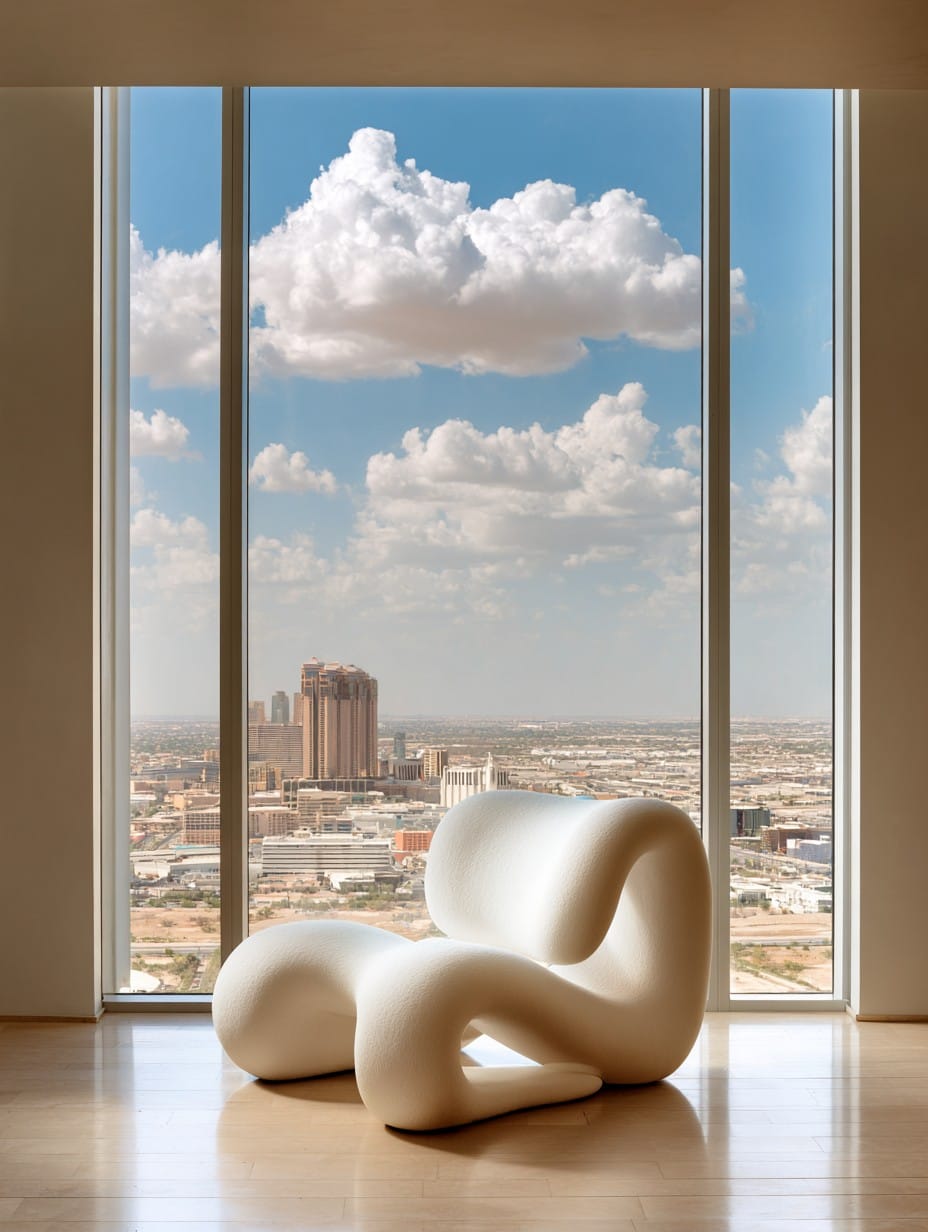
When blessed with spectacular views or abundant natural light, the most effective minimalist approach may be to step back and let nature take center stage. This concept features a statement window wall with minimal furnishings that deliberately avoid competing with the outdoor vista. A single white sculptural chair is positioned to take maximum advantage of natural light and outlook, its unique form serving as the room’s only decorative element. The sculptural quality of the chair transforms a functional seating piece into an art object that complements rather than competes with the view.
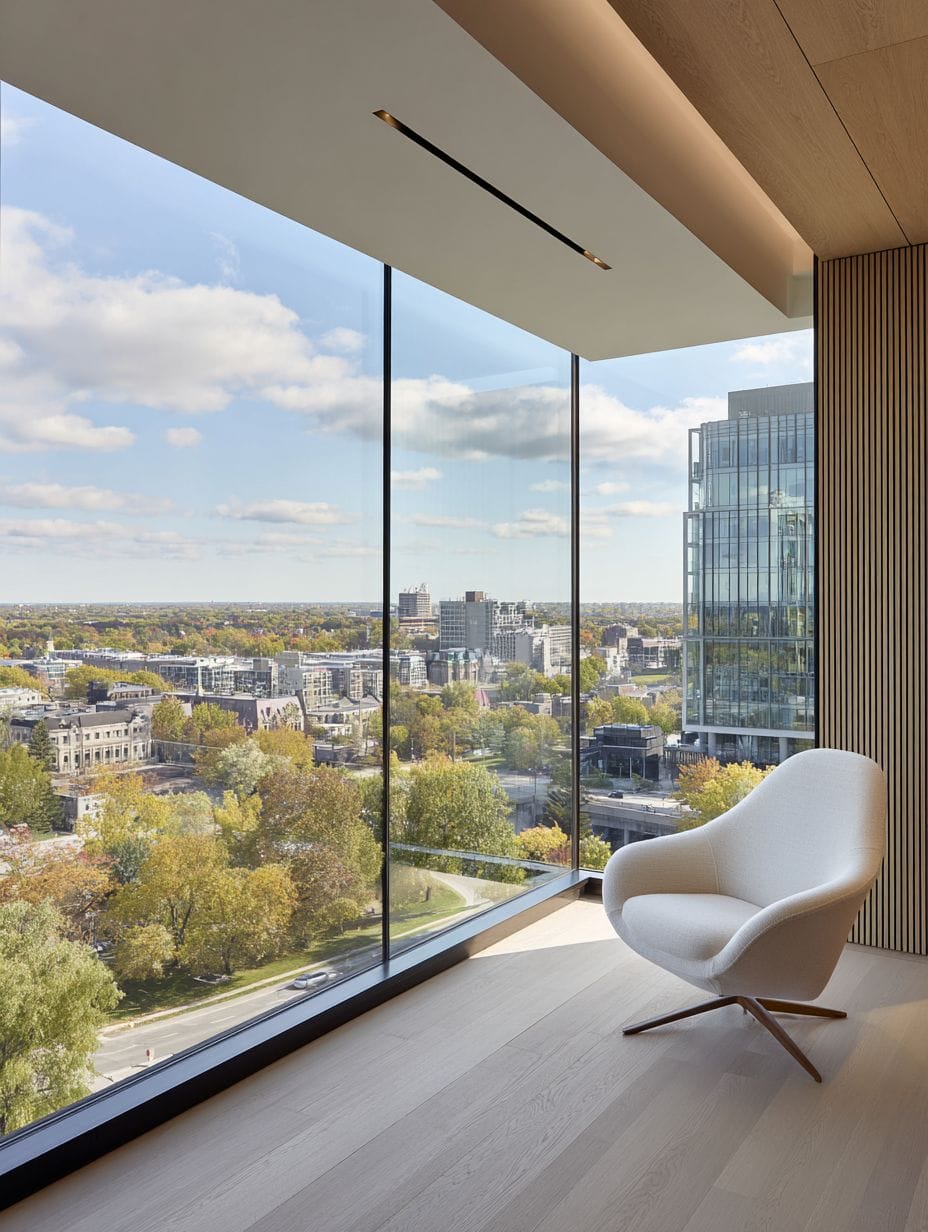
Pale grey walls and light maple flooring recede visually, creating a neutral frame that directs attention toward the window rather than the room’s interior surfaces. This restrained palette allows the changing colors and light conditions visible through the window to become the room’s dominant visual element. The light maple flooring introduces natural warmth through its honey tones and visible grain patterns, preventing the minimal furnishings from creating a cold or uncomfortable atmosphere. The wood’s natural variations provide subtle visual interest at floor level without demanding attention.
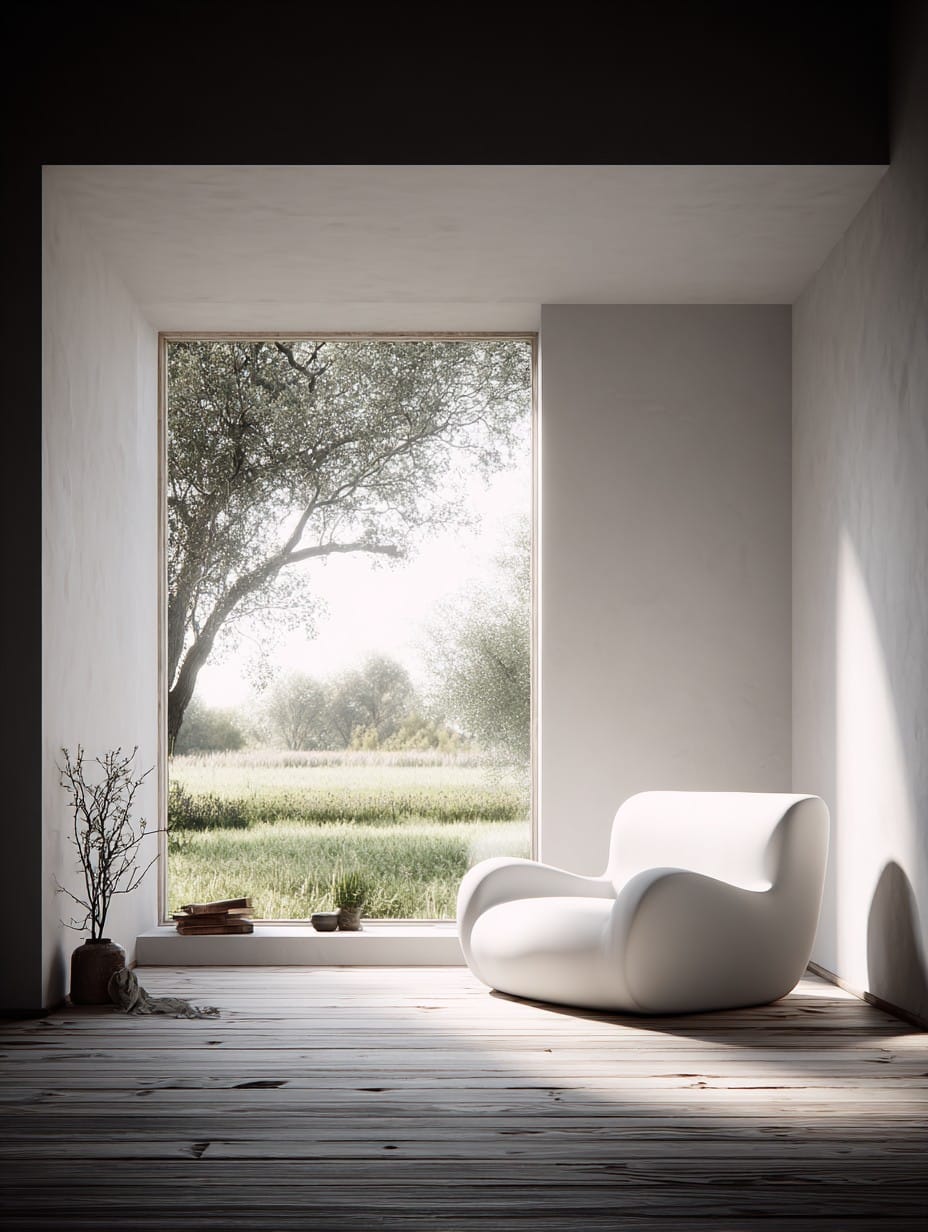
The concept demonstrates that minimalism reaches its most powerful expression when it facilitates rather than dominates the experience of a space. By removing everything that isn’t essential, the design allows occupants to fully appreciate the natural beauty visible through the window. This approach requires confidence and restraint—resisting the temptation to fill the space simply because empty floor area exists. The result is a living room that functions as a contemplative space for observing nature’s ever-changing display, proving that sometimes the most impactful design decision is knowing what to leave out.
- Minimize furnishings when views are spectacular to allow natural beauty to take visual precedence
- Choose one sculptural furniture piece that serves as both functional seating and art object
- Use pale, receding wall colors that frame rather than compete with views and natural light
- Position seating to maximize view appreciation making the outdoor vista the room’s primary feature
- Embrace restraint in decoration trusting that natural elements provide sufficient visual interest
12. Warm Minimalism Through Natural Materials
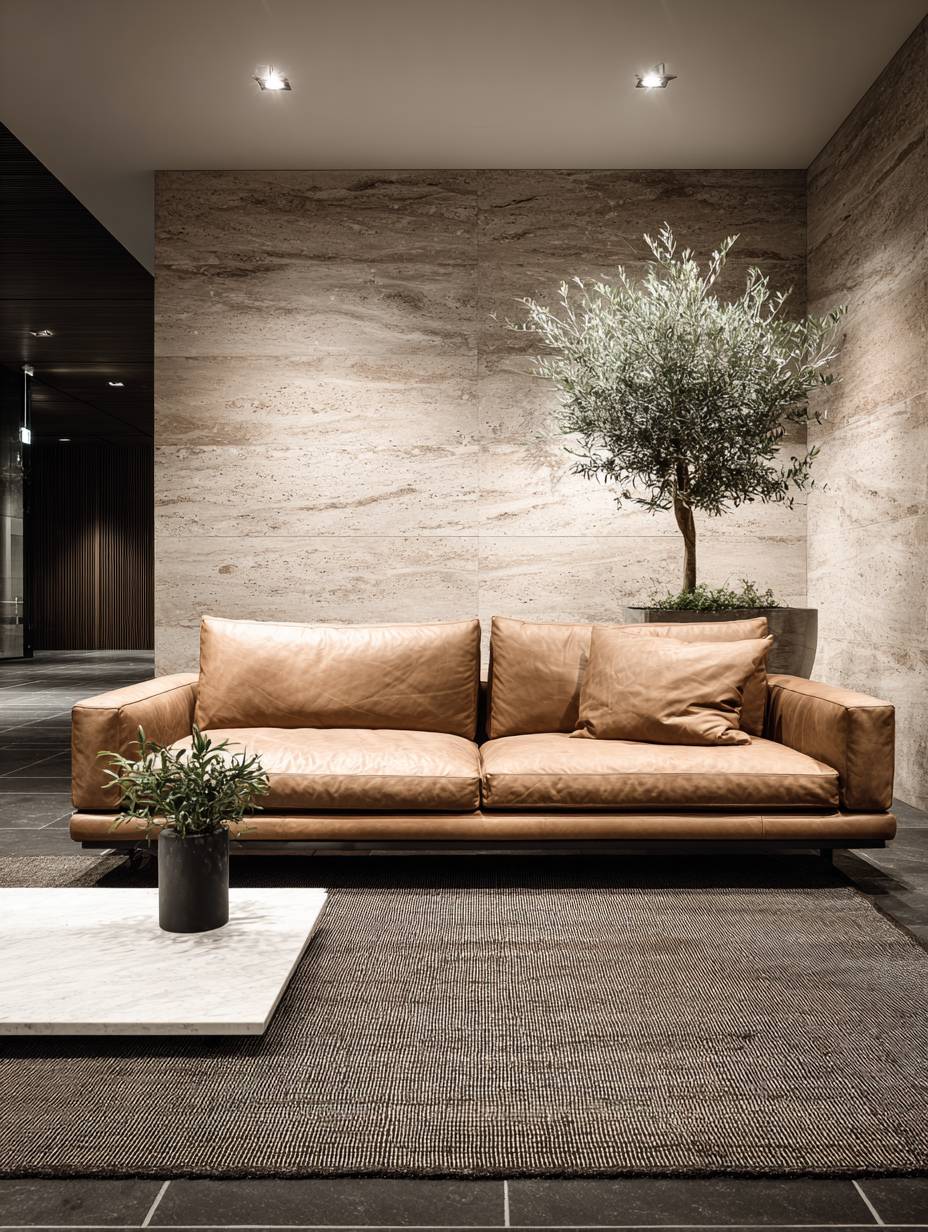
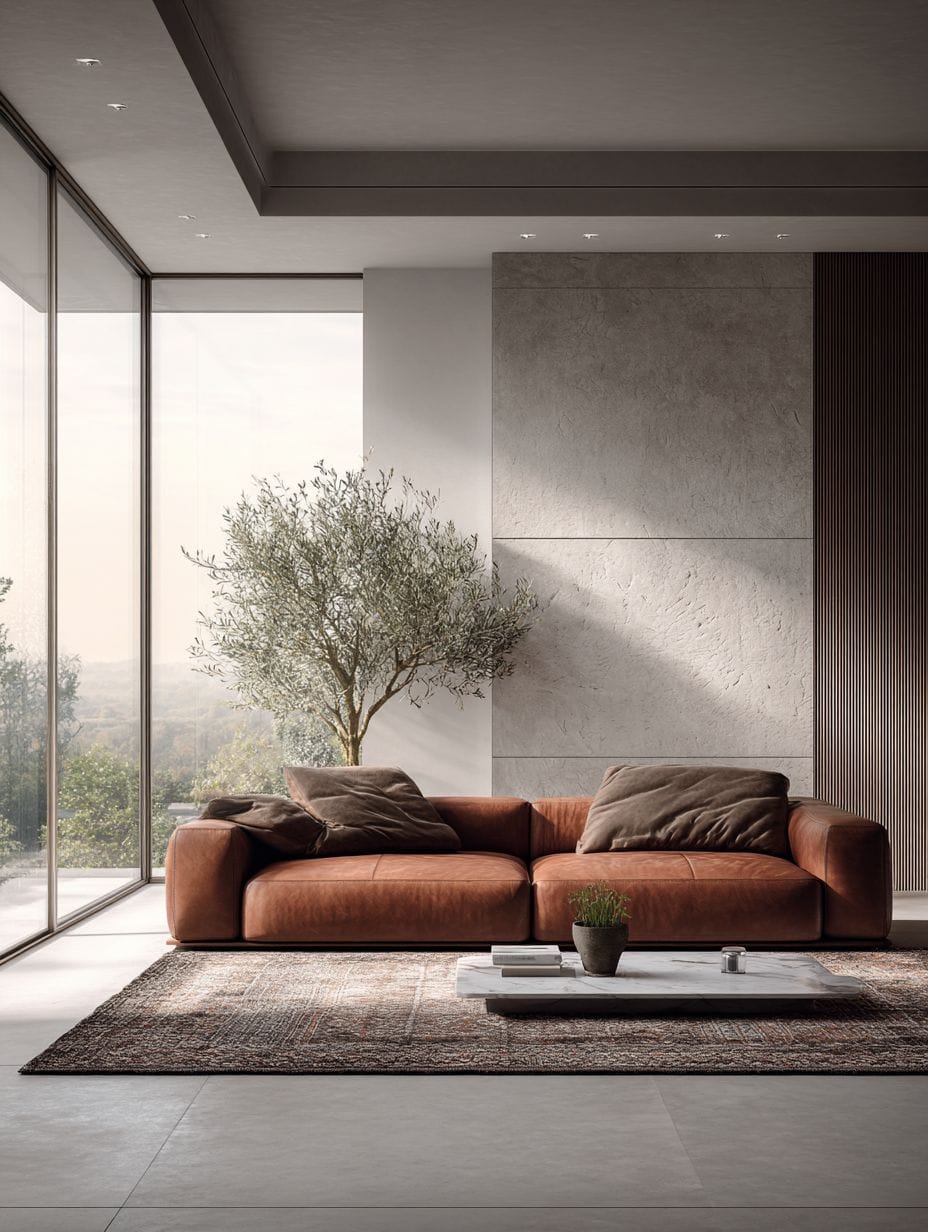
The perception that minimalism must be cold or austere is effectively challenged by this concept, which demonstrates how natural materials can create inviting warmth within a minimal framework. A caramel leather sofa provides rich, warm color and luxurious texture while maintaining the clean lines essential to minimalist aesthetics. The leather’s natural patina will develop character over time, growing more beautiful with use rather than showing wear—an important quality in minimalist spaces where fewer pieces receive more use and attention. The caramel tone introduces warmth without abandoning neutrality, creating a sophisticated middle ground between stark white schemes and more colorful approaches.
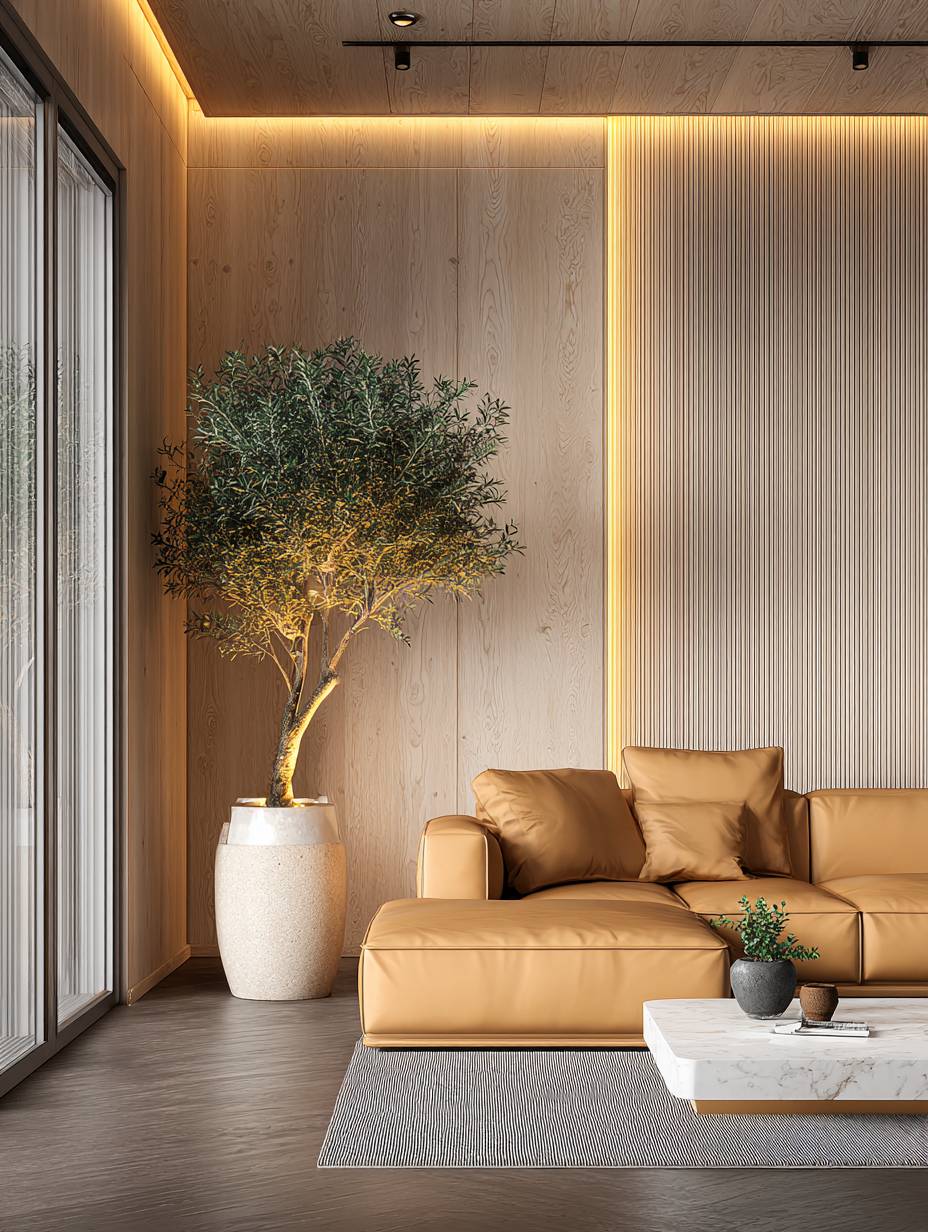
Textured white oak wall paneling creates an architectural backdrop that adds three-dimensional interest and natural warmth without requiring decorative objects or artwork. The paneling’s vertical or horizontal grain patterns provide subtle visual rhythm while the white oak’s honey tones complement the caramel leather sofa. This approach demonstrates how architectural elements can serve decorative functions in minimalist spaces, reducing or eliminating the need for separate wall decorations. A simple white marble coffee table introduces cool elegance that balances the warmer wood and leather elements, its natural veining providing organic pattern and visual interest.
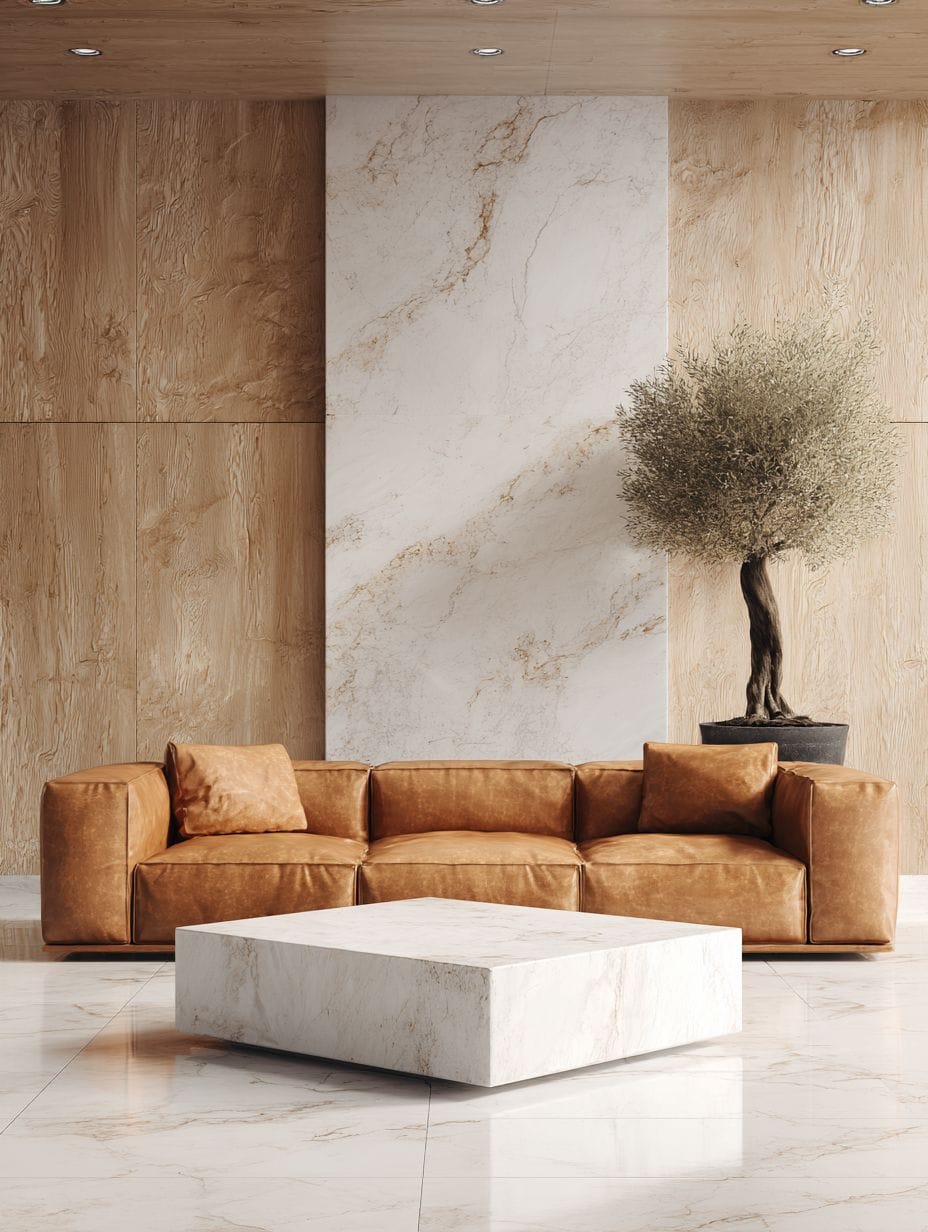
A single potted olive tree adds living greenery and reinforces the natural material palette, its silvery-green foliage and sculptural branching structure creating year-round interest. Recessed lighting creates gentle illumination without visual clutter from visible fixtures, allowing the room’s clean lines and natural materials to remain the focus. This concept proves that warm minimalism is achieved not through adding decorative elements but through thoughtful selection of inherently beautiful natural materials that bring warmth through their organic origins and honest expression. The result is a living room that feels simultaneously refined and welcoming, sophisticated yet comfortable.
- Choose leather in warm tones like caramel or cognac to add richness while maintaining minimalist simplicity
- Install architectural paneling to create visual interest through built-in elements rather than added decorations
- Balance warm and cool materials such as pairing honey-toned wood with cool marble for sophisticated contrast
- Use recessed lighting to provide illumination without introducing visual clutter from visible fixtures
- Select trees or large plants with sculptural qualities that serve as living architectural elements
13. Built-In Window Seating for Functional Comfort
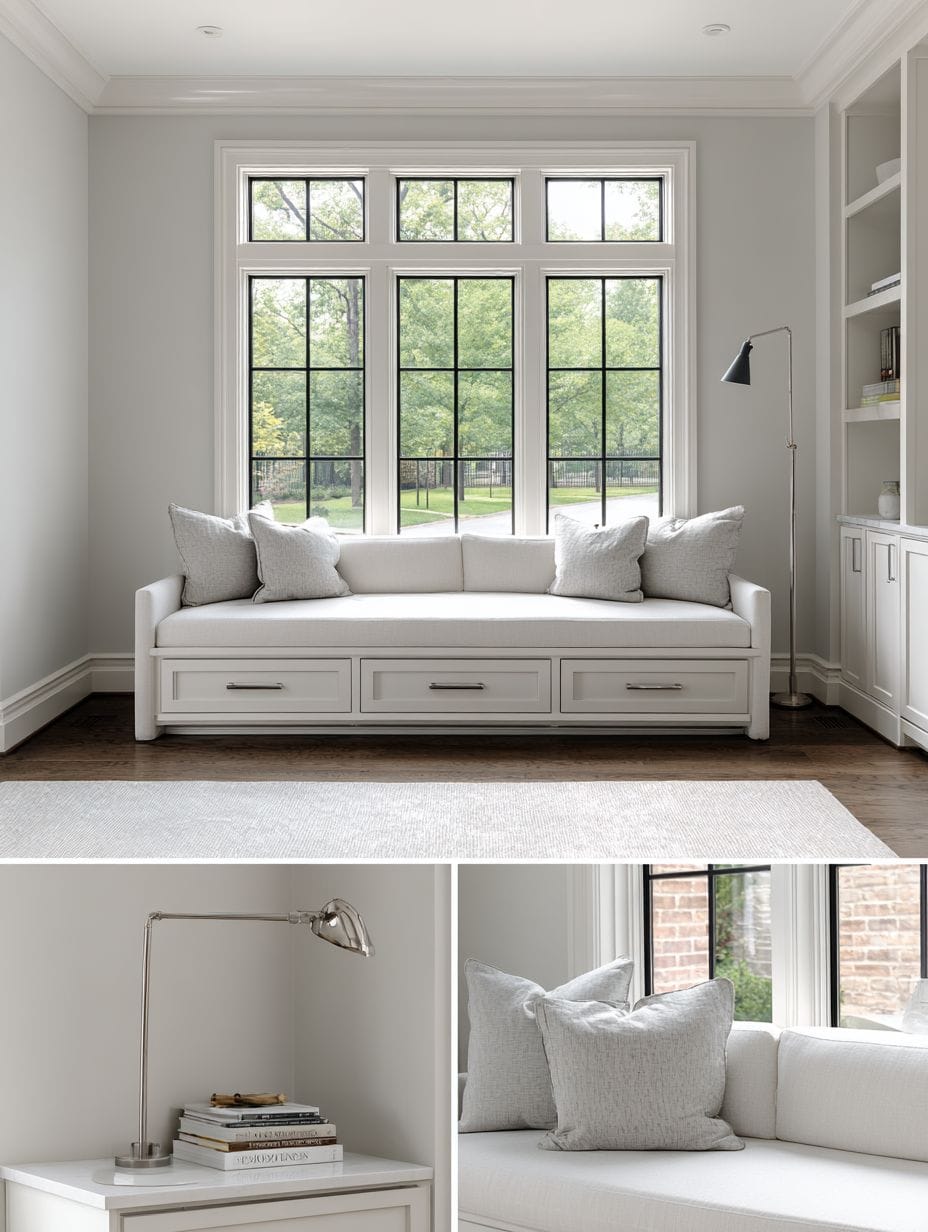
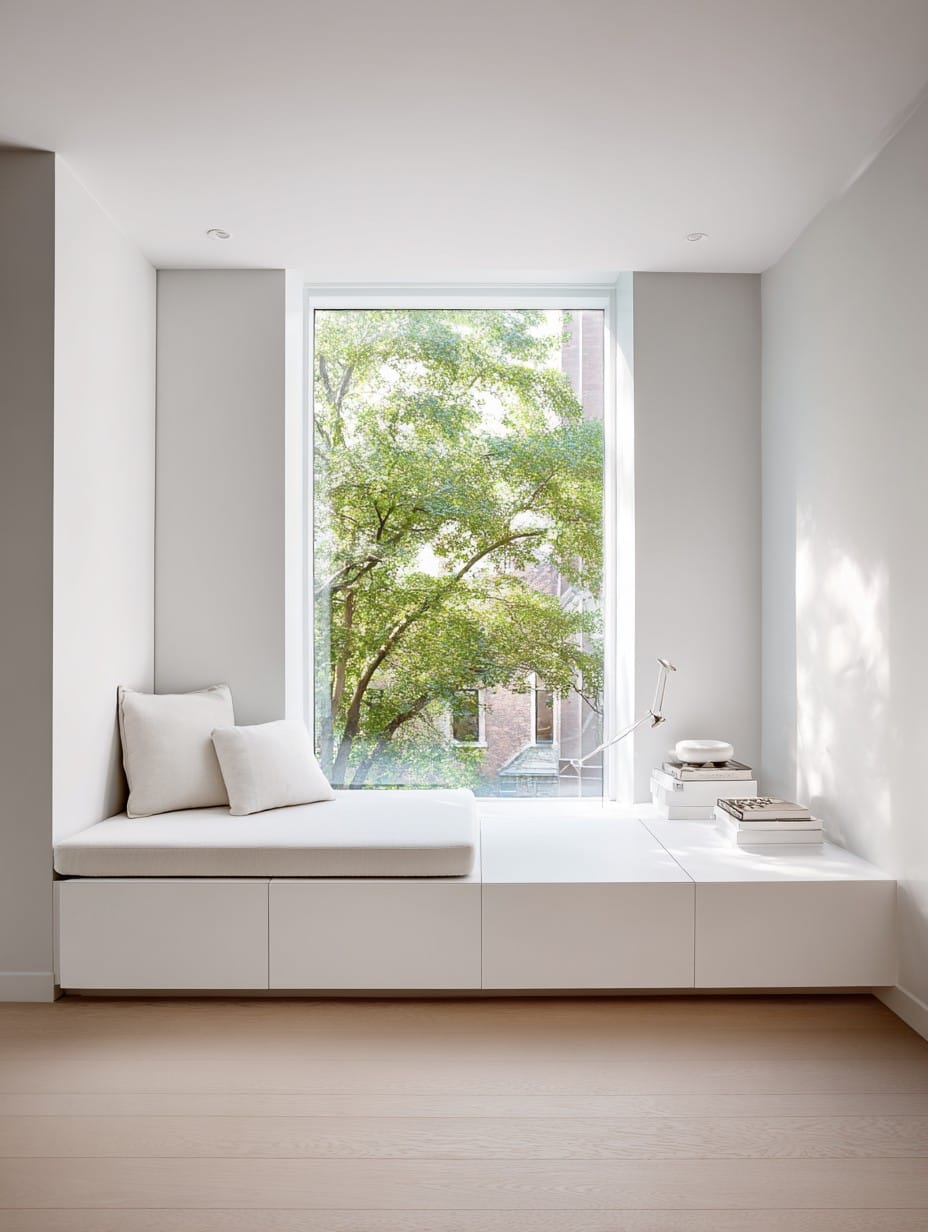
Window seats represent an ideal fusion of minimalist efficiency and comfortable functionality, as this concept beautifully illustrates. Built-in window seating with clean-lined white cushions transforms what might otherwise be dead space beneath windows into an inviting reading nook or contemplation area. The built-in nature of the seating creates a custom, architectural quality that feels permanent and intentional rather than furnished. Hidden storage beneath the seating provides practical organization without visible storage furniture that would clutter the minimalist space, demonstrating how thoughtful design can address functional needs invisibly.
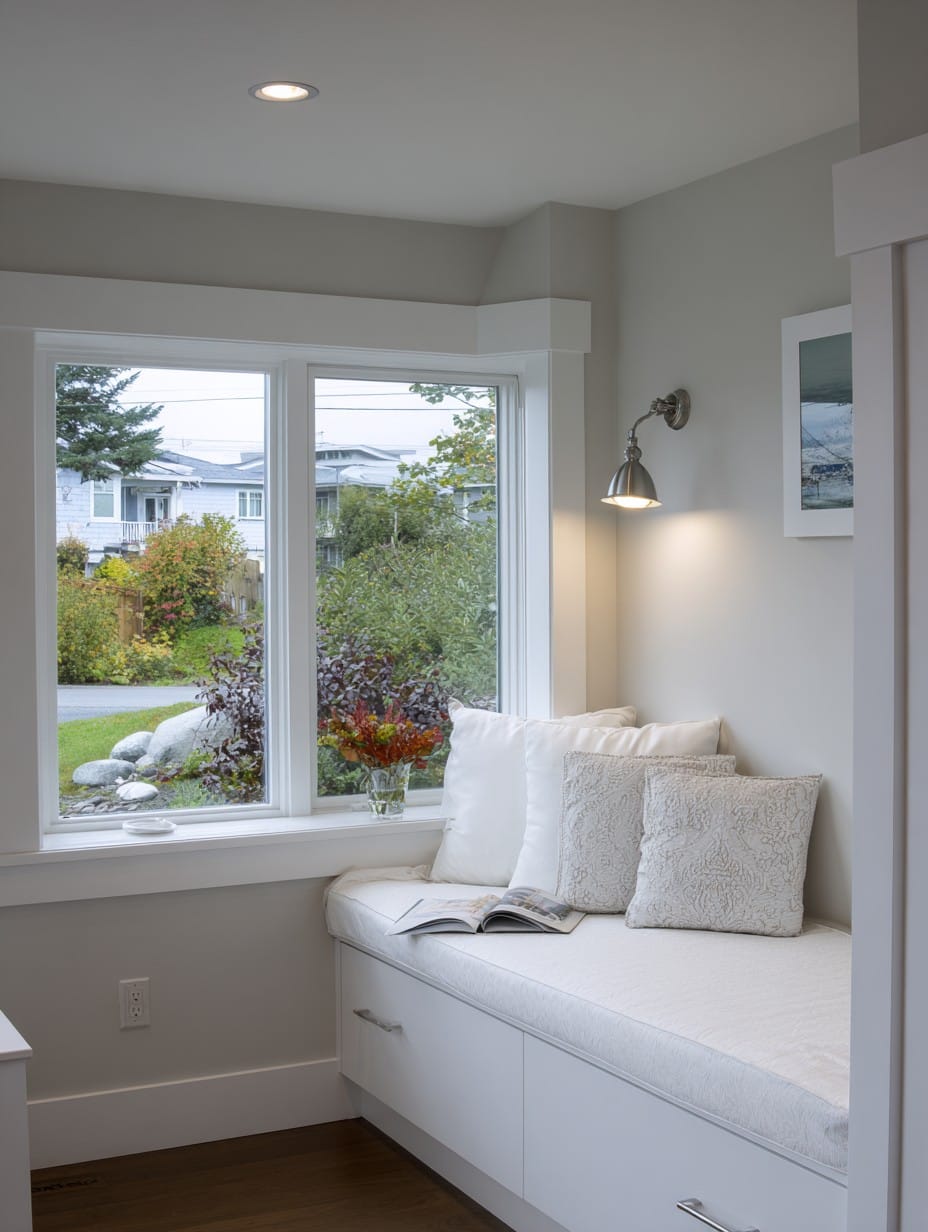
The reading nook features a single adjustable reading lamp that provides focused task lighting without requiring side tables or additional furniture. The lamp’s adjustable arm allows precise positioning for reading while its minimalist design prevents it from becoming a visual distraction. Views to greenery outside through large fixed windows connect the interior reading space to nature, providing visual interest and natural light while maintaining the clean, unornamented window treatment approach essential to minimalism. The fixed windows eliminate the visual complexity of operating hardware and screens.
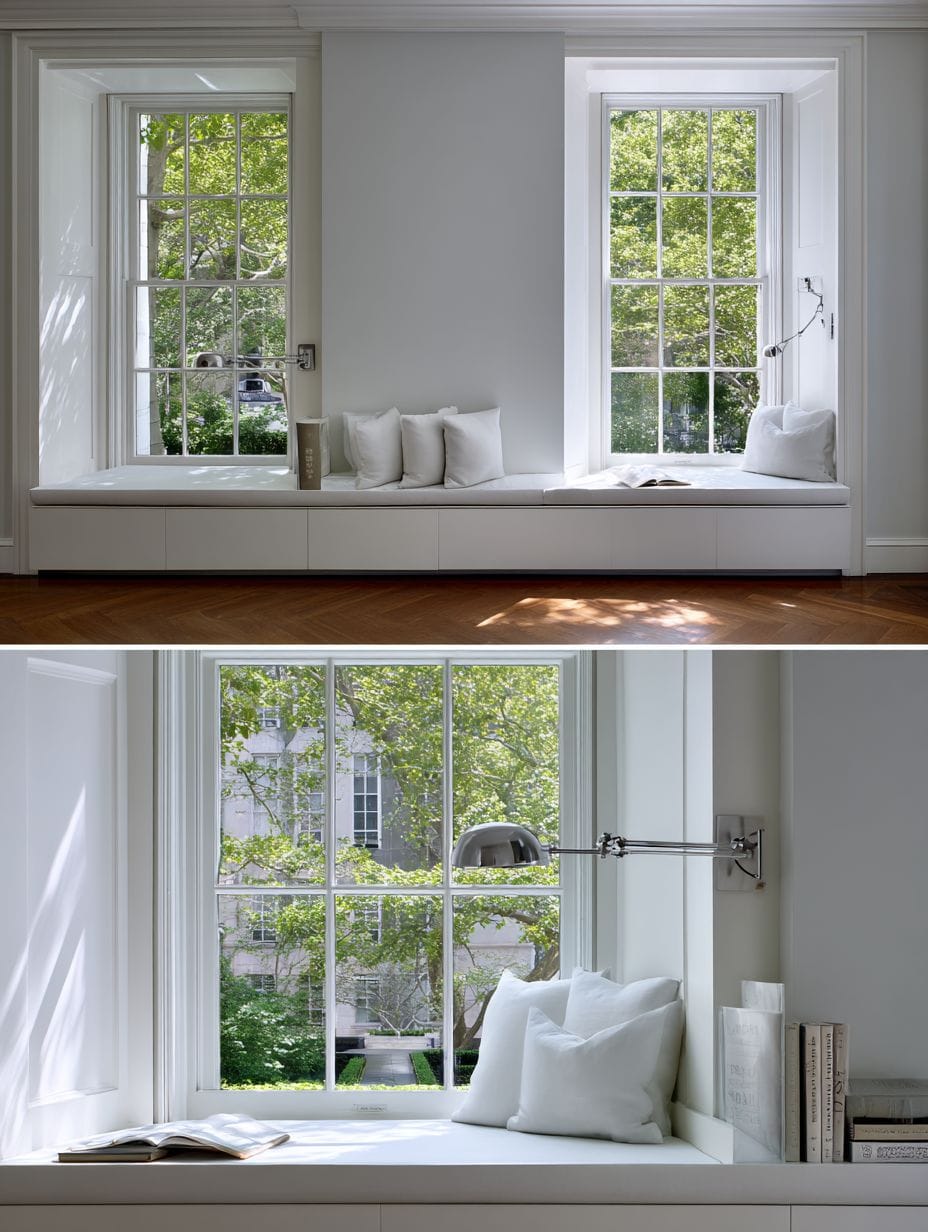
Light grey walls and white trim maintain the minimal aesthetic while creating subtle definition and architectural interest through simple color blocking. The grey provides a gentle backdrop that’s more soothing than pure white while remaining neutral enough not to compete with the view or other elements. This concept demonstrates that built-in elements can enhance minimalist spaces by providing function without furniture, reducing visual clutter while actually increasing usability and comfort. The window seat becomes both a practical amenity and a defining architectural feature that gives the room character and purpose.
- Incorporate built-in window seating to create functional spaces without requiring furniture that consumes floor area
- Include hidden storage beneath seating to address practical needs invisibly within the built-in element
- Use adjustable task lighting that can be precisely positioned without requiring additional furniture for support
- Choose fixed windows to eliminate visual complexity of hardware while maintaining clean sight lines to views
- Create subtle color definition through wall and trim color variations rather than through decorative elements
14. Technology Integration in Minimalist Design
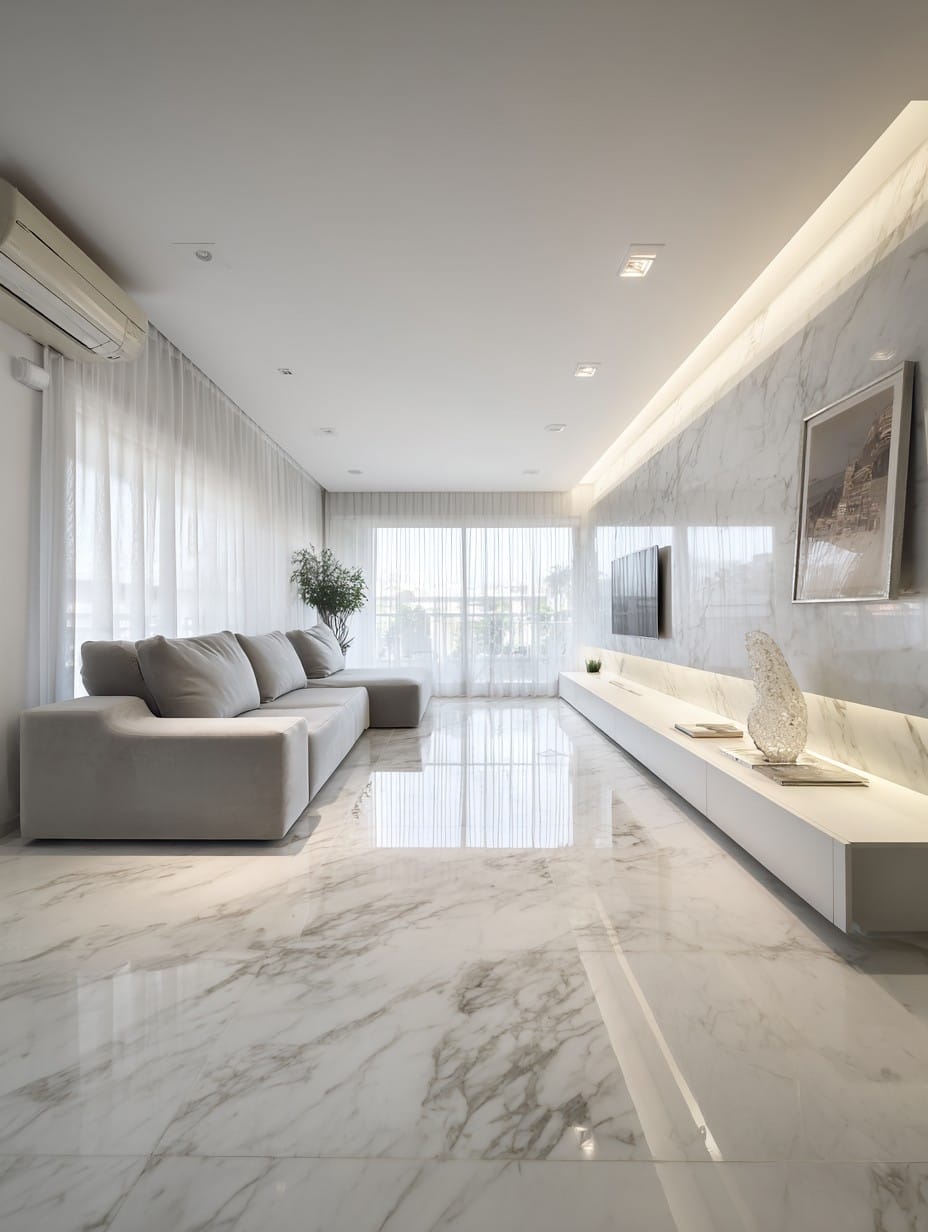
Modern living rooms must accommodate technology while maintaining minimalist principles, a challenge this concept addresses through thoughtful integration. A low-profile media wall in matte white features seamlessly integrated storage for electronics and media, with all cables concealed within the wall system. The matte finish prevents glare and fingerprints while maintaining the clean, uninterrupted surface essential to minimalist aesthetics. Integrated LED strip lighting provides subtle ambiance that can be adjusted for different moods and activities, demonstrating how technology can enhance rather than compromise minimalist design when properly incorporated.
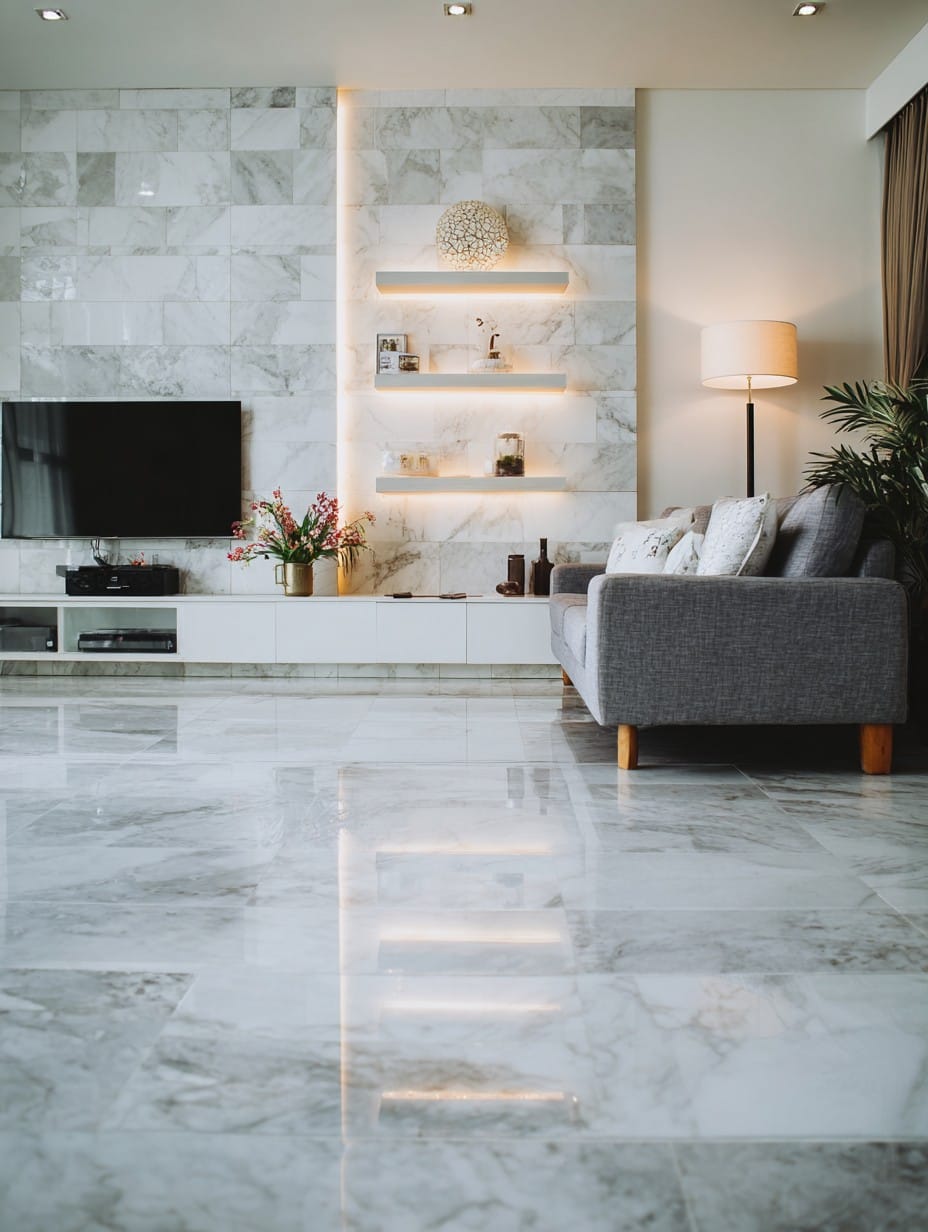
A simple grey sofa faces the sleek entertainment setup, positioned at the optimal viewing distance for the screen size while maintaining comfortable conversation angles. The grey upholstery provides neutral comfort without introducing pattern or visual complexity, allowing the technology integration to remain the focal point. Polished white porcelain tile flooring reflects soft natural light throughout the space while its cool, smooth surface contributes to the room’s contemporary, clean aesthetic. The large-format tiles minimize grout lines, maintaining the uninterrupted surfaces that characterize minimalist interiors.
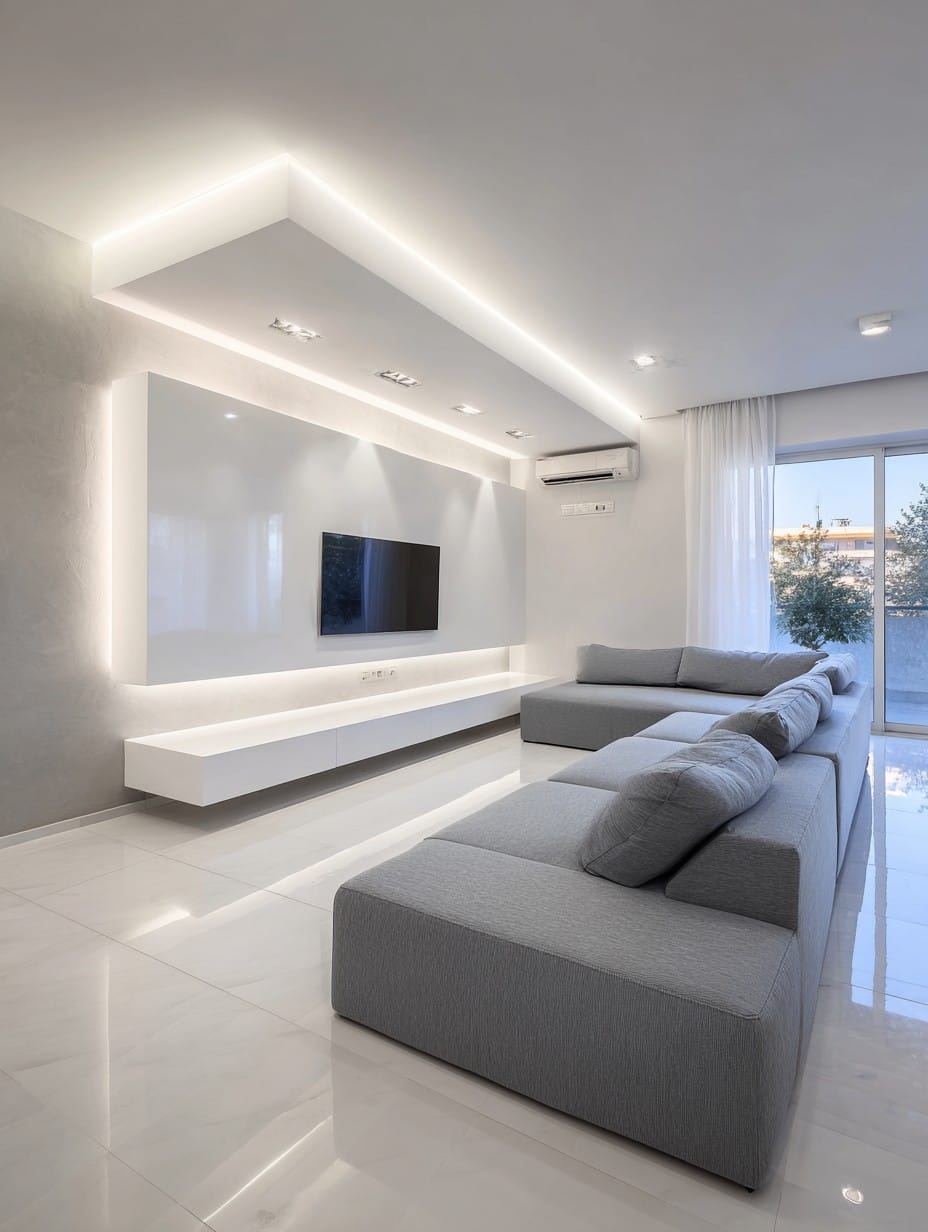
The concept illustrates that successful minimalist design in the contemporary era requires addressing technology needs proactively during the planning phase rather than treating them as afterthoughts. By concealing cables, integrating storage, and creating dedicated spaces for screens and equipment, the design allows technology to serve its function without dominating the visual landscape. The result is a living room that accommodates modern entertainment needs while preserving the calm, uncluttered aesthetic that makes minimalism appealing. This approach proves that minimalism and modern technology can coexist harmoniously when integration is thoughtful and intentional.
- Plan cable management from the design phase to conceal all wiring within walls or furniture rather than addressing it afterward
- Integrate electronics storage within built-in systems that hide equipment when not in use while maintaining access
- Use LED strip lighting for adjustable ambiance that provides illumination without visible fixtures
- Choose large-format tiles to minimize grout lines and create clean, uninterrupted floor surfaces
- Position seating at optimal distances for both technology viewing and conversation to maintain room functionality
15. Monochromatic Grey Sophistication
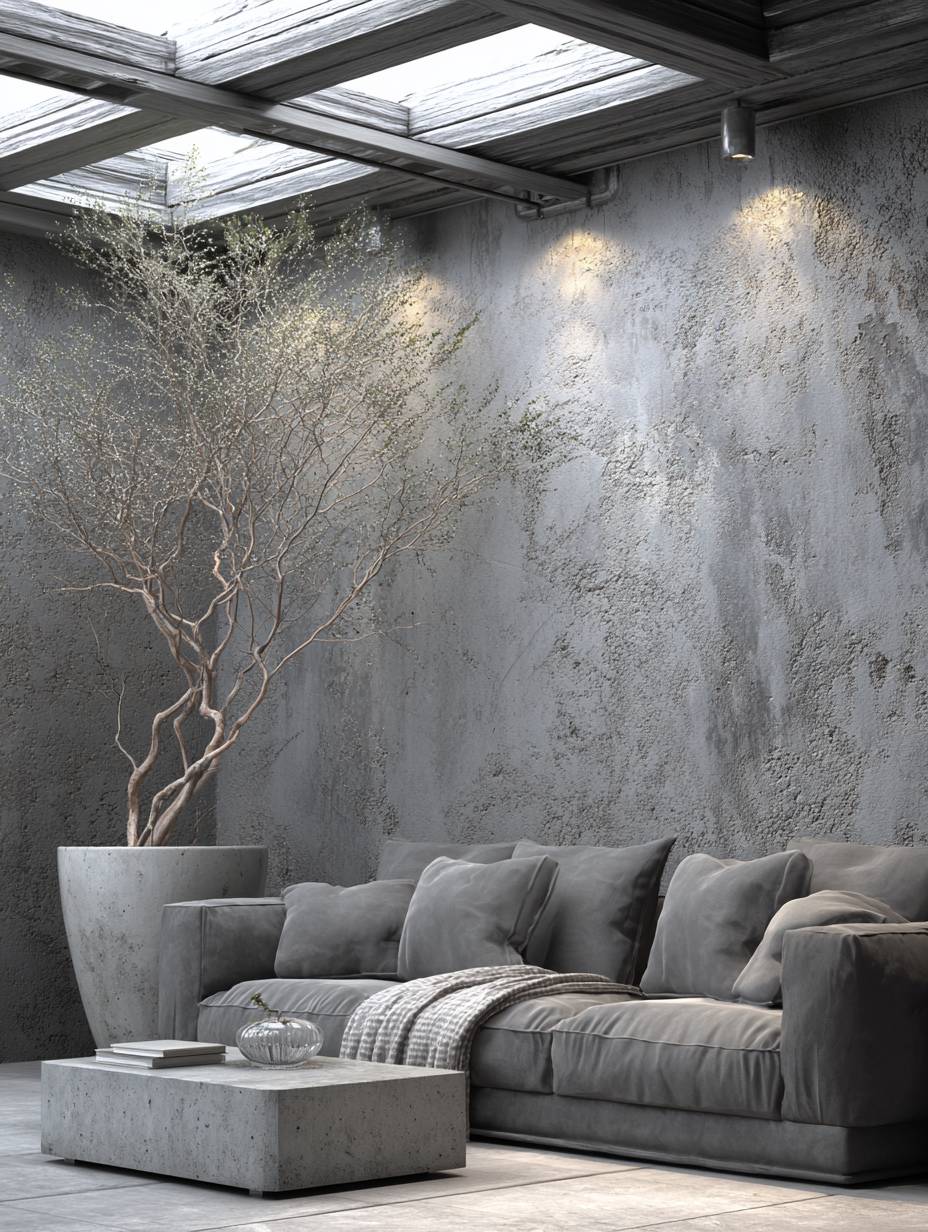
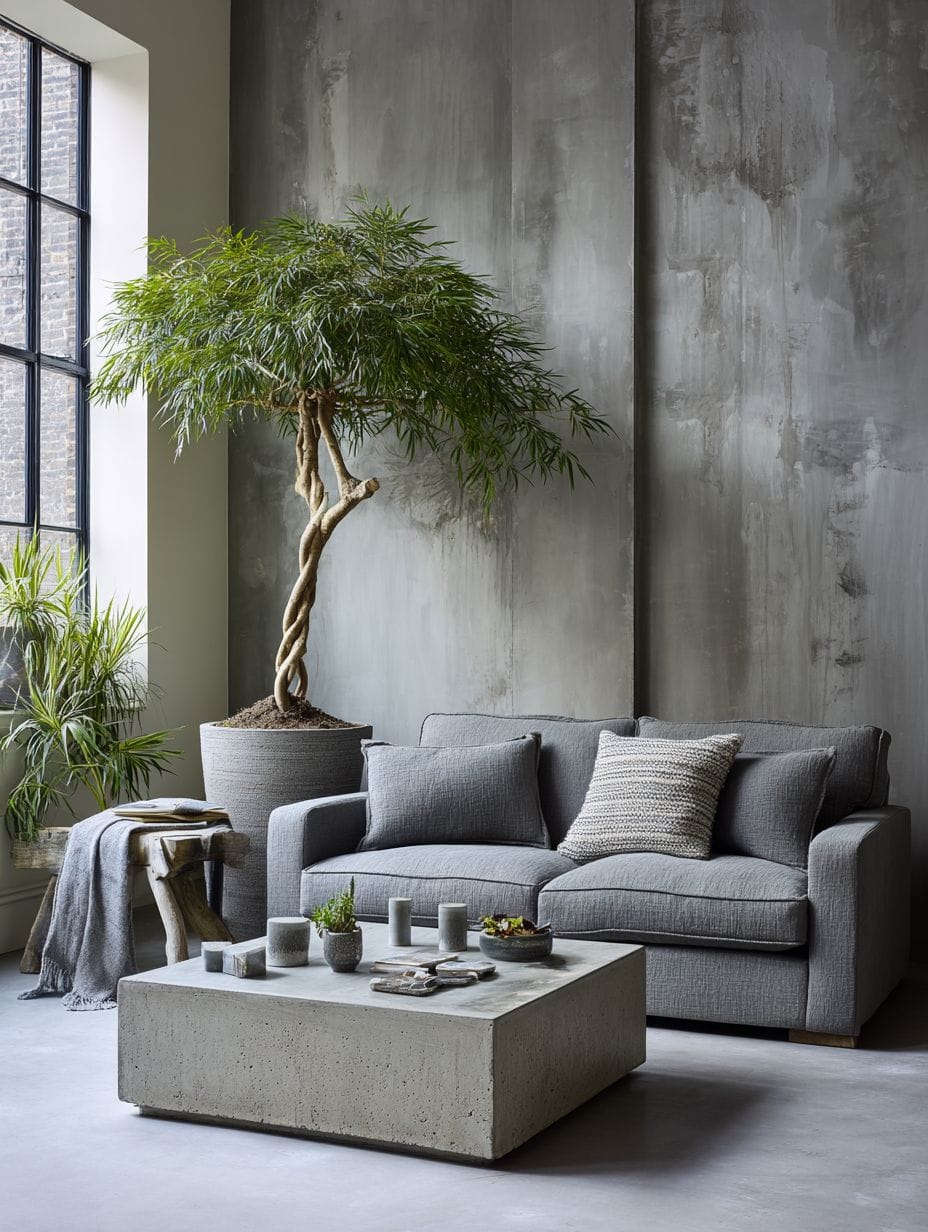
A monochromatic grey scheme offers sophisticated restraint and timeless elegance when executed with attention to textural variation. This concept features layered grey tones from charcoal to light silver, creating depth through value contrast rather than color change. A charcoal linen sofa provides the darkest anchor point, its deep tone grounding the space while the natural linen fabric introduces subtle texture that prevents the dark color from feeling heavy or oppressive. A lighter grey wool throw adds another textural layer, its soft, cozy quality transforming the sofa from a simple seating element into an invitation to relax and linger.
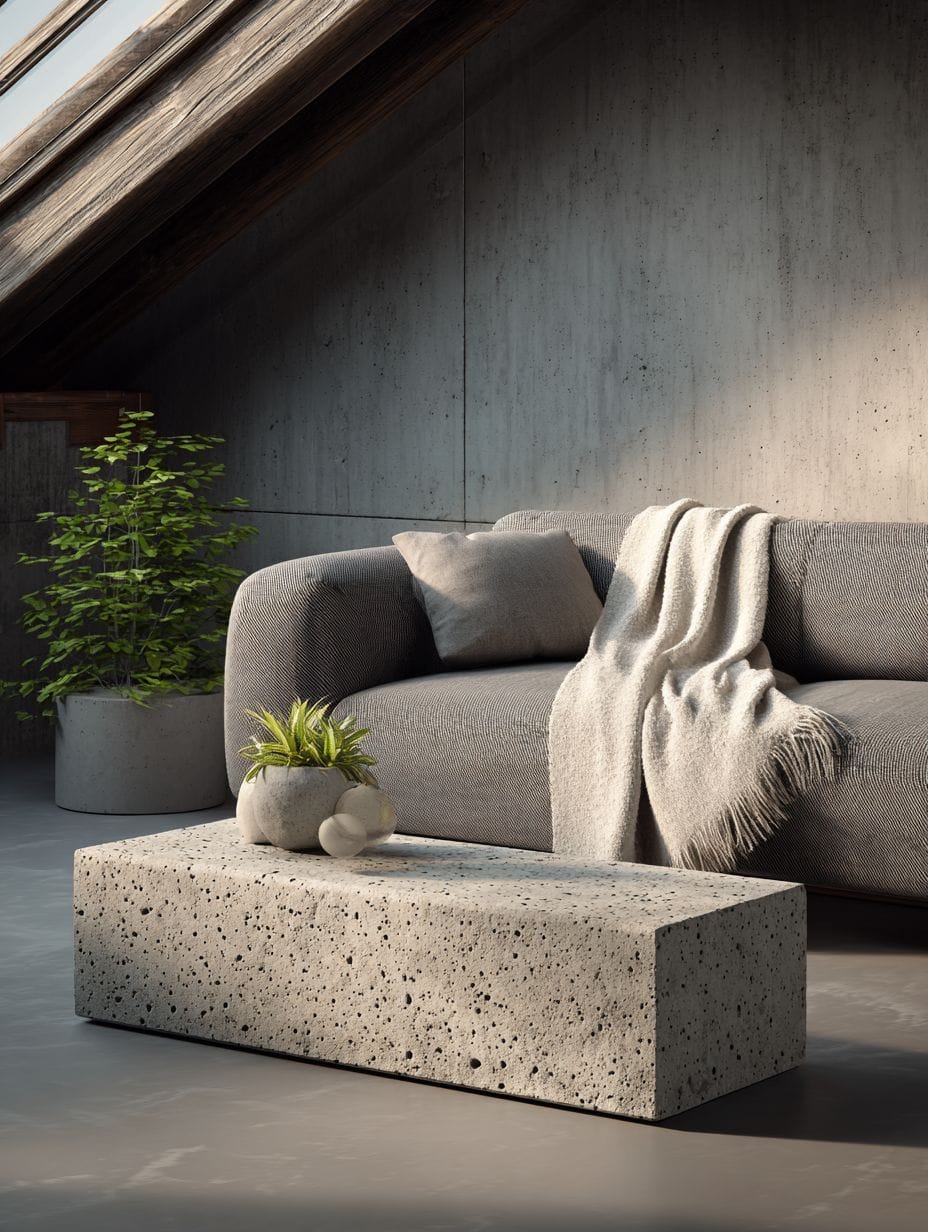
A concrete coffee table with visible aggregate texture brings industrial sophistication to the grey palette, its raw material and rough surface contrasting with the softer textile elements. The concrete’s natural variations in tone and the varied sizes of exposed aggregate create visual interest without introducing pattern or decoration. The table’s substantial presence and honest material expression ground the lighter, softer elements around it, preventing the scheme from feeling too delicate or insubstantial. A single architectural plant in a concrete planter continues the material dialogue while introducing living greenery that adds vitality to the monochromatic scheme.
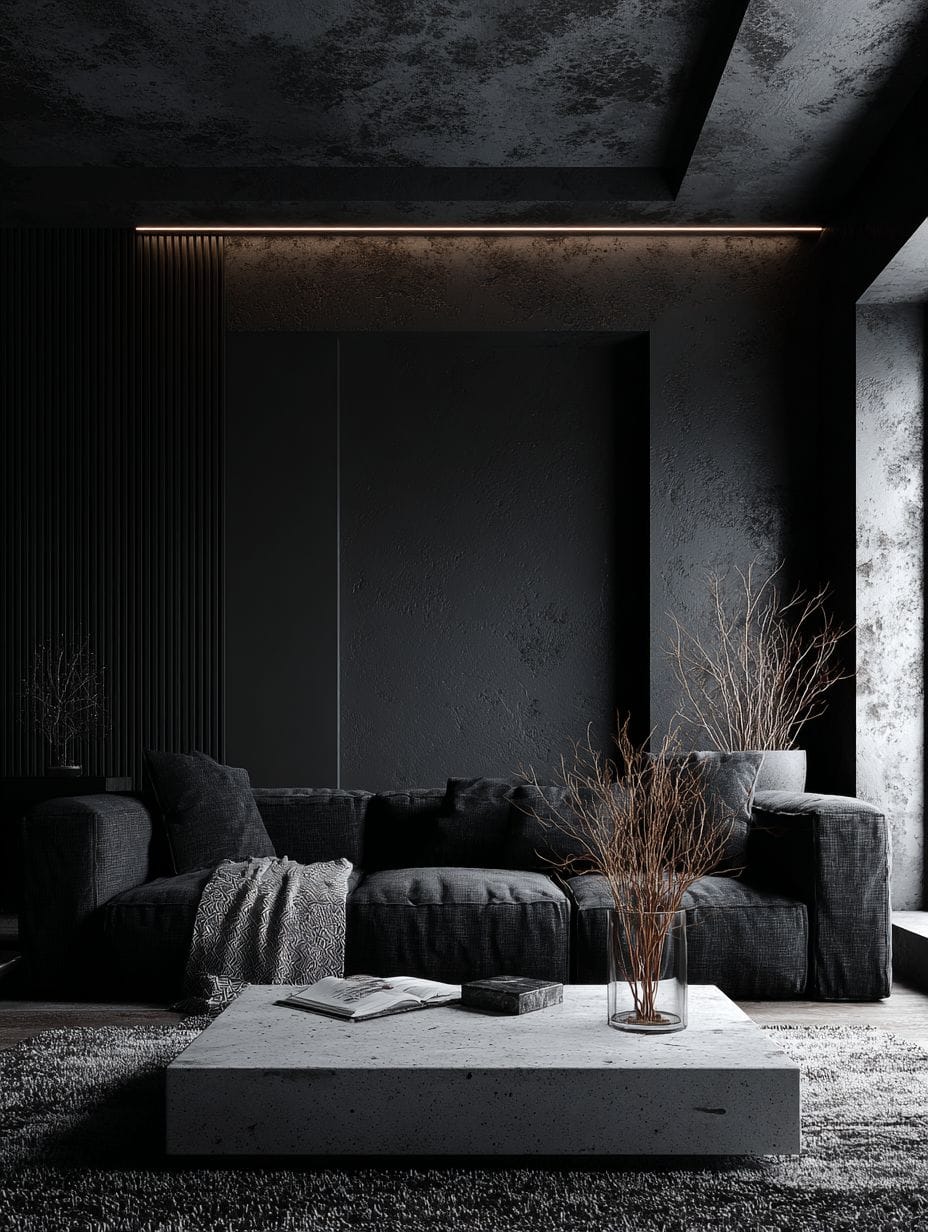
Soft natural lighting from clerestory windows emphasizes the tonal variations and material textures throughout the space, demonstrating how light becomes a crucial design element in monochromatic schemes. The high windows provide illumination without compromising wall space or privacy, their elevated position creating dramatic light patterns as the sun moves throughout the day. This concept proves that monochromatic grey schemes achieve sophistication through careful attention to texture, material quality, and lighting rather than through color variety. The result is a living room that feels contemporary and refined while maintaining the warmth and comfort essential to successful residential design.
- Layer multiple grey values from charcoal to light silver to create depth in monochromatic schemes
- Vary textures extensively from smooth to rough to add visual and tactile interest without color variation
- Include raw industrial materials like concrete to add edge and prevent grey schemes from feeling generic
- Use clerestory or high windows to provide natural light while maintaining wall space and privacy
- Add one living plant in a matching planter to introduce vitality without disrupting the color scheme
16. Open-Plan Zone Definition
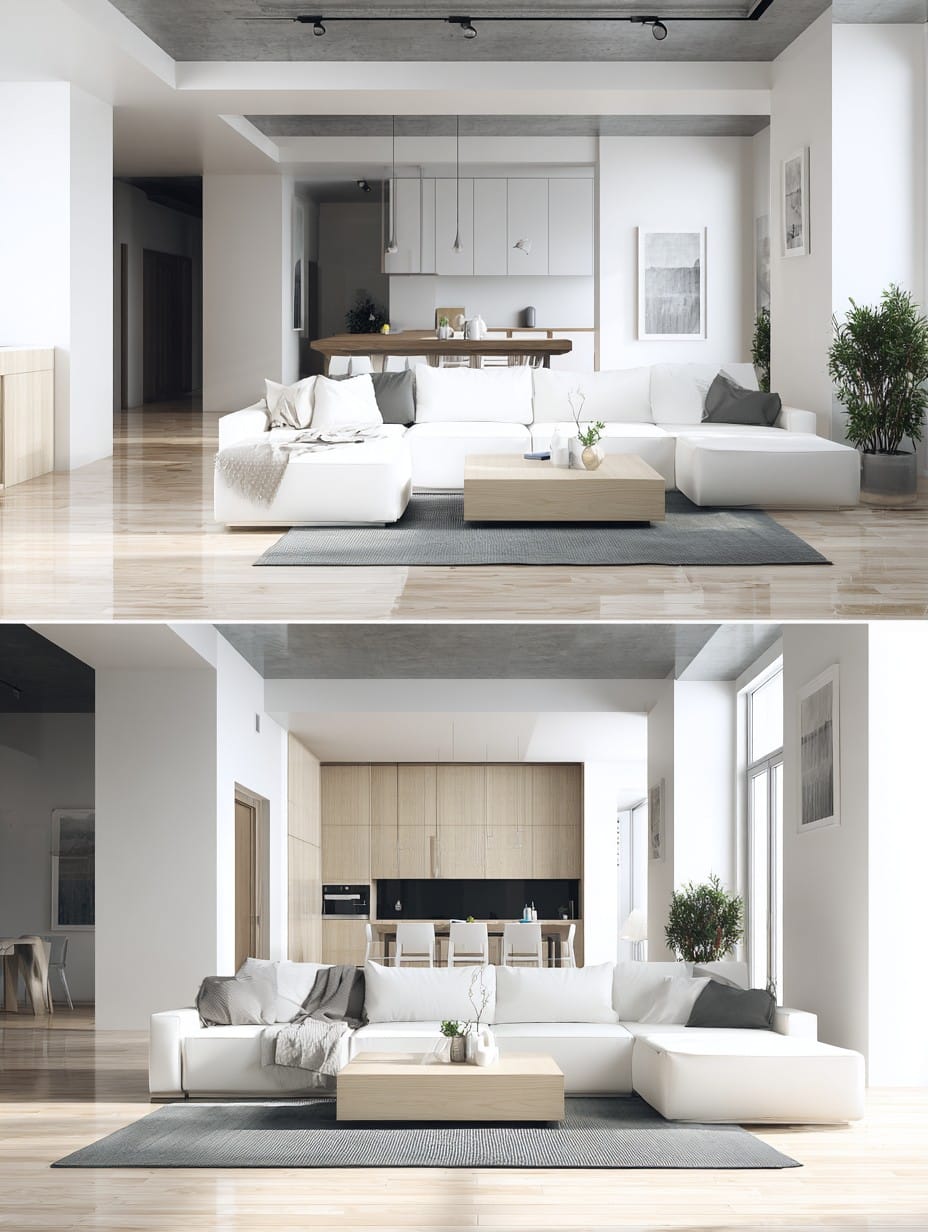
Open-plan living presents unique challenges for minimalist design, particularly in defining separate zones without visual barriers or clutter. This concept demonstrates how minimal furniture placement can create clear functional areas while maintaining the spacious, flowing quality that makes open plans appealing. A white sofa delineates the living area from the adjacent dining space without creating physical or visual barriers that would compromise the open feeling. The sofa’s placement creates an implicit boundary that organizes the space through position rather than through walls or dividers, allowing sight lines and light to flow freely throughout.
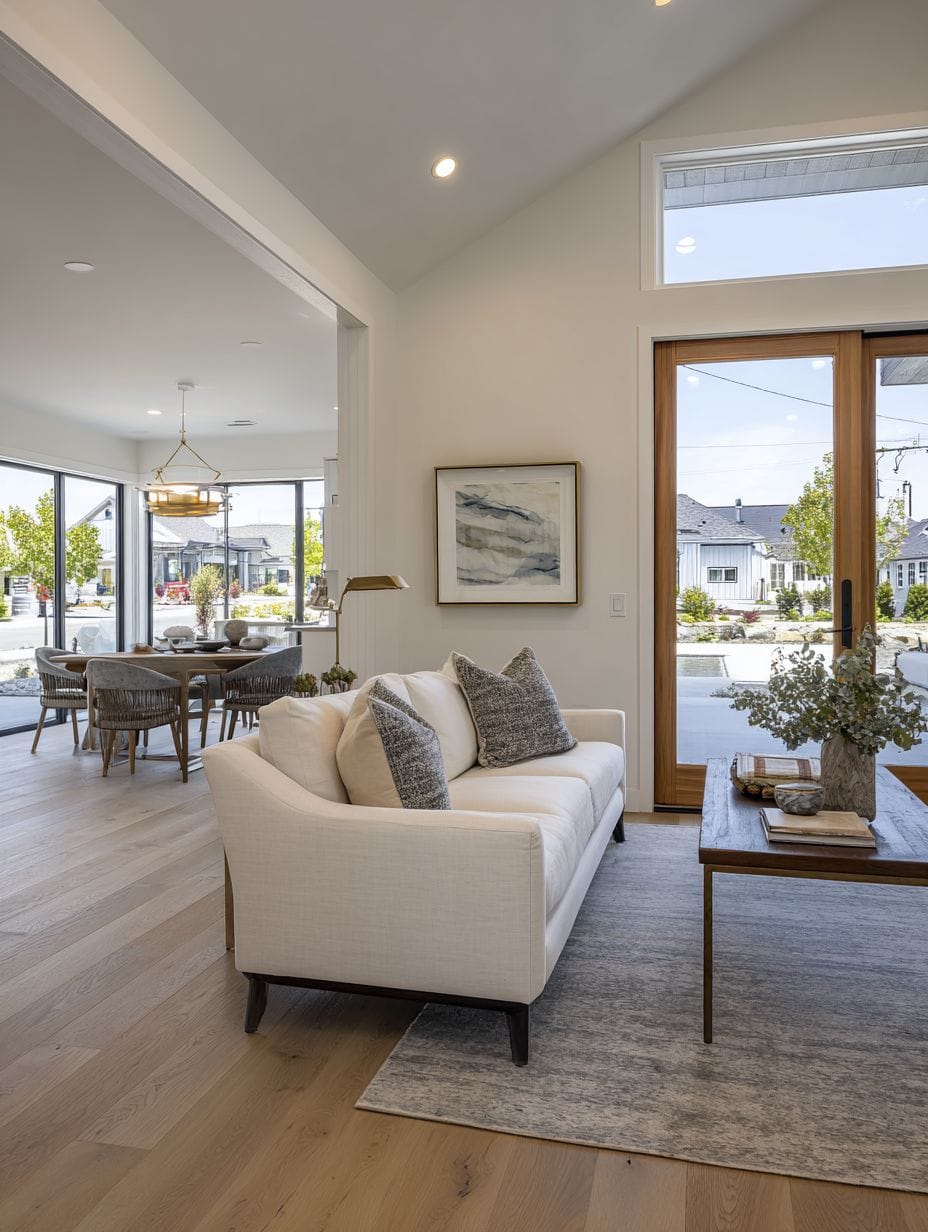
Light oak flooring flows continuously throughout both zones, creating visual continuity and cohesion that reinforces the sense of openness. The natural wood provides warmth and texture at the foundational level while its uniform presence ties different functional areas together. Area rugs in subtle grey define separate functions without introducing pattern or visual complexity, their neutral tone maintaining the minimalist aesthetic while their physical presence signals different zones. The rugs also provide acoustic benefits, absorbing sound that might otherwise echo in open spaces with minimal furnishings and hard surfaces.
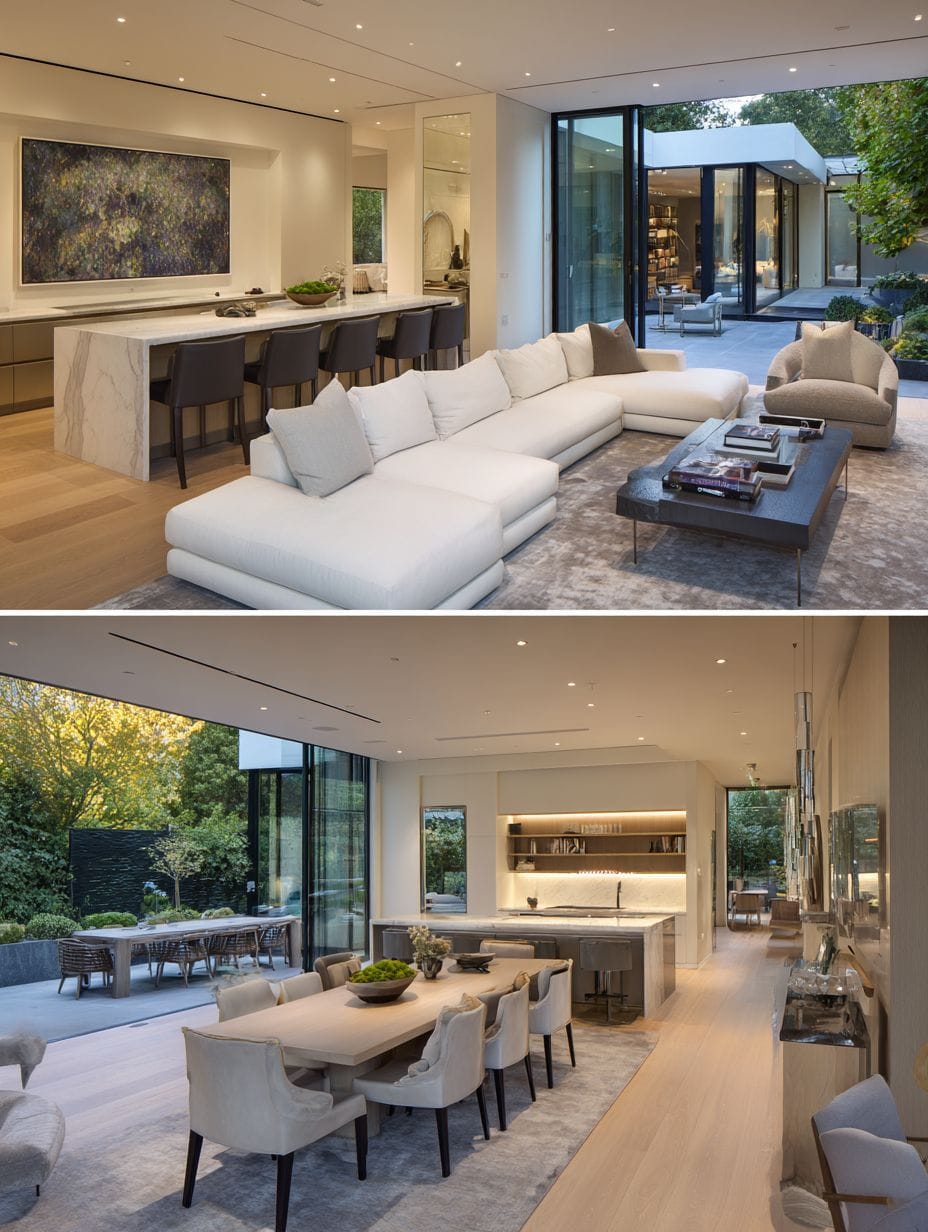
This approach to open-plan design illustrates that minimalism in open spaces requires careful attention to furniture placement and subtle zoning strategies rather than dramatic interventions. The goal is to create functional separation and definition while preserving the spaciousness and light that make open plans desirable. The result is a cohesive living environment where different activities can occur simultaneously without feeling cramped or disconnected, proving that minimalist principles can enhance rather than hinder the functionality of open-plan layouts. The strategic restraint creates a sense of expansiveness that makes even modest-sized homes feel generous and well-planned.
- Use furniture placement to define zones rather than relying on walls or dividers that compromise openness
- Maintain continuous flooring throughout open spaces to create visual flow and cohesion between zones
- Define areas with neutral rugs that signal functional changes without introducing pattern or visual complexity
- Choose matching or coordinated furniture across zones to maintain visual unity while serving different functions
- Preserve clear sight lines by keeping furniture low-profile and avoiding tall pieces that create barriers
17. Gallery Minimalism with Statement Art
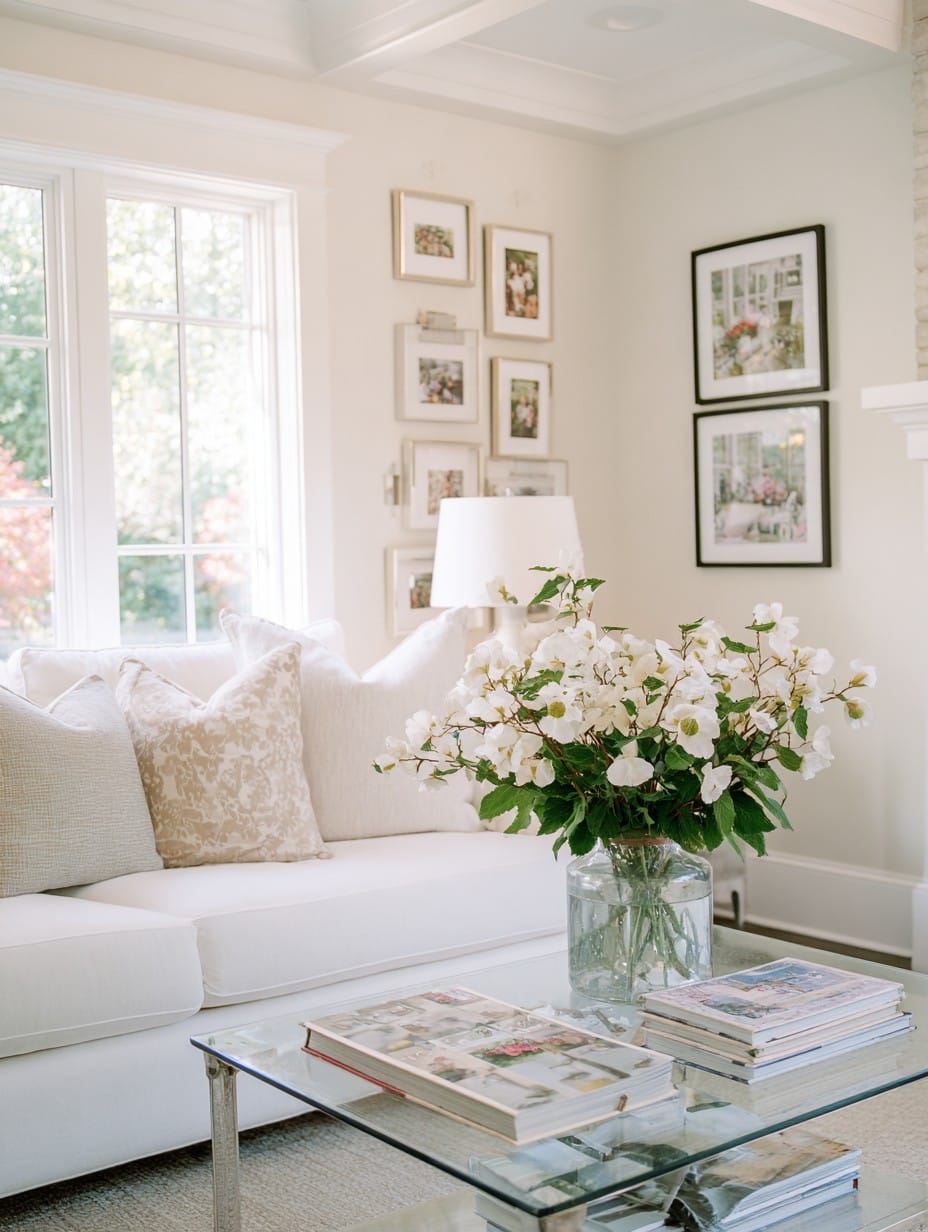
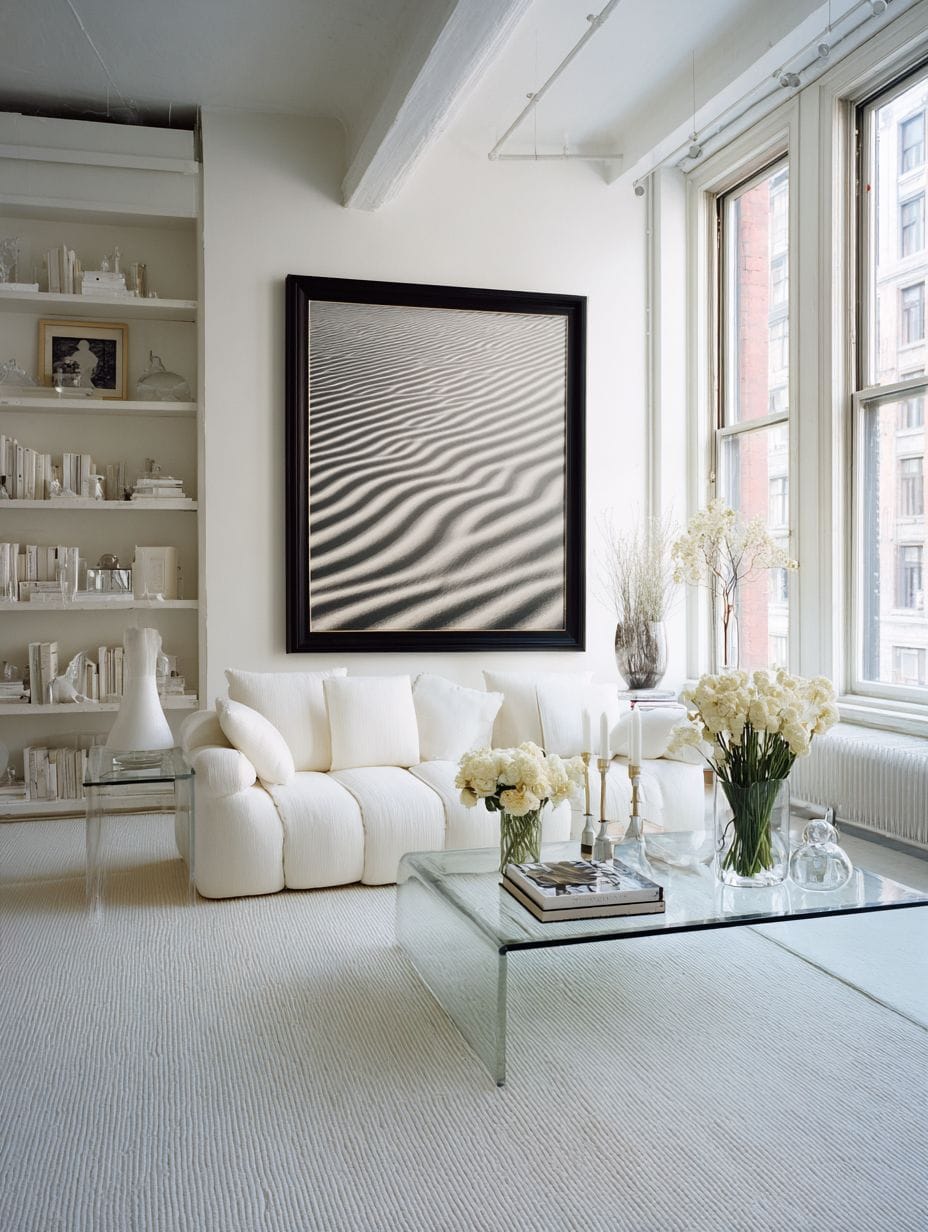
Art can play a central role in minimalist spaces when selected and displayed with appropriate restraint, as this concept demonstrates. A single large-scale photograph in a simple black frame against a white wall serves as the room’s only artwork, its substantial size and powerful imagery creating impact without requiring multiple pieces. The gallery approach of displaying one significant work rather than multiple smaller pieces allows the artwork to be truly seen and appreciated rather than competing for attention within a crowded arrangement. The black frame provides definition without ornate decoration, its simple profile complementing rather than distracting from the image.
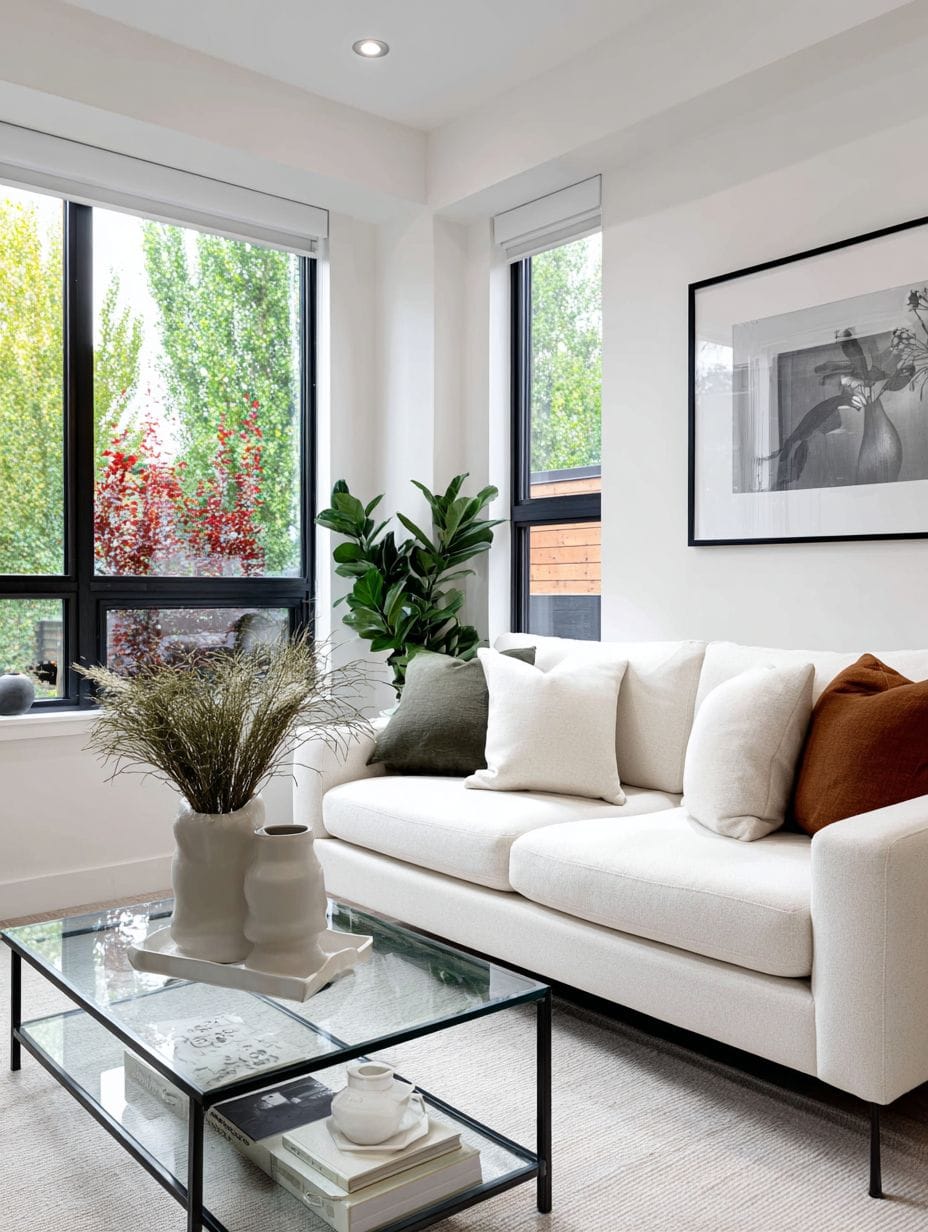
A simple white sofa and glass coffee table keep focus directed toward the statement piece, their neutral colors and minimal forms receding to allow the artwork to dominate the visual landscape. The white sofa’s clean lines and lack of decorative details ensure it doesn’t compete with the photograph for attention, while the glass coffee table’s transparency maintains sight lines and creates an almost invisible functional surface. This furniture restraint demonstrates the minimalist principle that not every element in a room must demand attention—some pieces serve best by supporting rather than competing.
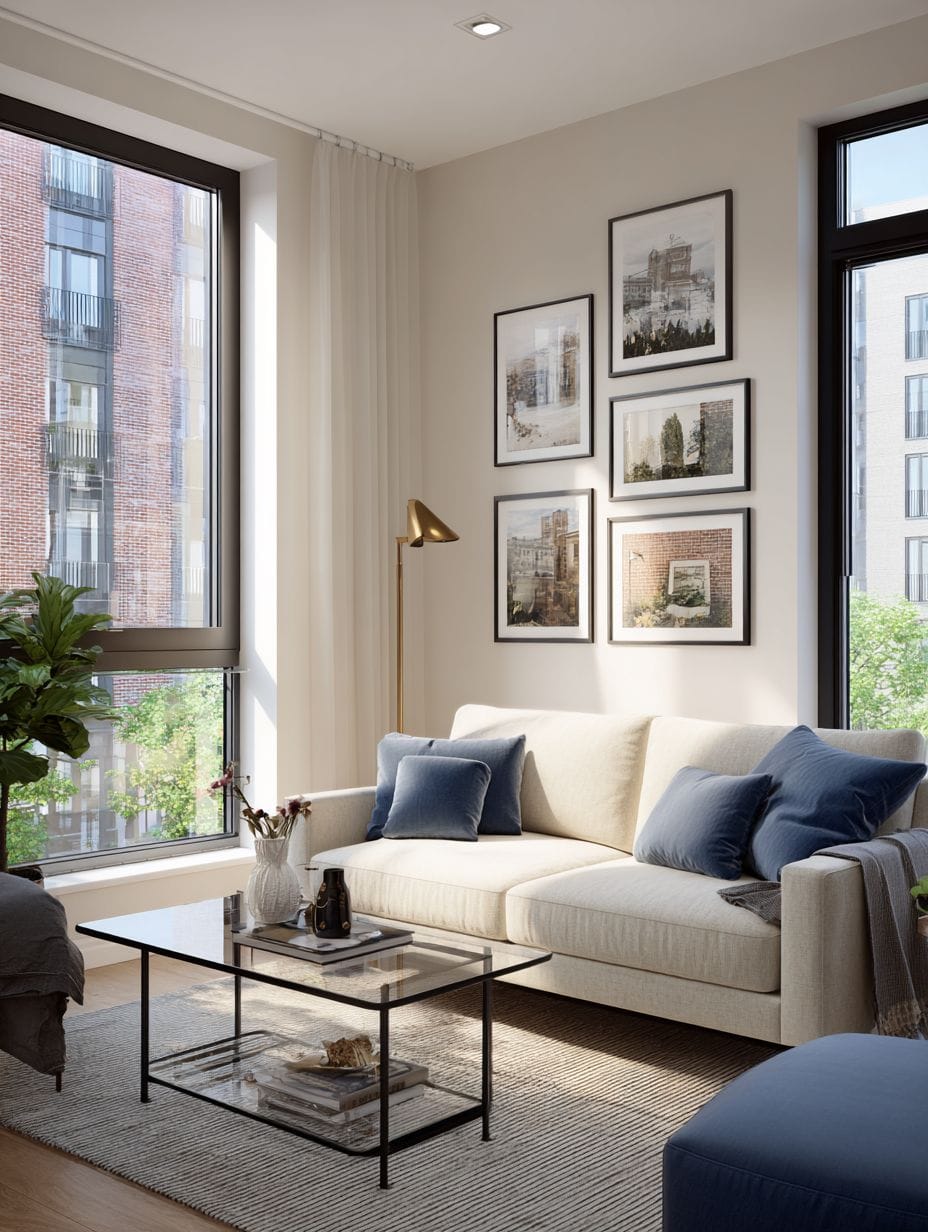
Natural light from adjacent windows illuminates the space evenly, preventing harsh shadows that might interfere with viewing the artwork while providing ambient illumination that changes throughout the day. The even lighting allows the photograph to be appreciated properly at any time, while the natural light’s subtle variations prevent the space from feeling static or artificially controlled. This concept proves that minimalist spaces can celebrate art and creativity while maintaining restraint in other areas, creating gallery-like environments that honor individual pieces through the discipline of limited selection. The result is a living room that functions as both comfortable living space and contemplative art gallery.
- Display one large-scale artwork rather than multiple small pieces to create impact through restraint
- Choose simple black frames that provide definition without ornate decoration that competes with the artwork
- Select minimal furniture in neutral tones that recedes visually to keep focus on featured art
- Use glass or transparent furniture to provide function while maintaining sight lines and visual lightness
- Ensure even natural lighting that allows proper appreciation of artwork throughout the day
18. Natural Wood Accent Strategy
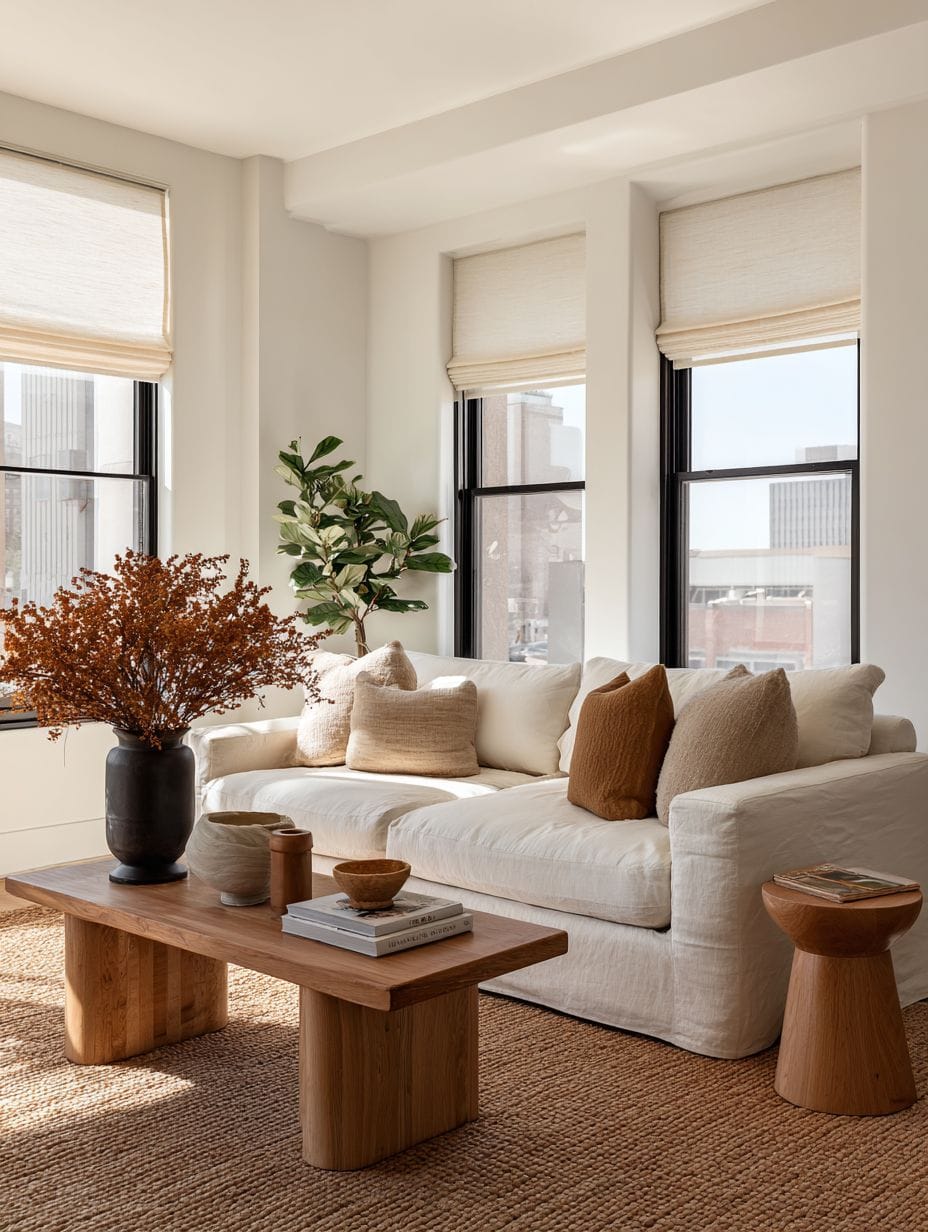
Introducing warmth to neutral minimalist schemes can be effectively achieved through strategic natural wood accents, as this concept illustrates. A walnut coffee table and matching side table provide rich, dark wood tones that ground the lighter elements while introducing natural grain patterns that add organic visual interest. The walnut’s chocolate-brown hues create sophisticated warmth without the orange undertones of lighter woods, offering a more contemporary and refined appearance. The matching pieces create intentional cohesion that demonstrates thoughtful selection rather than haphazard accumulation, an important distinction in minimalist design where every element must justify its presence.
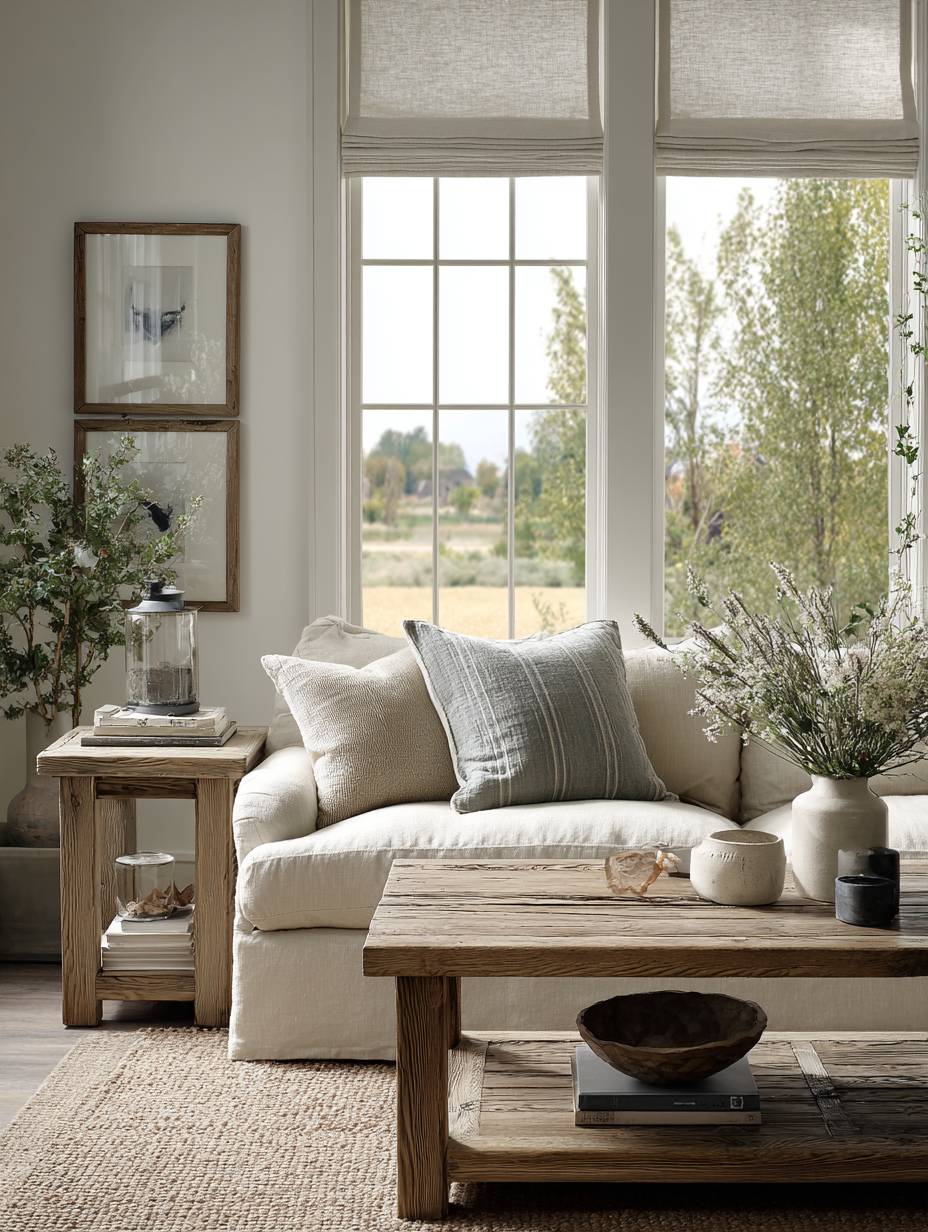
A cream linen sofa sits on a natural fiber sisal rug, creating a foundation of neutral, natural materials that complement rather than compete with the wood accents. The cream tone is warmer than pure white, creating an inviting quality while maintaining the light, airy feeling essential to minimalist spaces. The sisal rug adds textural interest and organic warmth at the foundational level, its natural color and woven construction reinforcing the room’s connection to natural materials. The combination of linen upholstery and sisal rug creates layered texture that prevents the neutral scheme from appearing flat or boring.
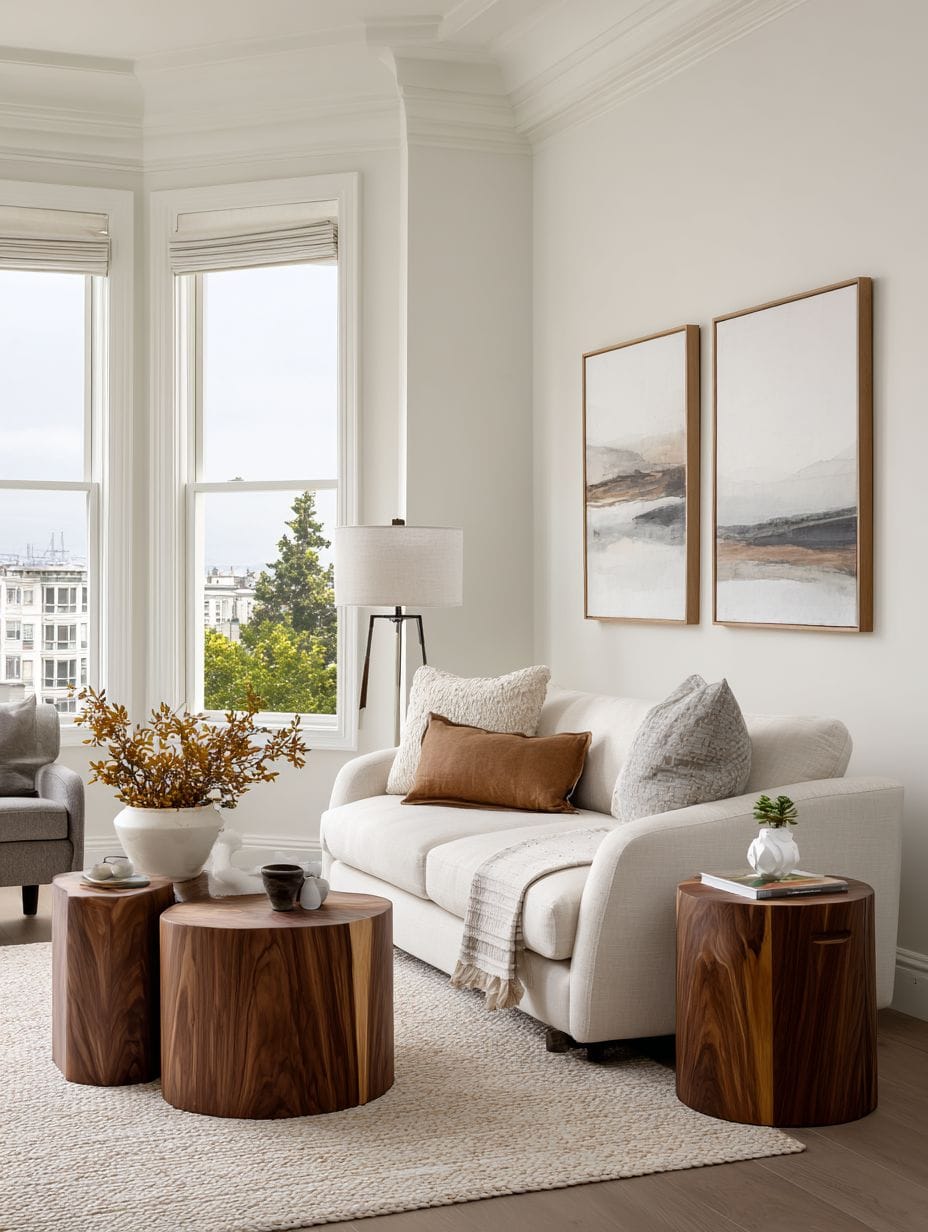
White walls and simple roller shades maintain a clean backdrop that allows the natural wood and textile textures to stand out without competing elements. The roller shades’ simple functionality and clean lines prevent window treatments from becoming decorative focal points, keeping attention on the carefully selected furniture and materials. This concept demonstrates that natural wood accents can add substantial warmth to minimalist spaces without requiring extensive use or abandoning neutral color schemes. By limiting wood to key furniture pieces and selecting a tone that complements the overall palette, the design achieves balance between minimalist restraint and inviting warmth. The result is a living room that feels both contemporary and timeless, sophisticated yet approachable.
- Choose dark wood tones like walnut for contemporary warmth without orange undertones of lighter woods
- Match wood pieces for cohesion demonstrating intentional selection rather than random accumulation
- Layer natural materials such as linen, sisal, and wood to create textural interest within neutral schemes
- Maintain white or light walls as a clean backdrop that allows natural materials to stand out
- Select simple window treatments that provide function without becoming decorative focal points
19. Layered Lighting for Functional Minimalism
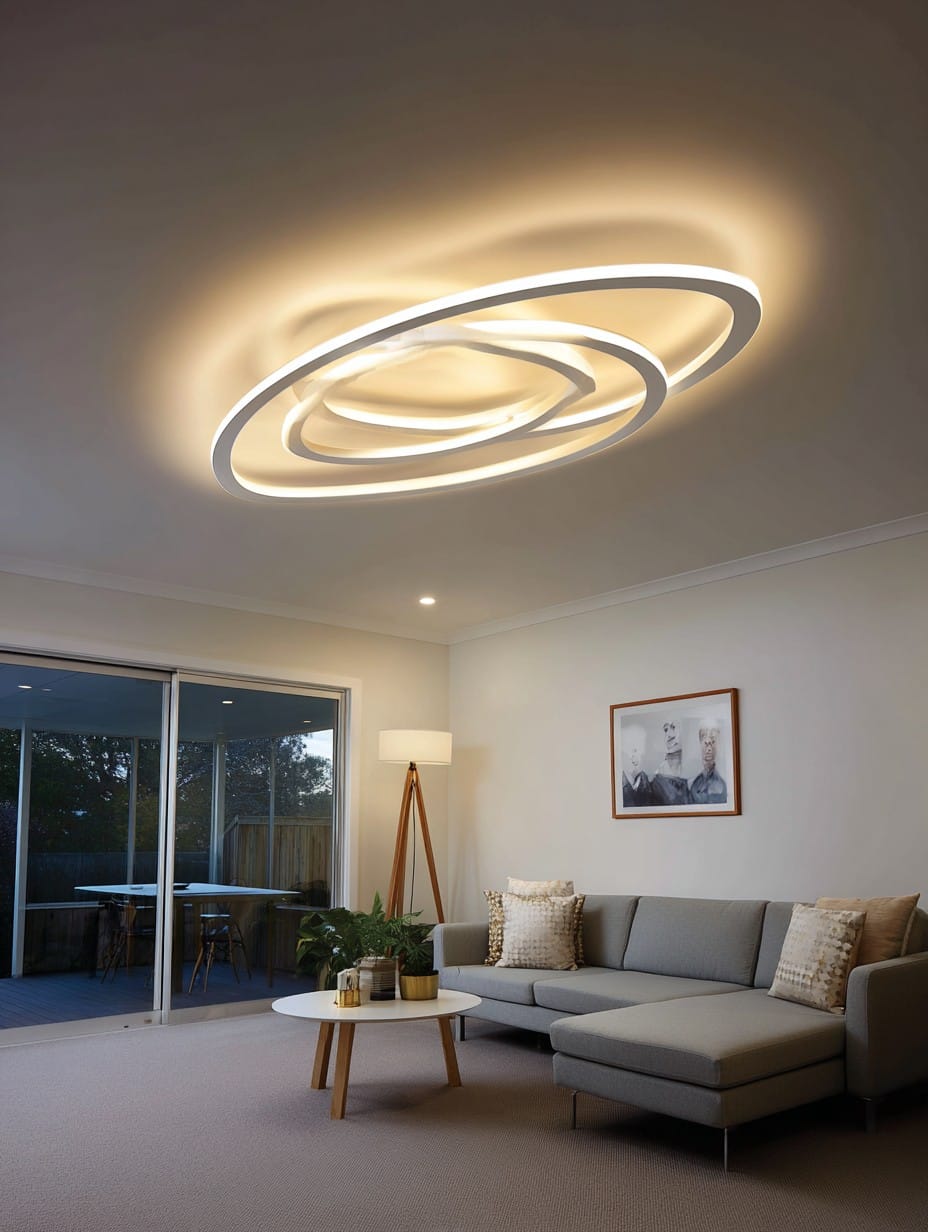
Lighting design becomes particularly crucial in minimalist spaces where decorative elements are limited and functionality must be maintained without visual clutter. This concept showcases smart lighting design with recessed ceiling fixtures providing ambient illumination throughout the space, their invisible presence maintaining clean ceiling planes without visible hardware. The recessed installation eliminates the visual complexity of hanging or surface-mounted fixtures while providing even, shadow-free base lighting. A single sculptural floor lamp adds focused illumination and serves as the room’s primary decorative element, demonstrating how lighting can fulfill both functional and aesthetic roles in minimalist interiors.
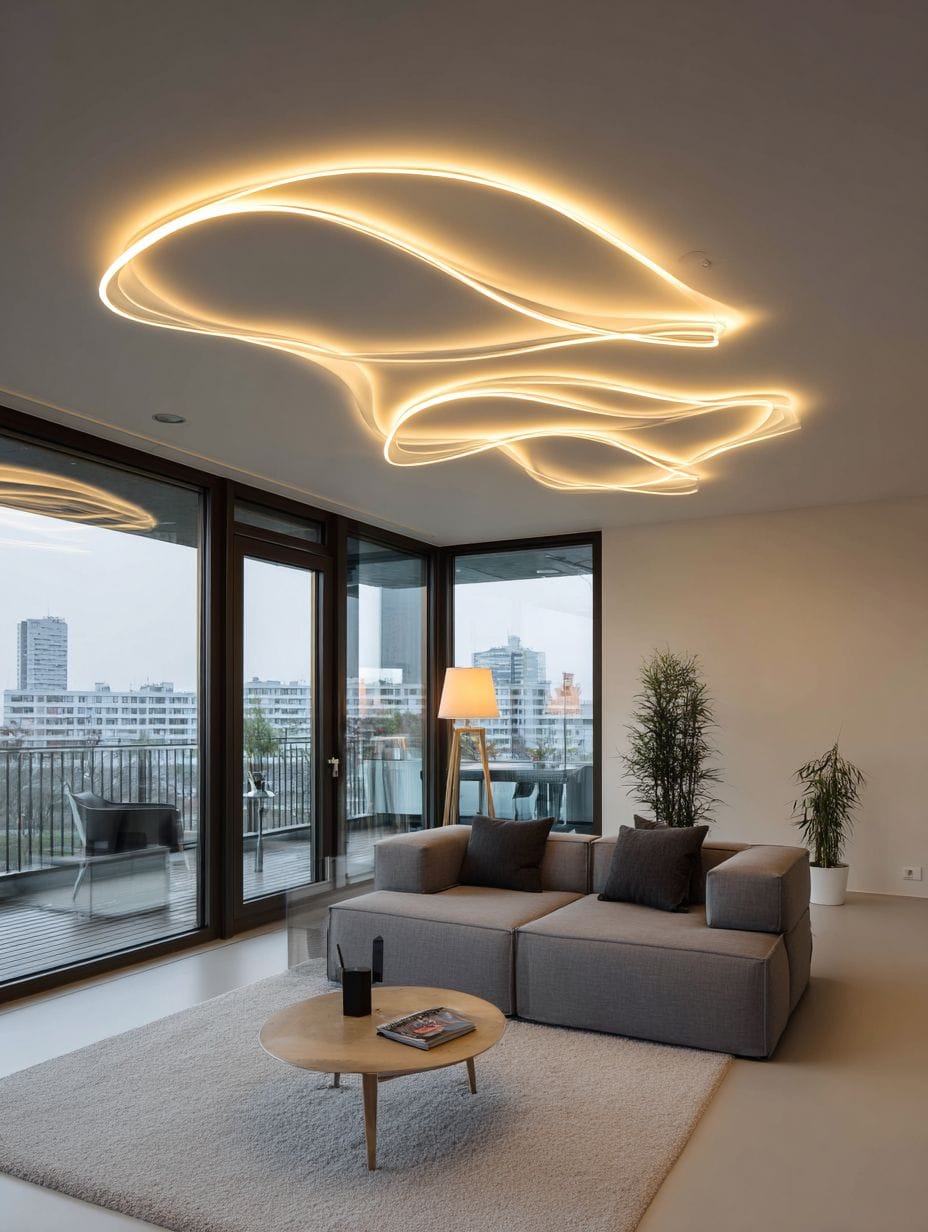
The floor lamp’s sculptural qualities transform a utilitarian object into an art piece, its elegant form creating visual interest without requiring additional decoration. Its adjustable nature allows light to be directed where needed for different activities, from reading to conversation, while its floor-based position eliminates the need for end tables that would consume space and add visual clutter. A grey modular sofa provides flexible seating that can be rearranged as needed, its neutral color and simple form allowing the lighting design to take visual precedence. The modular nature ensures the seating arrangement can adapt to different uses without requiring additional furniture purchases.
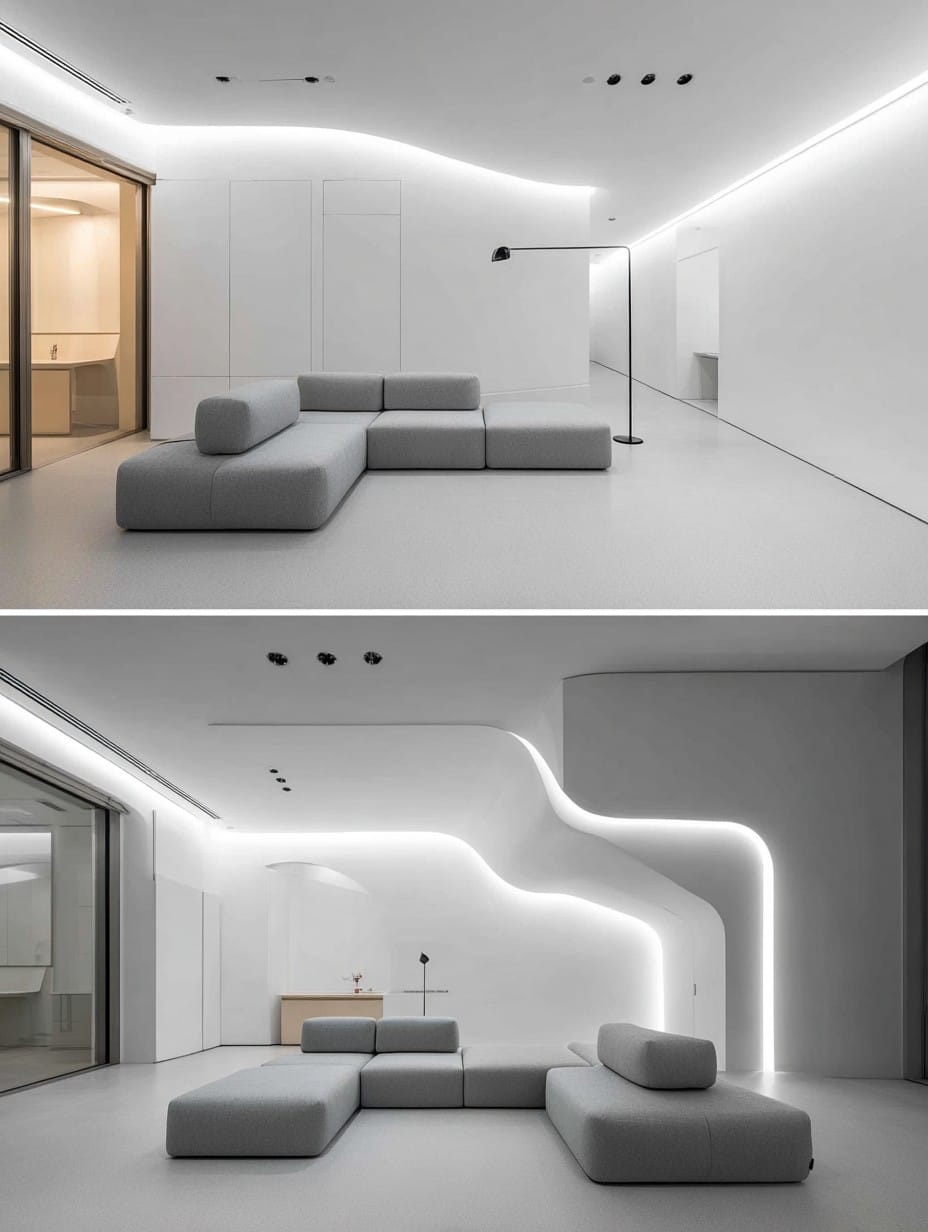
White walls and light grey carpet create a neutral canvas that reflects and distributes light effectively throughout the space, maximizing the impact of both natural and artificial illumination. The light carpet adds softness and warmth underfoot while its pale tone prevents it from creating a heavy visual base that might make the room feel smaller. Evening photography captures how thoughtful lighting design enhances minimalist spaces after dark, proving that layered lighting is essential for minimalist rooms to function beautifully at all times of day. The combination of ambient recessed lighting and focused sculptural lighting provides flexibility for different moods and activities while maintaining the clean aesthetic that defines minimalist design.
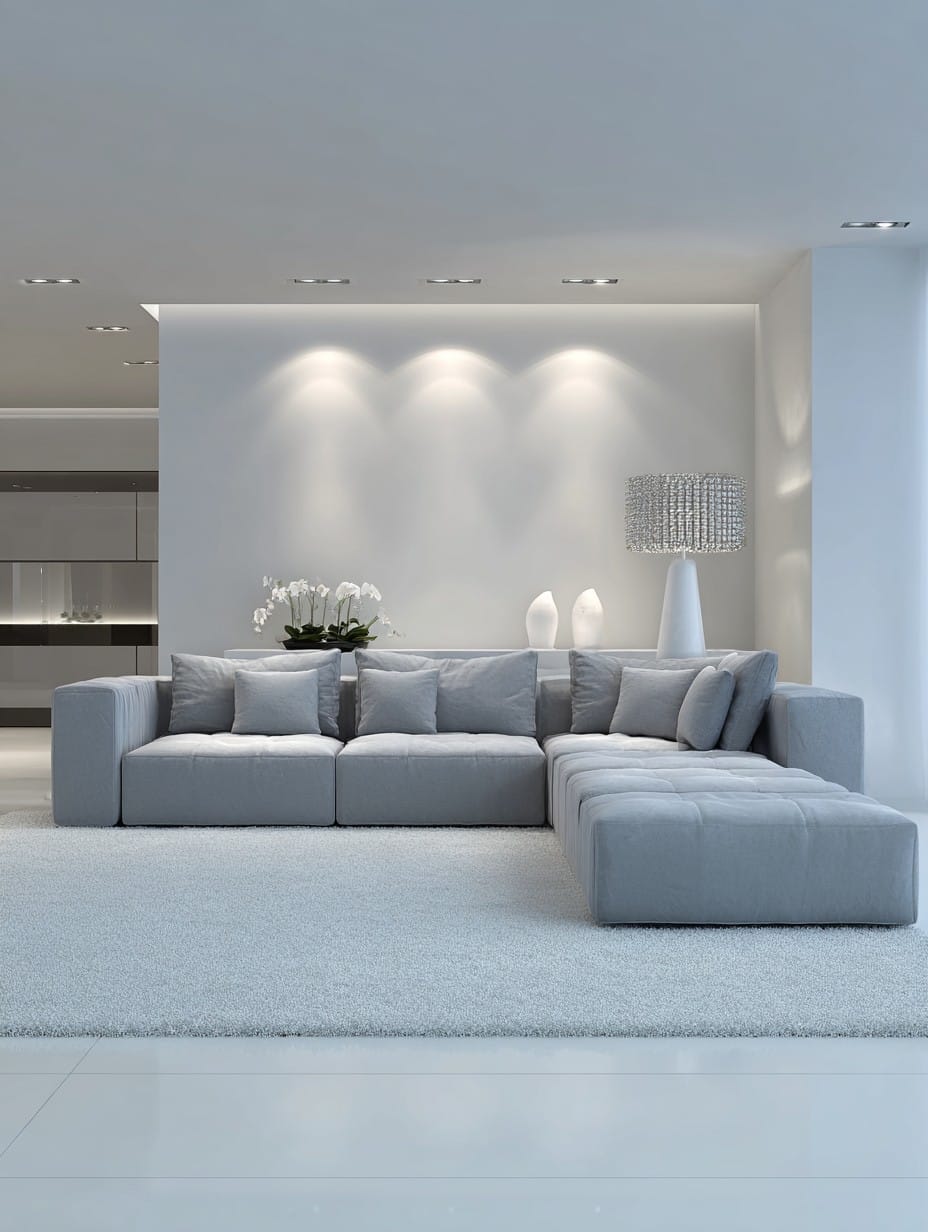
- Install recessed ceiling fixtures for ambient lighting that doesn’t introduce visual complexity through visible hardware
- Choose one sculptural floor lamp that serves as both functional lighting and decorative art piece
- Select adjustable lighting that can be directed for different activities without requiring multiple fixtures
- Use light-colored surfaces that reflect and distribute light effectively throughout the space
- Plan lighting for evening functionality ensuring minimalist spaces work beautifully after dark as well as during daylight hours
20. Sunken Conversation Pit Architecture
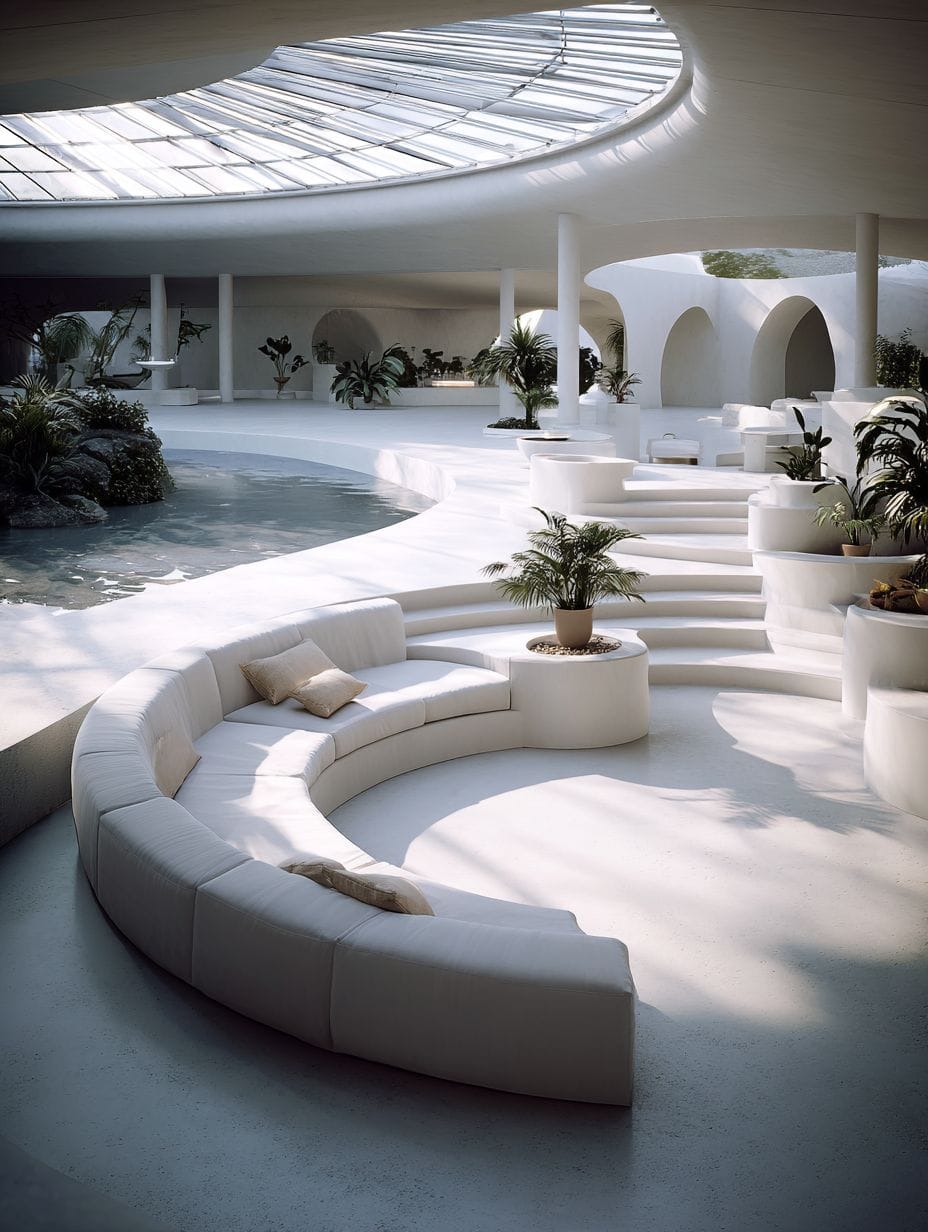
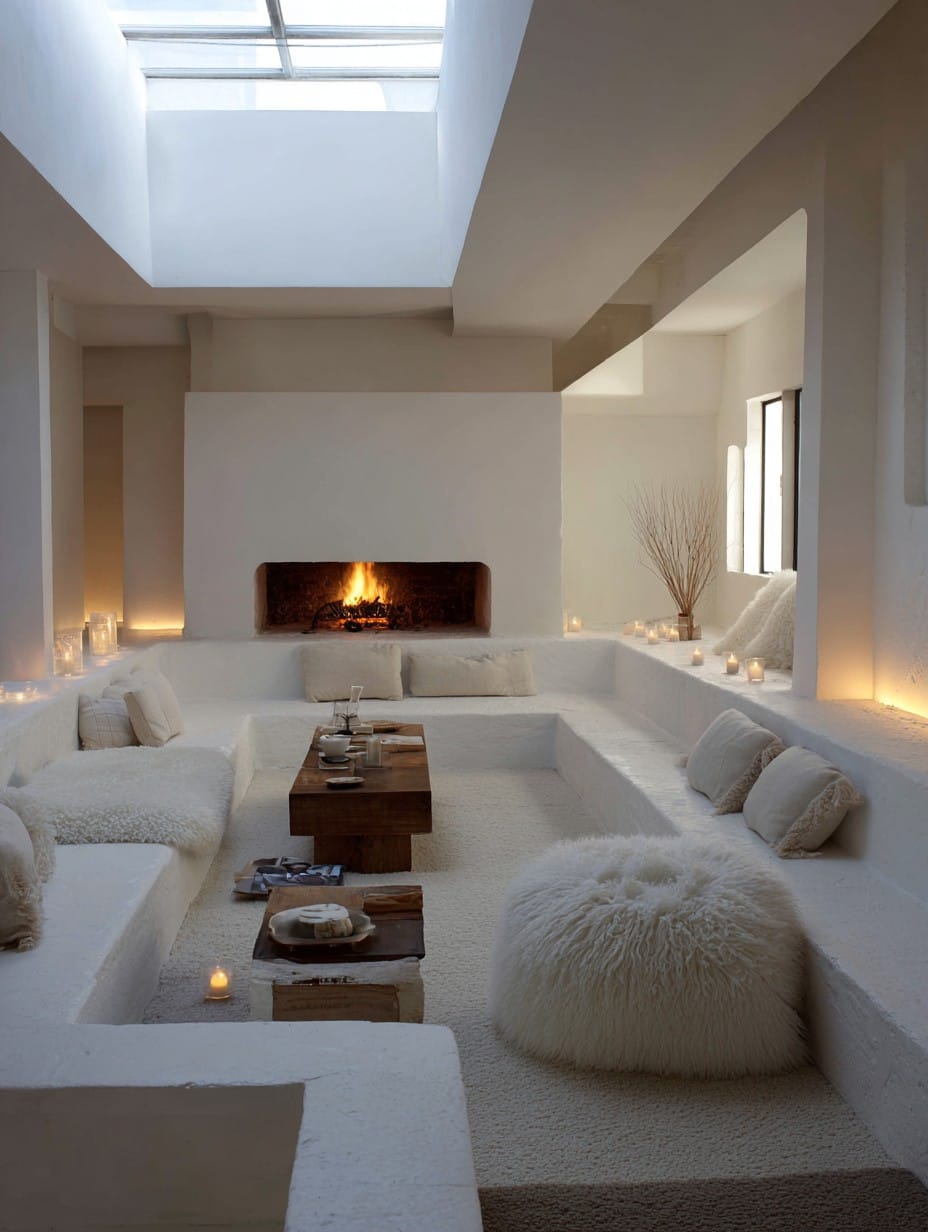
Architectural features can define minimalist spaces while providing functionality without requiring furniture, as this sunken conversation pit concept demonstrates. Built-in white upholstered seating creates an intimate gathering space within the larger minimal room, the lowered floor level defining the area through architecture rather than through furniture arrangement or visual barriers. The sunken design creates a sense of enclosure and intimacy while maintaining the open, flowing quality of the overall space. Simple throw pillows in natural linen add comfort without introducing pattern or visual complexity, their organic fabric complementing the clean upholstery.
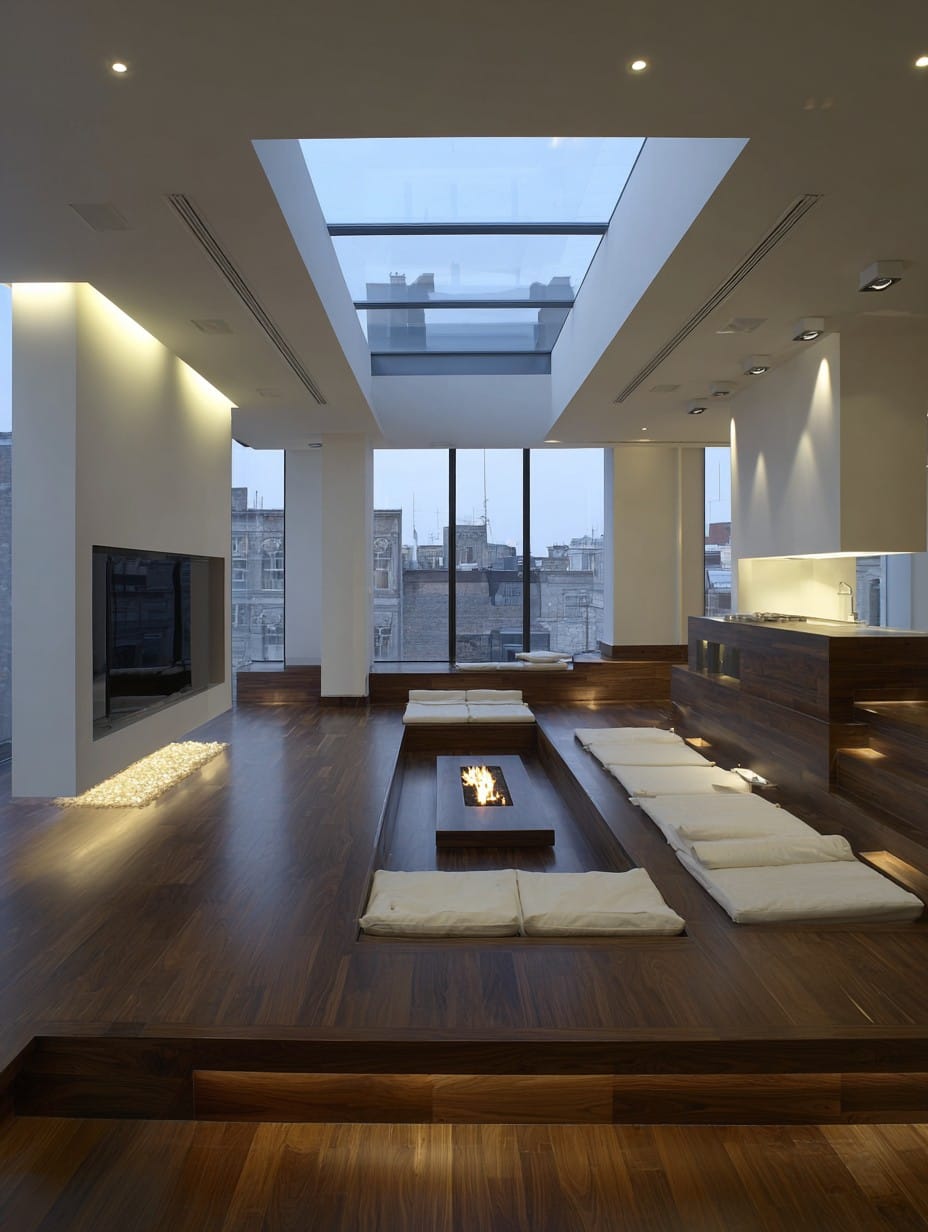
The architectural feature transforms what could be a ordinary seating arrangement into a sophisticated, permanent element that gives the room distinctive character and purpose. Built-in seating eliminates the need for sofas or chairs, reducing visual clutter while actually increasing seating capacity compared to conventional furniture arrangements. The white upholstery maintains the minimalist aesthetic while providing a clean, cohesive appearance that would be difficult to achieve with multiple separate furniture pieces. The pit’s square or circular configuration encourages face-to-face interaction in ways that traditional furniture arrangements often cannot.
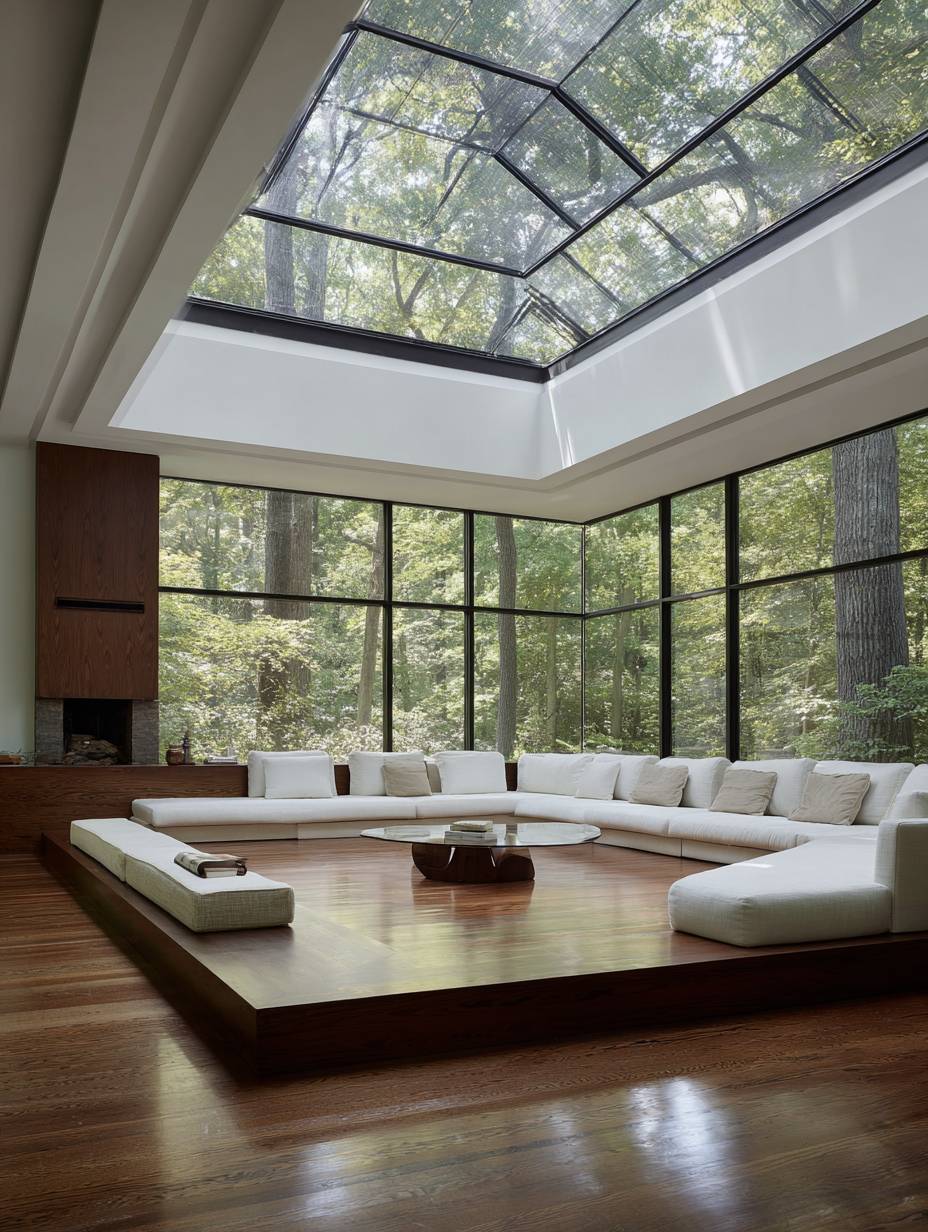
A large skylight provides natural illumination from above, bathing the conversation pit in soft, even light that changes throughout the day. The skylight’s placement directly above the seating area creates a connection to the sky and natural light cycles while maintaining privacy from surrounding structures. This concept illustrates that minimalist design reaches its highest expression when architecture itself provides function and beauty, reducing or eliminating the need for furnishings that can create clutter and visual complexity. The result is a living space that feels custom, permanent, and sophisticated—a true architectural solution rather than a decorated room. The conversation pit becomes the defining feature that gives the space unique identity and purpose.
- Incorporate architectural seating solutions like conversation pits that provide function through built-in elements
- Use level changes to define zones creating spatial hierarchy without walls or visual barriers
- Install skylights for overhead natural light that illuminates spaces evenly while maintaining privacy
- Choose built-in upholstery in white to maintain clean, cohesive appearance across large seating areas
- Add minimal cushions in natural fabrics for comfort without introducing pattern or visual complexity
21. Multifunctional Furniture for Efficient Living
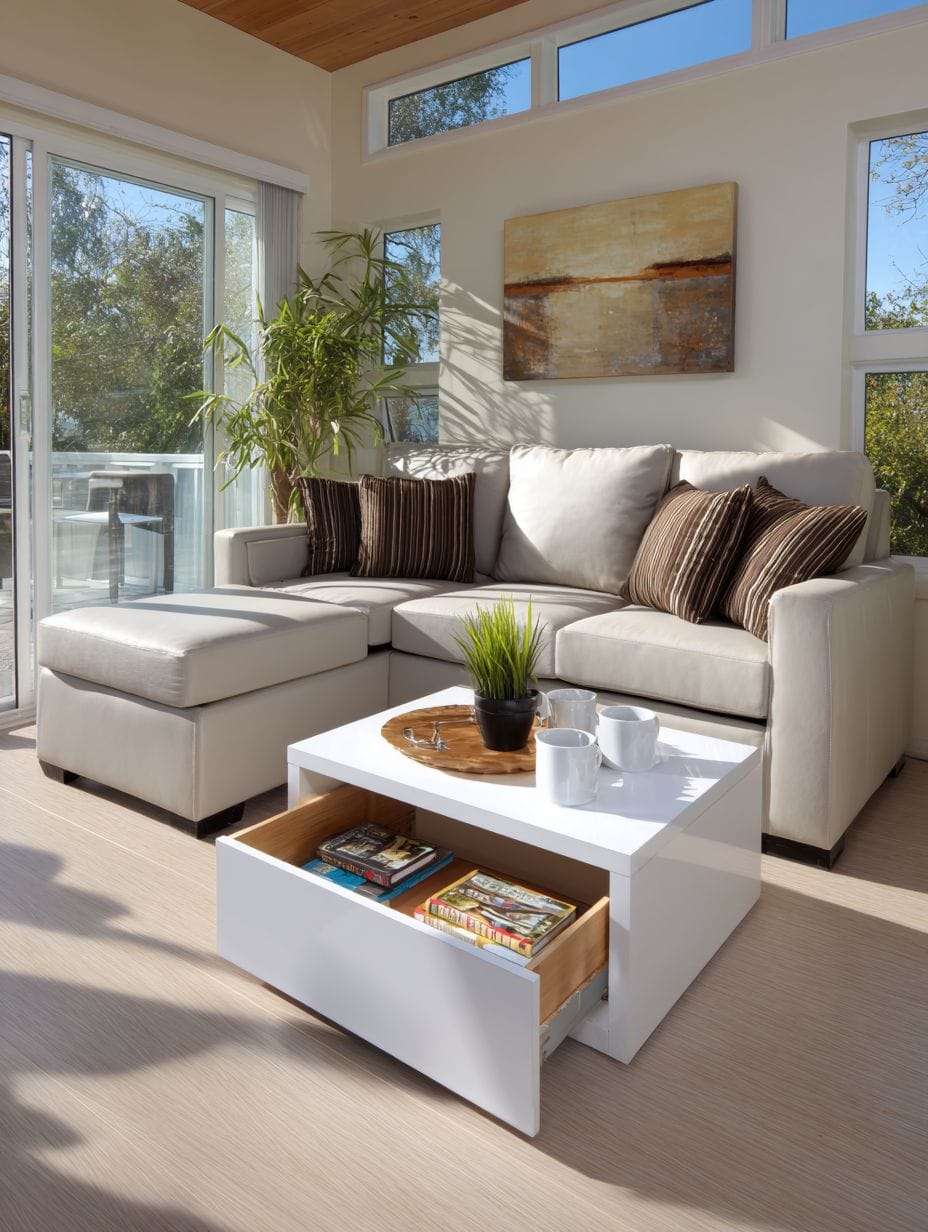
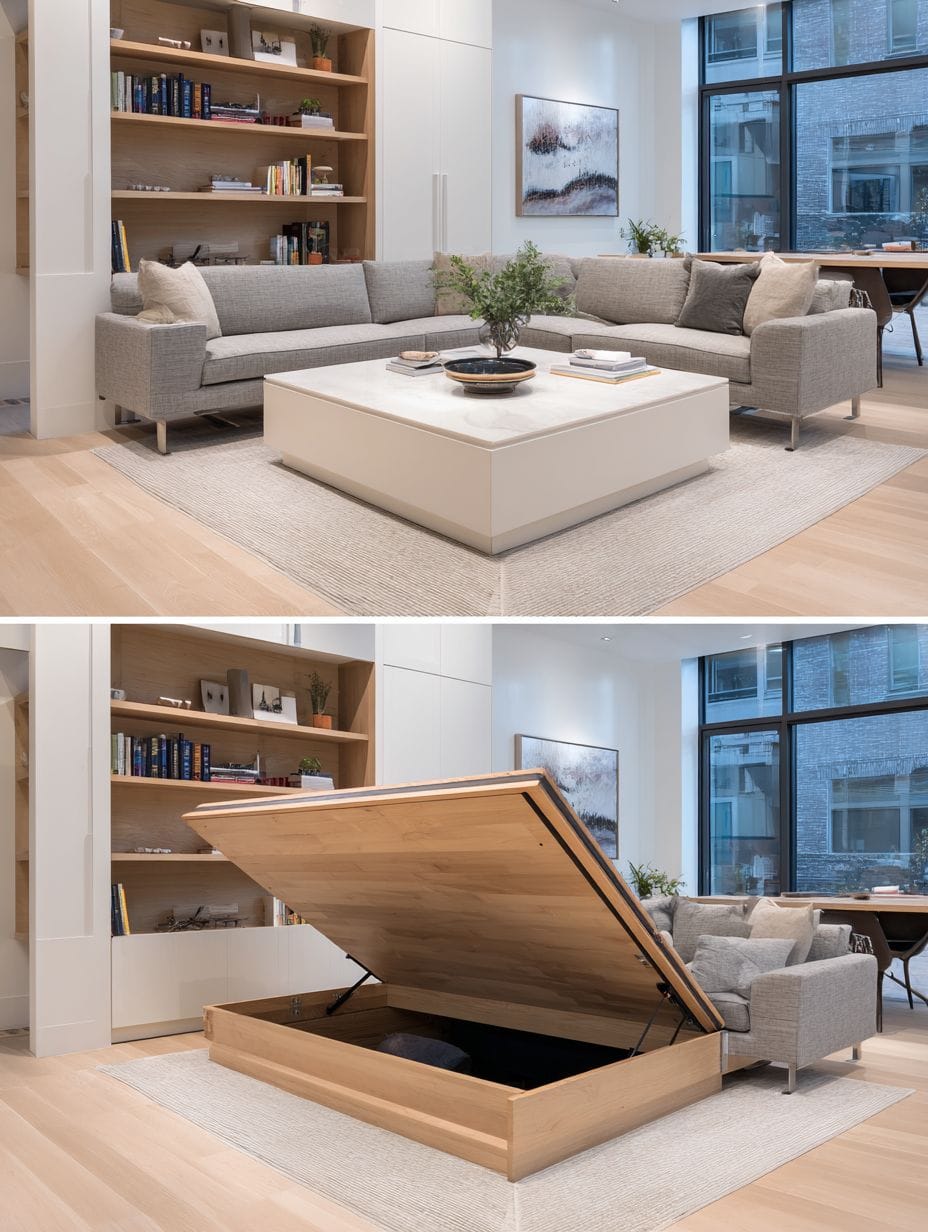
The ultimate expression of minimalist efficiency comes through multifunctional furniture that serves multiple purposes while maintaining clean aesthetic lines. This concept demonstrates a capsule furniture approach where each piece fulfills several functions, maximizing utility while minimizing the number of items in the space. A white lacquered storage ottoman serves simultaneously as a coffee table for beverages and books, concealed storage for items that would otherwise require visible cabinets or shelves, and occasional additional seating when needed. The white lacquered finish creates a sophisticated, contemporary appearance while hiding fingerprints and wear better than matte surfaces.
A sleek grey sofa bed provides comfortable daily seating that transforms into guest sleeping accommodation without requiring a dedicated guest room or visible bedding storage. The sofa bed’s streamlined design ensures it appears as an elegant sofa rather than obviously dual-purpose furniture, maintaining the minimalist aesthetic even while providing practical flexibility. The grey upholstery is more forgiving of daily use than lighter colors while remaining neutral enough to work with various accent colors should the scheme evolve. The sofa bed eliminates the need for separate guest room furniture, making it ideal for urban apartments or homes where every room must justify its space.
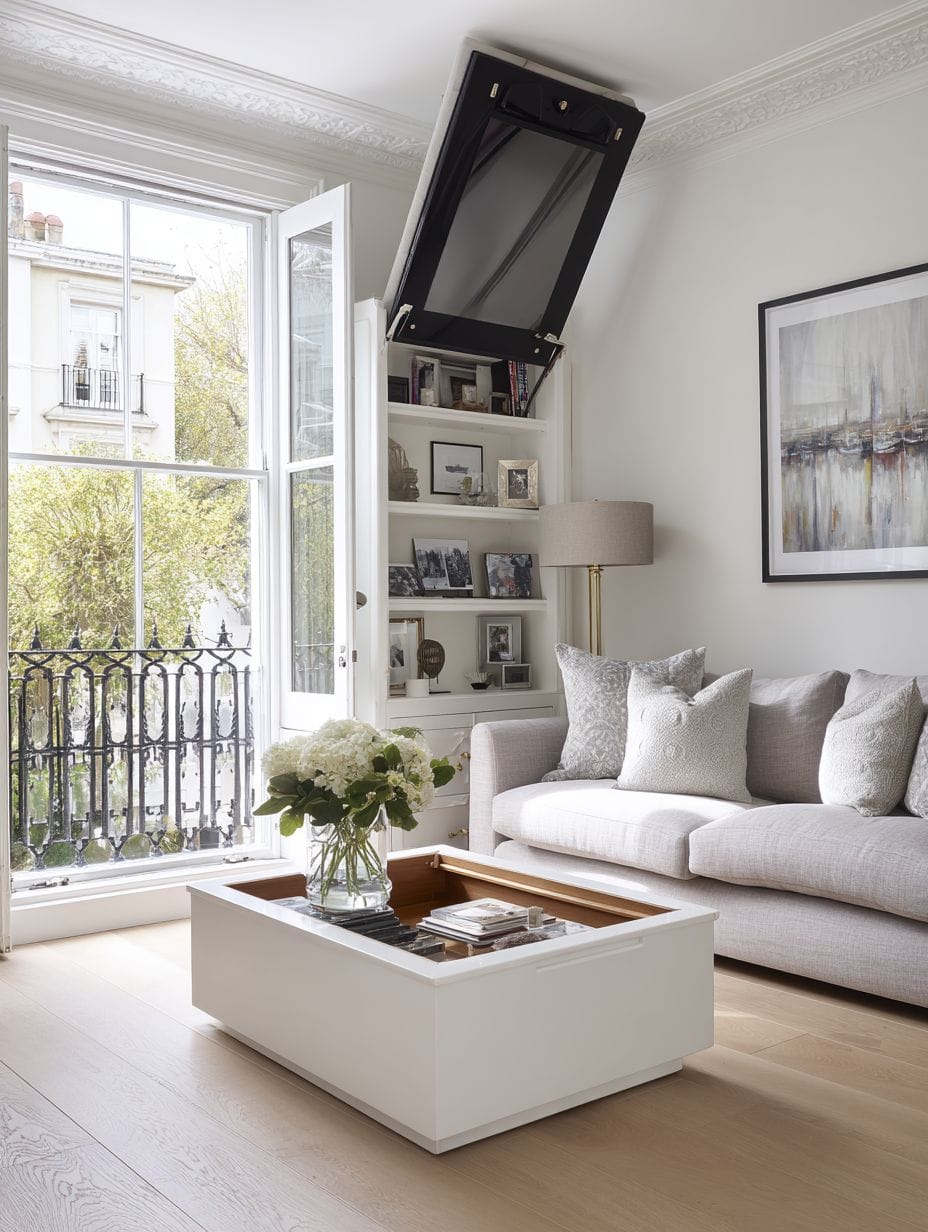
Light wood flooring and white walls maximize light reflection and create the perception of greater space, essential strategies in rooms where efficient furniture selection is driven by spatial limitations. The light palette also provides a versatile backdrop that can accommodate changing needs and preferences without requiring repainting or refinishing. This concept proves that minimalism at its most practical combines aesthetic restraint with intelligent functionality, creating spaces that work harder while appearing simpler. The result is a living room that adapts to different needs throughout the day and accommodates occasional guests without requiring additional space or visible storage, demonstrating that minimalist design can enhance rather than compromise practical living.
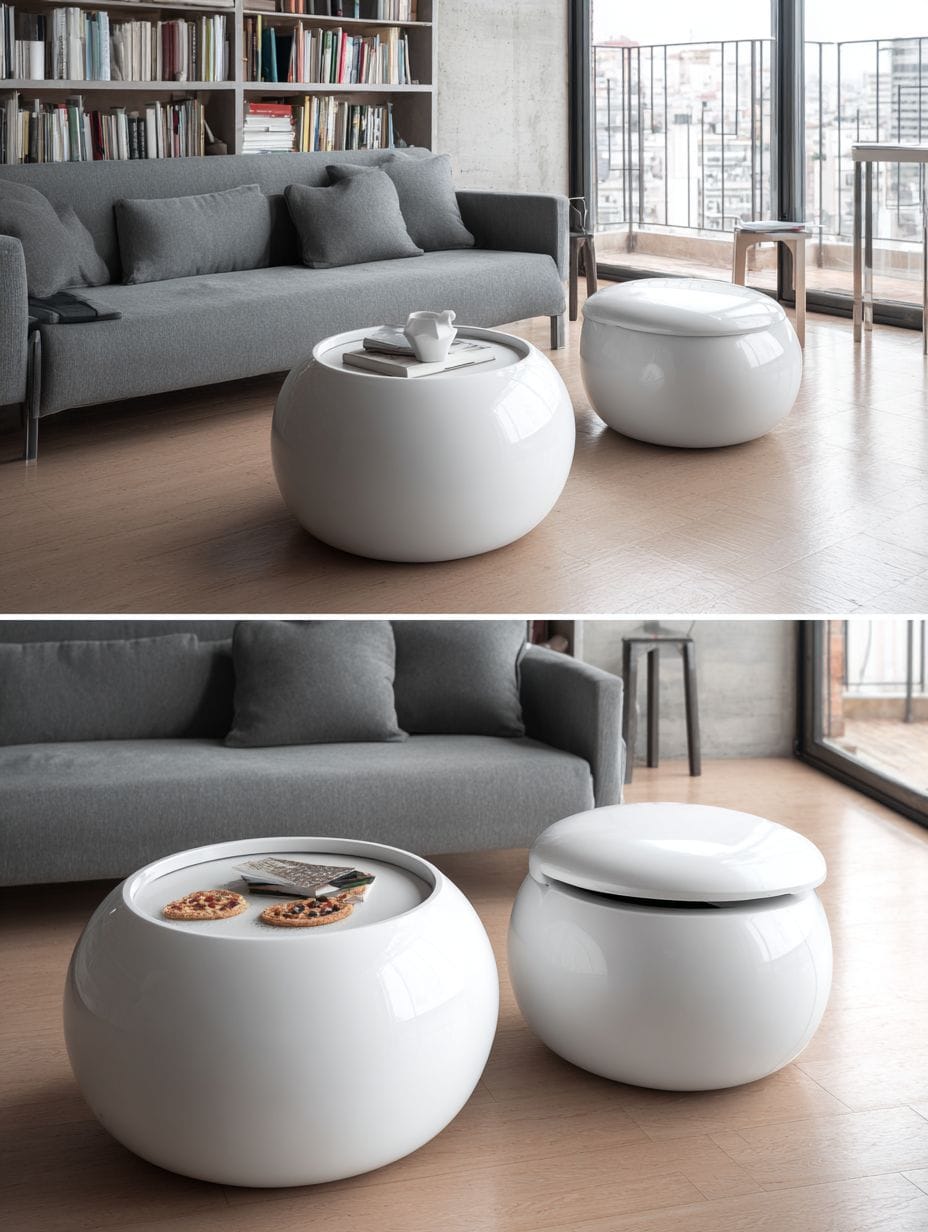
- Choose furniture that serves multiple functions like storage ottomans or sofa beds to maximize utility with minimal pieces
- Select dual-purpose pieces with refined design that doesn’t obviously advertise their secondary functions
- Use concealed storage solutions within furniture to eliminate need for separate cabinets or visible storage
- Maintain light color palettes that maximize light reflection and create perception of greater space
- Invest in quality mechanisms for convertible furniture to ensure smooth operation and longevity of dual-purpose pieces
Why These Minimalist Living Room Designs Excel
These twenty-one minimalist living room concepts represent the pinnacle of contemporary interior design thinking, each addressing specific challenges while demonstrating core principles that make minimalism such an enduring and adaptable design philosophy. The excellence of these designs lies not in what they include but in what they thoughtfully exclude, creating spaces where every element has earned its place through beauty, function, or both. Together, they illustrate that minimalism is not a single aesthetic but rather a versatile approach that can be adapted to different contexts, from compact urban apartments to spacious suburban homes, from warm Scandinavian-inspired spaces to cool industrial lofts.
What makes these designs particularly successful is their attention to the qualities that define exceptional minimalist spaces: intentional negative space, carefully curated materials, strategic lighting design, and thoughtful storage solutions that maintain uncluttered appearances. Each concept demonstrates how minimalist living rooms can accommodate modern life’s practical requirements—entertainment technology, comfortable seating, adequate storage, flexible functionality—without sacrificing the serene aesthetic that makes minimalism appealing. The designs prove that minimalism isn’t about deprivation or austerity but about making deliberate choices that prioritize quality and purpose over quantity and decoration.
The concepts also excel in their treatment of natural materials and lighting, recognizing that these elements provide essential warmth and visual interest in spaces where decorative objects are limited. From whitewashed pine floors to caramel leather sofas, from concrete coffee tables to jute area rugs, the designs incorporate materials with inherent beauty and texture that contribute to comfortable, inviting atmospheres. The sophisticated handling of natural and artificial lighting—from recessed ceiling fixtures to sculptural floor lamps, from floor-to-ceiling windows to strategically placed skylights—demonstrates understanding that illumination becomes a crucial design element when other visual interests are restrained.
These minimalist living room ideas succeed because they address the full spectrum of considerations that contemporary homeowners face: spatial efficiency in urban environments, technology integration without visual clutter, flexible functionality for changing needs, connection to nature and natural light, expression of personal style within restrained palettes, and creation of serene environments that provide respite from busy lives. The designs incorporate relevant keywords and concepts throughout—from Scandinavian warmth and industrial chic to Japanese zen principles and monochromatic sophistication—demonstrating the remarkable versatility of minimalist design approaches.
Whether you’re drawn to the pure white serenity of monochromatic schemes, the warm invitation of natural wood accents, the sophisticated edge of industrial materials, the practical efficiency of multifunctional furniture, or the architectural drama of built-in features like conversation pits and window seats, these concepts provide concrete inspiration backed by sound design principles. They represent not trendy styles that will quickly date but rather timeless approaches to creating beautiful, functional spaces that will remain relevant for years to come. The emphasis on quality materials, classic proportions, and neutral palettes ensures these designs transcend temporary fashions, offering lasting value and continued satisfaction to those who implement them.
Conclusion
Creating a minimalist living room represents more than following a design trend—it’s an intentional choice to craft spaces that support calm, focused, and purposeful living. The twenty-one concepts explored in this comprehensive guide demonstrate that minimalism offers remarkable flexibility and adaptability, capable of expressing diverse personalities and accommodating varying lifestyles while maintaining its core principles of restraint, intentionality, and beauty through simplicity. Whether you’re working with a compact urban apartment or a generous suburban home, these ideas provide practical pathways to achieving the serene, uncluttered living spaces that characterize successful minimalist design.
The journey toward minimalist living begins not with removing everything but with thoughtfully considering what truly deserves a place in your space. Start by evaluating your actual needs versus perceived requirements, invest in fewer but higher-quality pieces that will serve you well for years, embrace the power of negative space to create visual breathing room, and trust that simplicity can coexist with comfort and warmth. Remember that minimalism is personal and should reflect your values and lifestyle rather than conforming to rigid rules or someone else’s vision of what minimal living should look like.
As you embark on creating your own minimalist living room, take inspiration from these concepts while adapting them to your specific circumstances, preferences, and practical requirements. Perhaps you’ll incorporate the warm natural materials of Scandinavian minimalism, the efficient multifunctionality of urban solutions, the sophisticated restraint of monochromatic schemes, or the architectural drama of built-in features. Whatever direction you choose, approach the process with patience and intention, allowing your space to evolve thoughtfully rather than rushing to achieve a finished result. The most successful minimalist living rooms are those that grow organically from genuine needs and authentic preferences, creating environments that truly support and enhance daily life while providing the visual calm and mental clarity that make minimalism such a valued design approach in our complex, cluttered world.
