
In the evolving landscape of contemporary home design, the living room stands as the heart of every household—a space where functionality meets aesthetics, and where family moments intertwine with personal style. As open-concept floor plans continue to dominate modern architecture, the need for thoughtful spatial division has never been more crucial. Modern partition design ideas for living room spaces offer an elegant solution to this challenge, allowing homeowners to create defined zones without sacrificing the airy, connected feel that makes contemporary homes so appealing. These architectural elements serve as both practical dividers and stunning design statements, transforming ordinary spaces into sophisticated, multi-functional environments that reflect personal taste while maximizing efficiency.
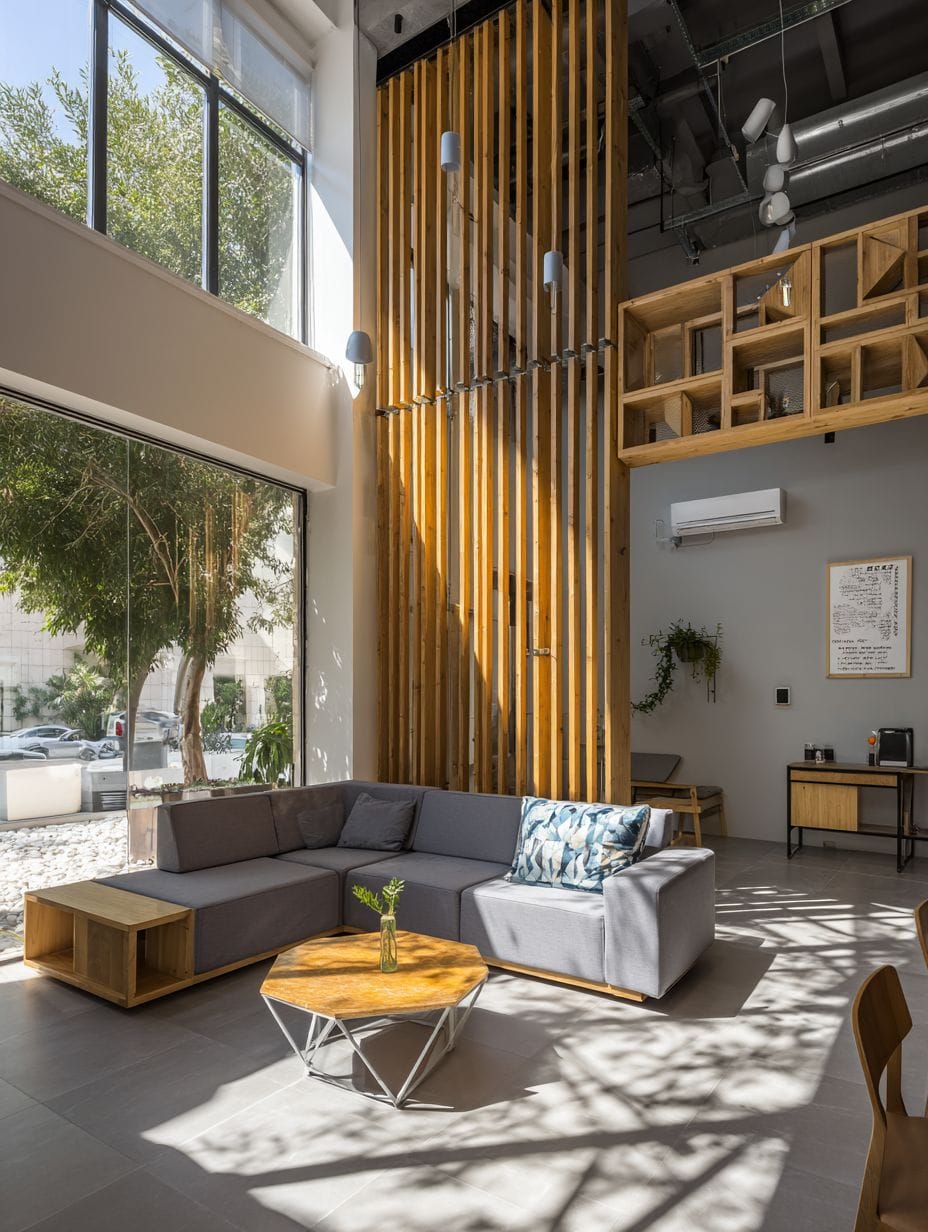
The beauty of modern partitions lies in their versatility and variety. From sleek glass panels that maintain visual continuity to warm wooden slats that add organic texture, from innovative living walls that bring nature indoors to sculptural metal screens that double as artwork—today’s partition options cater to every aesthetic preference and functional requirement. Whether you’re looking to separate a home office from your entertainment area, create a private reading nook within an open living space, or simply add architectural interest to a monotonous room, the right partition can revolutionize your interior landscape. These design elements have evolved far beyond simple room dividers; they now incorporate technology, sustainability, and artistic expression, making them essential components of thoughtful interior design.
This comprehensive guide explores twenty-five innovative modern partition design ideas for living room spaces, each offering unique characteristics, materials, and styling approaches. From minimalist Scandinavian-inspired solutions to bold industrial statements, from budget-friendly DIY options to high-end architectural installations, we’ve curated designs that span the full spectrum of contemporary aesthetics. Whether you’re renovating your entire living space or simply seeking to refresh a single area, these partition ideas will inspire you to reimagine the possibilities of spatial division, proving that functional design elements can be just as beautiful as they are practical.
1. Transparent Elegance with Glass and Metal Framework
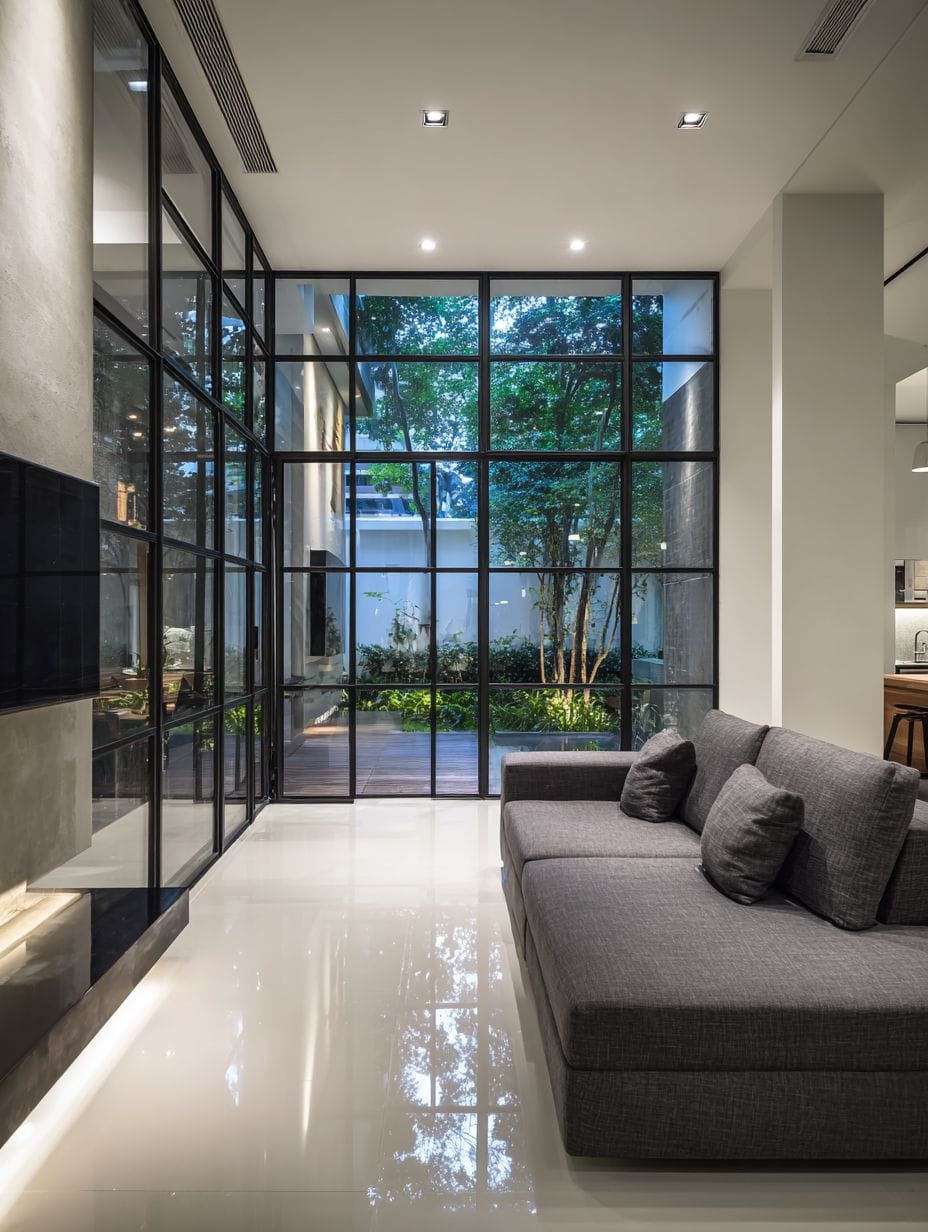
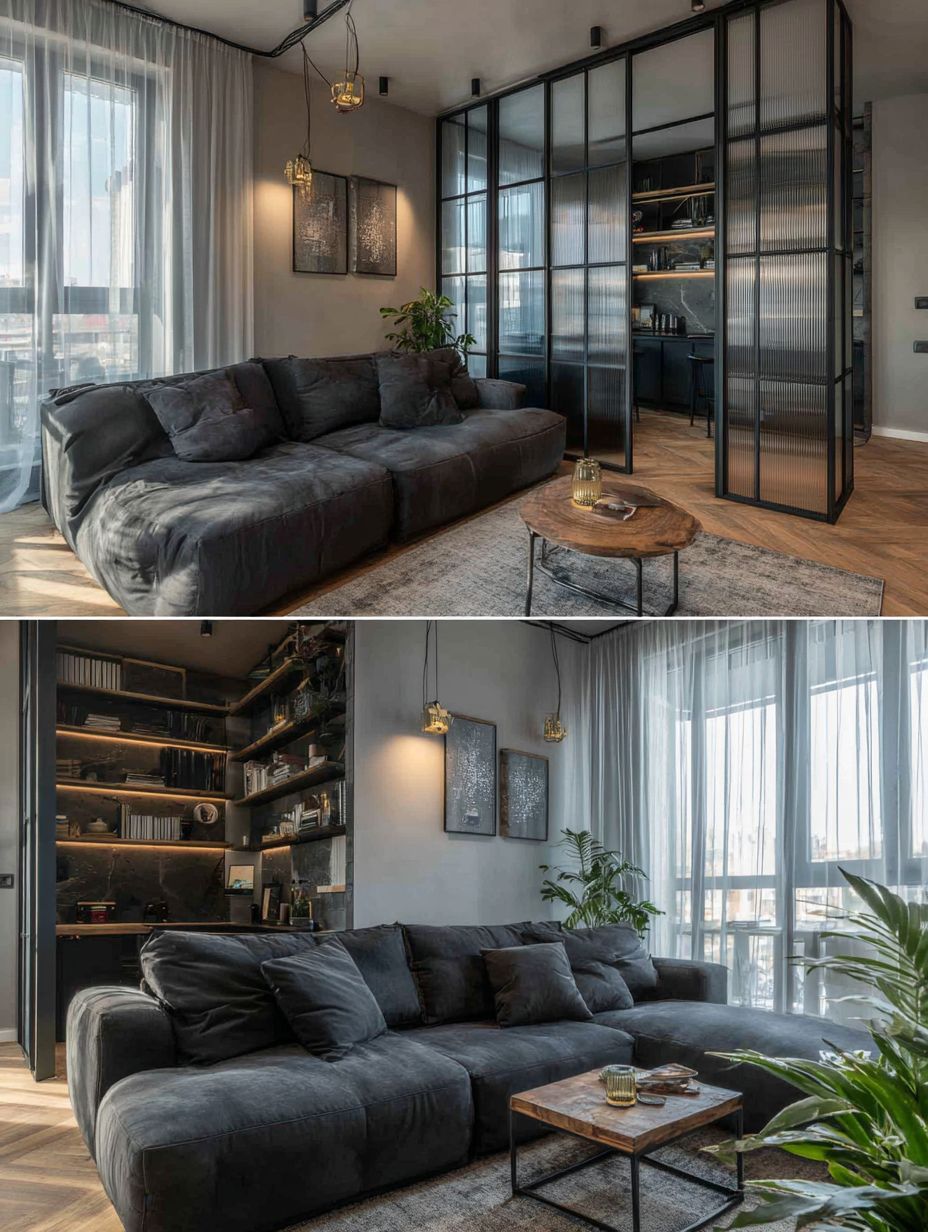
The marriage of sleek glass panels with contemporary black metal framework creates a partition solution that exemplifies modern sophistication. This floor-to-ceiling design serves as an architectural masterpiece, effectively dividing the living area from the dining space while maintaining remarkable visual continuity throughout the entire floor plan. The transparency of the glass ensures that natural light flows freely between zones, preventing the compartmentalized feeling that traditional walls often create. The black metal framework provides structural integrity while adding bold linear elements that draw the eye upward, emphasizing the room’s vertical space and creating an illusion of even greater height.
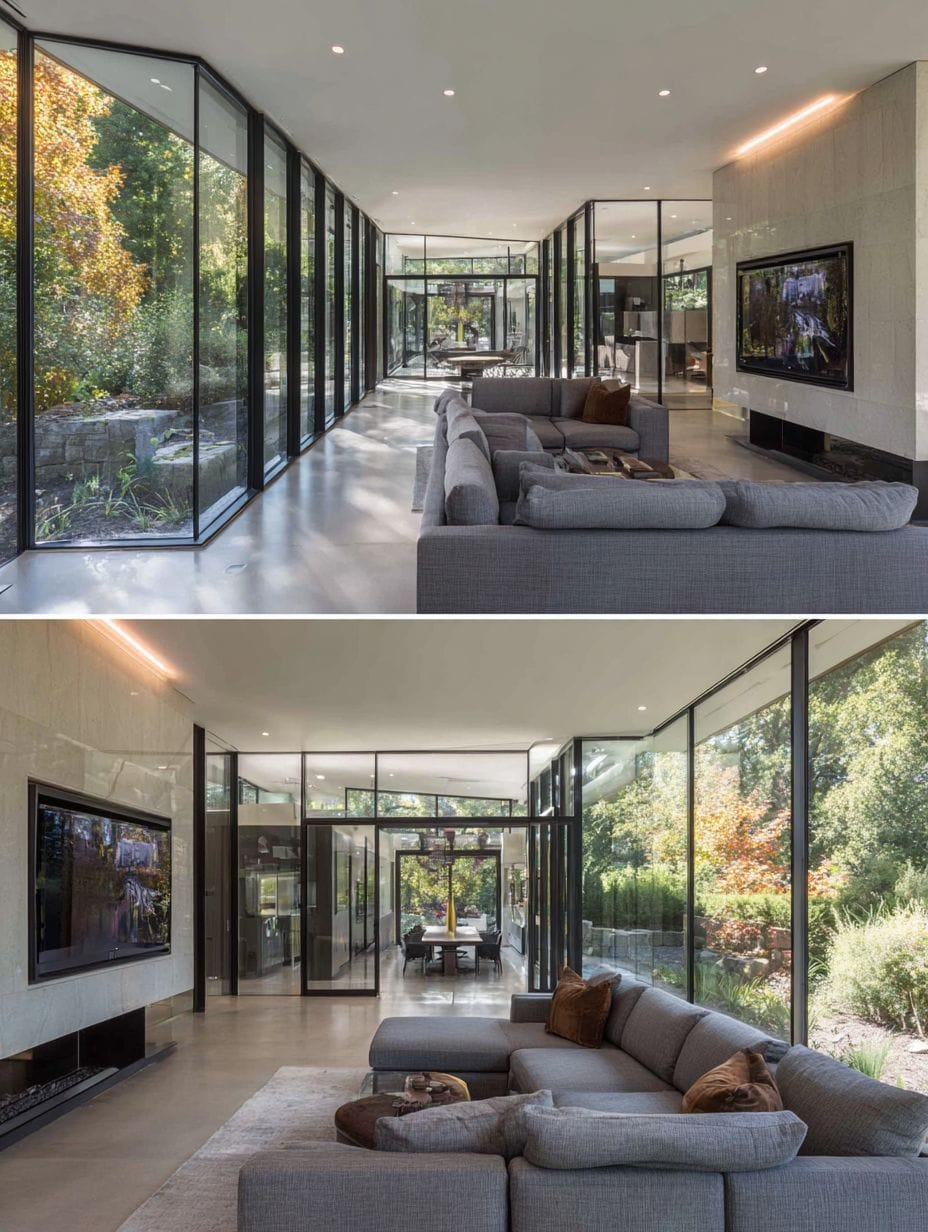
This partition style works exceptionally well in contemporary homes where the emphasis lies on clean lines and uncluttered aesthetics. The glass surface creates subtle reflections that add depth and dimension to the space, while the metal framework serves as a grounding element that prevents the design from feeling too ethereal. When positioned near windows, this partition captures and refracts natural light in fascinating ways, creating ever-changing patterns of illumination throughout the day. The minimal visual weight of this design makes it particularly suitable for smaller living rooms where maintaining a sense of spaciousness is paramount.
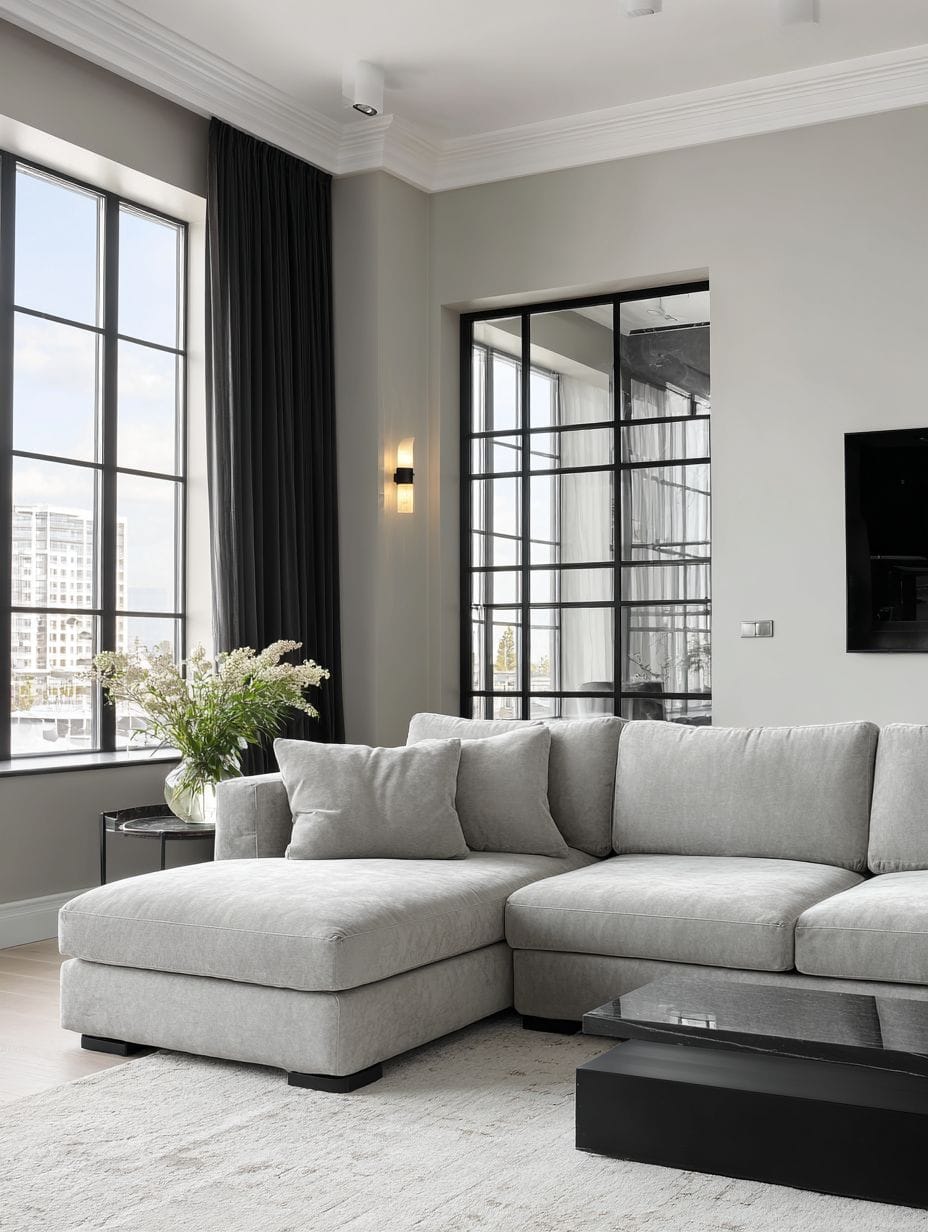
The practical advantages of this partition extend beyond aesthetics. The transparent panels allow parents to maintain visual supervision of children in adjacent rooms while still creating defined spaces for different activities. The glass can be treated with various finishes—from completely clear to subtly tinted or even smart glass technology—allowing homeowners to adjust privacy levels according to their needs. The metal framework, typically powder-coated for durability and easy maintenance, provides anchor points for hanging plants, artwork, or lighting fixtures, adding functionality to form.
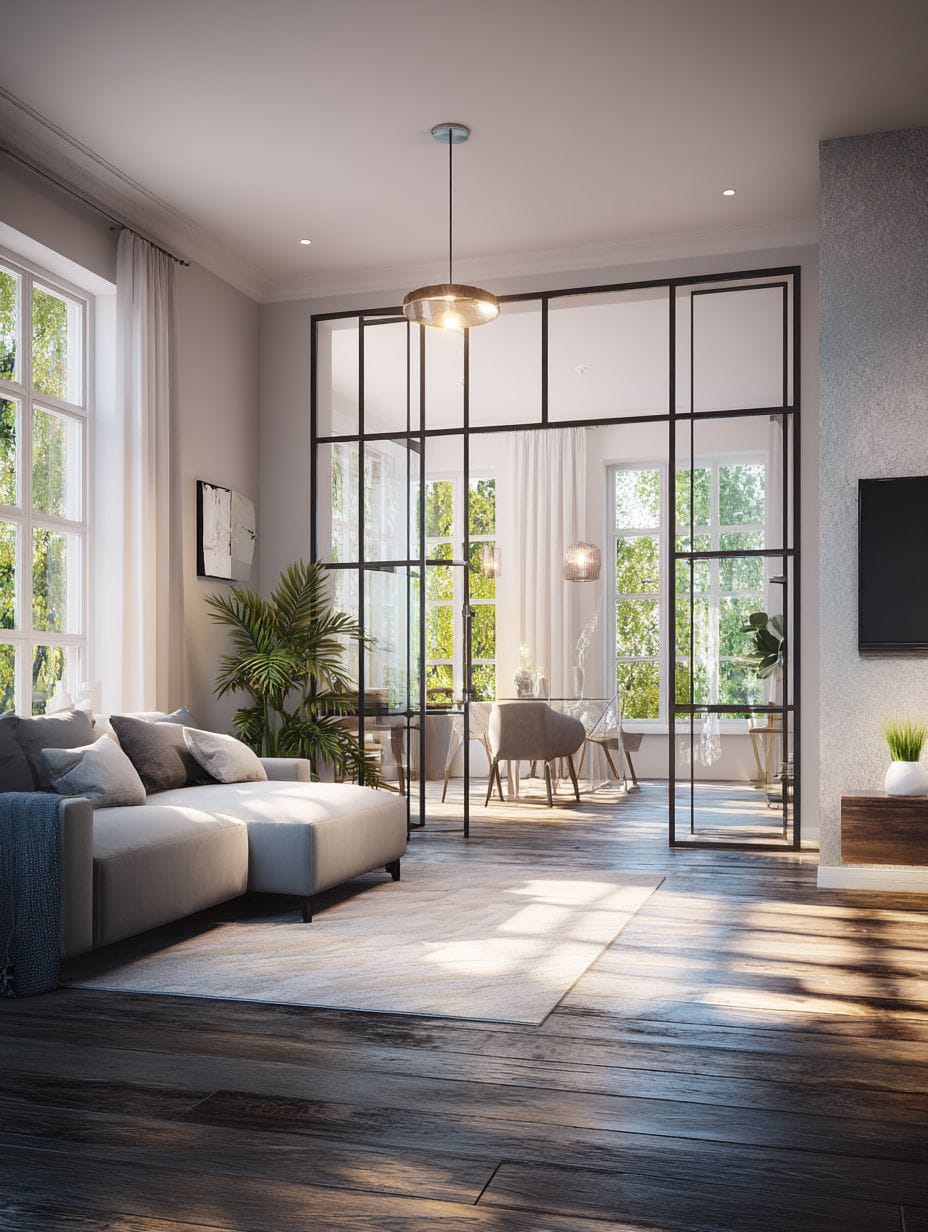
- Choose tempered safety glass for enhanced durability and safety, especially in homes with children or pets.
- Consider the frame color carefully—black creates drama and contrast, while brushed nickel or brass adds warmth and sophistication.
- Plan for professional installation to ensure structural integrity and proper mounting, as floor-to-ceiling glass panels require precise measurements and secure anchoring.
- Add subtle LED strip lighting along the bottom or top frame to create ambient illumination that highlights the partition’s architecture during evening hours.
- Maintain visual balance by keeping furniture on both sides of the partition proportional and avoiding cluttered arrangements that compete with the partition’s clean lines.
2. Warm Walnut Vertical Slat Divider
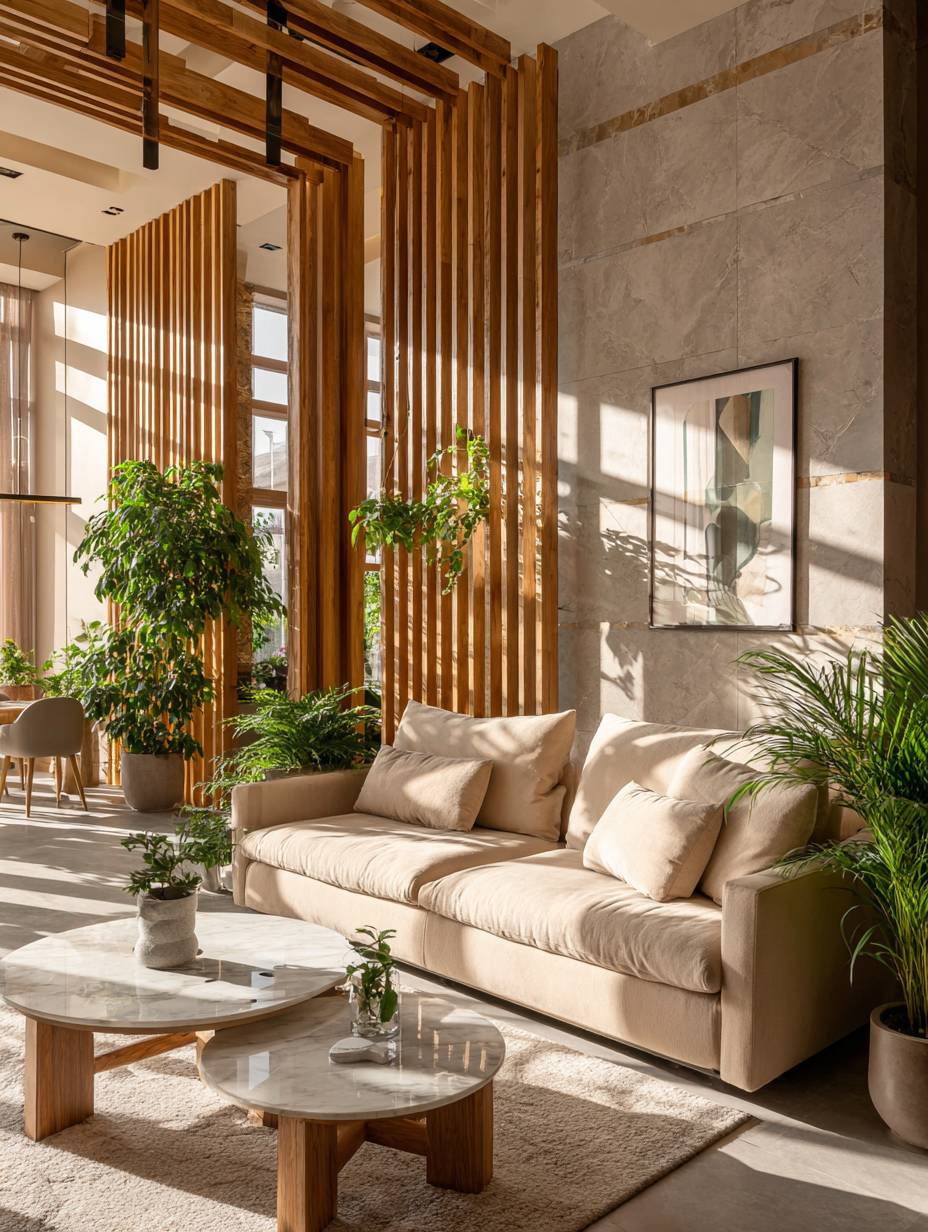
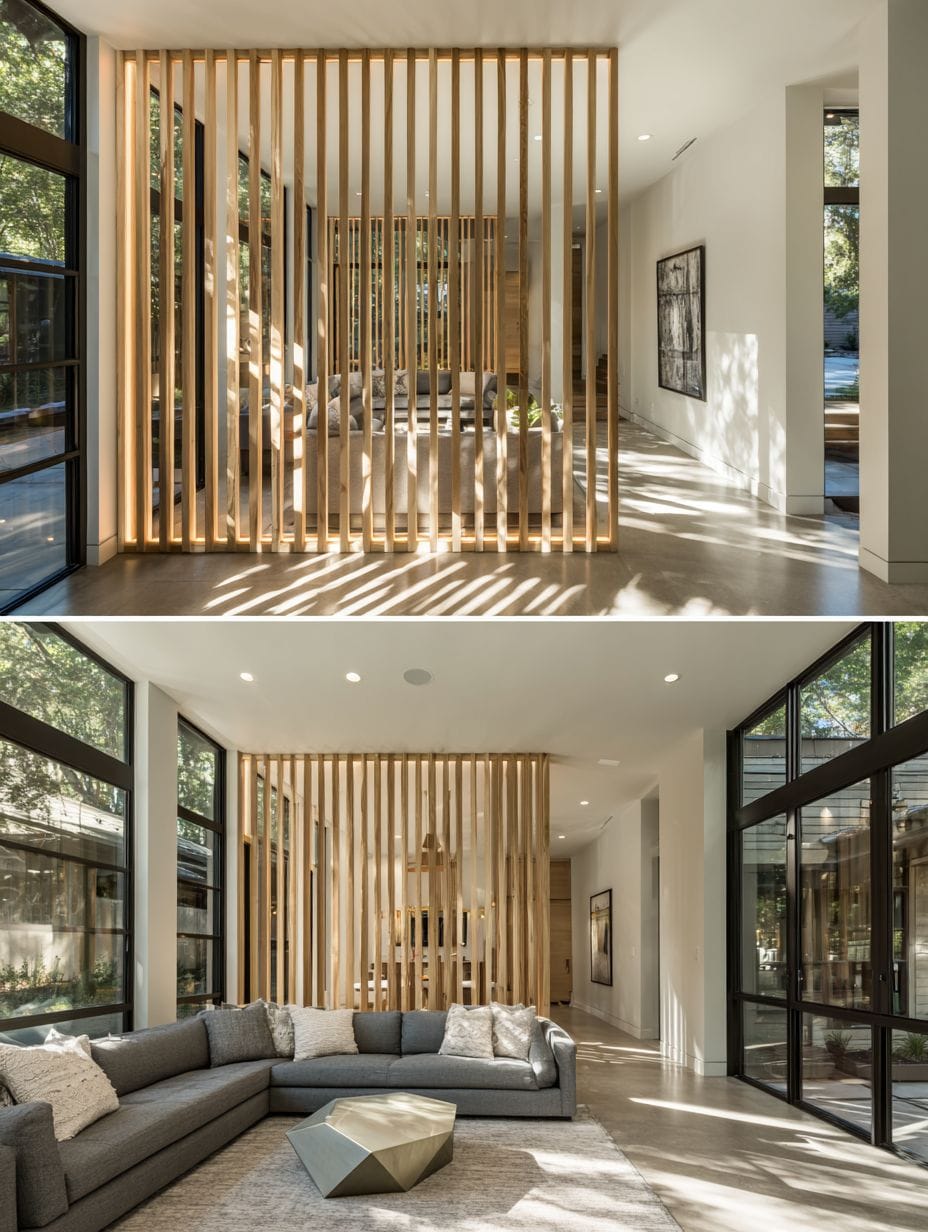
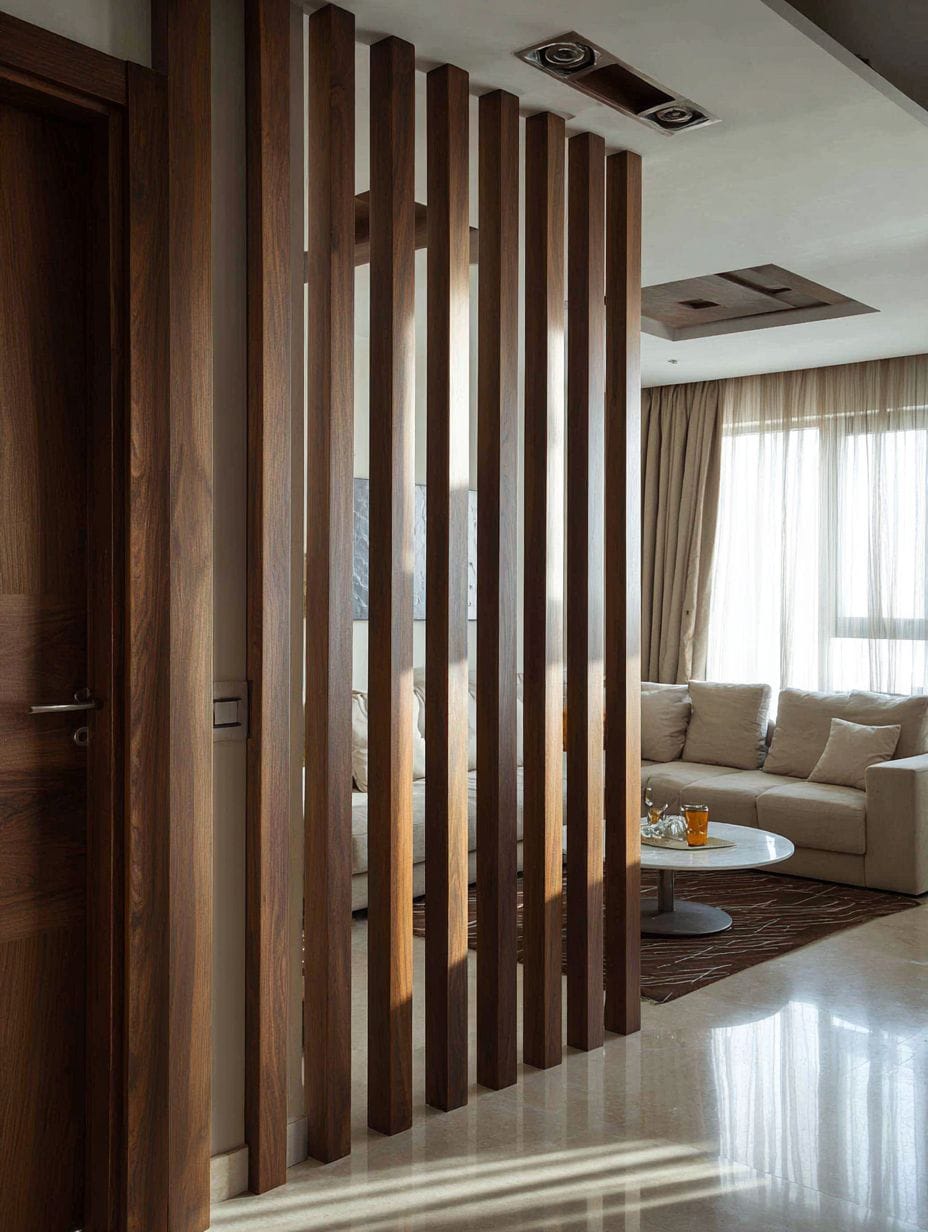
The vertical wooden slat partition crafted from rich walnut brings organic warmth and textural depth to modern living spaces. This design features consistently spaced slats that create a rhythmic visual pattern while allowing controlled light penetration and subtle visual connection between adjacent areas. The natural grain patterns of walnut wood add character and authenticity, ensuring that no two partitions look exactly alike. This partition style separates the seating area from an entryway with grace, creating a gentle transition between public and private zones without the harsh division that solid walls impose.
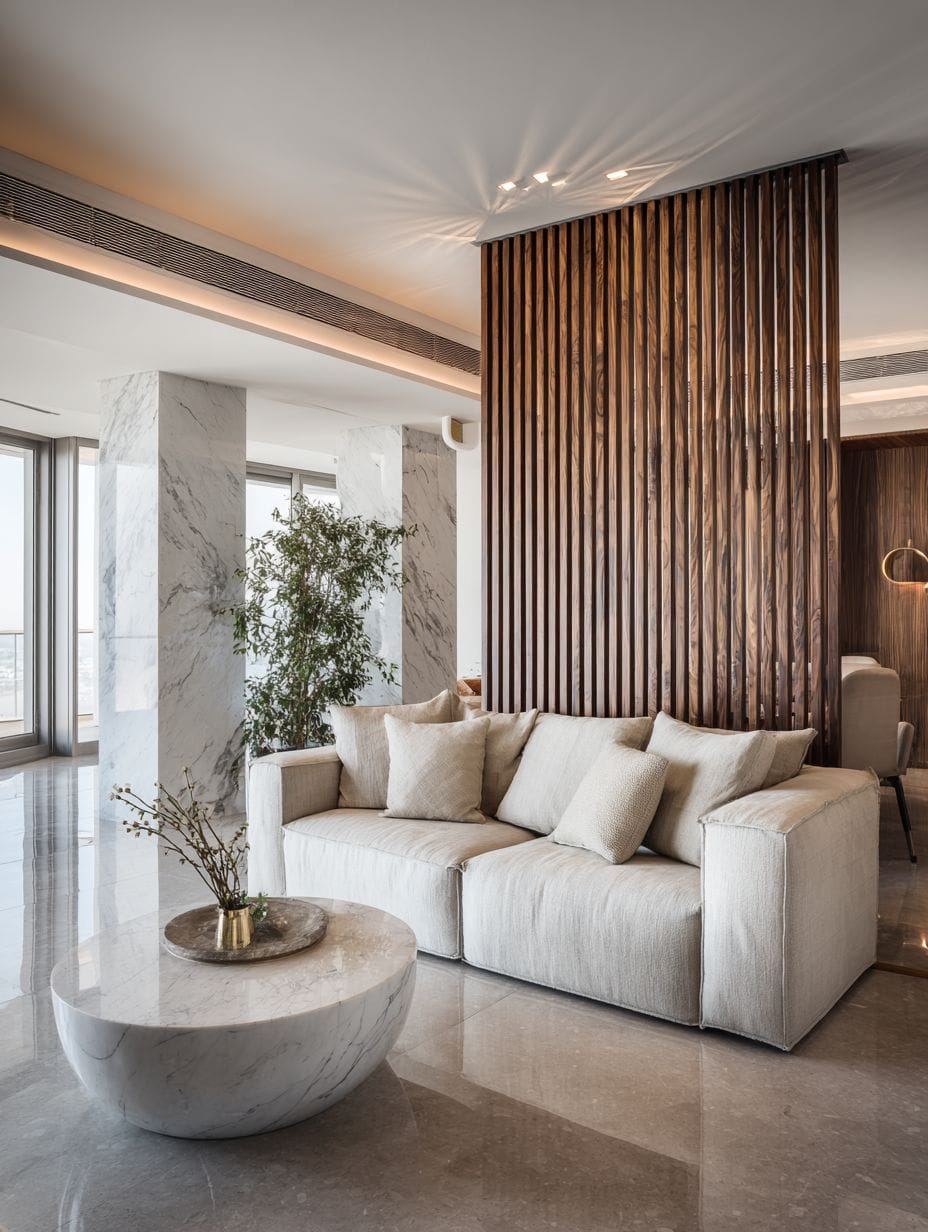
The spacing between slats is crucial to this design’s success. Positioned close enough to provide privacy and spatial definition, yet far enough apart to permit light flow and occasional glimpses through, the gaps create an intriguing interplay of shadow and light. As sunlight streams through nearby windows, the slats cast beautiful geometric shadows that dance across walls and floors, adding dynamic visual interest that changes throughout the day. This natural light show becomes a living artwork, transforming the partition from a static architectural element into a kinetic design feature.
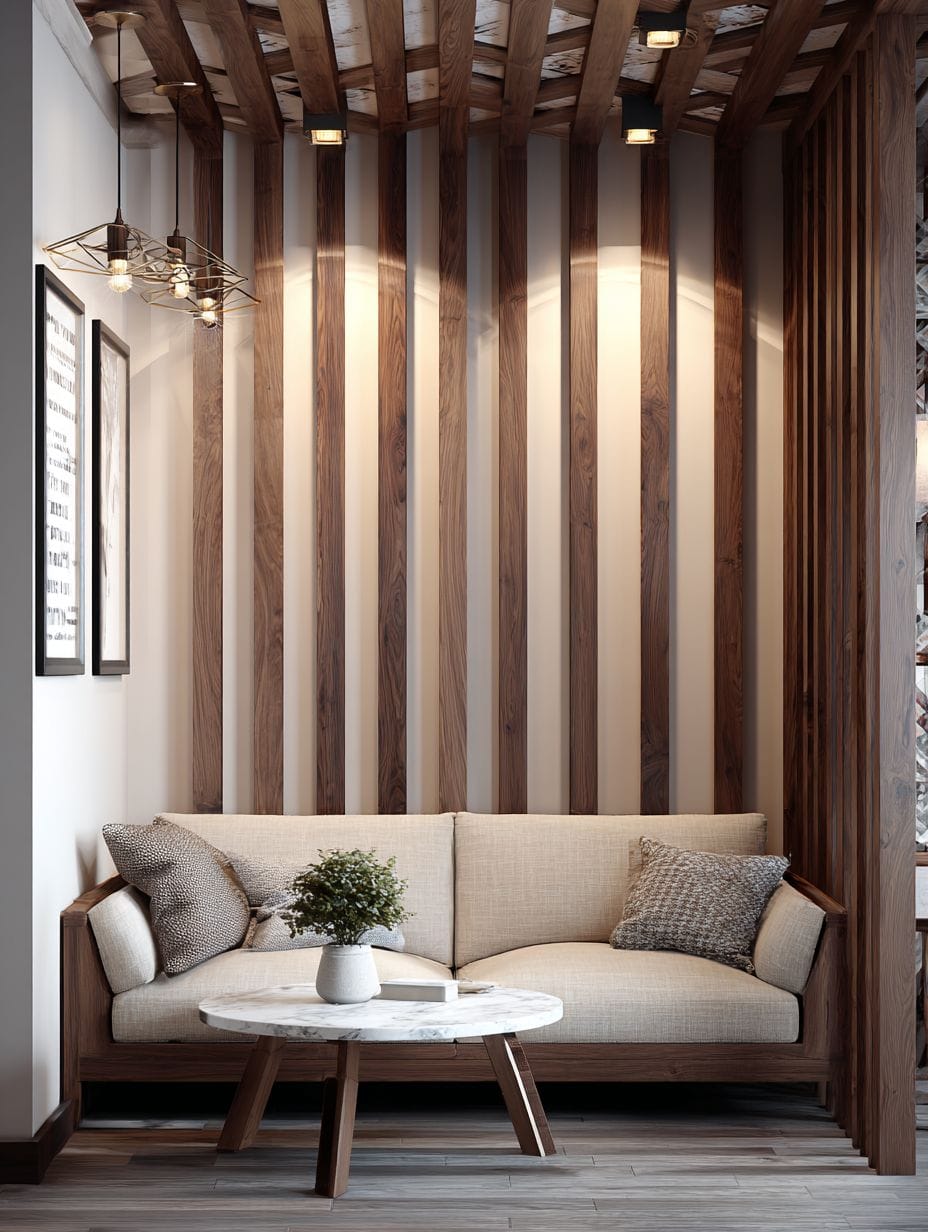
The minimalist furniture palette in this design—featuring a beige linen sofa and round marble coffee table—allows the wooden partition to command attention as the room’s primary focal point. The neutral tones create a serene atmosphere that emphasizes the natural beauty of the walnut wood. Recessed lighting positioned to highlight the partition enhances the wood’s grain patterns and creates dramatic shadows between the slats, particularly effective during evening hours when natural light fades. This lighting strategy transforms the partition into a sculptural element that provides both functional division and aesthetic enhancement.
- Select high-quality hardwood with distinctive grain patterns to maximize visual interest and ensure longevity.
- Maintain consistent spacing between slats, typically ranging from 2-4 inches depending on desired privacy levels and aesthetic preferences.
- Seal or finish the wood properly to protect against moisture, staining, and everyday wear while enhancing the natural color.
- Consider the slat thickness—thicker slats (2-3 inches) create bold statement, while thinner options (1-1.5 inches) feel more delicate and refined.
- Install with proper structural support, ensuring the partition is firmly anchored to both floor and ceiling for stability and safety.
3. Functional Double-Sided Bookshelf Partition
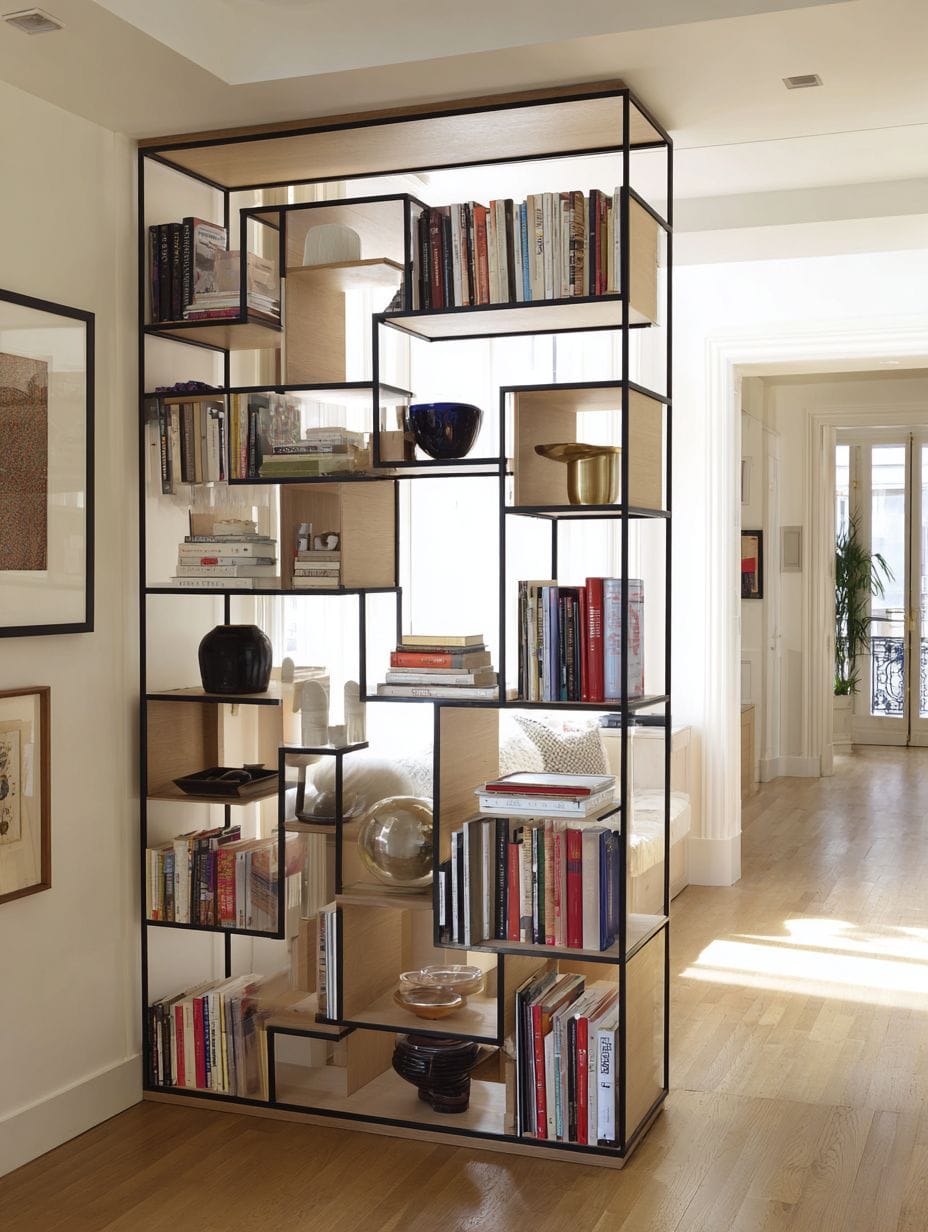
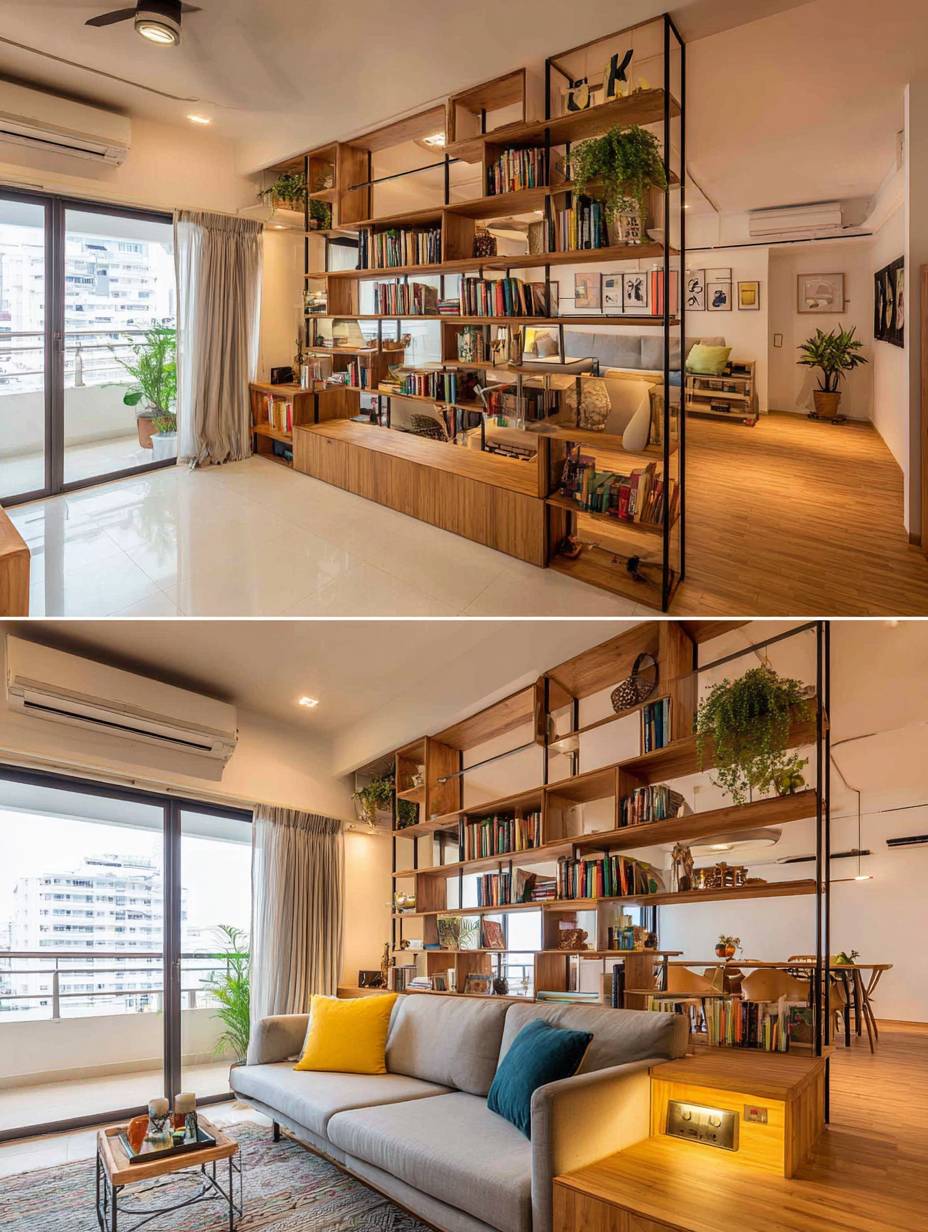
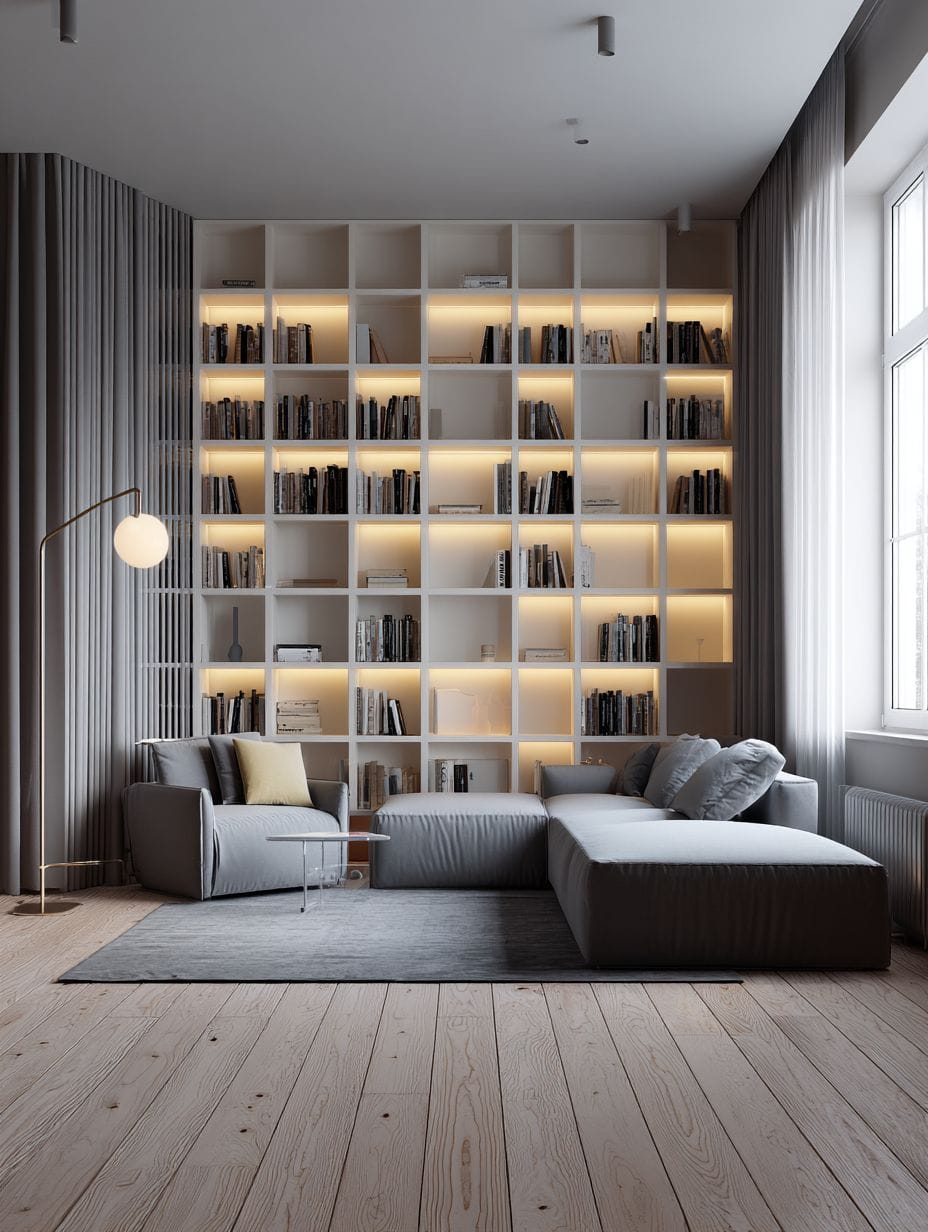
The double-sided bookshelf partition represents the perfect fusion of form and function, serving simultaneously as a room divider and a practical storage solution. This innovative design features open shelving constructed from matte black metal framework combined with light oak wood shelves, creating a contemporary aesthetic that works beautifully in modern living spaces. The open nature of the shelving maintains visual connection between the living area and reading nook while clearly delineating separate zones for different activities. This dual-functionality makes it an ideal choice for smaller homes or apartments where every square foot must work harder.
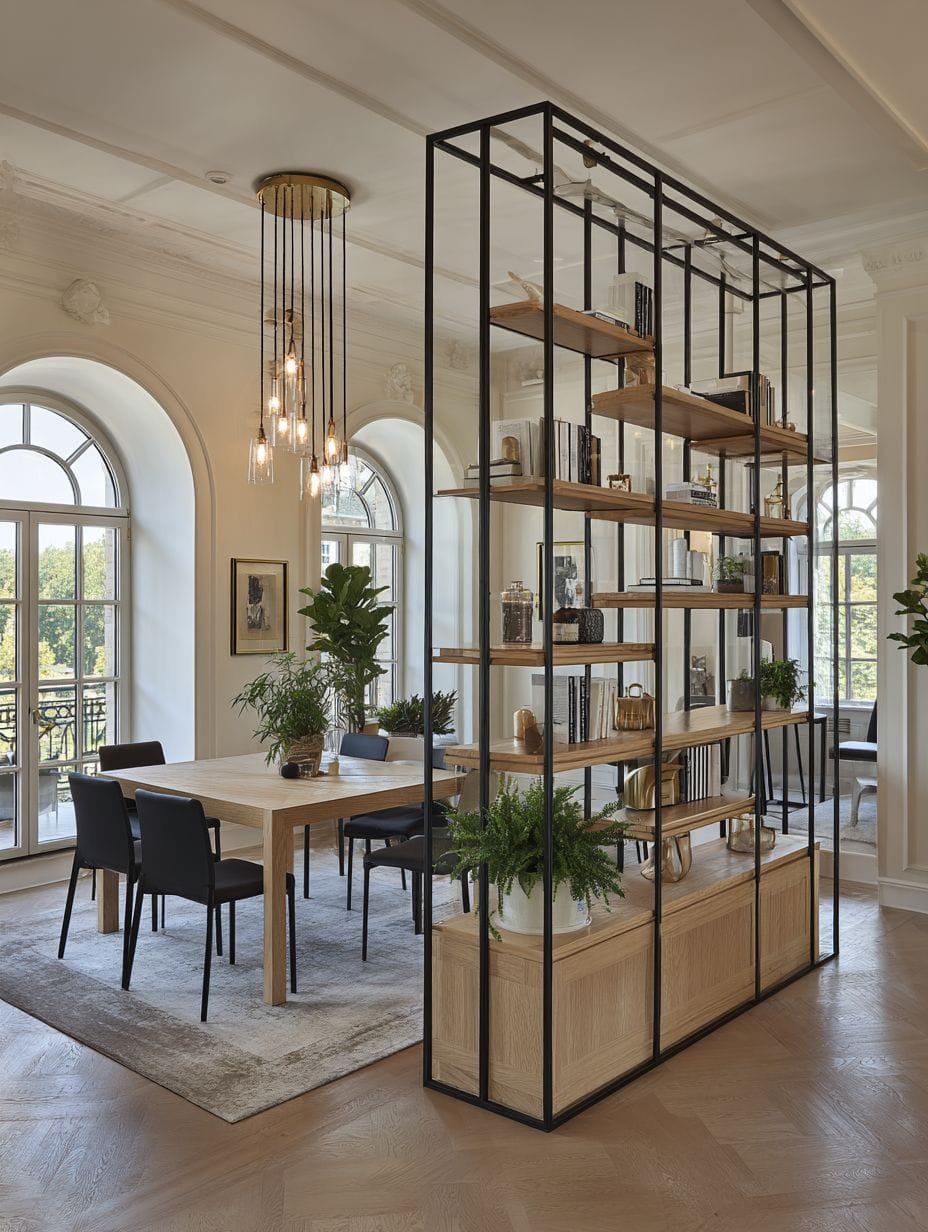
The carefully curated display of books, decorative objects, plants, and personal mementos transforms this partition into a three-dimensional gallery that tells the homeowner’s story. Unlike traditional bookshelves that face a single direction, this double-sided design allows both rooms to benefit from the displayed items, creating visual interest from multiple viewpoints. The alternating arrangement of vertical and horizontal elements—tall books, small sculptures, trailing plants, framed photographs—creates dynamic visual rhythm that draws the eye across the entire structure. Natural lighting from both sides of the partition illuminates the objects, reducing shadows and enhancing the display’s visibility.
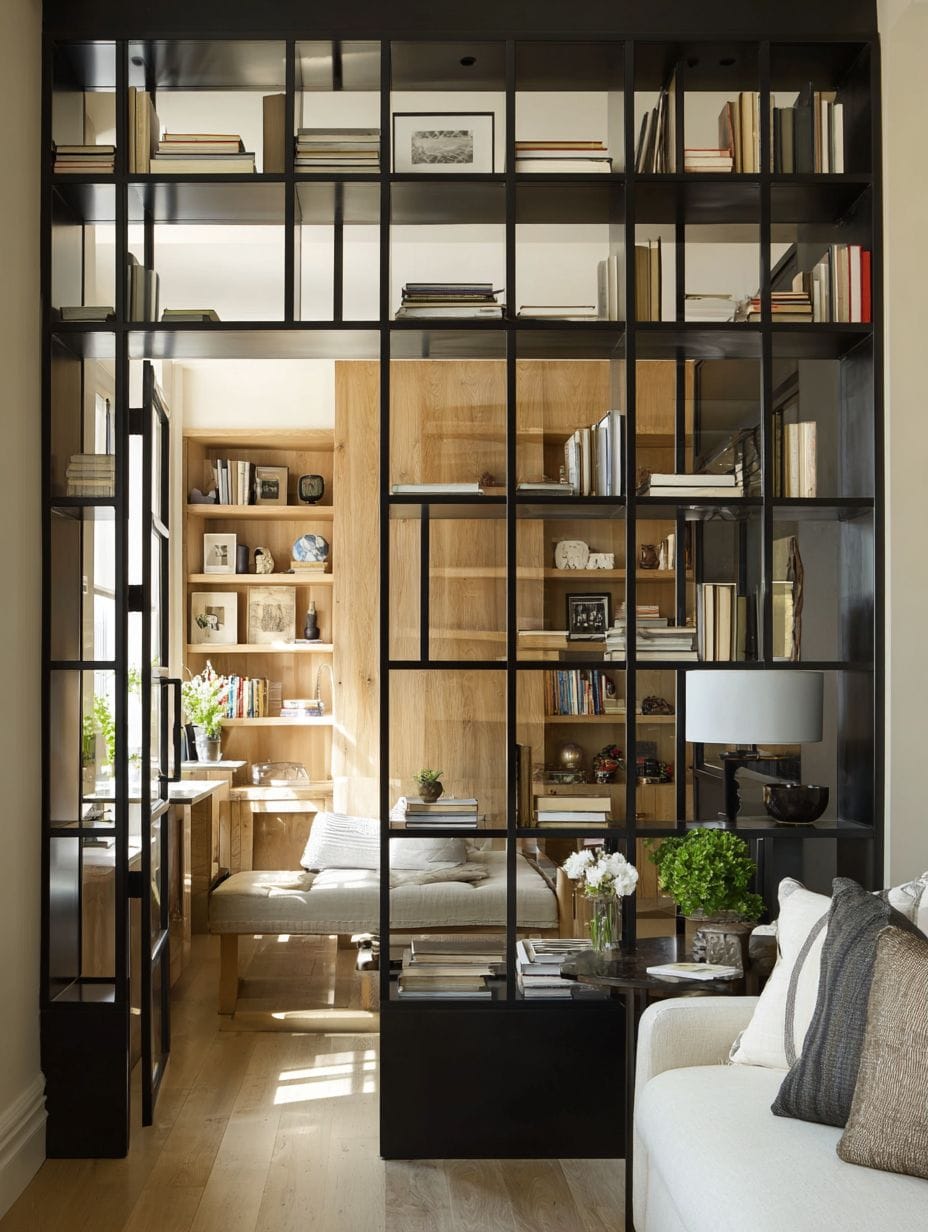
The structural integrity of this partition design depends on quality construction and proper installation. The metal framework provides essential stability while maintaining an airy, industrial-chic aesthetic that complements contemporary interiors. The light oak shelves add warmth and contrast against the dark metal, preventing the piece from feeling too heavy or imposing. This partition works particularly well in open-concept lofts, studio apartments, or family rooms where separation is needed but complete isolation would feel excessive. The ability to access storage from both sides increases practical utility significantly.
- Anchor the partition securely to both floor and ceiling or use heavy-duty stabilizing brackets to prevent tipping, especially important when shelves hold heavy items.
- Vary the heights of displayed objects to create visual interest and prevent monotonous rows that lack personality.
- Leave some shelves partially empty to avoid cluttered appearance and allow the eye places to rest.
- Incorporate lighting such as small LED puck lights or integrated shelf lighting to illuminate displays and add ambient glow during evenings.
- Use decorative baskets or boxes on some shelves to conceal less attractive items while maintaining the overall aesthetic.
- Balance the weight distribution by placing heavier items on lower shelves and lighter decorative pieces higher up for both safety and visual harmony.
4. Minimalist White Fluted Panel Design
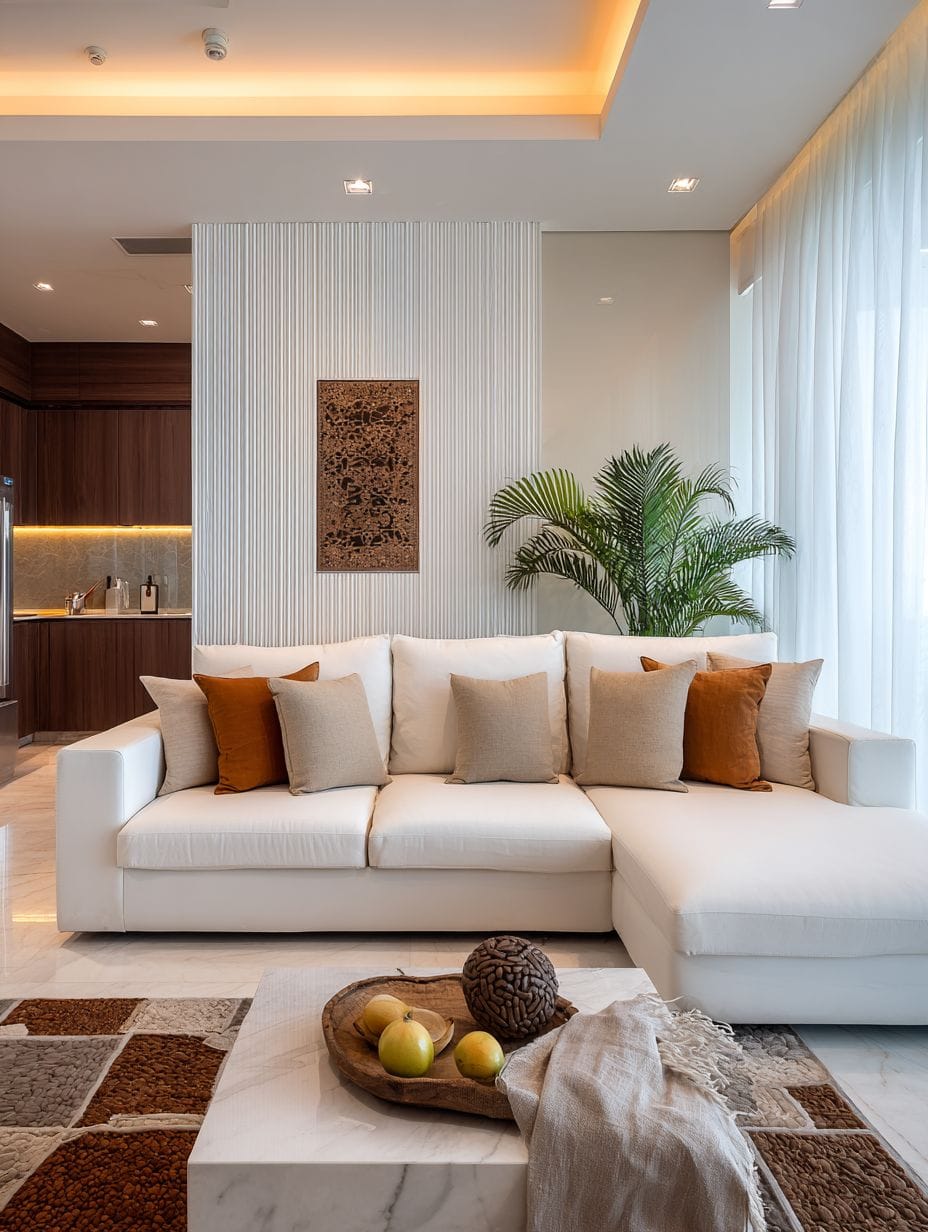
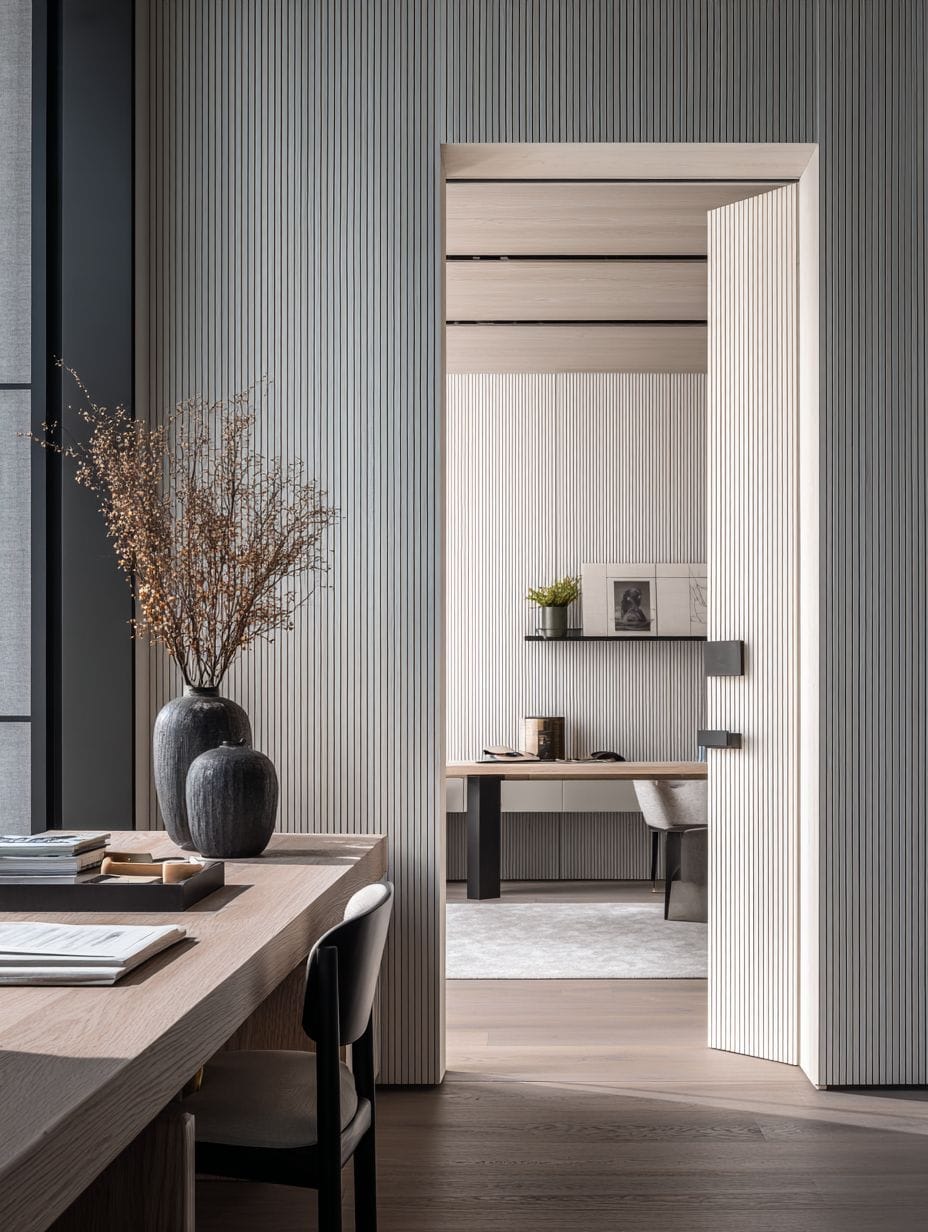
The minimalist white fluted panel partition brings subtle sophistication through its vertical grooved texture, creating visual interest without overwhelming the space. This half-height partition offers an elegant solution for delineating the living space from a home office area while preserving the open, connected feeling essential to contemporary design. The vertical grooves catch and reflect light in fascinating ways, adding dimensional depth to what could otherwise be a flat, uninteresting surface. This textural element becomes particularly captivating when natural sunlight moves across the room throughout the day, creating ever-shifting shadow patterns within the flutes.
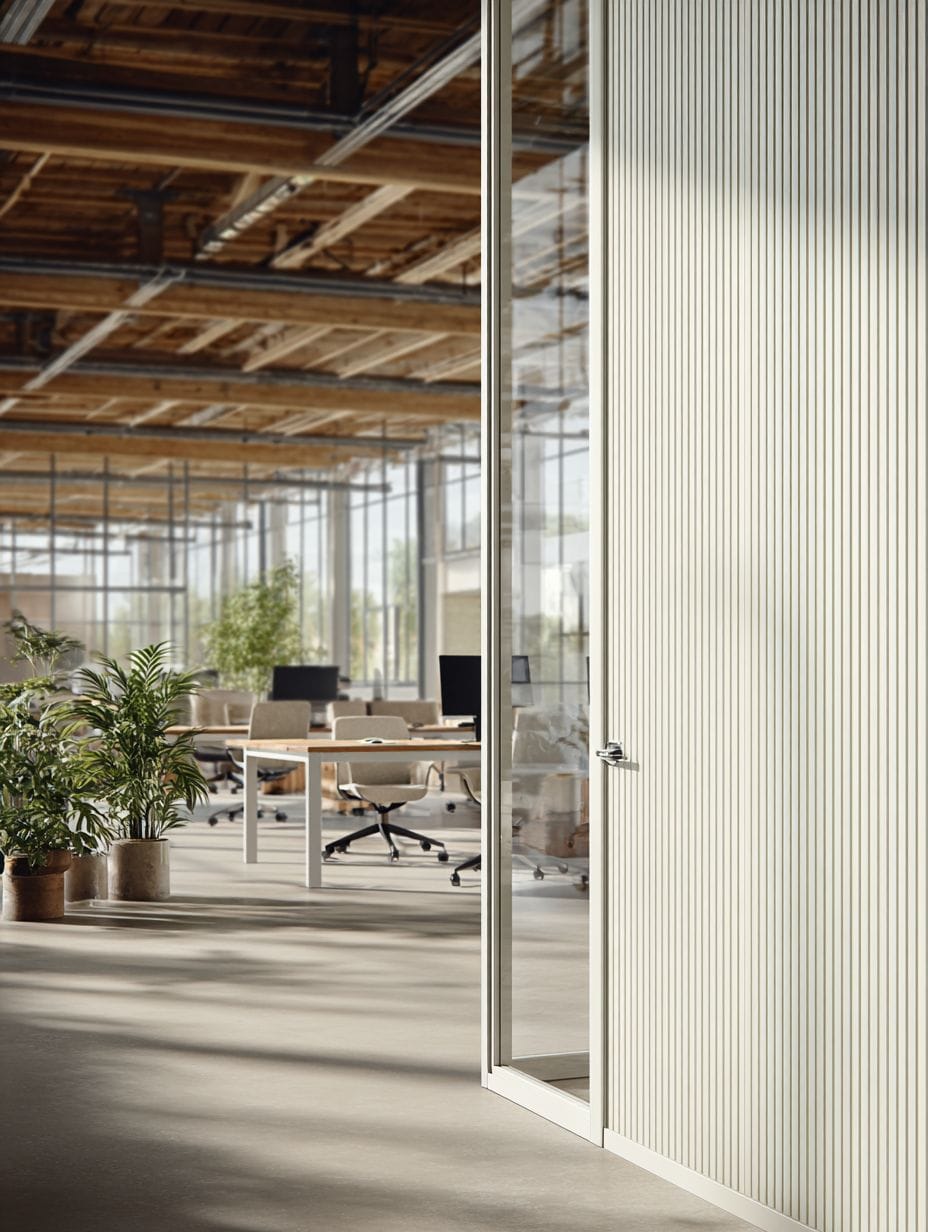
The decision to create a half-height rather than floor-to-ceiling partition demonstrates thoughtful design restraint. This approach maintains visual connection and conversation flow between spaces while still providing psychological separation and spatial definition. The partition rises to approximately desk height, offering sufficient privacy for focused work while allowing standing individuals to easily communicate across zones. This design particularly suits modern homes where flexibility and adaptability are prioritized over rigid room divisions. The white finish reflects light, helping smaller spaces feel more expansive and airy.
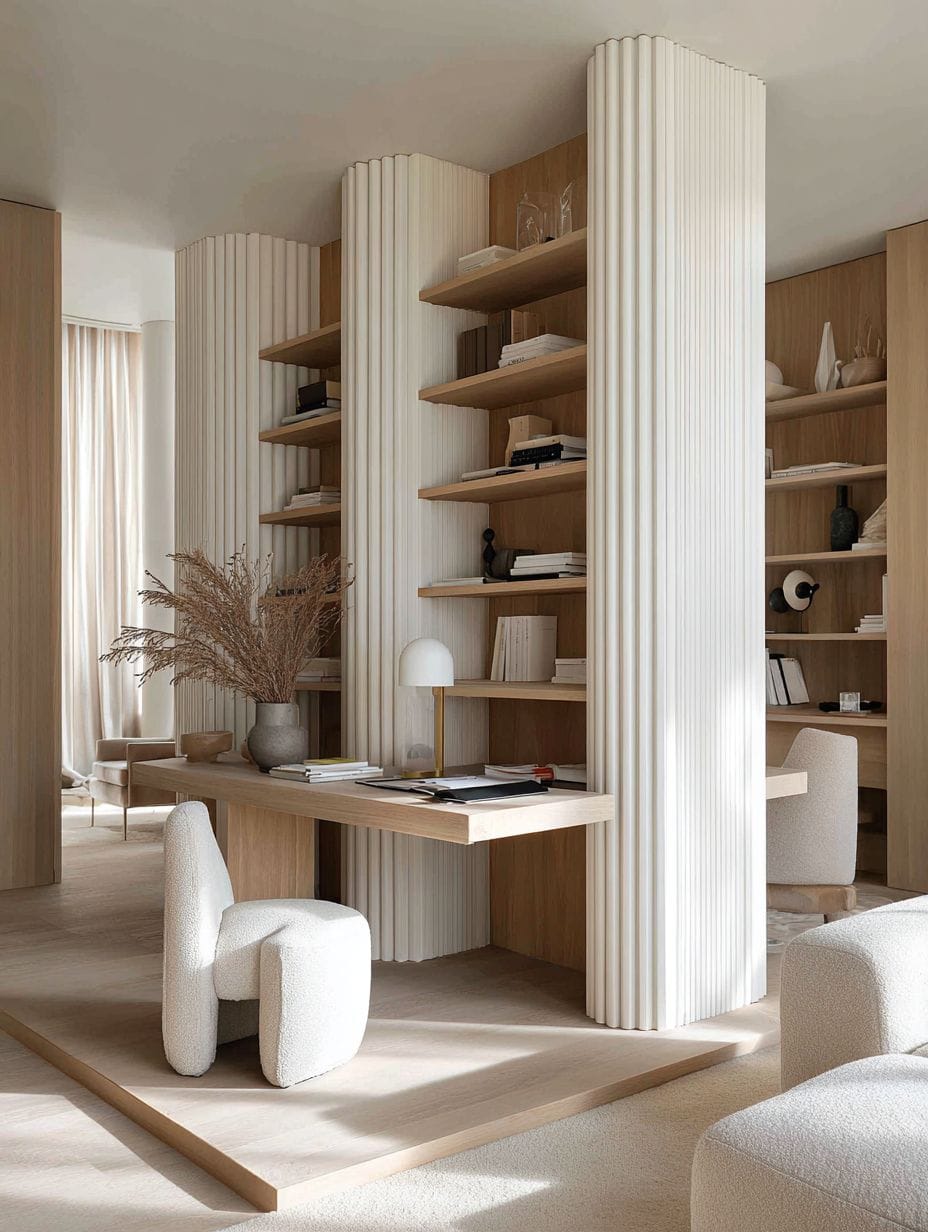
Contemporary furnishings in neutral tones complement the clean aesthetic of this partition beautifully. The absence of bold colors or busy patterns allows the fluted texture to serve as the room’s subtle focal point. Soft natural light emphasizes the rhythmic pattern of grooves, creating a calming, meditative quality that enhances the living space’s tranquility. The simplicity of this design makes it remarkably versatile—it can be painted to match changing color schemes, dressed up with artwork or mirrors, or left pristine to maintain its minimalist integrity.
- Choose high-quality MDF or wood composite for the fluted panels to ensure clean, consistent grooves and smooth finish.
- Consider the groove depth carefully—shallow grooves create subtle texture while deeper channels produce more dramatic shadow effects.
- Paint with semi-gloss or satin finish to enhance light reflection and make cleaning easier than flat paint would allow.
- Maintain consistent spacing of the flutes across the entire panel for professional, polished appearance.
- Position lighting strategically to highlight the textured surface, with side-lighting creating the most dramatic effect.
5. Artistic Geometric Metal Screen
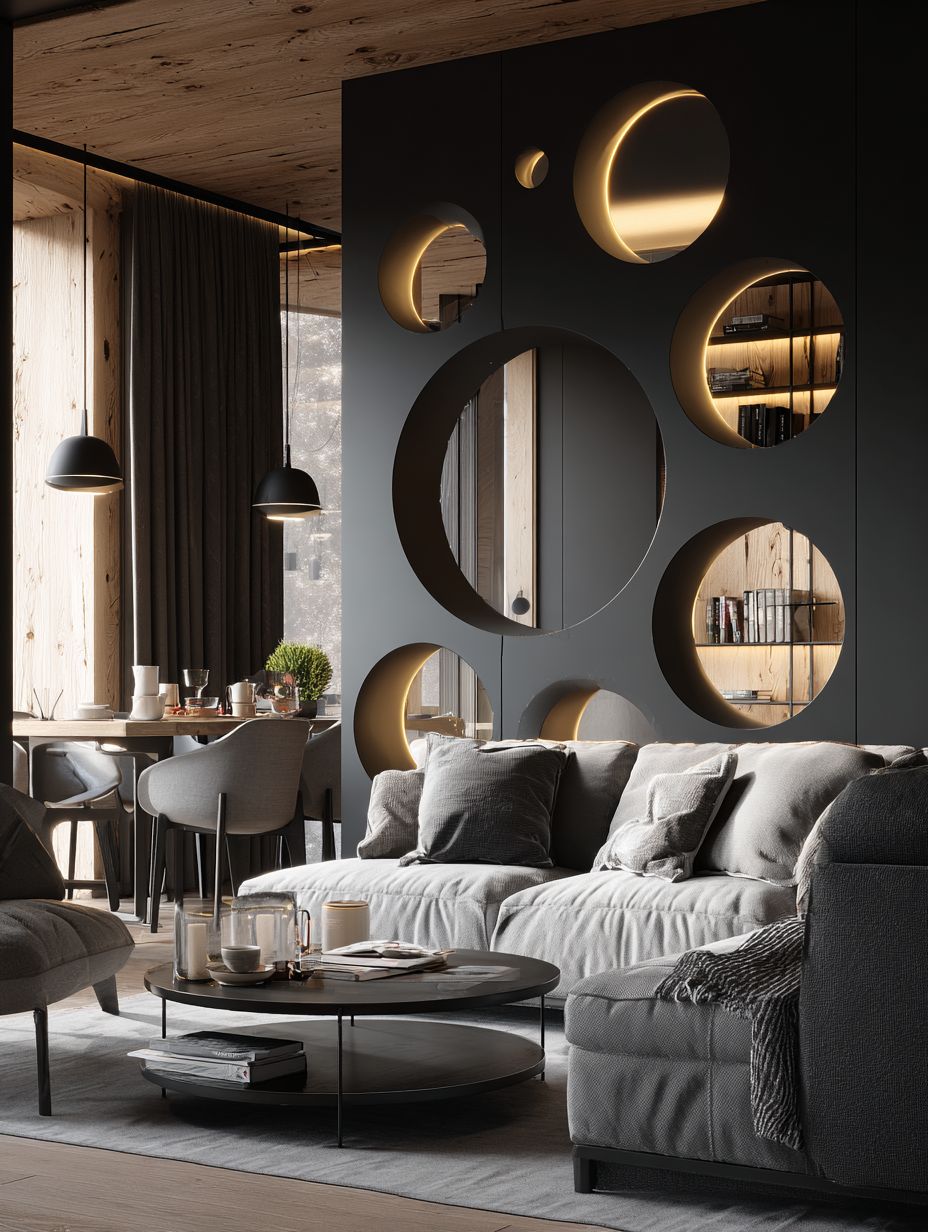
The striking geometric metal screen partition in matte black finish elevates room division to an art form. This freestanding design features an intricate abstract pattern that creates visual intrigue while serving the practical purpose of separating the conversation area from the dining zone. The geometric cutouts transform this partition from a simple divider into a sculptural statement piece that commands attention and sparks conversation. The matte black finish adds contemporary sophistication and creates strong contrast against lighter walls and furnishings, ensuring the partition becomes a defining element of the room’s character.
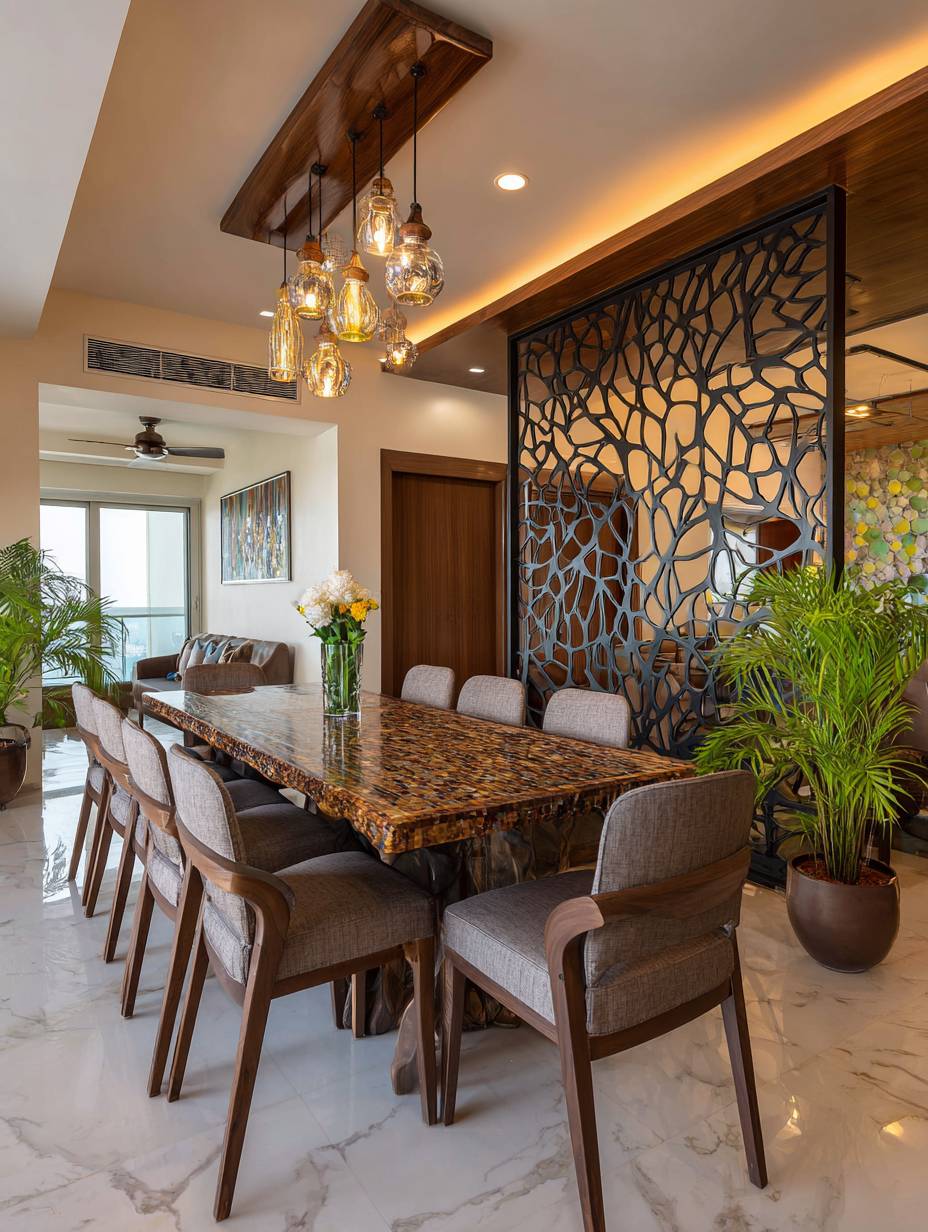
The interplay between positive and negative space—solid metal sections and open geometric shapes—creates fascinating visual effects throughout the day. As directional lighting moves across the room, the partition casts dramatic, ever-changing shadows on surrounding walls and floors, essentially creating free, dynamic artwork that requires no electricity or maintenance. These shadow patterns add movement and energy to the space, preventing the static quality that can plague some interior designs. Evening hours prove particularly magical when strategically placed lamps or spotlights create theatrical shadow displays.
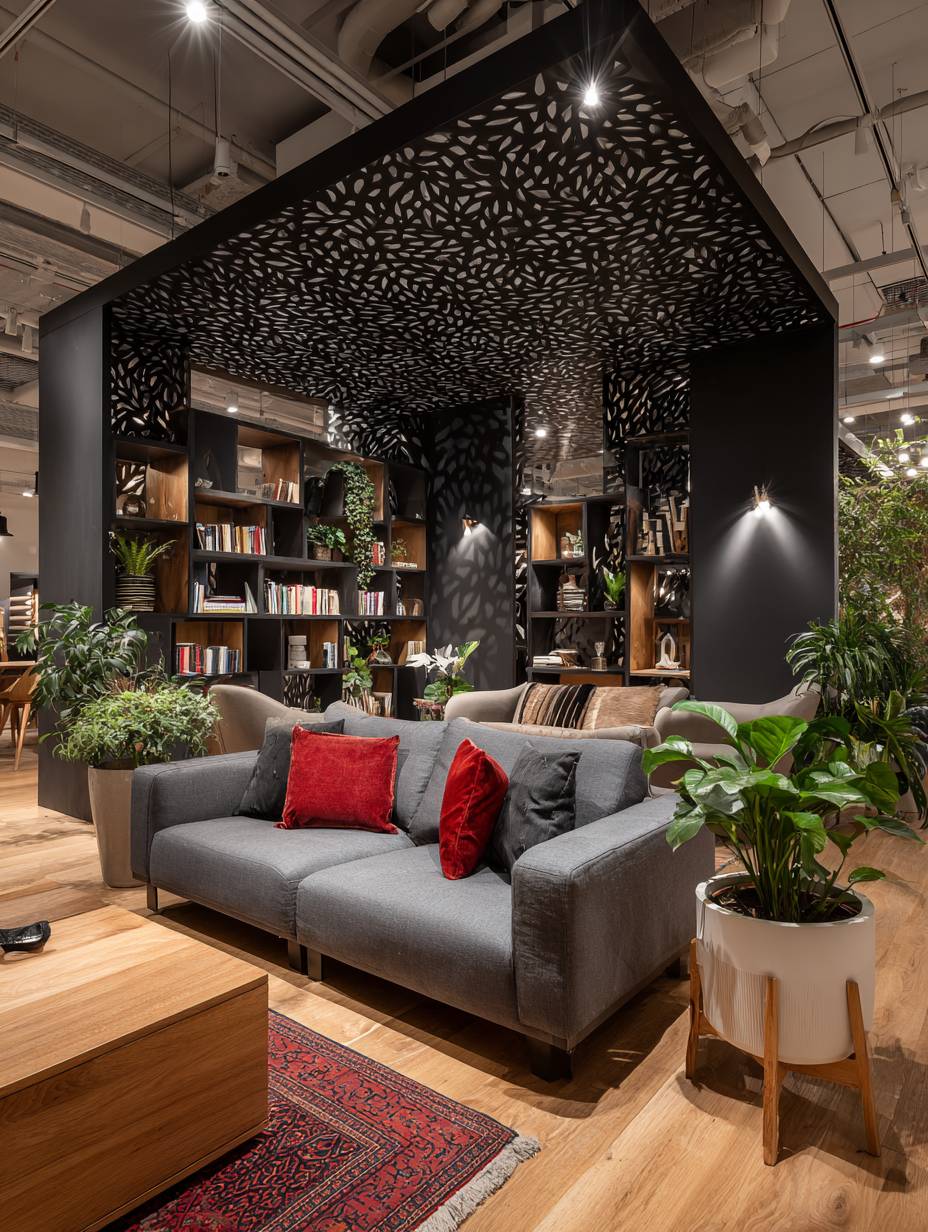
Modern grey furniture and warm wood accents in the surrounding space allow the bold partition to shine without competition. The careful color curation ensures that while the partition makes a strong statement, it doesn’t overwhelm the room or clash with other design elements. The freestanding nature of this partition offers flexibility that built-in options cannot match—it can be repositioned as needs change, moved to different locations, or even relocated to entirely different rooms as living situations evolve. This adaptability makes it an excellent investment for renters or homeowners who value design flexibility.
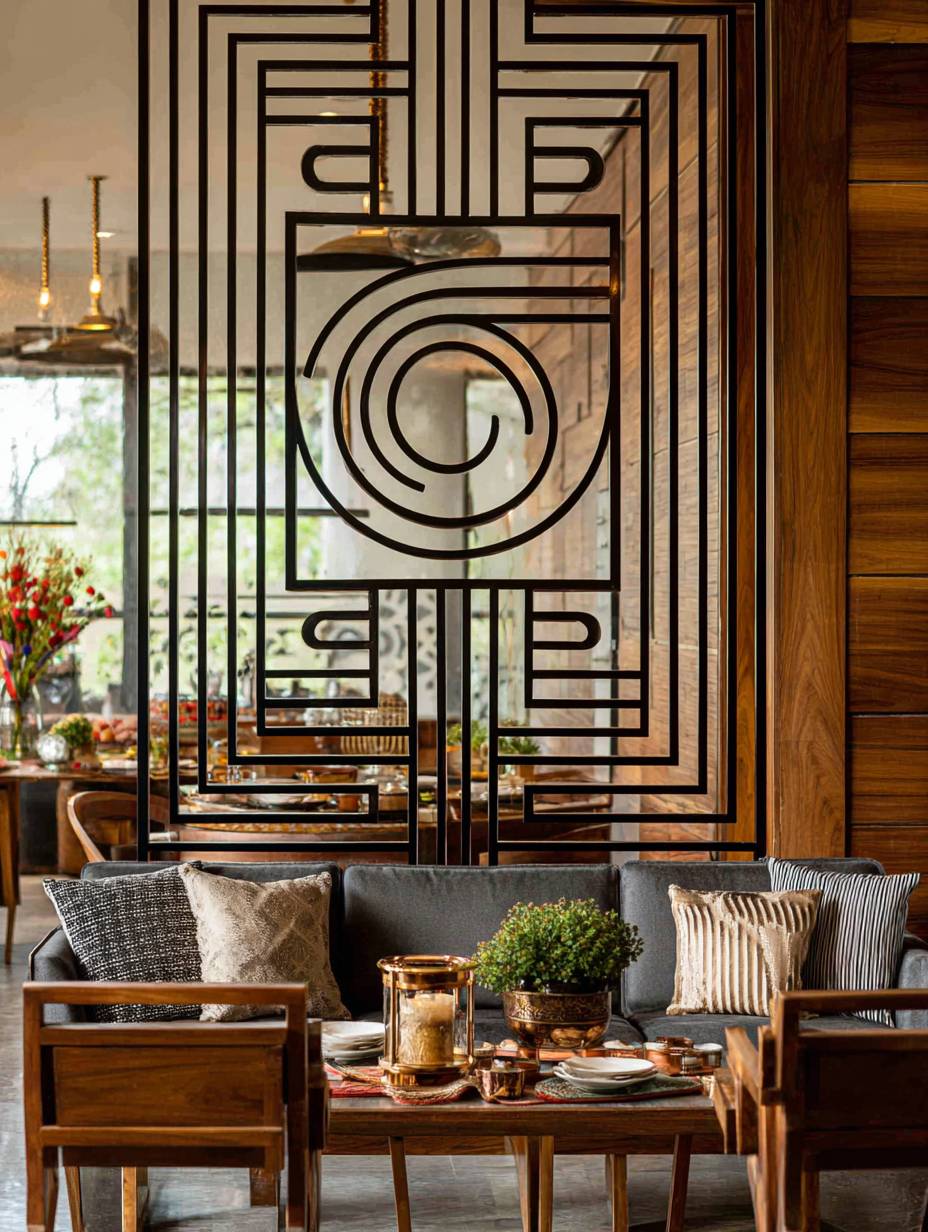
- Select a pattern scale appropriate to your room size—larger spaces can handle bolder, more intricate designs while smaller rooms benefit from simpler geometries.
- Ensure stable footing with a weighted base or floor anchors, particularly important for taller screens in homes with children or pets.
- Consider the viewing angles when positioning the partition to maximize the visual impact of both the screen itself and its shadow patterns.
- Experiment with backlighting to create stunning silhouette effects that highlight the geometric pattern after dark.
- Leave adequate breathing room around the partition—crowding it with furniture diminishes its sculptural impact.
6. Sliding Barn-Door Frosted Glass Partition
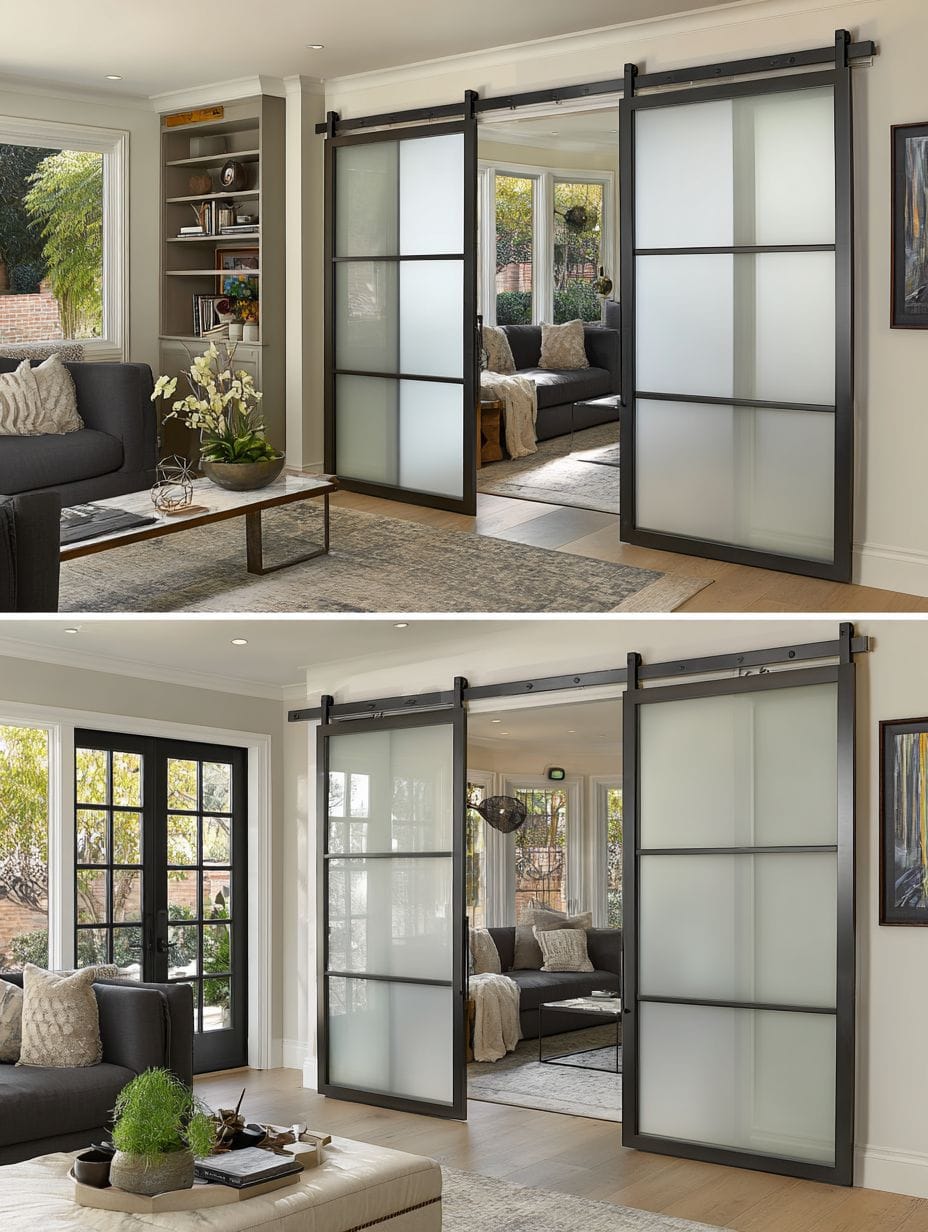
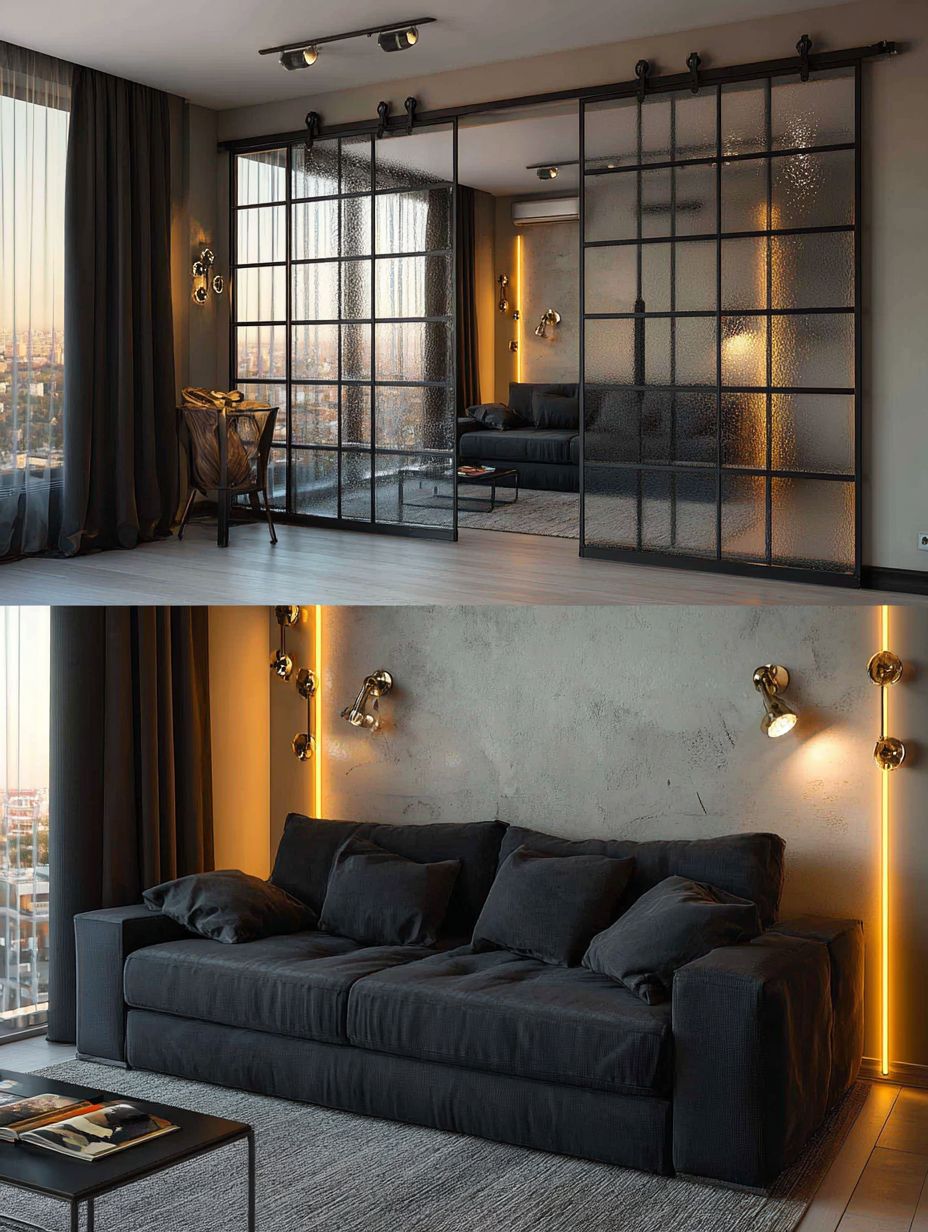
The sliding barn-door style partition featuring frosted glass panels in sleek black aluminum frames combines industrial chic with modern functionality. This innovative design offers the unique advantage of complete flexibility—the partition can slide open to create one continuous space or close to provide privacy and separation between living and study areas. The frosted glass provides visual privacy while still allowing natural light transmission, maintaining brightness in both spaces even when the partition is closed. This balance between privacy and openness makes it ideal for modern homes where space serves multiple purposes.
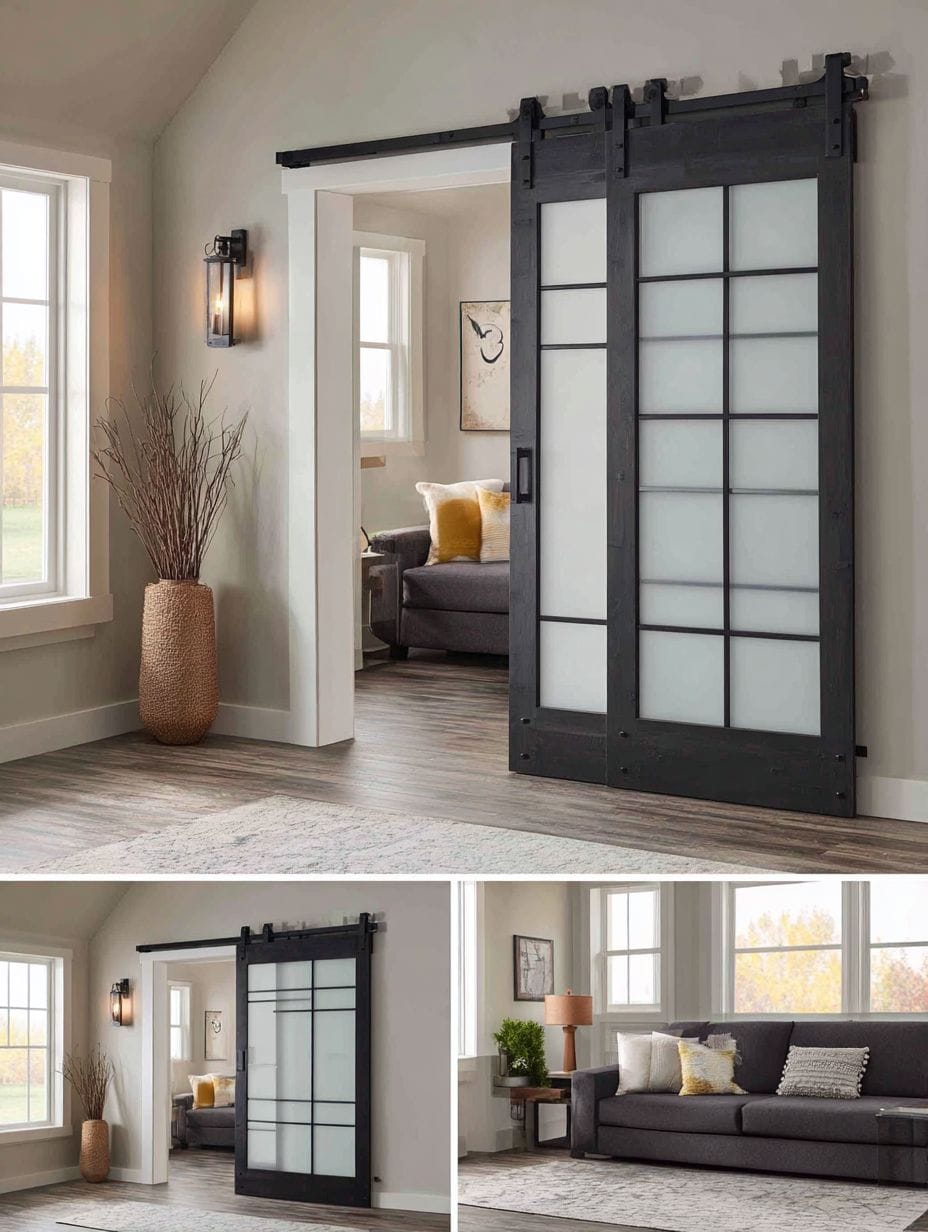
The industrial aesthetic of the barn-door hardware—typically featuring exposed tracks, rollers, and handles—adds authentic character and visual interest to the design. The black aluminum frames create strong linear elements that complement contemporary interiors while the frosted glass softens the overall look, preventing the industrial elements from feeling too harsh or cold. When open, the partition slides along the wall, becoming part of the architectural detailing rather than disappearing completely. This means the design contributes aesthetically whether functioning as a divider or stored in the open position.
Contemporary decor including a charcoal sofa and brass accent lighting creates a sophisticated palette that allows the partition to integrate seamlessly into the overall design scheme. The ability to control the room configuration proves particularly valuable for those who work from home—closing the partition during business hours creates a professional workspace free from living room distractions, while opening it during leisure time restores the open, connected feeling. Natural daylight filters softly through the frosted glass, creating a luminous quality that enhances both spaces without the harsh glare of clear glass.
- Invest in quality track hardware designed specifically for the partition’s weight to ensure smooth, quiet operation over many years.
- Measure carefully to ensure the partition can slide completely to one side, leaving the opening fully accessible when open.
- Consider soft-close mechanisms to prevent slamming and reduce noise, particularly important in homes with children.
- Choose frosted glass density thoughtfully—heavier frosting provides more privacy while lighter treatments maintain better visibility.
- Install the track securely into wall studs or solid backing material to support the partition’s weight safely.
- Add a floor guide at the bottom to prevent swinging and ensure the partition glides smoothly along its intended path.
7. Biophilic Living Wall Partition with Integrated Planters
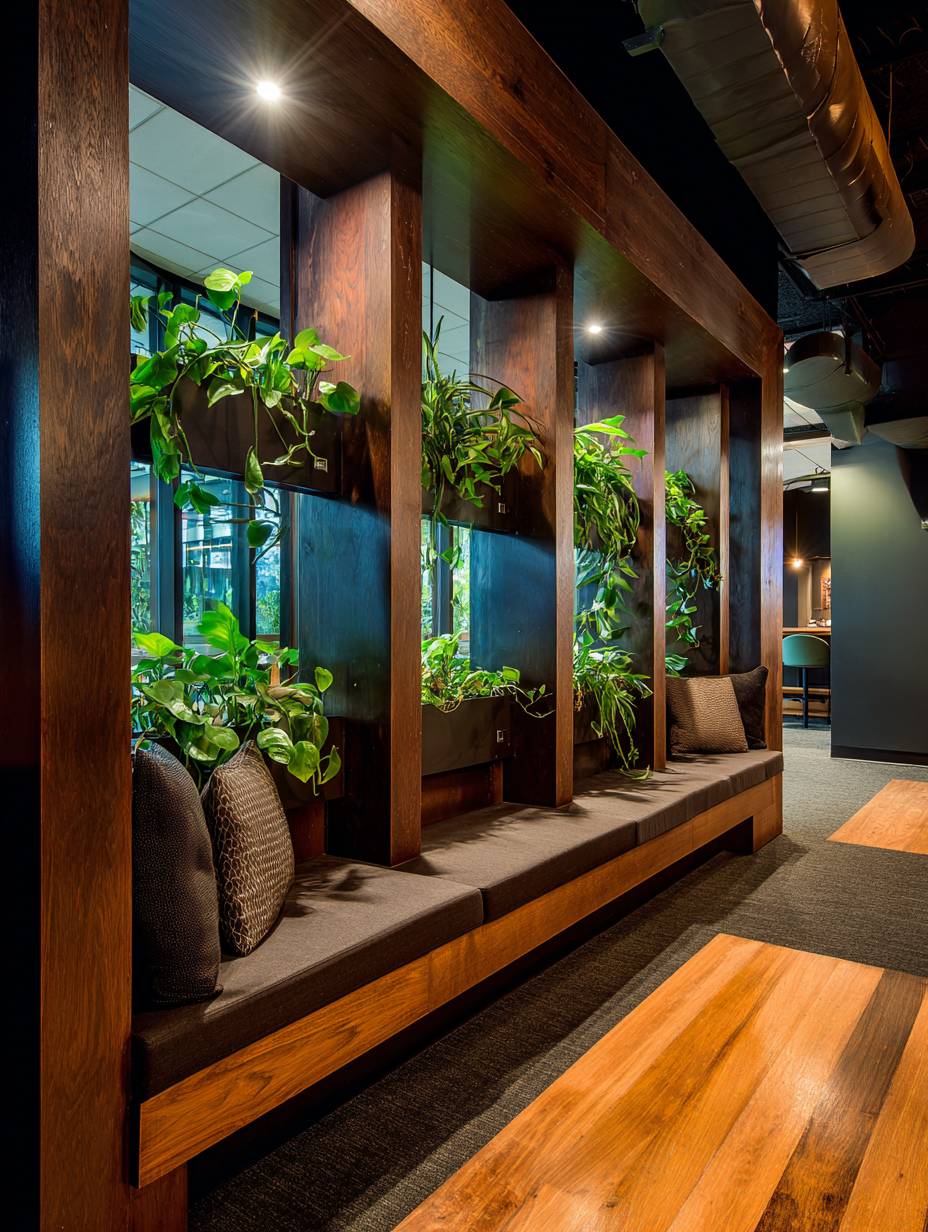
The custom-built partition wall featuring integrated planters and live greenery represents the perfect marriage of architecture and nature. This innovative design incorporates vertical garden elements within dark wood frames and metal planter inserts, creating a living, breathing room divider that separates the seating area from a meditation corner. The lush plants add organic texture, natural air purification, and dynamic visual interest that static partitions simply cannot match. As plants grow and change with seasons, the partition evolves, ensuring the space never feels stale or static.
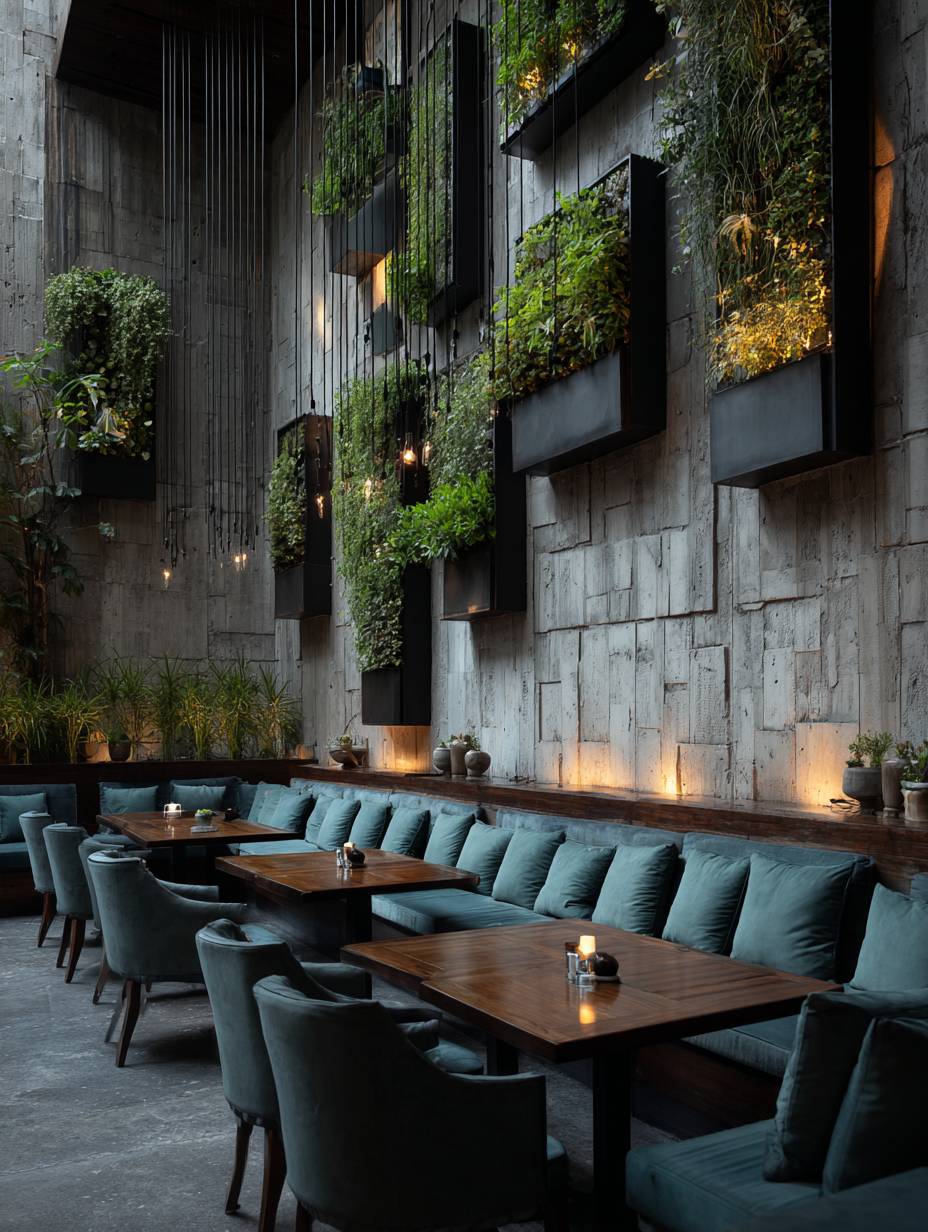
The biophilic design approach—intentionally incorporating natural elements into interior spaces—has been proven to reduce stress, improve air quality, and enhance overall wellbeing. This partition takes that concept to new heights by making nature the primary design feature rather than a supplementary decorative element. The combination of dark wood framing and verdant greenery creates beautiful contrast while the metal planter inserts provide practical growing vessels with proper drainage. Soft ambient lighting, often integrated into the frame structure, ensures plants receive adequate light while creating a warm, inviting glow that enhances the living space’s atmosphere.
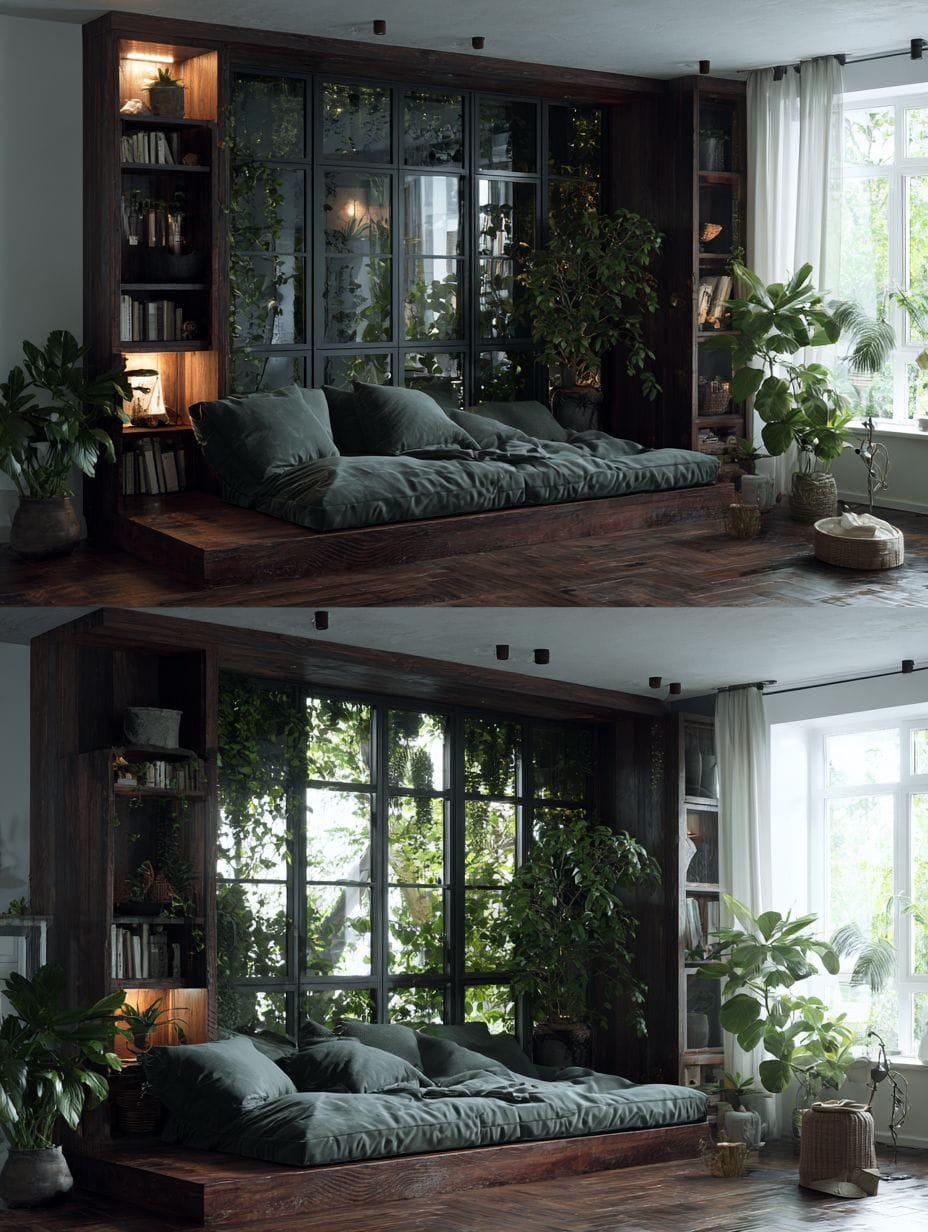
The selection of plant varieties allows for creative expression and functional considerations. Trailing plants create cascading greenery that softens the partition’s architectural edges, while upright varieties add vertical interest and structure. Low-maintenance varieties such as pothos, philodendrons, snake plants, and succulents prove ideal for homeowners who want beauty without intensive care requirements. The organic shapes and varied textures of different plants create visual complexity that engages the eye and invites closer inspection. Natural daylight highlights the plant growth, creating beautiful silhouettes and emphasizing the connection between indoor and outdoor spaces.
- Choose plants appropriate to your lighting conditions—low-light varieties for dimmer spaces and sun-loving species for bright areas near windows.
- Install proper drainage systems within planters to prevent water damage to flooring and ensure healthy plant growth.
- Consider irrigation needs from the planning stage—manual watering, self-watering planters, or automated drip systems each have advantages.
- Select a variety of plant sizes and types to create visual interest and textural diversity across the partition.
- Plan for maintenance access by ensuring all planters can be easily reached for watering, pruning, and plant replacement.
- Use lightweight growing medium to reduce overall weight, especially important for wall-mounted or ceiling-hung installations.
8. Scandinavian-Inspired Folding Screen Partition
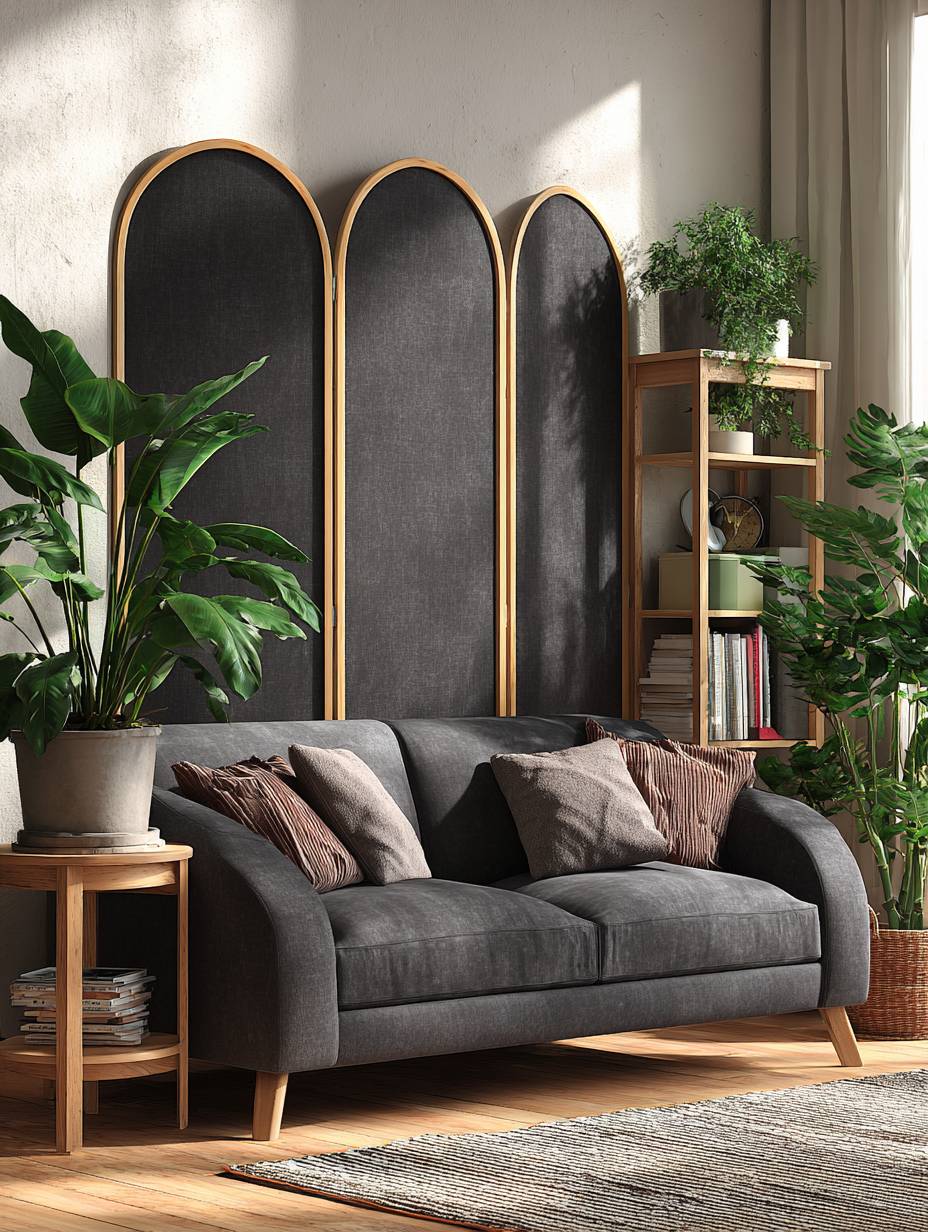
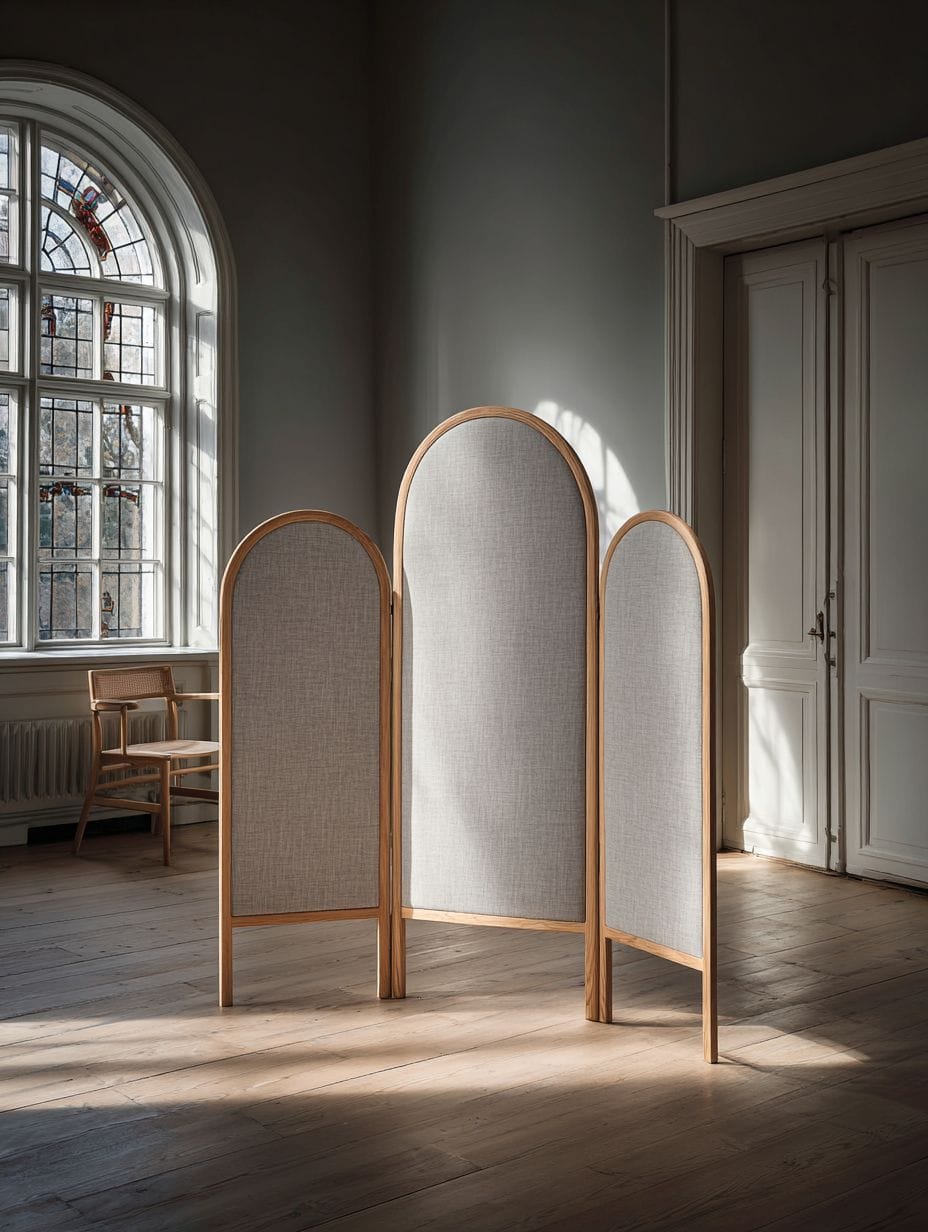
The three-panel folding screen partition upholstered in textured grey fabric with natural oak frame edges embodies Scandinavian design principles of simplicity, functionality, and natural materials. This portable partition solution offers unmatched flexibility, allowing homeowners to divide living spaces as needed without permanent architectural modifications. The grey fabric upholstery adds softness and sound-dampening properties while the wooden frame edges bring organic warmth that prevents the piece from feeling too industrial or cold. This combination creates a balanced aesthetic that works beautifully in modern minimalist interiors.
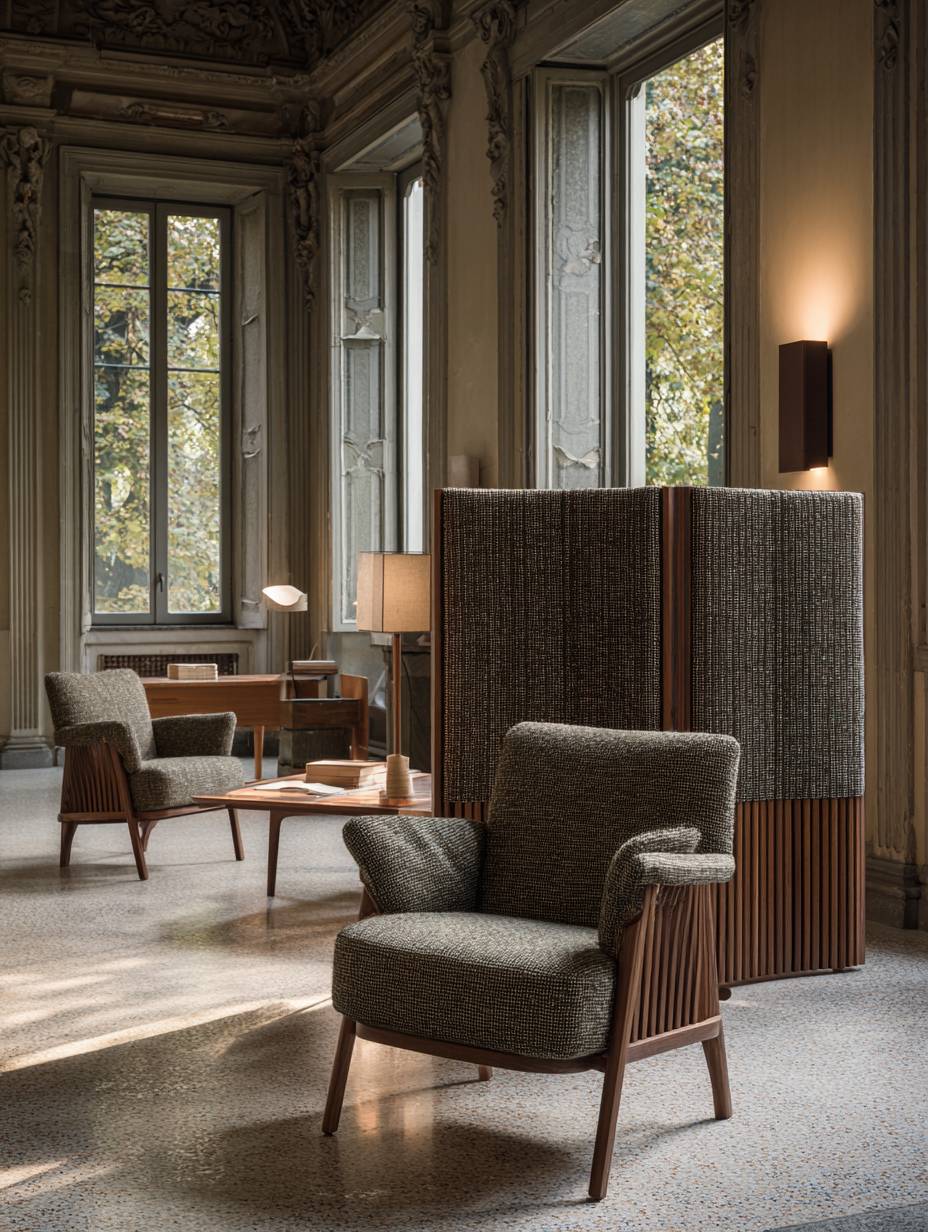
The folding mechanism provides several configuration options beyond simple straight division. The three panels can be arranged in various angles to create corners, curved divisions, or even freestanding displays that don’t span the entire room width. This versatility proves particularly valuable in smaller living spaces where needs change frequently—entertaining guests, creating temporary workspaces, or establishing private areas for specific activities. When not needed, the screen folds completely flat for storage behind furniture or in closets, making it ideal for renters or those who value uncluttered spaces.
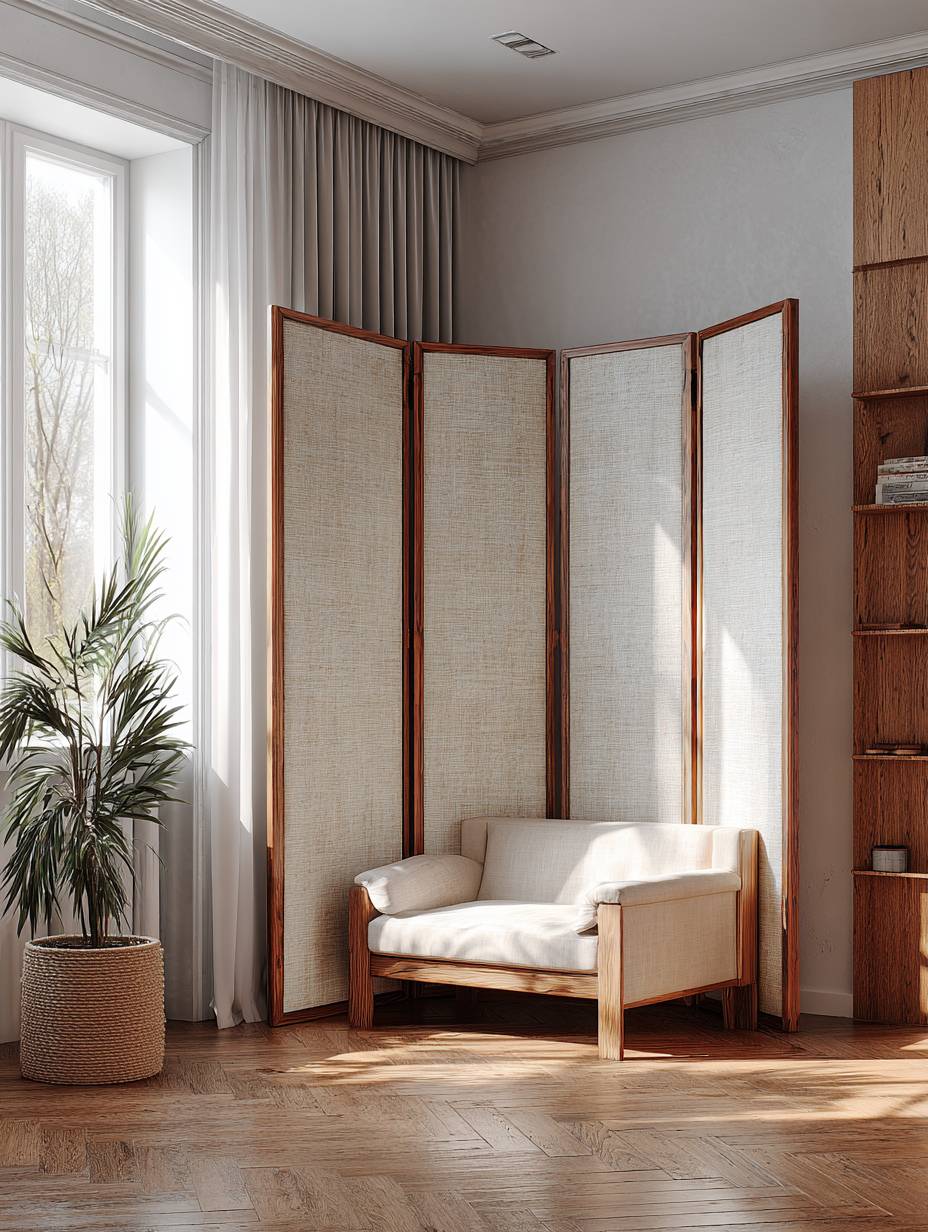
Scandinavian-inspired furniture in light tones creates a cohesive aesthetic that celebrates the beauty of natural materials and restrained design. The textured grey fabric catches natural window light beautifully, creating soft shadows in the fabric’s weave that add subtle visual interest. The oak frame edges provide structural integrity while reinforcing the connection to nature that characterizes Nordic design philosophy. The overall effect is calming and unpretentious—qualities that make this partition style particularly suitable for bedrooms, home offices, or meditation spaces where tranquility is paramount.
- Choose sturdy hinges rated for the screen’s weight to ensure smooth folding action and long-term durability.
- Consider fabric carefully—tightly woven materials provide more privacy and sound dampening while looser weaves create lighter, more casual effects.
- Ensure bottom stability with appropriately sized feet or floor protectors that prevent tipping without damaging flooring.
- Treat fabric with stain-resistant products to protect against spills and make cleaning easier.
- Store properly when not in use to prevent warping of frames or damage to fabric panels.
9. Natural Fiber Rope Partition with Suspended Design
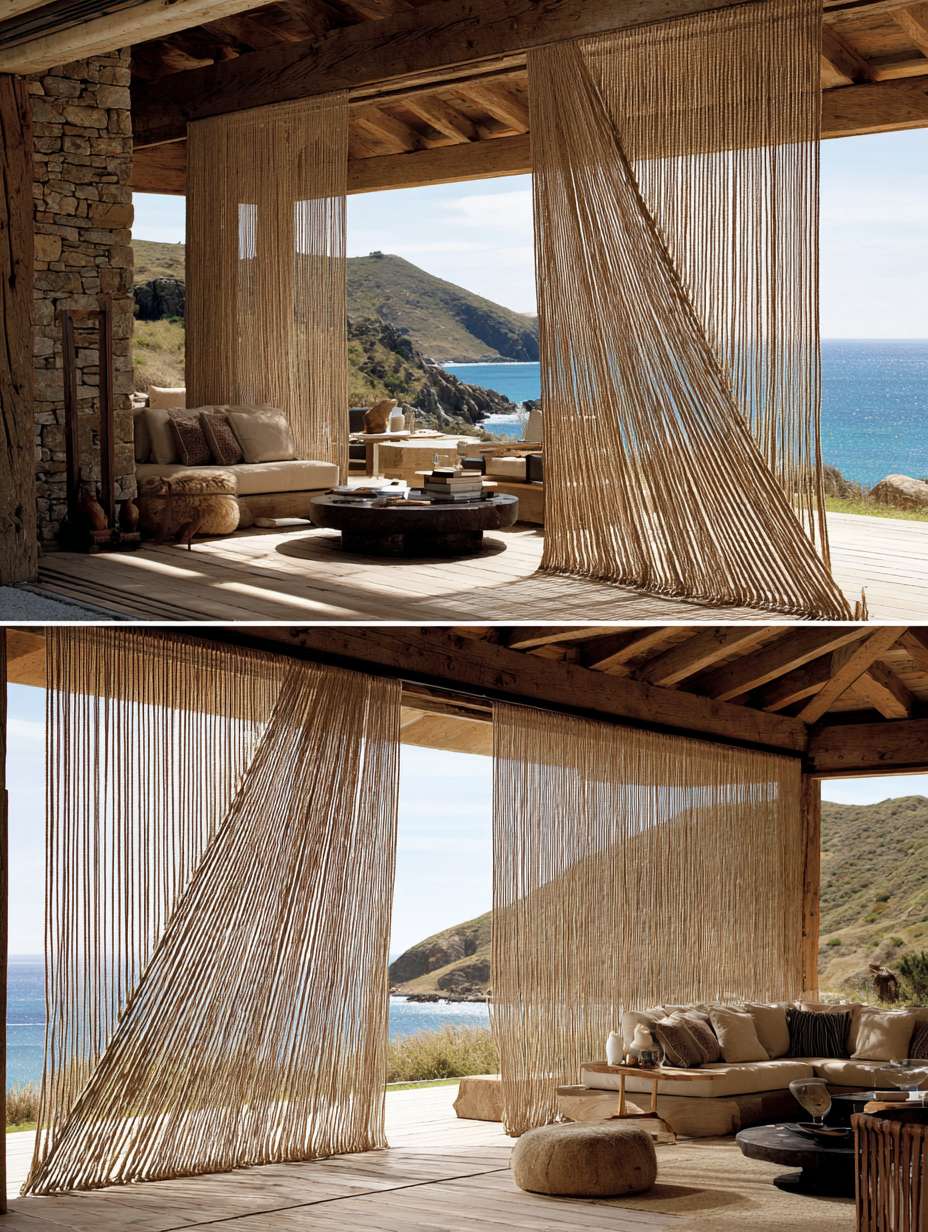
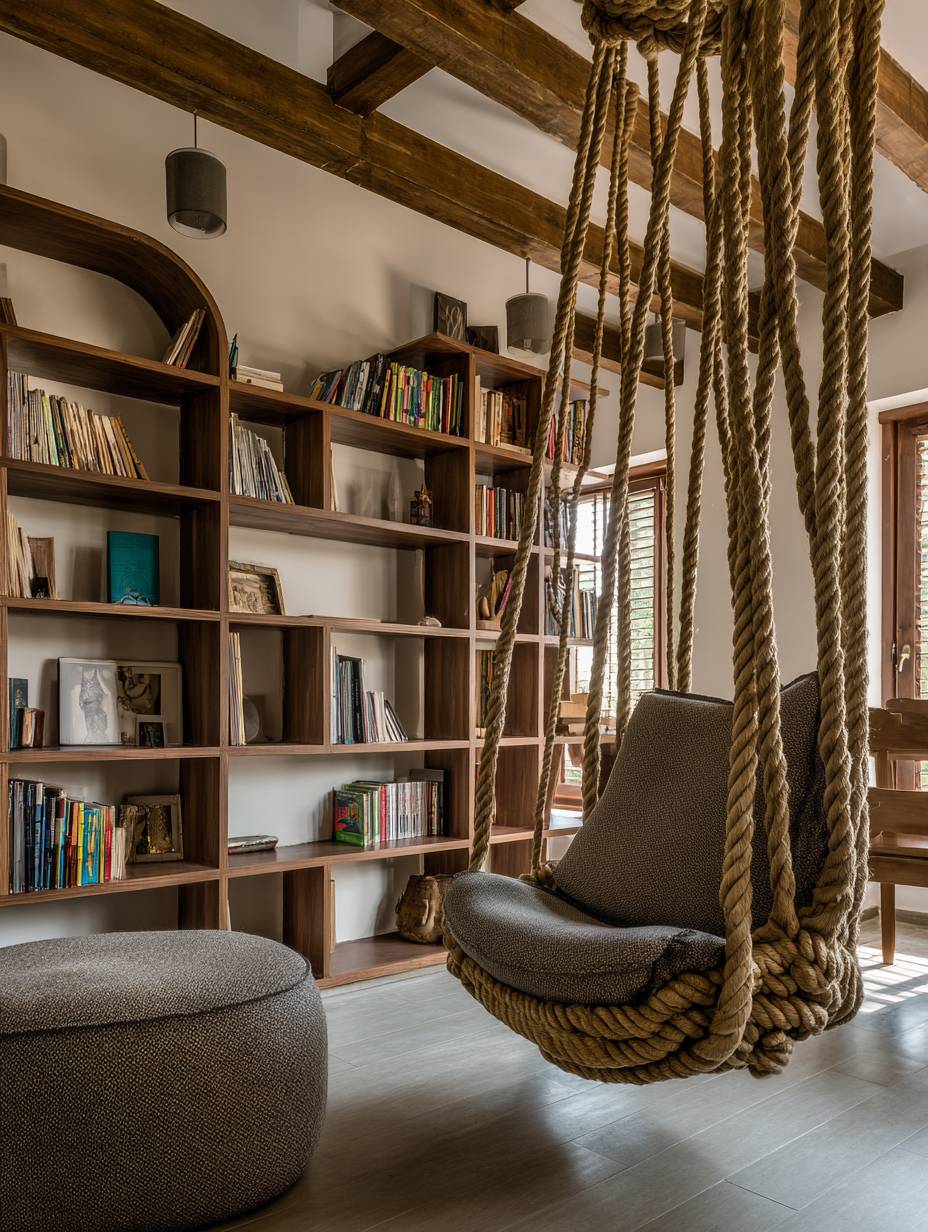
The dramatic floor-to-ceiling rope partition constructed from thick natural fiber ropes suspended between wooden beams creates an unexpected and visually stunning divider. This semi-transparent design separates the main living area from a cozy reading alcove with organic texture and bohemian flair. The natural fiber ropes—whether jute, manila, or sisal—bring tactile warmth and earthy authenticity that synthetic materials cannot replicate. The vertical lines created by the suspended ropes draw the eye upward, emphasizing ceiling height and creating a sense of expansiveness despite the space division.
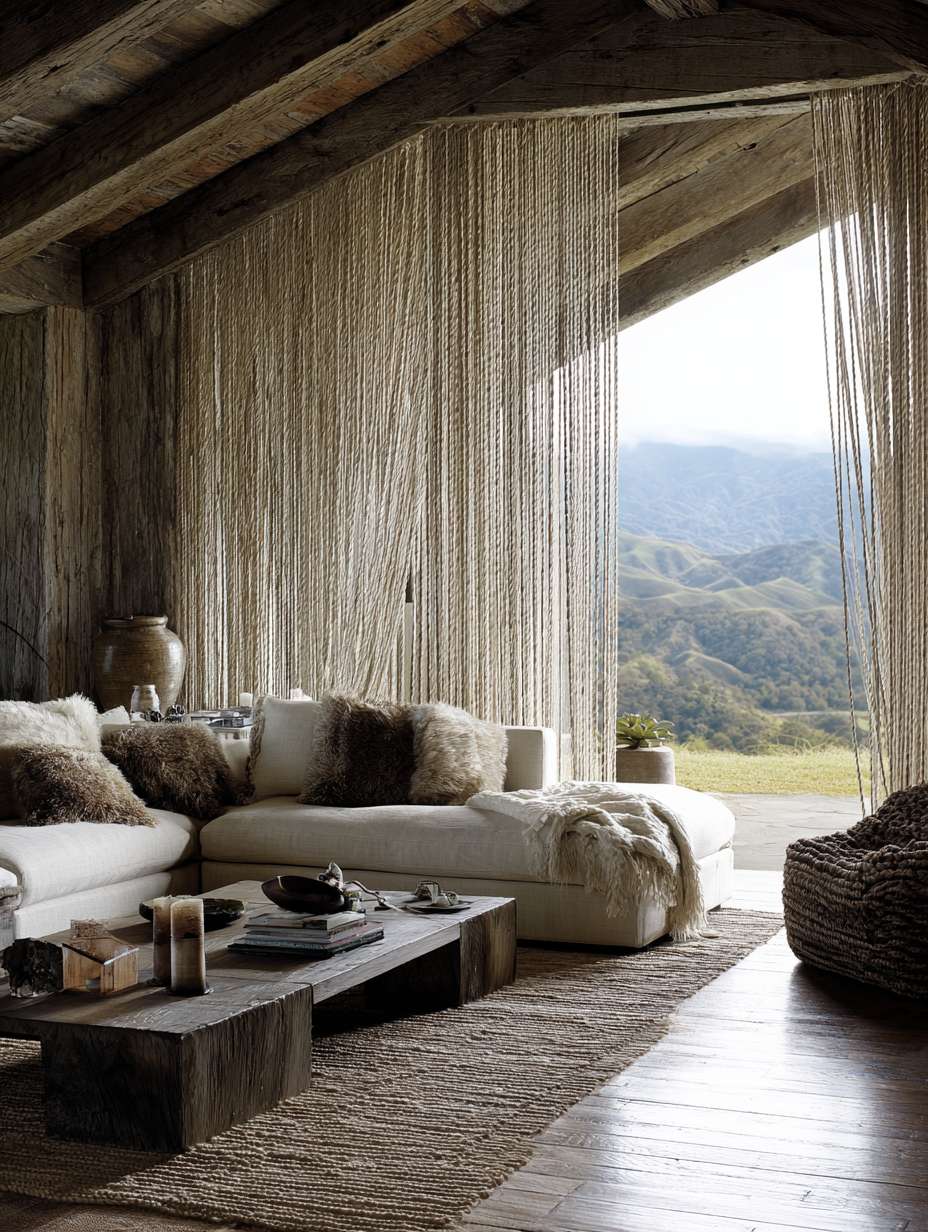
The genius of this design lies in its ability to provide both separation and connection simultaneously. The gaps between ropes allow visual and physical permeability—you can see through the partition and even walk between the ropes if needed—while still creating clear spatial boundaries. This semi-transparent quality makes it particularly suitable for smaller living rooms where solid partitions would feel oppressive or claustrophobic. The organic, natural aesthetic complements modern furniture in earthy tones, creating a contemporary bohemian style that feels both current and timeless.
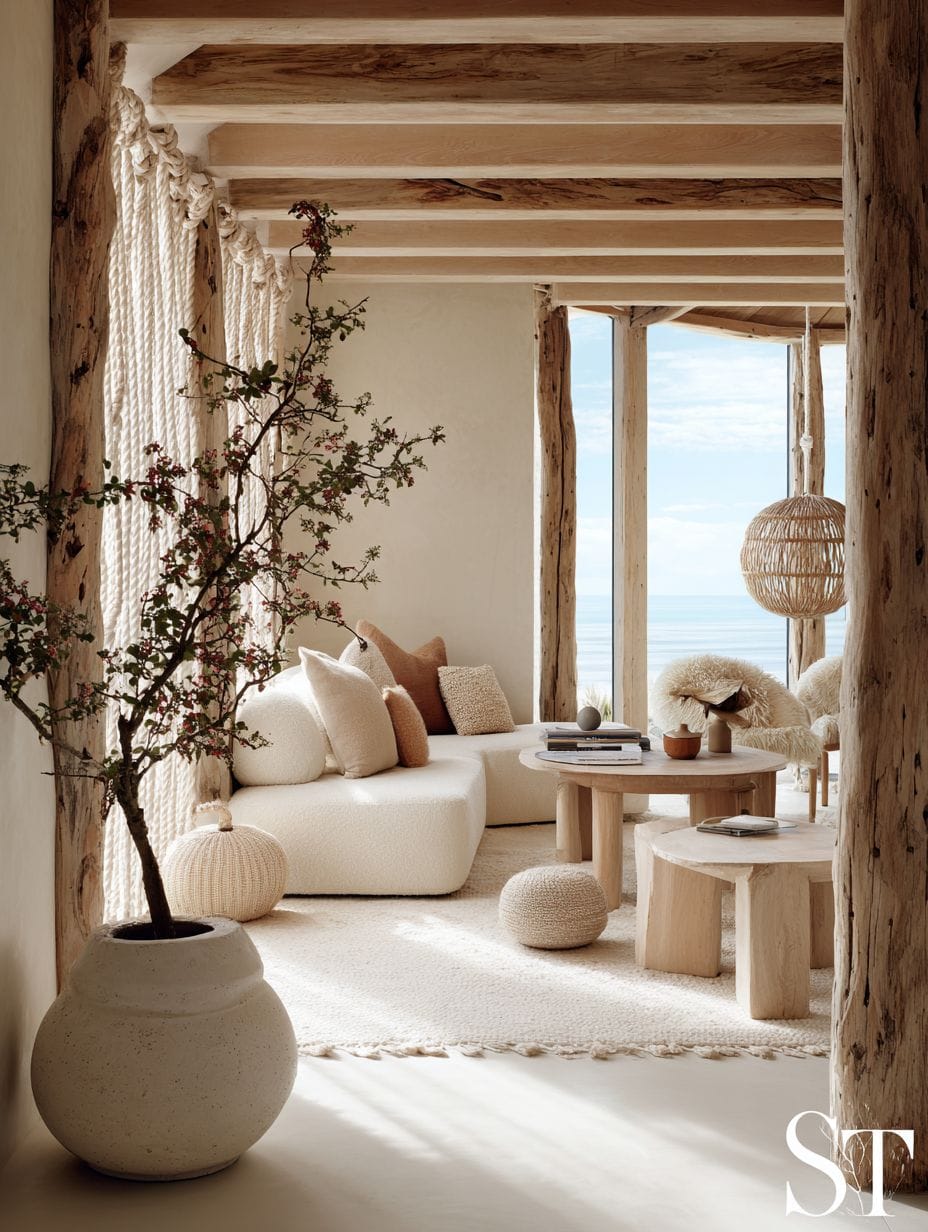
Backlighting proves transformational for this partition design. When illuminated from behind—whether by natural window light during the day or artificial lighting at night—the ropes create an ethereal, almost mystical glow that transforms the entire room’s atmosphere. The ropes cast soft, parallel shadows that add depth and dimension to surrounding walls. This lighting strategy elevates the partition from a simple functional element to an architectural feature that provides ambient illumination and dramatic visual impact. The interplay of light and shadow creates ever-changing patterns that maintain visual interest throughout the day and night.
- Select natural fiber ropes with consistent thickness to create uniform appearance and ensure structural integrity.
- Space ropes appropriately—closer spacing provides more privacy while wider gaps maintain openness; typically 3-6 inches works well.
- Secure mounting points firmly to structural ceiling beams and floor anchors to handle rope tension without sagging.
- Treat natural fibers with appropriate protectants to resist moisture, prevent mildew, and reduce dust accumulation.
- Tension ropes properly during installation to prevent sagging over time while avoiding over-tightening that could damage mounting points.
- Consider fire safety by treating natural fibers with flame-retardant products, particularly important near electrical sources or fireplaces.
10. Sophisticated Half-Wall with Frosted Glass Topper
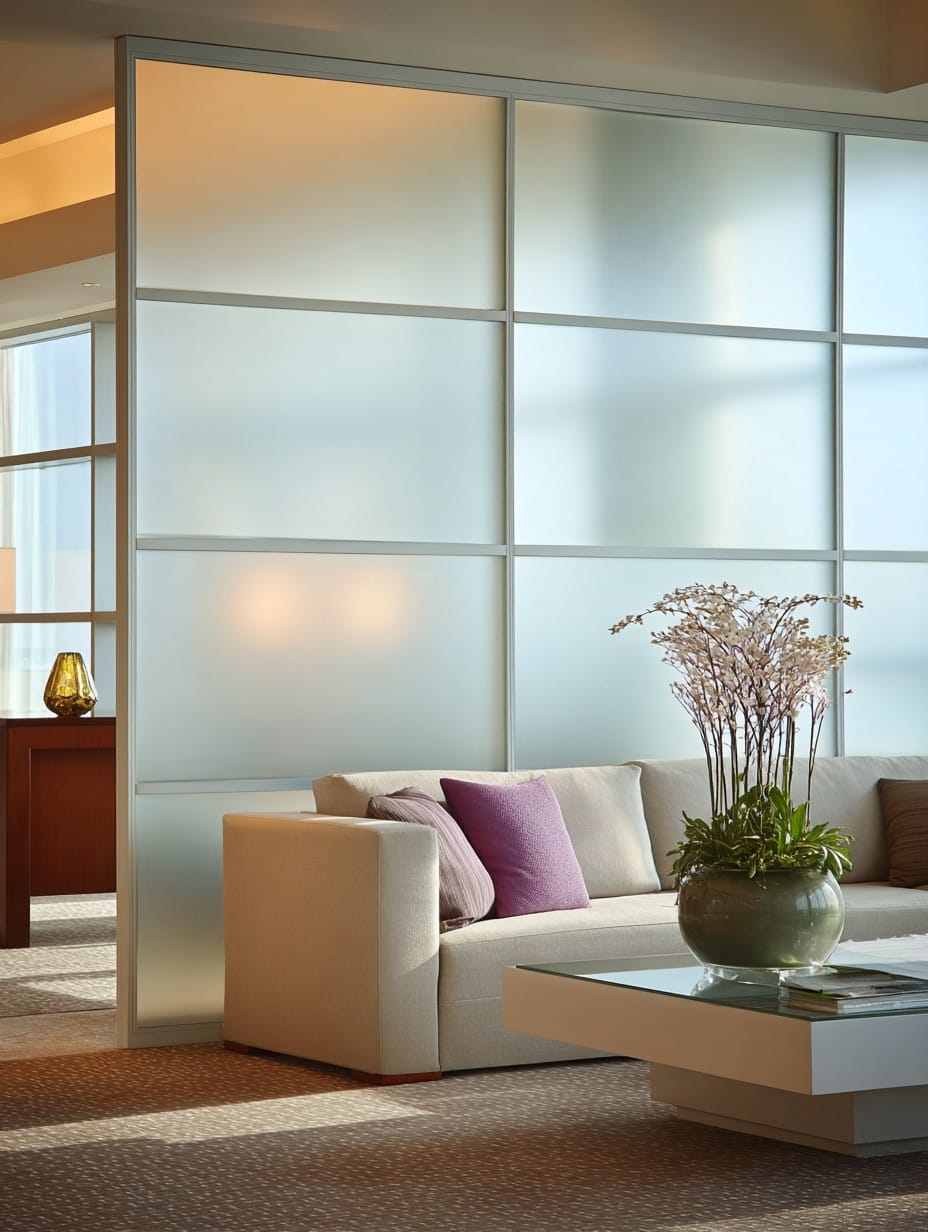
The streamlined half-wall partition topped with horizontal frosted glass panels represents refined modern design thinking. This partial partition rises to seated eye level, providing privacy and spatial definition while maintaining light flow and preserving the open feeling characteristic of contemporary interiors. The solid lower portion, typically constructed from painted drywall or wood panels, creates substantial separation at the most functionally important height—blocking sightlines when seated while keeping upper areas open and connected. The frosted glass topper adds architectural interest while allowing natural light to pass through, creating soft diffusion that enhances both spaces.
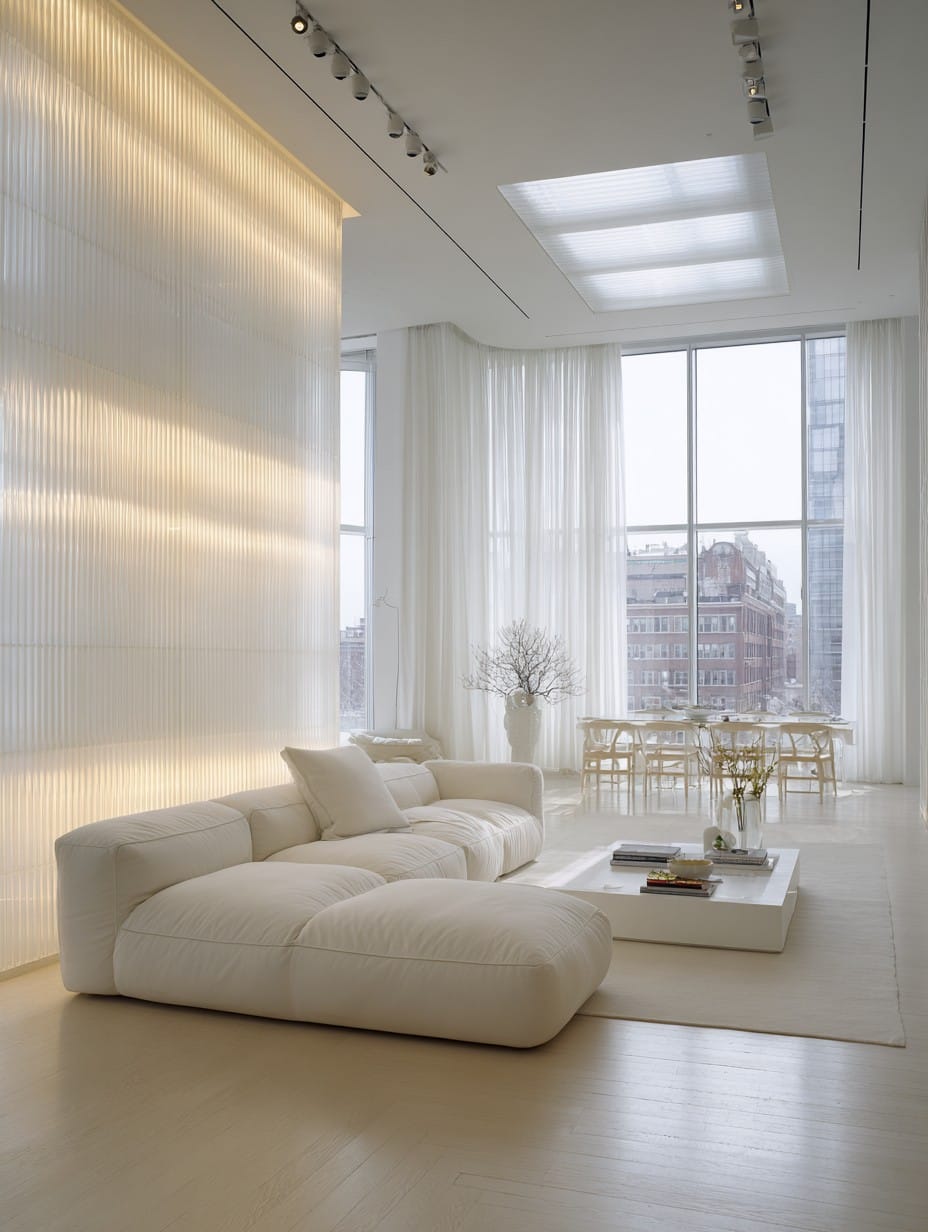
This design solution proves particularly effective between living and dining areas where some separation is desired without complete isolation. Diners can enjoy their meals in a defined space while still feeling connected to conversation and activities in the living room. The half-wall height allows standing individuals to easily communicate across zones, making it ideal for families or those who frequently entertain. The horizontal orientation of the glass panels creates strong linear elements that guide the eye across the space, emphasizing room width and creating a sense of expansiveness.
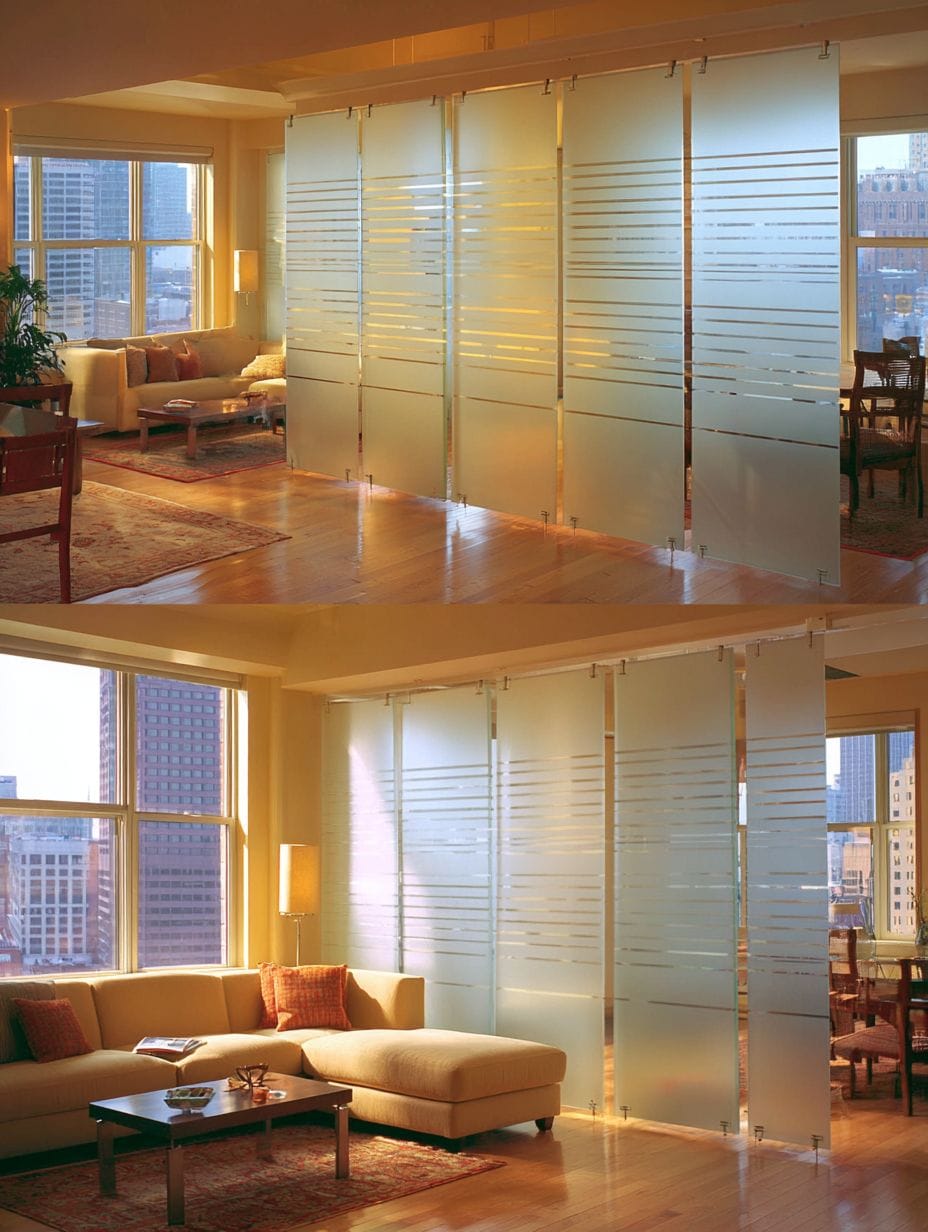
Contemporary furniture including a low-profile sectional and minimalist coffee table complements the partition’s clean lines and understated elegance. Natural light passing through the frosted glass creates beautiful diffusion effects—soft, even illumination without the harsh glare of clear glass. This lighting quality proves particularly advantageous during bright afternoons when direct sunlight might otherwise create uncomfortable conditions. The frosted treatment also provides the option to obscure less attractive views while maintaining brightness, offering both functional and aesthetic advantages.
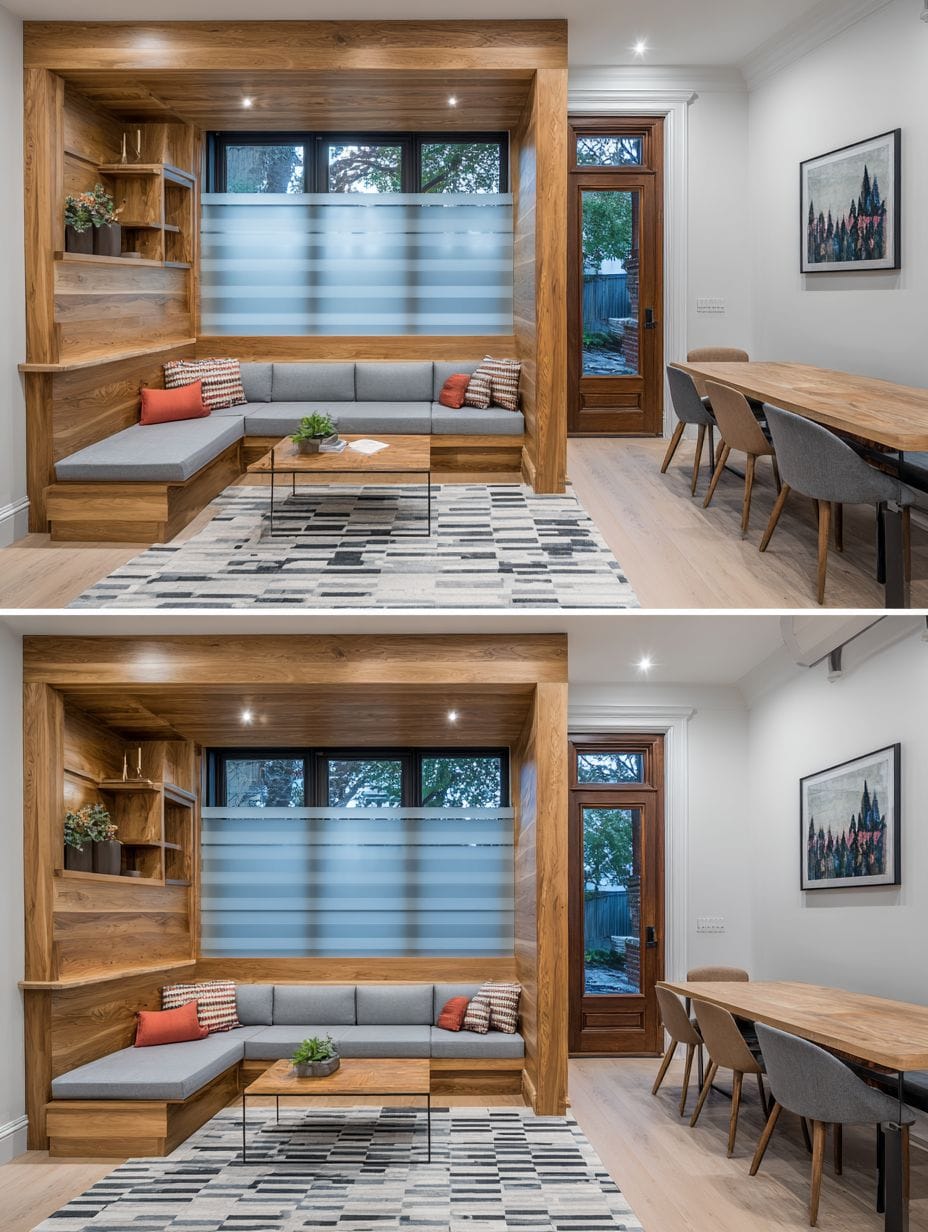
- Determine optimal height based on furniture—typically 36-48 inches works well for seated privacy while maintaining openness.
- Ensure structural integrity by properly attaching the half-wall to floor joists and framing, particularly important where glass panels add top weight.
- Select appropriate frosted glass density—heavier frosting provides more obscurity while lighter treatments allow more light transmission.
- Consider the wall thickness—thicker walls feel more substantial and permanent while thinner profiles maintain airiness.
- Paint or finish the half-wall to coordinate with surrounding walls or create an accent element that adds visual interest.
11. Industrial Reclaimed Wood with Metal Brackets
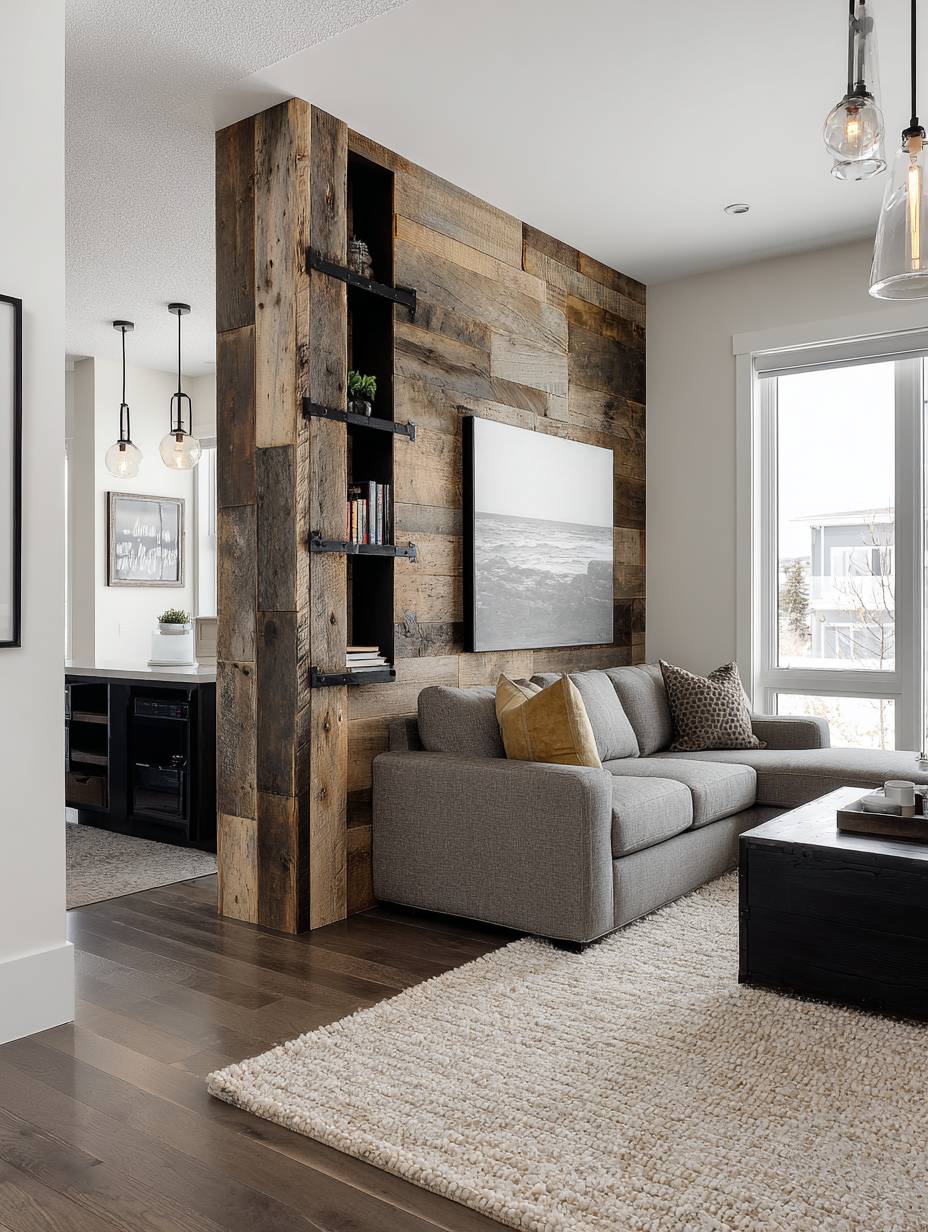
The industrial-style partition constructed from reclaimed wood planks in varying widths embodies the authentic urban loft aesthetic. The visible weathering, natural patina, and unique character marks of recycled wood tell stories of previous lives, adding depth and history that new materials cannot replicate. Black metal brackets secure the planks vertically, creating strong industrial elements that balance the organic wood textures. This design separates living spaces with bold personality while celebrating sustainable material choices and the beauty of imperfection.
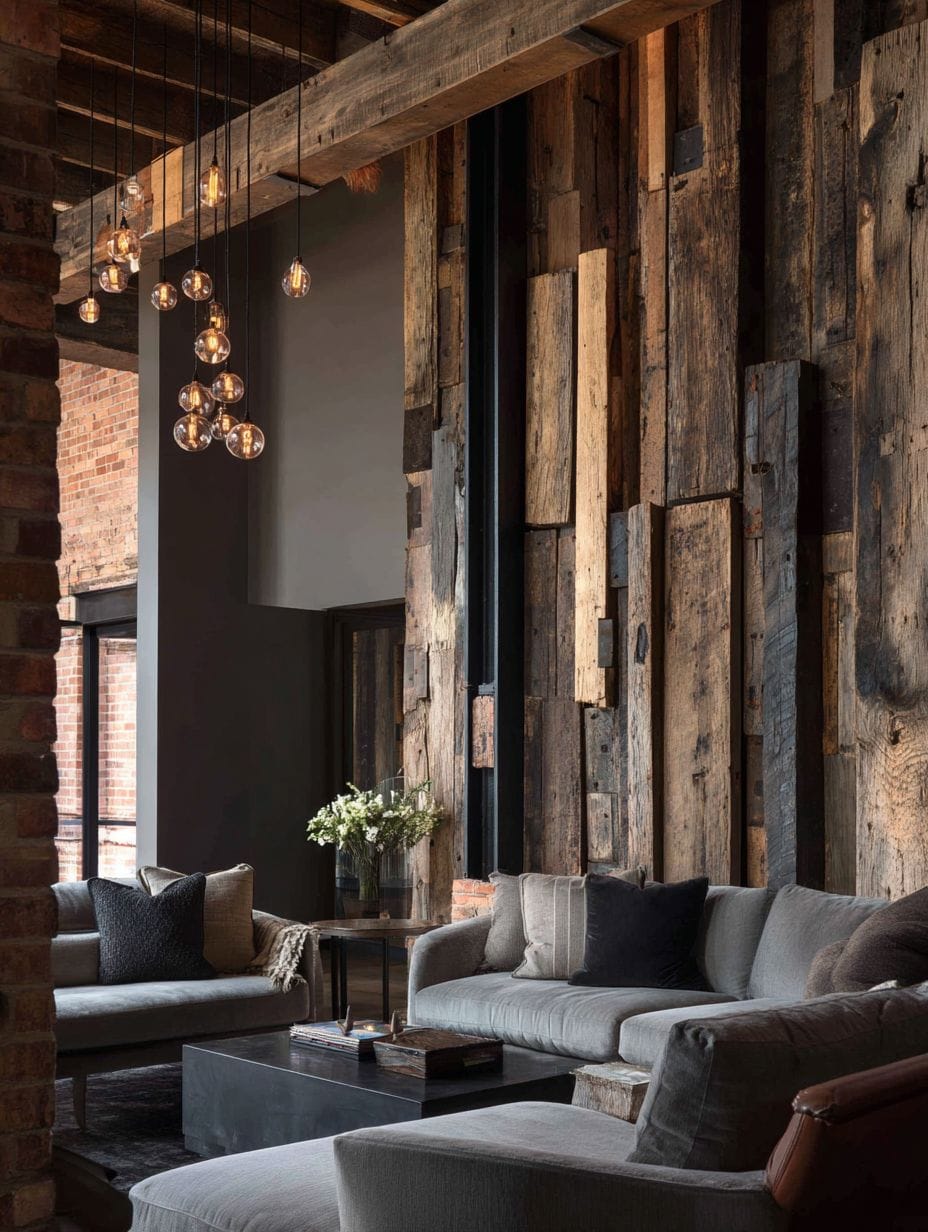
The varying plank widths create visual interest and authenticity—perfectly uniform pieces would betray the reclaimed nature of the materials. Some planks show old nail holes, faded paint remnants, or weathering patterns that contribute to the partition’s character. This irregularity prevents monotony and ensures no two sections look identical. Modern grey furniture provides intentional contrast against the rustic partition, creating the industrial-chic juxtaposition that defines contemporary loft aesthetics. The combination of rough, aged wood with sleek, contemporary furnishings produces dynamic tension that energizes the space.
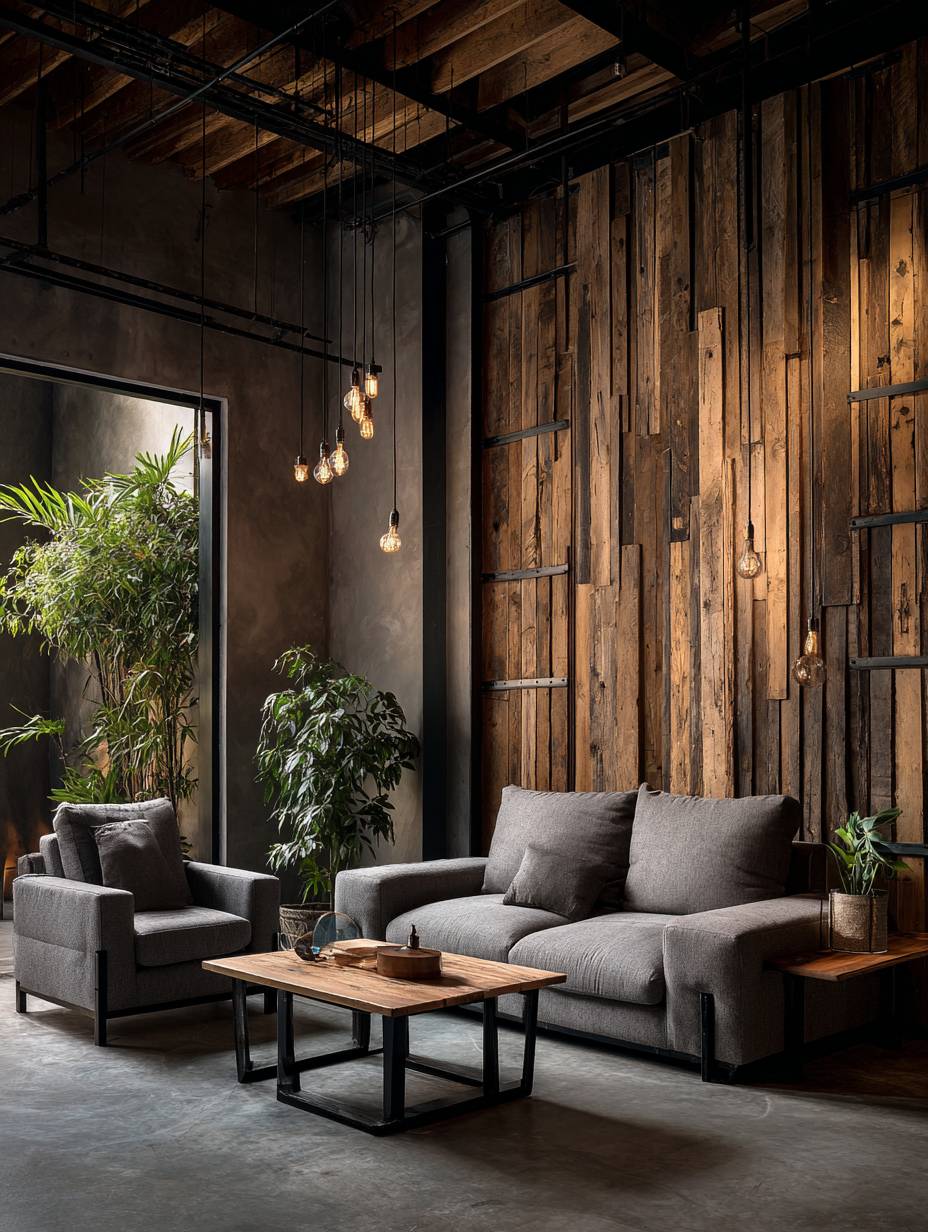
Exposed Edison bulb lighting adds authentic industrial charm while providing functional illumination. The warm glow of vintage-style bulbs complements the wood tones beautifully, creating cozy ambiance during evening hours. The lighting fixtures—often featuring black metal housings and exposed cords—reinforce the industrial theme while serving practical purposes. Wide-angle photography captures the textural contrast between smooth modern furniture and rough reclaimed wood, emphasizing the careful balance that makes this design style successful. The overall effect is urban sophistication with sustainable consciousness and authentic character.
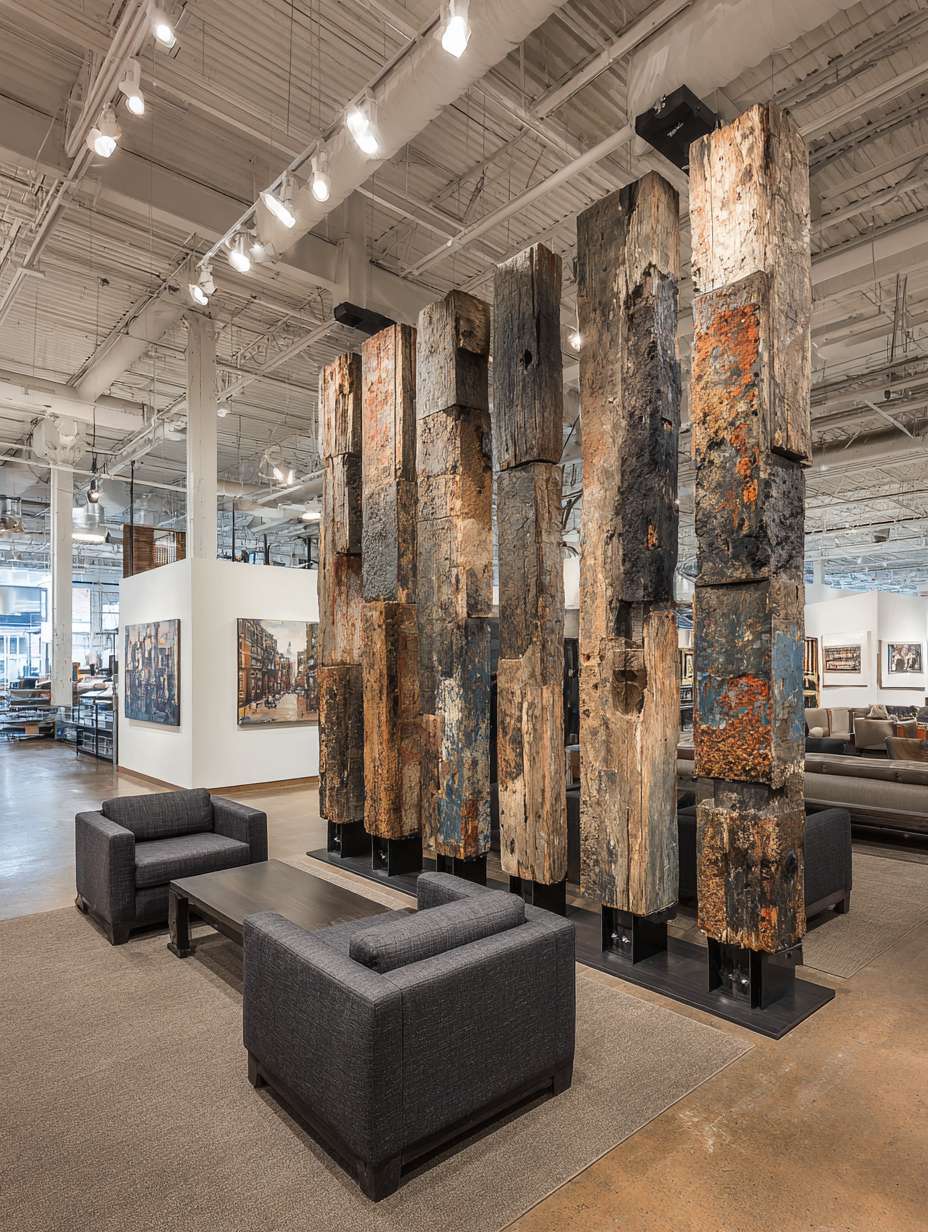
- Source reclaimed wood carefully from reputable suppliers who properly treat materials to remove pests and ensure structural soundness.
- Vary plank widths intentionally to create visual rhythm and authentic reclaimed appearance rather than perfect uniformity.
- Clean and seal wood appropriately while preserving character marks—over-refinishing defeats the purpose of using reclaimed materials.
- Choose metal brackets with sufficient weight capacity and ensure proper installation into structural elements for safety.
- Consider wood treatment to prevent splinters while maintaining the rustic aesthetic—sanding edges smooth while leaving faces weathered works well.
- Balance the rustic elements with modern furnishings to prevent the space from feeling dated or themed rather than authentically designed.
12. Luxurious Marble Veneer Statement Wall
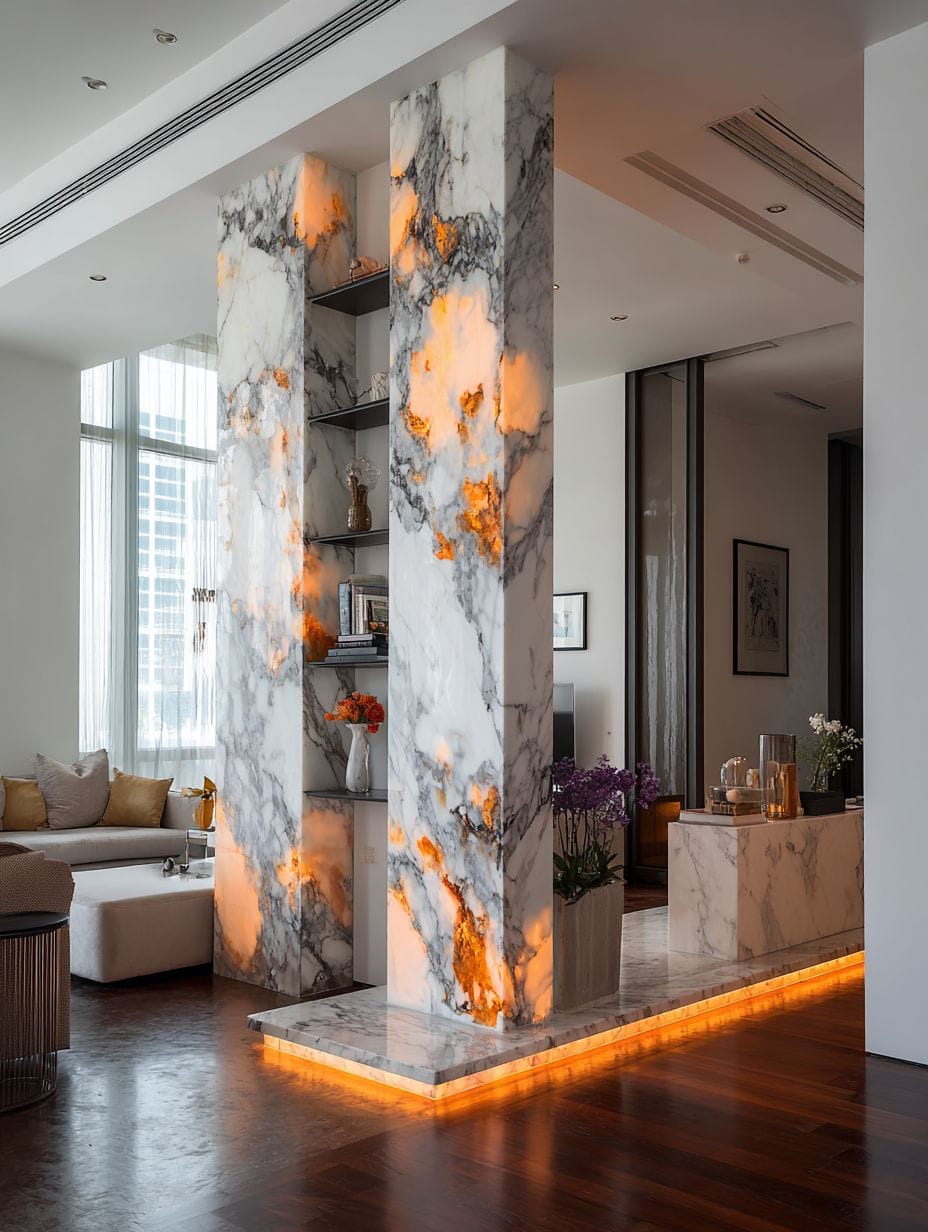
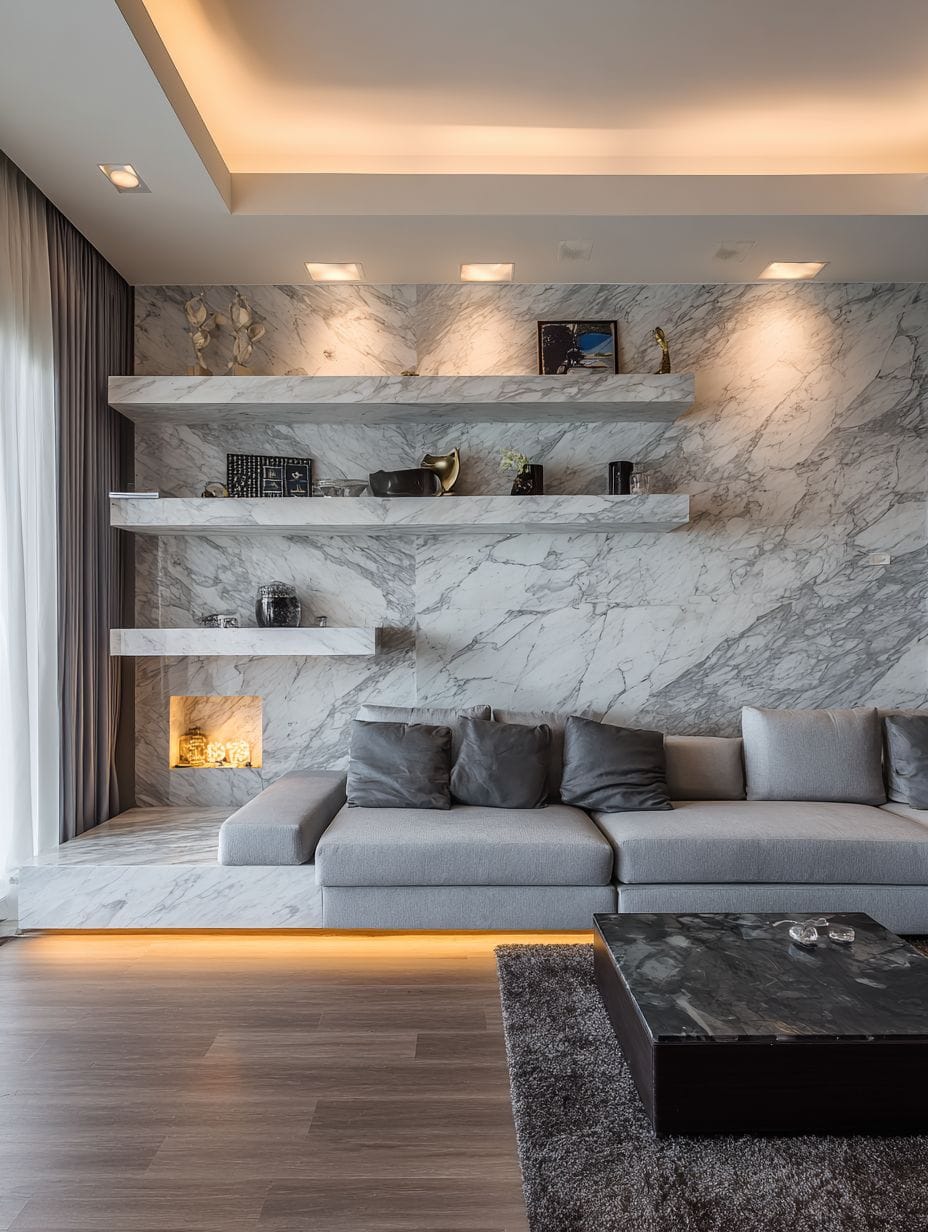
The sophisticated marble veneer partition wall creates a luxurious focal point while dividing the living space with elegance and grandeur. The white marble featuring distinctive grey veining extends from floor to ceiling, making a bold architectural statement that elevates the entire room’s aesthetic. Integrated LED strip lighting at the base creates dramatic uplighting that emphasizes the marble’s natural patterns and adds ambient illumination during evening hours. This design represents the intersection of natural beauty and modern technology, where timeless material meets contemporary lighting innovation.
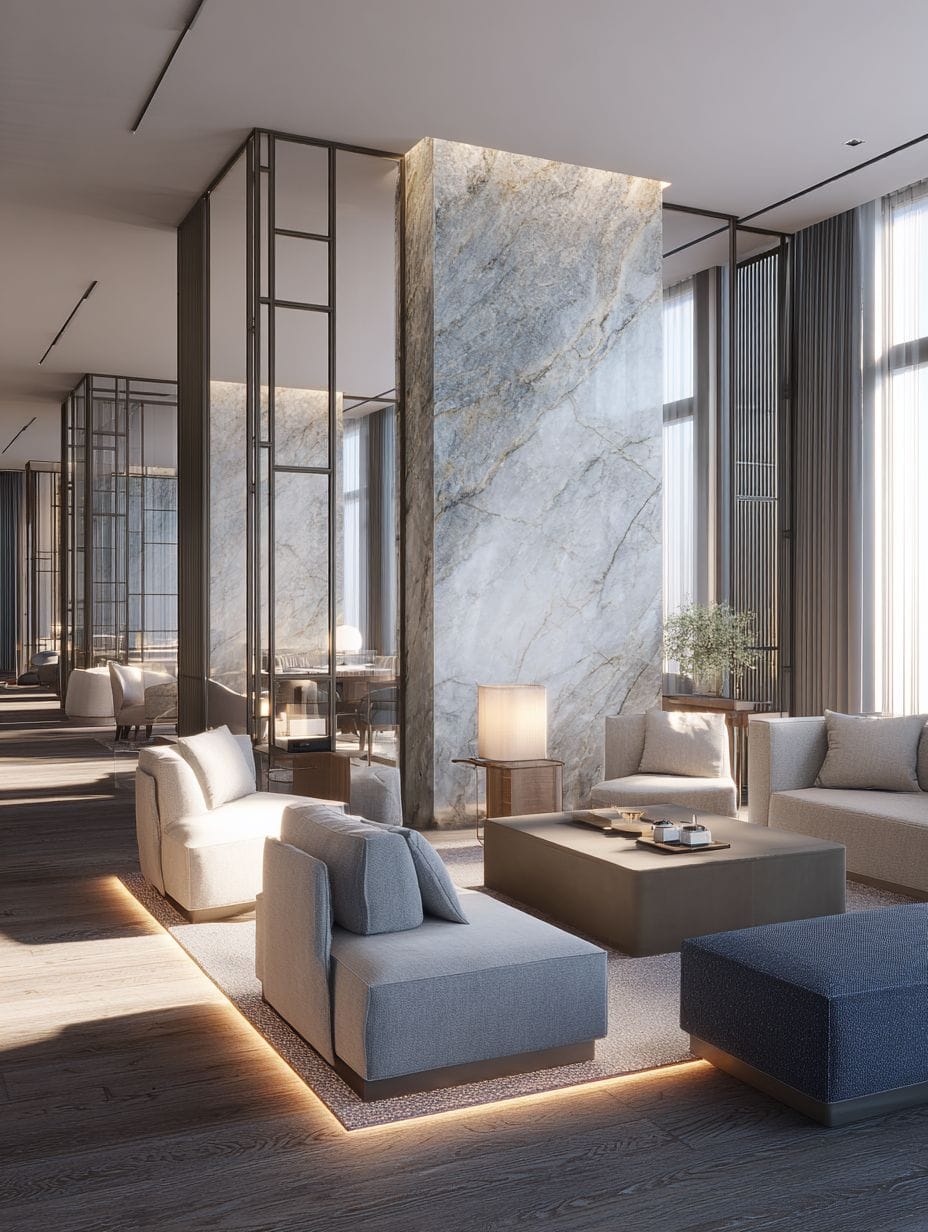
The vertical installation of marble veneer—thin slices of real marble mounted on substrate panels—provides the authentic appearance of solid stone at a fraction of the weight and cost. Each veneer panel displays unique veining patterns created by mineral deposits over millennia, ensuring your partition is truly one-of-a-kind. The natural variation in the grey veining creates organic artwork that never becomes boring or predictable. Contemporary furnishings in neutral tones allow the marble partition to command attention without competition, recognizing that such a stunning natural material deserves to be the room’s undisputed focal point.
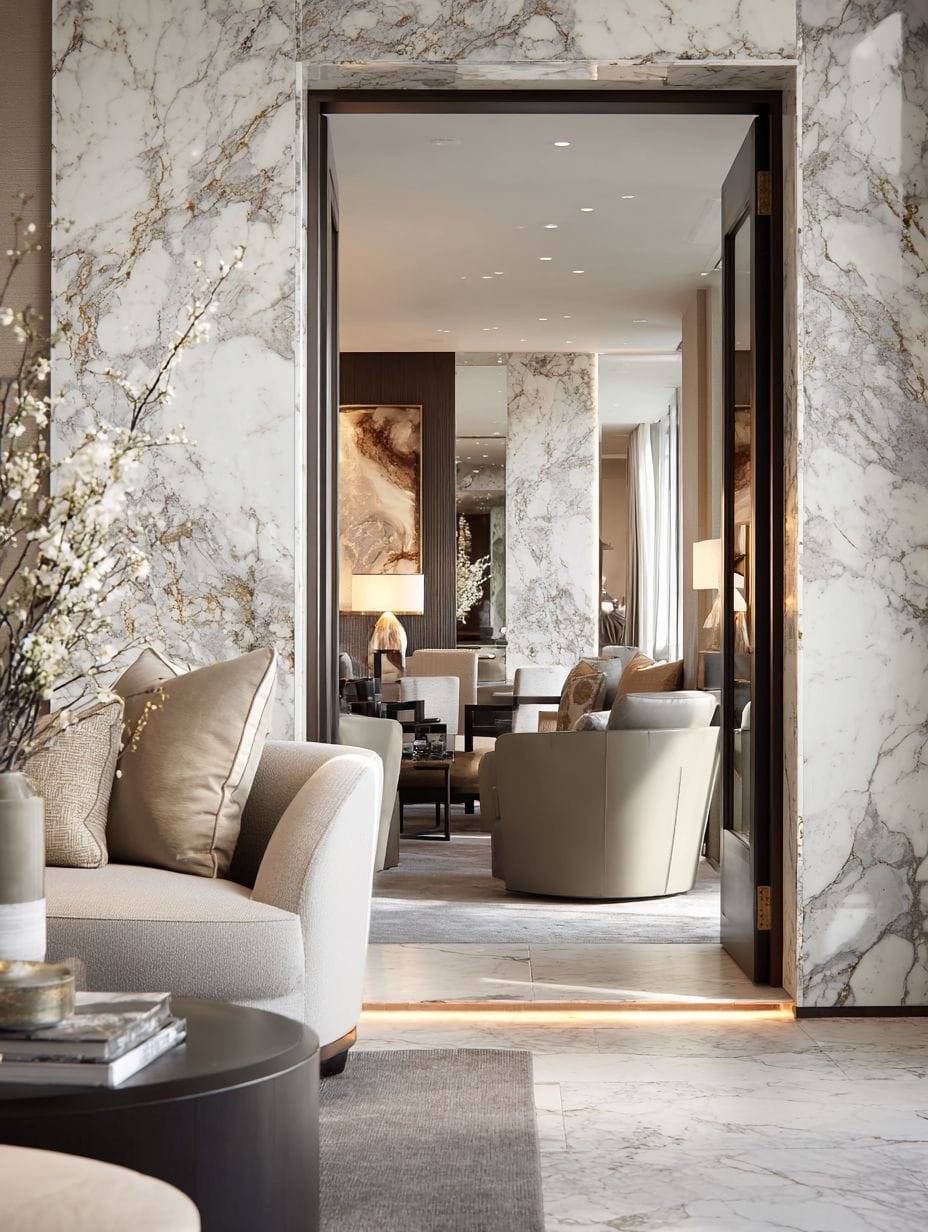
Natural and artificial lighting work together to highlight the marble’s inherent beauty. Daylight reveals the stone’s subtle color variations and translucent qualities, particularly striking when sunlight passes through thinner sections. Evening illumination from the integrated LED strips creates dramatic effects, with light traveling through the marble and making the veining appear to glow from within. This transformative quality means the partition presents different personalities throughout the day—bright and crisp in morning light, warm and inviting in evening glow. Professional interior photography emphasizes material quality and the sophisticated interplay of natural stone with modern design elements.
- Invest in quality marble veneer rather than printed alternatives to ensure authentic appearance and long-term value.
- Book-match panels when possible to create mirror-image patterns that enhance visual impact and showcase the stone’s natural beauty.
- Install LED strips in recessed channels to create clean, professional appearance without visible fixtures or wiring.
- Seal the marble properly to protect against staining and moisture damage, essential for maintaining pristine appearance.
- Consider the weight when planning installation—even veneer requires proper structural support and professional mounting.
- Choose lighting temperature carefully—warm white enhances the marble’s inviting qualities while cool white emphasizes its crisp, modern character.
13. Modular Cube Shelving in High-Gloss White
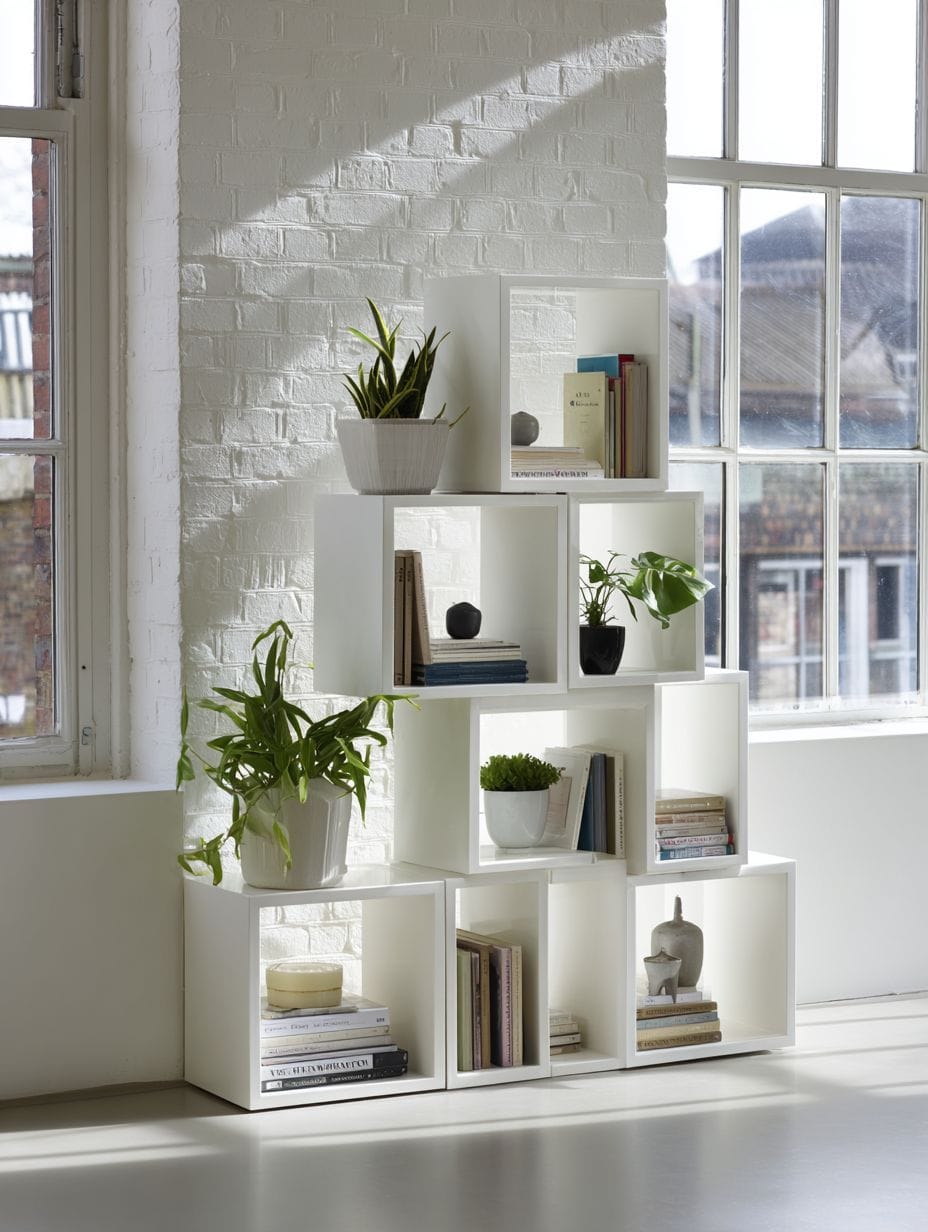
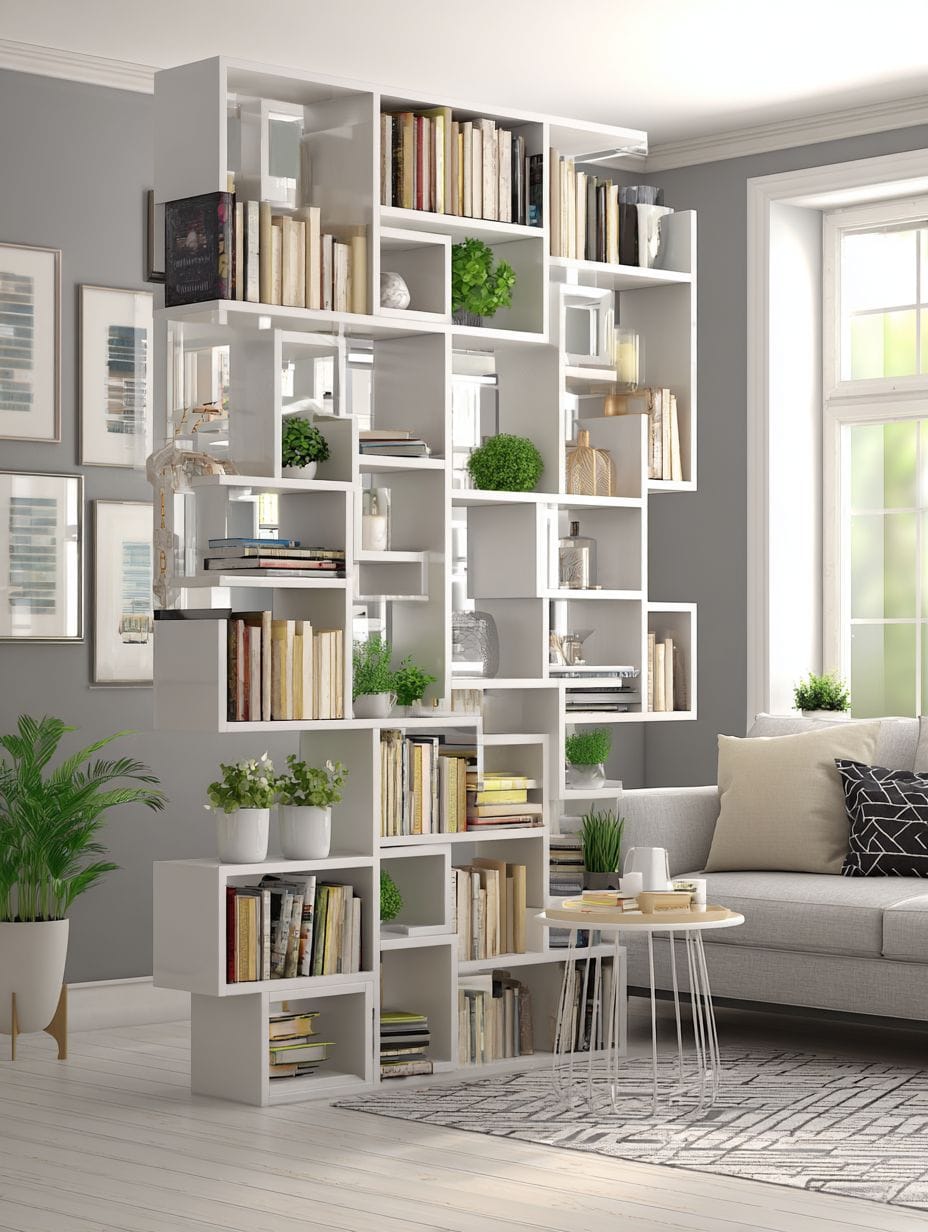
The modular cube shelving partition in high-gloss white lacquer transforms functional storage into geometric artwork. This open storage system divides space while providing practical display areas for books, plants, and decorative objects. The cubes vary in size, creating asymmetrical arrangement that adds visual interest and prevents the rigid, grid-like appearance of uniform sizing. This geometric variation creates dynamic composition that engages the eye and invites exploration from multiple viewing angles. The high-gloss finish reflects light beautifully, adding brightness and creating the illusion of greater space—particularly valuable in smaller living rooms.
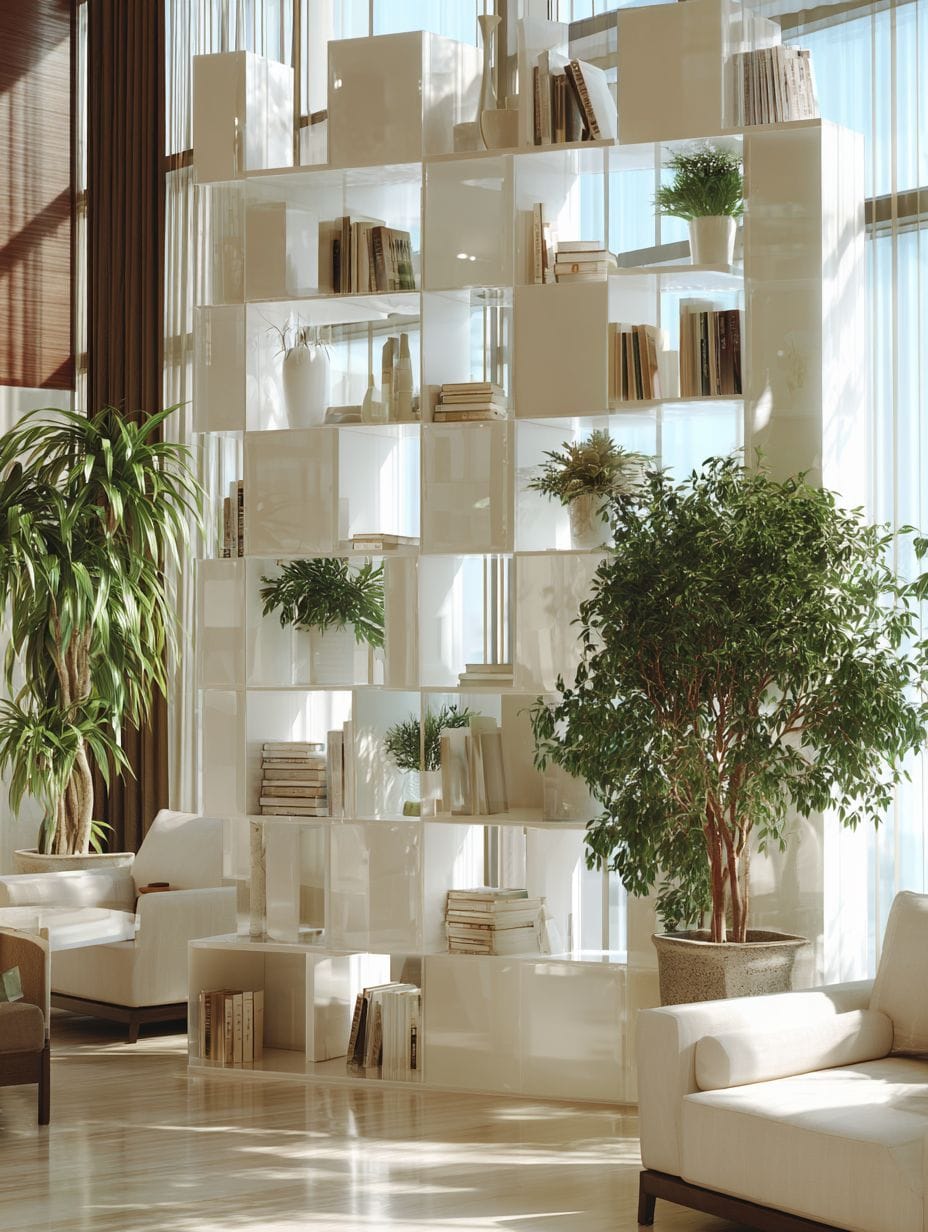
The open nature of cube shelving maintains visual connection between divided spaces while providing substantial storage capacity. Each cube becomes a mini-gallery space for curated displays—groupings of books with complementary spines, carefully positioned plants at various heights, sculptural objects that create focal points, or collections that reveal the homeowner’s personality and interests. The white finish serves as a neutral backdrop that allows displayed items to pop visually, much like a blank canvas allows paintings to shine. Minimalist furniture in monochrome tones maintains the clean aesthetic, preventing visual clutter that would compete with the partition’s geometric beauty.
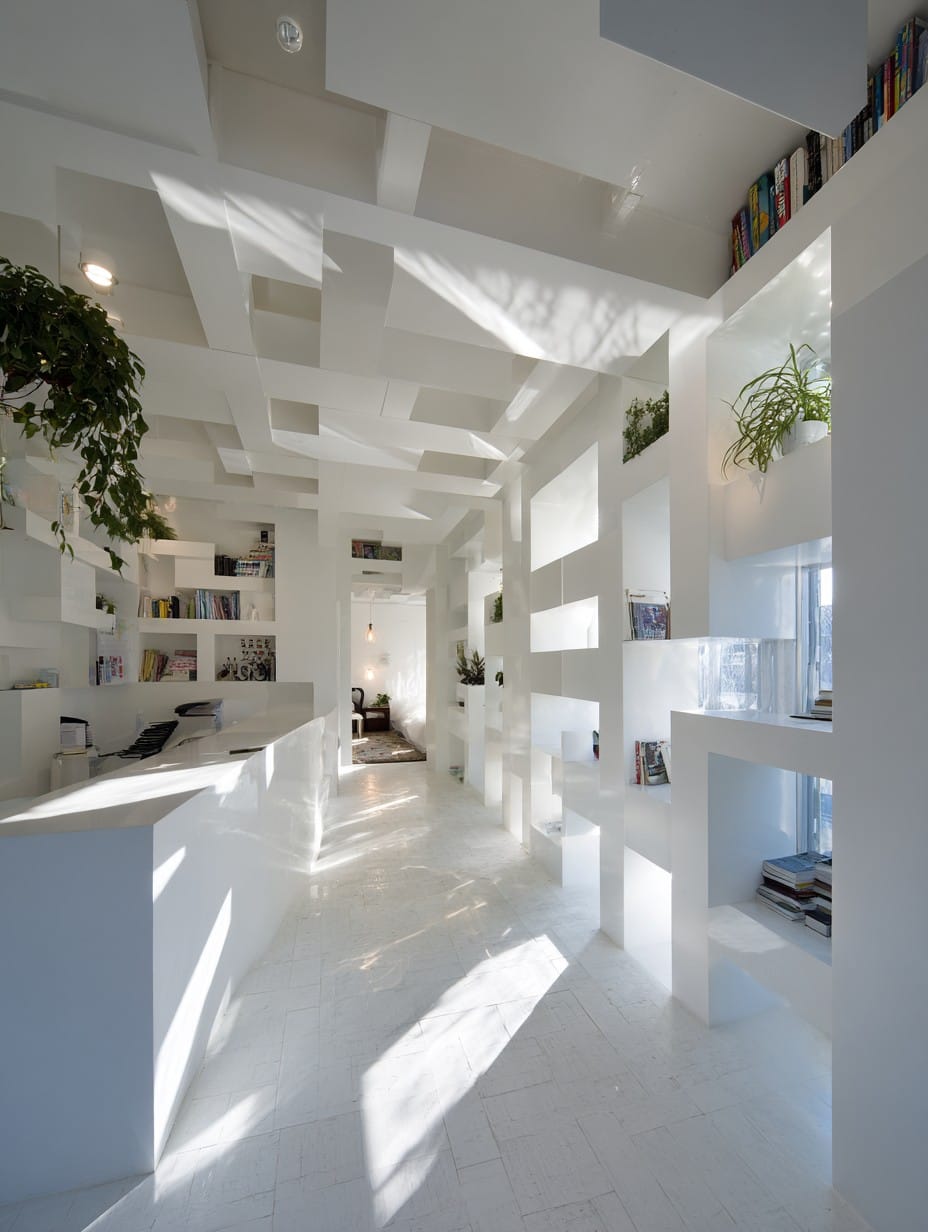
Natural light from multiple angles creates interesting shadow play within and around the cubes, adding depth and dimension that flat partitions lack. As light moves throughout the day, shadows shift and change, ensuring the partition never appears static or boring. The glossy surface catches and reflects light, creating subtle highlights that emphasize the partition’s three-dimensional quality. The modular nature of cube systems allows for future reconfiguration—cubes can be rearranged, added, or removed as needs change, making this investment adaptable to evolving lifestyle requirements. Interior design photography captures the functional artistry of this approach, showcasing how practical storage can become beautiful architecture.
- Anchor the cube system securely to prevent tipping, especially important with open shelving that might be climbed by children.
- Vary cube sizes thoughtfully—mix small, medium, and large openings to create visual interest while maintaining functional storage.
- Limit displayed items to prevent cluttered appearance; leaving some cubes empty provides visual breathing room.
- Group objects by color or theme within certain cubes to create cohesive mini-displays rather than random placement.
- Clean glossy surfaces regularly to maintain pristine appearance—high-gloss finishes show fingerprints and dust more readily than matte options.
- Distribute weight evenly across the structure to maintain balance and prevent stress on individual cubes or joints.
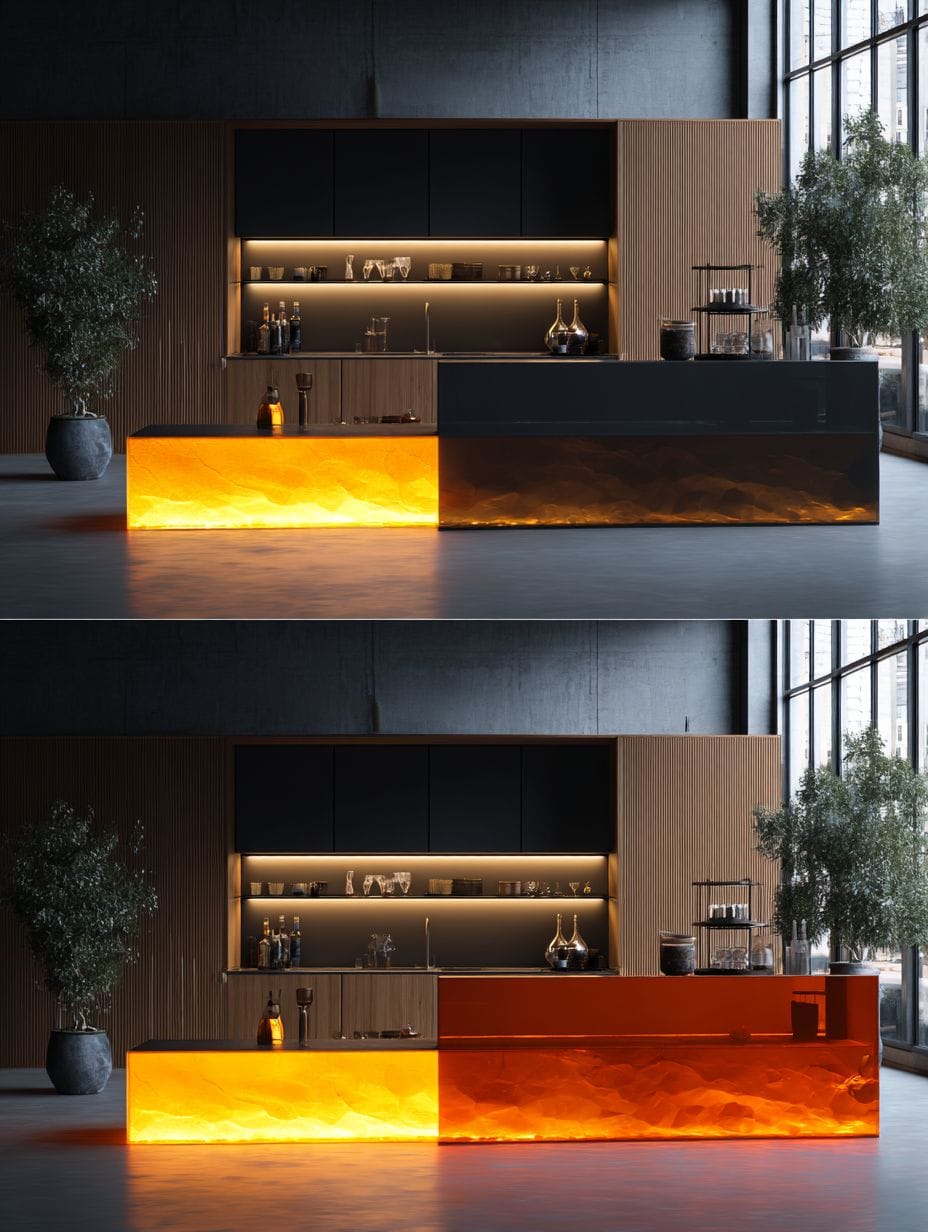
14. Translucent Bronze-Tinted Acrylic Panels
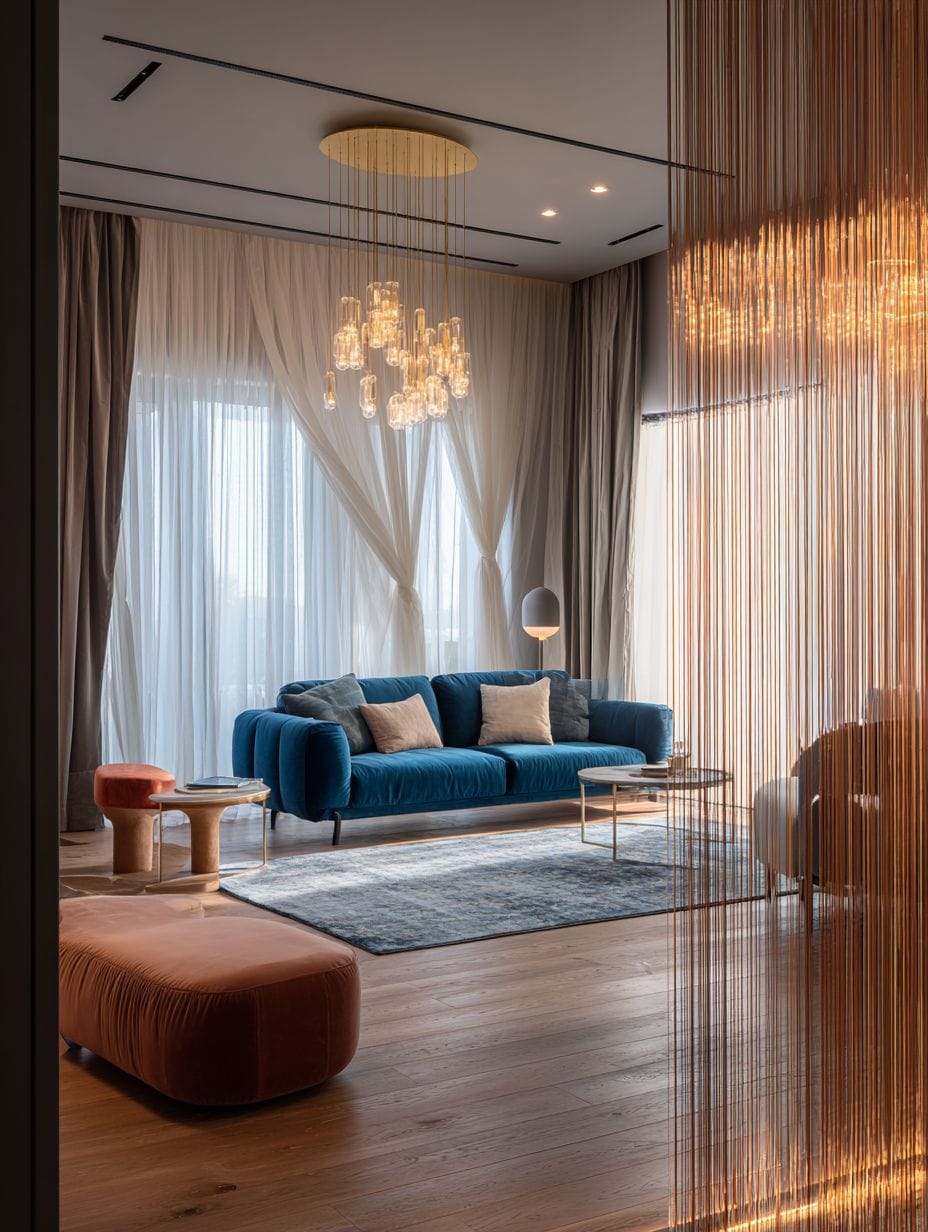
The sleek acrylic panel partition with subtle bronze tint offers transparency while defining distinct zones within the living space. This frameless installation creates a floating effect that appears almost magical—the panels seem to hover between floor and ceiling with minimal visible support hardware. The bronze tint adds warmth to transmitted light while providing slight visual obscurity, creating the perfect balance between openness and privacy. This design divides the living area from a home bar space with sophisticated subtlety, maintaining the room’s airy quality while establishing clear functional zones.
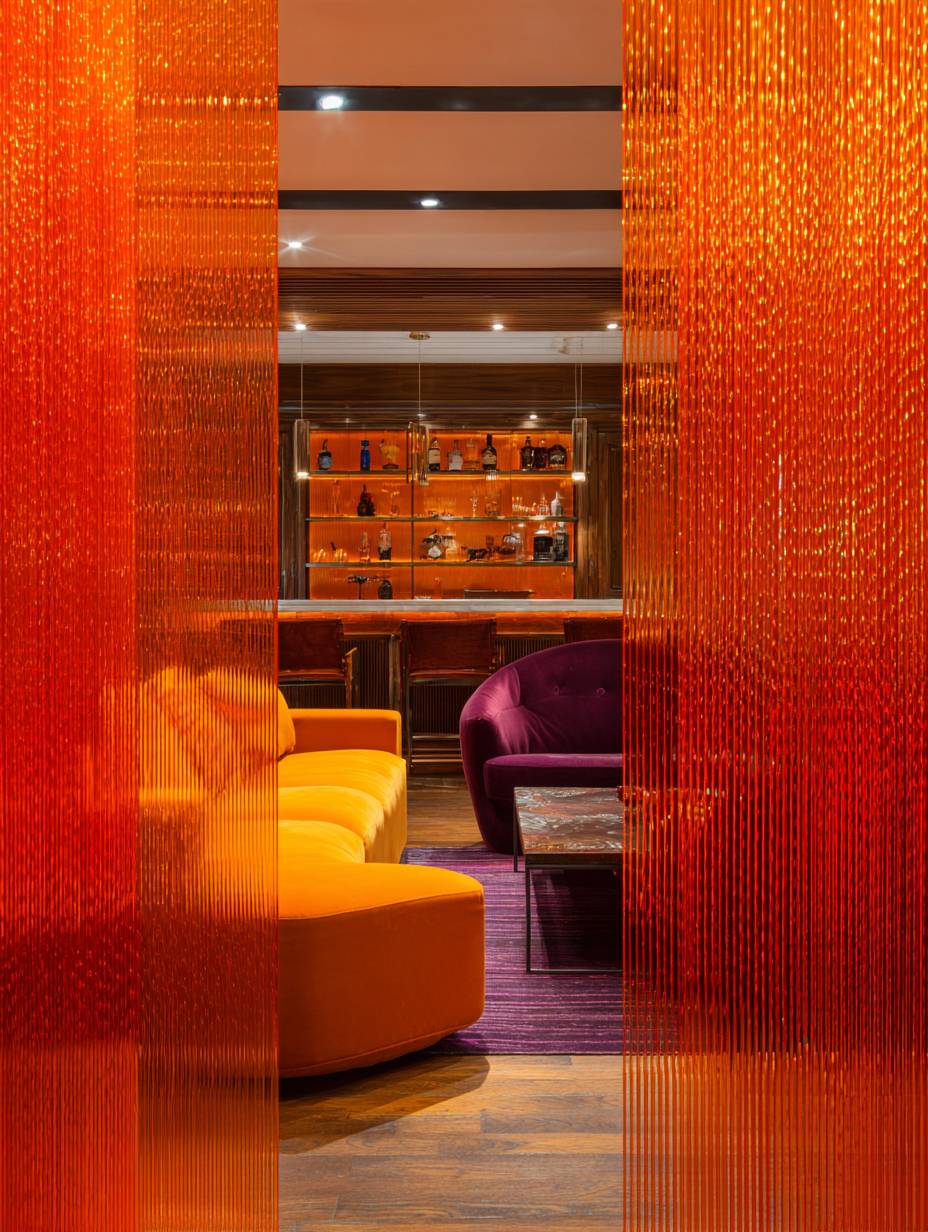
Acrylic material offers several advantages over traditional glass. It’s significantly lighter, making installation easier and reducing structural requirements. It’s also more impact-resistant, providing safety benefits particularly important in homes with active families. The material’s clarity remains consistent over time without the greenish tint that can affect glass edges. The bronze tint filters light beautifully, casting warm, flattering illumination in adjacent spaces while reducing glare from windows or bright lighting. Contemporary furniture in jewel tones—deep emerald greens, rich sapphire blues, warm amber accents—complements the warm-tinted partition beautifully.
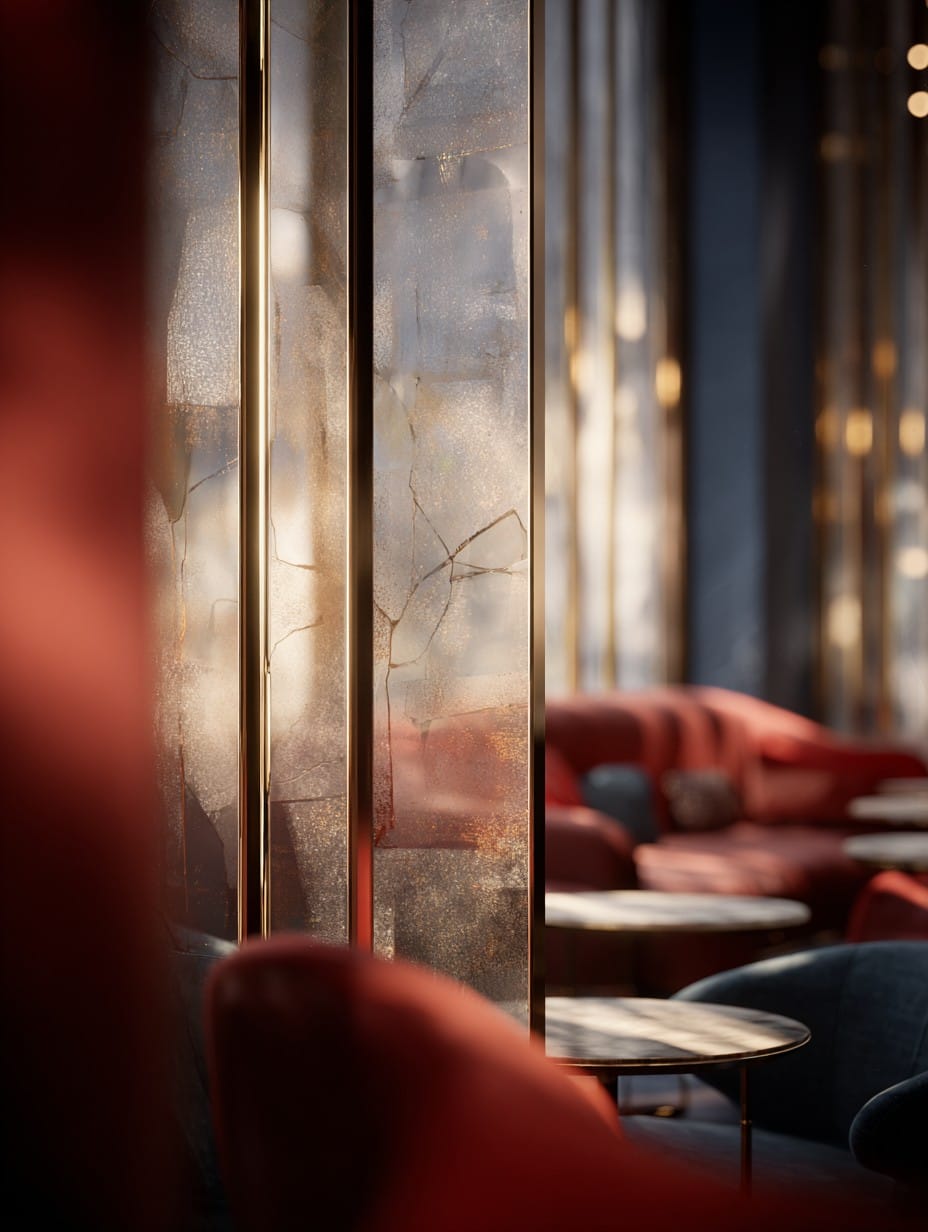
Ambient lighting creates gentle reflections on the acrylic surface that add depth and luminosity without the harsh glare that clear, untinted materials might produce. The subtle reflections create intriguing visual effects, particularly during evening hours when interior lighting plays across the surface. Professional photography requires careful exposure balancing to capture both the transparency and reflective qualities simultaneously, showcasing how the partition functions as both divider and design element. The frameless installation demands precise measurements and expert installation, but the resulting clean, minimalist aesthetic justifies the extra effort and expense.
- Choose appropriate thickness—thicker acrylic (3/8″ to 1/2″) provides better sound dampening and more substantial appearance.
- Clean with appropriate products designed for acrylic to avoid scratching or hazing the surface; never use ammonia-based cleaners.
- Plan mounting carefully to minimize visible hardware while ensuring secure installation; floor-to-ceiling tension systems work well.
- Consider the tint percentage—lighter tints maintain transparency while heavier tints provide more privacy and light control.
- Protect edges during installation as acrylic can crack if improperly handled or subjected to point pressure.
- Allow for thermal expansion in the mounting system, particularly in spaces with temperature fluctuations.
15. Horizontal Slatted Wood for Family-Friendly Spaces
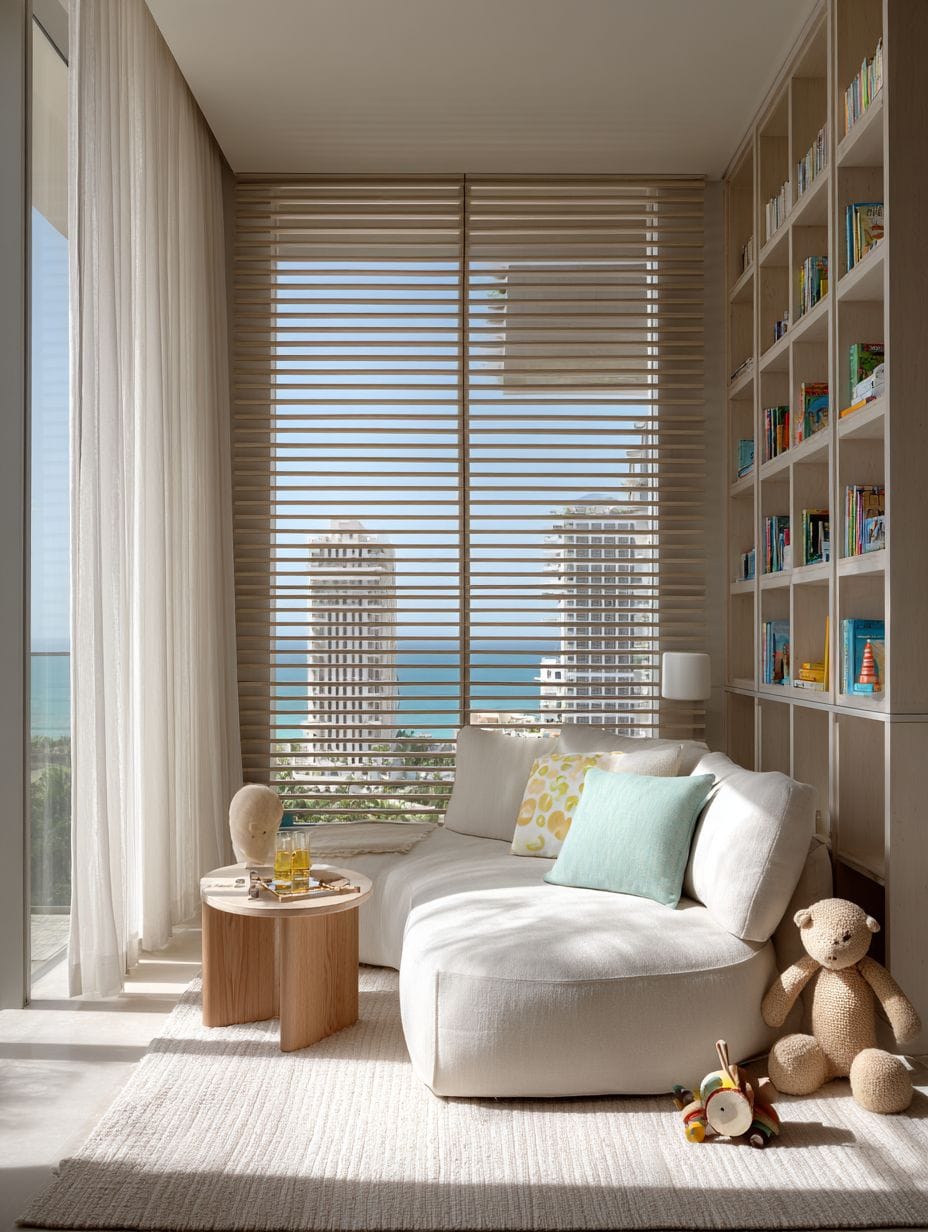
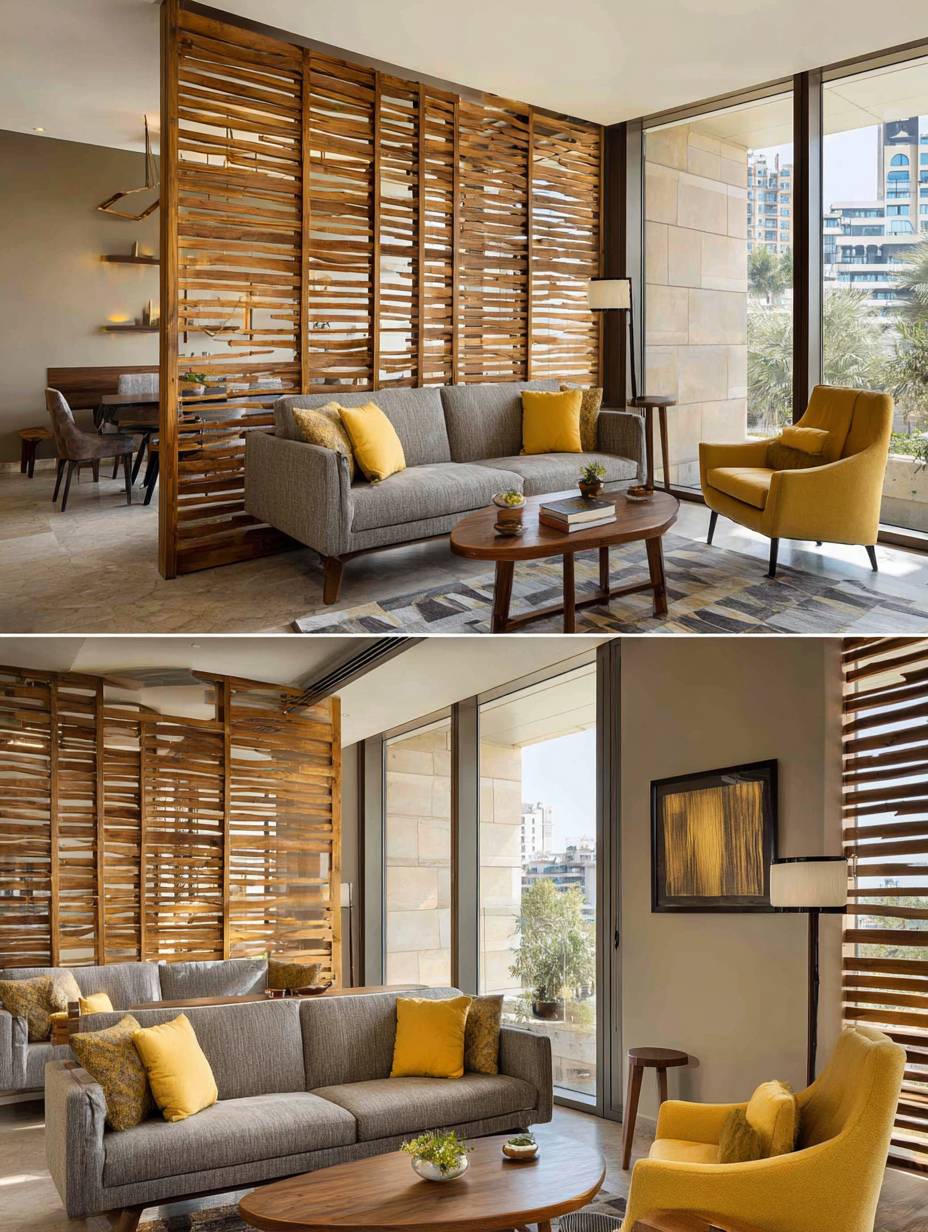
The horizontal slatted wood partition in light ash creates a practical family-friendly divider that separates the seating area from a play zone while maintaining parental sightlines. The mid-height design allows adults to easily supervise children while providing sufficient visual separation to define distinct activity zones. The horizontal orientation creates different visual rhythm compared to vertical slats, emphasizing room width and creating a grounding, stable aesthetic. Light ash wood brings Scandinavian-inspired warmth without the darkness that walnut or mahogany might introduce, keeping the space feeling bright and cheerful—essential for family areas.
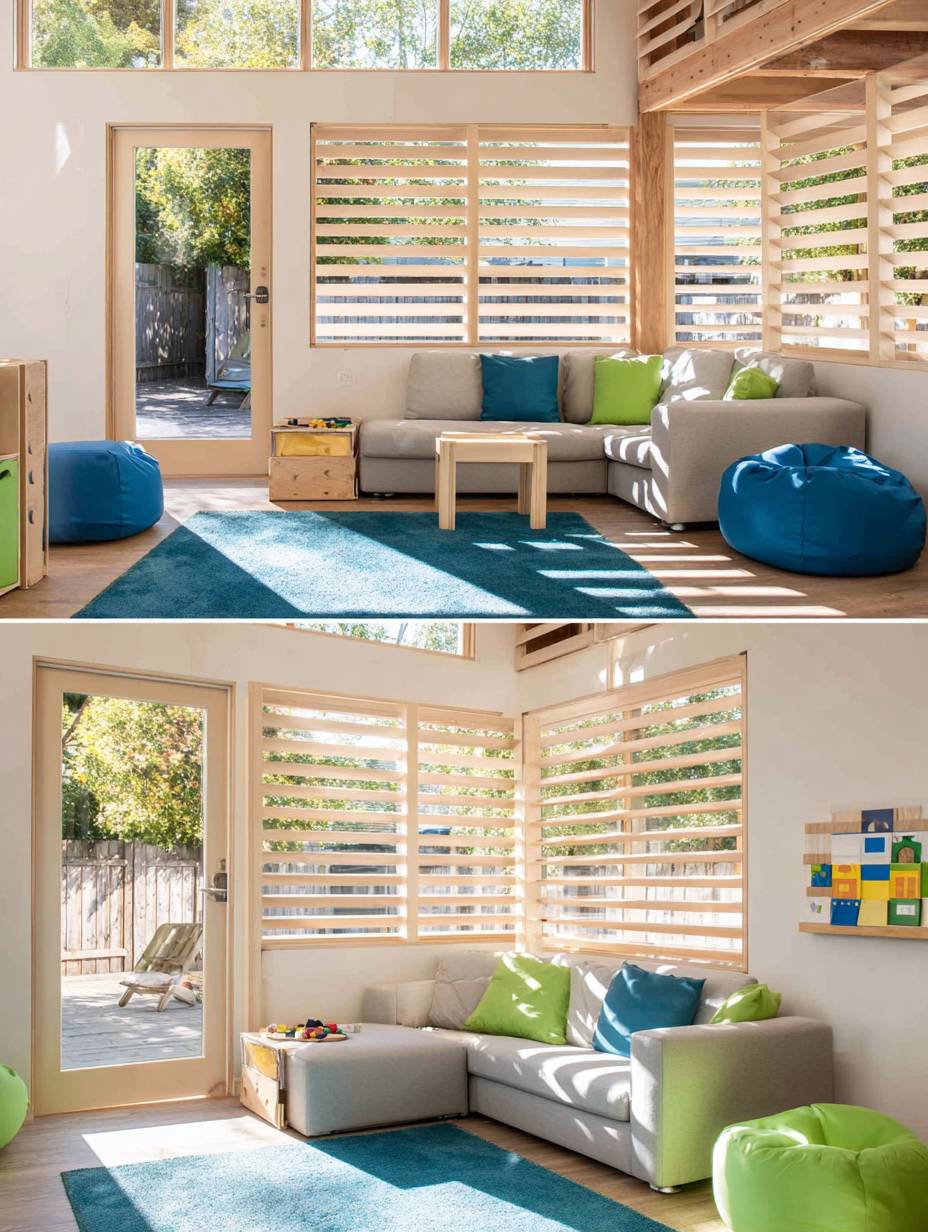
The spacing between horizontal slats balances privacy with visibility, allowing parents to monitor play areas without creating the feeling of constant surveillance that clear glass might produce. Children benefit from having a defined space that feels like “theirs” while still remaining connected to family activities in adjacent areas. Modern family-friendly furniture featuring durable, easy-to-clean fabrics demonstrates the practical considerations necessary when children are part of the design equation. Stain-resistant materials, rounded corners, and washable surfaces prove essential in high-traffic family spaces.
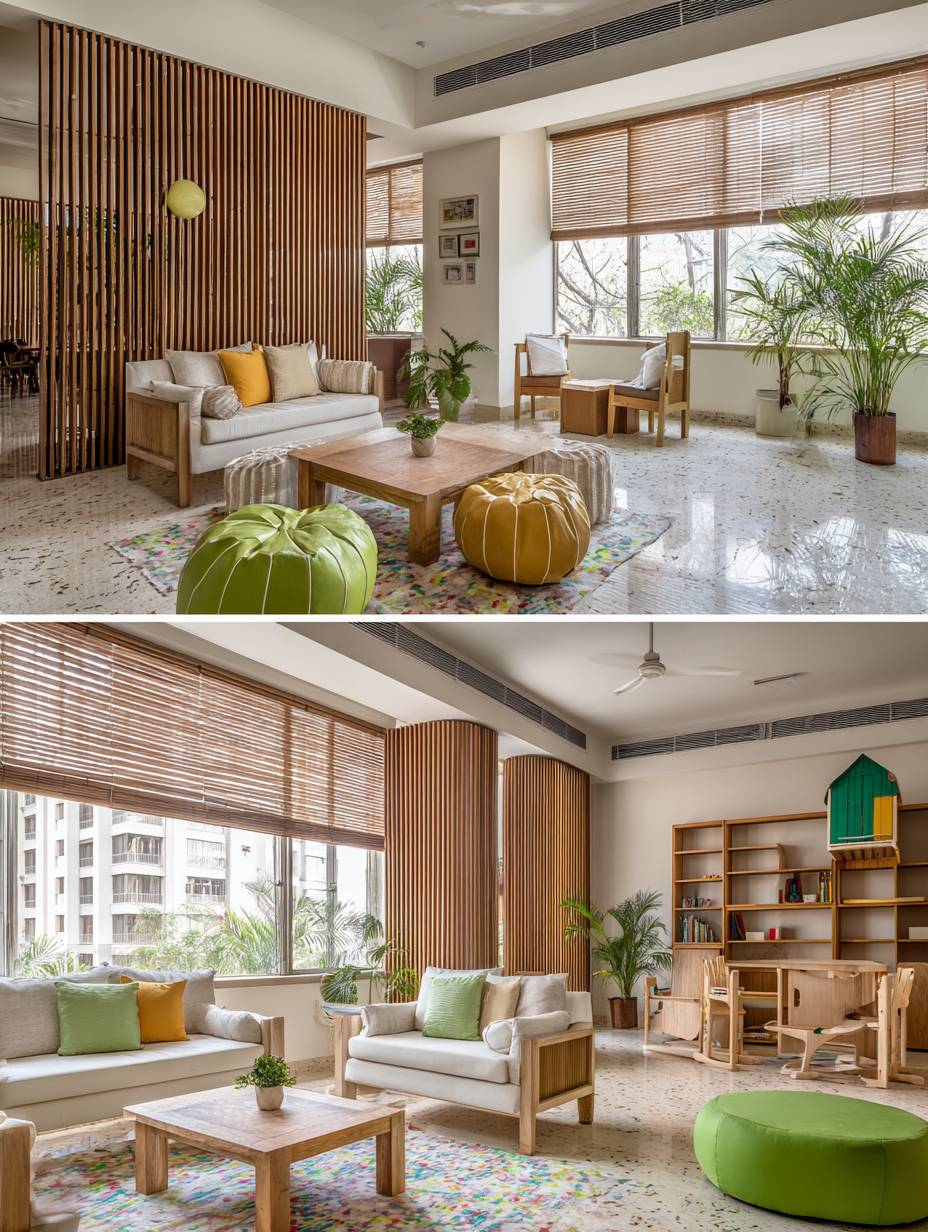
Natural daylight streaming horizontally through the slats creates beautiful linear shadow patterns on floors and walls, adding dynamic visual interest that changes throughout the day. These moving shadows provide gentle stimulation and connection to the passage of time—subtle but meaningful environmental cues. The horizontal slats also create handy display opportunities; lightweight artwork, children’s creations, or hanging plants can be easily attached to the slats, transforming the partition into a functional gallery wall. Wide-angle interior photography showcases the practical family-oriented design that successfully balances child-friendliness with adult aesthetic preferences.
- Round all exposed edges to prevent injury, particularly important in spaces frequented by young children.
- Space slats appropriately based on children’s ages—closer spacing prevents small bodies from attempting to climb through.
- Choose durable wood finishes that can withstand inevitable bumps, scratches, and sticky fingers without showing every mark.
- Secure the partition firmly with the expectation that children will test its stability; it must withstand leaning, pushing, and hanging.
- Avoid toxic finishes—select low-VOC or natural oil finishes safe for children’s environments.
- Consider acoustic benefits—horizontal slats can help dampen play noise from reaching quieter living areas.
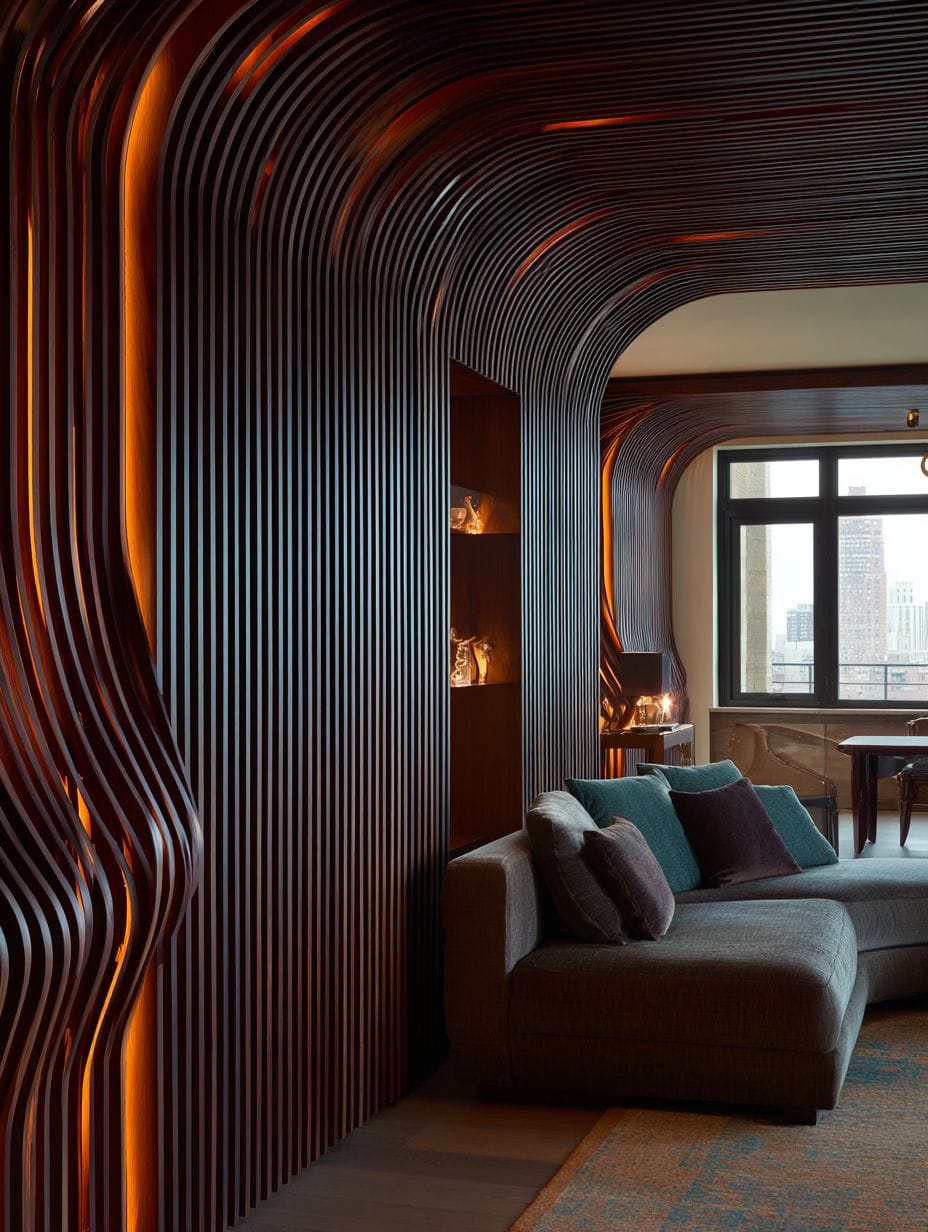
16. Curved Sculptural Wood Batten Wall
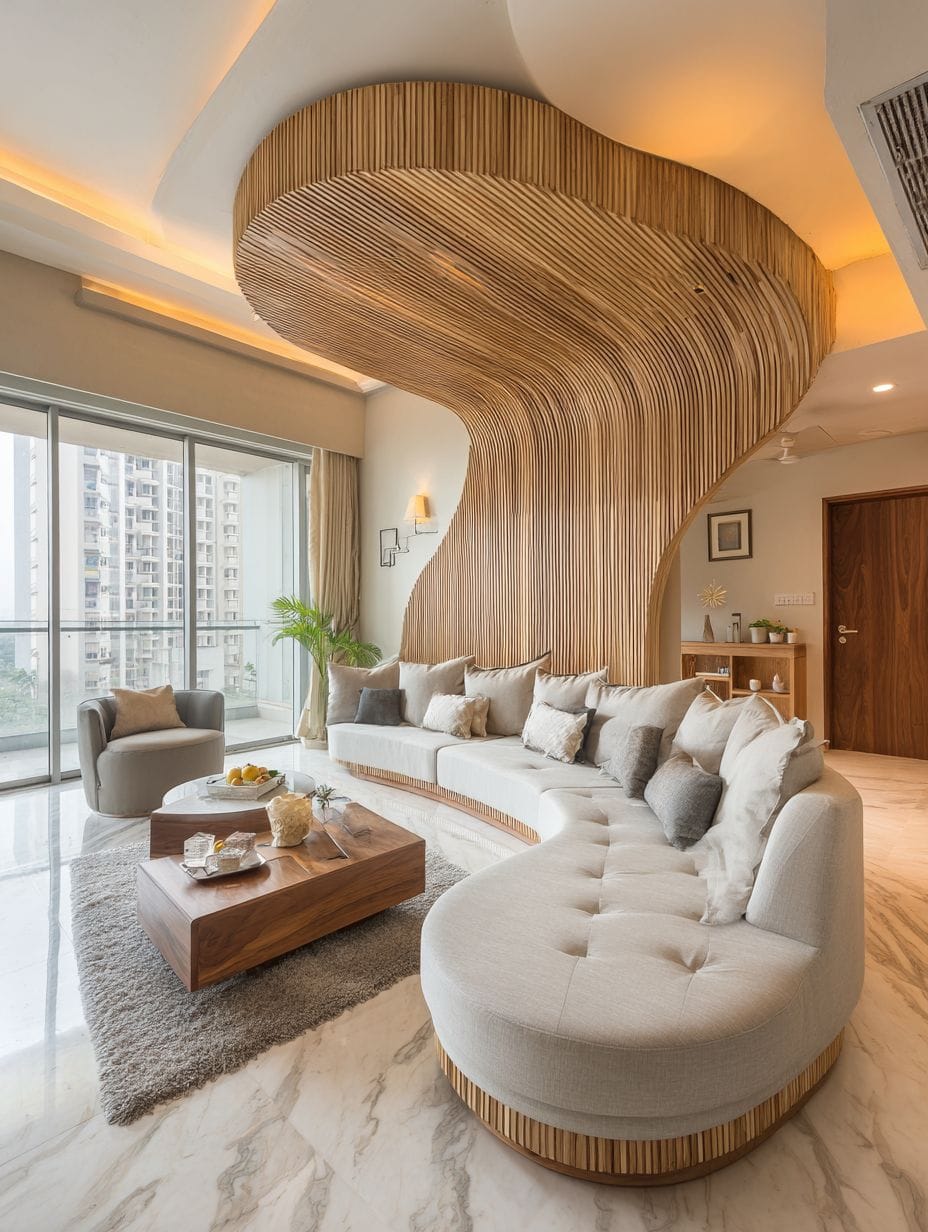
The stunning curved partition wall clad in vertical wood battens creates a flowing sculptural element that guides movement between living and dining areas with grace and architectural presence. Unlike straight partitions that create rigid divisions, this gentle arc provides soft spatial definition while adding kinetic energy and visual drama. The curve creates the illusion of movement within a static element, drawing the eye along its sweeping form and inviting exploration of the spaces it defines. Vertical wood battens maintain consistent spacing around the curve—a technical challenge requiring skilled craftsmanship but resulting in breathtaking visual harmony.
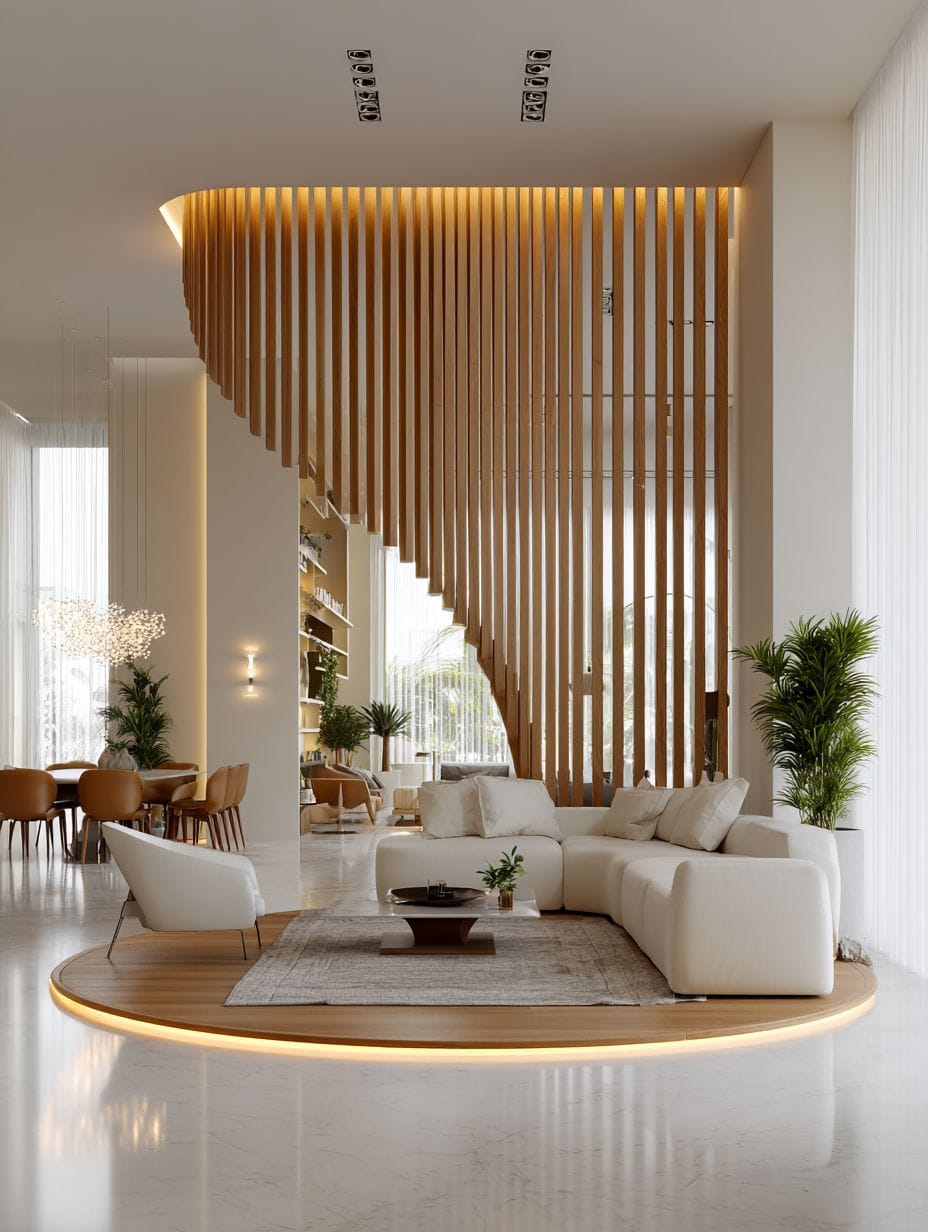
The architectural impact of curved elements cannot be overstated. The human eye is naturally drawn to curves, which feel more organic and welcoming than harsh angles. This partition becomes more than a divider—it transforms into an architectural feature that defines the room’s character. Contemporary furniture follows the curve’s rhythm, with seating arrangements that mirror the partition’s gentle arc, creating visual cohesion between built elements and furnishings. This thoughtful coordination prevents the partition from feeling like an afterthought or separate addition, instead integrating it seamlessly into the overall design narrative.
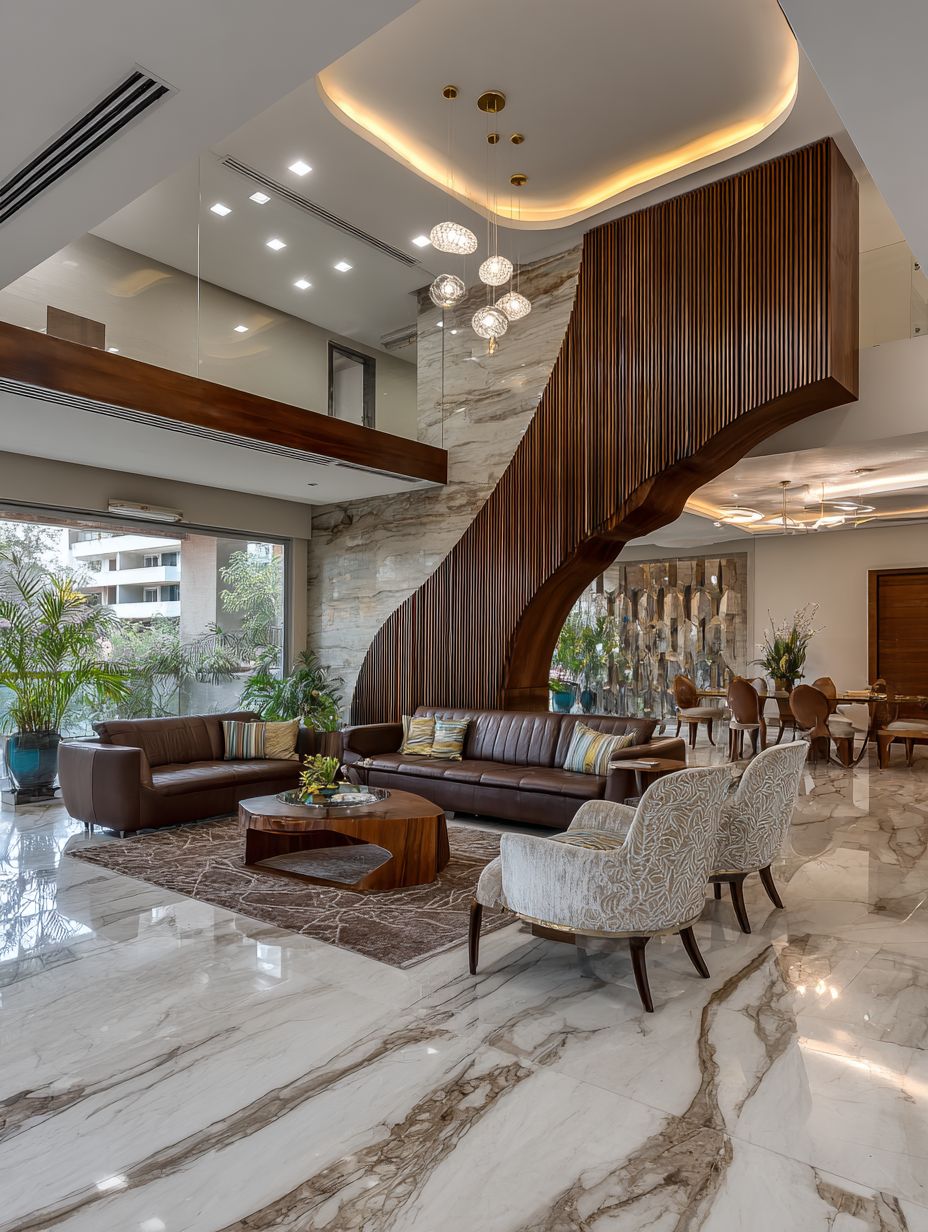
Integrated LED lighting between battens creates a warm, inviting glow that emphasizes the curve’s sculptural quality while providing ambient illumination. The light washes across the wood surface, highlighting grain patterns and creating subtle variations in tone that add depth and interest. During evening hours, this backlighting transforms the partition into a luminous architectural feature that serves as both functional divider and artistic installation. Professional interior photography must capture the three-dimensional quality of the curve, typically requiring multiple angles to fully appreciate the form’s elegance and the craftsmanship required to achieve such sophisticated results.
- Plan the curve radius carefully to ensure comfortable flow around both sides without creating awkward narrow spaces.
- Work with experienced craftspeople capable of maintaining consistent spacing and vertical alignment around curved surfaces.
- Install batten backing securely to the curved substrate, which may require custom framing and blocking for proper support.
- Consider the wood species—some woods bend more easily than others; consult with your installer about appropriate choices.
- Integrate lighting early in planning as curved installations require more complex wiring routing than straight partitions.
- Allow adequate space for the curve’s footprint; curved walls occupy more floor space than straight equivalents covering the same opening width.
17. Minimalist Steel Frame with Linen Panel Inserts
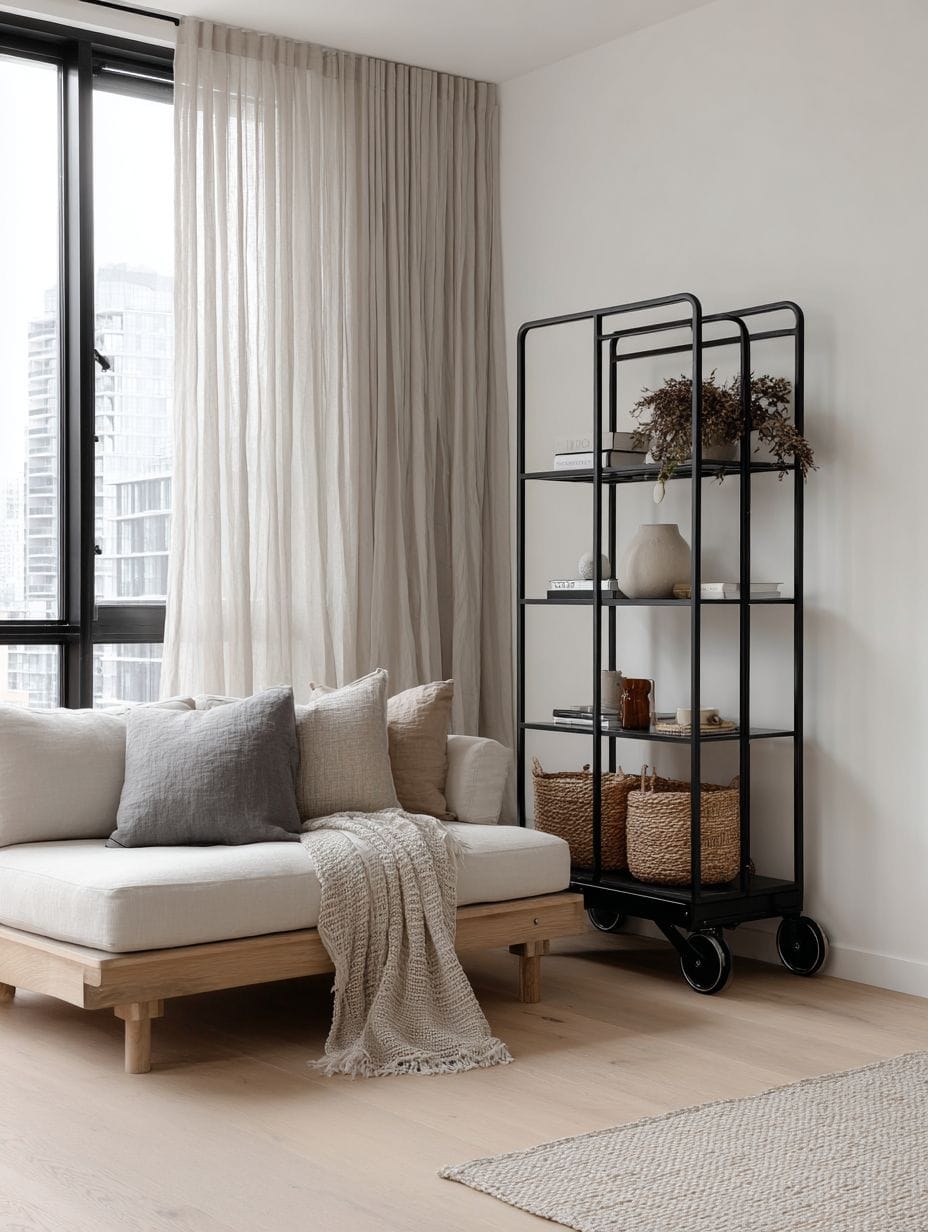
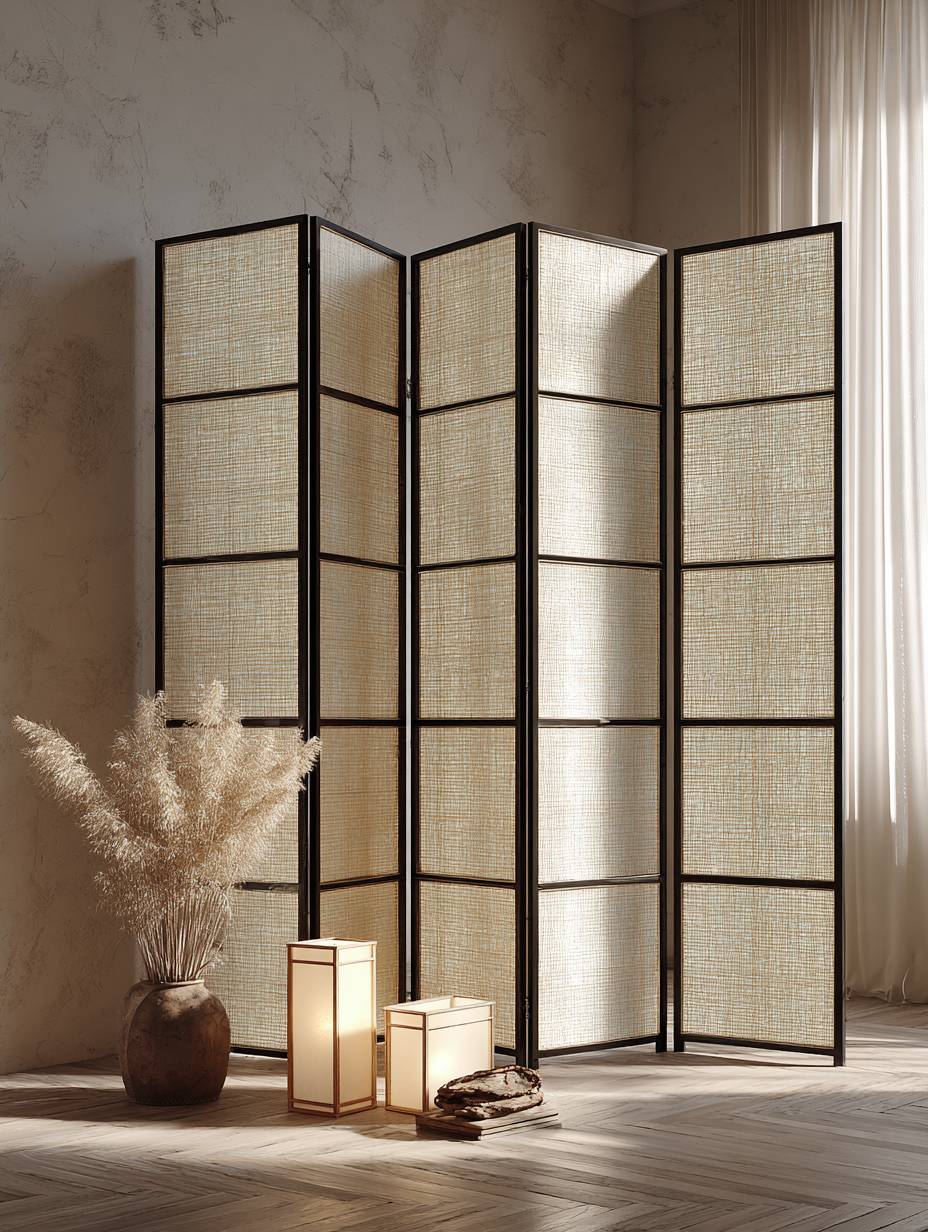
The minimalist steel-frame partition with fabric panel inserts in natural linen texture represents Scandinavian design philosophy at its finest. The lightweight partition mounted on casters allows flexible room reconfiguration, adapting to changing needs without permanent installation. The steel frame provides structural integrity while maintaining visual lightness—the thin profile prevents the partition from feeling heavy or imposing. Natural linen panel inserts add softness and warmth, creating gentle visual screens that provide privacy without harsh separation. The textile element also contributes acoustic dampening properties, absorbing sound and creating quieter, more peaceful environments.
The mobility afforded by quality casters transforms this partition from a static architectural element into a dynamic design tool. When entertaining, roll it aside to create one large, open space. When working from home, position it to create a private office zone. When guests visit, use it to define a temporary sleeping area. This adaptability makes the partition particularly valuable in small homes, studio apartments, or multipurpose rooms where flexibility equals functionality. The ability to reconfigure space without tools or significant effort empowers homeowners to customize their environment to match daily activities and needs.
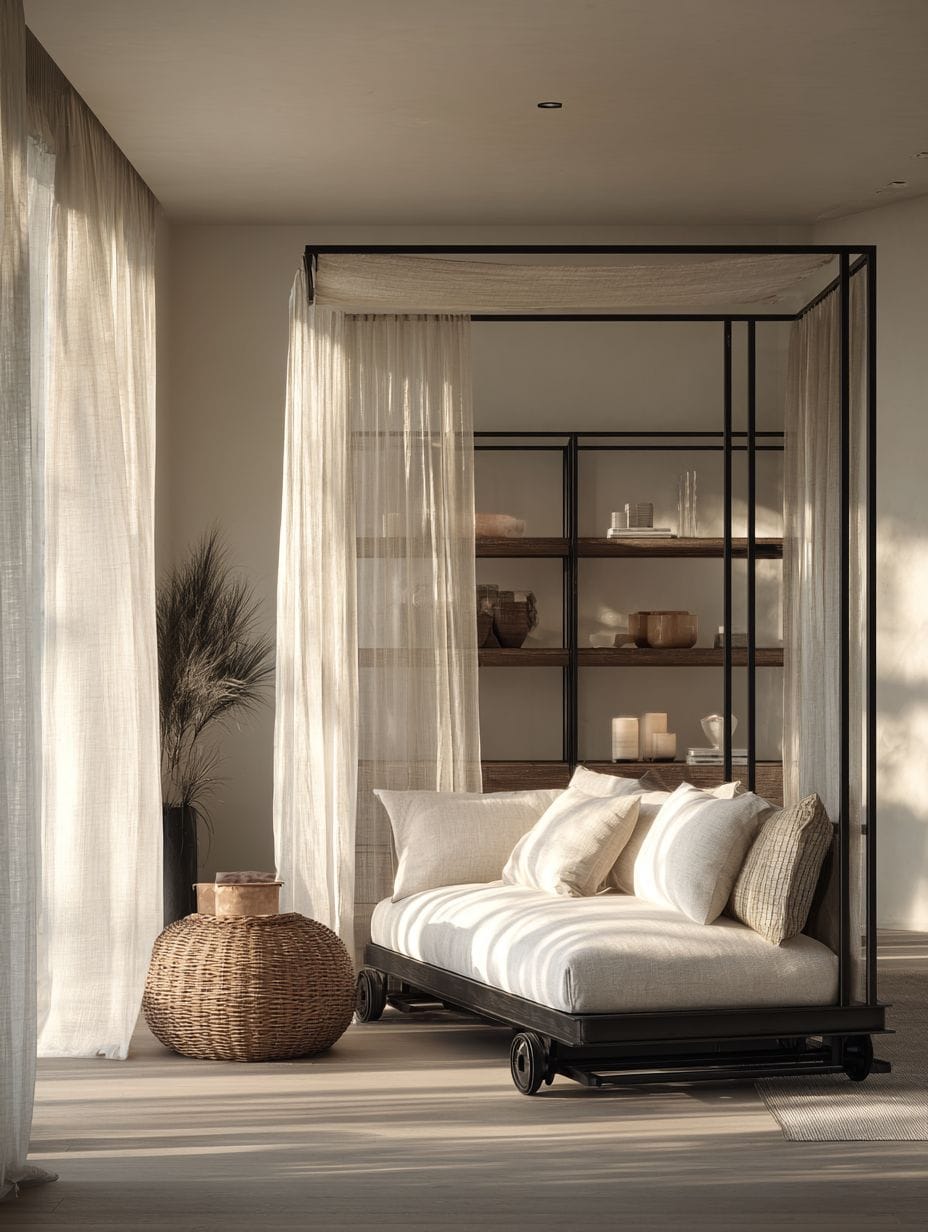
Scandinavian furniture in light woods and neutral fabrics creates harmony with the partition’s natural aesthetic. The emphasis on natural materials—steel, linen, wood—reflects the Nordic appreciation for honest, unpretentious design that celebrates materials’ inherent qualities rather than disguising them. Soft natural lighting through sheer curtains illuminates the linen texture beautifully, revealing the fabric’s natural weave and organic variations. Interior design photography emphasizes the partition’s mobility and textile detail, showcasing how practical functionality can achieve elegant simplicity without sacrificing aesthetic sophistication. The overall effect embodies the Scandinavian principle of “lagom”—not too much, not too little, but just right.
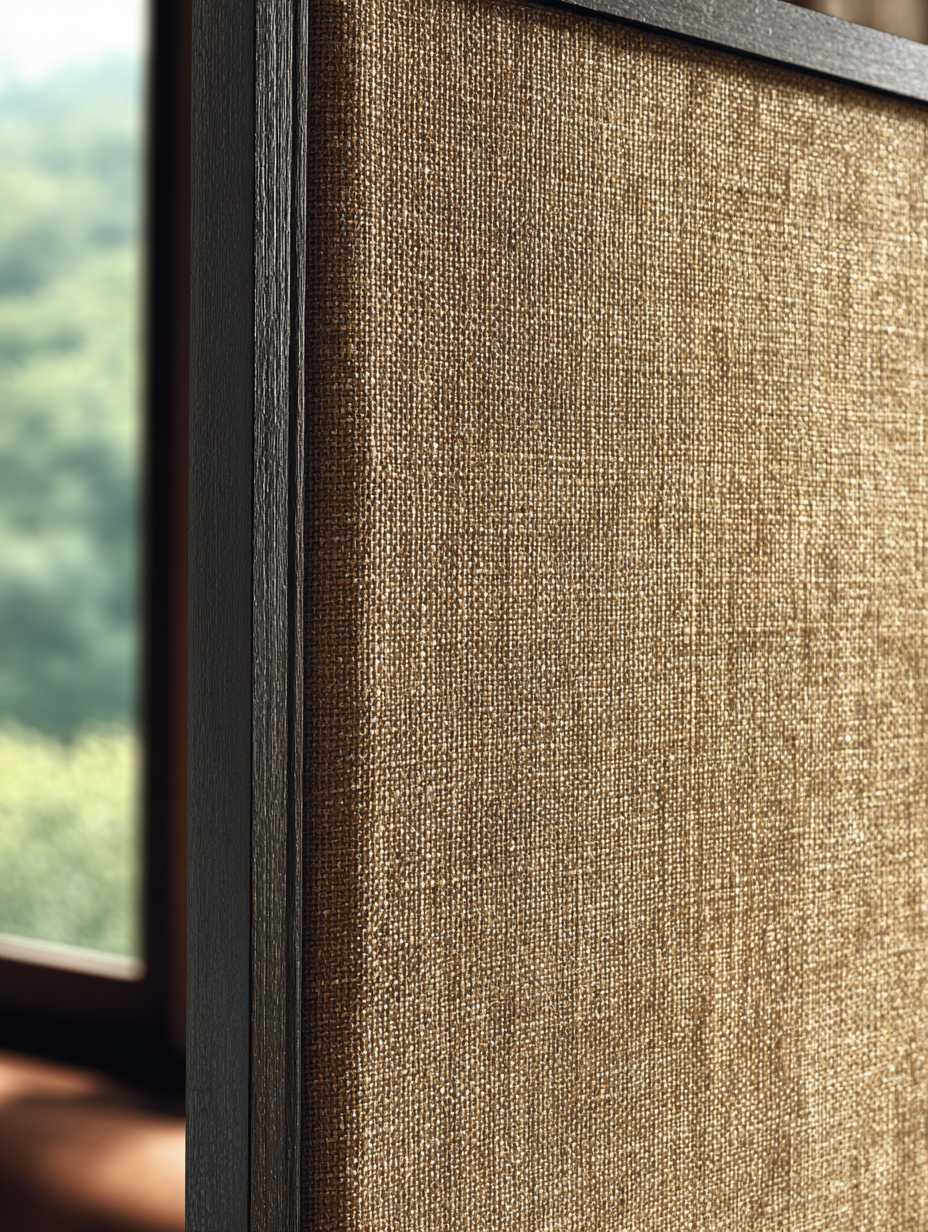
- Select heavy-duty locking casters appropriate for the partition’s weight and intended movement frequency.
- Choose natural, breathable fabrics that age gracefully and can be removed for cleaning or replacement.
- Ensure frame stability despite mobility; the partition must remain upright when stationary and not tip during normal use.
- Consider fabric treatment for stain resistance while maintaining natural appearance and texture.
- Provide adequate frame thickness to support fabric panels without sagging or distortion over time.
- Test mobility on your flooring—casters that work well on hard surfaces may struggle on thick carpet.
18. Contemporary Concrete with Geometric Relief
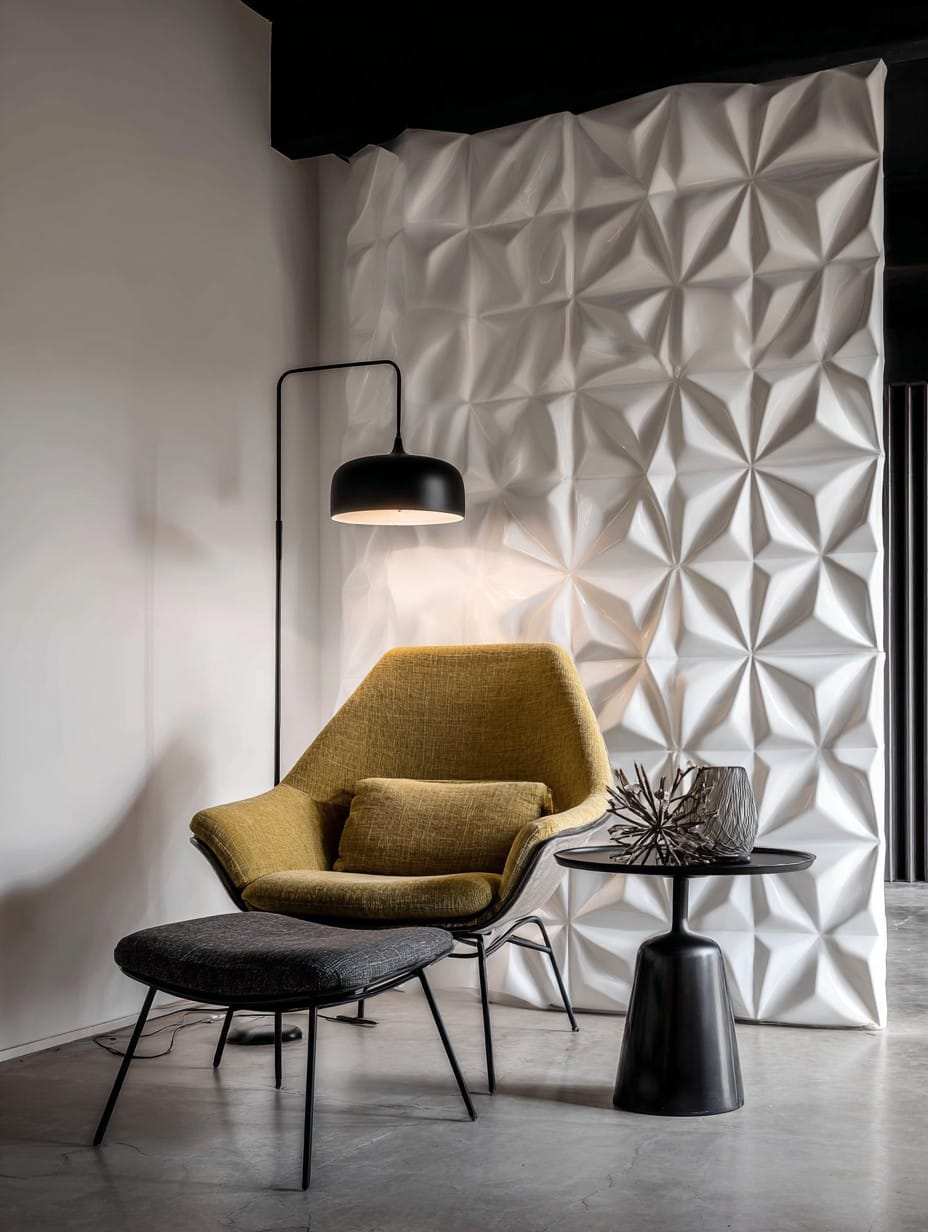
The contemporary concrete panel partition featuring geometric relief pattern adds tactile and visual interest through industrial material sophistication. The freestanding partition separates the seating area from a music corner with bold architectural presence that makes an uncompromising design statement. The geometric relief—typically created through custom molds during the concrete casting process—transforms flat surface into three-dimensional artwork that plays with light and shadow throughout the day. The inherent coolness of concrete material gains warmth through the dynamic surface treatment, preventing the stark, cold appearance that smooth concrete might present.
Concrete’s inherent properties offer unique advantages for partition applications. The material provides excellent acoustic dampening, absorbing sound rather than reflecting it—particularly valuable when separating spaces dedicated to different activities like quiet conversation and music practice. The substantial weight and mass create psychological separation; this partition feels permanent and significant despite being technically freestanding. Industrial-modern furniture in leather and metal complements the concrete aesthetic without competing for attention, recognizing that such a bold material choice deserves supporting rather than contradictory design elements.
Directional spotlighting emphasizes the relief pattern’s shadows, creating dramatic effects that change as the light moves or intensity varies. The interplay between raised surfaces (catching direct light) and recessed areas (creating deep shadows) generates the visual complexity that makes this partition so compelling. The geometric pattern adds order and intentionality, preventing the concrete from feeling too raw or unfinished. Wide-angle photography captures the bold architectural statement while documenting how successfully contemporary concrete elements can integrate into residential settings traditionally dominated by softer, warmer materials. The result challenges preconceptions about concrete’s place in home design.
- Ensure adequate structural support as concrete partitions are substantially heavier than wood or metal alternatives.
- Seal concrete properly to prevent dusting and make cleaning easier while protecting against moisture and staining.
- Consider the pattern scale relative to partition size—larger patterns suit bigger installations while fine detail works for smaller applications.
- Allow concrete to cure fully before installation and finishing; rushed timelines can result in cracking or surface defects.
- Plan lighting integration early as the relief pattern’s impact depends significantly on how it’s illuminated.
- Balance the industrial element with softer furnishings and textiles to prevent the space from feeling too harsh or cold.
19. Flexible Bi-Fold Panel System
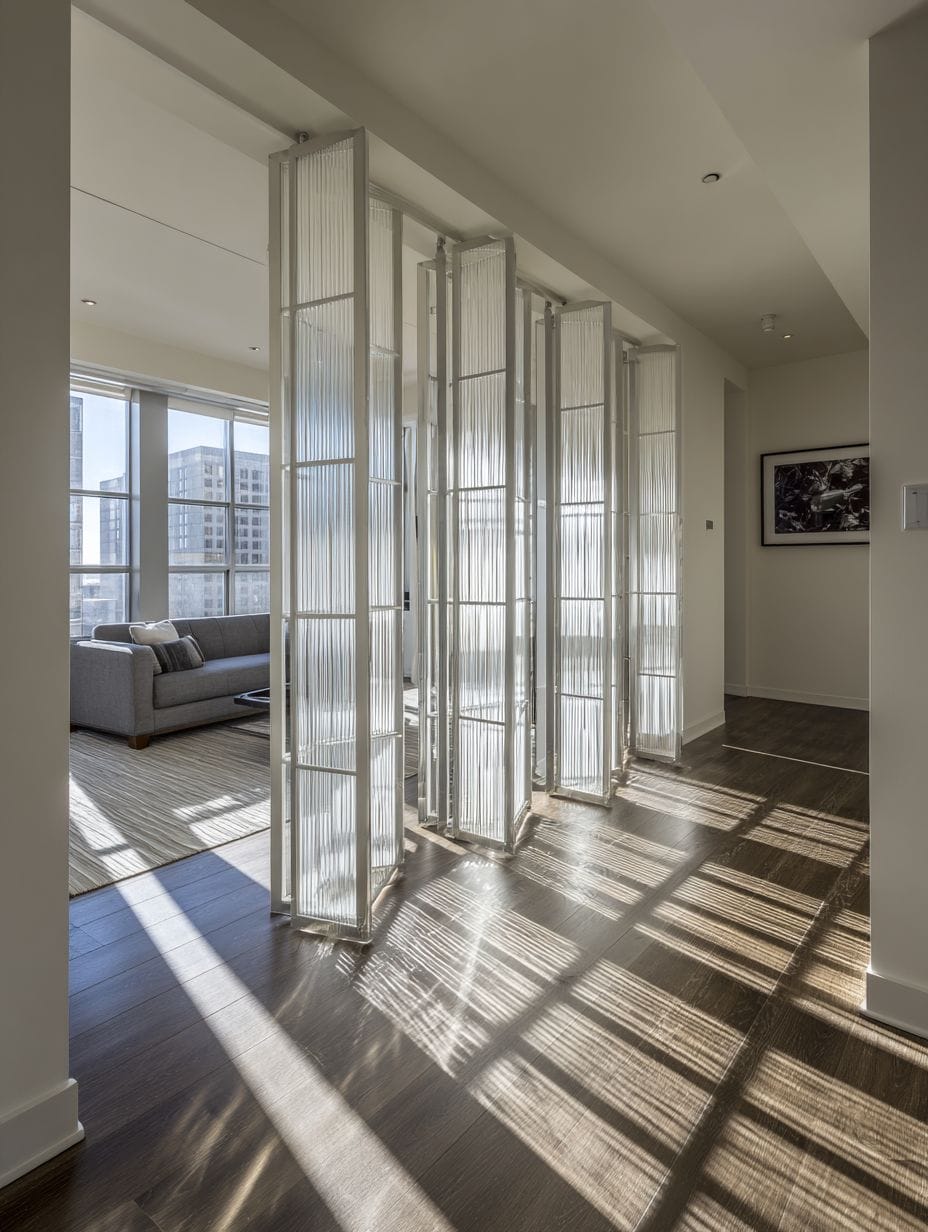
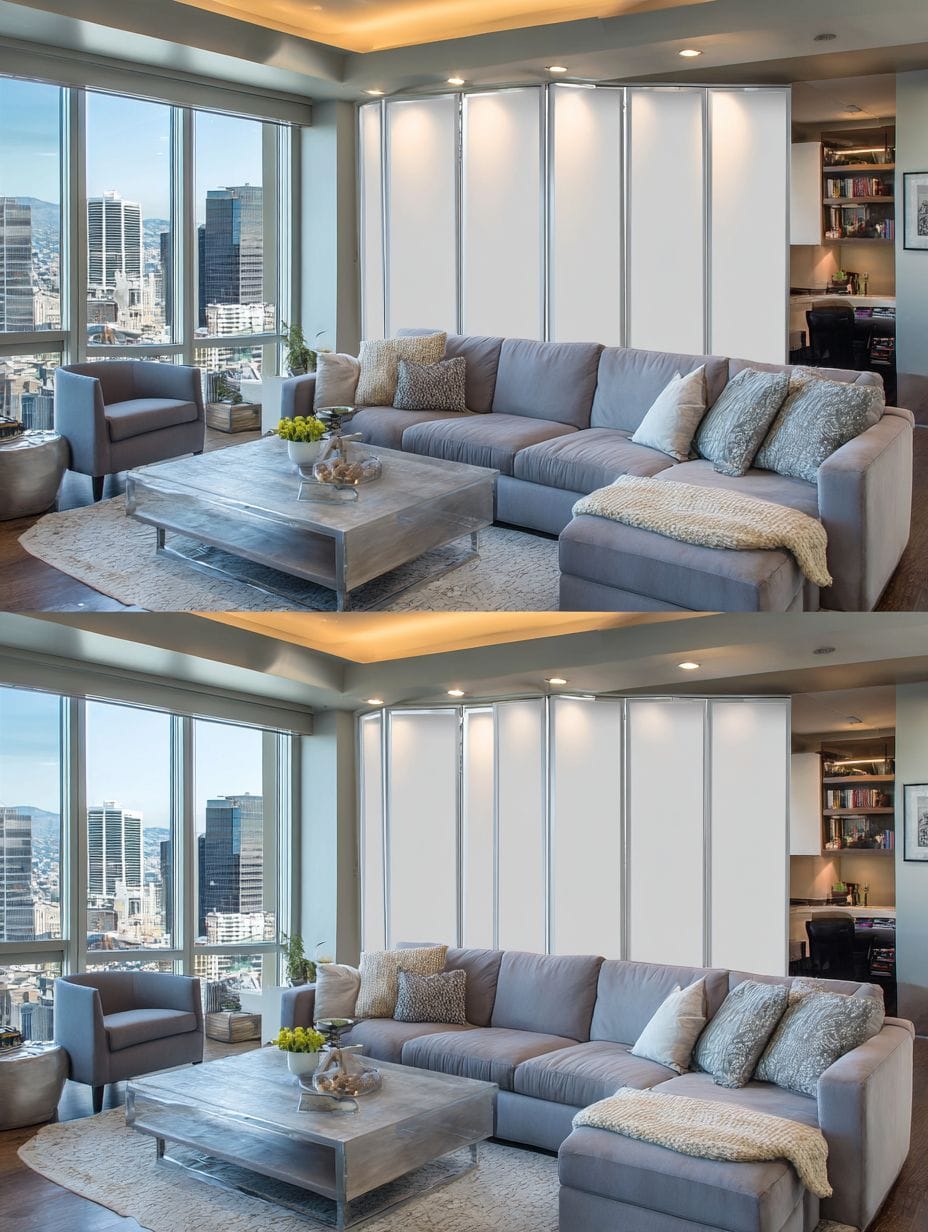
The bi-fold partition system featuring alternating translucent and opaque panels in sleek aluminum frames offers unmatched flexibility and modern sophistication. The innovative design can fully open to create one continuous space or configure in various intermediate positions to create different privacy and openness levels between living and guest areas. The alternating panel types create visual rhythm while providing practical advantages—opaque sections offer complete privacy while translucent areas allow light transmission and maintain visual connection. This combination proves ideal for multipurpose spaces where needs vary throughout the day.
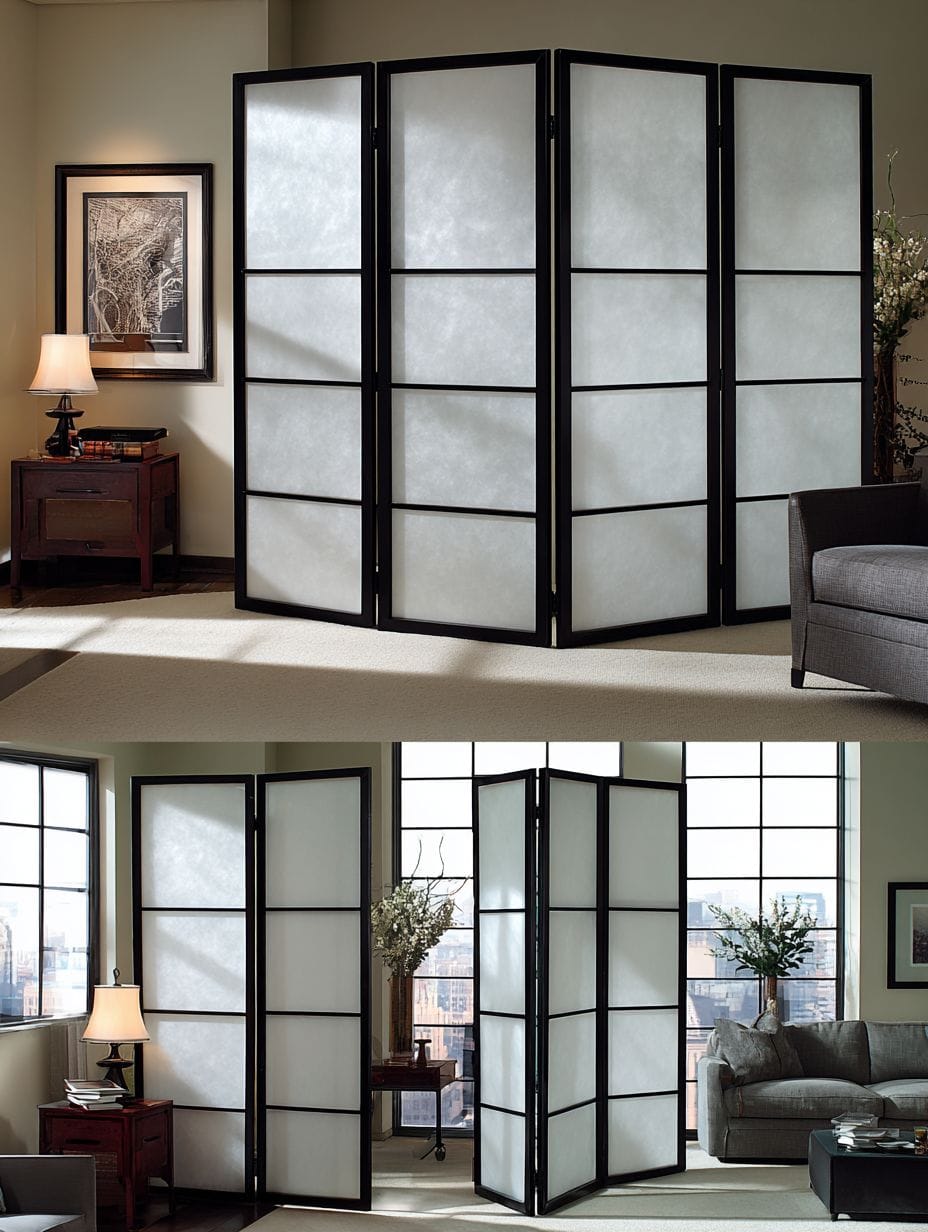
The bi-fold mechanism—panels connected by hinges that allow them to fold back accordion-style—provides superior flexibility compared to sliding or fixed partitions. The system can open completely to disappear against a wall, partially open to create angled configurations, or close fully for maximum privacy. This adaptability makes it particularly valuable for guest rooms that double as home offices, or entertainment areas that occasionally require privacy. Contemporary furniture in cool grey tones maintains the modern palette without overwhelming the partition’s sophisticated engineering. The clean lines and mechanical precision of the bi-fold system celebrate contemporary design’s appreciation for thoughtful functionality.
Natural light creates interesting patterns through the panel variations, with translucent sections diffusing illumination while opaque panels provide contrast and definition. Professional photography must demonstrate multiple configuration options to convey the system’s full versatility—showing the partition fully open, partially deployed, and completely closed illustrates the range of spatial possibilities. The aluminum frame finish—typically available in brushed, polished, or powder-coated options—should coordinate with other metal finishes throughout the space. Quality hardware and smooth operation prove essential; poorly functioning bi-fold systems frustrate users and defeat the purpose of flexible design.
- Invest in quality track and hinge systems designed specifically for frequent operation and the panels’ weight.
- Plan clearance carefully to ensure panels can fold completely without obstruction from furniture or architectural elements.
- Consider panel widths—narrower panels fold more compactly but require more hardware and connection points.
- Maintain the system regularly by cleaning tracks, lubricating hinges, and checking alignment to ensure smooth operation.
- Choose appropriate glass types for translucent sections—frosted, textured, or even smart glass depending on budget and preferences.
- Install with professional help as proper alignment and operation depend on precise measurements and careful mounting.
20. Vertical Garden Living Wall with Hydroponic System
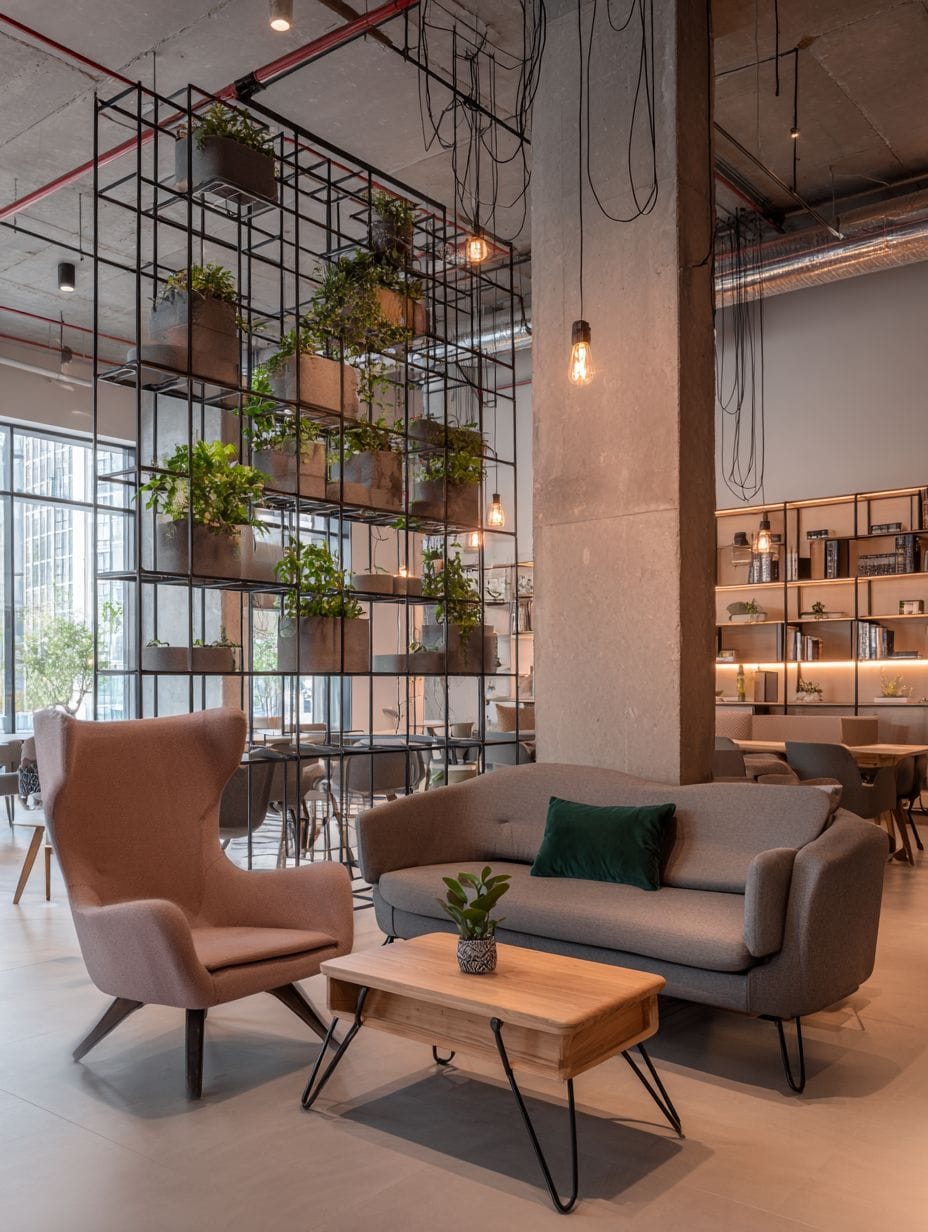
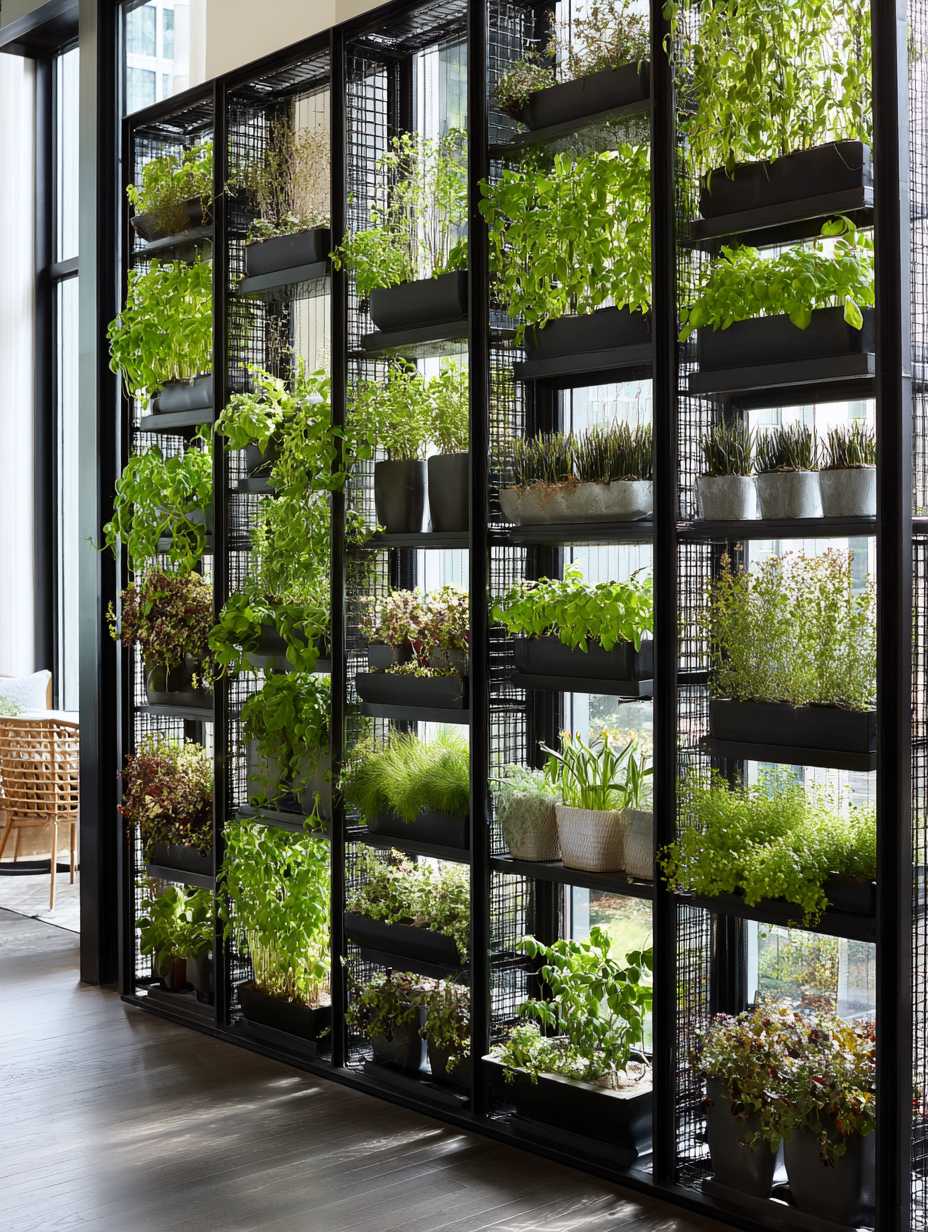
The vertical garden living wall partition featuring a hydroponic system and mixed plant varieties represents cutting-edge biophilic design merged with modern technology. The black metal grid framework supports a sophisticated growing system that maintains lush greenery with minimal maintenance requirements. This innovative partition divides the entertainment area from a wellness space while contributing active air purification, natural humidity regulation, and powerful psychological benefits associated with proximity to living plants. The constantly evolving nature of the living wall ensures the partition never becomes stale or boring—plants grow, bloom, and change with seasons, creating dynamic visual interest.
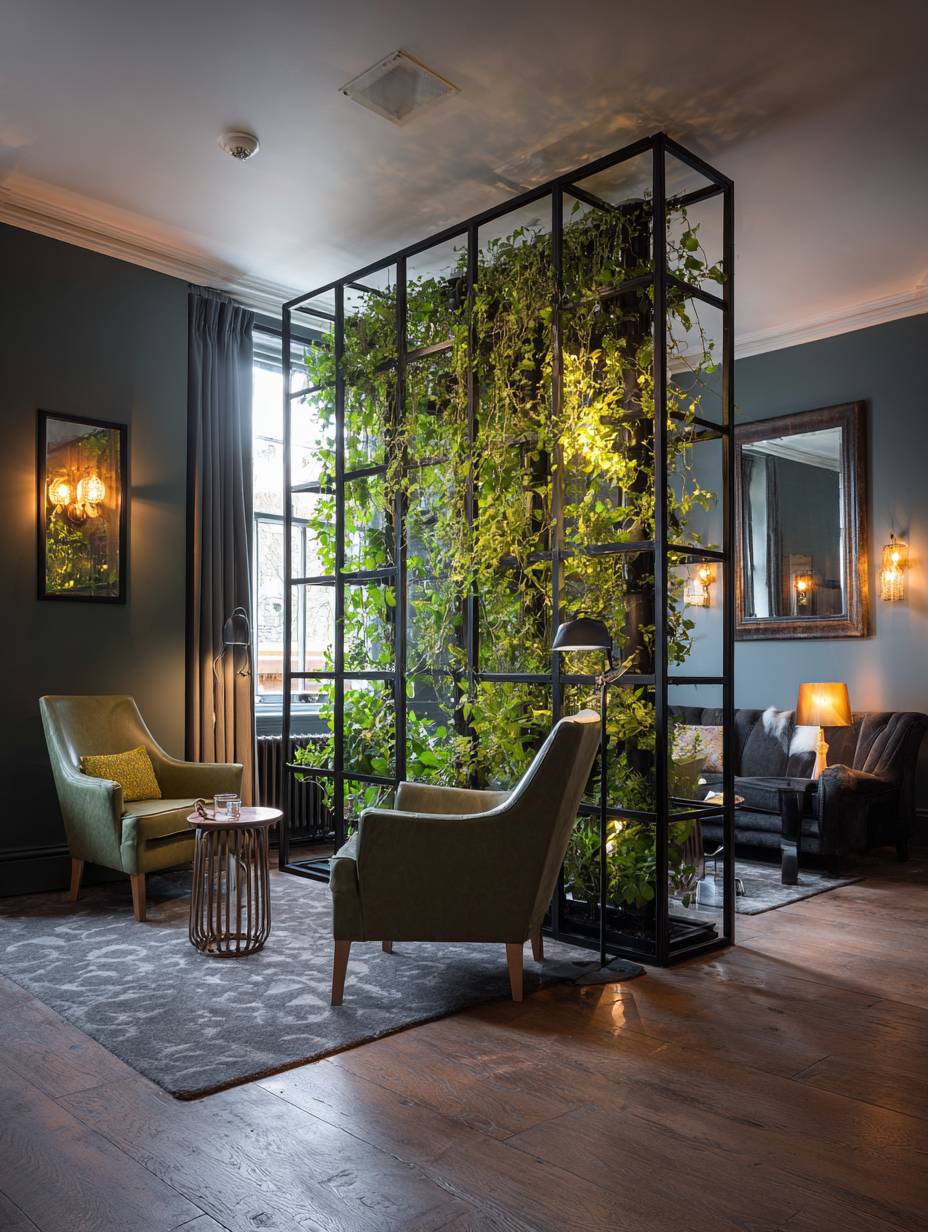
The hydroponic system—growing plants in nutrient-rich water rather than soil—offers several advantages for indoor vertical gardens. It eliminates the mess and weight of traditional soil, reduces watering frequency through automated systems, and often promotes faster, healthier plant growth. The black metal grid provides structure while disappearing visually behind the verdant foliage, allowing plants to take center stage. Modern eco-conscious furniture in natural materials complements the biophilic design philosophy, creating cohesive environmental consciousness throughout the space. The combination of living plants with contemporary furnishings bridges the gap between nature and modernity.
Integrated grow lights provide proper illumination for plant health while creating ambient lighting effects during evening hours. The warm glow filtering through leaves creates enchanting atmosphere that transforms the living wall into a living art installation. Professional interior photography must capture the vibrant greenery and sustainable modern aesthetic, showcasing how technology enables nature to thrive indoors. The variety of plant species—combining trailing varieties, upright growers, different leaf shapes, and various shades of green—creates textural complexity and visual richness that engages the senses and invites closer examination. This partition type represents the future of interior design where wellness and aesthetics merge seamlessly.
- Research hydroponic systems thoroughly or consult specialists to choose appropriate technology for your maintenance commitment level.
- Select plant varieties suitable for indoor conditions and compatible growth requirements for shared hydroponic environment.
- Plan for adequate drainage and water containment to protect flooring and prevent moisture damage to surrounding structures.
- Install proper grow lighting with appropriate spectrum and intensity for chosen plant varieties.
- Establish maintenance routines for nutrient monitoring, plant pruning, and system cleaning to ensure long-term health.
- Consider professional installation for complex hydroponic systems to ensure proper setup and operation.
- Monitor humidity levels in adjacent spaces as living walls can increase moisture—beneficial in dry climates but potentially problematic in humid regions.
21. Laser-Cut Metal Screen in Nature-Inspired Pattern
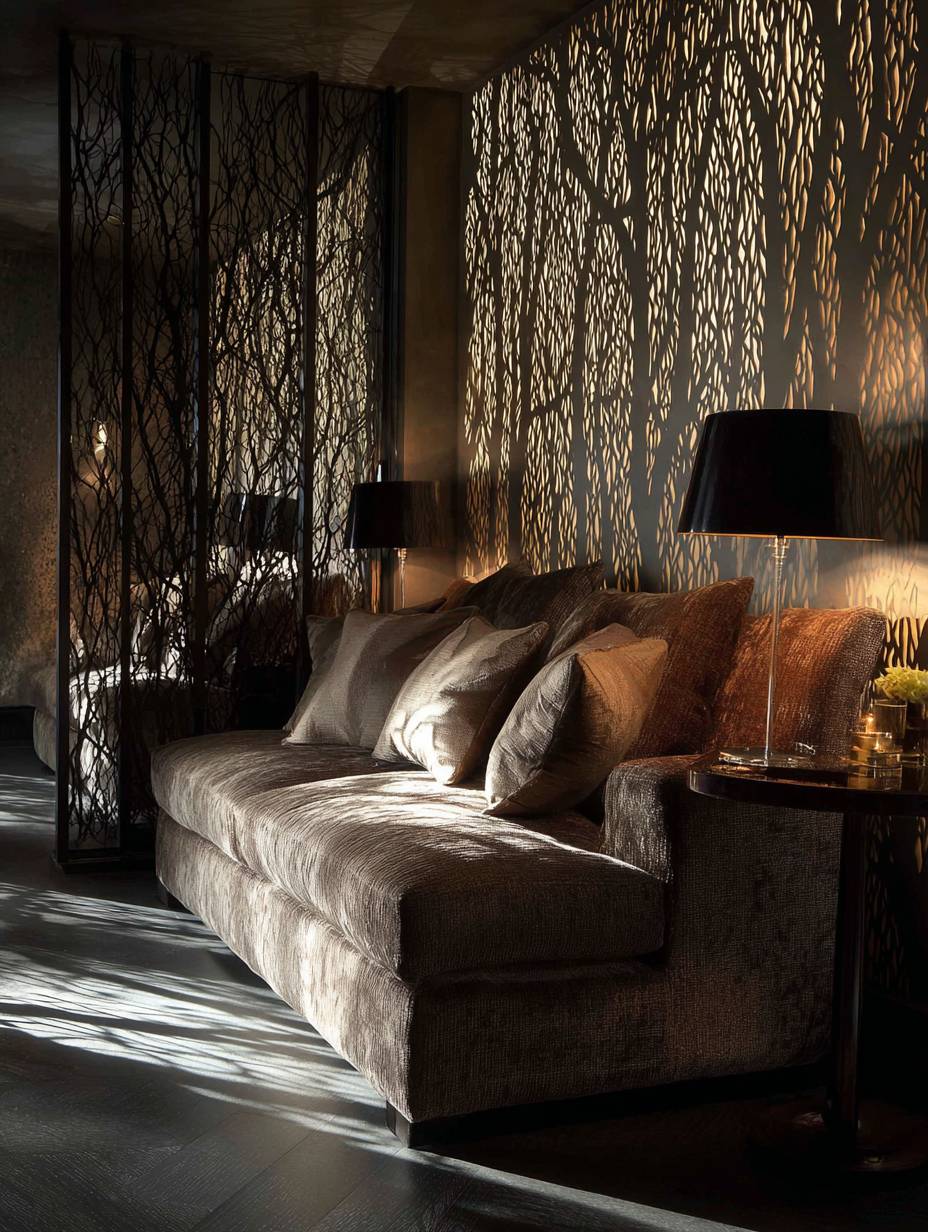
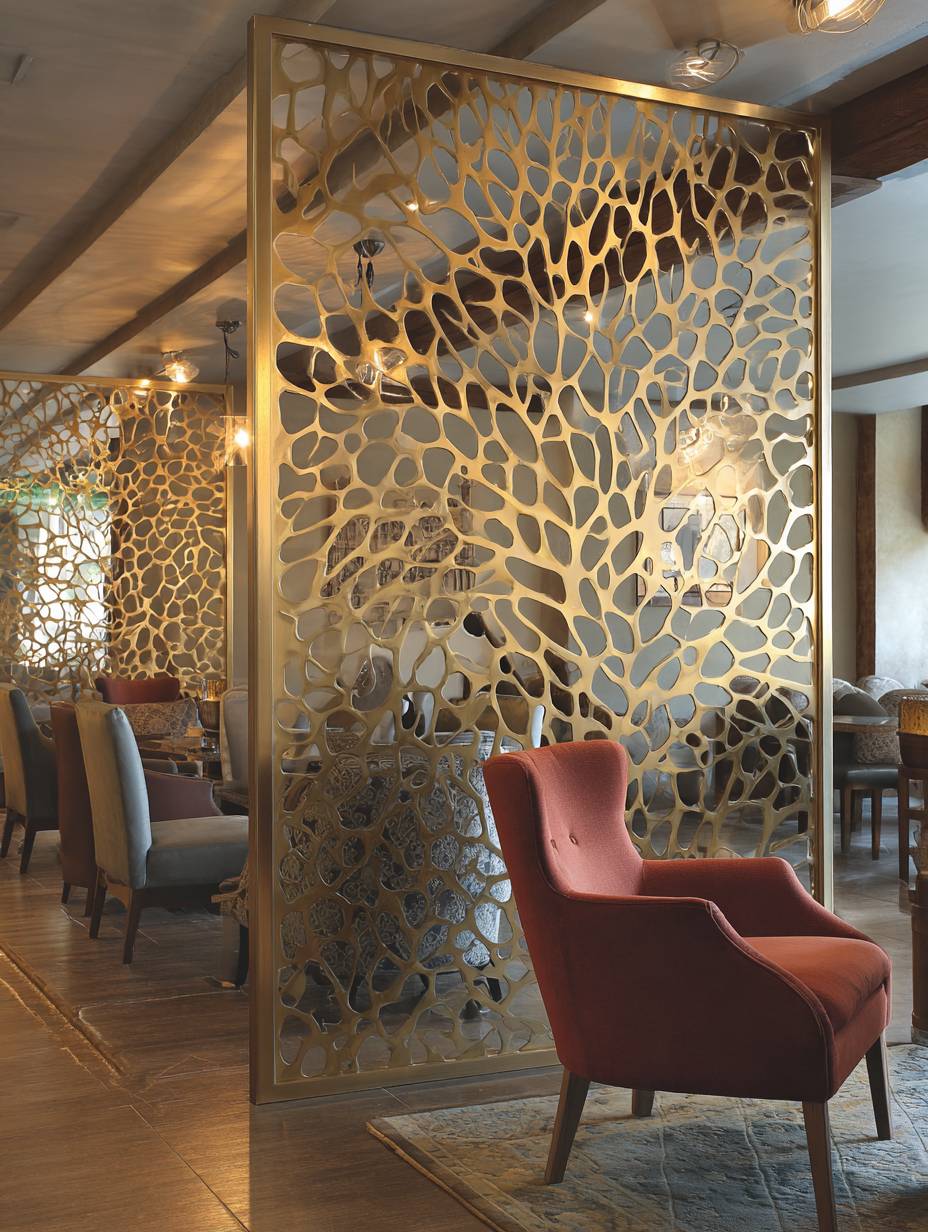
The laser-cut metal partition featuring nature-inspired branch patterns in matte champagne gold finish elevates room division to fine art. The decorative screen separates formal seating from casual lounge spaces with sophisticated elegance that commands attention and admiration. The intricate pattern—typically created using precision laser-cutting technology—achieves details impossible with traditional fabrication methods, resulting in delicate, nature-inspired forms rendered in durable metal. The matte champagne gold finish adds warmth and luxury without the ostentation of polished gold, creating refined elegance that feels contemporary rather than traditional.
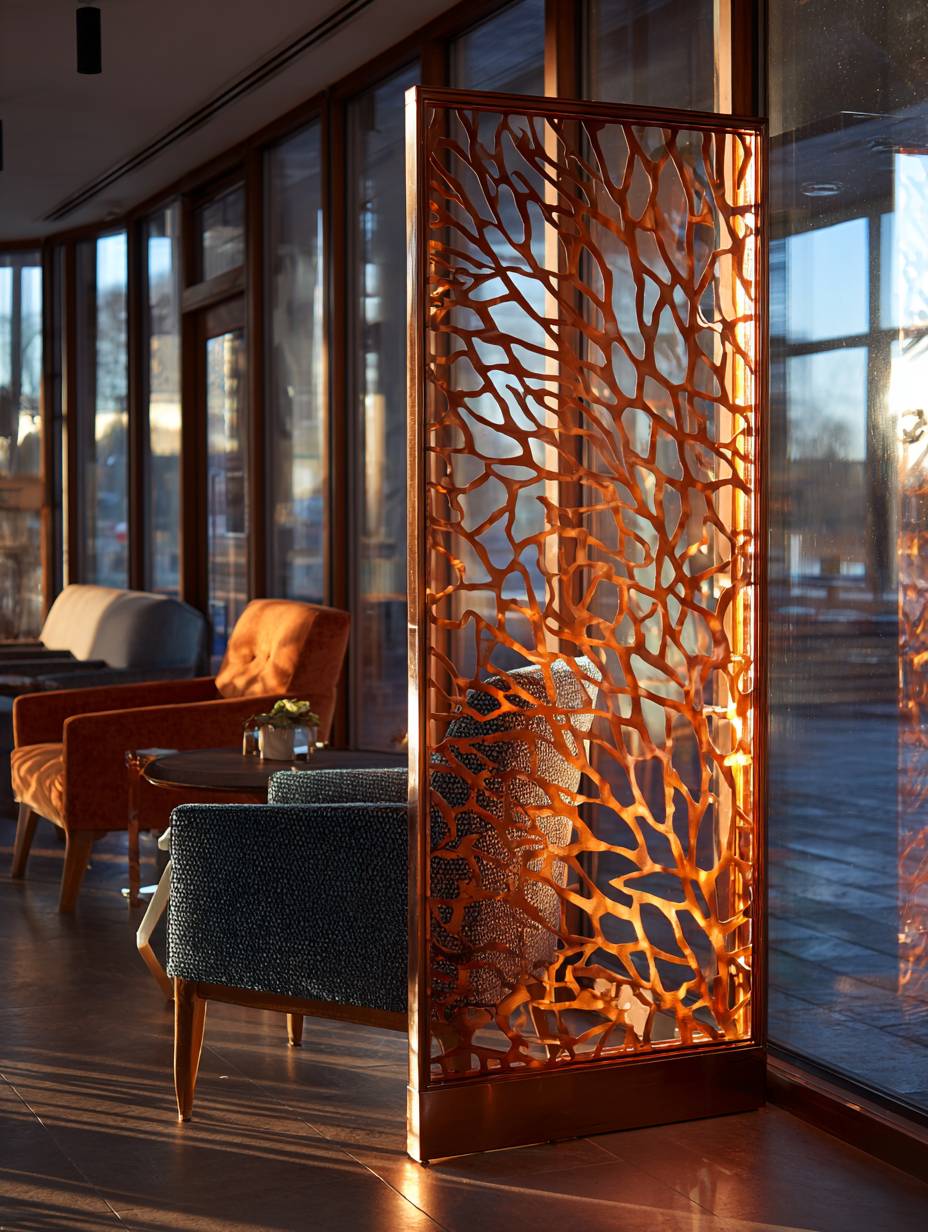
The nature-inspired pattern creates fascinating visual effects as light passes through and around the detailed cutouts. During daytime, the partition casts organic, branch-like shadows that seem to bring the outdoors inside, creating connection with nature even in urban settings. The shadow patterns move subtly as natural light shifts throughout the day, adding kinetic energy without mechanical movement. Luxury modern furniture in rich fabrics—velvet, silk, fine leather—complements the sophisticated partition without competition, recognizing that such an artistic element deserves supporting rather than competing design choices.
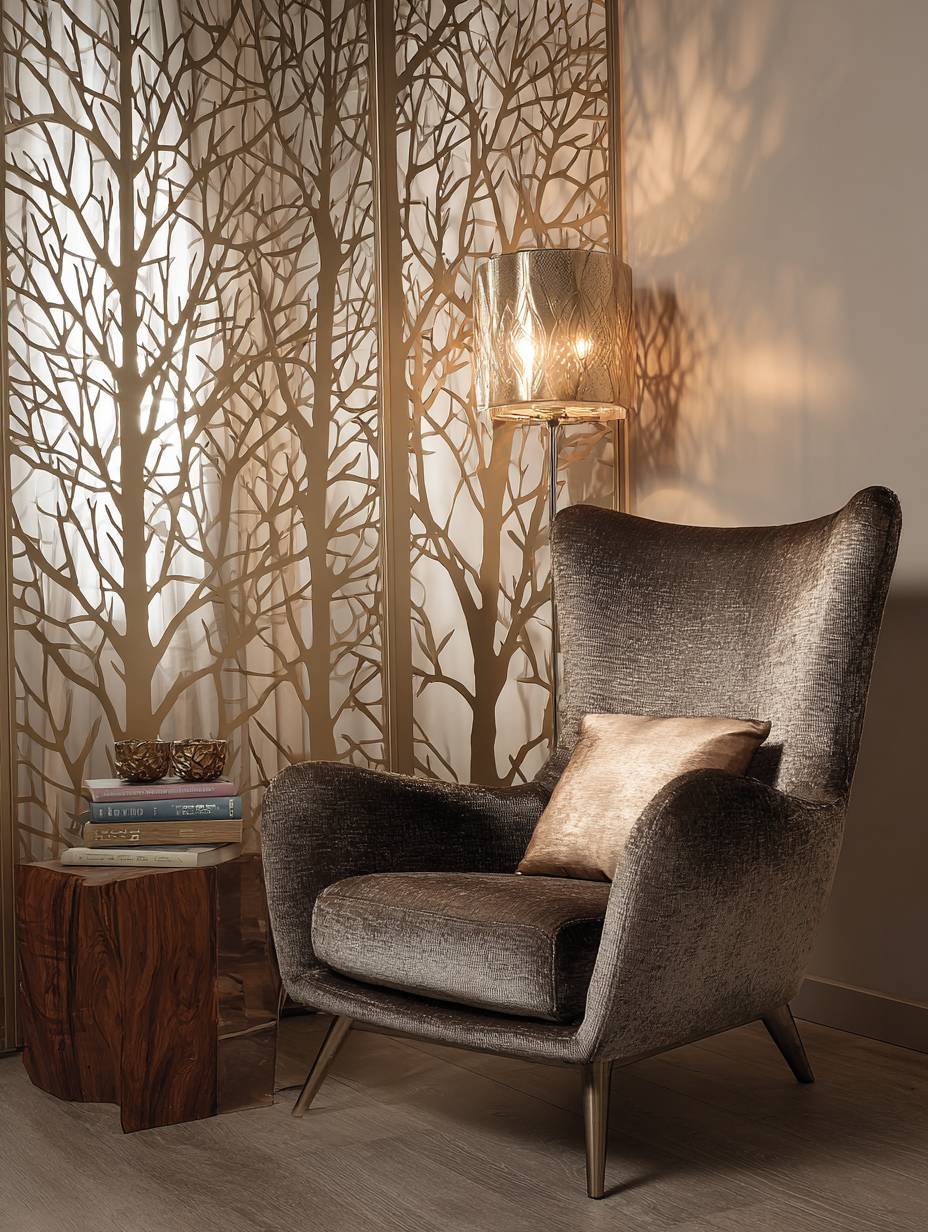
Backlighting creates enchanting silhouette effects that transform the partition after dark. Positioned LED strips or wall washers behind the screen illuminate the pattern from behind, making the metal framework appear to glow while the cutout shapes create dramatic contrast. This lighting strategy transforms the partition from a daytime architectural element into an evening art installation that provides both functional illumination and aesthetic impact. Professional photography emphasizes the intricate pattern detail and metallic finish quality, showcasing the precision craftsmanship required to achieve such sophisticated results. The overall effect suggests refined taste and appreciation for artisanal quality.
- Choose pattern density appropriate to desired privacy—denser patterns provide more visual screening while open designs maintain greater transparency.
- Consider the viewing distance when selecting pattern scale; fine details may be lost if viewed primarily from far away.
- Ensure stable mounting as large metal screens can be heavy and require proper anchoring for safety.
- Match the metal finish to other metallic elements in the space for cohesive design, or intentionally contrast for dramatic effect.
- Plan lighting integration early in the design process as illumination significantly impacts the partition’s visual effect.
- Leave adequate breathing room around the screen to appreciate its sculptural quality without crowding from furniture or other elements.
22. Smart Glass Technology Partition
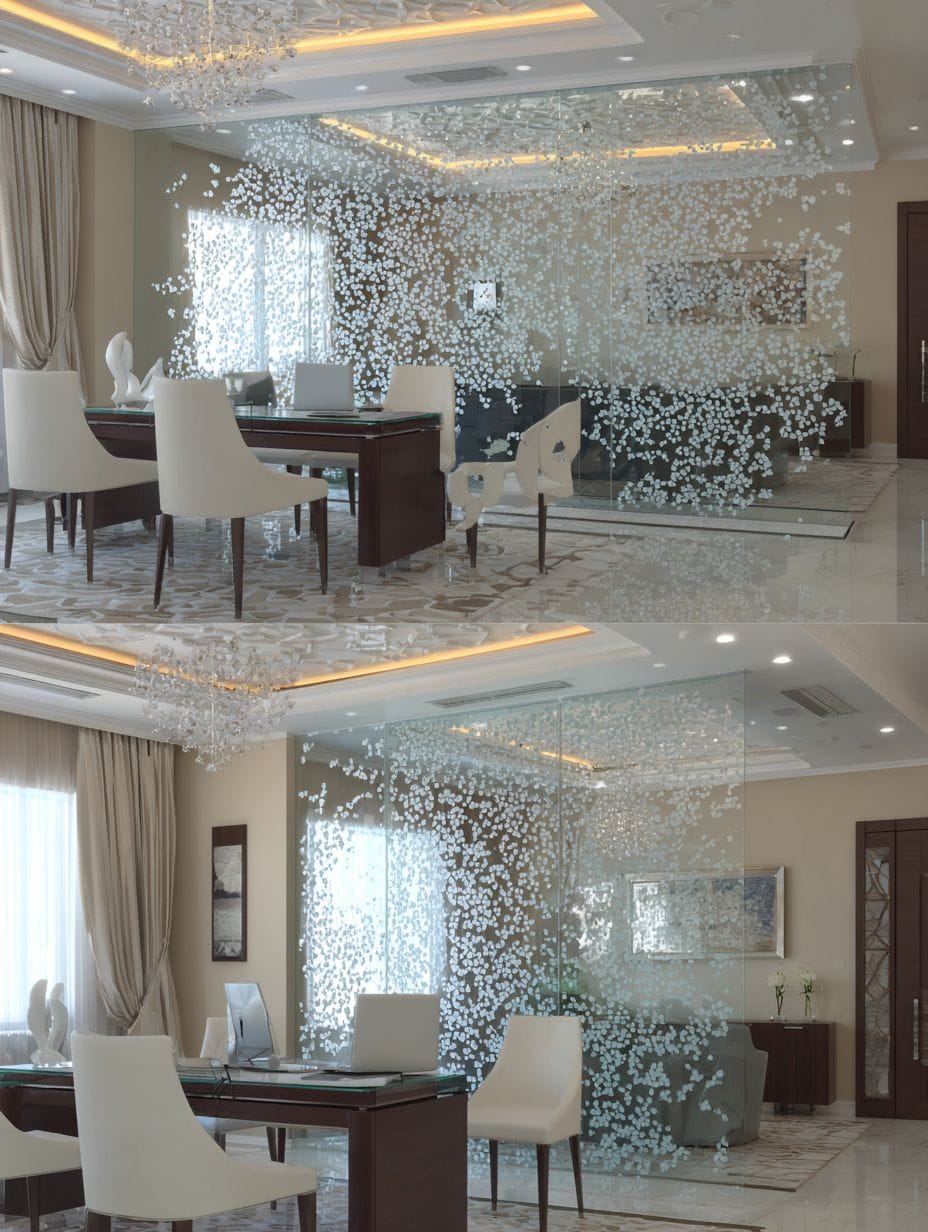
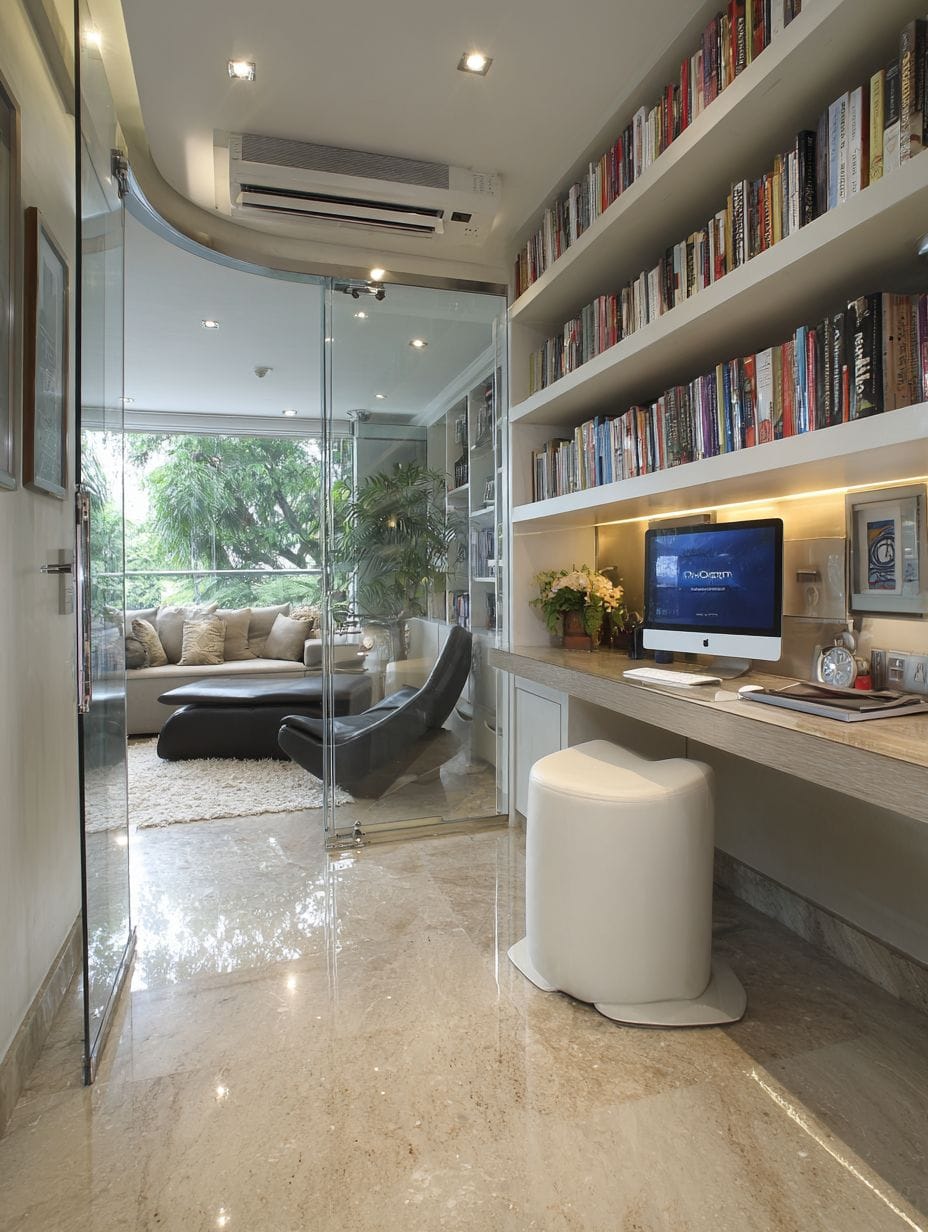
The smart glass partition with switchable opacity controlled electronically represents cutting-edge technology integration in interior design. This high-tech partition divides living areas from home offices while offering instant privacy adjustment through simple electronic controls—wall switches, remote controls, or even smartphone apps. The glass transitions from completely transparent to opaque frosted within seconds, providing flexibility unmatched by traditional partition materials. This transformative capability proves invaluable in modern work-from-home scenarios where spaces must quickly adapt between professional and personal functions.
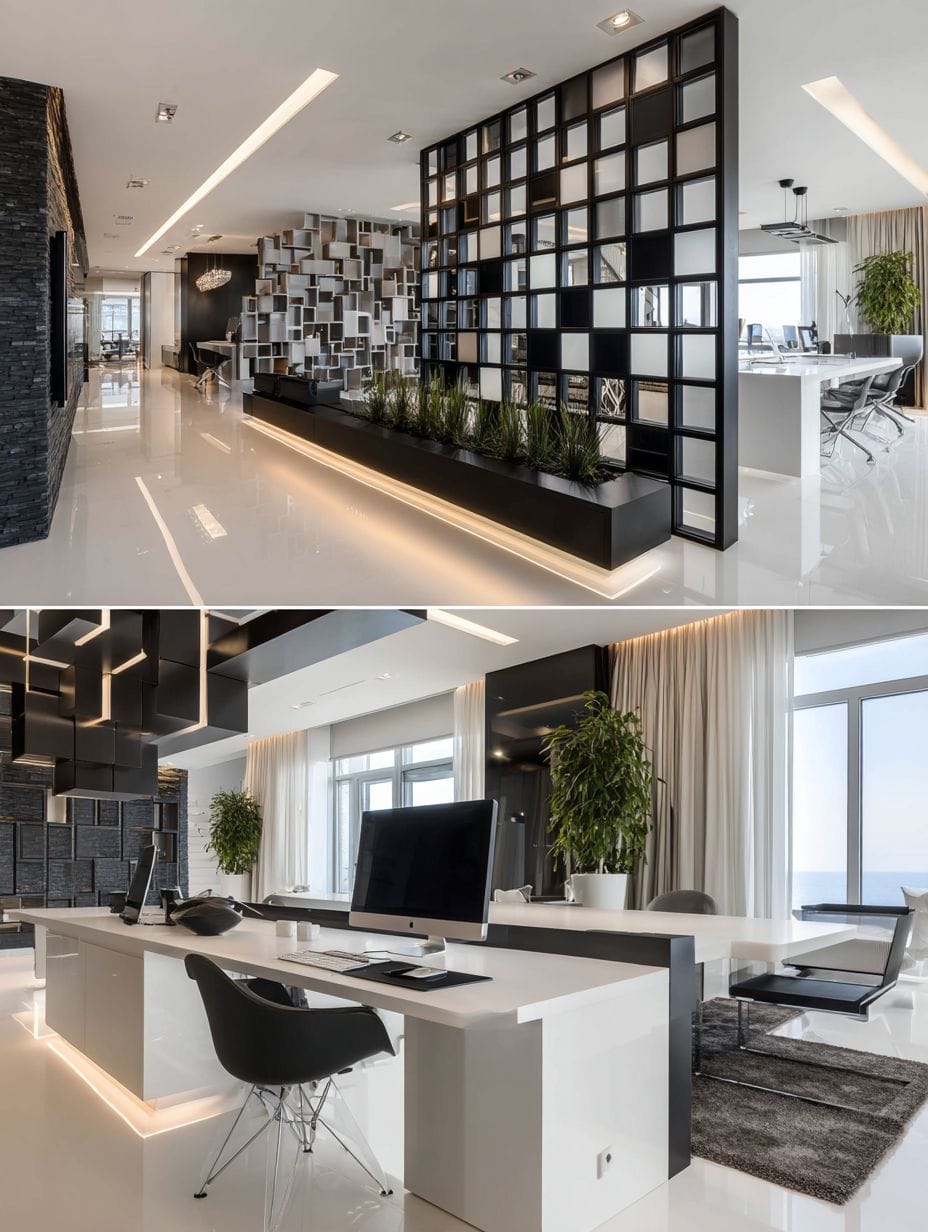
The technology behind smart glass—typically liquid crystal or polymer-dispersed liquid crystal films sandwiched between glass panels—represents significant technological advancement in architectural materials. In its transparent state, the partition maintains visual connection and light flow, creating open, connected spaces ideal for leisure and family time. When privacy is needed, activating the system causes the glass to transform to an opaque frosted appearance that blocks sightlines while still allowing light transmission. Sleek modern furniture in monochromatic black and white continues the contemporary theme, celebrating technological innovation and clean, uncluttered aesthetics.
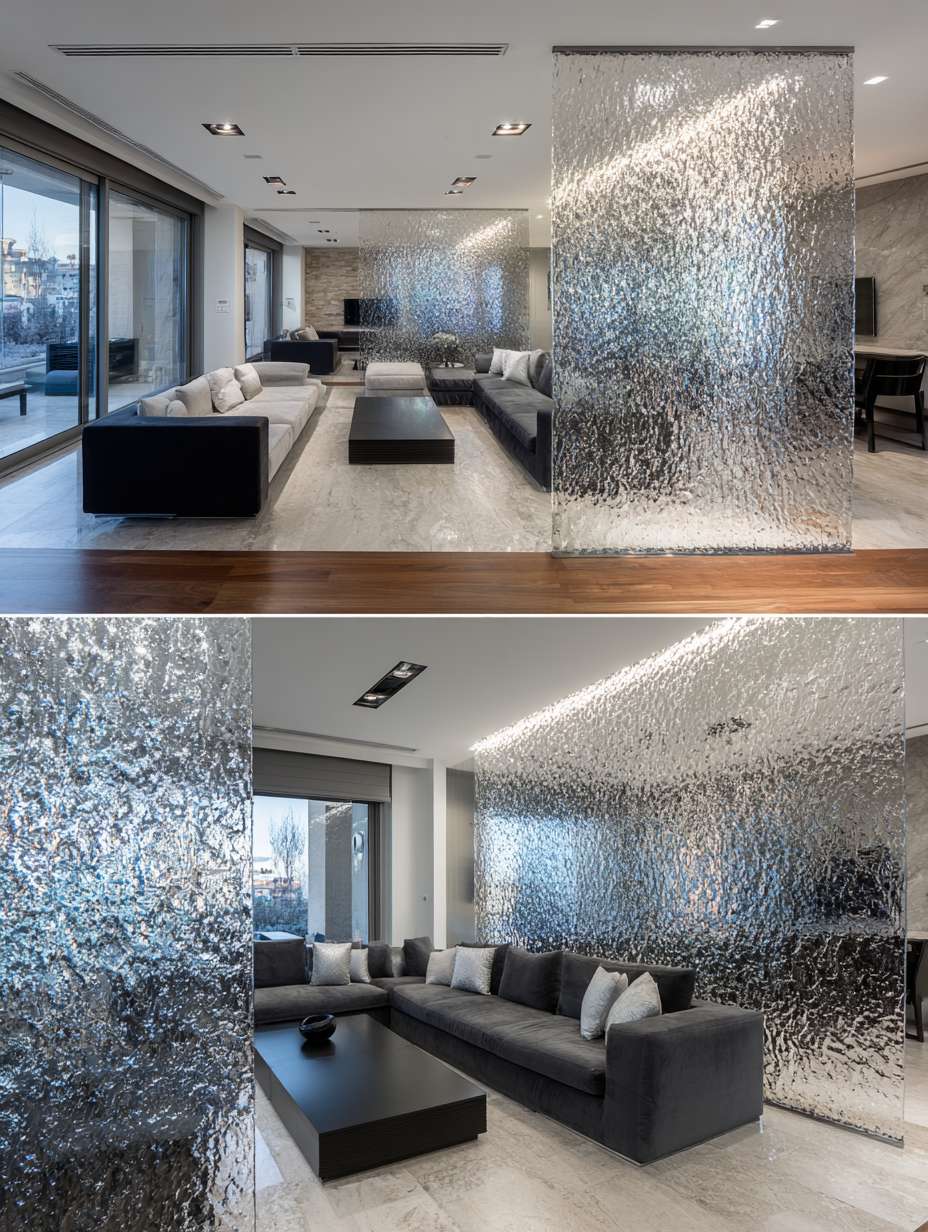
Soft natural lighting demonstrates both transparent and frosted states effectively. In transparent mode, the partition nearly disappears, creating seamless visual flow between spaces. In frosted mode, it provides privacy while maintaining brightness—a significant advantage over curtains or blinds that block light along with views. Interior design photography showcases the innovative technology integration, typically displaying side-by-side comparison images that demonstrate the dramatic transformation. The clean, frameless appearance maintains modern minimalism while the high-tech functionality addresses contemporary lifestyle needs. This partition type represents the future of adaptive, responsive interior environments.
- Research available technologies and choose appropriate smart glass type based on transition speed, privacy level, and durability requirements.
- Plan electrical requirements early as smart glass systems need power connections and control wiring.
- Consider control options—wall switches, wireless remotes, or smart home integration depending on preferences and budget.
- Ensure professional installation as smart glass systems require careful handling and electrical integration.
- Understand maintenance requirements including cleaning methods that won’t damage the smart film technology.
- Plan for higher initial investment compared to traditional glass, balanced against unmatched functionality and wow-factor.
- Consider backup power options to maintain basic functionality during power outages.
23. Mixed-Material Design Combining Wood and Glass
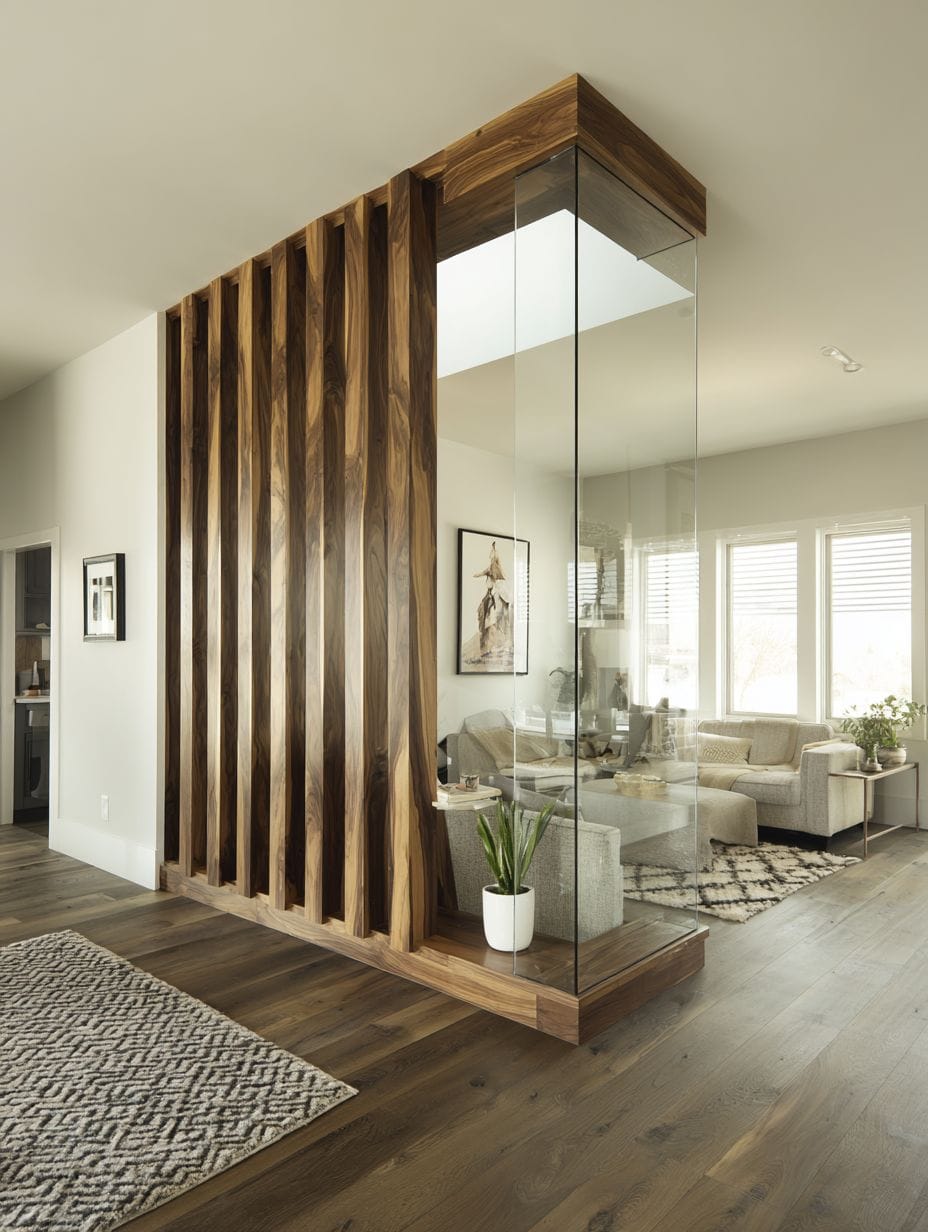
The mixed-material partition combining vertical walnut slats on the lower half with clear glass panels above demonstrates sophisticated design thinking that balances privacy and openness. This hybrid approach separates seating areas from breakfast nooks with thoughtful consideration of sightlines and spatial psychology. The walnut slats provide grounding visual weight and complete privacy at seated eye level, while the clear glass topper maintains openness and light transmission above. This combination addresses the common partition dilemma—how to create separation without isolation—with elegant material strategy that leverages the strengths of both components.
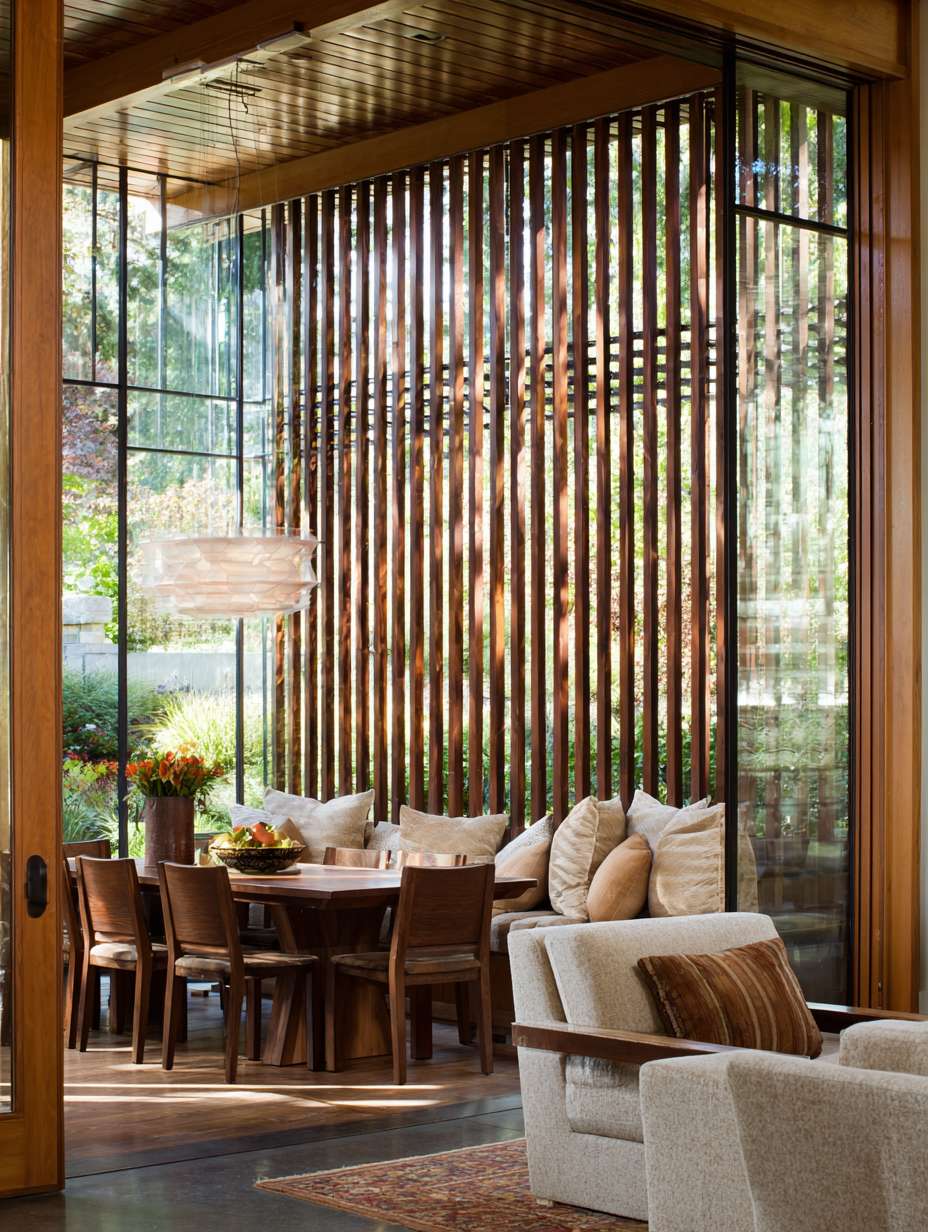
The material transition between wood and glass occurs at a carefully considered height, typically around 36-42 inches from the floor. This places the division point at approximate seated eye level, providing privacy for those sitting while allowing standing individuals to easily see and communicate across spaces. Contemporary furniture in warm neutrals harmonizes with the walnut tones, creating cohesive color story that feels intentional and curated. The contrast between the organic wood grain and pristine glass clarity creates visual interest while maintaining design cohesion through careful color and finish coordination.
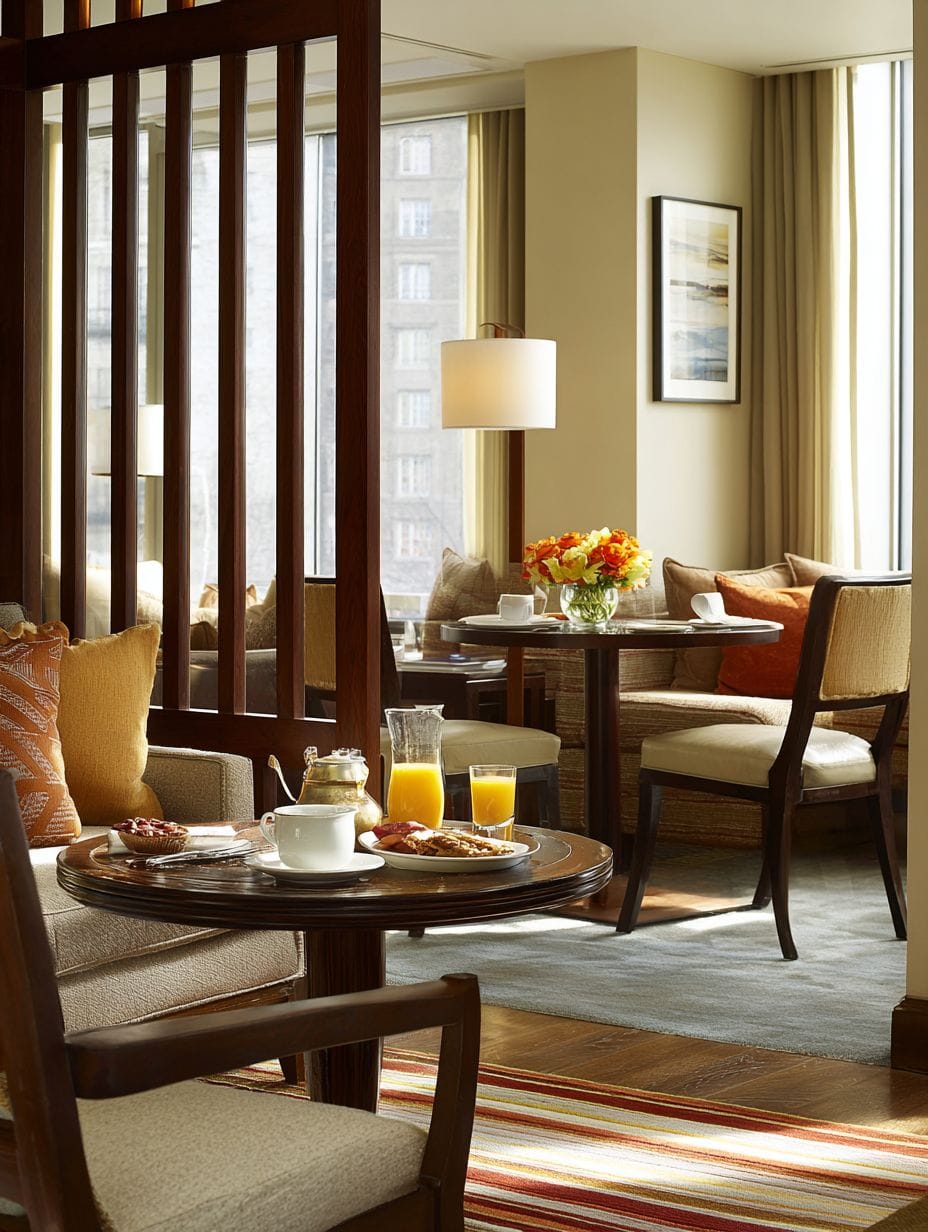
Natural light filters through the glass sections while wood provides grounding, creating balanced illumination that feels neither too bright nor too dim. The wood section prevents glare and creates comfortable, enclosed feeling at seated level, while the glass prevents the upper space from feeling confined or claustrophobic. Wide-angle photography captures the thoughtful material combination, showcasing how intelligent design decisions can solve multiple challenges simultaneously. The partition provides privacy, maintains openness, allows light transmission, adds visual interest through material contrast, and contributes warmth through natural wood—achieving five design goals through one well-considered element.
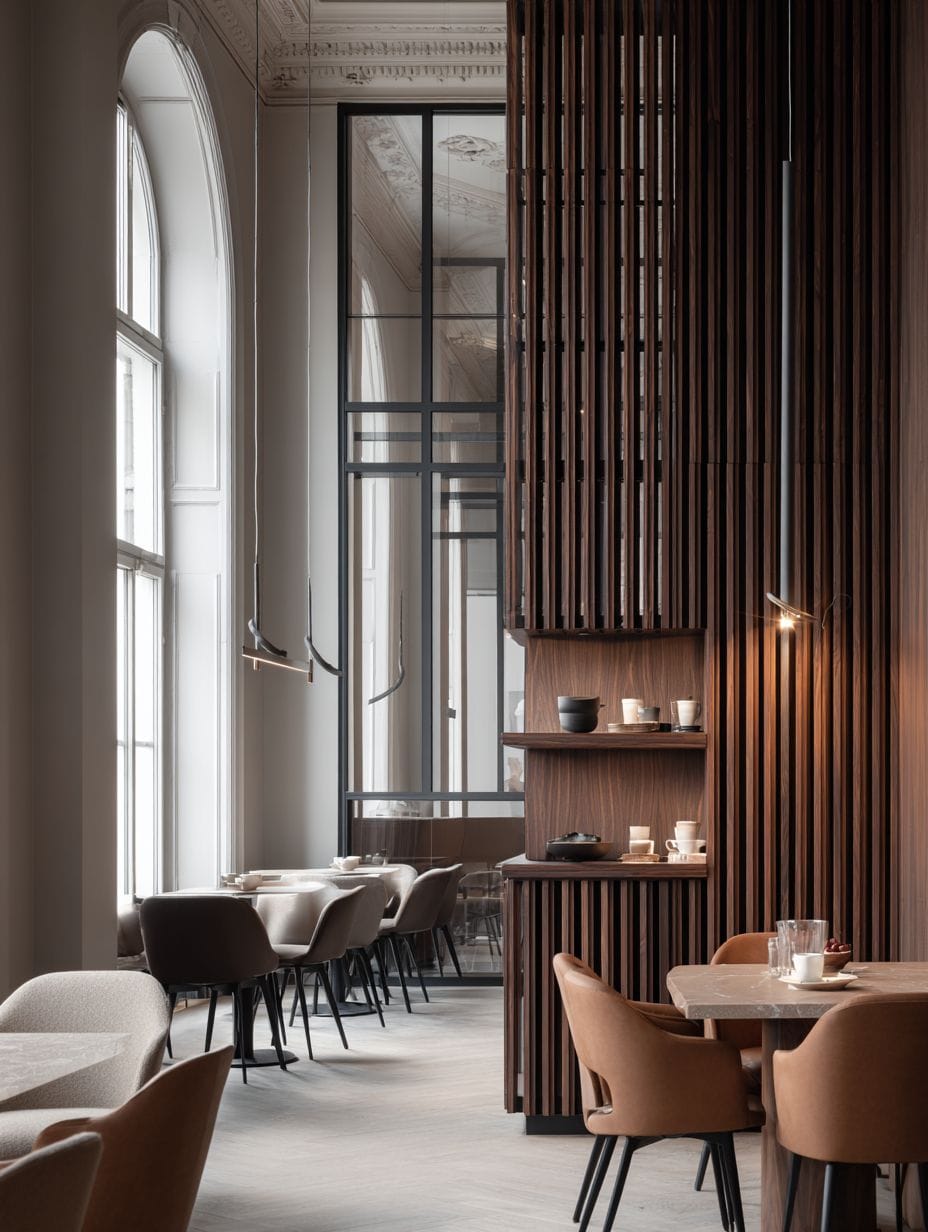
- Plan the transition height carefully based on furniture heights and typical user posture to maximize functional benefits.
- Match wood tones to surrounding cabinetry or flooring for cohesive design, or intentionally contrast for dynamic effect.
- Ensure structural continuity where materials meet, typically requiring custom framing to support both sections properly.
- Finish wood and glass edges professionally for polished appearance and safety.
- Consider the viewing angles from both sides when determining slat spacing and glass panel placement.
- Clean both materials appropriately—wood finishes and glass require different products and techniques.
24. Architectural Gypsum Board with Display Niches
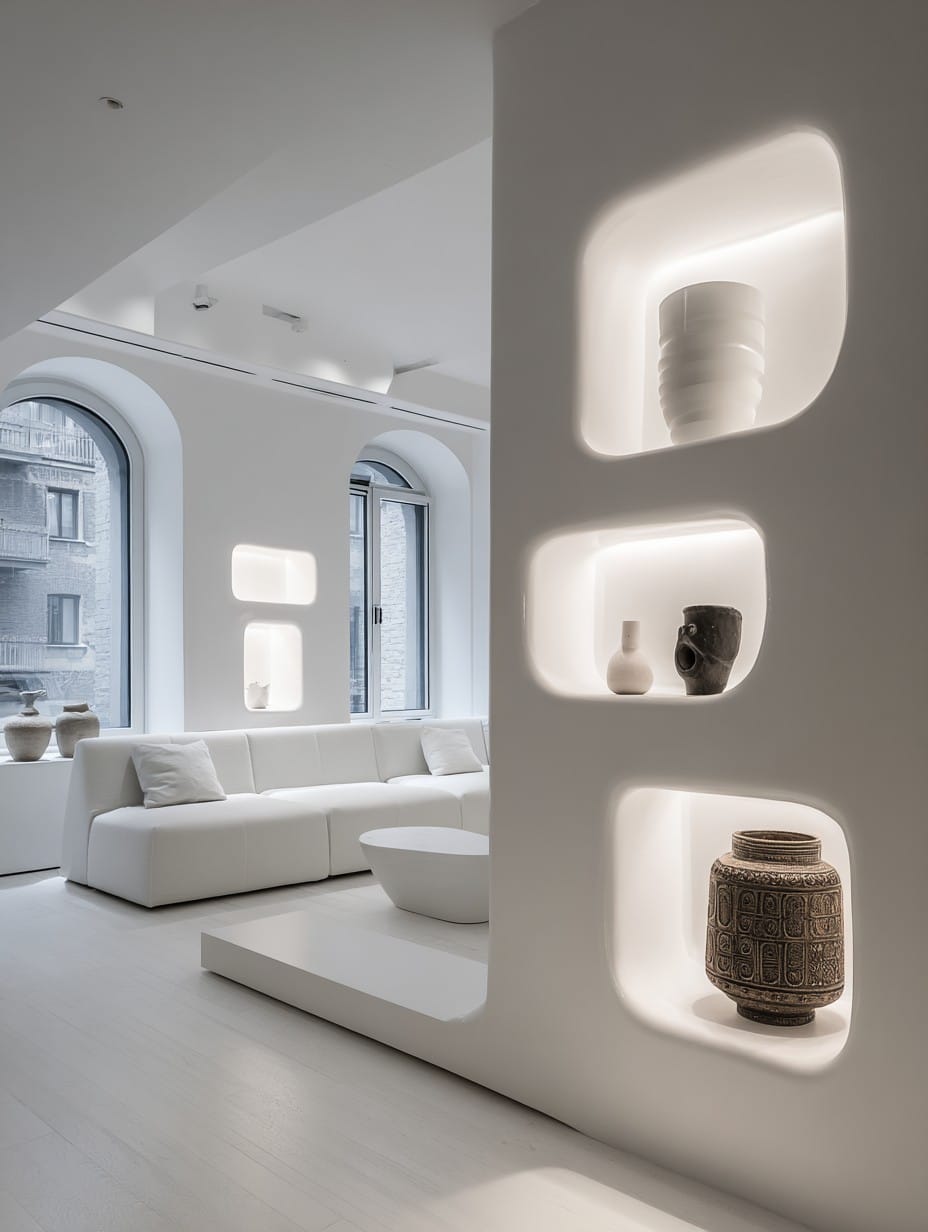
The minimalist gypsum board partition featuring recessed wall niches with integrated LED shelf lighting creates gallery-like display spaces while dividing living from media areas. The white partition wall functions as both spatial divider and exhibition surface, transforming functional architecture into curated display opportunity. The recessed niches—typically framed into the partition’s thickness—create dimensional depth and visual interest that flat walls cannot match. Integrated LED shelf lighting within each niche highlights displayed art objects, creating museum-quality illumination that elevates decorative pieces from simple accessories to featured artwork.
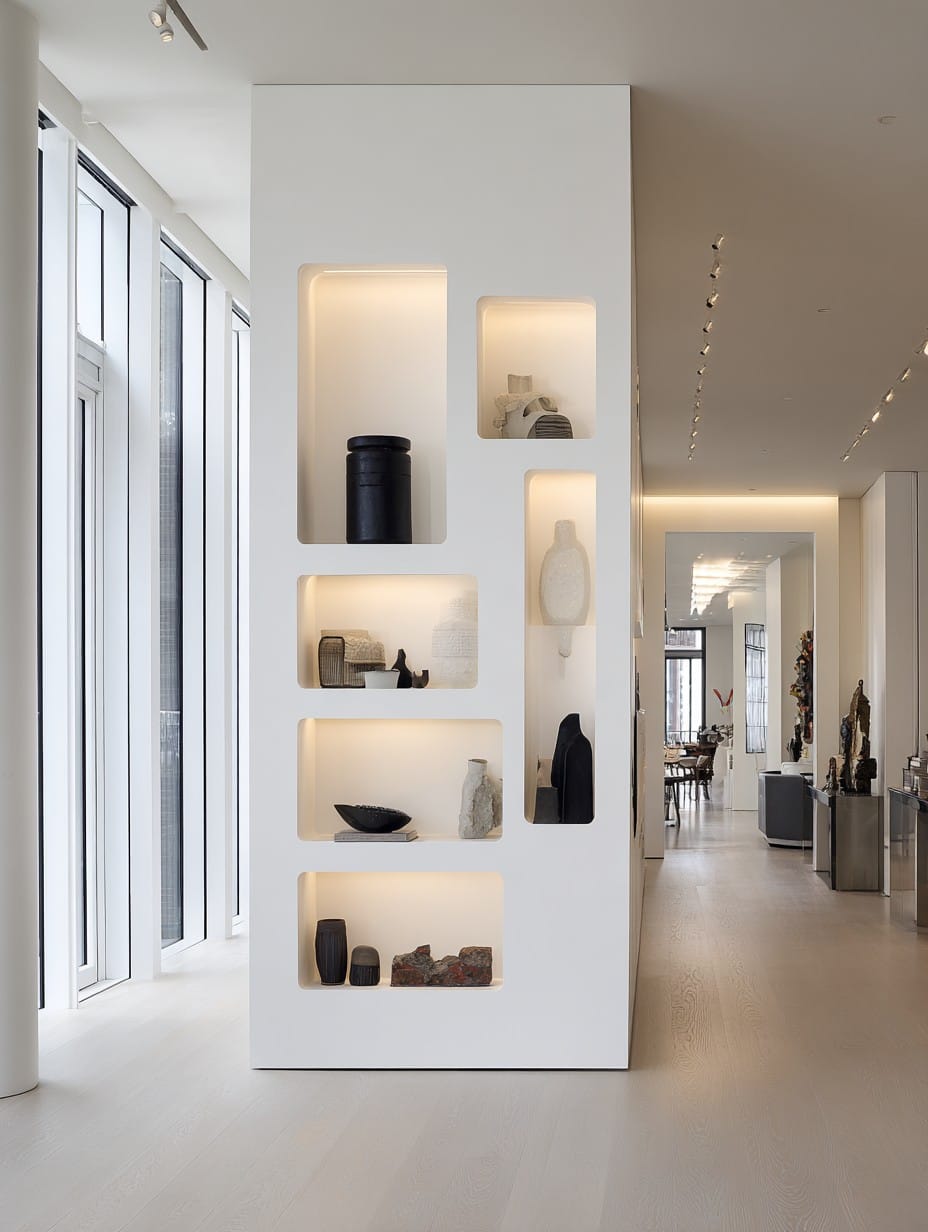
The architectural detailing required to create clean, professional niches demands skilled craftsmanship. Each opening must be perfectly framed, finished smooth, and painted precisely to achieve gallery-worthy presentation. The white surface serves as neutral backdrop that allows displayed objects to command attention without color competition. Modern furniture in monochromatic tones maintains the gallery aesthetic, recognizing that this partition style transforms the living space into an exhibition environment where less is definitively more. The careful curation of displayed items—sculptural objects, ceramics, small artworks, or meaningful collections—becomes essential to the overall design success.
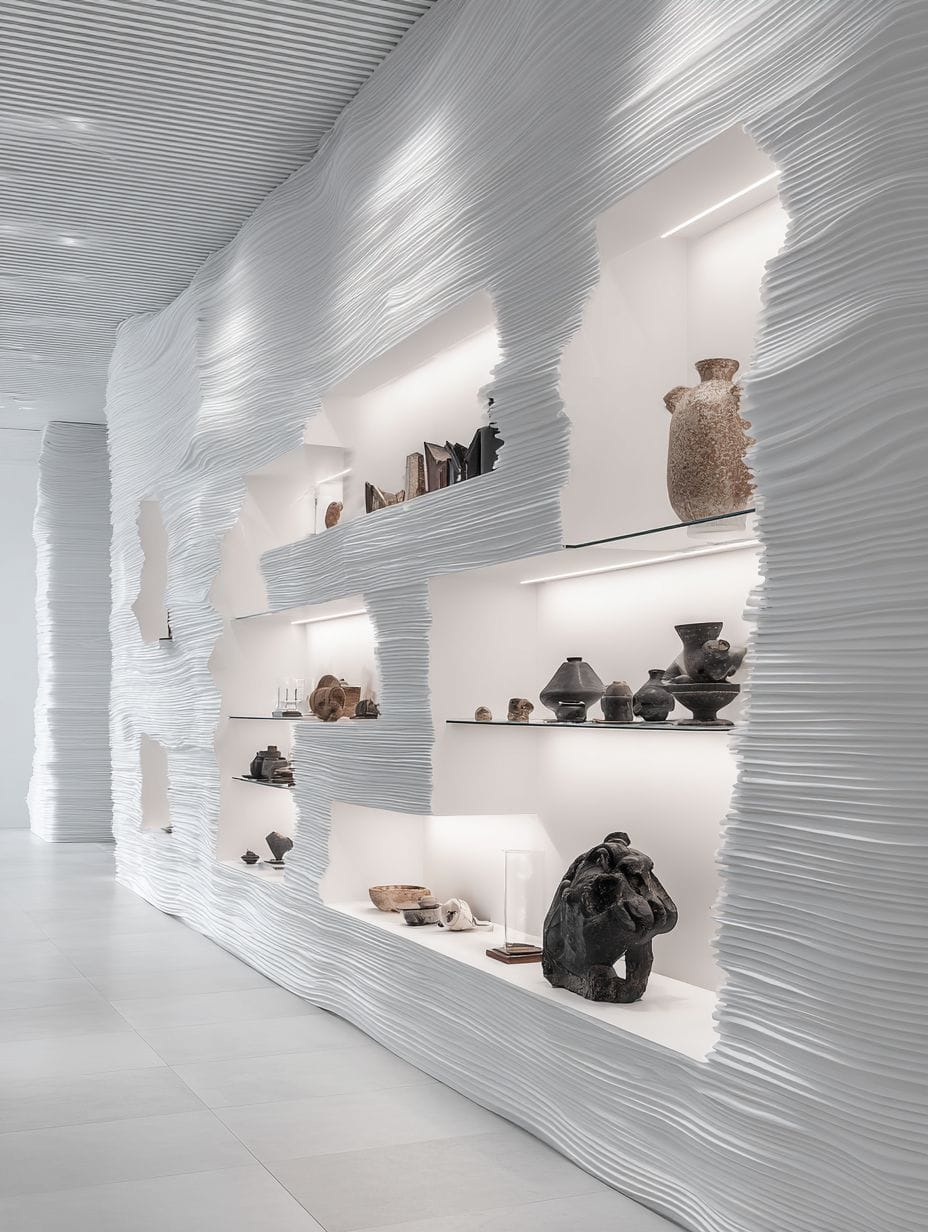
Accent lighting within niches highlights displayed art objects while contributing ambient illumination to the overall space. The focused lighting creates dramatic shadows and emphasizes three-dimensional qualities of sculptural pieces. Professional interior photography with careful exposure shows the architectural detailing, demonstrating how thoughtful lighting design transforms simple recesses into showcase spaces. The clean, minimalist aesthetic celebrates each displayed object by giving it adequate space and appropriate illumination. This partition approach works particularly well for collectors, artists, or anyone who values their possessions enough to display them with the respect and prominence they deserve.
- Plan niche sizes based on objects you intend to display, allowing adequate space around each piece for visual breathing room.
- Vary niche dimensions to create visual interest and accommodate objects of different sizes rather than uniform openings.
- Install proper backing within niches to support both lighting fixtures and the weight of displayed objects.
- Choose appropriate LED fixtures with color temperature that enhances displayed objects—typically warm white for art pieces.
- Finish niches meticulously as the recessed spaces draw close inspection; any imperfections will be obvious.
- Curate displayed items thoughtfully—too many pieces create clutter while too few make the partition feel empty and purposeless.
25. Innovative Tension Cable System with Climbing Plants
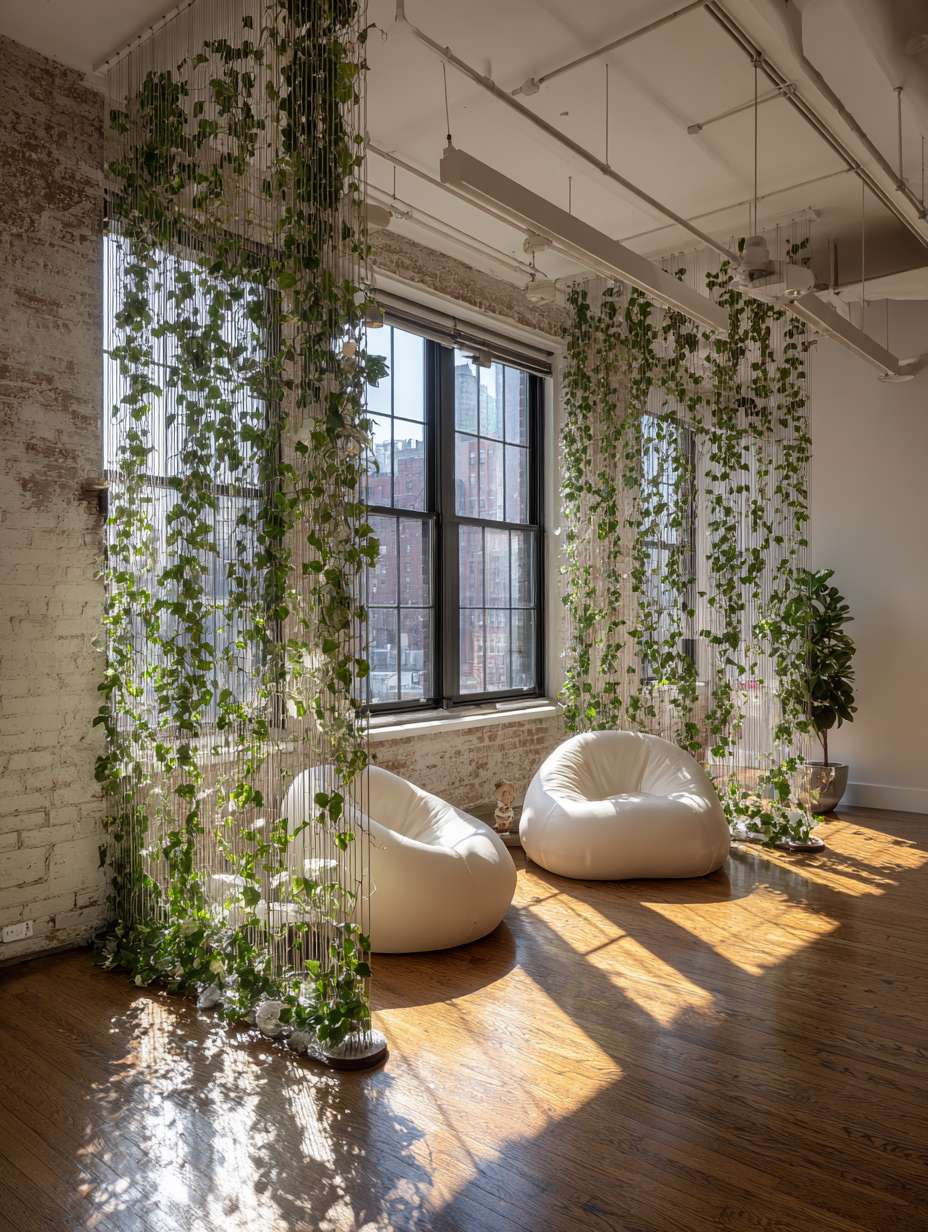
The tension cable partition system featuring stainless steel cables running vertically between floor and ceiling mounts creates an industrial-organic fusion that separates relaxation zones from yoga areas. The climbing plants weaving through the cables create a living screen that grows increasingly lush and private over time, transforming the partition from a sparse architectural element into a verdant natural divider. The innovative combination of industrial materials—steel cables and mounting hardware—with organic elements—living plants—creates visual tension and interest that neither component could achieve alone. This design celebrates the beauty found in unexpected material combinations and the integration of nature into built environments.
The stainless steel cables provide strong, slim vertical elements that support plant growth without overwhelming the design visually. The cable spacing—typically 6-12 inches depending on desired coverage—allows ample light penetration while providing adequate support for climbing or trailing plants. Plant selection proves crucial to this design’s success; vigorous climbers like pothos, philodendron, or ivy create quick coverage, while more delicate varieties like string of pearls or jasmine offer different aesthetic qualities. Modern furniture in organic shapes complements the natural elements, creating cohesive biophilic design that celebrates the connection between human habitats and the natural world.
Natural daylight highlights the plant growth and cable structure, creating beautiful silhouettes when backlit and emphasizing foliage detail when front-lit. As plants mature, the partition evolves from primarily industrial to predominantly organic, demonstrating how living design elements change character over time. Interior photography captures the unique fusion of industrial and organic design, showcasing how thoughtful material combination creates results greater than the sum of parts. The tension cable system represents innovative thinking about partition design—moving beyond traditional solid materials to create adaptable, living architecture that improves with age rather than deteriorating.
- Select appropriate cable gauge and spacing to support anticipated plant weight while maintaining desired aesthetic.
- Install mounting hardware securely into structural floor and ceiling elements to handle cable tension safely.
- Choose plant varieties suitable for available light and your maintenance commitment level; some climbers require frequent pruning.
- Plan for irrigation access as plants will need regular watering; consider drip systems for easier maintenance.
- Tension cables properly to prevent sagging while avoiding over-tightening that could damage mounting points.
- Guide plant growth intentionally during early stages to encourage even coverage across the cable grid.
- Maintain plants regularly with pruning and grooming to prevent overgrowth that could obscure the industrial cable elements completely.
Why These Modern Partition Designs Transform Living Spaces
Modern partition design ideas for living room spaces have evolved far beyond simple room dividers to become essential architectural elements that define contemporary interior design. These twenty-five innovative approaches demonstrate the incredible versatility available to homeowners seeking to divide, define, and enhance their living spaces. From transparent glass panels that maintain visual continuity to living walls that bring nature indoors, from smart glass technology that adapts to changing needs to artistic metal screens that function as sculpture—today’s partition options address every aesthetic preference, functional requirement, and budget consideration.
The best modern partition designs share several common characteristics that explain their enduring appeal and practical success. First, they balance form and function equally, recognizing that beautiful design elements must also serve practical purposes in real homes. Second, they embrace material authenticity, celebrating the inherent qualities of wood, glass, metal, fabric, and living plants rather than disguising materials or creating imitations. Third, they demonstrate spatial intelligence, understanding how to divide space without creating isolation, how to provide privacy without blocking light, and how to define zones without sacrificing flexibility. Fourth, they incorporate thoughtful craftsmanship, showing attention to details like spacing, finishing, lighting integration, and structural integrity that separate professional results from amateur attempts.
The materials represented in these designs—natural wood species like walnut, oak, and ash; industrial metals including steel, aluminum, and brass; architectural glass in clear, frosted, and smart varieties; sustainable materials like bamboo, reclaimed wood, and natural fibers; contemporary composites such as concrete, acrylic, and high-pressure laminates—offer virtually unlimited combination possibilities. Each material brings distinct aesthetic qualities, practical advantages, and maintenance requirements that must be considered during the selection process. The most successful partition designs typically combine materials thoughtfully, leveraging the strengths of each component to create results superior to single-material approaches.
Color considerations play crucial roles in partition success. Neutral palettes—whites, greys, beiges, and natural wood tones—create versatile foundations that adapt to changing décor preferences over time. Bold accent colors—deep blacks, rich metals, vibrant painted finishes—make strong statements and serve as room focal points that anchor overall design schemes. Natural variations—wood grain patterns, marble veining, metal patinas—add organic interest that prevents designs from feeling too perfect or sterile. The best partition designs consider color impact from multiple angles and lighting conditions, ensuring the chosen palette works harmoniously throughout the day and across seasons.
The lighting strategies employed in these partition designs—integrated LED strips that create ambient glow, directional spotlights that emphasize texture and shadow, natural daylight consideration that maximizes sun exposure, backlighting techniques that create silhouette effects, and practical task lighting that illuminates functional areas—prove essential to achieving professional results. Poor lighting can diminish even the most beautifully crafted partition, while thoughtful illumination elevates simple designs into striking architectural features. The interplay between partition materials and light—whether transparent glass transmitting illumination, textured wood catching shadows, or polished metal reflecting highlights—creates dynamic visual effects that static photographs cannot fully capture.
Installation methods range from permanent built-in construction that becomes integral to the home’s architecture, to semi-permanent solutions that could be removed if needed, to completely portable options that move freely and adapt to changing needs. The choice between these approaches depends on several factors: whether you own or rent your home, how long you plan to stay, how confident you are in your design choices, and whether your spatial needs might change. Permanent installations typically offer the most polished, custom-fitted results but require greater commitment and investment. Portable options provide flexibility and adaptability but may sacrifice some visual impact or structural integrity.
The functional benefits these partition designs deliver—acoustic separation that reduces sound transmission between zones, visual privacy that allows multiple activities without constant surveillance, climate control that helps manage heating and cooling by creating smaller spaces, storage integration that adds practical utility, display opportunities that showcase collections and personal items—make them valuable beyond mere aesthetics. The best partitions serve multiple purposes simultaneously, justifying the investment through combined functional returns that exceed what single-purpose elements could provide.
Modern living demands flexibility, and these partition designs deliver it through various mechanisms. Sliding systems open completely or close for privacy as needed. Folding screens reconfigure to create different spatial arrangements. Modular components rearrange to adapt to changing needs. Portable solutions move between rooms or storage as requirements evolve. This adaptability proves particularly valuable in modern multi-functional spaces where work, relaxation, entertainment, and family activities must coexist harmoniously within limited square footage. The ability to quickly transform space from open to divided, from social to private, from active to contemplative provides lifestyle flexibility that rigid architectural elements cannot match.
Sustainability considerations increasingly influence partition material selection and design approaches. Reclaimed materials give new life to salvaged wood, metal, and architectural elements. Renewable resources like bamboo, cork, and rapidly growing wood species reduce environmental impact. Local sourcing minimizes transportation emissions and supports regional craftspeople. Durable construction ensures partitions last decades rather than requiring replacement. Natural, non-toxic finishes protect indoor air quality and occupant health. Living plant integration provides active air purification and biophilic wellness benefits. These sustainable approaches demonstrate that environmentally conscious design need not sacrifice beauty or functionality.
The psychological impact of thoughtful spatial division should not be underestimated. Well-designed partitions create comfortable scale that prevents large rooms from feeling overwhelming, defined purpose that helps occupants mentally transition between activities, visual interest that prevents monotonous open expanses, controlled sightlines that reduce visual clutter and distraction, and personalized zones that allow individual family members to claim space within shared areas. These psychological benefits contribute to overall wellbeing, satisfaction with home environments, and successful multi-functional space utilization. Good partition design acknowledges that human comfort depends on both physical and psychological factors.
Budget considerations span an enormous range, from economical DIY approaches using basic materials and simple construction techniques, to mid-range solutions combining quality materials with straightforward installation, to high-end custom installations featuring premium materials, complex engineering, and expert craftsmanship. Every budget level can achieve successful results when design priorities are clear and appropriate solutions are selected. Expensive materials don’t guarantee good design, and modest budgets need not limit creative expression. The most satisfying partition projects typically result from careful planning, realistic budget assessment, and willingness to invest time in research and proper execution rather than rushing to inadequate compromise solutions.
Conclusion
The twenty-five modern partition design ideas presented in this comprehensive guide demonstrate the remarkable evolution of room dividers from purely functional necessities to sophisticated design elements that define contemporary living spaces. Whether you’re drawn to the transparent elegance of glass and metal frameworks, the organic warmth of wood slats, the innovative technology of smart glass systems, or the biophilic beauty of living plant walls, there exists a partition solution perfectly suited to your aesthetic preferences, functional requirements, and lifestyle needs. The key to successful implementation lies in careful consideration of your specific circumstances—room dimensions, natural lighting, existing décor, budget constraints, and most importantly, how you actually use your living spaces on a daily basis.
Modern partition design embraces principles that extend far beyond simple space division. The best solutions balance privacy with connection, provide separation without isolation, define zones while maintaining flexibility, and contribute aesthetic value while serving practical functions. They respect architectural context while adding contemporary character, honor material authenticity while embracing innovative technologies, and create immediate impact while aging gracefully over time. Whether you choose permanent architectural installations that become integral to your home’s character or flexible portable solutions that adapt as your needs evolve, investing thoughtfulness and care in partition selection and implementation will yield rewards that enhance your daily living experience for years to come.
As you embark on your own partition project, remember that the most successful designs emerge from clear understanding of goals, honest assessment of constraints, willingness to invest in quality materials and proper installation, and patience to implement solutions thoughtfully rather than hastily. Don’t hesitate to consult with interior designers, architects, or experienced contractors when tackling complex installations—professional expertise often saves money in the long run by preventing costly mistakes and ensuring results that meet your expectations. Most importantly, trust your instincts about what feels right for your space and lifestyle. Your home should reflect your personality, accommodate your activities, and provide comfort and satisfaction every day. The perfect partition design awaits—one that transforms your living room from a simple open space into a thoughtfully articulated, beautifully designed environment that truly feels like home.
