
The television lounge has evolved from a simple room with a couch and screen into a sophisticated entertainment haven that reflects personal style, embraces cutting-edge technology, and prioritizes comfort. As our homes become increasingly multifunctional and our entertainment needs grow more complex, creating a thoughtfully designed TV lounge has never been more important. This dedicated space serves as the heart of relaxation, where families gather for movie nights, friends convene for sporting events, and individuals unwind after long days. The key to an exceptional TV lounge lies in striking the perfect balance between aesthetic appeal and functional design—creating an environment that’s both visually stunning and supremely comfortable.
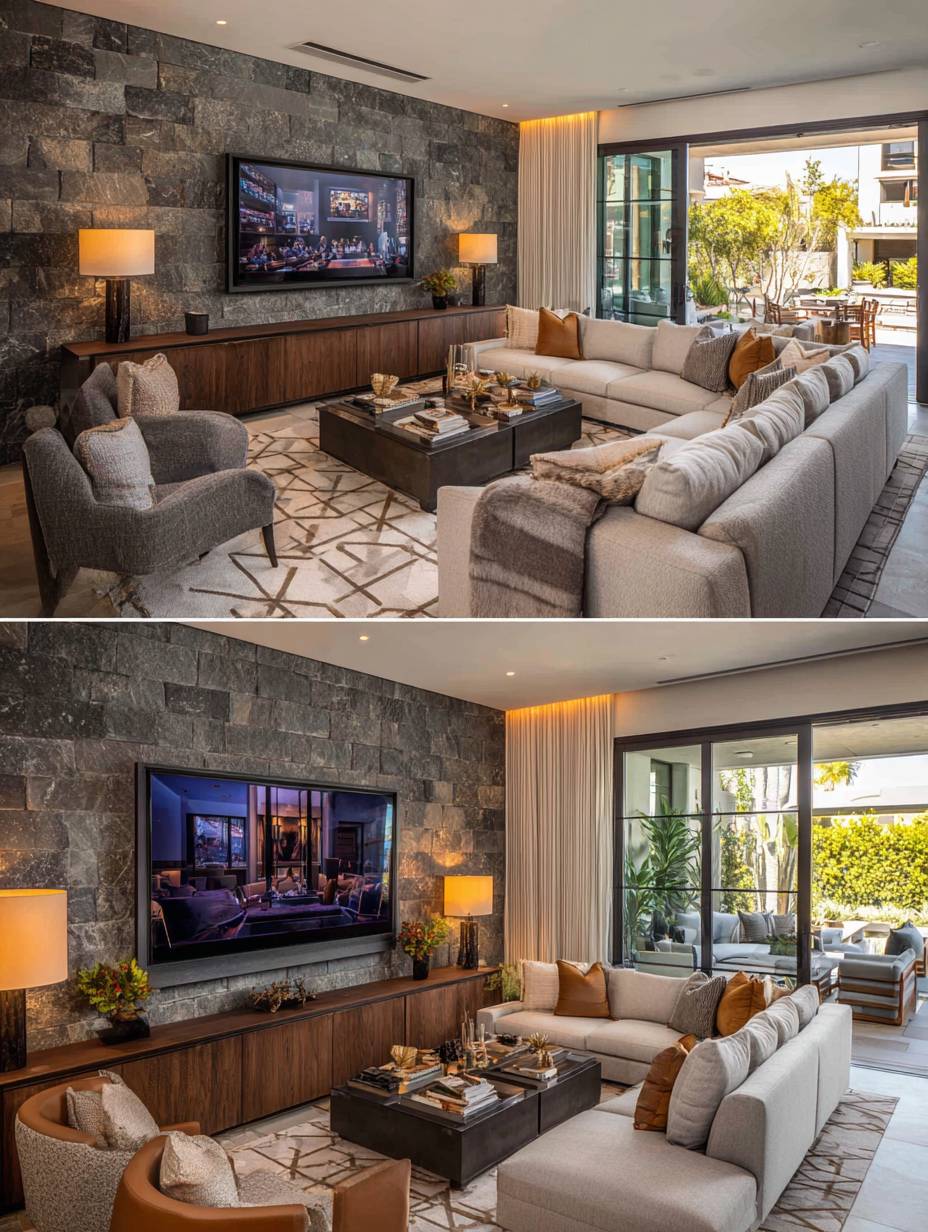
Modern TV lounge design encompasses far more than simply positioning furniture toward a screen. It involves careful consideration of viewing angles, acoustic properties, lighting conditions, storage solutions, and spatial flow. Whether you’re working with a spacious basement, a compact urban apartment, or a dedicated entertainment room, the principles of good design remain constant: create a space that feels intentional, comfortable, and uniquely yours. From minimalist Scandinavian aesthetics to rich industrial textures, from family-friendly layouts to tech-integrated smart spaces, the possibilities for TV lounge design are virtually limitless.
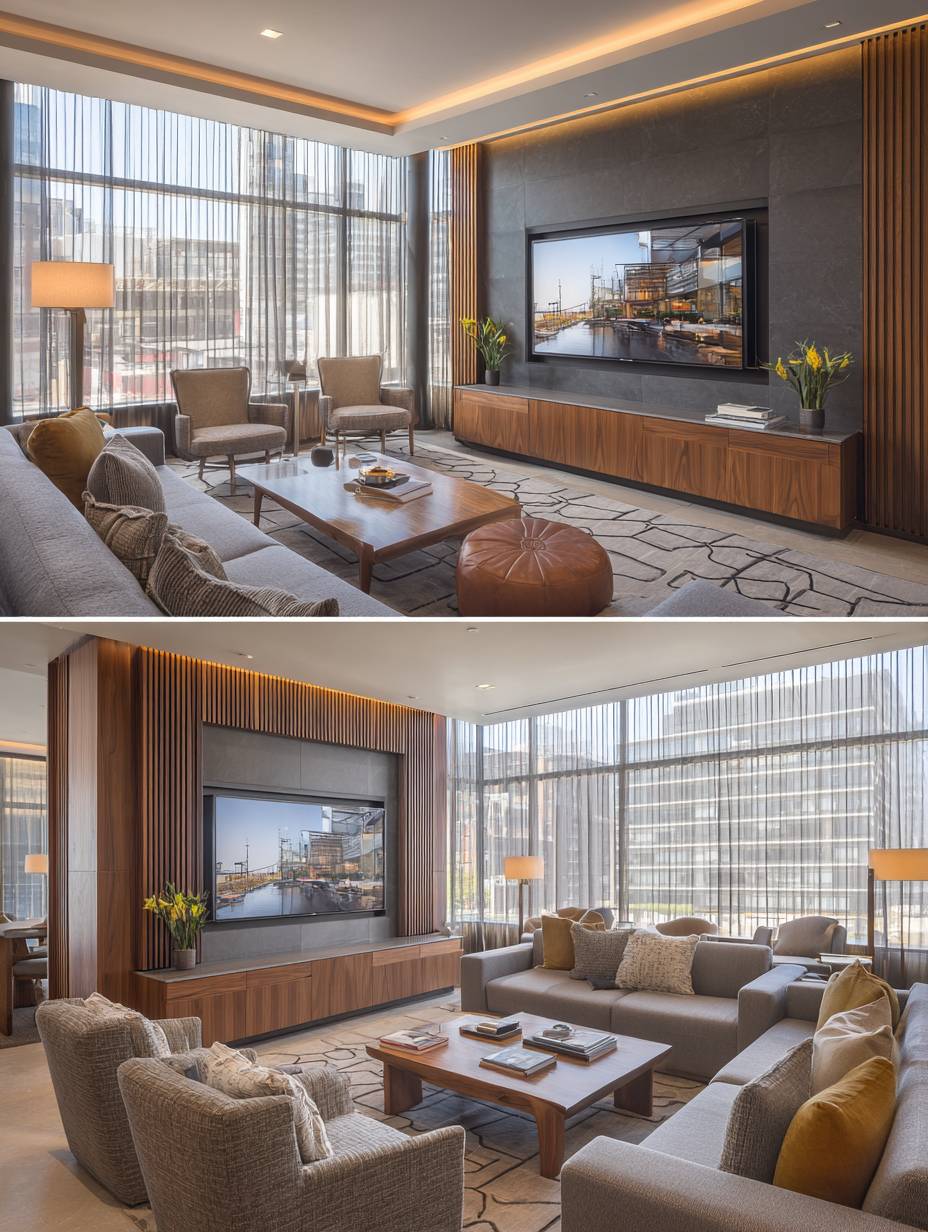
In this comprehensive guide, we’ll explore 25 distinct TV lounge ideas that span various design styles, spatial configurations, and functional priorities. Each concept offers unique insights into materials, color palettes, furniture arrangements, lighting strategies, and decorative elements that can transform any space into an inviting entertainment destination. Whether you’re drawn to the warmth of rustic farmhouse charm, the sleekness of contemporary minimalism, or the eclectic energy of bohemian design, you’ll discover practical inspiration and actionable tips to help you create a TV lounge that perfectly suits your lifestyle and aesthetic preferences.
1. Contemporary Comfort with Architectural Drama
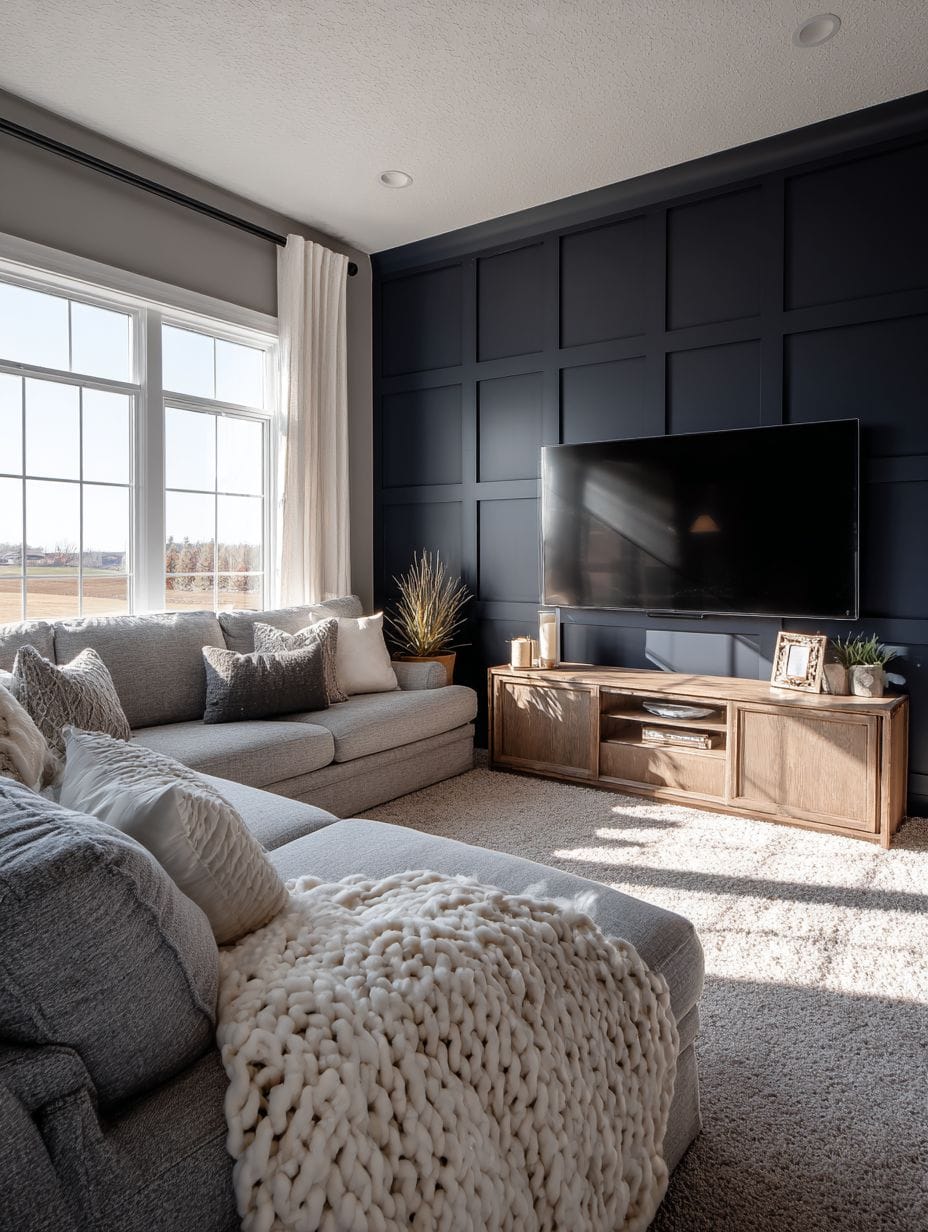
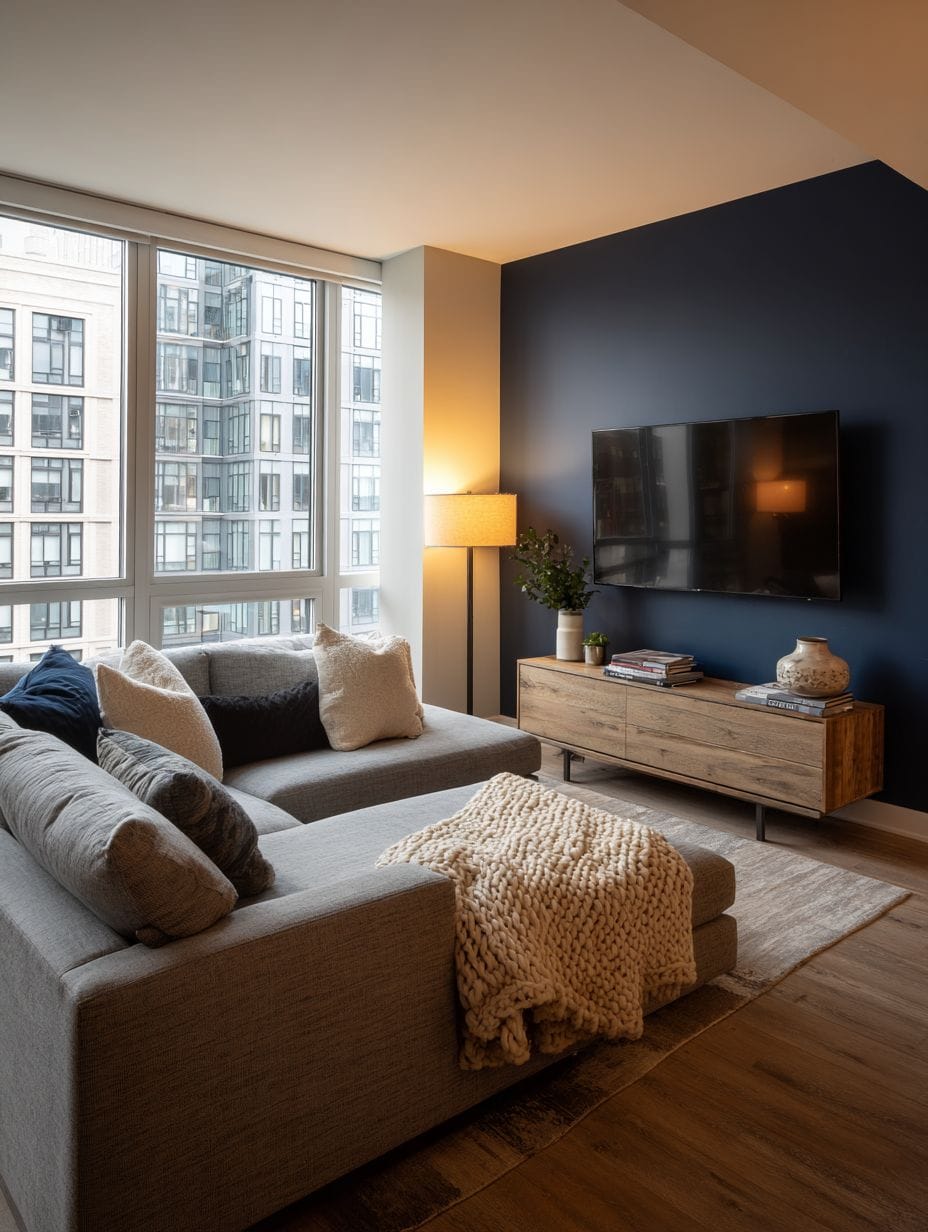
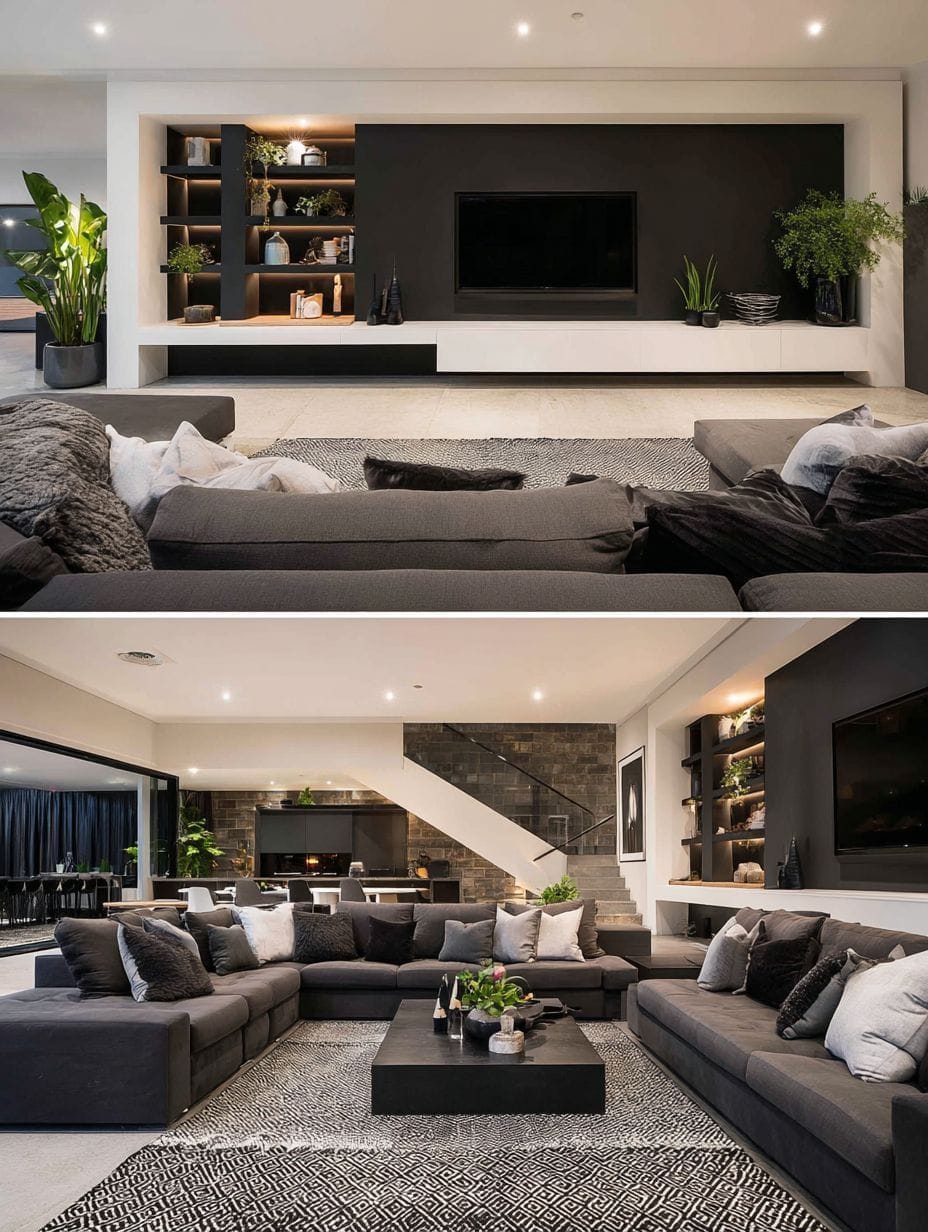
This stunning contemporary TV lounge creates an immediate visual impact through the strategic use of a charcoal accent wall that serves as the perfect backdrop for the mounted television. The deep, textured wall color not only anchors the entertainment center but also adds depth and sophistication to the entire space. Below the screen, a natural walnut media console stretches horizontally, its clean lines and rich wood grain providing both practical storage and visual warmth. The contrast between the dark wall and the warm wood tones creates a dynamic focal point that draws the eye while maintaining a sense of balance and harmony.
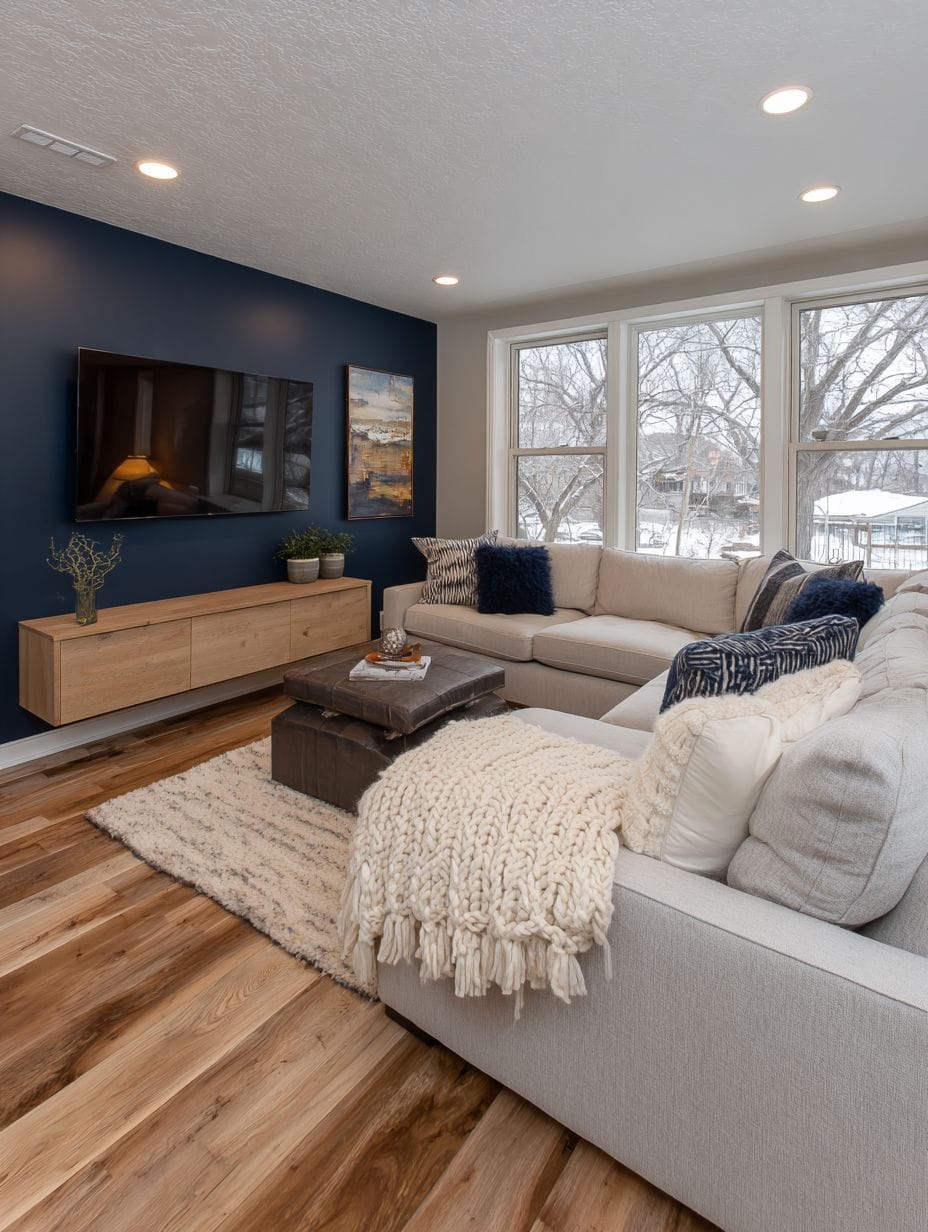
The seating arrangement centers around a plush sectional sofa upholstered in warm grey fabric, positioned at the optimal viewing distance for comfortable entertainment. The generous proportions of the sectional ensure ample seating for family and guests, while accent chairs provide additional options for flexible seating configurations. A carefully selected geometric area rug anchors the furniture grouping, defining the conversation zone and adding pattern interest without overwhelming the space. The rug’s neutral palette with subtle geometric motifs complements rather than competes with the room’s architectural features.
Lighting in this space demonstrates a sophisticated layered approach that addresses multiple needs throughout the day. Recessed ceiling lights provide general ambient illumination, while strategically placed floor lamps offer task lighting for reading or other activities. The pièce de résistance is the ambient LED strip lighting installed behind the television, which creates a subtle halo effect that reduces eye strain during viewing while adding a contemporary, almost theatrical quality to the space. Large windows dressed with sheer curtains allow natural light to flood the room during daytime hours, with blackout options available to ensure perfect viewing conditions when desired.
- Choose a textured accent wall in a deep, rich color to create visual depth and anchor your entertainment center without overwhelming the space.
- Select a media console in natural wood to warm up contemporary spaces and provide essential storage while maintaining clean, horizontal lines.
- Position your sectional sofa at approximately 1.5 to 2.5 times the diagonal screen size away from the TV for optimal viewing comfort.
- Layer your lighting with recessed ceiling fixtures, floor lamps, and LED accent lighting to create ambiance for any time of day or activity.
- Install LED strips behind the television to reduce eye strain and create a modern, sophisticated glow that enhances the viewing experience.
2. Intimate Navy and Oak Sanctuary
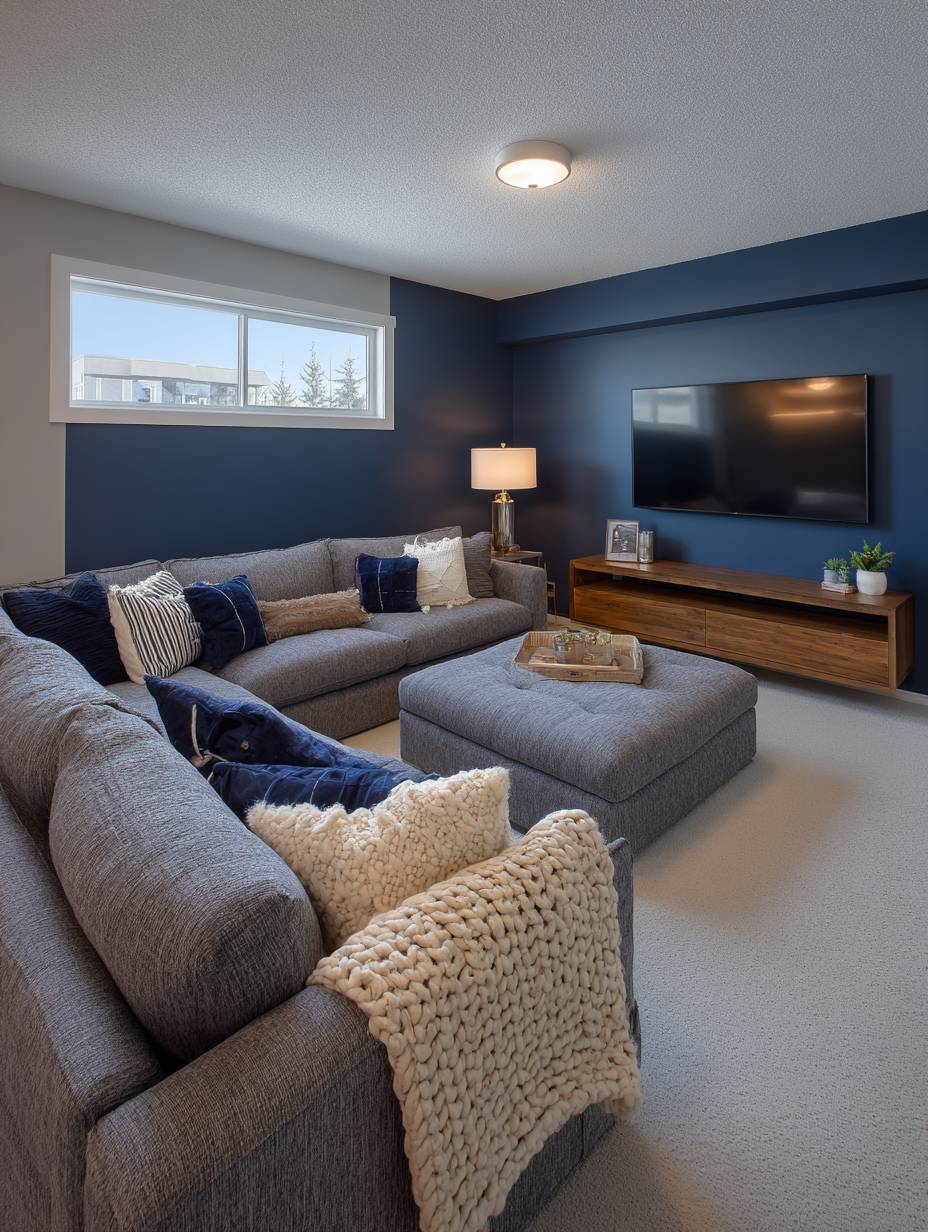
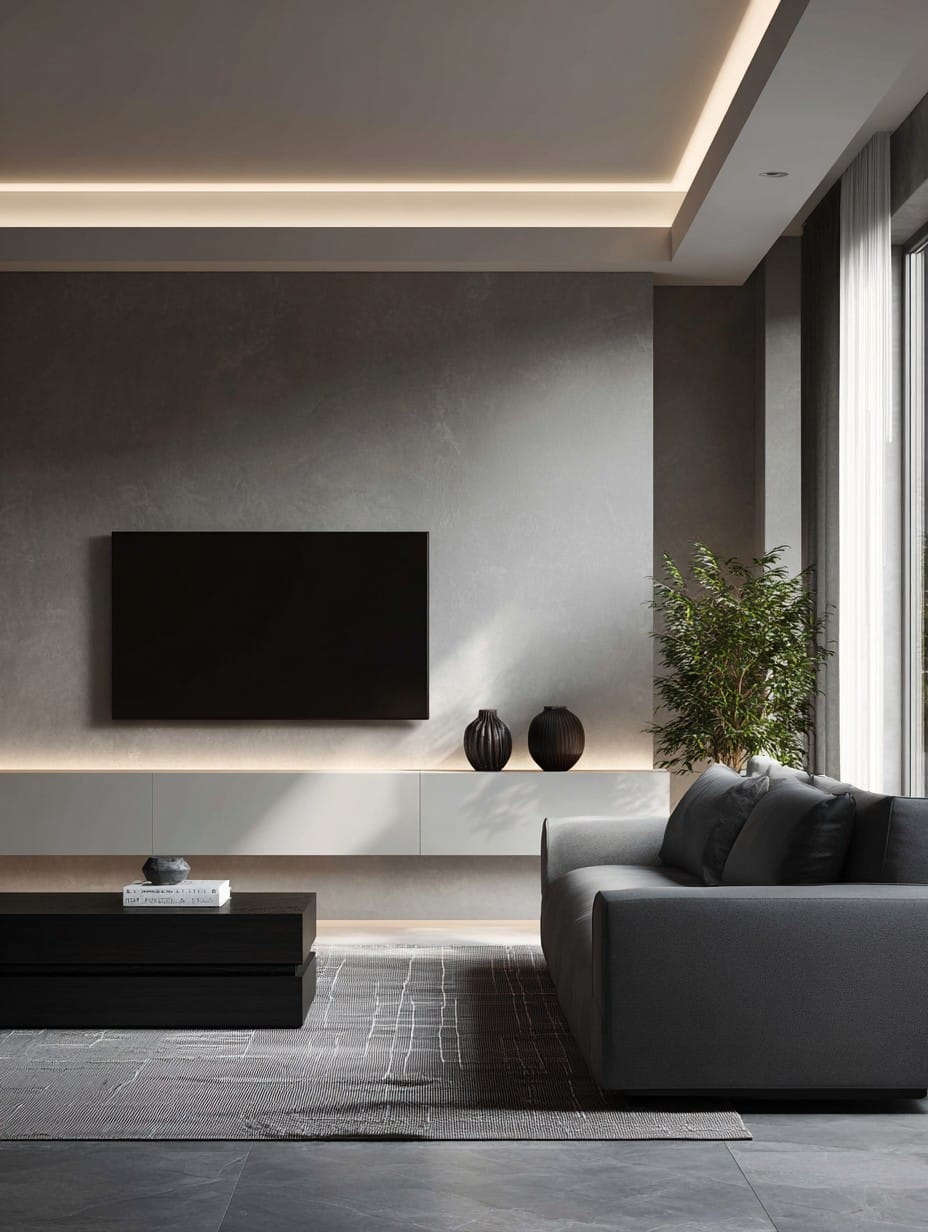
The marriage of a deep navy blue accent wall with light oak furnishings creates a TV lounge that feels both intimate and inviting. The navy wall serves as a dramatic backdrop for the wall-mounted television, its rich depth creating a cocoon-like atmosphere perfect for evening entertainment. This bold color choice demonstrates confidence in design while providing enough visual weight to anchor the technology without making the screen feel like an afterthought. The floating media console in light oak offers a beautiful counterpoint to the dark wall, its pale wood tones and visible grain patterns bringing natural warmth and organic texture into the space.
Seating centers around a comfortable L-shaped sectional upholstered in soft grey fabric, a neutral choice that allows the navy and oak to take center stage while providing a versatile base for decorative accents. The grey upholstery also offers practical benefits, as it’s less likely to show wear and provides flexibility for future style updates through the simple addition or substitution of throw pillows and blankets. Speaking of which, the thoughtful layering of textiles—including plump throw pillows in coordinating hues and a chunky knit blanket casually draped over one arm—adds both visual interest and tactile comfort, inviting occupants to sink in and stay awhile.
Natural lighting plays a crucial role in this design, with a nearby window allowing daylight to filter through during daytime hours, creating gentle shadows and highlighting the room’s textures. As evening approaches, recessed ceiling lights take over, their warm LED bulbs providing adjustable illumination that can be dimmed for movie viewing or brightened for socializing. The professional interior photography perspective captures the careful balance of this intimate seating arrangement, showcasing how even modest spaces can achieve sophisticated design through thoughtful color choices and quality furnishings.
- Paint one accent wall in a deep, saturated color like navy blue to create intimacy and visual drama without overwhelming smaller spaces.
- Float your media console to create visual lightness and make cleaning easier while maintaining a contemporary aesthetic.
- Layer textiles strategically with throw pillows and blankets in complementary colors and varied textures to add depth and comfort.
- Choose grey upholstery as a neutral foundation that coordinates with virtually any accent color while hiding minor wear.
- Install dimmable recessed lighting to adjust ambiance from bright and social to dim and cinematic as needed.
3. Minimalist Efficiency for Small Spaces
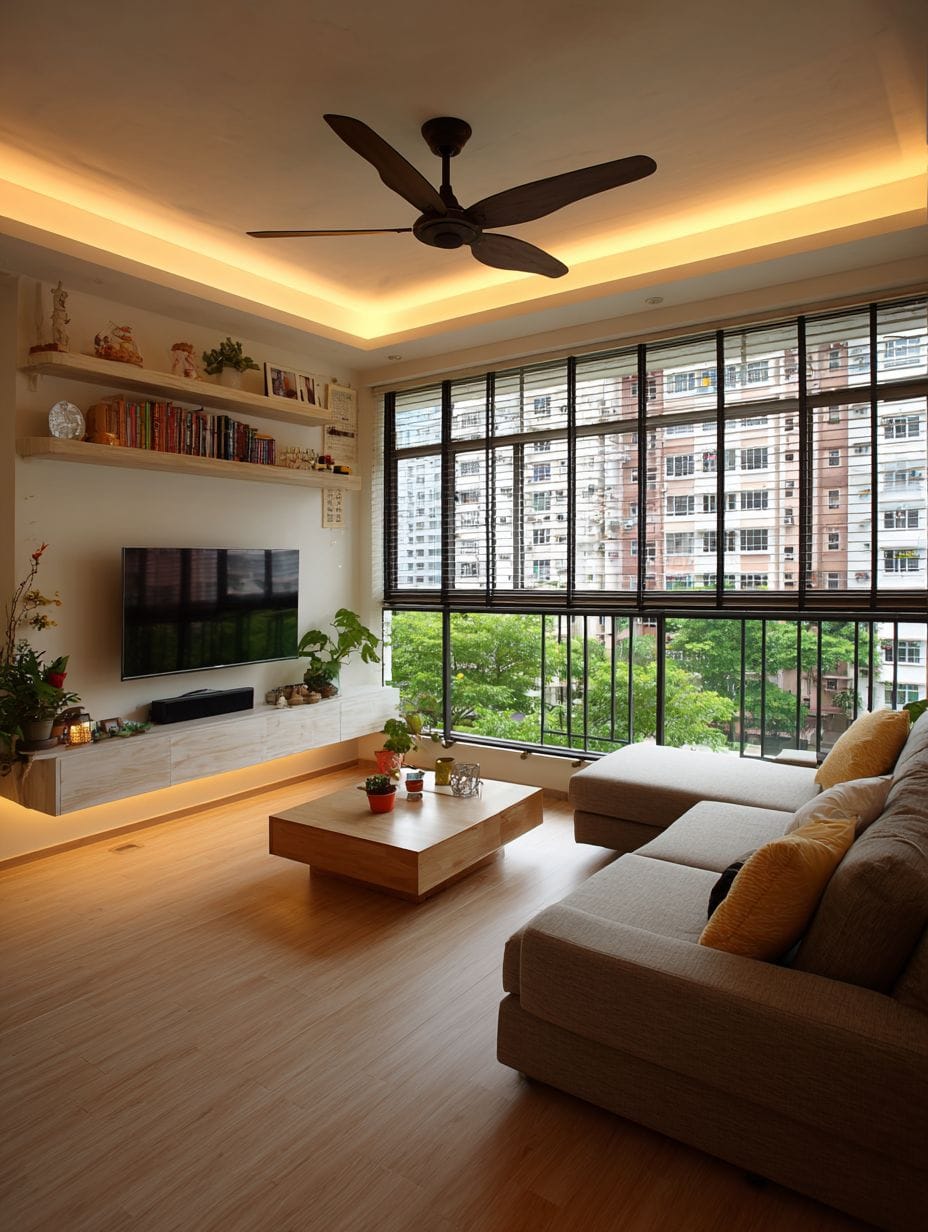
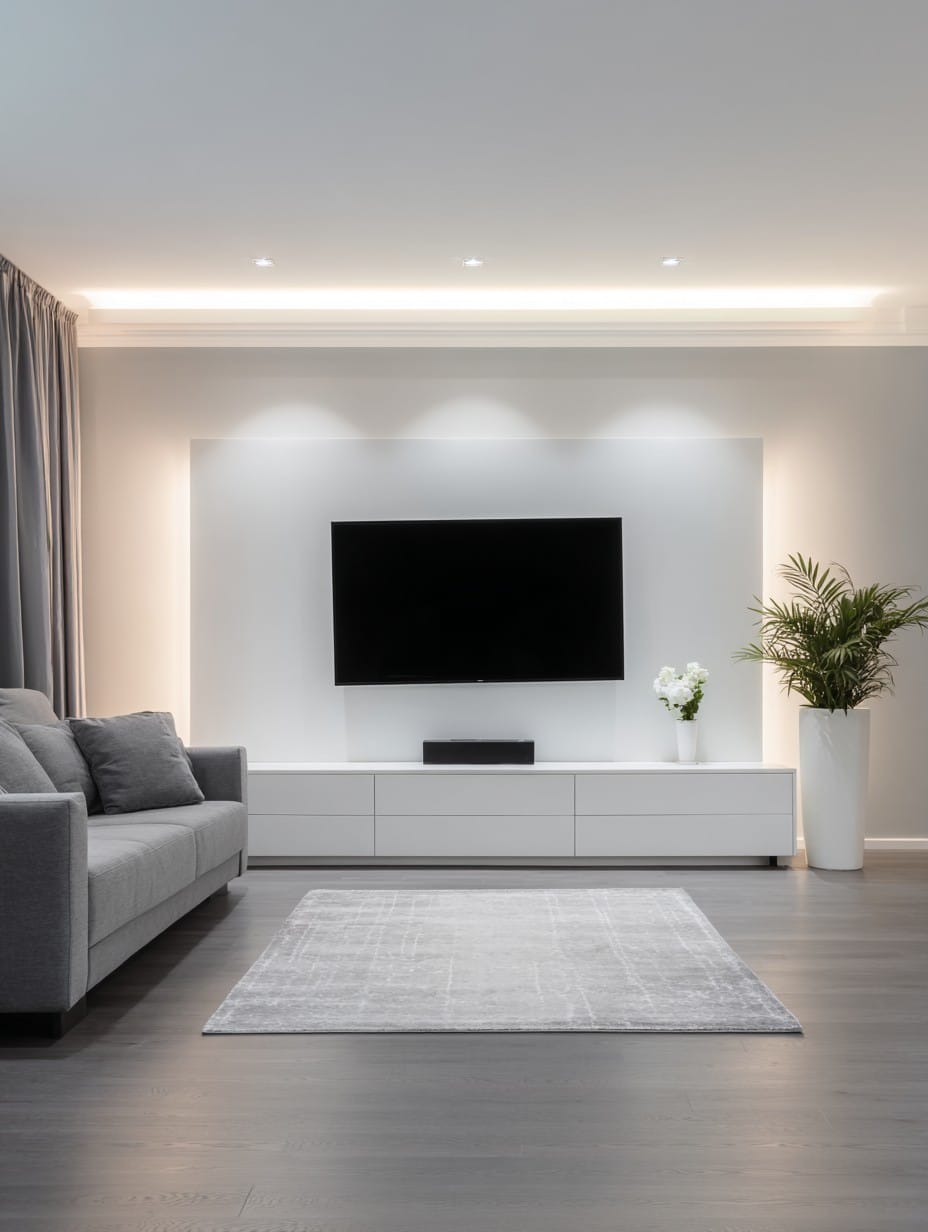
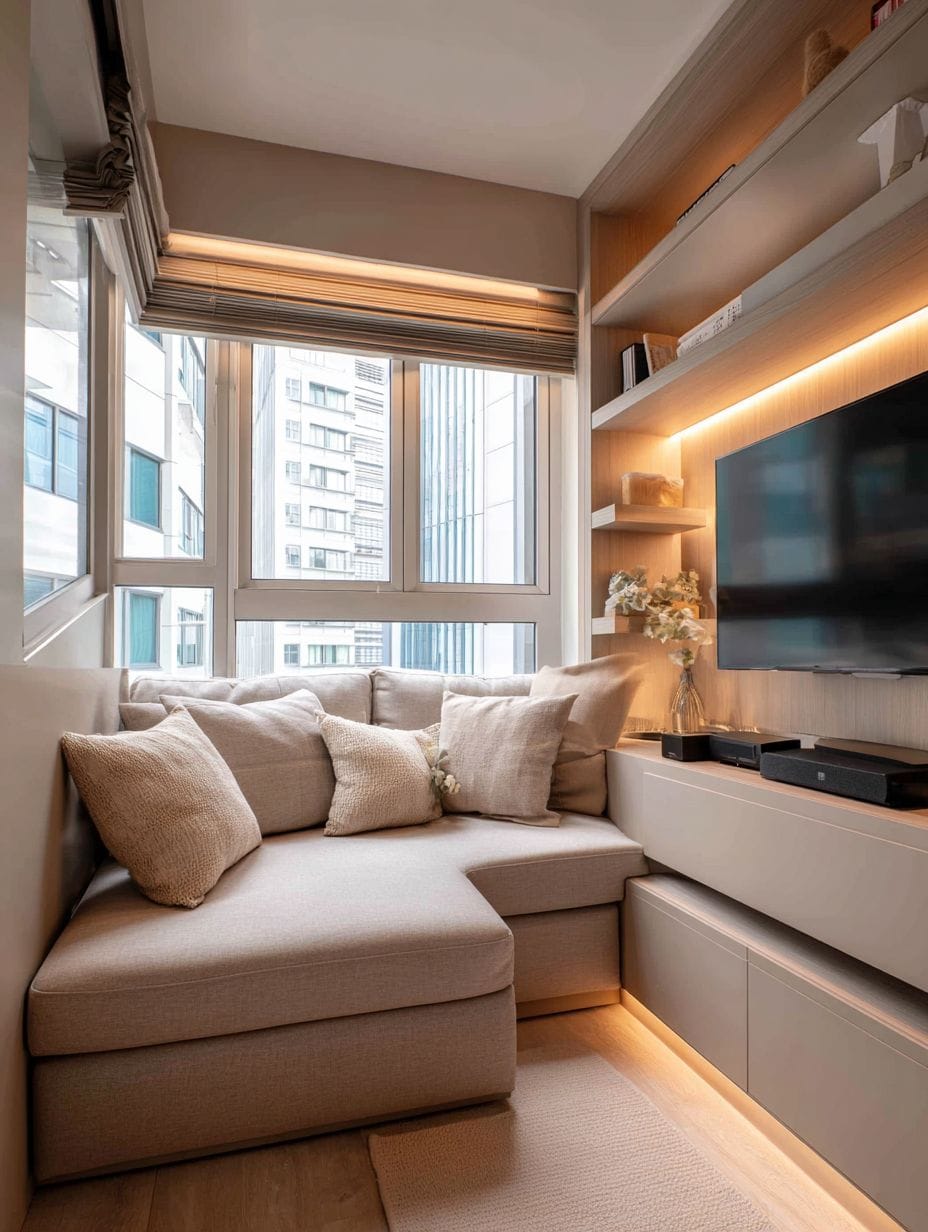
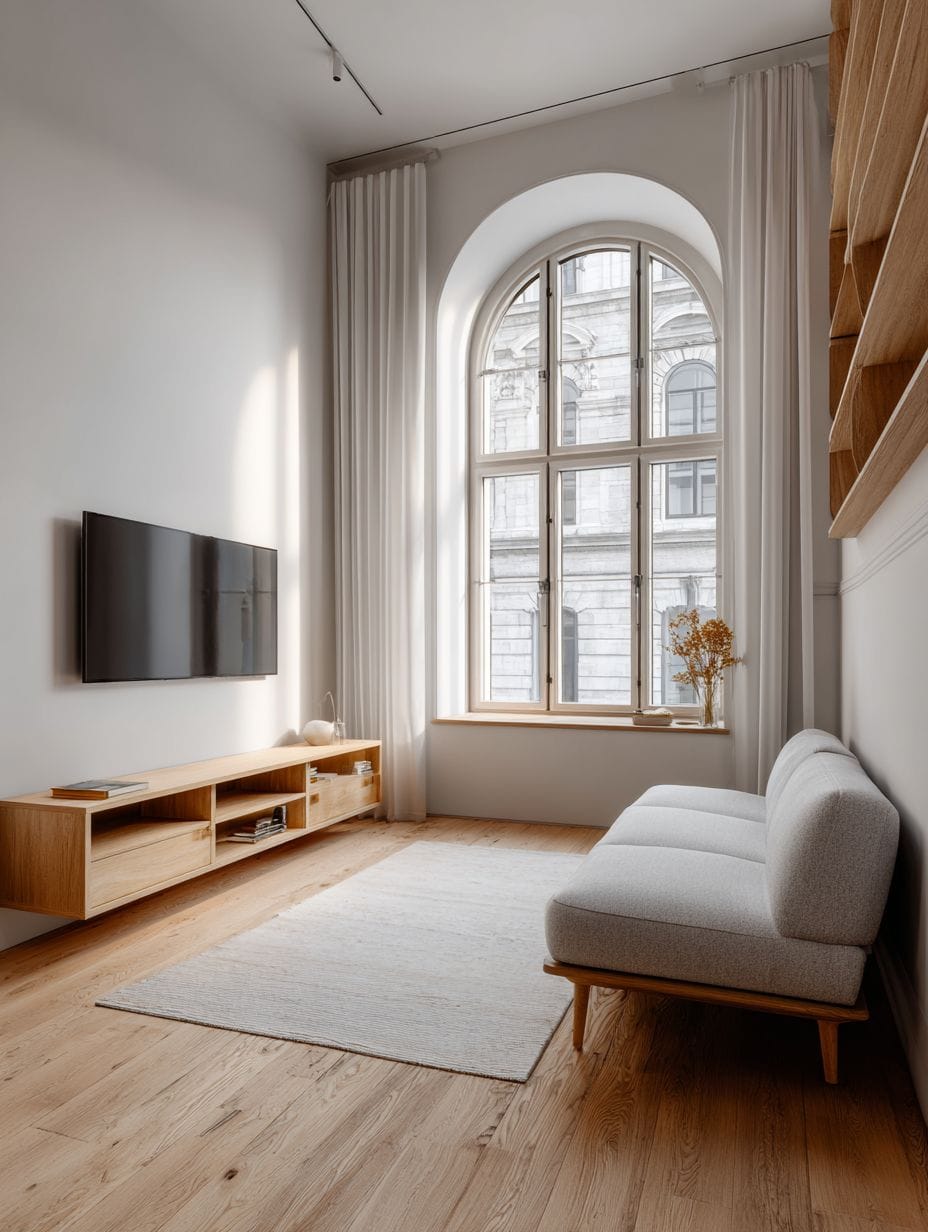
When square footage is at a premium, smart design becomes essential, and this minimalist TV lounge demonstrates how thoughtful planning can maximize both function and style in compact quarters. The entire approach revolves around eliminating visual clutter and choosing furniture pieces that serve multiple purposes. The wall-mounted television immediately frees up valuable floor space while creating a floating, modern aesthetic. Below it, a narrow floating shelf provides just enough surface area for essential media components—a cable box, streaming device, or gaming console—without the bulk of a traditional entertainment center.
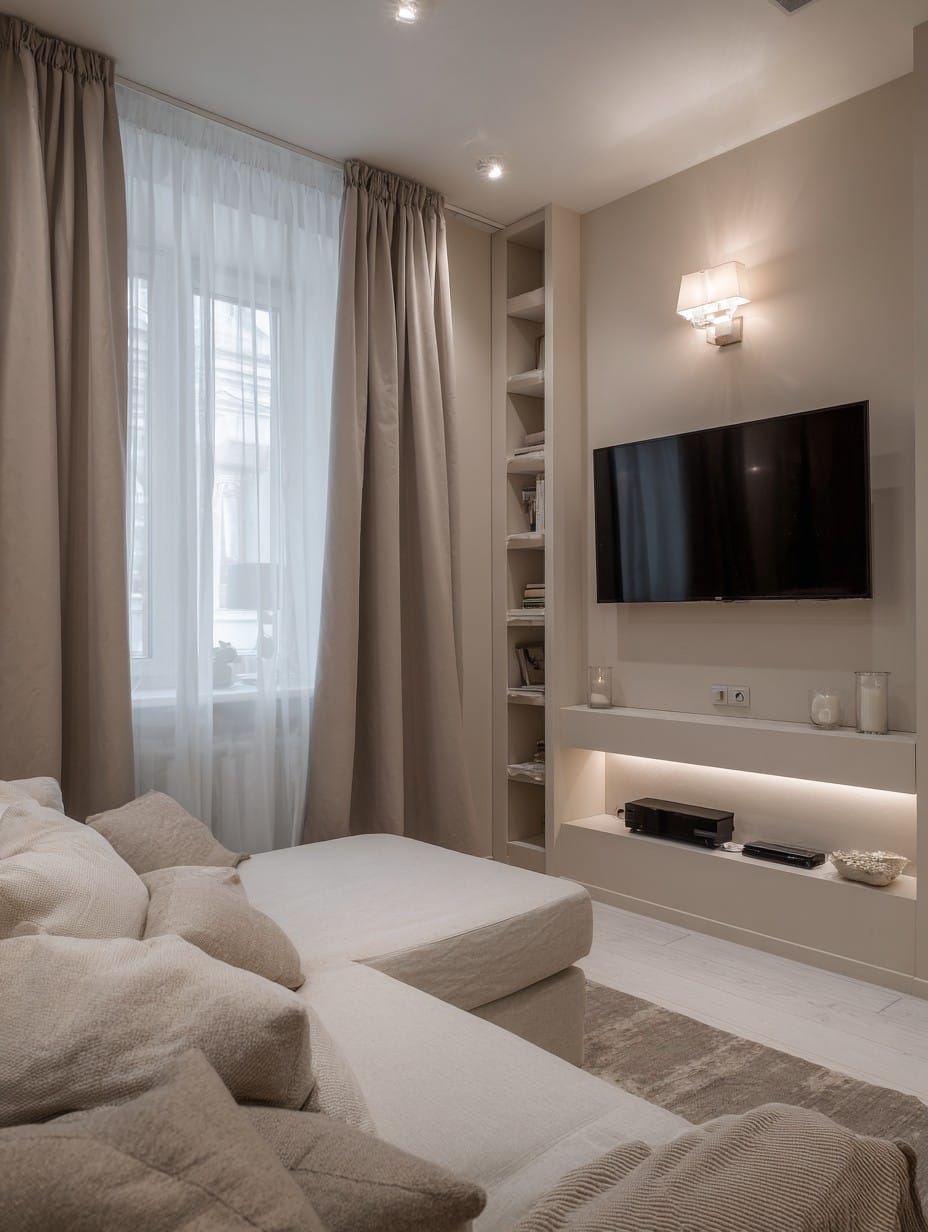
The compact sectional sofa represents careful planning in furniture selection, positioned strategically against the wall to maximize available floor space while still providing comfortable seating for multiple occupants. Its streamlined profile and lack of bulky arms contribute to the room’s open feeling. Built-in corner shelving represents an ingenious use of often-wasted space, transforming an awkward corner into functional storage for books, decorative objects, and media collections. These shelves keep necessities accessible while maintaining the clean, uncluttered aesthetic essential to making small spaces feel larger.
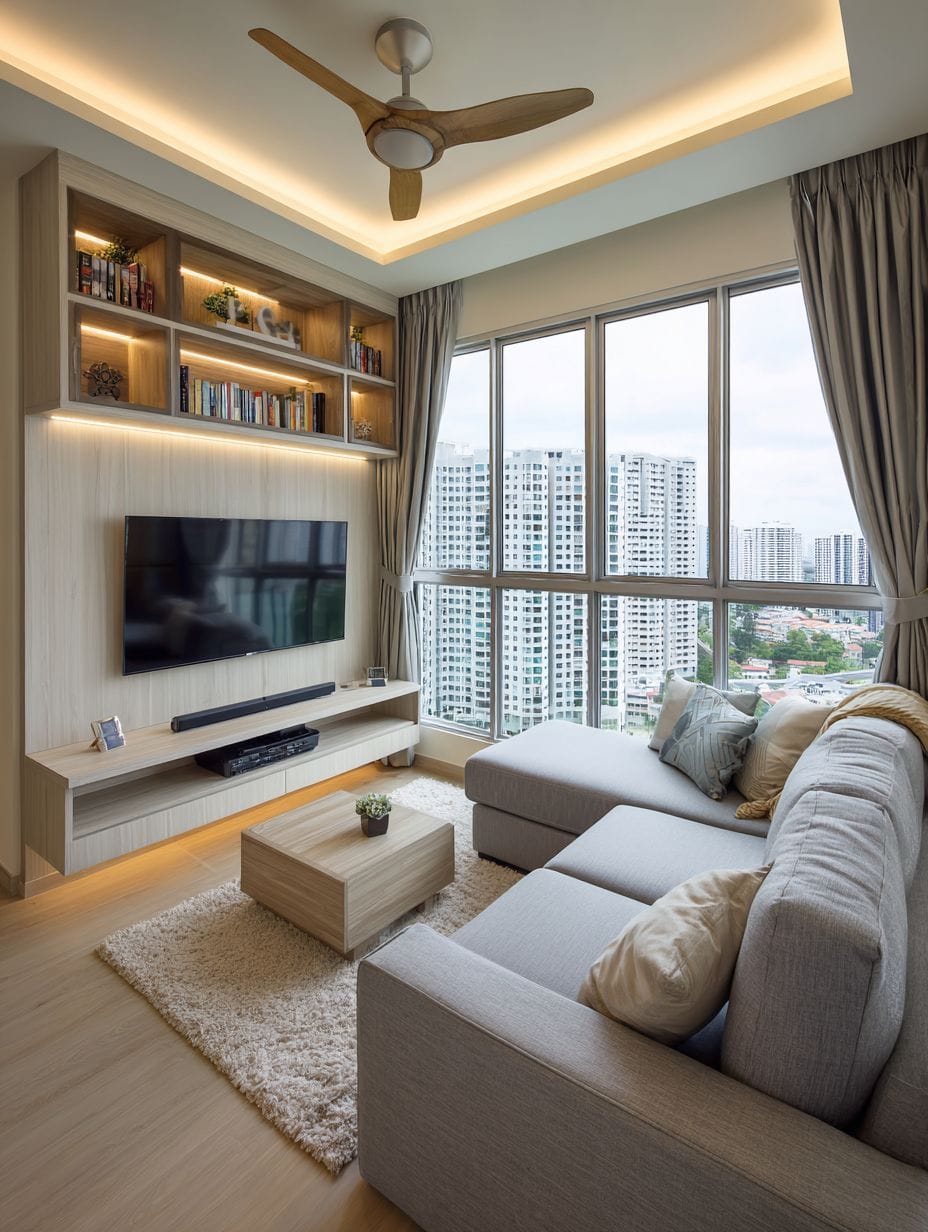
Lighting strategy in this compact TV lounge relies heavily on LED strip lighting, which provides ambient illumination without consuming precious space with floor or table lamps. These thin strips can be installed under shelving, behind the television, or along architectural features to create depth and dimension without physical bulk. The soft glow they emit creates a sense of expansiveness, making walls recede and the room feel larger than its actual dimensions. The simple geometric rug anchors the seating area without overwhelming the space, its pattern adding visual interest while maintaining the minimalist aesthetic.
- Mount your television on the wall to eliminate the need for a bulky entertainment center and reclaim valuable floor space.
- Choose a compact sectional with a streamlined profile rather than an oversized sofa that will overwhelm the room.
- Install built-in corner shelving to transform wasted corner space into functional storage and display areas.
- Use LED strip lighting instead of floor lamps to provide illumination without consuming precious square footage.
- Select furniture with exposed legs to create visual lightness and the illusion of more floor space.
4. Natural Wood Feature Wall Elegance
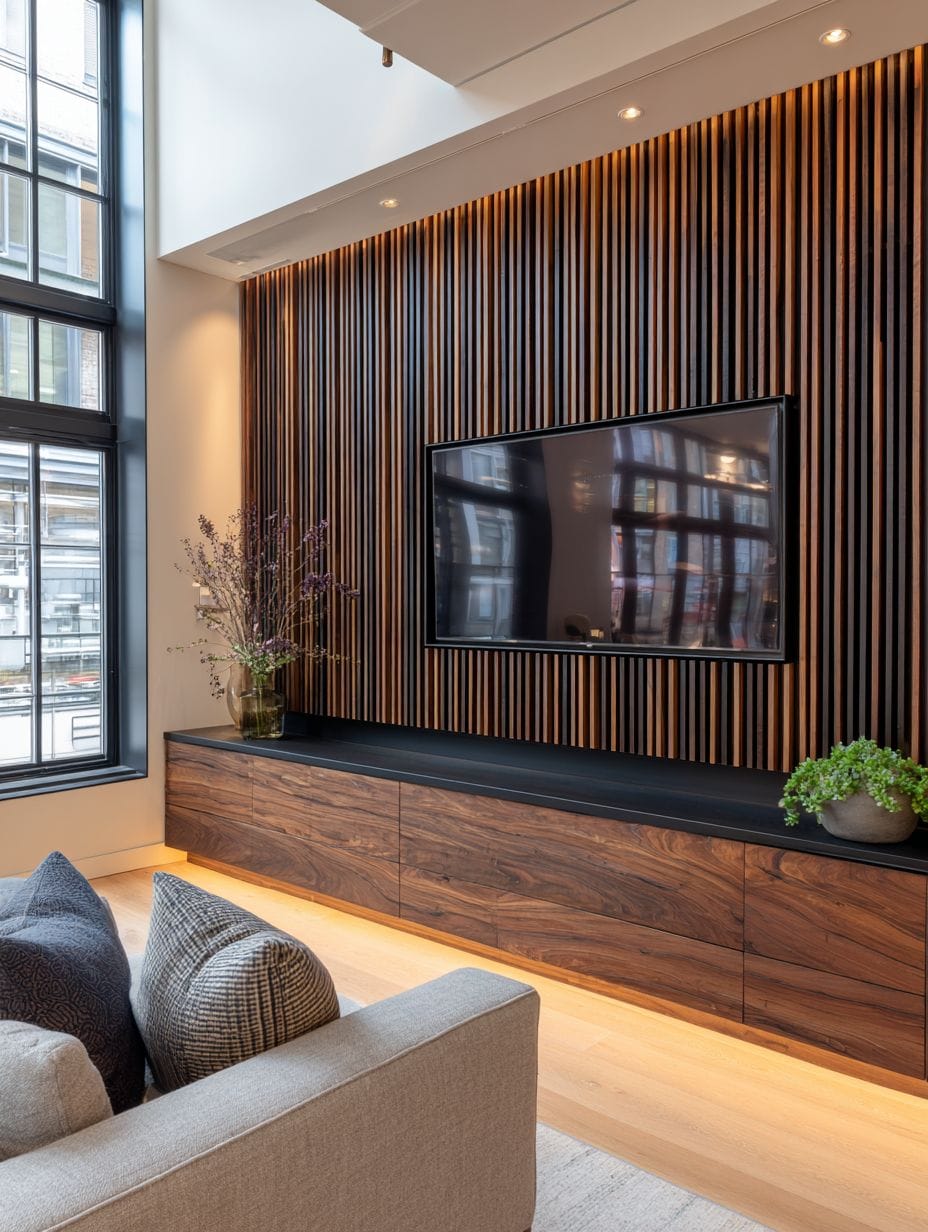
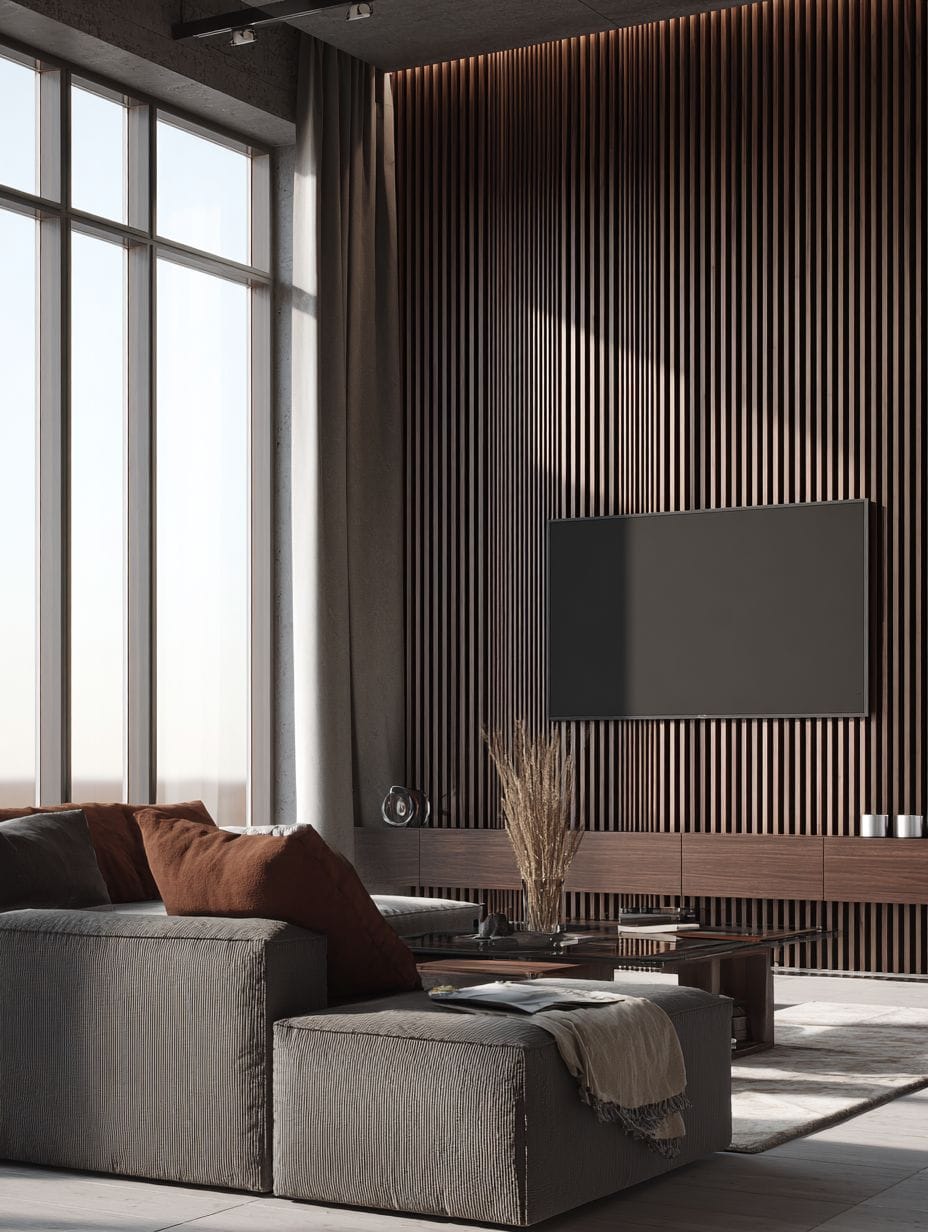
The integration of natural materials brings warmth and organic beauty to this contemporary TV lounge, where a striking feature wall of natural wood slats creates the room’s defining architectural element. These vertically oriented slats add dimensional texture and visual rhythm to what might otherwise be a flat surface, transforming the television wall into a work of art in its own right. The wood’s natural grain patterns and color variations provide subtle visual interest that remains engaging without competing for attention with the screen during viewing. This design choice demonstrates how thoughtful architectural details can elevate a functional space into something truly special.
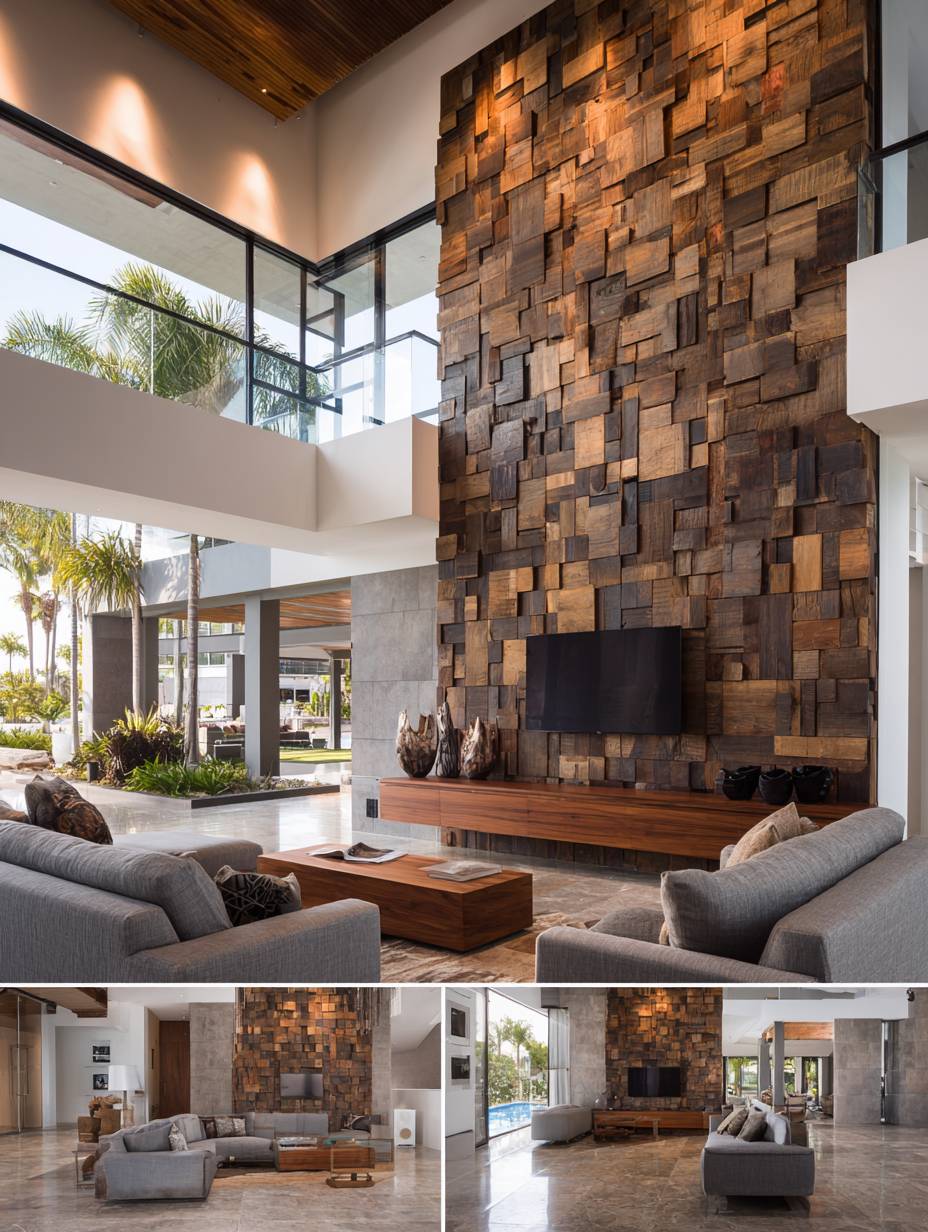
Integrated LED lighting within the wood slat system represents a sophisticated technical detail that serves both aesthetic and practical purposes. These carefully positioned lights create a subtle background glow that highlights the wood’s texture while reducing the contrast between the bright television screen and dark wall—a technique that significantly reduces eye strain during extended viewing sessions. The low walnut media console echoes the warm tones of the feature wall while maintaining clean, contemporary lines. Its horizontal emphasis provides visual balance to the vertical slats above, creating a harmonious composition.
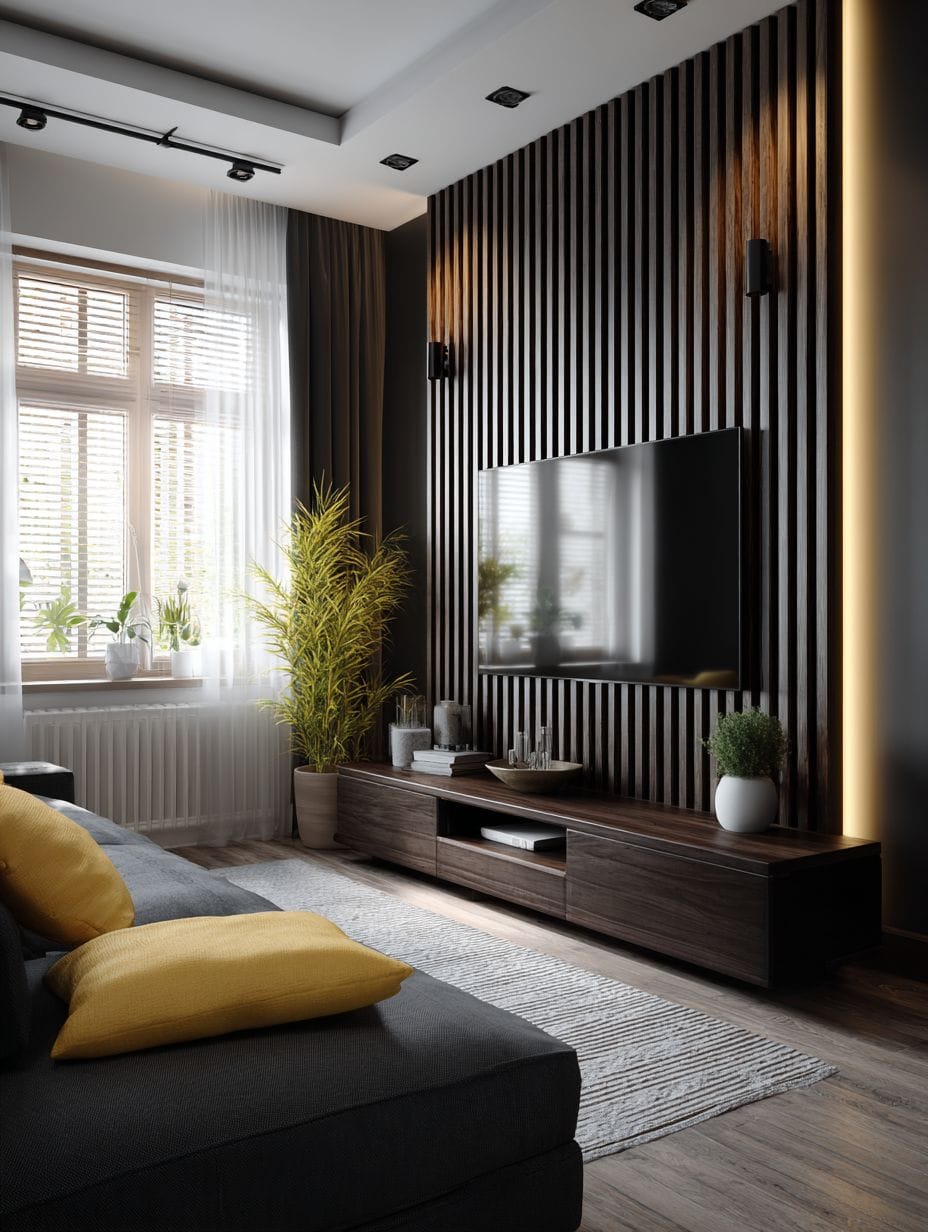
The comfortable grey sofa with carefully selected accent cushions provides the perfect neutral base for this wood-rich environment. The grey tone allows the natural wood to remain the star while offering a sophisticated, modern counterpoint that prevents the space from feeling too rustic or cabin-like. Large windows flanking the entertainment wall ensure abundant natural light during daytime hours, showcasing how the wood’s appearance shifts throughout the day as light quality changes. Strategic artificial lighting, including adjustable fixtures that can be directed to highlight the wood grain or provide ambient illumination, ensures the space remains inviting around the clock.
- Install vertical wood slats to create dimensional texture and architectural interest on your TV accent wall.
- Integrate LED lighting within or behind wood slats to highlight texture and reduce screen-to-wall contrast for comfortable viewing.
- Choose a low-profile media console in matching wood tones to create visual continuity without blocking your feature wall.
- Balance warm wood tones with cool grey upholstery to prevent the space from feeling too rustic or monotone.
- Position windows strategically to showcase how natural light transforms wood’s appearance throughout the day.
5. Scandinavian Simplicity and Light
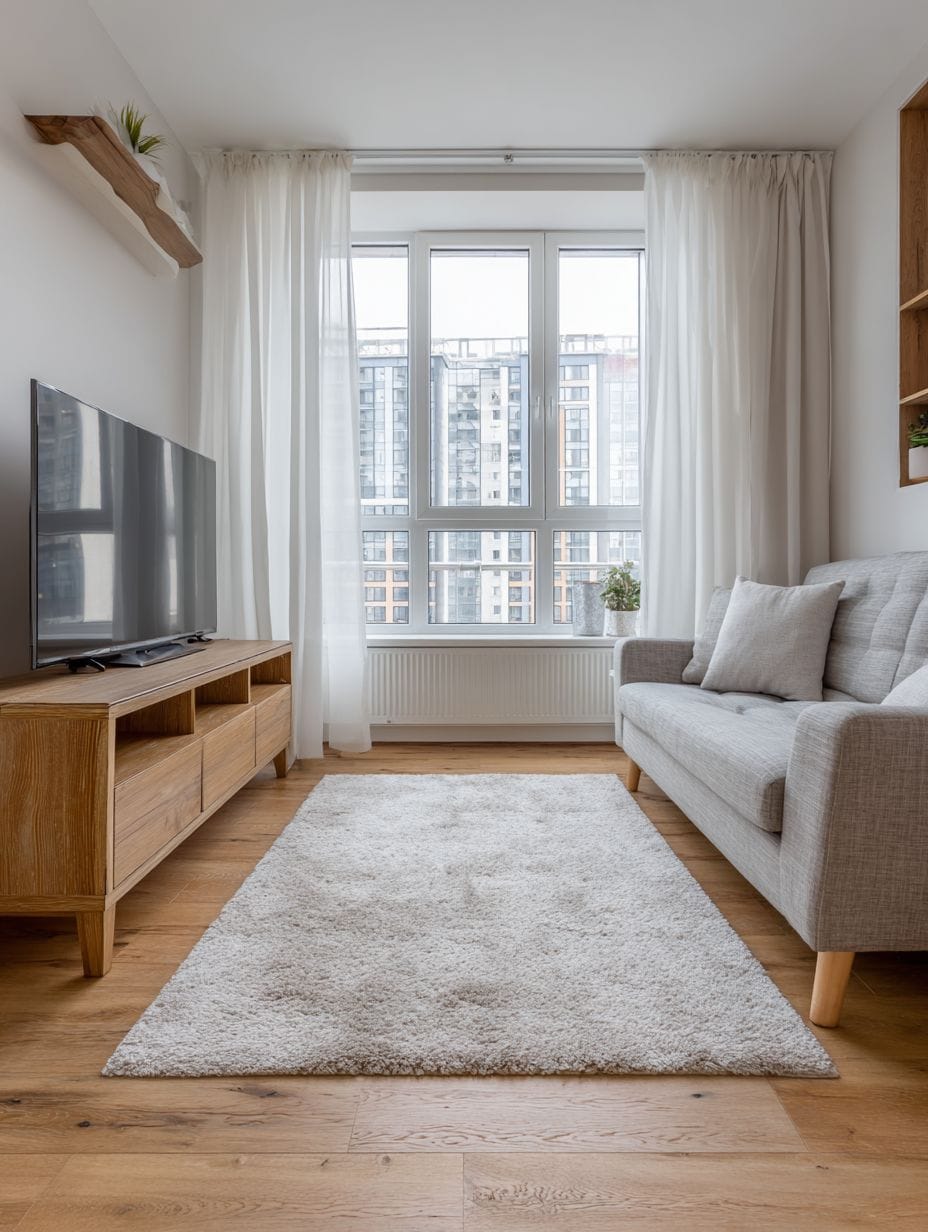
Scandinavian design principles create a TV lounge that breathes with space, light, and intentional simplicity. The foundation begins with light oak flooring that extends throughout the space, its pale honey tones and subtle grain patterns providing warmth without visual weight. White walls maximize light reflection, creating an airy atmosphere that feels expansive and calming—essential qualities in spaces designed for relaxation and entertainment. This neutral backdrop allows for flexibility in accent colors and ensures the space will remain timelessly appealing rather than feeling dated as trends evolve.
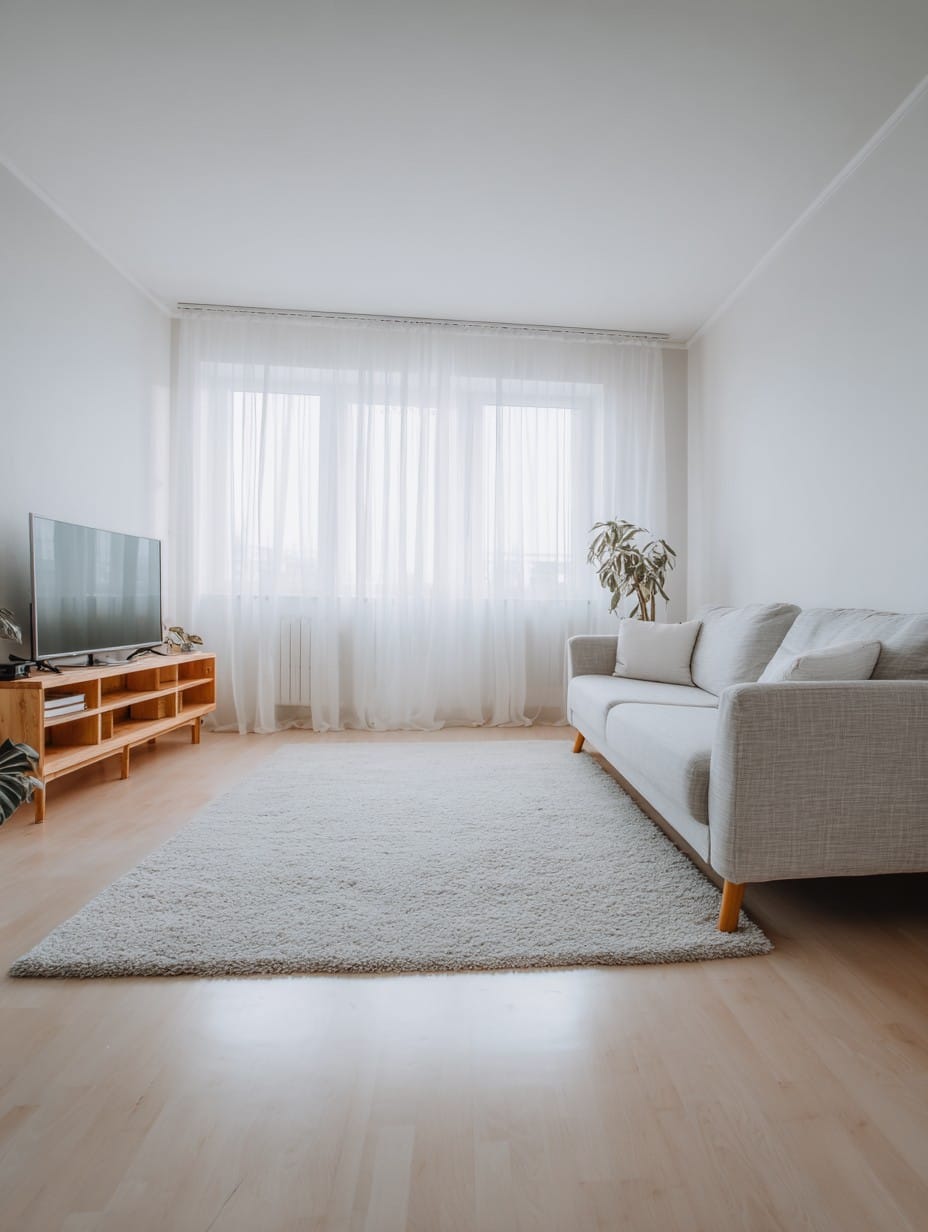
The entertainment unit exemplifies Scandinavian design philosophy: simple in form, honest in materials, and exceptional in functionality. Crafted from natural wood with visible grain patterns, it supports the television while providing organized storage through a combination of open shelving and closed cabinets. The open shelving displays carefully curated decorative objects—perhaps a few ceramics, a small plant, and select books—demonstrating the Scandinavian principle of thoughtful minimalism where every displayed item serves a purpose and brings joy. The closed storage conceals less attractive necessities like cables, remotes, and media collections, maintaining the clean visual aesthetic.
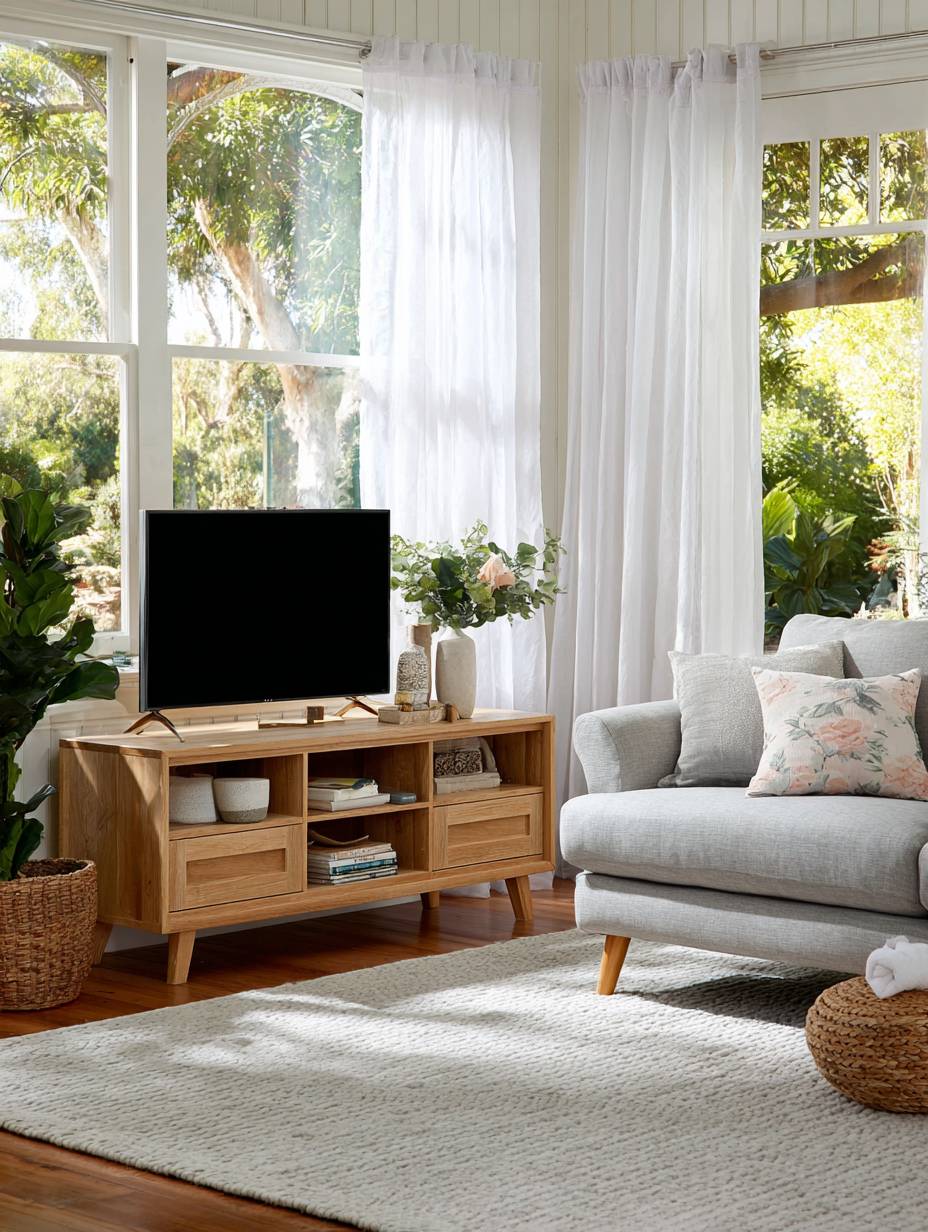
Seating centers around a light grey linen sofa with exposed wooden legs, a quintessential Scandinavian furniture piece that balances comfort with visual lightness. The natural linen fabric brings texture and organic quality while remaining neutral enough to coordinate with future updates. A soft area rug in complementary neutral tones grounds the seating area, adding warmth underfoot and defining the conversation zone. Large windows dressed with sheer white curtains flood the space with natural daylight—perhaps the most important element in Scandinavian design—creating a connection to the outdoors while maintaining privacy. During evening hours, simple pendant lights or floor lamps with white shades provide gentle, diffused illumination that maintains the space’s serene quality.
- Choose light oak or birch flooring to establish a warm, neutral foundation that maximizes light reflection.
- Paint walls in pure white to create the airy, spacious feel central to Scandinavian aesthetics.
- Select furniture with exposed wooden legs to maintain visual lightness and showcase natural materials.
- Display minimal decorative objects on open shelving, choosing only pieces that are both functional and meaningful.
- Maximize natural light with large windows and sheer curtains that filter rather than block daylight.
6. Custom Built-In Luxury
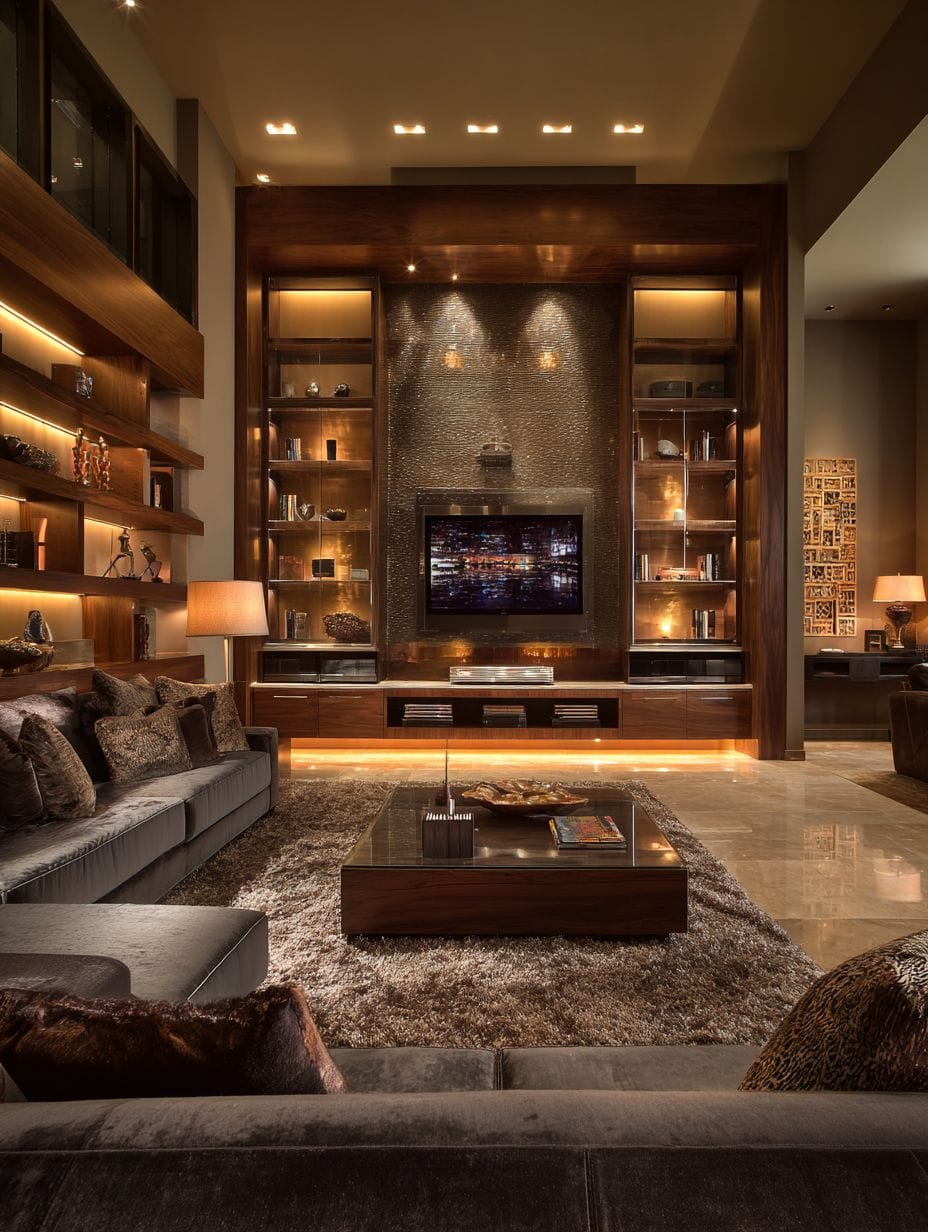
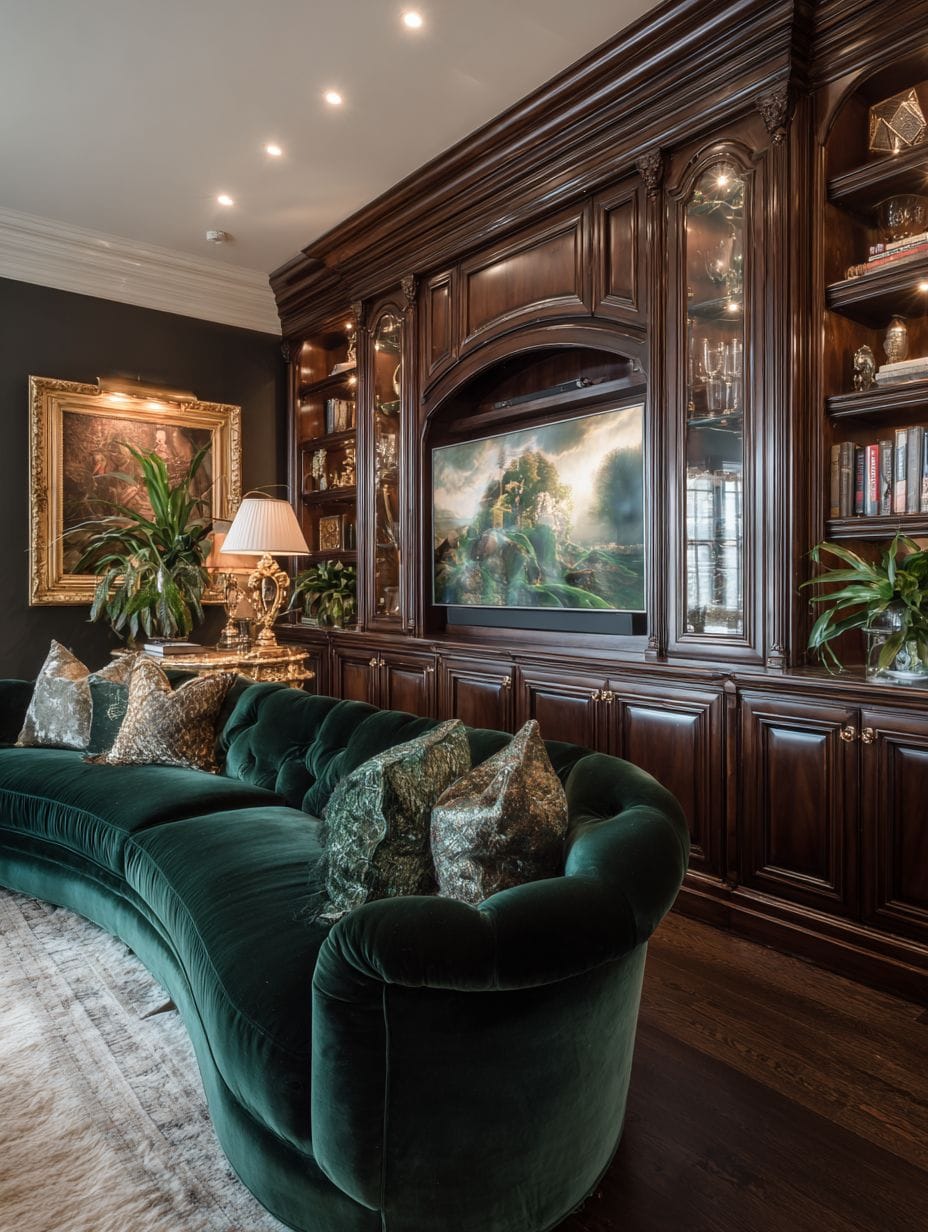
This luxurious TV lounge showcases the elegance and sophistication achievable through custom cabinetry and built-in solutions. The entertainment wall features meticulously crafted cabinetry in rich dark wood, creating a sophisticated focal point that extends from floor to ceiling. The television integrates seamlessly into the centered panel, appearing as an intentional part of the architectural composition rather than an afterthought mounted on a wall. This level of integration represents the pinnacle of custom design, where technology and craftsmanship merge to create something greater than the sum of their parts.
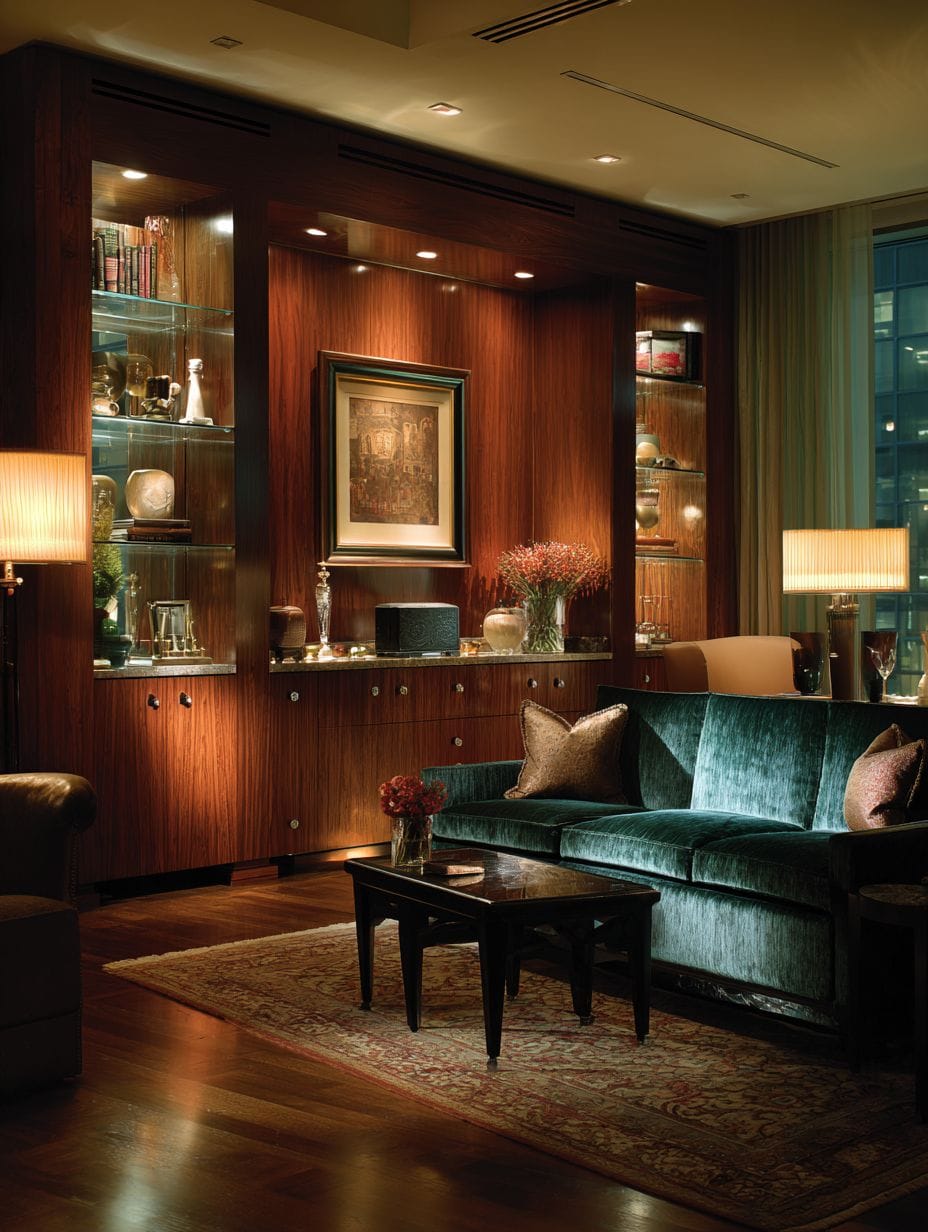
Glass-front cabinets flanking the television display decorative objects, collected books, or cherished personal items, transforming storage into an opportunity for self-expression. These transparent doors protect contents from dust while keeping them visible, adding visual interest and personality to the space. Below, closed cabinetry conceals less attractive necessities—media equipment, cable boxes, gaming systems, and the inevitable tangle of wires—maintaining the pristine aesthetic. Integrated lighting within the cabinetry highlights displayed objects while creating ambient illumination that adds depth and dimension to the entire wall.
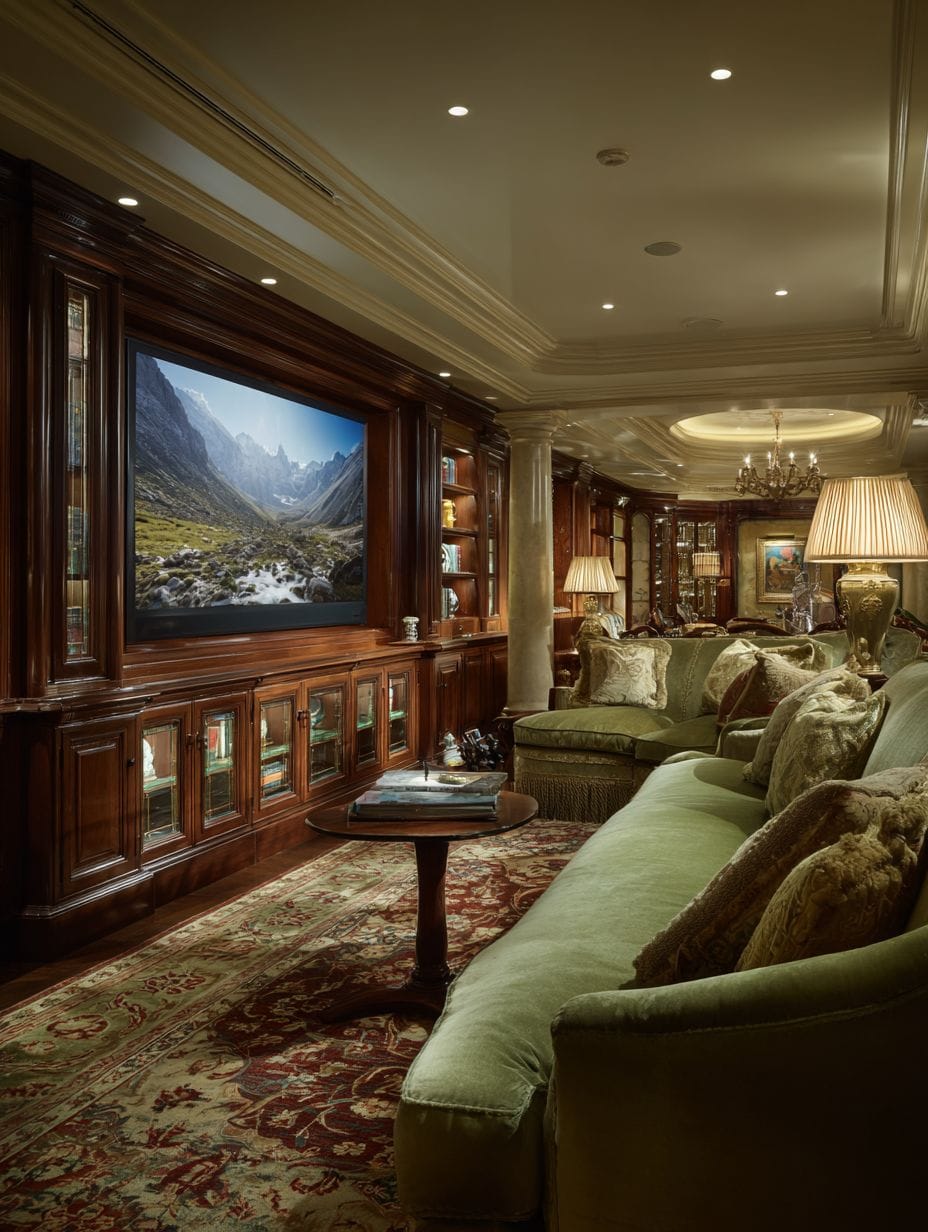
The plush velvet sofa in deep emerald green provides a stunning counterpoint to the dark wood cabinetry, its jewel tone adding richness and luxury to the space. Velvet’s light-reflecting properties create subtle variations in color depth as you move through the room or as lighting changes throughout the day, adding dynamic visual interest. The sofa sits atop a plush area rug that defines the seating zone while providing additional texture and comfort underfoot. Layered lighting throughout the space includes recessed ceiling spots that highlight the custom millwork, elegant table lamps for reading, and adjustable task lighting—all controlled by dimmer switches that allow precise ambiance adjustment for any occasion.
- Invest in custom built-in cabinetry to create seamless television integration and maximize storage without sacrificing aesthetics.
- Choose glass-front cabinet doors to display cherished items while protecting them from dust and damage.
- Integrate lighting within cabinetry to highlight displays and create ambient illumination that adds depth to the wall.
- Select a jewel-toned velvet sofa to add luxury, color, and light-reflecting properties that create visual dynamism.
- Install dimmer switches on all lighting circuits to allow precise control over ambiance for different activities and times of day.
7. Industrial Edge with Urban Character
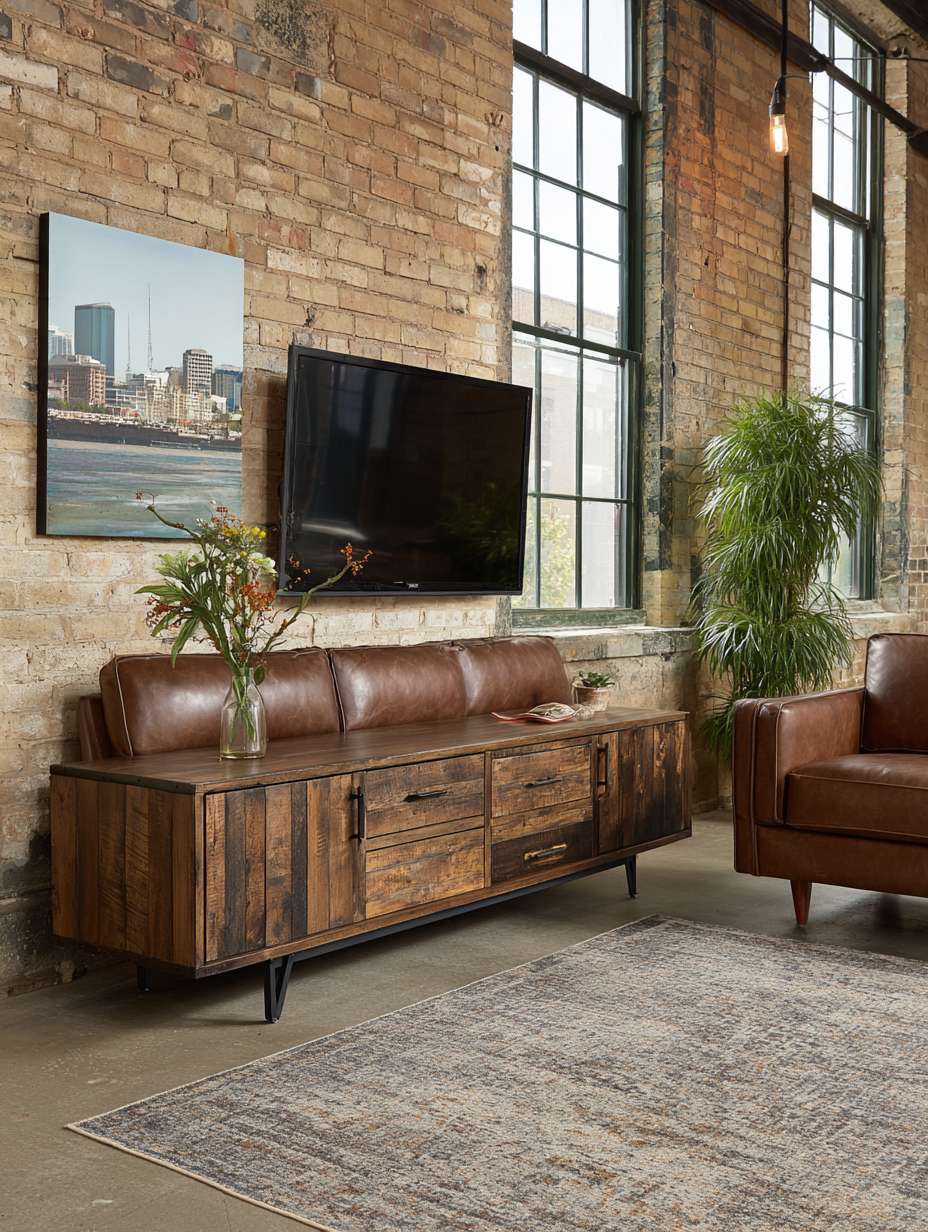
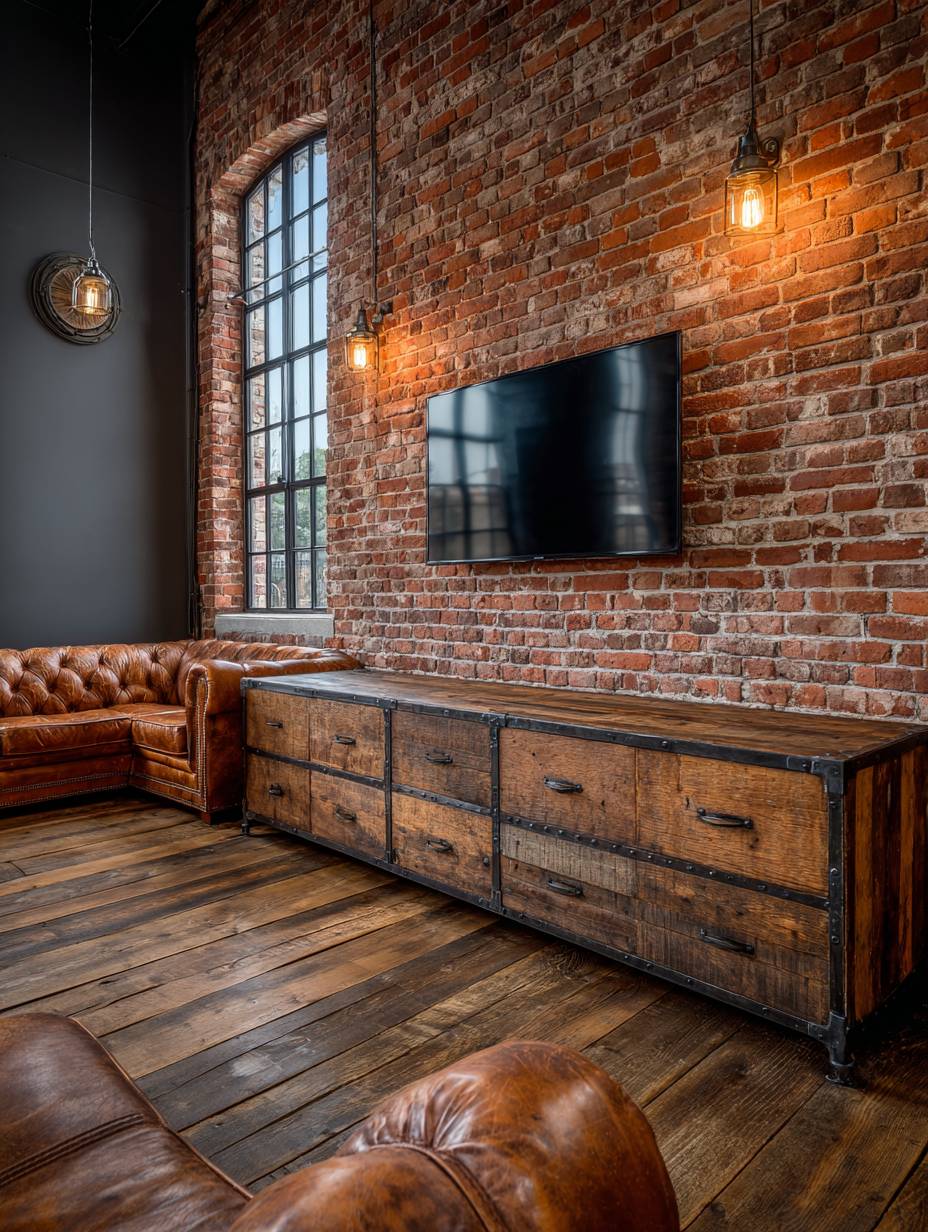
Raw, honest materials and utilitarian aesthetics define this industrial-style TV lounge, where an exposed brick accent wall provides the perfect textural backdrop for the mounted television. The brick’s irregular surface, subtle color variations, and mortar joints create organic visual interest that no manufactured material can replicate. This authentic architectural element immediately establishes the space’s industrial character while providing excellent acoustic properties—brick’s density helps absorb sound reflections that might otherwise create echo in the room. The warm terracotta tones of the brick bring unexpected warmth to the industrial aesthetic, preventing the space from feeling cold or sterile.
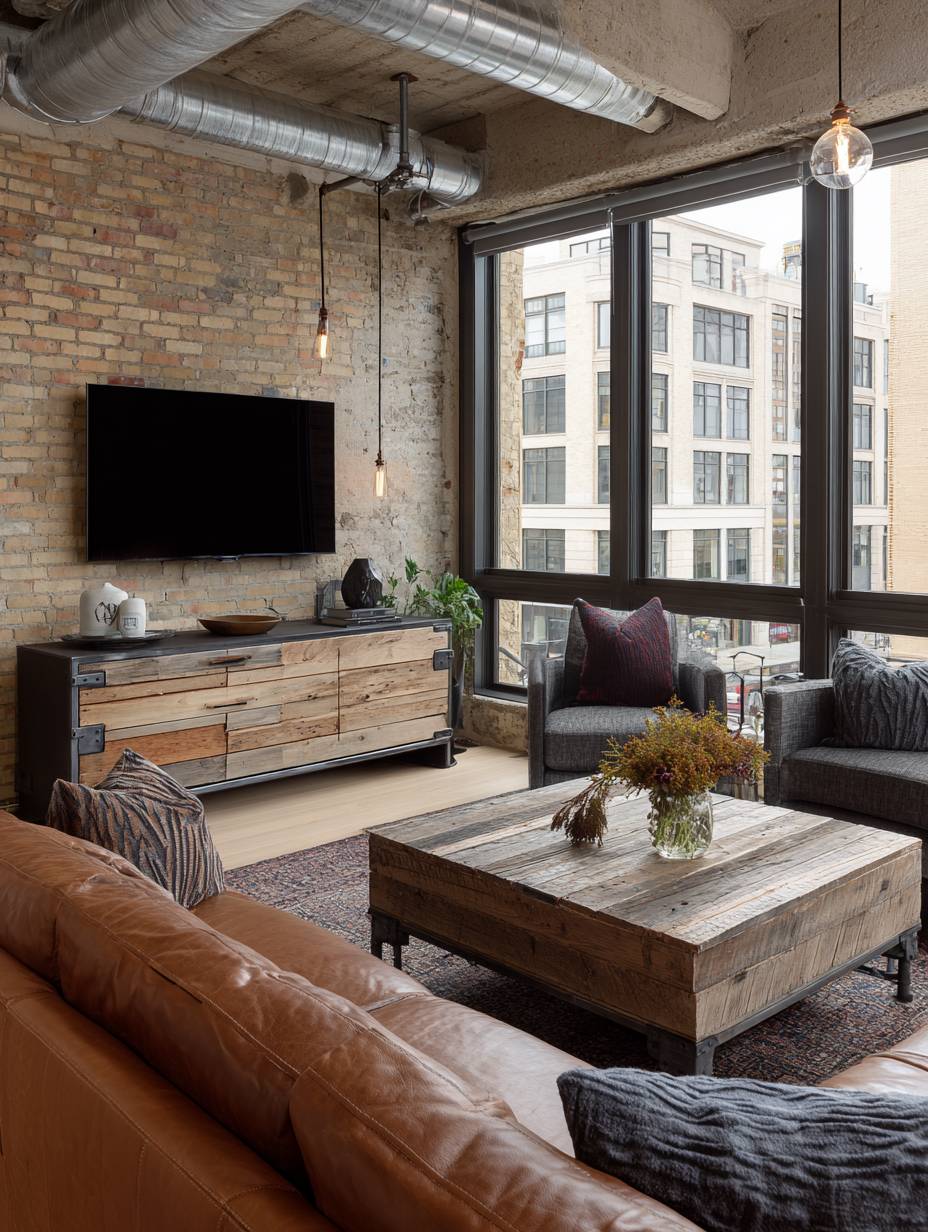
The reclaimed wood media console exemplifies industrial design’s appreciation for materials with history and character. Visible grain patterns, natural knots, and perhaps even old nail holes or weathering tell stories of the wood’s previous life, creating a sense of authenticity and connection to the past. Metal pipe legs support the console, their industrial hardware fittings exposed rather than hidden—a fundamental principle of industrial design that celebrates functional elements as aesthetic features. This combination of weathered wood and raw metal creates the perfect marriage of warmth and edge that defines successful industrial interiors.
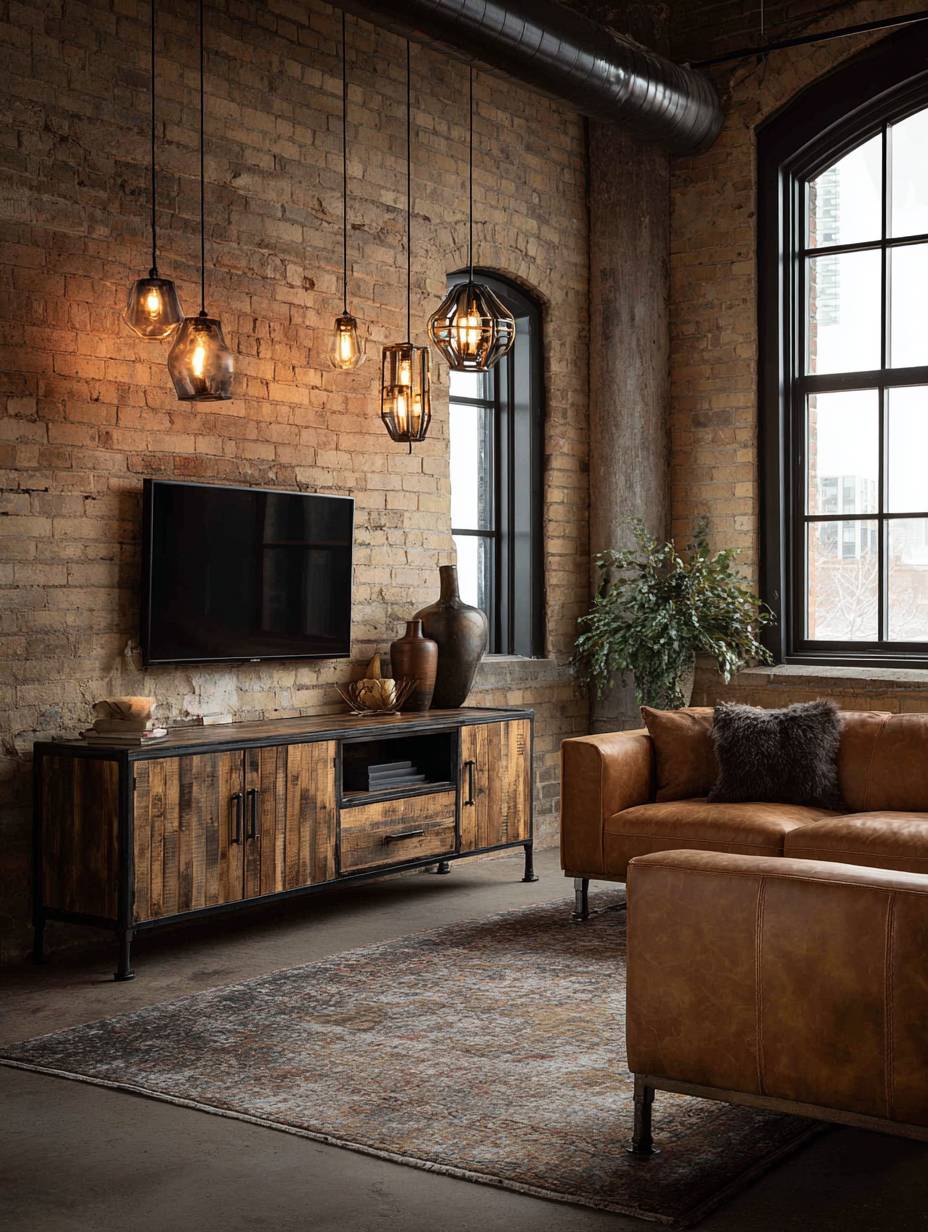
Black metal frame windows allow natural light to stream in while reinforcing the industrial aesthetic through their utilitarian design and visible joinery. Edison bulb pendant lights suspended from exposed ceiling beams or black metal fixtures provide warm, amber-toned illumination that softens the space’s harder edges. The cognac brown leather sofa ages beautifully over time, developing a patina that only enhances its character—another industrial design principle that embraces rather than fights the passage of time. This rich leather color coordinates beautifully with both the brick wall’s terracotta tones and the reclaimed wood’s varied browns, creating a cohesive, masculine color palette grounded in natural materials.
- Expose or install brick on the TV accent wall to create authentic texture and establish industrial character immediately.
- Choose reclaimed wood furniture with visible history and character marks that tell a story and add authenticity.
- Select metal pipe legs and hardware that celebrate rather than hide functional elements and structural components.
- Install Edison bulb fixtures to provide warm, amber-toned light that softens industrial materials without compromising the aesthetic.
- Invest in quality leather upholstery that will develop beautiful patina over time rather than simply showing wear.
8. Flexible Multi-Functional Design
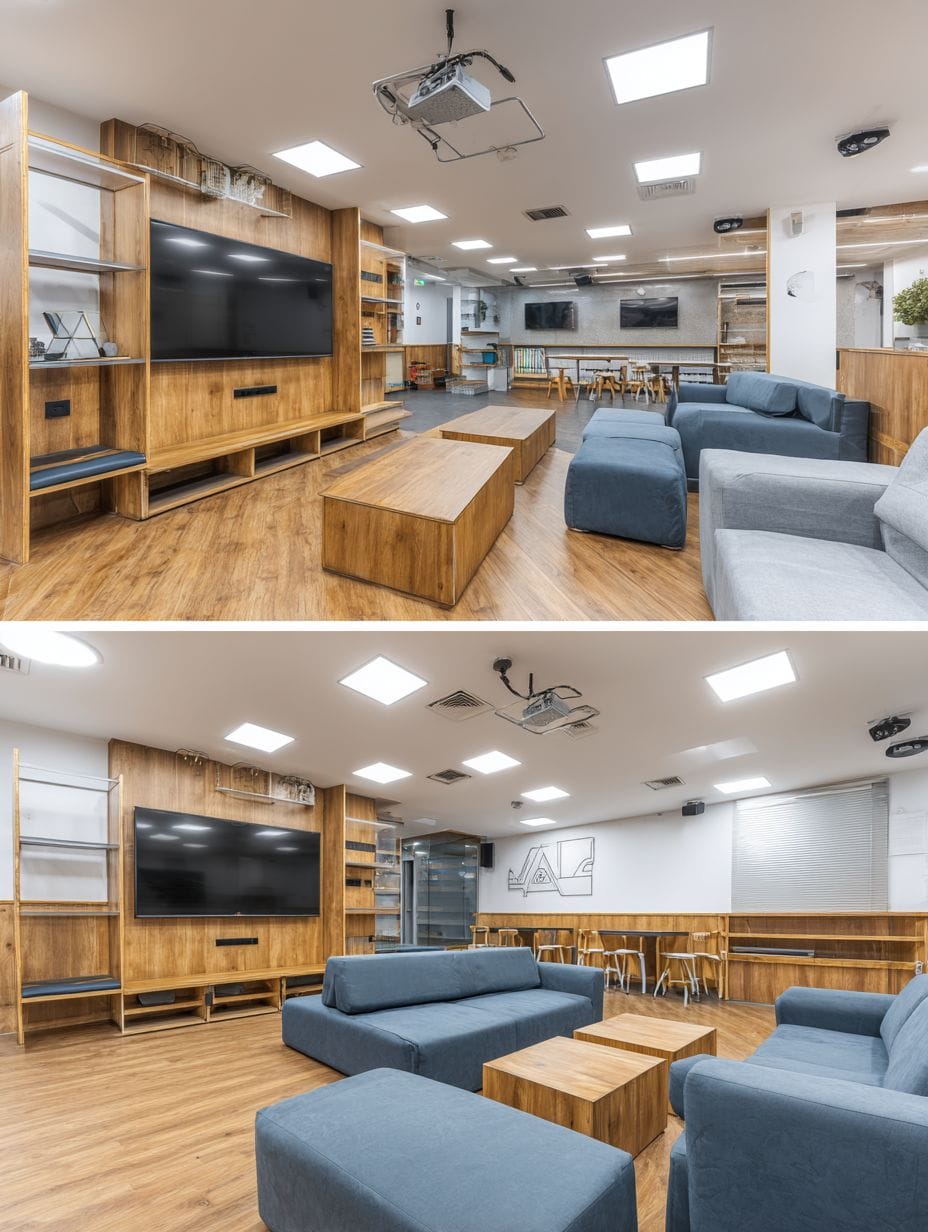
Modern living demands flexibility, and this multi-functional TV lounge rises to the challenge with intelligent design solutions that adapt to changing needs. The centerpiece is a modular sofa system that can be reconfigured for different occasions—arranged in a traditional facing-the-TV setup for movie nights, formed into a conversation circle for social gatherings, or even separated into individual seating elements for maximum flexibility. This adaptability represents the future of furniture design, where pieces serve multiple purposes and adjust to life’s varying demands rather than dictating a single, static room arrangement.
The television mounts on a rotating bracket—a simple but transformative feature that allows viewing from multiple angles within the room. This technical detail enables the space to function as both a dedicated theater-style viewing room and a more social space where entertainment provides background ambiance rather than commanding complete attention. Whether you’re watching from the sofa, working at a nearby desk, or cooking in an adjacent kitchen, the screen can orient toward your location. This flexibility acknowledges that modern homes often feature open-plan layouts where a single space serves multiple functions.
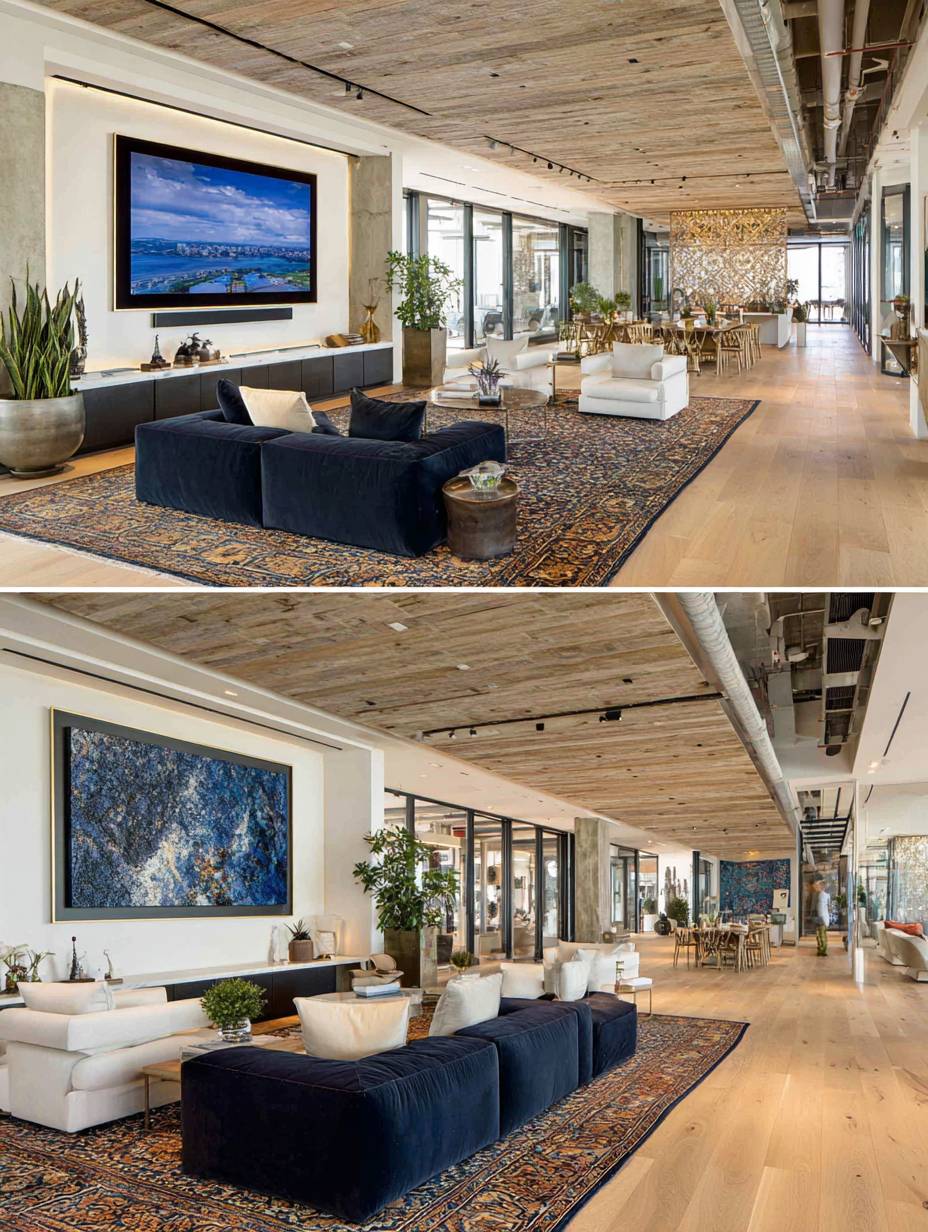
Built-in storage benches line one wall, providing both practical seating and concealed storage—a double-duty solution perfect for smaller homes or spaces that serve multiple purposes. These benches might store extra pillows and blankets for movie nights, board games for family entertainment, or overflow items that don’t have dedicated homes elsewhere. Natural oak flooring and neutral wall colors create a versatile backdrop that works with any furniture configuration and accommodates style updates over time. Strategic lighting includes overhead fixtures on dimmer switches, wall sconces that can be individually controlled, and perhaps track lighting that adjusts to illuminate different areas as the room’s function changes throughout the day.
- Choose modular seating that can be reconfigured into different arrangements for various activities and occasions.
- Install a rotating TV mount to allow viewing from multiple positions within the room or adjacent spaces.
- Build in storage benches that serve dual purposes as both seating and concealed storage for maximum space efficiency.
- Maintain neutral walls and flooring to create a versatile backdrop that works with any furniture configuration.
- Install individually controlled lighting on dimmer switches to adjust illumination based on the room’s current function.
9. Family-Friendly Durability
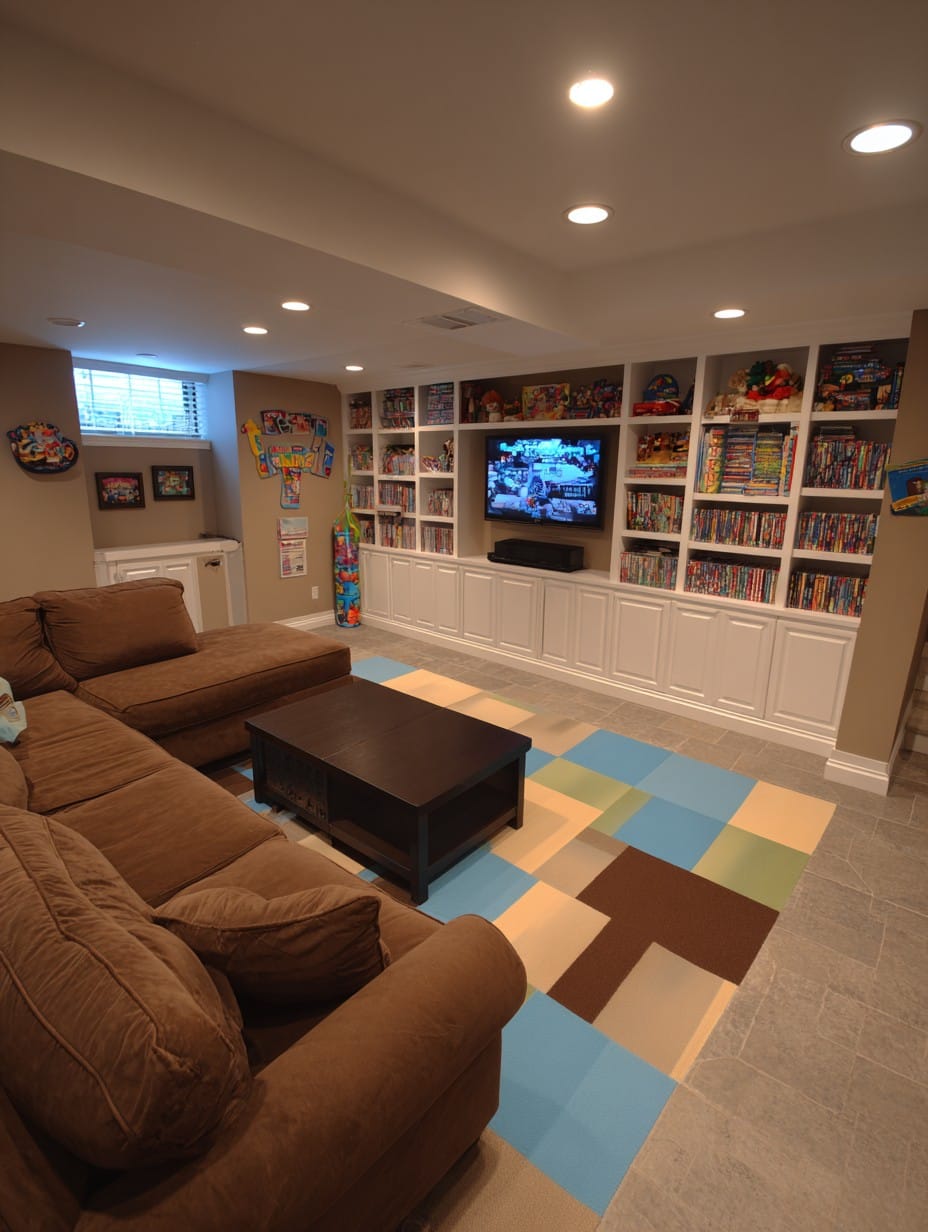
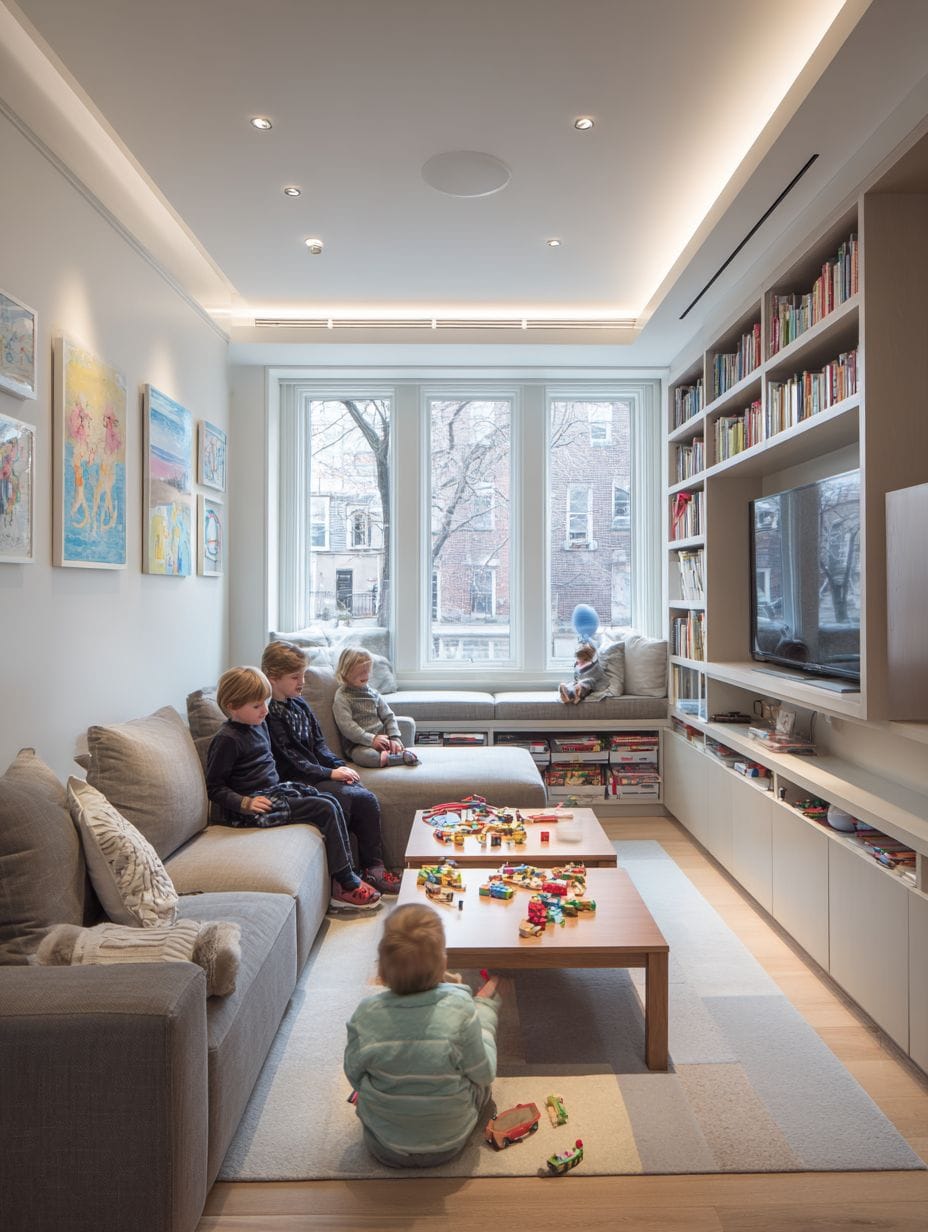
Creating a TV lounge that welcomes family life while maintaining style requires thoughtful material selection and smart design choices. This family-friendly space centers around a spacious U-shaped sectional upholstered in performance fabric engineered to resist stains, fading, and wear. These modern textiles have revolutionized family-friendly design, offering the look and feel of natural fibers while providing practical protection against the inevitable spills, sticky fingers, and general chaos that accompany family life. The sectional’s generous proportions ensure everyone has a comfortable seat for family movie nights, while its U-configuration creates an inclusive seating arrangement that encourages togetherness.
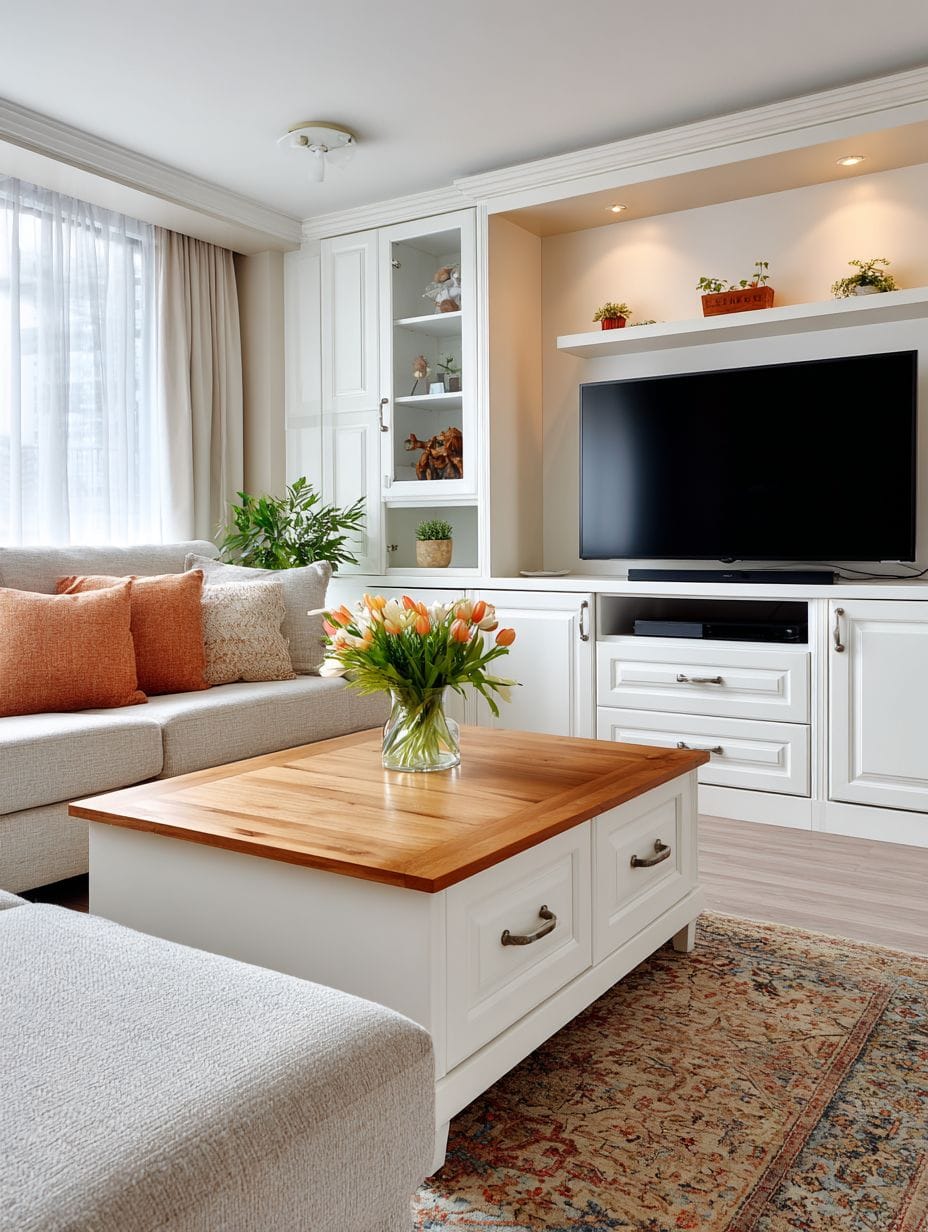
The entertainment center demonstrates brilliant practical thinking, with closed storage positioned at child height for easy access to toys, games, and children’s media. This placement empowers kids to independently retrieve and return items while keeping the most attractive storage solutions—perhaps open shelving for decorative objects or glass-front cabinets for adult media collections—at eye level where they’re visible and appreciated. The television mounts safely above counter height, minimizing the risk of curious toddlers pulling on cords or climbing on furniture to reach the screen. All mounting hardware is thoroughly secured to wall studs, and cables are professionally routed through walls or covered with protective channels to prevent tripping hazards.
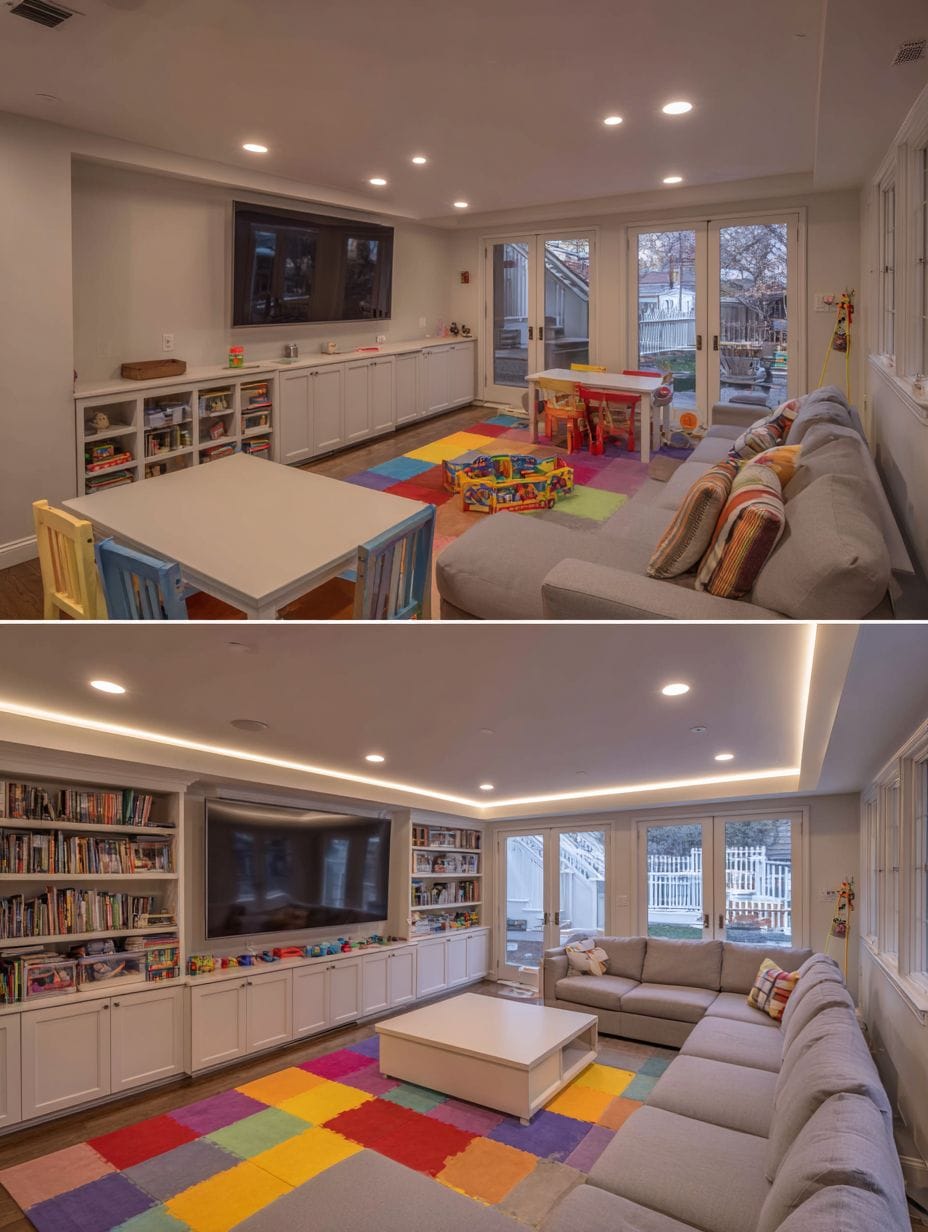
Safety considerations extend throughout the space without compromising aesthetics. The coffee table features rounded edges rather than sharp corners, reducing injury risk during active play. The area rug is washable—either machine-washable or easily cleaned with a carpet cleaner—so spills become minor inconveniences rather than disasters. Natural lighting from windows combines with adjustable LED fixtures to provide appropriate illumination for various activities, from bright light for homework or games to dimmer settings for evening movie viewing. This careful balance between durability, safety, and style creates a space where families can truly relax without constant worry about damage or injury.
- Choose performance fabric upholstery that resists stains and fading while maintaining the look and feel of natural textiles.
- Position storage at child height to encourage independence and make it easy for kids to access and return their belongings.
- Mount the television above child reach and secure all mounting hardware to wall studs for maximum safety.
- Select furniture with rounded edges rather than sharp corners to minimize injury risk during active play.
- Choose washable area rugs that can be easily cleaned after inevitable spills without permanent damage.
10. Below-Grade Basement Transformation
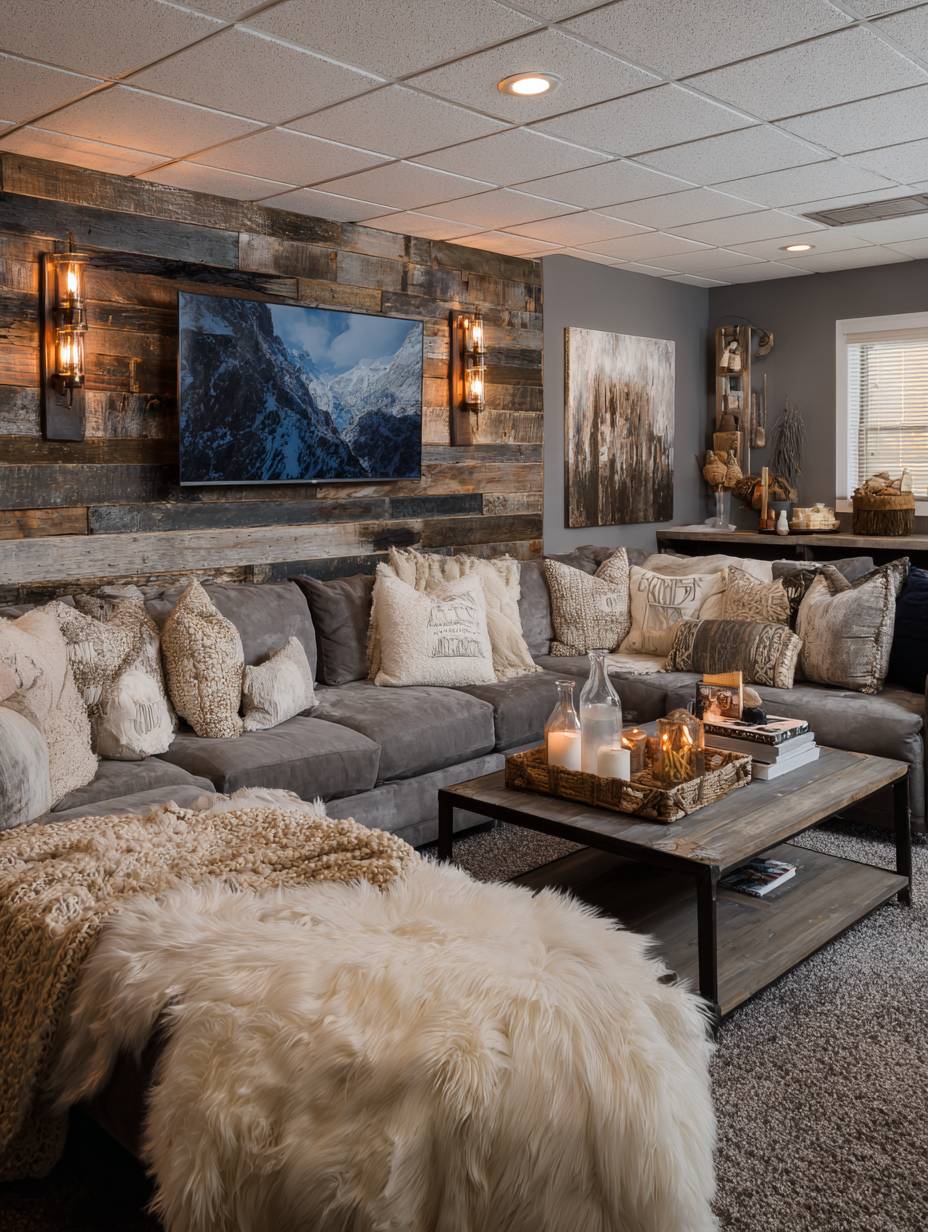
Basement spaces present unique challenges—limited natural light, potentially lower ceilings, and the psychological weight of being below grade—but thoughtful design transforms these potential drawbacks into cozy advantages. This basement TV lounge maximizes its inherent cave-like qualities, embracing the opportunity to create an immersive, cocoon-like entertainment space. Strategic lighting becomes absolutely critical when natural light is limited or absent. Recessed ceiling fixtures provide general ambient illumination without consuming precious headroom in potentially low-ceilinged spaces. Wall sconces add layers of light at mid-height, creating depth and preventing the flat, shadowless illumination that makes spaces feel institutional.
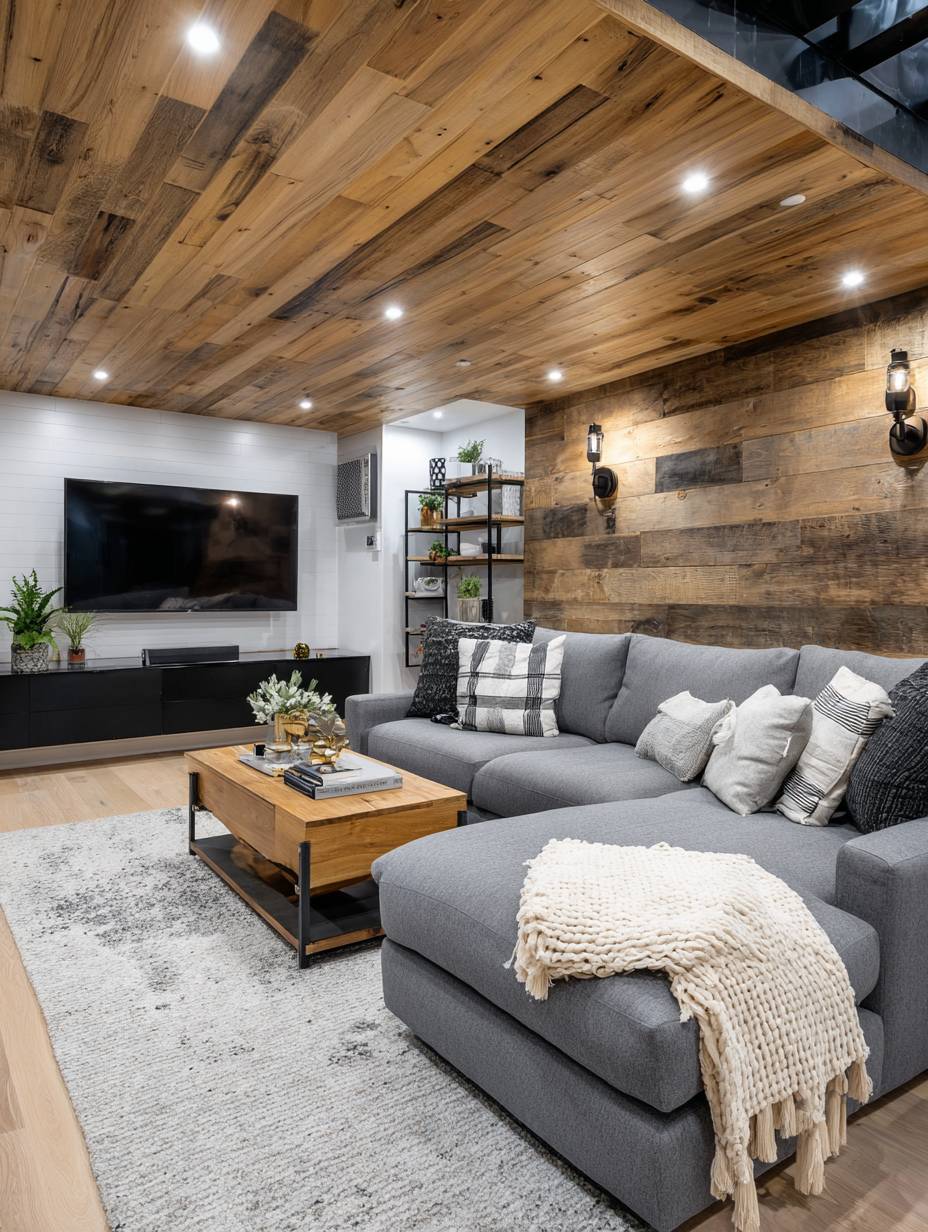
Warm materials throughout the space combat any potential sense of cold or dampness that sometimes plagues basement rooms. Wood paneling on walls—perhaps in a rich walnut or warm oak—immediately elevates the space while adding both visual and actual warmth. This paneling can be installed horizontally to make the space feel wider or vertically to create the illusion of taller ceilings, demonstrating how material orientation affects spatial perception. The large sectional in comfortable grey microfiber dominates the seating area, its plush cushions and generous proportions inviting occupants to sink in for extended viewing sessions. Microfiber’s durability and easy cleaning make it an excellent choice for high-traffic basement spaces.
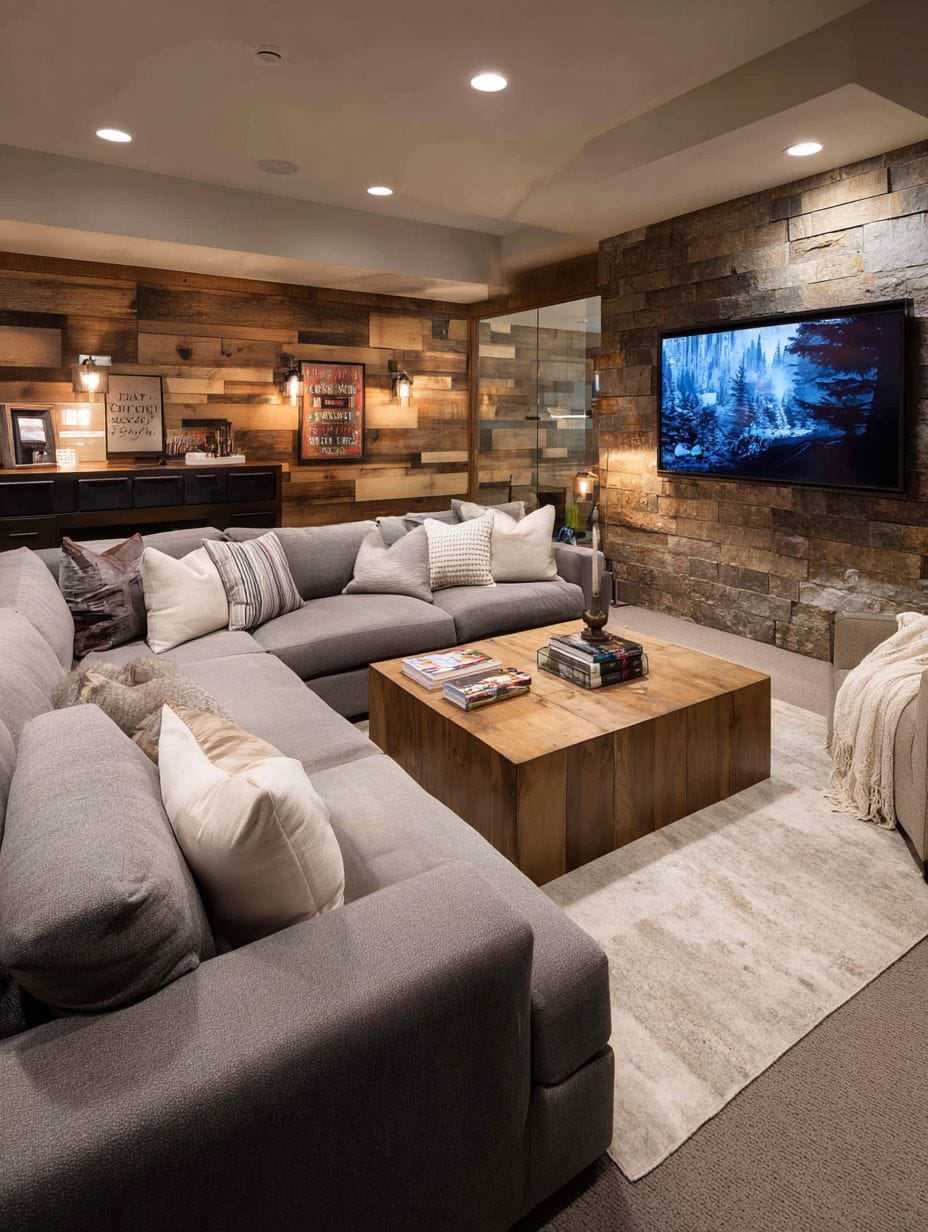
Plush carpeting throughout creates comfort underfoot while providing excellent sound absorption—important in basement spaces where sound might otherwise bounce off concrete floors and walls. Layered textures throughout the room add visual interest and tactile richness that makes the space feel intentionally designed rather than simply furnished. Throw pillows in varied fabrics, soft blankets, and perhaps even upholstered wall panels contribute to creating an environment that feels finished and refined. Color choices lean toward warmer tones—rich browns, warm greys, golden accents—that psychologically counteract being below grade and create an inviting atmosphere perfect for entertainment and relaxation.
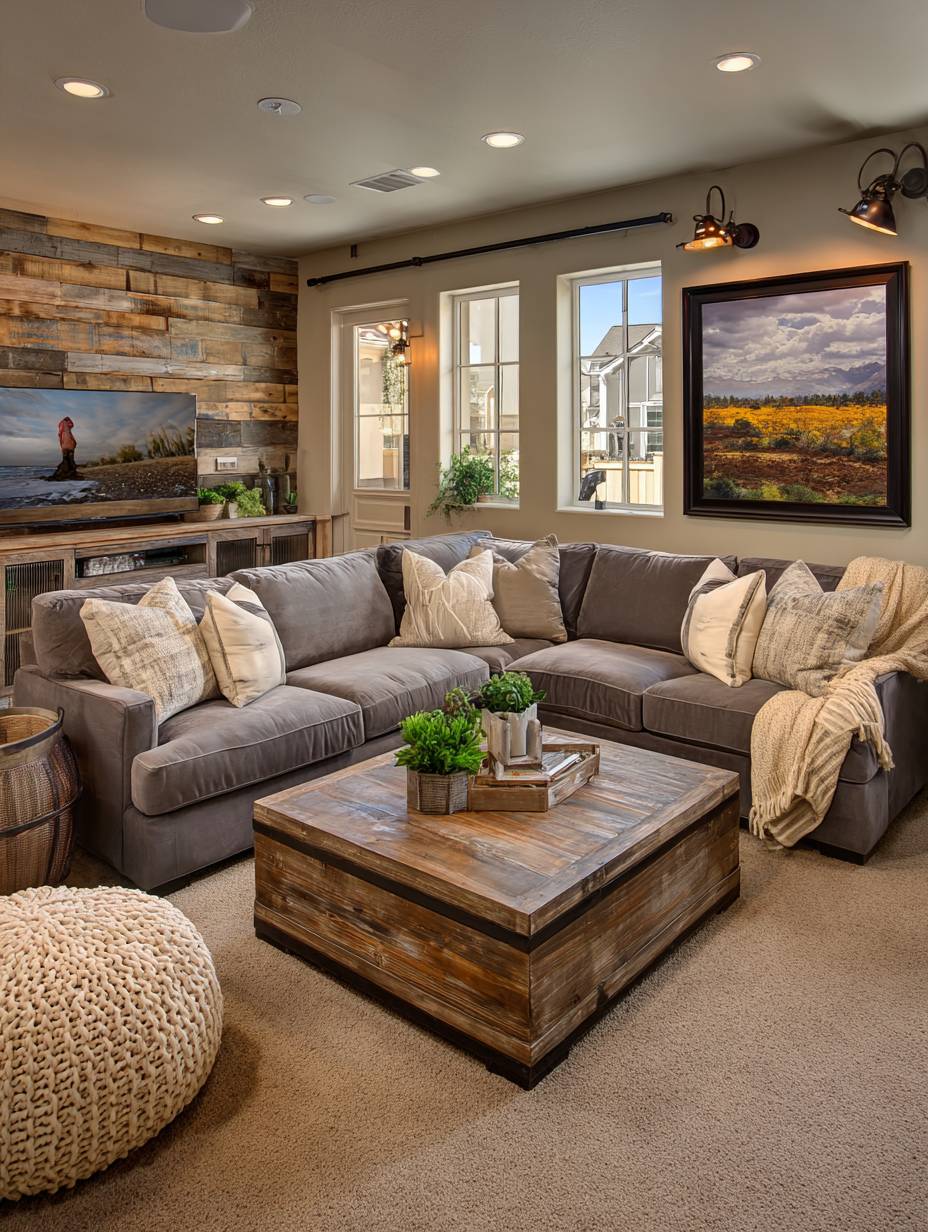
- Layer multiple light sources including recessed ceiling fixtures and wall sconces to create depth and compensate for limited natural light.
- Install wood paneling on walls to add warmth and elevate the space beyond typical basement aesthetics.
- Choose plush carpeting for comfort underfoot and excellent sound absorption in below-grade spaces.
- Select warm color tones in browns, warm greys, and golden accents to psychologically counteract being underground.
- Embrace the cave-like quality by creating an immersive, cozy entertainment environment rather than fighting the space’s inherent character.
11. Mid-Century Modern Revival
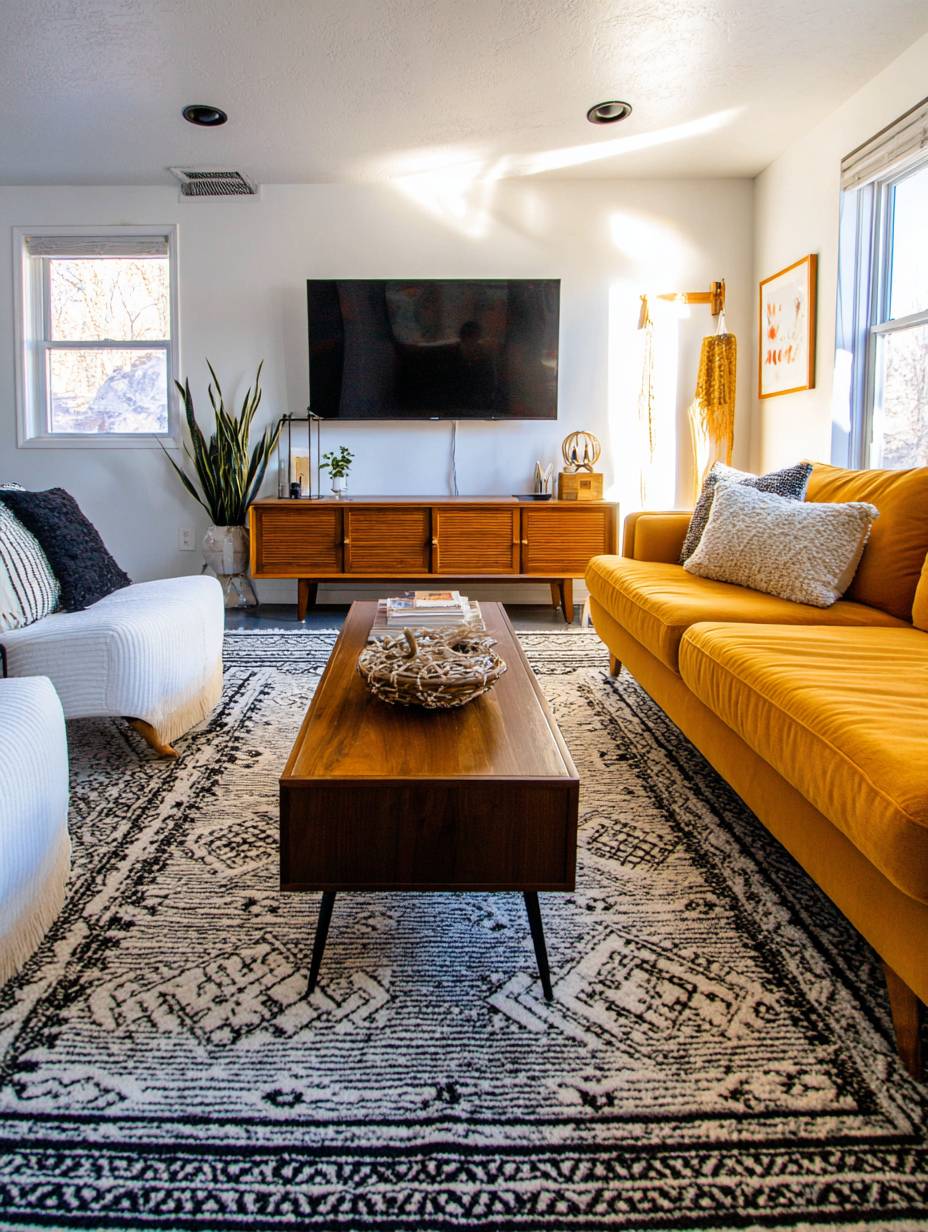
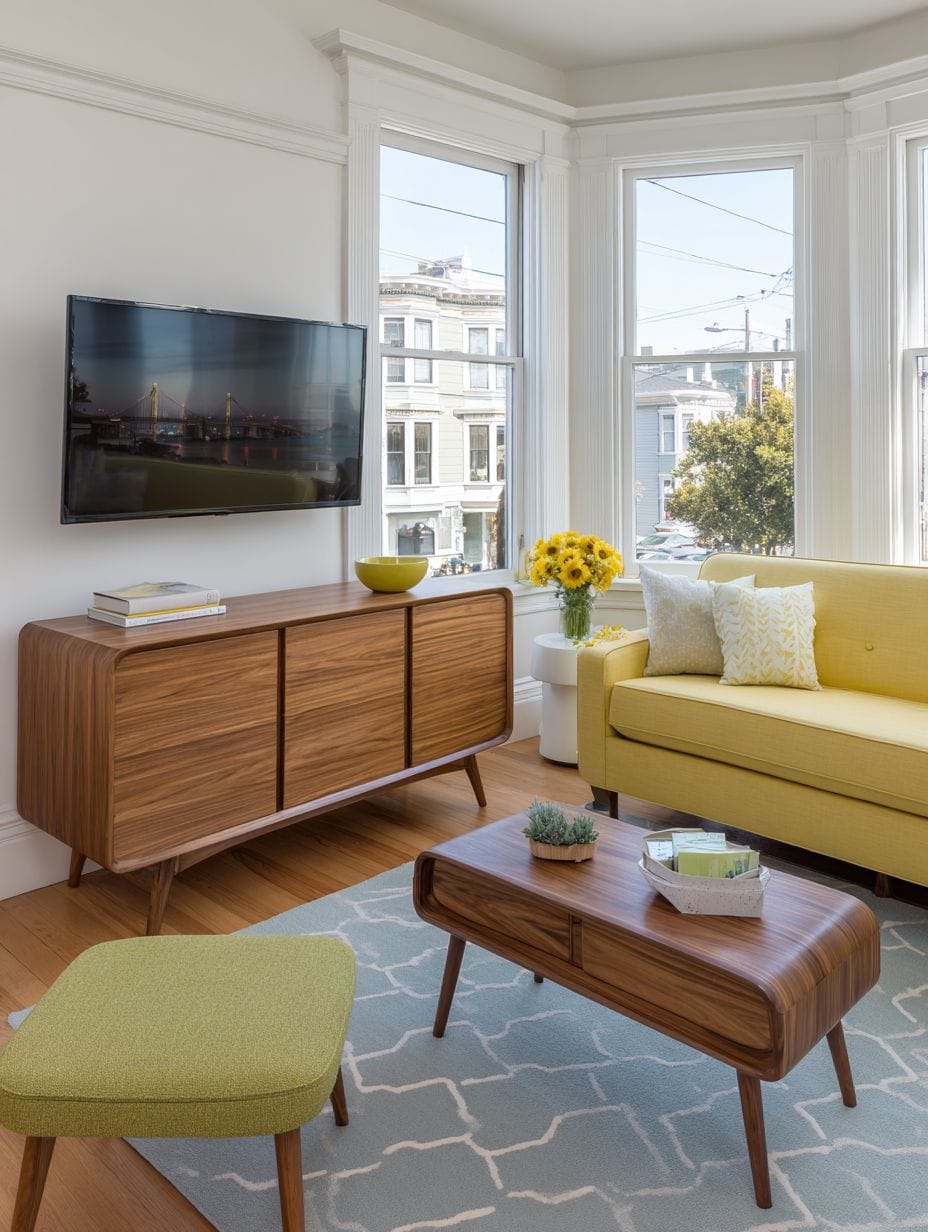
The mid-century modern aesthetic brings timeless sophistication to this TV lounge through the careful curation of iconic furniture pieces and period-appropriate design elements. A vintage teak credenza serves as the media console, its rich wood tones, tapered legs, and characteristic sliding doors creating an authentic connection to the 1950s and 60s design movement. This piece exemplifies mid-century modern’s marriage of form and function—beautiful enough to serve as sculptural art yet practical enough for daily use storing media components and collections. The credenza’s horizontal emphasis and low profile maintain the clean lines essential to the style while providing substantial storage capacity.
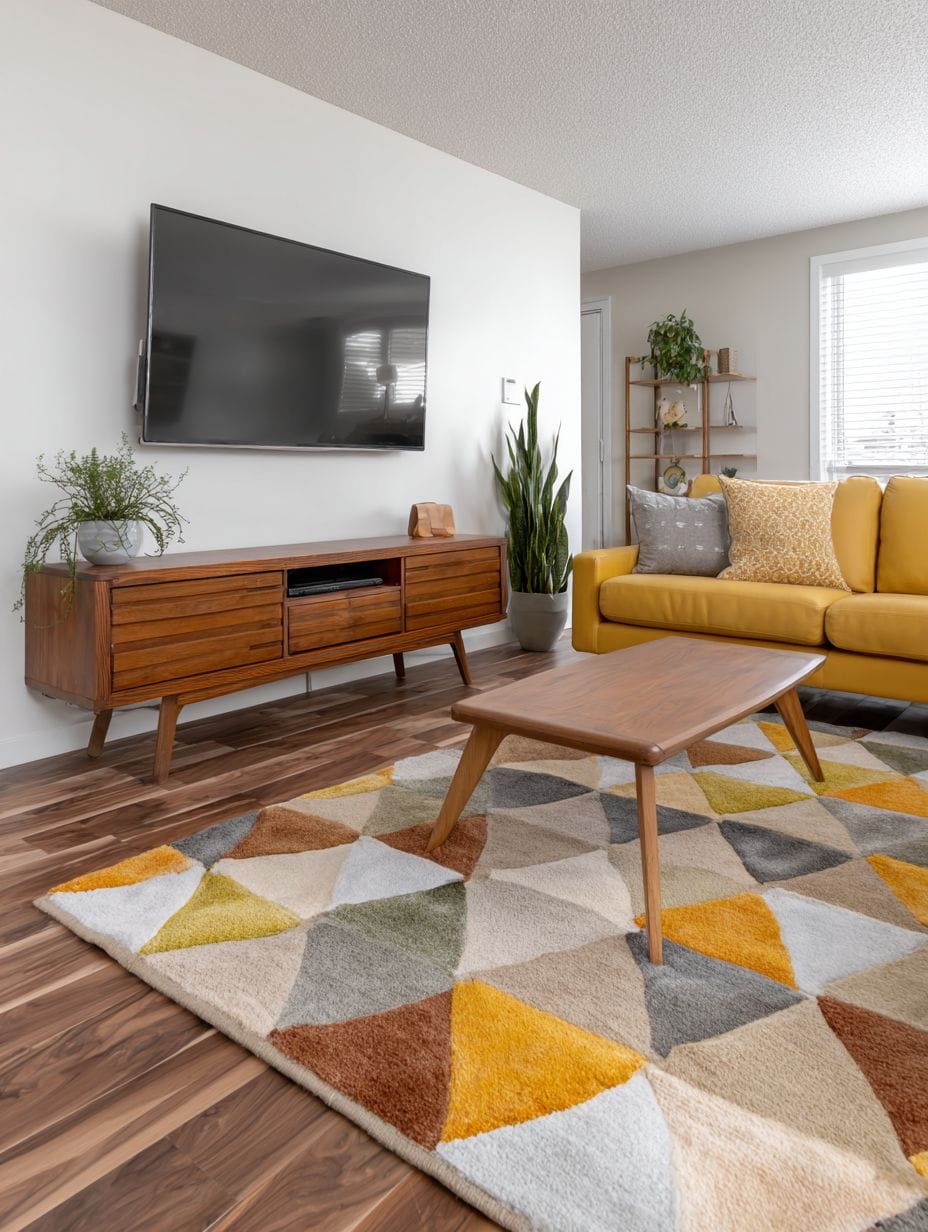
The vintage-inspired sofa in mustard yellow provides the room’s bold color statement, a shade frequently associated with mid-century interiors that adds warmth and personality without overwhelming the space. This golden-yellow hue coordinates beautifully with teak’s honey-brown tones while offering enough contrast to prevent monotony. The sofa’s clean-lined silhouette, button-tufted back, and tapered wooden legs are all hallmarks of authentic mid-century design. White walls serve as the perfect neutral backdrop, allowing the furniture to take center stage while maximizing light reflection—important in creating the bright, optimistic atmosphere characteristic of the era.
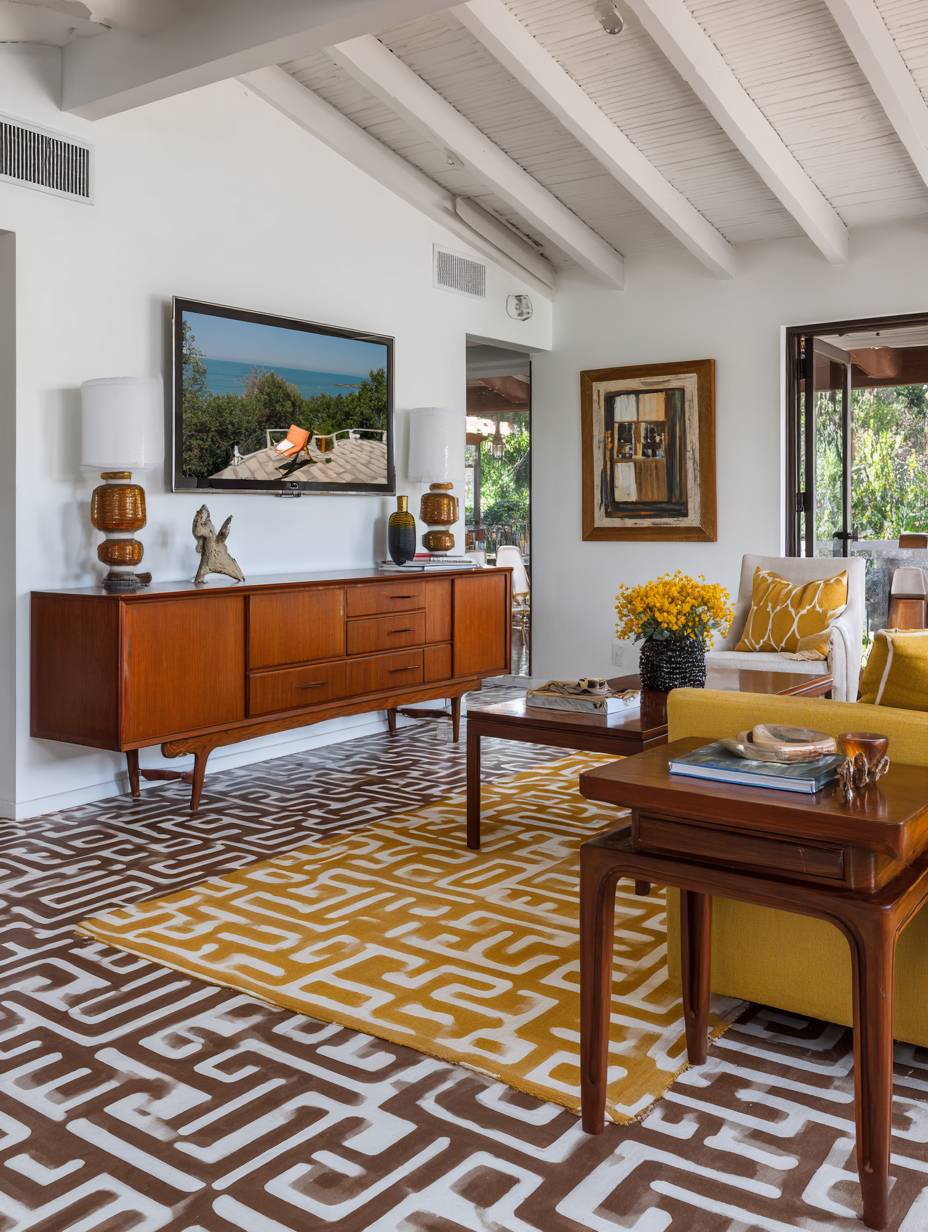
A geometric area rug in complementary tones anchors the seating arrangement while introducing pattern in a controlled, sophisticated manner. Mid-century modern design often incorporated geometric patterns inspired by atomic-age optimism and scientific advancement, and this rug pays homage to that heritage through its angular motifs and retro color palette. Natural afternoon light creates warm highlights throughout the space, showcasing how the teak’s finish deepens and glows when illuminated. Period-appropriate lighting—perhaps a tripod floor lamp with a cone shade or a starburst-style fixture—adds authentic detail while providing practical illumination. This careful attention to era-appropriate details creates a cohesive, authentic mid-century modern environment rather than a superficial approximation.
- Source authentic or quality reproduction mid-century furniture pieces with characteristic tapered legs and clean lines.
- Choose a teak credenza for media storage to establish immediate mid-century authenticity through its distinctive wood and form.
- Add a bold color accent in mustard yellow, orange, or turquoise to capture the era’s optimistic, playful spirit.
- Select geometric area rugs with atomic-age inspired patterns that reference the period’s scientific and technological enthusiasm.
- Install period-appropriate lighting such as tripod floor lamps or starburst fixtures to complete the authentic aesthetic.
12. Marble Luxury and Contemporary Elegance
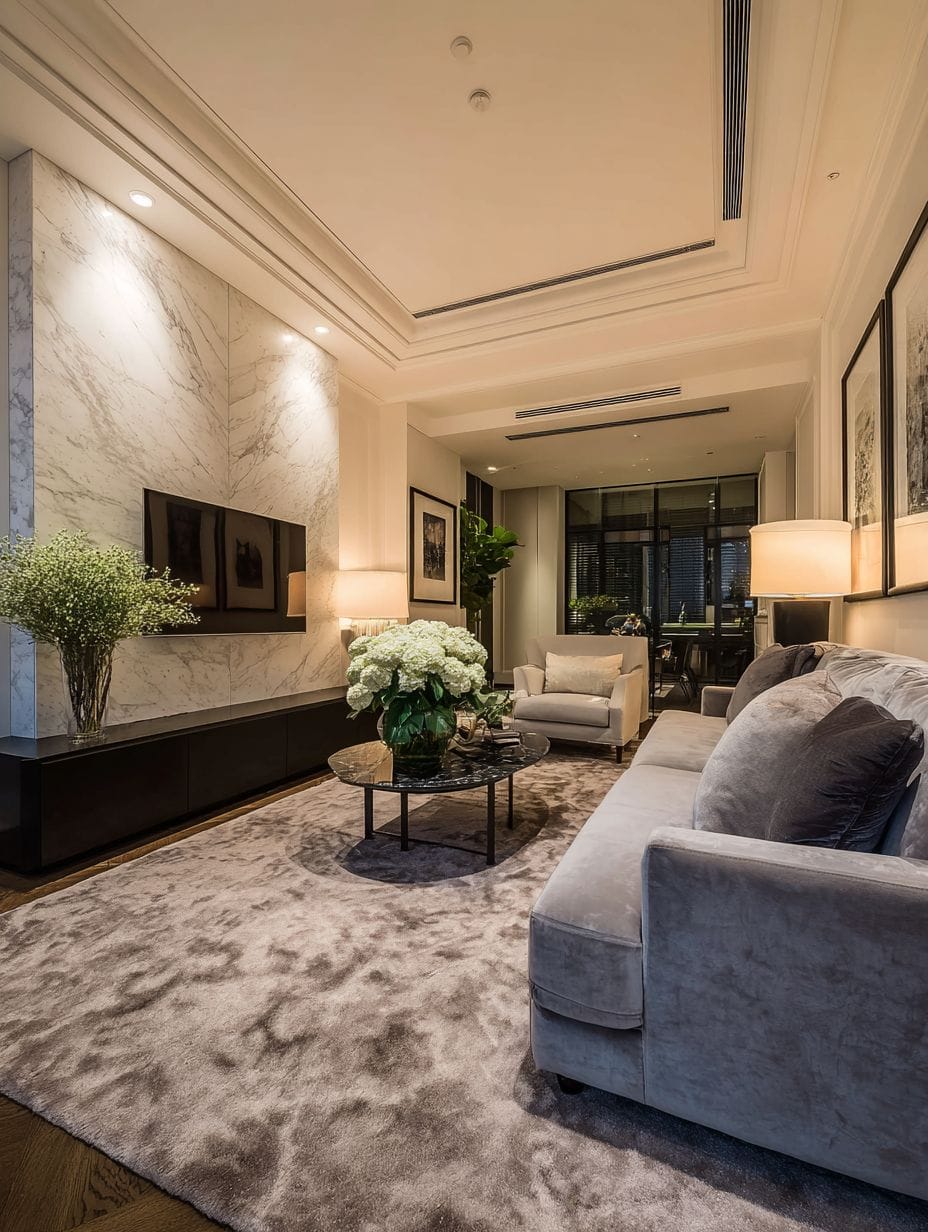
Sophisticated luxury defines this TV lounge where a stunning marble accent wall creates an unforgettable focal point. The natural stone features subtle grey veining that dances across the white background, creating organic patterns that ensure no two views are ever quite the same. This use of marble in a TV lounge represents a bold design choice that elevates the space beyond typical residential design into something approaching boutique hotel elegance. The stone’s natural variations in pattern and color provide visual interest that remains engaging through years of viewing, while its cool, smooth surface reflects light beautifully, adding brightness and dimension to the space.
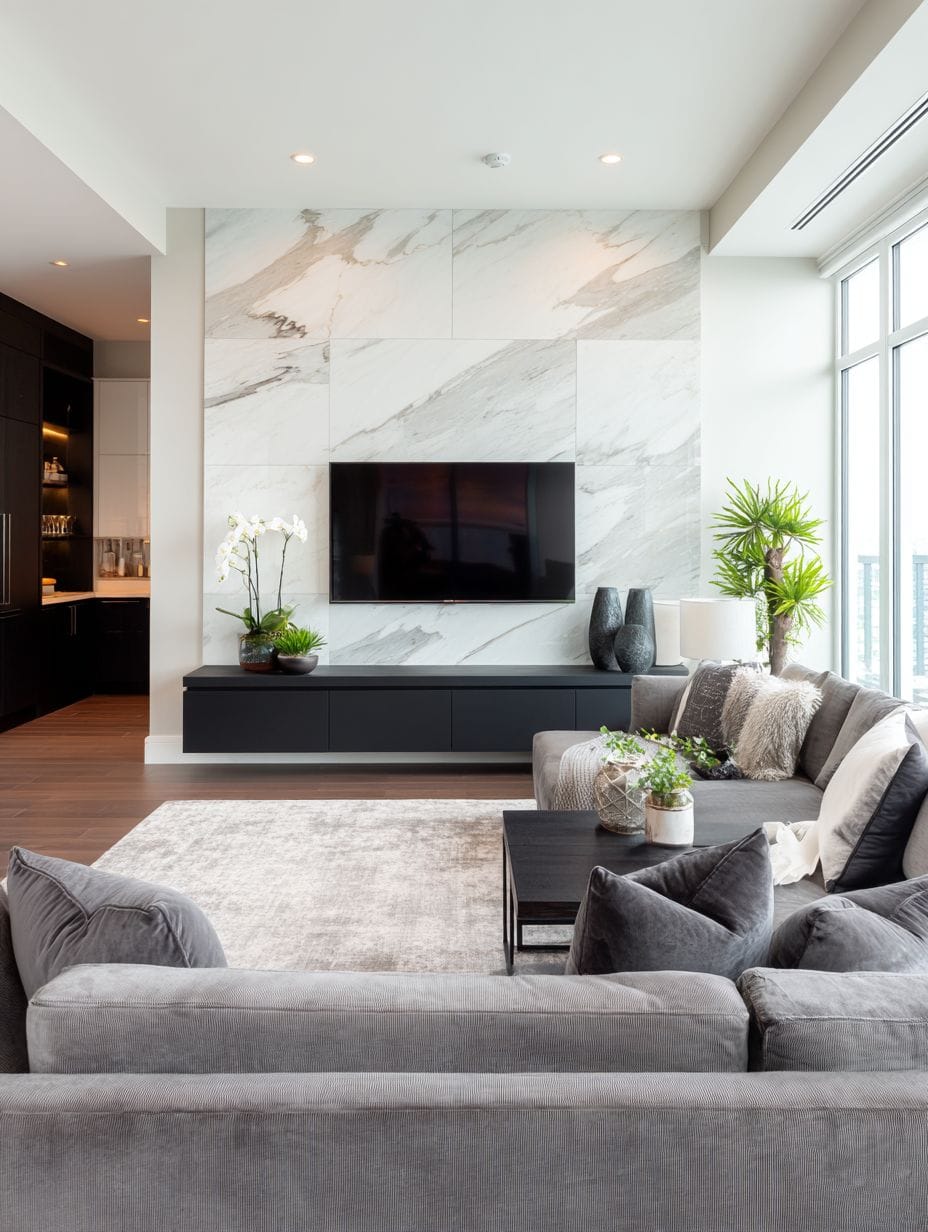
A floating media console in matte black provides dramatic contrast against the pale marble, its sleek contemporary form and dark finish creating visual weight that grounds the composition. The matte finish prevents reflections that might distract during viewing while adding understated sophistication—glossy black might feel too shiny or attention-seeking, but matte black achieves elegance through restraint. The console appears to float weightlessly against the wall, its hidden mounting brackets creating the illusion that it defies gravity, a technical detail that enhances the contemporary aesthetic while making floor cleaning easier.
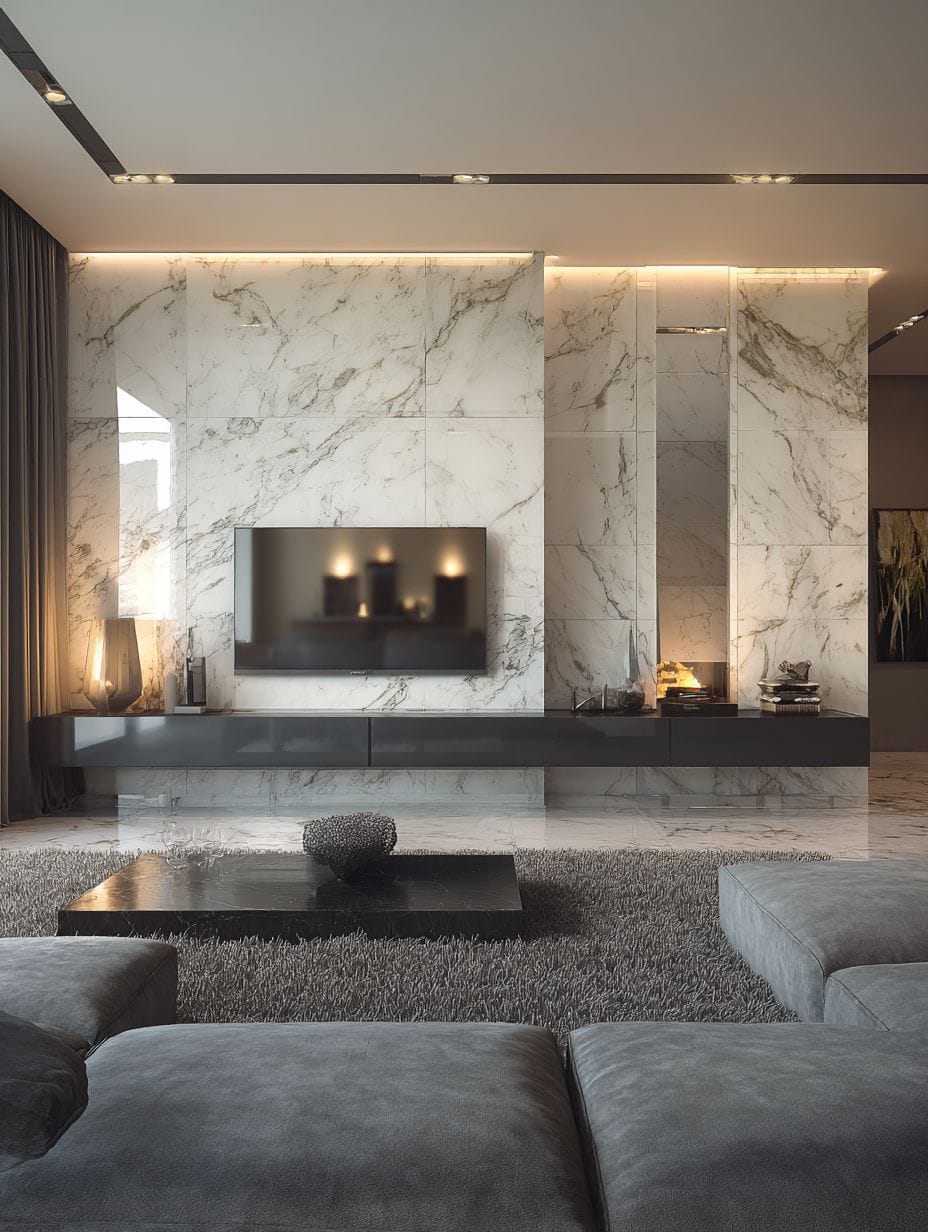
The contemporary sofa upholstered in soft grey velvet offers luxurious comfort and visual richness. Velvet’s pile catches and reflects light differently depending on viewing angle and lighting conditions, creating subtle variations in color depth that add dynamism to the space. The grey tone serves as a sophisticated neutral that allows the marble wall to remain the star while providing enough visual weight to anchor the seating area. The sofa sits atop a plush area rug that adds another layer of texture and luxury underfoot. Ambient lighting from LED strips concealed behind the console and modern floor lamps creates layered illumination that can be adjusted to highlight the marble’s veining or create a more subdued, intimate atmosphere for evening viewing.
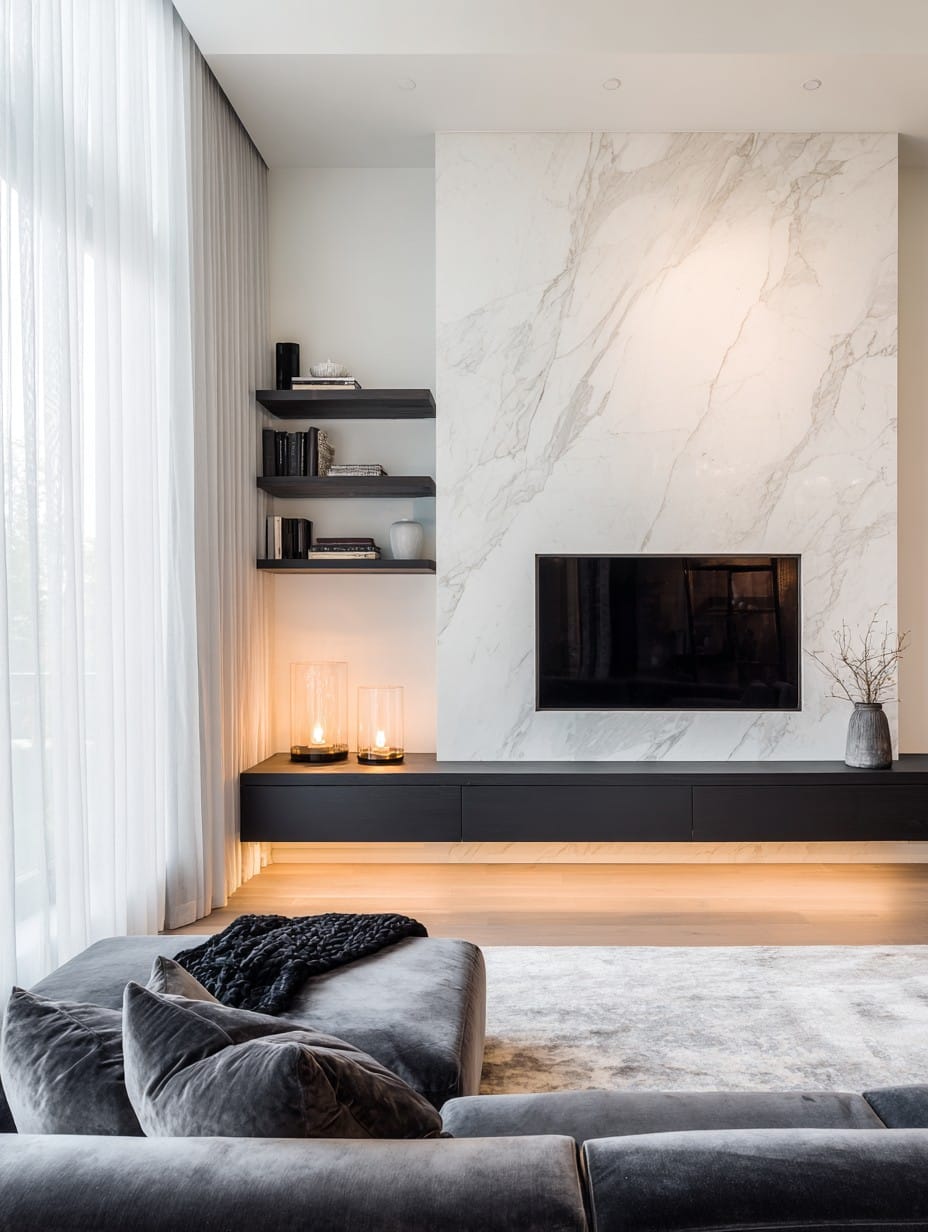
- Install marble on the TV accent wall to create a luxurious focal point with natural pattern variations that never become boring.
- Choose a matte black floating console to provide dramatic contrast without the distraction of glossy reflective surfaces.
- Select grey velvet upholstery that catches light at different angles, adding visual dynamism to the seating area.
- Conceal LED strip lighting behind the media console to highlight the marble’s veining and create ambient illumination.
- Layer plush textures in the rug and upholstery to create a tactile sense of luxury that complements the visual elegance.
13. Smart Studio Apartment Living
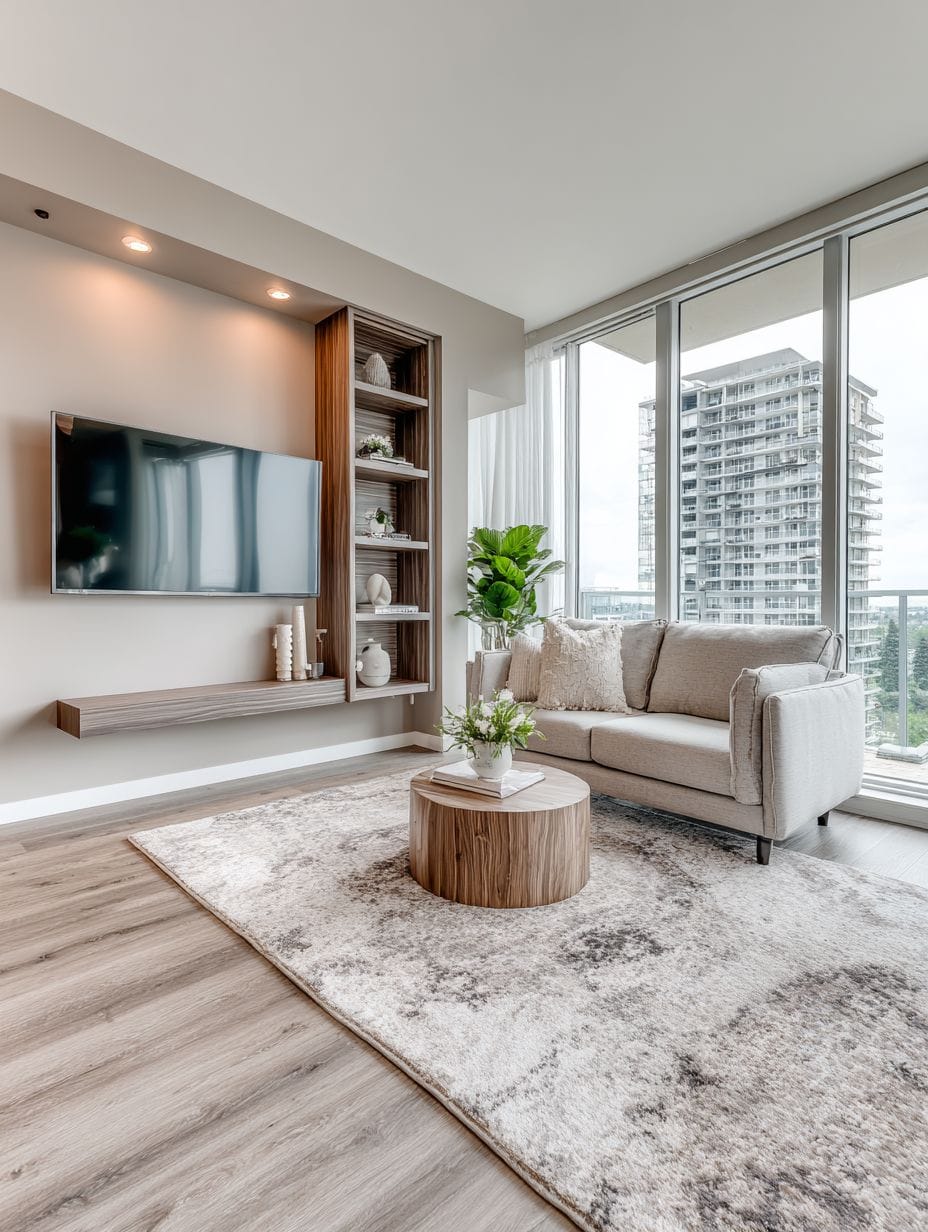
Urban studio apartment living requires creative space management, and this compact TV lounge demonstrates how thoughtful design conquers spatial constraints without sacrificing style or functionality. The wall-mounted television represents the first smart decision, eliminating the need for a traditional entertainment center that would consume precious square footage. A narrow floating shelf below provides just enough surface for a streaming device or soundbar while maintaining the clean, uncluttered aesthetic essential to making small spaces feel larger. Every design decision prioritizes visual lightness and physical efficiency, proving that compact living doesn’t require compromise when approached with intelligence and creativity.
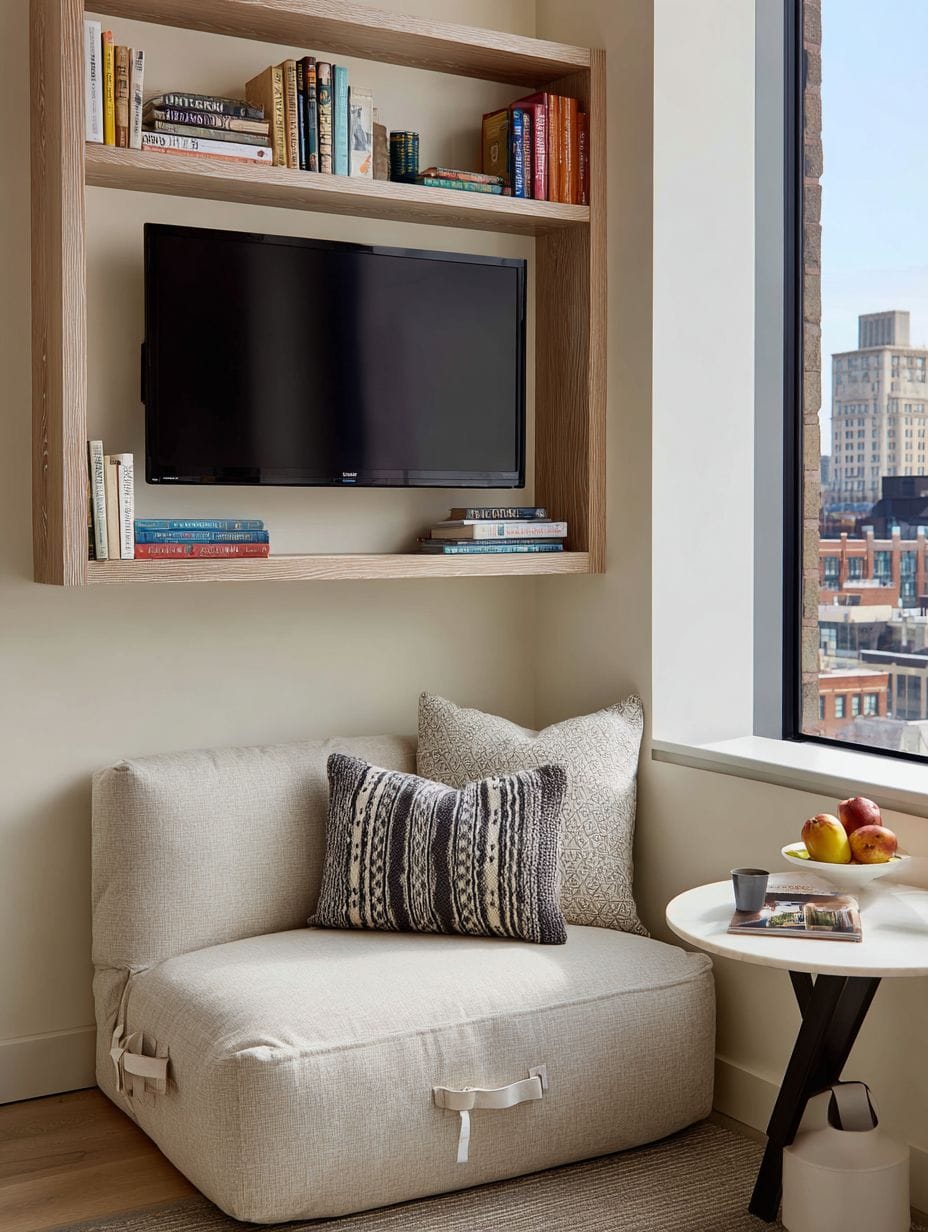
The small loveseat with built-in storage underneath exemplifies multi-functional furniture design at its finest. During the day, it serves as comfortable seating for relaxing or entertaining guests. At night, the storage compartment might hold bedding if the loveseat converts to sleeping space, or it could store out-of-season clothing, extra supplies, or anything that would otherwise require a separate storage piece. This double-duty approach means every furniture item earns its place through multiple functions rather than serving a single purpose—essential in studios where every square foot matters.
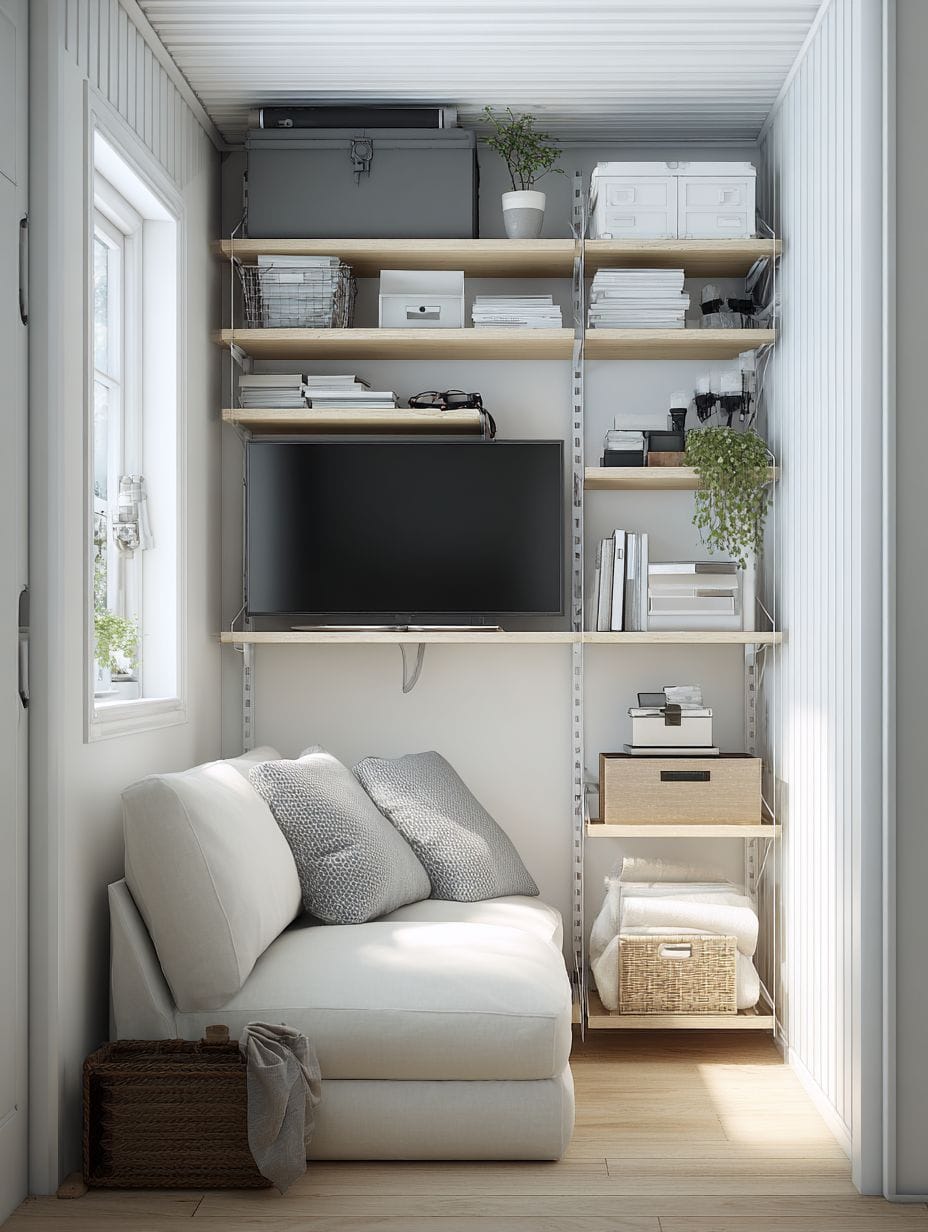
Vertical wall-mounted shelving maximizes storage without consuming valuable floor space, drawing the eye upward and creating the illusion of taller ceilings. These shelves might display books, plants, decorative objects, or everyday essentials, keeping them accessible while off the floor. Light neutral colors throughout—perhaps soft whites, warm creams, or gentle greys—maximize light reflection and create an open, airy feeling. Strategic mirror placement amplifies natural light and creates depth, making the space feel significantly larger than its actual dimensions. Perhaps a large mirror leans against one wall or hangs opposite a window, doubling the perceived space through reflection. This optical trickery, combined with smart furniture choices and efficient storage solutions, transforms a modest studio into a perfectly functional and attractive living space.
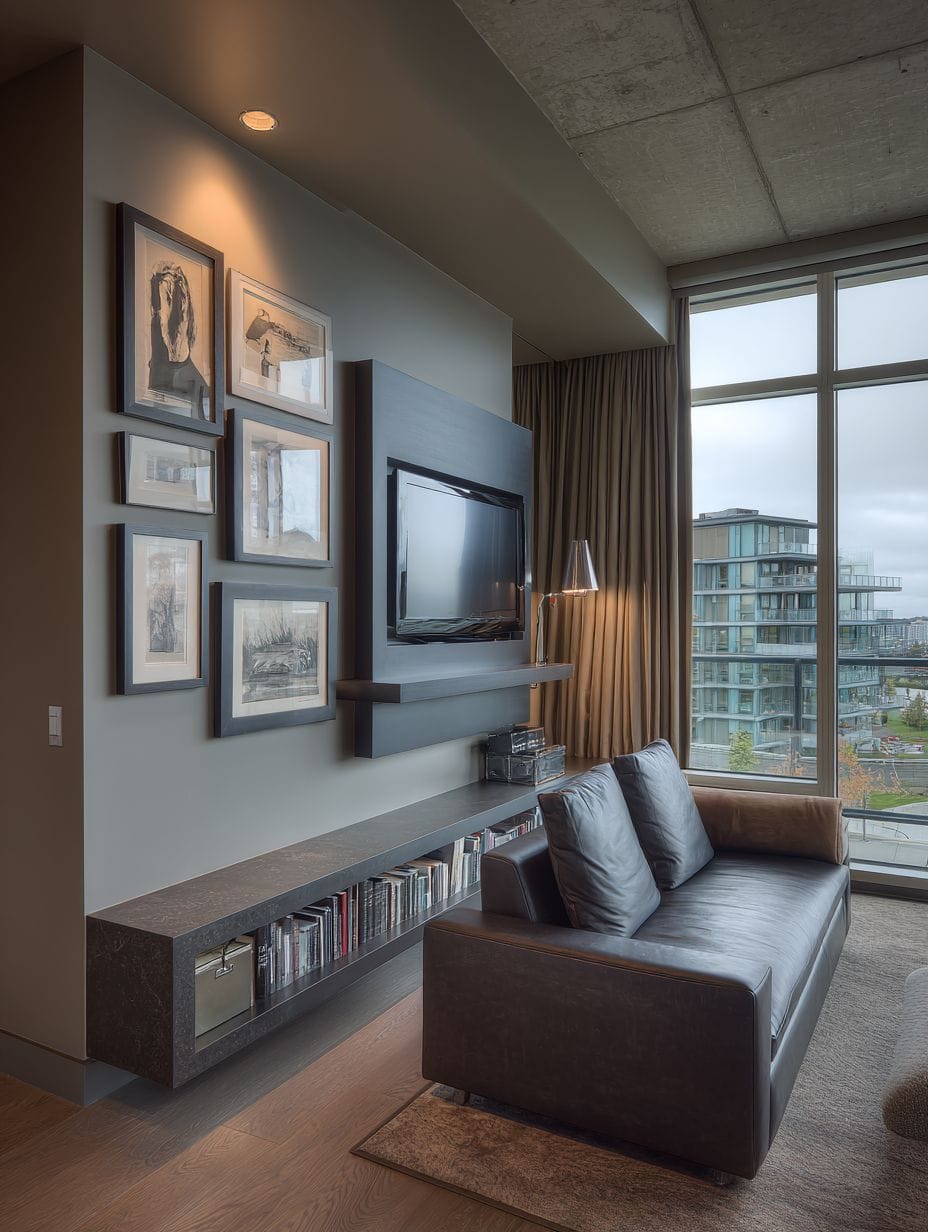
- Mount the television on the wall with only a narrow floating shelf below to eliminate bulky entertainment centers.
- Choose a loveseat with storage underneath to maximize seating comfort while providing essential storage without additional furniture.
- Install vertical wall shelving to maximize storage capacity without consuming precious floor space.
- Paint in light neutral colors that maximize light reflection and create an open, airy atmosphere.
- Position mirrors strategically opposite windows or light sources to amplify natural light and double perceived space.
14. Rustic Farmhouse Warmth
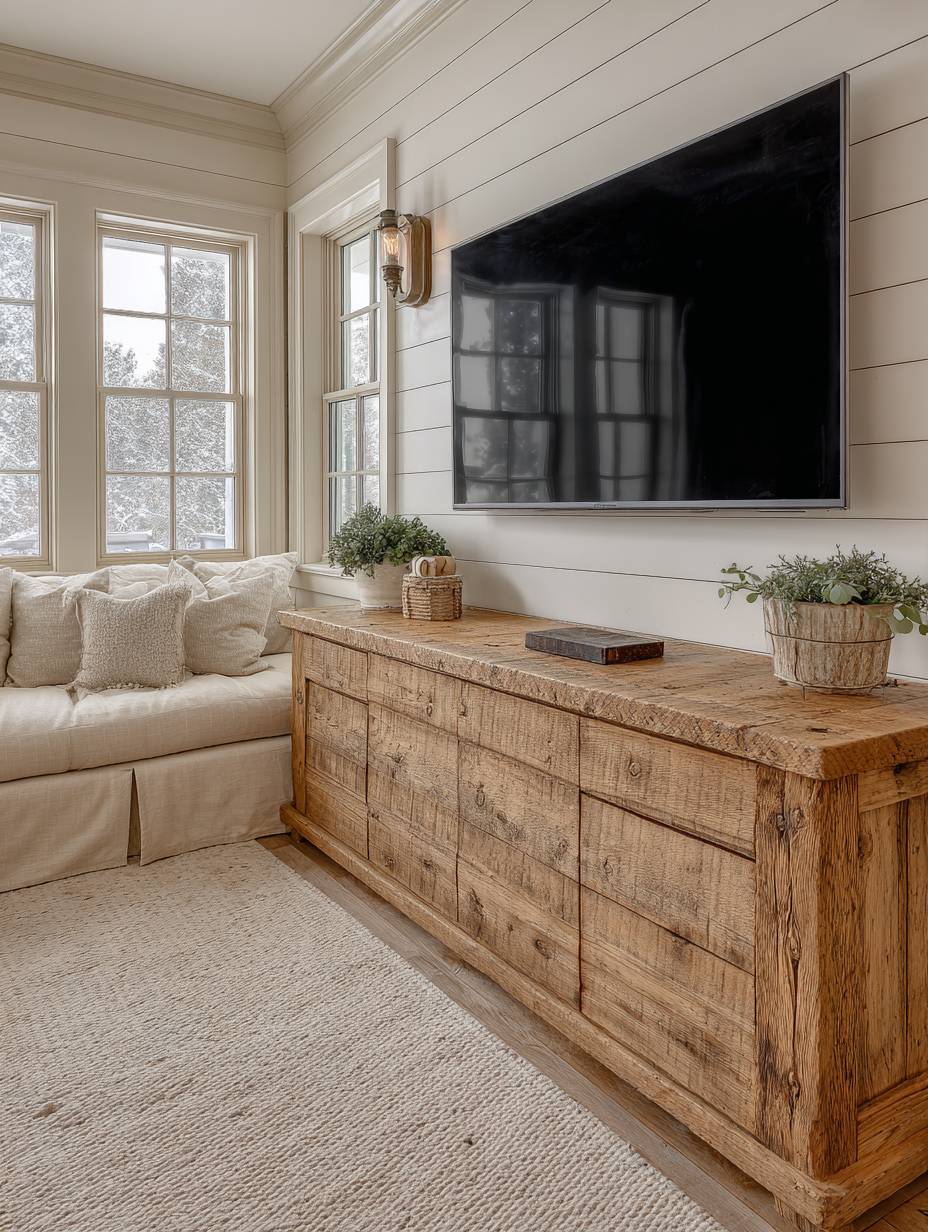
Rustic farmhouse aesthetics bring comforting warmth and authentic character to this TV lounge, where a shiplap accent wall painted in soft white provides the perfect backdrop for the television. The shiplap’s horizontal boards create subtle shadow lines that add dimensional texture without overwhelming the space, their painted finish brightening the room while maintaining the wood’s tactile presence. This classic farmhouse element immediately establishes the room’s design direction, creating a fresh-yet-familiar backdrop that feels both current and timeless. The soft white paint color keeps the space feeling bright and airy while allowing other elements to introduce warmer tones and richer textures.
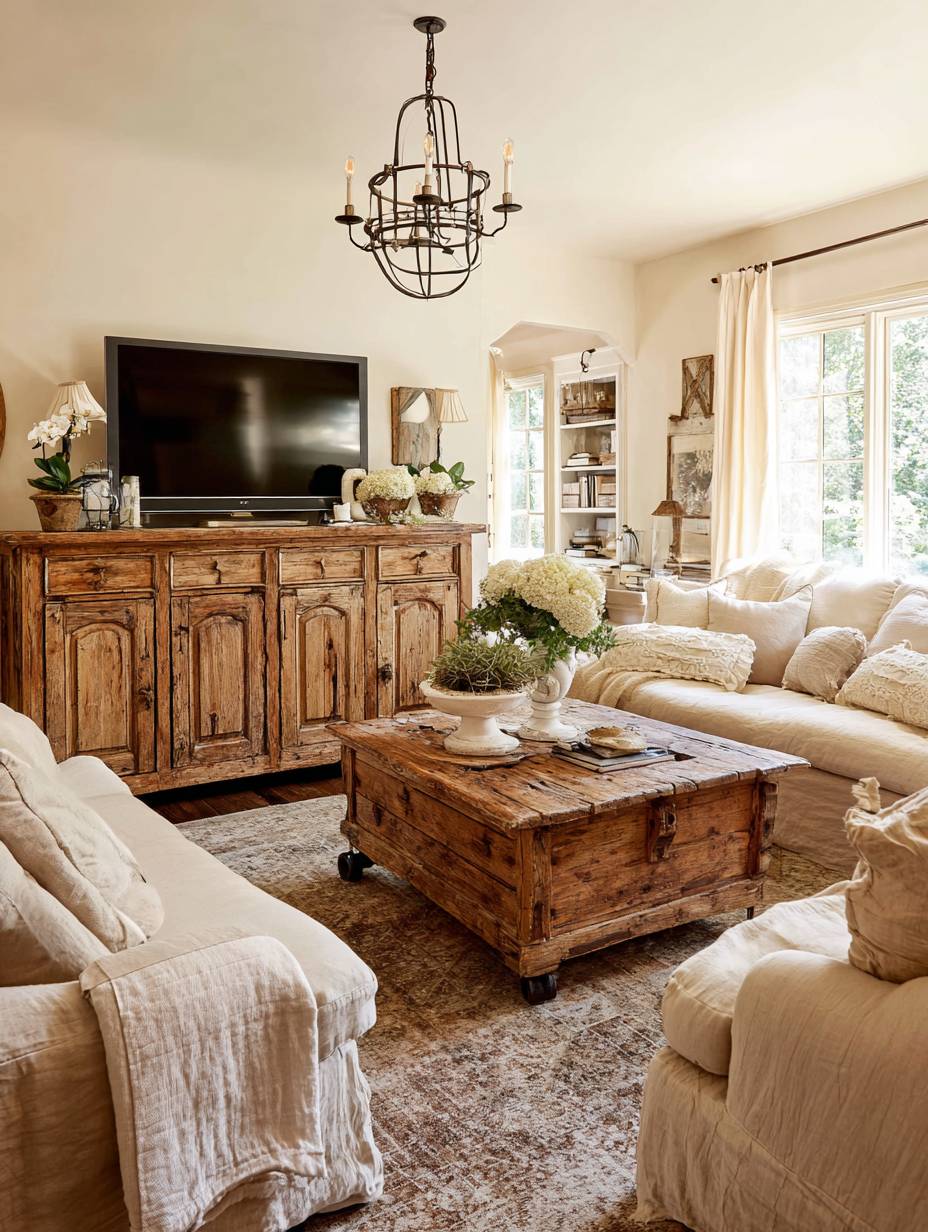
A substantial reclaimed wood media console anchors the entertainment center with authentic farmhouse character. Visible knots, natural imperfections, and perhaps even old nail holes or weathering tell stories of the wood’s previous life—maybe salvaged from an old barn, factory floor, or architectural demolition. These authentic details create a sense of history and connection to the past that manufactured furniture simply cannot replicate. The console’s generous proportions provide ample storage for media components, collections, and everyday items, while its rustic finish coordinates beautifully with the room’s overall aesthetic without appearing too matchy-matchy with the shiplap wall.
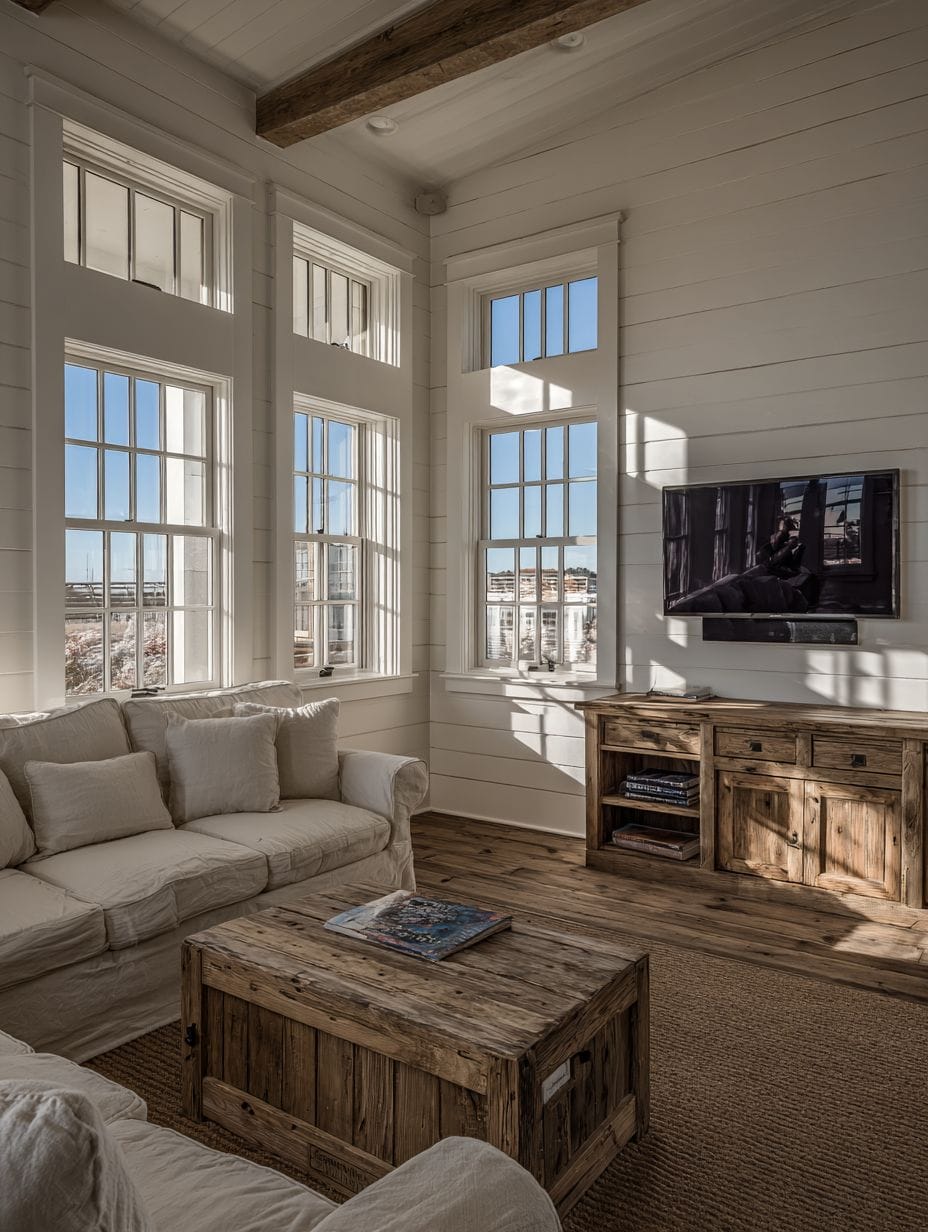
A comfortable slipcovered sofa in natural linen provides relaxed seating that perfectly captures farmhouse style’s emphasis on livable, unpretentious comfort. Slipcovers offer practical benefits—they’re removable for cleaning and can be replaced if they become too worn—while their slightly rumpled appearance conveys casual elegance rather than stiff formality. Vintage-inspired decor throughout the space might include galvanized metal containers holding fresh flowers or greenery, old wooden crates repurposed as side tables, and perhaps vintage farm implements displayed as wall art. Edison bulb fixtures in simple metal housings provide warm, amber-toned light that softens the space, while natural light from divided-light windows—characteristic of farmhouse architecture—floods the room during daylight hours.
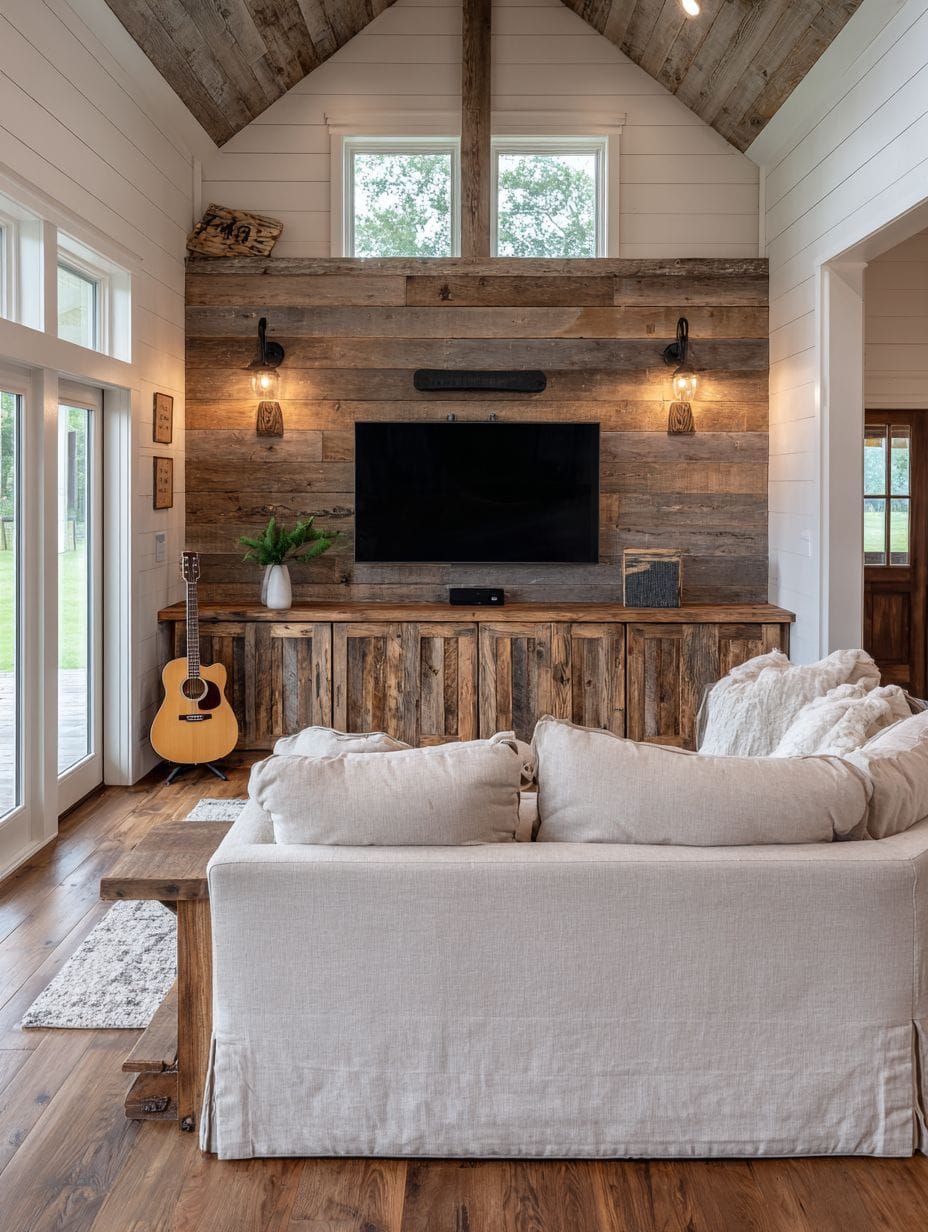
- Install shiplap on the TV wall painted in soft white to create textural interest while maintaining a bright, airy feeling.
- Choose a reclaimed wood console with visible knots and authentic weathering that tells a story and adds character.
- Select a slipcovered sofa in natural linen for removable, washable comfort that captures farmhouse’s relaxed elegance.
- Incorporate vintage-inspired decor like galvanized metal containers and repurposed wooden crates as functional accessories.
- Install Edison bulb fixtures in simple metal housings to provide warm, amber-toned light characteristic of rustic spaces.
5. Technology-Integrated Smart Entertainment
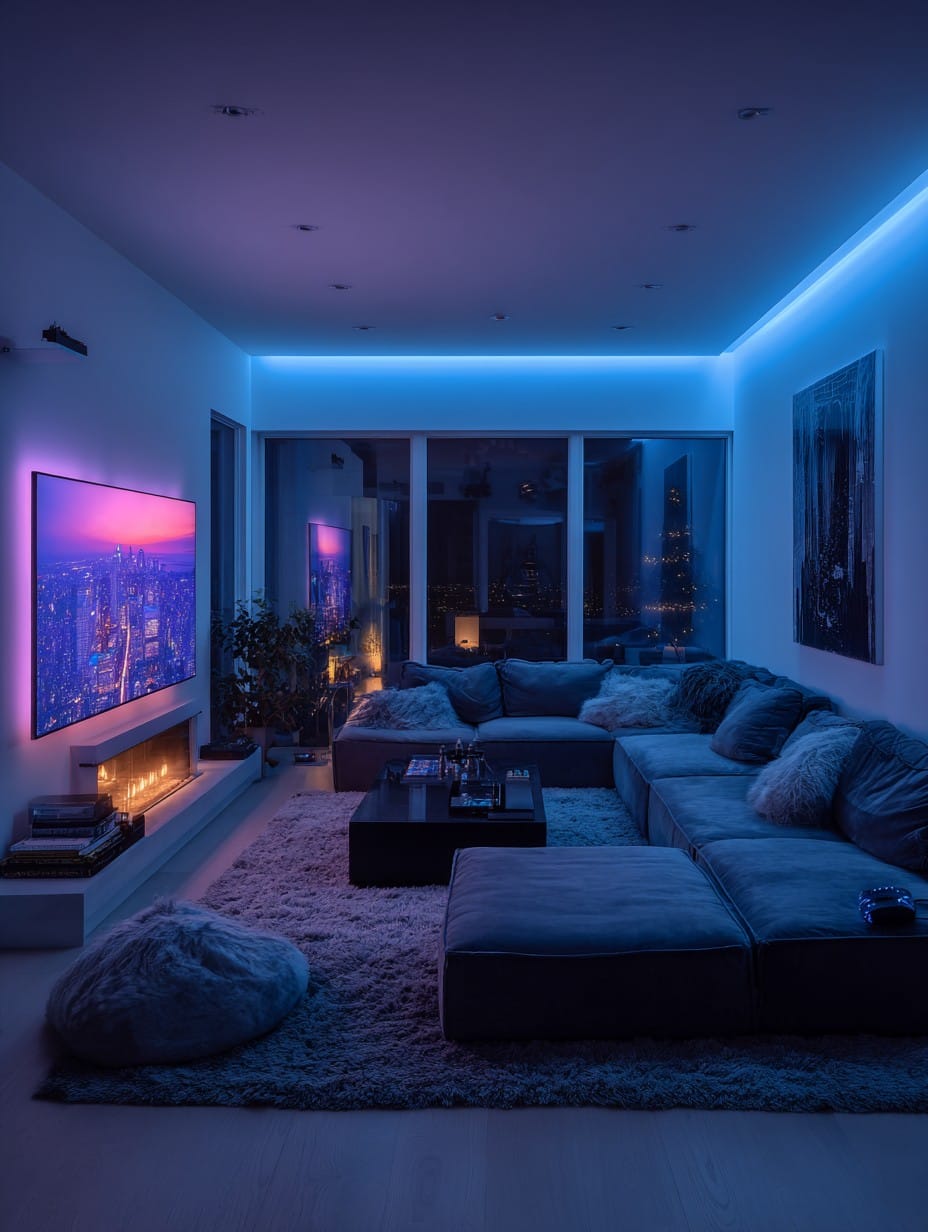
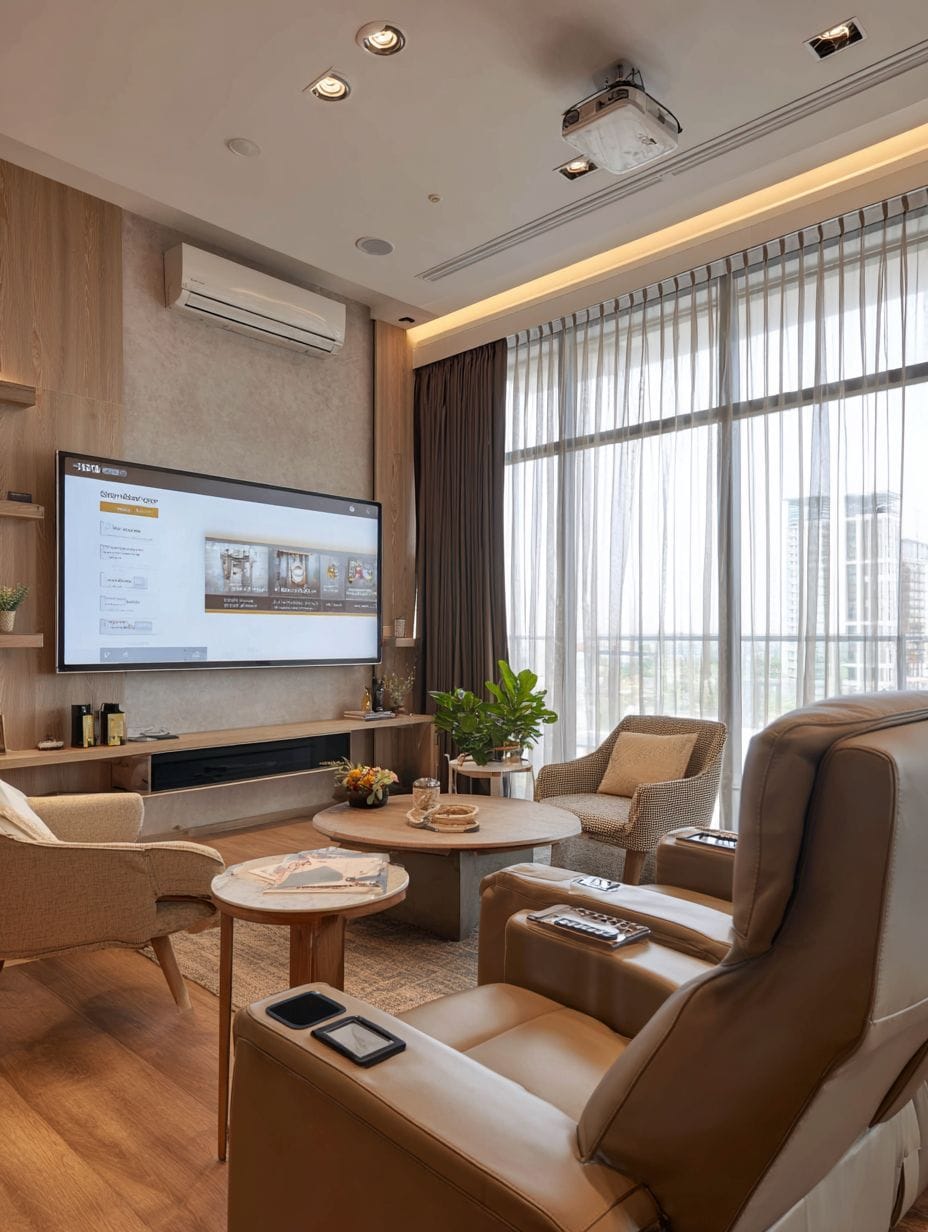
The future of TV lounge design embraces technology not as an afterthought but as an integrated design element that enhances both function and aesthetics. This tech-forward space features ambient LED lighting systems that change color throughout the room, creating customizable environments for different moods and activities. Behind the television, LED strips create a halo of color-changing light that reduces eye strain while adding a contemporary, almost cinematic quality. Additional LED strips under furniture, along architectural features, or within shelving create coordinated lighting scenes that can shift from energizing blues for sports viewing to warm ambers for cozy movie nights, all controlled through a smartphone app or voice commands.
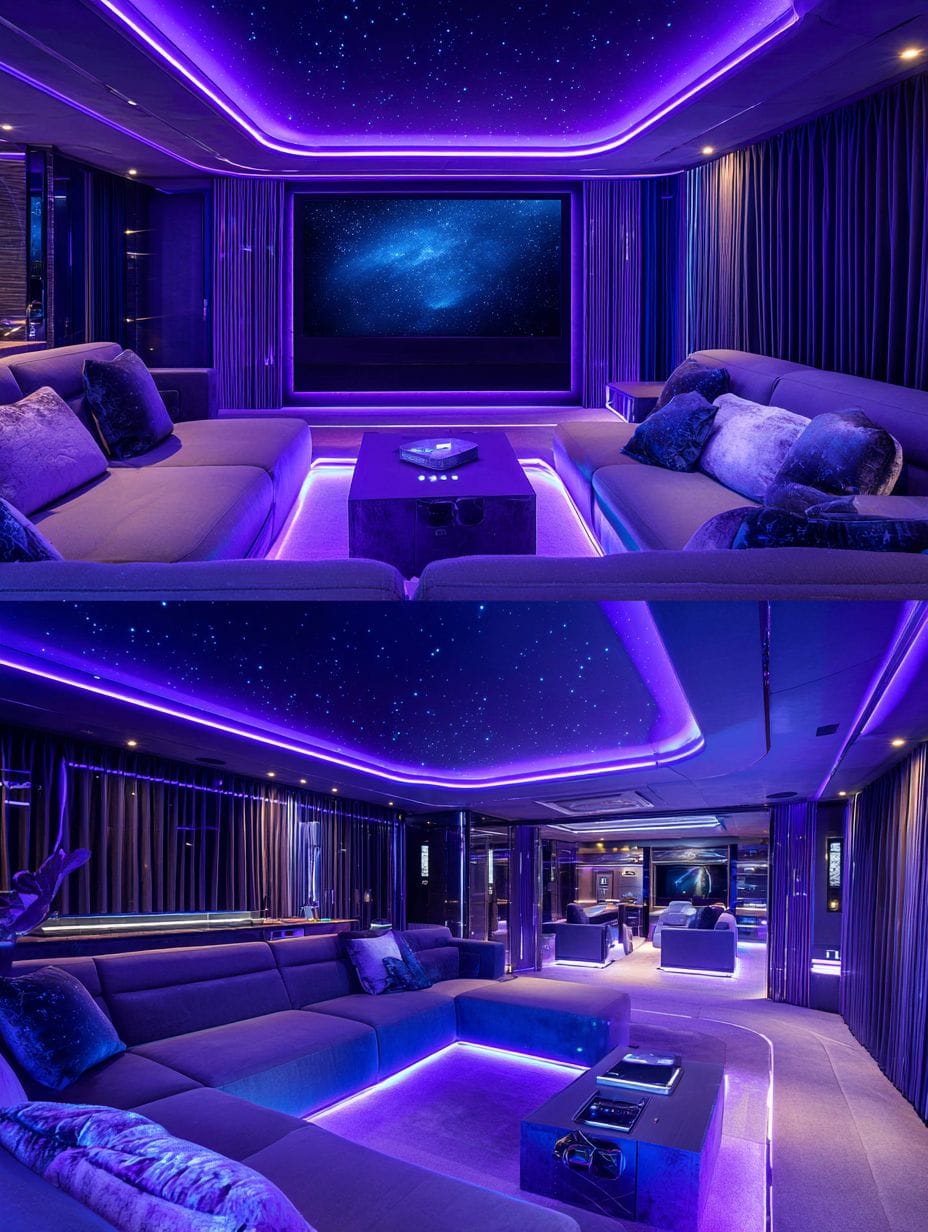
A motorized projector screen represents the pinnacle of hidden technology integration. When not in use, it disappears completely into the ceiling, leaving the wall free for artwork or simply maintaining clean architectural lines. When entertainment time arrives, a button press or voice command lowers the screen smoothly and quietly, transforming the space into a home theater with a display size that no television could match. Behind or beside the projection area, a hidden entertainment system houses all necessary components—projector, media players, gaming systems, audio equipment—completely concealed when not in use. This approach eliminates visual clutter while providing access to cutting-edge entertainment technology.
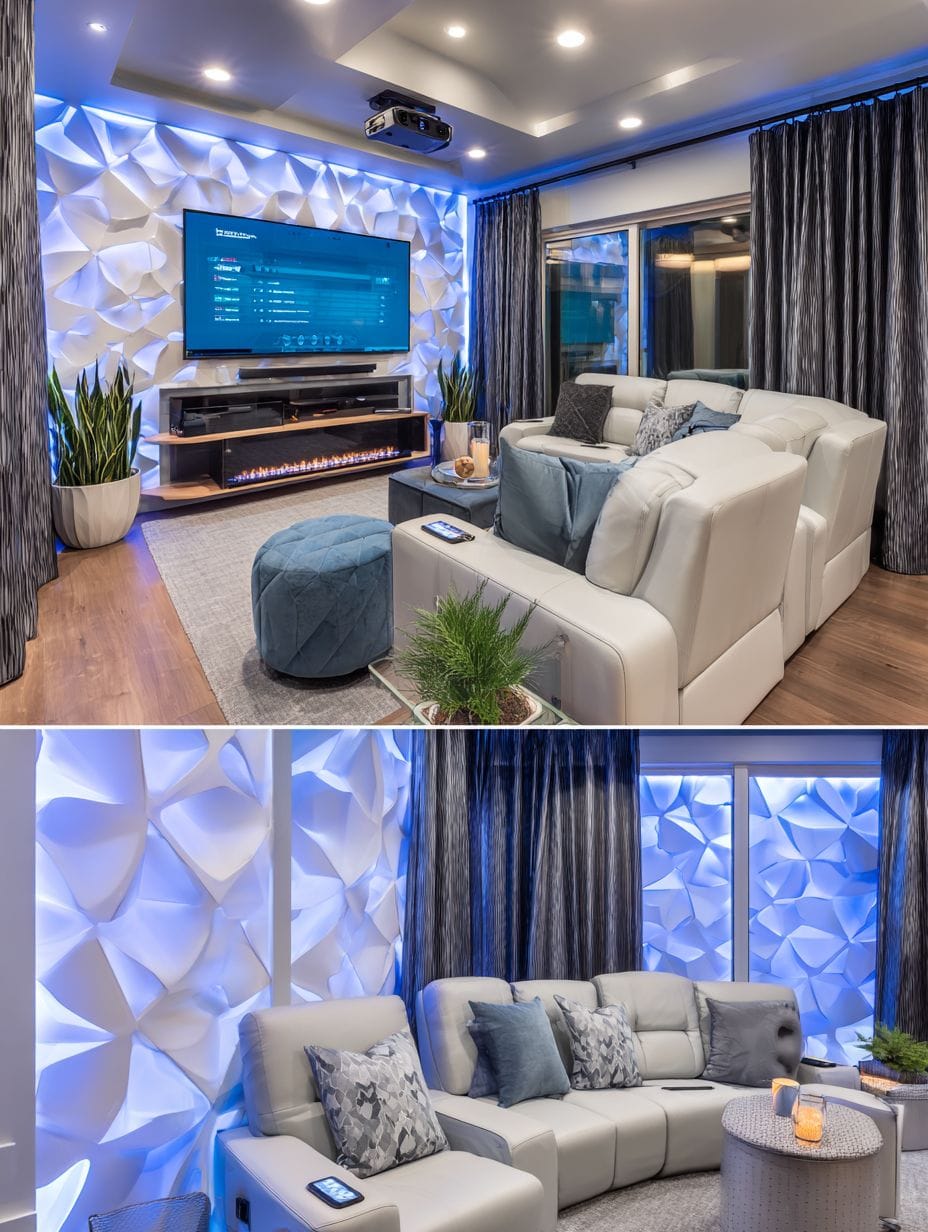
Comfortable reclining seating demonstrates how technology enhances comfort through features like built-in USB charging ports and wireless charging pads integrated directly into side tables or sofa arms. These thoughtful additions eliminate the need for visible cables or scrambling to find charging solutions, keeping technology accessible yet unobtrusive. The recliners themselves might feature electric operation, allowing occupants to find their perfect position with the touch of a button. Blackout curtains ensure optimal viewing conditions by eliminating ambient light, whether from windows or adjacent rooms. These motorized curtains close smoothly at the touch of a button, their room-darkening fabric creating the perfect theater environment for immersive viewing experiences.
- Install color-changing LED lighting behind the TV and throughout the room for customizable ambient environments.
- Integrate a motorized projector screen that disappears into the ceiling when not in use for ultimate screen size without visual clutter.
- Conceal all entertainment components in hidden storage that maintains clean aesthetics while providing full functionality.
- Add built-in charging solutions including USB ports and wireless charging pads in furniture for convenient device power.
- Install motorized blackout curtains that create optimal viewing conditions at the touch of a button.
16. Bohemian Eclectic Expression
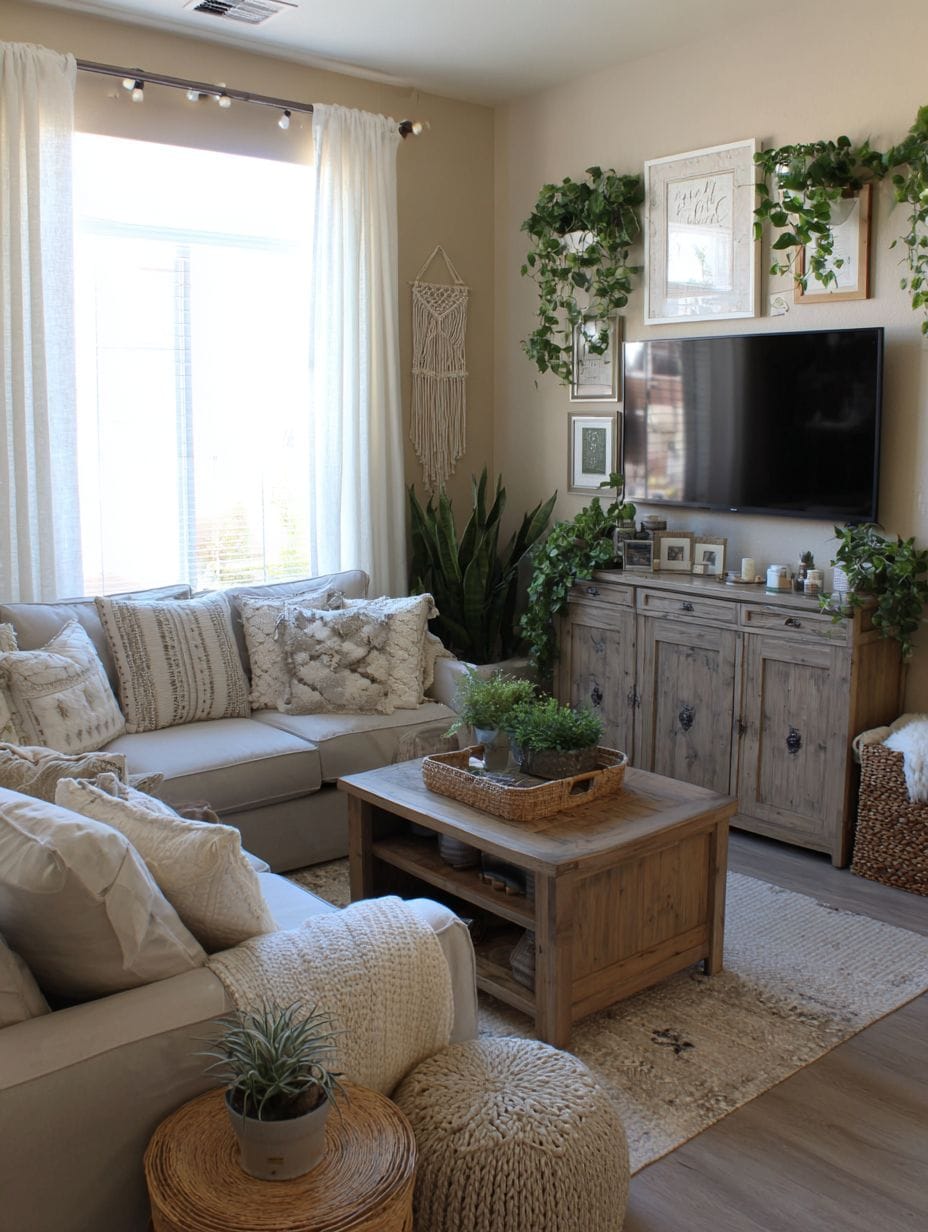
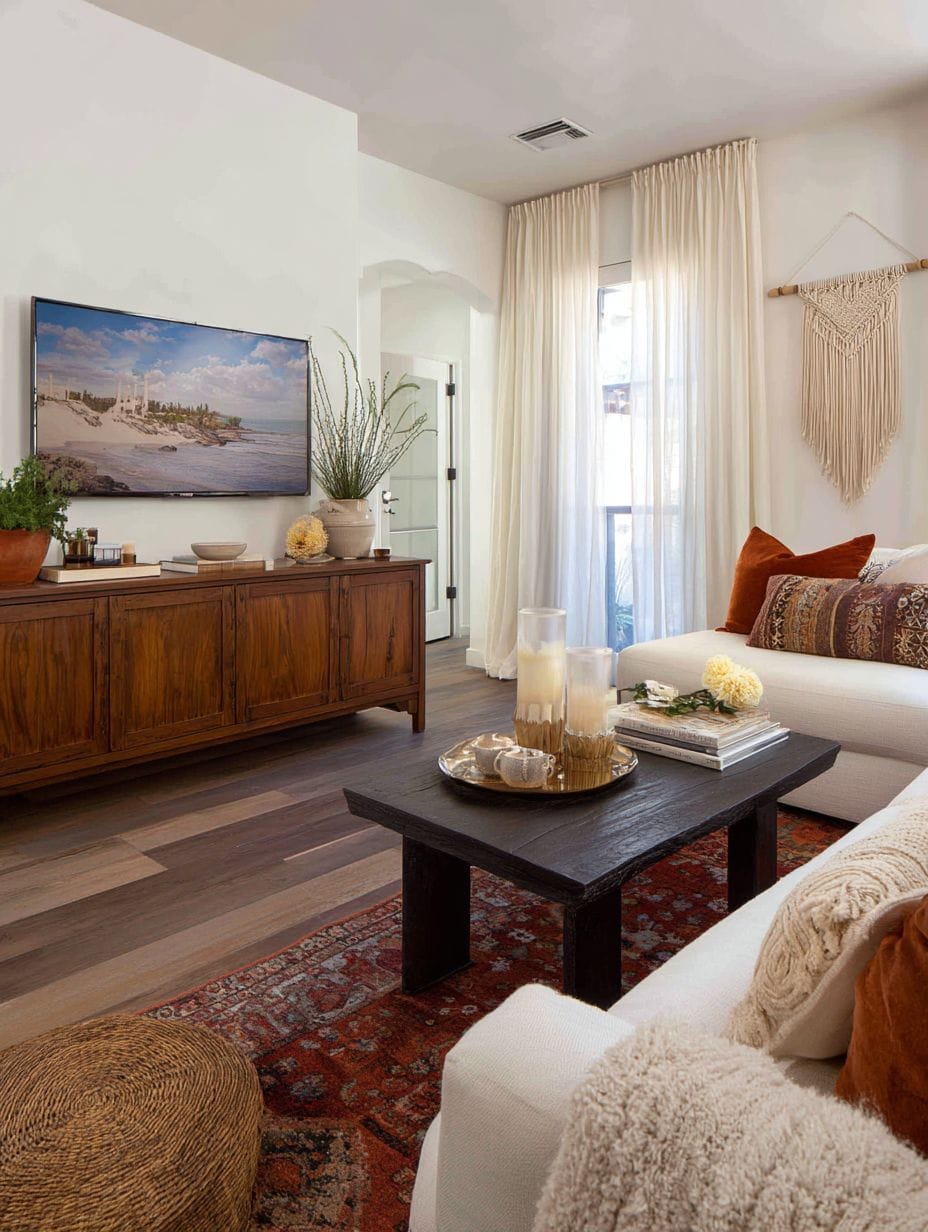
Bohemian design celebrates personal expression, collected treasures, and the beautiful chaos of layered patterns and textures. This eclectic TV lounge embraces that philosophy wholeheartedly, where the television sits atop a vintage wooden credenza that appears to have been collected during travels or discovered at an estate sale. The credenza’s surface becomes a stage for personality—potted plants in mismatched containers bring life and oxygen to the space, while decorative objects collected over time tell stories and create visual interest. This layered, collected approach stands in stark contrast to minimalist aesthetics, instead celebrating abundance and personal history.
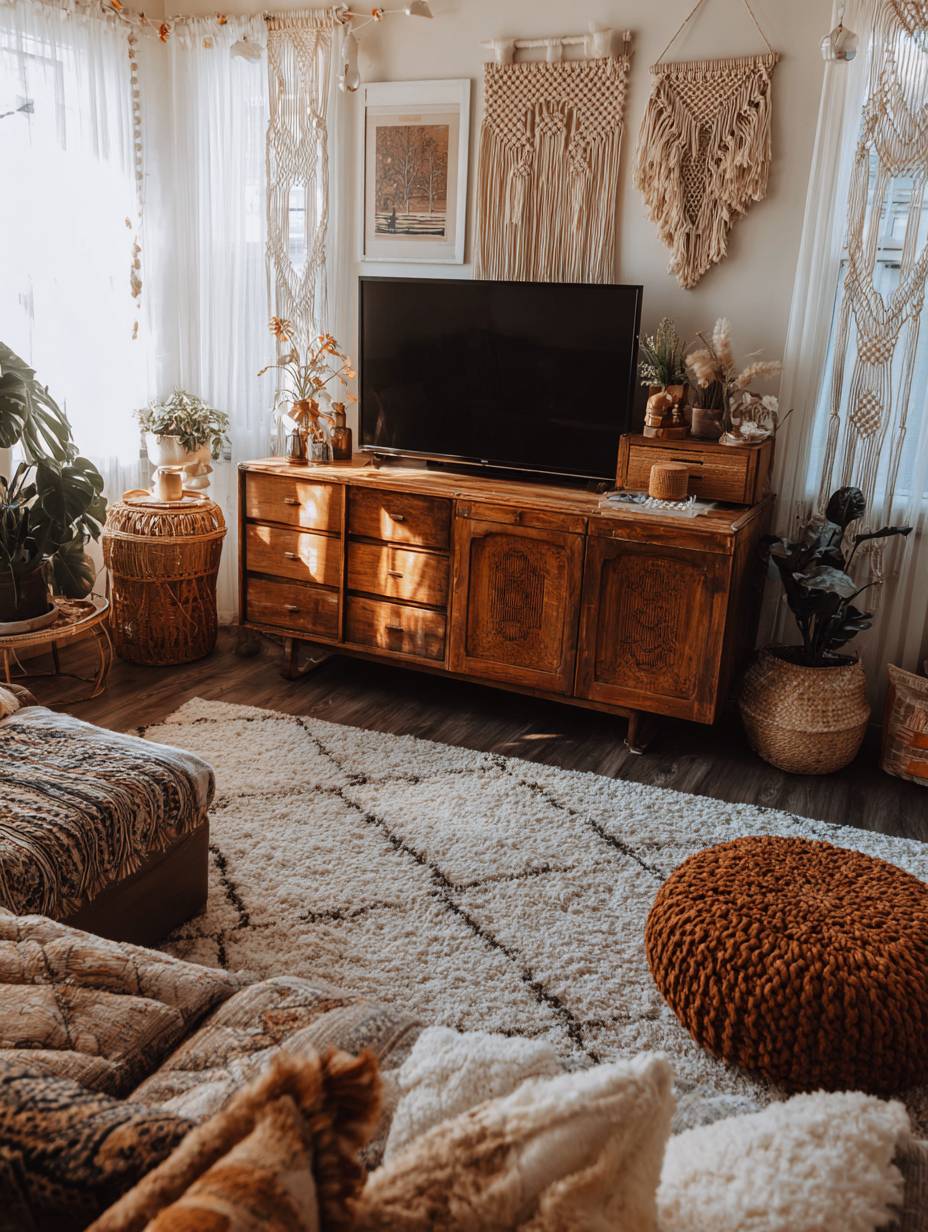
The low-slung sofa epitomizes bohemian comfort with its relaxed proportions and explosion of mixed pattern pillows. Geometric prints mix with florals, which sit alongside ethnic textiles and vintage fabrics—combinations that might seem chaotic but create visual richness when unified by a cohesive color palette. Layered textiles extend to throws draped casually over the sofa back and perhaps a vintage kilim or dhurrie rug layered over a larger neutral rug beneath. This textile layering creates incredible visual depth and tactile richness, inviting occupants to touch and interact with the space rather than merely look at it.
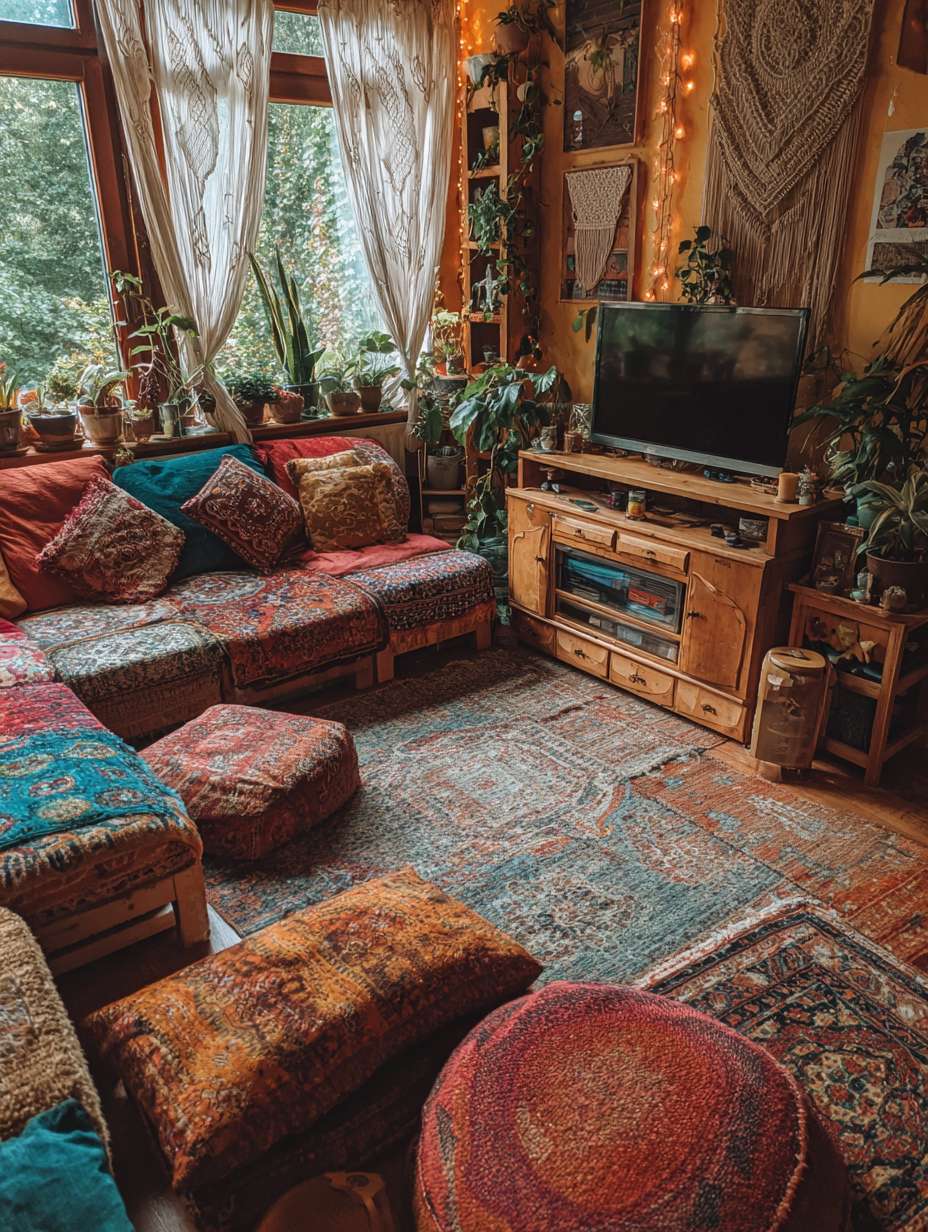
Macrame wall hangings add handcrafted texture and vertical interest, their knotted patterns and natural fiber beauty celebrating artisanal craft. String lights draped along walls or wrapped around plants create warm, twinkling ambient light that adds magic to evening hours. These fairy lights cost little but contribute significantly to the bohemian atmosphere of casual elegance and playful creativity. Natural light filters through gauzy curtains—perhaps in an ethnic print or simply flowing white cotton—that diffuse harsh sunlight while maintaining the room’s connection to the outdoors. Plants throughout the space add not just visual interest but living energy, their varied shapes, sizes, and shades of green contributing to the room’s organic, slightly wild aesthetic.
- Use vintage furniture pieces as media consoles to add character and provide conversation starters with history.
- Mix patterns boldly in pillows and textiles, unifying disparate patterns through a cohesive color palette.
- Layer textiles generously with rugs on rugs, multiple throws, and abundant pillows for rich visual and tactile interest.
- Add handcrafted elements like macrame wall hangings to celebrate artisanal skill and add textural dimension.
- Incorporate abundant plants in varied containers to bring living energy and organic shapes throughout the space.
17. Architectural Built-In Sophistication
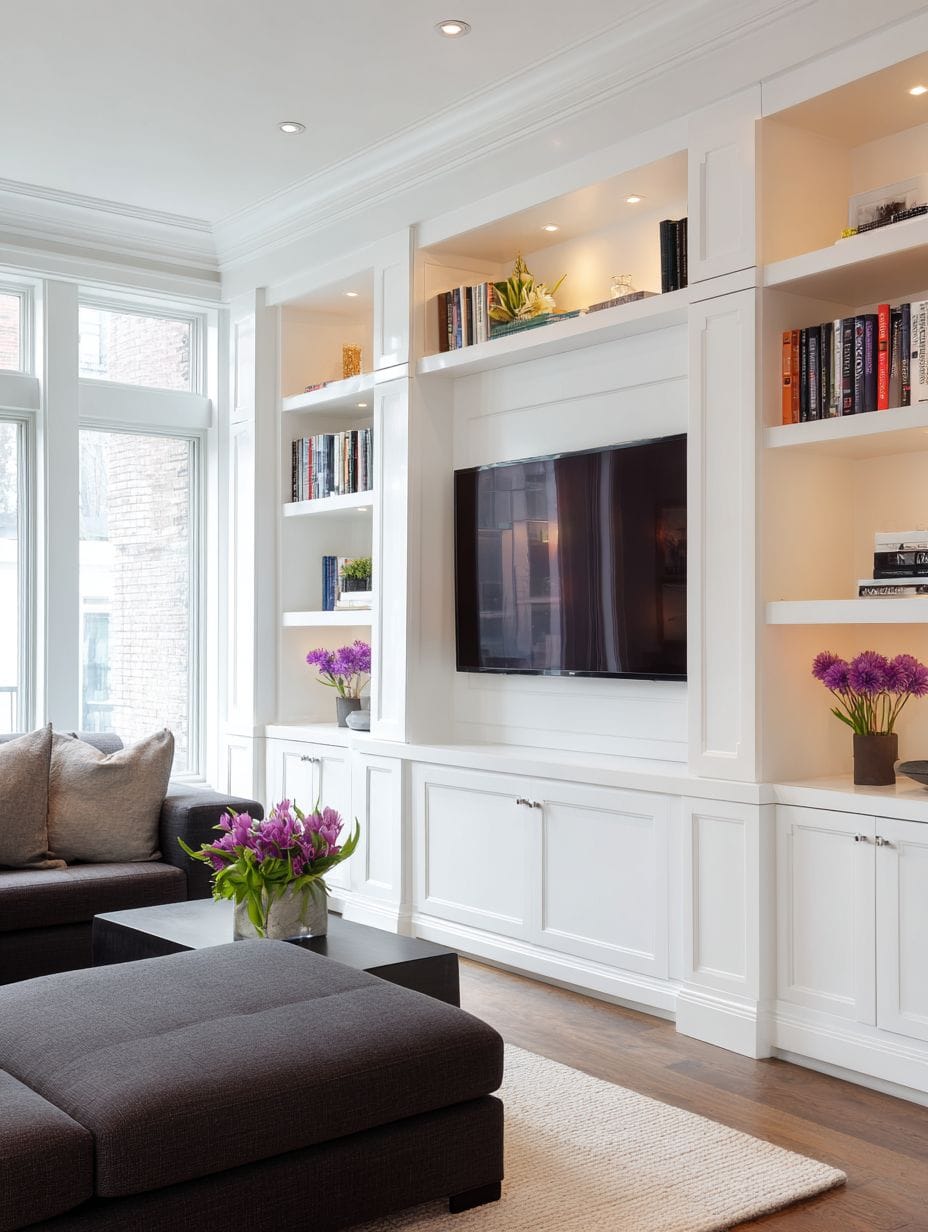
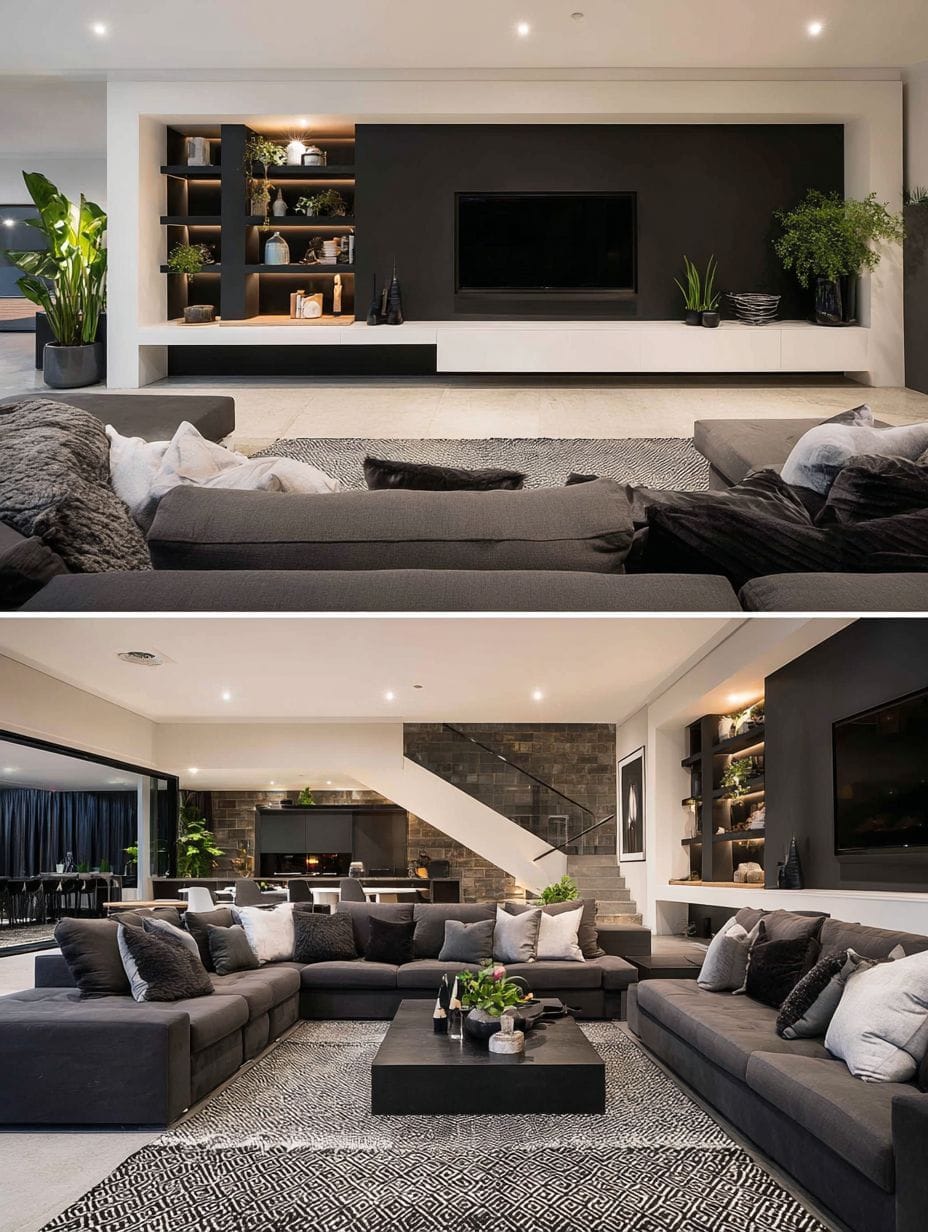
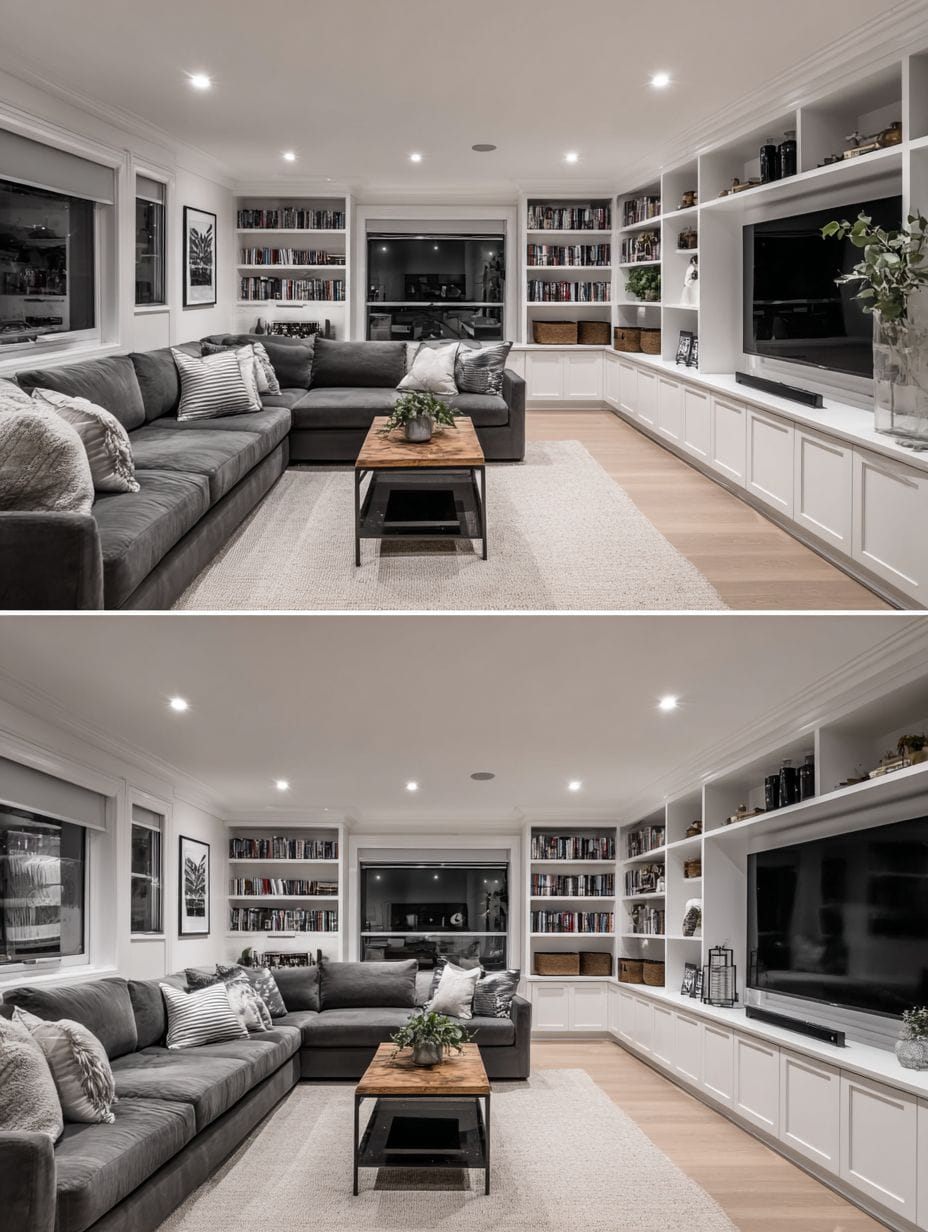
Custom architectural details elevate this TV lounge into something approaching gallery-level design through a striking floor-to-ceiling built-in entertainment wall. The glossy white lacquer finish creates a sleek, contemporary aesthetic while maximizing light reflection to keep the space feeling bright and open despite the wall’s substantial presence. The television integrates perfectly into the centered section, appearing as an intentional element of the architectural composition rather than an afterthought. This level of integration requires careful planning during the design phase to ensure proper dimensions, ventilation for equipment, and cable routing—all invisible in the finished product but essential to functionality.
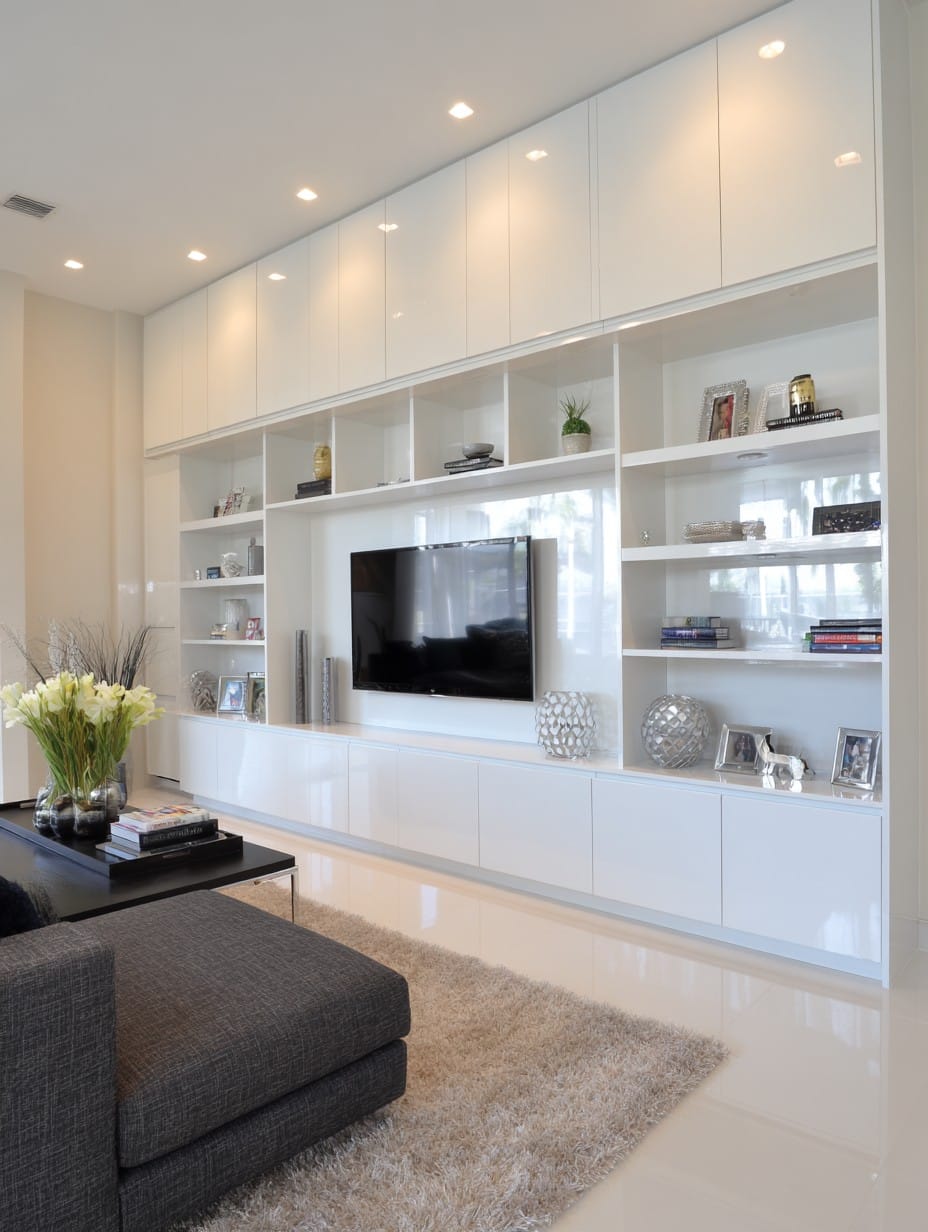
Symmetrical shelving flanks the television on both sides, creating balanced visual weight that guides the eye across the entire wall. Open shelving displays carefully curated objects—perhaps art books, sculptural ceramics, or small artwork—while closed storage compartments hidden behind seamless cabinet doors conceal less attractive necessities. The beauty of custom built-ins lies in their ability to provide massive storage capacity while maintaining clean, uncluttered aesthetics. Every book, game, remote, and cable has a designated home, preventing the accumulation of clutter that often plagues entertainment spaces.
The modern sectional sofa in charcoal grey provides substantial seating without competing visually with the dramatic entertainment wall. Its deep cushions and generous proportions ensure comfort for extended viewing sessions, while the neutral charcoal color allows the white built-ins to remain the room’s focal point. A simple area rug in coordinating tones grounds the seating arrangement without introducing visual competition. Recessed lighting throughout the built-in system highlights architectural features and displayed objects, creating depth and dimension. These lights can be dimmed or turned off entirely during viewing, while other recessed ceiling fixtures provide general illumination. This sophisticated lighting design demonstrates how thoughtful planning creates spaces that function beautifully for any activity or time of day.
- Commission custom floor-to-ceiling built-ins for seamless television integration and maximum storage capacity.
- Choose glossy white lacquer for contemporary aesthetics and maximum light reflection in the space.
- Design symmetrical shelving to create visual balance and guide the eye across the entire entertainment wall.
- Integrate lighting within the built-ins to highlight displays and add architectural depth and dimension.
- Select neutral grey seating that provides comfort without competing visually with the dramatic entertainment wall.
18. Coastal Breeze and Relaxed Living
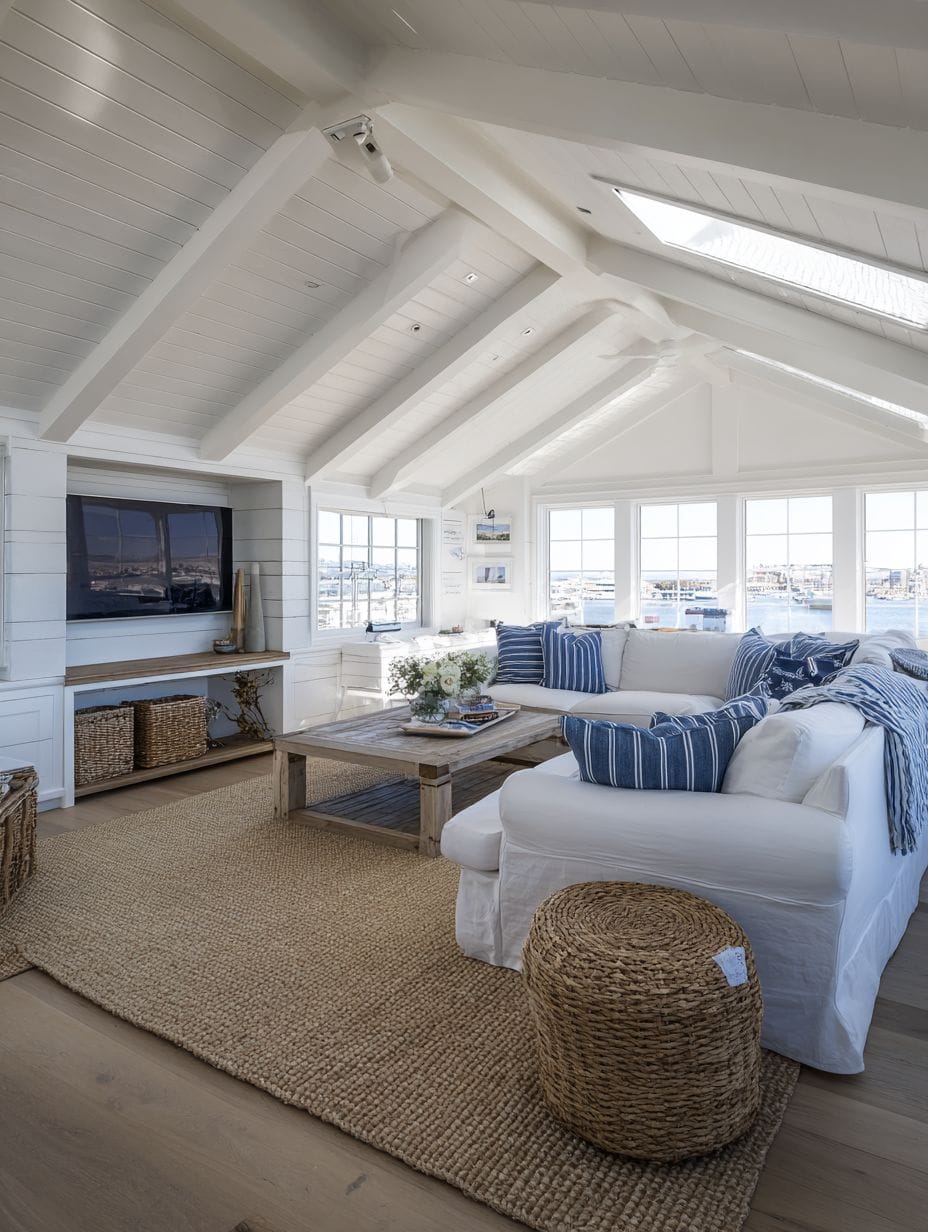
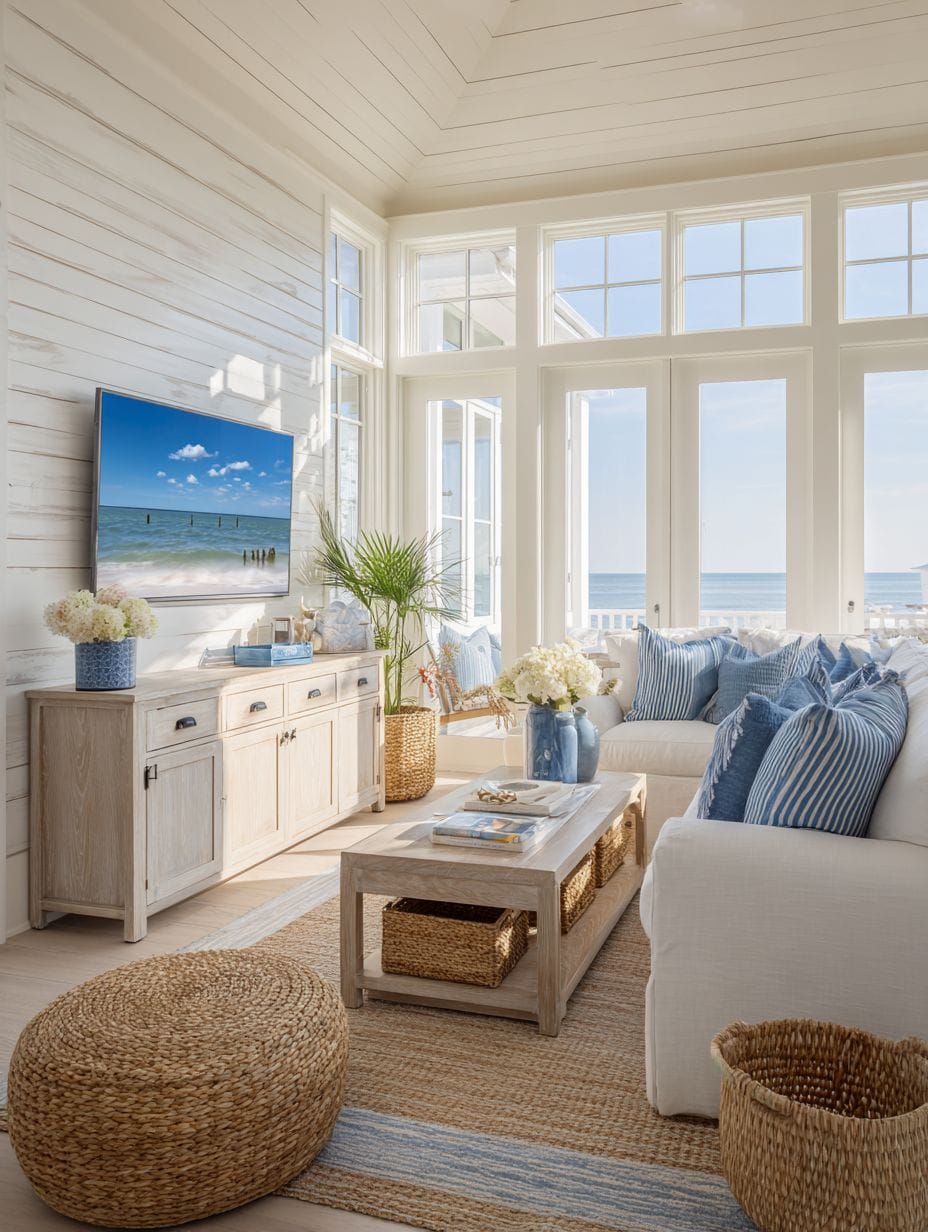
Coastal design principles create a TV lounge that feels like a permanent vacation, where soft blues and sandy neutrals evoke seaside tranquility. The whitewashed wood plank wall behind the television immediately establishes the coastal aesthetic, its pale, weathered finish suggesting driftwood bleached by sun and salt. This textural backdrop adds dimensional interest while maintaining the light, airy feeling essential to coastal design. The weathered teak media console reinforces the beachy vibe through its silvery-grey patina—the natural result of teak’s exposure to elements, which can be achieved artificially through special finishing techniques for indoor furniture.
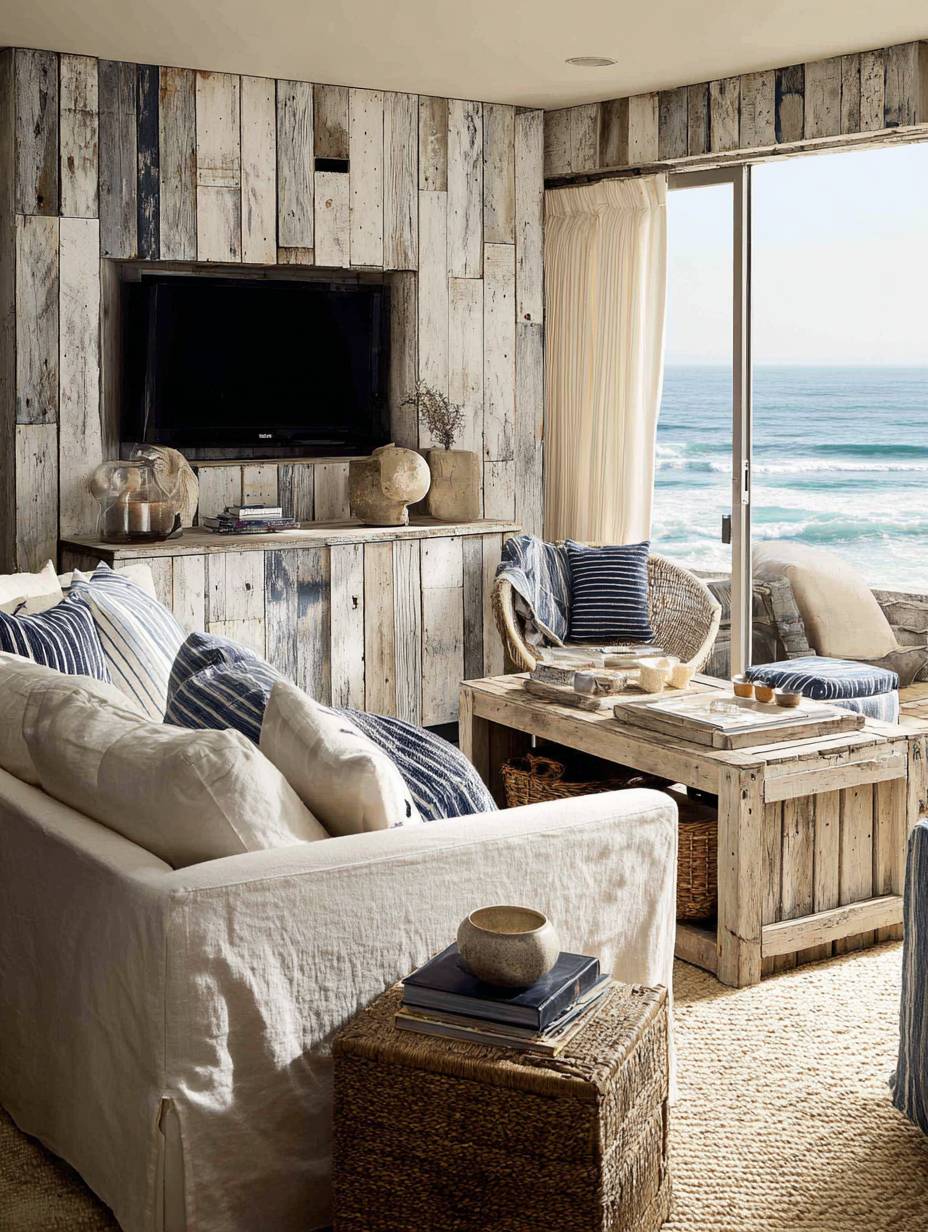
A comfortable slipcovered sofa in natural linen provides relaxed seating that captures coastal living’s emphasis on casual elegance and easy care. The slipcover can be removed and laundered if sandy feet or wet swimsuits make their way indoors, maintaining the sofa’s fresh appearance through years of use. Blue and white striped pillows add classic nautical pattern without veering into kitsch, their crisp graphic quality balancing the softer elements throughout the room. The color combination remains timeless and fresh, evoking sailboat sails, beach cabanas, and classic maritime style.
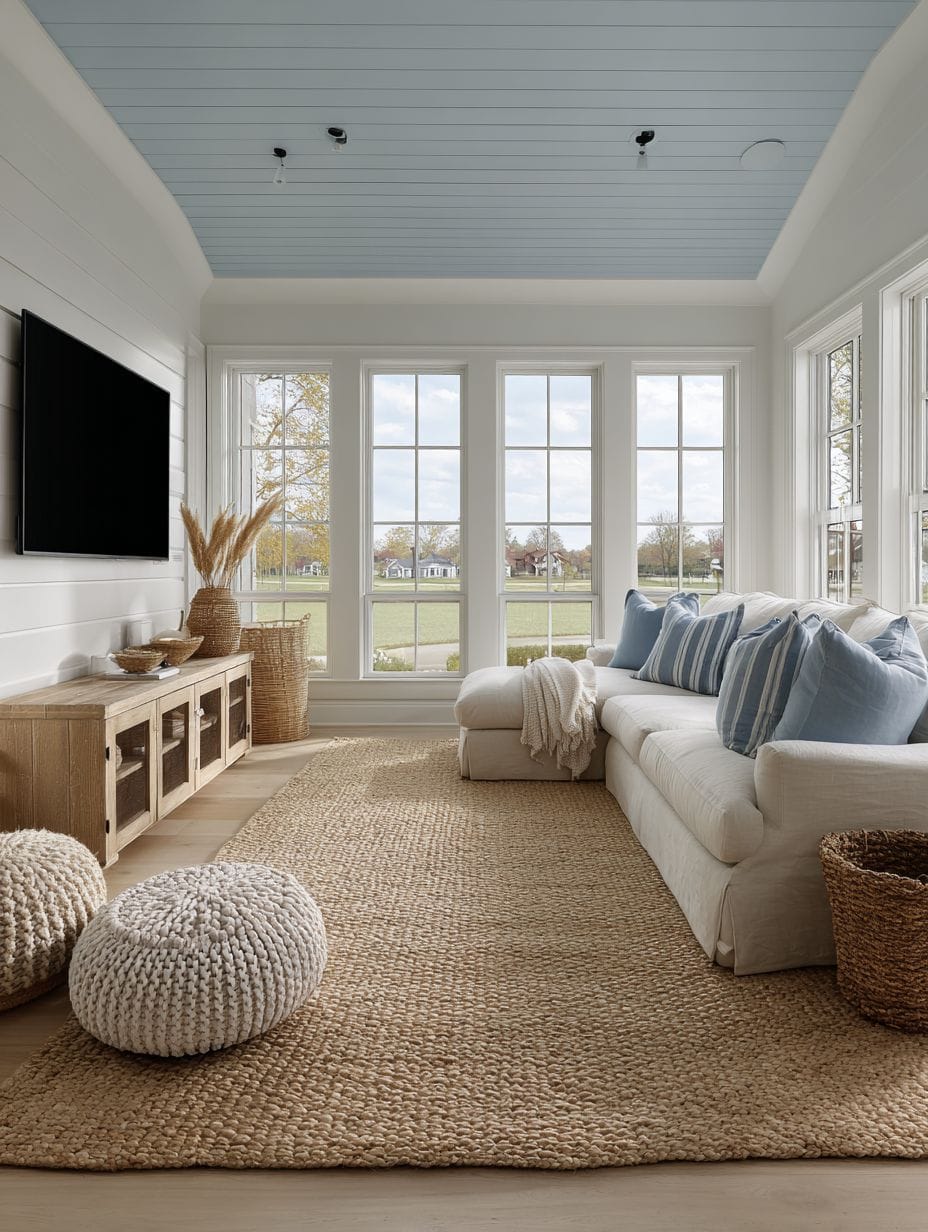
A jute area rug introduces natural texture and neutral color that grounds the space without competing with the room’s blue and white palette. Jute’s organic, slightly rough texture references sandy beaches and coastal grasses, adding tactile authenticity to the coastal theme. Woven baskets provide storage for throws, magazines, or beach gear, their natural material and casual construction reinforcing the relaxed aesthetic. Large windows allow abundant natural light to flood the space, creating the bright, sun-filled atmosphere that defines coastal living. Sheer white curtains filter harsh afternoon sun while maintaining views and preserving the connection to outdoors. The overall effect creates a space that feels perpetually touched by ocean breezes, even if you’re hundreds of miles inland.
- Install whitewashed wood planks on the TV wall to create textural interest with coastal weathered-wood aesthetics.
- Choose weathered teak furniture with silvery-grey patina for authentic coastal aging and character.
- Select linen slipcovers in natural tones for easy-care comfort that can be removed and laundered as needed.
- Add blue and white striped accents for classic nautical pattern that remains timeless and sophisticated.
- Incorporate jute and woven elements to add natural coastal texture that references beaches and marine environments.
19. Bold Drama Through Dark Sophistication
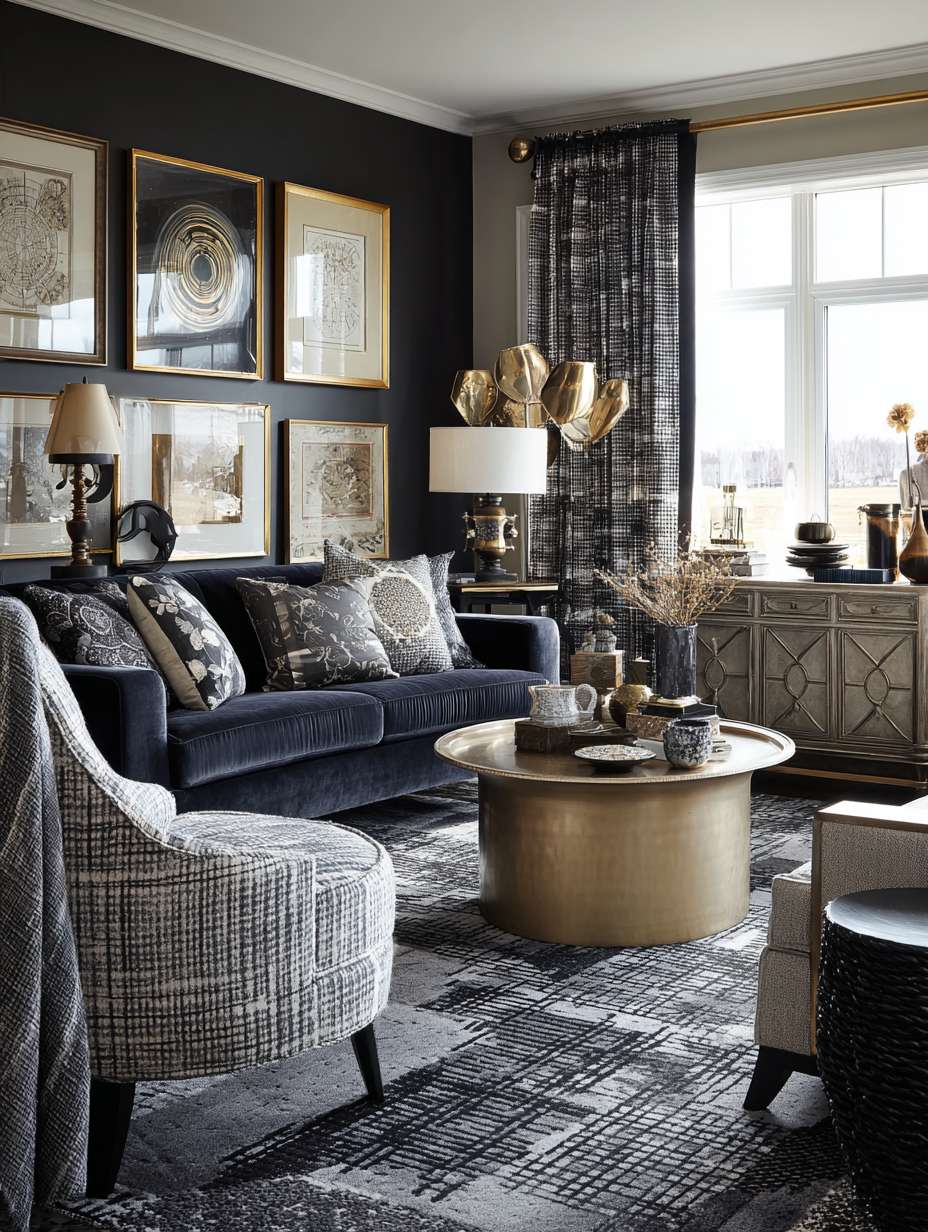
This dramatic TV lounge makes no apologies for its bold design choices, where a black accent wall creates intense visual impact behind the mounted television. Black walls might seem counterintuitive in a world obsessed with making spaces feel larger and brighter, but when executed thoughtfully, they create sophisticated intimacy and stunning drama. The deep color provides perfect contrast for the television screen, actually improving viewing quality by eliminating the distraction of lighter wall colors visible in peripheral vision. The black surface also serves as an exceptional backdrop for artwork, lighting effects, or architectural features that gain impact against the dark field.
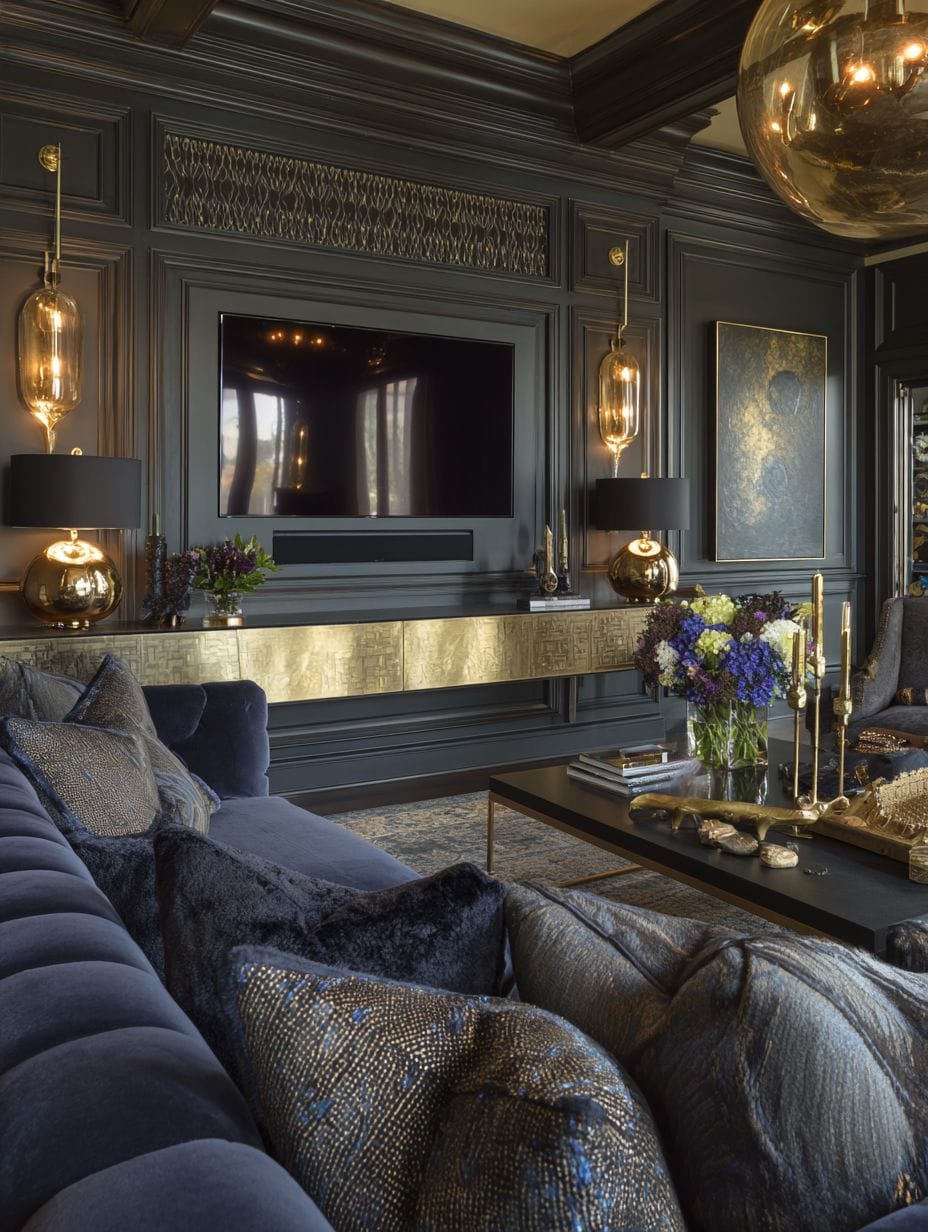
A gold-finish media console adds glamorous detail that glows beautifully against the dark wall. The warm metallic finish might be brushed brass, antique gold, or even gold-leaf application, but regardless of the specific technique, it provides a luxurious counterpoint to the black wall’s depth. This combination of black and gold creates associations with Art Deco elegance and Hollywood Regency glamour, design movements that celebrated luxury and dramatic effect. The console’s metallic surface catches and reflects light in ways that flat finishes cannot, adding dynamism and visual interest that changes as you move through the space or as lighting conditions shift.
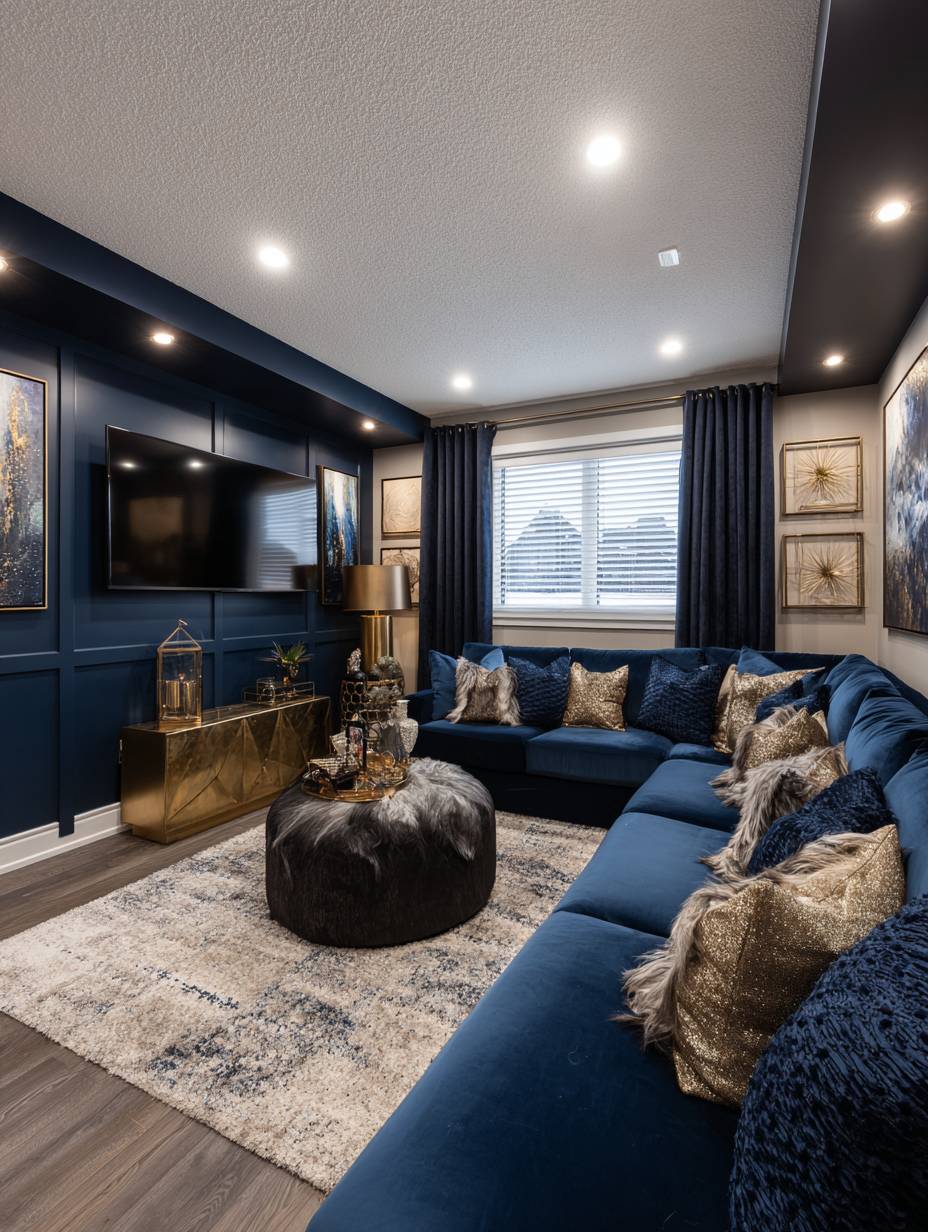
The deep navy velvet sofa provides sumptuous seating that coordinates with the black wall while introducing subtle color variation. Navy’s deep blue undertones prevent the space from feeling too monochromatic while maintaining the sophisticated, moody atmosphere. Velvet’s plush pile and light-reflecting properties add luxury and visual richness, its surface appearing to shift from lighter to darker depending on viewing angle. Metallic accents throughout the space—brass table lamps with black shades, gold-framed artwork, perhaps even metallic throw pillows—create cohesive visual threads that tie the design together. Dimmer-controlled lighting becomes absolutely essential in such a dramatic space, allowing precise ambiance adjustment from bright and energizing to dim and intimate depending on the occasion.
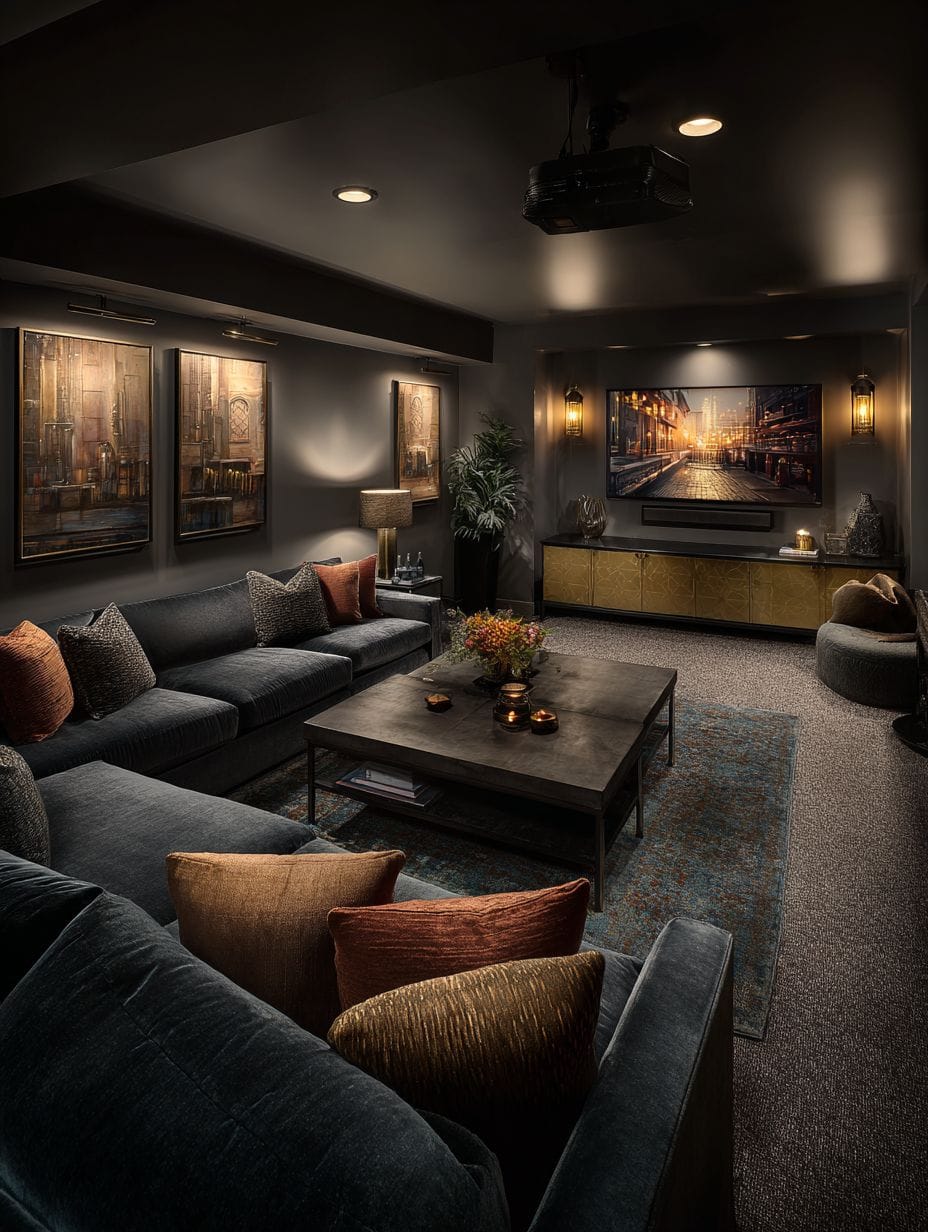
- Paint the TV accent wall black for dramatic impact and improved viewing by eliminating peripheral light distraction.
- Choose a gold or brass media console to add glamorous metallic warmth against the dark background.
- Select deep navy velvet upholstery to introduce subtle color while maintaining the sophisticated, moody atmosphere.
- Repeat metallic accents in lighting, artwork frames, and accessories to create cohesive visual threads.
- Install dimmers on all lighting for essential ambiance control in dramatically dark spaces.
20. Open-Concept Integration
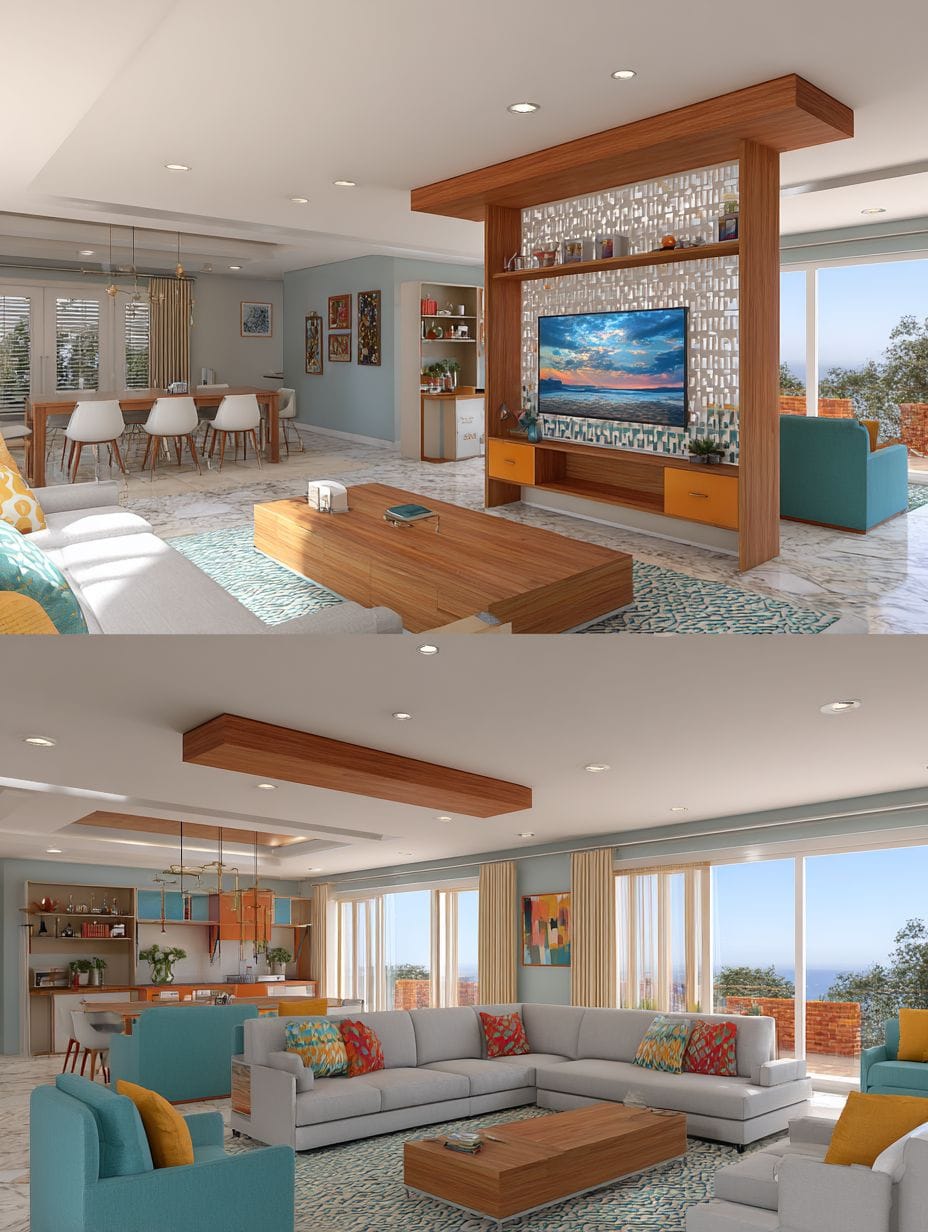
Modern homes increasingly embrace open-concept layouts that require thoughtful space definition without solid walls. This TV lounge demonstrates how to create a distinct entertainment zone while maintaining visual and physical flow with adjacent areas. The large sectional sofa serves as a room divider, its back facing the dining or kitchen area to create natural separation between zones. This furniture placement defines the entertainment space without blocking sightlines or interrupting conversation flow—you can watch television from the lounge while someone in the kitchen can still participate in discussion or keep an eye on children playing nearby.
The wall-mounted television sits on a partial room divider featuring open shelving that allows visual connection between spaces while providing functional separation. These open shelves might display books, plants, decorative objects, or even serve as a bar area accessible from both sides. The key is maintaining transparency—solid walls would interrupt the open feeling that makes the floor plan appealing in the first place. The shelving’s double-sided accessibility means the same storage serves both the TV lounge and adjacent area, maximizing efficiency in an elegant way.
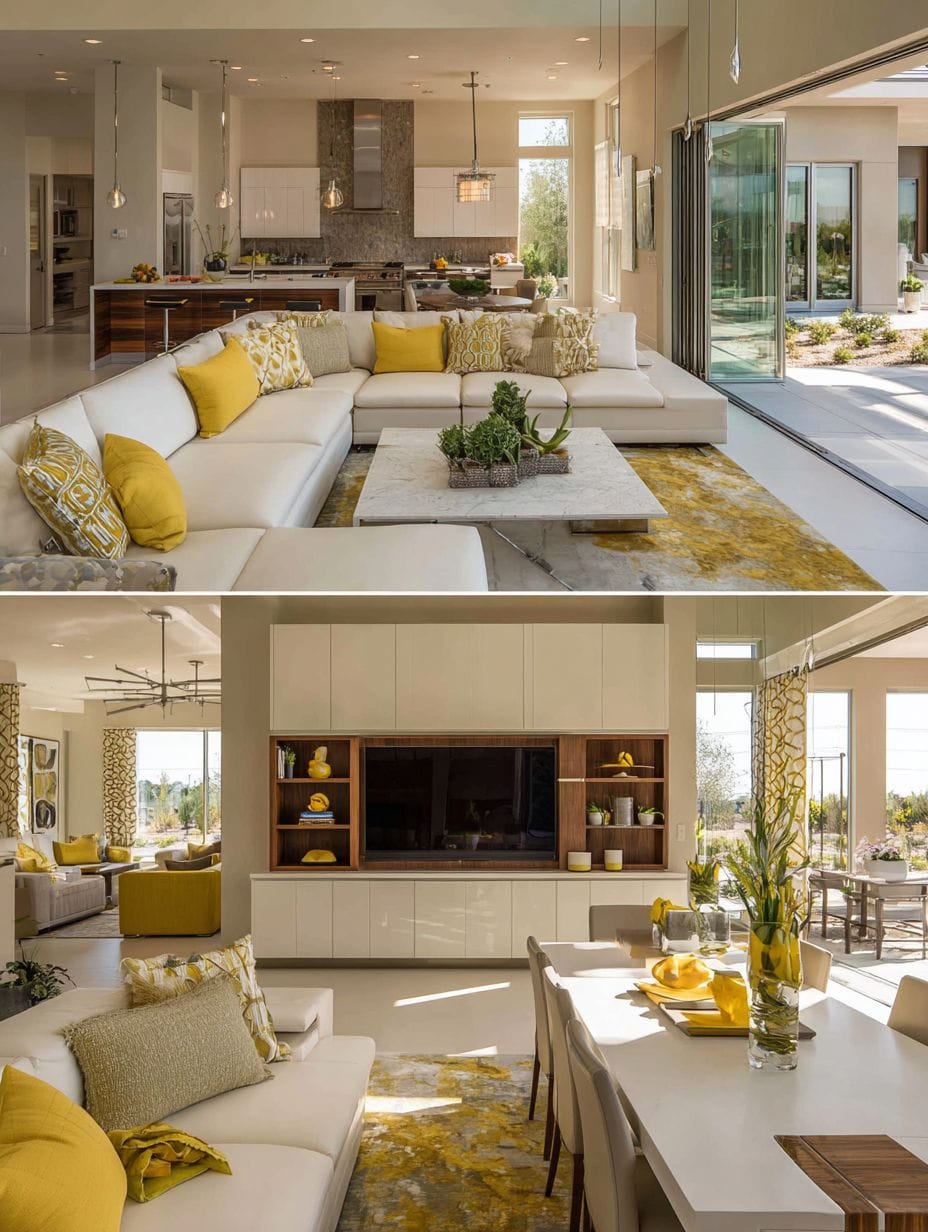
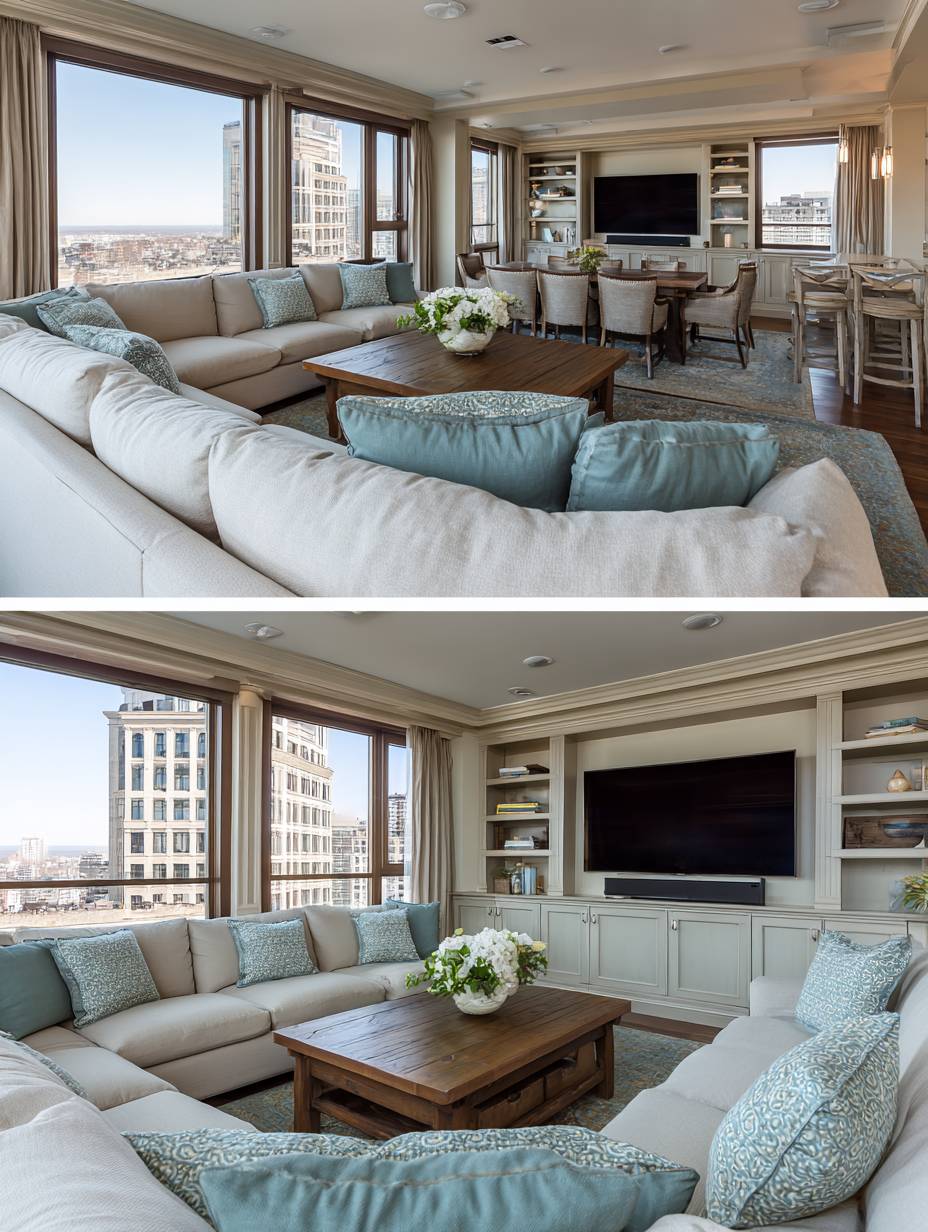
Design consistency throughout the open space maintains cohesion while allowing subtle zone differentiation. The same flooring—perhaps wide-plank oak or large-format tile—flows throughout, visually connecting all areas. Color schemes coordinate across zones, perhaps with the TV lounge featuring deeper accent colors while adjacent spaces remain lighter, creating subtle visual distinction without jarring transitions. Natural light from windows in multiple areas illuminates the entire space, with careful furniture placement ensuring no zone blocks another’s light source. Area rugs define individual zones within the larger space—the TV lounge rug grounds the seating area while another rug might anchor the dining table. This layered approach to space definition creates clarity and function while preserving the openness that makes such floor plans desirable.
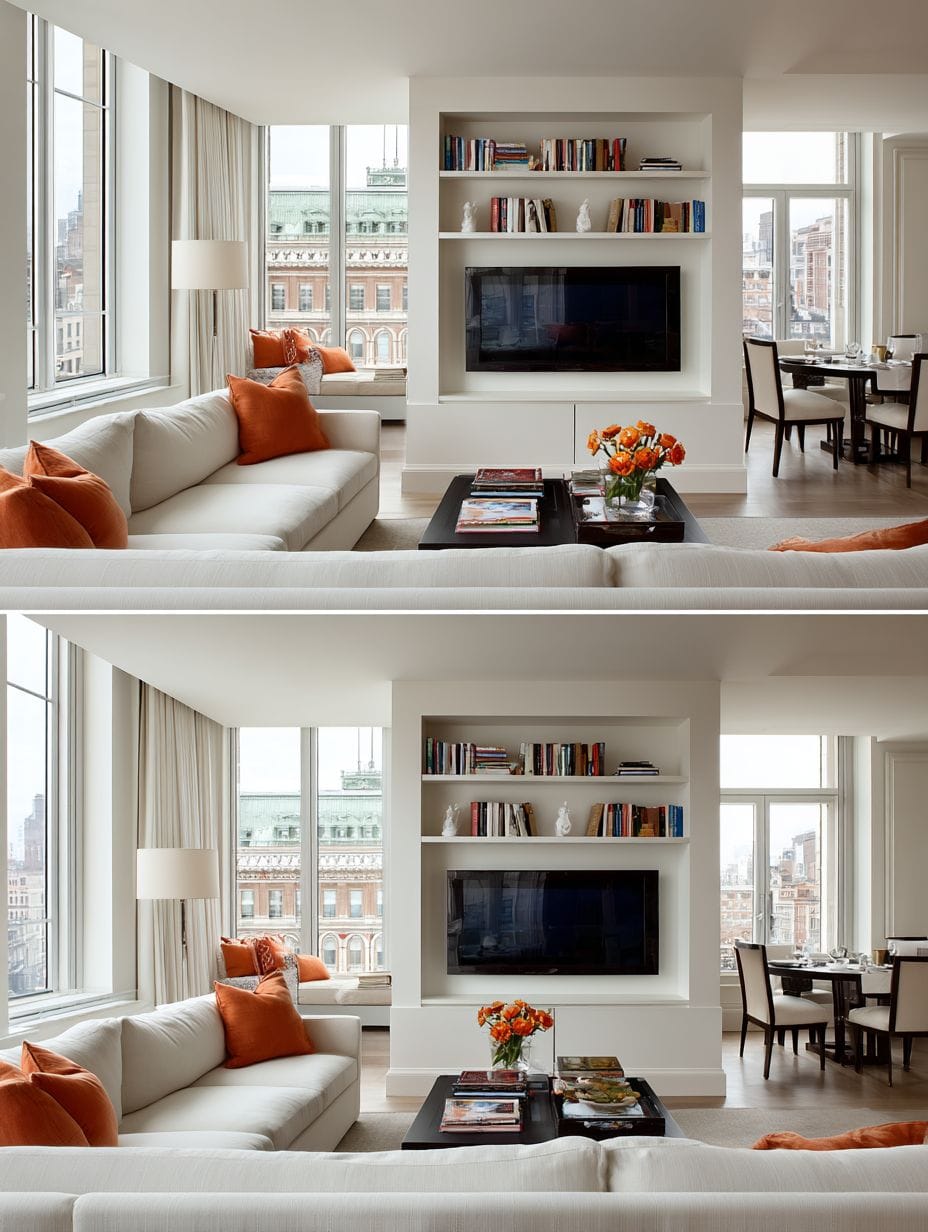
- Position the sectional as a room divider to define the TV zone while maintaining sightlines and conversation flow with adjacent areas.
- Use open shelving room dividers that provide functional separation without blocking visual connection between spaces.
- Maintain consistent flooring throughout the open plan to create visual continuity and flow between zones.
- Coordinate color schemes across zones with subtle variations that define areas without creating jarring transitions.
- Define zones with area rugs that anchor furniture groupings while preserving the open plan’s spacious feeling.
21. Timeless Transitional Balance
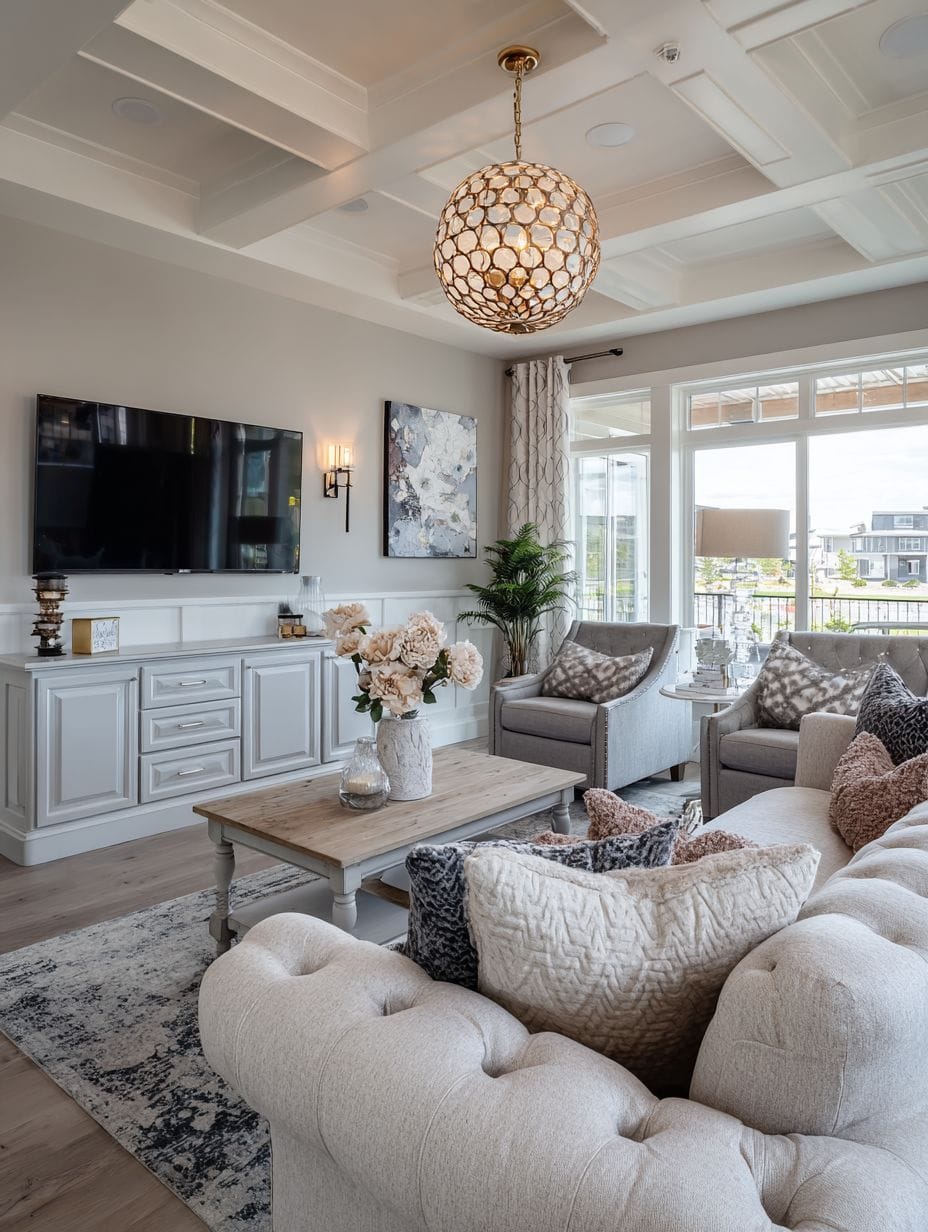
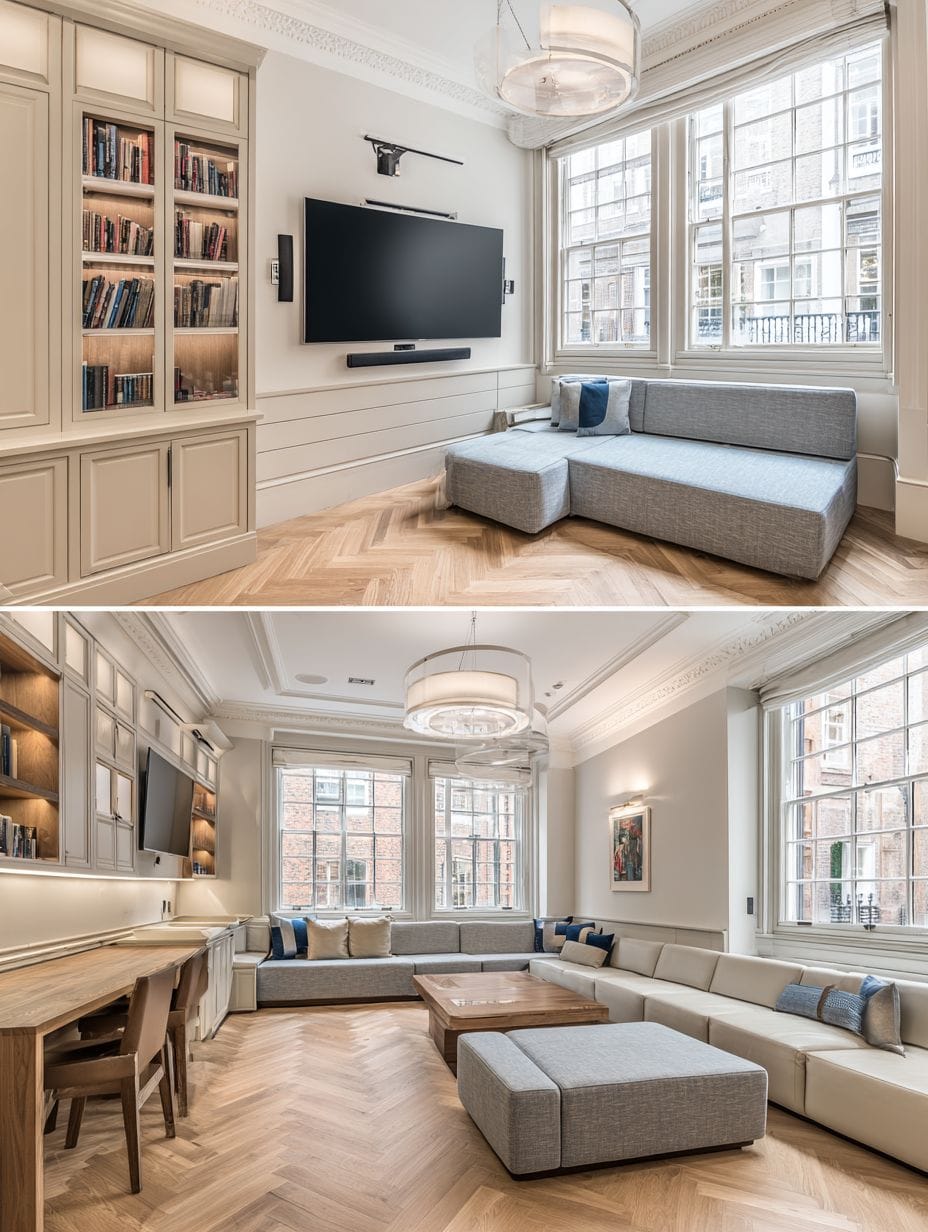
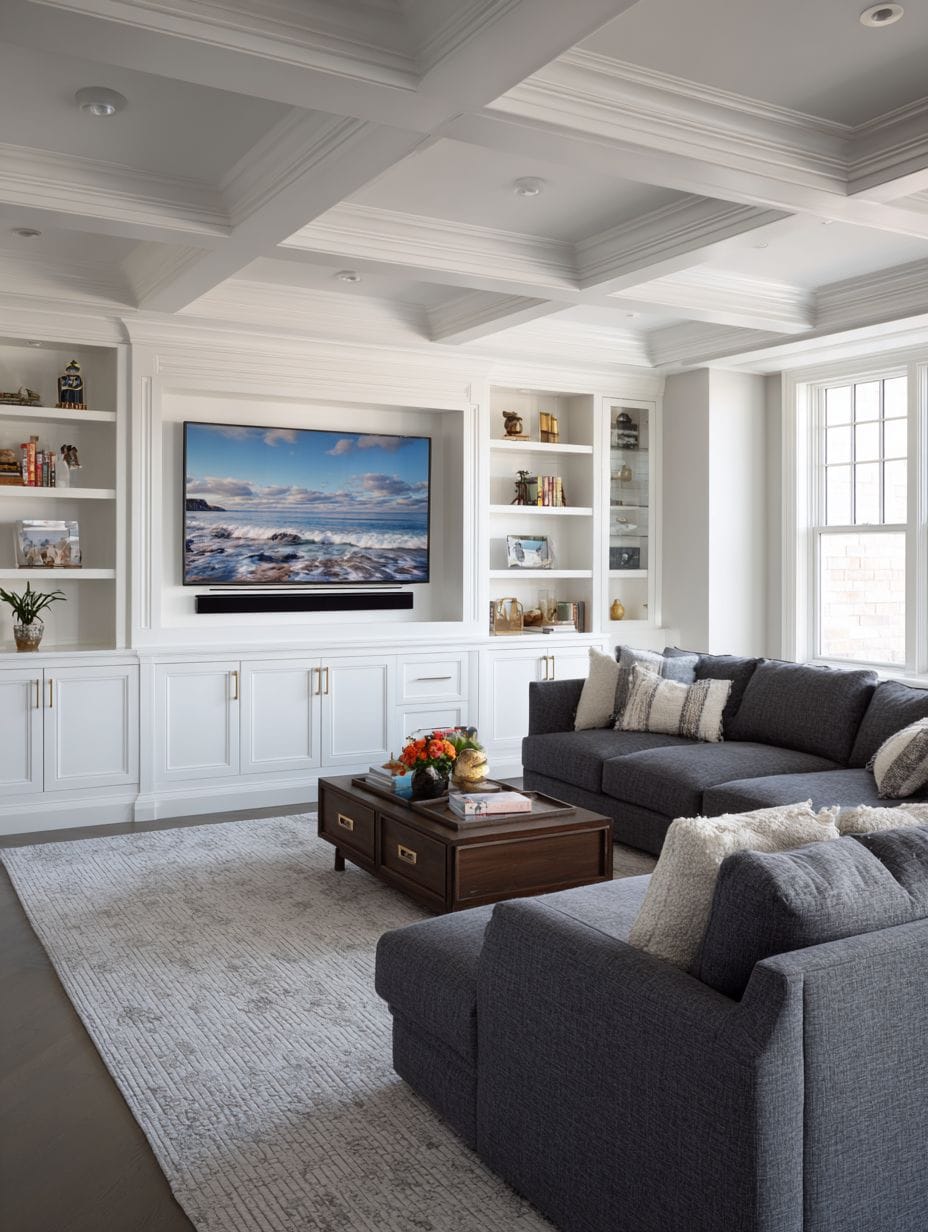
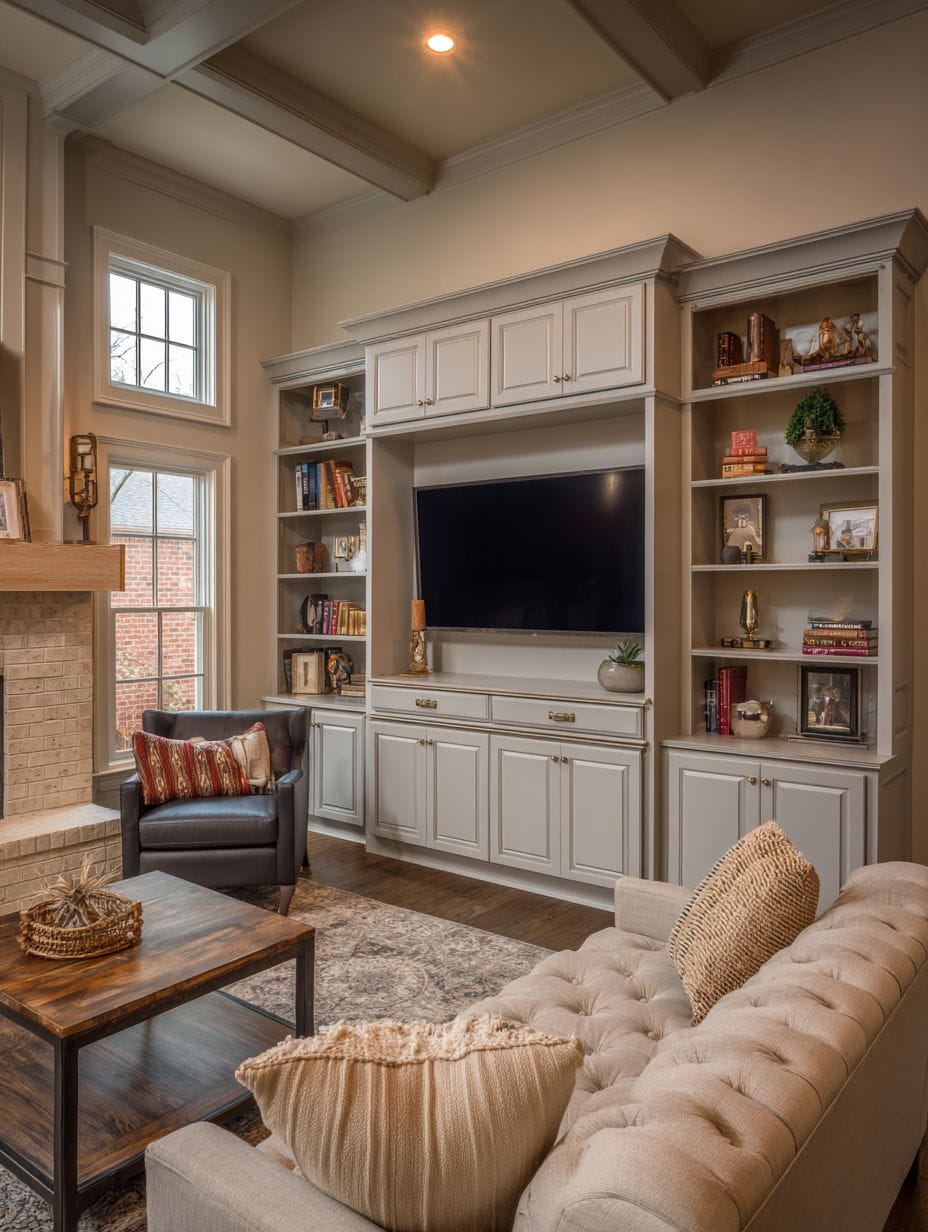
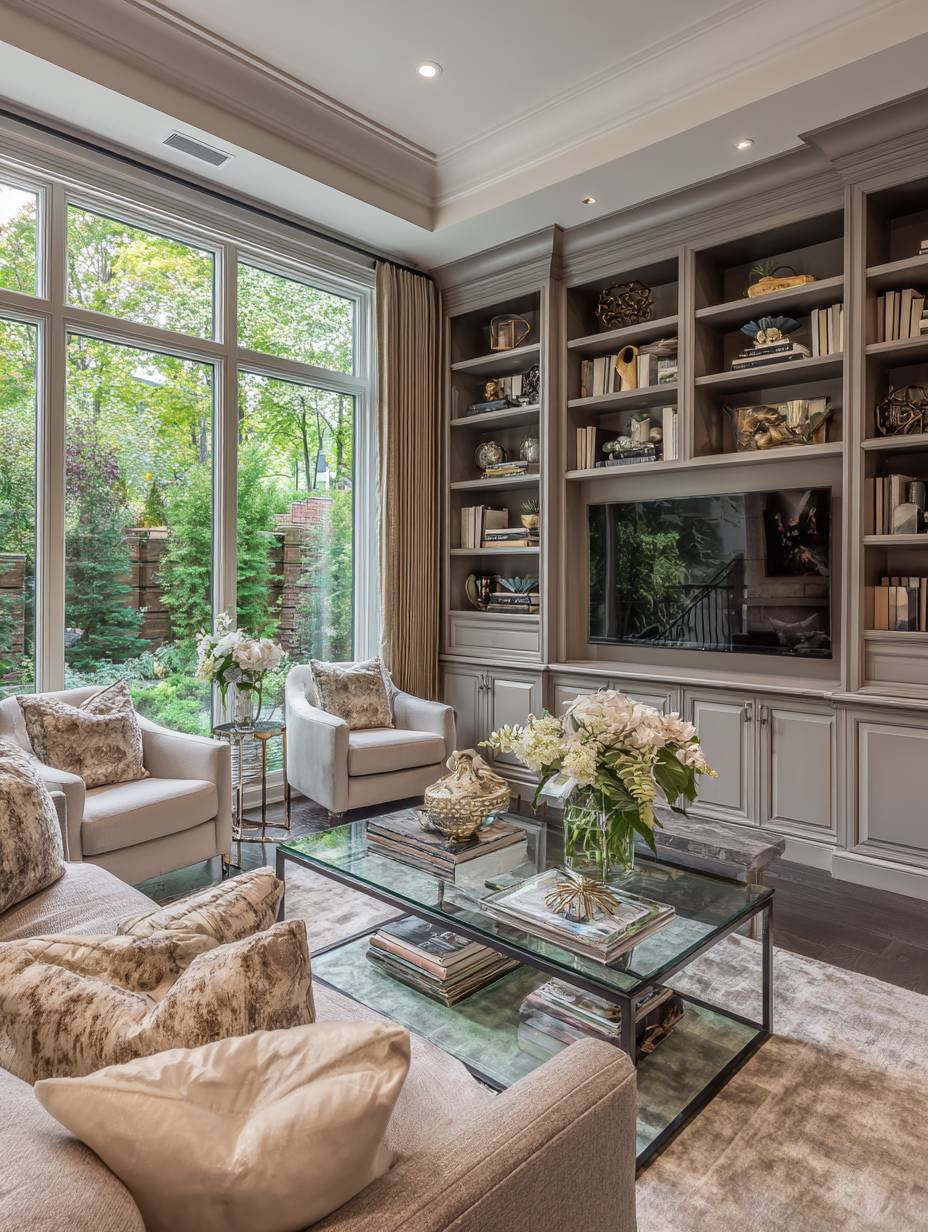
Transitional design bridges traditional and contemporary aesthetics, creating spaces that feel both timeless and current—perfect for those who appreciate classic design but want to avoid appearing dated. This transitional TV lounge features an entertainment center with traditional millwork details like crown molding, raised panel doors, and perhaps dentil trim, but rendered in soft grey rather than dark wood stains typically associated with traditional furniture. This color choice immediately modernizes the piece while maintaining its classic proportions and detailing. The soft grey coordinates beautifully with virtually any color scheme and provides versatility for future updates without requiring furniture replacement.
The television integrates into the center section of the entertainment unit, surrounded by glass-front cabinets that display cherished collections while keeping them protected. Below, closed storage with raised panel doors conceals media equipment and less attractive necessities. This combination of open display and closed storage represents traditional cabinetry design adapted for modern entertainment needs. A tufted sofa in neutral fabric provides classic comfort with button-tufted back detail that references traditional Chesterfield sofas, but its clean lines and track arms lean contemporary rather than fussy. This balance between traditional and modern elements defines successful transitional design.
Crown molding at the ceiling line and updated light fixtures demonstrate how architectural details can bridge style periods. The crown molding provides traditional architectural gravitas, but painted in crisp white rather than stained wood, it feels fresh and current. Light fixtures might feature classic forms—perhaps urn-shaped table lamps or a simple drum pendant—but in contemporary finishes or unexpected materials that update the silhouettes. Natural and artificial lighting creates warm ambiance throughout the day, with warm LED bulbs in all fixtures providing the golden glow that makes spaces feel inviting. This careful balance of traditional and contemporary elements creates a room that feels collected over time rather than decorated all at once—a sophisticated approach that ensures longevity.
- Choose furniture with traditional details but in updated finishes like soft grey to bridge classic and contemporary aesthetics.
- Combine tufted upholstery with clean-lined silhouettes for classic comfort without fussy traditional styling.
- Add architectural details like crown molding painted in fresh white to provide traditional gravitas with contemporary freshness.
- Select updated light fixtures with classic forms rendered in contemporary materials or unexpected finishes.
- Use neutral color palettes that allow flexibility for updates through accessories rather than major furniture replacement.
22. Japanese-Inspired Minimalist Serenity
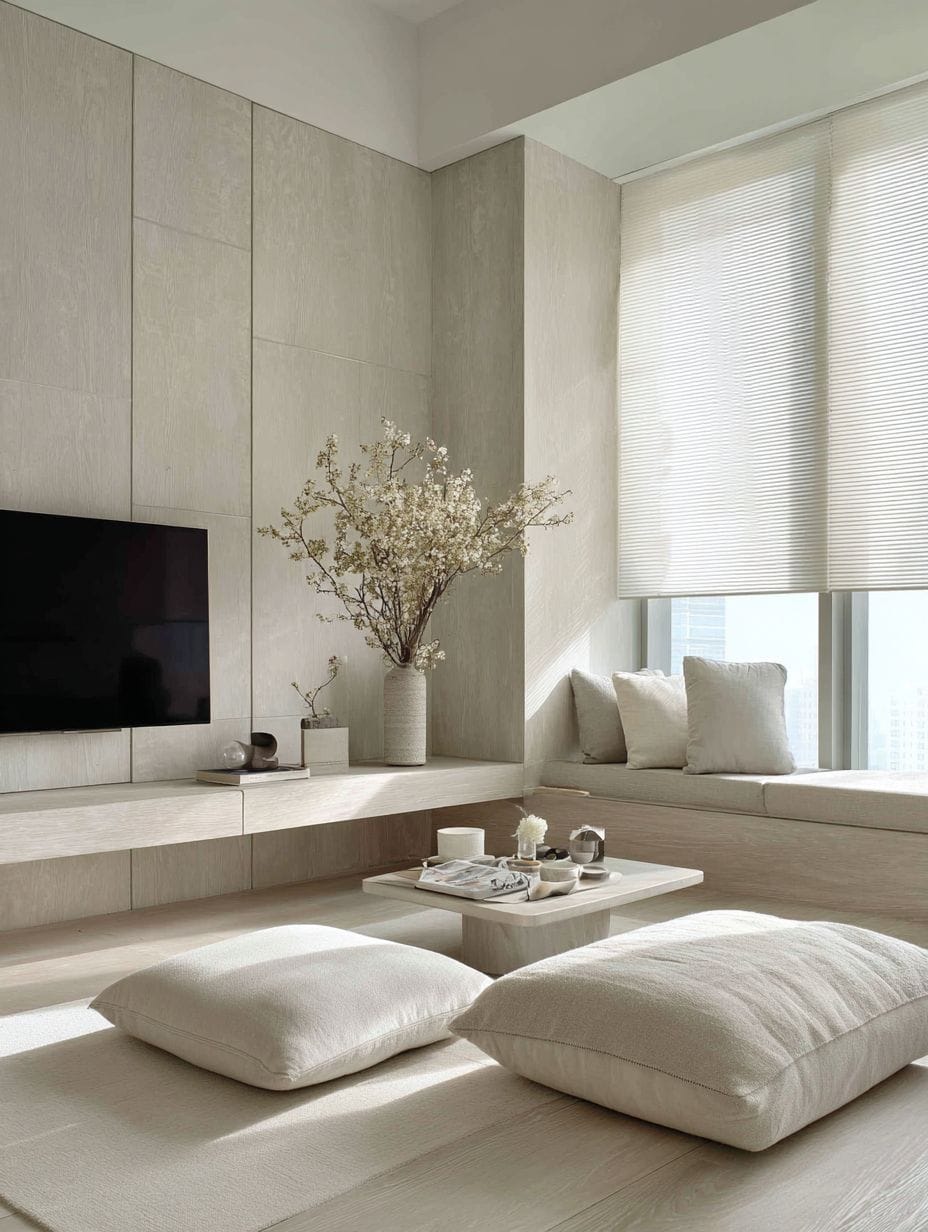
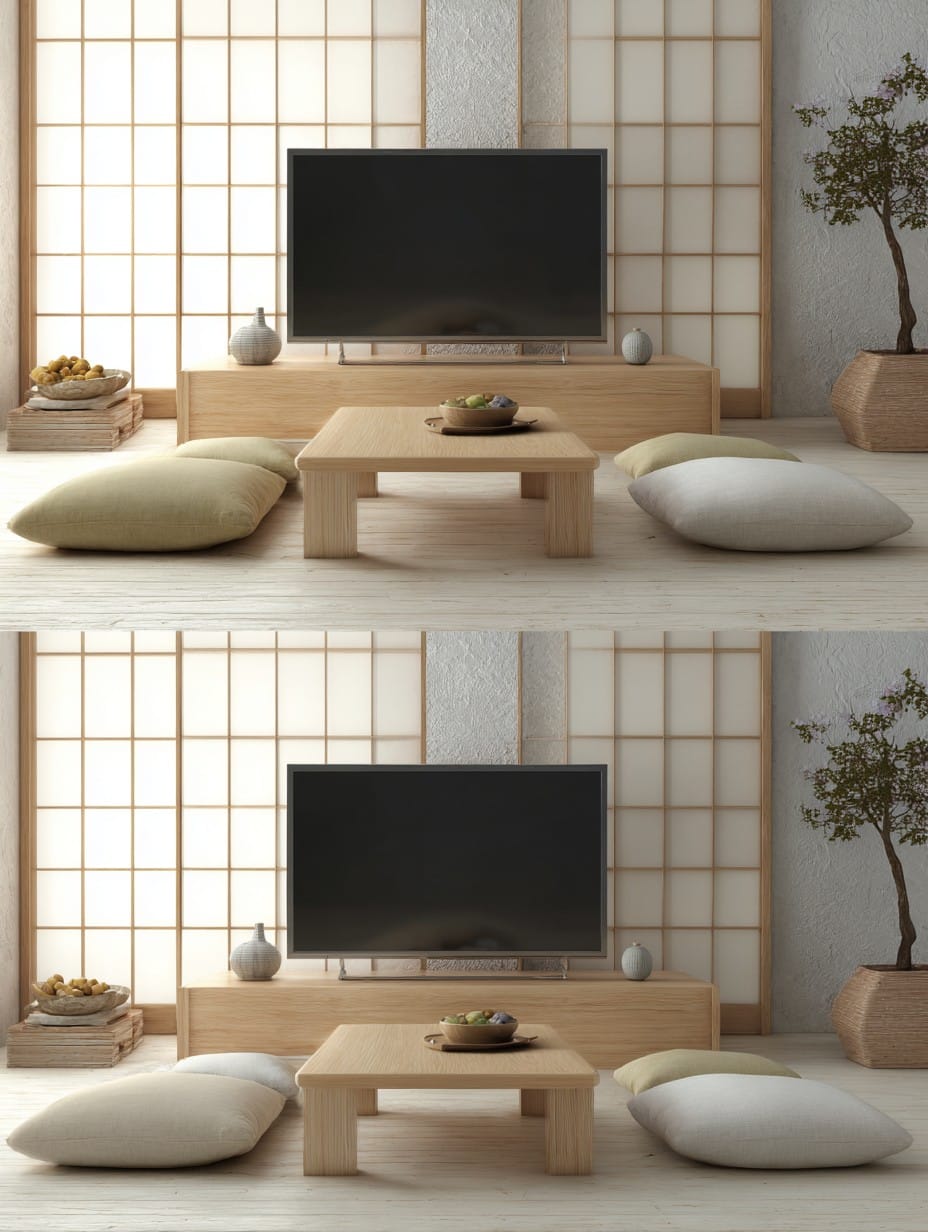
Japanese design principles emphasizing simplicity, natural materials, and mindful living create a TV lounge that feels like a meditation retreat. The television rests on a low platform crafted from light ash wood, its horizontal emphasis and minimal height maintaining the clean, ground-hugging lines characteristic of Japanese furniture. This low profile creates visual serenity while providing just enough height for media components stored beneath. The platform’s simple rectangular form without unnecessary embellishment demonstrates the Japanese aesthetic principle of eliminating all but the essential—every element serves a purpose, and beauty emerges from simplicity rather than decoration.
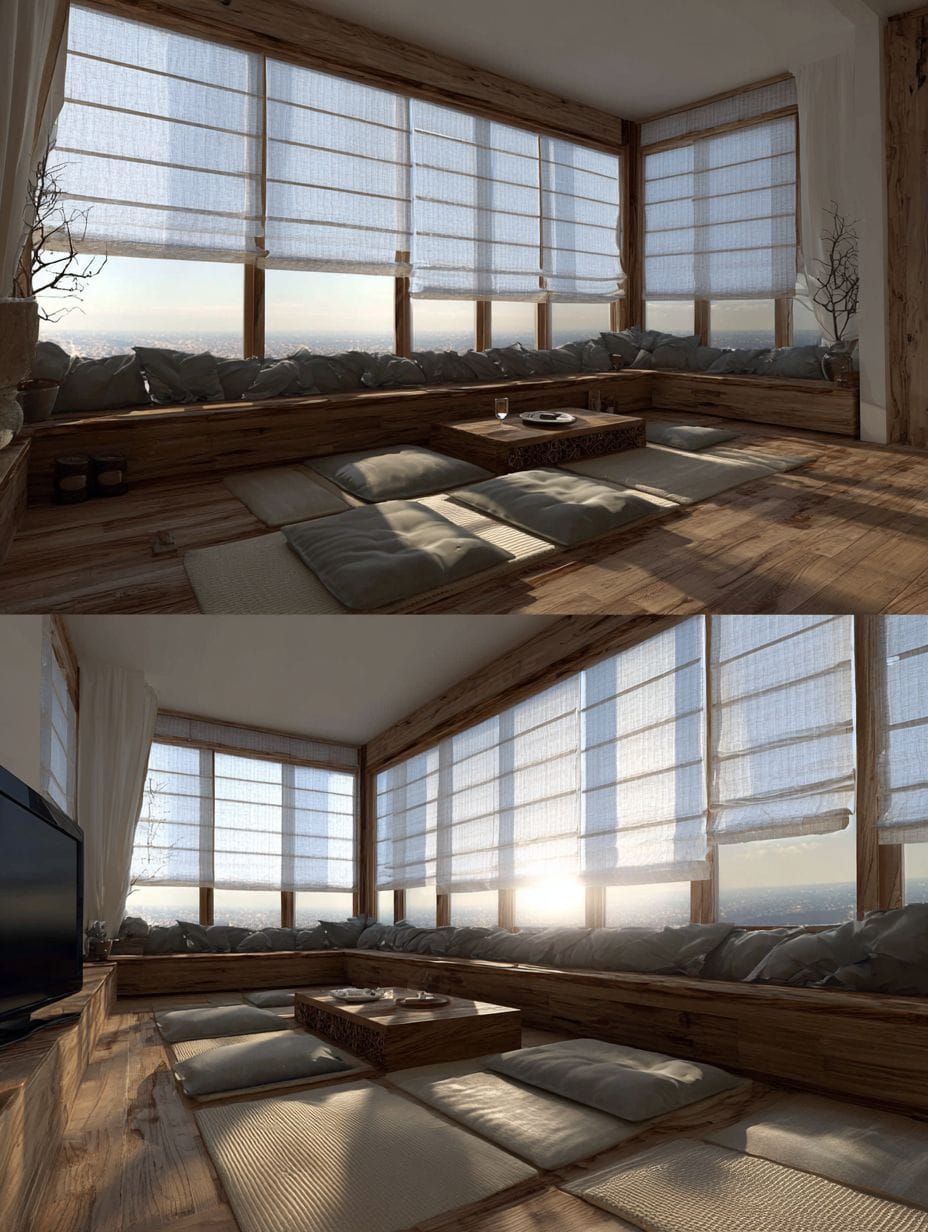
Floor seating cushions replace traditional sofas, creating an authentic Japanese seating arrangement that encourages mindful posture and closer connection to the ground. These cushions—perhaps zabutons with coordinating zafu back supports—provide surprising comfort while maintaining the room’s low visual profile. A low coffee table completes the seating area, its height appropriate for floor-level use and its simple construction celebrating natural wood grain and expert joinery rather than ornamental detail. This furniture arrangement fundamentally changes the room’s spatial feeling—without tall furniture breaking sightlines, the space feels more expansive despite containing the same square footage.
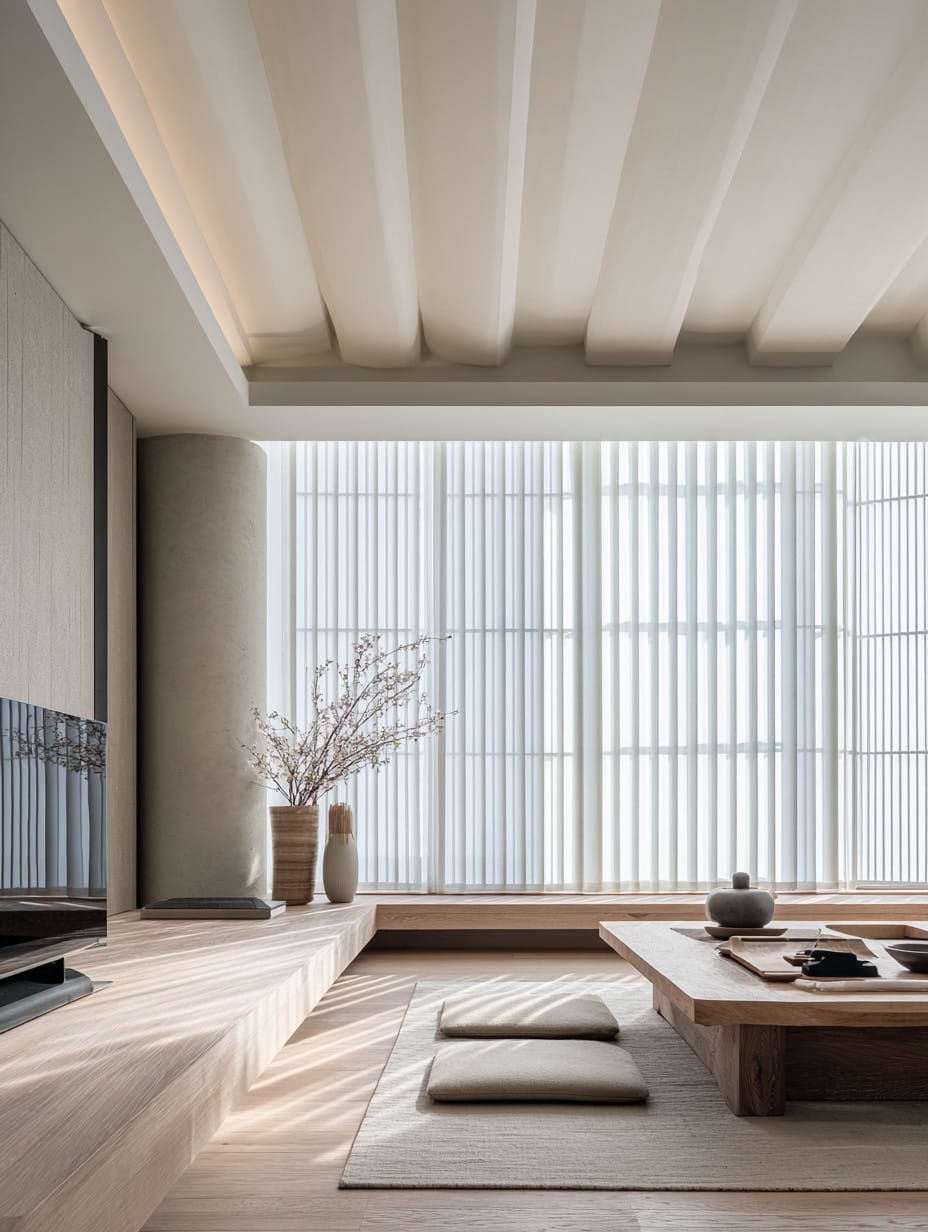
Shoji-inspired window treatments filter natural light softly, their translucent panels creating gentle, diffused illumination that changes throughout the day as the sun moves. These screens might be authentic shoji with rice paper panels and wooden grids, or contemporary interpretations using modern materials that reference traditional forms. Minimal decor includes perhaps a single ikebana flower arrangement—the Japanese art of flower arranging that emphasizes negative space and asymmetrical beauty—displayed on a simple pedestal or shelf. The neutral color palette of whites, warm greys, and natural wood tones throughout creates tranquility and allows attention to focus on natural materials’ subtle beauty. This pared-down approach might initially seem too minimal for some, but inhabiting such a space reveals how visual simplicity creates mental clarity and peaceful atmosphere.
- Choose low-platform furniture in light wood that maintains ground-hugging horizontal lines central to Japanese aesthetics.
- Use floor seating cushions instead of traditional sofas for authentic Japanese seating that changes spatial perception.
- Install shoji-inspired window treatments that filter natural light softly while maintaining privacy and connection to outdoors.
- Limit decorative objects to single, meaningful pieces like ikebana arrangements that emphasize negative space.
- Maintain neutral palettes in whites, greys, and natural wood that create tranquility and highlight material beauty.
23. Vibrant Eclectic Color Celebration
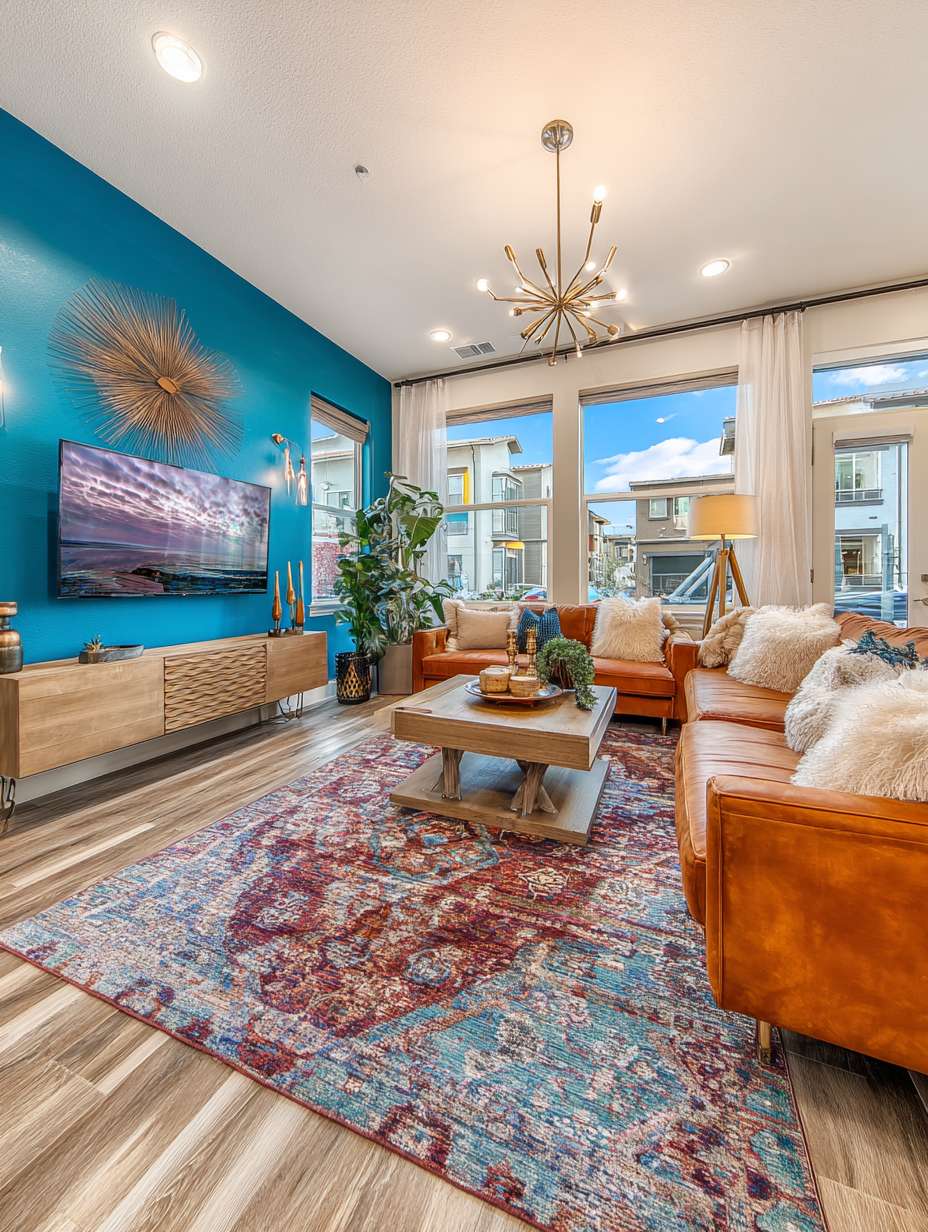
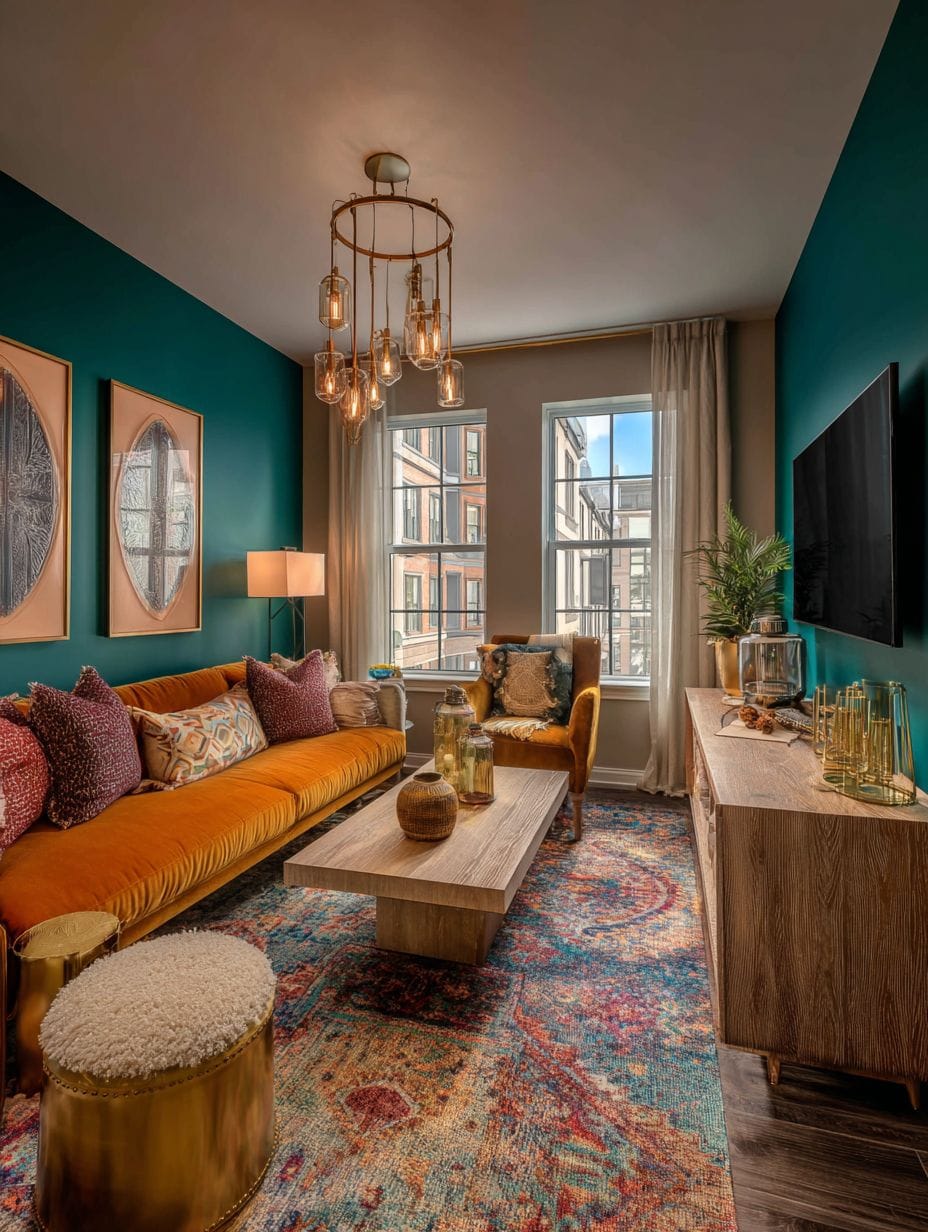
This fearlessly colorful TV lounge rejects neutral safety in favor of bold, confident color choices that create energy and personality. The vibrant jewel-tone accent wall in deep teal behind the television makes an immediate statement, its saturated blue-green hue creating depth and richness. This color choice might seem risky, but when executed with confidence, it creates stunning impact and provides the perfect backdrop for both the television screen and decorative elements. The teal’s blue undertones feel sophisticated rather than juvenile, and its depth creates a sense of envelopment that actually enhances the cozy, entertainment-focused atmosphere.
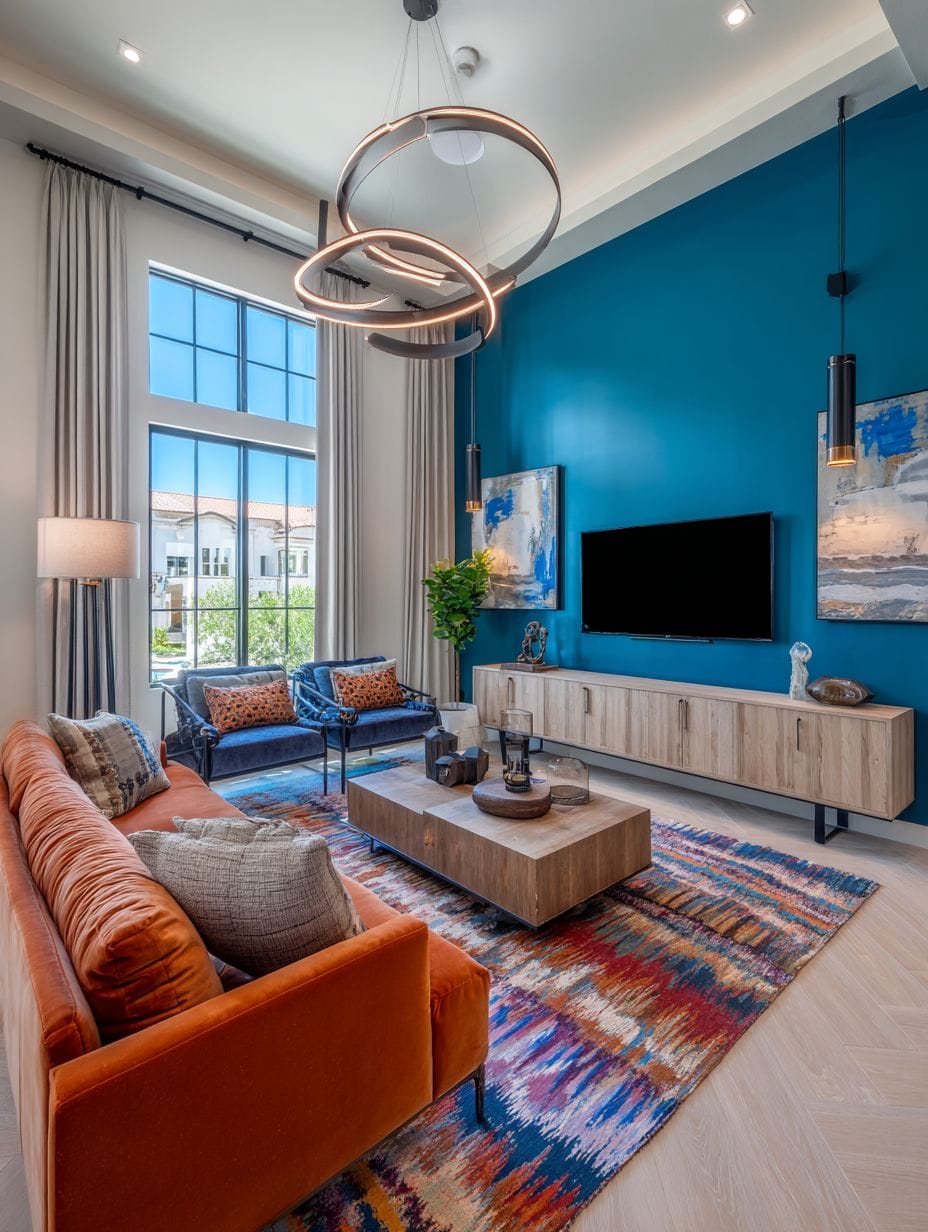
The natural wood media console provides essential warmth that prevents the bold color from feeling cold or overwhelming. Its honey-toned wood and visible grain patterns add organic texture and neutral balance that grounds the more saturated colors surrounding it. Against the teal wall, the console’s golden tones appear even warmer and more inviting—a perfect example of how contrasting colors enhance rather than compete with each other. The burnt orange velvet sofa represents another bold color choice that creates stunning interaction with the teal wall. Orange and teal are complementary colors on the color wheel, meaning they enhance each other’s intensity when placed together. The result is vibrant energy that feels intentional and sophisticated rather than chaotic.
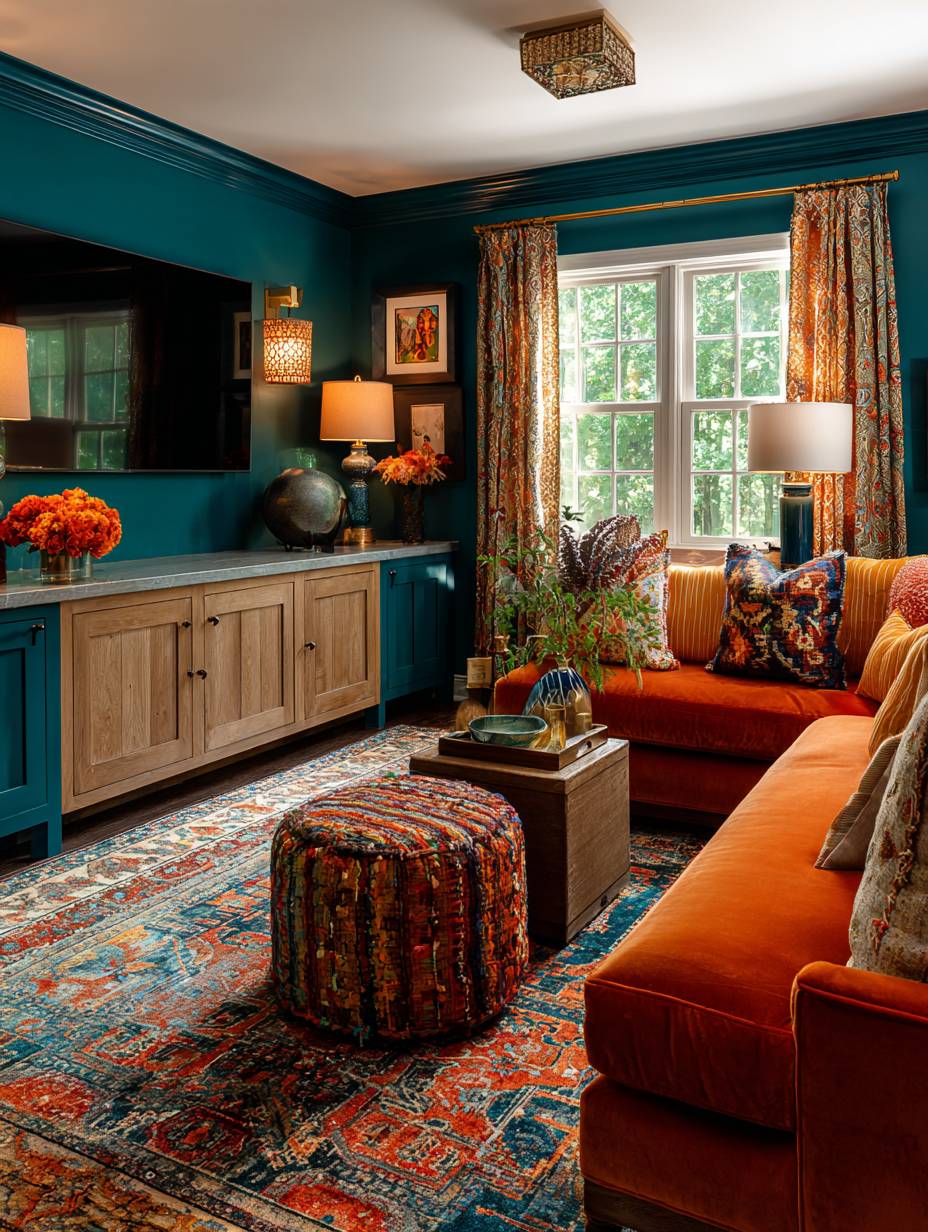
Mixed metal finishes throughout the space add eclectic interest and prevent any single element from feeling too matchy-matchy. Perhaps brass floor lamps sit beside chrome side tables, with copper accents in artwork or decorative objects. This metal mixing represents contemporary design’s move away from strict matching toward more collected, personal aesthetics. A patterned area rug incorporates all the room’s accent colors—teal, orange, gold, perhaps some cream and brown—creating visual cohesion that ties disparate elements together. Natural light and strategically placed lamps create layered illumination that shows how colors shift throughout the day, appearing more vibrant in bright light and more moody and sophisticated in dimmer evening conditions.
- Choose a jewel-tone accent wall in saturated colors like teal for bold impact and sophisticated depth.
- Balance bold colors with natural wood in warm tones that prevent colorful spaces from feeling cold or overwhelming.
- Select complementary color combinations like orange and teal that enhance rather than compete with each other.
- Mix metal finishes confidently to create eclectic interest and avoid overly matched, showroom aesthetics.
- Unify bold colors with patterned rugs that incorporate all accent hues for visual cohesion across the space.
24. Organized Storage Solutions
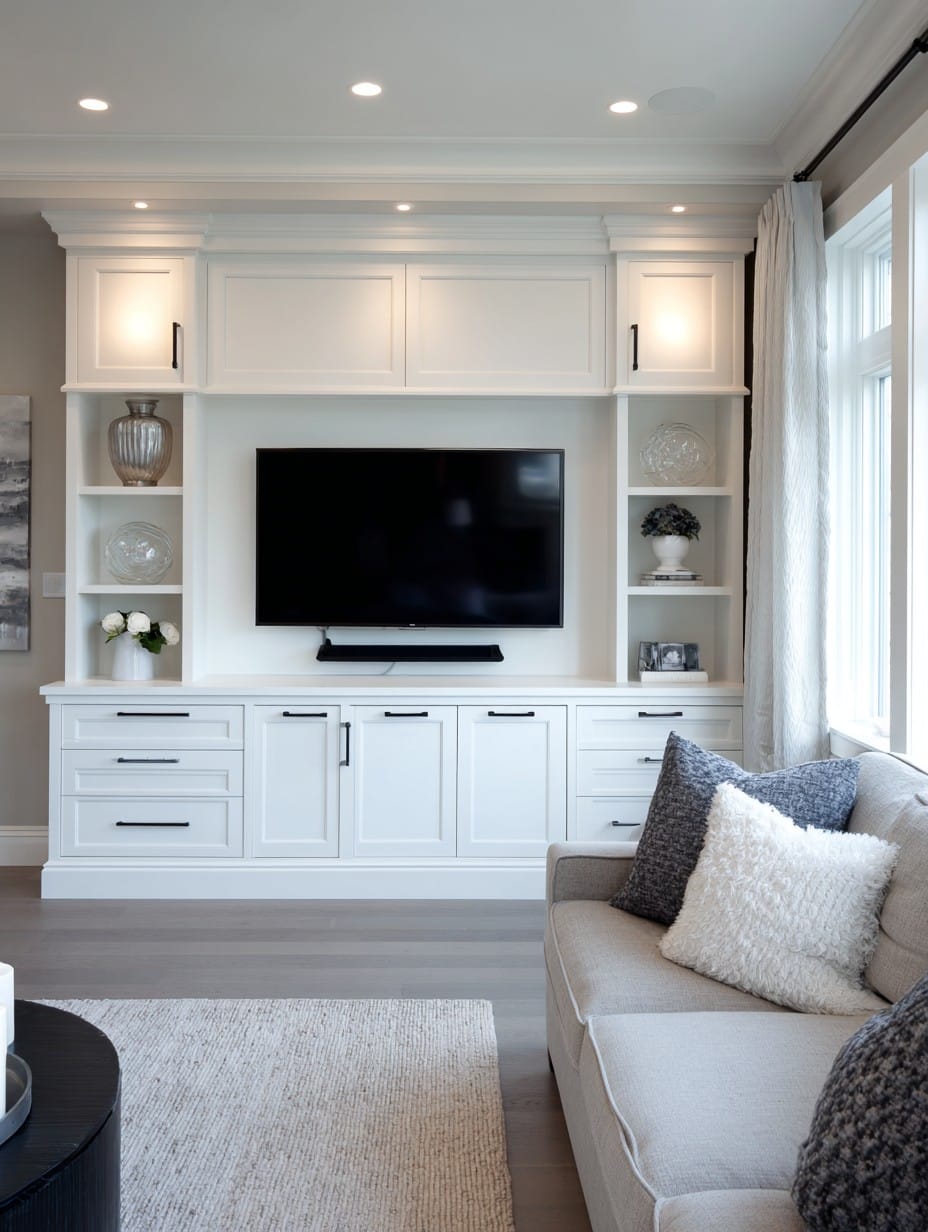
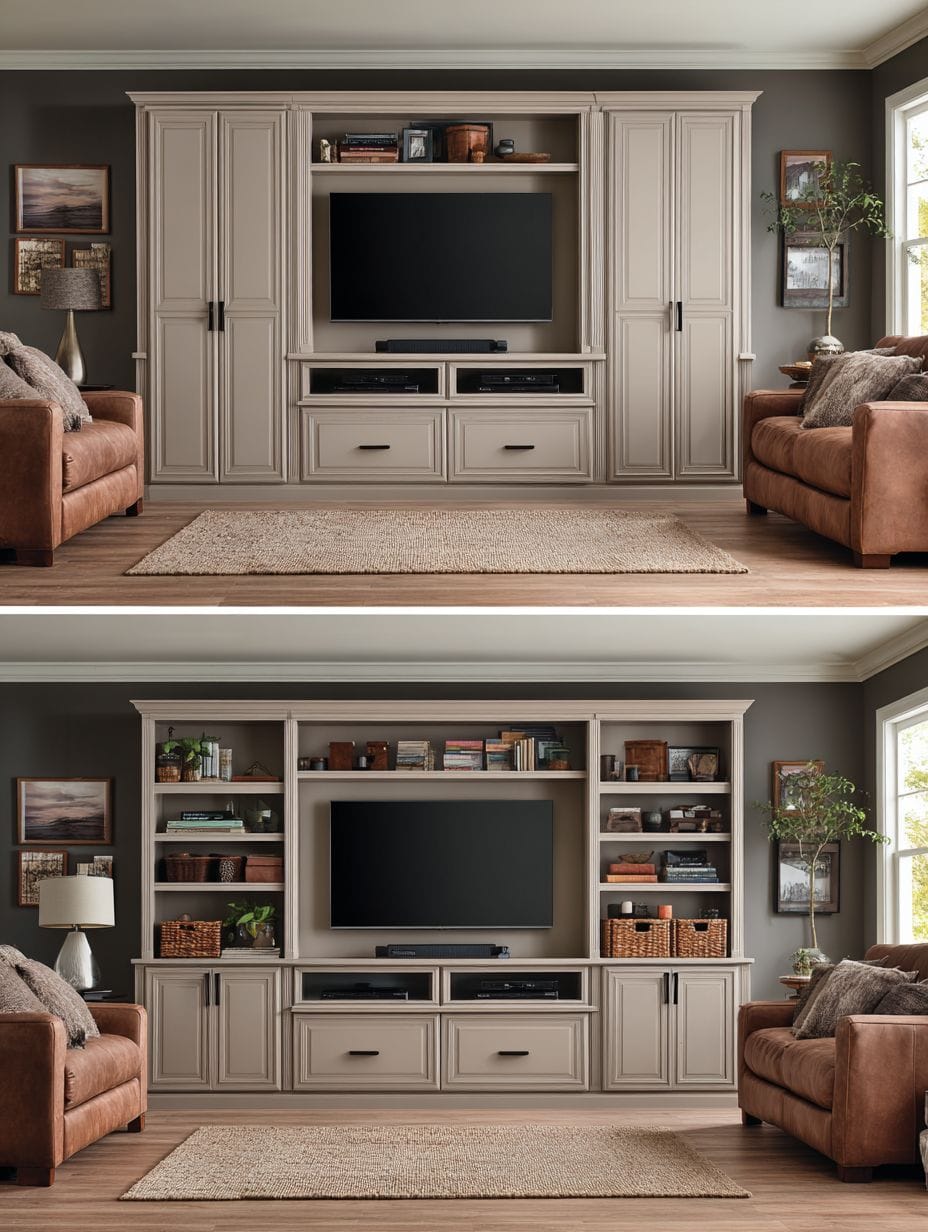
A truly functional TV lounge prioritizes organization as much as aesthetics, and this storage-focused design demonstrates how thoughtful planning eliminates clutter while maintaining beauty. Custom built-in cabinetry flanking the television provides dedicated homes for everything an entertainment space requires—media collections, gaming systems, board games, extra blankets, remotes, charging cables, and all the other items that tend to accumulate in family living spaces. Closed lower cabinets with soft-close doors hide visual clutter, keeping the space looking serene and organized even when storage is full. The soft-close mechanism prevents slamming doors—a small detail that significantly improves daily living quality.
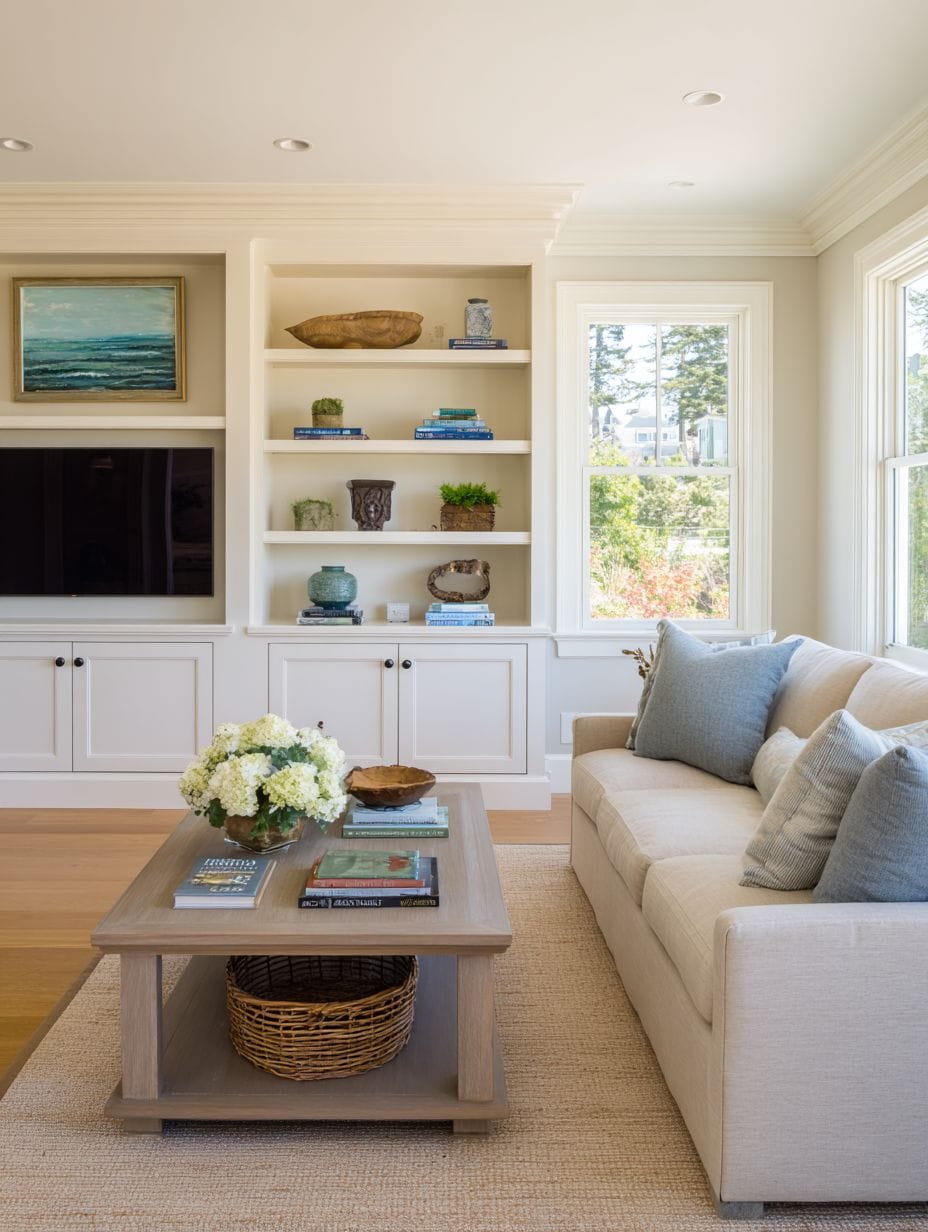
Open shelving above the closed cabinets displays decorative items, books, or media that’s visually attractive enough to remain visible. This combination of open and closed storage creates visual interest through rhythm and variety while maintaining organization. The open shelves might be styled with a mix of horizontal and vertical elements—books arranged both standing and stacked, interspersed with decorative objects and perhaps small plants. This styled approach transforms functional storage into decorative opportunity. Cable management solutions integrate invisibly into the built-in design, with power strips and cable organizers hidden within cabinets and channels routed through cabinet backs to keep all wiring completely concealed.
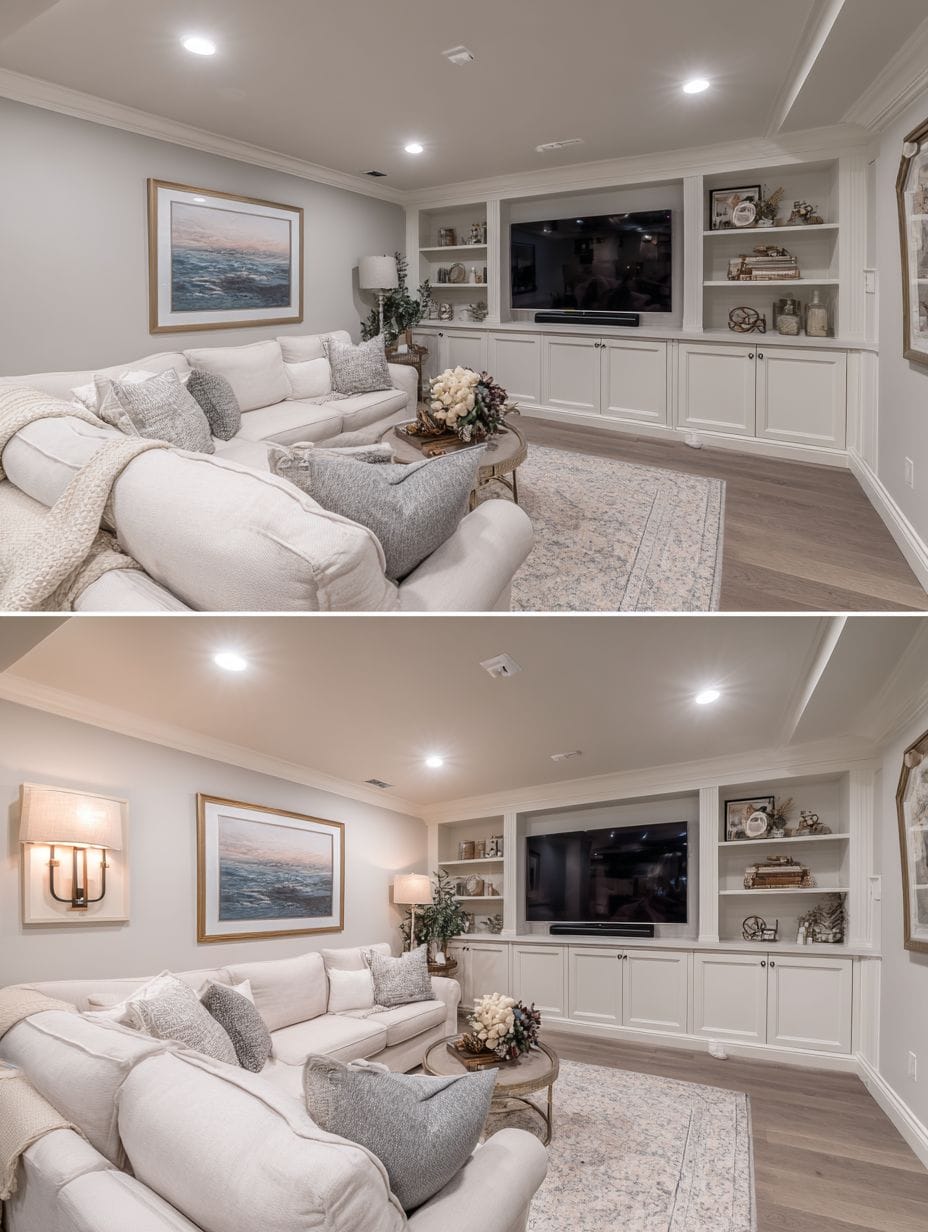
The comfortable sofa faces this organized entertainment wall, positioned on a simple area rug that defines the seating zone without visual competition. The neutral color scheme throughout—perhaps soft greys, warm whites, and natural wood tones—emphasizes the functional design rather than making bold style statements. This approach creates flexibility for future updates through accessories rather than requiring major renovations. Baskets on lower shelves provide additional organization for smaller items that might otherwise create visual chaos, their natural materials adding texture while maintaining the clean aesthetic. This comprehensive approach to storage and organization creates a space where everything has its place, making daily maintenance effortless and ensuring the TV lounge remains a relaxing retreat rather than becoming another cluttered space requiring constant tidying.
- Install custom built-in cabinetry flanking the TV to create dedicated storage for all entertainment necessities and media.
- Combine closed lower cabinets with open upper shelving to hide clutter while displaying attractive items.
- Integrate cable management solutions invisibly within built-ins to keep all wiring completely concealed and organized.
- Add baskets on lower shelves for small item organization that prevents visual chaos while adding natural texture.
- Choose soft-close cabinet hardware to improve daily quality of life and prevent annoying door slamming.
25. Biophilic Wellness-Focused Design
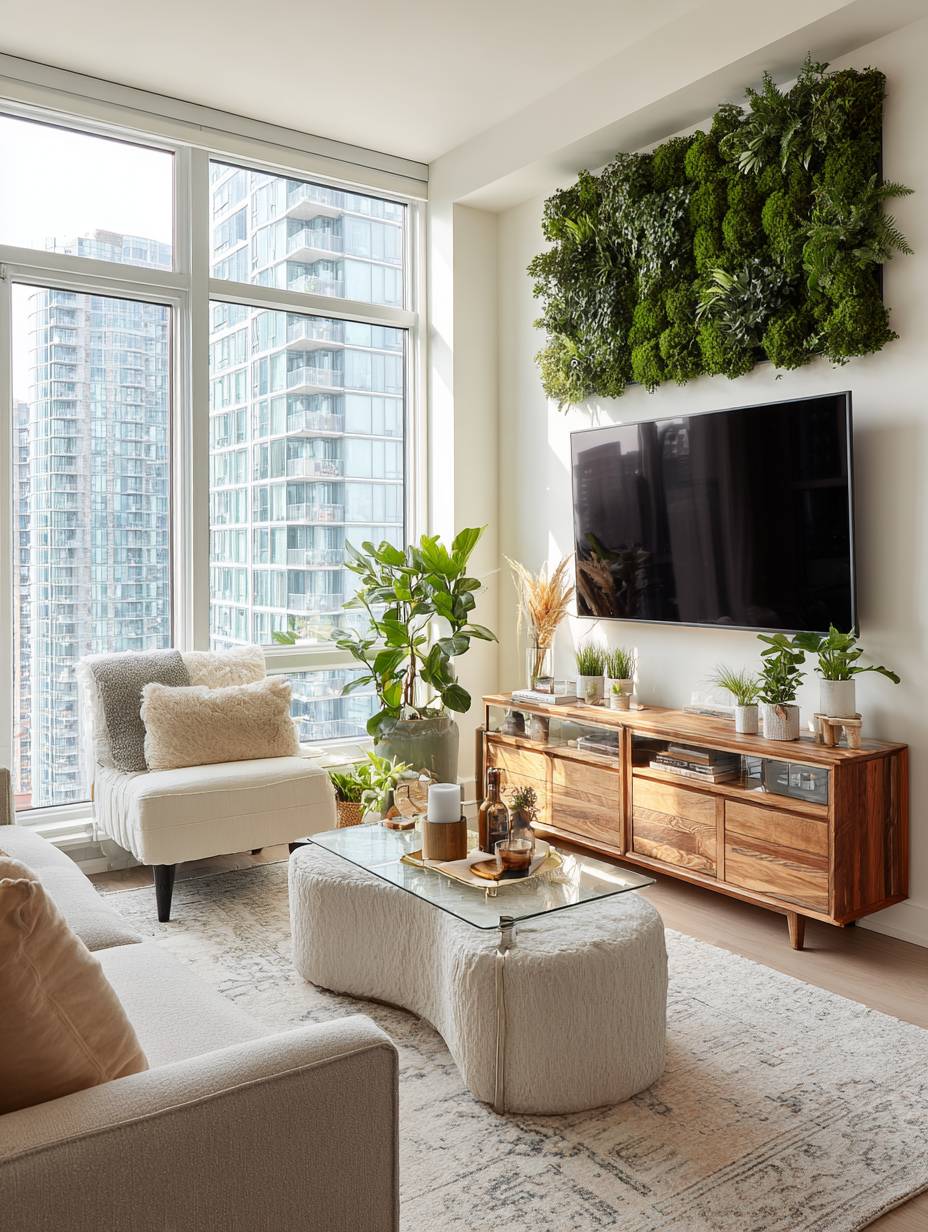
This final TV lounge concept embraces biophilic design principles that recognize humans’ innate need for connection with nature. The television mounts on a living wall of trailing plants and ferns, creating a stunning green backdrop that brings nature directly into the entertainment space. This living wall provides multiple benefits beyond its obvious beauty—plants filter air pollutants, produce oxygen, regulate humidity, and have been proven to reduce stress and improve mental wellbeing. Grow lights integrate discretely within the living wall system, ensuring plants receive adequate light for photosynthesis even in rooms with limited natural light. These specialized horticultural lights can be programmed to turn on and off automatically, maintaining plant health without constant attention.
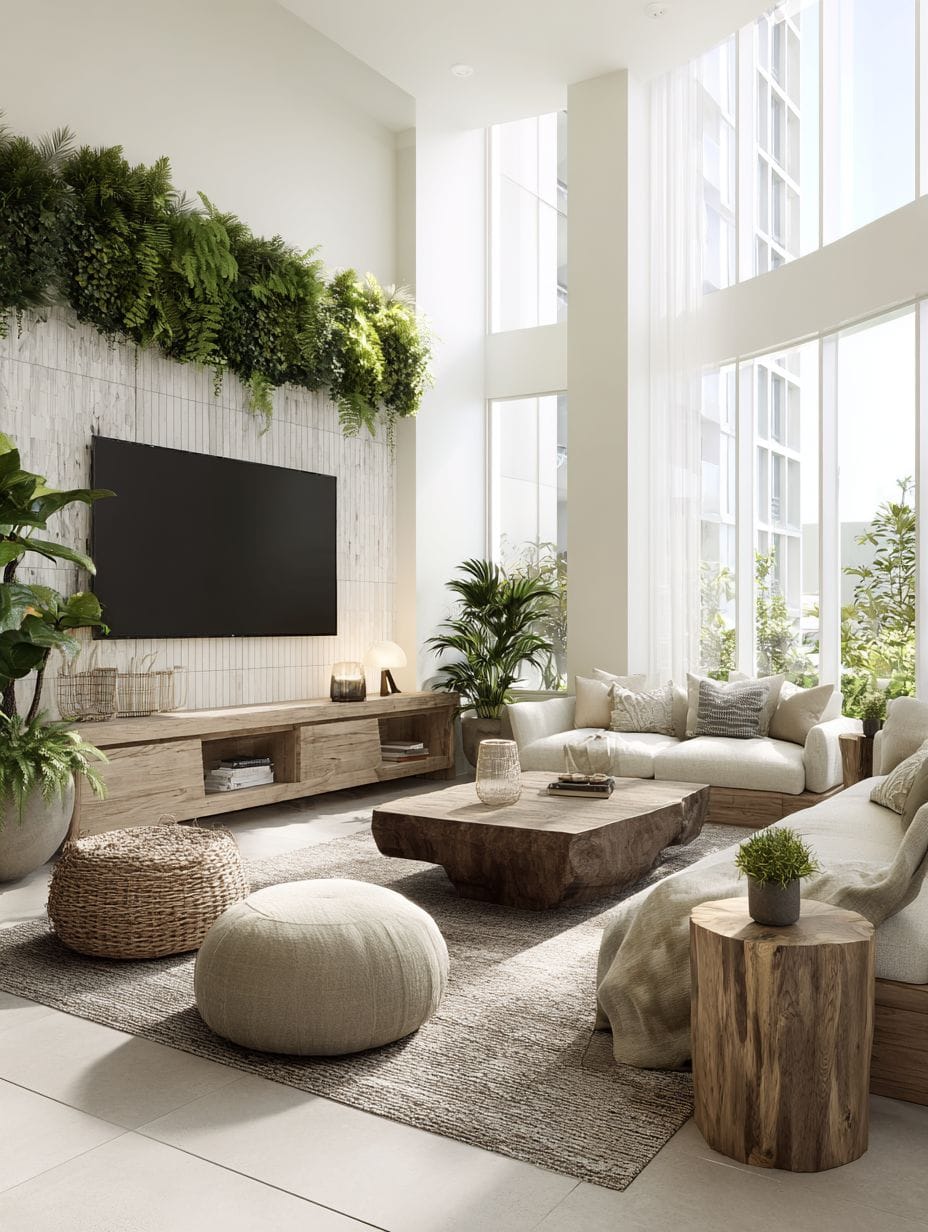
The natural wood media console and organic-shaped furniture in natural fabrics complement the abundant greenery, creating a cohesive nature-inspired aesthetic throughout the space. Furniture forms might feature curves rather than sharp angles, referencing organic shapes found in nature rather than rigid geometric forms. Upholstery fabrics in undyed natural fibers like cotton, linen, or wool maintain the organic aesthetic while providing comfort and durability. These natural materials also contribute to healthier indoor air quality, as they don’t off-gas the volatile organic compounds sometimes present in synthetic materials.
Large windows maximize natural light exposure—essential both for plant health and for human circadian rhythm regulation. Natural daylight promotes alertness during waking hours and helps regulate sleep cycles, contributing to overall wellness. Air-purifying plants positioned throughout the space—perhaps snake plants, pothos, spider plants, or peace lilies—actively filter air pollutants while adding varied shapes, sizes, and shades of green. The overall effect creates a space where technology and nature coexist harmoniously, acknowledging that even entertainment spaces can contribute to wellness and connection with the natural world. This approach represents the future of interior design, where spaces support not just functional needs but holistic wellbeing.
- Create a living wall behind the television using trailing plants and ferns for air purification and biophilic connection.
- Integrate grow lights discretely to ensure plant health even in rooms with limited natural light exposure.
- Choose organic-shaped furniture with curves rather than angles that reference natural forms.
- Select natural fiber upholstery in undyed cotton, linen, or wool that contributes to healthy indoor air quality.
- Position air-purifying plants throughout to actively filter pollutants while adding varied green tones and natural shapes.
Why These TV Lounge Designs Represent the Best in Contemporary Interior Design
The 25 TV lounge concepts explored in this article represent the pinnacle of contemporary interior design for entertainment spaces, each addressing specific needs, aesthetic preferences, and lifestyle requirements. What makes these designs exceptional is their thoughtful integration of form and function—they’re beautiful to look at while remaining supremely practical for daily living. Modern TV lounge design must address multiple considerations simultaneously: optimal viewing angles and distances, acoustic treatment for quality sound, lighting that adapts from bright social settings to dim viewing conditions, storage for increasingly complex entertainment equipment, and aesthetic coherence that reflects personal style. The designs presented here succeed across all these dimensions.
Each concept demonstrates deep understanding of spatial planning and furniture arrangement principles essential to functional TV lounges. Proper viewing distance calculations ensure comfortable television watching without eye strain—typically 1.5 to 2.5 times the diagonal screen measurement for optimal viewing. Furniture positioning considers not just the TV but also traffic flow through the space, conversation facilitation during social gatherings, and flexibility for different uses throughout the day. Whether it’s the compact studio arrangement that maximizes every square inch or the spacious basement transformation that embraces cozy intimacy, each design demonstrates how thoughtful space planning creates rooms that work beautifully for their intended purposes.
The material selections across these designs showcase contemporary design’s embrace of both authentic natural materials and innovative modern solutions. From reclaimed wood’s storied character to performance fabrics’ practical durability, from natural marble’s timeless elegance to LED technology’s energy efficiency, these designs demonstrate how material choices impact both aesthetics and functionality. The best TV lounge designs balance trending elements with timeless principles, ensuring spaces remain appealing for years rather than feeling dated as trends evolve. Natural materials like wood, stone, and natural fibers provide classic foundations that age beautifully, while contemporary elements like LED lighting and smart home integration address modern needs and expectations.
Color strategies employed across these concepts demonstrate sophisticated understanding of how hue, saturation, and value impact spatial perception and mood. Neutral palettes create versatile backgrounds that accommodate style evolution through accessories rather than major renovations. Bold color choices in jewel tones or saturated hues create personality and drama when executed with confidence. Monochromatic schemes in varied textures prove that limitation can create sophisticated impact. Each approach offers advantages for different personalities and settings, demonstrating that there’s no single “right” way to design a TV lounge—the best design aligns with the occupants’ preferences, lifestyle, and the home’s overall aesthetic direction.
Lighting design emerges as perhaps the single most important technical consideration across all these concepts. Layered lighting approaches that combine ambient, task, and accent illumination provide flexibility for different activities and times of day. Dimmable fixtures allow precise control over brightness levels, essential in entertainment spaces that must transition from bright social settings to dim viewing conditions. Natural light integration through properly sized and positioned windows connects interiors to the outdoor environment while providing health benefits including circadian rhythm regulation and mood enhancement. LED technology’s efficiency, longevity, and color-rendering capabilities make it the ideal choice for contemporary TV lounges, whether integrated as strip lighting behind televisions, embedded in architectural features, or used in conventional fixtures.
Storage and organization solutions presented across these designs address one of the biggest challenges in entertainment spaces: managing the accumulation of equipment, media collections, and accessories without creating visual chaos. Built-in cabinetry provides massive capacity while maintaining clean aesthetics through seamless integration with architecture. Floating shelves and wall-mounted solutions maximize floor space in compact rooms. Multi-functional furniture pieces serve double duty, providing both seating comfort and concealed storage. Cable management systems eliminate the visual clutter of tangled cords that can undermine even the most beautiful design. These organizational strategies demonstrate that truly successful design must address practical daily living concerns alongside aesthetic considerations.
Technology integration across these concepts showcases how contemporary TV lounges embrace smart home capabilities without sacrificing aesthetics. Motorized elements like projector screens and blackout curtains provide functionality at the touch of a button while disappearing completely when not needed. Color-changing LED lighting systems create customizable environments for different moods and activities. Built-in charging solutions eliminate visible cables while keeping devices powered. Voice control and app-based management make complex systems simple to operate. The best technology integration remains nearly invisible, enhancing functionality without dominating the design or requiring technical expertise to operate—a principle exemplified throughout these concepts.
Sustainable and wellness-focused design principles appear increasingly throughout contemporary TV lounge concepts, reflecting growing awareness of interior design’s impact on both environmental and personal health. Biophilic design elements like living walls and abundant plants improve air quality while providing psychological benefits through nature connection. Natural materials and low-VOC finishes contribute to healthier indoor environments. Energy-efficient LED lighting and properly insulated windows reduce energy consumption. Furniture crafted from reclaimed or sustainably harvested materials demonstrates environmental responsibility without aesthetic compromise. These wellness-focused choices prove that entertainment spaces can support holistic wellbeing rather than existing in conflict with health goals.
The stylistic diversity across these 25 concepts ensures that readers with virtually any aesthetic preference will find inspiration aligned with their taste. From the spare elegance of Japanese minimalism to the collected richness of bohemian eclecticism, from industrial edge to farmhouse warmth, from coastal breeziness to dramatic contemporary sophistication—the range demonstrates interior design’s incredible versatility in creating TV lounges that feel both personal and professionally designed. This diversity also reveals how the same functional space—a room for watching television—can be interpreted in radically different ways while remaining successful in its core purpose. There’s no single formula for TV lounge design; rather, success emerges from thoughtfully applying design principles in ways that align with individual preferences and practical requirements.
Ultimately, what makes these TV lounge designs represent the best of contemporary interior design is their holistic approach to creating spaces that enhance daily life. They recognize that entertainment spaces serve as gathering places where families and friends come together, relaxation destinations where individuals decompress after demanding days, and increasingly, multi-functional rooms that must accommodate work, exercise, or hobbies alongside traditional entertainment activities. The best designs balance all these needs while creating environments that feel cohesive, intentional, and reflective of the occupants’ personalities. They demonstrate that functional spaces need not sacrifice beauty, and that beautiful spaces must prioritize function—when both considerations receive equal attention, the result is interior design that truly enhances how we live.
Conclusion: Creating Your Perfect TV Lounge
The journey through these 25 distinct TV lounge concepts reveals a fundamental truth about contemporary interior design: there are countless paths to creating spaces that are both beautiful and functional, and the “best” design is always the one that aligns most closely with your personal needs, preferences, and lifestyle. Whether you’re drawn to the serene simplicity of Scandinavian minimalism, the bold drama of jewel-toned accent walls, the authentic character of industrial materials, or the nature-connected wellness focus of biophilic design, the key is understanding the principles that make each approach successful and adapting them to your unique situation.
As you embark on creating or redesigning your own TV lounge, remember that successful design emerges from careful consideration of multiple factors working in harmony. Start by honestly assessing your space’s physical characteristics—its size, natural light availability, existing architectural features, and relationship to adjacent areas. Consider how you’ll actually use the space: Will it primarily serve as a dedicated entertainment room or must it accommodate multiple functions? Do you entertain frequently or is it mainly a family retreat? Are there specific technical requirements like gaming systems, surround sound, or smart home integration that must be accommodated? These practical considerations should inform every design decision, from furniture selection to lighting strategy to color choices.
Don’t feel pressured to adopt a single design style in its purest form if that doesn’t resonate with your personality. Some of the most successful and personally meaningful interiors blend elements from multiple aesthetics, creating eclectic spaces that feel collected over time rather than decorated all at once. Perhaps you love mid-century modern furniture but want the warmth of farmhouse elements—combining a teak credenza with shiplap walls and cozy textiles might create exactly the unique aesthetic you’re seeking. The designs presented here should serve as inspiration and starting points rather than rigid formulas to be followed exactly. Take the elements that speak to you, adapt them to your space and budget, and don’t be afraid to inject your personality through personal collections, meaningful artwork, or unconventional color choices.
Finally, remember that creating a truly exceptional TV lounge is an iterative process rather than a single event. You might start with the fundamentals—quality seating at the right distance from an appropriately sized television, adequate storage for your needs, and functional lighting—and gradually layer in refinements like upgraded audio equipment, custom artwork, or architectural enhancements as budget allows. Some of the most satisfying spaces evolve over months or years as you discover what works, what doesn’t, and what small changes make significant impacts on your enjoyment of the space. Trust your instincts, be willing to experiment, and most importantly, design a TV lounge that makes you happy to come home each day—that’s the ultimate measure of interior design success.
